Jacken Elswyth is a London-based folk musician, banjo player, and instrument builder. At Fargrounds is her third solo album, her first for the Wrong Speed label and the latest in a rich catalogue that repositions the spectral, vulnerable sound of the banjo away from its familiar role as signifier of the past and onto lands brave, new and unexplored. “The living wood is imbued with qualities that require engagement and understanding. Working with cherry, oak or walnut involves naming it an equal partner. The parallel, synchronous transformations of wood into instrument, of growing tree into resonating sound, musical tradition into musical flourishing, lie at the heart of Jacken Elswyth’s practices both as an instrument builder and as a creative musician. One might consider her primarily as a worker in wood, but whose craft and fields of expression are absorbed by those transitional and interim processes that manifest change. The traditional tunes included here have been cultivated and maintained by generations of players and collectors, pruned, grafted, and shaped over time. However, in this setting, their long-established forms seem to morph and shift. They audibly accrue unique qualities, blossoming and swelling into new modes of being, bright-stepping arrangements unfolding with a liveliness hinting at practices of ritual and community. Meanwhile, other pieces, creative cornerstones of this collection, appear fluid, partially formed. They suggest not the cultivation of new growth from established stock, but instead the actions of something on the verge of taking form. Working with raw elements of melodic and tonal abstraction, they illuminate the process of emergence and evolution. In this context, the title At Fargrounds is telling. It suggests a point set at some distance from any centre of human concerns, a liminal space in which the cultivated world encounters the world of other living things in their living state. Here, the innate strangeness of the maintained environment–vast lawns, sculpted hedges, vacant playing fields–encounters sprawling vistas of driftwood, dense thickets of brambles, stony hillsides. Across a full century-and-a-quarter, long-standing rural and pastoral musical traditions, at some distance from their origins, have been preserved, nurtured and re-shaped under the folk revival. Placed here, these artefacts now sit in alignment with unvarnished documents featuring the raw elements of sound-making. Their working-together is achieved through a universally-applied interest in musical growth and development. The juxtaposition and combination of these elements gives evidence of new, emerging approaches to community and social music: familiar, known, yet charged with an alien vitality”–CWK Joynes. “...she knows how to knit atmospheres, and does so to especially powerful effect during Scene 4b’s three minutes of stunning bowed banjo, yearning with longing and dread, while showing off her talent, curiosity and range”–Jude Rogers review of Six Static Scenes (Guardian Folk Album Of The Month July 2022) "Jacken is an emotive player with high technical ability. Further, she builds banjos and other instruments, and that intimate knowledge of the bones and fibres holding everything together means that her playing has very few cracks" - Foxy Digitalis
quête:the qualities
Ryo Fukui is a renowned pianist born in Hokkaido, Japan. His fresh and delicate playing has attracted many listeners, and his first album, "Scenery," has been highly acclaimed worldwide. Fukui, who began playing the piano at the age of 22, recorded this album at the age of 28. The earnest performance of his youthful days shakes the listener's emotions in a pleasant way. It Could Happen To You" swings as if strutting, "Early Summer" is exhilarating and joyful, and "Scenery" seems to contain the night air of late autumn. The "Hokkaido-like emotion" that blends with Fukui's qualities and combines a large scale and subtlety is pleasant to listen to. The green leaves sprouting, the dazzling clear stream, the clear sky, the snow falling without a sound.... Here, the beautiful scenery spun by Ryo Fukui lives on forever.
Black Truffle is pleased to announce Resonant Trees, the first vinyl release from French composer-performer Léo Dupleix. An active member of the international community of younger musicians working with just intonation, Dupleix has composed works for solo instrumentalists and ensembles in Europe and Japan, as well as performing extensively on harpsichord, piano and electronics. His music is distinguished by a formal clarity and elegance of surface, gently shaping pure intervals into delicate melodic patterns and shimmering harmonic planes.
Resonant Trees presents two side-long pieces for harpsichord and ensemble, both setting slowly repeating patterns played on harpsichord and guitar within an environment of sustained tones. Dupleix performs on a French double manual harpsichord (tuned to a just intonation scheme of his own devising) and Prophet synthesizer, joined by Juliette Adam (bass clarinet), Johanna Bartz (traverso flute), Cyprien Busolini (viola), Fredrik Rasten (6- and 12-string guitars), and Mara Winter (traverso flute). The harpsichord begins Resonant Tree I alone, slowly sounding out a series of arpeggiated chords that emphasise the unique (and for unaccustomed listeners, sometimes unsettling) harmonic and timbral qualities of justly tuned intervals. Long tones from synthesiser, bass clarinet, viola and Baroque traverso flutes slowly creep into the spaces between the arpeggiated chords, joined after several minutes by delicate patterns of harmonics played by Rasten on acoustic guitars.
On Resonant Tree II, a similar structure and ensemble (without the flutes) are used with quite different results. We again hear only the harpsichord at first, but this time playing a series of flowing melodic lines, each of which is repeated several times. Joined again by long tones from the ensemble, here the viola is particularly prominent and its interplay with the harpsichord creates fascinating acoustic effects. In both pieces, repetition gives the music a static, stable quality while, at the same time, the exact shape of the repeating patterns remains difficult to grasp. As Dupleix writes, these pieces dream of music as ‘space and a sound that one could grasp in one’s hand.’ As the near-static quality of the repetitions and long tones with little incident make these two stretches of musical time feel like spaces for the listener to inhabit, the small variations on a narrow range of related material act like a three-dimensional object whose each facet is examined in turn. At once austere and seductive, Resonant Trees takes its place beside the work of contemporaries like Catherine Lamb, while also calling up the languorous melodic world of Mamoru Fujieda, the dignified melancholy of Satoshi Ashikawa’s classic Still Way and the espaliered chamber atmospherics of the Obscure catalogue.
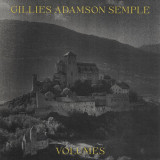
Artist and musician Gillies Adamson Semple explores the material resonance of drone
on new vinyl-only album Volumes.
In 2022, Gillies Adamson Semple made a pilgrimage to the Valère Basilica in the Swiss Alps to play the oldest functioning pipe organ in the world. Built in 1435, this unique instrument is the centrepiece of this sensitive and stirring 6-track release, tracing the elemental themes of spirituality, anatomy, ecological collapse, and the nature of listening in its glacial minimalist drones.
Drawing inspiration from the long-form compositions of Sarah Davachi and Kali Malone, Volumes was built from in-situ recordings Semple made in Switzerland, with the aim of capturing the physical qualities of the sound, from the stops and pedals to the air rushing through the organ’s ancient pipes. Treated like sculptural material and re-assembled at Semple’s London studio in the tradition of musique concrète, the tracks evoke a sense of exquisite timelessness, at once part of and floating free of their environment.
As Semple explains: “What I like about the organ is that you can make it feel very physical. It has all these mechanical parts that sound really beautiful. And the piece is never performed. It is something that is rooted in the site. The whole pilgrimage to see this organ in Switzerland ended up acting like that, where you’re going to this very sacred place to see this specific instrument, but all you’re taking back is recording.”
Released on vinyl via Fourth Sounds, Volumes was initially conceived as the soundtrack to Semple’s 2023 exhibition of the same name at Cedric Bardawil in London.
Edition of 200 with risograph insert, liner notes by Anton Spice. Fully remastered for vinyl.
Unadorned with any post-production tricks or overdubs, Garcia/Grisman breathes with naturalism and presence. You will effortlessly detect the full body of the instruments, witness the woody grain textures, and get lost in the surprisingly velvety qualities of Garcia's lullaby-like singing. Our pressing also marks the first time this delightfully joyous affair has been issued in analogue form. You will never hear a better-sounding Americana-styled recording.
Pals since the mid-1960s, Garcia and Grisman bonded over their love for traditional folk and bluegrass. The two teamed up amidst what became a gold rush of top-notch productivity and creativity for Garcia. Partnering with bassist Jim Kerwin and percussionist/fiddler Joe Craven, the pair approaches every passage with innate ease, as if either musician could finish the others sentence. The affable chemistry and soothing interplay wash over a selection of songs as notable for their diversity as the way Garcia and "Dawg" turn them into the equivalent of old friends you haven't seen in years.
Exquisite melodies and jewel-shaped notes decorate the simple, convivial structures of tunes that hop, jump, skip, skitter, and bop. The atmosphere is reminiscent of the legendary gypsy-jazz exchanges between Django Reinhardt and Stephane Grappelli, and equally sharp. Swirling with Middle Eastern modality, the closing 16-minute-plus rendition of Grisman's rippling "Arabia" – complete with a section based on a Cuban fold theme - is alone enough worth the price of admission to this sensational session. But there's so much more.
The quartet delves into Celtic themes ("Two Soldiers"), jazz-grass ("Grateful Dawg"), old-world ballads ("Russian Lullaby"), and Appalachian flavours ("Walkin' Boss") with nonpareil skill and soulfulness. Garcia and Grisman's tandem picking throughout epitomize sublime. And for many listeners, the duo's revised version of the Grateful Dead staple "Friend of the Devil" ranks as the finest-ever recorded, the pace patient, the narrative vocals heartfelt, and the synchronous solos tailor-made for the enveloping progression. Better yet, it's all captured in astonishing fidelity.
ohann Wolfgang von Goethe is always a reliable source for a good quote: "We must always change, renew, rejuvenate ourselves; otherwise, we harden." Sure as death, there is an excerpt of his that states the opposite. In the case of Robert Dietz, it holds true. Since his first appearance on Running Back in 2009 (Forward Snipping), he did a marvelous job staying on his toes as a producer and DJ.
Rejuve-Nation showcases his talent in various alleys of electronic (dance) music with Crane Song being the prime cut here. You will get exposed to proggy house with an intelligent brush in two slightly different mixes. Imagine if Euro dance went to get a college degree or a bumper car floor and you are almost there: an almost irresistible sing a long without lyrics.
If you need help afterwards, Deranged Self Therapy is exactly what you need. IDM meets new wave drums, poignant synths mix with an upbeat hook to create a ballet piece for lovesick robots.
Centro Di Gravita reconnects those qualities with the aforementioned Crane Song ones, while giving it an acid spin, before the ambient salts of Any Plan(t)s This Weekend closes the EP off like a confident sketch for the end of a beautiful summer. A bouquet of bangers for different needs.
Short: One Rejuve-Nation EP under a groove with Robert Dietz' return on Running Back. Proggy meets acid house, IDM leanings mix with stylistic devices of new wave and extra special ambient aerobatics round out the EP. Special attention goes to Crane Song and its peak time perfection. A bouquet of bangers for different needs.
Clear/Black Smoke Vinyl[38,87 €]
Svart Records are proud to release the long-awaited full length album "SÁLA" by Kati Rán in May 2024
If the most profound treasures are often the most deeply buried, the journey to uncover them is vital process of discovery. Five years after the 15-minute single “Blodbylgje” signaled the birth of a new, more primordial, and immersive vision after the dissolution of her band L.E.A.F., Nordic dark folk artist Kati Rán has expanded on its oceanic theme for her long-awaited full-length album, “SÁLA”. Embarking on a far-reaching musical and personal travelogue, it’s a reawakening of both the feminine narratives submerged and fragmented within Norse mythology, and the enduring, healing powers held within.
Named after the Old Norse word for ‘soul’ and ‘sea’, “SÁLA” is an act of ‘soul retrieval’, the shamanic art of trauma recovery, be it illness, death, heartbreak or loss, and the reintegration of a splintered self. Across its 13, wide-ranging, elegantly unfolding tracks, the album is an embodiment of different feminine voices and perspectives – from the Norse nine daughters of the sea, or ‘billow maidens’, through various historical and fictional figures to the late-night voices we hear in our most liminal states – all with tales to tell, riddles to solve, challenges to be accepted and guidance to offer. It’s a multiplicity that, like the ocean itself, belongs to a vast, restless dynamic: a matrix of mysteries, unfathomable depths and ever-shifting currents, accumulating into an elemental, regenerative source of power.
Recorded in a barn in Húsafell, Iceland – home to glacier ice caves and a rare lava stone marimba rediscovered for the track “Stone Pillars” – as well as Finland, Norway and at home in Kati’s native Netherlands, “SÁLA” is as much chronicle of Kati’s own perspective-shifting recording process as it as a pilgrimage through different viewpoints and internal states. That itinerate urge is also reflected in the use of different languages, ranging across Norwegian, Old Norse, Icelandic, and, for the first time, English, her combination of ancient texts, historical reimagining’s and unguarded personal reflection backed up by deep research into the most resonant recesses of Nordic lore.
Spun throughout every thread of “SÁLA” is a sense of communion - with the power of stories to offer moral guidance and the thrill of the unknown; with the element of water, recreated across the album both in field recordings and the agelessly organic nature of the music itself; with the archetypes whose qualities we are called upon to embody at our most critical moments; and with the internal hidden realms forever whispering at us from the far edges of our consciousness.
Appropriately, it’s a collaborative venture too. As well as working closely together with Finnish producer Jaani Peuhu, there are contributions from across the musical spectrum, including extreme metal vocalist extraordinaire Gaahl, the Icelandic female choir Umbra Ensemble, renowned Norwegian jazz musician Karl Seglem, Björk and Brian Eno contrabassist Borgar Magnason, members of pagan folk acts Völuspá, Gealdýr, Heilung and Theodor Bastard and even Napalm Death’s Mitch Harris on vocals.
For all the many sources “SÁLA” draws from, the result is a singular, intimately transformative rite of passage, and a retuning of the heart to the reverent continuity of the sacred. It will take you from the opening title track’s chest-pounding rhythmic pulse emerging from a traditional Norwegian bukkehorn (recorded by Karl Seglem), a galloping horse-rider and Kati’s glacial, velveteen chant, through “Kólga’s” recounting of female persecution through the ages borne on the most gossamer-light yet unbreakable of timbres and “Stone Pillar’s” gently percolating, deep wells of abandonment and incantations to recovery. “SÁLA” closes with the track “Sátta” - Old Norse for ‘peace’ and ‘reconciliation’ – ending the album as it began with the bukkehorn, as it weaves rich drones and experience-stamped poems and prayers, Kati’s vocals the most sensitively tuned of emotional barometers. An album made in dedication, and in thrall to, its own sense of destiny, “SÁLA” is, as all quests must ultimately be, a homecoming.
Album introduction written by Jonathan Selzer.
Black Vinyl[34,87 €]
Svart Records are proud to release the long-awaited full length album "SÁLA" by Kati Rán in May 2024
If the most profound treasures are often the most deeply buried, the journey to uncover them is vital process of discovery. Five years after the 15-minute single “Blodbylgje” signaled the birth of a new, more primordial, and immersive vision after the dissolution of her band L.E.A.F., Nordic dark folk artist Kati Rán has expanded on its oceanic theme for her long-awaited full-length album, “SÁLA”. Embarking on a far-reaching musical and personal travelogue, it’s a reawakening of both the feminine narratives submerged and fragmented within Norse mythology, and the enduring, healing powers held within.
Named after the Old Norse word for ‘soul’ and ‘sea’, “SÁLA” is an act of ‘soul retrieval’, the shamanic art of trauma recovery, be it illness, death, heartbreak or loss, and the reintegration of a splintered self. Across its 13, wide-ranging, elegantly unfolding tracks, the album is an embodiment of different feminine voices and perspectives – from the Norse nine daughters of the sea, or ‘billow maidens’, through various historical and fictional figures to the late-night voices we hear in our most liminal states – all with tales to tell, riddles to solve, challenges to be accepted and guidance to offer. It’s a multiplicity that, like the ocean itself, belongs to a vast, restless dynamic: a matrix of mysteries, unfathomable depths and ever-shifting currents, accumulating into an elemental, regenerative source of power.
Recorded in a barn in Húsafell, Iceland – home to glacier ice caves and a rare lava stone marimba rediscovered for the track “Stone Pillars” – as well as Finland, Norway and at home in Kati’s native Netherlands, “SÁLA” is as much chronicle of Kati’s own perspective-shifting recording process as it as a pilgrimage through different viewpoints and internal states. That itinerate urge is also reflected in the use of different languages, ranging across Norwegian, Old Norse, Icelandic, and, for the first time, English, her combination of ancient texts, historical reimagining’s and unguarded personal reflection backed up by deep research into the most resonant recesses of Nordic lore.
Spun throughout every thread of “SÁLA” is a sense of communion - with the power of stories to offer moral guidance and the thrill of the unknown; with the element of water, recreated across the album both in field recordings and the agelessly organic nature of the music itself; with the archetypes whose qualities we are called upon to embody at our most critical moments; and with the internal hidden realms forever whispering at us from the far edges of our consciousness.
Appropriately, it’s a collaborative venture too. As well as working closely together with Finnish producer Jaani Peuhu, there are contributions from across the musical spectrum, including extreme metal vocalist extraordinaire Gaahl, the Icelandic female choir Umbra Ensemble, renowned Norwegian jazz musician Karl Seglem, Björk and Brian Eno contrabassist Borgar Magnason, members of pagan folk acts Völuspá, Gealdýr, Heilung and Theodor Bastard and even Napalm Death’s Mitch Harris on vocals.
For all the many sources “SÁLA” draws from, the result is a singular, intimately transformative rite of passage, and a retuning of the heart to the reverent continuity of the sacred. It will take you from the opening title track’s chest-pounding rhythmic pulse emerging from a traditional Norwegian bukkehorn (recorded by Karl Seglem), a galloping horse-rider and Kati’s glacial, velveteen chant, through “Kólga’s” recounting of female persecution through the ages borne on the most gossamer-light yet unbreakable of timbres and “Stone Pillar’s” gently percolating, deep wells of abandonment and incantations to recovery. “SÁLA” closes with the track “Sátta” - Old Norse for ‘peace’ and ‘reconciliation’ – ending the album as it began with the bukkehorn, as it weaves rich drones and experience-stamped poems and prayers, Kati’s vocals the most sensitively tuned of emotional barometers. An album made in dedication, and in thrall to, its own sense of destiny, “SÁLA” is, as all quests must ultimately be, a homecoming.
Album introduction written by Jonathan Selzer.
DJ Polo returns to Livity Sound with an EP that moves beyond the UK funky styles he established alongside Tribal Brothers on The Link Up EP in 2021. Through his productions and steady online radio presence, the Bristol-based producer has been flying the flag for lean, punchy rhythms with a low-end focus, but on If The Glove Fits Polo has branched out to explore different tempos and sounds taking influence from gqom, techno and Afrobeats.
Much like his approach to funky, this isn’t a set of genre exercises but more a celebration of the shared qualities which bind together dance music from different parts of the world. The result is four sharply-defined club workouts unique to DJ Polo that balance tension and release, flair and subtlety and a consistent physical weight true to Livity’s emphasis on soundsystem suitability.
Livity Sound is a label set up by Peverelist in 2011 as a vehicle for a raw and exploratory strain of UK techno, rooted in the heritage of UK dance music and sound system culture. It has since become one of the UK's foremost protagonists for cutting edge underground electronic music.
Another well kept secret from the Italian cult electronic music imprint - Interactive Test. A 4 track EP with a wide range of flavours in "house" music, very much dependent on the different samples employed. A side starts off with a deep house track echoing similar atmospheric qualities as to some of the dancefloor oriented productions making their way into US underground scene around that time, specifically Chicago and Detroit. The Percapella Mix makes the dedication to the Canadian Disco legend Gino Soccio very clear with a lengthy sample of "There's a Woman", a track which uses early electronics in a pioneering way, with what could possibly be one of the first examples of an Acid Bass line. On the B-side, things slow down a a notch with more clear cut explorations in Acid house featuring layers of synths and percussive samples and occasional placement of vocal samples from countries far away from Italy, all made possible thanks to the new exciting technologies that had recently been made available to producers at the time. Remastered by Man Made Mastering in Berlin and re-released with new full cover artwork.
Cathartic avant-rock, literate DIY folk & experimental composition exploring displacement, love, climate change, belonging & the places we call home - RIYL Jim O’Rourke, Richard Youngs, This Heat, Richard Dawson, Flying Nun. ‘Real Home’ is the new album by the Manchester-born, London-based artist Kiran Leonard. His sixth album proper (not including innumerable tour-only CD-Rs and short-run cassettes), since his precocious debut in 2013, ‘Real Home’ finds Leonard invigorated by inspiration and experience, making passionate, literate, and mercurial music that explores displacement, love, memory, climate change, connections to home and more. Encompassing songs recorded after moving to South London, ‘Real Home’ reflects on ideas of belonging and domesticity through folkloric, stream-of-consciousness songwriting. Across nine tracks, Leonard traces lived impressions of the household and the city, expressing sentiments of dislocation, alienation and stasis, but contentment too. Infusing the avant-rock effervescence, terraced dynamics and visionary lyricism of his music with what he defines as a greater sense of openness, Leonard is as versatile, fervent and imaginative as ever on ‘Real Home’, yet his music is somehow more intimate, affecting, and acutely expressive. Shaped by dual considerations of simplicity and formalism, ‘Real Home’ is by turns beautiful, allusive, and ruminative, an album on which Leonard considers what his songs have resembled in the past and what they mean now. In recent years, Leonard has crafted eloquent chamber music inspired by the likes of James Joyce and Clarice Lispector (‘Derevaun Seraun’), responded to contemporary politics and communication breakdown in the digital age (‘Western Culture’), and compiled solo works and ensemble recordings for a longform ode to Jonas Mekas and to one of Leonard’s enduring themes; home (‘Trespass On Foot’). On ‘Real Home’, Leonard reiterates this abiding thematic focus yet ascends to new, different heights, in music of cathartic delicacy and dissonance where all the myriad dimensions of his work to date seem to crystallize. There are sinuous songs about struggle and defying the pace of city life through drift and diversion (‘Pass Between Houses’), stirring songs of intense feeling and crescendo, described as a form of speculative detective fiction (‘Theatre for Change’). There are touching solo piano ballads (the title track), symbolic contentions with carbon capture and climate change (‘Utopia of Bog’), modes of experimental minimalism (‘Void Attentive’), and other profuse feats of compositional range, embroidered with wild tendrils of narrative and lyrical depth. A record to pore over, and get lost in. Exemplifying the vast aesthetic scope of Leonard’s music, lead single ‘My Love, Let’s Take The Stage Tonight’ is inspired by country lodestar Hank Williams, Russian poetry and a late period love poem by William Carlos Williams. Yet for Leonard, the song signals a sense of accessible materiality, and is the product of a more linear approach to writing songs: “My imitation of the great Hank Williams, in spirit if not in substance…This is one of the best efforts on Real Home at a song-as-object. Looking at it now I realise I was trying to write a song that made itself known as a song to the listener, and I wonder whether that’s crucial if you want a song to transcend its context. And that this is either accomplished through a total openness – by being inviting, by laying the tricks of the song out plain to see, as Williams and his many ghostwriters did so well – or by adopting a knowing aloofness, positioning oneself against the listener but letting it be known that that’s what it’s doing. In this song I try both, but mostly the former: as in, I wanted to write a song where every line follows on from the next.” Imbuing the endlessly elaborate and inventive qualities of his music with a newfound streak of candid, clear-cut melodicism, Leonard has reached a special place in his artistry, on a record that feels familial, and expresses closeness. Assembled with affiliates including Lauren Auder, Otto Willberg, Jasper Llewellyn (caroline), Tom Hardwick-Allan (Shovel Dance Collective), Magda McLean (caroline, The Umlauts), Alex Mckenzie (caroline, Shovel Dance Collective), Isabelle Thorn (Dear Laika) & more, the recording process had a significant influence on the subject matter of ‘Real Home’, in sessions defined by close-knit camaraderie and artistic eccentricity: “The theme of the home obviously recurs throughout the record; the album was mostly recorded in domestic spaces with friends, and the name of the album is Real Home. I like the qualifier ‘real’, like you’re getting past the cloak of the word and towards the thing-itself…also nearly all the percussion in this record was recorded on items from my dad’s shed (jam jars, sandpaper, blocks of wood, etc). Real home record!” ‘Real Home’, like anything by Kiran Leonard, is a record of dazzling multiplicity. Yet it’s a companionable prospect with a central premise; a collection of songs where listeners old and new can find a home. An album led by a scene; of Leonard standing at the threshold, ready to welcome you inside. “Exceptional songs that linger” - The Guardian // “An autodidact of amazing talent & energy” – Pitchfork // “A ridiculous amount of talent…confrontational, celebratory, provocative or perverse – he manages all of these emotions & more” - The Quietus /
With Les Liaisons dangereuses 1960, Roger Vadim stirred up a scandal. Based on the famous epistolary novel by Laclos, the director presented audiences in the early 1960s with a film in which libertinism, scheming and the upper middle classes intertwine in 1960s Paris. Gérard Philipe and Jeanne Moreau excel, and the film is often considered one of Vadim's best. It also owes much to its music, which reflects Vadim's taste for jazz. For the soundtrack to Les Liaisons dangereuses, the director called on Art Blakey and his Jazz Messengerswhose exceptional musical qualities make for a record full of daring musical ideas and a marvellous choice of brilliant themes. The majority of the tracks feature Art Blakey's Jazz Messengers of mid-1959 with trumpeter Lee Morgan, tenorman Barney Wilen, pianist Boby Timmons and bassist Jymie Merritt joining the explosive drummer/leader. This beautiful re-issue of the original recording is pressed on 180g vinyl at GZ, and packaged in a deluxe gatefold tip-on jacket with the original liner notes and a photo of Gérard Philippe and Jeanne Moreau from the film, and additional notes by recording producer Marcel Romano from 1988.
Isaiah Collier & The Chosen Few return with a new musical journey, "The Almighty". The first quartet offering since 2021's Cosmic Transition.
Collier's compositions and lyrics focus on using music to communicate deeper principles that are part of everyday. Isaiah showcases these principles through sounds that evolve within the titles: Love, Compassion, & Perspective. These principles once taken fully in are arranged to deliver the message that there is a Divine energy connecting through us all and is seen within all things. The album opens up with LOVE, featuring the legendary Chicago vocalist Dee Alexander channeling her energy to deliver the message of love to the human family. With lyrics written by Collier specific to Alexander's qualities as a maternal figure to him and other musicians, the message remains strong within the music throughout the album. Searching deeper to share more sincerely through our interactions with others, is the albums objective. Collier & The Chosen Few showcase those Principle with Musicianship and an unyielding commitment to put their all into each breath of this episodic journey. The album features the legendary Saxophonist Ari Brown, who has mentored Isaiah for over a decade in their native Chicago. The conversation between student and master evolves on the song "Compassion". Collier's steps into the vocalist roll on the infectious, Perspective (Peace & Love) which serves as Collier's acknowledgement of Pharoah Sanders for his musical contributions, that features percussive sounds that connect the ancestors of the diaspora. Throughout "The Almighty" the group explores elements heard on 2021’s Cosmic Transitions and 2022’s Beyond by I AM (Isaiah Collier and Michael Shekwoaga Ode), and streamline the sound with laser focus in this incarnation.
Yellow/Black Marbled Vinyl[23,95 €]
In 1998, melodic death metal had a fantastic momentum. But not only bands from Gothenburg were able create albums that combined the extremes of death metal with a melodic approach that added
qualities like atmosphere, melancholy and a contrast that made the rude parts seem to be even more brutal… NIGHT IN GALES from Germany released their second full-length album “Thunderbeast” in 1998
Over the last couple of decades, Charlie Parr has crisscrossed the world on tour more times than one can count. He also has released over a dozen albums of his songs, acclaimed for their poetic simplicity. Little Sun, his most ambitious album to date, was recorded with Tucker Martine (The Decemberists, Sufjan Stevens, My Morning Jacket) and features Parr augmenting his raw and affecting songs with stunning full-band arrangements. The remarkable backing band here includes Marisa Anderson, Victor Krummenacher, Andrew Borger, and Asher Fulero. Masterfully channeling the philosophical and transcendental qualities of the blues, Parr takes us on a journey through the winding streets of his imagination.
MASK’s ZentaSkai & Laura Merino Allue announce vinyl-only underground house and techno series as Cuddling Monsters.
Cuddling Monsters serve up the first vinyl-only volume of a new self titled series on Berlin-based Mask Records. All four cuts explore deep and classy techno, dub and house soundscapes with the aim of rediscovering the soul of electronic music and forming new bonds between human creativity and technological innovations.
Cuddling Monsters is the coming together of creative partners ZentaSkai and Laura Merino Allue. ZentaSkai is the MASK founder recognised for his immersive, hypnotic groove, and Allue is a fashion and graphic designer. They are newly assembled under this alias but have a long-time love of vinyl and analogue machines, which shows in their sounds.
"Crafting music with analogue instruments holds profound importance in the contemporary musical landscape. Despite the omnipresence of digital technology, analogue instruments maintain a pivotal role, offering distinctive sonic qualities, creative constraints, and genuine sound reproduction. The tactile, hands-on connection." - Cuddling Monsters The superbly deep and atmospheric 'Lucky Star' is a dubby minimal cut with a deft rhythm and warm pads that are perfect for cosy back rooms. The absorbing 'Crystal Growing' is another stripped-back techno roller with rubbery drums and pensive chords that lock you into a state of meditation. Up next is the powerful 'Floating Tank' which pairs gorgeous ambient synths with driving drums. It's a great coming together of the physical and the emotional that will take dance floors to the next level. 'Analog Dreams' shuts down with more perfectly smoky pads and grainy lo-fi atmospheres as slick but driving drums power onwards.
96kHz - 48-bit HD Audio with digital booklet including original photography by Christopher Kayfield and liner notes by Shaun Brady.
Pianist Kevin Hays, bassist Ben Street, and drummer Billy Hart reunite for a second, scintillating trio date, BRIDGES, featuring original compositions by Hays and Hart with classics by Wayne Shorter, Bill Frisell, The Beatles, and Milton Nascimento.
Hays Street Hart, the trio of pianist Kevin Hays, bassist Ben Street, and legendary drummer Billy Hart, recorded their acclaimed 2021 debut, ALL THINGS ARE, under less than optimal conditions. The album began life as a performance in honor of Hart’s 80th birthday in December 2020, live-streamed from an empty Smoke Jazz Club in the final weeks of that grueling pandemic year. Despite those adversities, the music they created that night was spectacular enough to convince all involved that it should be released.
Two years later, the trio has reconvened, this time fully cognizant that they were going to record an album at Sear Sound Studios in NYC. The captivating BRIDGES brilliantly spotlights the unique chemistry and shared spirit of exploration that emerged fully formed on that initial impromptu session. The title succinctly hints at some of the reasons why Hays, Street and Hart work so well together: this is a trio that bridges generations, certainly, as well as a wealth of diverse experience and inspiration. But it also sums up a mutual desire to bring people together through music.
“In this world that seems to be crumbling beneath our feet,” Hays explains, “we sense the need to make allies where there might be adversaries. On the most intimate level, interpersonally and inter-psychically we set out to overcome any number of misunderstandings and adversarial situations.”
Not that there was any antagonism to overcome within the trio itself. More than anything, Hays Street Hart is a mutual admiration society of the highest order. The esteem in which the pianist and bassist hold Billy Hart likely goes without saying. The drummer was ordained in 2022 as an NEA Jazz Master, just one of the many honors he has chalked up over a breathtaking career. He began his career with an apprenticeship under the revered vocalist Shirley Horn and went on to make notable music with such luminaries as Miles Davis, McCoy Tyner, Herbie Hancock, Wes Montgomery, Jimmy Smith, Stan Getz, and as part of the quartet Quest featuring David Liebman and Richie Beirach.
But Hart is if anything, even more laudatory toward his younger bandmates. Street has been a member of the drummer’s stellar quartet for two decades, alongside pianist Ethan Iverson and saxophonist Mark Turner, a tenure that speaks for itself. As for Hays, Hart is quick to place the pianist in the exalted company of some of his iconic former collaborators.
“I’ve been lucky enough to have the chance to perform with Herbie Hancock and McCoy Tyner,” says Hart modestly. “Each generation presents their own equivalent, and Kevin is an example of the latest innovations. There was Herbie and McCoy, then it was Chick Corea and Keith Jarrett, and then you have what's coming next. I think Kevin is definitely part of that continuum.”
Though Hays sticks strictly to the piano on BRIDGES, he is also an accomplished singer whose vocal instincts fuel his inventive and lyrical melodicism. Street points to those facets as key to the connection between the pianist and Hart, who has enjoyed several meaningful collaborations with vocalists.
“It always seems to me that Kevin has the capacity to sing in his mind and then accompany himself on the piano,” Street describes. “That makes for such a nice connection with Billy, who has played with and learned from so many singers. I don't even feel like we're playing as a piano trio most of the time; it feels more like a quartet.”
Those qualities are especially clear on Hays’ “Butterfly,” which opens the album. Though it’s performed here as an instrumental, the pianist has composed lyrics for the piece, and its gorgeous, song-like quality shines through. Hays also contributed the breathtaking ballad “Song for Peace,” highlighted by Hart’s gentle, embracing brushwork and Street’s sturdy, stentorian tone. The pianist’s third original, “Row Row Row,” is constructed on a twelve-tone row, but as the playful title suggests, it has none of the more stringent qualities of the serialist composers.
Hart’s stunning “Irah,” originally recorded on his quartet’s self-titled 2006 debut, is dedicated to the composer’s mother and was recorded at Street’s suggestion. The bassist also brought guitarist Bill Frisell’s reflective “Throughout” to the date, imagining Frisell’s Americana influences would resonate with the similarly inclined Hays, who approaches the tune with a harp-like beauty. Hays’ love of pop and rock music is also reflected by the inclusion of The Beatles classic “With a Little Help from My Friends.”
The trio pays tribute to the late, great Wayne Shorter with “Capricorn,” originally released on the composer’s 1969 Blue Note album SUPER NOVA and later included on the Miles Davis Quintet set WATER BABIES. Hart called Shorter one of a kind. I think of the many times I heard him excel – with the Maynard Ferguson Big Band, with Art Blakey's Jazz Messengers, with Weather Report. And in each case, he was innovative.”
BRIDGES closes with the title track, a dazzling piece by the great Brazilian singer and songwriter Milton Nascimento, which Hays calls “one of my favorite compositions ever, by anybody.”
BRIDGES was recorded under ideal studio conditions by a now-established trio with a weeks-long European tour under their belts. Perhaps what’s most remarkable about the album is not that Hays, Street, and Hart play so masterfully together – with three artists of their caliber, who could expect any less? – but that this second outing maintains the bold spirit of inquisitiveness and spontaneity that its predecessor naturally possessed. Credit that to a trio perpetually determined to discover new bridges worth building.
- A1: Love Images (Ka Baird Remix)
- A2: For Papa (Xiu Xiu Remix)
- A3: Return From La Ii (Moor Mother Remix)
- A4: Nocturnes No 4 (Jlin Remix)
- A5: Return From La Ii (Tom Vr Remix)
- A6: Love Valentine (Lex Luger Remix)
- B1: Bounding (Levon Vincent Remix)
- B2: Return From La Ii (Jlin Remix)
- B3: For Pauline (Yu Su Remix)
- C1: Return From La I (Jefre Cantu-Ledesma Remix)
- C2: Vibrafono Studio (Prefuse 73 Remix)
- C3: For Papa (Dj Marcelle/Another Nice Mess Remix)
- C4: Vibrafono Studio (Fennesz Remix)
- D1: Jennifer (Loraine James Remix)
- D2: Divertimento (Lafawndah Remix)
- D3: Roman (Xiu Xiu Remix)
- D4: For Pauline (Prefuse 73 Remix)
- D5: Jennifer (Carmen Villain Remix)
'Moments Remixes' began from a conversation with Jlin. We did an interview together for Talkhouse in fall of 2019, in season with the original Moments release on Unseen Worlds. Her poignant and effusive dialogue sparked the inspiration for us to do a remix together. That organically evolved into a full project idea. Xiu Xiu did the second remix in January 2020, and before things continued further - the pandemic was upon us. During the course of the pandemic, it evolved more, and organically became a more focused project for the isolation and lack of in-person collaborative environments/performance halls. All of but one remix were completed by 2021, and then refined and curated further over the following (four) years. The highlighted dialogue across the album is how these sparse, melodic minimalism of piano and vibraphone could manifest in a diversity of experimental sub-genres: electronica, IDM, avant-rock, drone/ambient. The careful curation and illustrative collaborators elicit the transportive 'new moments' and permeable qualities of the core compositions, that discover uncharted life in this project. (Michael Vincent Waller, October 2023)
Repress!
Presenting a collection of deep spatial gems mined from the ever impressive TK Disco vaults for your playback listening pleasure!
The TK Disco music empire has blessed our ears and minds with an endless stream of music since it's late 1960's inception. Countless soul and funk sides were produced, cut and released by label founder Henry Stone and his associates, in turn changing the face of contemporary black music in the USA and across the world forever. It is true that the TK story originated on America's 'Space Coast', the modern frontier of lunar exploration and galactic travel, the home of NASA and countless missions beyond the stars nestled on the East Coast of the United States.
'Moon Ride' - The compilation you hold in your hands, is merely one strand of the incredible music that was beamed out of Hialeah, FL over the decades. The focus on this collection is the idea of the 'cosmic' from the Disco era. These are records that emit a spacey vibe, either from their lyrical content or equally from their sonic qualities, imbibing synths and electronics to create otherworldly grooves. These records were big hits on underground music scenes such as Daniele Baldelli's cosmic movement in the 70's and 80's in Lake Garda, they were vehicles of escapism and hedonism on the discerning dancefloors of NYC in the hands of progressive DJs like David Mancuso and Nicky Siano and they were also essential building blocks in the creation of House and Techno music in the Midwestern cities of Chicago and Detroit, inspiring legendary artists such as Mr Fingers and Jeff Mills and countless others. An essential collection of music for listening, dancing, loving and travelling!
TK Disco's influence is still felt today and this carefully curated selection of tracks showcases some absolute classics, overlooked nuggets and rarities from the label's huge output. Mastered with love by Optimum Mastering, Bristol UK. Brought to you by TK Disco / Henry Stone Music & Above Board Distribution 2021.
»Sound of Matter« is the debut album by Romanian sound artist and composer Simina Oprescu. The two pieces draw on research conducted with 15 historical church bells at the Märkisches Museum and the Stadtmuseum Berlin. After the artist had presented the results of her studies of the connection between matter and harmony in the form of a multi-channel installation, she has translated the underlying approach of this site-specific work into an album that unfolds slowly, consistently setting in motion subtle tonal changes that continuously change the mood of the two pieces. »Sound of Matter« is both minimalist and maximalist, creating an infinitely rich and multi-layered dronescape that modestly invites its audience to get lost in the sonic experience.
Oprescu has been fascinated by church bells since her childhood spent in Transilvania since the instruments were shrouded in mystery, as she explains in an in-depth essay that accompanies the album. Having received a Bachelor’s degree at UNArte in Bucharest and after studying at the Royal Conservatory of Mons in Belgium, Oprescu enrolled at Berlin’s Universität der Künste for an M.A. in Sound Studies and Sonic Arts. She started working with the archive of the Märkisches Museum, which included 15 historical church bells that were built between the 15th and the early 19th century.
Since every bell sounds different according to its shape, material, and density, Oprescu abstracted these qualities in the formula f = K1t/d^2√E/s(1-m^2). This enabled her to recreate the harmonic tone of the individual bells with Max/MSP. She then composed a piece with semi-overlayed tones, i.e. overlapping frequencies. Naturally, this resulted in a beating effect that provided the music with a sense of urgency, though the five second-long natural reverb of the Märkisches Museum’s Große Halle turned it into a »warm blanket of sound,« as the artist herself puts it. This is perfectly recreated on »Sound of Matter« due to the music being presented in mono, bringing out the intrinsic movement of the beatings with more nuance than a stereo version would.
»Sound of Matter« feels warm and welcoming even when different frequencies seem to create friction between each other or when the subtle beating effects turn into throbbing rhythms, like at the end of the record. It manages to explore both Oprescu’s personal fascination with church bells and psychological and psychoacoustic questions relating to them as well as philosophical issues connected with them. This music is profoundly physical, but also intellectually stimulating—perfectly at home in the catalog of the Swiss Hallow Ground label between records by Kali Malone, Lawrence English, or Siavash Amini.
The booklet features an in-depth essay on church bells by Simina Oprescu.
Complete with 10" vinyl record and booklet presenting Laurianne Bixhain's photographic work and text by Chloe Chignell.
Presented at the Mudam (Museum of Modern Art of Luxembourg) and initiated by a photographic exploration by Laurianne Bixhain, the work "The day begins with a loud boom" interrogates the manner and extent to which we are defined by our relationship to the physical environment, and the cultural import of the techniques of production. Its imagery follows the trajectories of the materials subjected to the processes of diamond cutting and automotive glassware fabrication, and presents the traces of human intervention of which those materials are both the object and the repository.
The interplay of its imagery, music and text constitutes a theatrical whole: both the staging of the text and the sonorities create an architectural space within which each constituent object is deployed. That spatiality is shared and complemented by the text’s sonorous and performative qualities. Likewise, the elements of texture and abstraction in the imagery invoke our sense of touch, as a means of material and spatial appreciation.
The succeeding reiterations of the ostinato the day begins with are treated graphically by its progressive effacement, evoking the tension in assembly line work between repetition and linearity, accumulation and exhaustion, trace and erasure. Such attrition is equally conveyed by the harsh, impassive, and architectural qualities of both the images and the music which accompany the text. The latter notably deploys a range of insidious effects, from the marriage of dissonance and unsettling rhythm evocative of the competing cycles of multiple industrial machines, to sensual and reassuring sonorities which are contaminated by their contrast with the harsh acoustic aesthetic elsewhere.
- A1: Wear Your Love Like Heaven
- A2: Mad John's Escape
- A3: Skip-A-Long Sam
- A4: Sun
- A5: There Was A Time
- B1: Oh Gosh
- B2: Little Boy In Corduroy
- B3: Under The Greenwood Tree" (Words By William Shakespeare, Music By Leitch)
- B4: The Land Of Doesn't Have To Be
- B5: Someone Singing
- C1: The Enchanted Gypsy
- C2: Voyage Into The Golden Screen
- C3: Isle Of Islay
- C4: The Mandolin Man And His Secret
- C5: Lay Of The Last Tinker
- D1: The Tinker And The Crab
- D2: Widow With A Shawl (A Portrait)
- D3: The Lullaby Of Spring
- D4: The Magpie
- D5: Starfish-On-The-Toast
- D6: Epistle To Derrol
Donovan’s Original
A Gift From a Flower to a Garden made for a few firsts: the first double LP of Donovan’s
career, one of the first box sets in pop and, most importantly for Donovan himself; the first
pop album for the children of tomorrow.
He resolved to make A Gift From a Flower to a Garden an album of two halves. The first,
Wear Your Love Like Heaven, was intended for his own generation as they started to think
about the kind of world they wanted to leave behind. The second, For Little Ones, was for
the children they had or would have in the years to come. The result was a kaleidoscopic
folk-jazz suite on the power of love, imbued with all the romance and mystery of an Arthur
Rackham illustration for an ancient English fairy tale. The songs, remarkably adventurous
given Donovan was a globally famous singer at his commercial height, combined the
influences he had amassed so far.
There is something about A Gift From a Flower to a Garden that could never be repeated,
though. It is such an innocent evocation of the childlike imagination, so redolent of its time,
yet set apart from it too. All these years later, the peaceful qualities of this pioneering,
enchanting, deeply unusual album feel more valuable than ever.
The state51 Box Set
With authenticity core to the project, The state51 Conspiracy engaged one of the UK’s
leading experts in box set design, Daniel Mason at Something Else, to painstakingly recreate
the box, records and accompanying ephemera. The first challenge was to find the deep blue
leatherette paper the original box set was covered in; a problem since it was no longer in
production. “I knew people who had stacks of it, gathering dust on top shelves, so I bought it
up wherever I could find it,” says Mason. Then came the reproduction of 12 loose leaf lyric
sheets on fine art watercolour paper, each of them featuring a watermark and a fairytale-like
illustration by Donovan’s artist friends Sheena McCall and Mick Taylor. Where, though, to
find the same paper stock? “I found out that it was made at a paper mill in North Wales
called Abbey Mills. Unfortunately the mill dissolved in the early 70s and very little of the
paper remained. However enough paper remained to allow us to produce the numbered
certificate also signed by Donovan that sits within the box.”
Then to the iconic cover image. Donovan and Jimi Hendrix’s personal photographer Karl
Ferris, used infra-red film to achieve the psychedelic effect on the cover, but the original
negatives couldn’t be found. Mason then used digital technology to ramp up the colour levels
on a reproduction from an original copy of the album while allowing it to remain a little bit
faded, as it would be after half a century. The same labour of love and care has gone into
producing all elements of the box; from the rebuilding of the famous front cover font to the
hand-numbered and signed certificate; letterpress printed on the original paper stock of the
1968 UK release lyric sheets.
To cap it all off the original mono master tapes were waiting safely in the EMI Donovan
Archive and transferred from tape to digital by Abbey Road Studios where new lacquers
were cut, ensuring Donovan's favoured mono version of the album would be presented both
physically (and digitally for the very first time) in striking audiophile quality. The final touch to
- Senseless
- Inner Qualities
- Needle
- Fallen
- Competition In Hatred
- Love Story?
- Drift Apart
- Dragon
- My Source
- Serenade
- Illumination
- Fascistproof Armour
- City Of Hope
- Still The 17Th Century
- Despertar
- All Of Us
- Nothing
- Emptiness
- Monster
- Le Sacre De Sang
- Let's March!
- Junior
- Highway Tonight
- The Rumble
- Easy Digestion
- Showdown
- No. 1
- Centipede
- The Preacher
- Take It Away
- Shuffle The Deck
- La Musica Continua
- Confront Yourself
- Thousand Years
- Rising Fire
- Lifestyle
- Darkness Of Ignorance
- Spiritual Game
- Revolution
- Remark Of Frustration
- Demo
- Not Free
- Dragon
- All Of Us
- Skulls
- Meat Is Murder
- Crashing
- Desasir
- Rebels Rule
- Top Of The World
- Still United!
Orange, yellow, cyan blue, aqua blue, baby blue vinyl. Limited to 400 copies
After being out of print for decades, End Hits Records has partnered with the Swedish hardcore punk legends ABHINANDA to re-release their complete discography on vinyl. Founded in 1992 in Umea, now recognized as a European punk hub, ABHINANDA played a significant role in shaping the history and development of the 90's hardcore scene. Alongside their contemporaries REFUSED (with whom they frequently shared and swapped members), they were instrumental in the international breakthrough and popularization of Scandinavian hardcore. Much credit for this goes to singer Jose Saxlund, who, along with Dennis Lyxzen (Refused, Int. Noise Conspiracy), operated the Straight Edge label "Desperate Fight" and played a vital role in consistently releasing recordings from the thriving Swedish scene. Finally, the entire ABHINANDA discography will be available once again, this time on strictly limited vinyl: The five-vinyl box set comes in an elegant cardboard slipcase, with each individual record housed in a gatefold cover and accompanied by a large-format poster. Additionally, there are numerous never-before-seen pictures, along with detailed liner notes/interviews featuring band members and contemporaries such as Dennis Lyxzen (Refused), Vique Simba (Revelation Records, Simba Zine+Records), Sara Almgren (Doughnuts, Int. Noise Conspiracy), and Kate Tucker-Reddy (108). The box set includes the three full-length albums "Senseless," "Self Titled," and "The Rumble," as well as a double LP featuring all demo recordings, EPs, and 7" tracks. The music has been completely remastered, and the artwork has been entirely updated.
Musique Infinie is the collaborative project of Manuel Oberholzer a.k.a. Feldermelder and Noémi Büchi.Their album »Earth«, released through the Hallow Ground label, is based on a spontaneously composed live score for Alexander Dovzhenko’s groundbreaking 1930 silent movie »Zemlya« (»Earth«) created for the 24th edition of the VIDEOEX festival for experimental film.
Frequently cited as a masterpiece of early 20th century filmmaking, the movie deals with the collectivisation of Ukraine’s agriculture. The Swiss duo complemented it with atmospherically rich electronic soundscapes that are both deeply immersive and highly evocative. As a stand-alone music release, the two-piece »Earth« album captures the essence of Büchi and Oberholzer’s collaboration that is marked by mutual trust and musical versatility that puts them in a state of »togetherness trance,« as they call it.
Oberholzer has been highly productive as a composer, musician, sound designer, and installation artist in recent years, releasing a slew of solo albums as well as a variety of collaboration records with artists such as Sara Oswald and Julian Sartorius. Büchi has recently debuted as a solo composer and sound artist working with electroacoustic techniques to create a »symphonic maximalism for the end of the world,« as she dubs it.
Both are prolific and versatile artists with a penchant for working conceptually, however their collaboration as Musique Infinie is an improvisational and thus by design an intuitive one.
Their sessions start with an exchange on emotions and thoughts rather than theoretical questions or aesthetic debates. When they get to work—often for several hours—they rarely talk.
They approached »Earth« the same way, improvising freely together and using only a few select samples from the film’s original score in the process. Their open-ended approach is marked by an aesthetic ambivalence that perfectly corresponds with the movie’s own inherent contradictions.
Dovzhenko approached his socio-political subject with poetic imagery and philosophical rigour, juxtaposing notions of traditionality with the depiction of modernity.
Büchi and Oberholzer accordingly work with motives that at o ce seem anthemic and elegiac, working with sounds and musical motives that evoke a sense of familiarity in one moment before transforming into something futuristic and uncanny in the next. Their score for »Zemlya« is not to be understood as a mere interpretation of the movie, but rather a re-narration or even re-negotiation of its aesthetic and emotional qualities under their very own terms. »Earth« is an album that concisely depicts what is at the core of the duo’s musical partnership
Sublime Christian folk jazz from 1970s Norway. In the '60s and '70s churches throughout Europe had serious competition for the attention of its younger members. The ecclesiastical establishment was shocked to hear teenagers expressing 'Sympathy for the Devil' rather than sympathy for Christ and his teachings. In Norway at this time the same situation was prevalent as was happening across Europe; teenagers were turning their back on the church and embracing the temptations and pleasures of the flourishing new pop culture. Priest Olaf Hillestad was all to aware of what was going on, and instead of relying on the floundering traditional methods of rounding up his flock, he embraced the musical aspirations of his younger followers. In so doing he founded the Forum Experimentale in Oslo, an organisation that promised in its statutes to "boldly work for a renewal in service life, church music and church art". It was here in the late '60s where That's Why founder members Jan Simonsen and Per Arne Løvold became responsible for the jazz masses at Forum Experimentale's chapel. Together with some top-notch musicians from other Christian music centres around the Oslo district, they recorded two albums in 1970 and 1971 under the moniker That's Why. That's Why blended deep acoustic and electric jazz with elements of Norwegian folklore and Christianity. They also included interpretations of young and old transcendental Norwegian poets such as Sidsel Mørck Krogdahl, Alfred Hauge and Aslaug Vaa, as well as introducing English and Swedish songwriters such as Åke Rosenstrøm and Charles Wesley and even William Blake's "Children of the Future Age" into the mix. This highly original fusion of secular rhythmic music, jazz improvisation and a distinguished selection of transcendental lyrics is one of the standout qualities of That's Why, separating them from more programme-orientated Christian music. The unique mix leads the listener to think they are hearing among the record grooves the tightness of grey, sober Protestantism along with the ecstasy of a lay preacher. This listener, for one, has never heard anything quite like it.
Maya Youssef is a multi-award winning musician and composer from Syria. She is hailed as ‘queen of the qanun,’ the 78-stringed Middle Eastern plucked zither. Maya’s intense and thoughtful music is rooted in the Arabic classical tradition but forges pathways into Western classical and contemporary styles. It explores the emotional and healing qualities of music.
The 'Finding Home' is a journey through memories and the essence of home both within and without in the search of that place of peace, comfort, and healing which manifests in everyone in a unique way.
Maya wrote this album during a time of spiritual awakening. Over time she has come to accept the loss of her homeland and in the process of grieving (which she explored in her Album Syrian Dreams in 2018) Maya has found a much greater sense of home in the most spiritual sense.
“As any Syrian will tell you, there is this overwhelming sense of loss and an overwhelming sense of grief. Because that world which existed before the war started, despite it naturally having problems, was a beautiful world with a booming economy, artistic scene, film festivals and visiting international artists, Damascus was the third safest city in the world. The loss of that world was heart wrenching and, in a way, steered me towards a universal concept of home.
The main trigger that made me create Syrian Dreams was the Syrian war and the loss of my homeland. And it's only by embarking on that spiritual journey of constant meditation and of finding home within God and within myself that I started to feel consolable and started to feel that I have my own home within me. I felt that the world is my home and humanity is my home. With my latest album I want to take people through a transformative journey, where they land in that place of home for them. No matter how that will look like for each person.” Maya Youssef
Sun Yellow LP[21,22 €]
Clear Vinyl
Blue Lake is the musical moniker of American born, Copenhagen based multidisciplinary artist and musician Jason Dungan, who signs to the Tonal Union imprint for the release of his new longform album ‘Sun Arcs’. It follows 2022’s release ‘Stikling’, earning a nomination for ‘Album of the Year’ at the Danish Music Awards plus warm praise from The Hum blog and musicians and DJs alike including Jack Rollo (Time is Away/NTS) and Carla dal Forno. A self taught player, Dungan began freely experimenting with self-built multi-string instruments, preferring to build his own hybrid 48-string zither and working in the realms of left-field ambient music, off kilter folk and improvised acoustic minimalism.
The starting point of ‘Sun Arcs’ saw Jason travel for a week alone to Andersabo, a cabin set in the idyllic Swedish woods just outside of Unnaryd, known also as the music project, festival and residency space which has been run by Dungan since 2016, hosting artists like Sofie Birch, Johan Carøe and Ellen Arkbro. Whilst writing 1-2 pieces per day, a conscious decision was made to leave behind everyday distractions and shut out the outside world to instead focus on the natural passage of time as Dungan recalls: “My only sense of time came from these daily walks out in the woods with my dog, and an awareness of the sun’s path as it moved across the sky each day.”
The album’s immersive world unfolds with the opener ‘Dallas’, an ode to his home state and a musical synthesis of these two disparate spaces (Texas and Denmark), the touchstones of Dungan’s life. A folk-esque single acoustic builds to a flowing arrangement of clarinets, organ and cello drones coupled with percussion. ‘Green-Yellow Field’ chimes in as the first of two solo oriented zither recordings twinned with the dreamlike title track ‘Sun Arcs’, both densely rich as cascading and overlapping harmonic tones resound. ‘Bloom’ emerges with a krautrock psyche before an eruption of cello drones, slide guitar and free-ranging zither playing, ushering in the anticipation of spring. With half of the recordings conceived in Andersabo, Jason returned to Copenhagen to form the album's centre piece ‘Rain Cycle’ which features a tempered Roland drum machine alongside shifting zither improvisations. ‘Writing’ explores the shimmering harp-like qualities of sweeping playing figurations with Dungan mapping out adjusted tuning “zones” on the zither for unconventional but creatively liberating effects. ‘Fur’ captures the feeling of openness and the momentum of time, seeing Dungan perform waves of solo clarinet, often in one takes and embellished with textural drones, a zither solo, and layers of guitar. ‘Wavelength’ the album's closer is fondly inspired by the film works of Michael Snow and Don Cherry’s seminal live album ‘Blue Lake’ (1974), as it builds out from a drone-generated zither chord and features an alto recorder solo. Dungan found a deep connection to Cherry’s stripped back performance ethos, focusing on the core beauty of minimal instrumentation creating a genre-less meeting between folk and jazz. A dialogue is formed between the solo and the bandlike performances, interlinked in a geographical duality with all finding a sense of commonplace as musical sketches of visited landscapes. The bountiful instrumentation ebbs and flows as further layers emerge with Dungan constructing his material much like an artist would, recording and reviewing, adding and subtracting.
Musically it portrays a form of double life led by an American-identifying person living in Scandinavia, and a new found presence in Denmark, seeking out underdeveloped marshlands and barren stretches of beach adrift from other rhythms and distractions. Highlighting their individual and potent importance Dungan concludes: “Both places feel like “me”, I think on some level the music is always some kind of self-portrait.” ‘Sun Arcs’ depicts the intricate balance of nature’s cycles and the paths outlined by the seasons, from a winter dormancy to a warm sun drenched scene. The album scales new glorying heights and further defines Dungan’s musical narrative, inhabiting a unique space in left-field, improvised and experimental music, borning his most accomplished compositions to date. A singular and visionary expression, drawing on an array of instruments and sound worlds with a renewed sense of joy and discovery.
The album's rich tapestry was mixed by Jeff Zeigler (Laraaji, Mary Lattimore, Kurt Vile /Steve Gunn) and mastered by Stephan Mathieu (Kali Malone, KMRU, Félicia Atkinson).
The organic minimalism of composer and producer Kirk Barley is collected on his new studio album Marionette, released via Odda Recordings.
Whether drawing from field recordings, found sound, instrumental improvisations or synthetic processes, Barley’s compositions evoke unfolding sound worlds, as simple ideas or motifs are layered and developed into complex set-pieces that reveal themselves over time.
Marionette showcases the breadth and variety of the Yorkshire-born artist’s sound, weaving together familiar and uncanny moods of rural England and its Victorian architecture, as suggested by the gated garden print of the album’s cover. Unfurling between physical textures – the patina of vinyl crackle or gentle rain – and the hyper-real spaces that his music inhabits, Barley describes the compositions as “landscape or static scene paintings,” with many of the album’s tracks taking nature’s rhythms as their compositional cue.
On ‘Seafarer’, this manifests in the repeated synth swells of a boat on rough waters, while title track ‘Marionette’ imagines an eerie scene, were shadows flicker by an open fire. Similarly,‘Lake of Gold’ layers plucked strings at different scales and velocities to create what Barley calls the “rain-like quality” of the rhythm.
Drawing from jazz, minimalism and techno, Barley focuses on the detailed qualities of sound, experimenting with time signatures, temporals and tuning systems. His esoteric alter-ego Bambooman (2013-2018) found a home on Matthew Herbert’s Accidental imprint, releasing the album Whispers in 2017.
In contrast, under the pseudonym Church Andrews (most notably in collaboration with drummer Matt Davies), he produces synthetic, often beat-focused music, using digital synthesis and algorithmic composition techniques, with the live drum performances triggering and modulating Barley’s synths. The duo has recently performed at festivals such as Rewire and Waking Life, filmed sessions for Fact Magazine and Slate & Ash, and recently had their music played out by Aphex Twin.
Under his own name, Barley released his debut album Landscapes in 2019 on 33-33 Records and received support from the likes of NTS Radio and BBC 6 Music. Barley has performed at events across the UK and Europe alongside the likes of Andy Stott, Beatrice Dillon, Jan Jelinek, MF DOOM and Madlib. He has also completed commissioned work for the British Art Show, Camden Arts Centre, MSCTY and the Open Music Archive.
- A1: Passage Through The Spheres
- A2: All Life Long (For Organ)
- A3: No Sun To Burn (For Brass)
- B1: Prisoned On Watery Shore
- B2: Retrograde Canon
- B3: Slow Of Faith
- C1: Fastened Maze
- C2: No Sun To Burn (For Organ)
- D1: All Life Long (For Voice)
- D2: Moving Forward
- D3: Formation Flight
- D4: The Unification Of Inner & Outer Life
Kali Malone's anticipated new album "All Life Long" is a collection of music for pipe organ, choir, and brass quintet composed by Kali Malone, 2020 - 2023. Choral music performed by Macadam Ensemble and conducted by Etienne Ferschaud at Chapelle Notre-Dame-de-L'Immaculée-Conception in Nantes. Brass quintet music performed by Anima Brass at The Bunker Studio in New York City. Organ music performed by Kali Malone and Stephen O'Malley on the historical meantone tempered pipe organs at Église Saint-François in Lausanne, Orgelpark in Amsterdam, and Malmö Konstmuseum in Sweden. Kali Malone composes with a rare clarity of vision. Her music is patient and focused, built on a foundation of evolving harmonic cycles that draw out latent emotional resonances. Time is a crucial factor: letting go of expectations of duration and breadth offers a chance to find a space of reflection and contemplation. In her hands, experimental reinterpretations of centuries-old polyphonic compositional methods become portals to new ways of perceiving sound, structure, and introspection. Though awe-inspiring in scope, the most remarkable thing about Malone's music is the intimacy stirred by the close listening it encourages. Malone's new album All Life Long, created between 2020 - 2023, presents her first compositions for organ since 2019's breakthrough album The Sacrificial Code alongside interrelated pieces for voice and brass performed by Macadam Ensemble and Anima Brass. Over the course of twelve pieces, harmonic themes and patterns recur, presented in altered forms and for varied instrumentation. They emerge and reemerge like echoes of their former selves, making the familiar uncanny. Propelled by lungs and breath rather than bellows and oscillators, Malone's compositions for choir and brass take on expressive qualities that complicate the austerity that has defined her work, introducing lyricism and the beauty of human fallibility into music that has been driven by mechanical processes. At the same time, the works for organ, performed by Malone with additional accompaniment by Stephen O'Malley on four different organs dating from the 15th to 17th centuries, underscore the mighty, spectral power that those rigorous operations can achieve. All Life Long simmers in an ever-shifting tension between repetition and variation. The pieces for brass, organ, and voice are alternated asymmetrically, providing nearly continuous timbral fluctuation across its 78-minute runtime even as thematic material reiterates. Each composition's internal framework of fractal pattern permutations has the paradoxical effect of creating anticipated keystone moments of dramatic reverie and lulling the listener into believing in an illusory endlessness. On an even more granular level, the historical meantone tuning systems of each organ used, and the variable intonation of brass and voice, provide further points of emotional excavation within the harmony. The titular composition "All Life Long" appears twice on the album, first as an extended canon for organ and again in the final quarter, compactly arranged for voice In the latter, Malone pairs the music with "The Crying Water" by Arthur Symons, a poem steeped in language of mourning and eternity. For organ, "All Life Long" moves with a patient stateliness, the drama concentrated in moments when shifting tonalities generate and release dissonance and ecstasy. For voice, each word is saturated with feeling, the singers swooping gracefully downward to capture the melancholy of the narrator's relationship to the timeless tears of the sea. "Passage Through The Spheres," the album's opening piece, contains lyrics in Italian pulled from Giorgio Agamban's essay In Praise of Profanation. In it, Agamban defines profanation as, in part, the act of bringing back to communal, secular use that which has been segregated to the realm of the sacred, a process Malone enacts each time she performs on church organs. This is not music of praise, or of spiritual revelation, but it is an artistic enactment of translating the indescribable. It carries the gravity of liturgical chant, and its fixation on the infinite, but draws its weight from the earthly realm of human experience. A music that draws the listener into the present moment where they can discover themselves within the interwoven musical patterns that can come to resemble the passage of days, weeks, years, a lifetime.
NonRev's debut release on ETERNALSOUL, Sonder Ep, is a journey into the deep and atmospheric vibes of the 90's while still keeping his sound raw, fresh and current.
This incredibly talented up and coming UK producer, has been writing and dj-ing since the mid 2000's, with many releases showcasing his diverse influences and production styles across the spectrum of DnB.
ETERNALSOUL proudly presents his debut release on the label, which highlights his love and influences of DnB's golden era, while still keeping true to his own unique production qualities.
- A1: Grana
- A2: Vorsichtig - Mutiger - Verloren
- A3: The Idea Of A Horizon
- A4: View From My Parents House
- B1: Folie
- B2: X-Pulse
- B3: Ungeheuer Ist Vieles
- B4: Seance
- B5: Nexus Ii On The Beach
- B6: Langsame Bewegung
- B7: Zwischen Luft
- C1: Chez Charles
- C2: P-Analyse
- C3: La Caduta Degli Dei
- C4: Aavikon (No Water)
- C5: Что Такое Человек
- D1: Dark Matter Art Cabinet
- D2: Hatch On A Hunch
- D3: Theban Constitutional
- D4: Kismet
- D5: No Noosphere
ESP Institute artist Bartellow, one third of the project Tambien and otherwise known in the Contemporary Classical sphere as Beni Brachtel, returns to the label with his second full-length release, Noosphere. While currently heading the SVS label and residency series out of Munich, Beni’s resume expands well beyond electronic music to include immersive sound installations such as The Adven- ture Of The Empty House (solo live performance across seven floors of Walter Henn’s Deckelbau building), a slew of compositions for the Bavarian State Opera (for which he doubled as conductor), and a prolific career of over twenty-five theater scores for institutions such as the Münchner Kammerspiele, Schauspiel Basel, Maxim Gorki Theater Berlin, Berliner Ensemble, Schauspiel Köln, Schaus- piel Graz and with directors Ersan Mondtag, Alexander Eisenach, Jessica Glause and Tobias Staab among others.
Noosphere is a compendium excerpting from theatrical scores WUT (Elfriede Jelinek, at Schauspielhaus Köln, directed by Ersan Mondtag, 2020), Ödipus and Antigone (Maxim Gorki Theatre Berlin, directed by Ersan Mondtag, 2017), Der Zauberberg (Thomas Mann, Schauspiel Graz, directed by Alexander Eisenach, 2017), Hass Tryptichon (Sybille Berg, Wiener Festwochen / Maxim Gorki Theatre, directed by Ersan Mondtag, 2019), Wonderland Ave. (Sibylle Berg, Schauspielhaus Köln, directed by Ersan Mondtag, 2018), Die Verdammten (after Visconti ́s film, Schauspielhaus Köln, directed by Ersan Mondtag, 2019) and Roi Ubu (Alfred Jarry, Theater Neumarkt, Zurich, directed by Alexander Eisenach, 2018).
The work traverses homages, infusing everything from Baroque to Impressionism, and while these types of references are certainly built into the canon of Theatre as a discipline, here we gather histor- ic layers in an even wider net. Under the self-referential thumb of Contemporary Classical music, this sort of "hindsight" approach has been largely avoided, however, in today’s all-access arena, the constant stream of historic causal-chained events has opened a delta where anything is possible. This defines Bartellow’s stance among his colleagues as well as his cultural position as a composer.
Beni considers beauty a fleeting objective in the arts, that expression is often expected to follow notions of Destructivism or the unfulfilled. Art will pore over wounds, collective angst, mourn- ing a loss of natural habitat or a fear of technological invasion, yet there is a bitter irreverence for the friction or salvation in beauty itself. Acknowledging this subjectivity — what one audience considers superficial pleasure may be deeply profound to another — he leans into musical instinct as if composing via divine conduit.
Noosphere conjures a array of suspense, ecstasy, melancholy, and dread, but in isolating the work from its theatrical component, Brachtel directs our focus toward formal qualities, clearing unim- peded space to conceive fresh narratives and examine dynamism and interconnectivity. In sympathy with often difficult theatre pieces, the passages can be dark and transgressive, but more importantly they remain relative to Brachtel’s circumstances at their time of creation. The title Noosphere speaks to the evolution of human thought and knowledge, opening a door to subjective points-of-view. For example, Nexus II On The Beach refers to both Roberto Musci’s Water Messages On Desert Sand as well as the film Bladerunner, invoking the image of an android enjoying the sunset, but whether or not this abstraction may be considered beautiful depends the listener’s cumulative life experience and perspective.
This is hybrid chamber music, augmented by electro-acoustic layers, juxtaposing various periods and successively processing their residual themes into a trans-generational rendering of “now.”
SLIFT's ILION is a towering work of rock music, a steamrolling record that starts at the highest peak and never lets up. If that sounds overwhelming, trust that this Toulouse trio have you in good hands. Their third full-length feels massive and oceanic, merging the furious intensity of metal and the wigged-out guitar heroics of psych rock with post-rock's epic sense of scale. ILION is the kind of music where you listen to it and think to yourself, "This came from only three people?" It sure did, and SLIFT's utter ferocity is way more than a tempest in a teacup. It reaches outwards for miles and creates new zeniths within unforeseen horizons of rock. SLIFT is made up of brothers Jean and Remí Fossat, and Canek Flores, who first met the brothers Fossat at school. After the band formed in 2016, they quickly made their 2017 debut EP, Space Is the Key, which merged stoner rock's heaviness with the sugar-rush qualities of garage rock. From there, things only got weirder: The trio experimented with faster tempos and bongos(!) on the following year's full-length La Planeté Inexploreé, and in 2019, their KEXP session recorded at the Trans Musicales festival in Rennes became a viral sensation, racking up more than 1.4 million YouTube views. UMMON from 2020 represented SLIFT's pivot towards the celestially crushing confines of psych-metal, marked by Remí's rolling basslines and Flores's relentless skin-pounding. But nothing in their catalog could prepare you for ILION, a huge and melodically dense record that at once recalls Godspeed! You Black Emperor's perpetually uplifting surge, the passionate burn of post-hardcore legends _And You Will Know Us By the Trail of Dead, Led Zep's psychotic blues-rock mysticism, and the psychedelic swirl of Swedish greats Goat.
EASYGOING PORTRAIT OF DOWN-HOME SOUL SINGER COMING INTO HIS OWN AND ESTABLISHING AN INDELIBLE BOND BETWEEN PERFORMER AND AUDIENCE
1/4" / 15 IPS / Dolby A analogue master to DSD 64 to analogue console to lathe
On par with the most treasured concert albums of the 60s and 70s, Bill Withers' transformative Live at Carnegie Hall is a forgotten classic – an easygoing portrait of a down-home soul artist coming into his own in front of an audience eager to share every moment of his brilliance. Soothing with subtlety, charming with calmness, and healing with a vocal timbre as relaxing as his grooves, Withers uses the stage to expand the range of favorites and engage in dialog with the crowd. Distinguished with sonics that restore the performances' balance and improve the sound-staging, this reissue takes you inside the venue.
Moreover, aspects that really make this concert document unique – the energetic crowd, Withers and his band's willingness to extend arrangements, and the undeniable communicative bond between the performer and his fans – are brought into fuller relief. While most live albums give you the sense of what transpired, our reissue allows it to seem that what you're hearing and sensing is happening right now, in the moment. You are as much a participant as listener. For this reason and more, Live at Carnegie Hall ranks with James Brown's Live at the Apollo and B.B. King's Live at the Regal. No small claims, but the proof is in the grooves.
The antithesis of the sweaty R&B shouter that prowls the edge of stages, Withers deals in mellowness and vulnerability, qualities that come to fore. The songs here span soul, blues, and folk and often times, contain elements of all three styles. Live at Carnegie Hall also deals with serious subject matter with unflinching honesty and simple directness. Companionship, poverty, war, maturity, family, and love all crop up within Withers' tunes, yet the messages are never overly cumbersome or preachy. Credit goes to his easygoing style and relatable lyrics, not to mention a tight-as-a-vice band that on this night is simply "on."
"One more time?" Withers asks in response to a request for another stanza during "Use Me," and like the snap of fingers, his musicians are right back on cue, the crowd clapping along on every beat. This classic, as well as the instantly familiar "Ain't No Sunshine," poignant "Grandma's Hands," and all-time favorite "Lean On Me" are delivered with utmost soulfulness, passion, and electricity. Few, if any, live albums demonstrate such a bond between the crowd and artist as Live at Carnegie Hall. You'll definitely want to be there.
»Arches« is the first collaborative album by brothers Simon and Tobias Lanz. It was written for and performed on self-built prototypes of wind instruments that were inspired by the classic pipe organ, but allowed the two composer-performers to go beyond its limitations in several ways. The music on this 40-minute long album for the Swiss Hallow Ground label was conceived and recorded by the two co-founders of the CRTTR collective and label during an artist residency in May 2022 in their home town of Bern. More than a mere document of a performance however, »Arches« combines the artists’ interest in exploring uncharted new creative and tonal ground inside of and beyond the realm of drone music with their background in visual art and design as a conceptually concise whole.
Simon and Tobias have a combined background in electronic music as well as a shared penchant for drone music. They hence designed these novel instruments in a way that allows for microtonal tuning to be able to overcome the restrictions inherent to the dominance of a twelve tone-based scale in Western music and work with a sonic palette that is much wider and nuanced than that of the conventional pipe organ. Furthermore, the physical design of these instruments widely differs from that of those which inspired them. This allows—or more precisely, forces—the musicians to freely invent and explore entirely novel playing techniques.
These factors, of course, also have an impact on the compositional process, which by design needs to be unconventional. The Lanz brothers worked with a graphic score for the four movements of the piece that forms »Arches« so as to adequately visualise the manifold tonal nuances of their instruments. This graphic score in turn was reinterpreted for the album release by Ramon Keiming, adding another dimension to it. Read from left to right, this remix of the score allows the listeners to follow an interpretation of the evolution of these dronescapes while the record plays, urging them to add their own interpretation.
This retroactive visualisation and thus spatialisation of the music is perfectly in line with its performance, which at all times factored in the acoustic affordances of the Prozess Bar in Bern. In many different ways, the Lanz brothers now invite their audience to join them there and explore the near-infinite possibilities of their curious instruments together with them. Much like Hallow Ground label mates such as Kali Malone or FUJI||||||||||TA, they are dedicated to enriching and expanding upon the musical and sonic qualities of pipe organs, but with widely different aesthetical results. To call »Arches« a unique record with an unheard-of sound is not hyperbole, but only factually correct.
Leroy Se Meurt is a French musical duo known for their eclectic and experimental sound.
Formed in 2018 in Paris, their music can be described as a fusion of various genres, abrasive and hypnotic, an energetic old school EBM fused with fierce electro and bound by punk ethos.
Retaining the minimalist and raw qualities of punk rock, and replacing the complement traditional punk rock instruments like guitars and drums with drum machine and synthesizers, LSM sound is characterized by a blend of influences, including electronic, experimental, and noise elements, which contribute to their unique and distinctive style. If you enjoy post-punk music or are interested in exploring this genre, you may find aspects of it in Leroy Se Meurt's work, but their music also transcends traditional genre boundaries.
Grand River and Sofie Birch are set to unveil their collaborative EP, titled “Our Circadian,” on November 24, through Melantónia.
The two-track release follows Grand River’s final release under the now-discontinued Editions Mego label earlier this year, and Sofie Birch’s two solo albums from 2022. Our Circadian represents the second collaborative release on Melantónia, a platform founded by Hanna Maria & Mattia Onori in 2021, dedicated to music for non-dance environments, featuring early contributions from artists like Polygonia, Plants Army Revolver, and Melantónia co-founders Hanna Maria & Mattia Onori themselves, amongst others.
“Our Circadian” was conceived remotely in 2021 during the lockdown, with the aim of encapsulating two distinct moments of those days – early morning and late afternoon – along with their subtle emotional nuances. The first track of the release – 7PM – conveys dreamy atmospheres that flow into colorful rhythms, recalling the electroacoustic nature of the label’s melancholic sounds. The gloomier 3AM, on the other side of a 7“ record, offers a timeless introspection of a gently intensifying synth sound’s fling.
Grand River, a composer and sound designer, brings her background in linguistics to her work. She draws inspiration from minimalism and ambient music, resulting in atmospheric and rhythmically intricate compositions. Her artistic pursuits traverse the realms of art and electronic music, exploring forms of communication that transcend language, often influenced by nature, scale, and movement. Grand River’s impressive portfolio includes sound installations at 4DSOUND/Monom and Terraforma’s Il Pianeta, as well as performances at prestigious venues like Barbican, Rewire, MUTEK, Le Guess Who?, CTM, Draaimolen, and Atonal’s Kraftwerk. She has also worked on remixes for notable acts like Tangerine Dream. Since 2016, she has curated the label One Instrument, offering a unique creative challenge to artists: creating music using only a single instrument.
Sofie Birch, a celebrated sound artist and producer, is known for her lush ambient releases, art installations, live performances, DJ sets, and her NTS show “Ambient Abracadabra.” Her sonic creations can manipulate space, infuse it with a profound sense of calm, and invite listeners to engage in meditation and introspection through the healing qualities of sound and vibrations. Her music acts as a conduit for understanding the complexities of the mind and body through artistic expression, characterized by a distinct emphasis on stillness, suspension, and sustain. Sofie’s soundscapes open gateways to dream-like states of perception and heightened presence, providing a transcendental journey into an alchemical biosphere. Her extensive repertoire includes performances at renowned events such as Barbican, Roskilde Festival, MUTEK, Unsound, CTM, Rewire, Monom, and Terraforma, as well as award-winning compositions for VR experiences and animated films, in collaboration with artists like Baum & Leahy and animation director Pernille Kjaer.
As Our Circadian takes its final form, it promises a narrative of resilience, creativity, and the indomitable human spirit guided by the artistic mastery of Grand River and Sofie Birch.
A new 2023 pressing of LOWRIDERS's comeback album Refractions comes in merged bone-magenta coloured vinyl! EU festival dates in 2023 announced! The progenitors of Swedish desert-rock return with their astonishing new record of fuzz-heavy stoner rock bliss! The new album from the progenitors of the Swedish desert rock scene, Lowrider's previous album is a milestone in the global stoner rock underground, soundalikes to Kyuss or Fu Man-Chu, Lowrider manage to add impressive songwriting qualities to their works. Before Monolord, Graveyard, Greenleaf, and Truckfighters, one band stood at the dawn of Sweden's Kyuss-inspired desert rock movement. With their groundbreaking debut EP and seminal "Ode to Io" album, LOWRIDER spawned thousands of imitators. Now, at long last, the progenitors return with blistering new album "Refractions," delivering on their mythic status as founders of a worldwide phenomenon. 'Lowrider's 'Ode to Io' is an absolute landmark. It is essential. Quite possibly the best desert-style rock record not to come from the actual Californian desert.' _ JJ Koczan / The Obelisk 'Thunderous riff-rides like 'Caravan' and 'Saguaro' cannot be denied, and quite honestly leave a much more lasting impression than most anything issued by the likes of Nebula and even Fu Manchu.' _ Ed Rivadavia / All Music Guide 'Ode to Io is desert-rock in its purest and heaviest form. Almost the whole album is indeed explosive, fuzzy and straight to the point... the best definition of stoner-rock you could get.' _ Nuno / Sputnik Music Lowrider paved the way for a whole generation of European fuzz rockers... there was Kyuss in the US, and there was Lowrider here.' _ Beeho / The Heavy Chronicles
Blue Cloud Vinyl. Hailing from Bozeman, MT, Kitchen Dwellers embody the spirit and soul of their home with a sonic palette as expansive as Montana's vistas. The quartet_Shawn Swain Mandolin, Torrin Daniels banjo, Joe Funk [upright bass], and Max Davies [acoustic guitar]_twist bluegrass, folk, and rock through a kaleidoscope of homegrown stories, rich mythology, American west wanderlust, and psychedelic hues. After amassing 5 million-plus streams, selling out shows, and receiving acclaim from Huffington Post, Relix, American Songwriter, and more, the group brings audiences back to Big Sky Country on their third full-length album, Wise River, working with Cory Wong of Vulfpeck as producer.In the end, Kitchen Dwellers share timeless American stories from the heart of one of its greatest treasures."When you listen to Wise River, I hope you hear some of the original qualities that made us who we are, but you also recognize aspects that are new and adventurous," Max leaves off. "I hope you hear what it sounds like when the four of us are at home and have the space to create something together. This album is really how we sound as a band."