Suche:the quest


Two years after he strikingly entered the world stage with Iron, a luminous track with a truly iconic video - Woodkid released The Golden Age, his first ever album, crafted and shaped in the utmost secrecy during the year 2012. While some might have just let the media hype do its work, Woodkid also known as Yoann Lemoine, chose to reverse the rules of the game. Following the release of a second single Run Boy Run, which became a classic in a matter of weeks - with the accompanying video nominated at the prestigious
Grammy Award in 2013, Woodkid decided to bring out his first album. A record with incredible ambition for this young Frenchman who America was already crazy about, picking up the momentum for his rise. The Golden Age is an epic quest, a beautiful and surprising adventure. The foundations of the Woodkid staple are of course all on display : percussions, string and brass arrangements, piano, programming and - of course - this powerful and sensitive voice that delicately runs through the melodies with great magnitude. A few months after its release The Golden Age was certified Platinum and
Woodkid went on to collect the Prize for “Best Live New Act” at the French Music Awards on February 14th 2014. As a multi-talented artist, Woodkid thought out his project with all aspects in mind. Initially working as a video director for the greatest (Lana Del Rey,
Drake and Rihanna), he then directs his own videos and starts creating the visuals and stage-design for his own live performances.
Since then, this gifted all-rounder has continued to explore multiple paths. In 2014 he works alongside contemporary artist JR on an original piece commissioned by the New York City Ballet (JR creating and Woodkid producing the music), takes the artistic reins of Pharrell Williams’ live shows and co-writes an original soundtrack with Hans Zimmer.
In 2015, Nils Frahm performs the soundtrack that Woodkid wrote for a
documentary on Ellis Island, directed by JR with commentaries from Robert De Niro.
The same year, cinematographer Jonas Cuaron (creator of gravity) asks him to write the music for his feature film “Desierto” a gruelling thriller set in the Mexican-American desert. Woodkid comes up with a radical and organic piece halfway between sound-design and film score, released in April 2016. He is to this day one of the most sought-after artists, a visionary and altruistic creator whose modern and powerful body of work continues to shape itself with every new encounter.

Chilean prog band Embrujo began as El Embrujo Ques Besa or Kissing Spell, formed by the guitarist, singer and drummer Carlos Fernandez with chief songwriter Juan Carlos “Tato” Gomez on bass and vocals and Ernesto “Kiko” Murillo on lead guitar, with organist/ flautist Ernesto Aracena and pianist/flautist Guillermo Olivares joining later. Signing to Camilo Fernandez’s Arena Producciones in 1970, debut LP 'Los Pajaros' was issued under the Kissing Spell moniker, but Chile’s unstable political climate, subject to CIA meddling, saw them renamed Embrujo for their coveted second album, the self-titled disc mixing subtle Latin elements within their beautifully-delivered songs of quietly contemplative psychedelic rock.
A must-have for all South American psych fans out there, limited to 500 copies only.

Queried on his favourite word in the German language, Masayoshi Fujita will pick ‘getragen’ – without a sliver of hesitation. Further questioning will reveal that he loves the term’s semantic signifiers, its inherent sense of “expansive, deep, quiet and sombre.” And yet, ‘getragen’ leaves plenty of room for interpretation: depending on context, it might also indicate wearing apparel or the state of being carried – two more mundane interpretations that I would rather keep from him. Does Masayoshi’s own definition, however, apply to ‘Bird, Lake, Objects’? Only to a limited extent. Compared to previous Faitiche releases, ‘Bird, Lake, Objects’ is certainly the most ‘getragen’ of them all. Nevertheless, this is by far not the first association that comes to mind. From a distance, these tracks seem rather introspective, cautious even – and reflect the recording situation: deliberately pared down, reduced to a single microphone in space and a separate track for all other instruments, each movement and action is chronicled by the treacherous mike. This confronted me with some unexpected and unfamiliar problems. For example, we had to swap out the seating in the studio as my favoured chair had a characteristic creak. Other, external influences were proved our control: fire engine klaxons, street noise and footfall became part of the recordings and their improvisatory nature. Each movement required careful orchestration, fully aware of its irrevocable nature. Space itself was always present and an audible entity, except on ‘Stripped to RM’ (recorded without a microphone or vibraphone track). After extensive deliberations, we decided to forgo the vibes on this piece – a very similar version had already been released in 2008 (on the compilation ‘Enjoy The Silence’, Mule Electronic, 2008). Jan Jelinek, February 2010


Queried on his favourite word in the German language, Masayoshi Fujita will pick 'getragen' - without a sliver of hesitation. Further questioning will reveal that he loves the term's semantic signifiers, its inherent sense of "expansive, deep, quiet and sombre." And yet, 'getragen' leaves plenty of room for interpretation: depending on context, it might also indicate wearing apparel or the state of being carried - two more mundane interpretations that I would rather keep from him. Does Masayoshi's own definition, however, apply to 'Bird, Lake, Objects'? Only to a limited extent. Compared to previous Faitiche releases, 'Bird, Lake, Objects' is certainly the most 'getragen' of them all. Nevertheless, this is by far not the first association that comes to mind. From a distance, these tracks seem rather introspective, cautious even - and reflect the recording situation: deliberately pared down, reduced to a single microphone in space and a separate track for all other instruments, each movement and action is chronicled by the treacherous mike. This confronted me with some unexpected and unfamiliar problems. For example, we had to swap out the seating in the studio as my favoured chair had a characteristic creak. Other, external influences were proved our control: fire engine klaxons, street noise and footfall became part of the recordings and their improvisatory nature. Each movement required careful orchestration, fully aware of its irrevocable nature. Space itself was always present and an audible entity, except on 'Stripped to RM' (recorded without a microphone or vibraphone track). After extensive deliberations, we decided to forgo the vibes on this piece - a very similar version had already been released in 2008 (on the compilation 'Enjoy The Silence', Mule Electronic, 2008). Jan Jelinek, February 2010

Black Truffle is pleased to announce a new solo album by Eiko Ishibashi, her first for the label, following on from the duo recording Ichida alongside bassist Darin Gray. Hyakki Yagyō (Night Parade of One Hundred Demons) was produced for the ‘Japan Supernatural’ exhibition at The Art Gallery of New South Wales, Sydney focusing on ghost stories and folklore from the Edo period onwards. As with The Dream My Bones Dream (Drag City, 2018), the album is a response to troubling questions about Japanese history, and the influence of the past upon the present, but finds Ishibashi shifting further away from her earlier piano-led songwriting and showing a deepening interest in electronics and audio collaging.
The two sidelong parts of Hyakki Yagyō feature layered synthesisers, acoustic instrumentation, recited verse and field recordings, at times densely mixed but always with a subtle interplay of changing elements. The influence of European and American forerunners as diverse as Alvin Curran, David Behrman and Strafe Für Rebellion can be traced, yet at the same time Ishibashi evokes the flute and string sounds associated with Japanese storytelling, and draws directly on the subversive literary tradition of Kyoka (‘mad poetry’) with a verse by the 15th-century poet Ikkyū Sōjun repeated throughout the album. Revisiting what has gone before, re-thinking what is possible musically, as a way of articulating what else might be possible in the future.
As Ishibashi’s liner notes make clear, the album reflects an attention to persistent dangers, myths and evasions in Japanese culture – as well as the lurking uncertainties that might threaten positive change. This would seem to be manifested in the emerging melodies soon met by dissonance, erratic collisions and near silence, as well as the eerie manipulation of the double-tracked vocals. Ishibashi’s underlying concerns ring true more widely of course. Hyakki Yagyō is a work of multiplicities, and mystery, a landscape where nothing is as it seems at first, and everything is vulnerable to sudden violent interruptions.
The album was produced with regular collaborators Jim O’Rourke (double bass) and Joe Talia (percussion), and features dancer and choreographer Ryuichi Fujimura performing Ikkyū’s satirical tanka. O’Rourke’s immersive mix creates a three-dimensional effect, with Ishibashi’s various sound sources enmeshing and interacting in captivating ways.
Pressed on coloured vinyl and presented in a deluxe package with an inner sleeve featuring and artist portrait and liner notes from Eiko Ishibashi. Cover and label design by Shuhei Abe.
Back cover design by Lasse Marhaug. Mixed and mastered by Jim O’Rourke.
key selling points:
- Black Truffle is pleased to announce a new solo album by Eiko Ishibashi, her first since her acclaimed 2018 Drag City release The Dream My Bones Dream.
- This album finds Ishibashi shifting further away from her earlier piano-led songwriting and showing a deepening interest in electronics and audio collaging.
- Hyakki Yagyō (Night Parade of One Hundred Demons) was produced for the ‘Japan Supernatural’ exhibition at The Art Gallery of New South Wales, Sydney focusing on ghost stories and folklore from the Edo period onwards and is a response to troubling questions about Japanese history, and the influence of the past upon the present.
- Produced with regular collaborators Jim O’Rourke (double bass) and Joe Talia (percussion), O’Rourke’s immersive mix creates a three-dimensional effect, with Ishibashi’s various sound sources enmeshing and interacting in captivating ways.
- The two sidelong parts of Hyakki Yagyō feature layered synthesisers, acoustic instrumentation, recited verse and field recordings, at times densely mixed but always with a subtle interplay of changing elements, hinting at an influence of European and American forerunners as diverse as Alvin Curran, David Behrman and Strafe Für Rebellion.
- Pressed on coloured vinyl and presented in a deluxe package with an inner sleeve featuring an artist portrait and liner notes from Eiko Ishibashi. Mixed and mastered by Jim O’Rourke.

Night Gaunt Recordings is pleased to announce “Ambitions of Guilt”, the newest offering from Brighton, UK based producer L/F/D/M. L/F/D/M is Richard Smith who first emerged in 2013 and has been steadily cranking out the hits ever since. Following his stellar release on Cititrax titled “Dream Bleeds”, Richard Smith is back with a new batch of misshapen heaters. A master of blending fucked up rhythms with chiseled body music that’s both danceable yet also makes you question humanity. Every track crafted to hit deep in the bowels of any warehouse, “Ambitions of Guilt” seeps with acid, techno, noise, and anything in between. With sleazy dance hitters that bring to mind midwest acid/techno, such as Gene Hunt, and also taking from British and Japanese industrialists by the likes early Richard H. Kirk and Sympathy Nervous, Smith creates a feeling that’s both familiar yet still wildly unnerving. L/F/D/M consistently seems to know how to explore emotions in this sphere of cold, repetitive machines, creating an exciting soundtrack to a contorted world.

Motown soul artist David Ruffin had one of the finest voices of the 60s and 70s, primarily as lead singer of The Temptations. He also recorded as a solo artist across three decades, and while still at Motown in 1977 recorded an album “In My Stride” with writers/arrangers/producers Van McCoy and Charles Kipps. Both the sides on this 7” release come from the album and are among the most enduring recordings by David the solo artist. “I Can’t Stop The Rain” has become increasingly more collectable on 7”, while “Questions” has never previously been available on 45.

Like many electronic artists, Ryan Lee West aka Rival Consoles spent his early years experimenting with IDM, glitch and dance, but one consistent element in his musical journey has been his desire to create a more organic, humanised sound. Through these experimentations he has found a process of producing electronic music that feels close to this urge. Restricting himself to a small selection of analogue equipment, West engages his hands directly with instruments and is very selective about what he then records into the computer. He reduces musical parts even further, leaving enough space around the sound for it to breath.
‘Odyssey’ is a reflection of West’s quest to create atmosphere and space from minimal arrangements. ‘I don’t like music to sound overly laboured, so I restrict how much is going on. I’m kind of obsessed with the idea of reduction.’ The new 5-track EP was mastered by Naweed and will be released worldwide on October 21 in the form of a 12" Vinyl and Download via Erased Tapes.
‘Odyssey’ and ‘Voyager’ are both incredibly stripped down and have a great sense of space throughout them. It's all about using the right ingredients at the right points in time. A lot of these ingredients are short recordings, such as ice cracking, mechanical clicks, clicks from synth errors, sounds of debris, guitar plucks etc., which interact with the simple arrangements and create little hints of rhythm. I also love the technique of swelling in music, but I realised that hardly anyone has done that in electronic music. So when I first got the synth to swell in and out with the opening chords of ‘Philip’, it was a great moment. Because it creates a human mood in a matter of seconds, which is very difficult to do with electronic sounds. That track is very important to me, and I think it will influence how I make music in the future.’ – Ryan Lee West
West will perform alongside his contemporary composer mates Ólafur Arnalds and Nils Frahm for a special electronic Erased Tapes night as part of London’s The Hydra series on October 18. The same day will also see a special in-store event at Phonica Records, where West will showcase the ‘Odyssey’ EP amongst other tracks on his beloved analogue gear, joined by South London artist Supermundane creating a live art piece in the shop window.

AD and Worldline deliver Toy Opulent’s third release - and it’s first vinyl imprint.
Soft Serve Angel projects a clear and present sense of techno drive and a delightful symphony of melodic synths. The beginning is minimal and evolves into a full cacophony of beauty and craftsmanship, layered with the vocals of the mysterious Crisis Luxury. Here, meanderings of childhood tones echo from an East L.A. ice cream truck. From the hailed vehicle emerges the soft serve angel - with a vanilla cake cone prepared, just for you, on a sunny California day. This track is incredibly versatile.
A Soft Serve Angel remix is presented to us by a master of his art, Persuader. He shows us, once again, that minimal drive that we can all count on to provoke thought and movement with modern engineering skills and a familiar old school flair.
Bubble Gum Eyes is minimal perfectly pitched protocol of TR-909 love with a morphing bassline and epic-scale science-synth work. The track addresses both a question and an answer.
Rocket POP! I mean, who don’t love a good rocket pop? This dubby dub dub mix contains fragments of the entire release that sums it up, and finishes it off perfectly - the cherry on top of the soft-serve angel.
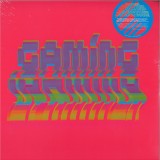
Following January’s acclaimed vinyl debut from Exterior and summer’s much-loved Kota Motomura EP, Edinburgh’s Hobbes Music label ends 2019 with its first album release, also a debut, from GAMING, a fresh new braindance electronica project straight outta Glasgow, from producer and musician Alan Bryden.
GAMING is a new solo outing that brings together a lifelong love of music and technology and creating left field, rhythmic electronica. It’s the sound of IDM, nineties techno and mensch maschine computer music that is as spontaneous as it is programmed.
“Scenes From A Deserted City is a collection of tracks that started as a set of riffs, loops, rhythms and grooves and unfurled around a sense of growing unease about the future of the urban environment around me.
It’s an album that started out as sound…and ended up as a way of telling stories about the age of anxiety we live in, how our world is changing, and how we find a way through that.
This is DIY electronica from Glasgow – it was made on a growing collection of digital and analogue synths and FX units, including a bunch of modular racks, each with its own idiosyncrasies and character that belies the assumption of the binary.
The studio where it was recorded – an abandoned, and often very cold, school building reclaimed by the community some twenty years ago – offered up stories of resilience, even when all seems lost. (I’m not sure what the mice contributed but they definitely climbed in and out of some synths).
This album is ultimately about my changing relationship with Glasgow, a city I’ve lived in for more than 25 years. It’s about how I feel now about the increasing sense of urban decay and how the city can be a very isolating place. It’s about how I reflect on my younger creative self trying to find a direction but mainly feeling a sense of dislocation and not fitting in. And it’s about the questions I have about how that relationship is changing, how it will be forced to move forward.
The result is a soundtrack for walking home on your own, in that headphone bubble when it’s just you focusing on that music that makes sense to you alone. It’s for early in the morning, after the night before, or going to work with the memories of that slipping and sliding inside your head. It’s about how it feels to be both elated and lonely, to be lost in the familiar, despairingly hopeful.”
ALAN BRYDEN (Glasgow, August ‘19)

All sounds recorded at various locations in Europe, South America and at EMS, Stockholm using the Buchla 200 modular synthesizer.
soar, all sounds recorded with Klara Lewis in Montreal 2018
Mastered by Russell Haswell. January 2020
Cut at Schnittstelle, Berlin by Andreas Kauffelt, January 2020
Image : Mark Hogben
Layout: Nik Void
The last two years have seen me maintaining an association with an unusual bedfellow, death. The loss of Mika Vainio, as well as three members of my own family, has had a profound effect on me and spurred a lengthy reflection on life, death, and everything in between.
Parallelly, while studying the philosophy of science, I came across shadow photons:
"Tangible photons are the ones we can see or detect with instruments whereas shadow photons are intangible (invisible) detectable only indirectly through the interference effects on the tangible photons.
There is no intrinsic difference between tangible and shadow photons: each photon is tangible in one universe and intangible in all the other parallel universes.
They travel at the speed of light, bounce off mirrors, are refracted by lenses, and are stopped by opaque barriers or filters of the wrong colour. Yet, they do not trigger even the most sensitive detectors. The only thing in the universe that a shadow photon can be observed to affect is the tangible photon that it accompanies. This is the phenomenon of interference.
Shadow photons would go entirely unnoticed, were it not for this phenomenon and the strange pattern of shadows by which we observe it.
Thus the existence of a seething, prodigiously complicated hidden world of shadow photons has been inferred."*
I have drawn a parallel between shadow photons and death. The interference phenomena, parallel universes, and how shadow photons affect tangible photons they accompany, offer, in my opinion, similarities, an unknown universe which is death and how we, remaining tangible human beings, are affected. This quest has led me to be more willing to accept chaos in my life and to conclude that Death is perfection, everything else is relative.

Belgian psychedelic jazz collective Compro Oro are pleased to announce a new collaboration with Murat Ertel, co-founder and frontman of Istanbul's cult psychedelic folk band BaBa ZuLa and his singer partner Esma Ertel. Entitled 'Simurg', the album is set for release on the 19th June via Sdban Ultra and follows Compro Oro's critically acclaimed sophomore album 'Suburban Exotica', released last year.
Compro Oro's introduction to Turkish psychedelics came off the back of a live performance between guitarist Bart Vervaeck and Murat Ertel at Istanbul Express in 2016. Connecting both musically and spiritually, they headed into the studio and under the watchful eye of producer and multi-instrumentalist Dijf Sanders, Compro Oro and Murat recorded several tracks during an intense recording session that would make up 'Simurg'. "The new music is entirely based on improvisation. In contrast to 'Suburban Exotica', which is built more from song structures and where there was more overdubs," explains frontman Wim Segers.
The story of Simurg is a story of attraction, existential research, purification and rebirth. In a mysterious search for fulfilment, millions of birds embark on a journey, crossing several valleys, each representing a human characteristic. While some yield to the attractions of love, ego or grow ignorant and faithless, others remain curious and continue their expedition. Slowly but surely this murmuration of birds thins out and a selection of 30 birds reach Mountain Kaf and the nest of the Simurg. There and then they become one, they are reborn and reincarnated in an almighty and omniscient phoenix.
The strength of Simurg as a result of its power to resurrect from its own ashes reflects the resilience of every human being. We all have the power to strengthen and improve ourselves, not in the least in our contact with others, and this is exactly what this project is about: a spontaneous dialogue, a quest for new musical horizons, a gathering of liberal spirits to reach for the unknown. From the Anatolian rhythms and reverb-smothered funk rock of 'Ben', to the mystical atmospherics of 'Ignorance Is Bliss (Valley Of Ignorance)' and the dark, dub-infused grooves of 'Valley Of Disbelief', 'Simurg' is an allegory about the noise that you can create as a person.

Black Sheep – and their 1991 ‘A Wolf in Sheep’s Clothing’ album - were definitely an outlier in the Native Tongues fold. They were raunchier and more playful than their peers which, given that those peers were A Tribe Called Quest, De La Soul and Jungle Brothers, is really saying something.
‘Strobelite Honey’ catches that difference perfectly, leaning heavily on a pair of 1980 disco samples rather than the jazz of their brethren, and taking a somewhat less chivalrous approach to women. ‘Strobelite’s slender but fun narrative sees rapper Dres up in the club and fooled by the lights – approaching a girl he likes the look off but backing off when they reveal she’s not what he expected. Charmed, we’re sure.
Dres and his partner Mr. Lawnge were always willing to push boundaries, and that extends to the often confusing labelling of the various remixes of this choice single. 12”s dropped with the ‘No We Didn’t Mix’, ‘Yes We Did Mix’ and ‘Maybe We Did Mix’ (not to mention a separate 12” of House mixes).
The last and best of these accompanied the original version on the now-rare 1991 7”, as it does here. The ‘Maybe We Did Mix’ adds urgent horns - almost like the buzzing of a bee - and a new beat to completely reconfigure the sound into something much more of its era. It’s a reminder of when remixes were about much more than the same beat with different rappers.

Theresa Stroetges has and always will be a traveler. Under the name Golden Diskó Ship or as a member of bands like Soft Grid or the improv collective Epiphany Now!, the Berlin-based multi-instrumentalist has continuously been moving through the fringes of experimental music, but also extensively explored the possibilities of tried and tested formulas - whether folk, rock, techno or pop. With her fourth solo album, her first for the Karaoke Kalk label, the Golden Diskó Ship is yet again venturing into unknown territory. »Araceae« is inspired by environmental changes and the eerie feelings that arise when faced with natural beauty - when everything seems perfect on the surface but something feels off underneath it all. As a whole, it is notably more focused on electronic grooves that provide the foundation for Stroetges’s poetic long-form storytelling.
Partially conceived during a residency in India, »Araceae« is the first Golden Diskó Ship record to feature two guest musicians. For »Wildly Floral, Slightly Damp,« Stroetges collaborated with percussionist Dripta Samajder who with his Sri Khol contributes complex rhythms to a driving beat that wouldn’t be out of place in the record bags of daring DJs. Sophia Trollmann takes over saxophone duties for »Ortolan,« a riveting coming-together of intricate, IDM-flavoured techno and jazz-inspired improvisation. Both are integral standout tracks on an album that clearly follows a holistic plan. Already the opener »Clouds of Neon Limelight« dips into anthemic synth pop territory, but unfolds into a great saga full of ominous undertones and Stroetges’s trademark: layered vocals that at once evoke feelings of uncanniness and intimacy.
It’s a juxtaposition that runs throughout »Araceae,« thus enforcing the album’s overall themes of sensual experience and alienation. »Game of Biryani« for example lends some of its musical structures from pop music, calling into question traditional songwriting conventions which here reappear as irritating echo effects rather than recycled old tropes. With the lush »Limping over the Prairies« and the adventurous »Glow-in-the-Dark Gloves,« Stroetges further challenges her audience by applying noise and a heavy dose of autotune respectively to disorientating effect.
The couple makes for an impressive finale of an album that scrutinises our ideas of what is natural - whether in music or the world around us. »Araceae« was inspired by the travels of its creator, but also sets out to ascertain what lies beyond everything that eyes or ears can perceive.

Khruangbin has always been multilingual, weaving far-flung musical languages like East Asian surf-rock, Persian funk, and Jamaican dub into mellifluous harmony. But on its third album, it's finally speaking out loud. Mordechai features vocals prominently on nearly every song, a first for the mostly instrumental band. It's a shift that rewards the risk, reorienting Khruangbin's transportive sound toward a new sense of emotional directness, without losing the spirit of nomadic wandering that's always defined it. And it all started with them coming home. By the summer of 2019, the Houston group_bassist Laura Lee Ochoa, guitarist Mark Speer, drummer DJ Johnson_had been on tour for nearly three-and-ahalf years, playing to audiences across North and South America, Europe, and southeast Asia behind its acclaimed albums The Universe Smiles Upon You and Con Todo El Mundo. They returned to their farmhouse studio in Burton, Texas, ready to begin work on their third album. But they were also determined to slow down, to take their time and luxuriate in building something together. Musically, the band's ever-restless ear saw it pulling reference points from Pakistan, Korea, and West Africa, incorporating strains of Indian chanting boxes and Congolese syncopated guitar. But more than anything, the album became a celebration of Houston, the eclectic city that had nurtured them, and a cultural nexus where you can check out country and zydeco, trap rap, or avant-garde opera on any given night. In those years away from home, Khruangbin's members often felt like they were swimming underwater, unsure of where they were going, or why they were going there. But Mordechai leads them gently back to the surface, allowing them to take a breath, look around, and find itself again. It is a snapshot taken along a larger journey_a moment all the more beautiful for its impermanence. And it's a memory to revisit again and again, speaking to us now more clearly than ever.

The sublime Time Capsule remains Weldon Irvine's most fully realized and influential recording. A supremely talented multi-instrumentalist and composer, Irvine had a musical vision that was unerringly soulful, spiritual, and funky. Assembled as a kind of musical scrapbook documenting the thought patterns and belief systems of the early '70s, it nevertheless boasts a surprising vitality and timelessness thanks to luminous funk grooves that anticipate the latter-day emergence of acid jazz. Irvine also rhymes over several tracks, further cementing his influence on successive generations of hip-hop. A profoundly righteous spirituality winds through all eight of Time Capsule's performances, assaying both the affection ("Soul Sisters") and anger ("Watergate") vying for control of post-Woodstock America. Irvine's searing keyboard and piano playing further capture the moment in question, deftly balancing between beatitude and bitterness. For fans of funk, soul and jazz, it doesn’t get much better than this 1973 classic.
a A1. Time Capsule - Electric Piano, Narrator Recitation – Weldon Irvine

Parisian "Geo Balasta" pulls an extra-lucid extra techno from the earth's surface that has allowed him to open for Salut C'est Cool. His unexpected productions, bordering on derision, constitute the DNA of an acidic shiver which finds its sources in Green Velvet, the Horrorist or Gigi d'Agostino and which will soon be released on the 'Johnkôôl Records' label.

Limited edition LP with riso printed insert + CD. Bram Weijters' Crazy Men is an adventurous take on Belgian jazz-rock and fusion from the seventies.The lineup of Crazy Men includes musicians who play in a wide array of contemporary jazz bands like BRZZVLL, Dans Dans, STUFF. and Internal Sun.
