Admittedly, I'm not a great salesperson when it comes to running our little label. I do my best not to give into hyperbole or build something up too intensely if someone has not heard a new artist yet. I prefer to simply present the music and let the listener decide how they feel about it. However, we live in an age when the "story" put together by publicists, labels, and managers are often the driving force of an artist's ascension into the zeitgeist. And for me, that's always felt rather artificial, even when the narrative is genuine. But every once in a while, a project comes along that takes on a life of its own. And I can say without a doubt that the growth of Pale Jay's reach since we first started working with him has little to do with conjured narratives or clever marketing, but more to do with how the music makes the listener feel. It's that simple. In fact, Jay is so enigmatic and without a narrative that the mere absence of a story has become the story. Who is he? Where is he from? What's next? Some questions are better left unanswered in my opinion, my friend. Including the question, "Why does this music make me feel so much?" You're better off just sitting back, disconnecting, and letting Low End Love Songs by Pale Jay wrap you up. Enjoy and spread the good word. - Terry Cole
"Low End Love Songs", more so than previous releases, is a diary in form of song. I knew I just had to wait for the songs to be ready to be picked, like ripe fruit from a tree. Each tune encapsulates a distinct moment in my life, with music serving as my means of processing complex and sometimes conflicting emotions. In this album, I depart from loop-based song structures towards more intricate and lush compositions. Latin influences permeate the music, adding new layers of rhythms and textures to my soul-music roots. - Pale Jay
Buscar:the quest
“Tu non hai questo suono. Non avrai mai questo sound”
Blank Mind presents three sublime versions of Big Hands’ ‘Girde Maye / Astere’ from Tammo Hesselink, Notte Infinita and Paperclip Minimiser - originally released on the Ossario EP in 2021.
Though playful in nature, and not overtly political - the lyrics explore identity and geographical boundaries. As the artist explains - it is written by an Italian and a Türk that talks in Italian, released in Britain in times of Brexit “and that’s why I chose to have a title in Kurdish in a song “sung” by a Türk.”
The vocal provides endless scope for reshaping and is entrusted to some of the most distinctive producers in electronic music; each of whom sensitively reimagine the original.
On the flip, the esteemed and prolific Tammo Hesselink produces a robust, and heavy version in his angular, crystalline style. Finally, Cong Burn wizard Paperclip Minimiser slows the tempo with a futuristic roller, an impressive creation by a man deeply immersed in technological innovation and at one with his machines.
Lukas de Clerck brings us the ancient greek instrument, the aulos, of which his new interpretation of long form expression is coaxed forth on this tremendous recording. Lukas de Clerck explores a niche of archaeological research in music; the aulos is a historical Greek instrument that Lukas analyzed and reinterpreted by a luthier in modern times_navigating this impression as an artwork or living sculptural object, as there is an absence of historical partitions or written information about how to recreate technique on the instrument. Lukas de Clerck has interpreted information from the rare archaeological resources and visual art of the classical Greek period to recreate both playing technique and possible sound timbres with the instrument. With his contemporary approach to drone, post-minimalist music, and contemporary folk, we find a deeply satisfying and compelling, even playful set of songs, timbral exercises and compositions. An important document of new music meets contemporary archaemusicological research via Stephen O'Malley of SUNN O)))'s label Ideologic Organ. _ The telescopic aulos is speculative: might it have existed? It takes on features from the historical aulos, a double-reed instrument of which we know how it looked but little about what music was played on it or how it would have really sounded. It's an instrument without the limitations of canon or manual, providing creative freedom and awakening curiosity. The new instrument featured on this album is ancient and futuristic at once. The aulos has no tone holes; instead, each of the two tubes consists of three parts that can slide into each other. In this sense, the metal pipes bear a certain resemblance to the principle of a trombone. However, since both hands are already in use to hold both tubes, the sliding has to be done by way of gravity and the help of a «phorbeia», a leather mask which helps keep the reeds in place. The aulos's material is metal (instead of wood), which gives it a certain electronic allure and intensity, as well as a variety of sonic possibilities and textures. It produces overtones efficiently and allows them to play with their microtonality. The aulos Lukas plays on this recording was developed at Brasserie Atlas, a temporary occupation of a former brewery in the heart of Brussels where Lukas lives. It is quite a poetic coincidence that the birthplace of the instrument is named after the Greek titan condemned to carry the sky, while this instrument needs to be turned skywards to lower its pitch with the help of gravity. At Brasserie Atlas, Lukas has found collaborators who have shared in the process of building this new instrument: the collective Noir Métal has constructed the tubes, in this way becoming instrument builders; the phorbeia has been manufactured by Jot Fau; a former water reservoir in the vast cellar of the building carried the instruments' resonance for its first sounds. The place has left an imprint on this new instrument. With all of the telescopic aulos' layers, its sonic, musical and extra-musical components are still unfolding their potential as a medium for discovery and research, next to being an instrument of great musical potential. The music on The Telescopic Aulos of Atlas reflects this spirit. In several miniature pieces, it presents an encyclopaedia of musical possibilities that the instrument offers while keeping an intense and corporeal sonic specificity. The short pieces are studies that reflect on the sonic possibilities of this instrument that are yet to be explored. It meanders, searches and interacts with itself and the space. It needs to answer common expectations of old instruments being harmonious or pleasing. It transports a kind of experimental archaeology that, by formulating hypotheses in the present, allows us to reflect on what might have been in the past and simultaneously questions concepts of beauty, harmony or virtuosity. However, in the end, this instrument might have never existed before. -Julia Eckhardt
ercury Rev take you on a swan dive into the mystic: a rapture of ballad-dreams and emotional memoir at the crossroads of The Dharma Bums, Pet Sounds and Side Three of Electric Ladyland. A profound, transcendant trip from the psychedelic explorers who brought you Deserter's Songs.
David Fricke In upstate New York, deep in the seam between the Catskills mountains and the Hudson Valley, a richly swelling, spellbound sound emerges, eddying and flowing like the local Esopus Creek, or in the slipstream of the grander Hudson river, carrying the flotsam and jetsam of our hopes, dreams, fears. A sound composed of organic and electronic; guitars, keys, brass, strings, woodwind, drums - and a voice of incantations, tapping streams of consciousness that similarly eddy and flow.
Spiritually, literally, psycho-geographically: where else does Mercury Rev’s ninth album Born Horses spring from? This cascade of gleaming, glistening psych-jazz-folk-baroque-ambient quest that searches its soul but can never truly know the answer? A sound and vision linked to their exalted past whilst quite unlike anything they have created before?
The answer is somewhere between the homes of founder members Jonathan Donahue (the hamlet of Mt Tremper) and Grasshopper (the town of Kingston), in their veins and brains of their now-legendary tapping of musical cosmology, and the vital presence of new permanent member Marion Genser (keys), plus long-term ally Jesse Chandler (keys) and guests Jeff Lipstein (drums), Martin Keith (double bass) and Jim Burgess (trumpet). A place that feeds off the levitating mood of their last album, 2019’s expansive tribute Bobbie Gentry's The Delta Sweete Revisited, and the instrumental psych explorations under the names of Harmony Rockets and Mercury Rev’s Clear Light Ensemble, and the spiritual guidance of avant-garde artist Tony Conrad and Beat poet Robert Creeley, to whom Born Horses is
dedicated.
Admittedly, I'm not a great salesperson when it comes to running our little label. I do my best not to give into hyperbole or build something up too intensely if someone has not heard a new artist yet. I prefer to simply present the music and let the listener decide how they feel about it. However, we live in an age when the "story" put together by publicists, labels, and managers are often the driving force of an artist's ascension into the zeitgeist. And for me, that's always felt rather artificial, even when the narrative is genuine. But every once in a while, a project comes along that takes on a life of its own. And I can say without a doubt that the growth of Pale Jay's reach since we first started working with him has little to do with conjured narratives or clever marketing, but more to do with how the music makes the listener feel. It's that simple. In fact, Jay is so enigmatic and without a narrative that the mere absence of a story has become the story. Who is he? Where is he from? What's next? Some questions are better left unanswered in my opinion, my friend. Including the question, "Why does this music make me feel so much?" You're better off just sitting back, disconnecting, and letting Low End Love Songs by Pale Jay wrap you up. Enjoy and spread the good word. - Terry Cole
"Low End Love Songs", more so than previous releases, is a diary in form of song. I knew I just had to wait for the songs to be ready to be picked, like ripe fruit from a tree. Each tune encapsulates a distinct moment in my life, with music serving as my means of processing complex and sometimes conflicting emotions. In this album, I depart from loop-based song structures towards more intricate and lush compositions. Latin influences permeate the music, adding new layers of rhythms and textures to my soul-music roots. - Pale Jay
This original three-track set questioned all sorts of norms, the standout item “Chasin’ The Trane” lasting 16 minutes with the tenor man the only soloist and a 12-bar grid the only thing for performers and fans to hold on to. “Spiritual”’ was the first time Trane opened and closed a piece entirely out-of-tempo, while the conventional “Softly As In A Morning Sunrise” began with over three minutes of just the rhythm trio before his soprano solo. Bonus track on this LP “Blue Train” recorded in Sweden. Not merely the first live Trane to be issued, but a turning-point for him and essential listening for us. This version is limited on Solid Purple & Solid Red mixed vinyl.
Ace hat den Teppich ausgerollt, als es um die Neuauflage der Deluxe-Vinyl-Edition von The Seeds' gleichnamigem Debüt (HIQLP 129) sowie 'A Web Of Sound' (HIQLP 135) ging. Beide Alben enthalten nicht nur die Original Tracklistings, sondern auch eine zusätzliche LP mit Outtakes, alternativen Versionen und anderen Juwelen. -Ace freut sich nun, eine 2-LP-Deluxe-Edition des klassischen dritten Albums 'Future', anbieten zu können. Diese LP erschien ursprünglich 1967. Die erste LP präsentiert das Original-Stereo-Master von mit Titeln wie 'Out Of The Question', 'A Thousand Shadows' und 'Travel With Your Mind'. Die zweite LP enthält Bonustracks, alternative Takes und Mixe, die zeigen, dass der klassische Rock'n'Roll-Sound von Seeds unter den Overdubs genauso stark geblieben ist wie eh und je. 'Future' wird in einem dicken Hochglanz-Foldout geliefert und enthält außerdem ein achtseitiges, reich illustriertes Booklet mit Anmerkungen von Alec Palao.
The impact, influence, and importance of Run-D.M.C.'s self-titled debut – the album that invented hardcore hip-hop and bridged rap, rock, and funk in then-unparalleled ways – cannot be measured. The first full-length record released by Profile Records, the 1984 set permanently changed the sound of music, broadcast streetwise wisdom to every corner of the country, and made the notion of a one-man band a distinct reality. Bolstered by an incendiary blend of staccato deliveries, stark beats, aggressive exchanges, evocative hooks, and socially conscious messages, Run-D.M.C. still hits listeners in the jaw with the same intensity it did nearly 40 years ago when it could be heard booming from ghetto blasters carried around city blocks nationwide.
Sourced from the original master tapes, pressed on MoFi SuperVinyl, and strictly limited to 3,000 numbered copies, Mobile Fidelity's 180g SuperVinyl 33RPM LP is the definitive-sounding version of the groundbreaking work cited by Rolling Stone as the 378th Greatest Album of All Time. This reissue also represents the first time this gold-certified effort has been presented in audiophile quality. Benefitting from the ultra-low noise floor, superb groove definition, and dead-quiet surfaces of SuperVinyl, Run-D.M.C. now plays with a clarity, immediacy, punchiness, and directness worthy of the artistry, urgency, and intellect of the trio's material.
The brilliance of Russell Simmons and Larry Smith's production comes into view as if the music is being broadcast on a giant system in a small club — only more focused, lively, and unlimited. Free of dynamic constraints and fatiguing harshness, this LP invites you to turn up the volume and experience the raw, rough, invigorating songs that changed the look, sound, and feel of hip-hop overnight. Think the trio’s sparse framework of drum machines, tag-team rhymes, keyboard accents, and turntable scratches is stuck in the mid-80s? Spin MoFi’s SuperVinyl LP and gain new appreciation for the music, messages, and production on display on Run-D.M.C.
Recorded in the wake of two successful and pioneering singles, both included on the album, Run-D.M.C. effectively took a sheet of coarse-grit sandpaper to the polish, sheen, and linear presentation of all the hip-hop that preceded it. Stripped to bare-bones foundations, the songs grab your attention and shake you by the collar with a combination of industrial-leaning rhythms, staggered deliveries, dance drama, and hard, minimalist percussion. Then there are the lyrics.
The LP broadcasts a smart mix of boots-on-the-ground reports, uplifting advice, and then-nascent b-boy culture. In one fell swoop, its narratives and music rendered the scene’s proclivity toward glamor and softness passé. Run-D.M.C.’s tough, cool-minded fashion sense showed the trio walked its talk and gave fans — particularly those living in long-ignored urban areas — heroes which with they could identify. Kangol hats, black jeans, leather jackets, Adidas sneaks, and gold chains were the new currency.
In every regard, Run-D.M.C. signifies the birth of modern hip-hop. Never more obviously than on the groundbreaking “Rock Box,” where rap and rock were first fused. As the first hip-hop video to receive regular rotation on MTV, the track eviscerated racial and social boundaries, awakened musicians and listeners to new possibilities, and redefined both popular music and, ultimately, popular culture. As the Roots’ Questlove has stated, it “ knocked down many obstacles, enabling hip-hop to become the new gospel."
Such teaching includes the real-world scripture of “Hard Times,” utopian hopefulness of “Wake Up,” and observational truths of “It’s Like That.” Released as the group’s debut single well before its eponymous album, the latter tune established themes and outlooks Run-D.M.C. would embrace during its career. Namely, the keen awareness of various prejudices, economic ills, and disruptive violence as well as the knowledge that education, self-motivation, and hard work were the ways to escape disadvantages and disillusionment.
Inspired and inspirational, the song reflects the spirit and shrewdness that courses throughout Run-D.M.C. That includes a detailed account of the trio’s not-so secret weapon (“Jam-Master Jay”), purpose statement (“Hollis Crew (Krush-Groove 2)”), and a revolutionary hybrid autobiographical narrative-dis track (“Sucker M.C.’s (Krush-Groove 1)”) widely regarded as one of the best hip-hop songs ever created. The same can be said for every moment on Run-D.M.C.
MoFi SuperVinyl
Developed by NEOTECH and RTI, MoFi SuperVinyl is the most exacting-to-specification vinyl compound ever devised. Analog lovers have never seen (or heard) anything like it. Extraordinarily expensive and extremely painstaking to produce, the special proprietary compound addresses two specific areas of improvement: noise floor reduction and enhanced groove definition. The vinyl composition features a new carbonless dye (hold the disc up to the light and see) and produces the world's quietest surfaces. This high-definition formula also allows for the creation of cleaner grooves that are virtually indistinguishable from the original lacquer. MoFi SuperVinyl provides the closest approximation of what the label's engineers hear in the mastering lab.
2024 Repress
Alleviated Records presents the first-time vinyl reissue of Larry Heard's mid-90's gem ''Sceneries Not Songs, Volume 1''. The album stems from a time when the tempo slowed down and Heard reached a perfect synthesis of jazz influences, deep electronic ambiance and the house sound he was known for. The result is a brilliant album that should cater to both house and R&B heads alike. Now for the first time released as a 2x12''
The very first Buchla synthesiser performance by revolutionary composer Suzanne Ciani finally makes its fifty year journey from its switch-on New York art gallery to its long deserved and discerning global phonographic audience.
With this previously unheard vinyl pressing, Finders Keepers Records are proud to present an archival project of ‘art music’ that not only redefines musical history but lays genuine claim to the overused buzzwords such as pioneering, maverick, experimental, groundbreaking and esoteric, while questioning social politics and the evolution of music technology as we have come to understand it. To describe Italian-American composer Suzanne Ciani’s resurrected Buchla concert records as genuine gamechangers would be a gross understatement. These records represent a musical revolution, an artistic revelation, a scientific benchmark and a trophy in the cabinet of counterculture creativity. This sonic installation album, alongside her recently liberated WBAI/Phill Niblock 1975 sessions (FKR082), are triumphant yardsticks in the synthesiser space race and the untold story of the first woman on the proverbial musical moon. While pondering the early accolades attached to these golden era New York recordings it’s daunting to learn that these records were in fact not even records at all.
What exists on this disc now was a manifesto and a one-time gateway to a new world, which somehow was only partially pushed ajar. Captured here is a genuine live act exploring new territories with a fully performable music instrument. If the unfamiliar, modernistic, melodic pulses, tones and harmonics found on these 1970’s artistic gallery collaborations/ live presentations (then soon to be followed by academic grant applications and educational demonstrations) had been placed in a phonographic context alongside the widely marketed work of Morton Subotnick, Walter Carlos or Tomita, then the name Suzanne Ciani and her infectious influence would have already radically changed the shape, sound and gender of our record.
With the light of Buchla and Ciani’s initial flame Finders Keepers continues the journey through the vaults of this increasingly celebrated music legacy, illuminating these ‘non-records’ that evaded the limelight for almost half a century. You can’t write history when you are too busy making it. With fresh ink in the bottomless well, let’s start at the beginning. Again
Having established himself as one of the most energetic and exciting Jazz musicians within the already thriving worldwide scene, New Zealand born, London based Drummer & Producer Myele Manzanza has made a major impact upon the global music landscape.
A founding member of Electric Wire Hustle, Myele has released five solo albums, and racked up tours and collaborations with Jordan Rakei, Theo Parrish, Miguel Atwood-Ferguson, Recloose and Amp Fiddler amongst others . Myele has developed a strong live presence in his new London base; his quartet has shared stages with the likes of Hiatus Kaiyote, The Bad Plus, Alfa Mist, and drawing packed houses to top venues such as The Jazz Café and Ronnie Scott’s. Last year, the first two instalments of his 'Crisis & Opportunity’ record series saw him garner praise from Mary Anne Hobbs, Cerys Matthews, Jamie Cullum, Huey Morgan, The Guardian, Complex, Jazz FM, Lefto, Worldwide FM, Jazzwise and more.
Following the release of his last offering, a chance conversation between Myele and a young Barista at a local coffee shop occurred - their topic (centred around the trials and tribulations of following your musical passions) sent Myele down a spiralling path of internal reflection, spawning a new lease of creative energy and examination of new ways to approach his craft. The third addition to the heralded series, ‘Crisis & Opportunity Vol.3 - Unfold’ sees Myele change his approach from drummer / improviser, altering his sonic output to a more electronic dance music output, opting for a more producer / beatmaker focussed role. Sharing production duties with Lewis Moody (Zeitgeist Freedom Energy Exchange) and taking a more producer / beatmaker focussed role. His initial instinct was to create music that could be played in a club, but also incorporate elements music of the Jazz and technical musicianship he’s renown for.
Articulating his thoughts on the record’s genesis, Myele explains: ‘‘As the process developed, I was also drawing a lot of inspiration from vocal driven soul, RnB and songwriter-driven music to a point where I had lit a new creative fire. Reconsidering the direction of the album, I was left with the creative question “What broader ranges of emotion might my music be able to access, and what kinds of art could be made possible if I were to open up my music to hold space for singers and for stories?”
First single ‘Silencing The Sun’ features the vocal talents of fast-rising fellow Kiwi artist Wallace, whose spectral tones glide gracefully over the pulsating rhythm section and twinkling keys. On second single ’Therapy’ UK Soul royalty Omar weaves his trademark magic over a solid 4/4 beat, soulful key stabs and lush synths, bottling lightning into dancefloor alchemy. Final single ‘Unfold’ sees Rachel Fraser deliver a delicate and introspective vocal performance over stripped back instrumentation as cold, angular electronics juxtapose the warmth of piano keys and sweeping strings. With a wealth of additional incredible talent (such as China Moses and Rosie Frater Taylor) enlisted to further compliment the record’s grainy synth textures, emotive chord changes, driving low end sonics and expressive percussion, the scene is set for a beautiful, shifting and engaging listening experience.
Critically acclaimed series We Are Lady Parts follows the highs and lows of the band – Lady Parts – as
seen through the eyes of Amina Hussain – a geeky microbiology PhD student, who’s on the lookout for love and is recruited to be their unlikely lead guitarist.
The second season, which launched on Channel 4 (UK) and Peacock (US) on May 30th, sees the band return
with a renewed artistic mission after the high of their first UK tour, only to find a rival band threatening their delicate status quo.
But as the reality of chasing success sets in, Lady Parts embarks on recording their first album,
juggling personal ambitions and questioning whether ‘making it big’ is really what they want.
This vinyl release features original songs and surprising cover tracks from season 1 and 2!!
- A1: Thats How It All Is (Feat Kevin Mark Trail)
- A2: Dumplings For Dinner (Feat Omar)
- A3: Long Road
- B1: No Crime To Try
- B2: Work It Out (Feat Ange Williams)
- C1: Clearer Skies (Feat Kevin Mark Trail)
- C2: Sherwood Ave (Kitchen Party)
- C3: Everything I Have To Give
- D1: That Love (Feat Louis Baker)
- D2: Some Kind Of Blockage
Black Vinyl[30,88 €]
The records is released in two options. Both hvae 180g vinyl records. The first version has two black vinyls and the second limited edition (numbered 100 pieces) has one turquoise vinyl and the other red.
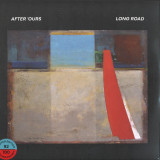
Over the last three decades, Auckland, New Zealand, has given birth to several generations of musicians, DJs, and producers who operated within the interzone between jazz, blues, soul, funk, Latin music, hip-hop, house, boogie, and broken beat. Across two slow-cooked albums that sit at the intersection of machine funk and vivid live instrumentation, Odyssey (2016) and their forthcoming sophomore release Long Road (2024), After 'Ours - the group project of pianist and composer Michal Martyniuk and drummer, guitarist and producer Nick Williams - have comfortably located themselves within this antipodean tradition.
Born and raised in Auckland, Nick Williams grew up surrounded by music from a young age. At home, his mother, Mary Anne, a record collector and DJ with deep, diverse vinyl crates, kept his ear sharp. By the time he was eight years old, he was regularly joining his musician father on stages across Australia in his blues rock band Slippery Sam. In his early twenties, Nick began leading the eleven-piece Auckland Latin-dub-funk fusion big band Tangent, who performed regularly until the late 2000s.
Michal Martyniuk, on the other hand, grew up on the opposite side of the world in Szczecin, Poland. After playing classical music for twelve years and attending jazz school, he relocated to New Zealand with his family in his teens. While studying at Auckland University Jazz school, Michal came into the orbit of the legendary New Zealand saxophonist, composer, producer, and band leader Nathan Haines, who brought him into the same world as future collaborators like Tama Waipara, Batacada Sound Machine, Sola Rosa and Nick.
Inspired by the rich stories of jazz, neo-soul, electronica, and dance music from both sides of the Atlantic Ocean and the open-eared Auckland scene they emerged from, After 'Ours formed in 2011. Born out of a friendship cultivated through playing together at bars and nightclubs around town and home studio sessions. "Nick had family and work, so I had to wait all day," Michal says. "We'd come to the studio at 10 PM and go till 3 AM. That's how we came up with the name.
Session by session, After 'Ours revealed itself to be a creatively fertile meeting of minds. "We both have our angles, but it works well in the end," Nick reflects. "It takes the music to a place we can't get to by ourselves."
Between 2011 and 2016, they wrote and recorded Odyssey with a cast of musical collaborators that included KP, Sharlene Hector & Kevin Mark Trail (UK), Matt Nanai, Nathan Haines, Jakub Skowronski, Nick's partner Ange Williams (nee Saunders) and British producer Mike Patto from the lauded UK future jazz group Reel People. Influenced by the smooth yacht rock of Steely Dan and Donald Fagan, the warm midtempo bounce of A Tribe Called Quest and J Dilla, and the complex jazz/RnB bop of Robert Glasper, Odyssey was a labour of love that emphasised community, warm-hearted hospitality, and care.
Seven years on, they're finally ready to return with Long Road, an album that contains some of their best work yet. As well as reconnecting with past collaborators Kevin Mark Trail and Ange Williams, Long Road sees After 'Ours calling on assistance from Louis Baker, Jakarta-based saxophone player Kuba Skowroński, bassist Dan Antunovich, Los Angeles-based drummer Chris Bailey and the journeyman British soul artist Omar Lyefook.
Across ten songs that plot a stargazed course through their antipodean spin on UK broken beat, jazz, modern soul, and blues rock, Nick and Michal build on everything they learned while writing and recording Odyssey. In the process, they take their joyful musical visions to sublime new heights.
"Even God Has A Sense Of Humor" is the long-awaited follow up album to Maxo's critically acclaimed 2019 release Lil Big Man. Across the 14-tracks, Even God Has A Sense Of Humor pays tribute to the mercurial nature of life and includes features from Liv.e, keiyaA, LastNameDavid, and Melanie Charles along with the previously released singles "Free!," produced by Dev Morrison and "48," produced by Madlib and featuring Pink Siifu. The FADER recently sat down with Maxo to discuss the album, which they described as having "a defiant glow, like a bronze statue still standing after an intense tornado."
Born Maxamillian Allen, Even God Has A Sense Of Humor finds Maxo earnest, full-hearted, and lyrically agile. His delivery punches as he poetically unpacks the trials and blessings that have marked the last three years since Lil Big Man, his stirring and meditative debut album. “Life is always gonna be life-ing,” Maxo says, speaking to the spiritual lessons that inspired this new project and an album process that has revealed to him the many ways in which he’s divinely protected.
The album’s striking cover features three casted sculptures of Maxo by legendary NYC-based artist artist John Ahearn, photographed by the rapper’s friend Steven Traylor. The image both preceded the music and set the tone for the record’s overall aura. Experiencing the casting process—which required long periods of stillness for form, and breathwork to avoid claustrophobia—became a metaphor about ego death for Maxo. “I had to go to a space where I was just not there,” he says. As the molding was poured over his body and the voices of those in the room became distant, Maxo’s inner world came into focus. “By the time it hardened, it seemed like the sculpture had risen to be 20 feet above where it was first— almost like it grew tall,” he explains. EGHASOH, in its aural ebbs and flows, honest questioning, profound revelations, and elegant verse, is Maxo standing spiritually tall following a period of challenges with family and friends.
Maxo’s writing process has always been rooted in imagery, observation, and capturing moments. Growing up in Southern California, Maxo spent a lot of time combing through old family photo albums, some of whose contents have become the artwork for prior releases. But his fascination with visual memento is less about nostalgia or remembering, and more about exploring concepts of growth, healing, and cycles. His artistry is intentional and deeply sensitive: “If I’m not feeling it, I’m not gonna record.” While his past records openly grappled with emotional turbulence, anger and depression, EGHASOH is Maxo’s acceptance stage: “I can't really judge nothing. I can't sit up and be mad at shit because everything is, everything is kind of coexisting,” he says.
Musically, EGHASOH is an impressive evolution from Maxo’s earlier, unornamented lo-fi projects. With an emphasis on jazzy instrumentalism and soothing, intricate vocals from both the artist and featured chanteueses Liv.e, Melanie Charles, and keiyaA, EGHASOH is a welcome and beautifully complex sonic effort. Its contributors include a range of musicians: Pink Siifu, LastNameDavid, Madlib, GrayMatter, Karriem Riggins, Beat Butcha, Lance Skiiiwalker, and more. The album was executive produced by Mount Kimbie’s Dom Maker.
“Nobody talks about the fact that we’re changing as we get older... Everybody just acts like you supposed to know,” Maxo says on album standout, “Face of Stone”. It's moody bassline meets a cinematic accordion melody that paradoxically both broods and uplifts—a fitting production choice that mirrors the song’s story. “I’m seeing how this world is chipping you and withering your bones,” Maxo says. “I’m talking about myself, talking about my bro. But it’s never nothing you gonna do that’s a one stop shop in this life. You gotta keep staying diligent and consistent.” For Maxo, Even God Has a Sense of Humor is nothing more than another moment on the timeline of his offerings of self-expression as an artist—one whose sole intention is to, in his words, develop as a human being and heal.
This is the repeated call and the rallying chorus of the nearly 40-minute centerpiece to composer and percussionist Asher Gamedze’s new album Constitution. The expansive double album, a minoritarian fellowship in breath, is Gamedze’s follow-up to 2023’s Turbulence and Pulse (IARC0057), and his first with The Black Lungs. The album – recorded in one day at Cape Town’s Sound and Motion Studios – is an elaboration of the possibilities of autonomous constitution in and through polyrhythmic, modal, large ensemble music.
On Constitution, the power of the question, the possibility of an improvised answer and the celebration of being together exists not in the solo but in the group, the ensemble. Here The Black Lungs collectively explore and deconstruct the conceptual, tonal, and atonal possibilities of themes which are at once of old and new dreams - curious and instantiative, melancholic and emergent.
“The Black Lungs is inspired by the revolutionary thought and practice of the Black Consciousness Movement. In particular, the relationship between antagonism – constituting a united front of all the oppressed against white supremacy and racial capitalism – and the possibilities for resistance and elaboration - the creative militant capacities of those assembled – enabled and unleashed by that process of constitution.”
- A1: Beyond This World
- A2: Feelin' Alright
- A3: Sunshine
- A4: What "U" Waitin' 4?
- B1: U" Make Me Sweat
- B2: Acknowledge Your Own History
- B3: Belly Dancin' Dina
- B4: Good Newz Comin
- C1: Done By The Forces Of Nature
- C2: Beeds On A String
- C3: Tribe Vibes
- C4: J Beez Comin' Through
- D1: Black Woman
- D2: In Dayz "2" Come
- D3: Doin' Our Own Dang
- D4: Kool Accordin' "2" A Jungle Brother
"2" A Jungle Brother The Jungle Brothers' 1988 debut, Straight Out The Jungle, was important for many reasons. It was sloppy and goofy but had moments of real focus and social consciousness. It was a true kitchen sink' record, that caught a rap fanbase enraptured by Eric B. & Rakim, Public Enemy and Boogie Down Productions a bit off-guard. Also of note, beyond the excellence of the album itself, the Jungle Brothers were the fulcrum for what would become the Native Tongues movement - they came first, De La Soul and A Tribe Called Quest followed, under their guidance. By 1989, the group had even more confidence, plus a Warner Bros. contract and advance in their back pocket. They used it to great advantage on the self-produced and criminally underrated Done By The Forces Of Nature, expanding their sonic palette and continuing their Afrocentric approach to music and life. Singles like What 'U' Waitin' 4' and Doin' Our Own Dang' (with De La and Q-Tip, alongside Monie Love) showed the group's fun side, which has also lead the way in the hip-house' movement. But things weren't all fun and games, as deeper, more pensive album tracks like Black Woman,' Beeds On A String,' and Acknowledge Your Own History' show. It was another accomplished mix of fun, frolic and knowledge-of-self, proving that you could be serious in the rap game but still let off steam and fill the dancefloor. Done By The Forces Of Nature stands as one of the most cherished hip-hop documents of the late '80s among true-school heads, and this edition is the perfect way to revisit this classic thinking-man's (and woman's) rap platter. Issued for the first time ever on 2-LP with the original picture sleeve artwork, it also comes with a reproduction of the original insert, with credits and lyrics.
Human Worth are proud to present the killer debut EP 'God Pile' from Leeds duo Grub Nap, featuring members of Thank, Dvne and Cattle, with a portion of proceeds donated to charity. Grub Nap are a 50/50, double headed, four legged, semi haggered, party at the front business at the back mash up of Dan Barter (Dvne, Joe Pesci) and Steve Myles (Thank, Cattle, Groak, Khuda). They first played together in a hardcore band in their late teens and have teamed back up to churn out sludgecore for folks with short attention spans and no interest in wizards or flag waving. A reunited earful, a midlife distraction, a questionable whiff from the back of the fridge. Crawl on in, the water’s foul. 'God Pile' is a golden brown, 15 minute, crumbly, introspective riff lattice. Snappy(ish) songs about greed, crippling anxiety, suburban nuclear mishaps and flagellant rozzers – 6 knuckle dragging clods of down tuned insolent rage. So pummelling is their racket, that they caught the ears of "supergroup" Empire State Bastard (featuring members of Biffy Clyro, Oceansize and Slayer) who invited the duo on the debut UK tour. Human Worth have pressed up a limited edition of black vinyl, with a stunning etching on side B featuring the art of Steve Myles, with 10% of all proceeds donated to Leeds Mind – promoting positive mental health and wellbeing and providing help and support to those who need it most.
- A1: Thats How It All Is (Feat Kevin Mark Trail)
- A2: Dumplings For Dinner (Feat Omar)
- A3: Long Road
- B1: No Crime To Try
- B2: Work It Out (Feat Ange Williams)
- C1: Clearer Skies (Feat Kevin Mark Trail)
- C2: Sherwood Ave (Kitchen Party)
- C3: Everything I Have To Give
- D1: That Love (Feat Louis Baker)
- D2: Some Kind Of Blockage
Color Vinyl[35,71 €]
The records is released in two options. Both hvae 180g vinyl records. The first version has two black vinyls and the second limited edition (numbered 100 pieces) has one turquoise vinyl and the other red.
Over the last three decades, Auckland, New Zealand, has given birth to several generations of musicians, DJs, and producers who operated within the interzone between jazz, blues, soul, funk, Latin music, hip-hop, house, boogie, and broken beat. Across two slow-cooked albums that sit at the intersection of machine funk and vivid live instrumentation, Odyssey (2016) and their forthcoming sophomore release Long Road (2024), After 'Ours - the group project of pianist and composer Michal Martyniuk and drummer, guitarist and producer Nick Williams - have comfortably located themselves within this antipodean tradition.
Born and raised in Auckland, Nick Williams grew up surrounded by music from a young age. At home, his mother, Mary Anne, a record collector and DJ with deep, diverse vinyl crates, kept his ear sharp. By the time he was eight years old, he was regularly joining his musician father on stages across Australia in his blues rock band Slippery Sam. In his early twenties, Nick began leading the eleven-piece Auckland Latin-dub-funk fusion big band Tangent, who performed regularly until the late 2000s.
Michal Martyniuk, on the other hand, grew up on the opposite side of the world in Szczecin, Poland. After playing classical music for twelve years and attending jazz school, he relocated to New Zealand with his family in his teens. While studying at Auckland University Jazz school, Michal came into the orbit of the legendary New Zealand saxophonist, composer, producer, and band leader Nathan Haines, who brought him into the same world as future collaborators like Tama Waipara, Batacada Sound Machine, Sola Rosa and Nick.
Inspired by the rich stories of jazz, neo-soul, electronica, and dance music from both sides of the Atlantic Ocean and the open-eared Auckland scene they emerged from, After 'Ours formed in 2011. Born out of a friendship cultivated through playing together at bars and nightclubs around town and home studio sessions. "Nick had family and work, so I had to wait all day," Michal says. "We'd come to the studio at 10 PM and go till 3 AM. That's how we came up with the name.
Session by session, After 'Ours revealed itself to be a creatively fertile meeting of minds. "We both have our angles, but it works well in the end," Nick reflects. "It takes the music to a place we can't get to by ourselves."
Between 2011 and 2016, they wrote and recorded Odyssey with a cast of musical collaborators that included KP, Sharlene Hector & Kevin Mark Trail (UK), Matt Nanai, Nathan Haines, Jakub Skowronski, Nick's partner Ange Williams (nee Saunders) and British producer Mike Patto from the lauded UK future jazz group Reel People. Influenced by the smooth yacht rock of Steely Dan and Donald Fagan, the warm midtempo bounce of A Tribe Called Quest and J Dilla, and the complex jazz/RnB bop of Robert Glasper, Odyssey was a labour of love that emphasised community, warm-hearted hospitality, and care.
Seven years on, they're finally ready to return with Long Road, an album that contains some of their best work yet. As well as reconnecting with past collaborators Kevin Mark Trail and Ange Williams, Long Road sees After 'Ours calling on assistance from Louis Baker, Jakarta-based saxophone player Kuba Skowroński, bassist Dan Antunovich, Los Angeles-based drummer Chris Bailey and the journeyman British soul artist Omar Lyefook.
Across ten songs that plot a stargazed course through their antipodean spin on UK broken beat, jazz, modern soul, and blues rock, Nick and Michal build on everything they learned while writing and recording Odyssey. In the process, they take their joyful musical visions to sublime new heights.
Get a taste of everybody's favourite terrestrial with something extra, Jimi Tenor and his fresh brand of galactic balladry with two single versions from his upcoming album on Timmion Records, "Is There Love In Outer Space?". On the A-side, the title track effortlessly merges cosmic synth flourishes with a soulful backbeat, Jimi's smooth vocal and flute stylings, delivering a splendid questioning continuum to Sun Ra's similarly named statement. Flipping to the B-side, the mostly instrumental "Orbiting Telesto" launches us to the outer rings of Saturn with a healthy helping of vintage sci-fi movie soundtrack and library music themes. Accompanied by the down and dirty energy of Cold Diamond & Mink, Jimi's seasoned artistry shines through, showcasing his ability to blend celestial sounds with gritty moondust funk. With these two tracks, Tenor teases our appetite for the two cosmically themed albums in the pipeline for 2024. These songs crafted together with the Timmion crew serve as a testament to Jimi's unique ability to create captivating moods that transcend the usual.
Last Summer, Daniel Foggin, guitarist, writer and chief architect of Smote, uprooted himself from his usual home in Newcastle to live and work in a farmhouse in Kelso, near the Scottish border. “Through the summer when I was working up there, myself and Rob (Smote drummer) would finish work and go sit by a small river and have a couple of beers in the sun, and it was the best thing ever” he relates “So I guess the philosophy is that to some people it looks like any other stream, but to us it was supreme happiness.” Hence came the title of the fourth Smote album proper, one largely recorded in this same farmhouse – A Grand Stream. It’s an album that’s the truest incarnation thus far of his vision for this band – a full-scale psychic voyage into the ether and a drone-and-repetition-fuelled series of incantations that takes simple, primal ingredients and utilises them for the purposes of aural sorcery, summoning spectres and revelations aplenty in its wake. Whilst the folk-tinged, ceremonial ambience that Smote have made their trademark is present and correct here, utilising Swedish classic psych heaviness and Swans textures as fuel for the ominous rhythms of ‘Coming Out Of A Hedge Backwards’ and the uplifting cadences of opener ‘Sitting Stone Part 1’, Foggin and his cohorts also waste little time exploring new more eerie and ethereal textures and dimensions. The meditative ‘Chantry’ in particular sees them gravitate towards a headspace akin to the drone-based epiphanies of Kali Malone’s ‘Does Spring Hide Its Joy’ filtered through the transcendent amplifier worship of ‘Earth 2’. A Grand Steam takes this band – one who’ve always eschewed the cliches and stumbling blocks of all contemporary psych rock in favour of their own unique and wyrd vision – into a realm in which they transcend through willpower and skill alike into something preternaturally thrilling, mapping out their own crepuscular new territory Question is; dare you step over the threshold?