Nicolás Melmann (born in Buenos Aires and now based in Barcelona) explores sound's social and poetic dimensions through transdisciplinary projects. Drawing inspiration from Erik Satie's concept of "furniture music," Melmann's compositions transform the listening experience into havens of calm and contemplation.
Música Aperta is a fusion of acoustic and electronic sounds, rich in beautiful harmonies, where carefully soft elements interplay with delicate raspiness. Made up of three parts, the music unfolds slowly, immersing the listener in time. Música Aperta resonates with echoes of Satie, the meditative minimalism of Arvo Pärt, the roughness of Phill Niblock, and the nostalgic reflections of Richard Skelton.
Another way of listening to Música Aperta is through its digital encore – an extension of the album experience that brings the concept of open music to life – "a work that remains unfinished and open to transformation." The website features a reactive audiovisual interface where images dynamically respond to the music's behavior, translating electroacoustic frequencies into real-time cinematic landscapes. The album blends instrumental and electronic textures while allowing listeners to interact with different layers through a virtual mixer, enabling them to create unique sound combinations and personal sonic experiences.
All songs written and performed by Nicolás Melmann in Château Éphémère.
Mastered by Rafael Anton Irisarri at Black Knoll Studio, NY.
Artwork by Daniel Castrejón.
Buscar:the real
Long coveted by diggers, connoisseurs and beat makers, here we have the first-ever reissue of Amedeo Tommasi's "Industria 2000", released in 1974 via RCA's "Original Cast" series under his Jarrell alias. These 12 sonic experiments - totally devoted to synthesizers - offer tense tonalities, dissonant ambiences, complex textures, white noise rides and muted rhythms that can easily be seen as cornerstones of what would become later known as Industrial Music, also anticipating the sonic landscapes found in some of the early Warp Records releases.
Comprising 12 tracks entirely devoted to synthesizers, Industria 2000 explores a range of stark, tense tonalities and dissonant atmospheres. The album’s complex textures, white noise swells, and muted rhythms can be seen as precursors to industrial music, anticipating the aggressive, abrasive soundscapes that would later come to define the genre. It is clear that Tommasi's work was not only ahead of its time, but was also laying the foundations for the sound realms explored in the early days by major electronic record labels of the 1990s and future electronic pioneers.
Flying Vipers record murky dubwise reggae on a Tascam 8-track in their basement bunker. Their love of Jamaican and UK 70's roots and dub is their north star, but eclectic crates of records and a couple decades worth of punk shows bleed through on tape. Twin brothers Marc & John Beaudette on drums and bass telekinetically lock-in with Zack Brines' layers of vintage organs and electric pianos in concise melodic meditations. "With ‘Off World’, their first full-length album featuring vocalist Kellee Webb, the Boston area band uses this foundation to explore the fight or flight of contemporary survival." While largely original compositions, three covers encapsulate the lyrical and musical themes found throughout the LP; an alienation anthem from Northwest punk pioneers Wipers; the theme from the cult classic animated film La Planete Sauvage, featuring the acclaimed jazz harpist Brandee Younger; and quite possibly the first dubwise Sun Ra tribute. Their own singles like "Believers & Deceivers" and "Jackals" confront the grim reality of modern culture, wondering if life in America, and/or Earth, is worth fighting for or leaving behind. Through it all the drum and bass is there, to help you hold your ground and to guide your escape into sonic space.
Please welcome Roseen to the a.r.t.less label family! His debut on the Mojuba sublabel brings four uncompromising, club-ready belters in the finest Detroit Techno manner-relentlessly kicking, timelessly grooving, and delivering minimalistic sci-fi techno escapism of the highest order! Some of you might be familiar with his music from releases as Ausgang on Key Vinyl and Frameworks together with Decka.
For vinyl enthusiasts, we have included an endless loop and a locked groove. On the so-called X-side, you will find a very rare parallel cutting technique, first introduced and realized by the legendary Ron Murphy of NSC, Detroit fame! To honor Ron's legacy and craftsmanship, we teamed up with Mike Grinser from Manmade Mastering to reintroduce this one-of-a-kind cutting method to a new generation of vinyl lovers. Discover and enjoy!
A veteran of the UK reggae scene, Peter Spence meets young and ambitious Portuguese singer Fidel of Real Rockers posse, both providing their very own unique style with sharp lyrics and flow on the brand new 'Suburban' riddim.
"Outlaw" encourages to seek for righteousness and keep on pursuing what's yours, and Peter Spence here makes his best with vocals and lyrics.
Fidel's "More Love" is a message of peace, unity and cooperation - the simple things that we always need to remember about.
This EP is the first one to feature Seafront Crew on production duties.
- A Painted Ship
- Cloud Prints
- On A Painted Ocean
- Sirens
- Washed Up
- Parade
- Clattering
Stille kann entweder Ruhe oder Stagnation bedeuten. Walt McClements hat sich mit diesen gegensätzlichen Kräften auseinandergesetzt, um "On a Painted Ocean" zu realisieren: eine Suite von Akkordeon und Pfeifenorgel geleiteten Stücken, die einen stetigen Kurs verfolgen, anschwellen und sich mit einer Flut von zarten Emotionen erweitern. Der Komponist und Multiinstrumentalist hat den Titel seines zweiten Albums von Samuel Taylor Coleridges berühmtem Epos "The Rime of the Ancient Mariner" und dessen Beschreibung eines Bootes, das auf See feststeckt ("As idle as a painted ship / Upon a painted Ocean"). Es ist ein Eindruck, der sowohl den Prozess als auch das Produkt von McClements' Western Vinyl Veröffentlichung widerspiegelt, vom sanften Entfalten eines rauen Schilfrohrtons im Opener ,A Painted Ship" bis hin zum düsteren, mit Effekten beladenen Drone von "Washed Up" und dem abschließenden Flattern und Signalstörungen, die sich in ,Clattering" geräuschvoll zu triumphaler Euphorie erheben. "On a Painted Ocean" ist das Ergebnis eines Zusammenflusses von Ereignissen und Inspirationen, die sich verändert haben wie das Wetter selbst. Die ersten Skizzen begannen mit dem unerwarteten Zugang zu einer Kirchenorgel in Pasadena im Jahr 2022, bevor diese Skizzen zur Seite gelegt wurden, um sich auf ein arbeitsreiches Jahr als Mitglied der Live-Band von Weyes Blood vorzubereiten. Die Monate im Tourbus mit begrenzten Instrumenten veranlassten McClements dazu, den Klang seines bearbeiteten Akkordeons auf dem Synthesizer nachzubilden, und überlagerte ihn mit den Orgelstücken. Als dieser Zyklus zu Ende ging, war McClements begierig darauf die Platte zu beenden, war sich aber nicht sicher, wie er den Faden wieder aufnehmen sollte. Festgefahren in der Flaute einer kreativen Blockade, nahm McClements seine Spuren von bearbeiteten Akkordeons und Synthesizern, Pfeifenorgel und Melodica, Zungen und Pfeifen, die durch Pedale und Computer laufen, in seine ehemalige Heimat New Orleans zum Karneval mit. Nachdem er ein Jahrzehnt in der Stadt in Louisiana gelebt hatte, bevor er nach Los Angeles zog, fand McClements in einer der ekstatischsten und bedeutungsvollsten Zeiten des Jahres neue Inspiration. Das Ethos der Kunst um der Gemeinschaft willen und die Praktiken der Fürsorge inspirierten ihn den Rat seiner Musikerkollegin und Mentorin Rachika Nayar zu befolgen und Mitstreiter einzubeziehen, darunter auch Nayar selbst, die eine zusätzliche Produktion zu ,Sirens" beisteuert. Aurora Nealand, eine alte Freundin und ehemalige Bandkollegin, antwortete ebenfalls auf den Ruf und fügte Saxophon zu den unruhigen Gewässern von ,Cloud Prints" und ,Parade" hinzu. Der letztgenannte Track ist der klangliche und konzeptionelle Höhepunkt auf McClements' Reise zur Verwirklichung von "On a Painted Ocean", wo eine steigende Tonhöhe und aufgewühlte Segel auf eine Feldaufnahme von Community Care treffen. Ein Verdienst von starken Beziehungen und gegenseitiger Unterstützung, das Album zeichnet als eine persönliche Pilgerreise auf - die Anpassung an die Gezeiten und die Erinnerung daran, dass die Gemeinschaft helfen kann, wenn man sich auf dem Meer festgefahren fühlt.
EDEL begrüsst das Hamburger Jazz Label SKIP Records und freut sich, dass zum Start der neuen Zusammenarbeit und dem 25. jährigen Firmenjubiläum des Labels ein neues Album des schwedischen Trios von Emil Brandqvist erscheinen wird. Das skandinavische Trio verzichtet auf Gäste und präsentiert seine Musik in reiner Trio-Besetzung. Der Opener "A Visit To Reality" hebt die solistischen Fähigkeiten aller Mitglieder hervor. Emil Brandqvist glänzt mit melodiösen Kompositionen wie "Endless Like The Sea". Tuomas A. Turunen beeindruckt mit "Shades Of Leaving" und einem Klaviersolo. Max Thornberg setzt mit "Evening Land" den Schlusspunkt. "Poems For Travellers" ist ein weiteres Highlight der Bandgeschichte und wird sicher auch als brandneues Projekt bei der stetig wachsenden Fangemeinde überzeugen und gut ankommen.
Another foggy day in Yorkshire. A steel grey sky. Raindrops tracing one another down the windowpane. Kirk Barley sits in his studio and assembles compositions from scraps of found sound and live instrumentation. Melodies swell, withdraw and repeat like waves. Time slows. Accelerates. Slows again. The light bends, tweaked at the edges. Twisted by rhythms that never quite resolve.
Written, recorded and produced by Barley in Yorkshire in early 2024, Lux picks up where 2023 LP Marionette leaves off, conjuring a mystical, reflective space between formal minimalism and sonic imaginaries of northern landscapes.
And yet, where Marionette relied at times on more recognisable field recordings, Lux leans into Barley’s skill as an instrumentalist and sound designer, working from a palette of short samples and utilising a variety of alternate tuning systems to build, layer and coax his compositions into being. Most evident on tracks ‘Vita’, ‘Sprite’ and ‘Descendent’, these tunings create an otherworldly harmonic language that is easier to perceive than describe.
Alongside more familiar instruments of guitar, bass, drums, organ and clarinet, here Barley draws on plastic saxophones and bells, and recordings of glass, wood and metal sound objects to provide the organic matter. Rather than directly representative of the natural world, Lux enters into a dialogue with it which, like the grasses and flowers of the album’s cover, exists somewhere between reality and artifice.
On album opener ‘Cache’, Barley constructs his own sense of time from a recording of an umbrella crank, a sparse and spectral piece which hints at memories embedded in the track’s title. Introspection blossoms into new life on ‘Vita’, crumpling again into the percussive ambience of ‘Verre’. A track that takes its harmonic lead from the clinks of glass, it features Barley’s long-time collaborator Matt Davies on drums, whose nuanced, tonally sensitive playing gives ‘Verre’ a fizzing, ice-like quality.
There are several moments where Lux picks up on themes Barley explored under electronic moniker Church Andrews on recent works with Davies, stretching and distorting temporalities most explicitly on ‘Descendent’, whose ritualistic air unfurls around a pattern in exponential decline.
Embracing the surrealism Barley absorbed over years watching classic film noir and the works of David Lynch and Federico Fellini, Lux wends its way through the enchanted sound worlds of ‘Sprite’ and ‘Balanced’ before arriving at the album’s title track.
An expression of his recent experiments in live, prepared guitar, ‘Lux’ brings the album back to earth, returning us to the room where the rain has stopped, the clouds have parted, and the soft warmth of the spring sun is pouring in through the open window.
Chris Ryan Williams (trumpet & electronics) and Lester St. Louis (cello & electronics) work together as HxH (H by H). Their skills have seen them move smoothly across various situations, constantly carving out new terrain and working in new configurations of musicians at a rapid pace. While worth reading, their biographies capture only a part of their complex rhizome.
HxH started about three years ago. The project is a direct response to all their activity with others and more importantly all their future leaning sonic desires. Their debut album STARK PHENOMENA is both their first studio recording and their first physical release. The album is appropriately set to be released by KMRU on his growing label OFNOT. It’s an ideal introduction to their sound world and their approach.
HxH describe their music as “electroacoustic,” but until recently the presence of Black musicians in this field has been greatly overlooked and largely ignored, making this phrase only partially appropriate. What HxH do really is to always be unpredictable. Every gig is a new soundscape. Sometimes you might hear echoes of Autechre or Robert Hood but then the sound-field will open up into a new terrain all their own. Chris and Lester bring together techniques from across the sound spectrum of electronic music and also draw on their deep backgrounds in Jazz, Improvisation, Classical and Noise scenes to create a sound that is true to them. After all, these two have worked with the likes of Bennie Maupin and the music of Black Fluxus artist Ben Patterson. Their rhizome is deep.
One of the ways that their unique approach manifests is in their merging of both acoustic instruments and electronic instruments in real time. This is something few have managed to do – but their spontaneous leanings work in both complex and accessible ways because of their deep understanding of landscape crafting. You can hear this clearly on the track “Pyrex Vision.” Their approach makes it tempting to compare their music to Sun Ra jamming with Laurel Halo – a comparison that would be only partly accurate.
Chris and Lester note that the sounds on STARK PHENOMENA are “imbued with such hopeful, gracious care; one that is far flung from obsessive carefulness or fuck the world carelessness, but more a caring embrace without the fuzziness of nostalgia.”
They note that when they began working together, they would “always come back to speaking on our concepts of an architecture of the expanse,” noting that their live sets often take on the joyfully noisy task of “dreaming big.” For HxH it was essential that STARK PHENOMENA have a quality that is “almost sculptural.” They consider the album “an object to be viewed from all sides.” This kind of thinking has resulted in them directly engaging with numerous sculptors and artists including Torkwase Dyson. Shape wise HxH’s sound fields work in a parallel to Dyson’s black architectural works.
They also note that the opening cut “BEACH” (the opening and longest track from the album) was “written weeks after our first gig in a studio session donated to us by our dear friend jaimie branch.” And that Pyrex Vision “was continually being edited months after sending our ‘final mixes’ to KMRU.” Their sound sources and samples come from studio sessions, live gigs, durational installations, 3am improvised downloads and more.
KMRU notes: "I think there is an in-between layer on this record. I was first caught by the Pyrex Vision track which organically flows between monologue, subtle field recording, and instrumentation. It's such a beautiful track, evoking deep emotion through simplicity. STARK PHENOMENA effortlessly glides in between imaginative mosaics of sounds — free yet complex — unlocking memories within its layers."
Firstly, I want to thank Soulox & Soeneido for their patience because I have slept on their music for years haha
They have both been sending me music for a long time which I was pretty slack on checking (as a lot of people may have also noticed when sending me music, there's a huge backlog to get through and not enough hours in the day!) but it wasn't until Pete Dev/Null was in London for an event and we met up in person to record a mix for Blog To The Oldskool (our show on Jungletrain) that I realised what these two were capable of. Pete started the show with Lavish and I had to know what it was straight away, he told me it was by Soulox & Soeneido and I felt so bad that I had probably not bothered to check this tune if they had sent it to me, but I knew I had to have it!
I messaged Soen the next day asking about this tune and thankfully it was still available, one thing led to another and this release now exists. Big thanks to both of them for their wicked tunes, big up Comfort Zone on his quality remix of Lavish and a special mention to Jay Vaz (of Dreaming Vinyl) who did the design for the b-side of this release.
dreamcastmoe is the recording project of singer, songwriter, producer, and DJ Davon Bryant, a lifelong resident of Washington, DC. His music moves freely between moods and modes, hypnotic, romantic, traversing electronic, R&B, funk, soul, and hip-hop... Resident Advisor dubs it "soulful, cross-genre dance music." This ability to adapt and finesse, to twist in different directions while staying true and coherent in vision, can be traced to his home city and its complex cultural history. "Most Black kids in DC don't ever get to this point," he says. "This is what I am making this music for, in the DC tradition of soul and empathy and love that is rooted in this city. My music is for real people dealing with shit every day." A versatile, modern artist and collaborator, dreamcastmoe has thrived in the underground since his first uploads to Soundcloud and Bandcamp in 2017 and subsequent releases with labels like People's Potential Unlimited, Trading Places, and In Real Life Music. Bryant's laid-back personality, emotional honesty, and infectious energy shine through his work and how he talks about it, as Crack Magazine notes in their 2021 Rising feature: "a steady combination of confidence, creativity, and calmness." He grew up playing drums in church; he's worked dead-end jobs, had ups and downs, even sold off all his gear one time, but never stopped reinvesting in himself. He is quick to praise his co-producers, rattle off influences _ the visual feel of NBA 2K, the comedic timing of Bernie Mac, the savvy legacy of Duke Ellington, for starters _ and credit resourceful DC breakouts like Ankhlejohn that showed him the roadmap. His voice, a steady instrument, seemingly connects it all, capable of slow falsetto flow, swaggering talk-rap, and outright croon. His storytelling style is choppy yet fluid, like a mixtape, which is how Bryant sees Sound Is Like Water, his debut on Ghostly's International's freeform label, Spectral Sound. The two-part project culminates as a full-length LP release in November 2022. The first side, released as Part I, opens on the blurred beats of "El Dorado," which dreamcastmoe dedicates to his journey. It's a head-nodder, an off-kilter earworm co-produced by Max D (Future Times, RVNG Intl, etc.), with Bryant harmonizing hooks with synth jabs and a pitched-down presence. "Complicated" is the slow jam, delivered smoothly from a Saturday night crossroads. dreamcastmoe is contemplative and committed... gliding and locking ad-libs into skittering rhythms courtesy of co-producer Zackary Dawson _ but also willing to let something go, "acknowledging that everything in life IS NOT easy." "RU Ready" takes off from the jump as a tribute, challenge, and promise to his partner and his city ("The times you sat with me when I needed you the most / Told me the things that I needed to see / Young black man, really trying to be what I can be / And I'm really from DC). In its potent two-plus minutes, the sonics (co-produced by ZDBT) press the message, all cymbal crashes, breakbeats, and serrated synth lines. "Cloudy Weather, Wear Boots" is a blitzing dance-punk track made in collaboration with Jordan GCZ on Bryant's first trip to Amsterdam. The album's flipside opens on "Much More," the first of two synth-and-beat ballads co-produced by ZDBT. Later on "Long Songz," he claims, "I'm not writing love songs no more," prioritizing the vibe with "all my day ones." He calls it "a cry for more normal moments. Everything doesn't have to be a fantasy love story, more time spent getting to the money, growing, and making a way." He saves two of his most propulsive cuts for the finale, co-produced by Sami, co-founder of DC dance label 1432 R. As their titles suggest, "Take A Moment" and "Make Ya Mind" operate as anthems for movement, with Bryant free-flowing commands above wildly-styled percussion. Per Bryant, the latter is both "wake & bake jam" and a "dance floor bomb." His parting line: "Action / You got to show me action / Reaction." The world of dreamcastmoe straddles virtual reality and the realness of DC, images both imagined and lived-in. Bryant has a knack for unexpected melodies but what makes his music so exciting is his capacity to defy the expectations of genre and image. A fluid ingenuity and vulnerability bottled by Sound Is Like Water, and this is just the beginning.
Back in what now feels like a golden period in music and creativity, in the 1970s, many bands were formed by students. It almost seems like so many people could either sing, play, dance or write songs! This was also the case of several Woodland High School students in New York, who created Newban with fellow classmates.
The group started gigging around the tri-state area of New York, Connecticut and New Jersey, and were soon brought to the attention of legendary Bell Recording Studios audio engineer Malcolm Addey, who recorded with the band over a two-month period in 1974. Three years later the tracks made up two superb and sought-after albums released by tax scam label Guinness.
In 1977, Newban headed out to play the Los Angeles nightclub scene, closed a deal with A&M, and changed the band name to Atlantic Starr at the request of Herb Alpert.
For the first time on a 7” format, Soul4Real brings you two of the best songs from Newban. Enjoy the music...
Produced by Scott McCannell and mixed by Kelly Finnigan of Monophonics, Record Kicks presents two brand new single from Canadian rising soul star Tanika Charles on limited edition clear 45 vinyl. “Don’t Like You Anymore and “Here When You’re Ready” are taken from the highly anticipated new album “Reasons To Stay” from the Twice JUNO nominated and two time Polaris Prize listed, Tanika Charles that is coming out in May 2025 via Record Kicks. On the A side “Don't Like You Anymore” is a mid tempo gospel funk stormer able to set the dancefloor on fire. With its boom bap smacked drums and chunky basslines, it will not be a surprise if rap/hip hop artists will get on it to sample the song. The B side “Here When You’re Ready” is an equally strong mid tempo soul number that makes this limited edition 45 vinyl a real double sider. Canadian Soul/R&B powerhouse Tanika Charles in a few years has transformed from an emerging solo artist to a commanding performer and bandleader, a staple in the Canadian soul scene. The success of her three studio album "Soul Run" (2017), "The Gumption" (2019) and “Papillon De Nuit” (2022) propelled Tanika in front of new audiences far and wide, with extensive touring in North America and Europe where she performed at Trans Musicales Festival in France, the Lärz, Germany Fusion Festival, Mostly Funk & Soul Festival and Jazz Festival in UK, the Holy Groove Festival in Switzerland, and the Canarias Jazz Festival in Spain just to name a few. Her touring career has also seen her supporting the likes of Estelle, Mayer Hawthorne, Haitus Kayote, Lauryn Hill, Bendouin Soundclash and Macy Gray
ON THE ROCK is a cornerstone of the band formed by WISS, APPLE and SKELLY. Recorded and mixed at Leggo's Studio (Kingston / Jamaica) with the new version of the Roots Radics: Flabba Holt (bass), Dwight Pinkney on guitar, Carl Ayton on drums, Steve Golding on guitar and T-Bird Johnson on piano.
Mit AVEC präsentiert die österreichische Singer-Songwriterin AVEC ein selbstbetiteltes Album, das die bittersüßen und zärtlichen Momente des
Lebens nahtlos miteinander verbindet. Diese Sammlung verkörpert ihre charakteristische Mischung aus sanften Melodien, introspektiven Texten und
cinematischen Klanglandschaften. Roh und intim taucht das Album in die Komplexität menschlicher Beziehungen und persönlicher Introspektion ein
und lädt die Hörer:innen in eine Welt ein, in der Verletzlichkeit auf Widerstandsfähigkeit trifft und Herzschmerz mit Hoffnung tanzt.
Seit 2015 AVECs erste EP “Heartbeats” erschienen ist, rüttelt die junge österreichische Musikerin gekonnt und gut am Bild dessen, was man über
zutiefst ehrliche Popmusik zu wissen geglaubt hat. Die erste, sehr erfolgreiche Single “Granny” hat den Weg zum jugendlich-melancholischen
Debütalbum “What If We Never Forget” geebnet. Es wurde mit mehreren Nominierungen bei den Austrian Amadeus Music Awards (unter anderem
“Künstlerin des Jahres” und “Best Sound”) belohnt: ein erstes, starkes Folkpop-Statement, reduziert, kraft- und eindrucksvoll. So eindrucksvoll, dass
AVEC in weiterer Folge unter anderem Support-Slots für Zucchero, Sting oder The Tallest Man On Earth gespielt hat.
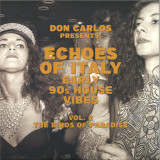
- A1: Montego Bay - Everything (Paradise Mix) 04 59
- A2: Atelier - Got To Live Together (Club Mix) 06 06
- A3: Golem - Music Sensations 04 56
- B1: The True Underground Sound Of Rome Feat. Stefano Di Carlo - Gladiators 05 26
- B2: Eagle Parade - I Believe 04 26
- C1: Dj Le Roi - Bocachica (Detroit Version) 05 28
- C2: Green Baize - Synthetic Rhythm 01 41
- C3: M.c.j. Feat. Sima - Sexitivity (Deep Mix) 05 30
- D1: Kwanzaa Posse Feat. Funk Master Sweat - Wicked Funk (Afro Ambient Mix) 06 31
- D2: Progetto Tribale - The Bird Of Paradise 06 29
- D3: Mbg - The Quite 06 59
Vol 1[28,99 €]
Googling “paradise house”, the first results to pop up are an endless list of European b&b’s with whitewashed lime façades, all of them promising “…an unmatched travel experience a few steps from the sea”. Next, a little further down, are the institutional websites of a few select semi-luxury retirement homes (no photos shown, but lots of stock images of smiling nurses with reassuring looks). To find the “paradise house” we’re after, we have to scroll even further down. Much further down.
It feels like yesterday, and at the same time it seems like a million years ago. The Eighties had just ended, and it was still unclear what to expect from the Nineties. Mobile phones that were not the size of a briefcase and did not cost as much as a car? A frightening economic crisis? The guitar-rock revival?! Certainly, the best place to observe that moment of transition was the dancefloor. Truly epochal transformations were happening there. From America, within a short distance one from the other, two revolutionary new musical styles had arrived: the first one sounded a bit like an “on a budget” version of the best Seventies disco-music – Philly sound made with a set of piano-bar keyboards! – the other was even more sparse, futuristic and extraterrestrial. It was a music with a quite distinct “physical” component, which at the same time, to be fully grasped, seemed to call for the knotty theories of certain French post-modern philosophers: Gilles Deleuze, Félix Guattari, Paul Virilio... Both those genres – we would learn shortly after – were born in the black communities of Chicago and Detroit, although listening to those vinyl 12” (often wrapped in generic white covers, and with little indication in the label) you could not easily guess whether behind them there was a black boy from somewhere in the Usa, or a girl from Berlin, or a pale kid from a Cornish coastal town.
Quickly, similar sounds began to show up from all corners of Europe. A thousand variations of the same intuition: leaner, less lean, happier, slightly less intoxicated, more broken, slower, faster, much faster... Boom! From the dancefloors – the London ones at least, whose chronicles we eagerly read every month in the pages of The Face and i-D – came tales of a new generation of clubbers who had completely stopped “dressing up” to go dancing; of hot tempered hooligans bursting into tears and hugging everyone under the strobe lights as the notes of Strings of Life rose up through the fumes of dry ice (certain “smiling” pills were also involved, sure). At this point, however, we must move on to Switzerland.
In Switzerland, in the quiet and diligent town of Lugano, between the 1980s and 1990s there was a club called “Morandi”. Its hot night was on Wednesdays, when the audience also came from Milan, Como, Varese and Zurich. Legend goes that, one night, none less than Prince and Sheila E were spotted hiding among the sofas, on a day-off of the Italian dates of the Nude Tour… The Wednesday resident and superstar was an Italian dj with an exotic name: Don Carlos. The soundtrack he devised was a mixture of Chicago, Detroit, the most progressive R&B and certain forgotten classics of old disco music: practically, what the Paradise Garage in New York might have sounded like had it not closed in 1987. In between, Don Carlos also managed to squeeze in some tracks he had worked on in his studio on Lago Maggiore. One in particular: a track that was rather slow compared to the BPM in fashion at the time, but which was a perfect bridge between house and R&B. The title was Alone: Don Carlos would explain years later that it had to be intended both in the English meaning of “by itself” and like the Italian word meaning “halo”. That wasn’t the only double entendre about the song, anyway. Its own very deep nature was, indeed, double. On the one hand, Alone was built around an angelic keyboard pattern and a romantic piano riff that took you straight to heaven; on the other, it showcased enough electronic squelches (plus a sax part that sounded like it had been dissolved by acid rain) to pigeonhole the tune into the “junk modernity” section, aka the hallmark of all the most innovative sounds of the time: music that sounded like it was hand-crafted from the scraps of glittering overground pop.
No one knows who was the first to call it “paradise house”, nor when it happened. Alternative definitions on the same topic one happened to hear included “ambient house”, “dream house”, “Mediterranean progressive”… but of course none were as good (and alluring) as “paradise house”. What is certain is that such inclination for sounds that were in equal measure angelic and neurotic, romantic and unaffective, quickly became the trademark of the second generation of Italian house. Music that seemed shyly equidistant from all the rhythmic and electronic revolutions that had happened up to that moment (“Music perfectly adept at going nowhere slowly” as noted by English journalist Craig McLean in a legendary field report for Blah Blah Blah magazine). Music that to a inattentive ear might have sounded as anonymous as a snapshot of a random group of passers-by at 10AM in the centre of any major city, but perfectly described the (slow) awakening in the real world after the universal love binge of the so-called Second Summer of Love.
For a brief but unforgettable season, in Italy “paradise house” was the official soundtrack of interminable weekends spent inside the car, darting from one club to another, cutting the peninsula from North to centre, from East to West coast in pursuit of the latest after-hours disco, trading kilometres per hour with beats per minute: practically, a new New Year’s Eve every Friday and Saturday night. This too was no small transformation, as well as a shock for an adult Italy that was encountering for the first time – thanks to its sons and daughters – the wild side of industrial modernity. The clubbers of the so-called “fuoriorario” scene were the balls gone mad in the pinball machine most feared by newspapers, magazines and TV pundits. What they did each and every weekend, apart from going crazy to the sound of the current white labels, was linking distant geographical points and non-places (thank you Marc Augé!) – old dance halls, farmhouses and business centres – transformed for one night into house music heaven. As Marco D’Eramo wrote in his 1995 essay on Chicago, Il maiale e il grattacielo: “Four-wheeled capitalism distorts our age-old image of the city, it allows the suburbs to be connected to each other, whereas before they were connected only by the centre (…) It makes possible a metropolitan area without a metropolis, without a city centre, without downtown. The periphery is no longer a periphery of any centre, but is self-centred”.
“Paradise house” perfectly understood all of this and turned it into a sort of cyber-blues that didn’t even need words, and unexpectedly brought back a drop of melancholic (post?)-humanity within a world that by then – as we would wholly realise in the decades to come – was fully inhuman and heartless. A world where we were all alone, and surrounded by a sinister yellowish halo, like a neon at the end of its life cycle. But, for one night at least, happy."
Toulouse appears to be a proper soundsystem town, a real Dub and Bass music hot spot. We were happy to get in touch with with Stefan Dubs from the former Folklore crew, running a handmade soundsystem with up to 6 full super scoops. He released several records under Folklore and later Maquis Son SistÈm, started a liveact which meanwhile runs under SÚn Du MaquÌs, organises soundsystem gatherings and raves around town with the ComitÈ Des FÍtes collective.
Luckily we were able to invite Jan Loup and him to Leipzig in 2023 to shake Bassmaessage with their soundsystem, including the amazing multi-track tape into vintage FX & mixing desk performance. If you ever have the chance to catch them live, you'll hear a special vividly rooted analogue sound, incorporating modern influences, covering various BPM from 120 to 170, but definitely bass heavy all along!
Irie skanks keep you floating along "Mogale Stepper", which shows SÚn's warm but forward bass abilities and the knowledge to keep it steppy without any militant aggressive kicks. "Puur Dub" has a the same instant reminiscence of digital reggae skanking, but adding a brilliant layer of Think break incarnations on top - killing advanced sub connoisseur meetings with ease. On the first check this plate may appear a bit different from the label's cutalogue, but if you settle in these lush textures and twisted dubs you'll see: this is a definitive 45seven sound!
We're thrilled to welcome DJ Merci with four powerful tracks on the label! These DJ Tools are the perfect sound for our limited series and to conquer the dancefloors.
On A1 we start In The Middle with exactly this club feeling and an evocative vocal that couldn't be more appropriate for these times.
A2 continues with some funky drum loops and a jazzy sax. We love it!
On the flip, B1 starts really smooth with deep chords combined with a conga groove and continues
on B2 with bouncing drums and deep minimal house.
- A1: Shadow Captain
- A2: See The Changes
- A3: Carried Away
- B1: Fair Game
- B2: Anything At All
- B3: Cathedral
- C1: Dark Star
- C2: Just A Song Before I Go
- C3: Run From Tears
- D1: Cold Rain
- D2: In My Dreams
- D3: I Give You Give Blind
CSN was the trio's last fully realized album, and also the last recording on which the three principals handled all the vocal parts without the sweetening of additional voices. It has held up remarkably well, both as a memento of its time and as a thoroughly enjoyable musical work." — AllMusic
Crosby, Stills & Nash was a folk rock supergroup made up of American singer-songwriters David Crosby, Stephen Stills, and English singer-songwriter Graham Nash. CSN's 1977 self-titled album is a return to the harmony-soaked idealism with which the trio had been catapulted to popularity; it reached No. 2 on the charts, behind Fleetwood Mac's megasuccessful Rumours.
AllMusic says the songs on CSN show a "great deal of lyrical maturity and compositional complexity compared to those earlier albums (from a far more innocent time). "Just a Song Before I Go" was the latest of Graham Nash's radio-friendly acoustic numbers, and a Top Ten single. "See the Changes" and "Dark Star" ranked with the best of Stephen Stills' work, while David Crosby contributed three classics from his distinctive oeuvre: "Shadow Captain," "Anything at All," and the beautiful "In My Dreams."And Nash's multi-part "Cathedral," a recollection of an acid trip taken in Winchester Cathedral on his 32nd birthday, became a staple of the group's live repertoire.
Ground-breaking music perfection deserves definitive sound and top-notch packaging. This reissue was mastered directly from the original master tape by Chris Bellman at Bernie Grundman Mastering and cut at 45 RPM. Pressed on 180-gram vinyl at Quality Record Pressings, and housed in a tip-on old style gatefold double pocket jacket with textured stock by Stoughton Printing.
- A1: Phunk Baton
- A2: Take Me To A Silent Place Original Mix
- A3: Phantom Dubmix
- B1: Midi Lightning
- B2: Transmission Interlude
- B3: Transmission Damaged
- B4: Morse Phunk
- B5: Take Me To A Silent Place Exterior Mix
- C1: Forever Syncopation
- C2: Mission Damage Trance
- C3: Midi Blitz
- C4: Our City Is Never Utopia
- D1: Transfusion
- D2: Midi Voyage
- D3: Take Me To A Silent Place Sun Mix
The iconic DJ Sotofett comes with a real treat--a 12-track album on Clone West Coast Series that showcases a playful take on electronic music. Immerse yourself in the vibrant world of DJ Sotofett & The Colours of Computer Generated Instruments. With 12 electrifying electro tracks that blend a wide spectrum of rhythms with 80's Nintendo console vibes and holy grail analog vs digital synthesis, this album is a jubilant celebration of that sound. Prepare for an exhilarating journey filled with surprises, seamlessly transitioning from acid infected vibes and catchy electronic pop to groundbreaking avant-garde electro cuts. Each track intricately weaves together influences from over 40 years of electronic dance music, inviting listeners to explore the rich tapestry of genres that have shaped the landscape. As you delve deeper, you'll uncover the intricate layers and innovative production techniques that define Sotofett's distinctive style, transforming this album into more than just a collection of tracks -- it's a true sonic adventure that beckons you to listen, dance and dream.