Kerrie is back on James Ruskin's Blueprint for her third EP. The "Act Of Resistance" EP showcases Kerrie's refined approach to techno, blending moody industrial tones with dub overtones and intricate sound design. Kerrie's in-depth knowledge and unwavering dedication to music shines through her notable back catalogue and bolshy, unforgiving DJ and Live sets. Honing her craft for over a decade, Kerrie achieved a milestone at the start of 2024 when Tresor announced her as a resident DJ.
Irish-born, Manchester-based Kerrie is a multidisciplinary artist and DJ. Having garnered a rich musical education through working at and holding a DJ residency for one of the UK's most respected record shops, Eastern Bloc, Kerrie's in-depth knowledge and unwavering dedication to music shines through her notable back catalogue and bolshy, unforgiving DJ and Live sets. Honing her craft for over a decade, Kerrie achieved a milestone at the start of 2024 when Tresor announced her as a resident DJ.
Following well-received releases on labels such as Don't Be Afraid, Cultivated Electronics, I Love Acid and Symbolism, Kerrie launched her imprint Dark Machine Funk DMF in 2020, and also debuted on Blueprint Records with her "Raw Regimen" EP.Truly welcomed to the Blueprint family, Kerrie delivered her second EP "Transient Belief" in 2023 and joined the crew at label showcases around the globe.
Since 2023 she has been fully committed to the studio and accommodating her increasingly busy tour schedule, forging a long-lasting path fuelled by drive, passion, authenticity and a community-first way of thinking.
She's now back on James Ruskin's label for her third Blueprint outing. The "Act Of Resistance" EP showcases Kerrie's refined approach to techno, blending moody industrial tones with dub overtones and intricate sound design.
Поиск:the regime
Все
- A1: Obibini Takyi - Aburokyiri Abrabo
- A2: Lee Dodou - Mampong Dwa
- A3: King Solomon (Nii Mantse) - Dzen Ye Kokloo
- B1: Okyerema Asante - Ateaa
- B2: George Darko - Medo Menuanom (Lp Version)
- B3: Osei Banahene - Woanwaremea
- C1: Osei-Osarfo Kantaka - Mansa (Special)
- C2: King Solomon (Nii Mantse) - Dzoohee
- C3: Classique Vibes - Sankofa
- D1: Osei Banahene - Odo Nye Me Sa
- D2: Obibini Takyi - Ohia Sei Abrantie
- D3: Padmore Oware - Menkowu
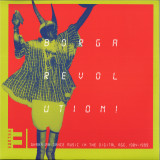
Kalita is excited to present the third volume in their groundbreaking ‘Borga Revolution!’ compilation series, exploring the revolutionary phenomenon of ‘Burger Highlife.’ This unique style fused West African melodies with synthesizers, disco, and boogie, a sound that took Ghanaian airwaves by storm in the 1980s and beyond. With previous volumes receiving strong support by tastemakers such as Gilles Peterson, Antal, Tom Ravenscroft, and Hunee, Volume 3 takes a deeper dive than ever before into the world of Ghanaian digital dance music. This volume features rare, sought-after tracks from artists including Obibini Takyi, Osei Banahene, and Okyerema Asante, as well as Burger Highlife trailblazers George Darko and Lee Dodou. Borga Revolution! Volume 3 offers a curated mix of standout anthems and rediscovered gems, many of which are otherwise nearly impossible to find, making this collection a must-have for fans and collectors alike.
The 1970s and 80s saw Ghanaian musicians begin to incorporate Western sounds like funk and disco into their music, reflecting the changing global musical landscape. However, the country's political instability and economic hardships, marked by military regimes and curfews, forced many artists to leave Ghana in search of better opportunities abroad. In Europe and the U.S., these musicians fused their traditional highlife roots with emerging digital sounds, using cutting-edge technology like the DX7 synthesizer and drum machines to create the genre now known as Burger Highlife. With ‘Borga Revolution!’ Kalita offers a vivid exposition of this musical transformation, using rare interviews, archival photos, and detailed liner notes to bring to life the pioneering spirit of both well-known icons and unsung innovators of Burger Highlife, one of West Africa’s most exciting musical movements.
Dunkirk is a 2017 English-language war film written, co-produced and directed by Christopher Nolan (Interstellar, Memento, Insomnia, The Dark Knight Trilogy, Inception). The score is composed by multiple award winner Hans Zimmer (Interstellar, Batman V Superman, The Crown). On 5 April 2017, Zimmer revealed that he was nearly finished with the score, and that it would be complete by the start of his Hans Zimmer Live on Tour shows in May.
For the purpose of intensity, the script was written to accommodate the auditory illusion of a Shepard tone, which had previously been explored in Nolan's 2006 film The Prestige. This was coupled with the sound of a ticking clock, that of Nolan's own pocket watch, which he recorded and sent to Zimmer to be synthesized. The first pressing is individually numbered and pressed on transparent blue vinyl.
The Ibex Band, with Giovanni Rico and Selam Woldemariam at the creative helm, provided the musical backbone for legends like Aster Aweke, Girma Beyene, Tilahun Gessesse, Mulatu Astatke, and Mahmoud Ahmed, including the iconic album Ere Mela Mela, shaping modern Ethiopian music as we know it today. This 1976 album (Ge’ez Year 1968) played a pivotal role in that legacy and has now resurfaced to set the record straight.
There’s a tendency to talk about the seventies as a golden age of Ethiopian music. There are good reasons for that, and just as good reasons against it. However, the notion of a golden past privileges the role of Western explorers and suggests that the pinnacle of Ethiopia’s musical culture is something only a foreigner can appreciate and unearth. It downplays the complexities of Ethiopia’s culture and history, creating an artificial divide between then and now. And it underestimates the constantly evolving sound that has followed.
The legendary musical outfit The Ibex Band, later metamorphosed into The Roha Band, has played a central role in defining the sound of many of the greatest stars on the music scene of Ethiopia from the mid-seventies onwards–but their golden output has never really waned. The story of the origins of the band that provided the musical backbone for greats such as Aster Aweke, Girma Beyene, Tilahun Gessesse, backing the solo career of group member Mahmoud Ahmed as well as backing Mulatu Astatke and many others has yet to be properly told.
Two misconceptions plague the image of Ethiopian music, one is that the music is pure because it is, by some notion, unexploited, the other is that it is all traditional. To begin with, a combination of political changes between the late sixties and the mid-nineties created an environment where only the most dedicated and skilled musicians struggled on and pursued a musical career against fierce odds. The whole Ibex Band, with Giovanni Rico and Selam “Selamino” Seyoum Woldermarian at the creative helm, are arguably the origo of the vibrant scene in the mid-seventies, and the said pair are foremost responsible for not only navigating the band through troubled times, but also modernizing the 6/8 chickchicka rhythm to a contemporary form. Giovanni laid the rhythmic foundation with heavy looped basslines that reinvented traditional melodies as dance music, and with Selamino’s innovative guitar work they influenced scores of musicians from Abegaz Kibrework Shiota to Henock Temesgen. Even Giovanni’s Fender bass and Selamino’s Gibson guitar inspired younger musicians in their choice of instruments. Not only in choice of instruments but also in sound–even as the digital revolution hit Ethiopian music, a lot of popular music still took its cue from the masters from Ibex and Roha.
Ibex emerged out of the ashes of the sixties group the Soul Echos band, adding Giovanni and Selamino to their ranks and taking their cues from a slew of influences, such as Motown and The Beatles, fused with traditional music. A tighter-knit unit than most bands at the time – Ibex has remained six to seven members throughout their whole career, compared to many bands that were as large as fifteen or sixteen men strong when Ibex set out. Their playing has been viciously focused, economical yet heavy. Just a year before the recording sessions of the album in your hands, Giovanni and Selamino made a contribution to the popular musical lexicon of Ethiopia that was simply defining the popular sound: their arrangement and recording of bandmate Mahmoud Ahmed’s solo effort and real commercial breakthrough tune and eponymous album, Ere Mela Mela, from 1975.
Selamino has never limited himself to being an adroit lead guitarist, but has always been a scholar of history, and as such he has probably contributed as much to modern Ethiopian music with his guitar playing and compositions as with a deepened understanding of modern or contemporary – Zemenawi – Ethiopian music. Selamino’s contributions serve as a metaphor for those of the whole band, at one and the same time creating and defining a new, danceable and updated sound anchored in Giovanni’s bass, whilst also elevating the broader scene through their support for others on the scene and on top of that, increasing the understanding of the music.
There is an understandable desire to romanticize the musical heyday Ibex and Roha were at the forefront of, because so much of the output is sorrowfully hard to come by. Ibex creativity was nothing short of ridiculously fierce compared to many of their Western contemporaries. Based on their sheer recorded output alone they could have usurped the title “hardest working in show business” from James Brown, recording more than 250 albums or 2500 songs in the seventies and eighties. Some only surface as cassettes today, others were never given full LP release, and some are simply impossible to find today. In the light of that, it’s nothing short of a miracle that the recording Stereo Instrumental Music from 1976 (Ge’ez Year 1968) has resurfaced. Unearthed in perfect condition on a chrome cassette, this is musical history comes alive–to set the future straight. Stereo Instrumental Music was recorded in collaboration with Karl-Gustav Lundgren, a Swedish national working for the Radio Voice of the Gospel. It took two sessions at the Ras Hotel ballroom in Addis Ababa. The Ibex Band was the first band in Ethiopia to employ a four-track recorder for their recording (the first available in the country, lent by Karl-Gustav). Later the same week, Giovanni and Selamino realized that, lengthwise, the recorded material fell short of what they wished for, so they recorded four more tracks in one more session on a single-track recorder. The Ras Hotel and Ghion Hotel, where the Ibex Band held musical residencies were to Ethiopia in general and Addis Ababa in particular what Motown was to the USA and Detroit a few years earlier – a hotbed of musical creativity and showmanship.
The most astonishing thing about Ethiopian music of the last half century is how tradition and modernity are intertwined. Because of this feature, it’s kind of hard to tell when there ever was or when we are in a “golden age”. So much of music from the past has been criminally neglected, but because of the hardships in the past, it would be an oversimplification to say that said past was a golden age. Probably, the golden age is what we are approaching, because for the first time both the past and future are accessible, and the monumental contributions from before can lay a firm foundation for a thriving music scene today. The Ibex Band stands firmly in the past, present and the future. That, if anything, is golden.
The detailed history of Stereo Instrumental Music is in many ways unique. To begin with, it couldn’t have been recorded earlier (there were no four-track recorders available) and it really couldn’t have been recorded afterwards either, at least not in the years directly following, because of the toll the musical scene took from the unfavorable political climate that followed when the nascent Derg regime and rival groups tried to assert themselves, the musical equipment lent from The Voice of Gospel Radio simply disappeared from Ethiopia when the radio station folded in 1977. Karl-Gustav Lundgren,
the Swedish foreign national who assisted during the recording, worked with the Ethiopian Evangelical Church Mekane Yesus at the time, recalls how they only had about fifteen minutes to get the microphones in place for the recording as to not alert neither the management at Ras Hotel nor the authorities and most importantly, to complete the recording before the curfew came into effect at midnight. In leaping to the opportunity to use previously unavailable equipment to push their sound forward and improvising to meet the logistical challenges, the Ibex Band displayed the very avant-gardism and adaptability that explains their longevity as a band through the years. The recording of Stereo Instrumental Music is from a given time in history, but it sounds as beyond time.
Much of the energy that burst out of the scene that Stereo Instrumental Music came out of dissipated or got sidetracked during the societal changes Ethiopia went through in the 1970s and 80s. Whilst leaders might have professed to be revolutionary, the work ethic of the Ibex Band can truly be described as that. They never called it quits, but adapted, toured extensively abroad in Africa, Europe, and the Middle East, and found ways to work even in the face of the curfew that curtailed a lot of musical life. They even played major arenas in the nineteen eighties, despite said curfew and restrictions. The whole extent of their legacy has never been told, but their music speaks louder than words, so therefore… tune in to the Ibex Band’s Stereo Instrumental Music.
For Greg Mendez, reflection doesnüft mean a static image in a mirror, or even a face he recognizes. Itüfs more a kaleidoscopic mirage, where paths taken shapeshift with the prospect of paths untread, and the subconscious merges with the intentional. On his self-titled new album, the Philadelphia-based songwriter and multi-instrumentalist investigates the shaky camera of memory, striving to carve out a collage that points to a truth. But there isnüft a regimented actuality here; instead, Mendez highlights the merit in many truths, and many lives, and how even the hardest truths can still contain some humor. While this is technically Mendezüfs third full-length album, his back catalog boasts an extensive range of EPs and live recordings. Heüfs a prolific and thoughtful songwriter, understanding the joy in impulse, and shying away from the clinical sheen of overproduction. 2017üfs ügüP/ _(c)_ /üPüh and 2020üfs Cherry Hell garnered acclaim for their quiet, lo-fi urgency, exploring themes of addiction and heartbreak with an intentional, authentic haze, and itüfs this approach that has solidified Mendez as a staple in the DIY community for years. Greg Mendez was written in fragments, some stretching across more than a decade, with Mendez reworking old ideas and arrangements, and others blossoming much more recently. The weight of time..and perhaps the anxiety in running out of it..clouds the album, as Mendez prods at some painful experiences from his childhood and early adulthood. The common thread connecting the characters is their evident imperfections, and the various degrees of damage they cause, both knowingly and unknowingly. But where do we draw the line between a good person and a bad person? For Mendez, itüfs never been that easy. Greg Mendez is an intimate dialogue between the chapters weüfve experienced, and how they can inform the reality we perceive. Itüfs a reminder that we are constantly shifting, ever-changing selves and that if we ruminate too long, we may find ourselves stuck in the seriousness of it all. Here, Mendez allows us to take the time to notice what happens outside of the framework we may have built for ourselves, and the beauty that can occur when we finally do.
This is a very limited repress of the classic third release on Hectic Records. It comes in glorious transparent yellow vinyl!
Der Saxofonist Phillip Dornbusch hat sich mit seiner Band Projektor vorgenommen, die Aufmerksamkeit des Publikums auf Musik zu lenken, die in Momenten entstand, in denen sich Menschen in Vergangenheit und Gegenwart nicht in einer Demokratie, nicht in Freiheit befanden. Die meisten Stücke auf dem dritten Projektor-Album, das den Titel Revolt trägt, speisen sich aus Liedern, die in Iran und Estland entstanden sind und während der Aufstände gegen das sowjetische Regime beziehungsweise die Islamische Republik gesungen wurden. Das Zusammenspiel der fünf Musiker:innen hatte schon auf den beiden Alben "Reflex" (2021), sowie auf "Re|Construct" (2023) etwas traumwandlerisch-sicheres. Johanna Summer, Johannes Mann, Roger Kintopf und Philip Adrian Dornbusch organisieren sich um meist vom Saxophon Dornbuschs getragene Melodien und Themen, weichen ab und kehren wieder zurück, um ein anderes Instrument, eine andere Idee, eine andere Klangfarbe in den Vordergrund treten zu lassen. Dieses Zusammenspiel hat auf Revolt das nächste Level erreicht.
* This EP was absolutely huge when originally released, and the same is expected for this wonderful remaster and repress. Much sought after, and deservedly so, a big EP from back in the day is finally on its way….
Club / DJ Support
Billy Bunter, the Fat Controller, Glowkid, Slipmatt, Dj Jedi, Dj Luna-C, Dj Brisk, Clayfighter, Jimni Cricket, Bustin, Sc@r, Doughboy, Saiyan, Dave Skywalker, Ponder and many others
2026 Repress
Un-American Activities is the 11th Studio album by Molly Nilsson. Written and recorded entirely on location in California at the former home of writer, poet and early opponent of the National Socialist regime in 1930s Germany, Lion Feuchtwanger and his wife Marta. An album of experimentation, genre-mashing and, above it all, Nilsson’s instantly recognisable melodic skill and empathy, it continues the songwriter’s explorations of power, freedom, oppression and its opposing force, a love unbound.
After accepting an artist residency as part of the Villa Aurora program, Nilsson began work crafting a new album from scratch in a new environment, afforded the freedom, space and time to challenge her practice and take her music into new territory. The resulting work, Un American Activities, is a love note not only to the artist who was among the very first to be declared an “enemy of the state” by the Nazi regime but also to both the eternal struggle he fought and the human spirit that pervades all of Nilsson’s best work. It is also a double-pointed poison pen letter: a critique of the new forms of oppression wielded by her temporary adopted country of the USA but also an acknowledgement of the promise it always offers but never fulfils.
Along with the novel use of colour and photography in the artwork for Un-American Activities, there are swathes of new techniques, genres and timbres new to Molly Nilsson’s music in evidence, 16 years into her music career. On Jackboots Return is an icicle-cold New Beat track that deals directly with the current situation in Germany and the resurgent Nazi-affiliated AfD. The question the song asks is, what’s the timeframe we’re talking about? Is this the 30s, or somewhere a lot closer to home? The beat is picked up on The Communist Party, Nilsson’s deepest bow to House music, evoking the early 90s Rave pioneers, Belgian 80s music and Vogue-era Madonna. Here the lyrics are direct quotes from the McCarthy-era, anti-Communist pamphlet 100 Things You Should Know About Communism in the U.S.A. The Beauty Of The Duty does to pounding Electro what Nilsson’s last album Extreme did to Metal: subsume it into the Molly Nilsson aesthetic. It goes hard.
While Un-American Activities finds Nilsson experimenting, creating instinctive music on a first-thought-bestthought basis there are still “classic” Molly moments liberally spread throughout. Excalibur feels like the Molly of old, an absolute star of a chorus refrain smudged with the vaseline of fuzz and hope, Red Telephone is wide-eyed, slathered in reverb and chorus effects, distorted with soaring melody, a heart-tugger that tugs the body upwards to the heavens with each evolving wave. Glistening digital tones wash through the album, providing a Y2K etherealness to Nilsson’s audacious Stars and Stripes reference to Wetcheeks. Perhaps the album’s standout, however, is Palestine (Somewhere Over The Rainbow), which is suffuse with empathy, solidarity and, in referencing the classic socialist-penned canon song from The Wizard Of Oz, speaks directly to the tradition of fighting oppression with full hearts of hope.
- A1: Hosanna (Meridian)
- A2: First Born (Redeemed)
- A3: When Angels Speak Of Love
- A4: Doubleupptown (Larocque)
- A5: W-I-S (Above Every Other)
- A6: Pistol Poem (Leadbelly)
- A7: Whip Appeal (Pipn8Ez)
- A8: Seven Trumpets
- A9: Giz'aard ($Uckets)
- A10: Helpmeet (Iyadunni)
- B1: Flir2A
- B2: U&Me (Decemberseventeen)
- B3: Illbethere, 4Everandever
- B4: Alàáfía (Cita's World)
Original Cover[27,52 €]
Honour's debut album is a ligament stretching from Lagos to London and to New York, curling across the diaspora and brushing the darker hues of blues, hip-hop, free jazz, ambient, gospel with Christian mythology and Yoruba folklore. As cinematic as it is painterly, Alàáfíà is a meditation on themes of life, death and love that pulls inspiration from the unexpected poetic profundity of casual conversations, field recordings, literature, ephemera, or personal archives. The result is an impressionistic vision in Black and Blur that both exhausts and implicates language_substantiating a mythos proposed by Fred Moten that sublimates boundaries between everywhere and nowhere; history and the present; the individual and the universal. Alàáfíà delineates a gothic landscape cut by overdriven beats, swooping orchestral blasts, choral bursts and ear- splitting fuzz, where the fleshly and spiritual realms commune. Dedicated to Honour's late grandmother, the title track began to take form after their last embrace and remains steeped in her influence and spirit_a tape-saturated composition that starts in Lagos and ends in London's smoke-stained cityscape, the song's dream-like quality developed out of the artist's grief and PTSD coping with this loss. Beneath the stretched guitar drones and stuttering loops, their grandmother's shared faith bubbles to the surface. "When Angels Speak of Love," borrows its title from two works by Sun Ra and bell hooks, respectively. Sculpting echoes of praise music into disorienting spirals perforated with syrupy DJ Screw-inspired breaks and sharp splinters of melancholic guitar, "When Angels Speak of Love" engages a conceptual dialogue with the spirits of both late thinkers, folding them into Honour's pantheon of ancestral guides. The album's ninth track, "Giz Aard ($uckets)," is a dirge of regimented drums which anchor this somber melody as it whirls into a blizzard of heartache, uncertain if its consequence will be death or eternal joy. The album's sole lyrical offering, "Pistol Poem (Lead Belly)," begins with a darkly humorous bar, "He went thru hell and back/ came back/ 2 get the strap," that swells into a haunting allegory based on the life of Philip "Hot Sauce" Champion. A modern take on the Blues, Honour's lyrics reify the artist's status as a student of both literature and popular culture, crossbreeding the artist's clever wordplay with additional references to Richard Pryor, Robert Johnson, Kelly Rowland & Bryon Gysin. Setting core principles of hip-hop, R&B, jazz and gospel music to atemporal soundscapes and compositions, Honour crafts a record that marinates in its own knotty contradictions. The ghosts that sit on the artist's shoulders have never been more tangible than with this emotive debut.
Mazandaran was born from an idea to make protest music that shone a light on the experience of the Iranian diaspora, many of whom were displaced by the current regime. All members share Iranian heritage and the lyrics and imagery speak of the ancient Persian mythology of The Shahnameh, with passages about the legendary hero Rostam slaying the Div-e Sepid, or White Demon, and overcoming evil. Musically, the band delve into the deep and rich history of Japanese and Skandinavian hardcore punk of the 80s, as what better type of punk is there to make you feel like you are battling demons and about to fuck shit up? Dedicated to the brave women and men of Iran suffering 44 years of oppression from the current theocratic, fascist, and fundamentally anti-Iranian regime occupying our ancestral home.
SHDW & Obscure Shape launch new label Mutual Rytm with powerful eight-track V/A "Federation Of Rytm I", featuring VIL & Cravo, Lars Huismann, Grindvik and more.
Favourites for many within today's modern techno landscape, Stuttgart-based pairing Marco Blasi and Luigi Urban, aka SHDW & Obscure Shape, continue to grow their profile and position as artists leading the current new wave of techno. Having launched their first label From Another Mind in 2014, releasing material from themselves alongside remixes from the likes of Rodhad, James Ruskin and Dax J, early December welcomes the arrival of a new project and a second imprint to the fold, Mutual Rytm.
Showcasing a new dimension of techno and electronic music, celebrating originality and innovation by combining timeless cuts from the past with cutting edge sounds of the present and the future, the label will serve as a breeding ground for new artists alongside established talent and legends from the scene. Opening the imprint in style, the label bosses head up the first-ever release and the first V/A "Federation Of Rytm I" as they welcome a selection of new and established talent.
"Since the beginning of the global pandemic, we have been diving deep into the roots of our music and working on the aesthetics of our sound. That's when we realized that now is the right time to start a new project which differs from FAM, in both musical and artistic direction. The project will showcase a new dimension that aims to channel the authentic perspectives of both established and up-and-coming talents. With our new label, we want to give all artists the opportunity of musical freedom and expression of their versatility as producers. It is an honour to accompany the young artists on their careers, to see them grow and to help them in their development as musicians." - SHDW & Obscure Shape
The duos rolling opener "Conquest Of Paradise" quickly sets the tone and builds to reveal a classy and slick offering, combining rich stabs with tough drums and sharp hats, while Invexis keeps the tempo high as he weaves escalating synths and pacy kicks across "Elektronenwind". VIL & Cravo combine on the jacking and lively "Apolonia Loop", as eerie synths work amongst warped vocals across a tweaked out peak-time effort, before Alarico keeps the energy levels up throughout the relentless funk of "I'm Into You".
The second half of the package sees Lars Huismann enter the fray with the no-nonsense, snaking grooves of "Hyper Dub", with Nicolas Vogler's "Sauva Bite" fusing hypnotic tones with straight regimented claps for an intense yet playful ride through sounds and sonics. "Your Dry Lips" switches up the aesthetic as Grindvik journeys down a wormhole of metallic percussion and warping low-ends, before closing the show with authority via Stigmata's grinding and menacing offering "Gestas".
2024 Repress
Physically and mentally draining in the best way possible, Wet Will Always Dry is maybe the most complete statement from Blawan to date, and as such should be ignored at your peril. This becomes evident from the album-opening 'Klade,' a dizzying, tumbling flight of pure energy over overlapping fields of electrified menace. This sets the stage for 'Careless,' which retains the hazardous, crackling atmosphere but dials back the intensity just enough to make room for a new feature, Blawan's eerie and disembodied vocals.
'Tasser' ratchets up the tempo and the frenetic energy yet more, slinging chunks of audio shrapnel and grinding factory noise over the kick-heavy beat, only letting up the tension every now and then for a convulsive breakdown. By the arrival of 'Vented,' a more steady, cycling groove has set in along with the accompaniment of suspenseful melodic swells, but the element of surprise is far from gone: there still seem to be spectral entities lurking around every corner, and there's no shortage of intriguing tumbril weirdness blowing around the imaginary streets that this track conjures up.
The slamming 'North' keeps alive the record's persistent, darkly humorous feeling that things are about to go off the rails at any moment, using wildly contorted sequences and granular debris to shift between total abandon and regimented strictness. A moment of relative calmness, along with the return of the atmospheric vocals, comes about with 'Stell,' a faintly dubby track that leaves an impression like watching streams of traffic progress underneath rolling, deep grey clouds.
'Kalosi' brings back the percussive motif of 'Tasser' and 'North,' this time partnering it with loops that bring to mind radioactive bass strings. 'Nims' then shuts things down with infectious harp-like sequences, fuzz-shrouded percussion and an 'everything but the kitchen sink' mentality towards filtering and processes which will get the attention of all but the most jaded soundhead.
Eleventh album consisting of eleven songs, Pink Air, by Elysian Fields, cult New York band led by Jennifer Charles and Oren Bloedow, was released in September 2018. Recorded in the mountains around Woodstock, Pink Air was finalized in Thomas Bartlett's studio (The National, Sufjan Stevens) in Manhattan. A single rock wave unites the tracks with its cavernous reverberation, as if shrouded in the darkness of a night club or pinned to the shadow of a modern nightmare. Pink Air is a post-apocalyptic rock'n roll getaway. The album tackles themes as varied as the ecological threat, the regime of a potential narcissist dictator, white supremacy, censorship, the erasure of history, the social drama of families ... as well as meditations on time, friendship, loss, death. Despite the biting tone, the words never sound too heavy, lightened by many touches of humor. Jennifer Charles's vocals are at their highest, infusing each song with its legendary languid charisma, in a lyrical breath whose spellbinding power has remained intact. By portraying the landscape of the present day with her precise, often caustic lyrics, Jennifer sets her special veil on the intimate, the spiritual, brushing her characters, friends and lovers, in a pure novelist style. All against a background of fear of our time, of its social and political drifts. With Elysian Fields, the angelic singer and her acolytes have always been carried by the highest currents of the sky. For Pink Air, they fold their wings, land on the ground, and roam the scorched lands of America, animated by the rock'n roll spirit of the animal. The feathers turned into so many spiky hairs
- 1: One Of The Bad Ones
- 2: Flame
- 3: My Whole Life Is In The Wrong Key
- 4: We Are The Power
- 5: Black Widow
- 6: Touch
- 7: Dame De La Lumiere
- 8: Let Me Be Your Mother
- 9: You Got It Kid
- 10: Runaway Train
- 11: Downtown Boogie
- 12: More Than Love
'Letters From A Black Widow' ist ein definitives Statement der Beharrlichkeit und Befreiung der mit einem Grammy ausgezeichneten Sängerin/Songwriterin Judith Hill. Die 12 Songs offenbaren meisterhaft Themen, die sie bisher nur in Therapien und Albträumen erforscht hat. Geschichten über Widerstand, hart erkämpfte Klarheit und Erlösung werden durch ein unerschütterliches Soul/Funk/Blues-Fundament erzählt, das von trotzig-schöner Kraft mitschwingt. Als Backgroundsängerin für Michael Jackson, Stevie Wonder & Prince brillierte Hill in der mehrfach prämierten Netflix-Dokumentation '20 Feet From Stardom' (2013) über die Sänger*innen hinter den Stars.
Napoleon is the 2023 spectacle-filled action epic film that details the checkered rise and fall of the iconic French Emperor Napoleon Bonaparte, played by Oscar-winner Joaquin Phoenix. Against a stunning backdrop of large-scale filmmaking orchestrated by legendary director Ridley Scott, the film captures Bonaparte's relentless journey to power through the prism of his addictive, volatile relationship with his one true love, Josephine, showcasing his visionary military and political tactics against some of the most dynamic practical battle sequences ever filmed. At the 96th Academy Awards, Napoleon received nominations for Best Production Design, Best Costume Design, and Best Visual Effects. The film features an original score written and composed by 7-time Primetime Emmy nominatated British composer Martin Phipps. Phipps is best known for his work for the series Peaky Blinders, The Crown, and Black Mirror amongst others. Napoleon marked his first collaboration with Scott and was described by critics as “one of the most interestingly unique, albeit brief scores to debut in this genre for many years.” Napoleon is available as a limited edition of 500 individually numbered copies on translucent red coloured vinyl and includes an insert.
Napoleon by Martin Phipps, released 26 April 2024, includes the following tracks: "Josephine ", "Ladies In Waiting ", "We Are Discovered ", "Look Down " and more.
This version of Napoleon comes as a 1xLP. This release comes with (a) Insert(s).
The vinyl is pressed as a translucent, red disc.
- A1: Missema - Mbela Bongo
- A2: Groupe Kounabeli De Masuku & Patience Dabany - Abaga Mbouga
- B1: Oyana Efiem Pelagie - Biloa
- B2: Groupe D’animation U F.p.d.g. - Mpebe
- B3: Groupe D’animation U F.p.d.g. -Tchatcha Tchatcha
- C1: Kolikagie De Masuku - Miali Mi Kolikagie
- C2: Mi Kouagna De Mounana - Legnila Nde Obele
- C3: Groupe D'animation Kakoula Djele De Bongoville - Yaya Omar Bongo
- D1: Kounabeli De Mbilasuku - Lekou Mobi
- D2: Groupe | Kounabeli De Masuku & Orchestre Banowita - Lessimbi
- D3: Patience Dabany - Ayanga
Gabon, 1980’s. President Omar Bongo has been in power since 1967. Together with his wife, the infamous singer Patience Dabany, he invents one of the ultimate political propaganda machine: ‘animation groups’, massive female choirs and dancers, up to 60 women deep, singing the praise of his regime over some of the best soukous rhythms ever, broadcasted live on TV.
Between 1982 and 1989, mainly thanks to the flourishing oil economy, a record-label is created, a state-of-the-art recording studio is set up, and the best Gabonese and Congolese musicians are recruited. Dozens of vinyls are pressed and sold with huge success all over the country.
The Bongo family has reigned continuously over Gabon until the 2023 coup d’état.
- Trio Rosario - Cuando Yo Muera
- Fefita La Grande - Cana Brava
- Aristides Ramirez - Los Lanbones
- Bilo Y Sus Tipicos - La Negra
- Negrito Figueroa - Por La Mananita
- Trio Royecell - La Pasion De Cristo
- Victor Suriel Y Trio Rio Verde - La Mecha
- Rafaelito Roman - Que Mala Suerte
- Bilo Y Sus Tipicos - Cuande Baje De La Loma
- Trio Ramirez - Me Gustan Las Pegajosas
Merengue Típico: Nueva Generación! delves into the heart of Dominican merengue, a genre whose significance often eludes the spotlight. Bongo Joe's venture into unexplored terrain takes us to the Caribbean, specifically the Dominican Republic, shedding light on its musical tapestry. Curated by Xavier Daive, aka Funky Bompa, the compilation unveils rare '60s and '70s gems, providing a glimpse into a transformative period following the fall of the Trujillo regime.
With over 20 years in the Dominican Republic, Xavier Daive meticulously sources original 45s, offering a snapshot of merengue's evolution during a creatively charged era post-Trujillo. The genre's roots, dating back to the 19th-century Dominican Republic, predate salsa, establishing its unique identity with the introduction of accordions via German trade ships. The genre's classic típico configuration emerged in the mid-'60s, leaving a lasting impact on its evolution.
Focused on the explosive '60s and '70s merengue típico scene, influenced by genre pioneers like “Tatico” Henríquez and Trio Reynoso, the compilation showcases technical finesse and high-speed rhythms. Tracks like Rafaelito Román’s "Que Mala Suerte" embody the genre's infectious energy. Aristides Ramírez’s "Los Lanbones" adds a touch of humor, cautioning against pub freeloaders. Merengue Típico: Nueva Generación transcends the realms of a typical reissue; it's an immersive journey into mthe roots of Dominican merengue, expanding its narrative beyond borders to enrich the global musical landscape.
This compilation goes beyond individual tracks, providing a historical and cultural context, enriching our understanding of the genre's evolution in the Dominican Republic during a crucial period. Designed for both connoisseurs and wild dancefloors, this compilation is not only a historical and cultural exploration but also a treasure trove for DJs seeking to infuse their sets with the vibrant rhythms of merengue típico.
HJirok is a mythical figure, conceived as a fictional character by Iranian-born Kurdish singer and artist Hani Mojahedy. Together with versatile music producer And Toma of Mouse On Mars, she combined a variety of sounds collected during their joint travels to Iraqi Kurdistan and elsewhere with heavily processed recordings of Sufi drum rhythms and setar melodies. The result is a driving, dubbed-out, and deeply intricate soundscape that perfectly sets the stage for Mojahedy's extended, unconventional vocal techniques and polyglot lyrics. Both informed by tradition and rigorously forward-looking, »Hjirok« (with a lowercase J) is at once a profoundly personal album and a universal utopian promise. As a ghost from the past, HJirok draws on Mojtahedy's memories to mould a new future out of them.
The foundation for »Hjirok« was laid in the city of Erbil in the Kurdish part of Iraq. During one of their stays in the region, Mojahedy and Toma recorded the three percussionists Hadi Alizadeh, Jawad Salkhordeh and Serdar Saydan as well as setar player Ali Choolaei from Motahedy's backing band while they were playingthe rhythms and notes that she had grown up with in the house of her grandfather in the Iranian city of Sanandaj. Her memories of that place revolve around hypnotic Sufi music, dervishes in deep trance, and ecstatic singing. Much like this music seemed to open a portal to other dimensions, the inhabitants of the house lived in a sort of alternative reality: It provided them with a hideaway from political circumstances. Following the Iranian revolution in 1979, a Kurdish rebellion ensued but was met with the utmost brutality by the new regime, which resulted in the death of thousands.
It is no coincidence that the music on »Hirok« would draw on rhythmic patterns that were passed on from one generation to the next for hundreds of years. »The project is rooted in the figures of the Sufi dervishes and thus a culture that precedes today's political, social, cultural, and religious systems,« explains Mohtahedy. »The Sufi sound travelled around the entire world. I like to think of it as a dialogue between peoples-one based on the rhythms of the drums and the sound of their voices.« Toma adds that by electronically transforming the recordings and enriching them with field recordings from both rural and urban spaces, they were able to use the stories told by the drums and the setar to create an entirely new narrative.
The story told by these eight pieces is hence a deeply personal, but also inherently political one. Moitahedy herself left Iran in 2004 and relocated to Berlin in 2010. Having continued to use her art as a platform to tirelessly advocate for the rights of the Kurdish people and women under oppressive regimes, she has not been allowed to return to her country of origin ever since. »Hani is singing for equality and there are people who are afraid of that-her femininity, her strength.« Toma says. Much like earlier Hirok sound installations addressed human-made climate change and other systemic ills, also »Hjirok« can hardly be disconnected from far-reaching struggles for liberation and equality.
This is also true on a thematic and even linguistic level. »The lyrics are about a promise,« Mojahedy says, citing Kurdish writer Ebdulla Pesêw as an inspiration. »At their core, these are about that day on which violence and fear become a thing of the past; what they tell you is ot not give up, to keep hoping,« she adds. The promise embedded in them is an emancipatory one. These contents are mirrored on a linguistic level: The lyrics were written in both Kurdish and Farsi, blurring the lines between the two languages and thus, Kurdish and Persian cultures.
Mojahedy, or rather HJirok, conveys these philosophical themes with elegance. Herversatile vocal performance is only loosely basedo n established styles. »Of course everything started with traditional rhythms, but we kept pushing things further and further, so Idid the same with my voice,« Mojahedy explains. »There were no boundaries.« The same can be said of the field recordings that she and Toma used. Whether it's conversations between members of the Pesmerge, the Kurdish armed forces, having a chat in meadow full of bunnies or the humming and buzzing of metropolises like Tehran: »Hirok« paints a sonic picture that is quite literally autopian one; that of a non-place in which different soundscapes, cultures and ways of life coexist peacefully.
What the album conjures up from Mojahedy's memory is not only a very specific place during a unique time in history as experienced by a single person. It is also ametaphorical home open to anyone who wishes to enter - promise of a better, more egalitarian future for everyone. Hence, HJirok will bring it on tour, presenting the material as an audio-visual live show that makes use of the photo and video material that Mojahedy and Toma have collected during their travels through Kurdistan.ja
After 10 years of silence, Regimen Galáctico Totalitario is the new release of the Mexican producer Dellarge, reknown as well for his experimental noise project I.N.R.I. (Indústria Nacional del Ruido Infinito). In this mini-album, Dellarge presents his vision of nowadays evolution of EBM towards a futuristic blend of breakbeat, industrial, and electro creating the perfect soundtrack for a futuristic apocalypse. Presented in a ONE-OFF, truly limited edition of 300 copies lacquered pressed on 180 gr. high-quality solid BLACK vinyl. All tracks have been specially mastered for vinyl by Daniel Hallhuber at Young and Cold Studios (Germany).
- 01: Trio Rosario - Cuando Yo Muera
- 02: Fefita La Grande - Caña Brava
- 03: Aristides Ramirez - Los Lanbones
- 04: Bilo Y Sus Típicos - La Negra
- 05: Negrito Figueroa - Por La Mañanita
- 06: Trio Royecell - La Pasion De Cristo
- 07: Victor Suriel Y Trio Rio Verde - La Mecha
- 08: Rafaelito Roman - Que Mala Suerte
- 09: Bilo Y Sus Típicos - Cuande Baje De La Loma
- 10: Trio Ramirez - Me Gustan Las Pegajosas
Merengue Típico: Nueva Generación! delves into the heart of Dominican merengue, a genre whose significance often eludes the spotlight. Bongo Joe"s venture into unexplored terrain takes us to the Caribbean, specifically the Dominican Republic, shedding light on its musical tapestry Curated by Xavier Daive, aka Funky Bompa, the compilation unveils rare "60s and "70s gems, providing a glimpse into a transformative period following the fall of the Trujillo regime.
- A1: Do My Thing Feat. Royal Blu
- A2: Raggamuffin Feat. J Boog
- A3: Celebration (One Shot)
- A4: Came Up Feat. Kabaka Pyramid & Spreadlof
- A5: Hideaway
- A6: Angel Feat. Marc E. Bassy
- B1: One Day
- B2: Stay With Me
- B3: Wild Out Feat. Big Body Cisco
- B4: City Of Champions
- B5: Queen Majesty Feat. Sammy J & The Green
- B6: Just One Of Those Days Feat. Demarco
Die für ihr Debütalbum 'Lost In Paradise' 2017 GRAMMY-nominierten Pop-Reggae-Vorreiter Common Kings releasen den Nachfolger CELEBRATION. Die amerikanisch-hawaiianisch-polynesische Combo aus Kalifornien vereint Genres und Einflüsse aus Reggae, Pop, Rock, R&B, Hip-Hop und Dancehall zu einer zusammenhängenden Wohlfühlplatte mit dynamischem Sound. CELEBRATION ist genau das für Common Kings - eine Möglichkeit, auf ein Jahrzehnt musikalischer Exzellenz anzustoßen und dabei eine wirklich gute Zeit zu haben. An der Platte wirkten Reggae-Grössen wie J Boog, Demarco, Kabaka Pyramid und Marc E. Bassy sowie Produzenten wie The Audibles und Poo Bear mit.
In the early 21st century on the bustling streets of New York City, Jennifer Vanilla is a container, a portal, a joy delivery system, a self help regimen, a social mirror, a Times Square celebrity, a shark-toothed advertiser, a kicky talk show host and an ebullient mascot. Collaboratively crafted with co-writer/co-producer Brian Abelson , Jennifer Vanilla's debut full length Castle in the Sky is a deft and mercurial "jennifreaky" journey, traversing 90s dance music, no wave, post-punk, art pop, new age and experimental R&B. "Consider this an invitation, I'll be your guide," Vanilla beckons on the album's "Take Me For A Ride," which, like much of the album, is driven by their nimble and virtuosic vocal delivery. Variously steely, theatrical, sensuous and authoritative, Vanilla's vocals harken the sparkling precision of Ann Steel, the growling tenacity of Laurie Anderson and the wispy tenderness of Shelley Duvall in Faerie Tale Theatre. Jennifer Vanilla performances often are exercises in the transformation of reality through fantasy, testing the limits thereof, while the songs of Castle in the Sky are an artifact of that laboratory. Many of these songs took on numerous incarnations over the course of years before arriving at their album form, mutated in direct response to audience reaction. A year after the initial release of Castle in the Sky via Sinderlyn Records, a vinyl edition of the record arrives on December 1, 2023, featuring bonus remixes and reworks from Jerry Paper and musclecars.
In apartheid-era South Africa, gospel music provided solace and served as a tool for covert communication to circumvent the censorship of the settler regime. By the 2010s, South African gospel, deeply ingrained in the soul of Soweto, assumed a new role—as a heartfelt cry against persistent failures and shortcomings, a cry mourning a South Africa that never materialized.
A new South Africa needed a new gospel sound.
In 2016, nine young men from different parts of Diepkloof, a celebrated neighbourhood brimming with talent within Soweto's sprawling township, came together to form the sound of a new South Africa under the name Diepkloof United Voice.
Diepkloof United Voice's music has gone viral multiple times on TikTok, YouTube, and Facebook, garnering between 60,000 to 2 million views. The comments section displays flag emojis from Brazil to India, showcasing the global reach of their music.
This album was recorded on site in Soweto, in an abandoned classroom of Lebowa Elementary School in Diepkloof Zone 3, where the choir rehearsed for years. Amid rolling blackouts, Diepkloof United Voice poured their heart, soul, and vocal chords into their debut record, combining classic South Africa gospel, Soweto's own kasi soul, American blues, and Zulu flavor, to present the contemporary gospel sound of a changing South Africa.
The promise of a new South Africa might finally be realized, as Diepkloof United Voice guarantees the country's future is guided by the truth, uttered with each gasp of breath from their inimitable voices.
In apartheid-era South Africa, gospel music provided solace and served as a tool for covert communication to circumvent the censorship of the settler regime. By the 2010s, South African gospel, deeply ingrained in the soul of Soweto, assumed a new role—as a heartfelt cry against persistent failures and shortcomings, a cry mourning a South Africa that never materialized.
A new South Africa needed a new gospel sound.
In 2016, nine young men from different parts of Diepkloof, a celebrated neighbourhood brimming with talent within Soweto's sprawling township, came together to form the sound of a new South Africa under the name Diepkloof United Voice.
Diepkloof United Voice's music has gone viral multiple times on TikTok, YouTube, and Facebook, garnering between 60,000 to 2 million views. The comments section displays flag emojis from Brazil to India, showcasing the global reach of their music.
This album was recorded on site in Soweto, in an abandoned classroom of Lebowa Elementary School in Diepkloof Zone 3, where the choir rehearsed for years. Amid rolling blackouts, Diepkloof United Voice poured their heart, soul, and vocal chords into their debut record, combining classic South Africa gospel, Soweto's own kasi soul, American blues, and Zulu flavor, to present the contemporary gospel sound of a changing South Africa.
The promise of a new South Africa might finally be realized, as Diepkloof United Voice guarantees the country's future is guided by the truth, uttered with each gasp of breath from their inimitable voices.
'I heard about Seif Abu Bakr and The Scorpions maybe 3-4 years ago. Their album 'Jazz, Jazz Jazz' ended up on my radar because of an eBay auction with the bids eventually rising daily up to a staggering 1000$. The music is a unique combination of incredible horn arrangements powerfully performed, a vigorous drummer contributing a funky backbone and Seif's vocals uniting those elements. The results range from instrumental tracks awaking memories of 1970s crime thriller soundtracks to more Sudanese-rooted tracks, a lot of them modernized versions traditional rhythms of the diverse regions of Sudan and even an excursion into Colgolese Soukouss.
I went for my second trip to Sudan in December 2018 and after doing some research on the first trip my local colleagues Larissa and Yassir had managed to reach Amir, The Scorpions band leader and he was happy to meet. We got together with him in a Cafe right at the Nile in Omdurman. It was a happy occasion for everyone. He told us stories about him meeting Jimmy Cliff and Lewis Armstrong when they visited Sudan and how he and his band mates from The Scorpions played extensively in Kuwait, both in club residencies as well as for television. Amir brought tons of incredible photos illustrating not only the bands history but the vivid cultural live in the many music clubs in Khartoum of the 1970s. During this decade up until 1983 the capital was home to a huge number of clubs, bards and concert halls. This scene started to perish after president Nimeiry's turn away from his socialist policies, that he was widely associated with in the first decade of his rule, towards the implementation of Sharia law in 1983. During the first decade of his rule he had actively supported various artists of the Jazz scene, taking some of them on trips throughout Africa. The 1989 coup of Bashir and his generals then caused the final blow to a once thriving scene. Both of these political events within 6 years lead to significant drawbacks for the Sudanese jazz scene resulting into hardly no gig opportunities left and parties and concerts being critically observed. A number of musicians faced prosecution, most of the time for their political views; some left Sudan for good. Music never completely vanished from public life and even the regime kept selected artists close, but for a majority of those bands affiliated to the jazz scene life and making ends became a lot harder. The Scorpions dissolved as a group around the same time.
The re-release was produced with a clean copy of the vinyl version as a source. The original reel tape of the album stayed with Saif Abu Bakr along with another reel with other recordings that were never released. Unfortunately it was lost when Saif Abu Bakr had to flee to Kuwait temporarily during the second gulf war when Iraq raided Kuwait. Vinyl version comes with extensive booklets with photos, interviews, liner notes. The vinyl version also has a DLL code.
It’s been a hot moment, so we can’t wait to finally announce the next EP on our Awkwardly label, “a hack is a foul“ by dadan karambolo.
Safe to say he’s been on our radar for a while, so we’re mighty excited to welcome the Wroclaw-based producer on AWK005. After a strong debut release on his co-owned SPLOT imprint, an equally solid LP on Regime Brigade as well as contributions to various compilations, dadan is back with his signature moody, bass-bin shaking sound.
Hitting the sweet spot somewhere between dubstep, grime, breaks and ambient techno, these 4 tracks provide a somber yet seductive quality that invite the listener to get lost in a hazy amalgamation of stylistic elements. Rest assured, this combination of low end and rhythm heavy explorations contains the right formula to cause some damage on the dance floor.
DJ picks ups and plays by: DJ Voices, EMA, Ehua, Kassian, HAAi, Ila Brugal, Jaye Ward, Mani Festo, mi-el, Nala Brown, Om Unit, Peder Mannerfelt, Pinch, Stenny, Sybil, Tom Ravenscroft, Toumba et al.
"The Flying Guillotine 2" is the bloody sequel to Serenace's first appearance on Shaw Cuts in 2019, continuing the head-lopping violence with a group of freedom fighters lead by the heroic Ma Teng battling against the evil despot Emperor Yung and his reign of terror.
Teng has developed a protective device, similar to a spiky metal umbrella, that allows him to defend against the deadly flying guillotine attacks of the violent regime. "Current", its bombastic drum patterns, razor-sharp synth waves and vicious vibe strengthens the rebels to resist the brutal assaults.
But the Emperor immediately reacts, creating a double flying guillotine to counter Ma Teng's iron umbrella and the rebel union is left defenseless again. "Aiming From A Distance", a vivid breakbeat cut combining rolling percussion, arpeggiated synth chords and sirens from hell, raises the rebels' hopes to give them another answer.
Secret insurgent Na Lan infiltrates the Emperor's inner circle by gaining his trust with a group of female warriors whom he allows to train with the flying guillotine palace guards. However, Na Lan only wants to steal the plans of the improved weapon and deliver it to the rebel squad, in order to devise another counteracting force. With the crisp bassline and the energy-filled breaks of "Test 21", the rebels can gain an insight into the elaborated guillotine and find a possible way to defeat it.
Farron's profound techno version of "Current" brings in the necessary tension for the final showdown. The improved double flying guillotine VS a new secret defensive system. Will the rebels be able to team up and defeat the tyrant once and for all? No matter what happens, the saga continues.
Now Available In A Limited Edition Red Vinyl Pressing. Ayalew Mesfin stands aside the likes of Mulatu Astake, Mahmoud Ahmed, Hailu Mergia and Alemayehu Eshete as a legend of 1970s Ethiopia. Mesfin’s music is some of the funkiest to arise from this unconquerable East African nation. Mesfin’s recording career, captured in nearly two dozen 7” singles and numerous reel-to-reel tapes, shows the strata of the most fertile decade in Ethiopia’s 20th century recording industry, when records were pressed constantly by both independent upstarts and corporate behemoths, even if they were only distributed within the confines of this East African nation. Though Mesfin was forced underground by the Derg regime that took control of Ethiopia in 1974, he has returned almost 50 years later with this triumphant set albums – the first time that his music has been presented in this form. These albums give us a chance to discover a rare and beautiful moment in music history, in anthologies built from Mesfin’s uber-rare 7” single releases and from previously unreleased recordings taken from master tapes. Mot Aykerim gives us a chance to discover a rare & beautiful moment in music history, in an anthology built from his uber-rare 7” single releases. Contains an oversized 11” x 11” 16 page book that tells the story of modern Ethiopian music and Mesfin’s role within it.
Let Me Die Loved is now available in a limited edition white vinyl pressing. Vinyl contains an oversized 11” x 11” 16 page book that tells the story of modern Ethiopian music and Mesfin’s role within it. Ayalew Mesfin stands aside the likes of Mulatu Astake, Mahmoud Ahmed, Hailu Mergia and Alemayehu Eshete as a legend of 1970s Ethiopia. Mesfin’s music is some of the funkiest to arise from this unconquerable East African nation. Mesfin’s recording career, captured in nearly two dozen 7” singles and numerous reel-to-reel tapes, shows the strata of the most fertile decade in Ethiopia’s 20th century recording industry, when records were pressed constantly by both independent upstarts and corporate behemoths, even if they were only distributed within the confines of this East African nation. Though Mesfin was forced underground by the Derg regime that took control of Ethiopia in 1974, he has returned almost 50 years later with this triumphant set albums – the first time that his music has been presented in this form. These albums give us a chance to discover a rare and beautiful moment in music history, in anthologies built from Mesfin’s uber-rare 7” single releases and from previously unreleased recordings taken from master tapes. Tewedije Limut gives us a chance to discover a rare & beautiful moment in music history, in an anthology built from his uber-rare 7” single releases.
Wegene is now available in a limited edition metallic grey pressing. Ayalew Mesfin stands aside the likes of Mulatu Astake, Mahmoud Ahmed, Hailu Mergia and Alemayehu Eshete as a legend of 1970s Ethiopia. Mesfin’s music is some of the funkiest to arise from this unconquerable East African nation. Mesfin’s recording career, captured in nearly two dozen 7” singles and numerous reel-to-reel tapes, shows the strata of the most fertile decade in Ethiopia’s 20th century recording industry, when records were pressed constantly by both independent upstarts and corporate behemoths, even if they were only distributed within the confines of this East African nation. Though Mesfin was forced underground by the Derg regime that took control of Ethiopia in 1974, he has returned almost 50 years later with this triumphant set albums – the first time that his music has been presented in this form. These albums give us a chance to discover a rare and beautiful moment in music history, in anthologies built from Mesfin’s uber-rare 7” single releases and from previously unreleased recordings taken from master tapes. Wegene gives us a chance to discover a rare & beautiful moment in music history, in an anthology built from his uber-rare 7” single releases. Contains an oversized 11” x 11” 16 page book that tells the story of modern Ethiopian music and Mesfin’s role within it.
- A1: African Suite – Vibes
- A2: Babatunde Olatunji - Gin-Go-Lo-Ba (Drums Of Passion)
- A3: Dissidenten - Fata Morgana
- B1: Dave Grusin, Lee Ritenour - The Bird
- B2: Alphonse Mouzon – Sunflower
- B3: David Byrne & Brian Eno – Regiment
- C1: Gilberto Gil - Maracatu Atômico (Segunda Versão)
- C2: Dave Grusin, Lee Ritenour - Before It´s Too Laten (Antes Que Seja Tarde)
- C3: David Van Tieghem - The Women
- D1: Can - Vitamin C
- D2: Meo - Coma Goes On
- D3: Meo - Monday’s Coma (Remix)
Second vinyl-compilation dedicated to the Melody Mecca disco in Rimini on Use Vinyl Records, a double vinyl compiled by another of the club's historic resident DJs, Dj Meo who has selected some of the most iconic tracks that have characterized his sets inside of the venue.
- A1: Libe Menta Hone (My Divided Heart)
- A2: Hedech Gara Zura (She Left Across The Mountain)
- A3: Tereterkush Betam (I Suspect You Are Unfaithful)
- A4: Harrar Dire-Diwa (Harrar Dire-Diwa)
- A5: Yecew Neger (Amazed By Humanity)
- B1: Konjo Lidge Nat (She's A Beautiful Girl)
- B2: Yetembelel-Loga (Tall And Graceful)
- B3: Che Belew (March Forward)
- B4: Ho Bilo Hede (He Went Marching)
- B5: Zebeder (Mesmerizing)
Ayalew Mesfin stands aside the likes of Mulatu Astake, Mahmoud Ahmed, Hailu Mergia and Alemayehu Eshete as a legend of 1970s Ethiopia.
Mesfin’s music is some of the funkiest to arise from this unconquerable East African nation. Mesfin’s recording career, captured in nearly two dozen 7” singles and numerous reel-to-reel tapes, shows the strata of the most fertile decade in Ethiopia’s 20th century recording industry, when records were pressed constantly by both independent upstarts and corporate behemoths, even if they were only distributed within the confines of this East African nation. Though Mesfin was forced underground by the Derg regime that took control of Ethiopia in 1974, he has returned almost 50 years later with this triumphant set albums – the first time that his music has been presented in this form.
These albums give us a chance to discover a rare and beautiful moment in music history, in anthologies built from Mesfin’s uber-rare 7” single releases and from previously unreleased recordings taken from master tapes. Che Belew gives us a chance to discover a rare & beautiful moment in music history, in an anthology built from his uber-rare 7” single releases.
- A1: Hasabe (My Worries)
- A2: Ewedish Neber (I Used To Love You)
- A3: Tezetash Rekik (Memories Of You)
- A4: Endet Liyesh (How Can I See You)
- A5: Ekul Teramedu (Walk As One)
- B1: Good Aderegechegn (Blindsided By Love)
- B2: Wubeet (Beautiful)
- B3: Yewefe Ber Abeba (Like A Beautiful Bird)
- B4: Sak Sak Beyelegni (Smile For Me)
Black Vinyl[29,20 €]
Ayalew Mesfin stands aside the likes of Mulatu Astake, Mahmoud Ahmed, Hailu Mergia and Alemayehu Eshete as a legend of 1970s Ethiopia. Mesfin’s music is some of the funkiest to arise from this unconquerable East African nation. Mesfin’s recording career, captured in nearly two dozen 7” singles and numerous reel-to-reel tapes, shows the strata of the most fertile decade in Ethiopia’s 20th century recording industry, when records were pressed constantly by both independent upstarts and corporate behemoths, even if they were only distributed within the confines of this East African nation. Though Mesfin was forced underground by the Derg regime that took control of Ethiopia in 1974, he has returned almost 50 years later with this triumphant set albums – the first time that his music has been presented in this form. These albums give us a chance to discover a rare and beautiful moment in music history, in anthologies built from Mesfin’s uber-rare 7” single releases and from previously unreleased recordings taken from master tapes. Good Aderegechegn gives us a chance to discover a rare & beautiful moment in music history, in an anthology built from his uber-rare 7” single releases. Contains an oversized 11” x 11” 16 page book that tells the story of modern Ethiopian music and Mesfin’s role within it.
S Transporter is Izaak S and Ryan Spencer, a pan-American duo of exact origins unknown. With roots spanning from Detroit to San Francisco, the project is somewhere around four years old, though no one remembers exactly when it started. The songs were initially demoed in Ryan's bedroom and promptly forgotten about in the chaotic whirl of both members’ efforts in other music projects, DJing, and party-throwing ventures until Ryan played them at his weekly, Monday Is The New Monday (co-founded with PGS' Ben & Zach). Immediately, the songs burst with new life into our ears, and we excitedly requested to hear more. In a tale every creative can relate to, Ryan simply didn't know if they were any good. We found them extraordinary.
What followed were several months of additional recording sessions in a collective effort to finalize the tracks, done at Ryan's apartment in Southwest Detroit, Izaak's in SF, and the Portage Garage in Hamtramck. Bay area DIY underground luminary Anya Ghiorzi joined the group and contributed her vocal talents to the songs, which began to exhibit a sound representative of the genre-collisions featured at MITNM– from krautrock and boogie to trance, acid, and house– in a way other PGS releases have hinted at, but have not fully expressed until now.
S Transporter is the name of the EP, the project, and all four songs. A maximalist sound with a minimalist presentation, naming the songs - so many years after their inception - would, perhaps, take away from the feeling that struck all three of us the first time we heard them on a club-grade sound system.
Izaak S and Anya Ghiorzi are San Francisco residents, musicians, and DJs in the Loveshadow dance collective.
Ryan Spencer is a Detroit resident, DJ, co-founder of Monday Is The New Monday, and is a member of Freakish Pleasures.
"S Transporter 1"
Uptempo, backspin-laden electro/acid with a winding 303 bassline that reveals itself slowly over the pulsing breakbeat backbone. Immersive, haunting and enchanting.
"S Transporter 2"
Downtempo electro. Slap bass. Heavy boogie. Sensual vocals reminiscent of early Chris N Cosey carry you through this industrial funk heater. Heavy synth lines and rhythmic grooving guitar that is club-ready for dance floors of all kinds.
"S Transporter 3"
A fast paced, percussion forward adventure with balaphone melodies and bending synth pads. Spoken words guide the journey, arriving at a movement inducing Juno ascension that dances into a calm end.
"S Transporter 4"
Encompassing the seemingly disjointed, individualistic styles of S Transporter 1-3, ‘4’ combines elements of the entire release into one final gesture. ‘4’ could be Byrne/Eno ("Regiment"), but it's something else - the product of decades of dance music history, distilled by two musicians & DJs into one song.
credits
releases July 19, 2019
PGS 010
S Transporter
"S Transporter"
EP
2015-2019
Written, Mixed and Produced by Izaak S & Ryan Spencer
Vocals by Anya
Bass on “2” by Lucas De Leon Turner
Percussion & additional production on "3" by Shigeto
Percussion on “3” by Julian Spradlin
Mastered by Josh Bonati at Bonati Mastering
Recorded at Izaak's apartment in San Francisco, Ryan's apartment in Southwest Detroit and the Portage Garage
Records Pressed at Archer Record Pressing, Detroit, MI
Design by Will
MMXVIX
If "Forgiveness of Blood" | KR3.009 was marked by a modern vision of techno voiced by Tensal's sound, this remixes EP chronicles the tension that shapes the sound of the artists involved: SHED, Anthony Linell, Alessandro Adriani and Tensal himself. Static and hypnotic waves of strain recur, even though the 4 tracks represent 4 different major expressions of what techno explicitly and implicitly stands for.
Forgiveness of Blood Remixes - is a distillation of the modernist and nostalgic sound capable of impacting both on the dancefloor and mentally.
Four strongly evocative tracks that narrate not only the artists' but also the label's path.
Irish-born, Manchester-based Kerrie is a multi-disciplinary artist, incorporating live sets, DJing, producing and running her label Dark Machine Funk across her repertoire of work. Now, Kerrie follows up last year's 'Raw Regimen' (BP063) with a second EP for James Ruskin's seminal Blueprint Records.
Having garnered a rich musical education through working at and holding a DJ residency for one of the UK's most respected record shops Eastern Bloc, Kerrie's in-depth knowledge and unwavering dedication to music shines through her notable back catalogue and bolshy, unforgiving DJ and Live sets. Honing her craft for over a decade, Kerrie has played worldwide in celebrated venues such as Tresor, Berghain, fabric, FOLD, Elsewhere NYC and festivals including Freedom Medellin, Freerotation, Drift and Basilar.
First learning to mix via her brother's turntables in the early 2000s, it wasn't until 2009 that Kerrie invested in her own set-up and built an extensive record collection, covering everything from ambient, electronic, house, EBM, acid, electro, and her go-to genre, techno. Kerrie delivers tough moods from the turntables, as conveyed in her mixes for Reclaim Your City, Bassiani, SLAM and Crack, where she carefully blended high-energy styles of UK, Detroit, and European techno, many of which stem from the 90s and the 00s. It's frequent to hear Kerrie weave broken elements into her mixes too, chopping up the 4/4 groove at just the right moment to keep things propulsive. Kerrie's Live sets are fast becoming renowned for their trippy motifs and high impact on the dancefloor, applauded by Berlin's long-running club Tresor, where she made several appearances with her Elektron machines. Kerrie's Live set at Freerotation in 2019 was one of the festival's most talked-about debuts, and this year, Kerrie will return to and debut at multiple festivals and clubs across Europe and the Americas.
Following well-received releases on labels such as Don't Be Afraid, Cultivated Electronics, I Love Acid and Symbolism, Kerrie launched her imprint Dark Machine Funk DMF in 2020. The label homes her distinctly raw aesthetic and honours her love for dark, gritty, metallic and industrial sounds melded with elements of funk, heavily influenced by second-wave Detroit artists, UK techno and music by some of her favourite artists; James Ruskin, Blawan and Surgeon. Kerrie's first release on DMF, 'Inner Space PT1', was praised by Resident Advisor, who credited her ability to make "lean, fierce techno that knows how to groove."
2022 was a watershed year for Kerrie's productions. She debuted on the monumental UK techno label Blueprint with her EP 'Raw Regimen', which landed acclaimed reviews. Truly welcomed to the Blueprint family, Kerrie shares her second EP on the label in May and joins the crew at Blueprint showcases around the globe. This year marks the release of Kerrie's 10th EP on vinyl, and considering her consistent output on DMF, Blueprint and many more labels, the producer shows no sign of slowing down.
Coming to international prominence in more recent years, regardless of her decade-long tenure in Manchester's vibrant scene, Kerrie is deeply invested in the culture of electronic music, starting from her teenage era as a raver in Ireland up to her innovative projects today. In 2017, she founded Eastern Bloc's in-house event space to nurture local talent, which remains at the heart of Manchester's music community. Having ended her 11-year stint at the shop in 2023 to fully commit to the studio and accommodate her increasingly busy tour schedule, Kerrie is forging a long-lasting path fuelled by drive, passion, authenticity and a community-first way of thinking.
1.000 Exemplare!
Die schwedischen Progressive Death Metaller SCAR SYMMETRY haben die Wiederveröffentlichung von vier ihrer klassischen Alben angekündigt. Pitch Black Progress (2006), Holographic Universe (2008), Dark Matter Dimensions (2009) und The Unseen Empire (2011) werden alle am 14. April zum ersten Mal auf Vinyl erhältlich sein.
1.000 Exemplare!
Die schwedischen Progressive Death Metaller SCAR SYMMETRY haben die Wiederveröffentlichung von vier ihrer klassischen Alben angekündigt. Pitch Black Progress (2006), Holographic Universe (2008), Dark Matter Dimensions (2009) und The Unseen Empire (2011) werden alle am 14. April zum ersten Mal auf Vinyl erhältlich sein.
Avid Habibi Funk listeners may be familiar with Libyan composer / producer Najib Alhoush, who’s track “Ya Aen Daly” - the Bee Gee’s “Stayin Alive” cover - was included in our second compilation. While the original track never excited us, Najib’s version managed to strip it from its pop approach that had taken over disco during the genre`s peak. At that time, disco tracks mostly were aiming to appeal to the widest audience possible. Najib had turned the original track into something different and very unique. Upon further research we found that Najib was actually the singer and founder of The Free Music band alongside Fakhreddin, Salim Jibreel, Abdulrazzak ‘Kit-Kat’, Mukhtar Wanis and Mohameed Al Rakibi.
Initially, we only licensed Najib Alhoush’s “Ya Aen Daly” from Yousef Alhoush, Najib’s son, who was pleased to hear that there was interest in his father’s music form someone abroad. In the process of exchanging and learning about Najib’s music and career, our understanding was that The Free Music only recorded the one album. This couldn’t be further from the truth, in fact, there were ten albums produced by the group, all impressively coherent with a clear influence from disco, soul, funk and reggae.
The Free Music album was probably the longest it ever took us to gather information, photos and musical source material in a good enough quality to be reissued. This is largely due to the complicated political situation in Libya, compounded by the fact that Libya is still largely cut off from international payment systems, so getting an advance payment to the right person can be a process that takes weeks. The same goes for getting master tapes to a studio abroad and afterwards back to Libya.
When we look for music that works under the umbrella of Habibi Funk, we often come across albums where bands experimented with influences from Soul, Jazz, Funk, Disco and more, usually on a single track or two but then they often go down to a different path for the rest of the album. This was not the case for The Free Music. All their albums are fully dedicated to their unique blend of Disco, Reggae and Funk and it feels that when we made the selection for this album, we could have chosen a completely different number of tracks and the album would be been equally strong.
The lead-off single is the stupendously groovy “Ana Qalbi Ehtar” out February 3rd along with LP pre-order to capitalize on Bandcamp Friday. From the outset, the rhythmic strumming of the funkified guitars give way to the galloping drums and bass, opening up to anthemic vocals and rounding out with a blistering guitar solo, a certified disco-funk classic through-andthrough.
Second single, out February 17th is the disco slammer “Hawelt Nensa Ghalaak.” Guitars, harmonized horns, synths and bouncing bass and drums collide w/ spaced out vox to make the track a dancefloor sureshot for any party.
Third single is “Mathasebnish,” out March 3rd, a pure disco-funk slammer if there ever was one – with stabbing horns, funky bass riffs, a riding rhythm guitar and anthemic vocals, rounded out with stunning flute and guitar solos – the track will surely be on repeat along with the arrival of warmer weather.
Album focus track “Men Awel Marra” is another standout disco-infused tune, showcasing the immense creativity out of Najib and The Free Music. This past summer we finally had the opportunity to get together with Yousef face-to-face at a coffee shop in Istanbul’s central Istiklal road together with our friend Anas El Horani. Yousef told us the whole story of how his father got into music, the start of the band and his father’s continued conflicts with the Gaddafi regime that probably kept his career from becoming even bigger. As always, both vinyl and CD come with an extensive booklet featuring background on The Free Music and Najib Alhoush, including words from Najib’s son, Yousef, as well as unseen photos, cassettes and more.