*** Ltd. Edition 300 Copies on RED VINYL with insert! ***
These rare recordings were recorded as part of the legendary prescription label album series in the late 1990's that resulted in the album "Astral Disaster". Coil were invited to record at Sun Dial's studios beneath the London Bridge Hop Exchange. This studio was originally know as Samurai studios that was originally built and owned by Iron Maiden.
The premises in Victorian times was an old debtors prison which had three levels underground, and still had the original chains, manacles and wrought iron doors from the old prison. This caught the attention of John Balance and was very keen to record there.
At Gary Ramon's invitation, Coil spent a number of days recording at the studio during Halloween 1998 and they developed a number of tracks some of which resulted in the "Astral Disaster" album. For various reasons, some of the unissued material and mixes released on this album were omitted from the original Astral Disaster album, and so now is the opportunity to listen to the second volume of "The Astral Disaster sessions".
The album includes all previously unissued mixes and alternative versions, and includes "The Mothership" which was the first version that was later remade in the sessions as "The Mothership and the Fatherland".
Taken from the master tapes and remastered by Denis Blackham.
Buscar:the result
RSD2020 TITLE
After collaborating on a number of award winning vinyl albums, box sets and singles totalling over 80 songs together. They are back once again with this special, limited edition Vinyl Dub album.
Taking the original multi-track recordings of their co-produced 2016 sell out Roots Album for Max Romeo, ‘Horror Zone’. Lee & Daniel have created a new analogue Dub journey from those multi-tracks.
The original album was recorded live, using vintage Black Ark equipment to recreate Lee’s famous Lo-Fi Drum sound. With veteran Upsetter and Bob Marley and the Wailers musicians –
Glen Da Costa, Vin Gordon and Robbie Lynn, alongside Daniels Rolling Lion All Stars session band.
It has now been Deconstructed and Dub mixed live on Rolling Lion Studios SSL mixing console, using entirely vintage analogue equipment including the same pieces from Lee’s original Black Ark Studio. Driven by the idea to merge Lo-Fi and Hi-Fi. Merging the absolute best in class Analogue equipment available on the planet, with the very best Vintage equipment from the 1950’s-1970’s They have Dubbed these Bass heavy Lo-Fi recordings live, using space, depth and width. Paired with Phasers, Filters and Delays, resulting in a deep meditative, cinematic, psychedelic Dub journey into the stars.
Bought to you on super rare Glow in the Dark Vinyl, with a hand painted cover by Ellen G, the result sees the pair jumping into Lee’s Dub Starship to drive it straight through the Horror Zone!
Berlin-based Swedish saxophonist Otis Sandsjö returns with the eagerly-awaited sequel to "Y-OTIS". On "Y-OTIS 2", released by Helsinki's We Jazz Records on July 24, Sandsjö and his close associate, bassist/producer Petter Eldh (of Koma Saxo), deepen their vision of genre-bending, forward-looking "liquid jazz" of tomorrow. The core group also includes Dan Nicholls on keys and Tilo Weber on drums, and also featured on the album are Swedish jazz greats Jonas Kullhammar (of Koma Saxo) and Per "Texas" Johansson, cellist Lucy Railton and trumpeter Ruhi-Deniz Erdogan.
Diving deeper into "Y-OTIS 2", you'll find details and ideas galore. The album is an inviting and inspiring audio mosaic, which links back into the previous Sandsjö/Eldh collaborations, namely "Y-OTIS" and "Koma Saxo". The result is a balanced album which quenches your thirst while making you more thirsty in the process. In other words, the many micro moods and sonic levels herein invite repeated listening, while the underlying rhythmic approach is informed as much by hip hop and electronica as by jazz, making the music approachable in a very natural way.
It seems unnecessary to pull the album apart by name-checking individual tracks but just for the sake of easy introduction, the single cuts "tremendoce", "ity bity" and "abysmal" offer one idea of signposts along which to navigate. "tremendoce" brings in Swedish jazz great Jonas Kullhammar (of Koma Saxo) and Per "Texas" Johansson, introducing an infectious flute loop integrating into the Y-OTIS sound, making it organic to the bone. "ity bity" could be built on a new wave synth sample (but it's not) and "abysmal" brings more serene, even ambient-sounding sonic pathways onto the map. It all belongs together, and makes for a sound that is instantly recognisable and constantly fresh. This is "Mauerpark liquid jazz" for the new decade.
- 1: Waldo (Feat. Petter Eldh, Dan Nicholls & Tilo Weber)
- 2: Tremendoce (Feat. Petter Eldh, Dan Nicholls, Tilo Weber, Jonas Kullhammar & Per "Texas" Johansson)
- 3: Oisters (Feat. Petter Eldh, Dan Nicholls & Tilo Weber)
- 4: Abysmal (Feat. Petter Eldh, Dan Nicholls & Tilo Weber)
- 5: Koppom (Feat. Petter Eldh, Dan Nicholls & Tilo Weber)
- 6: Ity Bity (Feat. Petter Eldh, Dan Nicholls & Tilo Weber)
- 7: Sapiens (Feat. Petter Eldh, Dan Nicholls & Tilo Weber)
- 8: Bobby (Feat. Petter Eldh, Dan Nicholls, Tilo Weber & Ruhi Erdogan)
- 9: Fruehling (Feat. Petter Eldh, Dan Nicholls & Tilo Weber)
- 10: Atombahn (Feat. Petter Eldh, Dan Nicholls & Tilo Weber)
Berlin-based Swedish saxophonist Otis Sandsjö returns with the eagerly-awaited sequel to "Y-OTIS". On "Y-OTIS 2", released by Helsinki's We Jazz Records on July 24, Sandsjö and his close associate, bassist/producer Petter Eldh (of Koma Saxo), deepen their vision of genre-bending, forward-looking "liquid jazz" of tomorrow. The core group also includes Dan Nicholls on keys and Tilo Weber on drums, and also featured on the album are Swedish jazz greats Jonas Kullhammar (of Koma Saxo) and Per "Texas" Johansson, cellist Lucy Railton and trumpeter Ruhi-Deniz Erdogan.
Diving deeper into "Y-OTIS 2", you'll find details and ideas galore. The album is an inviting and inspiring audio mosaic, which links back into the previous Sandsjö/Eldh collaborations, namely "Y-OTIS" and "Koma Saxo". The result is a balanced album which quenches your thirst while making you more thirsty in the process. In other words, the many micro moods and sonic levels herein invite repeated listening, while the underlying rhythmic approach is informed as much by hip hop and electronica as by jazz, making the music approachable in a very natural way.
It seems unnecessary to pull the album apart by name-checking individual tracks but just for the sake of easy introduction, the single cuts "tremendoce", "ity bity" and "abysmal" offer one idea of signposts along which to navigate. "tremendoce" brings in Swedish jazz great Jonas Kullhammar (of Koma Saxo) and Per "Texas" Johansson, introducing an infectious flute loop integrating into the Y-OTIS sound, making it organic to the bone. "ity bity" could be built on a new wave synth sample (but it's not) and "abysmal" brings more serene, even ambient-sounding sonic pathways onto the map. It all belongs together, and makes for a sound that is instantly recognisable and constantly fresh. This is "Mauerpark liquid jazz" for the new decade.
2020 reboot for Detroit's legendary Metroplex.
The Label Say "Cologne based producer Bas Grossfeldt has crafted an outstanding release perfectly aligned with Juan Atkin’s brilliant Metroplex aesthetic. As a relatively new name in the scene, Bas Grossfeldt’s music sounds as if it were the results of decades of focused experience in the studio.
With a background in installation, choreography and performance art, Bas Grossfeldt is the artists alias to focus on the musical side of things. His deeply rooted interest in the relation of space and body is also translated into his music. The fusion of spaced-out textures, rhythmical distortions, cold waves of synthesis, and enough modern production prowess ensures a release saturated with innovation and abundant imagination. A rare release for the seminal Detroit label, which also represents Juan Atkins’ interest in the arts world and new, different approaches.
The exchange between the label head and the artist, initially came to life because internationally renown conceptual artist Mischa Kuball, knowing Juan from a joint project, sent him the demo of Bas Grossfeldt. Especially intrigued by the track „Lost In Translation“, Juan and Bas started exchanging, approaching the record as an „art project“ and a classical EP at the same time, for example leading into the cover being made by Bas Grossfeldt/Søren Siebel himself and including numerous hidden references to the sound.
Each track embraces an incredible array of sounds and styles, from soundscapes to mind-bending Techno – all equally as effective for the brain as the dancefloor.
“Lost In Translation” opens the release with a cinematic piece of electronica permeating with frozen emotion and melancholic soul. The beautiful track captures a foggy morning’s haze, the first chill of winter with only a gentle kick-drum keeping the cold from completely taking over. It is also accompanied with a hypnotizing abstract video by film-artist Svenja Voß.
Continuing in a dubby, winter haze is “Lost In Sensation” which floats alongside a sharp, metallic rhythmic arrangement and a gentle, ever-present kick drum. Deep, heavily saturated atmospheric textures sleep underneath the sounds while lucid melodies float in and out.
“Your Orbit” rounds out the release with the most club-ready production. Disorienting melodies and gritty synths capture a dreamlike perception while a tough kick drum and clattering percussion drives the music deeper into undiscovered dancing territories just left of center. "
The next release in the Phonica Special Edition series comes from Ukrainian duo Asyncronous who first came to our attention after hearing their critically acclaimed debut on Berlin label Slow Life, 'The Art of Fighting In A Dream'.
A Phonica favourite, it provided the soundtrack to many days in the shop throughout the year, culminating in its inclusion in our top ten Best Singles of 2019!
The Phonica Special Edition series is focused on one-off projects, special remixes or collaborations, highlighting music that is slightly left of the dance floor and pairing it with unique artwork.
This time featuring a beautiful piece by celebrated Ukrainian artist, Mykyta Storozhkov.
The pair initially joined forces in an effort to explore human imagination and life experiences through music, focussing on creating feelings and atmosphere rather than be constrained by genre limitations. The result on this EP is a hazy cosmic trip through their universe of synth swells, deep sub bass and meticulous percussion.
The journey begins on 'Padma Kirtanam' with a constant drone providing the backbone to a building tension scattered with drums. The tension releases and makes way for A2 'Shinkansen', a beautiful track with minimal drums and dubbed out synths which echo around the listener's ear. Closing the A side 'Volta' continues this aesthetic but adds a 4x4 kick drum upping the groove to a cosmic deep house jam.
'Avalanche' kicks off the B side of the record with a syncopated bass line and skitterish hi hats. The energy is at its highest level here and only stops to make way for the next track 'Blocks of Despair'. The tempo drops and drum hits reverberate above stretched out bass notes creating arguably the most heartfelt tune of the release.
The EP ends with 'Midnight Sun' an ambient excursion that invites you to drift off with Asyncronous into outer space.
Today we have many opportunities to discover the world and travel through it without leaving your own room. In the age of globalisation, with the help of knowledge, technology and imagination, you can instantly teleport yourself to mystical temples of India or see the sun above the polar desert at midnight. No more borders - we are connected like never before, as if we are not at different ends of the globe, but on a single and indivisible continent that is not mapped but exists in a plexus of global events, information flows and digital environment.
This is our common home. Our new Pangaea.
Brussels-based trio schroothoop (Dutch for ‘junk yard’) is formed by Rik Staelens (wind & string instruments), Timo Vantyghem (bass & clarinet) and Margo Maex (percussion). Their tribal oriented debut mini-album features homemade instruments built from lost and found objects like wood, scrap metal or anything that would end up in a landfill. The band’s music is infused with sounds from around the world orchestrated by PVC flute melodies, jerry can beats and washtub bass lines. The trio effortlessly incorporates jazz with North African chaabi, cumbia, reggaeton, Eastern oriental melodies and Afro-Cuban rhythms, resulting in a danceable and hypnotic trip in 7 compositions through the Brussels melting pot. The musical members are part of groups such as La Clinik du Dr Poembak, Raksinaksi, Sea (Peoples), Borokov and Sea Shark Minor.
*** Ltd. Edition 500 Copies on BLACK VINYL with insert!
These rare recordings were recorded as part of the legendary prescription label album series in the late 1990's that resulted in the album "Astral Disaster". Coil were invited to record at Sun Dial's studios beneath the London Bridge Hop Exchange. This studio was originally know as Samurai studios that was originally built and owned by Iron Maiden.
The premises in Victorian times was an old debtors prison which had three levels underground, and still had the original chains, manacles and wrought iron doors from the old prison. This caught the attention of John Balance and was very keen to record there.
At Gary Ramon's invitation, Coil spent a number of days recording at the studio during Halloween 1998 and they developed a number of tracks some of which resulted in the "Astral Disaster" album. For various reasons, some of the unissued material and mixes released on this album were omitted from the original Astral Disaster album, and so now is the opportunity to listen to the second volume of "The Astral Disaster sessions".
The album includes all previously unissued mixes and alternative versions, and includes "The Mothership" which was the first version that was later remade in the sessions as "The Mothership and the Fatherland".
Taken from the master tapes and remastered by Denis Blackham.
- A1: East Man & Streema - Know Like Dat
- A2: East Man & Mic Ty - Everybody Knows
- A3: East Man & Fernando Kep - Ouroboros
- A4: East Man & Lyrical Strally - Ten Ton Riddim
- A5: East Man & Ny Ny - Boys
- A6: East Man & Whack Eye - Who Am I?
- B1: East Man & Eklipse - East Man Theme (Reprise)
- B2: East Man & Darkos Strife - Wow How?
- B3: Ease Up
- B4: Look & Listen (Part 2)
- B5: Machine Gun
- B6: Hi Tek Theme
'Prole Art Threat' is producer Anthoney Hart's second LP for Planet Mu under his East Man alias, after 2018's well received debut 'Red White & Zero'. It brings together a set of MCs from all over London, Darkos and Eklipse from East London and Lyrical Strally from near Feltham who were on the first album, Ny Ny and Mic Ty also from East London, Streema and 'Vision Crew' member Whack Eye from Lewisham plus Fernando Kep, an MC from the burgeoning Brazil grime scene. They work across a cohesive set of tight riddims forged from thoughtful amalgams of grime, dancehall and drum & bass. The album takes its name from a Fall song/mission statement of the same title, the band being self-consciously working class and led by a brilliant autodidact in Mark E Smith. East Man relates that the title is to be taken as “a reflection of working-class creativity and how the establishment marginalise us and (perhaps on a subconscious level) see us as a threat.” Les Back, author of 'The Art of Listening' and 'Out of Whiteness: Color, Politics and Culture (with Vron Ware)' contributes liner notes to the record: East Man understands the force and the democracy of the mic. Listening to Prole Art Threat is like being at a dance. As the mic is passed between each of the MCs, a different tale is ‘elevated... off the map’ as Ny Ny puts it. We hear instalmentsfrom Forest Gate, Lee, Lewisham and Manor Park as these ‘lyrical gaffers’ and ’top boys and girls’ tell tough stories of life under the scrutiny of the ‘Feds’ in a brutal and divided city. The bars and rhymes document what it means to live here; from the double standards applied to the sexuality of young girls and boys to the corrosive violence of everyday life. All this is dissected without compromise. This is not just aLondon story though, the inclusion of Fernando Kep from the burgeoning Grime scene in Brazil is evidence of the outernational reach of the music. The tracks on East Man’s album explode the wilful ignorance of those who see ‘the working class’ in contemporary London as code for whiteness. This is the sound of a proletarian urban multiculture, made from Caribbean and African influences, sound system culture, pirate radio and the inexorable rhythms of Grime, Drum & Bass, Techno and Dancehall. It is the stirring of the "white" & "black" working classes who are living together and coming together on their own terms in sound. ‘Making music because you love it... what the fuck else could you do?’ as East Man says. The tracks and voices you are holding in your hands are, as a result urgent, vital, as hard nails and twice as sharp.
- A1: Kosei Fukuda - ?? - Enso (4 18)
- A2: Uchi - Zro (6 42)
- A3: Ypy - Circulation (6 44)
- B1: Recent Arts - My Default Emotion (5 43)
- B2: Renick Bell - Organize And Unite (4 09)
- B3: Ma + Kosei Fukuda - ????(????)- Enso No Ma (Furutsuki) (1 30)
- B4: Yvesdemey - The Chosen Home (6 11)
- C1: Tobias - He Turned Into Him (5 52)
- C2: Katsunori Sawa - The Stonewall (5 21)
- C3: Yuji Kondo - Zenith (6 09)
- D1: Rabih Beaini - Circle (8 03)
- D2: Ena - 42 1 (4 36)
- D3: Lemna - Moments In Eternal Recurrence (5 00)
Japanese sound artist and producer Kosei Fukuda’s presents a collaborated vision of the first edition of ENSo¯, a two-day audio-visual event collated around the REITEN label. The ENSo¯ Festival invites its artists and audiences alike to appreciate the merging of the improvisational, with the contemplation of rhythmic cycles, based around the conception of enso¯ – ?? – meaning a hand-drawn circle created by one uninterrupted stroke. Now, with an elongated stretch of time in front of us before the next edition of the festival, the compilation stands to provide a sustained glimpse into the world imagined by Fukuda. Blending spontaneity and gravity alike, the record features an array of idiosyncratic artists set to play ENSo¯, all purveyors of their own shaped sound-worlds.
For the A-side, we have Fukada’s own contribution ‘?? – ENSo¯’; a slice of ambient techno dotted somewhere within a faraway galaxy. Venezuelan noise artist UCHI crafts a fourth-world hymn with tribal percussion on the expansive ‘ZRO’, and Osaka based experimentalist YPY aka Korshiro Hino shapes an elusive polyrhythmic ambience on ‘Circulation’. The B-side presents a colossal improvisational track ‘My Default Emotion’ from Berlin based duo Recent Arts. Formed of Chilean artist Valentina Berthelon and German musician Tobias Freund, the duo are masters in audio-visual experimental performances that both surprise and challenge an audience. Renowned artist, programmer and teacher Renick Bell is noted as a pioneer for live coded performance, conducting mutated rhythms that cut across the landscape of electronic sound. His addition to the compilation is a luminescent IDM piece, titled ‘Organize and Unite’. A polished ambient club track from Fukada and MA titled ‘????(????)’ provides a state of organized tranquility, whilst the track ‘The Chosen Home’ from Belgium artist YvesDeMay, whose move from breakbeat to experimental producer has produced gratifying results for all, is a welcome slice of pensive dub- techno.
The C-side brings us a textured and haunting techno track ‘He Turned Into Him’ with revered German artist Tobias, veteran mainstay with an expert hand in shimmering sound design; Kyoto based 10 Label heads Katsunori Sawa and Yuji Kondo brings sample-heavy rushes of sound, the former with ‘The Stonewall’ and the latter with ‘Zenith’, both multi-faceted in their reference points. The D-Side presents the grainy and expansive ‘Circle’ from Lebanese producer Rabih Beaini, who expertly combines club tropes and avant-gardism in his DJing and music. Hypnotic skeletal beats circulate on the pulsating ‘42.1’ by Tokyo artist ENA. Japanese composer Lemna, the alias of Maiko Okimoto rounds it off with a dreamy noise ambience on ‘Moments In Eternal Recurrence’. Released on vinyl July 24th, the compilation stands as a traversable artefact of the festival, rich in spontaneous beauty.
O YAMA O explores a certain domestic and democratic quality of everyday life, born through associations to folk music of Japan and a folding of myth, tradition, and routine; the non-spectacular and the sublime.
Formed of musician and artist Rie Nakajima and Cafe OTO co-founder Keiko Yamamoto, the group has performed since 2014 at venues and festivals such as noshowspace, Ikon Gallery, Wysing Arts Centre, Supernormal, Borealis Festival, Mayhem, and allEars Festival.
Nakajima’s performance often focuses on the use of found and kinetic objects, using modest items such as rice bowls, toys, clockwork, balloons and small motors as instruments to create a “micro orchestra”. Elements are layered into impressive and immersive atmospheres. Yamamoto alternatively floats and charges through this with body and voice; chanting, incanting, thundering, whispering, stamping on the floor.
Their debut album consolidates their musical conversations into keenly paced studio music, the duo working with additional instrumentation and a resolved focus on melody to provide vivid portraits of folkloric Japan in song.
They move between pop and the philosophical, defined by the overall space afforded to texture and movement. In small, delicate sound an intimate musical climate is established that reflects on life, telling stories of improvised clockwork, whispered dreams, small movements of the hand and the rhythm to be found in the shuffle of a deck of cards.
Grandly theatric and dramatic flourishes add solidity to these illustrations, operas driven by the swooping energy and power of Yamamoto’s voice can be playful or emotionally charged, particularly when the duo arrange themselves in ensemble with violinist Billy Steiger and percussionist Marie Roux. Production by David Cunningham creates the shadowy presence of a leftfield Flying Lizards dubwise depth that adds subtle strangeness to the atmosphere. The result is something raw, full-bodied; full of energy, grace and mystery.
Two leaders from very different musical worlds, the innovative pianist Bruce Brubaker and scientist-now-electronic-artist Max Cooper collaborate to create this latest expression of music by Philip Glass and tell a story of diversity and vulnerability.
Commissioned by and introduced at the Paris Philharmonie in 2019, Glassforms melds the acoustic concert grand piano with synths and cutting-edge electronic production techniques to create a compelling album and a dynamic live experience.
Rather than just reworking or augmenting via traditional means, Max Cooper and Bruce Brubaker fundamentally rewire Glass’ forms in a manner that’s not possible with human composition tools. Max built a new system for musical expression through coding with software developer Alexander Randon, creating a tool for taking live data from the piano and transforming it into new but intimately related forms which drive his synths on stage.
The result is that each of the pieces by Glass becomes its own electronic “instrument,” an instrument Bruce plays in addition to, and simultaneously with the original piece. As Bruce plays the piano and controls synths with his playing, Max modulates and augments, sometimes adding his own melodies to form hybrid variants.
- A1: Flying Between The Clusters Of Trees Without Buoyoant, Floating Wing Beats
- A2: He Was Beginning To Despair Of Ever Knowing
- A3: Like Sleepwalkers Ghosting Through A Dreamscape
- A4: Lions In The Supermarket Don‘t Sound Like Humans
- B1: Misty Fog Covering The Side Window
- B2: He Or She Will Then Drill Into The Pulp To Reach The Root Canal
- B3: Into Your Brain - A News Report Said The Line Carried 13,000 Volts Of Electricity
- B4: The Film Is About A Clown Who Leaves His Circus And Lives In A Building Near The Railway Station
- B5: She Wanted Her To Grow Up In A Nice House With A Backyard, So She Could Play
- C1: The Drawings Were Rearranged, As If By Magic
- C2: He Didn‘t Seem The Kind Of Guy Who Would Just Get Talking To A Stranger
- D1: Pigeons Dancing On The Roof
- D2: When They Returned Home After Midnight
- D3: I Wanted To Hold Her Close And Whisper In Her Ear That She‘d Be Fine
- D4: Good Bye My Love
This time, RØDHÅD tunes into a place of reflection and reformation on his most avant-garde project to date: WSNWG – BACK TO ZERO. Intended to provide a space for solo releases, the imprint comes at a crucial turning point, as society circles in on itself during the pandemic.
RØDHÅD christens the label with MOOD, his first ambient experimentalist release, comprised of his own solo archival material mostly from 2017/2018, working on a plane of spontaneity, devoid of set structures. The result is a life-giving, intimate and solipsistic work. Awash with field recordings, droning loops and subtle granulations, the sparse soundscapes on the 18- track album are deeply profound and satisfying.
Collating a myriad of emotions through this sonic venture, RØDHÅD demonstrates his kaleidoscopic nature as a producer of atmospheric and ambient soundscapes, as well as his legacy provider of dance floor energies. The album will have unique artwork contributed by DJ & producer Silent Servant.
Time for some magic as longtime friends Guti and Djebali present their debut collaborative LP ‘Almost Finished’. The two artists decided to get together in Djebali’s Paris studio when Guti was in the French capital in April. With no real plan besides the chance to have a jam together they ended up locked into a four-day session, producing six tracks. In the months that followed, both men roadtested the music around the world, receiving positive feedback everywhere they played. Feeling they’d created something special, the decision was made to arrange a second session at the end of the summer.They found themselves fully immersed in another intensive recording session, where the idea was to make more music based on the existing tracks to create a cohesive body of work that would form an album. Guti and Djebali composed an intro, an outro, interludes and new tracks that complemented those they’d made earlier in the year. Artwork has been specially commissioned from Mister Piro, a protégé of world-famous Madrid-based artist Okuda. The result is a dancefloor-focused collection of 8 tracks (plus a digital bonus) and stunning artwork, which comprise the ‘Almost’ Finished LP
In 1976, seven Cabo Verdean musicians going by the name Voz Di Sanicolau gathered in a small recording studio in Rotterdam where they laid down an album of fearsome coladeira songs inspired by the music of their home island of Sao Nicolau.
The album took only a few days to record, which may explain the unexpected urgency that fires each track. Treble-soaked electric guitar lines snake back and forth through percussion-and-cavaquinho driven rhythms rooted in the sound of the islands established by the previous generation of Cabo Verdean emigres; subtle keyboards wash through the background, and the vocals, traded between Joana Do Rosario and To-Ze, alternately push the music forward and soar above it. The resulting album is both deeply felt and fiercely executed, and in its grooves one hears the sound of some of the finest Cabo Verdean musicians of their era locked in complete unity of purpose.
It should have been the beginning of something extraordinary; but the pressures of making ends meet forced the musicians back to their day jobs, and Voz Di Sanicolau vanished as quickly as they had appeared, leaving their lone album, Fundo de Mare Palinha, as sole proof of their existence. Forty-four years later the album sounds as fresh as it did the day it was recorded. It is unknown if dutch sound engineer Frans Rolland, who oversaw the recordings, knew he was helping to make history: during these sessions, Joana Do Rosario, whose majestic vocals were crucial to the sound of Voz Di Sanicolau, became the first Cabo Verdean woman ever to appear on a long playing record.
Alinka makes an eagerly anticipated return to Crosstown Rebels with the outstanding Control Transmission, her last appearance on the label featuring in 2016 collaborating with Shaun J. Wright. This solo release demonstrates her versatile sound that is inspired by her experience in scenes across the world.
Control Transmission begins with robust 909 drums as the claps resound with force. The bass, a razor-sharp, distorted and filtered charge is introduced commanding attention, further electro inspired samples and effects are layered in this powerful track. Day Zero captures the spirit of the Mayan jungles, with synth that propels with energy, ebbing and flowing with mystical chords that give a nod to the famous festival spearheaded by Damian Lazarus.
Born in Kiev, Alinka has a unique power on the decks and in the studio, influenced by the city of Chicago, with toes tipped in Detroit techno and Europe’s key cities. Immigrating to Chicago with her family as a child she immersed herself in the scene, digging for records and becoming resident for Justin Long’s Dotbleep party at Smartbar. In 2012 an impromptu meeting with former Hercules and Love Affair vocalist Shaun J. Wright changed her life. The pair launched their Twirl parties and label whilst continuing to evolve their collaboration.
The result has been an impressive catalogue of material from, with music featured on Jackathon Jams, Crosstown Rebels, Leftroom, The Classic Music Company and of course Twirl. Now living in Berlin, Alinka has used this base to play at parties across Europe including the likes Panorama Bar and Circo Loco, whilst regularly returning to the US to play for promoters such as Ladyfag. 2020 will she Alinka’s evolution continue, with a packed schedule of releases and her newly launched label Fantasy Life.
Italian producer Clap! Clap! returns to Bristol's Black Acre with his third album, ‘Liquid Portraits’. Born and bred in Florence, Cristiano
Crisci’s musical career extends back to the mid-90s where he started out as a rapper, before picking up a saxophone and exploring
both jazz and jazz/punk fusion with Trio Cane, and then returning to his electronic roots with A Smile For Timbuctu project - a
collaborative effort that released four albums and performed across Europe. By 2008, Crisci decided to strike it out on his own as Digi
G’Alessio, channeling the same hip-hop meets electronic music energies as those animating the nascent Los Angeles beat scene for a
string of EPs and albums. Soon Crisci hit upon a new formula when he started combining samples from the African continent with
energetic drum programming. The results led to the birth of Clap! Clap! in 2013, which has since been recognised and supported by the
likes of Paul Simon and Gilles Peterson. The stripped-back, high-energy yet inventive sound caught the attention of Black Acre with
whom Crisci has been working with ever since, including his first and second albums ‘Tayi Bebba’ and ‘A Thousand Skies’. Returning
to Black Acre, Clap! Clap!’s third album once again deploys his inimitable technique in fine style, however with new eyes as this new
project signifies a definite shift in his work having spent the last few years learning the art of mixing which has lead to some
breakthroughs: “In recent years I’ve spent a lot of time studying essential mixing techniques. I then built an acoustic-treated room and
set up my new studio. I started to convert digital into analogue and vice versa with good converters and achieved sounds that I’ve
never heard before from my speakers. This had a huge positive impact on my mixes and result on my music.” Entitled ‘Liquid Portraits’, the album - as the name suggests - is a collection of sonic paintings, an attempt at capturing furtive, subconscious memories through sound. The tracks reference trips Crisci took and people he met – from southern Italy to Hokkaido via the Kif Mountains of Morocco – as well as more abstract ideas of loss, calmness, and childhood. Having been approached by Paul Simon to work on his 2016 album ‘Stranger To Stranger’ after Simon discovered ‘Tayi Bebba’ through his son, Clap! Clap! is no stranger to collaborations and this album features a small cast of talents, such as south Italy percussionist Domenico Candellori (‘Southern Dub’), Belgian artist Martha Da’ro (‘Moving On’) and harpist Kety Fusco (‘Rising Fire’)
Tropical psych outfit, Lola’s Dice, return with an exhilarating double AA side 45 on “Cacri 'e Playa” b/w “Señor Cartujo” . Venezuelan strains of Caribbean rhythms blend with South American grit and humour; aided and abetted by studio maverick and renown bandleader Alex Figueira ( Fumaça Preta, Conjunto Papa Upa).
Lola’s Dice, an ensemble born and battle-tested by years of punk and hard rock before fusing into its current form, a consolidated tropical-psych quartet. The band’s evolution has resulted in music that is a pure body-moving delight — a fuzzy blend of guitars, synths and musical sabor that is very much rooted in the percussive sounds of Latin America, where all band members hail from, yet still comfortable in its punk-ethos.
One such fusion of sounds took place at the Barracão Sound studio in Amsterdam where they first asked rhythm sensei Alex Figueira (who currently joins them on stage whenever his agenda allows him) to help them twist their sound and bring it into the incendiary tropical realm his production work was known for.
Together they vandalized all sorts of rhythmic traditions. The resulting 4-track EP, “Viaje al Centro de Ritmo”, was a perfect match of genre-defying psychedelic madness and Caribbean cool and was duly signed and released by on-the-pulse NY based Names You Can Trust label.
After two years and a plethora of stages Lola’s Dice returned to Figueira's Barracão Sound for another dose of experimentation, diving deeper into their Caribbean roots and twisting them even further. The first fruits are now offered for release jointly by Names You Can Trust (later this year) and Figueira’s own Music With Soul.
The African Caribbean vibrations of “Cacri 'e Playa” tell a story of a stray dog whose sole habitat consists of the beach. A common phenomenon all across the Caribbean coastline shared by Venezuela and Colombia. Wonky synths and surf guitars interplay over a stomping extra syncopated drum beat. All things collide towards the end into a 1970’s style Salsa street party, the relentless cowbell driving everyone forward.
On the flip, “Señor Cartujo” contains a humorous tale about the most popular brand of anise liquor in Venezuela ("Cartujo") and a shameless ode to the glory days of "Techno Merengue", when Latino rappers in the US started making Dominican Merengue with hip hop influenced vocals and house production techniques and equipment. Lola’s Dice, however, take a more psychedelic approach to this merengue, oozing with funky guitars and percussion.
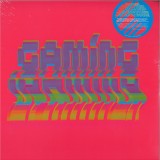
Following January’s acclaimed vinyl debut from Exterior and summer’s much-loved Kota Motomura EP, Edinburgh’s Hobbes Music label ends 2019 with its first album release, also a debut, from GAMING, a fresh new braindance electronica project straight outta Glasgow, from producer and musician Alan Bryden.
GAMING is a new solo outing that brings together a lifelong love of music and technology and creating left field, rhythmic electronica. It’s the sound of IDM, nineties techno and mensch maschine computer music that is as spontaneous as it is programmed.
“Scenes From A Deserted City is a collection of tracks that started as a set of riffs, loops, rhythms and grooves and unfurled around a sense of growing unease about the future of the urban environment around me.
It’s an album that started out as sound…and ended up as a way of telling stories about the age of anxiety we live in, how our world is changing, and how we find a way through that.
This is DIY electronica from Glasgow – it was made on a growing collection of digital and analogue synths and FX units, including a bunch of modular racks, each with its own idiosyncrasies and character that belies the assumption of the binary.
The studio where it was recorded – an abandoned, and often very cold, school building reclaimed by the community some twenty years ago – offered up stories of resilience, even when all seems lost. (I’m not sure what the mice contributed but they definitely climbed in and out of some synths).
This album is ultimately about my changing relationship with Glasgow, a city I’ve lived in for more than 25 years. It’s about how I feel now about the increasing sense of urban decay and how the city can be a very isolating place. It’s about how I reflect on my younger creative self trying to find a direction but mainly feeling a sense of dislocation and not fitting in. And it’s about the questions I have about how that relationship is changing, how it will be forced to move forward.
The result is a soundtrack for walking home on your own, in that headphone bubble when it’s just you focusing on that music that makes sense to you alone. It’s for early in the morning, after the night before, or going to work with the memories of that slipping and sliding inside your head. It’s about how it feels to be both elated and lonely, to be lost in the familiar, despairingly hopeful.”
ALAN BRYDEN (Glasgow, August ‘19)
Re-Release
Black Truffle is honoured to present the premier recordings of two recent works by legendary American experimental composer Alvin Lucier. A friend and contemporary of pioneers like Robert Ashley, David Behrman, Gordon Mumma, and Christian Wolff, Lucier has been crafting elegant explorations of the behavior of sound in physical space since the 1960s. Lucier is perhaps best known for I Am Sitting in a Room (1970), in which he repeatedly re-recorded his own speaking voice being played back into a room until the room's resonant frequencies entirely obscure the spoken text. Beginning in the early 1970s, he has written a remarkable catalogue of instrumental works that focus on phenomena produced by the interference between closely tuned pitches, such as audible beating, often using pure electronic tones produced by oscillators in combination with single instruments.
Demonstrating the restless creative drive of an artist now in his 80s, the two recent works presented here both feature the electric guitar, an instrument Lucier has just recently begun to explore. In Criss-Cross, Lucier's first composition for electric guitars, two guitarists using e-bows sweep slowly up and down a single semitone, beginning at opposite ends of the pitch range. The piece is a model of simplicity, exemplifying Lucier's desire not to 'compose' in the conventional sense, but rather to eliminate everything that 'distracts from the acoustical unfolding of the idea'. In this immaculately controlled performance of Criss-Cross by Oren Ambarchi and Stephen O'Malley, (for whom the piece was written in 2013), a seemingly simple idea creates a rich array of sonic effects - not simply beating patterns, which gradually slow down as the two tones reach unison and accelerate as they move further apart, but also the remarkable phenomenon of sound waves spinning in elliptical patterns through space between the two guitar amps.
In the comparatively lush Hanover, Lucier draws inspiration from the beautiful photograph that provides the LP with its cover, an image of the Dartmouth Jazz Band taken in 1918 featuring Lucier's father on violin. Using the instrumentation present in the photograph, Lucier creates an unearthly sound world of sliding tones from violin, alto and tenor saxophones, piano, vibraphone (bowed) and three electric guitars (which take the place of the banjos present in the photograph). Waves of slow glissandi create thick, complex beating patterns, gently punctuated by repeated single notes from the piano. The result is a piece that, like much of Lucier's instrumental music, is simultaneously both unperturbably calm and constantly in motion.
Stunning LP design by Stephen O'Malley including an inner sleeve with a portrait of Alvin Lucier by Kris Serafin.
Criss-Cross' recorded at Studios Ina GRM, Paris by Francois Bonnet and mixed by Alvin Lucier. Hanover' recorded in Zurich and mixed by Alvin Lucier.
Mastered and cut by Rashad Becker at D&M Belin.
Criss-Cross' recorded at Studios Ina GRM, Paris by Francois Bonnet and mixed by Alvin Lucier. Hanover' recorded in Zurich and mixed by Alvin Lucier.
Mastered and cut by Rashad Becker at D&M Berlin.