limited to 200 copies!
After we have been rolling out three singles and two remixes, it’s time to present to you the full album by the Belgium duo Pelace, titled ‘Echoes’. The digital version drops October 7 and to make it even better, the album will appear on vinyl too at end the of 2022, which will be the first ever vinyl release on Infinite Depth.
The album represents the energetic sound of Pelace (Jordy Cosemans & Janick Warnier), hailing from Hasselt. Besides being Pelace they are very good friends in life, which is playing big part in their tracks. They dug deep into their own experiences and emotions that have been influencing their lives and this resulted in the album. The careful composed collection of tracks forms a 10-track story of uncompromising breaks, deep and compelling melodies and beautiful repetitive vocals.
The album starts off with ‘Trapped Forever’. An ambient intro to immediately show their characteristic raw and uplifting synthwork. When it stops it makes sure you want to carry on listening. After the intro, ‘Deep Sea Dreaming’ follows, through which they bring forward their strong breakbeats and firm basslines. Where ‘Deep Sea Dreaming’ is pretty low-key, the next one titled ‘Patterns’ is one of the more compelling tracks on the album. Long-stretched bass lines are forming a solid base, on top of which uplifting arps and pads are making this track very lively.
The fourth track ‘Kali’ goes a bit deeper. The track was written and produced when there was the news that clubs were allowed to open in Belgium again. A hard 4×4 kick, raw percussion elements and a driven bass are the key elements. After this it goes through to ‘Forever Together’. This one is about always being Pelace together. It’s a break track with a suppressed, but also very special energy.
‘Break Ups’ represents the more calm and dreamy side of the album. The regular beat gets broken up by a breakbeat, after which it continues in its lo-fi focused four-the-floor pattern. Throughout the track harmonious pads are melting together with high pitched synths, giving you a hopeful and warm feeling. The main song ‘Echoes From The Past’ defines the signature sound of Pelace, a blend of all kinds of electronica. Broken beats, intertwining synths, an appealing repetitive vocal and a reese bass, combined to evoke intense moments on the dancefloor.
The eighth track is called ‘Floating’ and refers to old-school no-nonsense electronica. A pulsing and stabby synth, a powerful jungle kick and the up-tempo rhythm are providing a powerful energy. ‘Pushing You Away’ brings us back to the duo’s characteristic drum parts and vocal use, but with a deeper lower part and a somewhat trancey and ravey higher part. Then the cooling-down begins in the form of the outro ‘I Won’t Hesitate’. A very hopeful end to this story told by Pelace
Search:the result
It was in the year 1981 when Belgian electronic musician Michel Huygen and his Spanish colleague Carlos Guirao, both better known as Neuronium, met with Evngelos Odyss as Papathanassou, better known as Vangelis, to record a joint session in London.
Michel Huygen remembers: "The music we played together starting from my score, was flowing, flowing so fast and smoothly between the 3 of us, that I can now, many years after, say: We recorded all the music's parts in one single "shot", since the result was absolutely what we all wanted and Vangelis told us: "Don't touch what we have recorded, it is lovely " and so we did."Now, after some rather unofficial releases, the opus "In London" is finally released for the first time in its entire length, titled "In London - The Platinum Edition", fondly reworked, remastered and sonic refined to perfection exactly 45 years after Neuronium released their first album on the famous Harvest label.
Michel Huygen had intended to celebrate this anniversary with Vangelis in Paris. But fate had other intentions, on May 17, 2022, Vangelis died as a result of a Covid-19 disease.
Huygen: "I feel honored to have been able to meet him, to play music with him and to have him as a funny friend too. And mainly to have been able to meet a huge musician, a classical composer for the forthcoming generations, without doubt. R.I.P, dear Vangelis."
'Intensely textured, interlocking guitar riffs weave together on New Bright Object, the debut album from Berlin and Edinburgh-based duo I’m Not You.
Working under the name I’m Not You, artist Alex Gibbs (bass & vocals) and sound designer Niall McCallum (guitar & drums) have honed a sound that draws in equal measure from jazz funk of Weather Report and the math rock of Don Caballero. Their debut album, New Bright Object is their most developed statement to date, an intricate, robust and unique collection of songs born from serpentine jam sessions in rural idylls.
The duo make no secret of their admiration for bands like Battles and Tortoise. They reference Jim O’Rourke’s lounge numbers and the droll lyricism of Modern Lovers’ Jonathan Richman. There’s a touch of Vini Reilly in their sparse and serpentine guitar lines. A hint perhaps of Mogwai. All these names place New Bright Object within a constellation of albums made with bigger budgets for wider audiences.
New Bright Object opens In a flash of light, comet-like, with the sound of ‘Mr. Wind- Up Bird’. The threads they weave are full with intent, as moments of density rise like hills from the track’s quieter valleys. It’s easy to imagine the pair looking out over the rolling fields of the garden studio in East Lothian where they recorded the album, as they assiduously try and draw their own landscapes in sound.
Similarly, there is a crispness to ‘A Certain Arrangement Of Atoms’ - every clipped hat, rim-shot snare and tightly wound tom a fine-tipped mark on the score. It is intricate and precise, a result perhaps of Niall’s attention to detail. Then there is the piano, Alex’s grandmother’s, slightly out of tune, which adds a few expressionist strokes to this pointillist composition. The piece loosens, until all we’re left with is the bass.
Although the album orbits around the pendulum sway of ‘The Older I Get’, it is ‘What Cats Think About’ that stands out most. That it does is by design – a nod to the Sun City Girls and albums that like to throw their listeners a curveball every now and then. Pleasantly ramshackle, confusingly domestic, agreeably strange.
All this speaks to the spirit of the album and the creative relationship between two best friends whose differences seem to have been the only things they could agree on.'
I am proud to present the first EP featuring artists from my Patreon community on Electric Ballrom. A project very close to my heart, Patreon is a place where like minded people from across the globe meet, share knowledge and help each other grow. The first result of this a joint effort, every track a road tested gem, showcasing the raw talent and dedication of the artists. (Thomas Schumacher)
- A1: Chris Rock (Intro)
- A2: Life Is What You Make It
- A3: Live My Life (Feat Ashtin Martin)
- A4: Faithful (Feat Westside Gunn)
- A5: The Rear View
- A6: Godly (Feat Ashtin Martin)
- A7: Neva Settle (Feat Ashtin Martin & Dre)
- B1: Ouuu (Feat Stacy Epps)
- B2: Smoke Sumthin
- B3: The Wrong Thing (Feat Ashtin Martin)
- B4: Flying High (Feat Posdnuos)
- B5: The Man's Swift
- B6: The Scorn (Feat Kp)
- B7: Inertia
Fresh off the heels of 2021’s collaborative LP, Gotham from Talib Kweli and Diamond D, the BX icon returns with his sixth studio album, The Rear View. Comprised of 13 tracks, the album proves that without a shadow of a doubt, Diamond D’s reputation as the best producer on the mic remains unrivaled.
Never one to bogart the spotlight, Diamond is joined by a supporting cast of guest appearances that include Westside Gunn, Dre (Cool & Dre), Posdnuos (De La Soul), Ashtin Martin, Stacy Epps and KP, with a momentous introduction from the great Chris Rock. To boot, Diamond adds to the unblemished production value with additional board work from the likes of Nottz, Focus, D.R.U.G.S. Beats and Mr. Brady.
"I took my time crafting this LP to make sure every track could stand on its own as a possible single,” says Diamond. “Every feature and track was carefully selected from an elite group of artists and producers that I had the honor of working with. The end result is top tier bar work over pristine production,” he concludes.
Flexi Cuts is pleased to introduce Lazy Snail's new EP, Lucky Life. A truly valuable work, the result of time and research, where Alessandro (aka Lazy Snail) wanted to explore different sides of electronic music of an inner and mature nature at the same time.
Lucky Life is like going up to the attic and finding something precious to take care of; it sums up a long musical journey, from the past to the present, in five tracks full of meaning.
The first track, Remèrcier, is a tribute to 'dance' music, an intense talk over a hypnotic moog bass.
This is followed by Vagrants, dedicated to his hometown (Cudgnola), where we find an 808 rhythmic patterns as involving and beating as a walk in the rain.
The B-side opens with One Place, which features a vocal stunning collaboration with Flicker Fox, who brings the track into a techno universe with percussion and intimate echoes.
Climbin' High was inspired by Alessandro's passion and admiration for the mountains. He composed it imagining an extreme climb, and immediately afterwards an equally dangerous but necessary descent. Just like in reality.
The record ends with No Evil, an ambient-flavoured gem that opens on the climax in a riot of expert snares and synths.
Nearly 10 years on since his last solo LP, Berlin techno icon Marcel Dettmann arrives on Dekmantel with an expansive album captured in a flash of inspiration.
In many ways Fear Of Programming is a reflection on the artistic process – the critical hurdles one has to overcome, the constant strive for originality, the ability to capture inspiration in its pure moment of inception. Bar the closing title track (and we all know Marcel loves a surprise closing), these 13 tracks came together during a period in which our hirsute host was able to immerse himself in studio practice and set the intention to record an album’s worth of material every single day. From the resulting mass of work there were many options to choose from, and Fear Of Programming stood out as one of the most complete statements on Dettmann’s approach in the here and now.
Unconcerned with an overarching concept, it was the work in the studio which drove the musical direction. No labouring over knotty arrangements, no painstaking mix downs – just honest expression, a moment caught, a groove locked, a stroke of synth sent pirouetting over a cavernous bed of texture. The results are varied, and while you might well hear plenty of bruising machinations in line with the techno Dettmann has made his name on, there are plenty of other shades expressed across the album.
Ambient sojourns, beatless epics and angular electronica have equal footing with strident, floor-friendly workouts. Standout piece ‘Water’ offers an icy ballet of swinging minimal and drip-drop melodics fronted by Ryan Elliott on lesser-spotted vocal duties, urging, ‘give me a sign, just a little something to let me know that you’re mine’. It’s playful, but still underpinned with the sincerity that comes with Dettmann’s work.
Running on instinct, Dettmann presents an honest version of himself in the here and now, speaking through the sonics and not over-thinking the results. His decades of experience helming a thousand techno parties speak for themselves, while his evolution as a musical entity through collaboration and his own BAD MANNERS label demonstrate his appetite for change. Indeed, the working method which resulted in the album also spurred him on to create a live set beyond his well-established DJ practice. Without resorting to a conceited overhaul, Fear Of Programming opens up the idea of what Dettmann represents in the modern techno landscape.
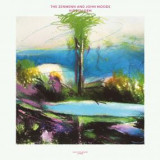
'Hidden Gem' is the Zenmenn's first full album produced together with songwriter and vocalist John Moods and follows their much-loved debut record, 'Enter The Zenmenn'. Named after a country song that didn't quite make it to the final selection, 'Hidden Gem' is the result of an extended jam session at a friend’s studio, in a field of mystical meadows somewhere south of Hamburg, in which the band would experience a series of inexplicable phenomena.
It was their earlier collaboration on the future classic, 'Homage To A Friend' that kickstarted their idea to team up with John Moods again, and in the late summer of 2021 the band set to work on a full album of material together. Using The Zenmenn's trusted drum kit, good old DX7, an unusual Ukrainian bass and an almost discarded pedal steel guitar, combined with Moods’ uniquely fragile voice, the outcome resulted in six timeless songs. The resulting harmonic sound is, as the band put it, “something like Adult Oriented Rock with a teaspoon of Celtic sentimentalism, a pinch of big city Country wrapped in a late night '70s style jam”.
'Hidden Gem’, much like their previous LP, was recorded without pre-arranged songs or any fixed musical concept. Instead, it captures fleeting moments of creativity and reflects the joint musical sentiments of the band members at the time. “Some artists are amazing at vision and curating, our work-flow is opposite to that. We are pretty messy and all over the place in our creation, as in life. It has its advantages and disadvantages, but hopefully it comes out all right in the end.”
The train hurtled forward, rocking side to side as field after field rushed by under an unmoving sky. Her gaze was transfixed on the blurred landscape that passed her by. Behind her, she had left a city with lifelong memories, and as her mind cast back to thoughts of home, a salty tear welled in her eye. It did not fall. She yearned to go back, but her heart knew that this would never again be possible. Inhaling, she held her breath for a moment, almost unexpectedly. A nostalgia was within her, but she knew she must continue, direct her own life and maintain this motion before it dwindled into inertia. She exhaled and the tear rolled down. Looking out toward the horizon she dabbed her cheek, then gently sat upright. Her journey was only just beginning.
Tübingen born, then Frankfurt raised Berlin artist - Johannes Klingebiel, unleashes a potent and untiringly emotive work for the fourth imprint on Amsterdam’s Bloomer Records. A man of many disciplines, he combines his background in jazz drumming with an insatiable appetite for all varieties of electronic music.
Beginning with fond nostalgia that is juxtaposed by the driving motion of organic breakbeats, one is immediately engulfed. Rich synth leads play on minor chord variations to begin and work towards complex and richly cinematic compositions. After the first four tracks, ‘Break Something’ stutters in with a club-ready feel. Capable of both at-home and party environments, this thought-provoking release cannot be boxed into clear-cut categories.
Johannes Klingebiel uses delicate percussion skills to speak to his electronic orchestra. His lust for crisp, clean breaks results in an often inexorable motion that punctuates pensive chords and crescendos. Beginning with breakbeat variations the release ebbs towards half-time drum structures, IDM and experimental expressions later on. Among these quirky and often nostalgic gems, one can find a few driving and noticeably danceable numbers, offering glimpse of familiarity amidst emotive and inquisitive soundscapes.
(Produced, Arranged and Conducted by Claus Ogerman)
Not long after the dawn of her career, as a teenager in Rio de Janeiro, Joyce was declared “one of the greatest singers” by Antonio Carlos Jobim. Yet despite reputable accolades and the fact that she has since recorded over thirty acclaimed albums, Joyce never quite achieved the international recognition of the likes of Jobim, João Gilberto and Sergio Mendes, all of whom became global stars after releasing with major labels in the US.
There was a moment when it seemed she might be on the cusp of an international breakthrough. While living in New York, Joyce was approached by the great German producer Claus Ogerman. Ogerman had already played a pivotal role in the development and popularisation of Brazilian music in the 1960s, recording with some of the all-time greats like Jobim and João Gilberto, as well as North American idols like Frank Sinatra, Billie Holiday and Bill Evans.
"I met him in New York City, in 1977”, recalls Joyce. “I was living and playing there, and João Palma, Brazilian drummer who used to play with Jobim, introduced me to Claus. We had an audition, he liked what we were doing and decided to produce an album with us.”
Featuring fellow Brazilian musicians Mauricio Maestro (who wrote/co-wrote four of the songs), Nana Vasconcelos and Tutty Moreno, and some of the most in-demand stateside players including Michael Brecker, Joe Farrell and Buster Williams, the recordings for Natureza took place at Columbia Studios and Ogerman produced the album, provided the arrangements and conducted the orchestra.
But mysteriously, Natureza was never released, and what should have been Joyce’s big moment never happened. As Joyce remembers, “I returned home, but Claus and I remained in contact, by letters and phone calls. He was very enthusiastic about the album and tried to hook me up with Michael Franks. He wanted me to go back to NYC in order to re-record the vocals in English with new lyrics, which I actually wasn’t too happy about. But then I got pregnant with my third child and could not leave Brazil. And little by little our contact became rare, until I lost track of him completely. And that was it. I never heard from him again."
While Claus was known to be something of an elusive character, the album’s disappearance might also have been a result of timing. The Brazilian craze was coming to an end, making way for disco and new wave at the end of the seventies, and Ogerman struggled to find a major label interested in a new Brazilian sensation. Additionally, as Joyce mentions, it wasn’t quite finished. Ogerman wanted to add finishing touches to the mix and to record alternative English lyrics for the US and international markets - a critical artistic difference between Joyce and Ogerman.
As the military dictatorship’s grip on Brazil began to subside in the 1980s, Joyce had a handful of hits in her home county, including a tribute to her daughters ‘Clareana’, and the iconic ‘Feminina’ - an intergenerational conversation between mother and daughter about what it means to be a woman. But already a feminist pioneer, these successes were hard fought. Joyce had caused controversy as a nineteen-year-old when she became the first in Brazil to sing from the first-person feminine perspective, and the institutional sexism she faced was worsened by the dictatorship who would often censor her music. Even once the Junta was out of the way, Joyce found herself up against the male-dominated major record companies in Brazil, who sought to dictate her career and sexualise her image, before dropping her for refusing to play along.
A few years after the success of her albums Feminina and Agua E Luz in Brazil, Joyce’s music began to find its way to the UK, Europe and Japan, and “Feminina” and “Aldeia de Ogum” became classics on the underground jazz-dance scenes of the mid to late-eighties and early-nineties.
The full-length version of “Feminina” from the Natureza sessions was first heard on a Brazilian Jazz compilation in 1999 and “Descompassadamente” was licensed for a CD compiling the work of Claus Ogerman in 2002. Following these, word began to get out about an unreleased Joyce album with Claus Ogerman and the legend of Natureza grew.
Forty-five years since it was recorded, Natureza finally sees the light of day, as Joyce intended: with her own Portuguese lyrics and vocals. Featuring the fabled 11-minute version of ‘Feminina’, as well as the never before heard ‘Coração Sonhador’ composed and performed by Mauricio Maestro, Natureza’s release is a landmark in Brazilian music history and represents a triumphant, if overdue victory for Joyce as an outspoken female artist who has consistently refused to bow to patriarchal pressure.
***Disclaimer! While “Feminina” and “Descompassadamente'' were mixed by legendary engineer Al Schmitt and mastered from the original master tapes, the remaining five tracks are unmixed. Due to significant deterioration of the master-tapes, the best audio source for these tracks was an unmixed tape copy Joyce had kept of the recordings. The best care has been taken in the restoration and mastering of this release, but the sound quality may differ from other releases on Far Out Recordings. We advise listening to sound clips before buying where possible.
Blue Vinyl / Vinyl only
ix3m and Denis Andreev team up for a two track release on 123.ro. They have shared their common interests and taste in music for the best possible result.
BART & THE BEDAZZLED: PEOPLE PERSON + CARBOARD MAN (7")
Bart & The Bedazzled return with a sensational AA-side 45 with the highlife-vibed-plaintive pop of 'People Person' and the layered 'Cardboard Man', featuring the gorgeous guest vocals of Earth Girl Helen Brown. "World dance pop meets '80s indie" LA's northeast side is home to a dizzying number of independent artists and bands. One of the scene's most distinctive sounds emanates from Bart & The Bedazzled, a collaborative group led by talented songwriter Bart Davenport. After debuting in 2018 with the Blue Motel album Bart reconnects with the stellar musicians that make up the Bedazzled for two exclusive new songs of, what he terms, "world dance pop meets 80s indie". Consisting of Los Angeles' highly respected players, the collective are undoubtedly a "musicians' band" playing for joy, performing for and with other artists that inhabit underground haunts such as Zebulon or Permanent Records Roadhouse. This is their sound!
With these new tracks The Bedazzled usher in a new phase, adding a small dose of drum machinery to the mix, resulting in an uplifting, danceable endeavour. On top of this, hand played congas and shakers blend with ultra clean guitars to form a rich context for Bart Davenport's patented, smooth vocal. Newcomer band member and producer Nic Hessler (Catwalk, Captured Tracks) fits these pieces together in seamless mixes.
People Person celebrates the collective human experience, while subtly acknowledging that people often are "the worst". It's an upbeat ode to a beautiful world that sadly may never be saved. Meanwhile, the semi-fictional Cardboard Man critiques a society desperate for truth and a way out of dark times only to find omnipresent, puppet-like heroes offering nothing real. Featuring guest singer Heidi Alexander aka Earth Girl Helen Brown her distinctive tone and phrasing add a much needed weirdo energy to a decidedly consonant pop track.
It comes as no surprise the group have gravitated towards world-dance-ish sounds. Andrés Renteria is an accomplished crate-digger and DJ, as is bassist Jessica Espeleta. She kicks off People Person with a dubby bass line, setting the stage for Wayne Faler's African highlife inspired guitars. It's still Bart & The Bedazzled, but this time they come with a sound somewhat reminiscent of '80s bands that also incorporated international flavors, such as the post Young Marble Giants project Weekend or French electro-obscuros Antena. Like those bands, Bart & The Bedazzled have a wide range of influences and the artistic intention to make something contemporary with them.
Above all, they're a group of friends who enjoy the creative process together. For them the journey is as important as the finished work.
Disco Volante is a new imprint created by Laila Moshiri (aka Laila), curator of the Disco Volante show on Ibiza Global Radio, aimed at merging different cultures, styles, personalities and their unique music frequencies.
The imprint's first EP - Aston Martin - is the result of the beautiful collaboration between Dandy Jack & Laila. Pursuing an intrinsic desire to flirt with deep and sensual music, Martin and Laila created a collection of tracks that span a multitude of genres, from laidback minimal to Detroit-tinged deep house.
'A Winged Victory For The Sullen' is the first installment of the new collaboration between Stars Of The Lid member Adam Wiltzie and L.A. composer Dustin O'Halloran. The duo agreed to leave the comfort zone of their home studios and develop the recordings with the help of large acoustic spaces, hunting down a selection of 9ft grand pianos that had the ability to deliver extreme sonic low end.
Other traditional instrumentation was used including string quartet, French horn, and bassoon, but always juxtaposed is the sound of drifting guitar washed melodies. The recordings began with one late night session in the famed Grunewald Church in Berlin on a 1950's imperial B?sendorfer piano and strings were added in the historic East Berlin DDR radio studios along the River Spree. One last session on a handmade Fazioli piano in a private studio on the Northern cusp of Italy, before the final mixes took place in a 17th century villa near Ferrara with the assistance of Francesco Donadello. All songs were then processed completely analogue straight to magnetic tape.
Their secret to harvesting new melodic structures from the thin air of existence was for the duo to push themselves to dangerous territory, realising that clear thinking at the wrong moment could stifle the compositions. The final result is seven landscapes of harmonic ingemination. In 'Requiem For The Static King Part One' ? created in memory of the untimely passing of Mark Linkous ? they have taken the age-old idea of a string quartet and then shot it out of a cannon to reveal exquisite new levels of sonic bliss.
Of the 13 minute track 'Symphony Path?tique', Wiltzie says 'after almost 20 years of struggling to create interesting ambient drone music, I feel like I have finally figured out what I am doing'. Notable guest musicians include Icelandic cellist Hildur Gudnadottir, as well as Erased Tapes label comrade Peter Broderick on violin. A Winged Victory For The Sullen is not a side project ? it is the future of the late night record you have always dreamed of. A Major release for Forte, Non exportable.
Horsey’s critically acclaimed debut album Debonair arrives on vinyl via London label untitled (recs). Made up of Jacob Read, Theo McCabe, Jack Marshall and George Bass, Horsey have built a cult live following having toured with the likes of King Krule, Goat Girl and Hinds, as well as playing sold-out shows across their hometown venues with the likes of YOWL, Hotel Lux, Norman, Ugly, Lazarus Kane and more. Horsey refused to be pigeonholed at every turn. “Debonair” is propelled forwards from the opener with an incomparable wide-eyed intensity that blurs the lines between dark, glam inflected noise-rock, surreal jazz breakouts, wonky apocalyptic pop, emphatic rock opera-esque histrionics and melancholic lo-fi without abating. The juxtaposition between maturity and immaturity is central to the album’s themes, and this contrast is not only found in the album’s dynamic instrumentation but is also prominent in Horsey’s intoxicating and coltish lyrical prose, which is all at once deeply personal, tumultuous and utterly abstract. Though often delivered with overtones of sardonic humour the subject matter carries a sincere message, one that channels the spirit of when the band first met in nursery whilst tackling the tropes of modern living. The result is a gripping and exuberant reminder that there is great value in applying some childlike lateral mentality to the all too serious events of adult life. Tracklist: A1/Sippy Cup A2/Arms and Legs A3/Underground A4/Everyone’s Tongue A5/Wharf B1/Lagoon B2/1070 B3/Clown B4/Leaving Song B5/Seahorse (Feat. King Krule)
Magnificent Wolof drum music, performed by an extended griot family over seven consecutive days, in the mystical setting of Lac Rose, outside Dakar.
Doudou Ndiaye Rose — who died in 2015 — is a key drummer in the musical history of the world. He developed a system of five hundred original drumming patterns, ancient and new. Amongst the modern rhythms here is Bench Mi — ‘under the Baobab tree,’ a spot where problems get solved. Also Hibar Yi — ‘passing on information’ — the theme-tune of Senegalese TV national news for decades — and Les Rosettes, the signature rhythm of Senegal’s first ever all-female percussion group, convened by Doudou, and named after his grandmother.
These original compositions sit alongside important traditional rhythms, familiar to every Sabar player, such as Farwu Jar (a courtship game sometimes resulting in a wedding), Ceebu Jin (also the name of the national dish of fish and rice), and Gumbé, often played after a successful harvest.
Recorded in joyful single takes, with no overdubs, mastered by Rashad Becker, the music is deep and thrilling, polyrhythmic to the bone, with a complex, pointillistic intensity at times evoking Jeff Mills in full flight.
Drawing from a strong history of electronic influence, Tomashevsky has created his own underworld of foreboding techno. We enter this EP with Incoherent, which exudes ominous sounds - reminiscent of murky radar blips that may be heard deep underwater in the metallic bowels of a submarine. Bubbling electronic delays remain adjoined to these metronomic blips and oer lateral, spontaneous movement around an otherwise sturdy song structure. Jittery melodies scatter nervously under lead elements, remaining disjointed and resulting in increased energy and a darkened excitement.
As we move through the EP, we face ups and downs, both in tempo and mood. Leading on from the first, Rollback is destabilizing, energetic and mean in all the right ways. Wobbling low ends open into a mood of uncertainty, held in place only by the stability of the drums. Rollback suits a peak-time club atmosphere thanks to the gritty synth leads and fast-paced feel.
Ending with the two tracks on the B-side, Tomashevsky still seeks to surprise. Rejected seems to be a distant relative of the Incoherent, following the synthetic blip structure but allowing snares and other percussions to build more prominently. Finally, we arrive at the closing track which marks itself as more obscure. Leaning on kick drum patterns initially reminiscent of electro/breaks, the use of half-time tempo gives a change of pace and a platform for a slightly different song structure and mixing potential.
Mesmeric and entrancing, these songs give any DJ or listener to chance to turn mind chatter o and lock into a hypnotic groove. Drawing on classically techno foundations, Tomashevsky has tipped his hat to the founders of the genre whilst adding his own flavour and subtle techniques that make this EP shine.
After his Top10 Orion release, Jay Lumen is back with his brand new EP. A side "Terra" track is a main stage weapon with the right balance of dirty and space synth sounds. It's a massive future techno vibe sprayed dancefloor filler. The B side "Pressing" song is the result of Jay's special collaboration with the young talent Wex10. That's a good proof of the energetic raw techno sound including some special Detroit elements. Enjoy!"
Restock
Marcela Dias Sindaco's music captures the essence of Gated as a label, sitting half way between so many genres: bass-heavy electro, funky breaks, squelchy synth-boogie... but driven by Marcela's breathy Portuguese vocals, expressing the depths of her carioca soul. Marcela grew up in Rio de Janeiro, and as a classically trained pianist and cellist, music was in her blood, but it was her dad's obsession with Krautrock that influenced her early music taste. Later, travelling around Europe as a model, she discovered the clubs of Berlin, Paris and Milan and incorporated what she heard into her own music, using a studio filled with analogue equipment. The result joins the dots between heads-down club stompers, electrofunk, Prince, and Brazilian samba. In a word: fresh!
2022 Re Edition
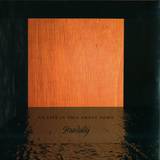
STAREAWAY is Markus Guentner from Regensburg, of Kompakt- and Ware-fame, and Heiko Badje from Hamburg, the man behind saudade-driven pop-band La Grande Illusion. Exploring the possibilities of combining Guentners critically acclaimed adventures in ambient scapes and Badjes melodies and distinctive singing, their track 'Baghira", as an early result, was selected on Kompakts 'Pop Ambient 6 compilation in 2005. Their first EP as STAREAWAY, called 'Learn How To Love Me", was released on Hamburg-based label Couldn.t Care More in 2011 including a remix by deep house icon Osunlade crossing all borders, yet feeling so natural, and the somewhat timeless electronic pop reference 'Unwise". Now STAREAWAY come up with their first album 'No Life In This Ghost Town' (again on Couldn.t Care More); seven sketches between song and track deliberately carved from a shimmering wall of electronic sound by guitars, spiritualized voices and subtle melodies. It.s caressing and thoughtful, but there is also a darkness that makes you shiver. Glowing embers in far away windows. STAREAWAY combine a vision of sound with multitudes of micro-organisms which take turns no one can forsee. And what may appear as a mere coincidence is in fact a concentrated search. They are seekers of the things lying underneath. STAREAWAY's 'No Life In This Ghost Town' is mastered by Rafael Anton Irisarri. It will be available as Double Vinyl (+ Download-Code) and, of course, digitally. Layout by JL Prozess (Markus Guentner), artwork by Claudia Kugler.