Search:the rh factor

Styles
All
Camp Claude - Never Say Never LP
  • A1: World With Your Name
  • A2: I Just Want It All
  • A3: Speak Softly
  • A4: Heaven Can Wait
  • A5: Heartbeat
  • A6: Never Say Never
  • A7: High Flames
  • B1: Tell Me
  • B2: Keep Going On
  • B3: Crash Crash
  • B4: Go!
  • B5: This Country
  • B6: Close 2 U
  • B7: A Day Away

An album that calls forth urgent desires, bold claims and the right to dream in the face of a reality that stifles hope.
Because Camp Claude never stands still, because the trio always wants more, it ignites with Diane's fire, Mike's freedom and Léo's conviction, and with NEVER SAY NEVER bets on 14 tracks that are electric, powerful and lightning-sharp.
Plural and perfectly eclectic, NEVER SAY NEVER inhabits an intangible musical and temporal space.
Like a mixtape, this new album reveals new sensations with every track, a prayer to be played on repeat, a kind of magic formula made of electro rhythms, retro synths and shoegaze guitars.

pre-order now24.04.2026

expected to be published on 24.04.2026

22,65
Various - Tchic Tchic: French Bossa Nova 1963-1974  Colored Edition LP 2x12"
  • A1: Les Masques - Il Faut Tenir (1969)
  • A2: Isabelle Aubret - Casa Forte (1971)
  • A3: Christianne Legrand - Hlm Et Ciné Roman (1972)
  • A4: Jean Constantin - Pas Tant D'chichi Ponpon (1972)
  • A5: Billy Nencioli & Baden Powell - Si Rien Ne Va (1969)
  • B1-: Marpessa Dawn - Le Petit Cuica (1963)
  • B2: Jean-Pierre Sabar - Vai Vai (1974)
  • B3: Sophia Loren - De Jour En Jour (1963)
  • B4: Isabelle - Jusqu’à La Tombée Du Jour (1969)
  • B5: Sylvia Fels - Corto Maltesse (1974)
  • C1: Frank Gérard - Comme Une Samba (1972)
  • C2: Ann Sorel - La Poupée Des Favellas (1971)
  • C3: Charles Level - Un Enfant Café Au Lait (1971)
  • C4: Andrea Parisy - Les Mains Qui Font Du Bien (1970)
  • C5: Audrey Arno - Quand Jean-Paul Rentrera (1969)
  • C6: Aldo Frank - T’as Vu Ce Printemps (1970)
  • D1: Christianne Legrand - Cent Mille Poissons Dans Ton Filet (1972)
  • D2: Clarinha - Lemenja (1970)
  • D3: Hit Parade Des Enfants - Aquarela (1976)
  • D4: Jean-Pierre Lang - Tendresse (1965)
  • D5: Magalie Noël - Une Énorme Samba (1970)
  • D6: Françoise Legrand - La Lune

Ever since the late 1950s bossa-nova revolution, Brazil’s influence on French music has been undeniable. Pierre Barouh, Georges Moustaki and a vast array of lesser known artists, all made the Musica Popular Brasileira (MPB) an axis of promotion at the service of a cool and metaphysical, modern and mixed Brazilian lifestyle. Some were seduced by the poetic languors of the bossa, some were looking for fun, and others just loved the American hybridization of jazz-bossa, jazz-samba.


What is bossa nova? One of its creators, Joao Gilberto said: "Its style, cadence, everything is samba. At the very start, we didn't call it bossa nova, we sang a little samba made up of a single note - Samba de uma nota so .... The discussion around the origins of bossa nova is therefore useless”. It is nevertheless useful to remember that these magnificent Brazilian songs, which the guitarist describes as samba, were shifted and balanced around improbable chords. "I like things that lean, the in-betweens that limp with grace," said Pierre Barrouh, quoting Jean Cocteau.


With emotion, arrangements for violin and supple guitar licks, bossa nova rapidly changed. A transformation that can be heard in the Tchic, tchic, French Bossa Nova 1963-1974 compilation, the result of a cultural reappropriation, which traveled through the United States and supplemented itself in France.

A musical revolution that has remained significant, bossa nova was born in Rio. From 1956 to 1961, Brazil lived through its golden years. In five years, the country had invented its modernist style. Elected president in 1956, Juscelino Kubitschek de Oliveira, an elegant man with a broad forehead, brandished a promising slogan: "Fifty years of progress in five years". He quickly got to work. Not worried about increasing debt, he launched the project for a new federal capital, Brasilia, designed by the communist architect Oscar Niemeyer. Volkswagen opened state-of-the-art factories and created the “fusquinha”, the Beetle. In Rio, the Vespa made its first appearance. The Arpoador Surf Club crew run into the “girl” from Ipanema, Helô Pinheiro - the tanned garota ("chick"), between a flower and mermaid, who at 17 walked by the Veloso bar, where the fiery author and composer, Tom Jobim and Vinicius de Moraes, were getting drunk on whiskey. From then on, bossa symbolized cool.

In 1958, Joao Gilberto recorded Chega de Saudade, which the directors of Philips denied, calling it "music for fagots". The marketing director, who believed in it, secretly pressed 3000 78-inch vinyls and distributed them at schools around Rio, creating a tidal wave.

American jazzmen then took over. In particular, trumpeter Dizzy Gillespie and guitarist Charlie Byrd. In November 1962, the Brazilian Ministry of Foreign Affairs funded a "Bossa-Nova" concert at Carnegie Hall in New York, inviting the genre’s pioneers. Unprepared, the show soon turned to disaster. But the troupe was invited to the White House by Jackie Kennedy. The first lady loved "the new beat" and in particular Maria Ninguem, a song by Carlos Lyra, later covered by Brigitte Bardot.

In Brazil, the 1964 military coup quickly ended this euphoria. The destructive atmosphere that ensued pushed many Brazilian musicians to leave, if not to exile. Thus, Tom Jobim, Sergio Mendes and Joao Gilberto arrived to the United States. In New York, Joao Gilberto met saxophonist Stan Getz. At the time, he was married to the Bahianese Astrud Weinert Gilberto, who had a German father. She had never sung before, but she knew how to speak English. Getz therefore asked her to replace her husband on The Girl From Ipanema. The Getz/Gilberto record with Tom Jobim on piano, was released in March 1964. Phil Ramone, the "pope of pop" was in charge of sound.

Bossa nova arrived in Paris through the classic “guitar-voice” channel (Pierre Barouh, Baden Powell, Moustaki…) But France loved jazz and Paris had already welcomed its American contributors. All these good people were to pass through Saint-Germain-des-Prés. The cabaret l'Escale became the Mecca of Latin American sound where one could find Pierre Barrouh and his friends, such as the Camara Trio, samba-jazz aces, whose only record was published by the Saravah label. With a band strangely called Les Masques (a band that included Nicole Croisille and Pierre Vassiliu, among others), the Camara Trio recorded an interesting Brazilian Sound, including the track Il faut tenir which is present on this tasty compilation of rarities.

Other enlightened musicians can also be found on the compilation, such as Jean-Pierre Sabar (songwriter for Hardy, Auffray, Leforestier ...) and the French pop rock organist Balthazar. In 1975, Sabar recorded Aurinkoinen Musiikkimatka on a Finnish label, which featured the crazy Vai, Vai, included on this record. We are now following the footsteps of Brazilian electronic musicians such as Sergio Mendes, Eumir Deodato or Marcos Valle who created funk and disco sounds on their keyboards and synthesizers. A style that influenced Véronique Sanson when she wrote Jusqu’à la Tombée de la nuit in 1969 for Isabelle de Funès, the niece of Louis and a great friend of Michel Berger - Sanson did end up singing this track on her 1992 Sans Regret record.


The pinnacle of exoticism and travel, Sylvia Fels’ Corto Maltese includes bongos, sea mist and ocean sounds. The title was taken from Jacky Chalard’s concept album written in 1974, Je suis vivant, mais j’ai peur (I am alive, but I am scared), based on Gilbert Deflez’s science fiction novel.


However, bossa nova extended the scope of popularity. "In the 1970s, I was a fan of Sergio Mendes, Getz / Gilberto. I fell in love with this music that I knew because I had been an orchestral singer, " explained Isabelle Aubret, who in 1971 delivered a composite record of covers by the very funky Jorge Ben, Orfeu Negro, Tom Jobim, Vinicius de Morais and Jean Ferrat. "I recorded this album for Meys Records in Paris, far from Brazil, with wonderful musicians, François Raubert, Roland Vincent, Alain Goraguer...". The latter wrote the arrangements for Casa Forte, a very percussive title borrowed from Edu Lobo, one of the initiators of the bossa who spent time in California. "Jazz and bossa came together and produced very rhythmic music. I love singing, it allows me to dream, to have fun, to feel a high on stage, and these songs brought me joy, made me swing, my singing felt like a dance.”


The world tours of French singers and their desire for the tropics, often brought them to Rio with its hills, forests, caipirinhas and tanned bodies. There are surprises though, like this Iemenja (Iemenja is the goddess of the sea in the Afro-Brazilian candomblé religion). Not unlike the composer and musician Jean-Pierre Lang, based in Sao Paulo, Claire Chevalier taught Brazil to Brazil. In 1970, the singer and painter published a 45-inch vinyl, Mon mari et mes amants (My husband and my lovers), under the improbable pseudonym of Clarinha (little Claire). She was then living in Rio, with her husband, Joël Leibovitz, who founded a band called Azimuth, and who owned a record label specialized in "sambas enredos" songs for samba school parades.


For its B side, she asked Pierre Perret to come up with lyrics for a song composed by Carlos Imperial: "Oh goddess of the sea, o goddess Iemenja, I bring a white rose to adorn your long hair ..." . "Perret came to see us, and we had fun, remembers Joël Leibovitz. We wrote Lemenja for fun, we recorded it at the Havaí studio, behind the Central do Brasil the central station. Erlon Chaves, the arranger who worked with Elis Regina, joined us" adding his share of Afro-Brazilian percussions and funky brass to the mix.

There is a common misunderstanding in Franco-Brazilian history: that bossa, admittedly hedonistic, is perceived as funny, even though the poets who wrote the texts are often philosophizing on the human condition. Its French interpreters pull it towards a carnival inspired universe, far removed from its fundamental essence. Thus, Jean Constantin covered the famous Samba da minha terra, an ode to the art of samba written by the classic Bahian composer Dorival Caymmi, renaming it with the enticing title of Pas tant de tchi tchi pompon: "On your pier there is no tchi tchi / when you arch your back, you know everything is alright ”(lyrics by Gérard Calvi). This expedited bossa aims for the absurd, but retains a certain elegance.

Indeed, Jean Constantin was not an idiot, the rather large man had a huge mustache and liked fantasy, (Les pantoufles à papa, Le pacha, inspired by cha-cha-cha-cha, salsa and jazz) but he was also the lyricist of Mon manège à moi interpreted by Edith Piaf, the composer of Mon Truc en plume by Zizi Jeanmaire and the soundtrack of François Truffaut’s 400 Blows. Le Poulpe, published in 1970, from which this bossa is extract, was arranged by Jean-Claude Vannier, an accomplice of Serge Gainsbourg’s Melody Nelson. In short: "There is enough of samba / By looking at the parasol / Because my poor cabeza / Is going to die in the sun".

Even the American actress Marpessa Down, who was at the heart of the bossa nova revolution with her role as Euridyce in Marcel Camus’ film Orfeu Negro, winner of the 1959 Cannes Palme d'or, fed the clichée with Je voudrais parler au petit cuica - "Tell me how you manage to always make people want to dance / It's true, I must admit that I cannot resist your magic" - in consequence, once can hear the cuica, a little drum inherited from the Bantu.


But bossa nova had many angles. Societal, of course, pushing actresses who were symbols of women's liberation like Brigitte Bardot, Jeanne Moreau, or Sophia Loren to engage in the exercise of accelerated bossa. In February of 1963, Sophia Loren made a record in French in Rome, Je ne t'aime plus, featuring the song De jour en jour, a bossa written by two Italians, Armando Trovajoli and Tino Fornai, which was released a little later by Barclay. Bossa accompanied the 1960s, a decade of moral liberation. Ann Sorel, who interpreted La Poupée des favellas, caused a sensation with L’amour à plusieurs, a provocative song written by Frédéric Bottom and Jean-Claude Vannier. As for the actress Andrea Parisy, she displayed her bourgeois cheekiness in Marcel Carné's Les Tricheurs before interpreting Les mains qui font du bien. And Magalie Noël, the friend of Boris Vian, who sung Johnny fais-moi mal, was hired to sing Une énorme Samba, composed by Alain Goraguer (arranger to Gainsbourg, Bobby Lapointe and Jean Ferrat) with lyrics by Frédéric Botton.

But in the end, of what wood is bossa nova made of? The answer is given by Christianne Legrand, daughter of Raymond the conductor, and sister to Michel the composer: "With me, with jà" - jà means "immediately" in Portuguese. In 1972, the singer, an expert in vocal jazz and a member of the Double Six, published Le Brésil de Christianne Legrand. Two songs included on the Tchic Tchic compilation that demonstrate how bossa, jazz, funk, rock, etc. work like a swiss army knife: the music is used to denounce broken systems, or miracles, HLM et ciné roman, Cent mille poissons dans ton filet, two songs from the O Cafona soundtrack, a successful telenovela broadcast, at the time in black and white, on TV Globo. The first was adapted in French by the fighter and friend of the Legrand tribe, Agnès Varda. The second is content with a play on words, jostling them into a summer fun.


Véronique Mortaigne

pre-order now17.04.2026

expected to be published on 17.04.2026

27,31
Guilty Razors - Complete Recordings 1977 - 1978

UILTY RAZORS, BONA FIDE PUNKS.


Writings on the topic that go off in all directions, mind-numbing lectures given by academics, and testimonies, most of them heavily doctored, from those who “lived through that era”: so many people today fantasize about the early days of punk in our country… This blessed moment when no one had yet thought of flaunting a ridiculous green mohawk, taking Sid Vicious as a hero, or – even worse – making the so-called alternative scene both festive and boorish. There was no such thing in 1976 or 1977, when it wasn’t easy to get hold of the first 45s by the Pistols or the Clash. Few people were aware of what was happening on the fringes of the fringes at the time. Malcolm McLaren was virtually unknown, and having short hair made you seem strange. Who knew then that rock music, which had taken a very bad turn since the early 1970s, would once again become an essential element of liberation? That, thanks to short and fast songs, it would once again rediscover that primitive, social side that was so hated by older generations? Who knew that, besides a few loners who read the music press (it was even better if they read it in English) and frequented the right record stores? Many of these formed bands, because it was impossible to do otherwise. We quickly went from listening to the Velvet Underground to trying to play the Stooges’ intros. It’s a somewhat collective story, even though there weren’t many people to start it.
The Guilty Razors were among those who took part in this initial upheaval in Paris. They were far from being the worst. They had something special and even released a single that was well above the national average. They also had enough songs to fill an album, the one you’re holding. In everyone’s opinion, they were definitely not among the punk impostors that followed in their wake. They were, at least, genuine and credible.

Guilty Razors, Parisian punk band (1975-1978). To understand something about their somewhat linear but very energetic sound, we might need to talk about the context in which it was born and, more broadly, recall the boredom (a theme that would become capital in punk songs) coupled with the desire to blow everything off, which were the basis for the formation of bands playing a rejuvenated rock music ; about the passion for a few records by the Kinks or the early Who, by the Stooges, by the Velvet mostly, which set you apart from the crowd.
And of course, we should remember this new wave, which was promoted by a few articles in the specialized press and some cutting-edge record stores, coming from New York or London, whose small but powerful influence could be felt in Paris and in a handful of isolated places in the provinces, lulled to sleep by so many appalling things, from Tangerine Dream to President Giscard d’Estaing...
In 1975-76, French music was, as almost always, in a sorry state ; it was still dominated by Johnny Hallyday and Sylvie Vartan. Local rock music was also rather bleak, apart from Bijou and Little Bob who tried to revive this small scene with poorly sound-engineered gigs played to almost no one.
In the working class suburbs at the time, it was mainly hard rock music played to 11 that helped people forget about their gruelling shifts at the factory. Here and there, on the outskirts of major cities, you still could find a few rockers with sideburns wearing black armbands since the death of Gene Vincent, but it wasn’t a proper mass movement, just a source of real danger to anyone they came across who wasn't like them. In August 1976, a festival unlike any other took place in Mont-de-Marsan – the First European Punk Festival as the poster said – with almost as many people on stage as in the audience. Yet, on that day, a quasi historical event happened, when, under the blazing afternoon sun, a band of unknowns called The Damned made an unprecedented noise in the arena, reminiscent of the chaotic Stooges in their early adolescence. They were the first genuine punk band to perform in our country: from then on, anything was possible, almost anything seemed permissible.

It makes sense that the four+1 members of Guilty Razors, who initially amplified acoustic guitars with crappy tape recorder microphones, would adopt punk music (pronounced paink in French) naturally and instinctively, since it combines liberating noise with speed of execution and – crucially – a very healthy sense of rebellion (the protesters of May 1968 proclaimed, and it was even a slogan, that they weren’t against old people, but against what had made them grow old. In the mid-1970s, it seemed normal and obvious that old people should now ALSO be targeted!!!).
At the time, the desire to fight back, and break down authority and apathy, was either red or black, often taking the form of leafleting, tumultuous general assemblies in the schoolyard, and massive or shabby demonstrations, most of the time overflowing with an exciting vitality that sometimes turned into fights with the riot police. Indeed, soon after the end of the Vietnam War and following Pinochet’s coup in Chile, all over France, Trotskyist and anarcho-libertarian fervour was firmly entrenched among parts of the educated youth population, who were equally rebellious and troublemakers whenever they had the chance. It should also be noted that when the single "Anarchy in the UK" was first heard, even though not many of us had access to it, both the title and its explosive sound immediately resonated with some of those troublemakers crying out for ANARCHY!!! Meanwhile, the left-wing majority still equated punks with reckless young neo-Nazis. Of course, the widely circulated photos in the mainstream press of Siouxsie Sioux with her swastikas didn’t necessarily help to win over the theorists of the Great Revolution. It took Joe Strummer to introduce The Clash as an anti-racist, anti-fascist and anti-ignorance band for the rejection of old-school revolutionaries to fade a little.

The Lycée Jean-Baptiste Say at Porte d’Auteuil, despite being located in the very posh and very exclusive 16th arrondissement of Paris, didn’t escape these "committed" upheavals, which doubled as the perfect outlet for the less timid members of this generation.
“Back then, politics were fun,” says Tristam Nada, who studied there and went on to become Guilty Razors’ frontman. “Jean-Baptiste was the leftist high-school in the neighbourhood. When the far right guys from the GUD came down there, the Communist League guys from elsewhere helped us fight them off.”
Anything that could challenge authority was fair game and of course, strikes for just about any reason would lead to increasingly frequent truancy (with a definitive farewell to education that would soon follow). Tristam Nada spent his 10th and 11th unfinished grades with José Perez, who had come from Spain, where his father, a janitor, had been sentenced to death by Franco. “José steered my tastes towards solid acts such as The Who. Like most teenagers, I had previously absorbed just about everything that came my way, from Yes to Led Zeppelin to Genesis. I was exploring… And then one day, he told me that he and his brother Carlos wanted to start a rock band.” The Perez brothers already played guitar. “Of course, they were Spanish!”, jokes their singer. “Then, somewhat reluctantly, José took up the bass and we were soon joined by Jano – who called himself Jano Homicid – who took up the rhythm guitar.” Several drummers would later join this core of not easily intimidated young guys who didn’t let adversity get the better of them.

The first rehearsals of the newly named Guilty Razors took place in the bedroom of a Perez aunt. There, the three rookies tried to cover a few standards, songs that often were an integral part of their lives. During a first, short gig, in front of a bewildered audience of tough old-school rockers, they launched into a clunky version of the Velvet Underground's “Heroin”. Challenge or recklessness? A bit of both, probably… And then, step by step, their limited repertoire expanded as they decided to write their own songs, sung in a not always very accurate or academic English, but who cared about proper grammar or the right vocabulary, since what truly mattered was to make the words sound as good as possible while playing very, very fast music? And spitting out those words in a language that left no doubt as to what it conveyed mattered as well.
Trying their hand a the kind of rock music disliked by most of the neighbourhood, making noise, being fiercely provocative: they still belonged to a tiny clique who, at this very moment, had chosen to impose this difference. And there were very few places in France or elsewhere, where one could witness the first stirrings of something that wasn’t a trend yet, let alone a movement.

In the provinces, in late 1976 or early 1977, there couldn’t be more than thirty record stores that were a bit more discerning than average, where you could hear this new kind of short-haired rock music called “punk”. The old clientele, who previously had no problem coming in to buy the latest McCartney or Aerosmith LP, now felt a little less comfortable there…
In Paris, these enlightened places were quite rare and often located nex to what would become the Forum des Halles, a big shopping mall. Between three aging sex workers, a couple of second-hand clothes shops, sellers of hippie paraphernalia and small fashion designers, the good word was loudly spread in two pioneering places – propagators of what was still only a new underground movement. Historically, the first one was the Open Market, a kind of poorly, but tastefully stocked cave. Speakers blasted out the sound of sixties garage bands from the Nuggets compilation (a crucial reference for José Perez) or the badly dressed English kids of Eddie and the Hot Rods. This black-painted den was opened a few years earlier by Marc Zermati, a character who wasn’t always in a sunny disposition, but always quite radical in his (good) choices and his opinions. He founded the independent label Skydog and was one of the promoters of the Mont-de-Marsan punk festivals. Not far from there was Harry Cover, another store more in tune with the new New York scene, which was amply covered in the house fanzine, Rock News (even though it was in it that the photos of the Sex Pistols were first published in France).
It was a favorite hang-out of the Perez brothers and Tristam Nada, as the latter explained. “It’s at Harry Cover’s that we first heard the Pistols and Clash’s 45s, and after that, we decided to start writing our first songs. If they could do it, so could we!”
The sonic shocks that were “Anarchy in the UK”, “White Riot” or the Buzzcocks’s EP, “Spiral Scratch” – which Guilty Razors' sound is reminiscent of – were soon to be amplified by an unparalleled visual shock. In April 1977, right after the release of their first LP, The Clash performed at the Palais des Glaces in Paris, during a punk night organised by Marc Zermati. For many who were there, it was the gig of a lifetime…
Of course, Guilty Razors and Tristam were in the audience: “That concert was fabulous… We Parisian punks were almost all dressed in black and white, with white shirts, skinny leather ties, bikers jackets or light jackets, etc. The Clash, on the other hand, wore colourful clothes. Well, the next day, at the Gibus, you’d spot everyone who had been at this concert, but they weren’t wearing anything black, they were all wearing colours.”

It makes sense to mention the Gibus club, as Guilty Razors often played there (sometimes in front of a hostile audience). It was also the only place in Paris that regularly scheduled new Parisian or Anglo-Saxon acts, such as Generation X, Siouxsie and the Banshees, the Slits, and Johnny Thunders who would become a kind of messed-up mascot for the venue. A little later, in 1978, the Rose Bonbon – formerly the Nashville – also attracted nightly owls in search of electric thrills… In 1977, the iconic but not necessarily excellent Asphalt Jungle often played at the Gibus, sometimes sharing the bill with Metal Urbain, the only band whose aura would later transcend the French borders (“I saw them as the French Sex Pistols,” said Geoff Travis, head of their British label Rough Trade). Already established in this small scene, Metal Urbain helped the young and restless Guilty Razors who had just arrived. Guitarist for Metal Urbain Hermann Schwartz remembers it: “They were younger than us, we were a bit like their mentors even if it’s too strong a word… At least they were credible. We thought they were good, and they had good songs which reminded of the Buzzcocks that I liked a lot. But at some point, they started hanging out with the Hells Angels. That’s when we stopped following them.”

The break-up was mutual, since, Guilty Razors, for their part, were shocked when they saw a fringe element of the audience at Metal Urbain concerts who repeatedly shouted “Sieg Heil” and gave Nazi salutes. These provocations, even still minor (the bulk of the skinhead crowd would later make their presence felt during concerts), weren’t really to the liking of the Perez brothers, whose anti-fascist convictions were firmly rooted. Some things are non-negotiable.
A few months earlier (in July 1978), Guilty Razors had nevertheless opened very successfully for Metal Urbain at the Bus Palladium, a more traditonally old-school rock night-club. But, as was sometimes the case back then, the night turned into a mass brawl when suburban rockers came to “beat up punks”.

Back then, Parisian nights weren’t always sweet and serene.

So, after opening as best as they could for The Jam (their sound having been ruined by the PA system), our local heroes were – once again – met outside by a horde of greasers out to get them. “Thankfully,” says Tristam, “we were with our roadies, motorless bikers who acted as a protective barrier. We were chased in the neighbouring streets and the whole thing ended in front of a bar, with the owner coming out with a rifle…”
Although Tristam and the Perez brothers narrowly escaped various, potentially bloody, incidents, they weren’t completely innocent of wrongdoing either. They still find amusing their mugging of two strangers in the street for example (“We were broke and we simply wanted to buy tickets for the Heartbreakers concert that night,” says Tristam). It so happened that their victims were two key figures in the rock business at the time: radio presenter Alain Manneval and music publisher Philippe Constantin. They filed a complaint and sought monetary compensation, but somehow the band’s manager, the skilful but very controversial Alexis, managed to get the complaint withdrawn and Guilty Razors ended up signing with Constantin with a substantial advance.

They also signed with Polydor and the label released in 1978 their only three-track 45, featuring “I Don't Wanna be A Rich”, “Hurts and Noises” and “Provocate” (songs that exuded perpetual rebellion and an unquenchable desire for “class” confrontation). It was a very good record, but due to a lack of promotion (radio stations didn’t play French artists singing in English), it didn’t sell very well. Only 800 copies were allegedly sold and the rest of the stock was pulped… Initially, the three tracks were to be included on a LP that never came to be, since they were dropped by Polydor (“Let’s say we sometimes caused a ruckus in their offices!” laughs Tristam.) In order to perfect the long-awaited LP, the band recorded demos of other tracks. There was a cover of Pink Floyd's “Lucifer Sam” from the Syd Barrett era – proof of an enduring love for the sixties’ greats –, “Wake Up” a hangover tale and “Bad Heart” about the Baader-Meinhof gang, whose actions had a profound impact on the era and on a generation seeking extreme dissent... On the album you’re now discovering, you can also hear five previously unreleased tracks recorded a bit later during an extended and freezing stay in Madrid, in a makeshift studio with the invaluable help of a drummer also acting as sound engineer. He was both an enthusiastic old hippie and a proper whizz at sound engineering. Here too, certain influences from the fifties and sixties (Link Wray, the Troggs) are more than obvious in the band’s music.

Shortly after a final stormy and rather barbaric (on the audience’s side) “Punk night” at the Olympia in June 1978, Tristam left the band ; his bandmates continued without him for a short while.

But like most pioneering punk bands of the era, Guilty Razors eventually split up for good after three years (besides once in Spain, they’d only played in Paris). The reason for ceasing business activities were more or less the same for everyone: there were no venues outside one’s small circuit to play this kind of rock music, which was still frightening, unknown, or of little interest to most people. The chances of recording an LP were virtually null, since major labels were only signing unoriginal but reassuring sub-Téléphone clones, and the smaller ones were only interested in progressive rock or French chanson for youth clubs. And what about self-production? No one in our small safety-pinned world had thought about it yet. There wasn’t enough money to embark on that sort of venture anyway.

So yes, the early days of punk in France were truly No Future!

out of Stock

Order now and we will order the item for you at our supplier.

21,43

Last In: 30 days ago
Liva K & OVEOUS - Blessings

Liva K & OVEOUS

Blessings

12inchCRM347
Crosstown Rebels
31.03.2026

Liva K and OVEOUS unite for transcendent new single, ‘Blessings’, on Crosstown Rebels. Out on 27th March 2026, the Greek producer and NYC-based artist deliver a hypnotic journey of spiritual rhythm and soulful energy.

A groove-driven journey arrives on Crosstown Rebels on 27th March, with Greek DJ/producer Liva K and New York DJ/producer and vocalist OVEOUS guiding the way. Their label debut, ‘Blessings’, emerges as a meeting of instinct and intention. Crafted from Liva K’s fusion of sounds and textures, the track flows with captivating suspense, while OVEOUS’ voice carries a magnetic, ritualistic weight. The result is a record that exists in both body and mind, designed to move crowds while resonating on a deeper, spiritual plane.

Liva K has quietly carved his own path since emerging onto the international scene, weaving melodic house and techno, and Afro-infused rhythms into sets and productions that pulse with movement and depth. From his debut album ‘1994’ to recent material on Defected, Black Book Records, and When Stars Align, he balances studio craftsmanship with spontaneity while creating moments across venues from Hï Ibiza to Miami’s Factory Town. Meanwhile, OVEOUS brings his HYPER SOUL and Hyper Ancestral sound to every stage and recording, merging house, afro-soul, and ritualistic energy. As a DJ, producer, and poet, his voice and presence cut through tracks with spiritual weight, turning grooves into experiences that are simultaneously sensual, reflective, and kinetic. providing moments that resonate long after the lights come up.

stock from13.05.2026

13,66

Last In: 2 days ago
Jean-Michel Jarre - Deserted Palace (Library Edition) (LP)

Transversales Disques proudly presents the first official LP reissue of "Deserted Palace", studio album written & performed by Jean Michel Jarre in 1972, during his work experience at G.R.M. (Groupe de Recherches Musicales).

In 1971, an order was placed with producer Francis Dreyfus to provide sound for public places such as airports and libraries. He decided to pass the project on to Jean-Michel, who had recently been signed by his record company.

These fifteen tracks are made with only two synthesizers (EMS VCS3 & Farfisa organ) in an experimental and very minimal style.

"It was a crazy album, totally homemade, with rhythms that I made in my student room, with a minimum of equipment and at the same time electronic sounds that I stole from the GRM where I went at night after stealing the keys to the studios. It is a pirate record, in every sense of the word, in which we find what I did afterwards.” JMJ

Audio restored & remastered
Including cuesheet poster/ Limited edition of 500 copies

out of Stock

Order now and we will order the item for you at our supplier.

22,65

Last In: 41 days ago
Various - Random Chapters

Various

Random Chapters

12inchPFT2025V02
Platz für Tanz
13.03.2026

The second vinyl release on Platz fur Tanz continues the narrative of techno's past and future. Experienced artists reinterpret the shadowy vibe of dancefloors around the world, giving it new form and depth.
The record opens with a track by Swedish techno futurist Lakej, featuring his signature sound of machinery on a working factory floor. The music immediately transports you into the industrial atmosphere of a rave.
This time, the Italian-born, Berlin-based artist VSK takes us on a journey through the emotional waves of deep techno. A slightly jazzy groove makes this track perfect for peak time dancefloors.
Latvian producer Ksenia Kamikaza stays true to her style, transporting us into a world of visualized melodies and rhythms. The bassline sets the groove, while the unhurried rhythm allows you to fully surrender to the dance.
Liza Aikin brings an uncompromising Berlin vibrations to the release, reminding us how a true rave should sound. Her style is not heavy but persistent. Liza never stops experimenting, and this track will be a highlight of any DJ set.
Another Latvian electronic talent closes the release. Igors Vorobjovs blends the best of electro and techno in his track. Nervous rhythms and loud sounds stir the emotions, while the raw, untamed resonance will leave no true connoisseur of feral techno indifferent.

stock from12.05.2026

13,03

Last In: 60 days ago
Michel Petrucciani - Both Worlds 2LP
  • A1: 35 Seconds Of Music And More
  • A2: Brazilian Like
  • B1: Training
  • B2: Colors
  • C1: Petite Louise
  • C2: Chloe´ Meets Gershwin
  • D1: Chimes
  • D2: Guadeloupe
  • D3: On Top Of The Roof

black vinyl

Innerhalb seiner umfangreichen Diskografie präsentiert Both Worlds eine Innovation und rückt das Werk des Pianisten in ein neues Licht. Zum ersten Mal stellt Michel Petrucciani auch eine echte Gruppe zusammen und bildet eine homogene Formation, in der seine Präsenz und Rolle nicht mehr als dominierende Elemente wahrgenommen werden. Während in vielen seiner früheren Aufnahmen das Klavier aus der Rhythmusgruppe herauszustechen schien, um es deutlich hervorzuheben, platziert Both Worlds Petrucciani bewusst innerhalb der Gruppe und macht den Pianisten zu einem integrierten Element des Ensembles, wodurch er der Anführer sein kann, ohne sich wie ein Anführer zu verhalten. Eine weitere Neuerung: Michel Petrucciani setzt die Bläser hier wie nie zuvor ein; sie treten nicht mehr nur als Solisten in Erscheinung, sondern in einem neuen Kontext, als Begleitung und Kontrapunkt. Diese Platte konnte zwar nur dank einer intensiven Zusammenarbeit zwischen Komponist und Arrangeur entstehen, doch auch die unerwartete Produktionsarbeit des Schlagzeugers Steve Gadd trug sicherlich zu ihrer Entstehung bei.

pre-order now27.02.2026

expected to be published on 27.02.2026

29,83
Don Leisure - Tyrchu Sain

Don Leisure

Tyrchu Sain

12inchSAIN2864
Sain Recordiau
20.02.2026
  • 1: Y Dechrau (Feat. Boy Azooga, Jessy Allen, Earl Jeffers, Andy Brown & Amanda Whiting)
  • 2: Chware Teg
  • 3: Thema Osian
  • 4: Tyrchu (Feat. Gruff Rhys)
  • 5: Dŵr Y Mynydd
  • 6: Geiriau
  • 7: Tynged
  • 8: Trac Piano
  • 9: Cynnau Tân (Feat. Carwyn Ellis)
  • 10: Anturiaethau Pellach Capten Idole
  • 11: Pino Ar Y Bâs!! (Feat. Darkhouse Family)
  • 12: Brân Swît
  • 13: Thema Nia (Ahmed)
  • 14: Sidan Torri
  • 15: Erlid Y Ddraig
  • 16: Dwyrain Cymru
  • 17: Un I Dewi (Feat. Andy Brown)
  • 18: Maen Llia
  • 19: Tad A Mab (Feat. Dafydd Brynmor Davies)
  • 20: Diolch A Nos Da (Feat. Dafydd Iwan)
 
1

Don Leisure has cemented his name as one of the most forward-thinking and experimental beatmakers & producers within the current musical ecosystem. As well as being 50% of Darkhouse Family (alongside Earl Jeffers) he has collaborated with the likes of Angel Bat Dawid, Gruff Rhys, DJ Spinna and First Word label-mates Amanda Whiting & Tyler Daley (Children of Zeus). Garnering serious support from Lauren Laverne, Tom Ravenscroft, Huw Stephens, Gilles Peterson, Huey Morgan, The Vinyl Factory, Clash, Uncut and many more. Following the release of ‘Cynnau Tân (feat. Carywyn Ellis)’ (which gained support across BBC Radio from Tom Ravenscroft, Zakia & Huw Stephens) Welsh beatmaker Don Leisure announces the release of a new album ‘Tyrchu Sain’) as he returns with a new single ‘Tyrchu’ due for release on 22nd January 2025. ‘Tyrchu’ features the soft-spoken vocal stylings of Gruff Rhys over a gently rolling, tape saturated and expertly chopped instrumental, creating (in Gruff’s own words) ‘Shiny new beat-treasures with ghostly reflections of Welsh pop’s past - skillfully dug from Sain Records’ deepest veins’

A dedicated student of music, over the years, Don has amassed a vast encyclopaedic knowledge of music genres and subcultures, including a fascination with Welsh psychedelic folk music from the mid-20th century. This introduction was made by respected musician, producer & selector Andy Votel’s 2005 two-part compilation series ‘Welsh Rare Beat’ (in collaboration with Gruff Rhys and Don Thomas), comprising twenty-five tracks from Sain Records’ back catalogue. Now the oldest independent record label in Wales, Sain is a wildly influential bastion of home-grown Welsh talent, co-founded by Welsh-language folk singer Dafydd Iwan, whose music has seen a cultural resurgence in recent years with his 1983 song Yma o Hyd (We’re Still Here) becoming a huge anthem for Wales football fans. Set up in the Welsh capital, many of Sain’s early releases were recorded at Rockfield Studios in Monmouthshire, but in the early 1970s the record company moved to the Caernarfon area and opened their first recording studio in 1974 near Llandwrog. Announcing a huge digitisation project throughout 2024, Sain Records took on the mammoth task of painstakingly digitising their entire back catalogue spanning 55 years, working in partnership with the National Library of Wales the resulting archive then be submitted for to the National Library of Wales in Aberystwyth, preserving them for future generations to enjoy. Taking this period of rediscovery as an opportunity to reimagine their impressive inventory, Sain invited Don Leisure to dig into their musical treasure chest, creating a sprawling sonic tapestry from the dusty gems within. On this exhilarating excursion, Sain Records founder Dafydd Iwan explains: ‘Imagine someone gave you access to over 50 years of Welsh popular music – almost all of it unknown to you before. It would be a strange experience of discovery, an unknown territory which could baffle and excite. This happened to Jamal (Don Leisure) – and he was captivated by a world of music he barely knew existed, and when he was asked to distill the experience into one album, he immediately warmed to the idea. And this is the result – a kaleidoscope of sounds to encapsulate a half century of Welsh music. To call it unique would be superfluous: no-one could ever recreate this album. Listen, and enjoy.’.

The resulting product is ‘Tyrchu Sain' (translating to ‘Digging Sain’), a fearless and exploratory album, which sees Don put his signature unparalleled and unpredictable skills to work, weaving together moments of forgotten beauty into celestial and otherworldly compositions. The record features appearances by artists from Wales who have a similar obsession as Don Leisure in these classic Welsh rarities including Gruff Rhys, Carwyn Ellis, Earl Jeffers Amanda Whiting and Boy Azooga. A shimmering patchwork quilt of sound, ‘Tychru Sain’ traverses a shifting landscape of acid folk, eerie vocal melodies and interstellar soundscapes, propelled forth by crisp, head nod-inducing drums and grainy textures. Breathing new life into compositions lost to time, and paving a path for new listeners to discover the magic that lies within.

pre-order now20.02.2026

expected to be published on 20.02.2026

26,01
Slam - Dark Channel 2x12"

2026 Repress

As electronic music pioneers and co-founders of Soma Records, Slam have continually shaped the landscape of underground techno. With their forthcoming album, Dark Channel, they present a raw, club-focused record that stands as both a reflection of our turbulent times and a celebration of the dance floor's enduring power.

In 2025, the world feels fractured, dominated by division and extremism. Amidst this chaos, the dance floor remains a rare sanctuary-one of unity, self-expression, and collective escape. Dark Channel is an unapologetic tribute to this sacred space, where rhythm dissolves barriers and music serves as a universal language. Through relentless energy, deep textures, and hypnotic grooves, the album embodies the essence of club culture: a place where we reconnect with ourselves and each other.

Slam make no mistake when it comes to the sonic tone of the album as it opens with the tribalistic Use It, Lose It before the discordant sounds of title track Dark Channel hints at the relentless nature of things to come. The intensity continues with Parametric Factor & Glide - both pushing a pulsating, synth driven trip; the later leading on a more traditional Slam percussive workout. The dance floor warping Morganatic pursues dark territory while Infinit Spaces adds trippy FX to an already animated synth hook. The beautifully crafted Kuture Version delves into a more immersive sound as more direct, chord driven elements take the lead. The pace quickens yet again with Ghost Dancer highlighting sub tones whilst still crafting ominous intonations with its modulating FX. Approaching the conclusion, the ferocious Beat On The Drum delivers a lesson in rhythm and energy before the contorted Irregular Object completes proceedings in a suitably hypnotic fashion.

Mastered By Conor Dalton @ Glowcast Mastering

out of Stock

Order now and we will order the item for you at our supplier.

20,59

Last In: 32 days ago
E/I - explicit isolation

E/I

explicit isolation

12inchMAP052LP
Mappa Editions
18.02.2026

Explicit isolation is the third album by the international collective E/I, led by composer and percussionist Szymon Pimpon Gąsiorek. The group’s seven core members came together while studying at Copenhagen’s Rhythmic Music Conservatory and the Royal Danish Academy of Music. For this latest release, they are joined by Slovenian musicians Samo Kutin (hurdy-gurdy) and Kaja Draksler (organ), alongside Danish tuba player Rasmus Svale.

The three compositions distill sound down to its essential elements, drifting freely through space. The material is minimal, moving in the geological rhythm of endless cycles of tension and release, formation and dissolution, density and lightness. Pimpon acts here more as a guide than a creator with a master plan. He is a navigator, leading us to the most crucial moments where sonic emissions merge into vibrating drones, building to an inevitable leap—an explosion after which the particles rearrange themselves once again. It feels like futuristic temple music infused with intergalactic spiritual jazz, the extensions of drone music, and acoustic ambient textures, all highlighted by the jolly grin of the navigator.

“I wrote the scores and asked each of the musicians to record their parts individually. What’s interesting for me about doing it this way is that it removes the element of immediate interaction and introduces a factor of randomness. I then edited and mixed it myself, also adding my own parts. Previously, it was strictly acoustic music, and the recordings were ‘live,’ meaning they were captured in one room at the same time, with no subsequent edits.” Pimpon has also incorporated electronics, which make the album even more airy and organically complement the sounds of the hurdy-gurdy and organ, recorded in Trboje, the small Slovenian village.

out of Stock

Order now and we will order the item for you at our supplier.

22,06

Last In: 81 days ago
ELIZABETH DAVIS - FLOWERS

ELIZABETH DAVIS

FLOWERS

12inchSON12-006
SOUTH OF NORTH
13.02.2026

'Flowers', the new EP from Elizabeth Davis, finds itself at the cross-section of many factors. In part, it’s the result of Davis’ obsession with a seminal folk song. But it also coincides with her rediscovery of the voice and language as an instrument. It was recorded during an autumn residency at Sternhagen Gut, the cultural refuge run by Gudrun Gut and Thomas Fehlmann, located deep in the Uckermark countryside halfway between Berlin and the Baltic coast.

The six tracks on 'Flowers' all take Pete Seeger’s ‘60s protest-folk song 'Where Have All The Flowers Gone' as their starting point. However, they veer off in different directions, from vocal loops and deconstructed lyrics, to instrumental drones and glitchy, manipulated rhythm tracks. Like many musicians, Davis has learnt composition by a process of disassembly, analyzing musical works piece by piece, and 'Flowers' began as one such forensic exercise. “But sometimes,” says Davis, “a source is so loaded up on meaning that the studies and experiments can become worthwhile and meaningful works in their own right.” 'Flowers' began to take on a life of its own, raising renewed questions about age-old themes such as war, authorship, translation and historical structures.

Davis is no stranger to cover versions. From studying violin to playing in free jazz and punk bands, interpreting other artists’ works has long been a key part of her musical approach. And since her radio show 'Deep Puddle' recently drew to a close after seven years, her experiments with narration and sound collage have found their way into her musical work once again. For 'Flowers', she cut up the source material (with a nod to Gysin and Burroughs), and reassembled the lyrics, the musical notes, and recordings by different performers, to create uncanny new forms.

But perhaps the biggest influence on 'Flowers' was conversations about music, art and pop subcultures with Gut. These dialogues helped Davis find a balance between far-out sound design experiments and catchy melodies, combining a certain avant-garde element and modern day songcraft. And it’s this sense of conversation, this revisiting of topics and renewal of ideas, that will keep us coming back to 'Flowers' long into the future.

pre-order now13.02.2026

expected to be published on 13.02.2026

20,59
Ben Bekele - Zawsze coś LP
  • 01: La Clave En Medio De La Nada
  • 02: R-4
  • 03: Niosą
  • 04: Phillip Jeffries
  • 05: Zawsze Coś
  • 06: Linoleum (Shining)

Limited edition (numbered 100 copies) 180g black vinyl with insert.

"BEN BEKELE does not exist. At least not the one I'm thinking of.


It's a mix of memories and fantasies from the mid-80s when it was my father who visited Ethiopia, returning with two small drums, a couple of pictures and tons of tales.
One of them was a story of a boy named Bekele, who taught him a traditional Ethiopian song.

Father passed this song on to us, as best as he could - now I'm having doubts as to what the message is actually about - but back then I was fascinated. Many years later, when I was preparing a song for a compilation "Portrety" at U Know Me Records, I realized that the bass line that I created resembled a fragment of that exact song. Apparently the melody buried itself somewhere deep in my subconscious and unexpectedly revealed itself at that moment. Therefore I decided to honor the memory of my deceased of 30 years dad (whose friends called him Ben) naming the composition: "The Life and Death of Ben Bekele". The song turned out to be very happy to me - its success definitely exceeded expectations, while in my head an idea to go further after Ben Bekele began to form.

This time I didn't want to work alone. I invited Kamil Piotrowicz and Igor Wiśniewski to cooperate with me. Incredibly creative, sensitive artists and wonderful companions on stage as well as off it. The music on this album is similar to a small extent to the "founding" piece.
It has however a couple of common features, with focus on the rhythm as the form-forming factor at the forefront. It's also organic, emotional, at times trance-like and illustrative.

I sincerely hope that when listening to this record, for these tens of minutes you'll escape from the surrounding us not-so-pleasant everyday life."

pre-order now16.01.2026

expected to be published on 16.01.2026

33,82
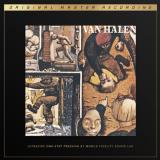
Van Halen - Fair Warning 2x12"
  • Mean Street
  • Dirty Movies
  • Sinners Swing!
  • Hear About It Later
  • Unchained
  • Push Comes To Shove
  • So This Is Love?
  • Sunday Afternoon In The Park
  • One Foot Out The Door

The song titles on Van Halen's aptly titled Fair Warning don't lie. The likes of "Unchained," "Mean Street," "Push Comes to Shove," "One Foot Out the Door," and more indicate the mood the band channels on its double-platinum 1981 record — the nastiest, darkest, and fiercest album of the group's storied career. For the fourth time in four years, Van Halen throws down the gauntlet to all challengers and emerges victorious.


Sourced from the original analog tapes, pressed on MoFi SuperVinyl at Fidelity Record Pressing, and strictly limited to 5,000 numbered copies, Mobile Fidelity's UltraDisc One-Step 180g 45RPM 2LP set plays with unfettered clarity, dynamics, and immediacy. Benefitting from superb groove definition, an ultra-low noise floor, and dead-quiet surfaces, this vinyl edition captures what went down in the studio with tremendous realism and involving presence.

Taking a more controlled approach in the studio and still completing everything in less than two weeks, Van Halen and producer Ted Templeman relied on studio amplifiers to direct the sound. Further diverging from the live-on-the-floor approach of its earlier albums, the ensemble also employed overdubs to great effect. The result: Dense, stacked architecture that underlines the hard-hitting tenor of the songs — and which comes alive like never before on this reference edition that looks as good as it sounds.

The premium packaging and gorgeous presentation befit the reissue's select status. Housed in a deluxe slipcase, it features special foil-stamped jackets and faithful-to-the-original graphics that illuminate the splendor of the recording. Aurally and visually, it is made for listeners who want to immerse themselves in everything involved with the album, including the iconic cover art adopted from William Kurelek's haunting painting, "The Maze."

Isolated frames from Kurelek's childhood-inspired work — including a man bashing his head into a brick wall, a guy pinning down an adversary as he delivers bare-fist blows to his face and others watch with apparent glee, a boy tied down on a conveyer belt and being sent through the equivalent of a meat saw — adorn the front and back covers. The sunnier visual disposition of Van Halen's prior efforts gives way to something sinister and tortured, traits reflective of the music within. The band members, too, are visually depicted not in glamorous shots but in a serious black-and-white portrait in which the quartet is clad in black leather jackets.

Tough, aggressive, stark: Fair Warning comes on like a series of bare-knuckled punches to the solar plexus and boasts lyrical narratives to match. Though not a concept record, the concise album revolves around themes of roughing it on the streets and struggling to survive amid dim prospects. Singer David Lee Roth reportedly penned many of the initial lyrics after traveling to Haiti and observing extreme poverty. The characters and situations populating Fair Warning reflect hardscrabble existence, last-chance desperation, and underlying danger.

Witness the crazies, poor folks, and hunters of “Mean Street”; the former prom queen turned pornographic actress on “Dirty Movies”; the menace and vice of “Sinners Swing!”; the streetwise hustle of “Unchained”; the isolation and alienation of “Push Comes to Shove”; the desire for escape on “One Foot Out the Door”: A carefree California beach party Fair Warning is not.

Having said he felt angry and frustrated during the sessions, guitarist Eddie Van Halen uses the forceful arrangements as a playground for his seemingly unlimited arsenal. Supported by a crack rhythm section and a hyped-up Roth, he performs with an almost impossible combination of punk-like intensity, technical finesse, lyrical fluidity, and unbridled emotion. The virtuoso was increasingly butting heads with Templeton and seeking a freedom in the studio he believed denied him.

No wonder he plays like a bat out of hell. Listen to the rapid-fire manner in which he slaps the high and low E strings on the 12th fret of his instrument on “Mean Street,” instilling the tune with funk flair and metal-spiked sharpness. For the pouty strut of “Dirty Movies,” Eddie Van Halen contributes slide guitar magic made possible after he sawed off the lower portion of a Gibson SG so he could reach further down the fretboard.

Related intensity, urgency, and daredevil momentum punctuate the surging “Sinner’s Swing!” A heavily flanged, delicately melodic introduction frames the attitudinal “Hear About It Later,” among the most creative arrangements of Van Halen’s career. And do riffs come any bigger or magnetic than those on the high-wire kick of “Unchained”? As for the out-of-left-field “Sunday in the Park,” an instrumental composed on an Electro-Harmonix micro-synthesizer: Who but Eddie Van Halen to supply creep factor in such an ingenious way?

Despite selling fewer quantities than Van Halen’s prior efforts, Fair Warning remains for many diehards the record that epitomizes all of the band’s immense strengths —Roth’s manic energy and tongue-wagging humor, Alex Van Halen’s rhythmic heartbeat-in-your-chest bombast, and Michael Anthony’s lucid bass lines included. Arriving when the New Wave of British Heavy Metal and new-wave movements were taking flight, it signaled a shot across the bow from a band determined to stay a step ahead and provide proof nobody could touch what it delivered.

More than four decades later, Fair Warning still sounds that alarm.

pre-order now

This item has not yet been released. You can pre-order the product now.

186,13
LOLO - LOLO LP

Lolo

LOLO LP

12inchBS097
BLACK SWEAT RECORDS
Release unknown

The roots of African music are always open to new possibilities. This is revealed in the music of this unprecedented quartet. Alongside the Malian singer Rokia Traore', Mamah Diabate, Malian griot and djeli ngoni player, has been playing for several years with Stefano Pilia (Afterhours, Massimo Volume). Now, their path intertwines with the artistic and human partnership between Jabel Kanuteh, Gambian griot and kora virtuoso, and percussionist Marco Zanotti(Classical Afrobeat Orchestra, Cucoma Combo). The union of these two pairs develops unusual geographies and architectures, where dual African and Italian identities merge into one universal sensibility. The predominant Malian and Gambian modes chase each other, but all is fused into a broader rhythm factory or embellished by more abstract and liquid experimental digressions. The curiosity and pliability of the individual musicians search for a language that is both current and contemporary, always poised between ancient and modern, landscape and narrative, with jazz, rock and folk influences.

pre-order now

This item has not yet been released. You can pre-order the product now.

18,28
Bad Skin - Miss Behave LP
  • 1: Love Is What We Need
  • 2: Coeur Rebelle
  • 3: Goodbye
  • 4: Dancing Queen
  • 5: Corazon Rebelde (Spanish)
  • 6: White Rabbit
  • 7: Keep Faking It
  • 8: We Are The Girls
  • 9: Je M'en Fous
  • 10: Sit Tight (Lp Only)

Fueled by colorful outfits and an exceptional presence, these power girls were born to break mold and drive full speed in the music scene. Bad Skin was
formed in 2015 and let me introduce you to this killer team. We have lead singer and Rhythm guitarist Dope, Lead guitarist Victoria, Bassist Maria and Samantha
on the Drums. They have toured in the United Kingdom in 2022 & 2025 and with the public demand; they have performed in the biggest Punk festival “Rebellion” in 2023. In 2022 they also showcased at the famous Le Phoque OFF festival . The same year, they also had a huge impact in Plovdiv in Bulgaria for the Spike Festival and Summerfest in USA. They have also performed in Canadian Festival such as Music 4 Cancer, Canadian Music Week, Rock La Cauze, Festivoix,
Rock Fest pour La Santé Mental, Pouzza Fest and many more. This year their main goal is to connect with the future generation and speak about the importance of self-confidence and that, “it’s okay not to be okay as long
as you keep your head high and still be you”. This goal was well achieved, as the fan base grew. People are seeing why these girls are really the IT factor.
They always deliver an outstanding performance and after each show, they take the time to thank everyone who came and always organize a signing and picture
booth so they can speak & connect with their fans.

pre-order now12.12.2025

expected to be published on 12.12.2025

25,00
SNK Sound Team - SNK Sound Waves - Wayô Piano Collection
  • A3: Main Theme & Final Boss Medley
  • A4: Dignity Palace (Kain R. Heinlein Stage)
  • A5: All Over With Blood (Freeman Stage)
  • A6: Fullmoon - A Groan (Gato Stage)
  • A7: Destruction Maniac (Grant Stage)
  • B1: The Twelve Challengers (Player Select), Exotic Lady (Charlotte)
  • B2: Darkness (Shiro Tokisada Amakusa 2)
  • B3: Banquet Of Nature (Nakoruru) - Part 1 & Part 2
  • B4: Ryuhaku Todoh Stage
  • B5: The Primitive Age
  • B6: The Age Of Rome
  • C1: Ponponella
  • C2: Vixen
  • C3: The Super Spy, New World
  • C4: Imputation
  • C5: Game Start, Powering Up
  • C6: Stage Medley
  • C7: Change (Theme 2)
  • C8: Termination (Ending 1)
  • D1: Bioinformatics (Ufo Interior Passage 3)
  • D2: The Cenotaph (Stage 4 Alternative Route~Ancient Ruins), Desert (Stage 4)
  • D3: Secret Factory (Stage 3 Alternative Route~Armory)
  • D4: Into The Cosmos (The Void Of Space)
  • D5: Opening, Napolitan Blues, Duel R&D, Yuu, Psycho Soldier "K.o.f Version
  • A1: Snk - Rhapsody For Piano
  • A2: Intro, Stage 1, Stage Boss Medley

Relive the excitement of SNK's greatest games with this album featuring cult titles arranged entirely for piano!


Arranged and performed by pianist Nicolas Horvath, a Steinway and Sons artist renowned as a leading interpreter of composers such as Philip Glass, Franz Liszt, Claude Debussy, and Erik Satie.


The album contains a rich selection of tracks composed by the legendary SNK Sound Team, ranging from Prehistoric Isle to The King of Fighters 94, Samurai Shodown, The Last Blade, and Metal Slug 3.


Sometimes dark, sometimes bright, the arrangements beautifully and emotionally revisit the melodies that have marked several generations of gamers!


b a2 Intro, Stage 1, Stage Boss Medley [PREHISTORIC ISLE]
[c] a3 Main Theme & Final Boss Medley [PREHISTORIC ISLE]
[d] a4 Dignity Palace (Kain R. Heinlein Stage) [GAROU: MARK OF THE WOLVES]
[e] a5 All Over With Blood (Freeman Stage) [GAROU: MARK OF THE WOLVES]
[f] a6 Fullmoon - A Groan (Gato Stage) [GAROU: MARK OF THE WOLVES]
[g] a7 Destruction Maniac (Grant Stage) [GAROU: MARK OF THE WOLVES]
[h] b1 The Twelve Challengers (Player Select), Exotic Lady (Charlotte) [SAMURAI SHODOWN]
[i] b2 Darkness (Shiro Tokisada Amakusa 2) [SAMURAI SHODOWN]
[j] b3 Banquet of Nature (Nakoruru) - Part 1 & Part 2 [SAMURAI SHODOWN]
[k] b4 Ryuhaku Todoh Stage [ART OF FIGHTING]
[l] b5 The Primitive Age [TIME SOLDIERS]
[m] b6 The Age of Rome [TIME SOLDIERS]
[n] c1 PonPonella [ALPHA MISSION]
[o] c2 Vixen [THE SUPER SPY]
[p] c3 The Super Spy, New World [THE SUPER SPY]
[q] c4 Imputation [THE SUPER SPY]
[r] c5 Game Start, Powering Up [Vanguard]
[s] c6 Stage Medley [Vanguard]
[t] c7 Change (Theme 2) [THE LAST BLADE]
[u] c8 Termination (Ending 1) [THE LAST BLADE]
[v] d1 Bioinformatics (UFO Interior Passage 3) [METAL SLUG 3]
[w] d2 The Cenotaph (Stage 4 Alternative Route~Ancient Ruins), Desert (Stage 4) [METAL SLUG 3]
[x] d3 Secret Factory (Stage 3 Alternative Route~Armory) [METAL SLUG 3]
[y] d4 Into the Cosmos (The Void of Space) [METAL SLUG 3]
[z] d5 Opening, Napolitan Blues, Duel R&D, Yuu, Psycho Soldier "K.O.F Version" [THE KING OF FIGHTERS '94]


[b] a2 Intro, Stage 1, Stage Boss Medley [PREHISTORIC ISLE]
[c] a3 Main Theme & Final Boss Medley [PREHISTORIC ISLE]
[d] a4 Dignity Palace (Kain R. Heinlein Stage) [GAROU: MARK OF THE WOLVES]
[e] a5 All Over With Blood (Freeman Stage) [GAROU: MARK OF THE WOLVES]
[f] a6 Fullmoon - A Groan (Gato Stage) [GAROU: MARK OF THE WOLVES]
[g] a7 Destruction Maniac (Grant Stage) [GAROU: MARK OF THE WOLVES]
[h] b1 The Twelve Challengers (Player Select), Exotic Lady (Charlotte) [SAMURAI SHODOWN]
[i] b2 Darkness (Shiro Tokisada Amakusa 2) [SAMURAI SHODOWN]
[j] b3 Banquet of Nature (Nakoruru) - Part 1 & Part 2 [SAMURAI SHODOWN]
[k] b4 Ryuhaku Todoh Stage [ART OF FIGHTING]
[l] b5 The Primitive Age [TIME SOLDIERS]
[m] b6 The Age of Rome [TIME SOLDIERS]
[n] c1 PonPonella [ALPHA MISSION]
[o] c2 Vixen [THE SUPER SPY]
[p] c3 The Super Spy, New World [THE SUPER SPY]
[q] c4 Imputation [THE SUPER SPY]
[r] c5 Game Start, Powering Up [Vanguard]
[s] c6 Stage Medley [Vanguard]
[t] c7 Change (Theme 2) [THE LAST BLADE]
[u] c8 Termination (Ending 1) [THE LAST BLADE]
[v] d1 Bioinformatics (UFO Interior Passage 3) [METAL SLUG 3]
[w] d2 The Cenotaph (Stage 4 Alternative Route~Ancient Ruins), Desert (Stage 4) [METAL SLUG 3]
[x] d3 Secret Factory (Stage 3 Alternative Route~Armory) [METAL SLUG 3]
[y] d4 Into the Cosmos (The Void of Space) [METAL SLUG 3]
[z] d5 Opening, Napolitan Blues, Duel R&D, Yuu, Psycho Soldier "K.O.F Version" [THE KING OF FIGHTERS '94]

pre-order now05.12.2025

expected to be published on 05.12.2025

36,93
The Fearless Flyers - The Fearless Flyers V LP

The Fearless Flyers V markiert die Rückkehr von Cory Wong, Mark Lettieri, Joe Dart und Nate Smith mit einer dichten Mischung aus instrumentellem Funk, der sowohl energiegeladen als auch raffiniert ist. Auf acht Tracks und rund dreißig Minuten liefert das Album präzise, strahlende Grooves, die den Wurzeln der Band treu bleiben und gleichzeitig neue Farben hinzufügen: Disco-Einflüsse in „Exotic“, ein Hauch von Blues und Soul in „SKOM“, eine fast rockige Progression in „Autobahn“ und eher kontemplative Stimmungen in „Ventura“ und „Anaheim“, wobei letzteres das Album mit strahlender Sanftheit abschließt. Die knackige, sorgfältig ausgearbeitete Produktion unterstreicht die zurückhaltende Virtuosität der Musiker und ihre subtile Balance zwischen rhythmischer Präzision und kreativer Freiheit. Weder eine Wiederholung noch ein Bruch, bekräftigt dieses fünfte Kapitel die Reife der Flyers und ihre Fähigkeit, ihr Universum zu erweitern, ohne ihre Identität zu verlieren. Das Ergebnis ist ein kurzes, aber intensives Album, das sowohl Funk-Puristen als auch Liebhaber instrumentaler Abenteuer ansprechen wird.

pre-order now28.11.2025

expected to be published on 28.11.2025

23,95
MOORE, ANTHONY WITH AKA & FRIENDS - ON BEACON HILL
  • Caught
  • It's Fear
  • The Argument
  • A Man Of Custom
  • No Parlez
  • The Blistered Salver
  • World Service
  • A Different Lie

On Beacon Hill: at twilight we find Anthony Moore, roots winding backwards to the halcyon days of Slapp Happy and the "70s progressive art rock scene, at guitar and piano. With the atmospheres and accompaniments of AKA & Friends, he breathes infernal new life into songs from his six decades of multivarious music making. This new delivery system is unto a séance, a communal incantation, twining Anthony"s avant and pop traditions together in a darkly radiant coil of folky chamber music; a rope to lower the listener through cobwebs and murk, unveiling new life beneath Anthony"s mad old lines. AKA are Anthony Moore, Keith Rodway and Amanda Thompson. A pagan family of sound worshipers hailing from that unholiest of all places: Hastings UK, home of Crowley and Turing. Like their sinister forbears in that infamous tradition, this latest trinity shares a passion for subverting pattern and number, factoring unlikely permutations arising from sea and horizon, greensward, the southerly aspect, and the planisphere as half-world. Their equatorial shore speaks of a planet of water and earth, fire and air. AKA"s humble tools of choice for this endeavor are guitar, piano, organ, synthesizer and vocals. The Friends of AKA are Tullis Rennie, trombone and electronics; Olie Brice, double bass; Richard Moore, violin; and Haydn Ackerley, guitar. They too navigate the shoreline of the south coast, haunt the same taverns and regularly play together in whatever combinations fit the bill. Leaving the drums (and their drummer) at home to realize anew these dreamladen songs, AKA & Friends ensure that the notes fall around the beat and not on it, so as to define the pulse with absence. As such, time is liberated, prised free from the merciless clock; a rhythm of waves, passing through a steady-state universe of no beginnings and no endings. Discontinuities are dissolved, all is transition.

pre-order now21.11.2025

expected to be published on 21.11.2025

29,83
Marcel Dettmann - Running Back Mastermix: Marcel Dettmann - Edits & Cuts (LP 3x12")
 
18
also available

Cassette / Tape[16,18 €]


2025 REPRESS

A DJ, producer and significant figure in contemporary electronic music, Marcel Dettmann steps forward to contribute to Running Back’s ongoing Mastermix series. Whereas previous editions of Mastermix have taken an ear to the sound of lapsed, legendary clubs such as Wild Pitch and Front, Dettmann’s curation deftly captures the man himself in ongoing perpetual motion, raiding the vault for his own precision-tooled edits, long-employed on dancefloors to devastating effect. Alongside a continuous mix, this release arrives as a 3LP gatefold, and as a limited edition cassette.

Closely associated with Berlin’s techno landscape, Dettmann was born and raised in the former GDR, then later immersed in the bleary-eyed counter cultural landscape of post-unification Berlin. Initially oriented by post-punk, industrial and new-wave music, Dettmann has been DJing since 1993, always expanding and perfecting his repertoire. He later began working behind the counter at the city’s tastemaking rave boutique Hard Wax, and a decade after he first dropped a needle, became (and remains) resident at notable local nightspot Berghain/Panorama Bar, where his instincts have helped sculpt the signature sound of both main dancefloors.

Of course, you’re probably not asking, “Who is Marcel Dettmann?” More importantly, you might want to know; just what treats has he gifted us here? The trip begins with a simple pitch-shift skywards, transforming Identified Patient’s creeping ‘The Female Medical College of Pennsylvania’ into a peak-time freakout, before an alternate take on Toctronic’s ‘Bis uns das Licht vertreibt’ emerges from the vaults for the first time. Dating from 1995, and one of Dettmann’s all-time favourites, Cristian Vogel’s ‘Untitled’ clambers back into the box with respectable cuts, while John Bender’s ‘Victims of A Victimless Crime’ kicks off the flip sporting a new arrangement, transporting us back to the foundations of a confident, stripped-back sound.

A few subtle edits to Clark’s perilously funky ‘Dirty Pixie’ takes us to Dettmann’s remix of Junior Boys. Produced in 2010, it transposes the Canadian duo’s sophisticated pop with our curator in his minimal prime, and has since become an irresistible prize for high-minded diggers. The same can be said for Experimental Products’ explosive proto-electro anthem ‘Who Is Kip Jones?’, empowered from pricey Discogs purgatory with just the slightest of tweaks. It’s deservedly sandwiched between the guiding influences of Chicago and Detroit in the form of Mutant Beat Dance’s raw ‘The Human Factor’ and a shimmering new version of previous solo production ‘Water’, featuring close friend and Ostgut Ton ally, Ryan Elliot.

The second half of the Mastermix seamlessly connects the mechanical past and digital present of EBM and industrial in the dance, with Dettmann’s instincts as a guiding hand. Severed Heads’ iconic ‘We Have Come To Bless This House’ emerges with mere nips and tucks, while Nitzer Ebb’s ‘Shame’ is significantly reimagined as a highwire act of rhythm and tension, setting up a sensual second take on a 2017 remix of ‘Limbo’ from Swiss synth heroes, Yello.

Core musical memories are shaken and stirred with a context-shifting take on Frank Duval’s emotional classic ‘Ogon’, while Ian North’s ‘Sex Lust You’ and Ford Proco’s notable Coil collaboration ‘Expansion Naranja’ effectively throb with only minor adjustments, respectfully imagined as “shadow versions”. Meanwhile, a simple breakbeat lifts Albert Kuningas’s ‘Astraalprojektio’ in the direction of wide-eyed dancefloors, while a fresh take on K-Alexi Shelby’s ‘Season of The Real’ inexplicably emerges somehow even funkier than before.

The conclusion of the compilation leads back to Das Tier from the prolific experimentalist Conrad Schnitzler, whose swirling synths and hypnotic vocals are duly tightened by Dettmann, but only as he puts it, “in conversation with the original.” Concluding three discs and thirty years of commitment to the dancefloor, this Mastermix not only offers us the opportunity to eavesdrop on this endless exchange, but to gain some sought-after material for our own record collections.

out of Stock

Order now and we will order the item for you at our supplier.

28,99

Last In: 67 days ago
Awkward Corners - A book of imaginary beings (TAPE)

Chris Menist pares his sound right back for A book of imaginary beings, his fourth Awkward Corners outing with a project of electronic and abstracted global grooves. Experimenting with simple melodies and uncluttered arrangements, as well as taking inspiration from the Borges' short stories alluded to in the title, the project took shape in the early part of 2025, in the shorter days and dark evenings of January.

The initial challenge was to knock a basic track into shape each evening after work, then refine it later. There's a melancholy in the air in late winter, compounded by the creeping threat of national and geopolitical instability. Ulla, Natural Information Society, Jabu, Torso and Dawuna formed some of the background soundtrack as each tune took shape.

The track titles came after sitting with the sounds for a while, giving shape to images of people, creatures and their stories for a book that is yet to be written.

Two former friends sets the tone for the album perfectly as a minimal electronic piece with a slowly simmering synth bassline underpinning the groove whilst the trademark Awkward sound of the Shahi Baaja enters drenched in effects. It's the first demonstration of Chris' unique ability to create a world from apparently very little.

Dance of the silver beetles is completely unique in that we can hear chopped up Illimba samples seemingly playing backwards and forewords sometimes alone, sometimes together in duet with Chris' conga rhythms. Add to that a more conventional Illimba melody and added shaker percussion and you have one of A book of imaginary beings most curious chapters.

Anxious shadow puppets is closer to the Awkward Corners sound from previous albums as electronic pulses move around the arrangement with the urgency that the track title suggests. Chris' percussive roots move to the fore with the congas that tie down the Paradise Bangkok Molam International Band's sound. Here, the bassline is more playful and works together with one of Chris' many African Illimbas.

Fans of Chris' adventures on his Roland 808 will dig A leopard with no spots, although the minimal mood continues to flow through on this track. The lolloping, but hard-hitting rhythm track provides the grounding for strange and twisting feedback-sounding tones to work the soundscape.

Abandoned boy (left in charge of the family business) is Awkward Corners at his atmospheric best. Drift off to the sublime sounds of Chris exploring the Shahi Baaja, whilst a soft, repetitive synth line and abstracted pads give the listener that feeling of meditation and peace.

Flamingo with bandaged neck is A book of imaginary beings' perfect coda and is exclusively Shahi Baaja draped in reverbs and delays. It feels like the resolution and the closing of a book that – as of yet – remains unwritten.

Awkward Corners is Chris Menist, a musician, DJ and writer. It started life as a small project in Islamabad, where Chris was living at the time. Initial recordings were made with local musicians in Pakistan and then subsequently in Thailand. This culminated in the Sweet Decay LP that came out on Finders Keepers' Disposable Music in 2014, and in turn led to a limited tape release on Boomkat/Reel Torque of original compositions and re-edits of Thai 45s the same year. Chris released – Dislocation Songs – his second LP proper with Shapes of Rhythm in May 2020, collaborating on many of the tracks with award-winning performer Sarathy Korwar. The LP was picked up by many radio stations including NTS, Resonance FM, BBC 6 Music, Balamii and many more. It made Tom Ravenscroft's LPs of 2020. Amateur Dramatics, Chris' second LP arrived just a year later in 2021 and was a more ambitious project featuring more jazz-focussed compositions and featuring Tamar Osborn and Kitty Whitelaw. Shortly after that came another pivot with the heavier, dancefloor-friendly EP Somebody Somewhere. Somebody Somewhere is Dancing in a Field brought the House (yes House!) vibes, whilst Hector Plimmer turned in a remix of No Words in the same club mood.

As one of NTS Radio's longest-standing presenters, Chris continues to hold down the Paradise Bangkok show. Playing drums and percussion since he was a kid, Chris is the percussionist for The Paradise Bangkok Molam International Band as well as co-founding the record label of the same name. Chris has curated compilations for labels such as Finders Keepers, Soundway and Dust-To-Digital. He has been featured on the Boiler Room, Vinyl Factory Collections, played at the Four Tet curated Nuits Sonores festival, and has put together an edition of Volumes which featured unreleased Awkward Corners compositions.


[d] 04: All the Goodbyes (You Tried to Defer) [Original]


[j] 10: Abandoned Boy (Left in Charge of the Family Business) [Original]

pre-order now31.10.2025

expected to be published on 31.10.2025

10,04
Items per Page:
N/ABPM
Vinyl