
8

Multi-rhythmic harmonies from the backyard! Alive and free improvisations with percussion, synthetic, woodwind and string instruments. Comes with handmade cover!
Recorded by GUU, Berlin 2024.
Mastered by CGN Wizard.
Co-produced by Tax Free Records, TRjj Compiler, iRiAi Verlag, El Muelle 1931 and All Night Flight.

Einaudi vs Einaudi – eine neue EP auf schwarzem Vinyl – ist die jüngste Zusammenarbeit des weltberühmten
Komponisten Ludovico Einaudi und seines Sohns. Leo Einaudi legt hier eine Neuinterpretation von acht
Stücken aus Ludovicos letztem chartstürmenden Album The Summer Portraits vor – einem persönlichen
Werk, das musikalisch von Kindheitserinnerungen an Familienurlaube erzählt.
Leo Einaudi, Multiinstrumentalist, Singer-Songwriter, Produzent und Arrangeur, spielt dabei mit allen
Klangfarben seines Könnens. Mit einer Karriere, die Songwriting, Filmmusik, Produktion und Livemusik
umfasst, hat er bereits mehrfach mit seinem Vater zusammengearbeitet – unter anderem an Soundtracks,
Theaterprojekten und Studioaufnahmen. »Zwischen Leo und mir gibt es ein starkes Band«, sagt Ludovico.
»Leo hat eine künstlerische Sensibilität, die mir wirklich nahegeht.« Und Leo ergänzt: »Die Auseinandersetzung mit der Musik meines Vaters war für mich eine Reise voller Entdeckungen – dieser Facettenreichtum
in seiner Musik! Immer wieder bin ich auf neue Feinheiten gestoßen, habe sie verarbeitet und schließlich
zu einer neuen Form gefunden.«
Auf Einaudi vs Einaudi verbindet Leo die üppigen Klänge und elektronischen Elemente von Stücken wie
»Rose Bay« mit bemerkenswerter künstlerischer Kraft. Pulsierende Rhythmen durchbrechen die Stille des
Originals und führen die immersive Klangwelt und hypnotischen Texturen an einen ganz eigenen Ort.

Clear Vinyl[59,24 €]

Blue Deluxe Vinyl[59,24 €]

Mariel Buckleys ,Strange Trip Ahead" ist der mit Spannung erwartete Nachfolger ihres für den Polaris Music Prize nominierten Albums ,Everywhere I Used to Be". Auf diesem Album widmet sich Buckley noch stärker dem Alternative-Americana und Indie-Rock, mit klirrenden Akustikklängen, rauer Pedal Steel und ihrem charakteristischen melancholischen Ton. Die Lead-Single ,Vending Machines", produziert von Jarrad K (Ruston Kelly, Wild Rivers), leitet dieses neue Kapitel mit filmischen Details und schwungvollen Rhythmen ein und fängt die Orientierungslosigkeit des Lebens im Wandel mit beeindruckender Ehrlichkeit ein. Buckleys Ruf als scharfsinnige, verletzliche Geschichtenerzählerin wächst weiter, sie hat sich ein treues Publikum in der Americana-, Folk- und Alt-Country-Szene erarbeitet. Zu ihren Tourneen gehören Support-Slots für Orville Peck, The Bros. Landreth und k.d. lang sowie Auftritte bei SXSW, AmericanaFest und dem Philadelphia Folk Festival, die ihre Position in der modernen Roots-Landschaft festigen. Strange Trip Ahead ist Buckley in ihrer kühnsten Form - roh, echt und ohne Angst, Genregrenzen zu verwischen. Vom Pedal-Steel-Hook von ,Vending Machines" bis zum kraftvollen Album-Closer ,Anvil" bringen ihre geerdete Stimme und ihr exzentrischer Charme frische Energie in die zeitgenössische Americana. Es ist ein überzeugender Schritt nach vorne von einer Songwriterin, die sich still und leise zu einer der angesehensten Stimmen der kanadischen Roots-Musik entwickelt hat.

Next up on NINE CHANNEL is DJ legend JOSEY WALES. Throwing down what he does best over a wicked stripped-down rhythm – TIME & TIME AGAIN calls for Love and unity and time to love each other no matter what race colour or greed – proper colonel chanting style. Flip to the B side for a killer DUB – check it.

Originally released in 1981, Mr. Circle’s Thi Nam should really have been recognised decades ago as a jazz dance classic. A beautiful example of European jazz fusion at its most sophisticated and optimistic, the album is immersed in the sonics and rhythms of pan-Latin fusion and Brazilian samba, but with one foot in the upful jazz fusion exemplified by Roy Ayers or the Mighty Ryeders.
Taking inspiration from Ursula Dudziak, Flora Purim, and Norma Winstone, singer Monika Linges uses the crystalline tone of her voice as an instrument within the ensemble. The LP is built around the interaction of her vocalising with bandleader Mikesch van Grümmer’s keyboard versatility, all underpinned by the surging Brazilian rhythms laid down by drummer Gerd Breuer and percussionist Ponda O’Bryan.
The result is a unique set of sunlit, Brazilian-inspired jazz fusion. Aimed squarely at the feet throughout, the album kicks off with a double whammy: the funky title track, followed by. the percussion-rich Juntos. The long form Suka begins with a shimmering intro before taking flight halfway through into an urgent jazz samba with Linges’ vocals to the fore. Featuring the vocals of Bill Ramsay, Tides is another driving jazz-dancer with a Brazilian twist, while the summery, propulsive Schoch-Schach features virtuosic interplay between Linges and alto saxophone.

STANDFIRST Titanic, the project spearheaded by Mabe Fratti and Hector Tosta (aka I. la Católica), return with a sumptuous and life-affirming new album.
In her sensational 1929 biography Tiger Woman, dancer and socialite Betty May claimed her ‘coster’s eye’ meant she liked to wear as many colours as possible. “Colours to me are like children to a loving mother. Each is my favourite, yet I can never bring myself to deny the others by preferring one.” May’s bold and inclusive strategy is one that manages to transfer itself, almost a century later, to Hagen, the new record by Titanic.
Many will know Titanic as the Mexico City-based brainchild of cellist and singer Mabe Fratti and multiinstrumentalist Hector Tosta who is now operating under the pseudonym, I. la Católica, (taken, rather unusually, from the name of the street the pair live on). With Hagen, and their previous release, Vidrio, (2023), the pair are creating a distinctive signature sound in modern alternative pop music. Nobody else sounds quite like them. Both records have an open hearted nature and simple, winning melodies that play off against a taste for drama, spectacular orchestration and a feeling of otherworldly mystery. Hagen is the more ambitious, sometimes more mystical effort. From the opening handclaps of ‘Lágrima del Sol’, (a wonderfully uptempo playground chant translating as a tear from the sun but, surely, not referencing the brand of pineapple wine?), the record dances its way through various mid-to-late-eighties inspirations, lush and widescreen passages of melancholy and vertiginous contrasts.
Mystery is often found in the simple but slightly odd song titles. English translations of various track titles give, ‘you swallowed the gum’, ‘leak’, ‘a tear from the sun’, ‘raising the trophy’ ‘digging dimensions’, ‘the owner’, ‘the decapitated hen’ and ‘the trap is exposed’. All denote striking images, metaphysical hints and emotional cues or simple, even childlike actions. Though Fratti and Tosta don’t reveal its provenance, the album’s title could even be a crafty play on words: the listener would be forgiven in thinking the moments of brash contrast and eyebrow raising theatricalism in the music constitute a musical nod to German punk chanteuse, Nina Hagen.
On Hagen, singer and cellist Mabe Fratti once again displays her brilliant knack of speaking to us directly. There is never the suspicion of her playing to the gallery, and the directness of many of the lyrics don’t allow it. Parallel to this, Fratti has an almost magical ability to give Hector Tosta’s melodies, and her and Tosta’s lyrics ones imbued with an insight and meaning that feels otherworldly. Tosta admitted it was “pretty wild to hear Mabe take the interpretations to a different place” and the listener can pick up on the delight Fratti takes in (literally) adding a voice to the many narratives.
Two examples can be shown here: ‘Gotera’ (Leak) uses harsh slashes of cello and tough, gunfire-like guitars and drums and multiple vocal lines that could be acting as a Greek chorus. They play off brilliantly against Fratti’s soft, slightly baleful vocal take that delivers lyrics such as: ‘nobody knows where the leak is / but I know where it is / they fight in front of the door and / nobody can go in’. With ‘La Gallina Degollada’ the somewhat blithe melody melody line, sung with what could be sarcastic brio by Fratti, plays against an itchting rhythm and rasping guitar part. The punch comes when you see that the song is about a chicken that has been decapitated and read lyrics such as: ‘I already saw it, it moved, the decapitated chicken’ / ‘could it be that I'm broken’ and ‘Two people hurt each other by thinking that they no longer agree’/ ‘Hours pass and the chicken represents what scares me’.
There may be death and fights to deal with, but there is also a quality of chirpy self-reliance about Hagen that is a key part of its nature. Like Betty May and her colourful outfits, Hagen’s sound often revels in its own sense of richness. Throughout, the record delivers vaulting string sections or glutinous guitar squeals that could, like the powerful, driving ‘Escarbo Dimensiones’ (Digging Dimensions) have come directly from a glossy 1980s TV series. Fratti sees this “glam sound” developed by Tosta on the aforementioned track and ‘Te Tragaste el Chicle’ (You Swallowed The Gum), as moments that were truly “revealing” for the album as a whole during its making.
What else? The thud and thump of ‘La Trampa Sale’ (The Trap is Exposed), and its sudden change of tempo and mood betrays a monstrously ambitious piece of music, the players almost greedily creating the sounds. Other moments are heart wrenching: ‘Libra’ ends on a poppy chord switch that cleverly ramps up the emotion inherent in the music’s notation. You could almost imagine a teenager in a bedroom forty years ago, rewinding the track over and over on a small, cheap cassette player, unable to get enough of that sugarsweet switch. Elsewhere, Oneohtrix Point Never adds stardust and an unearthly sense of space on the changeable, slightly moody meditation, ‘Pájaro de Fuego’ (Firebird). The record ends with ‘Alzando el Trofeo’ (Lifting the Trophy), a track that could soundtrack a state wedding, what with its beautiful cascading piano parts, a sugary vocal and short triumphal guitar riffs that add a rich patina to the overall sound. Fratti: “When I doubled those vocals on ‘Alzando el Trofeo’ I felt there was an epiphany happening, right at that moment.”
Making a good record is a team game. Tosta and Fratti recall seeing Randall from Circular Ruin Studios in NYC “tweak the drums in ‘Libra’ to make that amazing effect of the gated reverb”, or the shaping of ‘Gotera’, “when (recording engineer) Nate Salon added some synths to the track.” Drummer Eli Keszler, “an amazing and versatile player” had the songs down pat in a couple of days” and, according to Tosta, Oneohtrix Point Never “just came to one of the sessions and we hung out, and after all the recordings he and Nate were together in some studio and out of nowhere they sent us some beautiful tracks for ‘Pájaro de Fuego’! Fratti concurs. “He decided that he wanted to record because he was listening to the record (Nate works closely with him) and he really liked it! It was a total honour, indeed!”
Bedazzled by the playing, the skyscraping ambition in the arrangements and the giddy moments of contrast thrown up by Hagen, we could allow ourselves a brief moment of flippancy and state that Titanic’s new record is Yacht Rock meets Aeschylus, full-on. It’s also worth speculating that, in this hyper-sensitive, intemperate age, Titanic’s music has the power, however fleetingly, to heal hurts. Hagen is a brilliant showcase for a fresh and enriching form of pop music: displaying a magpie eye for what glints and plundering what has gone before.
Like Vidrio, Hagen was partially and additionally recorded at Fratti and Tosta’s house, aka Tinho Studios in Mexico City, as well as Golden Girl Studios & Circular Ruin Studios in New York City. Mixing was done by Santiago Parra in Pedro y el Lobo Studios, Mexico City and mastered by Rafael Anton Irisarri at Black Knoll Studios, New York City. The recording engineer was Nate Salon.
Hagen featured Mabe Fratti on cello, vocals & backing vocals, I. la Católica on guitar, keyboards, prepared piano, bass & backing vocals, drums by Eli Keszler and synths in ‘Pájaro de Fuego’ from Daniel Lopatin and Nate Salon.
All compositions on Hagen are written by I. la Católica, except ‘Escarbo Dimensiones’ & ‘Pájaro de Fuego’, which were composed by I. la Católica and Mabe Fratti. The record was produced by I. la Católica and co-produced by Nate Salon & Mabe Fratti. And all lyrics are by I. la Católica except ‘Escarbo Dimensiones’, ‘Gotera’, ‘Gallina degollada’ & ‘Pájaro de Fuego’, which were written by I. la Católica & Mabe Fratti.

STANDFIRST Titanic, the project spearheaded by Mabe Fratti and Hector Tosta (aka I. la Católica), return with a sumptuous and life-affirming new album.
In her sensational 1929 biography Tiger Woman, dancer and socialite Betty May claimed her ‘coster’s eye’ meant she liked to wear as many colours as possible. “Colours to me are like children to a loving mother. Each is my favourite, yet I can never bring myself to deny the others by preferring one.” May’s bold and inclusive strategy is one that manages to transfer itself, almost a century later, to Hagen, the new record by Titanic.
Many will know Titanic as the Mexico City-based brainchild of cellist and singer Mabe Fratti and multiinstrumentalist Hector Tosta who is now operating under the pseudonym, I. la Católica, (taken, rather unusually, from the name of the street the pair live on). With Hagen, and their previous release, Vidrio, (2023), the pair are creating a distinctive signature sound in modern alternative pop music. Nobody else sounds quite like them. Both records have an open hearted nature and simple, winning melodies that play off against a taste for drama, spectacular orchestration and a feeling of otherworldly mystery. Hagen is the more ambitious, sometimes more mystical effort. From the opening handclaps of ‘Lágrima del Sol’, (a wonderfully uptempo playground chant translating as a tear from the sun but, surely, not referencing the brand of pineapple wine?), the record dances its way through various mid-to-late-eighties inspirations, lush and widescreen passages of melancholy and vertiginous contrasts.
Mystery is often found in the simple but slightly odd song titles. English translations of various track titles give, ‘you swallowed the gum’, ‘leak’, ‘a tear from the sun’, ‘raising the trophy’ ‘digging dimensions’, ‘the owner’, ‘the decapitated hen’ and ‘the trap is exposed’. All denote striking images, metaphysical hints and emotional cues or simple, even childlike actions. Though Fratti and Tosta don’t reveal its provenance, the album’s title could even be a crafty play on words: the listener would be forgiven in thinking the moments of brash contrast and eyebrow raising theatricalism in the music constitute a musical nod to German punk chanteuse, Nina Hagen.
On Hagen, singer and cellist Mabe Fratti once again displays her brilliant knack of speaking to us directly. There is never the suspicion of her playing to the gallery, and the directness of many of the lyrics don’t allow it. Parallel to this, Fratti has an almost magical ability to give Hector Tosta’s melodies, and her and Tosta’s lyrics ones imbued with an insight and meaning that feels otherworldly. Tosta admitted it was “pretty wild to hear Mabe take the interpretations to a different place” and the listener can pick up on the delight Fratti takes in (literally) adding a voice to the many narratives.
Two examples can be shown here: ‘Gotera’ (Leak) uses harsh slashes of cello and tough, gunfire-like guitars and drums and multiple vocal lines that could be acting as a Greek chorus. They play off brilliantly against Fratti’s soft, slightly baleful vocal take that delivers lyrics such as: ‘nobody knows where the leak is / but I know where it is / they fight in front of the door and / nobody can go in’. With ‘La Gallina Degollada’ the somewhat blithe melody melody line, sung with what could be sarcastic brio by Fratti, plays against an itchting rhythm and rasping guitar part. The punch comes when you see that the song is about a chicken that has been decapitated and read lyrics such as: ‘I already saw it, it moved, the decapitated chicken’ / ‘could it be that I'm broken’ and ‘Two people hurt each other by thinking that they no longer agree’/ ‘Hours pass and the chicken represents what scares me’.
There may be death and fights to deal with, but there is also a quality of chirpy self-reliance about Hagen that is a key part of its nature. Like Betty May and her colourful outfits, Hagen’s sound often revels in its own sense of richness. Throughout, the record delivers vaulting string sections or glutinous guitar squeals that could, like the powerful, driving ‘Escarbo Dimensiones’ (Digging Dimensions) have come directly from a glossy 1980s TV series. Fratti sees this “glam sound” developed by Tosta on the aforementioned track and ‘Te Tragaste el Chicle’ (You Swallowed The Gum), as moments that were truly “revealing” for the album as a whole during its making.
What else? The thud and thump of ‘La Trampa Sale’ (The Trap is Exposed), and its sudden change of tempo and mood betrays a monstrously ambitious piece of music, the players almost greedily creating the sounds. Other moments are heart wrenching: ‘Libra’ ends on a poppy chord switch that cleverly ramps up the emotion inherent in the music’s notation. You could almost imagine a teenager in a bedroom forty years ago, rewinding the track over and over on a small, cheap cassette player, unable to get enough of that sugarsweet switch. Elsewhere, Oneohtrix Point Never adds stardust and an unearthly sense of space on the changeable, slightly moody meditation, ‘Pájaro de Fuego’ (Firebird). The record ends with ‘Alzando el Trofeo’ (Lifting the Trophy), a track that could soundtrack a state wedding, what with its beautiful cascading piano parts, a sugary vocal and short triumphal guitar riffs that add a rich patina to the overall sound. Fratti: “When I doubled those vocals on ‘Alzando el Trofeo’ I felt there was an epiphany happening, right at that moment.”
Making a good record is a team game. Tosta and Fratti recall seeing Randall from Circular Ruin Studios in NYC “tweak the drums in ‘Libra’ to make that amazing effect of the gated reverb”, or the shaping of ‘Gotera’, “when (recording engineer) Nate Salon added some synths to the track.” Drummer Eli Keszler, “an amazing and versatile player” had the songs down pat in a couple of days” and, according to Tosta, Oneohtrix Point Never “just came to one of the sessions and we hung out, and after all the recordings he and Nate were together in some studio and out of nowhere they sent us some beautiful tracks for ‘Pájaro de Fuego’! Fratti concurs. “He decided that he wanted to record because he was listening to the record (Nate works closely with him) and he really liked it! It was a total honour, indeed!”
Bedazzled by the playing, the skyscraping ambition in the arrangements and the giddy moments of contrast thrown up by Hagen, we could allow ourselves a brief moment of flippancy and state that Titanic’s new record is Yacht Rock meets Aeschylus, full-on. It’s also worth speculating that, in this hyper-sensitive, intemperate age, Titanic’s music has the power, however fleetingly, to heal hurts. Hagen is a brilliant showcase for a fresh and enriching form of pop music: displaying a magpie eye for what glints and plundering what has gone before.
Like Vidrio, Hagen was partially and additionally recorded at Fratti and Tosta’s house, aka Tinho Studios in Mexico City, as well as Golden Girl Studios & Circular Ruin Studios in New York City. Mixing was done by Santiago Parra in Pedro y el Lobo Studios, Mexico City and mastered by Rafael Anton Irisarri at Black Knoll Studios, New York City. The recording engineer was Nate Salon.
Hagen featured Mabe Fratti on cello, vocals & backing vocals, I. la Católica on guitar, keyboards, prepared piano, bass & backing vocals, drums by Eli Keszler and synths in ‘Pájaro de Fuego’ from Daniel Lopatin and Nate Salon.
All compositions on Hagen are written by I. la Católica, except ‘Escarbo Dimensiones’ & ‘Pájaro de Fuego’, which were composed by I. la Católica and Mabe Fratti. The record was produced by I. la Católica and co-produced by Nate Salon & Mabe Fratti. And all lyrics are by I. la Católica except ‘Escarbo Dimensiones’, ‘Gotera’, ‘Gallina degollada’ & ‘Pájaro de Fuego’, which were written by I. la Católica & Mabe Fratti.
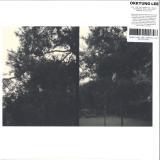
Unlike anything we have heard from her before, Okkyung Lee returns to Shelter Press with "Just Like Any Other Day: Background Music For Your Mundane Activities", a deeply intimate body of recordings at the juncture of ambient music, minimalism, and the baroque, that stands as radical intervention with what experimental music can be, and the place that organisations of sound occupy in our lives. For more than two decades, Okkyung Lee has stood at the forefront of the most radical trajectories of experimental music: a virtuosic cellist and improviser, renowned for her creative rigour and emotive depth. Particularly noteworthy for her range, dexterity, and adaptability, over the last five years Lee's output has revealed unexpected shifts and developments that move far afield from the realms of free improvisation for which she is most well known. 2020's "Yeo - Neun", a heart-wrenching, ambient chamber work - drawing inspiration from the Korean popular music of her youth - was issued by Shelter Press to great critical response, followed closely by "Teum (The Silvery Slit)" - one of a series engrossing electroacoustic works created at Groupe de Recherches Musicales in Paris - on Portraits GRM, and then "Na-Reul" in 2021, regarded by Lee as a closing statement of more than two decades living in New York, which set the precedent of her allowing her emotions to fully occupy the forefront of the music for the first time. Marking her return to Shelter press, "Just Like Any Other Day": Background Music For Your Mundane Activities", encounters Lee upturning the apple cart once again, weaving a profoundly intimate artistic statement on completely unexpected terms. Like its three aforementioned predecessors, "Just Like Any Other Day" belongs to broadening shift in Lee's approach to composing that roughly aligns with her return to her native South Korea, having lived in the United States since her late teens. Infused with a deep reengagement with her own culture and relationship to memory, it is equally a response to those critical challenges and questions provoked by significant life change. Worked on in isolation, and continuously returned to, over the course of four years, the album's nine pieces began with a simple recognition that experimental music is not always what we imagine it to be. It is a practice and a pursuit - a music for which, at its inception, the outcome is unknown - rather than an idiom defined by certain syntaxes, approaches, and qualities of structure and sound. From this departure point, Lee began to inquire after the utility of music itself: what is it for, what does it do, and what place does it (or can it) occupy in our lives? This solitary and durational journey, each composition gradually moving through different phases and evolutions over years, led Lee toward uncharted ground: a music that is not only playful, introspective, and seductive, but also intended to provoke a relationship to experimental music beyond its normative expectations. Rather active or deep listening, it pursues passive listening. Rather than a grand statement, it is discreet. Rather than virtuosity, it embraces the elegant and direct. Even more strikingly, for the first time, the music of "Just Like Any Other Day" encounters Lee leaving the cello entirely behind. Created at home on keyboard, computer, and an inexpensive cassette recorder, "Just Like Any Other Day" presents a remarkable form of ambient music - organisations of sound that become their own environment, to be occupied - intended, as the album's subheading infers, as Background Music For Your Mundane Activities. An expansion of the creative pathways opened by the Korean pop imbued compositions of Yeo - Neun, aspects of electronic process explored by "Teum (The Silvery Slit)", and the emotive foregrounding of "Na-Reul", each of the pieces presented across the two sides of "Just Like Any Other Day" implies something far greater than the limits of its own temporarily: a mood, provocations of memory and place, mirrors for the solitude within which it was made, and palpable emotion lingering just out of grasp. For Lee, each of the album's compositions could be continued or looped for an indeterminate duration: straddling a ground between the minimal and the baroque, enveloping the listener in endless cycles of appreciating, repetitive and rhythmical notes, flirting with the melodic and implying a disembodied imagism that borders on the profound. Remarkably beautiful and direct, Okkyung Lee's "Just Like Any Other Day: Background Music For Your Mundane Activities" - issued by Shelter Press on vinyl - represents a radical reconfiguration of experiential music, stripped to its bare essence in defiance of the widely presumed aesthetic signifiers. Unlike anything we've heard from her before, this immersive body of intimate recordings not only reveals new dimensions of Lee's striking range as an artist, but also of how we might regard and occupy music itself: an ambience to lived and felt like a second skin.
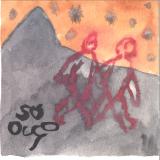
"Taking influence from the pioneers of Música Popular Brasileira, Wolfgang Pérez has crafted an exquisite album of summery experimental pop music that encapsulates the beauty and chaos of modern Brazil. A must-listen for fans of Tom Zé, Gilberto Gil, Kiko Dinucci, Negro Leo, Ricardo Dias Gomes, and João Gilberto.
Genre-blending songwriter, arranger, and guitarist Wolfgang Pérez is set to release his highly anticipated new album Só Ouço in July 2025 on Hive Mind. Known for his unique fusion of influences, the German-Spanish artist first captured attention with his 2021 debut WHO CARES WHO CARES (Fun In The Church), followed by the critically acclaimed Spanish-language album AHORA (BAUMUSIK, 2024).
Só Ouço is the fruit of an 18-month creative residency in Rio de Janeiro, where Pérez collaborated with a group of young Brazilian musicians. Deeply inspired by the city's sounds and rhythms, the album marks an exciting chapter in Pérez’s evolving artistic journey.
In 2022, Wolfgang Pérez arrived in Rio de Janeiro on a university exchange to study composition, and quickly found himself immersed in the city’s rich musical landscape. Introduced early on to Rio icons like Thiago Nassif, Arto Lindsay, and Ana Frango Elétrico, what began as a semester turned into a transformative three-semester stay. Pérez absorbed the city's contrasts - it's beauty, its people, it's chaos and violence, all it's contradictions and life - while deeply studying Brazilian music at UFRJ/UNIRIO under the guidance of masters Josimar Carneiro, Marcello Gonçalves and Almir Cortes.
Wolfgang spent the first 6 months or so soaking in as much as possible, going to shows, to the baile funk parties, walking the streets, hiking the mountains in and around Rio, listening to music, making friends, learning where to go and where not to, learning the language, learning the slang, incorporating the culture. He used the time to forget himself in the vibrance of the city.
After this the band came together through a series of chance encounters and happy accidents...some loose jam sessions led to shows around Rio, where Wolfgang, alongside Luis Magalhães (bass), Pedro Fonte (drums) and Paulo Emmery (electric guitar), started to flesh out some of Wolfgang's compositions. At a show at Audio Rebel they met Angelo Wolf (owner of Wolf Estúdio and engineer for artists such as Bala Desejo, Dora Morelenbaum, Zé Ibarra, Marcos Valle, Antonio Neves and Ana Frango Elétrico); moved by the music, Wolf offered Pérez residency and studio time at Wolf Estúdio, providing the foundation for Só Ouço. Angelo was a catalyst for the production of Só Ouço, his openness and generosity helping to shape the sound of the record. Carol Maia, a young guitarist, lyricist and singer brought a sensitivity and tenderness to the songs, while Antonio Neves helped to pull together the brass and woodwind players who would complete the lush sound of the album.
Meticulously arranged, and beautifully composed, Só Ouço is a joy to listen to and surprising at every turn. Classic songwriting and cutting edge production blend to produce an album that is by turns tender and gentle, abrasive and unsettling, a joyful celebration of life in all its complexity."

cv313 and Federsen join forces again for the ‘Altering Dimensions Part One’ release, the initial drop in a series of collaborations which will later form together as one long player project.
Detroit-based dub techno pioneer cv313 (Stephen Hitchell of Echospace fame) and Federsen join forces on the forthcoming collaborative EP Altering Dimensions via Federsen’s own Alt Dub imprint. cv313, known for landmark releases such as Seconds to Forever and the deeply influential Dimensional Space LP, has been central to shaping the modern dub techno sound, blending immersive atmospheres with hypnotic rhythms. Federsen, celebrated for releases on Echospace Detroit, Grayscale, Synchrophone, Lempayung, Avant Roots and others. has also established himself as one of the genre’s most forward-thinking producers, bringing a meticulous, analogue driven warmth to his productions. Altering Dimensions marks a meeting of two highly respected producers in contemporary dub techno, bridging Detroit’s timeless legacy with Federsen’s cutting-edge sonic explorations.
The release comprises four alternate interpretations of the title-cut and leading the way is the original mix of ‘Altering Dimensions’, a seven-and-a-half-minute excursion through weighty low-end pulsations, spiralling atmospherics and ever unfolding nuance throughout. The ‘Redesign’ follows and shifts gears into a more robust deep techno realm as cavernous reverberations and shifting echoes ebb and flow alongside murky bass and sturdy drums.
The ’Dub’ mix follows on the flip-side, as the name would suggest laying focus on a more classic dub techno style with crisp percussion, billowing spaced out delays and vacillating subs before the ‘Reduction’ mix concludes the project, as the name would suggest stripping things down to the composition core atmospherics elements alongside oscillating percussive elements and fluctuating pads.

Stone classic Bullwackies (as excursioned by Rhythm & Sound for Burial Mix), sensationally featuring two unreleased dubs, newly extracted from the master reels. Both are equally unmissable but quite different, with contrasting effects: the second dub adds ninety seconds, including whip-dem spring reverb. Drawn from the Selective Showcase LP, the vocal mix is more open and dubwise than the Sing & Shout LP offering, with less keyboards.
Asked whether it should be mash or march, after some pondering Bullwackies replied: "That's a good question.'

Rare groove fans, take note of yet another gem from the good folks at P-VINE as they reissue Les DeMerle's iconic cover of 'A Day In The Life,' famously sampled in O.C.'s hip-hop classic 'Time's Up.' It's a laidback and jazzed up sound with deep cut rhythms, big horns and conversational sax leads that hit different. Alongside the jazz-funk gem comes 'Aquarius' with DeMerle's sharp drum breaks (which in the past have been sampled by Jurassic 5, De La Soul and DJ Shadow) ride beneath funky keys work and joyous horns that persuade you to get up and move. Pressed in very limited quantities, it's a vital addition to any hip-hop or rare groove set.

Das selbstbetitelte Album von Ava Luna markiert eine fundierte und introspektive Entwicklung für das Quartett aus Brooklyn. Die Band, die nun aus Carlos Hernandez, Julian Fader, Ethan Bassford und Felicia Douglass besteht, kehrt nach einer längeren Pause mit einem reduzierten Sound zurück, der sich auf Schlagzeug, Bass und zwei Gesangsstimmen konzentriert. Dieser Back-to-Basics-Ansatz, eine Abkehr vom ,kosmischen" Gefühl ihres Vorgängeralbums ,Moon 2", hat seine Wurzeln in gemeinsamen Erfahrungen in NYC und den Rhythmen des Alltags. Themen wie Erschöpfung, Gemeinschaft und fragile Freude tauchen in Songs wie ,Lasting Impression" über die Arbeitsmüdigkeit und ,Math Money Job", einem spielerischen Gesang über Wiedersehen und Verkörperung, auf. Julians Schlagzeug und Ethans Bass Themen wie Erschöpfung, Gemeinschaft und prekäre Freude tauchen in Tracks wie ,Lasting Impression" über Arbeitsmüdigkeit und ,Math Money Job", einem verspielten Gesang über Wiedersehen und Verkörperung, auf. Julians Schlagzeug und Ethans Bass treiben das Album an, das teilweise vom rohen Sampling-Stil von Soul Coughing inspiriert ist, der in Tracks wie ,Frame of Us" zu hören ist. Gesanglich bewegen sich Carlos und Felicia wie eine Einheit - sie verschmelzen, harmonieren und fragmentieren mit Absicht, besonders in ,Archive". Obwohl im Kern minimalistisch, ist der Sound des Albums üppig und strukturiert, angereichert durch Congas von Reggae-Legende Larry McDonald, Klavier, Samples und Gitarren-Noise. Songs wie ,Social Diving" und ,My Walk" spiegeln persönliche und urbane Geschichten wider, während ,Your Man" und ,Fancy" von Widerstandsfähigkeit und Würde erzählen. Das Ergebnis ist Ava Luna in ihrer ehrlichsten und raffiniertesten Form - ein Porträt von NYC und einer Band, die sich noch immer weiterentwickelt und nichts von ihrer Dringlichkeit eingebüßt hat.
Celebrated DJ, producer, and sonic explorer Auntie Flo (aka Brian d’Souza) — described by The Guardian as “one of global club culture’s most vital voices” — returns this autumn with ‘Birds of Paradise’: a rhythmically rich, emotionally resonant, and ecologically grounded new album, out 23 October via his A State of Flo imprint. The album will be launched with a special live show at London’s Jazz Caféon the same day.
‘Birds of Paradise’ draws on d’Souza’s global club experience while deepening his connection with the natural world. Built around classic Roland drum machines and iconic vintage synths, the record is a joyful, body-driven celebration of rhythm and movement, but one grounded in ecology and place. The album’s spiritual centre lies in Saligao, Goa, near d’Souza’s maternal homeland where his Auntie Florie (where the name is derived from) is buried. Where he found his ‘paradise’ nearby, staying in a converted fisherman’s hut and recorded dawn choruses from a riverside studio overlooking mangrove-lined waters. Environmental textures from Japan also make their way into the music, creating a sonic map rooted in lived experience.
“Birds of Paradise is about finding beauty and rhythm in a chaotic world. It’s about listening, to nature, to our bodies, to what’s real. It’s a reminder that dance music can be both joyful and grounded.” The album blends Afro-Latin polyrhythms with Western 4/4 patterns, fusing instinctive, dancefloor energy with field recordings that anchor the music in the earth. Described by d’Souza as “tropical with a few deeper edges, a balance of light and dark.”
The new record follows the acclaimed ‘In My Dreams, I’m A Bird and I’m Free’, which earned 4 stars and Global Album of the Month from The Guardian, featured in Disco Pogo’s Albums of the Year, and received support from Luke Una, Resident Advisor, Juno, Bandcamp, Mixmag, DJ Mag, Electronic Sound, The Skinny, Beatport, Ban Ban Ton Ton, and more. The album’s launch show at Omeara London sold out. Other recent projects include the ‘Outernational Dance’ EP on cult label Multi Culti, event series ‘Plants Can Dance (and Mushroom’s Sing)’ which explore plant and fungi bioelectricity as a means of live composition, and ‘Black Beacon’, a haunting cassette release and soundwalk series recorded on the abandoned military island of Orford Ness. There, d’Souza explored the eerie intersection of nature, decay, and deep time, gaining special access to restricted buildings to capture long-form soundscape compositions.
Alongside his production work, d’Souza has emerged as a leading voice at the intersection of sound and science. He curated music for Imperial College’s groundbreaking psychedelic therapy trials, developing six-phase playlists to guide participants through psilocybin-assisted sessions treating conditions such as fibromyalgia and gambling addiction. His five-hour ambient set at Watching Trees Festival, selected as Resident Advisor’s Mix of the Day, continued this exploration into the therapeutic potential of sound in altered states. He also spent six months collaborating with BBC producer Tom Raine on a documentary for BBC World Service, centred on a two-week journey through Kenya and Goa. There, he performed live, led plant music workshops, and joined a deep listening retreat rooted in field recording. “I realised my studio isn’t just four soundproofed walls filled with instruments — it’s the journey itself. It’s the people I meet, the natural world I listen to, and the connections I feel.”
This same commitment to deep listening fuels his live concept Plants Can Dance, a project that combines the biosonification of plants and fungi with modular synthesis. The next event, on 14 September at Hideout Hackney Wick, will feature performances by Stella Z and Lapalace, with d’Souza and resident Lamine playing live alongside responsive plants in collaboration with Repot Hackney Wick and the label Music To Watch Seeds Grow By. “I’ve spent years exploring how electronic music can connect us, not just to each other, but to the natural world. Whether it’s translating mushroom data into melody or capturing birdsong at dawn, it’s about finding resonance across bodies, ecosystems, and machines.”
Rooted in his Goan and Kenyan heritage and shaped by years of travel and collaboration, d’Souza’s creative mission is simple: to reconnect the electronic world with the natural one. Through A State of Flo, he continues to blur the boundaries between club culture, sound art, and ecological awareness.

Modularz 93: UHFVHF – A Sonic Exploration of Analog and Digital Frequencies
Modularz is proud to present Modularz 93, a groundbreaking collaborative project between two heavyweights in the techno scene: Developer, the visionary producer and label head, and Stanislav Tolkachev, the Ukrainian techno ambassador known for his raw and experimental approach to sound. Their new release, UHFVHF, is a deep and immersive journey into the sonic interplay of analog and digital frequencies, a love letter to the mystique of over-the-air signals and the grey areas where the known meets the unknown. This project marks the culmination of countless hours spent in the studio in Berlin, where Developer and Stanislav have fused their unique creative processes. By blending analog hardware with cutting-edge digital techniques, the duo has crafted a sound that is both timeless and forward-thinking. The result is a series of tracks that explore rhythm and texture in their rawest form, pushing the boundaries of techno’s narrative and embracing the unfiltered power of sound. Through UHFVHF, Developer and Stanislav continue to redefine the parameters of contemporary techno, offering an uncompromising experience that speaks to both the mind and the body. This release is a testament to their dedication to the art of sound, offering a sonic landscape that pushes the boundaries of what techno can be. Modularz 93 – UHFVHF is a must-listen for anyone who seeks the raw energy and unapologetic power that defines the heart of true techno.

From the crypts of Parisian funk obscurity comes the long-lost Halloween holy grail, Disco Frankenstein from Ice AKA Lafayette Afro Rock Band. A teasing album of horror-disco oddities originally released as a compilation—a misnomer cloaked in mystery, as the tracks themselves hail from the group’s playful experiments in the mid-to-late ’70s.
This album unearths a twisted treasure trove of grooves, originally scattered across obscure side-projects and international pressings, brought back to life by Strut on blood-soaked vinyl exclusively for Halloween 2025.
Originally released as a 1976 Japan-only compilation featuring the Lafayette Afro Rock Band under a plethora of pseudonyms—Sweet Exorcist, Captain Dax, Hot Blood, Krispie and Co., and more, the release was masterminded by producer Pierre Jaubert and led by bandleader Frank Abel with the funk-virtuosity of the Lafayette Afro-Rock Band group, the minds behind the much sampled ‘Soul Makossa’ and ‘Malik’ albums.
Disco Frankenstein represents the band at their most creative—layering wah-wah guitars, thunderous Afrobeat rhythms, and creepy-crawly synths into a funky stew of horror-disco gold. Tracks like “Dr. Beezar (Soul Frankenstein),” “Disco Vampire,” “Zeke the Zombie,” and “Igor’s Reggae” blur the line between Halloween novelty and dancefloor fire, conjured with full seriousness by studio wizards who knew how to raise the funk.
Resurrected by Strut Records and remastered by The Carvery, this compilation finally gets the deluxe treatment it deserves: pressed on limited blood-stained vinyl just in time for Halloween 2025.

"Que Se Sepa Pt. 1 & 2" by Kenny Dope Featuring Daniel Rojo
Released on Kay-Dee Records, "Que Se Sepa Pt. 1 & 2" is a vibrant, rhythm-driven collaboration between the legendary Kenny Dope and talented vocalist Daniel Rojo. This two-part single captures the essence of Latin breakbeats, infused with the unmistakable flair of Roberto Roena’s cover song influence, creating an energetic fusion of tropical percussion and funky beats.
Kenny Dope, known for his work with Masters at Work and his extensive influence on the house and hip-hop scenes, produces a dynamic track that combines smooth rhythms with infectious hooks. The sound is an irresistible blend of classic Latin grooves and modern, dancefloor-friendly beats, perfect for both the old-school salsa lover and the contemporary club crowd.
The release is an homage to Roena's legacy, infused with breakbeats and explosive percussive elements that pay tribute to the genre's rich history. The energy and rhythms of "Que Se Sepa Pt. 1 & 2" are destined to bring the heat to any playlist, with Daniel Rojo’s vocal contributions adding the finishing touch to this unforgettable Latin-influenced masterpiece.
This release marks yet another impressive addition to Kay-Dee Records, known for curating tracks that bridge the gap between classic sounds and modern production, celebrating the vibrance of Latin music while keeping it fresh and exciting for today’s audience.
