American rock band Vixen was formed in Saint Paul, Minnesota, in 1980. During its most commercially successful period from 1987 to 1992, the band consisted of Jan Kuehnemund (lead guitar), Janet Gardner (lead vocals, rhythm guitar), Share Ross (bass guitar), and Roxy Petrucci (drums). The band‘s eponymous first album was released in 1988, and reached No. 41 on the Billboard 200. As part of the Los Angeles glam metal scene, the band has been described as „the female Bon Jovi.“ Several singles reached theBillboard Hot 100, including the Top 40 singles „Edge of a Broken Heart“ and „Cryin“. While the band originally disbanded in 1992, it reformed several times and in 2018 ’Rare Vintage‘ was released. As of 2022 the band currently consists of Roxy Petrucci, Britt Lightning, Lorraine Lewis, and Julia Lage.
quête:the rhythm
Nina Simone’s big break consisted of the recording made during her September 12, 1959 concert at New York’s Town Hall. The 1960 LP Nina Simone at Newport (recorded live at the Newport Jazz Festival on June 30, 1960, and included here in its entirety) was an attempt to repeat the success of that live album. It presents strong performances by Nina of “Trouble in Mind” and “You’d Be So Nice to Come Home To,” among others. Simone is accompanied by her regular rhythm section, consisting of Al Schackman on guitar, Chris White on bass, and Rob Hamilton on drums.
- A1: Surfing Zavial
- A2: Hangout Feat Hedvig Larsson & Cutty Wren
- A3: The Rooster Calls Feat Josephine Nightingale
- A4: Zambujeira
- A5: Porto De Abrigo Feat Ally Garrido
- B1: Till I Landed Feat Tiago Saga
- B2: Ganja Day Feat Naomi Falcon
- B3: Just Dancing Feat Ally Garrido
- B4: Land Of The Healers & Dealers Feat Cutty Wren & Josephine Nightingale
- B5: Rui's Garage
Sundub Society - featuring Josephine Nightingale, Ally Garrido, Tiago Saga, Naomi Falcon, Cutty Wren, Hedvig Larsson. The Bahama Soul Club are a German-based group whose unique blend of soul, jazz, funk, blues, bossa nova, afro and Caribbean influences has firmly put them on the map as one of the most exciting contemporary outfits of the black music scene. Inspired by the blissful energies of the sun drenched coast and the multicultural verve of tattooed wave riders, spiritual seekers, rainbow healers, mystic maidens and dreadlocked beauties, .... and of course the funky smell of sandy flip flops. Lush arrangements painted with sun-soaked brushes, captivating hangout vibes, shuffling bits of Reggae, woven threads of 70s roots, traditional rhythms and beats and sounds of the South Western Algarve. Sincere, artistic, full of spirit and definitely unique. No striving for the worldly charts. An album recorded mainly with the local legends. Stoned troubadoures, poetic pirates, authentic rebels. The songs were born from a vague idea after the release of "Bohemia After Dawn", the last album on which a few artist friends from the Algarve had already contributed. There is always a special magic in the neighborhood when sunny midday jams morph to sundown sessions to party-till-dawn skanks. We then just put those jams on tape. So, ten sundubby love songs to 'Oh, those sandy beaches'!
Kulku return to Phase Group with the release of their new album ‘Reset To Be’.
Formed in Berlin at the turn of the millennium, Kulku have evolved as a highly unique and free-formed collective of musicians that make trance-inducing, jazz-entwined, percussive and soulful (mostly) acoustic music that takes cues from the rhythmic propulsion of Jaki Leibezeit’s Can, the street-folk of Moondog, the minimalism of Steve Reich, and the droning rock n’ roll of the Velvet Underground, forming a sound that they themselves have coined ‘No-Age Krautrock’.
Following on from last year’s sold out debut LP ‘Fahren’, ‘Reset To Be’ offers 5 new songs across 2 sides of vinyl. This is a record that perfectly showcases the unique identity the band have been developing over the past 20 years, a sound crafted through experimentation and innovation with primarily acoustic instruments; droning harmoniums, repetitive and phasing xylophones, timpani, cello, scrap metal and woodwind reeds, all sitting alongside soulful saxophone and the voice of frontman Andreas Riska, singing in both German and English.
‘Reset To Be’ is a truly special offering that we’re proud to be able to share with you on Phase Group. The album will be available on April 30th 2024 on vinyl and digital, with distribution via Bordello A Parigi.
For The Alternate Blues, producer Norman Granz set aside his rule against issuing what are variously called in the recording business outtakes, breakdowns, or alternate takes.
The reason was that despite missed cues and procedural problems in the rhythm section, Dizzy Gillespie, Freddie Hubbard, and Clark Terry played the blues at a level of passion and expressiveness the equal of the versions originally released on The Trumpet Summit Meets the Oscar Peterson Big 4. In addition, there are four standards not heard in the original album. With Joe Pass, Bobby Durham and Ray Brown.
- A1: Praise God
- A2: Mister Walker
- A3: Dance On The Corner
- A4: General 007
- A5: Trackas-Trackas
- B1: Natydread The Traveller
- B2: Cricket Lovley Cricket
- B3: Best Dress
- B4: Bad Man Entry
- B5: Marijuana-Marijuana
Toaster Jah Thomas began his career on the west Kingston sound systems of the mid-1970s, making a massive splash with ‘Midnight Rock’ in 1976. After a debut LP for Channel One, his self-produced Dance On The Corner raised the bar several levels. Voiced at King Tubby’s studio, mixed by Tubby, Jammy and Scientist and edited by the King himself, the album has Thomas chatting over hard Roots Radics rhythms earlier used by Barrington Levy – the perfect platform for Thomas’ relaxed chants, vexed rants, and commentaries on Jamaican life. This is Jah Thomas at his best – a must for all fans of reggae, dub, deejay, and dancehall!
First issued in 1961 on Columbia’s early music venture Colpix, Forbidden Fruit is widely acknowledged as the best of Nina Simone’s early releases. Producer Cal Lampley choose to cast her in varied settings, blending a rendition of Oscar Brown’s ‘Rags And Old Iron’ with a unique take of Bessie Smith’s ‘Gin House Blues,’ contrasting with Billie Holiday’s ‘No Good Man’ and ‘I’ll Look Around,’ which Simone shifts to her own image. Her backing trio aim for the understated, the rhythm section leaving ample room for Simone’s appealing piano lines, nicely complimented by Al Shackman’s guitar. An excellent set from Miss Simone – grab it!
When great music minds get together, good things happen and this latest Freerange outing is testament to that. Bridging the gap between Toronto and Detroit, the Detoronto EP is the result of Mark Kufner aka Toronto Hustle’s vision of deep, underground house music and Sean Roman’s production prowess. With decades of experience promoting nights, DJing and running his own brilliant vinyl-only label Selections, Mark teamed up with production partner and fellow Toronto DJ, Sean Roman. Sean has worked with a diverse selection of imprints such as Nervous Records, Local Talk, Strictly Rhythm, as well as his own imprint Lately Bass.
On the vocals, Detroit’s ubiquitous Javonntte rounds out the artists for this heavyweight EP. Classic deep, raw, late night house sounds are the order of the day here. Deep In This is just the kind of fat, swinging groove to warm up the dance floor with. Simple yet robust, the square wave bassline brings the right amount of attitude whilst Javonntte’s vocal’s draw you into his world.
Next up, the duo give us their own Light Night Dub of Deep In This which strips out the harmonic elements, putting all the focus on the drums, bass and vocals. This makes for the perfect club tool, sounding massive on a nice system and guaranteed to get the floor locked into its unrelenting groove.
Flip over for a brilliant remix of Fall In Love by another legend of the Toronto house scene - Demuir. This guy is a production powerhouse whose soulful, funky, jacking house sound has seen him releasing on such diverse labels as Yoruba, Classic, Heist, Hot Creations, Robsoul and Desolat. Here he brings his trademark, loose and jazzy drums and funky AF Moog bassline which is accompanied by a beautiful, filtering piano loop.
Closing out this brilliant EP we have Fall In Love, another late night basement jam featuring the vocals of Javonntte. Classic rhodes stabs add a rolling energy to the chunky drum groove making this one of those classic B2 tracks destined to become a secret weapon in your sets.
Brainwave Research Center returns with their 3rd Electronic music LP. Their DIY approach to creating music has forged a unique sound that is not experimental music, but music born out of experimentations with analog synthesizers. Feel Free is the third installment of their first four part series and captures the feelings and emotions of a summer season.
The A-side begins with a soundtrack to a daydream; imagining the life of a earthworm. Followed by a teeth-grinding drive through the grime of Brooklyn streets in Interceptor iii. Side A finishes out with that summer euphoria that comes from laying in the grass under the sun through dusk and watching the moon rise.
The B-side begins in a startling manner; an attempt to capture the feeling of falling in your dreams. The music continues down a darker path that reminds us of their second LP, Mosaic, with electronic experiments mixed with acoustic elements. The side concludes with two songs that capture the nostalgic feelings of summer.
Feel Free offers you a glimpse into the musings of everyday life for brainwave research center. Recommended if you like analog / digital synthesizers, sequencers, hand-played melodies, simplistic clock-like rhythms
Two fabulous funky tracks originally released on the award winning album Goma-Laca – Afrobrasilidades in 78 rpm which updated Brazilian Music originally recorded on 78's in the 1920s to the 1950s. With musical direction and arrangements by Letieres Leite, the vocal pyrotechnics of Russo Passapusso and Juçara Marçal masterfully accompanied by double bassist Marcos Paiva, Hercules Gomes on piano, Sergio Machado on drums and percussion master Gabi Guedes. Under the direction of Letieres, the group created with the singers arrangements of jazzy tones over Afro-Bahian rhythms, and everything was recorded live at Estúdio Traquitana, in São Paulo.
The version of Cala Menino Boca best known from the version by Joao Donato that's been doing the Dancefloor round since the early Acid Jazz days here gets a funky and rhodes led percussive update and of course the traditional tune "Ogum" gets a soulful jazz run through, folky funk like you've never heard before. This is yet another welcome addition to the Jazz Room canon, watch those dancefloors light up when this wax spins!
- A1: Cosmocomics & Kotowicz - Stars Of Midnight
- A2: Ron Brown - How Thight Is It
- A3: Will Sonic - Stab Dub
- A4: Julius Rennert - Juice
- A5: Das Carma - Destiny
- A6: Panouse - Kussens Skygge
- A7: Baerlz - Wie Ein Wulkan
- B8: Jesusdapnk & Ivonne Calvillo - Body
- B1: Frank Virgilio - The Prefatio
- B2: Buzz Compass - More Love
- B3: Nonduality - Lapdog
- B4: Staghorns - It’s Been2Long
- B5: Meeshoo - Modisco
- B6: Decent Rides - Odysses Ot The Beats
- B7: Mathew Ferness - This Is How
- B8: Moox - Let It Go
Dive into the soulful sounds of house with "Inhale Exhale," a label that takes you on a journey through deep, funky, disco, and soulful beats. Introducing "inextape003," our latest compilation that delves into the depths of rhythm and groove. Immerse yourself in tracks curated to elevate your senses, where every beat is an invitation to let go and feel the pulse of the underground. Inhale the vibes, exhale the ordinary, and let "Inhale Exhale" redefine your house music experience. Welcome to a world where the beats are deeper, the vibes are smoother, and the dance floor is your sanctuary.
Jimpster dons his Franc Spangler cap and joins forces with up and coming London-based producer and DJ Hudson’s Choice for a four track EP entitled Myatts Field. Touching on trippy slo-mo electronic grooves, tropical moods and percussive house jams it brings a more experimental and left field sound to Delusions Of Grandeur which we’re sure you’re going to love!
Opening track AcidMan sets the tone of the EP with a bubbling 303 line taking centre stage while pitched down vocals add a hint of menace, heightening the psychedelic mood. Dubby FX and analogue synth lines drift in and out of focus and give a live jam feel to the arrangement reminding us of something that might grace the decks of A Love From Outer Space. Heavily Percussed continues offering up a crazy percussion tool loaded with wonky cross rhythms, glitchy found sounds and a hypnotic synth sequence for good measure.
Flip over for Myatts Field, another slower tempo mutant discoid house groove which takes us on a deep trip into the jungle. Echoing sax and hazy vocals transport us to another world where Weather Report experimented with rolling four on the floor grooves and spacious dub.
Closing out the EP Roots picks up the pace with another percussion-heavy slice of tropical sounds which doffs a cap to masters such as Gregory and Osunlade. Steel pan melodic lines intersperse with chiming synth sequences making for an unusual yet hooky club track which will lock the dancers into its incessant groove.
Hybrid sounds are offered up by Sunderland born producer Dharma on his Lone Romantic debut. His ‘Clear Glass’ EP lands on Maceo Plex’s left of centre imprint, offering up four tracks of futuristic garage and electro-tinged sounds.
Having previously released on esteemed labels such as R&S Records, Man Power’s Me Me Me imprint and Permanent Vacation, Dharma readies a bustling EP for Lone Romantic that showcases the young producer’s deft capabilities at working through various shades and rhythms with ease.
From the shuffling beats and choppy vox of EP opener ‘Clear Glass’, to the low-slung hip hop meets IDM influences of ‘Work Over’, Dharma serves up a highly accomplished release that effortlessly traverses genres.
‘Clear Glass’ EP by Dharma is available on Lone Romantic from 26th April 2024.
Hal Singer – Tenor Sax
Alain Jean-Marie – Piano
August “Gus” Nemeth – Bass
Oliver Johnson – Drums
When the U.S. State Department announced in the mid-1970s that they were sponsoring a South African tour for the Oklahoma-born, Paris-based saxophonist Hal Singer, producer Rashid Vally took note. Even though his nascent record label As-Shams/The Sun (established in 1974) was making waves on the local scene, the idea of commissioning a recording from an international artist was a ballsy idea. With a discography that stretched back to the 1950s, Hal Singer was already somewhat of a legacy artist by 1976. Vally was well-versed on Singer’s accomplishments and specifically enamoured by his composition “Blue Stompin’,” which appeared on a Prestige album from 1959 that had struck a chord in South Africa.
With his irresistible charm, Vally managed to coax Singer into a studio in Johannesburg, South Africa, to record a new version of “Blue Stompin’” with South African sax star Kippie Moeketsi, which became the title track of a 1977 album by Moeketsi. The recording session also yielded an album’s worth of new material by Hal Singer and his quartet that took its name from a track inspired by Singer’s trip to South Africa entitled “Soweto to Harlem.” Released in 1976 and only available in South Africa, Soweto to Harlem captures a laid-back, cheeky and nostalgic rhythm and blues set from the Hal Singer Quartet that is unlikely to have emerged for a different target market.
With her irresistible charm, Vally was able to convince Singer to enter a Johannesburg studio. The recording session produced this album of new material by Hal Singer and his quartet named after a song inspired by Singer’s trip to South Africa, entitled “Soweto to Harlem.” Released in 1976 and available only in South Africa, “Soweto to Harlem” captures a laid-back, unabashed and nostalgic rhythm and blues of Hal Singer’s quartet that would hardly have been born for a different market.
Cinedelic’s 2024 edition of this rare album is sourced from the original tape masters and presents it on vinyl internationally for the very first time. The reissue follows Singer’s passing at the 100 in August 2020 as we contemplate and celebrate his extraordinary contribution to jazz in the United States and beyond.
Reissue of Feu! by Rotorelief Records on vinyl LP and CD - April 2024.Industrial Punk, Noise'n'Roll
Featuring Jac Berrocal.
"THIS RECORD WAS INVENTED IN TEN DAYS. WHEN NAGI BAZ OFFERED TO LET US USE HIS STUDIO FOR A WEEK, WE HAD JUST FINISHED RECORDING DOCTOR CHANCE 93.
THE PLAN WAS IMMEDIATELY TO PAY A SORT OF TRIBUTE TO MY WRITER FRIEND JEAN-FRANÇOIS CHARPIN (1957-1987), AN ACCOMPLICE OF THE SEX PISTOLS, WHO HAD INITIATED THE CHALET DU LAC CONCERT IN SEPTEMBER 1976, BEFORE CREATING THE EXCELLENT AND FLEETING AVANT-GARDE MAGAZINE GRABUGE IN 1978 (TWO ISSUES PUBLISHED).
WE SPENT A WHOLE WEEKEND WITH JACK BELSEN LAYING THE FOUNDATIONS OF SIX TRACKS FROM MACHINE MATRICES, LOOPING RHYTHMS, WHILE I WROTE AT FULL SPEED ON THE TYPEWRITER. ON MONDAY I FINISHED FORMATTING THE RAW LYRICS WHILE BELSEN RECORDED THE RHYTHMS. THE NEXT DAY, IT WAS MY TURN TO RECORD THE VOCALS AS ONE - THEN JAC BERROCAL AND LITTLE DRAKE PLAYED THEIR INSTRUMENTAL PARTS.
TWO DAYS OF MIXING LATER, IT WAS FINISHED. THE FOLLOWING MONDAY, NAGI BAZ LEFT HIS RECORD LABEL. AFTER THIRTY YEARS, THE REISSUE OF FEU! (AUGMENTED BY GENOTYPE FROM MESSAGERO KILLER BOY, RECORDED JUST BEFORE I LEFT FOR CHILE IN 1994) TURNS OUT TO BE A DOUBLE EULOGY FOR J.-F. CHARPIN, BUT ALSO FOR JACK BELSEN, WHO WAS ABRUPTLY SNATCHED FROM LIFE FOR ONE AWFUL SEASON, BETWEEN LATE SPRING 2018 AND HIS DEATH ON 7 DECEMBER THE FOLLOWING YEAR. -"
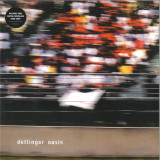
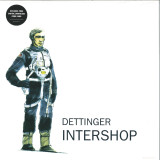
Dettinger’s Intershop and Oasis have long been held, by many fans of ambient and electronic music, to be some of the finest albums in their field. Produced by the mysterious Olaf Dettinger, about whom not much is publicly known, they were some of the earliest full-lengths released by the then-nascent Kompakt, and in many ways, they both articulated and defined the sound that would come to be known as Pop Ambient, while also existing, somehow, to the leftfield of any clearly recognisable genre.
Beautiful, sui generis works, it is a rare pleasure to see them being reissued on vinyl for a new generation of listeners to embrace. Originally released on CD only in 1999, Intershop was Kompakt’s first artist full-length. The music here simmers and broods, with opulent banks of tone marking out territory for rhythms that seem to be built from the clacking detritus of technology – hisses, thunks, knocks. Bass is deployed carefully, each drop a dubbed-out depth charge; drones spin and spiral, warping and weaving between the beats.
Oasis, released in 2000, refined the palette that Dettinger had explored on its predecessor. A blurred crusade of ambient texturology, its unassuming patterns, and subtle, incremental dynamics, admit to real beauty, and a kind of abstract sensuality that you don’t often experience with music that is, perhaps, similarly tooled, but not as poetic. Through seemingly simple gestures – whether lushly expansive repetitions, hyper-acute tremolo tones, or ear-tickling rhythms – it builds complex emotional resonance. It’s no surprise to discover Oasis is held in high esteem by artists like Panda Bear of Animal Collective, who once said of Dettinger, “For us, he was the dude.”
There is, of course, other music to know Dettinger by, too – his three excellent EPs for Kompakt, Blond (1998), Puma and Totentanz (1999), the latter of which, Michael Mayer once argued, “invented dubstep.” There is also a small, yet graceful run of compilation contributions, many of which can be found on Kompakt’s Total and Pop Ambient series. All this music has plenty to recommend it, sharing a clarity of purpose, and a rare, human warmth and depth. But Intershop and Oasis are the releases that distil Dettinger’s singular vision, and allow him, should he wish, to claim his place as a modern master of ambient and electronic music.
Dettingers Intershop und Oasis werden von vielen Fans von Ambient und elektronischer Musik seit langem als einige der besten Alben in diesem Bereich angesehen. Produziert von dem mysteriösen Olaf Dettinger, über den nicht viel bekannt ist, gehörten sie zu den ersten Alben, die von der damals aufstrebenden Plattenfirma Kompakt veröffentlicht wurden. In vielerlei Hinsicht formulierten und definierten sie den Sound, der später als Pop-Ambient bekannt werden sollte, während sie gleichzeitig irgendwie links von jedem klar erkennbaren Genre existierten.
Es ist eine seltene Freude zu sehen, dass diese wunderschönen Werke auf Vinyl wiederveröffentlicht werden, um sie einer neuen Generation von Hörern zugänglich zu machen. Ursprünglich wurde Intershop 1999 nur auf CD veröffentlicht und war Kompakts erstes komplettes Künstleralbum. Die Musik hier brodelt und brütet, mit opulenten Klangbänken, die das Territorium für Rhythmen abstecken, die aus dem klappernden Gerümpel der Technik gebaut zu sein scheinen – Zischen, Klopfen, Schaben. Der Bass wird sorgfältig eingesetzt, jeder Drop ist eine synchronisierte Tiefenladung; Drones drehen und winden sich spiralförmig und verflechten sich zwischen den Beats.
Oasis, das im Jahr 2000 erschien, verfeinerte die Palette, die Dettinger auf seinem Vorgänger erkundet hatte. Ein verschwommener Kreuzzug der Ambient-Texturologie, dessen unaufdringliche Muster und subtile, schrittweise Dynamik echte Schönheit und eine Art abstrakter Sinnlichkeit zulassen, die man nicht oft bei Musik erlebt, die vielleicht ähnlich ausgestattet, aber nicht so poetisch ist. Durch scheinbar einfache Gesten – seien es üppig ausladende Wiederholungen, hyperakute Tremolotöne oder ohrenbetäubende Rhythmen – baut sie eine komplexe emotionale Resonanz auf. Es ist keine Überraschung, dass Oasis von Künstlern wie Panda Bear von Animal Collective hoch geschätzt wird, der einmal über Dettinger sagte: “Für uns war er DER Typ”.
Es gibt natürlich auch noch andere Musik, die Dettinger bekannt macht – seine drei ausgezeichneten EPs für Kompakt, Blond (1998), Puma und Totentanz (1999), von denen letztere, wie Michael Mayer einmal kühn behauptete, “den Dubstep erfand”. Es gibt auch eine kleine, aber feine Reihe von Compilation-Beiträgen, von denen viele auf Kompakts Total- und Pop-Ambient-Serien zu finden sind. All diese Musik ist sehr empfehlenswert und zeichnet sich durch eine klare Zielsetzung und eine seltene, menschliche Wärme und Tiefe aus. Aber Intershop und Oasis sind die Veröffentlichungen, die Dettingers einzigartige Vision destillieren und es ihm ermöglichen, seinen Platz als moderner Meister der Ambient- und elektronischen Musik zu behaupten, sollte er dies wünschen.
Dettinger’s Intershop and Oasis have long been held, by many fans of ambient and electronic music, to be some of the finest albums in their field. Produced by the mysterious Olaf Dettinger, about whom not much is publicly known, they were some of the earliest full-lengths released by the then-nascent Kompakt, and in many ways, they both articulated and defined the sound that would come to be known as Pop Ambient, while also existing, somehow, to the leftfield of any clearly recognisable genre.
Beautiful, sui generis works, it is a rare pleasure to see them being reissued on vinyl for a new generation of listeners to embrace. Originally released on CD only in 1999, Intershop was Kompakt’s first artist full-length. The music here simmers and broods, with opulent banks of tone marking out territory for rhythms that seem to be built from the clacking detritus of technology – hisses, thunks, knocks. Bass is deployed carefully, each drop a dubbed-out depth charge; drones spin and spiral, warping and weaving between the beats.
Oasis, released in 2000, refined the palette that Dettinger had explored on its predecessor. A blurred crusade of ambient texturology, its unassuming patterns, and subtle, incremental dynamics, admit to real beauty, and a kind of abstract sensuality that you don’t often experience with music that is, perhaps, similarly tooled, but not as poetic. Through seemingly simple gestures – whether lushly expansive repetitions, hyper-acute tremolo tones, or ear-tickling rhythms – it builds complex emotional resonance. It’s no surprise to discover Oasis is held in high esteem by artists like Panda Bear of Animal Collective, who once said of Dettinger, “For us, he was the dude.”
There is, of course, other music to know Dettinger by, too – his three excellent EPs for Kompakt, Blond (1998), Puma and Totentanz (1999), the latter of which, Michael Mayer once argued, “invented dubstep.” There is also a small, yet graceful run of compilation contributions, many of which can be found on Kompakt’s Total and Pop Ambient series. All this music has plenty to recommend it, sharing a clarity of purpose, and a rare, human warmth and depth. But Intershop and Oasis are the releases that distil Dettinger’s singular vision, and allow him, should he wish, to claim his place as a modern master of ambient and electronic music.
Dettingers Intershop und Oasis werden von vielen Fans von Ambient und elektronischer Musik seit langem als einige der besten Alben in diesem Bereich angesehen. Produziert von dem mysteriösen Olaf Dettinger, über den nicht viel bekannt ist, gehörten sie zu den ersten Alben, die von der damals aufstrebenden Plattenfirma Kompakt veröffentlicht wurden. In vielerlei Hinsicht formulierten und definierten sie den Sound, der später als Pop-Ambient bekannt werden sollte, während sie gleichzeitig irgendwie links von jedem klar erkennbaren Genre existierten.
Es ist eine seltene Freude zu sehen, dass diese wunderschönen Werke auf Vinyl wiederveröffentlicht werden, um sie einer neuen Generation von Hörern zugänglich zu machen. Ursprünglich wurde Intershop 1999 nur auf CD veröffentlicht und war Kompakts erstes komplettes Künstleralbum. Die Musik hier brodelt und brütet, mit opulenten Klangbänken, die das Territorium für Rhythmen abstecken, die aus dem klappernden Gerümpel der Technik gebaut zu sein scheinen – Zischen, Klopfen, Schaben. Der Bass wird sorgfältig eingesetzt, jeder Drop ist eine synchronisierte Tiefenladung; Drones drehen und winden sich spiralförmig und verflechten sich zwischen den Beats.
Oasis, das im Jahr 2000 erschien, verfeinerte die Palette, die Dettinger auf seinem Vorgänger erkundet hatte. Ein verschwommener Kreuzzug der Ambient-Texturologie, dessen unaufdringliche Muster und subtile, schrittweise Dynamik echte Schönheit und eine Art abstrakter Sinnlichkeit zulassen, die man nicht oft bei Musik erlebt, die vielleicht ähnlich ausgestattet, aber nicht so poetisch ist. Durch scheinbar einfache Gesten – seien es üppig ausladende Wiederholungen, hyperakute Tremolotöne oder ohrenbetäubende Rhythmen – baut sie eine komplexe emotionale Resonanz auf. Es ist keine Überraschung, dass Oasis von Künstlern wie Panda Bear von Animal Collective hoch geschätzt wird, der einmal über Dettinger sagte: “Für uns war er DER Typ”.
Es gibt natürlich auch noch andere Musik, die Dettinger bekannt macht – seine drei ausgezeichneten EPs für Kompakt, Blond (1998), Puma und Totentanz (1999), von denen letztere, wie Michael Mayer einmal kühn behauptete, “den Dubstep erfand”. Es gibt auch eine kleine, aber feine Reihe von Compilation-Beiträgen, von denen viele auf Kompakts Total- und Pop-Ambient-Serien zu finden sind. All diese Musik ist sehr empfehlenswert und zeichnet sich durch eine klare Zielsetzung und eine seltene, menschliche Wärme und Tiefe aus. Aber Intershop und Oasis sind die Veröffentlichungen, die Dettingers einzigartige Vision destillieren und es ihm ermöglichen, seinen Platz als moderner Meister der Ambient- und elektronischen Musik zu behaupten, sollte er dies wünschen.
"At the time I'd have been fairly upfront about wanting to release tracks that were faster than most and in a style that wasn't straight electro. Some of these tracks fell into a weird middle ground for me, so they got put aside. It had been 20 years since I'd heard any of them and on listening back I reckoned that time had been kind to them so I started remastering them and uploading to Soundcloud alongside some classic 12" releases from my label Trama Industries.
For me, it was interesting to hear sounds and techniques emerging on some later tracks that would form the basis of my later projects like Legion Of Two and Of One. I'd kinda forgotten about that. Huge thanks to Eddie and Intrinsic Rhythm for suggesting a release and believing in the project"
- A1: Magic Momentum
- A2: Rockets To Mars
- A3: The News These Days
- A4: Life (Skit)
- A5: Love Vibration
- B1: Original Flow
- B2: Hold On
- B3: Surviver (Skit)
- B4: Tatamaka Pt.1
- B5: Tatamaka Pt.2
- C1: Time (Skit)
- C2: Time
- C3: Jinja (Skit)
- C4: Kochirakoso
- C5: Our Tactus
- C6: Nah Personal
- D1: No Chains
- D2: Push Comes To Shove
- D3: We No Let Y'all In
- D4: Mexico (Skit)
- D5: Future For Our Children
We Release JAZZ is very happy to announce an exciting new body of work by Joseph Deenmamode aka Mo Kolours. The singular musical spirit’s new 21-track album Original Flow is available as a double LP housed in a heavy 350gsm sleeve with original artwork by Mo Kolours himself and the classic WRJ obi strip, as well as in digipack CD and digital formats.
A catalog of critically acclaimed records, including his self-titled debut (2014), ‘Texture Like Like Sun’ (2015), 2018 album ‘Inner Symbols’ and three companion EPs, established Deenmamode as a prodigious musician and vocalist. Pitchfork extolled his “hypnotic, tribal-infused dance grooves”, DJ Mag appreciated the “colourful celebration of soundsystem culture”, and Resident Advisor advocated that “no one sounds quite like Mo Kolours”. Musical analogies were drawn by The Guardian as “The best album Curtis Mayfield never made with A Tribe Called Quest and Lee Perry” and Mojo as “like Marvin Gaye produced by J Dilla”.
Five years ago, Deenmamode moved to the Japanese countryside. Far away from familiarity, he contemplated his place and further questioned his identity. “I had none of my ‘own’ people around. I had time to really find what makes me tick musically. Japan has helped me go back to those subconscious leanings, really go deep, and reflect the aspects that make up my story”.
The tracks on ‘Original Flow’ have been constructed from sessions, improvisations and soundbites captured around the world during this time; collecting contributions from musicians including Deenamode’s brothers Reginald Omas Mamode and Jeen Bassa plus Andrew Ashong, Charles Bullen, Dwaye Kilvington, Eddie Hick, Stefan Asanovic, Myele Manzanza, Ross Hughes, and Tom Dreissler. Deenamode says “I’m proud of this album’s creative process. Coming from a tradition of scouring through hours of records, I wanted to create my own samples, to find that perfect loop that no other producer could put their hands on. I decided to invite a group of friends and acquaintances, who also happen to be incredible musicians, to a studio in Crystal Palace to improvise based on some loose ideas I had. We spent all day, and recorded everything”.
‘Original Flow’ is an album of UK street-soul nouveau, future indigenous jazz fusion, Rasta Segga, Nyahbinghi jazz, Malagasy Hebrew hip hop. While retaining a spirit of exploration and improvisation, it sees Deenmamode grow and flex beyond beat tape brevity, expanding composition and stretching his musical muscle to play live with other musicians. Themes of empowerment, overcoming adversity, and mental liberation coexist with notes from ancient history, futurism, and science, as well as musings on family and togetherness.
‘Magik Momentum’ springs from a discussion that features at the start of the song, an inspiring mentor answering a question from Deenmamode about improvisation and what role it plays in life when planning and manifesting the future. ‘Rockets to Mars’ questions the lack of care for the billions of people with nothing, while governments plan to explore space. “This sparked a comparison in my mind to a Sonny Okuson song that I would reference when performing. Okuson’s song talked of the lack of resources in many communities in the world, while governments go to the moon”.
He says the music behind ‘The News These Days’ is “possibly my favourite on the album”. Looped like he would a late sixty jazz-fusion sample, there was nothing added and the track was complete within a matter of minutes. “It was the first and best moment from the entire Crystal Palace session”, he adds. The album’s contrasting title track with minimal instrumentation played solo by Deenamode. While frustratingly searching for gems in past recordings, he thought in a burst of ego, “I don’t need no-one else to make a dope beat!” picked up his ravanne, (the traditional frame drum of his fathers home-land of Mauritius), pressed record, and started to play. He says, “In my thoughts were the rhythms of the Nubians in Upper-Egypt and Sudan, the swing of the huge drums played by Mauritanian women, of-course the Sega beat of Mauritius, and the ever inspiring beat of James Yancey”.
Driven by UK broken beat, Cuban congas, Nigerian and Mauritian inflections, ‘Love Vibration’ follows the concept that all emotions carry a vibratory frequency and pays homage to the frequency of creation and the power of love. The two part ‘Tatamaka’ tells of the history of Deenmamode’s ancestors, the maroons of Mauritius. “We are people who managed to run from our oppressors and find refuge in a corner of the island called ‘Le Morne’ where they could not reach us. One bloody day they came in numbers to re-capture, to revenge. Many of us chose to jump to our deaths, rather than be taken back into subjugation. The poem by Creole Richard Sedley Assonne says; “there were hundreds of them, but my people, the maroons chose the kiss of death over the chains of slavery”. Tatamaka was the name of a famed maroon leader who was murdered for claiming his, and our people’s freedom. The song is the imagined journey of escape and freedom by an ancestor of the maroons of Le Morne”.
Born in the west midlands and raised on the traditional sega music of his father’s Indian Ocean homeland of Mauritius alongside records by the likes of Jimi Hendrix, Santana and Michael Jackson; his influences expanded with late 90s jungle and drum and bass nights in Bristol, experiments at art college in Camberwell, and the rich culture of Peckham, “at the time we called it the Afro Quarters of London” says Deenmamode, adding hip hop, dub, soul and soundsystem styles to his individual sound.
He explains, “I love drum music, from hand-drums to 808s. I love music from the ancient past, heritage music, indigenous music, traditional music passed down from the beginning of time. Music from the body, hand claps, grunts and foot stomps. Music with audible depth, busy, bustling, highly charged. Music from the soul, the music from beyond. I love music from the islands and the mountains. The music of the streets, hustle music, alleyway beats. Club music”.
He describes the creative process as thinking in images. “The visual world and the world of sound seem to intermingle in my thought process. When I play the drum with my eyes closed, a world of imagery dances and moves with beat. Improvised drumming feels like I am listening to what I want to hear, rather than trying to play what I want to hear. Following the rhythm and finding new pathways to walk within the patterns is what I experience. In this way I often feel I am just a listener, instead of the player”.
Original Flow is pressed on biovinyl, a sustainable alternative to traditional vinyl. Biovinyl replaces petroleum in S-PVC by recycling used cooking oil or industrial waste gases, resulting in 100% CO2 savings in bio-based S-PVC production. Furthermore, it is 100% recyclable and reusable, embracing the circular economy ideology.