For the 6th time, dark metal legends AMORPHIS hit the #1 chart position in Finland with an album and 'Halo' is a pure gem featuring some of the best melodies and progressive riffs that the band has written in their 3 decade spanning career. With hits like "The Moon" or "On The Dark Waters", 'Halo' was voted 'album of the month' in Metal Hammer (GER), Rock Hard (GER), Spark (CZ) and Legacy (GER) and now, right in time for their European Tour, AMORPHIS launch a beautiful blue blackdust vinyl of their latest album. A gem for every collector!
Suche:the right now
Everything becomes fluid when you can pass through time and space like a ghost, a story, a melody. Boy Golden manifests all three on For Jimmy. When listening to his music, it feels easy to dissolve into the ether. Everything flows. From classic country to psych-folk, Alternative to roadhouse pop to Appalaichan bluegrass, Boy Golden’s music is easy, breezy, warm and gritty. And don’t it just feel good to listen to it. Since releasing his debut album, Church of Better Daze, in 2021, he’s played every summer festival on your list, produced a number of albums with friends, released a dozen videos, curated and directed an art show and music video for “KD & Lunchmeat”, the Seth-Rogenesque hit single that charted to #1 on Alternative Radio, and toured with The Sheepdogs on their most recent North American tour. Introspective and vulnerable, traditional and queer, hard-headed and sensual, Boy Golden’s everyman-aesthetic can appeal to all of us. This ability lies in his songwriting: the songs your friends tell you about, the stories you hear from your neighbours, your community. He’s comfortable both in the spotlight and just outside it, sharing the moments with other artists, lifting others up along with him. He’s a genuine student of Townes Van Zandt and Willie Nelson as much as Dwight Yoakam and Stevie Ray Vaughan . Plus his C.O.B.D philosophy, “You can blaze and still get paid” might help us all to blur borders and old definitions of genres we thought we knew, like Steve Lacy or Justin Vernon do for Pop music. Boy Golden is able to maintain his own unique blend of Boy Golden using whatever frame of mind he’s in to fit us into this time. We’re here right now.
- Streaming
- Temporal Logistics
- Story Mode
- Mod12
- Quaternion Blues
- Satin Room
- Grandfather Clock
- Tiny Cat
- Flowers In The Wind
- Some Kind Of Forever
- Easy
Some Kind Of Forever is Euglossine's brand new full-length, out March 2022 on sound as language. Where previous Euglossine releases were a complex balance of jazz fusion, sound design, and computer music, Some Kind Of Forever sees the artist pulling back and searching for simplicity. On this album, Whitehill immerses himself in the light and delicate. Some Kind Of Forever is Whitehill's most refined and restrained work to date. Influenced by the early ECM catalog, decades of groovy/weird library music, and domestic golden-hued psychedelia, Some Kind Of Forever's subtle, meditative jazz floats by ever so softly. The album's rich and open instrumentals are pristinely constructed yet always playful. Whitehill moves deliberately as he carefully peels back the layers to create something magical and tender. Some Kind Of Forever is an instant timeless classic and the warm, gentle breeze we all need right now.
To be far ahead of your time sometimes means that you have to wait a while for the right moment to be understood. The visionary approach of multi-instrumentalist Johnny Lamas led him to experiment with a world of hybrid jazz-funk, ambient and electronic sounds while keeping the rhythms of Venezuelan traditional music alive. From 1993 to today, small recognition has grown into true admiration for this so specific sound and his "Danza Cósmica" masterpiece.
TrueClass Records are pleased to present as their second release a complete restoration of this gem, beautifully remastered and redesigned, making it available now for the first time in fine audio quality on vinyl and digital formats.
- A1: Bang Down The Door (Mmxxiii Version)
- A2: Hard On Me (Mmxxiii Version)
- A3: Who's Foolin' Who (Mmxxiii Version)
- A4: Why Is It Never Enough (Mmxxiii Version)
- A5: Tony's Roulette (Mmxxiii Version)
- A6: You're Back (Mmxxiii Version)
- A7: Look Of Love (Mmxxiii Version)
- B1: The Price Of Loving You (Mmxxiii Version)
- B2: Freedom Is My Belief (Mmxxiii Version)
- B3: Gimme Some (Mmxxiii Version)
- B4: Say Goodbye (Mmxxiii Version)
- B5: Never Surrender (Mmxxiii Version)
- B6: (20Th Century) Youth Patrol (Mmxxiii Version)
- B7: Know Right Now (Mmxxiii Version)
- B8: Waste No Time (Mmxxiii Version)
Clear Yellow Vinyl[27,52 €]
Seit mehr als 35 Jahren sind BONFIRE der Inbegriff von "Hard'n'Heavy made in Germany". Jetzt veröffentlichen sie ihre beliebtesten Alben "POINT BLANK", "FIREWORKS" und "DON'T TOUCH THE LIGHT" als MMXXIII Re-Recording-Versionen mit einem komplett neuen Artwork! Erstmals digital bei allen Streaming-Anbietern, als farbig limitierte und nicht limitierte Vinyl und als CD-Digipack verfügbar. In ihrer Karriere sammelten Bonfire mehrere Millionen Streams und Plays und erreichten mit einer ihrer letzten Veröffentlichungen "Fistful Of Fire" Platz 35 in den deutschen Albumcharts und stiegen auch in der Schweiz auf Platz 43 ein.
- A1: Bang Down The Door (Mmxxiii Version)
- A2: Hard On Me (Mmxxiii Version)
- A3: Who's Foolin' Who (Mmxxiii Version)
- A4: Why Is It Never Enough (Mmxxiii Version)
- A5: Tony's Roulette (Mmxxiii Version)
- A6: You're Back (Mmxxiii Version)
- A7: Look Of Love (Mmxxiii Version)
- B1: The Price Of Loving You (Mmxxiii Version)
- B2: Freedom Is My Belief (Mmxxiii Version)
- B3: Gimme Some (Mmxxiii Version)
- B4: Say Goodbye (Mmxxiii Version)
- B5: Never Surrender (Mmxxiii Version)
- B6: (20Th Century) Youth Patrol (Mmxxiii Version)
- B7: Know Right Now (Mmxxiii Version)
- B8: Waste No Time (Mmxxiii Version)
Clear Green Vinyl[27,52 €]
Seit mehr als 35 Jahren sind BONFIRE der Inbegriff von "Hard'n'Heavy made in Germany". Jetzt veröffentlichen sie ihre beliebtesten Alben "POINT BLANK", "FIREWORKS" und "DON'T TOUCH THE LIGHT" als MMXXIII Re-Recording-Versionen mit einem komplett neuen Artwork! Erstmals digital bei allen Streaming-Anbietern, als farbig limitierte und nicht limitierte Vinyl und als CD-Digipack verfügbar. In ihrer Karriere sammelten Bonfire mehrere Millionen Streams und Plays und erreichten mit einer ihrer letzten Veröffentlichungen "Fistful Of Fire" Platz 35 in den deutschen Albumcharts und stiegen auch in der Schweiz auf Platz 43 ein.
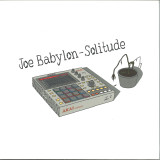
California's Joe Babylon has been steering his own Roundabout Sounds through some lovely deep house waters over the last few years. Now the producer makes a big statement with his own debut album. He is something of a veteran having co-founded Plug Research back in 1994 and hosted underground events in Los Angeles during the mid '90s. Following on from outings alongside the likes of Rick Wilhite and Rondenion he now brings his own dusty, carefully disheveled house sounds to the fore. They have been crafted using an MPC which gives them their rough-edged appeal and they go from heads down back room joints to dubbed-out minimalism via dream late-night reveries. It makes for a fresh take on a tried and tested house template.
The story of the invention of the term, 'deepfunk' is probably only known among fans and practitioners of this niche-genre. In short, it all started in the 1990s when DJs like Keb Darge, Mark 'Snowboy' Cotgrove and others began spinning obscure and feral Funk 45 RPM singles from local American bands, ostensibly generating another sub-category branch off of the mighty Northern Soul tree. The dance-club phenomenon inevitably spilled over to contemporary groups on the funk scene which immediately tried to record their music the way their idols did. The 'rare groove' and 'acid jazz' movements had run their course and there was a concerted effort to reinstate primitive idiomatic styles and techniques into the music, most notably by 90s funk collective The Poets of Rhythm. As more years passed by the number of bands steadily increased (although in tiny numbers, compared to the mainstream market). Almost every country had a representative with the majority of them coming from the United Kingdom. The deepfunk sound was still a niche, however a very few bands made it onto the mainstream charts, most notably Sharon Jones & the Dap Kings.
At the height of the retro-soul movement a questionable development took place. As more bands arrived on the scene, the production became more and more polished and pop-ish. Some of that squeaky-clean tidiness began to creep into the recordings, encouraged in part by the signature sounds of the digital recording technology available at that time. Some bands even tried to jump onto the possibility of promoting their music as 'deepfunk' although they were actually playing slick, funky pop music. This way some people who thought they were listening to raw, energetic funk actually felt quite ambushed when hit with real deepfunk. In fact, a certain percentage of funk music produced within the past 20 years does not deserve to be described as 'deepfunk' at all. Fortunately there were (and are) some pleasant exceptions which did not just imitate but actually rendered amazing funk music just like some of the finest funk combos of the 1960s and 70s.
One of those creative minds is without a doubt Joel Ricci aka Lucky Brown. Originally from Seattle, Washington, USA, he has enriched the deepfunk community since the mid-2000s with his stellar abilities. He is not only an amazing musician playing multiple instruments, but also a brilliant composer, arranger, and producer too. But for us here at Tramp he is much more, a close friend and remarkable human being. Whenever we were struggling, whether with the label or in private life, Joel and his musical work helped us to overcome everything and to keep going our path.
So here we are in 2023. The songs you are listening to right now are the complete Space Dream collection, split into two parts, representing the two living-room recording sessions from which his 2011 Tramp Records debut was compiled. Each fully remastered album contains unreleased material and comes with brand new, beautifully reimagined artwork by Ricci himself, housed in an authentic 1960s tip-on cover. A first class product from a first class musician for the discerning funk enthusiast.
The story of the invention of the term, 'deepfunk' is probably only known among fans and practitioners of this niche-genre. In short, it all started in the 1990s when DJs like Keb Darge, Mark 'Snowboy' Cotgrove and others began spinning obscure and feral Funk 45 RPM singles from local American bands, ostensibly generating another sub-category branch off of the mighty Northern Soul tree. The dance-club phenomenon inevitably spilled over to contemporary groups on the funk scene which immediately tried to record their music the way their idols did. The 'rare groove' and 'acid jazz' movements had run their course and there was a concerted effort to reinstate primitive idiomatic styles and techniques into the music, most notably by 90s funk collective The Poets of Rhythm. As more years passed by the number of bands steadily increased (although in tiny numbers, compared to the mainstream market). Almost every country had a representative with the majority of them coming from the United Kingdom. The deepfunk sound was still a niche, however a very few bands made it onto the mainstream charts, most notably Sharon Jones & the Dap Kings.
At the height of the retro-soul movement a questionable development took place. As more bands arrived on the scene, the production became more and more polished and pop-ish. Some of that squeaky-clean tidiness began to creep into the recordings, encouraged in part by the signature sounds of the digital recording technology available at that time. Some bands even tried to jump onto the possibility of promoting their music as 'deepfunk' although they were actually playing slick, funky pop music. This way some people who thought they were listening to raw, energetic funk actually felt quite ambushed when hit with real deepfunk. In fact, a certain percentage of funk music produced within the past 20 years does not deserve to be described as 'deepfunk' at all. Fortunately there were (and are) some pleasant exceptions which did not just imitate but actually rendered amazing funk music just like some of the finest funk combos of the 1960s and 70s.
One of those creative minds is without a doubt Joel Ricci aka Lucky Brown. Originally from Seattle, Washington, USA, he has enriched the deepfunk community since the mid-2000s with his stellar abilities. He is not only an amazing musician playing multiple instruments, but also a brilliant composer, arranger, and producer too. But for us here at Tramp he is much more, a close friend and remarkable human being. Whenever we were struggling, whether with the label or in private life, Joel and his musical work helped us to overcome everything and to keep going our path.
So here we are in 2023. The songs you are listening to right now are the complete Space Dream collection, split into two parts, representing the two living-room recording sessions from which his 2011 Tramp Records debut was compiled. Each fully remastered album contains unreleased material and comes with brand new, beautifully reimagined artwork by Ricci himself, housed in an authentic 1960s tip-on cover. A first class product from a first class musician for the discerning funk enthusiast.
SuperBlue: The Iridescent Spree is the electrifying new album from jazz legends Kurt Elling and Charlie Hunter, following the success of their eponymous Grammy-nominated debut and acclaimed EP Guilty Pleasures featuring Nate Smith. With a vocal range that seamlessly blends jazz, R&B, and funk, Elling is a virtuosic showman and deep collaborator with a comedic edge. Hailed by The Washington Post as the most daring, dynamic, and interesting singer in jazz since the mid-1990s, he and Hunter have pushed the boundaries of jazz and lyrics to create a one-of-a-kind sound that is uniquely their own. Teaming up with hip-hop masterminds Corey Fonville and DJ Harrison (Butcher Brown), Elling and Hunter showcase their virtuosity, showmanship, and musicianship to offer a deluge of roisterous funk, indelible beats, and all-too-current lyrics that will have you grooving like never before. SuperBlue is more than just another jazz album. It's a punch in your face, take no prisoners masterpiece that showcases the sheer talent, passion, and unpredictability of these extraordinary musicians. Get ready to be blown away by the brilliance of Kurt Elling and his collaborators in this groundbreaking project!
Woods are in bloom again, inviting you to disappear into a new spectrum of colors and sounds and dreams on Perennial. Formed in Brooklyn in 2004, Woods have matured into a true independent institution, above and below the root, reliably emerging every few years with new music that grows towards the latest sky. Operating the Woodsist label since 2006 and curating the beloved homespun Woodsist Festival for the musical universe they’ve built, Perennial is the sound of a band on the edge of their 20th anniversary and still finding bold new ways to sound like (and challenge) themselves. Perennial grew from a bed of guitar/keyboard/drum loops by Woods head-in-chief Jeremy Earl, a form of winter night meditation that evolved into an unexplored mode of collaborative songwriting. With Earl’s starting points, he and bandmates Jarvis Taveniere and John Andrews convened, first at Earl’s house in New York, then at Panoramic House studio in Stinson Beach, California, site of sessions for 2020’s Strange To Explain. With a view of the sparkling Pacific and tape rolling, they began to build, jamming over the loops, switching instruments, and developing a few dozen building blocks. The album’s resulting 11 songs, 4 of them instrumental, are in the classic Woods mode--shimmering, familiar, fractionally unsettling--but with the half-invisible infinity boxes of Earl’s loops burbling beneath each like a mysterious underground source. From source to seed to bloom, each loop unfolds into something unpredictable, from the jeweled pop of the aching “Little Black Flowers” to the ecstatic starlit freak-beat of “Another Side.” They are blossomings both far-out and comforting, like the Mellotronic cloud-hopping of “Between the Past,” or sometimes just plain comforting, like the widescreen snowglobe fantasia of the instrumental “White Winter Melody,” touched by Connor Gallaher’s pedal steel. Woods have long used the studio as a place of songwriting, naming 2007’s At Rear House after their shared dwelling and recording space. But Perennial also carries with it an even longer view of Woods. Emerging from the process alongside the music was Earl’s reflection that “perennial plants and flowers are nature’s loops,” an idea rolling under the album’s lyrics like the loops themselves. It certainly applies to the band, too, who have quietly tended to a long, committed project of being a band in the weird-ass 21st century, both individually and communally. Though separated by coasts, the communal sprit carries through Earl, Taveniere, and Andrews’ collaboration, a living embodiment of the freedoms rediscovered every time a new collectively created piece of music emerges. For nearly two decades, Woods have survived subgenres, anchored in the fertile soil below hashtags like lo-fi and freak-folk and psychedelic and indie, and built a shared history that’s something to marvel at. As the flagship band for Woodsist, they’ve accumulated a striking extended family of collaborators (and Woods alum) that have made the label one of the most dependable imprints in the kaleidoscopic low-key underground. It’s a glow that’s transferred whole to the blissed-out Woodsist Fests held in Accord, New York in recent years, which have folded in a wide range of diverse sounds, from the the jazz cosmoverse of the Sun Ra Arkestra and adventurous legends Yo La Tengo, to a hard-to-even-count family tree of contemporaries, like Kevin Morby (who served a few tours of duty as Woods bassist) and Kurt Vile (who released his 2009 debut on Woodsist), a living community in sound. Perennial carries all of this, shaped by decades, but made in the moment, and here right now. The smell of the flowers doesn’t remain, but sometimes the flowers do. Jesse Jarnow Recorded and mixed by Jarvis Taveniere at Panoramic House in Stinson Beach, CA with additional recording at The Ship in Los Angeles, CA and Cottekill Bird Sanctuary in Stone Ridge, NY. Produced by Jarvis Taveniere and Jeremy Earl. Mastered by Timothy Stollenwerk at Stereophonic Mastering in Portland, OR. Jeremy Earl - vocals, guitars, drums, percussion, sk-5, mellotron, vibraphone, autoharp, loops Jarvis Taveniere - guitar, bass, upright bass, hammond, vocals John Andrews - piano, organs, mellotron, drums, vocals Connor Gallaher - Pedal Steel Kyle Forester - sax, wurlitzer
2023 Repress
The most obscure and sought after italian electronic release, but also another extraordinary 70s output from the legendary Regson Studio of Milan (remembering in 1976 "Funky Bump" and a year later "Disco Shitan", both produced by Pino Presti). The eclectic brother of Vangelis (chit> he was playing keyboards like him), helped by Yorgos Pentzikis for the "vocoder" vocals, reached the right sound for one of the craziest electronic disco song now available for for the first time on 12, containing also the unreleased instrumental version. Nikos Papathanassiou in 1976 achieving success with the disco-hit "U" by Chrisma, but Maurizio Arcieri (cousin of Pino Presti and Chrisma's leader), moved towards new-wave and punk. So for the orchestral conducting of a new cosmic-disco project titled MoreI Like It he involved Rodolfo Grieco who later produced in the emerging genre of Italo-Disco great classics like "Going Crazy" by Lily Ann."
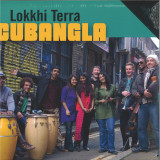
Funkiwala Records presents CUBANGLA - the sixth album by London fusionistas LoKkhi TeRra.
Following on from their hugely successful collaboration with UK afro-beat ambassador Dele Sosimi on 2018's "Cubafrobeat"(mixing afrobeat and Cuban Rumba/Timba), this album sees them return to their Bangla-Afro- Latin-Jazz-Roots.
8 tracks of 21st century London groove – from Sufi Samba to Baul Blues to Bengali folk-Son to Bangla Roots Reggae to London Descargas - recorded in between tours, sessions and collaborations – a true celebration of traditions taking on new forms as they travel and co-exist. In these divided times, their collective musical journey has never been so relevant.
Background
Kishon Khan's Lokkhi Terra have been blending the musical traditions that surround them in London, for many years now.
"Stunning Headliners... A majestic multi-cultural blend of sounds... effortlessly builds bridges between rolling Indian raga rhythms, Afro-Cuban grooves, Acid Jazz/funk and free flowing improvisation" (Timeout London).
The band is composed of musicians who take seriously the different languages of the different genres they mix. Each in their own right play with calibre purist outfits. Members have collaborated with the likes of Hugh Masekela, Tony Allen, Ibrahim Ferrer, Johnny Clarke, Orlando Poleo, Africa Express, Jazz Jamaica, Ska Cubano, Giles Peterson's Havana Cultura, Kyle Eastwood, Bellowhead, Akram Khan to name a very few.
The tracks on this album were gigged for a number of years before being recorded, with the exception of the last 2 tracks which were recorded in 2015 just before performing at Womad and Songlines Encounters.
With CUBANGLA the band has come round full circle – a journey that started a decade ago with their debut No Visa Required (2010). An urban London view on the musical world.
On our latest Mojuba sublabel Frekoba, we welcome JJ, a friend of ours who we love for his unique approach to a truly diverse colorful palette of club tracks on his debut for us called OOPS! So what do these four tracks sound like?
Imagine a night at a club like Panorama Bar where Soundstream, Lil Silva & Errorsmith are having a blast. Now you are in the right zone to have fun with JJ's debut 12". House, Disco, UK funky and off-kilter cut-up grooves for your enjoyment, have fun!
Fortunea Records continues its release schedule of 2023 with the 4th edition of their VA-series ‚Fortunea Cookies‘ to highlight the status quo in Austrian house music.
A band that is generating buzz in this country right now is Spitting Ibex. Their music is a mixture of funk and heavy rock, in the style of Red Hot Chili Peppers, Prince and Rage Against The Machine. Currently they are touring with their brand-new album ‚E.G.O.‘ through Europe and Peletronic had the honor to remix the title-track of their
previous record ‚Love Hate Fear Fate‘. In this ‚Disko Miks’ he transforms the song into a driving house weapon.
In 2021 Nick Hanzo released his ‚Candy Places‘ EP. And on this record was a memorable abstract lo-fi house track called ‚Saturn Nate’ that gets on FC4 a treatment by Klaus Benedek. In this new version he accelerates the speed and focuses even more on the aspect of space travel with the addition of sound fx, pads, pianos and a Italo disco-inspired baseline.
Of course this release has not only remixes of previous tracks, but also 2 originals!
The B-side features Dzc. again with her ‚Expressions‘ of night culture. Caution! This will catapult the crowd up to new heights. An energetic peak-time tune that delves deep into 90s house and trance sonic images.
And finally Markus Quittner returns from Linz and brought his ‚Game‘ to the table. A board full of bouncing dices, strong drum patterns and funky orchestrations. A pleasure for the ears.
Fortunea Cookies Vol. 4 will come out this summer on white limited vinyl. Don’t sleep on this!
One of Death Metal's biggest bands, DYING FETUS return with their highly anticipated new album, Make Them Beg For Death. Recorded in Baltimore with longtime producer Steve Wright and mixed by Mark Lewis (Cannibal Corpse), Make Them Beg For Death contains every DYING FETUS hallmark. The veteran Death Metal band’s ninth album is fast, intense, and brimming with unstoppable grooves. Monstrous riffs, blast beats, unstoppable hooks, and earth-moving grooves define their catalog. “We put our own twist on Death Metal,” explains co-vocalist/guitarist John Gallagher. “We were like most bands, starting in the garage, drinking beer, having a little fun on the weekend, finding the right amps through trial and error. We blended aspects of bands we liked – Suffocation, Obituary, Deicide, and Cannibal Corpse, among others; the dual vocal approach of Carcass – and made them our own. ‘Let’s make it moshy, let’s make it slammy.’” Make Them Beg For Death delivers savage beatdowns equally designed to pulverize and mesmerize. “It follows on from where Wrong One To Fuck With left off,” drummer Trey Williams promises. “We don’t need to participate in the technical death metal arms race. We’ve got the big guns, and we’ve proven that. It’s all about pointing them in the right direction, so to speak.” To the men of DYING FETUS, the mission is straightforward. “The philosophy is the same now as it was when the band started,” Gallagher confirms. “To write catchy riffs and to make it memorable. Whatever style of music you’re doing, make it something people want to hear repeatedly.”
Recorded in 1995 and 1996, mostly in John Fahey"s room at a Salem, Oregon boardinghouse, the performances on Proofs and Refutations prefigure the ornery turn of the page that marked Fahey"s final years, drawing another enigmatic rabbit from his seemingly bottomless musical hat. Cloaked in the language of dogma - what is he proving? refuting? - this is Fahey dancing a jig in the Duchampian gap, jester cap bells a-jingling. True believers? He"s got something for you: an uncompromising vision that you can sneer at ("guy can"t play anymore and refuses to concede!") or embrace as evidence of his genius ("the reinventor does it again!"). Skeptics? He"s there with you, too: sending up the fallacy of certitudes altogether. Institutions, systems, accepted wisdoms. Heroes. Alternative facts, indeed. Right out of the gate, Fahey re-materializes before us, somewhere between Oracle of Delphi and Clown Prince at Olympus. Mounting a thundering dialectic from on high, "All the Rains" resembles nothing else in his extensive discography - betraying roots in everything from Dada to Episcopal liturgical chant - and contains nary a plucked guitar note. You can"t fool him! When the lap steel of yore appears on "F for Fake," it serves more as soundbed for an extended sequence of vocal improvisations, running the gamut from wordless Bashoian caterwauling to free-form (but decidedly fake) Tuvan, even revealing a burnished falsetto in the process. Fahey takes on a different kind of provocation in the two acoustic guitar-based tracks closing Side 1 - "Morning" parts 1 and 2 - the first of 4 recordings in this session that have him wrestling with the ghost of Skip James, perhaps Fahey"s effort to wrench the "bitter, hateful old creep" (his words) back into the grave. Anchoring Side 2 is the two-part "Evening, Not Night," the second half of his extended cathexis on James (and the latter"s avowed castration complex - another story for another day, perhaps). Bit of a chill in the air - where"s the impish Fahey from earlier? Unmistakably working through some psychic wounds here, we might think: the unheimlich rendered in glistening viscera. Or is he playing with our notions of authenticity, of his reputation as troubadour of raw emotional states, a pilgrim of the ominous, the simmering unconscious? These cards are kept decidedly close to the vest. The opening and closing pieces again feature Fahey"s guitar as drone soundbed - employing distortion, oscillation, and an altogether absurd quotient of reverb to create texture and harmonics that are - if we wanna go there - not dissimilar to the sustained tonic clusters of Tibetan singing bowls, the hurdy gurdy, Hindustani classical music, or La Monte freaking Young. Portions of this material appeared on obscure late "90s vinyl in the 7" or double-78 rpm format, but as a "session" it has lain dormant more than a quarter century now. Taken together, we can now see these tracks as secret blueprints to latter-day Fahey provocations, several years prior to records like 1997"s City of Refuge and Womblife.
Today, Anjimile Chithambo, better known as Anjimile, announces his new album, The King, out September 8th, his first full-length since 2020’s breakthrough Giver Taker. To herald the announcement, he shares lead single, ‘The King’, accompanied by a visualiser by Daniela Yohannes, whose striking painting takes centre stage on the album cover.
Highlighting the artistic shift from Giver Taker to now, ‘The King’ opens with a lofty, melodic choir, an intro that belies the song’s motives. Suddenly, sinister arpeggios interrupt the reverie, and the voices grow darkly serious. Deeply steeped in the confusion, grief, and rage of being Black in America, ‘The King’ pushes back against the tired adage, “what doesn’t kill you makes you stronger,” hissing, “What don ’t kill you almost killed you// What don’t fill you//pains you// drains you.”
“If Giver Taker was an album of prayers, The King is an album of curses.” In his second album, Anjimile continues exploring what it means to be a Black trans person in America. The brutally honest reflection of 2020’s deadly summer is less reminiscent of the pink cloud of early sobriety and more rooted in the reality of seeing brutality with clear eyes. Drawing from influences ranging from religion, Phillip Glass, and lived experiences, the album is a grand step forward for Anjimile. Nearly every sound you hear on The King comes from two instruments: an acoustic guitar and Anjimile’s own voice. Other than a few beautiful contributions from Justine
Bowe, Brad Allen Williams, Sam Gendel, and James Krivchenia (Big Thief), the album is the result of a year in LA working intimately with Grammy and Juno winner Shawn Everett.
Today, Anjimile Chithambo, better known as Anjimile, announces his new album, The King, out September 8th, his first full-length since 2020’s breakthrough Giver Taker. To herald the announcement, he shares lead single, ‘The King’, accompanied by a visualiser by Daniela Yohannes, whose striking painting takes centre stage on the album cover.
Highlighting the artistic shift from Giver Taker to now, ‘The King’ opens with a lofty, melodic choir, an intro that belies the song’s motives. Suddenly, sinister arpeggios interrupt the reverie, and the voices grow darkly serious. Deeply steeped in the confusion, grief, and rage of being Black in America, ‘The King’ pushes back against the tired adage, “what doesn’t kill you makes you stronger,” hissing, “What don ’t kill you almost killed you// What don’t fill you//pains you// drains you.”
“If Giver Taker was an album of prayers, The King is an album of curses.” In his second album, Anjimile continues exploring what it means to be a Black trans person in America. The brutally honest reflection of 2020’s deadly summer is less reminiscent of the pink cloud of early sobriety and more rooted in the reality of seeing brutality with clear eyes. Drawing from influences ranging from religion, Phillip Glass, and lived experiences, the album is a grand step forward for Anjimile. Nearly every sound you hear on The King comes from two instruments: an acoustic guitar and Anjimile’s own voice. Other than a few beautiful contributions from Justine
Bowe, Brad Allen Williams, Sam Gendel, and James Krivchenia (Big Thief), the album is the result of a year in LA working intimately with Grammy and Juno winner Shawn Everett.