
quête:the s o s band


9
After a first album released in 2019 on the labels Stereophonk (France) and P-Vine Records (Japan), The Selenites Band are back with a new recording, Behind The Mask.
The Selenites Band is a French music group created in 2018 around the artist and musician Obi Riddim. Drawing the sources of its music from the Ethiopian music of “Swinging Addis”, Ethio-jazz, but also rock, Afro-jazz or psychedelic grooves.
After playing the “classics” of Mulatu Astatke or Girma Bèyènè, the band offers us nine new songs. Original compositions where we find the melodies and rhythms of the Ethiopian music of “Swinging Addis” mixed with their kraütrock influences, psychedelic music and afro jazz. An atmosphere of trance on bewitching Ethiopian scales, tracks that invite you to travel and explore.
Recorded during the pandemic, between two confinements and successive curfews, in a vital impetus, this album sounds like the big need to create.

Mali Hayes has been simmering to the surface for a while now. Emerging from a Manchester jazz community that's enjoying its own renaissance away from the much-reported on London scene, the vocalist and songwriter's bittersweet neo-soul sound is trans-Atlantic – think initial progenitors such as Erkyah Badu, D'Angelo and Jill Scott – but is rooted in Manchester's mixed communities and the different walks of life she encounters.
Forgive You / Come Closer – owes itself to Gilles Peterson and Brownswood Music's Future Bubblers programme, when Hayes met producers Cult Architect and Medikul while part of the mentorship scheme. Airplay from Gemma Bradley, Victoria Jane & Mo Ayoub on Radio 1, Jamz Supernova & Gilles Peterson on BBC Radio 6, Victoria Jane on BBC Introducing, Jamz Supernova on Selector Radio. Features in Clash Magazines 'Next Wave' playlist and Spotify's 'Rhythm & Groove by DJ Taro' playlist.
The two tracks come out as part of a new series of 7" releases from Manchester institution Band on the Wall and their new label Band on the Wall Recordings. Based out of the iconic music venue, charity and cultural hub, the label builds on a successful compilation released to raise funds during the Covid-19 pandemic

NMB are releasing their much-anticipated fourth album, “Innocence & Danger”, on 27th August 2021. The band comprise Neal Morse, Mike Portnoy, Randy George, Bill Hubauer & Eric Gillette. With NMB’s previous two releases being concept albums, it’s perhaps remarkable that “Innocence & Danger” is a series of unrelated songs, but drummer Mike Portnoy says “After two sprawling back to back double concept albums in a row, it was refreshing to get back to writing a collection of unrelated individual songs in the vein of our first album.” Six years on from “The Grand Experiment”, Morse is more enthusiastic than ever about the talents and contribution of his fellow band members on “Innocence & Danger”: “The band is really so extraordinary – and is such an amazing team: Mike’s drums are huge, Randy’s bass playing is an ever-solid foundation and Eric’s vocals are becoming crazy good now: often I’ll sing the verse, Eric sings the chorus, Bill sings the bridge and Eric will bring it home. It seems to work really, really well. And both Bill and Eric’s soloing is amazing: they have really hit it out of the park on this record.” Available on Ltd 2CD+DVD Digipak (feat. ‘Making Of’ Documentay), Standard 2CD Jewelcase, 3LP+2CD Boxset & as Digital Album.
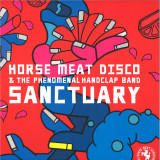
Horse Meat Disco deliver the latest single from their acclaimed debut album ‘Love & Dancing’, this time made in collaboration with NYC group The Phenomenal Handclap Band. ‘Sanctuary’ sees the quartet at their disco dancefloor-ready best, as The Phenomenal Handclap Band provide a dose of deliciously cool nonchalance. Fuelled by hefty analogue muscle, funky guitar riffs, 70s synthesizers and glowy vocals ‘Sanctuary’ makes for an irresistible modern disco number. Ray Mang makes an appropriate remixer for the package, his amalgamative style of boogie, disco, dub and house a perfect fit for Horse Meat Disco and The Phenomenal Handclap Band’s collaboration, providing both a remix and Dubstrumental for the package. ‘Sanctuary’ is an unmissable release for any modern day, discerning disco listener that you’ll want to hear again and again.
9
From their genesis as members of the Venus club in-house band in the early 70s, Hailu Mergia and the Walias Band were at the forefront of the musical revolution during an era where modern instruments and foreign styles superseded the traditional fare to become the staple sound of Ethiopia. No one would argue that the Walias were the trailblazing powerhouse of modern Ethiopian music. They were the first band to form independently without affiliation to a theatre house, a club or a hotel; unprecedented and risky as they had to raise all funding for expenses by themselves including buying equipment. They were the first to release full instrumental albums, considered to be commercially unviable at the time. They opened their own recording studio, with band members Melake Gebre and Mahmoud Aman doubling as technical buffs during sessions. They were also the first independent band to tour abroad. In short, they were the pioneers every band tried to emulate; some more successfully than others.
Odds are, any Ethiopian over the age of 35 who had access to TV or radio by the early 90s, will instantly recognize the sound of Walias. What is not a given is, how many would actually identify the band itself. Barely a day went by without hearing the Walias either in the background on radio or as an accompaniment to various programs on TV.
This Tezeta album, the band’s second recording, released in 1975, is one of those that have been impossible to find for nearly three decades. Sourced by Awesome Tapes From Africa and expertly remastered by Jessica Thompson, its unique and funky renditions of standards and popular songs of the day are so quintessentially Walias, flavorful and evocative. Hailu's melodic organ, unashamedly front and center in every track, makes even the complex pieces accessible.
Profoundly engaging; it's an immersive trip down memory lane for those of us getting reacquainted with it, while also an enthralling and gratifying experience for fresh ears.
Virtually unknown recording outside Ethiopia.
Documents Mergia & Walias legendary early period.
Follow-up to reissue of hugely popular seminal Ethiopian instrumentals LP Tche Belew (ATFA012)
Cassette-only, released in 1975 on the band’s in-house label to fund their record store.
Beautifully-rendered instrumentals of classic Ethiopian standards.

In their 6 years on air, Flip The Script Radio has become the industry standard, the go-to radio show where fans and industry heads alike flock to hear the next hip hop superstars before they blow up. Steeped in the rich history of the scene, FTSR's focus on real MCs, genuine turntablism and their 'do it for the culture' approach has garnished them praise from every corner of the hip hop universe.
To celebrate their 6 Year Anniversary, Flip The Script Radio has joined forces with Good For You Records and one of the greatest MCs of all time for a very special, limited edition 7" release. We are beyond excited to present this work of art by a cultural icon, one of the best lyricists of all time, Grand Puba. This special edition vinyl release revisits one of Puba's most beloved classics "I Like It", reinvented with an 8 piece band, an acoustic version, featuring freshly re-spit verses by the rap legend himself, breathing new life into this crowd favourite.

9
Re-mastering by: Cicely Baston at Alchemy/Air Mastering, London
Electric blues guitarist Melvin Taylor had been sporadically recording solo albums for 20 years when Dirty Pool arrived — and was somehow just beginning to find fame. Already a hit in Europe, it had taken a steady run of performing in Chicago’s famed blues clubs to slowly earn Taylor a well-deserved reputation as an equal talent among the giants before him, such as Otis Rush, Albert King and Stevie Ray Vaughan.
While early records like Melvin Taylor Plays the Blues For You show off an equally amazing jazz side, Taylor traded away his Wes Montgomery-inspired runs for more Luther Allison/Jimi Hendrix attacks with the formation of the trio Melvin Taylor and the Slack Band in the mid ’90’s.
The title song of the second album by that outfit, “Dirty Pool,” is actually more the balls-to-the-wall, no-compromise, hard-rockin’ electric Texas blues of Vaughan and Johnny Winter than the sweet Chicago soul of Buddy Guy.
Indeed, three tracks on this 1997 release, including “Dirty Pool,” were SRV tunes. Other standards, like “Kansas City” and “Floodin’ in California” also have more of a Lone Star State approach to them. But the Jackson, Miss.-born Taylor’s guitar is cleaner than his forebears and technically, he even surpasses them, yet the anger and sorrow of the blues is readily evident in his playing.
This rare combination of qualities really comes out in a slow blues tune like his solo in “Dirty Pool,” which after repeated listens, still makes me head shake in disbelief when I hear it.
“Too Sorry” is a good example of how well Taylor fares when he treads in Jimi Hendrix territory, whereas his rhythm work is the best I’ve heard from a lead guitarist since Vaughan; listen to “I Ain’t Superstitious,” “Born Under A Bad Sign” and the funky “Telephone Song” for your proof.
It also helps that Taylor’s drummer James Knowles is well in synch with him, while Ethan Farmer completely owns the low end of the sound. Farmer’s peppering bass lines in and “Floodin’ in California” is the textbook way electric blues bass should be. Overall, a tight little band.
Taylor’s vocals certainly won’t draw any comparisons to the Wide-Brimmed–Hatted One but he holds his own just fine until it’s cuttin’ time. This is right at the top of my list of best blues guitar playing on record over the last couple of decades. If you decide to give this one a listen, prepare to be blown away.
9
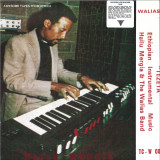
From their genesis as members of the Venus club in-house band in the early 70s, Hailu Mergia and the Walias Band were at the forefront of the musical revolution during an era where modern instruments and foreign styles superseded the traditional fare to become the staple sound of Ethiopia. No one would argue that the Walias were the trailblazing powerhouse of modern Ethiopian music. They were the first band to form independently without affiliation to a theatre house, a club or a hotel; unprecedented and risky as they had to raise all funding for expenses by themselves including buying equipment. They were the first to release full instrumental albums, considered to be commercially unviable at the time. They opened their own recording studio, with band members Melake Gebre and Mahmoud Aman doubling as technical buffs during sessions. They were also the first independent band to tour abroad. In short, they were the pioneers every band tried to emulate; some more successfully than others.
Odds are, any Ethiopian over the age of 35 who had access to TV or radio by the early 90s, will instantly recognize the sound of Walias. What is not a given is, how many would actually identify the band itself. Barely a day went by without hearing the Walias either in the background on radio or as an accompaniment to various programs on TV.
This Tezeta album, the band’s second recording, released in 1975, is one of those that have been impossible to find for nearly three decades. Sourced by Awesome Tapes From Africa and expertly remastered by Jessica Thompson, its unique and funky renditions of standards and popular songs of the day are so quintessentially Walias, flavorful and evocative. Hailu's melodic organ, unashamedly front and center in every track, makes even the complex pieces accessible.
Profoundly engaging; it's an immersive trip down memory lane for those of us getting reacquainted with it, while also an enthralling and gratifying experience for fresh ears.
Virtually unknown recording outside Ethiopia.
Documents Mergia & Walias legendary early period.
Follow-up to reissue of hugely popular seminal Ethiopian instrumentals LP Tche Belew (ATFA012)
Cassette-only, released in 1975 on the band’s in-house label to fund their record store.
Beautifully-rendered instrumentals of classic Ethiopian standards.

10
These tracks were recorded early-to-mid `74, almost a year after the band had formed and almost 2 1/2 years before the release of the first Saints` single in 1976. The recording was made in Ed Kuepper`s parents` garage, except for "Misunderstood" which was recorded at Queensland University, direct onto a mono cassette-deck and features the second line-up of the band. Before this the Saints were a 3-piece, with Ivor Hay on piano and no drummer. It captures the band near the beginning of its first phase, as opposed to the EMI release which was at the end, and without getting into a debate about aesthetics, this one`s probably better. In a different universe this would have been the first Saints LP.

9
Unknown recording outside Ethiopia which documents Mergia Hailu & The Walias legendary early period. Beautifully-rendered instrumentals of classic Ethiopian standards, "Tezeta"is the follow-up reissue of the hugely popular seminal Ethiopian instrumentals LP "Tche Belew" (ATFA012). It was a Cassette-only release in 1975 on the band's in-house label, to fund their record store. From their genesis as members of the Venus club in-house band in the early 70s, Hailu Mergia and the Walias Band were at the forefront of the musical revolution during an era where modern instruments and foreign styles superseded the traditional fare to become the staple sound of Ethiopia. No one would argue that the Walias were the trailblazing powerhouse of modern Ethiopian music. They were the first band to form independently without affiliation to a theatre house, a club or a hotel; unprecedented and risky as they had to raise all funding for expenses by themselves including buying equipment. They were the first to release full instrumental albums, considered to be commercially unviable at the time. They opened their own recording studio, with band members Melake Gebre and Mahmoud Aman doubling as technical buffs during sessions. They were also the first independent band to tour abroad. In short, they were the pioneers every band tried to emulate; some more successfully than others. Odds are, any Ethiopian over the age of 35 who had access to TV or radio by the early 90s, will instantly recognize the sound of Walias. What is not a given is, how many would actually identify the band itself. Barely a day went by without hearing the Walias either in the background on radio or as an accompaniment to various programs on TV. This Tezeta album, the band's second recording, released in 1975, is one of those that have been impossible to find for nearly three decades. Sourced by Awesome Tapes From Africa and expertly remastered by Jessica Thompson, its unique and funky renditions of standards and popular songs of the day are so quintessentially Walias, flavorful and evocative. Hailu's melodic organ, unashamedly front and center in every track, makes even the complex pieces accessible. Profoundly engaging; it's an immersive trip down memory lane for those of us getting reacquainted with it, while also an enthralling and gratifying experience for fresh ears.

12
In the midst of a global pandemic John Hiatt
walked into Historic RCA Studio B and opened up
a lifetime full of leftover feelings. A half-century
ago, Hiatt lived in a ratty, $15-a-week room on
Nashville’s 16th Avenue, less than a mile away
from the RCA and Columbia studios that were the
heartbeat of what had come to be known as ‘Music
Row’. In the ensuing 50 years, he went from a
scuffling young buck to a celebrated grand master
of song.
With ‘Leftover Feelings, Hiatt teamed up with multiGrammy winning artist and producer Jerry Douglas
and his band, The Jerry Douglas Band. There’s no
drummer, yet these grooves are deep and true.
And while the up-tempo songs are, as ever, filled
with delightful internal rhyme and sly aggression,
the Jerry Douglas Band’s empathetic musicianship
nudges Hiatt to performances that are startlingly
vulnerable.
In life, leftover feelings can remain unresolved, no
matter how often explored. Explicated in a place of
history, a place of comfort. A sacred place, if you
believe the documentation of human expression to
be a holy thing. Here then, with this album, there is
a meeting of bruised and triumphant American
giants. Here are Hiatt and Douglas, creating the
meant-to-be: Love songs and road songs, sly
songs and hurt songs. Their songs and now our
songs. Leftover feelings that edify and sustain.

10
Mother Freedom Band’s Cutting The Chord is a funky modern soul classic. It’s both a criminally under-appreciated album and a hard-to-find record so we’re delighted to be giving this sweet disco-funk groover the reissue treatment it deserves.
Produced by the great Al Goodman from The Moments and originally released in 1977, Cutting The Chord seems to be one of the lesser known releases on the curious, and often great “All Platinum” label. Other than a 7" of a couple of these tracks, the only thing that the band seem to have released is this album, and what an album it is. Unbeatable soul-funk of the highest quality.
The album bursts open with “Love Will Stay In Your Corner”. It’s a soulful dancer that reliably slays any funk set you care to drop it in. It’s followed by the lithe disco funk “Flick Of The Wrist” that’s all bubbling baselines and elegant horns. The groovy, horn-enhanced sweet soul of “Gotta Get It Back” is equal parts heartbreaker/hip-shaker and the acidic organs on “Mr Brother” are an experiment in synth soul.
Perhaps the group’s best known track, “Beautiful Summer’s Day” might well be worth the price of an original copy alone. It’s pure piano-driven paradise soul. A tropical birdsong intro sets the scene of a warm, perfect sunshine day and the lead vocal soars over the lush, clean production. The tempo oscillates between contemplative and stomping. Essential.
The brilliantly-named “(Assistants Rag) When You’re Hot, You’re Hot” opens side two. Another huge highlight, its title refrain repeated over this laid-back, power-funk workout. It still sounds incredibly modern, like something off the last D’Angelo record, and if Public Enemy and Diamond D both sampled it you know it knocks hard.
The horn-heavy, clav-stabbing-stomper “We Like To Boogie” keeps things fast and funky before the airy, heavenly harmony soul of “Come On Home” mellows us all out. Things pick up again with “Touch Me”, and you might recognise its addictive elements sampled in Jay-Z’s Kanye West-produced “A Star Was Born”. The magical, reggae-tinged, gospel-influenced “Sweet Love” closes out this assured, classy set.
We dare to say that Cutting The Chord is a rare example of a funk-soul LP which is killer from start-to-finish. Sure, there are the stand-out bombs, but the whole thing is a complete and varied album of feel-good vibes held together by its fluid horns, tight, tight rhythm section and beautiful vocals.
Mastered for vinyl from the original analogue tapes by Simon Francis, cut by Pete Norman and artwork restored at Be With HQ, this new edition should hopefully stop this album slipping any further into obscurity. It’s just too good to be forgotten.

"Matasuna" brings together two important pioneers of funk on its latest release: "The Meters" from "New Orleans"and "The Watts 103rd Street Rhythm Band" from "Los Angeles". The song "Giggin' Down 103rd" by "The Watts 103rd Street Rhythm Band" was first released as a single in 1968 (as Misspress) and is now available again for the first time. The song "Sing A Simple Song" by "The Meters" even premieres as a 45! Both tracks have been remastered to offer the best possible sound.
The A-side opens with "Sing A Simple Song" by "The Meters", a cover version of a song by "Sly & Family Stone" written by "Sly Stone". In direct comparison, "The Meters" cover sounds much more energetic and powerful. The ingredients are simple but effective: heavy drum breaks, funky guitar riffs, deepe bassline and a lively organ. A killer instrumental joint that exudes roughness & funkyness from the first second to the last!
On the flipside "The Watts 103rd Street Rhythm Band" follows up in similar fashion with the song "Giggin' Down 103rd". Instead of an organ like "The Meters", the band offers a super thight horn section backed by killer drums, guitars & bass. A special spicy recipe that thematically fits perfectly for this Funk45!
"The Watts 103rd Street Rhythm Band" was formed by "Charles Wright". Charles, a musician & composer born in 1940 in "Clarksdale, Mississippi", moved to "Los Angeles" in the 1950s. There he played as a singer & guitarist in various doo-wop groups. Beginning in 1962, he formed his own band, "Charles Wright & The Wright Sounds", which was joined in the following years by other musicians who would become known in the future band. The name "The Watts 103rd Street Band" was established in 1967. That same year they signed a record deal with "Warner Bros. Records" and released their first album. More LPs were released in the following years.
The band played mainly cover versions of popular R&B hits in the early years, but began to create their own songs and form their own sound in the late 1960s, which would have a strong influence on other musicians at the time.
Starting in 1969, the first members left the band to work on other projects. Charles also left the band in 1972 to further his solo career and release various albums.
In 1965, the group "The Meters"was founded by "Art Neville"with three other musicians in the musical epicenter of "New Orleans". They quickly made a name for themselves in the local scene. The musician "Allen Toussaint", who was to become one of the most influential record producers of the 1960s, discovered the band and signed them to his label "Sansu Enterprises". They first played as a backing band at live and studio performances of artists of the New Orleans scene, before getting their own record deal with "Josie Records". On this label they released three albums, before releasing more in the following years on "Reprise Records" and "Warner Bros. Records". The band officially disbanded in 1977 and reunited a few years later in 1989.
Since then they have been on stage in different formations as "The Meters", "The Funky Meters" or "The Meter Man".
Their innovative musical style, which was influenced by traditional New Orleans second line music, West African rhythms, Soul and rReggae, set a standard that would influence many musicians. Also, their music had a significant impact on the Hip Hop community, which sampled their songs hundreds of times.


On February 27, 2018, Chris Forsyth & The Solar Motel Band (comprised, in this iteration, of long-time SMB bassist Peter Kerlin and Kerlin’s Sunwatchers battery mate Jason Robira on drums) were close to wrapping up an 18-date tour of the EU and UK with a two-set, one hour and 45 minute show at Cafe OTO, London’s premier venue for adventurous music. Highlights of that show are included in this live release, RARE DREAMS: SOLAR LIVE 2.27.18, recorded before a packed house seated mere feet from the band’s amplifiers. These recordings reveal a band that is clearly in high spirits and high gear, operating with an expansive, improvisatory fleetness that allows them to stretch the material to almost ludicrous extremes and then let it to snap back to some semblance of form while somehow seemingly never wasting a note, a beat, a gesture. The four tracks included here comprise material culled from (at the time) the two most recent Solar Motel Band records DREAMING IN THE NON-DREAM (No Quarter, 2017) and THE RARITY OF EXPERIENCE (No Quarter, 2016) plus covers of two Neil Young songs - the autobiographical plaint “Don’t Be Denied,” lyrically relocated by Forsyth from Young's Canada and Hollywood to the more personally relevant geography of New Jersey and Philadelphia, and encore “Barstool Blues” (they’d run out of material to play, so another Neil Young tune it was). While the covers establish Forsyth’s basis, serving as an homage to Young and the quest for self-realization, the long tracks’ jams showcase the trance-inducing power of the Solar Motel Band as a performing entity. Kerlin’s gymnastically propulsive bass playing locks in with Robira’s relentless thud, each serving as counterpoint to some of the most blistering guitar work of Forsyth’s career. The telepathically dynamic interplay of the trio explodes with whiplash intensity across the 15-plus minute takes of “Dreaming In The Non-Dream” and “The First 10 Minutes of Cocksucker Blues,” each song’s structure serving as a framework for extended lava flows of energy. At one point late in the “Dreaming” jam, Forsyth unplugs the jack from his guitar, dragging it across the strings and lashing the body of his single-pickup “parts" Esquire, producing a desiccated barrage of percussive static. This is music beyond the notes; it is an expression of pure electric ecstasy, a simultaneous negation and celebration of rock music’s (indeed all musics’) essential energy. In contrast to the expansive but meticulously detailed guitar arrangements of his recordings, here Forsyth’s unhinged live guitar sound positively roars with a barely restrained vocal intensity, from liquid melodic lines to gnarled blasts of free jazz scree, to pulsating lead/rhythm vamping. I’ve had the pleasure of witnessing this band up close for a number of years now and I can authoritatively attest that while every show is different, when the SMB is running down a steep hill at full speed (as on these takes), they become a single leaderless vibrating sonic tornado, possibly beyond the control and logic of the players themselves, picking up listeners along the way and taking them along for the ride straight into a solar furnace of sound. - Jerome Onfront, Philadelphia

11
Built on a foundation of authenticity, passion and innovation, Archie Lee Hooker & The Coast to Coast Blues Band is a spearheading group that has established itself in the world of music. Formedby Archie Lee Hooker, the nephew of John Lee Hooker, Archie and his leading handpicked team arehighly recognised for creating compelling, soul-enriching productions that leave their audienceswanting more.
Archie was born on Christmas Day of 1949 in Lambert, Mississippi, just 20 miles from thecrossroads where Robert Johnson supposedly sold his soul to the devil. He was the son of a sharecropper, and up until age thirteen, that was the life he was accustomed to. That all changed when he headed up north and found himself standing in the big city of Memphis,Tennessee.
The paved roads and city lights felt like a new world to Archie, one that was filled with opportunities. Inspired by the Memphis music scene, it didn’t take long for Archie to begin singing with his first gospel group called The Marvellous Five. However, December of 1989 was when hispassion for Blues started to surface. During this time, Archie lived with his uncle, John Lee (the Boogieman himself) until his death in 2001. Being surrounded by him and other committed, talented, and influencing musicians is what became the catalyst for Archie to crave sharing his own life experiences through music and leave his lasting impression.
Though Archie left for France in 2011 to join Carl Wyatt & The Delta Voodoo Kings to tour Europe, he eventually chose to seek the right musicians to have on his side. He wanted a team that resembled family, chemistry, and a bond unlike any other. Once he found them, Archie founded the Archie Lee Hooker & The Coast to Coast Blues Band, which was specially named after the late John Lee’s Coast to Coast Blues Band. Since then, the crew has done nothing but thrive and impress.
They released their first album called ‘Chilling’ under the French label Dixiefrog in 2018, which received a 5-star review in Rolling Stone Magazine. Fast forward to today, they have recorded a new 12 song CD called ‘Living in a Memory’, and this all-original playlist of storytelling art is set to be released through Dixiefrog worldwide on April 16th, 2021. In the end, every song and performance that Archie Lee Hooker & The Coast to Coast Blues Band creates paints an incredible picture that inevitably provokes uplifting emotional influences and invested attraction.
They are entirely passionate about delivering remarkable music, and continuously provide fully authentic productions that have shaped them to become what they are today. With their immense drive and determination, it is exciting to see what they will launch next.

11
The Reverend Peyton's Big Damn Band are the greatest front-porch blues band in the world. They are led by Reverend Peyton, who most consider to be the premier finger picker playing today. He has earned a reputation as both a singularly compelling performer and a persuasive evangelist for the rootsy, country blues styles that captured his imagination early in life and inspired him and his band to make pilgrimages to Clarksdale, Mississippi to study under such blues masters as T-Model Ford, Robert Belfour and David “Honeyboy” Edwards. The band has built through their legendary live shows. Playing as many as 300 shows each year, the band has one of the most dedicated followings out there. This following is sure to eat up the band's latest offering, Dance Songs For Hard Times, a country blues record that was made the right way — two feet on the ground and both hands getting dirty.

- 1: Death Sequence I (Live) 05:27
- 2: Calypso (Live) 03:38
- 3: Death Sequence Ii (Live) 0:48
- 4: Death Sequence Iii (Live) 06:05
- 5: Holy Caves / Surrogate Head (Live) 12:20
- 6: Obeliskmonolith (Live) 03:52
- 7: Obidant (Live) 03:56
- 8: Impolex (Live) 04:34
- 9: The Astral Wave (Live) 03:43
- 10: Mobius Strip Ii (Live) 01:30
10
The Physics House Band present METROPOLIS. A 50-minute mind warping performance recorded live at Metropolis Studios, to a small invited audience. The set brings together pieces from across our diverse back catalogue, weaved together with furious energy. On this record we explore light and dark themes in jazz fusion, prog, noise and electronic music.
We teamed up with world leading product developers, BOSS and Roland to present the sessions, incorporating a diverse range of instruments from synthesizers to a wide range of effect pedals, alongside acoustic instruments such as vintage drums, grand piano and saxophone.
It was inredible to use the Studio 1 live space at London's Metropolis Studios (while Future was recording his new album next door in Studio 2). We were able to experiment with some of the amazing equipment on offer at the studio, and bring along our producer Mark Roberts to direct the session. Also, Arctangent Festival brought along some competition winners to watch the session being filmed and recorded from the control room and atrium over looking the studio space
