
Cerca:the s o s band

- A1: Cash Money
- A2: So Very Near You
- A3: I'm Glad
- A4: Don't Leave Me
- A5: We Won This Time
- B1: Cool Days Are Out Of Style
- B2: I Always Wanted To Be In The Band
- B3: People
- B4: I Am A Lonely Man
- B5: I Ain't Never Gonna Let You Go
• Step By Step are a 12 piece Milwaukee soul band and this is a rare album from the group
• Classic Brunswick album with a mix of breakbeats and harmonies that are in-demand
• Highlights from the album include the club classic title track plus ‘Cash Money’ and ‘I’m Glad’
• Originally released in 1977, this reissue has been pressed on 140g black vinyl with original artwork
and printed inner sleeve

Peder heads for the iceberg!

This release by The Band of Enlightenment, Reason & Love presents a new instrumental version of the heavily sought after debut release "Zota Yinne" by Alogte Oho, the meanwhile classic second release on Philophon from 2014 (PH45002). So far, The Band of Enlightenment, Reason & Love, as Philophon's house band, never had any release under its own name, but here we go! It's sure: more will follow.
"Zota Yinne" is a dubbed out variation of the original Frafra gospel classic with the one and only Jimi Tenor as a guest on flute and synth. "Starlet Road Filling Station Romance" is an other-worldly search for love, perfectly characterized by Jimi Tenor's love cries on the saxophone.

With his third single release, Y-Bayani (pronounced like Why-Bayani) shows clearly that he is the most intriguing roots-reggae sensation coming out of Ghana. He is backed again by the lushly grooving Band of Enlightenment, Reason and Love.
Asembi Ara Amba, sung in Fanti language, is an old Fanti story about having bad luck if you see a vulture up in the sky. As Y-Bayani sees one suddenly and for no reason he gets in trouble with the police. Being hold back in the police station he finally takes his chance to escape into freedom while the police men taking a nap.
On We Are The Band of Enlightenment, Reason And Love the group presents their personal anthem. The song is a cinematic journey starting with a mighty horn theme, followed up by a mantric chant and enters finally into a wall of sound in double time. It's a small symphony for sure.

- A1: Samson & Delilah
- A2: Let Us Get Together Right Down Here
- A3: I Belong To The Band
- A4: Pure Religion
- A5: Great Change Since I Been Born
- A6: Death Don't Have No Mercy
- A7: Cocaine Blues
- B1: Twelve Gates To The City
- B2: Goin' To Sit Down On The Banks Of The River
- B3: Tryin' To Get Home
- B4: Lo, I Be With You Always
- B5: I Am The Light Of This World
- B6: Lord, I Feel Like Just Goin' On
- B7: Devil's Dream
14
Reverend Gary Davis aus Laurens, South Carolina war Singer-Songwriter, Gitarrist
und ein wahrer Virtuose des Piemont-Blues-Fingerpicking-Stils. Jack White
erwähnte ihn als einen seiner Gitarrenhelden in der Dokumentation It Might Get Loud
und zeigte darin den Videoclip von Death Don't Have No Mercy (He'll come to your
house and he won't stay long).
Blind Gary Davies spielte Gitarre mit Daumen und Zeigefinger auf eine Weise, die nur
ein blinder Mann spielen kann. Viele seiner Songs wurden im Laufe der Zeit von
internationalen Künstlern gecovert; unter anderem gehören The Grateful Dead und Bob
Dylan zu den Interpreten, die durch ihre Davis-Interpretationen dem blinden Virtuosen
Ehre erwiesen. Harlem Street Singer beinhaltet seine größten Hits, die bis heute
populär sind.

Tucky Buzzard
The Complete Tucky Buzzard 5 Lp Slipcase Box Set
- Having Come To The End Of The Psychedelic Path, The End Decided On A Change Of Musical Direction And A Change Of Name,
Arising From The Ashes As Tucky Buzzard In 1970 And Retaining The Line-up Of Guitarist Terry Taylor, Organist Nicky Graham,
Drummer Paul Francis, Bassist Dave Brown, And Vocalist Jimmy Henderson.
- The First Album, Recorded With Madrid Philharmonic Orchestra Directed By Waldo De Los Rios, Contained Some Last Vestiges
Of The Band's Previous Existence. But The Second Album, Produced By Old Associate Bill Wyman With Glyn Johns At Olympic
Studios Set Out The Band's Template Of Bluesy Rock, A Leading Genre At The Dawn Of The 70s. Mick Taylor Makes A Guest
Appearance.
- For The Fourth And Fifth Albums, The Band Was Signed To Deep Purple's Own Purple Records. Bill Wyman Continued In The
Producer's Chair, But The Departing Nicky Graham Was Replaced With A Second Guitarist.
- Strictly Limited To 750 Copies, And Housed In A Numbered Rigid Slipcase Featuring Photos From The Collection Of Terry Taylor
(bill Wyman's Right Hand Man In The Rhythm Kings For The Last 25+ Years), All The Original Sleeves (including Two Gatefolds)
Are Faithfully Reproduced. The Inner Sleeves Feature Extensive Annotation By Alan Robinson Based On Interviews With The Band.

- A1: The Cure All Cats Are Grey
- A2: Black Sabbath Planet Caravan
- A3: Nino Rota O' Venezia Venaga Venusia
- A4: The Band I Shall Be Released
- B1: Georges Delerue Camille
- B2: Japan Ghosts
- B3: Scott Walker The Old Man's Back Again
- B4: Jeff Alexander Come Wander With Me
- B5: Cat Power Metal Heart
- C1: Minnie Riperton Lovin' You
- C2: Tan Dun For The World
- C3: Sébastien Tellier Le Long De La Rivière Tendre
- C4: Lee Hazlewood My Autumn's Done Come
- D1: Robert Wyatt P.l.a
- D2: Elliott Smith Let's Get Lost
- D3: The Troggs Cousin Jane
- D4: Air / Alessandro Baricco Musica
- D5: The Cleveland Orchestra Ravel: Pavane Pour Une Infante Défunte
18

11
Written, performed and produced by Thomas Moen Hermansen @M57 Studios Asker Jan-Sept 2016
Published by Smalltown Supermusic/Sony ATV Scandinavia
Mastered by Schnittstelle , Photos by Ragnhild Fors, Design by Metric Design
After the slightly more conceptual "Principe del Norte"album, "5" takes two steps forward and one step back
collecting a batch of tracks that was recorded right after it's preceder and in tandem with the recent "Square One"album with Bjørn Torske.
A "freedom"album of sorts, beyond the slightly misleading album opener "Here comes the band" there's a variety in these tracks tracing inspiration from 35 years (unhealthy)obsession with all things "good music" played enthusiastically.
"5" also marks the launch of my new label "Prins Thomas Musikk".
A run through the tracks with a couple of hints to titles and inspiration:
"Here comes the band"
A planned album of a fake band consisiting of me only was ditched. This is their only entry...
Very loosely inspired by "Bandwagonesque"era Teenage Fanclub
"Villajoyosa"
Melodic ideas hummed into a handheld recorded and specific notes about instrumentation scribbled down while on holiday in Villajoyosa in Spain turned into this little ditty when back in slightly colder Norway.
"Bronchi Beat"
Made in bed during a rough patch of bronchitis. Heavily influenced by prescription cough medicine.
Orbe from Madrid made a dizzy techno version which comes out soon enough...
""
I find great inspiration in working on new ideas while travelling the skies. Partly inspired by a detour into the soundtrack of my early teens (Paul Hardcastle, Warp 9, Maze, Mtume...)this particular one was started on a bumpy flight home from Athens and later finished in my tiny M57 Studio(R.I.P.)
"Æ"
Another bronchitis-ridden idea. Slow and low is the tempo. Beat originally inspired by Brian Briggs "AEO", melodies beamed in from Wally Badarou.
"Æ"is the norwegian pronounciation of the A in Acid refering to the 303 screeches going through the "song"
"Ø"
By the title you might think I'm running out of ideas. Not sure what happened here and why...
"Lunga Strada"
The track that took me the longest to complete hence the "long road".
Personal favourites The Pilotwings from Lyon sent over 2 ridiculously good and fun remixes which will
be released on a separate 10"
"London til Lisboa"
Another idea made on a plane when I should have tried to catch some sleep.
Direction steered by Plaid and Pat Metheny. Thank you for the inspiration
"Å"
Initially the final track AND then: scrapped idea for the alphabet soup of "Principe del Norte".
Later evolved into what we have here. Comes with a really nice remix by Pional on a separate 12"
"Venter på Torske"
The final recorded addition to the album. Made while waiting for Bjørn Torske to reply on a text message...
"Aske Hermansen"
In all seriousness, this is probably as soppy as it gets with me.
Tears into my computer keyboard, made on the road missing my wife and kids.

7
Deep Purple 'The Vinyl Collection'
Die 7-LP Vinyl Collection enthält alle zwischen 1972-1987 veröffentlichten Alben auf Vinyl, verpackt in
einem stabilen Deluxe Schuber.
Die Alben werden paralell auch einzeln angeboten werden, als Stand-Alones.
KEY FEATURES: Re-mastered von den original Bändern original Insert Repliken 180 gm Vinyl Das
erste Re-master von Perfect Strangers und The House Of Blue Light (Polydor Alben)
Enthalten sind:

9
Bell Gardens combines the musical visions of Kenneth James Gibson (formerly of Furry Things, now recording as
*Bell Gardens' origins began arguably as more of an experiment than the duo's current 'experimental' projects - McBride's drone- and string-laden ambient symphonies, and Gibson's ventures in dub and minimalist techno - as they sought to manifest their mutual reverence for folk, psychedelia and chamber pop in a traditional band structure without cannibalising any particular past genre. Bell Gardens' sound is less reliant on effects and studio trickery than the pairs' independent guises, laying bare as it does vocals and live instruments with emotional sincerity, and presenting songs imbued with an almost pastoral or gospel simplicity and timelessness.
Slow Dawns for Lost Conclusions was again recorded mostly at home studios, but additionally the band made use of a friend's desert cabin in Wonder Valley, California, and it seems this willingness to retreat from the city has lent an expansiveness to the tracks, in particular the spacious, ceremonial 'Silent Prayer' (written in a snowbound mountain cabin in Idyllwild, C.A.) and the crepuscular 'She's Stuck in an Endless Loop of Her Decline' (mapped out under the stars in the desert).
While the addition of strings (contributed by Lauren Chipman of The Rentals and The Section Quartet) and trumpet (Stewart Cole of Edward Sharpe and The Magnetic Zeros) provides a double rainbow of tonal textures throughout, the nine tracks of Slow Dawns for Lost Conclusions are united by an understated elegance belying the newly expanded, communal effort in the studio: each instrument earns its place, nothing is overwrought or conspicuous. Moreover, it is McBride and Gibson's artistry in building stirring soundscapes from the barest of materials in their other guises that lends such assurance and sophistication to these arrangements.
The band is a result of the complimentary cross-pollination of Gibson and McBride's musical tastes - borne from a late-night conversation between the two that grew wings - and it is the universality of the sentiments and their restrained, reflective approach to writing and recording that allows the music to simultaneously straddle the past and the present. The music avoids pastiche, its pedal steel, sleigh bells and harmonies giving a nod to the ghosts of musical genres past, but never overriding or distracting from the emotional content of the sum of its parts.
The album ends with the glorious 'Take Us Away' - one of the first demos Gibson gave McBride when he was on tour with Stars of the Lid - neatly bringing their work to date full circle and exemplifying the band's mindfulness of their own serendipitous beginnings: the dawning of an auspicious, unique musical force.
Bell Gardens - Take Us Away -
Harmonies alert!! Actually, this is rather lovely. Slow-tempo, just the right side of 'twee' and packed full of strings, as if Air and Midlake had been taking balloon trips over the mid-West and sprinkling good-vibes dust across the land. From L.A. and subconsciously plugged into the '60s dream-pop scene, taking in a little bit of Mercury Rev and Brendan Perry en route, stopping off at Pearls Before Swine and Big Star's house for inspiration, before getting stoned with '70s era Brian Eno and Harold Budd.
4
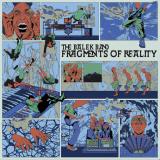
Some grooves don’t rush to the dancefloor — they crawl there, slow and heavy, like smoke wrapping around a bassline. With Fragments of Reality, The Balek Band sculpt an electronic funk that lives between shadow and light — an end-of-the-world fever dream, a Barjavel-style Ravage where chaos turns nihilistic.
No sequencer grid here — just four musicians sharing the same room, shaping air and tension together: drums locked tight with a slap bass, a guitar dripping with echo and heat, and a one-man orchestra behind his machines, weaving acid lines and synth arpeggios while mixing the band live — drenching it in delay, reverb, and saturation, like a dub producer in a Kingston studio, Lee Scratch Perry or King Tubby conjuring ghosts through smoke.
This isn’t fusion — it’s friction. A living ritual where the TB-303 hums, and machines don’t dominate but converse with the human pulse. Each track feels like a night that refuses to end — that humid in-between where trance slips into languor, and the body starts to think for itself.
The record recalls the cosmic jazz of Alain Mion or Eddy Louiss meeting the fiery energy of West African afrobeat musicians freshly arrived in a smoky Belleville basement in the mid-’80s. When The Balek Band summon ghosts, it’s only to reshape them — bending the past into something futuristic, alive, and strangely refreshing. Both disciplined and delirious, Fragments of Reality feels like a promise at dawn: dark funk for the late hours, slow acid for warm blood.
This EP isn’t nostalgic, though it remembers. It’s a transmission from a parallel past — a moment when jazz players met drum machines and decided never to stop playing. Each note sweats, each rhythm breathes. You can almost see the light cutting through the haze, faces half-awake, half-possessed.
The Balek Band aren’t recreating a moment — they’re keeping it alive.
Flesh and cables. Impulse and patience.
A band, not a loop.
A trip, not a format.

• Jackie Dee’s ‘Who’ was one of many great tape finds from Detroit producer Dave Hamilton’s vault in the 90s and first came out on CD in 1999. In 2015 Ace licensed that version to Colemine Records in the USA who issued it on their First Light subsidiary. That disc is now deleted and fetching a high price.
• In recent years we have found the multi-track tape with an extended version of the recording and an instrumental take on it that features Dave Hamilton’s vibes-playing. The vocal side is a full one minute and forty seconds longer than the original release.

- Data - Ja Nisam Kao Ti
- Data - Izumi
- Data - España
- Data - Damage In My Head
- Data - France
- Data - Strahovi
- Data - Ne Želim Da Tako Žive
- The Master Scratch Band - Break War (The First Version)
- The Master Scratch Band - Jailbreak (The First Version)
- The Master Scratch Band - Computer Break (The First Version)
- The Master Scratch Band - Mad Scratch
11
Despite its tragic breakup, Yugoslavia as a political, social and cultural phenomenon still inspires generations, especially those who were born or lived at the time of this utopian land of South Slavs. Those who didn’t enjoy the privilege are still amazed by its 1970s and ’80s music scene and the number of very modern, high quality acts that were so often ahead of their time. Two such acts were Data and The Master Scratch Band, both founded by Zoran Jevtic and Zoran Vracevic, who introduced synth-pop, breakbeat, and hip-hop music in Yugoslavia in 1984 with their releases: SP Neka Ti Se Dese Prave Stvari/Ne Zovi To Ljubavlju and miniLP Deogut (Jugoton). Our latest release, “It Was Ridiculous, It Was Amazing!” gathers their earliest unreleased material from 1981-1983, showcasing a broader range of genres – alongside synth-pop and breakbeat/hip-hop, they also experimented with industrial, EBM, minimal synth, and electro-funk!
The whole record is divided into two parts: on A side there are 7 previously unpublished songs by group DATA, and on B side there are 4 previously unreleased recordings by The Master Scratch Band.
The Data side opens with two unexpected “shocker” tracks: Ja Nisam Kao Ti” (eng. I am Not Like You) and “Izumi” (eng. “Inventions”) from 1981, where they sound like early Deutsch-Amerikanische Freundschaft with unusual vocal pan sound effects on Serbian lyrics and uncompromising synth-based sound. Equally unpredictable are the next two songs: atmospheric “España” and dusty “Damage In My Head,” where Zoran Jevtić boldly steps into the lead vocal role. But the surprises don’t end there. The next two songs, France and Strahovi (eng. “Fears”), bring a mysterious and nostalgic atmosphere, elevated by the irreplaceable sound of the modular Roland System-100M. At the end comes the greatest surprise of all: Data covers YMO-Ballet in a song called Ne Zelim Da Tako Zive (eng, I Don’t Want Them Living Like That) and puts some extra energy in rhythm without losing the original song’s sensibility. Like in the original, the lyrics are tender and yet mysterious and provocative.
The Master Scratch Band side contains the very first versions of the songs Break War, Jailbreak, and Computer Break, originally recorded in studio Druga Maca in Belgrade in 1983. These versions were not released on their mini-LP album Dégout (Jugoton, 1984), and they are actually the first ever hip-hop/Breakbeat recordings in Yugoslavia. With great enthusiasm, every sound was uniquely crafted from scratch using the finest analog gear available in the early ’80s. The two young artists, aiming for international success, chose to write their lyrics in English. The album’s final track, “Mad Scratch,” showcases their talent for creating impressive sound effects, which would be a delight for contemporary DJs and producers who specialize in sampling and scratching old-school hip-hop.
This release is truly a “100% digger’s gem” – 11 previously unreleased tracks from legendary pioneers of electronic, hip-hop, and breakbeat. A collection to discover, enjoy, play, and treasure forever!


9
2025 European press. Originally pressed in limited copies on a Thai LP (2023) - Comes with download code.
‘Araya Lam’ marks the third album from The Paradise Bangkok Molam International Band. Following their releases ‘21st Century Molam’ and ‘Planet Lam’, the band delves even deeper into the roots of Isan music, collaborating with traditional musicians on vocals as well as instruments like the Pong-Lang, Pi, and Sor. Each element adds a fresh dimension to the band’s distinctive reinterpretation of Molam.
The album also sees the band expanding their sonic horizons — nodding to New York post-punk on ‘Zud Rang Ma’, and drawing inspiration from the musical traditions across the Indian Ocean on ‘Psych Lam Kor’.
By looking back to their roots while continuing to push boundaries, ‘Araya Lam’ represents the next chapter in the ever-evolving journey of The Paradise Bangkok Molam International Band.
After finding homes in all the right record boxes last summer with their debut 'Anthem' - 'You & Me & The Music'
The CJP Band return to Supa Jams with two more perfectly crafted sides of Disco Jazz Funk and Soul.
Side A delivers a monster rework of the Aquarian Dream classic 'You're A Star".
A tour de force from start to finish. Taking the timeless original to stratospheric new heights.
Side B brings things back down to earth, literally. Joe Bell joins the band on vocal duties for 'World Gone Crazy'.
A string drenched lament on the madness the earth, despite enduring multiple ills for far to long already, Seems to herald yet new levels of crazy on an almost daily basis. Is there nothing we can do?
Limited Black Vinyl Pressing
Hand Stamped Sleeve
Don't Sleep

9
Tilaye Gebre is one of Ethiopia’s most soulful saxophone giants, with a musical legacy that’s hard to surpass. A founding member of the Equators, later renamed the Dahlak Band, he was a key figure in Ethiopia’s vibrant hotel music scene and a sought-after musician and arranger for artists like Aster Aweke, Mahmoud Ahmed, Tilahun Gessesse, and Muluken Melesse.
Tilaye — still going strong — was at the epicenter of the Ethiopian music scene during one of the most turbulent periods in the country’s history. Tilaye’s musical trajectory, regardless of the forms it has taken over the decades, is simply ceaseless. The road to a musical career spanning six decades started out winding, and the first steps came almost as a fluke.
With the Dahlak Band, Tilaye had managed to secure a musical residency at the legendary Ghion Hotel, where they honed their skills and developed their musical expression to unparalleled levels. From the late sixties onwards, Dahlak Band lit up Addis Ababa with a mixture of James Brown and Wilson Pickett tunes, rhythm and blues, soul, funk, and the sound of the disco era — mixed with modern Ethiopian styles — serving up majestic concoctions with full-range instrumentation, featuring trumpet, keyboard, saxophone, bass, drums, and guitar. Through their hotel sessions, Tilaye developed further as an arranger, arranging fellow band member Muluken Melesse’s first solo album, Muluken Melesse with the Dahlak Band (Kaifa Records – LPKF 39), recorded during the turbulent years of 1975–1976, following the fall of Haile Selassie. Everything was in flux in this transitional period, but a constant was how Tilaye stood in the spotlight. On that record, there’s a loose vibe to the soundscape that lets Tilaye’s skills shine, while all the other musical contributions coalesce into a slowly cooking atmosphere where the groove at times fluctuates into psychedelic territory, making the music stand out from most contemporaries.
Most of their recorded output came from one-take live cassette recordings at the Ghion, or from music shops at that time — one microphone at the front, hit record: no EQ, no reverb, just some delay. Some of the Dahlak Band’s releases featured Tilaye as frontman, such as Tilaye’s Saxophone with the Dahlak Band from the late 1970s — typical of a rare groove on the Ethiopian scene — with excursions into reggae territory, including the band’s characteristic sound featuring Tilaye Gebre (tenor and alto saxophone), Dawit Yifru (organ), David Kassa (electric guitar), Shimelis Beyene (trumpet), Moges Habte (tenor saxophone), Abera Feyissa (bass guitar), Tesfaye Tessema (drums), and Muluken Melesse (cowbell). The Dahlak Band’s output was so prodigious that they simply couldn’t be pigeonholed.
No saxophonist in Ethiopia influenced the sound of popular music more than Tilaye in the 1970s, yet his recordings have been hard to come by for ages, which has meant that newcomers to the scene have gems to uncover in retrospect. Arguably, Tilaye shifted gears when he relocated to the U.S. to such an extent that his musicianship became even more renowned, accompanying the greatest of his contemporaries internationally. Tilaye is one of Ethiopia’s all-time greats, with a musical legacy — both as musician and arranger — that’s hard to surpass. It’s a wonder to be able to enjoy a recording like this half a century later.
Loni Gamble stepped into the international spotlight with his 1983 debut synth funk album on Canadian imprint Tracey/Unidisc.
A year later Loni hit again but this time locally, with vocalist Lisa Warrington self-releasing "I Like The Way You Do It" on the start-up Philly imprint Sound Modification.
The record received local radio support, and some regional record shop distribution, but never really made it out of the area.

8
The Natural Yogurt Band returns from the Derbyshire hills with another trippy record. We find again his signature sound
of raw neo-library and exotica grooves, with an electronic twist. Soulful string synths, modular chirps and crunchy electric
pianos will bring you in a colourful soundscape that only The Natural Yogurt Band can paint.
