Perpetual Groove continues to conquer the jam scene with its dynamic
presence both on and off stage - The group's breakout album, Sweet
Oblivious Antidote (released in 2003) has been praised internationally
and is widely regarded as one of the most quintessential works in the
canon - To commemorate its impending milestone, Perpetual Groove
releases a remixed and remastered 20th anniversary run of Sweet
Oblivious Antidote
Buscar:the scene
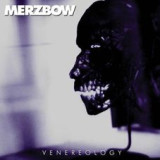
The undisputed king of Japanese noise MERZBOW returns, as the landmark album Venereology celebrates 25 tinnitus-inducing years with its inaugural vinyl pressing! Remastered by James Plotkin (ISIS, ELECTRIC WIZARD, FULL OF HELL, and more) and featuring reworked art, this is the most extreme recording of harsh electronic sickness you will ever own! Venereology features a second LP with more than 20 minutes of unreleased bonus material. - Highly influential noise album from a scene torchbearer/pioneer - Remastered by James Plotkin (ISIS, ELECTRIC WIZARD, FULL OF HELL, and more) - Reworked cover art - 25th Anniversary - Bonus material with unreleased music For Fans of: Prurient, Whitehouse, Wolf Eyes, Masonna, Sunn 0))), Full Of Hell Select Press Quotes: - "A masterpiece..." - The Quietus - " severe and atrophic, but also entertaining, heterogeneous, energizing, malleable. " - Pitchfork
Backstock
SHAFTY was a house music project made in Italy by Andrea Gemolotto and Ralf. They both can be considered two pioneers of the early italo house scene, Gemolotto already made a big hit
in 1989, Sueno Latino' , and he also won the italian DMC Championship as Cutmaster-G.Antonio Ferrari, aka Dj Ralf , has been a nightclubbing icon for almost 30 years. Since 1987 he has remained a key element of the Italian house music scene, taking his signature style to clubs all over Europe and the world. Deep Inside (Of You)' was the first release on Heartbeat catalogue (1991), and it's now officially repressed by Groovin Recordings (all tracks have also been remastered).
NOAR is a young collective of enthusiasts in electronic music from Dresden.
The aim is to bring locals from dresden and eastern germany on the screen of like minded people. The scene is bursting with talents and audiophiles of several generations and therefore we want to give these talents a platform and make their output accessible to like-minded people.
‘Clone Scratch’ by Friedrich Ernst comes with a distinct electro vibe for build ups in a club and vocals in dreamy watery manner reminds us what’s up to us.
‘locknr01’ by The Isolator gives us a cold industrial goosebumps. A whole factory is under pressure performing that straight electro tune while heavy strings foreshadow its collapse. Here and there screws turn out of the steel beams, soft like bubbles. You have to take cover to avoid being shot.
A3 by Anachronism follows straight up. ‘Lost Control by Distance’ shows us what unconsciousness feels like. In this breakbeat thunderstorm we are sitting in a crashing airplane not quite ready for what's coming next.
With ‘Establishment’ the thunderstorm lightens and suddenly soft sunrays from Planetary Secrets come through the cloud cover. You are dreaming with soft melodies warming up your face while your body is moving to uk influenced breakbeat.
The duo KAWA KAWA is making their release debut with B2. This track clearly serves you on peak times with lovely and rough vocals while its energy easily lets you understand what a desire means.
The EP is finished with a fast electro belter from Otis Key. With it’s minimalistic approach
‘Copy Natural Processes at the Nanoscale’ lets you dive into the grid of existence with your electron microscope. From time to time you can see light coming from underneath with cold strings layered between the rhythm.
Dude what if...Is it… the matrix?
- A1: End Transmission (Album Version)
- A2: Too Little Too Late
- A3: Ashes
- A4: Mother
- A5: White Cells
- A6: Avissos
- A7: Womb
- B1: Neon Dream
- B2: All Else Fails
- B3: Time To Die
- B4: End Transmission (John Beltran's Sweet Sunny Mix)
- B5: White Cells (Yui Onodera Remix)
- B6: Neon Dream (Elwd Vinyl Edit)
- B7: Time To Die (Heathered Pearls Remix)
Stelios Vassiloudis enters an inspiring new phase as he unveils his sophomore LP All Else Fails available March 25th via Balance Music.
Hailing from Athens, Greece, Stelios Vassiloudis poses a triple threat as a composer, producer and DJ. Having been active in the electronic music scene since the early 2000s he has cultivated his own brand of distinctive ambience reflective of his rich and diverse musical background; transcending the dance floor via an emotional narrative of complex soundscapes, intricate harmonies and hypnotic rhythms. Over the past decade Stelios has released music under various other monikers, yet this new endeavour is his most diligent to date - allowing him to rediscover his love for making music during the process, "I'm more hopeful, inspired and determined than ever before."
Ten years on from the release of his debut LP, Stelios' detail-oriented offerings remain incomprehensibly thought-provoking and thorough with this new album. Noticeably dissimilar to any previous efforts, Stelios consciously took a step back from the pressure of maintaining a steadily flowing supply of functional, club-oriented music and as the world stood still amidst the pandemic, he embraced the opportunity to reconnect and express himself with a broader musical vocabulary. He admits that: "with the world around us seemingly on the fast track to Armageddon, the music ended up being very much reflective of the sadness and helplessness I felt."
All Else Fails is a stimulating odyssey to anyone listening. Harmonically dense, arcadian glistens seep throughout the ten tracks, each complementary to the next. Bask in the wistful iridescence and you won't be disappointed.
Stelios carved his way into electronic music by traversing around the globe as a DJ and performer - performing at intimate underground bars in Beirut, festivals in Miami, after-hours in Tokyo, beaches in Goa and mega clubs in Argentina. Having developed a formidable discography on esteemed labels such as Bedrock, Poker Flat, Ovum, Constant Sound and Darkroom Dubs, among others, Stelios' studio prowess and coveted productions cemented his reputation as a versatile and acclaimed artist. His intense passion and drive for innovation in music serves as the fuel to keep him inspired and relevant, qualities that no doubt ensure his reputation as an artist of the highest calibre, will endure.
After the demise of Denver emo legends, Christie Front Drive, singer/
guitarist Eric Richter moved to Brooklyn and started Antarctica with other
members from the scene - Despite just a few releases to their name they
gathered a large cult following - Originally released as a 2xCD in 1999 on
File 13 Records, 81:03 is an expansive and textured example of
electronic-infused shoegaze music blending the swooning, syncopated
pop of New Order, the dark chill of Pornography-era Cure, the hypnotic
pulse of Underworld, and the guitar harmonies of Ride and For Against
Almost 25 years later, 81:03 still feels fresh; like a modern soundtrack for those
seeking moments of beauty in an increasingly troubled world. Newly remastered
and finally available on vinyl for the first time, Antarctica will appeal to fans of
early Cure, The Church, Washed Out, Tycho, Christie Front Drive, Mineral, The
Gloria Record, etc.
The story of the invention of the term, 'deepfunk' is probably only known among fans and practitioners of this niche-genre. In short, it all started in the 1990s when DJs like Keb Darge, Mark 'Snowboy' Cotgrove and others began spinning obscure and feral Funk 45 RPM singles from local American bands, ostensibly generating another sub-category branch off of the mighty Northern Soul tree. The dance-club phenomenon inevitably spilled over to contemporary groups on the funk scene which immediately tried to record their music the way their idols did. The 'rare groove' and 'acid jazz' movements had run their course and there was a concerted effort to reinstate primitive idiomatic styles and techniques into the music, most notably by 90s funk collective The Poets of Rhythm. As more years passed by the number of bands steadily increased (although in tiny numbers, compared to the mainstream market). Almost every country had a representative with the majority of them coming from the United Kingdom. The deepfunk sound was still a niche, however a very few bands made it onto the mainstream charts, most notably Sharon Jones & the Dap Kings.
At the height of the retro-soul movement a questionable development took place. As more bands arrived on the scene, the production became more and more polished and pop-ish. Some of that squeaky-clean tidiness began to creep into the recordings, encouraged in part by the signature sounds of the digital recording technology available at that time. Some bands even tried to jump onto the possibility of promoting their music as 'deepfunk' although they were actually playing slick, funky pop music. This way some people who thought they were listening to raw, energetic funk actually felt quite ambushed when hit with real deepfunk. In fact, a certain percentage of funk music produced within the past 20 years does not deserve to be described as 'deepfunk' at all. Fortunately there were (and are) some pleasant exceptions which did not just imitate but actually rendered amazing funk music just like some of the finest funk combos of the 1960s and 70s.
One of those creative minds is without a doubt Joel Ricci aka Lucky Brown. Originally from Seattle, Washington, USA, he has enriched the deepfunk community since the mid-2000s with his stellar abilities. He is not only an amazing musician playing multiple instruments, but also a brilliant composer, arranger, and producer too. But for us here at Tramp he is much more, a close friend and remarkable human being. Whenever we were struggling, whether with the label or in private life, Joel and his musical work helped us to overcome everything and to keep going our path.
So here we are in 2023. The songs you are listening to right now are the complete Space Dream collection, split into two parts, representing the two living-room recording sessions from which his 2011 Tramp Records debut was compiled. Each fully remastered album contains unreleased material and comes with brand new, beautifully reimagined artwork by Ricci himself, housed in an authentic 1960s tip-on cover. A first class product from a first class musician for the discerning funk enthusiast.
The story of the invention of the term, 'deepfunk' is probably only known among fans and practitioners of this niche-genre. In short, it all started in the 1990s when DJs like Keb Darge, Mark 'Snowboy' Cotgrove and others began spinning obscure and feral Funk 45 RPM singles from local American bands, ostensibly generating another sub-category branch off of the mighty Northern Soul tree. The dance-club phenomenon inevitably spilled over to contemporary groups on the funk scene which immediately tried to record their music the way their idols did. The 'rare groove' and 'acid jazz' movements had run their course and there was a concerted effort to reinstate primitive idiomatic styles and techniques into the music, most notably by 90s funk collective The Poets of Rhythm. As more years passed by the number of bands steadily increased (although in tiny numbers, compared to the mainstream market). Almost every country had a representative with the majority of them coming from the United Kingdom. The deepfunk sound was still a niche, however a very few bands made it onto the mainstream charts, most notably Sharon Jones & the Dap Kings.
At the height of the retro-soul movement a questionable development took place. As more bands arrived on the scene, the production became more and more polished and pop-ish. Some of that squeaky-clean tidiness began to creep into the recordings, encouraged in part by the signature sounds of the digital recording technology available at that time. Some bands even tried to jump onto the possibility of promoting their music as 'deepfunk' although they were actually playing slick, funky pop music. This way some people who thought they were listening to raw, energetic funk actually felt quite ambushed when hit with real deepfunk. In fact, a certain percentage of funk music produced within the past 20 years does not deserve to be described as 'deepfunk' at all. Fortunately there were (and are) some pleasant exceptions which did not just imitate but actually rendered amazing funk music just like some of the finest funk combos of the 1960s and 70s.
One of those creative minds is without a doubt Joel Ricci aka Lucky Brown. Originally from Seattle, Washington, USA, he has enriched the deepfunk community since the mid-2000s with his stellar abilities. He is not only an amazing musician playing multiple instruments, but also a brilliant composer, arranger, and producer too. But for us here at Tramp he is much more, a close friend and remarkable human being. Whenever we were struggling, whether with the label or in private life, Joel and his musical work helped us to overcome everything and to keep going our path.
So here we are in 2023. The songs you are listening to right now are the complete Space Dream collection, split into two parts, representing the two living-room recording sessions from which his 2011 Tramp Records debut was compiled. Each fully remastered album contains unreleased material and comes with brand new, beautifully reimagined artwork by Ricci himself, housed in an authentic 1960s tip-on cover. A first class product from a first class musician for the discerning funk enthusiast.
When one of South Africa's most sought after trumpet players steps forward after a career alongside the very best in the International jazz scene, you know it's going to be a special record.
Dennis Mpale was one of South Africa's heavyweights. You'll find his name springing up on every important South African jazz record and billing since the 1960's. Chris McGregor's iconic Jazz/The African Sound LP, Abdullah Ibrahim's Dollar Brand, Barney Rachabane in the highly influential ensemble Roots, and early work in house bands appearing alongside Nick Moyake in The Soul jazz Men to name just a few. His trumpet playing had character, an extension of the body and amplifier of that great South African sound.
Leaving South Africa during Apartheid as a strong supporter and member of the ANC, Dennis made London his home, joining the newly established SA Jazz scene and standing in solidarity against the oppressions back in Africa.
Moving between London and South Africa during the 70's and 80's It wasn't till the early 1990's when Dennis finally settled again to make his biggest transition to solo artist, redefining his Jazz past and putting a heavy kwaito infused house slammer on the agenda. 1994s 'Paying My Bills' (a title maybe more appropriate now than it ever has been) is a mighty jazz kwaito house effort: From the heavy synth beat and gorgeous floating solo opener of 'Paying My Bills', to the highly infectious vocal phrasing on thumping house anthem 'Take My Time'. Paying My Bills takes the sensibilities of a jazz maestro and pairs it with one of South Africa's biggest producers Peter 'Hitman' Moticoe, creating the perfect recipe for a certified summer slammer.
Having previously only ever been released on CD, this is the first ever vinyl pressing of the album (hazy early test pressings lurk on a small number of lucky shelves). Vinyl mastering is handled by The Carvery's very own Frank Merritt here in London, with the resulting tracks generously split over 2 discs to fully appreciate the swampy heavy dub bass drolls for full dancefloor effect. It's loud and punchy and makes space for those glorious trumpet improvisations while keeping the synth refrains and heavy bass thumping.
Early plays include resident NTS DJ's and a feature on Palms Trax Radio 1 residency with surely more support to follow.
Daniel Ögren is one of the key artists in Sweden’s contemporary, underground music scene. He has already accrued quite the back catalogue, both as a member of the sensational quartet Dina Ögon and also as a solo artist with eight albums already under his belt. ‘Fastingen-92’ was originally released as a limited-edition vinyl pressing in 2020 on the independent label Sing A Song Fighter Records (the same label that first introduced us to Dina Ögon's music). The album came to our attention after hearing Daniels' solo band performing live at the Stockholm Jazz Club, Fasching. The band featured Love Örsan and Christopher Cantillo of Dina Ögon fame (who also records with the incredible Sven Wunder), and their sensational genre-busting set blew us away. It convinced us that this now out-of-print album needed to reach a wider audience.
‘Fastingen-92’ doesn't sit in one genre, it draws from Daniels's love of South American folk music, soul, Nordic folk music and film soundtracks, resulting in something unique, dreamlike and transformational.
It features 'Idag’, an epic, beautiful, cinematic song that introduces the ethereal vocalist Anna Ahnlund. ‘Idag’ has gained a cult following and Daniel has stated that it was the spark that started the Dina Ögon project. Tracks like 'Annalena' and 'Kristinehamn by Night (for Christopher)' sound like a new club sound that hasn't yet been invented (which Nicola Cruz would spin in his DJ sets), mysterious, hypnotic, and engaging. Other songs like 'Maj (for Tintin)' and 'Picasso' venture into blissed-out Scando-Balearic realms. Daniel's love of nature and the inspiration he draws from the geographic environment of the Swedish countryside can be felt in these tracks, they take you to other places and times and are simultaneously familiar, ancient and alien.
Alongside the collaborations with Anna and Christoper, the album features Josefin Runsteen playing the drums on 'Idag' and Swedish musicians Edvin Nahlin and Ulrik Ordin. The majority of the album was played, recorded and mixed by Daniel. For the Mr Bongo edition, we have added the bonus track 'April’, which was previously only available digitally. ‘Fastingen - 92’ is a truly remarkable record that gets into your soul, so please delve in!
Death Is Not The End sub-label 333 turns up the gold again with this repro of the much in-demand Flames cut of Nairobi Sisters' Promised Land. Sampled by Q-Tip for "Whateva Will Be" (appearing on ATCQ's final long-player) and on a range of earlier 90s boom-bap era productions, it is not at all hard to figure out why it's a coveted record. That break is as low-slung and funky as it gets, and best showcased on the superbly stripped-back dub on the flip.
The Nairobi Sisters were singers Terrie Nairobi and Judy Mowatt (later of the I-Threes, alongside Rita Marley & Marcia Griffiths). Promised Land was originally recorded together with The Gaytones for Sonia Pottinger's Gay Feet label, with this later version cut for Winston Jones' Brooklyn-based Flames Records. It is issued here under license from producer and songwriter Jones - the original singer and composer of Stop That Train (later made world-famous by Keith & Tex's version) with his Spanishtonians in the early 1960s - who later moved from JA to NYC where he established and ran the Flames label, a core imprint in Brooklyn's reggae scene from the mid-1970s until the early 1990s. 333 has licensed a range of Flames-era productions from the now Texas-based Jones, so keep and eye out for more as it comes... but for now, jump on this before it's gone!
Hattrick Innovations takes dance music seriously, and therefore there's no wonder why they time-travel back to the early 80s in this third release from the label. Here Starcatcher blends the raw edge and all-around synthetic sound which became a popular spin amongst DJ's like Ron Hardy and Larry Levan in the NY and Chicago underground scenes.
This release also showcases two unique styles of dance music from that era, one being italo and the other Hi-Nrg. "Across the Universe" has a stripped back, darker approach while "Space Talk" is more spiritual, uplifting and melodic.
BOTANICA is the newly established Japanese label created by DJ/ Producer, Iori Wakasa. It was formed for him to utilize it as a foundation for the realization of his own unique, artistic expression.
And now, he has the pleasure to announce his label’s inaugural title with the release of his own BOTANICA EP.
Born in 1988 in a rural Japanese city surrounded by mountains and the sea with a mild climate, Iori grew up playing RPGs with a father who was a devoted game aficionado. And he was introduced to electronic music through game music from an early age and formed his musical sensibilities through playing the classical piano around the same time.
Influenced by the spirituality and idiosyncrasies of punk rock and ethnic and indigenous music in his youth, also gradually influenced by the Tokyo club scene and the music, it didn't take him long before
he made the choice to start DJing at the age of 17 and soon afterwards, started exploring the path of music production as a form of self-expression.
Iori set up Botanica to convey 2 main concepts of 'presenting music that provides each listener with their own viewpoint' and ‘to construct a fusion between 'nature' and 'man-made objects and human
activity’. Through the experience of traveling around Japan, Europe and Asia and connecting with people of different languages and cultures, he became to appreciate that music transcends all languages and grooves, and the framework in which he would like to shape his perspective and embody it as his way of life is what he envisions as the vital expression for BOTANICA, The two tracks and the artwork included in this first EP are the first steps towards hopefully chronicling the story of the vortex that he resides in now and the new forest that he plans to weave in the future with his label.
'The Pure Land' means in Japanese 'Gokuraku-Jodo (= a space where you can live in bliss)', but in English it is closer to 'utopia' or 'paradise'. However, 'The Pure Land' is a musical work that evokes a
hypnotic and pleasant euphoria through the gradual layering of multiple rhythms and soft particles of spatial sound design. It is also shaped with the aim of liberating the listener and guiding them towards their primal self.
In contrast, 'Lunar Down' expresses the changes that occur in the human state of mind during the extended period from moonrise to moonset especially when the moon sets from its zenith and is completed with a focus on maximum dance floor impact via an inner voice that resonates in the brain that echoes throughout a well-textured bass line and rhythm track.
The artwork for the front cover of this EP was created by SHINOZAKI HILOSHI, an illustrator who has been traveling and painting to express his true way of life that he learnt in the 10+ years of commuting between Tokyo (the end) and the Hawaii Islands (the beginning), and the graphic designer hiro, who stands by Iori`s side as his life partner and as the person who understands him the best. Iori`s first steps are complemented by the label design and art direction by graphic designer hiro, who stands by his side as his life partner and most understanding partner, and the proof is the physical cut, which is presented as the foundation for the future.
- A1: Pigs
- A2: How I Could Just Kill A Man
- A3: Hand On The Pump
- A4: Hole In The Head
- A5: Ultraviolet Dreams
- A6: Light Another
- A7: The Phuncky Feel One
- A8: Break It Up
- B1: Real Estate
- B2: Stoned Is The Way Of The Walk
- B3: Psycobetabuckdown
- B4: Something For The Blunted
- B5: Latin Lingo
- B6: The Funny Cypress Hill Shit
- B7: Tres Equis
- B8: Born To Get Busy
Cypress Hill’s self-titled debut album was hard as nails, with very few pop concessions. There was humor, but it was laced by cackling, homicidal sneering. Not well known outside of the hardcore hip-hop scene at first, faces of the three group members weren’t usually shown clearly in press photos; they preferred the shadows. As their first singles began hitting the airwaves and record racks, the press and music fans started to take notice.
From the opening notes of the group’s first single, “The Phuncky Feel One,” to deeper album cuts like “Stoned Is The Way Of The Walk” and “Tres Equis,” it was clear that Cypress Hill was something different. And very, very dope. The world Cypress Hill espoused was gang-ridden and far from cheery, but they managed to laugh through the pain. Lead rapper B-Real took each fuzzed-out, rock-hard DJ Muggs beat as a challenge, jumping around it like a spark off a joint as it makes its way to the concrete. MC Sen Dog always had B-Real’s back, to bring intensity and a no-bullshit gruffness that made the group both menacing and unpredictable.
When they introduced percussionist Eric Bobo to the mix in the early 90s, it brought new dimension to the band, making their live performances one of the most unique and accomplished shows in hip-hop. Journalist and author Chris Faraone highlights the group’s relationship in the reissue’s liner notes (which is included only in limited edition Skull) saying, “By the late ‘80s the undisputed Cypress unit finally formed. B and Sen realized that their diametric styles - the latter’s deep wrangle, the former’s inimitable high notes - complemented one another righteously. By then Muggs had bangers in the bag, as well as industry experience from a jaunt with the New York duo 7A3. B and Sen waited while Muggs messed with 7A3, and in that time began to build the blueprint for their raucous and weeded no-holds-barred style. Besides getting schooled on industry pitfalls, Muggs had also grown into hip-hop’s most formidable young producer, while straddling the bi-coastal gap.”
Cypress Hill’s debut went gold by the end of 1991 and has since pushed past double platinum status, making it the first album for a Latino-American hip hop group to do so. The album received raves from the likes of Rolling Stone and the Los Angeles Times, saw a #1 Hot Rap Single with the release of “The Phuncky One” and helped the band win Artist Of The Year at the 1992 Source Awards. After 25 years, it should come as no surprise that Cypress Hill is a cornerstone of the group’s live set to this day.
The Faithful Brothers
Soul and R&B from Tel Aviv
"It's so difficult to produce the feel and the excitement of the classic northern sound, but The Faithful Brothers were born to do it and they do it so well." Craig Charles, The Craig Charles Funk & Soul Show, BBC Radio 6 Music.
Is there a Northern Soul scene in Tel Aviv? The surprising answer is – yes, there is. If you're a soulie and in town, look for the Tel Aviv Soul Club, and you might find yourself swaying across a talcum-powder covered floor to Tel Aviv's own unique blend of classic Northern Soul 45s and early 1960s R&B sounds.
Chances are that those 45s will come out of the record boxes of one of the brothers Neeman, Johnnie and Bin. Sons of an Israeli diplomat, they travelled abroad extensively as children, in the 1960s and 1970s, discovering the wonderful world of rare soul music on the way. Tel Aviv Soul Club, aka TASC, is the brainchild of Yashiv Cohen, a DJ who, in 2006, lured the brothers Neeman, whose massive soul collections been hitherto confined to their respective living rooms, into playing their records to the Tel Aviv public. Yashiv is also the lead singer of Men of North Country (MONC), a Tel Aviv band with a distinct sound, blending rock, British pop and soul, that has recorded two albums for the London based label Acid Jazz Records, and toured Europe numerous times.
Since Neeman means Faithful in Hebrew, Yashiv woke up one morning with the crystallization that MONC must create a spin-off, a more puristic soul band, called the Faithful Brothers. There the biological Neeman/Faithful brothers would be joined by some of the members of MONC and a few more musical brothers from Tel Aviv to create new, original soul and R&B music. With a nod to the Northern Soul slogan "Keep The Faith", the name seemed too perfect to waste. The fact that the Neeman brothers were collectors, and not musicians, did not bother a man of vision like Yashiv. One day, he sent Johnnie some lyrics he wrote, asking him to compose music for it. Well, Johnnie called Bin, and they met in Johnnie's record room. With Johnnie playing some of the few chords he knew on his dusty old acoustic guitar, out came Teenage Frost, the first-ever musical composition of the Neeman brothers, recorded by MONC.
It took a few more years, but gradually the brothers succumbed to their fate, to continue their musical progression, from collectors to DJs to musicians. Johnnie took his guitar, Bin took to the piano, and the brothers began pouring out some of their influences, creating new songs. It is finally all coming together. The Faithful Brothers – now an eight-piece band, complete with a mighty brass section – release their first album "The Faithful Brothers".
Rare Montreux festival sessions from 1982.
Live Album by Detroit/Tribe Jazz Icon Reggie Fields.
Featuring an All-Star Line-up.
First ever vinyl reissue.
180g BLACK vinyl limited to 500 copies (w/obi strip) . Non-Returnable.
The Real ShooBeeDoo (AKA Reggie Fields) has always been a consistent name on the Detroit jazz scene … Fields who played with Pharoah Sanders while he was living in Motor City, worked with Sun Ra in the late 1970s and early 80s and who was also a close associate of the Afro-centric TRIBE label and artist collective, leaving his marks on a few essential TRIBE sessions such as Phil Ranelin’s “The Time Is Now!” as well as Ranelin & Wendell Harrison’s masterpiece “A Message From The Tribe”. It was Wendell Harrison who gave Fields the chance to record his landmark solo album (Reminiscing from 1981) to be released on his Wenha imprint. Reggie chose to record under his moniker “The Real ShooBeeDoo” because he built a rock-solid reputation as an internationally acclaimed performer under that name.
In 1982 he embarked on a European tour and performed at various clubs in countries such as Germany, Holland, Belgium, Italy, Switzerland, Luxemburg, France and Norway. This ecstatic touring vibe can later be heard on his fantastic ‘‘Live at Montreux Jazz Festival, 1982” album (simply called ‘Good To Go’).
“Good To Go” which we are proudly presenting you today features 10 tracks consisting of smooth Jazz-rumbas, French avant-garde jazz vocalizations, bass lines that can blow through walls as if they were made from paper, foot stomping rhythmic beats, lyrics that are pure poetry and ecstatic beats that took the crowd on a musical trip that ended in them raving for more. Playing before a large and enthusiastic crowd, Reggie’s spiritual cosmic free-flowing rhythms took the audience by storm…and the stakes were high because the bill was pretty impressive, he shared the stage with some of the biggest names in the genre (the festival bill also included Miles Davis, Dizzy Gillespie and Sonny Rollins).
Also…a quick closer look at the cast of all-star players featured on the album is most likely to be enough to get an impression that this is a very special record. Detroit preferred pianist Earl Van Riper brings his rich musical experience to the table that he perfected during his collaborations with Marcus Belgrave, Eddy ‘Cleanhead’ Vinson, Dinah Washington, Wes Montgomery and countless others. On the tenor saxophone we have Robert Barnes known for his work with Donald Bird…and last but not least we have Tani Tabbal on drums who is famous for his performances and recordings with Roscoe Mitchell and Sun Ra!
All of the above makes this rare album a total must-have that just begs for a prominent place in your record collection.
Tracklist:
Jumping With The Bellboy , Dark Eyes , Qu'est Ceque C’est , Do You Call that Friendship , Oo Shoobee Doo , Crazy She Calls Me , Have You Met Miss Jones , Ye Brac Hareesee , Hit That Jive Jack , Too Late Now
Japan has produced some exceptionally talented jazz drummers and among them is Tatsuya Nakamura, who joins the BBE Music J Jazz Masterclass Series with his album ‘Locus’ from 1984, a session covering several bases, from heavy percussive samba to meditative avant-ambient. This is the album’s first ever reissue, although a track from ‘Locus’, ‘¼ Samba’, was included on J Jazz vol. 3. Nakamura began his drumming career as a teenager, inspired after seeing the documentary film “Jazz on A Summer’s Day” and listening to his idols Art Blakey and Miles Davis. By his early twenties, Nakamura was working with such luminaries as free jazz guitarist Masayuki Takayanagi, pianist Masaru Imada and band leader & composer Mitsuaki Kanno. In the mid-70s, like several other Japanese jazz players, Nakamura decided to make the move to New York where he studied drumming with Roy Haynes, and performed with members of the AACM and players from the loft and free jazz scenes including Richard Davis, George Adams, John Hicks, and Pharaoh Sanders. Returning to Japan, Nakamura continued playing as leader of his Japanese band The Jazz Fellows and in 1979, he went into the studio as leader for the classic “Where Is The Quarter” session featuring Masaru Imada, Hideto Kanai and Kenji Mori. This session includes the original percussion heavy version of ‘¼ Samba’ and was followed by a period back in NYC during which he recorded the funky/free session ‘Rip Off’ in 1980. 1984 saw Nakamura working as leader of a heavy-duty fusion septet and in February of that year he led them in a performance at Audio Technica Hall. The album ‘Locus’ on Sea Horse Records is the label’s one and only release. On ‘Locus’, Nakamura is joined by a stellar line-up. On trumpet is Shinobu Fujimoto and he’s joined by seasoned bass player Hideto Kanai (1931 -2011) who began playing in the mid-1950s, appearing on King Recs All-Star Jazz Series before going on to be a regular fixture on the legendary Three Blind Mice (TBM) label, backing many of its leading artists. He even released his own album on TBM, ‘Ode to Birds’ in 1975. On guitar is Kazumasa Akiyama. Born in Tokyo in 1955, he taught himself guitar at 10 years old and was influenced initially by The Beatles and Ray Charles, and later Jimi Hendrix, Cream, Chicago Blues, and jazz. When he was a student, he got a chance to appear on Sadao Watanabe's radio program ‘My Dear Life’, which led him to join the Isao Suzuki Group and Mikio Masuda Group. Akiyama released his first leader album ‘Dig My Style’ in 1978 and is still an active musician. On keys is the incredible Jun Fukamachi (1946-2010). Born in Harajuku, Tokyo, Fukamachi started playing the piano at the age of three, showing an extraordinary talent, recognised as a child prodigy. He became a professional musician while still in school and released his first album ‘Portrait of a Young Man’ on Polydor in 1971.
Recorded in 1989 on the remaining ten minutes left at the end of Swiz’s Hell Yes I Cheated reel-to-reel and originally released at the time as a 33 RPM 7-inch, this 2023 release presents a 12-inch 45RPM version remastered by Tim Green with an extra song recovered from the tape archives of Jason Farrell. The brief story of Fury: At some point in 1989, members of Washington DC punk bands Swiz and Ignition formed Fury as a loose experiment with no intentions beyond being a diversion. The band existed for a few months, wrote six songs, and played two shows. Shawn Brown and Chris Thomson switched their musical roles from their regular bands as vocalist and bass player. The eyes-closed leap into those unfamiliar positions imbued the recording its feeling of deranged chaos, while the well-seasoned duo of Jason Farrell and Alex Daniels nailed down each song with the signature agility and power displayed in their more familiar work together. The recording is a vexing listen that sounds like a Neapolitan swirl of Swiz, Void, and the Germs. Was it precision theatre? Or was it a natural step back into a more primitive and comfortable place for four young veterans that just wanted to fill the daily void of existential restlessness? The track “Resurrection” famously made it onto the final Swiz LP. The final track “Last One” got cut off halfway through recording and the band looped and spliced it into a dizzying psychedelic nightmare / masterpiece. The recording has faded into somewhat of an obsurity, a footnote to the larger careers of all of its members. In its time, it was revered by a small cult of obsessives from numerous early ’90s underground punk circles. It notably had a pronounced influence on the emerging Gravity Records scene, where its echoes can be heard on quite a few of the earlier releases. Resurrection is finally getting the deluxe treatment that it deserves after 34 years!
ORKA is a duo comprising Francine Perry from London and Jens L. Thomsen from the Faroe Islands. They crossed paths in the vibrant club scene of London, an immersive world that had a profound impact on their creative journey. ORKA's music draws inspiration from the Hardcore Continuum and UK sound system culture, blending it with elements of minimal techno, progressive electro, and ambient music, resulting in a diverse range of stylistic influences. Now ORKA emerges with their long-awaited new album. Once again, they greet us with their distinct blend of earthy tones and a bold, adventurous spirit, taking us to a realm bursting with neon-lit hues, pulsating club beats, and an abundance of sensory stimulation. Aptly named "All At Once," the album title provides a clue to the auditory and sensory experience that awaits the listener in this immersive record. ORKA has continuously evolved as a project over many years and iterations, embracing fluidity and a relentless quest for fresh sonic amalgamations. Their journey has been marked by a gradual refinement, stripping away layers to reach the core essentials. This transformative process has unfolded over the years, reaching from their site-specific, cowshed sampling and band-based expedition in "Livandi oyða" (2007) to the bold, innovative exploration of minimalist techno in "Vað" (2016). However, their latest release, "All At Once," signifies yet another remarkable leap forward in their artistic evolution. The seeds of this artistic progression were already planted in previous releases like the <13 EP (2017) and the hard-hitting techno single "Juno" (2018). However, it is with the arrival of the album "All At Once" that ORKA's vision fully blossoms, unveiling a vivid and expansive sonic landscape. This latest offering presents a glorious and vibrant tapestry, showcasing a maximalist approach to techno that pulsates with energy coupled with their signature meticulous attention to sound design, reflecting a deep awareness and intentionality in their creative process. If this album was to be thought of as a place, it would be a shimmering, futuristic, buzzing kind of city with vibrating night-time drizzle from above and endless glowing lights in the distance. Several of the tracks are built around cut-up vocal samples that are divided from their semiotic meanings and reconfigured as loops, and thus mined for their timbral and percussive qualities. Recurring collaborators South London duo LV (Hyperdub, Keysound, Brownswood) are featured on a handful of these tracks, mixing in their complex cocktail of grime and bliss. The result is a sort of queer erotic dance-floor mysticism, and the closest to a full-blown dance record that ORKA have ever made. There must be a club in that shimmering futurist city of the night.. and it is a collective, inclusive and alluring place. There is no need to fear any dancefloor exhaustion by listening to this album though, as there are also moments of floating cyber beauty and pure enveloping warmth to be found among its tracks. As always, following the artistic journey of ORKA is a joyous experience, filled with unexpected twists and turns that keep us captivated.
- A1: The Is No Motorways In Space
- A2: Rock'n'roll Baby
- A3: Last Sunset Ever
- A4: Nighthunter
- A5: Post Nine Days
- A6: Cyclop Ohne Puppe
- B1: The Dices
- B2: What's A Dj Anyways
- B3: Post Trauma
- B4: When Covid Gave Me Time
- B5: Earthpeople
- B6: The Blue Hole In The Sky
- B7: The Garden Of Uglyness
- B8: Unfollow Me Prayer
- B9: Calmin' More
- C1: The Cute Woman You Don't Want Reggae
- C2: Super Rainy Morning
- C3: Lost Love
- C4: Smoky Disco Test
- C5: Ambient Wet End
- C6: Funkypunk
- C7: Strawberries & Cheese
- C8: Lil Boi
- C9: Djing Killed Itself
- D5: Cosmic Egg
- D6: Morning Modytation
- D1: The Urge To No
- D2: Magic From The Gabin
- D3: Glitter Morning
- D4: Why So Serious
Fake Yourself is an act of revolt as much as it is a celebration of life and an expression of human alienation. As usual in most of his work, soFa here reflects contrasts and contradictions as our existence so often does. It’s about sadness and joy, ups and downs and the fine line which connects them to tell a story. Fake Yourself comes as a spontaneous output of an artist escaping a scene of which the constant superficiality is unavoidable. Mistakes and wrong production with a strong DIY flavor are a conscious choice to not lose the spontaneous feeling which defines these recordings. A pure and direct self, exploring a realm of sound with sharp curiosity, emotion and humour. Where simplicity and complexity marry. This album is a good example on how some of the most authentic musical explorations are the most personal ones. soFa leaves all boundaries behind and let many of his influences confluence. Unconsciously or not, traces of IDM, Disco, New Beat, Dub and mostly Krautrock cross heavenly paths, followed by ironic and confronted vocals and his hypnotic signature basslines. Everything seems to make sense, to fill the chapters of an adventurous short novel. What makes Fake Yourself remarkable is not the deep blend of genres, but the definition of one man shaping and finding his authentic sound. Killing boundaries to create this journey in his very own "style-no-style". All tunes were improvised, recorded and arranged within 10 days in a wooden cabin, isolated in the middle of the nature in Alentejo/Portugal in 2022. This album was not meant to happen and one can strongly feel its spontaneous soul. No overdubs.