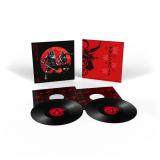
Okain returns to Talman Records with a four-track EP, offering a glimpse into his two-decade journey as a producer. Continuing his legacy of providing DJs with robust dance floor material, this EP stays true to form.
Opening the EP is "Wake Up," a tribute to early 2000s tech house, featuring crisp percussion, sharp stabs, and haunting vocals. Following is "Take Me Up," capturing the essence of UK garage with its thick Reese bassline and distinct vocal hooks.
Turning to the flip side, the EP ventures into darker realms with "Secret Science," blending dub-inspired synths with a weighty sub bass, perfect for late-night atmospheres. Closing the journey is "Swing Theory," a groove-driven track fusing minimal house elements into its infectious rhythm.
Suche:the science of rhythm
Montenegrin born in Istanbul, precocious pianist growing up in an embassy, brilliant musician. Prolific composer speaking eight languages, he arranged music for jazz, pop music, adopting multiple identities.
For one label, he is Andy Loore; for another, Emiliano Orti. For others, he is called Alan Blackwell or Johnny Montevideo, but behind all these aliases, there is only one man: Janko Nilovic.
Exploring the shelves of musical production, venturing into the less-illuminated corners of library music, Janko Nilovic's name lights up dozens of shelves on which his soundtracks, his records for Editions Neuilly or Sforzando, but above all his twenty albums for Editions Montparnasse, are stored. A considerable and imposing work, rich in orchestrations of keyboards, strings and brass instruments, themes, atmospheres and melodies. A repertoire in which the cinema, television and advertising have come to find their delight ...
Subjected to the sharp blades of samplers, reduced to a few effective seconds, joined with rhythmic beats, some of his tracks have infiltrated hip hop for a long time , leading the most curious to go back to the source to get the complete albums from which the precious loops had been taken.
Almost unknown to the general public, Janko Nilovic is a master for the initiated, whether they are at his side in the studio or comfortably seated in their armchair savouring the final result on their turntable. His discretion combined with his long years of silence on the record could lead one to believe that he had cleverly arranged his disappearance from the radar to make Janko Nilovic a mystery that has never been completely solved.
Until this message from The Soul Surfers.
A few miles away, in their studio fired up by analog funk, the Muscovites had been put back on the Nilovic track by multi-instrumentalist Shawn Lee. A few passionate discussions later, and the desire for a joint album was already lighting up the amps, making the bass strings shiver and the drum skins tighten.
Initiated by the coming and going of scores, the collaboration finally continued in studio for a real exchange, instantly bouncing off proposals, developing ideas in a live group dynamic that distance would have made impossible.
To feel the vibrations accumulated for decades at the CBE studio (like Chatelain Bisson Estardy), a mythical place founded in 1966, in which many albums, especially library, were immortalized. A place where consoles, equipment and instruments were kept as they were, accumulating in their wiring, meters and speakers, endless hours of experimentation and recording.
A place that Janko knew well and where an old acquaintance was waiting for him. A Hammond organ with a Leslie booth whose keys he had already flattered in the past and behind which an improvisation and a single take were enough to complete the eponymous title.
Together, Janko Nilovic and The Soul Surfers have built Maze Of Sounds, a musical labyrinth paved by the master's keyboards where the soul-funk groove of the fiery Russians is the listener's thread, his point of reference in this maze of atmospheres and emotions, at once cinematic, nostalgic, dancing, dreamlike and contemplative.
An album where, however, nothing is compartmentalized. Where, blown by the whirlwind strung by a violin quintet, the barriers move preparing the entrance of a Slavic choir, letting a screaming guitar come and go alongside the crystalline liveliness of the Fender Rhodes, organize some rhythmic aerations at the disposal of the samplers.
A fusion between the cleverly blackened scores, between the science of precisely written arrangements and the soul-funk feel of The Soul Surfers. An album such as Janko Nilovic has been dreaming of making for years.
Following the successful release of their inaugural collaboration, "Die Zeit," esteemed artists Timo Maas and Marc Romboy now present their second installment in their creative series. This latest offering delves into the realm of "Der Rhythmus," exploring the intricate nature of rhythm, as expounded upon by the introspective musings of vocalist Fadila.
The original composition emerges as a contemporary electro opus, meticulously crafted to infuse an exhilarating energy into moments calling for broken beats. With its innovative sonic palette, "Der Rhythmus" serves as a dynamic auditory experience, promising to captivate listeners seeking an electrifying sonic journey.
In addition to the original, the release features a transformative reimagining by none other than Dense & Pika. Their remix propels the track into a futuristic soundscape that seems to beckon from the year 2030. Immerse yourself in a riveting odyssey that transports you to a science-fiction world, where visionary sounds harmoniously merge with avant-garde techno rhythms. Dense & Pika's rendition embodies forward-thinking musical craftsmanship, inviting enthusiasts to explore new dimensions of electronic music.
"Der Rhythmus" emerges as a testament to the boundless creativity and collaborative prowess of Timo Maas, Marc Romboy, and Fadila, as well as the innovative remix artistry of Dense & Pika. This release is poised to leave an indelible mark on the ever-evolving landscape of electronic music.
"Dance of Rhythms" by Fred P, the latest release on Syncrophone, is a captivating exploration of deep house music. This 12'' vinyl record, elegantly presented in a translucent deep purple format, encapsulates Fred P's distinctive style. On the A1 side, "Dance of Rhythms" invites listeners to a hypnotic journey with intricate beats and entrancing melodies. It beckons you to immerse yourself in its captivating rhythms and hypnotic grooves. Flipping to the B1 side, "The Beauty in the Sound" unveils a rich sonic landscape filled with lush textures and ethereal atmospheres. Fred P's mastery is evident as he weaves emotive chords and subtle percussion into a harmonious blend, revealing the profound beauty found in the essence of sound. Closing the experience on the B2 side, "Vibe Science" is a sonic experiment that melds innovative sound design with an unwavering groove. This track showcases Fred P's ability to fuse artistic creativity with scientific precision, making it a standout addition to the record. In summary, "Dance of Rhythms" is a captivating journey through the realm of deep house music. With three compelling tracks, it offers a profound musical experience that will resonate with both dedicated enthusiasts and newcomers to the genre. The deep purple, translucent vinyl adds an elegant touch to the presentation, making it a collector's delight and an auditory adventure worth embarking upon..
“Only those who will risk going too far can possibly find out how far one can go.” a sage modernist poet previously whispered. And here we go, far out and yet so near, the third edition of “Risks Issues Opportunities” brings frontier reverberations scratching at the edges of dance, pop, downbeat, and other trance- portive sectors. Eight fast/slow propelling tracks. Adventurous, full of grandeur, gratifying the dance floor while equally winning the relaxation zones. Pure emotions crafted by newcomers. There is Milan’s Tagliabue, trancing slow and insightful. Or Cologne’s Grischerr, eloquently Tolouse-Low-Traxing. Some go down the slow burning road, where rhythms hang low, and suspense is in full show. Like London’s Frank Rodas, Garnu Depot from Iran, or Xei Ju from the islands of Micronesia, striking all ears with ghostly transcendental percussive science. An autumnally global voyage, which likewise offers industrialized districts by Italian producer Federico Cassetta, Metropolis minimal wave pop by Japanese musician Saeko Killy, or odd swamp funk by Chilean/German duo 7697 Miles. They all show, how far you can go, without losing your distinct flow.
John Howard was one of the best and most creative DJs of the west coast house scene back in the 90’s. His mixes and productions were full of house groove, soul, breaks and jazzy rhythms. This new series on Repeat contains of three parts including Howard’s best productions. These tracks are all huge influence for many producers that later discovered these kind of psychedelic house grooves on European based DJ sets… John Howard was on his own journey much ahead of time and his music still sound absolutely incredible 25 years later… Mesmerizing release.
A selection of unheard tracks by argentine cult proto-industrial band Quum, recorded between the years 2012/2014. Xtraqt Vol. 1 is the second release of Tecnologías Elementales, a record label founded by Djs Diamin and F.A.N.G.O.
Formed in 1978, Quum is an argentine group (currently consisting of brothers and founders members Gustavo and Daniel Gatti) that offers hypnotic and rhythmical improvisations in the language of experimental electronics, with a great participation of randomness, risk and uncertainty. Their music is inspired by science fiction, Zen Buddhism, chaos theory, ecology, the UFO phenomenon and the wabi-sabi concept.
Quum subscribes to the driving attitude of the Madí Movement ("invent and create"), coinciding in a conceptual vector that unites their teachers Jorge L. Borges, Gyula Kosice and Xul Solar.
Quum is a quiché-maya word extracted from the Popol Vuh that means "the secret", "that which is hidden behind the apparent", or "the mystery". The symbol that identifies them is a replica of the huge spider drawn mysteriously on the Nazca-Peru plateau.
Quum is, in addition to music, a living gesture of alternatives to conventional paradigms and pre-established archetypal behaviors.
Some kind of dirty ambient, cybernetik trance and organic industrial music.
Contact our cult!
a A1 Traslación Activada Intro
Repress coming!
Razor-N-Tape bring out the big guns for their remix package of the Los Angeles Afro-Latino funk band Jungle Fire.
JKriv's remix of 'Firewalker' channels the original live instrumentation into a bombastic, DJ-friendly workout, while Boston-born/Medellin-based producer Bosq steps up to tackle 'Village Hustle' bringing his unique blend of rhythmic flavours to this melting pot of zesty goodness.
This diverse 12 Inch also boasts the first remix and release by the newly-reunited Black Science Orchestra in 15 years! Original founding members Ashley Beedle and Rob Mello take on 'Culebro' and transform it into an pulsating Afrobeat groover. Bringing the infectious bass to the foreground behind a shuffling rhythm layered with guitar and horn samples, BSO turn out a serious heater of a remix and dub, worthy of their triumphant return!
(en) Following their much acclaimed surprise debut, VERMONT's sophomore longplayer presented "another set that rewards deep listening" (AllMusic) and "a mix of simplicity and richness" whose result is "a feeling of spaciousness and a thrilling sense of weightlessness" (XLR8R). Stripping away even more percussion than on its predecessor, "II" saw Marcus Worgull and Danilo Plessow zooming in on ambience, texture and sonic cohesiveness, allowing "each electronic voice to come into focus" (Pitchfork). Now, "II REMIXES" puts the beat back into the mix, thanks to iconic artists DIXON, I:CUBE and WASSERMANN who each develop their own irresistible groove out of the immersive source material. As one of the album's most highlighted cuts, DSCHUNA gets the royal treatment by Innervisions head and internationally revered selector DIXON who proves his strong command of the dance floor with a hypnotic ride that surrounds the soaring sounds of the original with tribal- esque vocals. The instrumental version drops the chants, but retains the enchantment, all elegant rhythm and gorgeous strings. Versatile's I:CUBE, legendary producer and DJ in its own right, brings a distinctly Parisian touch to the spectral SKORBUT, whose sci-fi-imbued widescreen aura gets reimagined as laser-gun-wielding space funk machine. Meanwhile, Wolfgang Voigt aka WASSERMANN condenses PARADIGMA's roaming synths into pulsating trance swells on his stomping KRAUTRAMATRIK MIX.
(de) Nach einem hochgelobten überraschungsdebüt präsentierte VERMONTs zweiter Langspieler "ein weiteres Set fürs Tiefenho¨ren" (AllMusic) und "eine Mischung von Einfachheit und Reichtum" deren Ergebnis "ein aufregendes Gefühl von Weitläufigkeit und Schwerelosigkeit" (XLR8R) ist. Auf "II" verzichten Marcus Worgull und Danil Plessow nahezu gänzlich auf Perkussion und konzentrieren sich auf Ambiente, Textur und klanglichen Zusammenhalt, erlauben so "jeder elektronischen Stimme, in den Fokus zu rücken" (Pitchfork). Nun bringen die "II REMIXES" den Beat zurück ins Spiel, dank des Kult-Trios DIXON, I:CUBE und WASSERMANN, von denen jeder einen ganz eigenen Groove im Klangbad des Quellmaterials findet. Als eines der aufsehenerregendsten Stücke des Albums erfährt DSCHUNA fürstliche Behandlung seitens des Innervisions-Chefs und international gefeierten DJs DIXON der den Dancefloor mit einem hypnotischen Trip im Griff hält und die aufsteigenden Flächen des Originals mit tribal-esken Vocals verziert. Die Instrumental- Version lässt die Stammesgesänge weg, behält aber den Zauber, durch und durch eleganter Schub und prachtvolle Streicher. Versatiles I:CUBE, legendärer franzo¨sischer Produzent und DJ von ganz besonderem Format, entwickelt eine ausgeprägt "parisische" Note für das leicht gespenstische SKORBUT, dessen Science-Fiction-getränkte Weitwinkel-Aura als Laserpistolen- schwingende Spacefunk-Maschine neu imaginiert wird. Derweil kondensiert Wolfgang Voigt auf seinem antrittsstarken KRAUTRAMATRIK MIX die umherstreifenden Synthesizer von PARADIGMA zu pulsierenden Trance-Schüben.
- A1: Les Masques - Il Faut Tenir (1969)
- A2: Isabelle Aubret - Casa Forte (1971)
- A3: Christianne Legrand - Hlm Et Ciné Roman (1972)
- A4: Jean Constantin - Pas Tant D'chichi Ponpon (1972)
- A5: Billy Nencioli & Baden Powell - Si Rien Ne Va (1969)
- B1-: Marpessa Dawn - Le Petit Cuica (1963)
- B2: Jean-Pierre Sabar - Vai Vai (1974)
- B3: Sophia Loren - De Jour En Jour (1963)
- B4: Isabelle - Jusqu’à La Tombée Du Jour (1969)
- B5: Sylvia Fels - Corto Maltesse (1974)
- C1: Frank Gérard - Comme Une Samba (1972)
- C2: Ann Sorel - La Poupée Des Favellas (1971)
- C3: Charles Level - Un Enfant Café Au Lait (1971)
- C4: Andrea Parisy - Les Mains Qui Font Du Bien (1970)
- C5: Audrey Arno - Quand Jean-Paul Rentrera (1969)
- C6: Aldo Frank - T’as Vu Ce Printemps (1970)
- D1: Christianne Legrand - Cent Mille Poissons Dans Ton Filet (1972)
- D2: Clarinha - Lemenja (1970)
- D3: Hit Parade Des Enfants - Aquarela (1976)
- D4: Jean-Pierre Lang - Tendresse (1965)
- D5: Magalie Noël - Une Énorme Samba (1970)
- D6: Françoise Legrand - La Lune
Ever since the late 1950s bossa-nova revolution, Brazil’s influence on French music has been undeniable. Pierre Barouh, Georges Moustaki and a vast array of lesser known artists, all made the Musica Popular Brasileira (MPB) an axis of promotion at the service of a cool and metaphysical, modern and mixed Brazilian lifestyle. Some were seduced by the poetic languors of the bossa, some were looking for fun, and others just loved the American hybridization of jazz-bossa, jazz-samba.
What is bossa nova? One of its creators, Joao Gilberto said: "Its style, cadence, everything is samba. At the very start, we didn't call it bossa nova, we sang a little samba made up of a single note - Samba de uma nota so .... The discussion around the origins of bossa nova is therefore useless”. It is nevertheless useful to remember that these magnificent Brazilian songs, which the guitarist describes as samba, were shifted and balanced around improbable chords. "I like things that lean, the in-betweens that limp with grace," said Pierre Barrouh, quoting Jean Cocteau.
With emotion, arrangements for violin and supple guitar licks, bossa nova rapidly changed. A transformation that can be heard in the Tchic, tchic, French Bossa Nova 1963-1974 compilation, the result of a cultural reappropriation, which traveled through the United States and supplemented itself in France.
A musical revolution that has remained significant, bossa nova was born in Rio. From 1956 to 1961, Brazil lived through its golden years. In five years, the country had invented its modernist style. Elected president in 1956, Juscelino Kubitschek de Oliveira, an elegant man with a broad forehead, brandished a promising slogan: "Fifty years of progress in five years". He quickly got to work. Not worried about increasing debt, he launched the project for a new federal capital, Brasilia, designed by the communist architect Oscar Niemeyer. Volkswagen opened state-of-the-art factories and created the “fusquinha”, the Beetle. In Rio, the Vespa made its first appearance. The Arpoador Surf Club crew run into the “girl” from Ipanema, Helô Pinheiro - the tanned garota ("chick"), between a flower and mermaid, who at 17 walked by the Veloso bar, where the fiery author and composer, Tom Jobim and Vinicius de Moraes, were getting drunk on whiskey. From then on, bossa symbolized cool.
In 1958, Joao Gilberto recorded Chega de Saudade, which the directors of Philips denied, calling it "music for fagots". The marketing director, who believed in it, secretly pressed 3000 78-inch vinyls and distributed them at schools around Rio, creating a tidal wave.
American jazzmen then took over. In particular, trumpeter Dizzy Gillespie and guitarist Charlie Byrd. In November 1962, the Brazilian Ministry of Foreign Affairs funded a "Bossa-Nova" concert at Carnegie Hall in New York, inviting the genre’s pioneers. Unprepared, the show soon turned to disaster. But the troupe was invited to the White House by Jackie Kennedy. The first lady loved "the new beat" and in particular Maria Ninguem, a song by Carlos Lyra, later covered by Brigitte Bardot.
In Brazil, the 1964 military coup quickly ended this euphoria. The destructive atmosphere that ensued pushed many Brazilian musicians to leave, if not to exile. Thus, Tom Jobim, Sergio Mendes and Joao Gilberto arrived to the United States. In New York, Joao Gilberto met saxophonist Stan Getz. At the time, he was married to the Bahianese Astrud Weinert Gilberto, who had a German father. She had never sung before, but she knew how to speak English. Getz therefore asked her to replace her husband on The Girl From Ipanema. The Getz/Gilberto record with Tom Jobim on piano, was released in March 1964. Phil Ramone, the "pope of pop" was in charge of sound.
Bossa nova arrived in Paris through the classic “guitar-voice” channel (Pierre Barouh, Baden Powell, Moustaki…) But France loved jazz and Paris had already welcomed its American contributors. All these good people were to pass through Saint-Germain-des-Prés. The cabaret l'Escale became the Mecca of Latin American sound where one could find Pierre Barrouh and his friends, such as the Camara Trio, samba-jazz aces, whose only record was published by the Saravah label. With a band strangely called Les Masques (a band that included Nicole Croisille and Pierre Vassiliu, among others), the Camara Trio recorded an interesting Brazilian Sound, including the track Il faut tenir which is present on this tasty compilation of rarities.
Other enlightened musicians can also be found on the compilation, such as Jean-Pierre Sabar (songwriter for Hardy, Auffray, Leforestier ...) and the French pop rock organist Balthazar. In 1975, Sabar recorded Aurinkoinen Musiikkimatka on a Finnish label, which featured the crazy Vai, Vai, included on this record. We are now following the footsteps of Brazilian electronic musicians such as Sergio Mendes, Eumir Deodato or Marcos Valle who created funk and disco sounds on their keyboards and synthesizers. A style that influenced Véronique Sanson when she wrote Jusqu’à la Tombée de la nuit in 1969 for Isabelle de Funès, the niece of Louis and a great friend of Michel Berger - Sanson did end up singing this track on her 1992 Sans Regret record.
The pinnacle of exoticism and travel, Sylvia Fels’ Corto Maltese includes bongos, sea mist and ocean sounds. The title was taken from Jacky Chalard’s concept album written in 1974, Je suis vivant, mais j’ai peur (I am alive, but I am scared), based on Gilbert Deflez’s science fiction novel.
However, bossa nova extended the scope of popularity. "In the 1970s, I was a fan of Sergio Mendes, Getz / Gilberto. I fell in love with this music that I knew because I had been an orchestral singer, " explained Isabelle Aubret, who in 1971 delivered a composite record of covers by the very funky Jorge Ben, Orfeu Negro, Tom Jobim, Vinicius de Morais and Jean Ferrat. "I recorded this album for Meys Records in Paris, far from Brazil, with wonderful musicians, François Raubert, Roland Vincent, Alain Goraguer...". The latter wrote the arrangements for Casa Forte, a very percussive title borrowed from Edu Lobo, one of the initiators of the bossa who spent time in California. "Jazz and bossa came together and produced very rhythmic music. I love singing, it allows me to dream, to have fun, to feel a high on stage, and these songs brought me joy, made me swing, my singing felt like a dance.”
The world tours of French singers and their desire for the tropics, often brought them to Rio with its hills, forests, caipirinhas and tanned bodies. There are surprises though, like this Iemenja (Iemenja is the goddess of the sea in the Afro-Brazilian candomblé religion). Not unlike the composer and musician Jean-Pierre Lang, based in Sao Paulo, Claire Chevalier taught Brazil to Brazil. In 1970, the singer and painter published a 45-inch vinyl, Mon mari et mes amants (My husband and my lovers), under the improbable pseudonym of Clarinha (little Claire). She was then living in Rio, with her husband, Joël Leibovitz, who founded a band called Azimuth, and who owned a record label specialized in "sambas enredos" songs for samba school parades.
For its B side, she asked Pierre Perret to come up with lyrics for a song composed by Carlos Imperial: "Oh goddess of the sea, o goddess Iemenja, I bring a white rose to adorn your long hair ..." . "Perret came to see us, and we had fun, remembers Joël Leibovitz. We wrote Lemenja for fun, we recorded it at the Havaí studio, behind the Central do Brasil the central station. Erlon Chaves, the arranger who worked with Elis Regina, joined us" adding his share of Afro-Brazilian percussions and funky brass to the mix.
There is a common misunderstanding in Franco-Brazilian history: that bossa, admittedly hedonistic, is perceived as funny, even though the poets who wrote the texts are often philosophizing on the human condition. Its French interpreters pull it towards a carnival inspired universe, far removed from its fundamental essence. Thus, Jean Constantin covered the famous Samba da minha terra, an ode to the art of samba written by the classic Bahian composer Dorival Caymmi, renaming it with the enticing title of Pas tant de tchi tchi pompon: "On your pier there is no tchi tchi / when you arch your back, you know everything is alright ”(lyrics by Gérard Calvi). This expedited bossa aims for the absurd, but retains a certain elegance.
Indeed, Jean Constantin was not an idiot, the rather large man had a huge mustache and liked fantasy, (Les pantoufles à papa, Le pacha, inspired by cha-cha-cha-cha, salsa and jazz) but he was also the lyricist of Mon manège à moi interpreted by Edith Piaf, the composer of Mon Truc en plume by Zizi Jeanmaire and the soundtrack of François Truffaut’s 400 Blows. Le Poulpe, published in 1970, from which this bossa is extract, was arranged by Jean-Claude Vannier, an accomplice of Serge Gainsbourg’s Melody Nelson. In short: "There is enough of samba / By looking at the parasol / Because my poor cabeza / Is going to die in the sun".
Even the American actress Marpessa Down, who was at the heart of the bossa nova revolution with her role as Euridyce in Marcel Camus’ film Orfeu Negro, winner of the 1959 Cannes Palme d'or, fed the clichée with Je voudrais parler au petit cuica - "Tell me how you manage to always make people want to dance / It's true, I must admit that I cannot resist your magic" - in consequence, once can hear the cuica, a little drum inherited from the Bantu.
But bossa nova had many angles. Societal, of course, pushing actresses who were symbols of women's liberation like Brigitte Bardot, Jeanne Moreau, or Sophia Loren to engage in the exercise of accelerated bossa. In February of 1963, Sophia Loren made a record in French in Rome, Je ne t'aime plus, featuring the song De jour en jour, a bossa written by two Italians, Armando Trovajoli and Tino Fornai, which was released a little later by Barclay. Bossa accompanied the 1960s, a decade of moral liberation. Ann Sorel, who interpreted La Poupée des favellas, caused a sensation with L’amour à plusieurs, a provocative song written by Frédéric Bottom and Jean-Claude Vannier. As for the actress Andrea Parisy, she displayed her bourgeois cheekiness in Marcel Carné's Les Tricheurs before interpreting Les mains qui font du bien. And Magalie Noël, the friend of Boris Vian, who sung Johnny fais-moi mal, was hired to sing Une énorme Samba, composed by Alain Goraguer (arranger to Gainsbourg, Bobby Lapointe and Jean Ferrat) with lyrics by Frédéric Botton.
But in the end, of what wood is bossa nova made of? The answer is given by Christianne Legrand, daughter of Raymond the conductor, and sister to Michel the composer: "With me, with jà" - jà means "immediately" in Portuguese. In 1972, the singer, an expert in vocal jazz and a member of the Double Six, published Le Brésil de Christianne Legrand. Two songs included on the Tchic Tchic compilation that demonstrate how bossa, jazz, funk, rock, etc. work like a swiss army knife: the music is used to denounce broken systems, or miracles, HLM et ciné roman, Cent mille poissons dans ton filet, two songs from the O Cafona soundtrack, a successful telenovela broadcast, at the time in black and white, on TV Globo. The first was adapted in French by the fighter and friend of the Legrand tribe, Agnès Varda. The second is content with a play on words, jostling them into a summer fun.
Véronique Mortaigne
Building upon the striking elegance of their first collaboration, Tobias Freund and Shun Watanabe reunite as Tobias. Doltz. for another extended excursion into designer electronica with a warm, dubby glow at its centre. Their first album Versus arrived on Delsin in early 2025 as a result of a chance meeting at Eden Festival the year before. The spark of inspiration led quickly to a complete and coherent first body of work, and the same can be said for its prompt, equally inspired follow-up. Dealing in the gentle hum of digitally sculpted ambience and needlepoint micro-pulses, Freund and Watanabe evoke the experimental spirit and mellow immersion of golden-era clicks n' cuts techno. While that early 00s phenomenon sometimes cracked around the edges of its DSP limitations, here a rich and porous sound world blooms out from the crisply defined structure of each track. At times the palette opens up to more organic sound matter, and there is ample space for full-bodied synths to ratchet down the rhythm, but a strong digital core of granular processing and exacting sound design form the bedrock of the album's subtle, sublime sound. Even though its calm demeanour radiates an instant charm, like all great electronica Frontiers Of Science is an album of hidden depths to be absorbed steadily over subsequent trips.
- A1: Dj Tennis - Hello Hello
- A2: Rudy With A Hoodie - Lovelovelove
- B1: Dj Tennis & Ashee - I Wanna Know
- B2: Easttown - Bubblicious
- C1: Josh Wink - Higher State Of Consciousness (M-High Edit)
- C2: Andre Zimmer - Simpli-City
- D1: Paurro - Bubbles
- D2: Vitess - Insane
- A | Redrago - She Got It Wrong (10")
- B | Redrago - Free The Drums (10")
Manfredi Romano, founder and A&R of Life and Death Records, has been a pivotal figure in electronic music for over two decades. This year marks an important milestone as he is invited to curate the upcoming fabric presents mix for fabric Records, a release that highlights his instinctive storytelling and the distinct musical identity he has cultivated throughout his career.
Manfredi’s journey began in Italy around the turn of the millennium, tour-managing punk bands and organizing left-field music events before completing his studies in computer science at the University of Pisa. He went on to form DAZE, Italy’s first booking agency dedicated exclusively to electronic music, laying the groundwork for what would become a globally influential presence in the scene.
In 2010, he shifted focus to his own artistic project, DJ Tennis, which quickly gained international recognition for its emotive blend of house, techno, and disco. Renowned for creating intimate atmospheres in even the largest spaces, DJ Tennis has performed at leading clubs such as Circoloco Ibiza, Fabric London, and Panorama Bar Berlin, and at major festivals including Sonar, Timewarp, Primavera Sound, and Coachella. His 2022 residency at Phonox in London further showcased his ability to shape dancefloors with nuance and depth. Since 2017, he has also co-founded and curated Rakastella, the celebrated Art Basel Miami festival created in partnership with Life and Death and Innervisions.
As a producer, DJ Tennis draws from early relationships with post-rock pioneers such as Godspeed You! Black Emperor, Tortoise, and Fugazi, channelling their influence into intricately layered electronic compositions. His work has appeared on respected labels including Kompakt, Rhythm Assault, Running Back, !K7, Cercle Records, Aus Music, and Circoloco Records, alongside frequent releases on Life and Death. His remix portfolio includes collaborations with Diplo, Boys Noize, Loco Dice, WhoMadeWho, and Acid Pauli, among many others. He has also previously contributed a DJ-Kicks mix, bringing his eclectic sensibilities to one of electronic music’s most beloved series.
After extended periods living in Miami, Berlin, and Barcelona, DJ Tennis now resides in Paris. Outside the studio and club environment, Manfredi is a passionate chef who has curated menus for charity events and collaborated with Beatport at ADE, Pioneer, and Resident Advisor. He is also an avid collector of bicycles, vintage action figures, and vinyl — his record collection now surpasses eleven thousand pieces.
With the forthcoming fabric presents DJ Tennis release, he offers a deeply personal, narrative-driven statement that reflects decades of crate-digging, boundary-pushing selections, and a lifelong devotion to sound. It marks a new chapter in his artistic evolution and stands as one of the year’s most anticipated entries in the iconic series.
The first single from DJ Tennis is a collaboration with long-time studio partner Ashee, and it immediately sets the tone for the mix: warm, seductive, rhythm-driven, and emotionally charged.
“I Wanna Know” is a sleek club track built around a pulsing groove and a steady, hypnotic rhythm. The low end is rounded and warm, giving the track a driving but understated momentum. Percussion is crisp and minimal, allowing the bassline and vocal elements to take center stage. The repeating, robotic earworm of a vocal hook, “I wanna know’ is the lynchpin to the track and will remain in your head long after the track has finished.
It’s the kind of record that warms up a room early in the night, sets the tone for a sunset beach set, or adds a lush, emotional peak during a more leftfield club moment.
Scopeotaku’s latest is a continuation of themes he explored in System Failure. Mutating into darker dimensions, influenced by recent world events. reality error is steeped in strangled synths, tape hiss and distorted echoes. Featuring crushed low-tech rhythms and recordings inspired by science fiction B-movies. Scopeotaku seizes the means of production with full on DiY approach. Setting out to soundtrack a dystopian society that has lost touch with the soul of humanity. A world where corporate greed and disruptive extremist views amplified by echo chambers soaked in misinformation drown the voices of reason and compassion. Within this murky swamp however lies a glimmer of light and hope for us all to not accept the future but to shape it.
50 DiY tapes with download code included.
Recorded in Glasgow
The Alan Parsons Project / Joe Claussell
The Voice / I Wouldn’t Want To Be Like You (Joe Claussell Mixes)
Leave it to Joe Claussell to tap into our current collective artificial intelligence anxiety and render the racket divine. Alan Parson’s 1977 I Robot—the LP from which these two new edits were culled—was a harbinger for all the technological sheen and humanistic distress that was to come. Drawing from heady science fiction and even headier musicality and studio sophistication, ’The Voice’ evoked Jeremy Bentham-like omniscient surveillance, while the original ‘I Wouldn’t Want To Be Like You’ explores the ambivalent rift in perspective between the two poles of flesh and metal. For Claussell, the dichotomy leaves more unanswered questions and artistic possibilities, for the truth is always tangled and ripe for potential. Our bodies are propelled by the same electrons which accumulate in capacitors; our hearts, as Milford Graves was so enthralled, likewise transmit the same electric impulses which not only sustain our bodies but soundtrack our eternal, internal rhythm. These edits, with their strings, synthesizers and distortion-ravaged guitars, are protracted to dynamic sublimity, and seem aware of this seemingly opposing dynamic. Claussell, himself a lifelong proponent and interrogator of man’s relationship with mechanized rhythm and sound, leaves our earthly toil and unease behind for something greater, something yet unnamed, shared between us all at our finest. It's almost a feeling you can touch in the air…
In an engrossing lattice of polyrhythmic beat science and deep atmospheric meditation, Samurai Music is thrilled to welcome Marco Shuttle to the fold for the Sumud EP.
Since his early years locked into the 00s London techno scene, Marco Sartorelli has developed as an artist entirely on his own terms. Through the rush of new ideas and cross-pollination that has characterised cutting-edge techno over the past 20-odd years, Sartorelli has travelled as Marco Shuttle from one considered stylistic concept to the next. On his own Eerie label and across expansive releases for respected outposts such as Spazio Disponibile, Incensio and Astral Industries, he's taken an exploratory approach to rhythm and spatial design while always drawing on intentional thematic frameworks, creating distinctive and immersive dance music in the process.
As Samurai Music continues to celebrate the rich seams of inspiration where deep techno and drum & bass intersect, Sartorelli's malleable, mysterious strain of drum work fits right in and sets a captivating tone for the label's operations in 2026. 'Sumud' is a steely drum mantra dealing in fractured patterns with the primal patina of the early Artificial Intelligence era, while 'Las Dunas de Taroa' leans on gently pulsing melancholia undulating at a half-time pace. 'Iso 50' taps into raw, analogue minimalism once more, evoking the sound of Roman Flugel's Ro70 records in their icy, alien formation. Completing the set, we're guided towards the tense electronica of 'Polylayering What I've Got', where uneasy melodic chimes interlock with intricately programmed drum machines.
There's a distinct sense of golden-era, mid-90s electronica coursing through Sumud EP, but Sartorelli shrouds the classic tools at his disposal in his subtle signature atmospherics, pushing towards a plain of expression that transcends time.
'The World in Air Quotes' is a genre-shifting style-melting kaleidoscope of art-rock, jazz, techno, folk & industrial. The God In Hackney sound like very little else from the early 2020's and whilst 'The World In Air Quotes' innovative progenitors are manifold - Eno, Coil, The Durutti Column, 1980s ECM jazz to name a few - it sounds beholden to none of them.
The God In Hackney's first album 'Cave Moderne' was Andrew Weatherall's album of the year for NTS Radio.
The God In Hackney's second LP, 'Small Country Eclipse', was album of 2020 for critic Sukhdev Sandhu of The Colloquium for Unpopular Culture: "Mordant music: stuttering, dread, black humour. A record that felt truly independent, beholden to no genre, out of step with all centres and signposted nodes."
'The World In Air Quotes' is The God In Hackney's 3rd album and their most musically emotive and lyrically inventive to date. It's an album that resonates with feelings about climate change, isolation, extinction, the social impact of technology, the flattening of history—and illuminates the darkness with imaginative rhythm, melody, noise & poetry. Songs range from widescreen, anthemic rock, to strange intricately arranged jazz-influenced songs, to abstract, textural electronic pieces. There's a strain of dark and surreal comedy too that runs through the lyrics and some of the choices the band makes in their sounds and arrangements.
The core God in Hackney quartet of Andy Cooke, Dan Fox, Ashley Marlowe and Nathaniel Mellors has expanded to include American multi-instrumentalists and composers Eve Essex (Eve Essex & The Fabulous Truth, Das Audit, Peter Gordon & Love of Life Orchestra, Peter Zummo, Liturgy) and Kelly Pratt (Father John Misty, David Byrne/St Vincent, Beirut, and Lonnie Holley among many others), signalling a new and ambitious direction for the band.
The album cover features original artwork by Iranian-American artist Tala Madani, recently the subject of a career survey exhibition at the Museum of Contemporary Art, Los Angeles.
Advertising:
The Wire, Maggot Brain
Reviews & features:
Maggot Brain - forthcoming feature
Hi-Fi+ Magazine - album review in April 2023 issue
Dereck Higgins (You Tube review)
Sonosphere - interview / feature
Weirdo Shrine - interview
It's Psychedelic Baby - interview
Spettacolo (Italy) - feature.
Ghettoblaster Magtazine (USA) - feature
Airplay:
Gilles Peterson - BBC Radio 6 Music
Steve Lamacq - BBC Radio 6 Music
Dublab - playlisted & featured in Dublab Recommends (Los Angeles)
Cian Ó Cíobháin - RTE Raidió na Gaeltachta (Ireland)
WFMU - playlisted
Resonance FM - The Wire presents Adventures In Sound & Music
Human Pleasure Radio (New Zealand)
Pete Wiggs & James Papademetie - The Seance (Repeater Radio, Sine FM & others)
Peter Hollo's Utility Fog - FBI Radio (Australia)
Jonathan Lethem & Sam Sousa on Radio Free Aftermath (KSP Claremont 88.7)
Life Elsewhere
WRPB Princeton
In Memory of John Peel
Mike Watt's Watt from Pedro Show
The 9th Riddim Dub School psychonautic explorations in the 5th dubmension. The first side brings us DARE! VAMPIE, a tune made by Prince Istari and Nozomi in courtesy of the Dubstressors. This was done while Prince Istari holds a Dub Science seminar. Here you go with four versions in a strip down dub style. Flipside brings synth line driven stepper SONIC ATTACK OF THE CIRCADAS. that one and the following two versions of DUBMENSIONAL SACNTUARY are both supported by the old Hohner Rhythm 80 percussion machine. Is Prince Istari dropping out from mid highschool with this release? Or will he be back for the 10th grade? we may see.
a a1. Dare! Vampires Cut #1
[b] a2. Dare! Vampires [Cut #2]
[c] a3. Dare! Vampires [Cut #3]
[d] a4. Dare! Vampires [Cut #4]
The Heinz Beauvaix project dates back to the mid-1990’s when Niels Rønne and Flemming Kaspersen played in Danish ambient act Swimwear Catalogue. On an ever growing number of DAT tapes they recorded semi-improvised synth/sampler/sequencer jams that mixed influences from ambient, electro and industrial. Later they began working with more detailed studio productions.
The seven tracks on “Vision Man” combine complex synth pads, interweaving monophonic synth lines, discrete drum rhythms, and strange voice samples. The sound is experimental and melodic at the same time. Influences range from early industrial to IDM, techno and synth pop. Rønne and Kaspersen originally met through a shared obsession with Canadian industrial giants Skinny Puppy. And if there is one seminal album that has influenced the Heinz Beauvaix sound, it is the obscure Skinny Puppy side project Doubting Thomas and their solitary album “The Infidel”, released in 1990.
Others have mentioned influences from bands such as Coil, Severed Heads, Bill Leeb and Rhys Fulber’s Delerium and Future Sound Of London.
“Vision Man” is old school synthesizer music with tunes you can hum.
Four years on from their landmark Grassroots, visionary half-time heavyweights The Untouchables return with their third album, Lost Knowledge. The duo of Kate McGill and Ajit 'Nitrox' Steyns have carved out a space in modern D&B all their own, building on a legacy that reaches back to the late 00s to keep pushing into unexplored terrain with an assured and deadly line in rhythmic intrigue and atmospheric immersion.
Lost Knowledge launches into action instantly with the high-pressure drum science and dubby splashes of 'Drunken Bells', capturing the loopy techno propulsion and rolling intensity that drives so much of the output on Samurai Music. Where The Untouchables excel is in finding variety and nuance in their relatively forbidding, pared down sound. The heads-down groove of 'Mafia Town' owes as much to dembow and dancehall as D&B, while 'Lost Knowledge' spirals out into psychoactive flurries of synth strafes and organic percussion slathered in tight-locked delay trails. There's no light relief from strident hooks or riffs, just a pure, unshakeable commitment to the power of the beat and deeply designed layers of sound shaping out the space around.
'Busy Bones' makes space for carefully deployed hints of pad tone while the snares snap out of the mix with a sharp set of teeth. 'Four Eared Demon' baits the gabber crowd with its rapid-fire 4/4 hats atop seasick creaks across the midrange, keeping subtlety and patience in the lower frequencies to maintain the signature elegance readily associated with The Untouchables. 'Phase Correlation' teases an artfully unhinged ripple of synth that stands out amongst the murky murmurs filling out the middle distance, but it's still exercised with brutal precision.
Nothing happens by accident or feels out of place - McGill and Steyns are in total control, and they demonstrate incredible range and inventive approaches within their focused style. The accent of the grooves shifts, and individual sounds carry all kinds of artefacts, yet everything gets folded into the exacting Untouchables sound with a liberal dubwise sensibility. Brimming with inspiration and immaculately produced, on Lost Knowledge their one-of-a-kind sound is stronger than ever.
- A1: Shadows Main Theme
- A2: Welcome To Kyoto
- A3: The Long Shadow Of Oda Nobunaga
- A4: The Fujibayashi Legacy
- A5: Morning Training
- A6: Auntie Matsu
- A7: Becoming A Shadow
- A8: What's Been Hidden
- B1: Tomiko
- B2: Steel And Shadows
- B3: Into The Shadows
- B4: Naoe Attacks
- B5: Death Of A Legend
- B6: An Assembly Of Enemies
- B7: Rise Of Yasuke
- C1: An Oath Fulfilled
- C2: Master Sorin
- C3: Sacred Ground
- C4: A Song Of Remembrance
- C5: Bamboo Grove
- C6: Masked Enemies
- C7: The Incident
- D1: Busy Streets
- D2: Code Of The Sword
- D3: A Moment Of Sweetness
- D4: Chasing Demons
- D5: Akechi Mitsuhide
- D6: Matters Of The Heart
- D7: Yasuke's Past
- 29 Tracks aus dem Open-World-RPG-Actionspiel von 2025
- Artwork von Ubisoft
Ubisoft und Laced Records haben ihre Zusammenarbeit erneuert, um die Musik von Assassin's Creed Shadows auf Vinyl zu veröffentlichen.
"Assassin's Creed Shadows" entführt die Spieler:innen in die reiche Kulisse des feudalen Japans und wird von einem Soundtrack untermalt, der traditionelle Instrumente mit verspielten, modernen Techniken verbindet.
Das Komponistenduo The Flight (Joe Henson und Alexis Smith) kehrt zur Assassin's-Creed-Reihe zurück und liefert einen Soundtrack, der traditionelle Instrumente mit zeitgenössischen orchestralen und elektronischen Elementen verbindet. So entsteht ein unverwechselbares Gefühl für Zeit und Ort, während spielerisch auf die Science-Fiction-Themen der Serie angespielt wird.
Die beiden Protagonisten von "Assassin's Creed Shadows" werden mit unterschiedlichen Instrumenten und musikalischen Ansätzen dargestellt: Die verstohlene Shinobi-Adeptin Naoe wird mit dem Instrument ihrer Wahl, der Tonflöte (Tsuchibue), und dem körperlosen Flüstern während der Stealth-Momente dargestellt. Der legendäre Samurai Yasuke wird mit den schärferen Klängen der Shamisen und rhythmischer Intensität dargestellt.
Für die Darbietung der japanischen Instrumente hat The Flight auf Meisterspieler wie Keiko Kitamura (Koto) und Hibiki Ichikawa (Shamisen) zurückgegriffen. Weitere Interpreten sind die Sängerin Akari Mochizuki, die Flötisten Kristin Naigus, Oriol Singh und Andy Findon sowie Michael Georgiades, der musikalische Mitarbeiter von The Flight bei Assassin's Creed Odyssey.