Mika Miko were a band from Los Angeles from 2003-2010 playing a mix of danceable, post punk and late 70's style power pop and street punk. Formed by sisters Jennifer and Jessie Clavin (who would later form Bleached) with high school friends Michelle Suarez, Jenna Thornhill and drummer Jon Erik Edrosa. After a 7" EP in 2004 (PPM) they signed to Kill Rock Stars in 2006 with new drummer Kate Hall to release "C.Y.S.L.A.B.F." which would see them tour throughout the US, Europe and Japan. Returning to PPM in 2007 to release their "666" EP, and their second and final LP (with another new drummer, Seth Densham) "We Be XUXA" in 2009, they disbanded in 2010. Mika Miko were highly influential and integral to the LA scene in the early and mid aughts surrounding the all ages club The Smell. This limited edition of 300, silk screened cover + poster LP is a "Best Of" compilation of their previous work compiled by the band.
Поиск:the scientist
Все
U.S. Cinematic outfit Whatitdo Archive Group returns to explore the worlds of Mid-Century Exotica and Library Music with "Palace Of A Thousand Sounds," out on May 5th.
From the instrumental cinematic-soul outfit behind 2021's critically acclaimed The Black Stone Affair comes Whatitdo Archive Group's most recent foray into the realms of the esoteric and arcane, and their most adventurous album to date: Palace Of A Thousand Sounds, available May 5th, 2023 on Record Kicks on limited edition LP, CD and digital platforms.
After The Black Stone Affair enthralled record collectors by traversing the cinematic landscape of an imagined 1970s Spaghetti Western, Palace Of A Thousand Sounds finds Whatitdo Archive Group entrenched deeper in the worlds of mid-century exotica and library music—from the Tropicalia-steeped Amazon to the minor key tonalities of the far-out Near East.
When the dust finally settled from their debut album, composer and tireless sound scientist Alexander Korostinsky set out to discover the band's new direction, with the ultimate goal to breathe new life into the mid-century era sound with the compass of modernity as his guide.
From its conception in 2021, Palace has sought to carry on a legacy set in motion by the likes of Martin Denny, Les Baxter and Juan García Esquivel. Korostinsky, guitarist Mark Sexton, and drummer Aaron Chiazza recorded the album in marathon sessions from Korostinsky's Studio "A," in Reno, Nevada—a mysterious sonic laboratory where the year 1970 has yet to happen, and vintage analog equipment interfaces with modern musical perspectives and experimental recording techniques to produce era-defining sounds.
Not content to appeal to the sensibilities of armchair anthropologists, Palace Of A Thousand Sounds finds the band interrogating the genre itself while making studious tributes to the real places and times it draws from. It's in this tension between here and there, fantasy and reality, that Whatitdo Archive Group find their groove.
Drawing from a century of pop and folk sounds from around the world the way only 21st-century crate-diggers can, Palace is rooted in an undercurrent of heavy funk that is decidedly here and now. Whatitdo Archive Group showcase the breadth of their influences with disarming confidence, equally at home behind sweeping harp, loungey vibraphone or Turkish bağlama saz. A lush seventeen-piece orchestra commanded by award-winning composer Louis King (Janelle Monáe, Monophonics) completes the instrumental mélange, enticing listeners to imagine a borderless planet unified by melody and rhythm.
The album is unafraid to explore the strange and uncomfortable in pursuit of an authentic musical identity, subverting expectations in pursuit of forwarding the genre while paying homage to its past. Fans will appreciate the architectural complexity of the record accessible only through multiple listens—each visit to the palace yielding new details to marvel at, curiosities to ponder, grand mysteries to explore.
Once the needle drops, W.A.G carefully guides you from room to room, sound to sound within the walls of the album's sonic palace. Listening becomes an aural journey providing glimpses into different worlds both real and imagined; you are everywhere and nowhere all at once—a guest in the grand halls and hanging gardens of time and sound.
Steeped in obscurity, a cult following of crate-diggers and musical oddity collectors has been brewing over the mysterious releases of the Whatitdo Archive Group. Surfacing in 2009 from the high deserts of Reno, NV USA, this three-piece recording collective(Alexander Korostinsky, Mark Sexton and Aaron Chiazza) focuses solely on curating, performing and preserving esoteric soundtrack, library and deep-groove collections. As an onlooker, it's hard to tell whether the music they are procuring is actually archival, music of their own creation, or both. Their debut LP The Black Stone Affair, the formerly lost soundtrack music of a once-shelved Italian cinematic masterpiece, was released in 2021 and received praise from the likes of Wall Street Journal, Mojo Magazine, Uncut, Shindig, Blues & Soul Magazine, BBC 6, FIP Radio (FR), KCRW (US), JazzFM (UK) and more. Two years later, the Whatitdo Archive Group is back. Get ready for an exotic adventure with their sophomore full-length effort: Palace of a Thousand Sounds.
About 10 years ago I tried to contact Dutch artist and scientist Felix Hess, when he was still alive, but never got a reply. Years later, in 2022, I was talking to Frans de Waard, who told me he was administering the sound archive of the late Hess together with Mark Poysden. Together we started working on an album to celebrate his life and many accomplishments. It includes selections from all the highly collectible Frogs releases from the 80's and 90's, while the artwork is sourced from his Zenga collection, unifying his two greatest passions.
While in Australia conducting research for his PhD thesis on the aerodynamics and motion of returning boomerangs in 1975, Felix Hess heard frog choruses for the first time. The hills, close to Adelaide, generating amazing natural rhythms and waves of spatial sounds. He started traveling to the outback to record similar frog choruses, camping in quit places to enjoy these wonderful nightly concerts.
Mystified by how the waves and rhythms of frog choruses could emerge without a conductor or a score and by the physics of this method of communication, he started to research the phenomenon in 1982 by designing and building small electronic sound creatures that could respond to each other in a similar way. These creatures and his various other installations earned him international acclaim.
During the 1990s, Hess was invited to Japan many times to present his work and he became interested in Zen Buddhism. One summer evening in 2001 he visited a museum in Berlin and saw actual Zen art for the first time. Overwhelmed by the extraordinary power radiating from this and similar artworks he became addicted to Zenga and gradually built up one of the world's most representative collections of hanging Zen scrolls. A collection he named Kaeru-An (Frog Hut) to honor his original teachers, the frogs
180g Expanded Edition incl. CD. paginated and numbered. The one and only Dub Syndicate album mixed by Overton "Scientist" Brown.
The Scientists' 1981 wild debut bewildered Perth, Australia's punters with its charging anthems centered on themes of young love and alienation. Obvious in its rebellion yet more pop than punk, the self-titled "Pink Album" deftly embodied the tough-yet-danceable outsider aura of The Ramones, and its unheard of, feverish clip shook the shores of the geographically confined Swan Coastal Plain of down under. Recorded just as the lineup of guitarist-vocalist Kim Salmon (The Cheap Nasties), drummer James Baker (The Victims) and bassist Ian Sharples were breaking up, the album stands as a testament to the contagious chops of Perth's swelling pool of musical talent, and to the promise of Salmon's unwavering vision that would become one of the most celebrated acts of the Aussie underground.
Unhinged Aussie grunge captured just as the Scientists were imploding/attempting to explode. Recorded over three days in February 1986, Weird Love is the band''s last ditch effort to bring their bad vibes to bedrooms the world over, a colossal failure and brilliant mistake that sounds best when blasting out of 1982 Corolla's blown Alpine tweeters.
Born in Beirut, Lebanon, Rami Gabriel has been a motive force in rock n' roll, jazz, Arabic, and experimental music communities across North America for over twenty years. In that time, he has released numerous projects across genres and under many names. On his debut LP for Sooper Records, Rami trips all the breakers. In his own name and voice for the first time, That's what I been sayin' is not so much a debut as a conflagration in Rami Gabriel's worldly underground. Drawing on Punk, Krautrock, Dub, No Wave, and lo- fi, the territory occupied by That's what I been sayin' is astringent, minimal, and buzzing with the sound of machines dancing in the wind. "I'm used to putting out records based on genre," says Rami of his multiple endeavors. "I was listening to one of the `70s Brian Eno records where he took his experimental work and his songs and put it all together, and I was thinking, `Why don't I try to put all the different ways I've been working for the last couple years onto one record?'" That's what I been sayin' ignites this vision with an album that ranges from the motorik-driven krautrock of "Like a monk" to the unexpected trance-like pairing of "Buzuq synth." That's what I been sayin' is a furnace of Rami's insuppressible impulses, where he undertakes to ask and answer: what is left of punk but making do with what is at hand? At times direct and scorching, at others meditative and wandering, That's what I been sayin' compresses Rami's understanding as a composer, musician, and singer into a restless, 11-track love letter to the underground. For Fans of The Fall, Haruomi Hosono, Brian Eno, and Scientist.
From multiple Emmy Award-winning creators David Benioff and D. B. Weiss (Game of Thrones), and Emmy-nominated Alexander Woo (The Terror: Infamy, True Blood) comes 3 Body Problem, a thrilling story that redefines sci-fi drama with its layered mysteries and genre-bending high stakes. Based on the acclaimed, international bestselling book trilogy, The Three-Body Problem. A young woman's fateful decision in 1960s China reverberates across space and time to a group of brilliant scientists in the present day. As the laws of nature unravel before their eyes five former colleagues reunite to confront the greatest threat in humanity's history.
The anticipated series features a score by the multiple award-winning composer Ramin Djawadi, who is best known for scoring memorable themes and dynamic pieces for films and series including Game of Thrones, House of the Dragon, and Westworld. The acclaimed composer has received two Primetime Emmy Awards, was nominated for five more, and received three nominations for a Grammy Award.
3 Body Problem is available as a limited edition on translucent blue coloured vinyl, includes an insert and sticker sheet.
- A1: Post-Apocalypto Theme 0:37
- A2: Desolation 1:17
- A3: Hope 1:59
- A4: Cave Women 1:26
- A5: Making Love 2:56
- A6: Scientists 1:17
- A7: Take Us Into Space 1:56
- A8: I've Got To Go 1:50
- A9: Fuck Yo-Yo Ma 1:34
- B1: Reunion/Not So Fast 1:08
- B2: Daddy Ding Dong 1:45
- B3: Chainsaw Bazooka Machine Gun 1:00
- B4: Robot 2:26
- B5: March 1:23
- B6: Turd Whistle 0:39
- B7: Colors 2:20
- B8: Who's Your Daddy? 0:48
- B9: Jb Jr Rap 1:31
- B10: Woman Time 1:23
- B11: Save The World 0:44
- B12: Post-Apocalypto Theme (Reprise) 0:39
"Post-Apocalypto' finds Tenacious D thrust into a world of complete and utter destruction following the drop of an atomic bomb. Surviving the attack in classic cinematic fashion (a good old imperishable 1950s refrigerator), the duo quickly learns that new forms of evil have spawned from the blast. One thing becomes apparent for humanity to prevail, Tenacious D must save the world". Standard Black LP vinyl re-issue catalogue campaign. Spring UK tour dates. Promo & marketing activity around the catalogue & live dates.
- A1: Post-Apocalypto Theme 0:37
- A2: Desolation 1:17
- A3: Hope 1:59
- A4: Cave Women 1:26
- A5: Making Love 2:56
- A6: Scientists 1:17
- A7: Take Us Into Space 1:56
- A8: I've Got To Go 1:50
- A9: Fuck Yo-Yo Ma 1:34
- B1: Reunion/Not So Fast 1:08
- B2: Daddy Ding Dong 1:45
- B3: Chainsaw Bazooka Machine Gun 1:00
- B4: Robot 2:26
- B5: March 1:23
- B6: Turd Whistle 0:39
- B7: Colors 2:20
- B8: Who's Your Daddy? 0:48
- B9: Jb Jr Rap 1:31
- B10: Woman Time 1:23
- B11: Save The World 0:44
- B12: Post-Apocalypto Theme (Reprise) 0:39
Das vierte Werk des Duos Jack Black & Kyle Gass, "Post-Apocalypto", wird auf schwarzem 180g-Vinyl mit einem 16-seitigen Booklet neu aufgelegt. Zusammen mit prominenten Gästen (Dave Grohl, John Konesky) bewegt sich die Band zwischen Geschichten und Liedern, um uns in eine völlig verrückte postapokalyptische Welt zu entführen. Tenacious D bereiten sich derzeit auf eine Welttournee vor und werden am 15. Mai 2024 in Paris auftreten.
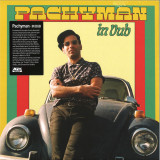
Im Stil der frühen Dancehall-Platten hat es sich Pachy García zur Aufgabe gemacht, den Sound von Scientist, King Tubby, Lee "Scratch" Perry und den großen Technikern und Instrumentalisten der frühen jamaikanischen Reggae-Musik zu reproduzieren. Inspiriert von den Channel One Studios und der Roots Radics Band, ist der Sound im Dancehall-Stil mit einigen Ausflügen in den Rub-a-Dub- und Rocker-Stil gehalten. Aufgenommen in Pachys eigenem 333 House von Januar bis März 2019. Geschrieben, produziert und gemixt von ihm selbst. Auch alle Instrumente hat er selbst eingespielt.
- 1: Jah Life In Dub
- 2: Three Shaolin Dub
- 3: Four English Dub
- 4: Five Collie Dub
- 5: Seven My Heart Is Dub
- 6: Nine What You Gonna Dub
The infamous and legendary "Jah Life in Dub" LP, finally released. Originally slated for release in late '80/early '81, this was to be Jah Life's first dub LP, featuring all exclusive mixes to now-classic Barrington Levy tunes. For one reason or another, the LP was never released. To confuse matters, a couple years later, some of the unused jackets were given to Germain to house an untitled dub LP of his productions. Naturally, we needed to rectify this situation. So here it is, finally released 34 years later! Featuring ten killer dubs to Barrington Levy tunes, ALL MIXED BY SCIENTIST AT KING TUBBY'S. Six out of the ten tracks are previously unreleased mixes, including a dub to the song "Jah Life" which has never been available anywhere before. As an added bonus, the first pressing of this LP will come housed in the original jackets from 1980, which features killer artwork by Oneil Nanco.
- A1: Praise God
- A2: Mister Walker
- A3: Dance On The Corner
- A4: General 007
- A5: Trackas-Trackas
- B1: Natydread The Traveller
- B2: Cricket Lovley Cricket
- B3: Best Dress
- B4: Bad Man Entry
- B5: Marijuana-Marijuana
Toaster Jah Thomas began his career on the west Kingston sound systems of the mid-1970s, making a massive splash with ‘Midnight Rock’ in 1976. After a debut LP for Channel One, his self-produced Dance On The Corner raised the bar several levels. Voiced at King Tubby’s studio, mixed by Tubby, Jammy and Scientist and edited by the King himself, the album has Thomas chatting over hard Roots Radics rhythms earlier used by Barrington Levy – the perfect platform for Thomas’ relaxed chants, vexed rants, and commentaries on Jamaican life. This is Jah Thomas at his best – a must for all fans of reggae, dub, deejay, and dancehall!
Green Vinyl[22,06 €]
In many ways, the music of Writhing Squares could have only originated in Philadelphia; the city itself a microcosm of creatives, go-getters, freaks & weirdos that have coalesced into a supportive & boundary-pushing crew. Former Purling Hiss bassist Daniel Provenzano & Ecstatic Vision sax-player & vocalist Kevin Nickles' first musical missive was shot forth in 2013 (the self-released CDR "Live In Space") & various singles, split releases, albums (and a double-album) later we arrive at the duo's fourth full-length "Mythology", their third for Chicago-based Trouble In Mind Records. "Mythology" picks up the pieces left shattered by their previous double-album "Chart For The Solution" and reconnects the broken shards together like Kintsugi, the ancient Japanese technique for mending broken ceramics, infusing the breaks with powdered gold. The Squares themselves are like mad-scientists, taking the ruined detritus populating junk shops & surplus outlets & constructing their own sonic laboratories in their New Jersey basements to record, mix & tweak "Mythology"s eight tracks. Their new location allowed the band to regroup, reassess & reconstruct their sound from the ground up, shearing away the cosmic excess of 2021's "Chart For The Solution" to a sharper point. Tracks like `Barbarians' & `LEM' are classic Squares; brutal, aggressive, unwavering assault of Motorhead/Stooges-inflected sci-fi punk scree, while others like `Chromatophage's mutant funk & `Cerberus's techno-slink owe a serious debt to electric-era Miles Davis or Herbie Hancock & show that the group has more to offer than bludgeoning you with sonic force. Provenzano's bass & electronics are like a tank rolling across the terrain - a gnarly construct of Hawkwind-ian headiness & `Vincebus Eruptum's snarl - uncaring of what gets in the way. Nickles' brass vacillates between Stooges-influenced sleaze, jazzy no-wave stabs, & cacophonous sonic storms, strafing the listener into oblivion. The duo are joined on "Mythology" by drummer John Schoemaker - who contributed drums to "Chart For The Solution"s epic closing track `Epilogue' - whose percussive pulse adds an organic swing to The Square's sonics, particularly on album closer "The Damned Thing"s cosmic strut. "Mythology" tackles a multitude of themes, from fantastical tales of hellhound `Cerberus' or the comic-inspired "Eternity " to `Chromatophage's colorful/evil yarn about animals that eat colors (or a Magic: The Gathering card) to the true-life influenced `Acid Rain' that deals with the uncertainty of consuming drinking water after a chemical spill in the Delaware River. Elsewhere, `Ferrell' is an homage to the late, great Ferrell "Pharaoh" Sanders & `The Damned Thing' by a short horror story penned by Ambrose Bierce about an animal whose coloring is invisible to the naked eye. Writhing Squares are in a transitional phase, mapping out a new sonic mythology for themselves after crossing the event horizon into unknown space. "Mythology" is streaming on most DSPs & released on black vinyl & limited fluorescent green vinyl (while supplies last) on April 26th, 2024.
Black Vinyl[21,22 €]
In many ways, the music of Writhing Squares could have only originated in Philadelphia; the city itself a microcosm of creatives, go-getters, freaks & weirdos that have coalesced into a supportive & boundary-pushing crew. Former Purling Hiss bassist Daniel Provenzano & Ecstatic Vision sax-player & vocalist Kevin Nickles' first musical missive was shot forth in 2013 (the self-released CDR "Live In Space") & various singles, split releases, albums (and a double-album) later we arrive at the duo's fourth full-length "Mythology", their third for Chicago-based Trouble In Mind Records. "Mythology" picks up the pieces left shattered by their previous double-album "Chart For The Solution" and reconnects the broken shards together like Kintsugi, the ancient Japanese technique for mending broken ceramics, infusing the breaks with powdered gold. The Squares themselves are like mad-scientists, taking the ruined detritus populating junk shops & surplus outlets & constructing their own sonic laboratories in their New Jersey basements to record, mix & tweak "Mythology"s eight tracks. Their new location allowed the band to regroup, reassess & reconstruct their sound from the ground up, shearing away the cosmic excess of 2021's "Chart For The Solution" to a sharper point. Tracks like `Barbarians' & `LEM' are classic Squares; brutal, aggressive, unwavering assault of Motorhead/Stooges-inflected sci-fi punk scree, while others like `Chromatophage's mutant funk & `Cerberus's techno-slink owe a serious debt to electric-era Miles Davis or Herbie Hancock & show that the group has more to offer than bludgeoning you with sonic force. Provenzano's bass & electronics are like a tank rolling across the terrain - a gnarly construct of Hawkwind-ian headiness & `Vincebus Eruptum's snarl - uncaring of what gets in the way. Nickles' brass vacillates between Stooges-influenced sleaze, jazzy no-wave stabs, & cacophonous sonic storms, strafing the listener into oblivion. The duo are joined on "Mythology" by drummer John Schoemaker - who contributed drums to "Chart For The Solution"s epic closing track `Epilogue' - whose percussive pulse adds an organic swing to The Square's sonics, particularly on album closer "The Damned Thing"s cosmic strut. "Mythology" tackles a multitude of themes, from fantastical tales of hellhound `Cerberus' or the comic-inspired "Eternity " to `Chromatophage's colorful/evil yarn about animals that eat colors (or a Magic: The Gathering card) to the true-life influenced `Acid Rain' that deals with the uncertainty of consuming drinking water after a chemical spill in the Delaware River. Elsewhere, `Ferrell' is an homage to the late, great Ferrell "Pharaoh" Sanders & `The Damned Thing' by a short horror story penned by Ambrose Bierce about an animal whose coloring is invisible to the naked eye. Writhing Squares are in a transitional phase, mapping out a new sonic mythology for themselves after crossing the event horizon into unknown space. "Mythology" is streaming on most DSPs & released on black vinyl & limited fluorescent green vinyl (while supplies last) on April 26th, 2024.
In the year 2099, ruthless Austrian scientists were working on a secret government project: A cyborg with the ability to reprogram the human mind. Code name: Prozessor. He was sent back in time to 1985 (Miami, Fl) to change the course of history and take over the world. But the sound wave of a Roland TR-808 bassdrum changed his internal programming and so he became the Beatprozessor.
To celebrate saxophonist/flutist Henry Threadgill’s career retrospective at the 2024 Big Ears Festival, Pi Recordings is proud to release both Volumes I & II of This Brings Us To together in a limited-edition double vinyl set. Featuring his long-running band, Zooid, the two volumes were originally released in 2009 and 2010 even though the music was all recorded at a single session. They were his first releases in eight years, longer than any hiatus in his career, a time that allowed for the gestation of what was to become Threadgill’s signature intervallic system of composition and group improvisation that ultimately won him a Pulitzer Prize for his work In for a Penny, In for a Pound. The original albums were voted the #2 and #5 best releases of the year by The Village Voice Jazz Critics’ Poll, about which NPR said “The jazz world is coming to realize that Threadgill is a true idiosyncratic great…. This Brings Us To staggers and lurches and creates dissonances, and it still brings the mad-scientist funk.”
This Brings Us To - Volumes I & II by Henry Threadgill & Zooid, released 19 April 2024.
This version of This Brings Us To - Volumes I & II comes as a 2xLP.
The vinyl is pressed as a opaque disc. Another vinyl is pressed as a opaque disc.
The latest by UK rave reanimator Low End Activist is a nine-track suite of skeletal hardcore, pointillist drum n bass, and deprivation chamber dub, chopped and brewed in homage to the countryside sites of golden age dance gatherings: Airdrop. From Waterstock to Yarnton Road to White Horse Hill, England’s early 90’s dance summits loomed large in LEA's familial and artistic landscape as a youth, trading tapes and pumping tunes across long weekend afternoons: “Fast music to soundtrack slow days.”
An atomized stew of stabby samples, bubbling bass, airhorns, echo, and blitzed BPMs, the cuts take cues from key heroes of the “where were you in ‘92” set – Tango & DJ Ratty, Top Buzz, DJ SS, DJ Seduction, Dr. S Gachet – then fling them to the four corners. Skittery, stripped, and elevated, this is mad scientist music of voltage, vision, and rewired brains, scraped to its raw genetic essence and deployed for peak kinetic liberation.
Obscure digi dub gem from 2010 by French one-of-a-kind vocal scientist Pupa Jim, available on wax for the first time since its initial short run 14 years ago.
Programmed by the Maffi crew, the Copenhagen riddim experts of the myspace era, this relentless 7″ module aged oddly well, with its futuristic AI-theme and timeless simplicity.
Jahtari main electrician disrupt is taking a closer look into the strippped down riddim schematics on the flip side, kicking it with a minimum set of transistors to wreak maximum havoc dubwise.
Rethink human's dominion in "The Invincible": a story-driven adventure set in a hard sci-fi world by Stanis?aw Lem. Discover planet Regis III as scientist Yasna, use atompunk tools looking for a missing crew and face unforeseen threats. Make choices in a philosophical story that's driven by science. A major part of the brand-new video game hit "The Invincible" is the unique atmosphere. Apart from the outstanding visual effort, created by Starward Industries, there's also the capturing soundtrack by Brunon Lubas that draws the player into the game. Lubas describes his contribution to this journey into space the following: "Inspired equally by the early pioneers of electronic music, minimalism, lo-fi and modern experimental music, the soundtrack for 'The Invincible' consists of 13 diverse tracks. Digging deep into the emotional part of the game's narrative, it accommodates the feelings of melancholy, mystery, loss and hope all glued together with a distinct and consistent take on aural aesthetic and harmony."
FRN Dancehall might have emerged in Jamaica, but over the last few decades the popular genre's tendrils have stretched out across the globe. In Kampala, Ratigan Era is adding a distinct Ugandan twist to dancehall, fusing it with East African humor and hyper-melodic afrobeats elements imported from Ghana and Nigeria. The versatile MC grew up listening to Jamaican music like Vybz Kartel, Busy Signal and Mavado - in his hometown of Kawempe there was almost no way to avoid it - and it blurred into the background, blending with local church music, US hip-hop and radio pop. He developed this diverse range of influences into a completely unique Afro-dancehall flow that simmers between Luganda, patois, Spanish and English, reflecting the melting pot of cultures and dialects that characterizes contemporary Africa. Ratigan broke out with a memorable feature on Pallaso's Ugandan hit 'Nsaba', a track that echoed throughout the country booming from nightclubs, motorcycle loudspeakers or from convenience stores. Now he's assembled his first album "Era", a furiously inventive interweaving of rubbery vocals and memorable chants backed by futuristic beats from Hakuna Kulala's most boundary-pushing producers. Congolese producer Chrisman takes the reins on 'Gorilla Attack', providing a downtempo groove that echoes recent Jamaican chop deployments from breakthrough artists like Skillibeng and Skeng. For his part, Ratigan ducks and dives between Chrisman's gqom-inspired low end womps and corrosive synths, commanding attention with his smart, dextrous flow and tongue-twisting lyrics.The Modern Institute and Golden Teacher's Richard McMaster handles 'Top Strike Force' leaving space in his wiry, minimal beats for Ratigan to flit between anthemic repetitions and ice-cold AutoTuned wails. On stand-out track 'Badman Style', Ratigan's guttural patois is measured against a dizzy trap-dancehall hybrid beat from HHY & The Kampala Unit's Jonathan Uliel Saldanha, aka Lithium Beats, while on the surreal 'Drop it Down', Japanese mad scientist Scotch Rolex brings out Ratigan's cheeky sense of humor with toytown bleeps and laser zaps. MC Yallah collaborator Debmaster appears on 'Gan Dem', meeting Ratigan's double-time raps with soundsystem destroying rolling subs, and veteran US noisemaker Kush Aurora sprinkles magic dust on 'Cool and Deadly', galvanizing the link between global bass mutations, Jamaica and East Africa.And despite the grab-bag of producers and inspirations, "Ratigan" is a strikingly coherent listening experience that accurately snapshots Kampala's colorful froth of sounds and phrases. Ratigan's outsized personality is welcoming and captivating, providing the sights, sounds and smells of the city with a frenetic rhythm that's as intimate and local as it is far-reaching. It might just be the future we so desperately need.
Following the success of the "Out Of Luck" single, we're wrapping up the Ghia reworks chapter with "The Other Side" - a dynamic 12" vinyl loaded with three contemporary funk tracks and three instrumental cuts.
The release starts off with the title track on which we can hear another collaboration with vocalist Adriano Prestel. The song is built on the foundation of "Message From The Other Side," a synth-funk instrumental from last year's "Don't Stop" LP. Jim Dunloop has skillfully rebuilt the infectious grooves from scratch, and guitarist Lucy Liebe has contributed to the guitar elements. Interestingly, the 1985 original version contained vocals that were preserved on a demo tape. These original lyrics conveyed the idea that everyone should learn to listen to the other side. Adriano picked up this idea and wrote new verses and a new chorus, beautifully transforming the song into a soulful bliss. In today's world, the message remains relevant: without listening, understanding, and compromise, solutions are elusive.
Next up, DJ Friction takes "Out Of Luck" to new heights with a remix infused with electro-funk. The synth bass replaces the original, a punchier kick and a clap snare give it a classic boogie feel. Additional strings on the chorus and an extended build-up complete the transformation, making it a fantastic tune for any DJ set.
Marian Tone returns to remix "The Other Side" in the '85 rework, blending parts of the original song with replayed instruments from the studio sessions. He adds clav sounds and retains the original marimba keys by Ghia's Lutz Boberg. If you are into the 80s vibes, this rework will be your choice.
The flip side features instrumental versions that, even without vocals, are a special treat for all boogie and funk enthusiasts. Last but not least, the release includes the original mixdown of "Out Of Luck" from when the recording was finalized at Ed Longo's Soundrays studio - offering a different take from the instrumental version on the previously issued 45 single.
The 12" is presented in a full-picture sleeve designed by The Raincoatman, also known as label owner DJ Scientist.
- A1: Hiroshi Kamayatsu - Have You Smoked Gauloise
- A2: Happy End - Haruyo Koi Come Spring
- A3: Yoshiko Sai - Aoi Galasu Dama Blue Glass Ball
- A4: Tadashi Goino Group - Jikan Wo Koero Go Beyond Time
- B1: Jun Fukamachi - Omae You
- B2: Momotaro Pink With Original Pinks - Hachigatsu No Inshow Augusts Impression
- B3: Vol 1 Chap.100 - Heya No Naka In The Room
Nippon Psychedelic Soul 1970-1979 is Time Capsule’s continuation of the deep dive into Japan’s rich history of folk and psychedelic soul music.
Vinyl LP with 4 page insert, original artwork and photos
The kaleidoscopic psychedelia of 1970s Japan captured a fragile and fertile moment as the country sought its future in funk grooves, heavy reverb and lyrical hallucinations.
The follow-up compilation to Time Capsule’s Nippon Acid Folk, Nippon Psychedelic Soul takes myriad pathways into the tripped-out undergrowth of 1970s Japan. Finding their feet at home and looking for inspiration abroad, the musicians featured here were engaged in the communal soul-searching that followed the breakdown of the 1960s protest movements. Some made it big, others drifted into oblivion. The music they left behind shimmers with intensity.
At the core was Happy End, the first project of YMO’s Haroumi Hosono, whose distortion-heavy guitar and crisp back-beat laid the foundations for Japanese lyrics that flipped the paradigm of Japanese rock music on its head. With it came a new found sonic ambition, such as in the bold Philly-soul style arrangements of producer Yuji Ohno, whose work with occult wandered Yoshiko Sai shares some of the bittersweet grandeur of Rotary Connection or David Axelrod.
Then there was Jun Fukamachi, a pioneer of Japanese synthesis, whose debut album was a carnival of orchestral funk, euphoric horn lines and rich production, complete with soaring guitar solos, psychedelic organ and a truly cinematic finale. The first and only time Fukamachi would sing on record, ‘Omae’ rips like the ultimate end-of-nighter.
Influenced by giants of the US soul scene, maverick composer Hiroshi “Monsieur” Kamayatsu (otherwise known as ‘the Brian Wilson of Japan’) went one step further, enlisting Tower of Power to play on ‘Have You Smoked Gauloises?’ The B-side to Monsieur’s biggest-selling single, it coasts with sophisticated cool - a liquid bassline and suave keys comping under a roaring trademark ToP sax solo. No surprise it found favour once more on the Acid Jazz dance floors of ‘90s London.
Such was the spirit of experimentation that big studio productions and private press releases sat side-by-side, with the likes of Momotaro Pink and Kazushi Inamura, taking their hopes of success into their own hands with the resources available to them. More reflective but no less robust, theirs was a heavy, fat-backed drum sound, soaked in dramatic, soulful psychedelia.
If some were dreamers and others space cadets, none were further out than sci-fi writer, musician, activist and self-made scientist Tadashi Goino, who transformed his own fantasy novel Messenger from the Seventh Dimension into an operatic prog odyssey with few discernible musical reference points – a majestic and completely bonkers outlier even among company as strange and brilliant as that which is collected here.
Less a compilation of a scene, as a compilation of a sentiment, Nippon Psychedelic Soul is a wild ride from start to finish, shattering the narratives of the Japanese folk and rock tradition into a million tiny pieces.
$1 Bin Breaks: Sakura (Edit) by Odetta / On The Hill (Edit) by Oliver Sain / Enchanted Lady (Edit) by Milt Jackson With The Ray Brown Big Band b/w Survival (Edit) by Annette Peacock / Sunrise (Edit) by The Originals / A Few More Kisses To Go (Edit) by Issac Hayes / Go On & Cry (Edit) by Les McCann | Galaxy Sound Company — GSC45-041 | Very special hot-off-the-test-presses donut via the always on-point @galaxy_sound_company crew. This will be number 41 in their cop-on-site 45 series, set to be released in 2024. This time out we are treated to 7 “$1 Bin Breaks” &, as with many in the GSC45 series, these are the sources of some of your fav hip-hop jams.
Side A:
1) “Sakura” by Odetta; Sampled in “Tried By 12” by The East Flatbush Posse
2) “On The Hill” by Oliver Sain; Sampled in “Tell Me” by Pete Rock & C.L. Smooth, “Day One” by D.I.T.C., “Young G’s” by Puff Daddy, The Notorious B.I.G., Jay-Z & Kelly Price
3) “Enchanted Lady” by Milt Jackson With The Ray Brown Big Band;
Sampled in “Dinnit” by De La Soul, “Escape” & “Carmel City” by Pete Rock & C.L. Smooth, & “Ijuswannachill“ by Large Professor
Side B:
1) “Survival” by Annette Peacock; Sampled in “Braggin' Writes” by J-Live, “Rules We Live By” by Lord Finesse, “Scientists of Sound” by Brand Nubian, “Kunta Fly Shit “by Ghostface Killah, “Video Game” by J Dilla
2) “Sunrise” by The Originals; Sampled in “Accepte Mon Concept” by 2 Bal 2 Neg' & “Guess Who’s Back” by Scarface, Jay-Z & Beanie Sigel
3) “A Few More Kisses To Go” by Issac Hayes; Sampled in “Tonight's Da Night” by Redman, “Ain't No Fun (If the Homies Can't Have None)” by Snoop Dogg, “Rough Life” by Shabba Ranks, “Is There a Heaven 4 a Gangsta?” by Master P, “B-Cuz I Got a Girl” by Nate Dogg, “The Life” by Alicia Keys
4) “Go On & Cry” by Les McCann; Sampled in “Tha Next Episode” by Snoop Dogg & Dr. Dre, “Runnin' Wit No Breaks" by Warren G, “No Pain” by Lords of the Underground
Mr. Thelonious Edits
File under: HIp Hop breaks , Jazz Funk, Funk, Samples breaks
- A1: 21 Savage / Rose Royce - American Dream - 1:03
- A2: 21 Savage - All Of Me - 3:18
- A3: 21 Savage / Elza Laranjeira - Redrum - 4:30
- A4: 21 Savage & Doja Cat - N.h.i.e. - 2:23
- B1: 21 Savage - Sneaky - 3:21
- B2: 21 Savage, Young Thug & Metro Boomin - Pop Ur Shit - 3:13
- B3: 21 Savage - Letter To My Brudda - 2:39
- B4: 21 Savage, Lil Durk & Metro Boomin - Dangerous - 4:25
- C1: 21 Savage, Travis Scott & Metro Boomin - Née-Nah - 3:40
- C2: 21 Savage - See The Real - 3:02
- C3: 21 Savage & Summer Walker / Faith Evans - Prove It - 3:27
- C4: 21 Savage & Brent Faiyaz / Mary J. Blige - Should've Wore A Bonnet - 3:06
- C1: 21 Savage, Burna Boy & Metro Boomin - Just Like Me - 3:51
- C2: 21 Savage, Tommy Newport & Mikky Ekko - Red Sky - 2:56
- C3: 21 Savage & Mariah The Scientist - Dark Days - 4:55
Black Vinyl[30,67 €]
Fast sechs Jahre nach seiner letzten Solo-Veröffentlichung meldet sich 21 Savage mit seinem lang erwarteten neuen Studioalbum "American Dream" zurück. Das Album, das zwei Wochen in Folge auf Platz 1 der Billboard Top 200 Charts stand, setzt die Trap-Tradition des Rappers fort, fügt aber einige neue Elemente hinzu, darunter R&B auf dem Track "prove it" mit Summer Walker und Pop auf der Doja Cat-Kollaboration "n.h.i.e." Mit Featurings von Metro Boomin', The Weeknd, Young Thug, Travis Scott, Lil Durk und anderen fehlt es aber auch nicht an Hip-Hop-Elementen.
Dieser im Tuff Gong Studio mit Vocals aufgenommene und von Scientist und Henry 'Junjo' Lawes im Channel One gemischte Roots-Reggae-Klassiker von 1982 wurde über RAS Records in den USA bislang nur einmal auf Vinyl neu aufgelegt (1991). Für viele ist es das Schlüsselalbum von Israel Vibration, auf dem Skelly, Wiss und Apple von der aussergewöhnlichen Hi-Times Band im Studio begleitet wurden. Eine Must-Have-Reissue der Originalversion, wobei die Bänder für mehr Hörkomfort und Klarheit neu gemastert wurden.
- A1: 21 Savage / Rose Royce - American Dream - 1:03
- A2: 21 Savage - All Of Me - 3:18
- A3: 21 Savage / Elza Laranjeira - Redrum - 4:30
- A4: 21 Savage & Doja Cat - N.h.i.e. - 2:23
- B1: 21 Savage - Sneaky - 3:21
- B2: 21 Savage, Young Thug & Metro Boomin - Pop Ur Shit - 3:13
- B3: 21 Savage - Letter To My Brudda - 2:39
- B4: 21 Savage, Lil Durk & Metro Boomin - Dangerous - 4:25
- C1: 21 Savage, Travis Scott & Metro Boomin - Née-Nah - 3:40
- C2: 21 Savage - See The Real - 3:02
- C3: 21 Savage & Summer Walker / Faith Evans - Prove It - 3:27
- C4: 21 Savage & Brent Faiyaz / Mary J. Blige - Should've Wore A Bonnet - 3:06
- C1: 21 Savage, Burna Boy & Metro Boomin - Just Like Me - 3:51
- C2: 21 Savage, Tommy Newport & Mikky Ekko - Red Sky - 2:56
- C3: 21 Savage & Mariah The Scientist - Dark Days - 4:55
The folks at Castle Face dig a good trance. Hypnosis, mesmerization, and brain trickery are some of their favorite results of deep listening and it is a suggestive, ritualistic and dreamlike vibe that Bronze ooze like pheromones all over their excellent new record. Absolute Compliance is a truly hypnogogic group of tunes from Bronze on their best and weirdest behavior and it hits all Castle Face’s favorite things about them immediately and repeatedly: insistently strange synth voicings emanating from Miles Friction’s mad scientist’s lab worth of equipment, controlled by a homemade-looking oversized knob; Brian Hock’s throbbing, woolly, hall-of-mirror grooves; and above it all Rob Spector’s thousand yard croon, the vaguely familiar touchstone amongst these Lynchian, mutated surroundings—these are songs of dreams and nightmares, hidden rituals observed, futuristic coliseum entertainments displaced in time, sci-fi jams of an uncertain future. Bronze are one-of-a kind great and if unfamiliar, go find their other records (including their great live record for Castle Face) and get caught up. They are real-deal weirdo kings of San Francisco and their spell is not easily dissipated once cast.
The fresh-faced folk pop band Stornoway seem promising: They play with guileless vigor, have a light-stepping chemistry as a unit, harmonize well. Their lead singer Brian Briggs has a lovely, pure high tenor, the kind of voice that effortlessly conveys simple longing. And yet, on their second album, Tales from Terra Firma, they continue to be almost crushingly dull, making well-appointed and cheerfully empty music that successfully communicates next to nothing.
Their Achilles Heel is a simple and unfortunate one, the same on Tales as it was on 2010's Beachcombers Windowsill. Stornoway are clearly in love with Celtic and British folk, and yet they can't write a memorable melody to save their lives. Try to sing along to the verse melody of "Zorbing", their most well-known tune, and pay attention to what your face muscles are doing; most likely furrowing with the effort of recall. Each of Tales' painstakingly arranged nine songs sinks underneath the weight of this insurmountable problem, which is a shame.
If you're making folk-pop, an inability to write a catchy melody is a difficult deficiency to overcome. Stornoway try valiantly with their complex arrangements, which quickly grow exhausting. “You Take Me as I Am” is cluttered with horn charts and pointlessly banging piano. “(A Belated) Invite to Eternity” builds to a full Explosions in the Sky crescendo, with glimmering tremolo guitar and a “Tonight, Tonight”-style sweeping string section, but having built zero momentum and generated zero heat until that point, their planned fireworks display fizzles.
“Farewell Appalachia” follows the same pattern, with celesta, finger-picked acoustic and electric guitar all tracing an emptily pretty circle with nothing in the center. The melody of "The Great Procrastinator" is almost cleanly written enough to be memorable-- and then the ersatz Dixieland jazz interlude crashes in. Stornoway are deft players, and the transitions are tightly managed, but this is praise on the same order as praising the brushwork in a hotel-room painting.
Briggs’ lyrics are filled with uncomplicated images of the good old British countryside, but his lyrics trample over all these dew-covered fields with wordy, awkward phrasing: "And in the gathering dew, I was lucid as a floodlight,” goes a line from “(A Belated) Invitation to Eternity”. “There's a hunger in the air/ A lemon swollen in the trees" he bleats on “Knock Me on the Head”. On “The Great Procrastinator”, he sings that he is “a scientist with far too many metaphors and far too little data to conclude in time.” They don’t read particularly well, and they don’t sound much more natural when sung.
Tales From Terra Firma is a peculiar record-- carefree music that feels leaden; tuneful-sounding songs that offer no tunes to hold onto. They seem an odd fit for 4AD, a label mostly home to singular voices. They may be a mercenary signing, an attempt to ride the coattails of Mumford and Sons' success. But Mumford and Sons, as head-smack simple and pandering as they are, have a pretty crucial ingredient in their arsenal: they write anthems. In that regard, they have Stornoway pretty thoroughly beat.
- A1: The Great Hen-Yuan’ River
- A2: Summer Will Not Come
- A3: Six Coral Devils (Part Ii)
- A4: Six Coral Devils (Part Iii)
- A5: Six Coral Devils (Part Iv)
- A6: Six Coral Devils (Part V)
- A7: Six Coral Devils (Part Vii)
- A8: Definitely That Ketsal
- A9: The Waltz Windows On The Floor
- B1: Blue
- B2: Kwolyj Twist (Slow Twist)
- B3: Argolida (Part I)
- B4: Argolida (Part Ii)
- B5: Argolida (Part Iii)
- B6: Argolida (Part V)
- B7: Argolida (Part Vi)
- B8: Argolida (Part Vii)
- B9: Argolida (Part Viii)
- C1: All Secrets Of A Poem (Part Iii)
- C2: All Secrets Of A Poem (Part Iv)
- C3: All Secrets Of A Poem (Part Vi)
- C4: All Secrets Of A Poem (Part Vii)
- C5: Poliuwannia (The Hunt)
- C6: Smilywo Chodit’ Do Zymy (Walk Brave To The Winter)
- D2: Widen Spyt’ (Vienna Is Sleeping)
- D3: Wartowyj (The Stand Guard)
- D4: Procesija Mertwych (Dead Ceremony)
- D5: Na Skryni (On The Basket)
- D6: Untitled (Bonus Track)
- C7: Zradnyky (The Traitors)
- D1: Obminaj Misce (Around This Place)
The founders of Cukor Bila Smert’ (Ukrainian: Цукор– Біла Смерть, English: Sugar – White Death) band were Svitlana Okhrimenko (a.k.a. Svitlana Nianio), Oleksandr Kohanovs’kyi, and Tamila Mazur, who studied at the Reinhold Glier Kyiv Academy of Music in 1984-1988. In the summer of 1988, they got acquainted with Eugene Taran, a young guitarist and artist. He joined the band and also became the ideologist of Sugar – White Death. Moreover, Eugene coined the name for the band: the irony towards the Yellow Press. The musicians gathered at Kohanovs’kyi’s house, where they spent their free time not only playing music but also listening to and discussing new records and thinking about the conception of their new project.
For two years, the band recorded a few home-made albums, such as “Rhododendrons Coral Aspides” in 1988 (which is considered lost), where Kostyantyn Dovzhenko took part as a guitarist and sound engineer. He also replaced Taran during the recording session because Eugene was passing an exam at that time. The band also recorded another album – “Lilies and Amaralises,” in 1989, which is also considered lost. Eugene remembers that the band made a lot of recordings but did not pay so much attention to them. Sugar – White Death played live occasionally but spent more time creating their own sound, which was named by Oleksii Dekhtyar (a founder of “Ivanov Down”) as a “sugar calypso sound.” At that time, the music was mostly created by Oleksandr Kohanovs’kyi, and the lyrics were written by Svitlana Okhrimenko and Eugene Taran.
In February 1990, a quartet came to the Scientists House Studio in Kyiv, where they had one studio session only, recorded by Valerii Papchenko. Musicians played live for about one take. This session was represented on the “Mannered Music” compilation by several blocks – “Venus with Long Neck,” “The New Sissies,” and “Rhododendrons Coral Aspides,” which was shortened to “Rhododendrons” on the cassette (two songs from which – “Summer Will Not Come” and “The Great Hen-Yuan’ River,” dedicated to Grigorii Khoroshylov, the sinologist from Kyiv). The compilation cover design was created by Eugene Taran. Later, this tape got to Vlodek Nakonechnyj, the founder of Koka Records, a young Polish label, who released “Mannered Music” on cassettes and made efforts to invite Sugar – White Death to play several gigs in Poland.
In November 1990, Sugar – White Death played their last gig as a quartet in Kharkiv. They were invited by Sergii Myasoyedov, who curated the art association “Nova Scena” (The New Scene). The band played selected tracks from the albums “The New Sissies” and “The Shellfishes in Gold Wrappers” (the last one is also considered lost). Due to Sergii Myasoyedov's efforts, the performance was documented: he saved a lot of photos and fragments of soundboard recordings on reel-to-reel tape.
Later, Oleksandr Kohanovs’kyi and Tamila Mazur left Sugar – White Death: Oleksandr founded his own project Pan Kifared, and Tamila became a bass player of Shake Hi-Fi (whose co-founder was Eugene Taran). Sugar became a duo of Svitlana and Eugene. They started to focus on their next work: “Antinoy Is Leaving” in late 1990.
In 1992, they were also invited by Sergii Myasoyedov for a studio session in Kharkiv, where due to the efforts of Oleksandr Vakulenko, Sugar recorded the new album called “All Secrets Of A Poem”. Some tracks from the work (“Dead Ceremony,” “Vienna Is Sleeping,” and “Untitled”) were released on their next and last album, “Selo” (“The Village”). The rest compositions were published as a part of the compilation for the first time.
In the autumn of 1992, the musicians went to Poland, where Vlodek Nakonechnyj, who wanted Sugar to come to a “real” studio, organized their last recording session. Although the journey’s beginning was unsuccessful (Eugene’s guitar was taken away by a customs officer when crossing the border), the musicians worked fast during the session at the Arek Was studio at Marki on an 8-track reel-to-reel machine. Boleslav Blazhchyk took part as a cellist, playing the parts created by Svitlana. The album was completed in three days – the musicians spent two days recording and one-day mixing, mostly done by Eugene Taran. In 1993, this work was released as “Selo” (“The Village”) album on cassette tapes by Koka Records (remastered by Tadeusz Sudnik). Later, Sugar – White Death was disbanded.
Credits:
Cukor Bila Smert’: Svitlana Okhrimenko (lyrics, keyboards, piano, vocals), Eugene Taran (lyrics, keyboards, guitar), Oleksandr Kohanovs’kyi (piano, A1-B2), Tamila Mazur (cello, A1-B2), Boleslaw Blaszczyk (cello, C5-D6)
Cover photo by Vlad Urazovs’kiy
Photo archive courtesy: Vlad Urazovs’kiy, Vlodek Nakonechnyj (Koka Records),
Oleh Yuhrinov, Sergii Myasoyedov
Audio archive courtesy: Vlodek Nakonechnyj (Koka Records), Guido Erfen,
Sergii Myasoyedov
Liner notes: Vlad Yakovlev
Compiled by Dmytro Nikolaienko, Dmytro Prutkin and Sasha Tsapenko
© ? Shukai / Cukor Bila Smert’
2024
Lès Modernos present a psycho-geographic trip to Andalusia, a journey recomposed in a green Corolla. Mechanized and pastoral collages. Miniature songs, luminous yet just a little heavy, from the great theater of life. Car radio samples, recorded from the passenger seat of the Father's vehicle. Al-Mutreb Abul-Loul, Big City Orchestra, Eric Copeland, Bertold Brecht, Sachiko Matsubara, Hopeton ‘Scientist’ Brown, Cabaret Voltaire (Red Mecca), a French singer resolutely of the now (or Jonathan Richman). Fears greater than us, heredity, death, love, oblivion. And this fever which always consumes us.Tracklisting: 1. laques1 2. corolla1 3. soleil pour toi 4. habitat1 5. Grisou 6. la superlegion 7. corolla2 8. au cabanyal 9. laques2
- A1: Niche News
- A2: 1954: Godzilla Attacks Tokyo - Reconstruction
- A3: 1966: Godzilla Attacks Tokai - Government's Decision
- A4: 1996: Godzilla Attacks Osaka
- A5: Superior Officer Miyagawa's Demise
- A6: Main Title
- A7: Scout
- A8: Special G Task Force
- A9: Unfortunate Disaster
- A10: G Confirmation I
- A11: Test Preparation
- A12: Black Hole Gun Engaged
- A13: The Late Night Abnormality
- A14: Dumping The Egg
- A15: Identification Tag
- A16: Cell Division
- A17: Meganulon
- A18: Kiriko And Jun
- A19: G Confirmation Ii
- A20: The Griffon Mobilizes
- B1: Godzilla Surfaces
- B2: Transmitter Installed
- B3: Dimension Tide
- B4: Submerged Shibuya
- B5: The Underwater Search In Shibuya - Godzilla In The Trench
- B6: Leading
- B7: Fight Of The Meganula
- B8: Starting The Dimension Tide
- B9: Godzilla X Meganula
- B10: The Dimension Tide Fires
- B11: Immortal Godzilla
- B12: Larval Growth
- B13: Megaguirus Is Born
- B14: Ultra-High Frequency
- B15: The Ultimate Combat Form
- B16: Godzilla To Tokyo
- C1: Godzilla Lands In Odaiba
- C2: Godzilla X Megaguirus I
- C3: The Effect Of Ultra-High Frequency
- C4: Godzilla X Megaguirus Ii
- C5: Godzilla X Megaguirus Iii
- C6: Godzilla X Megaguirus Iv
- C7: Program Restored - Conclusion
- C8: The Falling Dimension Tide
- C9: Kiriko's Decision - Lock On
- C10: Dimension Tide X Godzilla
- C11: A Moment Of Victory
- C12: End Credits
Godzilla returns once more to face the combined might of Japan's most extraordinary scientists in the second picture of the Millennium-era: GODZILLA VS. MEGAGUIRUS. Looking for new ways to defeat the Big G, the JSDF invent an incredible new weapon called Dimension Tide, which creates a miniature black hole that will transport Godzilla far away from Earth. However, a byproduct of weapon testing leads to thousands of winged insects invading Tokyo and attacking Godzilla. The Big G fights back, but their new queen appears, now kaiju-sized due to Godzilla's atomic breath. A thrilling battle then occurs as Godzilla goes head-to-head with Megaguirus while the JSDF frantically works to disappear both monsters forever.
GODZILLA VS. MEGAGUIRUS saw the introduction of composer Michiru Oshima into the franchise with a fantastic score that built on previous Toho musical traditions with a view to the future. While using music composed by the great Akira Ifukube for two sequences, Oshima also unveiled her own theme for Godzilla. First heard in a slow and foreboding mode, it's quickly unleashed in gigantic low tones, as terrifying and inevitable as the Big G himself. Soaring heroic material represents the JSDF and their advanced Griffon aircraft, while powerful brass is used for the threat of Megaguirus. Cementing Oshima's reputation as a great composer, GODZILLA VS. MEGAGUIRUS is a classic of kaiju musical mayhem. - Charlie Brigden
Composed by Michiru Oshima
Artwork by Attack Peter
Manufactured in Czech Republic
- A1: Peter Patzer - You Are Not The One For Me
- A2: Ströer - Don't Stay For Breakfast
- A3: Upstairs - You're Just Yourself
- B1: J D. (Puma) Lewis - Dancing Shoes
- B2: Trust - It's Not Over
- B3: Imagination - Strawberry Wine
- C1: Squish - Get Up
- C2: Publicity - Funky Feeling
- C3: Bernie L - Backstreetboy
- D1: Ca$H - Raff Dich Auf
- D2: The Poptown Syndicate - Keep On Lovin' (Single Version)
- D3: Ca$H - Raff Dich Auf (Edit) (Bonus Track)
German Funk, Rare Groove and 1970s Disco music (e.g. the highly regarded Munich scene around Italian producer Giorgio Moroder) have been widely recognized and featured on numerous reissues and compilations. However, the Boogie-ish post-disco side of German music history until now has remained undiscovered. One of the reasons might be that a broader national scene in Germany (unlike the UK for example) never existed. Even though tracks by US bands such as Dazz or Midnight Star were popular in discotheks in Germany around that time, bigger labels showed little interest in promoting German groups playing this new style of Disco Funk, now primarily known as "Boogie", that brought in electronical instruments and often lacked the iconic "four-on-the-floor" beat. Additionally, the number of bands that continued to play funky and soulful music in the 1980s diminished as other styles like Synth Pop, Punk, New Wave and NDW (New German Wave) ascended in popularity. Still, though German Boogie may have never existed as a national movement, great things were happening rather locally and each group featured on our compilation brings with them a particularly unique style and story.
Now, finally, "Boogie on the Mainline" sheds some light on 11 little-known German Disco gems that were released on small or even private labels. The album contains tunes by Imagination, Squish, Upstairs, Bernie L., The Poptown Syndicate, Peter Patzer, Ca$h, Trust, Publicity as well as classic tracks by Ströer and John Davis. It was compiled by John Raincoatman aka DJ Scientist
- A1: People Shrink - Remix By Andy Moor (4:17)
- A2: Like A Chicken In The Corn - Remix By Desmond Denker (2:03)
- A3: Donkeys Don't Grow Here - Remix By Phanton (1:27)
- A4: Exploding Dub Syndrom - Remix By Yürke (4:10)
- B1: Dub Specie Ludens - Remix By Dubby King Knarf (5:48)
- B2: Du Büst Dood Dub - Remix By Istari Lasterfahrer (4:28)
- B3: Danger They Say - Remix By Begritty (3:35)
All tracks licensed from Makkum Records | Produced and mixed by remix artists | Mastering by Detlef Funder, Paraschall Studios Düsseldorf | Artwork by Darko Kujundžic
It's the kind of project that brings the old mad scientist cliché out for an airing, "It's insane, but it just might work." The insanity in this case being a motley cast that features Andy Moor (The Ex, Amsterdam), Desmond Denker (Cologne), Phanton (Cologne), Yürke (Düsseldorf), Dubby King Knarf (Knarf Rellöm, Hamburg), Istari Lasterfahrer (Hamburg), Begritty (Cologne) laying down their versions of tracks from the demento-a-go-go-electro-pop-rock-mono-mind known as Zea.
How could we resist the spasmodic schizoid psychedelic menace of that devilish Dutch juggernaut called Zea. This bastardised twelve inch slab of wax has Zea sonically re-assessed, dissected and twisted in side out. And it had to happen, it had to be made.
"Standing up I forgot what came to mind when I was lying on the kitchen floor. Standing up I forgot what came to mind, something I tried to remember before." It's the punky pop intro of the song 'Staande ben ik vergeten wat ik dacht toen ik lag', the Dutch translation of the first sentence of the song that provided the title for this collection of remixes. Zea, a.k.a. Arnold de Boer, a musician who skips sitting down, who either jumps or lies on the floor fumbling with a dictaphone trying to remember the ideas that just came to mind jumping around from the couch straight into the kitchen, trying to write the next song while cooking spicy food that makes his head explode. It's all inthere, everyone is in there; shrinking people, growing people, dead people. And all "Sub specie ludens" (from the perspective of human play).
Comprising accomplished musicians Roy Bar-Tour, Atzmon Avrahami and Adam Yodfat, Les Dynamites built themselves a strong following for their fresh blend of Mediterranean and classic surf rock with Balkan and Yemini folk, catching the attention of Middle Eastern groove connoisseurs Batov Record. Their debut single for the label, “Pop Oud #2”, packed enough punch, and funk, for both psych fans and break dancers. Backed by a dubwise flip by digging pioneers Radio Trip, it received support from the likes of Juno, Monolith Cocktail and Worldwide FM.
“Uzi Kinrot” takes its name from guitarists Uri Kinrot and Uzi Feinerman of Boom Pam, pioneers of today’s resurgence in Middle Eastern surf rock. Ray Bar-Tour riffs like a Klezmer-playing Dick Dale over a Balkan sousaphone bass lines and snappy drum rhythms. Towards the end, Yemen Yehudith adds a special touch of traditional wailing, raising the excitement by another notch.
Recorded, co-arranged, produced, mixed and mastered by Uri “MixMonster” Wertheim of famed funk band, The Apples, and obscure sample scientists, RadioTrip. On “Uzi Kinrot” and “Sea Gull”, the group pay tribute to the Mediterranean surf heroes who inspired them most. They continue from where the seventies funk leaning “Pop Oud #2” left off, going deeper, and reuniting the classic Mediterranean and American surf sounds with a fresh perspective, destined to earn themselves an even greater following.
In Frank Herbert’s 1973 novel Hellstrom’s Hive, the Dune writer tells of a sinister narrative surrounding the maverick scientist Nils Hellstrom, who has created subterranean Hive of 50,000 insect-human hybrid life-forms. Ultimately his plan being for the inhabitants of the Hive to usurp humanity and take over the world. The decade thus far may not have seen anything quite so daunting, but it’s provided more than its fair share of challenges. Yet in such dystopian environments, Teeth Of The Sea flourish. This band has created a kaleidoscopic inner world all its own in Hive, their sixth and most outlandish album. Fundamental to Teeth Of The Sea’s mission thus far is that this band can go anywhere and make short work of any obstacles in their path. Inspiration flowed into Hive from all dimensions, with the band’s sphere of influence expanding to take in everything from Italo-disco to minimal techno, from dubbed-out studio madness to their most brazen forays thus far into pop songwriting. Here is a headspace where the psychic charges from records by Labradford, Nurse With Wound, Vangelis, The Knife, Nine Inch Nails and John Barry can happily co-exist. Hive is more than just a transformative force from subterranean origins. It’s an alchemical headspace where monochrome animates into vivid colour. It may not be a carefully ordered insectoid militia set to overthrow society, but it’s a transmission which transcends anything Teeth Of The Sea have thus far offered in their time on Earth. Step inside Hive, if you dare