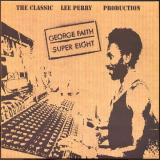
This single gets together two rare and important tracks from legendary producer Lee “Scratch” Perry with singer Neville Grant.
SICK AND TIRED, the great vocal version of RETURN OF THE DJANGO, was released in 1973 on Downtown (DT.509) whilst
BLACK MAN’S TIME was released in 1972 on the Upsetter label.
These two outstanding tracks are in our opinion the best of Neville Grant’s recordings and among Lee Perry’s very best productions of this era.
As such, they were featured on several top compilations but are both quite rare as singles and highly collectable today…
Buscar:the scratch
Focus, integrity and substance, all allied to a relentless work ethic and that essential (if indefinable) sprinkling of magic dust, have kept Nick Warren at the top of the electronic music tree for not far short of forty years.
In that timespan, Nick has been tour DJ for Massive Attack, held a residency at Cream, been a Glastonbury regular, and become the UK’s most successful export to Argentina (in no small part due to his touring brand The Soundgarden). As half of Way Out West, he has helped write (and re-write) the rule book for club-based electronic acts, achieving true longevity without compromise. He has curated over a dozen essential compilations – a mainstay of the Global Underground series whose heavyweight influence is still felt to this day, an in-demand decknician for pivotal brands such as Renaissance and Balance, and the very first DJ entrusted with creating a blueprint for the now iconic Back to Mine series.
It's quite the CV, a career many can only dream of. But Nick has long had one further itch in need of scratching. Inspired at a young age by his dad’s Jean-Michel Jarre and Tangerine Dream albums, coming of age with experimental labels like 4AD and Factory, roots deep in the dub-wise scene of his native Bristol, a long time collector of exotica and obscure film soundtracks…all that knowledge and passion has long been crying out to be channelled into a Warren solo album.
All of which brings us to the career-defining Turbulence. The world is certainly a turbulent place as Nick gets set to unleash his masterwork, but the musical turbulence at work here arguably takes its lead from other interpretations of the word – turbulence as a feeling of heightened intensity, turbulence marked by a sense of unpredictability.
Turbulence is a window into Nick’s musical soul, and the myriad styles and influences that reside there, drip-fed into a melodic melting pot to create a unique sonic stew. Tempos and styles switch and interlock effortlessly, the mood ebbs and flows like the best DJ sets, and the running order, from the ethereal opener Loveland all the way through to the achingly beautiful closing cut Sadly (in tandem with Tripswitch, one of several noteworthy collaborations) showcases an artist at the top of his game, and with a deep understanding of the concept of the long player.
We all need some turbulence.
It Takes Two is at it again. The 45 duo, founded in 2020 is here with a repress of there fifth release.
Supported by DJ Koco aka Shimokita, DJ Robert Smith and Marc Hype of Dusty Donuts many more. Edits by DJ's for DJ's filled with scratch samples and perfect intros/outros. After 001, 002 and 003 sold out, they're back with 005!
Previously released as ITT003 (SOLD OUT) white label Dilla Tribute. Now available as ITT005.
The A side is a remake of Dilla's 'You Know How I Feel' beat, that got lost.
The B side is an edit of 'Fall In Love' and a cover of Fall In Love.
Limited to just 200 copies.
Sticking a dirty thumb in the eye of fate, our third collaboration sees this marrow deep family malarky turn official as Pace Yourself teams up with YS’s own imprint ERF REC for a split release. As if our status as minor celebrities and footnotes of the underground could level off no further: the unification no one asked for is here. Sticking it to the man, handing your arse to ya on plate; cauterising infected suburban minds world over.
Burn is the second YS album and written as a direct follow-up album to Brutal Flowers. If their first album was an exercise in the incremental, a construction of poise and patience, Burn, should be taken way the fuck at it’s word: it quite literally finds catharsis in twisted reverse. Birthed out the malignant kick found in deconstruction and chaos. Evil twin, psychotic younger sibling, call it what the hell you like. It might take you a moment to get the lay of the land in this darkly mutated world. Like a bug eye’d native first confronted with a zippo, the hit is radical and instant: a new way for the world to go up in smoke.
Splice the Seattle slacker scene with the spliffhead soundsystem culture of the 90s Bristol trip-hop scene, then cross-breed that with the DIY optimism and glee in creation found in the cut-and-paste worlds of skate, graffiti and hiphop, now run that through the skitzo basement mind of John.T. Gast and you’re close to the kind of scorched earth and spiked suburbia that birthed Burn.
Dunno quite what YS have been ingesting of late but this massively twisted LP touches on a host of gloriously fucked totemic underground sources while not sounding much like any of them. It has the ballsy swagger and hard flipping of the script as Massive Attack’s seminal Blue Lines. Indeed, the eponymous album tracks sound similar - the opener ‘Burn’ is like a hard nosed jammed out redux of ‘Blue Lines’. Getting into a kind of slow-spinning overdubbed maximal euphoria ending with mumbled downer vocals, struggling to conceal their tongues in their cheeks there’s an air of paranoia and proto-conspiracy theory. It’ll leave you scratching your head, feeling like you’ve stepped into a New World Order governed by a cacophony of drop outs, dope fiends and apocalyptic stoners. A cracked out world somewhere between Richard Linklater’s movie Slacker (1990) and Marc Singer’s Dark Days (2001).
The rest of the album parts like a tongue on a wine glass: Smith and Mighty, Bandulu, ambient Luke Slater records, Wah Wah Wino, Nurse with Wound, Land of the Loops, Placid Angels, Adrian Sherwood, Urban Tribe and DJ Shadow can all be heard in momentary splatters - but Burn like other works by YS, is its own ritual beast. ‘Moth’, a track which has been knocking about the underground deejai circuit for many moons, is a real raw chopped and screwed slice of stoner erotica that reeks of obsession and unrequited desire. Elsewhere, on tracks like ‘Switch’, ‘Trying’ and ‘Drift’ the throughline from Brutal Flowers can be heard. Underneath the driving heavy gravity the trademark emotional intimacies of YS linger: eternal recurrence, ghosts of static and shortwave, worn memories of the playful and painful sort. The brief moments where flashes of orchestral ambience get out from underneath the swagger are so pure, personal and unguarded that for a moment they leave you completely lonesome. In the album’s closer ‘End’, you can hear the fleeting promise and DIY possibilities of an analogue world and embers of ash that flutter in its wake: where it seemed, for a brief moment, that collective of DJs, engineers, rappers, graffiti artists and skate crews were emerging from the streets, giving the middle fingers to the system, before just as quickly disappearing back to the doldrums of obscurity. ‘End’ is a bittersweet ode to early soundsystem culture, MCs and pirate radio - an out of step time where for a moment the underdogs and weirdos seemed to be kicking on the door of something bigger.
A veritable teenage doof suite dosed with desire, claustrophobia and deviance. Burn is a good old howl at the moon: lonely, raw, and out for blood; basement style exegesis at its best. A thump to the gut, a stud through your blood. A dubbed-to-death classic straight out of the annals of nowhere. A perfect post card from oblivion. A bleak, bold and personally ferocious vision of tomorrow and tomorrow and tomorrow.
This is everything that record collectors skip dates for. Fuck the scene and keep that shit underground. That’s what it is all about. Know what I mean, if you do? You’re in…
TCHDWN — former DMC Vice World Champion and Barcelona-based artist — makes his vinyl debut on Track Deluxe with BCN City Of Mind Spring Collection, a sonic tribute to the city that shaped his journey.
The EP includes five original tracks, an intro, interlude, outro, and a unique scratch bank sourced from the project itself. A locked groove nods to TCHDWN’s turntablism roots, making this a treat for vinyl heads.
“Every beat is infused with the energy and inspiration I’ve found here,” says the artist. The result is a fresh, timeless soundtrack that captures the essence of a Barcelona spring.
Early support from: Velasco, Gabbs, Lukas...
Drawn from years of early-hour sets and the quiet intimacy of the booth before the room fills, Gimme The Sun marks the debut EP of Al-Veez (real name Alvise Marino). A seasoned guitarist raised in Italy with musical roots in funk, boogie, and blues, Marino’s release is a sonic travelogue of his formative years as a selector in a city, NYC, that quietly became home. The prominent guitar captures both the ache of departure and the bright, restless hope of return.
With a wistful blend of beachy, meandering textures, lush synth layers, and a hypnotic pulse, the EP lands in time for another steamy summer in the city—sure to strike a chord with longtime NYC house heads, whether they be behind the booth or lost in the crowd. Arranged in close collaboration with TSoNYC label boss Danilo Braca (also on mixing and mastering duties), theshimmering title track reads like a Dear John letter to New York. Tender, honest, and full of gratitude, it’s the kind of farewell only a true love could inspire—one that dances forward even as it looks back.
As the record warms up, “F Train Boogie” evokes snapshots of bright midsummer mornings gazing out a scratch-blurred train car window at the glistening city, while the track that follows, “Sneaky”, sizzles with cosmic allure—an intoxicating blend of luminous synths, tightly interlaced rhythms, and a commanding kick drum that locks the listener into an entrancing groove from the very first bar. “Underwater”, the fourth and final track, shares some of the same allure and mystery, but features a playful optimism, encouraging the listener to lean into curiosity of what the next chapter, night, or DJ set will hold.
JOE T. VANNELLI, one of the world's leading exponents of house music, creates
two new remixes featuring two House DIVAS, two powerful and iconic voices:
LOLEATTA HOLLOWAY and EARTHA KITT! Loleatta Holloway's track "Sensation,"
in Club and Melodic House versions, makes the dancefloor vibrate thanks to
Vannelli's touch, offering two high-impact versions aligned with current global
trends. On the B-side, EARTHA KITT and her scratchy voice are remixed in the 2025
version of "Where is My Man" with electronic and funky sounds in the first track,
and in the iconic version that became famous in the Milanese nights of New York
Bar (1999) in the second.
The first comet From Scratch rises from within, where RA, an unknown human being, lets love flow through every frequency.
Navigator guides with deep melodies, while Moonblue embraces you with warmth. On the flip side, Raleo swings with joy, and Redsun mixes tribal rhythms with hypnotic grooves.
A record for every moment of the night, holding a hidden sound waiting to be discovered by those who own it. Get it and uncover the message sent by the comet itself.
Berlin techno talent Regent returns to Mutual Rytm with second 12" release, 'Delta Hyve' - a five-track package lined with peak-time heat.
Regent is an ever-growing voice in the global techno conversation. His tracks have found their way into high-profile sets worldwide and are renowned for their impressive blend of the past and the present. Versatile but always designed for maximum impact, delivering an impressively crafted sound made for powerful systems, this new outing offers a wealth of different moods and grooves for various parts of the night. Returning to SHDW's Mutual Rytm imprint following 2023's successful 'Coral Knife' EP, he unveils a fresh selection of cuts that emphasise his emergence with 'Delta Hyve'.
The title cut 'Delta Hyve' opens up with devastating low ends and busy synths that scurry about the mix to bring dynamism to the rooted drums, while 'Ophaal' delivers thumping kicks and coarse, textured hits scrape and scratch, while supersized hi-hats bring the intensity to all new levels. 'Hygea Core' brings the pressure with hunched-over drum patterns and a sense of urgency in the bass, while creepy pads create an unsettling atmosphere. 'New Narrative' powers on like a train with high-speed rhythms and metallic percussive surfaces, all sweeping you off your feet, before 'Ree 54' switches things up with bright synth flashes and more extraverted grooves that hark back to the machine soul of early Detroit techno.
The first digital bonus, 'Presence', is intense and tinged with the grit of a warehouse and menacing vocals, while 'Rheplica' delivers unrelenting loopy drum funk with shattered glass melodies to close the show.
I turned the page and will never forget what I then saw.
The fountain pen scratched against the paper, whistling like fur on an abandoned tire in the
middle of the night at the centre of the universe in the core of whatever it is I’m trying to believe.
I am a patient human and I live and breathe. I know this for sure.
I read about a whispering stillness of the Stadsnacht as my blood levels gradually even out again. Beneath the ink, the words take shape. This is a secret correspondence with the Book of Change – a dialogue not meant for eyes or ears, but for the soul. Are you still with me?
The Snake Rope tightens, its Coils Dive into the deep well of patience, where waiting is an art, a
dance with the unseen. The Scientists Say we should measure, predict, contain—but here, in
the shadow of the deepest of nights, the only truth is the Celebration of Ignorance. Love is the
force that binds as it untangles the invisible thread that refuses to sever. The next page quotes the mystical figure Daim: “Never Dissever Us.”
There, in the dawning light, the Dageraad reveals the Icequeen in her frigid throne, the Topiary Man standing guard in his sculpted silence. In this quiet landscape, I wait. I continue to wait, for I have good fortune on my very hands.
If You Won’t, I Will.
Can we exhibit the power to possess conformity? Can we redeem the benefits of crossing the water? Yes. The choice, the act of breaking through the barrier of convenience, is both a burden and a liberation.The words swirl, abstract and concrete, like action and inaction. The Book of Change is a paradox to puzzle over.
The evening cool rests its shoulders on my fluffy neck. I inhale as my pen lifts itself from the
paper once more, shedding ink as though it were tears of joy. I know that I have touched the
edge of something vast, something that moves beyond the grasp of reason into the heart of the
I Ching, the ever-turning wheel of change. This is the correct orientation. This is the vivid
imagery of clouds falling from the heavens and into our laps. This was never meant for your
ears. This was meant for you to feast on as the seasons bestow upon us
2025 Repress
Creativity has no borders and our artist have no boundaries, no genres attached just freedom.
Deep in Dis intl. proudly presents "SHAHRZAD" (DIDWAX001) by Parisian dj/producer Noiro. We are extremely gassed to showcase Noiro's eclectic and unique approach to club music with this 5 trax EP.
We start the journey with the highly experimental 'Kata Pulse', an intergalactic and powerful trip-hop influenced tune with a strong vocal game.
A2. 'Rude' follows the cosmic vibe perfectly with a bit more aggressive breakbeat but keeping a warm feeling at the same time. Where the b-boys at??
To wrap up the A-side, 'Aube Session' brings those mysterious and high cloud walker feelings. The dance floor is starting to get warm... crashy bells, dj scratches and twisted synth/bass lines turns on the auto pilot for what's to come flipping the record to the other side where Noiro depicts the rest of the story.
B1. '1F' is a club banger, structured around frenzy and hypnotic synths, solid drum patterns and an unflagging muffled bassline.
Closing the EP B2. 'Show Me' confirms it wasn't just fluke ladies and gentlemen, Noiro's distinctive and unique sound is here.
Vinyl only.
Glen Adams was a Jamaican musician, composer, arranger, engineer, producer, based since the mid-1970s in Brooklyn, New York City. Predominetly known for being a key member of Lee ‘Scratch’ Perry’s group The Upsetters – the Glen Adams Affair was the disco alter ego of this reggae/dub organist.
Originally released as a 12” on the infamous SAM Records label in 1980 the 7-inch version only ever received a small UK pressing. This is the first time this legendary single appears as a 7-inch with the iconic SAM Records sleeve and label.
Remastered by Phil Kinrade and presented in a 7” Discobag sleeve and now officially released in full coordination with SAM Records
At the start of the 1980’s X-Plode’s dad had a second-hand colour TV business in Bolton, Lancashire where he would buy, sell, repair and trade TVs. He would come back home with all kinds of things he had traded for a TV but the most memorable, to a 10 year old kid at that time, were the keyboards. He use to watch his dad play songs from the 1960’s on these keyboards and when his dad had gone out, Lee X-Plode would sneak on them and start messing about, experimenting with the drum programs and fiddling with the buttons, trying out ideas. He had to move fast though because these keyboards didn’t stay in the house for long as his dad would trade them again for something else; one time that was an old analogue echo chamber, which Lee also messed about with when his dad was out. That echo chamber was a revelation to Lee and opened up the possibilities of what was possible with sound. So by the time Lee was 16, he decided he wanted his own keyboard and started saving. When his 17th birthday came around he had saved up £200 and visited his local Argos where he bought himself a Yamaha PSS 680, an FM synthesizer with memory banks and a basic drum machine incorporated. ‘It was shit quality like, but I didn’t mind. I just wanted it for the programmable drum machine, the synth and the memory banks that came with it” Lee recalls. The year was 1987 and by this time in Lee’s life he was into reggae and hip hop, the latter he first embraced in 1983 by the way of breakdancing and listening to electro, so all he wanted to do when he got his gear was make reggae and electro sounding beats. Recalling his youth and the fun he had with the echo chamber, the next edition to his home set up was to acquire one of those, which he did via a mate of his. But by the time he got his minimal set up sorted in 1988, his musical tastes had changed. House music had landed here in UK and this was Lee’s new passion, so from that point on wards he started experimenting, trying to nail a decent house groove. ‘I wanted 808 sounds, but I didn’t know what one was!’ Lee explains.
Around late 1990 or early 1991, Lee started to improve upon his set up, purchasing an Atari STE, a Cheetah MS6 , a 6 voice polyphonic/multi-timbre analogue rack mounted synth that linked up to his Yamaha – “It wasn’t a great bit of kit, I kept getting electric shocks from it. Eventually it just blew up!” Lee had acquired a cracked copy of Cubase on floppy disk from his local computer game shop but struggled with it. “It was so complicated to understand and took me ages to get used to it. I was stoned a lot back then and I just couldn’t concentrate on anything for long” Lee laughs, continuing “I also picked up a 4 channel sampler/sequencer which plugged into the side of the Atari and that’s when I first started sampling, I think this would have been late 1991. I had the Simon Harris ‘Breaks, Beats and Scratches’ vinyl that he put out on Music for Life which were a godsend back then. I was also sampling a lot from cassette tapes, especially reggae. I would also record the Stu Allan show on Key 103FM, one of the main stations broadcasting out of Manchester. He would do a 3 hour show with hip hop and house, and then hardcore house came along. Eventually he dropped the hip hop altogether and it was just house and hardcore. I recorded the shows onto cassette most weeks and started to learn more about how house and hardcore was put together by listening to those shows.”
Renowned for his masterful reworks, Dr Packer delivers another essential disco floor-filler, breathing new life into T-Connection’s 1979 classic Saturday Night. Having previously tackled the group’s iconic At Midnight, Dr Packer now turns his expert touch to this funk-driven gem, injecting it with his signature modern disco magic.
The Dr Packer Extended Mix is a high-energy update tailored for today’s dance floors, driven by a wicked rolling bassline. With an ear for detail, Dr Packer teases out Chic-like scratch guitars, soaring strings, and punchy horn stabs, creating an electrifying groove that pays homage to the original while delivering undeniable up to date appeal.
On the flip side, the Dr Packer Dubstrumental Mix strips back the vocals, allowing the rhythm section to take center stage. Packed with pure club energy, this version delivers with bass, beats, and funk-fueled fire—perfect for DJs and dancefloor devotees alike.
Get ready to turn up the volume, Saturday Night is back, and it’s bigger than ever!
There's iconic. Then there's *iconic*.
A MASSIVE speaker-smashing release, decades overdue. It's been bootlegged - shamefully so, many times over the years - but finally we present the first ever officially licensed reissue of this truly special Afro-disco-not-disco LP from 1979. A favourite of Harvey, Antal, Young Marco and, er, every great DJ to ever play deep records ever, basically. It's not hard to see - or, indeed, *feel* why.
Gem after gem of relentless, irresistibly funky gold, it's an incredibly revelatory album with endlessly complex drum patterns and basslines to dive into, throughout. Truly, this is uniquely FIRE music, unlike anything else you've ever heard, based on Gwo ka music from the gorgeous islands of Guadeloupe and Martinique. A thrilling synthesis of primal, hypnotic drums - the most tribal of percussive elements high in the mix throughout - with the loping synth pyrotechnics of, amongst a whole host of other greats, Wally Badarou and bass power of disco funk don Sauveur Mallia (Arpadys, Spatial & Co.)
Originally released on the seminal French label Barclay, you'd be hard pressed to even find an original copy in nice condition anywhere, let alone for a reasonable price, so it's high time an officially licensed, remastered reissue came around. It's just the latest in a long line of Be With reissues where the music sounds like the - drop-dead dazzling - cover. This here is a true drum attack. BUY ON SIGHT!
Tumblack was a short-lived project, produced and arranged by electronic wizard Yves Hayat and it can certainly be regarded as one of the first examples of Zouk, mixing powerful disco-funk arrangements with Gwo ka, traditional music from Guadeloupe. Gwo ka is an Antillean Creole term for "big drum". You can say that again! It refers to both a family of hand drums and the music played with them, which is a major part of Guadeloupean folk music.Whilst the first side is credited to the exceptional Tumblack band, the flip is given over to "Tumblack & Friends". These weren't just any old friends. Oh no, they were the absolute cream of the French scene (think Arpadys, Voyage, Le Club, Giant, CCPP, Synthesis, Swing Family) such as Sauveur Mallia, Wally Badarou, Marc Chantereau on percussion, Slim Pezin on guitar and Jean-Paul Batailley and Pierre Alain-Dahan handling drum duties.
The urgent, frantic "Fracas" gets things moving straight away with a cavalcade of drums and percussive funk before giving way to the stratospheric "Invocation", one of the album's many, many highlights. It's effectively one long heavenly drum break, a really hard, raw, tribal drum workout without a whole lot else going on - and all the better for it! One to make you sweat, no question. Up next, "Jubilé" is announced with a bellowing accapella voice, chanting the titular name before the heaviest of kicks smashes out your system and lulls you into an absolute state of bliss for nearly 6 minutes. Whoooooosh! Rounding out the sensational A-Side, "Vaudou" is a scratchy, funky patterned drum workout which - yep, yet again - absolutely slays your neck muscles, making them snap and contract in extraordinary fashion. TURN IT UP!
Ushering in the B-Side, the brief, fidgety, African chant-funk of "Parlement" segues seamlessly, beautifully into "Waka", an overwhelmingly rich gem of percussive funk. You do not want this to end, once it hits its stride. For maximum heavenly drum pleasure, you'd need to go a long way than the moment "Waka" feels like it's fading out before it kick-drum-blend into the mighty "Caraïba (Intro)". It's just staggeringly good. It's a minute-long layered drum prelude to the gigantic track which follows. Indeed, "Caraïba" is arguably the best loved and most well-known cut off the LP. And with good reason...featuring that Mallia bass, warm Rhodes and clavs, synth magic, memorably alto sax lines and, of course, tribal chanting.
Another mighty super-ahead-of-its-time classic, the bouncing bass heavy synth funk of "Chunga Funk" deploys Mallia and Wally Badarou (on Mini Moog) exceptionally well. I mean, come on, that bassline is just ridiculous. Try not to move to this one. This extraordinary record closes out with the more traditional Gwo ka sounds of "Bateau La Passé", the tribal chorus making the hairs on the back of your neck stand up.
Tumblack really is a gorgeous late-70s disco-not-disco essential. It's an absolute MONSTER that will completely blow you away; and, yes, it's as compelling and trance-inducing as the cover. The audio for Tumblack has been carefully remastered by Be With regular Simon Francis, ensuring it sounds better than ever. Cicely Balston's expert skills have made sure nothing is lost in the cut whilst the records have been pressed to the highest possible standard at Record Industry in Holland. The cover of Tumblack is so iconic and we sought special permission from original artist Hélène Majera to recreate this at Be With HQ. It absolutely zings off the print and serves as the perfect finishing touch to this long overdue re-issue.
Canada's Andre Zimmer makes his SEVEN debut with his 'Wait a Minute' EP - a stellar collection of faster, chuggy, pacey style of house gems. The EP's title track is the first to slam, with a heavy-handed 909 kick blistering beneath a chugging bassline.
Taking influence from the Berlin house scene, it serves one purpose: to galvanise dance floor energy.
Parisian producer Vitess lands a remix of 'Wait A Minute' with his '90s-focussed sound and penchant for deep, minimal sounds being the pull. Lucious pads and electro synth lines across the hip-hop influenced vocals bolster the track's impact. 'Ice Lolly' came together at a friend's pad in Los Angeles, with a jam session grabbing UKG and speed garage influences and infusing those with a distinct '90s tech house vibe.
For its '90s influences, 'Round Two' finds its muse in a classic rave organ, while other elements that evoke a sense of the heady warehouse parties from that era include sampled vinyl scratches, breakbeats, and chunky bass from his Yamaha DX200 vintage synth.
The year is 1974 and we are in Kingston, Jamaica: Lee Scratch Perry has just presented Susan Cadogan's album 'Sexy Suzy' on his Upsetters label. The Jamaican singer, who is just under 25, sees her cover of 'Hurt So Good' flirt with the top of the UK and JA charts but has no idea that 50 years later, she would still be a household name among Jamaican music fanatics.
On the B-side of this LP, produced by Mr Perry himself, the penultimate track is a cover of Little Willie John’s "Fever". Over the years this song has taken an unshakable place in the hearts of reggae lovers worldwide. With nearly 700 different versions referenced to date, Fever already enjoyed classic status at the time, mainly thanks to the success of Peggy Lee’s version released in 1958. Since then, in all styles, across all continents, the song has been reinterpreted, so much so that it's rare to find a year since 1956 without a new version hitting the market! Universal, timeless, this love song is known to all music enthusiasts, but in the reggae scene, it’s Susan Cadogan and Lee Scratch Perry’s version that still reigns supreme.
50 years after its release, Stand High Patrol offer us their own version. Recorded at the end of 2023, the Susan Cadogan / Stand High Patrol collaboration wasn’t initially meant to move beyond its dubplate status. However, due to the track’s success in the dance and a growing demand, it became the first pressed collaboration on record between a Jamaican artist and the Dubadub Musketeerz. Accompanied by its dub version, Stand High’s take on Fever is a creative reimagining and brings to mind that classic 90s UK dub style. Its sits firmly on its foundations, a stepper roots-flavored drum beat. Some might find the interpretation ‘more jazzy’ than Lee Perry’s, but everyone will have their own take. One thing’s for sure—its impact on the dancefloors is undeniable!
Phonomena are back and this time joined by Haste on a mission to Andromeda with 4 Hardcore Jungle tracks ready to do damage on the dancefloor.
Kicking off with a remix of Paul Renegade’s Multiverse from London based Jungle veteran Haste that has been floating around on dub for a little while. Taking the tempo of the original up a notch this is the perfect track to start the EP with its Mentasm fuelled mayhem.
Rage and Renegade then drop their first track on wax together with Best Served Cold, taking a sample from a 92 classic then twisting it up with some distorted bass before switching things up as the track progresses. This was made over a bunch of Saturday nights late in 2024 and continues the vibes from the first two records.
At the end of side A there’s some scratch samples for DJs to battle with, pitched to the perfect tempo to use with Hardcore and Jungle.
First up on the flip DJ Rage drops a bass heavy breakbeat workout with Ready To Roll. This was made to contrast with Haste’s remix, a bit more laid back at first but slowly building up to a euphoric tear out towards the end.
Paul Renegade closes out the EP with Dark Carnival, a trip to the underworld with haunted samples and effects that drops into some full on bass, no letting up here with more Hardcore pressure to rattle your speakers!
Coming on ice blue translucent vinyl with hand stamped labels, these Kniteforce exclusive versions come with in an Ice Blue (single colour) label or Electric (double colour). These special editions are limited to 30 copies each.
‘One of the finest jazz guitarists of her generation, Halvorson is possessed of a questing, restless spirit.’ – Jazzwise
‘With an album of string quartet music as strong as this one, she is worthy of as much renown in the classical field as she holds in the jazz community.’ – New York Times
‘One of America’s finest guitarists. Halvorson’s musicianship is open-minded, demanding and richly engaging.’ – Uncut
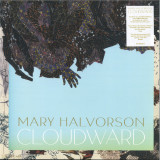
Nonesuch Records releases Cloudward by Brooklyn-based guitarist, composer, and MacArthur fellow Mary Halvorson on January 19. The album features eight new compositions by Halvorson, performed with her sextet Amaryllis, the improvisatory band that performed on her critically praised 2022 albums Amaryllis and Belladonna comprising Halvorson, Patricia Brennan (vibraphone), Nick Dunston (bass), Tomas Fujiwara (drums), Jacob Garchik (trombone), and Adam O’Farrill (trumpet). Labelmate Laurie Anderson also is featured on the album track ‘Incarnadine’. Halvorson and Amaryllis will tour internationally following the release of the new album, including January dates in Europe, as well as at the Big Ears Festival as part of Nonesuch’s 60th anniversary celebration.
Halvorson says, “All of the music on Amaryllis was written in 2020, during the thick of the pandemic, in one of the more bizarre time periods I’ve experienced in my life. While composing for Amaryllis, I expanded upon certain musical concepts I’d developed in my life up until that point—the ones that felt fruitful—and left others behind, hitting the reset button and attempting to build from scratch. Two years later, after the release of the first album, I was still writing music for Amaryllis.
“All the music on Cloudward was written in 2022, mostly in the fall and winter, when things started moving forward. Life felt like a creaky machine starting up again,” she continues. “Air travel, however chaotic, had resumed, and we were once again cloudward. Performances and tours and recordings were happening after a long hiatus and with a renewed sense of gratitude. This band, for me, was quite simply working, both musically and personally, and the main thing I felt while writing the music was optimism.”
The Guardian said Halvorson’s 2022 double release “shows how far this single-minded original has come, and affords a glimpse of how far she may go. Both sessions confirm how years of jaggedly lyrical solo and ensemble improvising and a quirkily subversive affection for mainstream music have now nurtured a composer of unpredictable but warmly expressive character… These are new landmarks in Halvorson’s already inimitable discography.” Pitchfork said, “Amaryllis and Belladonna are distinct statements; one could hear either album on its own without a sense that something is missing. But they are most powerful when taken together, like a landscape and its reflection in rippling water.”
Halvorson has released a series of critically acclaimed albums, from Dragon’s Head (2008), her trio debut featuring bassist John Hébert and drummer Ches Smith, expanding to a quintet with trumpeter Jonathan Finlayson and alto saxophonist Jon Irabagon on Saturn Sings (2010) and Bending Bridges (2012), a septet with tenor saxophonist Ingrid Laubrock and trombonist Jacob Garchik on Illusionary Sea (2014), and finally an octet with pedal steel guitarist Susan Alcorn on Away With You (2016). She also released the solo recording Meltframe (2015), and most recently debuted Code Girl (2018, 2020), a new ensemble featuring vocalist Amirtha Kidambi (singing Halvorson’s own lyrics), trumpeter Adam O’Farrill, saxophonist and vocalist María Grand, bassist Michael Formanek, and drummer Tomas Fujiwara.
One of New York City’s most in-demand guitarists, over the past decade Halvorson has worked with such diverse musicians as Tim Berne, Anthony Braxton, Taylor Ho Bynum, John Dieterich, Trevor Dunn, Bill Frisell, Ingrid Laubrock, Jason Moran, Joe Morris, Tom Rainey, Jessica Pavone, Tomeka Reid, Marc Ribot, and John Zorn. She is also part of several collaborative projects, most notably the longstanding trio Thumbscrew with Michael Formanek on bass and Tomas Fujiwara on drums.
- A1: Delight For Old Chicken
- A2: Lobster Shwarama (Feat. Troy Berkley & Khoe Wa)
- A3: Back In Town (Feat. Jamalski, Bang On & N'zeng)
- A4: This Is How We Rock (Feat. Aaron Cohen)
- B1: Moving Along The Line
- B2: Thru' Di Groove (Feat. Little Harry & Thioum C)
- B3: Dirty Money (Feat. Skarra Mucci, Youthstar & N'zeng)
- C1: Madder Than Dat (Feat. Ruffian Rugged)
- C2: Puff Of Rhymes (Feat. Hatman Harry & Zeb Mcqueen)
- C3: All I Want To Do (Feat. Lmk)
- D1: Bandulu Supa Lova (50 Gipsy Edit)
- D2: Recordz Masta (Feat. Dj O'legg & Teekay)
- D3: Time To Grow (Feat. Gavlyn)
Breeding in open air since 1964, Sir James and King Johnny are the figureheads of the mysterious L'ENTOURLOOP collective. Feed with good grains from Sounds Systems, vinyle's culture (Scratchs / Beatmaking / Sampling) and rocked by the epic dialogues of a certain cinema, L'ENTOURLOOP concocte with love a music half-way between Kingston, London and New York! After rocking more than 300 scenes around the world, the two unflagging ambassadors continue to surprise us on stage. Well accompanied by the incredible Bermudian MC Troy Berkley and the maestro N'Zeng at the trumpet, L'ENTOURLOOP gives us an eclectic live and survitaminated at each of its outings!!
- A1: Madness
- A2: You Were Mine
- A3: Revolution Come
- A4: Man Free Dub
- A5: Days Of Old
- B1: Dubb Girl
- B2: Dubb Girl Rhythm
- B3: Official Sound
- B4: Fragile Rhythm
- B5: Kid Phil Rhythm
- C1: Zion City - Jacob Miller
- C2: Zion City Dub Wise
- C3: Lorraine Dub Wise - Jacob Miller
- C4: Rock My Soul Dub Wise
- C5: Trying Man - Johnny Clarke
- D1: You Were Dubbing
- D2: Sit And Cry
- D3: Iron Bird - Jacob Miller
- D4: Riding On A High & Windy Day (Alt. Take) - Breezy & Hugh Mundell
- D5: Riding Rhythm
This compilation is dedicated to the memory of the late great “Prince” Philip Smart - the first apprentice of King Tubby and the first engineer at Tubby’s studio besides Tubby himself. Alongside Tubby, Philip was integral to the innovation that took place at Tubby’s studio in the mid 1970s, where the mixing of new roots reggae revolutionized the sound of Jamaican music and created styles and techniques that are still being echoed today, nearly 50 years later.
Though rarely credited on records in comparison to Tubby, Philip also mixed a lot of the paramount music produced by those close associates of Tubby’s studio such as Bunny Lee, Yabby You, and Augustus Pablo. Philip was closely tied to Pablo due to their childhood friendship and was a partner in his stylistically significant early production works. In the early years of Tubby’s studio, both men were making and cutting custom dubs there for their sound systems before starting to produce their own tunes from scratch, and Philip becoming the second chair engineer.
Several of the songs on this compilation are a selection of the aforementioned work. All of the songs here are sourced from Philip’s personal tape archive, and basically all of these mixes and versions have been scarcely if ever heard, and never released before. This double album comprises a rare and genuine glimpse into the dubplate workings of the inner circle of Tubby’s studio in the mid 1970s, where the prime players and emerging giants of reggae music production and sound system versioned, remixed and voiced rhythms for custom and exclusive cuts. Some of the cuts heard here were formerly exclusive power plays on King Tubby’s own legendary sound system, and unlike some previous issues of such material, these are genuine mixes done at the time. Some other tracks clearly exude the youthful enthusiasm of the participants. In both cases we find this collection of tracks to be truly compelling, so please enjoy this glimpse into such rare air. Rest in power Prince Philip Smart.
-RB/DKR, Summer 2023
NOTON is pleased to announce the release of Xerrox Vol. 5, the final installment of Alva Noto’s Xerrox series.
For anyone who has been following the series since its inception in 2007, the concept of Xerrox no longer requires introduction. Originally, it aimed to create copies of images—both visual and acoustic—that are more memorable than the originals. The exploration of the relationship between the original and the copy, along with the invention of the copier, not only inspired the series name but also informed its underlying concept. In 2024, this series comes to an end, marking the culmination of a journey that began with the first recording in 2005/2006. Over nearly two decades, the five albums in this series have accompanied the artist's evolving perspective and conceptual approach.
Initially characterized by rawness and a conceptual focus on seeking resolution in white noise, the later works engage with themes of dissolution while shifting their emphasis toward acoustic particles. The copying process is now less visible through software manipulation; rather, it unfolds as the artist describes melodic and acoustic images that are then manipulated, copied, and transformed into new patterns during composition.
Nicolai describes this evolution as a journey encompassing buildup, exploration, and resolution, drawing parallels to the Odyssey and the stories of Jules Verne, particularly those featuring Captain Nemo.
The conclusion of this album holds a sense of finality for the artist. “I aimed to create a whole cycle of tracks that frame both the beginning and the end,” Nicolai explains. “The motif of the journey continues, but this time, the story reaches a dissolution through a conceptual object that embarks on its own journey into infinity. The word “dissolution” (“Auflösung” in German) is a wonderful concept. On one hand, you can solve a riddle, on the other hand, a pill can completely dissolve in water. Here, I am deliberately describing the process of dissolution.”
In crafting Volume 5, Nicolai has evolved his compositional process, eschewing samples in favor of original melodies. “This album probably took the longest to complete,” he reveals. “I first created melodic sketches, which became the foundation for the pieces. These recordings are created entirely from scratch. Based on these sketches, I constructed the process of copying, manipulating, and reshaping.”
Drawing from his recent experiences working with film and larger ensembles, Nicolai's approach to composition reflects a growing influence of classical instrumentation. “This experience of working with acoustic classical instruments has flowed into the compositional process for Xerrox Vol. 5. Certain instruments are designed with potential orchestral translation in mind.”
The sonic atmosphere of Xerrox Vol. 5 is one of profound dissolution. “I wasn’t initially interested in strong, emotional melodic aspects,” Nicolai shares, “but I realized that the fragment plays a central role.” This shift leads to an emotionally charged experience, imbued with melancholy and the bittersweet essence of farewell. The passing of Ryuichi Sakamoto, an admirer of the series, has further deepened the album’s emotional resonance.
“Xerrox Vol. 5 has a lot to do with farewell,” the artist explains. "Not only the farewell to the series itself, which I’ve nurtured for almost two decades, but also there have been many farewells to people who were close to me. I believe these people are recognizable in the music. It’s a very emotional, personal album.”
Listeners can expect a visual dimension to the music, though Nicolai intentionally leaves this open to interpretation. “I prefer to allow the music to evoke personal experiences and images rather than dictate a specific narrative,” he states. The result is a layered listening experience that invites tenderness and introspection.
- A1: Kölsch - An Amazing (4 55)
- A2: Whomadewho/Mano Le Tough - Oblivion (7 02)
- A3: Artbat, Dino Lenny - Keep Calm (6 24)
- B1: Scratch Massive - Secrets (Peter Dallas Remix) (5 24)
- B2: Eelke Kleijn - De Orde Van De Nacht (Part 2 - Raxon Extended Remix) (7 17)
- B3: Ede & Seth Troxler - Your Love (Seth Troxler Remix) (6 31)
- C1: Oliver Koletzki, Niko Schwind - Stay Until The Light Feat Talmirage (Gespona Remix) (6 52)
- C2: Mathias Kaden - Soulmakers (Feat Zoe Xenia - Pulshar Remix) (6 19)
- C3: Laherte - Gate (6 17)
- D1: Cagedbaby & Dorothys Fortress - Attention (Moscoman Remix) (7 01)
- D2: Victor Ruiz, Wehbba - Silo (6 33)
- D3: Tropics - Nothing Like This (1 50)
- D4: Cri - Chaos (2 54)
The original soundtrack to the ‘party after the party’ reaches a huge milestone with the landmark 10th edition, with over 40 tracks and remixes on the DJ mix from the likes of WhoMadeWho, Kölsch, Nina Kraviz, Scratch Massive, Oliver Koletzki, Cari Lekebusch & Joseph Capriati, ARTBAT & Dino Lenny. Full of ambient soundscapes, teutonic techno, sublime vocals, melodic breakbeats and progressive gems that all blend together for a delightfully twisted adventure.
Parsley Sounds was the glorious debut album for Mo Wax by Parsley Sound. The album was one of the iconic label’s final releases before it closed in 2003 and locating a clean copy has been extremely tricky of late, unless you're flush enough to drop 150 notes on it. Mercifully, the Be With reissue, put together with invaluable assistance from the group, should remedy this situation. It's a lo-fi, bass-heavy, blunted beat treat, warped with heat haze and dreamy soft-psych and has been criminally under-heard for far too long.
As with most cult-like records, Parsley Sounds has many influential fans, far and wide. From Four Tet and Caribou to NTS's modern day breakfast hero Flo Dill, its reputation has only grown in stature. At the time, the notoriously hard-to-please Pitchfork garlanded it with a scarcely achievable 8.8 whilst, just recently, the Numero Group's Rob Sevier described it as a "visionary bit of proto-Salvia Palth (or Steve Lacy)" via a Ghostly International missive.
Parsley Sound comprised super-talented duo Preston Mead and Dan Sargassa. They released an early single (the perfect "Twilight Mushrooms", featured here) on Warp Records as Slum, before signing to Mo Wax. Hidden behind a wall of sound - fuzzy layers of beats, bleeps and symphonic synths - they were convinced they made mainstream pop music. And, in many respects, Parsley Sounds really is a beautiful pop album. It overflows with memorable, gorgeous melodies and inspired songcraft. As the contemporaneous Pitchfork review correctly had it: "Parsley Sounds is one of those rare records that manage to sound modest while frequently pushing the sonic envelope."
Killer opener "Ease Yourself And Glide" is a thing of aching, soft-psych, wonky beat-beauty. A melodic masterpiece, part Crosby, Stills & Nash, part proto-Koushik, it presents a melancholy falsetto, surging bass and blunted lead guitar. As it climaxes, gorgeous strings are ushered in to see us out. Sublime. "Twilight Mushrooms" is up next and it's an acid-drenched, strung-out acoustic-led campfire wonder. Amid layers of tape-hiss and beautiful, sun-dappled strings, its understated vocal track provides a haze of wistful innocence.
The breezy "Spring's Near" is a krautrock-inspired chiming instrumental of heavenly excellence, its warm, skipping, motorik groove and dreamy synths completely infectious. Another total highlight, the technicolour "Yo Yo" initially presents itself as a more abstract, bleepy offering but as it organically swells into ever more beautiful places, with the addition of a choppy insistent drum loop, flute bursts, horns and sweeping strings, it puts one in mind of early Manitoba and Four Tet releases. Shimmering, blissed-out greatness.
The celestial harmonies and glistening harps of the wonderfully beatless, serenely sullen "Ocean House" are very much in conversation with late-60s meditative psych whilst, closing out Side A, the jaw-dropping, lushly experimental effort "Find The Heat" comes on like Arthur Russell meets Brian Wilson. Yep, *that* good.
Side B opens with the warped, bleepy "Stevie", a brief but beautifully wonky, soulful and intricate instrumental. The more upfront vocals that propel the fuzzy "Platonic Rate" have a refreshing swagger to them, the heavy bass and neck-snapping in-the-red beats too much for any system to deal with whilst the guitars and strings have a sweeping, cinematic feel which just beguiles. The slow, urbane soul of "Candlemice" will stop you in your tracks, no matter what you're doing. It carries a delicate sadness, as does much of the album in that classic "down lifting" style we so love here at Be With.
The fuzzing, buzzing "Templechurchmansions" is a searing, soulful dubwise detonation. Heavily stoned with slow-burning jazzy snatches and a tense, moody atmosphere, it's a Tricky-adjacent gem. The album rounds out brilliantly with the ominous instrumental "Neon Breeze" before giving way to the propulsive, almost incongruous punk-funk / disco-dub of secret "untitled" track "Caution", a scratchy, smacked-out groove-fuelled workout with a female vocal dripping with 'tude. Just sensational.
Under the watchful eye - and attentive ears! - of Parsley Sound themselves, the audio for Parsley Sounds has been carefully mastered by Be With regular Simon Francis, with a few much needed tweaks here and there, according to the artist's wishes. Cicely Balston's expert skills have made sure nothing is lost in the cut whilst the records have been pressed to the highest possible standard at the always stellar Record Industry in Holland.
Preston and Dan always thought the colours on the first vinyl pressing looked a bit "washed out" vis-a-vis the original artwork which was way more vibrant. We feel we've got it popping back to the original intention with the restoration work here at Be With HQ. So with the audio and artwork now approaching completeness after 20 years, this long overdue re-issue could be considered its definitive vinyl release.
Both tracks were written and produced by Lee Perry. This is the first time these two complementary tracks have been released together.
The A side is the first ever reissue of the gorgeous SINNER MAN by ANNETTE CLARKE. This rare track was initially released as the B side of JUST ONE LOOK, also performed by ANNETTE CLARKE on the Technics label in the UK in 1973. It seems it was never released in Jamaica.
The B side SINNER MAN DUB is a very rare Lee Perry Dub version of the A side. It was released only as a single for a Lee Perry box of 8 very rare singles by Trojan in 2005. This box is now also rare.
ABOUT LEE SCRATCH PERRY:
Lee "Scratch" Perry was born Rainford Hugh Perry on the 20 March 1936 in Kendal Jamaica. An eccentric Reggae artist and a genius producer, Lee has written, sung and/or produced unique tracks for himself and everybody else worldwide from Bob Marley and Junior Murvin to the Clash and many more… Under his own name, he recorded over 80 albums, countless singles and covered every musical style from Ska, Rocksteady and early Reggae to Dub, Roots Reggae and their electronic variations... His influence on Jamaican music and Reggae is just immense.
Perry died on 29 August 2021 in Lucea, Jamaica, during the Covid outbreak, aged 85.
ABOUT ANNETTE CLARKE:
Unfortunately, very little is known about Annette Clarke besides the fact there was a Jamaican singer that recorded Rhythm’ n Blues and Ska duets with Shenley Dufus in 1961 and with Charley Organaire in 1964. She also recorded this gorgeous duet with Roy Pantone “My Baby” in 1963.
Then nothing until this session with Lee Perry in 1973 where she aparently recorded just two songs, the lovely cover of the 1963 Doris Troy’s “Just One Look” and “Sinner Man”, a gorgeous song penned by Lee Perry and unrelated to the Nina Simone’s hit. Then there is no trace of further recordings after these. A real shame considering the outstanding talent she showcased with these two superb songs…
A sense of destiny hangs over Sentir Que No Sabes, Mabe Fratti’s fourth solo-credited album released in a five year span. Her work has always possessed a finely tuned sense of drama capable of expressing a range of emotional states, and across this new album, she conveys the struggle to process various relationships or situations–and the actions that come next. Sentir Que No Sabes is urgent and clear, poppy, generous and approachable, while showcasing a considerable emotional hinterland. It is also, as Fratti is quick to mention, “groovy.”
Written and recorded with her partner, multi-instrumentalist, and co-composer Héctor Tosta (I.La Católica, Titanic), Sentir Que No Sabes is the result of an intense, detail-oriented process. Fueled by a new confidence gained in their collaborative project, Titanic, and its critically acclaimed 2023 LP, Vidrio, the two hunkered down in the familiarity of their studio (aka Tinho Studios) to bash out the initial sonic coordinates of her new record. “We talked and talked, and discussed ways of playing and recording, until things became inevitable,” Fratti explains. “We recorded a bunch of demos at our home studio and that meant we had a lot of time to re-edit and experiment. We really dug in. We were super focused on detail.” Tosta also took up the controls as producer and arranger-in-chief for all additional instruments. The album was later completed at Willem Twee Studios in Den Bosch in the Netherlands, and Pedro y el Lobo Studios and Soy Sauce Studios, in Mexico City.
For the final studio recordings, the pair were joined by drummer Gibran Andrade and trumpetist Jacob Wick to fill out and expand on Tosta’s percussion and brass arrangements. This small group of friends were able to work quickly and openly, and without fear: a testament to the exhaustive groundwork put in at Tinho Studios. This can be heard in three short, intermediary tracks that also manage to be the most aggressive on the record: “Kitana” (a scratch-laden instrumental that acts as a strange prelude for the last track, “Angel nuevo”) and a pair of two-minute instrumental interludes, “Elastica” I and II. None are throwaway mood pieces; rather they act as emotional cue cards, and hint at the way Fratti and Tosta created the overall atmosphere of Sentir Que No Sabes.
A strong sense of rhythm irrigates the sound from the jump, as heard on the glorious opening track, “Kravitz.” Here, the brilliant plucked cello line acts as a bassline and props up the steady thump of the kick drum. The cello’s growl serves as a conduit for a set of slightly paranoid lyrics that tell us “Quizás haya oídos en el techo” (“maybe there are ears in the ceiling”), while the song also introduces another staple of the record: the clever brass stabs, whistles, parps, and other interjections that paint a canvas of traffic in a city. It’s a postmodern, widescreen sound that for some might recall The Blue Nile’s Hats.
Sentir Que No Sabes is a record full to the brim with a modern pop sensibility, invoked by the sort of magpie spirit that ensnares anything it can find, repositioning sounds for the here and now. The keys and melody on the melancholy “Pantalla azul” (“Blue screen error”) transport us back to the glossy mid-1980s. “Oídos” (“Ears”) is a beautiful slice of contemporary, hybrid pop, in which Fratti’s vocal lines delicately spin themselves around the lean structures erected by the brass and drums, and the descending “plink” of a set of piano chords. Then we have a gloriously strong ending with the swell of “Angel nuevo” (“New angel”), another cinematic track full of gentle, instrument-rich swells and eddies that manages to be almost endless in its range–and yet intensely personal, as Fratti’s voice is close, almost whispering in your ear. A much needed lullaby for our fractious times.
The lyrics, for their part, have a stop-start quality to them, and hint at the small, incremental emotional taxes we pay through just living our lives. They circle around the music like birds waiting to swoop. There is something of the spiritual in all of Fratti’s work that expresses itself in a form of yearning: she looks to new horizons while personal dramas find themselves internalized, contextualized, and then dealt with through metaphor. Here, she was keen to mention Tosta’s constant encouragement in her finding a path to best sing or phrase her words to impart their maximum effect. “Hector was super inquisitive about my lyrics and asked me questions about what I meant, which sometimes is something you don't wonder so much about in isolation,” Fratti explains. “Besides, he is a great poet, and you can see that in what he did on the Titanic record. This made me go deeper into my lyric writing and definitely transformed it into something that I feel super happy about now.”
Take “Enfrente” (“In Front”), a track that initially comes across as a languid, glossy number, with plucked cello strings standing in for a bass line and brittle synth parts. Soon we catch on to a brilliant minor chord switch, which mirrors the fear and doubt expressed in the lyrics as someone “trembles up to the podium” in a “search for meaning.” There’s also the startling introduction of a vocoder in “Quieras o no” (“Whether you want it or not”); it comes precisely at the point Fratti sings “Quieras o no es un desastre” (“Whether you want it or not, it's a disaster”). Moments like these leave room for interpretation and, over time, create a strong bond between the listener and the record.
In fact, across Sentir Que No Sabes, each phrase–whether instrumental or vocal–becomes at some level emblematic of acts and moods that impart deep emotional significance. We see this best on “Intento fallido” (“Failed attempt”), which could be the score to feeling trapped in self-doubt, only to suddenly be sprung free by the song’s gloriously upbeat ending. On “Márgen del índice” (“Index margin”), the quicksilver switch between initial disharmony and a beautiful melody is breathtaking, all augmented by evocative arrangements, textured production, and the slightly playful, gnomic lyrics. The track’s emotional ecosystem allows another brilliant ending, which uses the simple repeated phrase, “Cómo lo va a ver?” (“How are you going to see it?”).
So what to make of Sentir Que No Sabes? High gloss Pastoralism? The sound of a city-bound, post-post modern soulscape? No matter the emotions evoked, it's the work of an artist coming into their own, and creating a benchmark record.
"A Seamless Symphony of Harmonious Electronica" - Jazziz
Emerging from over a year of creative hibernation following their debut album, Stavroz's upcoming EP "Kick Up the Dust" jolts them back into action. The EP flows gently, yet the overall mood of the journey isn’t always easy to pinpoint. There’s a certain vagueness to Stavroz’ sound which allows for bizarre experiments to seep through without interrupting the course. “We like to keep it lightly twisted, like a wink with a frown,” says the band.
In the title track however, Stavroz boldly steers towards the heart of the dance floor: efficient, remorseless, powerful, intense and most of all... elegant. Guiding you harmoniously through the club is a delightful duet of trumpet and saxophone, timed perfectly to heal you where it hurts most.
"Her Eyes Were Red" does what it says on the cover. There's melancholy - without sadness. Power - without force. Love - without lust. Stavroz's music possesses a distinct power that feels both natural and organic, never resorting to brute force or aggression. In their own way, the Belgian quartet offers an astonishing journey of saxophone & duduk, supported by broken beats and chopped vocals.
In Dae-El, a track featuring the Brussels-based producer and sound designer Poltrock, ethereal-sounding synths and duduk are combined with ghostly high-pitch distortions. Despite a backbone of muffled beats, the tune has vaporous qualities, reverberations that wobble and tinkle into space – it’s an easy listening experience but in a trippy, spaced-out way. “We’re trying to go for the sweet spot between the couch and the club”.
Adding further depth to their EP, Stavroz collaborates with Brazilian singer and composer Castello Branco in "Valente." Here, intimate Sade-like vocals harmonize with rubbery scratches, acoustic guitar, and horn segments, crafting a lush lounge piece that seamlessly balances both relaxation and empowerment, transparency and provocation. It's a testament to Stavroz's versatility and their knack for creating music that defies easy definition, leaving listeners eagerly anticipating the next twist and turn in their captivating musical journey.
Body Mechanic has been turning out definitive Motor City techno on solid labels like Cryovac, and GASS for several years. This time out he lands-on Detroit Techno and serves up, well, some electro. It's classic 313 tackle though - heavy on the kicks, snappy snares and filthy dirty basslines that make you want to move. Ghoulish vocals add extra grit to the opener and from there 'Dance' gets more playful with jittery drum funk and scratching, 'Beautiful Bum' has a gorgeously tender and reflective vibe thanks to the minor chords and smooth electro rhythms, 'Magic (feat Tay) ' slips into a deep and soulful house groove and 'Househead' is jacked up, loopy and well swung amongst several more timeless cuts. All in all, a killer double 12".
Technics' SL-1200 turntable is back! This beautiful, matte black MK7 version is a direct-drive turntable with a 'coreless' motor that is lighter and more powerful than before. Thanks to its design, not only is it extremely reliable, but cogging issues should now be a thing of past. That means you can concentrate fully on doing what you do best.
SL-1210 MK7: Classic turntable with a modern look
Apart from its colour, the MK7 SL-1210 may look familiar, but it has a few new additions on board. This includes a microchip that comes from Blu-Ray technology and makes the turntable more accurate, also when scratching. It's possible to adjust the power as well as the braking time of the motor and, if you have a stylus that supports it, you can make use of 'reverse platter play'. Another change is the use of removable cables instead of fixed ones.
Die Technics 1200-Serie
Der originale SL-1200 wurde im Jahr 1972 als direktgetriebener Plattenspieler vorgestellt und erfreute sich sehr schnell einer außerordentlichen Beliebtheit. Er wurde weltweit ungefähr 3,5 Millionen Mal verkauft. Charakteristisch waren von Anfang an das hohe Antriebsmoment, die einfache Bedienung und die hohe Langlebigkeit. Er wurde sowohl von Audio-Enthusiasten als auch von DJs hochgeschätzt. Letztere verhalfen dem SL-1210 zum Kultstatus, gerade im Bereich der elektronischen Dance Music. Auch heute noch wird diese Modellreihe von DJs in aller Welt außerordentlich geschätzt.
Höchste Klangqualität getreu den Maßstäben der Technics Philosophie
Eisenkernloser Direktantriebsmotor für eine stabile Rotation und kräftiges Antriebsmoment
In einem direktangetriebenen Plattenspieler wird ein langsam rotierender Motor verwendet, der direkt mit dem Plattenteller verbunden ist und die Bewegung unmittelbar an diesen weitergibt. Das bringt zahlreiche Vorteile mit sich: Das Gerät erreicht eine beeindruckende Umdrehungspräzision, ein extrem kraftvolles Antriebsmoment, eine hohe Zuverlässigkeit über die gesamte Lebensdauer und ist wartungsfrei. Lange Zeit wurden dem Direktantrieb kleine Unregelmäßigkeiten in der Rotation durch das sogenannte Rastmoment nachgesagt. Für den neuen SL-1210MK7 wurde daher ein neuer Direktantriebsmotor entwickelt, der mit einem eisenkernlosen Stator arbeitet und damit die Ursache für das Rastmoment vollständig behebt. Gleichzeitig erreicht die Antriebskraft der Rotormagnete im SL-1210MK7 ihr Optimum. Der Spalt zwischen dem eisenkernlosen Stator und den Rotormagneten wurde so verbessert, dass es dem Drehmoment des früheren Modells SL-1200MK5 ähnelt. Das gleichmäßige Rotationsverhalten und kräftige Antriebsmoment ermöglichen eine präzise und originalgetreue Klangqualität bei allen Schallplatten.
Der empfindliche Tonarm sorgt für eine hochpräzise Abtastung des Schallplattensignals
Der Tonarm, der die in der Schallplattenrille enthaltenen Musikinformation ausliest, ist eine statisch ausbalancierte Konstruktion in S-Form – typisch für Technics Modelle. Das Tonarmrohr besteht aus leichtem, hochfestem Aluminium, während die Lagersektion der kardanischen Aufhängung über ein gefrästes Gehäuse sowie hochpräzise Lagerelemente verfügt. Dies sorgt für einen hervorragenden Abtastvorgang mit einem Minimum an unerwünschten Nadelbewegungen selbst unter rauen Bedingungen, wie z.B. beim Scratching.
Zweischichtiger Plattentelleraufbau mit verbesserter Vibrationsdämpfung
Der Plattenteller des SL-1210MK7 besteht aus einer zweischichtigen Konstruktion. Vibrationsabsorbierender Kautschuk überzieht die gesamte Unterseite des Tellers, der aus einem Aluminium-Spritzguss gefertigt ist. Diese Verbundkonstruktion verhindert unerwünschte Resonanzen und bietet hohe Stabilität bei überragender Vibrationsdämpfung, wodurch die Schallplatte vor schädlichen Vibrationen gestützt wird. Das Ergebnis ist ein ungestörter, authentischer Klang.
Hochstabiles Gehäuse und effektive Dämpfungsfüße für umfassenden Vibrationsschutz
Das Chassis des SL-1210MK7 besteht aus einem sehr stabilen, extrem vibrationsarmen Gehäuse. Das Aluminium-Spritzguss-Chassis ist fest an einer Konstruktion aus ABS(Acrylnitril-Butadien-Styrol-Copolymer)-Kunststoff befestigt, das mit Glasfasern verstärkt ist. Die somit erreichte Zweischichtkonstruktion bietet eine Festigkeit und Vibrationsdämpfung auf höchstem Niveau und garantiert somit eine originalgetreue, dynamische Soundreproduktion.
Für eine optimale Dämpfung sorgen die Dämpfungsfüße aus einer Feder-Gummi-Konstruktion. Der hohen vertikalen Dämpfung steht ein sehr steifes Verhalten in der horizontalen Bewegung gegenüber. Diese Kombination sorgt für eine unkomplizierte Handhabung besonders beim Scratchen und für eine sehr gute Störfestigkeit – auch bei sehr hohen Schallpegeln.
Abnehmbares Netz- und Signalkabel für höhere Flexibilität
Die Netz- und Phonokabel des SL-1210MK7 sind abnehmbar, sodass sie, z.B. im Falle eines Defektes, schnell ausgetauscht werden können. Die vergoldeten Phono-Anschlussbuchsen sichern dabei beste Klangqualität und Kontakteigenschaften.
Hoher Bedienkomfort trifft auf innovative Funktionen
Anpassung des Start-/Abbremsmoments
Der SL-1210MK7 überzeugt mit innovativen Motorregelungstechnologien, die vor allem bei der neuesten Generation von Blu-ray-Spielern eingesetzt und perfektioniert wurden. Durch einen Microcomputer hält der Regler sowohl dem normalen Abspielvorgang als auch anspruchsvolleren DJ-Anwendungen wie z.B. dem Scratching problemlos stand. Zudem kann der Nutzer das Startmoment und die Abbremsgeschwindigkeit an seine individuellen Vorlieben anpassen.
Pitch-Funktion für eine präzise und stabile Feinregulierung der Geschwindigkeit
Die Umdrehungsgeschwindigkeit des SL-1210MK7 kann auf 33-1/3, 45 oder 78 U/min eingestellt werden.* Der Pitch-Einstellbereich liegt bei ±8%/±16%. Dies ermöglicht eine hochpräzise und stabile Feinanpassung der Geschwindigkeit sowie das perfekte Matchen z.B. zweier SL-1210MK7 Einheiten im DJ-Betrieb.
* Die Verwendung von 78 U/min wird über den Haupt-Ein-/Ausschalter aktiviert.
„Reverse Play” für maximale Kreativität
Werden die Geschwindigkeitstaste und die Start-/Stop-Taste gleichzeitig gedrückt, dreht sich der Plattenteller in die Gegenrichtung. Die Reverse Play-Funktion wird über den Haupt-Ein-/Ausschalter aktiviert. Dies eröffnet dem DJ neue, kreative Möglichkeiten. Dafür muss das Tonabnehmersystem allerdings für den Scratch-Betrieb ausgelegt sein.
Traditionelles Design – perfekt für den DJ-Einsatz
Nadelbeleuchtung dank heller, langlebiger LED
Bei der Teleskop-Nadelbeleuchtung kommen ein neuer Druckmechanismus sowie eine helle, langlebige weiße LED zum Einsatz. Zudem wurden der Beleuchtungsbereich sowie die Belichtungsintensität angepasst. Verglichen mit den Vorgängermodellen ist somit eine bessere Sichtbarkeit der Nadel gewährleistet – selbst in sehr dunklen Umgebungen.
Durchgängig schwarzes Design
Die Bedienelemente sowie der Tonarm des SL-1210MK7 sind in Schwarz gehalten. Gleichzeitig wurde die Form der Bedienelemente der früheren Modelle beibehalten. In Kombination mit der matten Textur des schwarzen Gehäuses strahlt der Plattenspieler einen coolen Chic aus. Die LED-Tastenhinterleuchtung kann individuell in blau oder rot angepasst werden.
Technische Daten SL-1210MK7:
Technologie zur Umdrehungskonstanz
Eisenkernloser Direktantriebsmotor
Hochpräzise Motorregelung
Konstruktion zur Vibrationsentkopplung
Vibrationsdämpfender Plattenteller
Steife Gehäusekonstruktion
Dämpfungsfüße mit Feder-Gummi-Verbund
Hochwertige Bauteile
Tonarm hoher Empfindlichkeit
Vergoldete Anschlussbuchsen
Technics Definitive Design
Aus der SL-1200 Serie entwickelt
Plattenlaufwerks-Sektion
Typ: Direktgetriebener Plattenteller
Umdrehungsgeschwindigkeiten: 33 1/3, 45, 78 U/min
Pitchbereich: ±8%, ±16%
Anlauf-Drehmoment: 2.2 kg・cm
Anlaufzeit: 0.7 s. aus dem Stand auf 33 1/3 U/min
Gleichlaufschwankungen: 0.025% W.R.M.S.
Rumpeln: 78dB (IEC 98A-bewertet)
Plattenteller: Aluminium-Druckguss
Durchmesser:332mm
Gewicht:ca. 1,5 kg (inkl. Gummi-Auflagematte)
Tonarm-Sektion
Typ: Universell, statisch ausbalanciert
Effektive Länge: 230mm
Überhang: 15mm
Spurfehlwinkel:
Innerhalb 2° 32' (an der äußeren Rille einer Langspielplatte (30cm/12")
Innerhalb 0° 32' (an der inneren Rille einer Langspielplatte (30cm/12")
Kröpfungswinkel: 22°
Tonarm-Höhenverstellung: 0 - 6mm
Bereich der Auflagekraft: 0 - 4g (Direkte Abtastung)
Gewicht des Headshells: Ca. 7.6g
Tonabnehmer-Gewichtsbereich:
ohne Zusatzgewicht 5.6 - 12.0g (14.3 - 20.7g (einschließlich Headshell))
mit Zusatzgewicht 10.0 - 16.4g (18.7 - 25.1g (einschließlich Headshell))
Bohrungsabstand der Tonabnehmermontage: JIS 12.7mm
Headshell-Kabelanschlüsse: 1.2mmφ 4-Pin
Anschlüsse
PHONO (RCA) x 1, Erdungs-Schraubklemme x 1
Allgemein
Netzspannung: AC230 V, 50 Hz
Leistungsaufnahme: 11 W (Ca. 0.2W Standby)
Abmessungen (B x H x T): 453 x 173 x 372 mm
Gewicht: Ca. 11.2kg
Zubehör:
Plattenteller, Gummi-Auflagematte, Staubschutzhaube, Single-Adapter, Gegengewicht, Hilfsgewicht, Headshell, Überhangschablone, Schraubensatz f. Tonabnehmer-Befestigung, Phono-Anschlusskabel, Erdungskabel, Netzkabel, Bedienungsanleitung
Nightclub E Replacement stylus
Nightclub E is equipped with Special Elliptical diamond. Perfect for usage in clubs. Superb sound quality.
Club DJs and studio workers believe the Nightclub E to be an absolute high-end cartridge. It is indeed a no-nonsence performer with fascinating musical resources.
It's output is superb with a frequency responce rating high enough to compare the Nightclub E to any audiophile cartridge.
The special elliptical stylus guarantees sound with insignificant scratching.
Nightclub E Stylus Technical Data
Output voltage at 1000Hz, 5cm/sec. - 8 mV
Channel balance at 1kHz - 1,5 dB
Channel separation at 1kHz - 23 dB
Channel separation at 15 kHz - 15 dB
Frequency response - 20-20.000 Hz +/- 1.5 dB
Tracking ability at 315 Hz at recommended tracking force - 65 μm
Compliance, dynamic lateral - 20 μm/m N
Stylus type - Elliptical
Stylus tip radius - r/R 8/18 μm
Tracking force range - 2.0-5.0 g (20-50 mN)
Tracking force recommended - 3.0 g (30 mN)
Tracking angle - 20°
Internal impedance, DC resistance - 1000 Ohm
Internal inductance - 580 mH
Recommended load resistance - 47 kOhm
Recommended load capacitance - 200-600 pF
Concorde cartridge weight - 18.5 g
Revelation is the 2010 album by dub pioneer Lee ""Scratch"" Perry (born Rainford Hugh Perry). From his Jamaican based Black Ark Studio, he created some pivotal works by producing new instrumental or vocal versions of existing tracks. Later, he moved to Switzerland, where he reinvented himself as a performance and visual artist and collaborated with artists such as The Beastie Boys, The Clash, and Adrian Sherwood among others. For his album Revelation, he collaborated with Keith Richards and George Clinton. The album is the last in a series of three albums he made with English musician and producer Steve Marshall a.k.a. John Saxon. The album is accompanied by the full-length film The Revelation of Lee “Scratch” Perry, which looks behind the scenes of the recording sessions and features an in-depth interview with the great man. The 2LP Revelation is available as a limited edition of 750 individually numbered copies on translucent yellow coloured vinyl, housed in a gatefold sleeve.
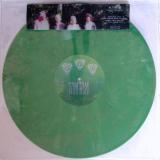
Scratch Came, Scratch Saw, Scratch Conquered is the 2008 album by Lee ""Scratch"" Perry (born Rainford Hugh Perry), who was a Jamaican record producer, composer and singer noted for his innovative studio techniques and production style. Perry was a pioneer in the 1970s development of dub music with his early adoption of remixing and the use of studio effects to create new instrumental or vocal versions of existing tracks. From his Black Ark Studio in Kingston Jamaica, he worked with and produced a wide variety of artists, including Bob Marley and the Wailers, Junior Murvin, Susan Cadogan, The Congos, and Max Romeo. Later, he moved to Switzerland and reinvented himself as a performance and visual artist but continued to produce innovative music – collaborations include The Beastie Boys, The Clash, Keith Richards, George Clinton, and Adrian Sherwood. Scratch Came Scratch Saw Scratch Conquered is the second in a series of three albums he made with English musician and producer Steve Marshall a.k.a. John Saxon. It features guest appearances by none other than George Clinton & Keith Richards. The 2LP Scratch Came, Scratch Saw, Scratch Conquered is available as a limited edition of 1500 individually numbered copies on translucent green coloured vinyl, housed in a gatefold sleeve.
Nightclub MkI Replacement Stylus
Following in the footsteps of the legendary Nightclub series, the re-engineered Nightclub MkII boasts numerous sonic improvements in both club and studio settings.
With a new cartridge body, the Nightclub MkII offers increased output voltage for powerful, energetic sound and enhanced performance from integrated phono preamps such as the ones found in DJ mixers. Superb sound quality!
Club DJ and studio workers believe the Nightclub MkII to be an absolute high-end cartridge. It is indeed a no-nonsence performer with fascinating musical resources. Its output is superb with a frequency response rating high enough to compare Nightclub MkII to any audiophile cartridge. The special elliptical stylus guarantees sound with insignificant scratching.
Nightclub MkII Stylus Technical data
Output voltage at 1000Hz, 5cm/sec. - 8 mV
Channel balance at 1kHz - 1.5 dB
Channel separation at 1kHz - 23 dB
Channel separation at 15 kHz - 15 dB
Frequency response - 20-20.000 Hz +/- 1.5 dB
Tracking ability at 315 Hz at recommended tracking force - 80 μm
Compliance, dynamic lateral - 20 μm/m N
Stylus type - Special Elliptical
Stylus tip radius - r/R 13/25 μm
Tracking force range - 2.0-5.0 g (20-50 mN)
Tracking force recommended - 3.0 g (30 mN)
Tracking angle - 20°
Internal impedance, DC resistance - 1.000 Ohm
Internal inductance - 580 mH
Recommended load resistance - 47 kOhm
Recommended load capacitance - 200-600 pF
Concorde cartridge weight - 18.5 g
Benny Howell (aka DJ Subaru) is a UK based producer, DJ and overall promoter of good times who's undoubtedly propelling a new generation of music appreciation with an honourable respect for the earlier beginnings of club culture. Benny Howell might also be the pioneer of a new post-Brexit Eurodance genre, with "Surrender", a catchy Pop oriented production with strong influences from Italodisco and HiNRG, written and produced entirely from scratch with best friend Bella Quirin who co-wrote the lyrics after a break up with her ex. Innocent and charming lyrics over 120's BPM drum machine and a simple melody that you'll be humming in the back of your mind for days to come. Equipped with a Yamaha TX81Z, a few guitar pedals and a makeshift bedroom studio, "Surrender" is the product of a dear friendship between the two music lovers, as per Benny's recount: "Bella came and sung on the track in my bedroom during one of the gaps between Covid lockdowns after I asked her at the pub if she knew any singers and said me of course, and we went from just friends to best friends."
The remix on the B-side by Castro takes a darker turn into what almost sounds like a Techno version with heavy dubbed out effects taking the "Surrender" theme through an unhinged Ketamine flanger vortex. Full cover artwork and mastered at Manmade mastering in Berlin.
Multitrack Reworks Volume 7 - This series sees The Temptations ‘Papa Was A Rolling Stone’ under Smoove's editing knife with extra crisp drums, deep vocal harmonies and glories orchestra breakdowns.
On the flip side is Rufus Thomas ‘Do the Funky Penguin’ with exposed drums and extended guitar riffs galore!As an extra bonus Smoove also drops his extended version of The Magic Disco Machine ‘Scratchin’ peeling back the layers to reveal a seriously funky bass line and pounding drums! Craig Charles has been fully supporting this release with regular plays on @BBC6 Music hailing it as “Smoove’s best Multitrack Rework yet!”
Nightclub S Replacement Stylus
The Nighclub S stylus is amongst the top performers in its category, Scratch and Mix.
A spherical diamond and a customised design provide the basis for the cartridge's undeniable supremacy.
The stylus remains in the groove during the scratching and back-cueing, making it unfailingly reliable - even when giving a night-long performance.
Nightclub S Stylus Technical Data
Output voltage at 1000Hz, 5cm/sec. - 6 mV
Channel balance at 1kHz - 1,5 dB
Channel separation at 1kHz - 23 dB
Channel separation at 15 kHz - 15 dB
Frequency response - 20-18.000 Hz +3 / - 2 dB
Tracking ability at 315 Hz at recommended tracking force - 80 μm
Compliance, dynamic lateral - 7 μm/m N
Stylus type - Spherical
Stylus tip radius - R 18 μm
Tracking force range - 2.0-5.0 g (20-50 mN)
Tracking force recommended - 3.0 g (30 mN)
Tracking angle - 20°
Internal impedance, DC resistance - 750 Ohm
Internal inductance - 450 mH
Recommended load resistance - 47 kOhm
Recommended load capacitance - 200-600 pF
Concorde cartridge weight - 18.5 g
- A1: Unity Feat Red Eye
- A2: And You Feel
- A3: Redemption
- B1: Horsepower Feat Modeselektor
- B2: Mechanic Love
- C1: Hustle
- C2: Sandstorm
- D1: Black Ice Feat Skee Mask
- D2: Scratchy
- D3: Vertical
- E1: Breathe Underwater
- E2: Wind Mill Hill Feat J Manuel
- F1: Stargazer
- F2: Timesqueezed
- F3: Glove Box
- G1: Nyx
- G2: Ringworld
- G3: Scoop
- G4: Dreamweaver
- H1: Flashback
- H2: The Deal
- H3: Micro Expressions
- H4: Pentatonic Light
Fuelled by the Berlin-based duo's love of club music in all its forms ''FJAAK THE SYSTEM'' is FJAAK's most definitive album to date, a winding sonic odyssey that surveys the rave landscape, dipping between frantic euphoria and deep contemplation. Featuring sizzling collaborations with Modeselektor, Skee Mask, Red Eye and J.Manuel, the album draws a bold line under FJAAK's 15 years of mischief and mayhem, pulling together 23 tracks (culled from over 300, no less) that truly reflect the duo's boundless enthusiasm for the dancefloor. Grazing UK breakbeat, techno, 2-step, d'n'b, jungle, trip-hop and ambient, these elasticated, hybrid bangers paint a vivid picture of FJAAK's utopian club ideal, a place where genre boundaries evaporate and only the groove remains. Since graduating in audio engineering in the early 2010s, FJAAK have been challenging the logic of a maddeningly conservative club scene with their hardware only live shows, DJ sets a myriad of record releases. In 2019 they launched the label and platform Spandau20 with a steady flow of records and a mixtape series featuring new talent and established artists. With their rebellious attitude and notoriously energetic live sets, the duo have brought back a crucial lost ingredient to the rave: playfulness. And if their well-loved albums 'FJAAK', released on Modeselektor's Monkeytown imprint, and 'Havel' set the scene, 'FJAAK THE SYSTEM' rises above and beyond expectations, creating a new benchmark. It's not just blood, sweat and tears either, FJAAK's advanced technical knowhow and love of synthesizers and drum machines helps them formulate a sound that's conscious of dance music history, but focused on a brighter, more equitable future. Their second single 'And You Feel' is an emotional rollercoaster combining UK breakbeat with a dubstep-influenced bassline wobler and alluring vocals, emulating the moment the mind becomes a tranquil void through the crescendo of adrenaline like a strain of physical exertion. This is reflected on their new music video which shows an unexpected ''rage room'' scene.
A Digital DJ looking for a professional, durable case solution for your turntable cartridges? Then don't look further as UDG has developed a super light EVA Hardcase designed for life on the road. The UDG Creator Cartridge Hardcase is constructed from durable lightweight compression moulded EVA material with a laminated Nylon exterior. The Case provides protection against drops, scratches & liquids. Skilfully designed & moulded to fit several cartridges, this Case is perfect for the travelling DJ's that needs to protect their cartridges.
Specification
Specification
Weight 0,26 kg / 0.572 lbs
EAN 8717228278013
Color Black
Outer Dimensions (W x H x D) cm: 24.5 x 13.5 x 5.5 | inch: 9.6 x 5.3 x 2.2
Inner Dimensions (W x H x D) Not Applicable
Material Durashock molded EVA foam
Protection Soft fleece interior
Extra's Easy grip zipper puller
Fits Turntable Cartridges
- für Nadeln und Tonabnehmer-Systeme
- weiche Schaumpolsterung
- wasserabweisendes Nylon
- Material Nylon
- Schaumstoffpolsterung
- Farbe schwarz
- Maße (BxHxT) in cm 24,5 x 13,5 x 5,5
- Gewicht in kg 0,26
Artikel ohne Systeme / Nadeln !
Pro S Replacement stylus
The Pro S entry-level cartridge is perfect for newcomers on the DJ scene who want to start off with decent, but not too expensive equipment.
The Pro S has a spherical diamond stylus which minimizes scratching and a solid cantilever which can survive hectic activity at the turntable.
No matter what the application, the Pro S provides remarkable versatility for virtually any setting.
The sound quality is absolutely not to worry about.
The Pro S is a consistent performer and a fine all-arounder!
Pro S Stylus Technical data
Output voltage at 1000Hz, 5cm/sec. - 5 mV
Channel balance at 1kHz - 2 dB
Channel separation at 1kHz - 20 dB
Channel separation at 15 kHz - 15 dB
Frequency response - 20-18.000 Hz +/-2 dB
Tracking ability at 315 Hz at recommended tracking force - 70 μm
Compliance, dynamic lateral - 7 μm/m N
Stylus type - Spherical
Stylus tip radius - R 18 μm
Tracking force range - 3.0-5.0 g (30-50 mN)
Tracking force recommended - 4.0 g (40 mN)
Tracking angle - 20°
Internal impedance, DC resistance - 750 Ohm
Internal inductance - 450 mH
Recommended load resistance - 47 kOhm
Recommended load capacitance - 200-600 pF
Concorde / OM cartridge weight - 18.5 g / 5.0 g
shipping to EU only!
Xone:96. The long-awaited follow-up to a genuine club classic.
A new, uncompromising analogue DJ mixer, destined to be the heart of your creativity, Xone:96 takes the legendary soul of the acclaimed Xone:92 and redelivers it, enhanced, and with state-of-the-art digital connectivity.
It’s all here. The huge, detailed, space-shaking analogue sound that only Xone delivers. A refined, precision 4-band EQ. Unrivalled dual Xone:VCF filters with CRUNCH harmonic distortion. And a dual 32-bit USB soundcard (24 Channels @ 96kHz) with Traktor Scratch certification right out of the box.
Xone:96 lets you connect your whole rig, from laptops and turntables, to pedals, synths and drum machines.
Two dedicated FX sends, four stereo input channels (with 4-Band EQ), two stereo input channels with all new 3-Band Parametric EQ + two auxiliary stereo return channels. And a separate master insert for your outboard hardware.
Explore new possibilities with a familiar layout of beautifully tactile controls. And rely on the industrial build quality that exceeds the demands of relentless back-to-back performances, night after night.
Xone96: You mixed. We listened.
Features:
• Type Analogue
• Channels 6 + 2
• EQ
o Channel 1-4, 4-Band EQ
o Channel A-B, 3-Band Parametric EQ
• USB Soundcards Dual 24 Channel (12 in / 12 out)
o Hi-Speed USB2.0 / Mac Class Compliant
o 32bit / 96kHz
o MIDI over USB
• Line Inputs 4 x RCA (CH 1-4)
o 4 x 1/4″ TRS (CH A-D) Mono/Stereo
• Phono Inputs 4 x RCA (CH 1-4)
o LN/PH Switch for DVS
• USB Inputs 6 x USB (CH 1-4 + CH A – CH B)
• Mic Input 2 x XLR
• Master Output 1 x XLR (Balanced)
• Master 2 Output 1 x 1/4″ TRS (Balanced)
• Booth Output 1 x 1/4″ TRS (Balanced)
• Record Output 1 x RCA (Un-balanced)
• Master Insert 1 x 1/4″ TRS
• MIDI Out 1 x 5-Pin DIN
• Send/Return I/O
o 2 x 1/4″ TRS Send
o 4 x 1/4″ TRS Return
o 1 x LN/Hi-Z Switch (SND1/RTNA)
o Filter 2 x VCF Filter
o HPF / BPF / LPF
o Adjustable Frequency & Resonance
o Assignable CH 1-4 + CH A-B
o CRUNCH (Controlled Harmonic Signal Distortion)
• X-Link 1 x RJ45
• Headphones 2 x 1/4″
o 2 x 3.5mm
o Split Cue Monitoring
• Channel Faders 60mm VCA / Replaceable
• Chanel Meters 9 Segment LED
• Channel Fader Curve 3 Types
• X-Fader InnoFADER / 45mm VCA / Replaceable
• X-Fader Curve 3 Types
• Earth Ground Terminals x 2
• Headroom 20dB
• AC Mains
o 100 to 240V
o AC 50/60Hz
o Consumption 45W max
o Mains Adaptor 3 pin IEC socket
• Height 109mm / 4.3″
• Width 336mm / 13.25″
• Depth 410mm / 16.2″
• Weight 7kg / 15.4 lbs.