Tape
SectorSept’s ‘954’ is a boldly original record, one which announces the arrival of a singular musical mind. Its creator states that he crafted this EP by trying to make tracks that were ‘a representation of how I believe music would sound in some distant land in the future’. On ‘954’ this vision takes flight in the form of eight multifaceted, genre-defying electronic productions.
To unpack this record one must first understand the myriad influences which feed into SectorSept’s style. The producer grew up between the UK and Florida - indeed, the record’s title references the area code he had while in the USA. His formative years were spent soaking in the dancehall sounds he heard around him in his Jamaican household as well as techno, jazz, Miami bass and the city’s ‘Love 94 Smooth Jazz’ radio station.
All of this and more can be heard in the fabric of ‘954’. The drum programming alone reveals SectorSept to be someone with extremely wide-ranging musical tastes. Cuts such as ‘Get Ready For The Programme’ and ‘Be There’ are powered by deft beats that have Miami bass, Jersey Club, juke and more in their make-up. Drexciya-adjacent machine-funk creeps into the mix in ‘954’s mid-section, ‘Golden Third Eye’ touches on trap, and closing duo ‘Tropic Universe’ and ‘Prize’ bring dancehall dembows to the fore.
The productions of ‘954’ are simultaneously driving and chilled, coasting nicely yet still plumbed with enough bite to do damage on the dancefloor. It’s a feeling which is heightened by SectorSept’s gorgeous textural work. Several of the tracks here soften up collages of vocal clips with wistful, dreamy synths - see the way that club-caller snippets orbit Boards Of Canada-esque keys on ‘Get Ready For The Programme’ or how closing cut ‘Prize’ works both the classic Warp/Planet Mu sound and the pitched-down stylings of DJ Screw. It’s a rich and fully-formed artistic aesthetic, something which is all the more impressive when you consider that ‘954’ is SectorSept’s first official release.
That said, while the overall flavour of ‘954’ is SectorSept’s and SectorSept’s alone, one also finds links to Gobstopper’s previous output here. Those dancehall influences on ‘Tropic Universe’ and ‘Prize’ line the record up with Gobstopper drops like Otik’s ‘Thousand Year Stare’ while the emotive, soulful synth work that has long been a Gobstopper calling card is also in evidence here. Perhaps the thing about ‘954’ which makes it feel most at home on Mr. Mitch’s label is SectorSept’s imaginative futurism. SectorSept is a keen scholar of anime composers Kenji Kawai and Joe Hisaishi, and as such it is no surprise that there is a slightly fantastical quality to ‘954’. This is most boldly expressed on ‘Intuition Segment’, a magic-realist vignette which looks to Oneohtrix Point Never.
Blending ethereal textures with hybrid electronic grooves, SectorSept’s ‘954’ EP uses the sounds, influences and cultural experiences that have shaped its creator in order to build a vibrant vision of the future.
Search:the sect
- A1: Take It Slow
- A2: Lend A Hand
- A3: So You Wanna Change The World
- A4: Looking For An Old Friend
- B1: Spirit Of A Workin' Man
- B2: Midnight Rider
- B3: Be Good To Yourself
- B4: Half Glass Woman
- C1: Dancin' With The Devil
- C2: Can I Get A Witness
- C3: Walk Tall Man
- D1: It's Alright
- D2: Set Me Free
- D3: Better Run From The Beast (Vinyl Bonus Track)
Whether it be on the banks of the Mississippi River or deep in the heart of the English countryside, rock 'n' roll lives, breathes, and burns on the outskirts. Hailing from Rome, GA, at the foothills of the Appalachian Mountains, The Georgia Thunderbolts rise up with a scorching signature style steeped in soulful southern swagger. On, Can We Get A Witness, their full-length debut for Mascot Records, the quintet—TJ Lyle vocals, harp, piano, Riley Couzzourt [guitar], Logan Tolbert [guitar], Zach Everett [bass, keys], and Bristol Perry [drums]—conjure a tried-and-true spirit through a fresh fire.
“We all grew up on rock music,” Riley says. “Rock ‘n’ roll comes back around, but longevity depends on grinding it out. That’s what we want to do. We try to put in the work our favorite bands did. If I could think of three words to describe us, they would be ‘Hardworking, Determined, and Humble’.”
Gigging tirelessly, they cut their teeth by playing with Black Stone Cherry, The Kentucky Headhunters, Blackberry Smoke, Tyler Bryant & The Shakedown, Atlanta Rhythm Section, Molly Hatchet and The Cadillac Three. The band began when Bristol and Riley initially bonded over rock ‘n’ roll in high school. By sophomore year, they had a regular jam schedule, and eventually joined up Zack, TJ, and Logan to round out the group. They share a wide swath of inspirations, ranging from southern gospel to Hank Williams, Jr., Neil Young, Little Feet, Waylon Jennings, Ray Charles, Merle Haggard to the hard rock of Ozzy Osbourne, Audioslave, Bad Company and of course, The Allman Brothers & Lynyrd Skynyrd.
The band recorded at the iconic Barrick Recording Studio in Glasgow, KY, with producer Richard Young. The album comprises of thirteen undeniable anthems, beginning with opener “Take It Slow.” Distilling whisky-soaked riffs, wild harmonica, and pulse-pounding drums into a simmering groove, it struts out of the gate with confidence and charisma. “There’s a message to what we’re doing,” Bristol leaves off. “It’s okay to be yourself. If you’re going through hard times, the music will always be there. We’d love to remind everyone of that.” The Georgia Thunderbolts embody the blue-collar working man who has put their foot down on the accelerator towards the rock ‘n roll American dream.
- 01: Kanephoros
- 02: Up Down
- 03: Watch Devil Go
- 04: In Extenso
- 05: Go Mind
- 06: Tryptique Pour La Foire Des Tenebres
- 07: Le Ciel Manque De Genealogie
- 08: Kamikazes Nightmare
- 09: Entre Java Et Tombok
- 10: Eddy G. Always Present
- 11: Before In
- 12: Eleven
- 13: La Dynastie Des Wittelsbach
- 14: 1883-1945, Heavens
- 15: Au Stylo Feutre, Un Paysage
- 16: Canephore
To write these few lines, we spoke to saxophonist François Jeanneau, an old friend of Jacques Thollot who also played on several of his albums, including the “Watch Devil Go” which interests us here. He told us a story which, according to him, sums up the personality of Thollot. A noted studio had reserved three days for a Thollot recording session. The first morning was devoted to sound checks and putting some order in the score sheets which Jacques would hand out in a somewhat anarchic manner. Then everyone went for lunch. When the musicians returned to the studio, Thollot had disappeared. He wasn’t seen again for the three days. When he reappeared, he had already forgotten why he had left, The music of Jacques Thollot is in the image of its’ author: it takes you somewhere, suddenly escapes and disappears, returning in an unexpected place as if nothing had happened.
Four years after a first album on the Futura label in 1971, Jacques Thollot returned, this time on the Palm label of Jef Gilson, still with just as much surrealist poetry in his jazz. In thirty-five minutes and a few seconds, the French composer and drummer, who had been on the scene since he was thirteen, established himself as a link between Arnold Schoenberg and Don Cherry. Resistant to any imposed framework and always excessive, Thollot allows himself to do anything and everything: suspended time of an extraordinary delicacy, a stealthy explosion of the brass section, hallucinatory improvisation of the synthesisers, tight writing, teetering on the classical, and in the middle of all that, a hit; the title-track - that Madlib would one day end up hearing and sampling.
“Watch Devil Go” was in the right place in the Palm catalogue, which welcomed the cream of the French avant-garde in the 70s. But it is also the story of a long friendship between two men. Jacques Thollot and Jef Gilson had known and respected one another for a long time. Though barely sixteen years old, Thollot was already on drums on the first albums by Gilson starting in 1963 and would play in his big band (alongside François Jeanneau once again), ‘Europamerica’, until the end of the 70s.
In a career lasting half a century and centred on freedom Jacques Thollot played with the most important experimental musicians (Don Cherry, Sonny Sharrock, Michel Roques, Barney Wilen, Steve Lacy, François Tusques, Michel Portal, Jac Berrocal, Noël Akchoté...) and they all heard in him a pulsation coming from another world. (Jérôme "Kalcha" Simonneau)
Far View’ is a compilation of tracks from Joel Vandroogenbroeck’s series of library
music releases for the Coloursound label, a uniquely trippy catalogue of music
vignettes long overdue for their day in the library music sun, remastered from the
original analogue reels.
The late Joel Vandroogenbroeck was among the rare breed of musicians who defy
all categorization, using music conventions to explore the far reaches of human and
cosmic consciousness. After passing through the jazz and rock worlds from the
1950s through the ‘70s, Joel found new outlets for his expansive vision in the ‘80s
with the Swiss library music label Coloursound. ‘Far View’ draws tracks from these
releases, which form a unique entry in the genre of library music. For the uninitiated,
this is just one way to begin a brilliant musical trip through Vandroogenbroeck’s
undersung career.
A musical prodigy from youth, Joel arrived at Brussels’ classical Music Conservatory
in the early ‘50s, but his studies were curtailed by the revelation of jazz. Soon, Joel
was touring in groups around Europe and beyond with luminaries like Eje Thelin,
Stan Getz, Bob Brookmeyer and Zoot Sims. As time passed, his musical
consciousness continued to expand: time spent in Africa sparked a deep exploration
of the music of the Middle East. The new rock sounds from England, like The Beatles
and Jimi Hendrix, were mind-blowing. And from Germany came the krautrockers,
with something completely else again.
Vibing on the eclectic energies of the day, Vandroogenbroeck formed Brainticket,
whose approach to composition fused jazz, rock and a mélange of global musical
traditions, combining a Western rhythm section and analogue synthesizers with an
astonishing array of acoustic instruments; ethnic flutes, sitar, harp, kalimba and all
manner of percussion. Steeped in diverse approaches of playing and listening,
Brainticket drew from prog rock and psych, traditional sounds and minimalist music,
all of which passed through their hands like the tributaries that formed the basis of
what would soon be known as New Age music.
In the late 1970s, Vandroogenbroeck began composing for sound libraries, with
recordings to be used as underlay music in films, radio and television. Gunter
Greffenius’ Coloursound Library was formed in 1979 with an inclusive vision of
music, including experimental, progressive rock, and some of the earliest examples
of ambient music - styles not well represented in other libraries. Coloursound gave
Joel the freedom to create music in any style or genre, and over the next decadeplus, he embarked on a musical journey that is unmatched anywhere in the world of
library music. Working under the pseudonyms VDB, his output on Coloursound is
some of his most sublime and otherworldly - ranging from dark electronics to
imagined music of the ancient past to ethereal ambient sounds of the future, which
makes sense, as Joel’s records were always ahead and in and out of their time.
Joel VandroogenbroeckJ passed away in in December 2019, while work was being
done assembling this collection. Curated by David Hollander, whose ‘Unusual
Sounds’ album and book of the same name delightfully explore the library music
world, ‘Far View’ draws from ten of Joel’s Coloursound albums with lovely cohesion.
Featuring brilliantly remastered sound, liner notes from David Hollander, album art
designed by Robert Beatty and reproductions of the Coloursound album jackets, ‘Far
View’ is an entry point to Joel Vandroogenbroek’s mind-bending body of work - sonic
soma to expand your consciousness and vibrate with the cosmos.
Sistrum ventures ever deeper into the cold, dark nights of winter, conjuring the hidden warmth that lies within each waveform. Genesis Tracks showcases a collection of deep techno talents who aren't afraid to stand their ground for purity of sound.
Track 1 - Modular One - Quasar
Chris Mitchell teams up with label boss, Patrice Scott for a lush, hypnotic groove of classic proportions. Warm square wave tones pulsate and crisp chord stabs shimmer as they punctuate the atmosphere. Sistrum sound, through and through.
Track 2 - Johannes Volk - Steam
Johannes Volk ups the tempo a bit to create a dirty, driving dancefloor number with Steam. Maintaining the Sistrum tradition of raw, no-nonsense techno music with depth, texture and soul, Johannes Volk makes his case eloquently through the use of rolling bass and slowly modulated chords.
Track 3 - Marco Zenker - Second Sight
Deeper yet we go, as Marco Zenker proceeds into the darkness with the booming, reverbed kicks of Second Sight. Slowly evolving synth textures rise and undulate, meshing with the rugged rhythm section to form a powerful groove that can only be defined as 'techno soul.'
Track 4 - Sharif Anderson - Future Acid Test
Closing the EP, Sharif Anderson offers his forward thinking take on the traditional acid motif. As the title implies, the sound is futuristic, but still retains the simple subtleties of yore. Give this track a proper sound system and watch it come alive before your ears.
Blue Vinyl
After learning her craft at an after-hours club in her hometown of Santiago de Chile, a pivotal move to Milan at the end of 2015 proved to be the ticket that would propel Paula Tape into the European club circuit. Six years later Paula has made a name for herself as a purveyor of eclectic selections, stomping Italo beats, percussive balearic excursions and synth-heavy rarities, both through her international DJ sets and shows on Worldwide FM and Milan’s Radio Raheem.
With two EPs under her belt via Alzaya & SOBO, collaborations with Project Pablo, Tornado Wallace & Elias Mazian to boot, and standout singles on Permanent Vacation, Ransom Note Records and Rhythm Section International’s highly regarded 2020 ‘SHOUTS’ compilation, we welcome the announcement of a knockout four-tracker from the Chilean producer on the same Peckham-based label. In the last 12 months she’s taken the Mixmag Lab & Boiler Room by storm, and with a slew of international tour dates and forthcoming releases lined up, 2021 looks set to be Paula’s year.
“When I started working on the Astroturismo EP I didn't know the music I was writing was going to shape into an EP. Finalizing the first track "Body Nature" helped me a lot to orientate the correct use of all the music I have been producing during the lockdown months and Rhythm Section team was constantly supporting me to make me feel free to explore musically without needing to stick to club music. "Body Nature embodies strong energies, in a very personal way: I noted down those silly lyrics and kept singing the melody in my head for days, in the end, that drove me to create a groove that would work and transfer the mood I was feeling. This track is about feeling relief with dancing, whether in a private moment like I did in those days or in a public space, few easy moves to trigger positive energy and improve your emotional state.” ~ Paula
After learning her craft at an after-hours club in her hometown of Santiago de Chile, a pivotal move to Milan at the end of 2015 proved to be the ticket that would propel Paula Tape into the European club circuit. Six years later Paula has made a name for herself as a purveyor of eclectic selections, stomping Italo beats, percussive balearic excursions and synth-heavy rarities, both through her international DJ sets and shows on Worldwide FM and Milan’s Radio Raheem.
With two EPs under her belt via Alzaya & SOBO, collaborations with Project Pablo, Tornado Wallace & Elias Mazian to boot, and standout singles on Permanent Vacation, Ransom Note Records and Rhythm Section International’s highly regarded 2020 ‘SHOUTS’ compilation, we welcome the announcement of a knockout four-tracker from the Chilean producer on the same Peckham-based label. In the last 12 months she’s taken the Mixmag Lab & Boiler Room by storm, and with a slew of international tour dates and forthcoming releases lined up, 2021 looks set to be Paula’s year.
“When I started working on the Astroturismo EP I didn't know the music I was writing was going to shape into an EP. Finalizing the first track "Body Nature" helped me a lot to orientate the correct use of all the music I have been producing during the lockdown months and Rhythm Section team was constantly supporting me to make me feel free to explore musically without needing to stick to club music. "Body Nature embodies strong energies, in a very personal way: I noted down those silly lyrics and kept singing the melody in my head for days, in the end, that drove me to create a groove that would work and transfer the mood I was feeling. This track is about feeling relief with dancing, whether in a private moment like I did in those days or in a public space, few easy moves to trigger positive energy and improve your emotional state.” ~ Paula
Paz en La Tierra is a result of a search by the Meridian Brothers & Conjunto Media Luna of the heart of something that can be called a 'power format' of Colombian Caribbean music; Accordion , Guacharaca, Caja, Congas, Electric bass, and vocals.
Departing from this idea, and casually working with the music of a documentary on the famous singer Diomedes Diaz, Iván Medellín (accordionist of Conjunto media luna), and Eblis Álvarez from the Meridian Brothers, embarked on a new work building a sound exclusively on the traditional format, searching for several spaces between the lines in the universe of accordion in Colombian music.
The duo departed from the basic: the line of vallenato, the most famous in the country but not the only one, the line of sabanero music more of the lands of Sucre and Córdoba inclined towards cumbia, bullerengue, son vallenato among other airs fed the group's ideas. The Barranquilla center deserves a separate mention, due to its cosmopolitan approach, using all kinds of influences, from the Caribbean islands to ancient rhythms or even modern rock and funk, also used as an inspiration for this record.
In the process, new ways of melody appeared and new ways of expression emerged. Although the rhythms used in the record are rooted in the traditional, the duo glitched those rhythms turning them into new directions in the style, using exclusively the past references to transmute the sound into something that looks inside a parallel future.
Using several theatrical situations, alterations in musical structures, and slight deformations of the traditional harmony (a tonal center and its dominant) the result of "Paz en la Tierra" is enigmatic and charming, and at the same time directed towards the dance floor keeping the past alive and flourishing the essence of the tradition.
Malamanya burst onto the recording scene with their self-titled debut in 2017, a bonafide tribute to the traditional sounds of Afro-Latin music in Cuba and the Caribbean, and perhaps more notably, that tradition's evolution into New York City's quintessential '70s street sound,la salsa. At first glance, you might wonder how this 9-piece orchestra out of Minneapolis of all places would manage to tap into such a sound, but the group's pedigree and vintage recording chops tell the real story. Tracked and mixed inpuroanalog at bass player and engineer Tony Schreiner's Brown Bag Studios, and featuring a multi-national mix of players from around the world, the group's first two original compositions make for an impressive debut on Names You Can Trust. Led by the fiery female voice of Cuban immigrant Zusel Balbìn, "La Tormenta" is one of the finest examples of modern-daysalsa durato come out in recent years. The recipe here includes huge orchestration complete with dual trombones and a rhythm section entirely in step with the group's impressive following ofsalseros —and the flavor is nothing butauthentico. The B-Side "Frio" features the group's complimentary lead male voice incantadorandcongueroLuis Ortego Castrellon. It's a double shot of peak dance floor design, and a prime example of the group's growing international appeal, wherever the taste for the sauce is desired.
The Cool Feedback Quartet’s music is quite similar to a philharmonic orchestra manipulating new material:
feedback, or in other words, the unexpected beauty of sound when it is let loose. Becoming its master so as to make the
best use of it, like a new instrument, the guitar pick up plays again on request. Harmonizing sounds like a string section
gone wild would, like light piercing through ether, tearing up the background and taking us for good to unknown territory.
The bandleader, Grégoire Garrigues, who first got the idea of the concept and got the ball to roll, is a well-known and
respected French guitarist.
Recorded in Havana’s famed Egrem Studios, the group displays a cohesion forged by an intense performing and touring cycle. The musical conversation that began in the Areito studios three years earlier blossomed into an easy, intimate dialogue between good friends - allowing full, fearless musical expression and risk-taking outside of their comfort zones.
Building upon Perez Prado’s dissonant, near avant-garde vision of the mambo, and highlighting the Lucumí subtext of Cuban rhythms and styles, the band continues to explore, develop and expand the island’s rich rhythmic palette and repertoire - pushing the conventions of what is considered “mambo” - and drawing deeply from folkloric and religious traditions seldom heard in popular music. 16 Rayos is here to shine its musical rays on us, warm our hearts, and irresistibly move our bodies.
When Orquesta Akokán burst onto the global music scene a mere three years ago, their no-holds-barred 21st century take on the venerable Cuban mambo lit up stages around the world with a fierce and unremitting joy. Singer José "Pepito" Gómez, Chulo Records producer and multi instrumentalist Jacob Plasse, and arranger Michael Eckroth joined forces with a carefully curated selection of Havana’s most extraordinary musicians as Orquesta Akokán, polishing Cuban mambo’s golden sound to a luminous, contemporary sheen. Along the way Orquesta Akokán imbued these legendary Cuban grooves with a renewed vitality and powerful sense of akokán ---the Yoruba word used by Cubans to mean “from the heart” or “soul.”
On the Cuban side of the equation the Orquesta boasts some of the island’s greatest instrumentalists culled from members of near-mythical groups such as Los Van Van, NG La Banda, and Irakere (notably César Lopez, Orquesta Akokan’s point man in Havana). The ensemble for 16 Rayos shines a light on Cuba’s musical families and multigenerational legacy with the participation of two fabled Vizcainos on percussion - Roberto "Tato" Vizcaino Jr. and his father Roberto Vizcaino Guillot, a member of Chucho Valdes’ seminal 90’s quartet. Another family duo added their masterful legacy to the recording, with trumpeter Reinaldo “Molote” Melián bringing in his son, Reinaldo Melián Zamora, to play trumpet on several tunes alongside lead trumpet Harold Madrigal Frías. The winds and brass are rounded out with a rich saxophone section made up of young lion Jamil Shery and Germán Velazco (musical director for Pablo Milanés)on tenor, with Evaristo Denis on baritone and César López on alto, along with Yoandy Argudin and Heikel Fabián Trimiño on trombone. Coros were sung by Eddie Venegas and Luis Soto. Significantly, Orquesta Akokán added strings to the ensemble for the first time, with the participation of violinists Amelia Febles Díaz, Jenny Peña and Anabel Estévez Acosta, whose virtuosity stems from the classical training for which Cuban musicians are so renowned. The power and grace of Pedro "Tata" Francisco Almeida Barriel’s vocals lead the way on “4 de Octubre” and “Llegue con mi Rumba,” evincing why he is considered one of the Cuban rumba’s premier exponents. Another highly recognized singer, legendary guarachera Xiomara Valdés - who’s shared the stage with legends such as Beny Moré and Omara Portuondo and received the Ministry of Culture’s Distinción por la Cultura Nacional de Cuba as a significant contributor to Cuba’s musical legacy - is the featured guest on the title track.
- A1: Abyad Barraq (With Greg Fox)
- A2: Sa'at (With Alexei Perry Cox)
- A3: Istashraqtaq (With Beirut)
- A4: Tanto (With Lucrecia Dalt)
- A5: Ana Lisan Wahad (With Farida Amadou & Pierre-Guy Blanchard)
- B1: Qalaq 1 (With Alanis Obomsawin & Diana Combo)
- B2: Qalaq 2 (With Roger Tellier-Craig)
- B3: Qalaq 3 (With Moor Mother)
- B4: Qalaq 4 (With Rabih Beaini)
- B5: Qalaq 5 (With Oiseaux-Tempete)
- B6: Qalaq 6 (With Viz Reka Csiszer)
- B7: Qalaq 7 (With Tim Hecker)
- B8: Qalaq 9 (With Mayss, Mazen Kerbaj, Sharif Sehnaoui & Raed Yassin)
The Acclaimed Arab-Levantine Contemporary Music & Art Project Returns With Its First New Album Since 2018. Led By Lebanese-Canadian Producer Radwan Ghazi Moumneh, Whose Many Credits Include Matana Roberts, Big | Brave, Sarah Davachi, Suuns. Featuring A Different Guest Collaboration On Each Track, Including Tim Hecker, Moor Mother, Beirut, Lucrecia Dalt, Greg Fox. Europe & Canada Tour In November 2021 With Experimental 16mm Analog Films By New Duo Member Erin Weisgerber.
One of the most renowned and uncompromising entities working in 21st century avant-garde Arab-Levantine art and music, Jerusalem In My Heart presents a new album of vital and haunting electronics and electroacoustics, framed by founder and producer Radwan Ghazi Moumneh’s spoken and sungArabic, buzuk-playing and sound design. Qalaq is the most distilled, variegated and finely wrought Jerusalem In My Heart album to date – featuring a different guest/collaborator on every track, yet as cohesive, emotionally resonant, sonically adventurous and narratively powerful as any release in JIMH’s celebrated discography. Guests across the album's 13 tracks include Moor Mother, Tim Hecker, Lucrecia Dalt, Greg Fox, Beirut, Alanis Obomsawin, Rabih Beaini and many more. “Qalaq” is an Arabic word with many shades of meaning but Moumneh particularly intends it as “deep worry” – on various obvious global levels, but also specifically with respect to Lebanon: its collapsing domestic politics, economy and infrastructure; the tragedy and aftermath of the 2020 Beirut port explosion; the intractable geography and geopolitics that continue to condemn the country to corruption, disruption, destabilization and violence. Moumneh writes: “The Side Two tracks are all named ‘Qalaq’ and then numbered, representing the degrees of layered and complex violence that Lebanon and the Levant have reached in the last couple of years, from the complete and utter failure of the Lebanese sectarian state that has driven the economy to a grinding halt, to its disastrous handling of the migrant influx from neighbouring failed states, to the endemic corruption that led to the August 2020 port explosion, to the latest chapter of Palestinian erasure and yet another brutally asymmetrical and disproportionate bombing campaign on Gaza.” Qalaq is shaped by a "dismantled orchestra" ofmusical collaborations, forged through long-distance file exchange during lockdown winter 2020-21 (and the inverted companion to JIMH's previous 2018full-length Daqa'iqTudaiq, which featured a 15-piece orchestra recorded live in Beirut). Moumneh initially through composed Qalaq in purposely stark and skeletal form, then gave each guest artist a section to decompose, edit, re-interpret and recompose as they desired, working their stems back into his own mixes for each piece/section and moulding newfound coherences in the overall work. The result is The album artwork with a front cover colour photograph by Myriam Boulous capturing a scene during the Beirut October Revolution of 2019.
k 11 Qalaq 6 (w/ VÍZ Réka Csiszér)
Clear Vinyl
Perc returns to Perc Trax with an EP designed to capture the energy and chaos of rave without relying on the same classic sounds that have been in constant use since the early 90's. 'Greed Dance' is Perc's first full EP in 14 months, following 'Fire In Negative' on Perc Trax back in September 2020. Since then Perc has pushed through lockdown with an intense production regime resulting in tracks being signed to Lebendig, Possession, RAW and Rote Sonne, as well as this EP for Perc Trax.
Originally started at Christmas last year, lead track 'Greed Dance' started life as an anger fueled full vocal track aimed squarely at the hypocrisy of certain sections of the dance music industry, but over time has been stripped down to a tight rhythm track with sparse vocal elements reflecting a change of mood as the UK's clubs and events were finally allowed to open again this summer.
B1 ' Resistor' takes a similar approach as previous Perc release 'Toxic NRG', looking to squeeze maximum dance floor drama out of a small group of continually tweaked sounds. Finally B2 track '240 Volts' layers rapid fire organ arpeggios over a rock solid kick & bass foundation to create something fresh for both Perc and techno in general.
'Greed Dance' will be released on limited edition cola bottle green 12" vinyl, packaged in a full colour double-sided sleeve designed by regular Perc Trax design crew Adult Art Club. The EP was written & produced by Perc at his home studio and mixed down by Perc at MAP Studios in London. The EP was
mastered by Matt Colton at Metropolis, London
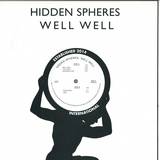
Rhythm Section International’s 12th release comes from another Mancunian called Tom, this time going by the name of Hidden Spheres. We are issuing a * FEEL-GOOD HIT OF THE SUMMER* alert for the title track, ‘Well, Well’, - a certified, yet sophisticated banger, ready to send that festival crowd one step closer to transcendence.
A versatile EP spanning over 5 tracks, Well Well is a house-tinged, jazzy affair - rich in soulful vocals, summery chords and live percussion. Hidden Spheres is a seasoned dj and producer, having released on the likes of Moods & Grooves alongside Theo Parrish, Andrés, MR. G and Moodymann as well as producing the inaugural release for Lobster Theremin imprint Distant Hawaii.
With a wealth of records ready to go, constrained only by pressing plant schedules, RS012 marks the first in a flurry of summer releases on Rhythm Section International.
Record Kicks drops "Solid Ground", the explosive debut album by US band The Grease Traps, recorded at Kelly Finnigan' Transistor Sounds and mixed by Orgone's Sergio Rios.
Recorded between Kelly Finningn's Transistor Sound in San Francisco and Fifty Filth Studio in Oakland and mixed by Orgone' producer Sergio Rios and Kevin O' Dea, Record Kicks is proud to finally present Solid Ground, the long-awaited debut album by US very finest deep funk & soul outfit The Grease Traps. The album is set for worldwide release on November 5 on vinyl, CD and digital format. The band, based in Oakland, CA, is the latest addition to Milan-based Record Kicks roster. Active since 2002, with a 45 released on well-respected funk/soul label, Colemine Records, now, after six years spent working on the album's recording and mixing, they are ready to present their first full-length release Solid Ground on Record Kicks. The album is anticipated by the two killer funk singles "Bird of Paradise" and "More and More" on limited edition 45 vinyl.
As avid record collectors and fans of that old school analog sound, Solid Ground was recorded straight to 8-track tape on a Tascam 388, which also graces the cover art. Half of the tracks were recorded live at Transistor Sound Studio by soul crooner, Kelly Finnigan, and Ian McDonald where both Kelly and their band, Monophonics, have recorded their last few albums. The other half of the tunes were recorded by Kevin and Aaron at Fifty Filth Studio in Oakland, CA where the band also rehearses and mixed by analog-obsessive Orgone producer Sergio Rios. The album's original tunes draw from the Traps' various soul influences ranging from gritty funk ("Bird of Paradise" and "Hungry") to fuzzed-out psychedelic ("Residue") to sweet lowrider soul ("More and More"). The lyrics by lead singer The Gata also don't shy away from pressing issues of the day such as racism in America ("Roots") and finding hope in a world that seems pitted against you (the JB's style "Solid Ground"). The rare funk covers from the album provide a taste of the raw energy one would experience at a Grease Traps live show. The Traps also supplemented their sound with special guests including the Monophonics horns, background vocals from seasoned Bay Area vocalists, Sally Green and Bryan Dyer, as well as strings organized by Kansas City master viola player, Alyssa Bell.
The seed of The Grease Traps formed back in 2000 when keyboardist, Aaron Julin, answered an ad put out by guitarist, Kevin O'Dea, searching for players who were hip to the rare grooves laid down by Blue Note artists such as Grant Green and Lou Donaldson. They quickly formed Groovement, covering those same artists along with other jazz-funk staples. When their sax player and frontman moved away, they switched gears to form the band, Brown Baggin, getting into the harder funk of the JB's, the Meters, Kool & the Gang, and lesser known acts such as Mickey & the Soul Generation. They also started digging into the rare funk compilations put out by Keb Darge, Jazzman Gerald,and labels like Harmless, Ubiquity, Soul Jazz, and Now-Again. Modern day soul and funk outfits such as Breakestra, the Whitefield Brothers, and the Daptone/Soul Fire crews provided additional inspiration.
In 2005, while still playing with Brown Baggin yet fed up with juggling the schedules of seven band members, Aaron and Kevin put out an ad to find a bassist and drummer to jam with as a quartet. The first two cats to show up were bassist, Goopy Rossi, and drummer, Dave Brick. It was clear from the get-go that this rhythm section had great chemistry. Originally intended as a fun side project, the Traps quickly took priority as Brown Baggin dissolved. Performing as an instrumental quartet for a number of years, they eventually expanded their repertoire to include horns as well as that sharp-dressing soul brother, The Gata, on lead vocals. Over the years, they've shared the stage with acts such as Shuggie Otis, Robert Walter, Durand Jones, Monophonics, Neal Francis, and Jungle Fire.
Built around the successes of his soundtracks and songs for the movies of Christophe Honoré, Alex Beaupain’s profile in the ‘chanson française’ landscape is quite unique. Beaupain alternates between soundtracks, songs he writes for others (mainly great French actresses) and his own solo albums.
In march 2021, Beaupain paid tribute to the late Serge Gainsbourg for the 30th anniversary of his passing during a special live on air event where he covered in full, with the Radio France Philharmonic Orchestra, Gainsbourg’s penultimate shocking album from 1984 : Love On The Beat.
This experience led him directly in the studio with Saint DX as producer, the French American duet Faux Real singing backing vocals and a full string section to re-record this cult album with a 2021 twist. He had also dreamed of covering that particular album that had so much impact on him, musically and lyrically, when he first discovered it. The 80s funky sound of the record, produced by Billy Rush, was a new start for Gainsbourg and at the time, the lyrics schocked everyone but achieved to avoid any censorship.
“I was 10 when Love On The Beat was released in 1984. Covering the full album was an idea I always kept somewhere in my mind as I was fully aware of the long lasting impact this particular record had on all the teenagers at the time. This collection of songs is far from being the most covered or talked about works form Gainsbourg, but I’ve always had the feeling they were ‘mine’. That everything started there for me and that, one day or the other, I would have to come back to it.” (Alex Beaupain)
Soopasoul is a legendary name inthe UK funk scene. Originally known as a producer in electronic music circles, Danny Soopasoul stuck gold one day, putting together a band to record in a session where everything was played in live and loops and plug-ins were dropped in favour of real instruments and talented players. The final piece in the puzzle was realised when he stumbled upon on a local horn section so steeped in tradition and quality that it was immediately obvious they would bring the final magical ingredient to the table. Once they were brought in, the instant classic LP 'Twin Stix' was born.
Pleas for 7"vinyl singles from this revered album have been a constant since it's release. However calls for the album to make it's debut on vinyl too have gone unheard until now. This floor-shuffling, hip-swaying, jazz funk party monster is packed with funky beats and some seriously hefty signature brass action. Add the sassy vocals from ladies like Dionne Charles (Record Kicks /Tru Thoughts) and Sitzka, and you're guaranteed to discover that this gem of an album will be enjoyed for the foreseeable future.
Mystery Jets announce that their sixth studio album ‘A Billion Heartbeats’ will be released on 27th September on Caroline International. The band also release ‘Screwdriver’, the first single to be taken from the album.
Screwdriver is an uncompromising look at the rise of the rebranded alt-right in the UK, built around a powerfully positive message: "Fight them with love / then the world will be ours".
Lead singer Blaine Harrison says of the song, “Screwdriver is about the mechanics of intolerance. Looking back at times of economic instability in history, we see how easily deep chasms grow in society and the population seeks change wherever it is most convincingly promised. Conflict arises as cultures and belief systems clash, unwilling to accept one another’s place in society, because we are fed the rhetoric that our neighbours are those responsible for our problems: then inevitably nationalism once more raises its ugly head above the parapet. But whereas political agendas fuel divisiveness, music unites and reminds us of all that we have in common. The message of Screwdriver is not a pessimistic one - because perhaps faced with confrontation we can find understanding, and even maybe learn how to listen to, and love one another.”
Each room of the house in the video is a metaphor for the different sections of society in the UK. It wraps around the narrative of the song, that in order to overcome adversity, you have to “Fight Them With Love”. The visual showcases the song’s inherent message, clashing aggressiveness with tenderness, and culminates in showing after anger, we can always come together through love.
All great albums start from a unique perspective. But try a window on the Strand, in an abandoned office block, overlooking the kind of political upheaval London hasn’t seen in a generation. Blaine Harrison was living as a property guardian right around the corner from Trafalgar Square when he found himself witness to an entire year of protests. Every weekend from January 2017 on, people were marching for a different cause: "In the space of six months it was Black Lives Matter, the huge ‘Our NHS’ march, Unite for Europe," he recalls. "Then the solidarity sleep-out organised by Help Refugees, where we slept in Whitehall for the night... The protestors would wake me up in the morning. I’d just walk down and join in.”
Over the course of that year, Mystery Jets' sixth long-player, A Billion Heartbeats, was born. "This album wasn’t about making pointed opinions,” says Blaine. “It was about being a mirror for what’s going on, reflecting back the way people are feeling.” By turns tender and fierce, abstract and full of classic rock energy, A Billion Heartbeats achieves a balance of passion, fear and hope. Amid the colourful cavalcade of rich harmonies, heavy guitars and rallying cries, the album’s essential message - about personal responsibility, and the power in becoming engaged. In a sense, it's not just their "state of the nation” record but their “state of a generation” record too.
We increasingly hear from musicians that music should be an escape these days - that there’s enough suffering in the world, enough misery on the news, without writings songs about it too. A Billion Heartbeats makes all that sound like a bit of a cop-out. These are songs of protest that get the heart racing in joy; high on hope, and serious in their message. Proof, basically, that music speaks louder than words.
The Fabulous Counts were originally a teenage instrumental group of five musicians, Mose Davis (Organ and Piano), Demetrius ‘Demo’ Gates (Alto Saxophone and vocals), Jim White (Tenor Sax), Andrew T. Gibson (Drums) and Raoul Keith Mangrum (Percussion and Flute) who were later joined by the older, more experience Leroy Emanuel (Guitar and vocals). Emmanuel was invited into the group as it’s band leader by the groups manager Fred McClure, a former Detroit boxing champion who also happened to be the manager of another popular Detroit group the singing Metro’s of the hit recording “Sweetest One” fame and their subsequent respected RCA album of the same name. The Fabulous Counts would often perform at shows as the Metro’s backing band.
The Fabulous Counts first big break came after knocking several Detroit Record labels doors. They were eventually invited in by Ollie McLaughlin’s Moira studio to record, under the tutelage of Popcorn Wylie the one take hit “Jan, Jan (Moira-103). A further two Moira 45’s followed of which “Get Down People/Lunar Funk “(Moira-108) also scored high on the R&B charts. Through a deal arranged by McLaughlin The Counts released their respected “Jan, Jan” album on the Atlantic distributed Cotillion label in 1969. Moving on to Armen Boladian’s Westbound label, during 1970 the group simply changed their name to The Counts and charted with their 1971 “What’s Up Front” Westbound album, also releasing a solitary 45 “Thinking Single/Why Not Start All Over Again”. In 1972 while still part of the Westbound set up The Counts recorded two major label 45’s under the pseudonyms of Bad Smoke “Crawl Ya’ll Part 1&2” (Chess-2124) and Lunar Funk “Mr Penguin Part 1&2” (Bell 45-172), the latter being thier biggest hit. A subsequent move to Atlanta, GA saw The Counts sign with Michael Thevis’s Aware records where they recorded a further two successful albums “Love Sign” (1973) and “Funk Pump” (1975), plus a string of 45’s. In 1976 although officially never breaking up The Counts members went their separate ways to explore different life opportunity’s.
During 1978 and while still in Atlanta Leroy Emanuel borrowed money from his family and reuniting with his fellow Counts, Mose, Demo, and Jimmy Jackson Jr, they, accompanied by a local strings section recorded a session of material that spawned two songs “What’s It All About” and “Motorcity”. Which Leroy later made a deal with Terry Mendelson to release on a 45 on his TM label. The Counts had previously known Mendelson through his brother Bernie at Westbound. The TM 45 made very little noise with many of the copies having mispressed labels. Although later reissued and mistakenly credited as two previously unissued Westbound recordings on several latter Cd compilations it came to light that quite a few avid European soul collectors actually owned copies of this high quality, very elusive and desirable 45! With demand still seemingly high it seems a good time for Soul Junction to reissue it. The A-side, “What’s It All About” features its composer Leroy Emanuel on lead vocals with the other Counts adding to the backing chorus. The flipside of this 45 from the same session is the previously unreleased Mose Davis penned “Watch The Clock” which is more in keeping with the Counts traditional funk groove, enjoy.
Richard Ashcroft is set to release the new album ‘Acoustic Hymns Vol. 1’ on October 29th via RPA / BMG. The album features twelve newly recorded acoustic versions of classic songs from his back catalogue spanning both his solo career and his time with The Verve.
ABOUT
After lockdown was lifted, Richard decided to start the project as a way to reunite the community around him, bringing a selection of great musicians and old friends back together again. As the project took shape, they discovered just how varied their new approaches could be. Some of the arrangements proved to be timeless and remained similar to the originals, with years of experience and a new found passion that saw Richard’s vocals express a fresh empathy within their lyrics. Meanwhile, other songs took on a new shape in this stripped-back set-up.
The rebirth of the iconic ‘Bittersweet Symphony’ was an emotional moment for Richard. It felt particularly poignant re-recording a song that he had written almost twenty-five years ago, especially as it's now officially his composition after Mick Jagger and Keith Richards relinquished their writing credits to him.
Another big moment comes with the new version of ‘C’Mon People (We’re Making It Now)’, a duet with Richard’s old friend Liam Gallagher. The pair have often talked about recording or performing the song together since it was first released in 2000, and now it’s finally happened - the sheer energy and delight that they shared during the session is palpable as the new recording beams with a joyous feeling of optimism.
‘Velvet Morning’ is another track that has been transformed. The vocals on the original version, as featured on The Verve’s classic ‘Urban Hymns’, were sung via a megaphone that Richard had purchased from a car boot sale the day before the recording session. Now Richard’s vocal really shines as it unleashes the song’s full magnitude.
The biggest surprise on ‘Acoustic Hymns Vol. 1’ is the inclusion of ‘This Thing Called Life’, a song which Ashcroft has rarely played live. It was originally recorded with No I.D. in the USA as a highlight of his soul-tinged RPA & The United Nations Of Sound project. Now taken back to basics, the new arrangement reveals a song that feels perfectly at home alongside Richard’s most highly regarded work.
Produced by Richard with regular collaborator Chris Potter, the album features his regular live band boosted by some special collaborators. Wil Malone provides the string arrangements, which were recorded at Abbey Road Studios. In addition, Chuck Leavell (The Rolling Stones, The Allman Brothers) performs piano, Roddy Bloomfield leads the brass section, and Steve Wyreman (Leon Bridges, Vic Mensa) contributes acoustic guitar and backing vocals.
Richard Ashcroft recently announced details of four special shows, each billed as “An acoustic evening of his classic songs.” After quickly selling out two nights at London’s Palladium, he subsequently added two bigger shows at the Royal Albert Hall and the M&S Bank Arena in Liverpool to fulfill huge public demand for tickets. He will play: