Source 02 is the second release from the Uruguayan label New Source. We are pleased to have the debut of Lorenzo Batlle, Uruguayan producer and DJ.
Track A1 - IDRIS:
Opening the EP, IDRIS invites you to a disorderly dance through time, weaving dub influences, atmospheric acid lines, and fragmented vocals creating an eclectic sonic landscape.
Track A2 - MEDEA:
MEDEA emerges with a soft and hypnotic embrace, drenched in hypnotic bells and delayed acid lines.
Track B1 - SIRIUS:
Inspired by Cyrus, woods, and '80s shades, SIRIUS is a blended journey guided by a pulsating baseline—an invitation to move forward on the dancefloor.
Track B2 - God works in mysterious ways:
Closing the EP, God works in mysterious ways leaves a moody imprint, resonating with house vibes and playful synths bringing joy to the dancefloor.
quête:the soft
"Keady & Vallins" is an all-too-familiar story of potential left unfulfilled -- glorious pop music shunted by the impetuous thrums of a music industry stricken by decadence and a preference for high turnover and rigorous proprietorship.
A tour with the Bee Gees by Vallins and help from Robert Stigwood resulted in a deal with Polydor .
After a pair of singles produced by a young, upstart (now hugely important head of Universal Music Group) Lucian Grange achieved moderate success in France, an album was next: taped by Keady and Vallins during downtime from other sessions. They pulled world class talent from the studio, from the pub down the street from the studio, while also (temporarily) pilfering instruments from the shop below the studio (price tags still affixed) -- to create a striking blend of sepia-toned soft pop / yacht rock and pop disco-lite.
Auch im deutschsprachigen Raum spätestens seit dem massiven ESC-Hit "Calm After The Storm" (mit The Common Linnets) vor exakt 10 Jahren eine feste Größe, verbindet die niederländische Singer-Songwriterin Ilse DeLange ihre Country-Wurzeln fürs neue Kapitel mit einer massiven Dosis zeitgenössischem Pop und druckvollem Rock , um zwischendurch auch Eighties-, Indie- und Electro-Elemente aufblitzen zu lassen.
2024 Repress!
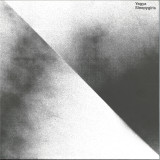
Limited 10 year anniversary repress. In May 2014, Icelandic producer Yagya released his fifth album, Sleepygirls, across three slabs of vinyl on Dutch label Delsin. It's a deep, spacious and dubbed out affair that stays locked at a pleasingly sedentary tempo throughout. Since 2002 the definitive member of the Thule Musik collective has been crafting lush electronic albums under his Yagya alias and always manages to find pure bliss and beauty and his simple, nature inspired soundscapes. "I wanted to create an album that's atmospheric, repetitive, and easy to listen to over and over again," says the man himself. "Something that works well in the background (e.g. when concentrating on work), as well as up close in a big sound system. I also wanted to learn how to make my music sound better than before, since I'm a huge sound-nerd, so that was a part of the goal for me personally." The album is a fine fusion of tropes from Yagya's earlier albums, features jazz instrumentalists that improvise beautiful melodies over monotonic, almost drone-like, techno beats and also uses live recordings of Japanese vocals, saxophone and guitar to counter the repetitiveness of the rhythms. Right from the rolling bliss of the opener, you're suspended in a womb like pillow of sound that is soft, warm and serenely beautiful. As tracks roll on, the pace stays the same but themes vary from upright and summery to more elongated and insular. This is natural, organic dub that is a delight and a pleasure to listen to. The vinyl versions of each track have been specially mixed with random LFOs, sonic quirks and unique fingerprints making them the subtly different to the CD version, but overall this is a brain soothing and mind melting album that can soundtrack lazy days, long summer afternoons and warm winter evenings in equal style.
Field Records takes a look into the vast catalogue of Celer, the prolific ambient project from Tokyo-based artist Will Long. Perfectly Beneath Us was originally released in 2012 as a CD-R on Still*Sleep, and now it’s being presented as a vinyl release remastered by Stephan Mathieu.
Celer began in California as a collaborative project in 2005 between Long and Danielle Baquet, resulting in reams of self-released work up until Baquet passed away in 2009. Long opted to keep their project going, and Celer has continued to grow as an expansive exploration of purest ambient. Meanwhile Long’s solo work under his own name has been equally accomplished, with scores of releases on DJ Sprinkles’ Comatonse Recordings and respected Norwegian leftfield label Smalltown Supersound.
With such a sizable library of sounds to explore, the reissue of Perfectly Beneath Us serves as an ideal entry point into the Celer catalogue, presenting four pieces of sustained, glacial movement wreaking profound emotional impact from the subtlest methods. Long exercises the utmost patience from the shorter ‘Distressing Sensations’ and ‘Ultra-terrestrial Yearning’ through to the 10-minutes-plus stretches of ‘Slightly Apart, Almost Touching’ and ‘Absolute Receptivity Of All The Senses’.
It’s truly immersive, captivating drone music that rewards the attentive listener as much as it soothes the casual drifter. Originally limited to just 100 copies in 2012, it’s now beautifully framed on a carefully considered reissue which adds to Field’s own repertoire of evocative, subliminal electronics.
About Field Records
Field Records has been publishing versatile electronic music from a string of high-principled artists since 2008. Firmly rooted in minimalism and modesty, the label gained a reputation for its versatile and atmospheric output - which includes works from the likes of Artefakt, ENA, Imaginary Softwoods, Monolake and SUGAI KEN.
The RIOT DJ-BACKPACK II is a compact and midsized model of the RIOT PACK line. It was especially designed for digital-DJs travelling with a basic DVS setup such as 15” laptop, Timecode records and accessories or small controllers.
The clever interior layout of the main compartment includes one padded, removable divider and multiple internal storage pouches for clear organization of your equipment. The featured “Zip-Around-Expansion-System” doubles the main compartment’s capacity, providing useful extra space for even more gear or clothing for overnight trips.
+ FITS
Laptop up to 15"
12“ Vinyl
Accessories
+ BASICS
Crafted from durable and 100% waterproof PVC Tarpaulin
PVC-coated (waterproof zippers)
Soft-fleece lining
Lockable zippers on main and laptop compartment
Rubber corner protectors and rubber feet
Main compartment includes one padded, removable divider
Clear organisation Layout and multiple Pockets
The “Zip-Around-Expansion-System” doubles the main compartment’s capacity, providing useful extra space for even more gear or clothing for overnight trips.
Separate side entry compartment provides quick access to your 15,4’’ laptop
One internal hanging mesh accessory pocket comfortably fill out the upper area of the backpack
Large front pocket with internal pouches and organizers
Padded back panel with airflow system, ergonomic backpack straps and chest straps
Detachable trolley sling
Hand luggage compatible
+ SPECS
+ Outer dimensions: (H/B/T): 53 x 33 x 16-22 cm
+ Inner dimensions: : 40 x 31 x 12-16 cm
+ Weight: 2,2 kg
- A1: Searching I 00 00:10
- A2: Kilter 00 04:48
- A3: One Place 00 04:39
- A4: Searching Ii 00 00:04
- A5: Bottom Dweller 00 03:03
- A6: Searching Iii 00 00:04
- A7: No More No Less 00 03:28
- A8: Searching Iv 00 00:03
- B1: Vascai 00 03:42
- B2: Searching V 00 00:06
- B3: Maybe Tomorrow 00 04:40
- B4: Searching Vi 00 00:05
- B5: Last Strut 00 05:01
- B6: Lights Down Low 00 05:30
- B7: Searching Vii 00 00:14
- B8: Ending 00 04:16
James Devane returns with another adept investigation into minimal techno’s spaces in between. “Searching” serves as both companion to “Beauty is Useless” and the next logical step in James’ exploration of process as guiding compositional tool. Conceptually simple, technically robust, the end result elicits both an undeniable groove and a trove of detail for listeners willing to go deep. In his own words: “These recordings are the result of chance. Using hours of source material, everything was “chosen”, manipulated, and assembled at random via custom software without concern for key, tempo, measures, or rhythm. A search button and a save button.”
Sie ist zwar vor ein paar Monaten erst 22 geworden, gilt aber schon seit über einem halben Jahrzehnt als die einflussreichste und einzigartigste Künstlerin unserer Zeit, als Stimme ihrer Generation – jetzt ist sie zurück mit neuer Musik: Billie Eilish veröffentlicht am 17.05.24 ihr drittes Studioalbum „HIT ME HARD AND SOFT“.
Wie schon die beiden gefeierten Vorgängeralben zusammen mit ihrem Bruder FINNEAS geschrieben und aufgenommen, zählt das neue Werk jetzt schon zu den absoluten Album-Highlights des Jahres.
Auf die ersten Viralhits mit 14 folgte schließlich das gefeierte Debütalbum „WHEN WE ALL FALL ASLEEP, WHERE DO WE GO?“, das Anfang 2019 in 18 Ländern direkt auf Platz 1 ging – und u.a. auch in Deutschland Platinstatus erreichte. Mit einem GRAMMY-Rekord ins aktuelle Jahrzehnt gestartet, als sie als erste weibliche Künstlerin in allen vier Hauptkategorien abräumte, konnte die US-Sängerin für den Bond-Titelsong „No Time To Die“ auch ihren ersten Oscar mit nach Hause nehmen. Inzwischen 9-fache GRAMMY- und zweifache Oscar-Gewinnerin, ging das zuletzt veröffentlichte Album „Happier Than Ever“ (2021) sogar in 20 Ländern auf die #1 – eingerahmt von gleich 16x Platin und weiteren Gold-Auszeichnungen. Den zweiten Oscar gewann sie für ihren Barbie-Beitrag „What I Was Made For“.
Beim dritten Album „HIT ME HARD AND SOFT“ handle es sich ganz klar um das gewagteste Albumstatement ihrer Karriere, ließ Eilish schon im Vorfeld durchblicken. Vor allem sage der Albumtitel eigentlich schon alles: Es ist ein wahnsinnig emotionales Werk, das berührt, das harte und auch softe Schläge austeilt, indem die 22-Jährige inhaltlich und klanglich immer wieder neue Genre-Grenzen absteckt. Vor allem vertraut die vielfache GRAMMY- und Oscar-Gewinnerin auch dieses Mal auf ihre Instinkte – und unterstreicht genau damit erneut, weshalb sie als die spannendste Songwriterin unserer Zeit gilt.
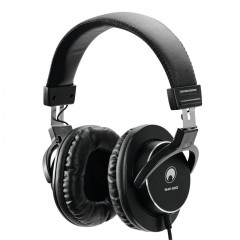
High-class monitor stereo headphones
Closed, circumaural, dynamic stereo headphones
Very good attenuation of background noise makes them especially suitable for use as monitoring headphones in a noisy environment, film and theater applications, DJ or recording applications
Very high output power
Powerful 45 mm neodymium magnet and HQ voice coil
Enhanced frequency response tuned to deliver high-output bass with extended highs
Well-padded, adjustable leatherette headband
Soft circumaural ear pads
Optimal wearer-comfort due to single OFC cable
Gold-plated 3.5 mm stereo jack with 6.3 mm adapter
Incl. velour bag for safe transportation
Frequency range: 10 - 26000 Hz
Sensitivity: 98 dB
Max. SPL: 98 dB
Rated power: 1800 mW
Cable length: approx. 3 m
Connector type: 6.3 mm jack (stereo); 3.5 mm jack (stereo)
Connections: Headphones via 6.3 mm jack (stereo)
Headphones via 3.5 mm jack (stereo)
Speakers: (1.75") approx 4.5 cm with Neodymiummagnet
Transducer type: Dynamic
Type (Headphones): Closed, earenclosing
Weight: 0.34 kg
Few recording artists have aligned the quantity and quality of their releases as well as New Zealand singer/guitarist Roy Montgomery has in 1995. Beginning with kranky's release of the soundtrack for an imaginary film That That Is...Is(Not) by Roy's duo Dissolve early in the year, a series of superb albums and singles have been issued by a variety of labels across the world. Each one of them is a must have. Most recently, the Drunken Fish label released a collection of pastoral drones entitled Scenes From The South Island, singles have appeared on the Roof Bolt and gyttja labels, and further singles are scheduled with Ajax, Siltbreeze and others.
Temple IV is the first solo recording by Roy Montgomery on kranky. The album was recorded by Roy on a 4 track tape deck and then thickened up with monophonic moog. The tracks on the album are thick with interwoven guitar lines and moog drone, inspired by the Guatemalan rain forests and the mysterious ruins of the temple and ruins Roy visited there.
Roy Montgomery spent the past year in New York, Chicago and London before returning to New Zealand. While in the UK he played live with Flying Saucer Attack and collaborated with spoken word performer Kirk Lake. A brief tour across the United States in September saw Roy performing before enraptured audiences in New York, Boston, Chicago, Detroit and Los Angeles.
The long overdue recognition of Roy Montgomery as a crucial figure in New Zealand's musical history as a member of The Pin Group, Shallows and Dadamah, is now augmented by his new recordings. Temple IV will serve to extend and deepen that appreciation.
Special Guests on the record include: Mark Cisneros, Joe Lally, Derrick Decker, Bob Berberich, Clint Walsh, Dave Grohl, Onam Emmett, John Goetchius, Jerry Busher, Amy Pickering, Ian MacKaye, Amanda MacKaye, Brian Baker, Randy Austin, Martha Hull, Michael Reidy, Nate Bergman, Bobby Madden.
Scream formed in 1979. Drummer Kent Stacks, bassist Skeeter Enoch Thompson and the brothers Pete and Franz Stahl attended school together in Bailey’s Crossroads, Virginia, when they began to discover the punk and new wave scene in DC and the provocative power of making music.
Like most of the punk bands in DC, they were influenced by the Bad Brains, but their rock and roll sensibilities set them apart. In 1982, they went into Inner Ear Studio with Ian MacKaye and Eddie Janney to record Dischord's first full length album, Still Screaming.
Scream followed this with a second full length album, This Side Up, in 1984. The band toured throughout the US and were one of the first US hardcore bands to tour Europe and the UK. In 1987, they released Banging the Drum, which was recorded at both Southern Studios in London and Inner Ear. In 1988, No More Censorship was released on reggae label RAS records. Scream returned to Dischord to release Fumble in 1993.
They made a few line-up changes along the way, including the addition of their friend Harley Davidson on second guitar, and, when Kent Stacks (RIP) left the band to start a family, they asked a young local drummer, Dave Grohl, to take over. After a number of years with "the Scream team," Dave went on to join Nirvana and form The Foo Fighters.
In 1996, at a Christmas reunion show, Kent Stacks returned as Scream’s drummer; the show was recorded and released as the CD “Live at the Black Cat.” Over the next few years, everyone branched out in different directions – Franz joined the Foos for a short period and Pete played with Goatsnake and earthlings? The band returned as a unit, with Clint Walsh on second guitar, in 2011 to record the Complete Control Sessions, which was released as an EP on Side One Dummy and was, until now, the band’s most recent release.
Scream’s newest album, DC Special, will be released in the fall of 2023 on Dischord Records. For this record, Scream invited their extensive music community to help create a unique project that weaves the history of music in Washington DC into the story of the band. Recorded by Don Zientara just weeks before his studio was evicted from its longtime location, the record is rich with both the sounds of Inner Ear and those of friends and musicians who influenced Scream and who shaped DC music over the past six decades. DC Special embodies the same sense of community and politics that inspired Scream from the start and is a truly special collection of new music that speaks to the present and also tells the story of DC music, Scream, and the influences that shaped them.
Bonus Download Tracks
Faces
Politics is Entertainment
Black and White
Lifeline Redux
Smile and Bleed
I Saw Ya (Wanna Be Like Captain)
- A1: Welcome To Mathematics
- A2: Ten And A Hundred
- A3: Plus And Minus Five
- A4: Soft Mirrors
- A5: Colliding Clowns
- A6: Swaggering Cowboy
- A7: Plus And Minus Eight
- A8: Accelerating Athletes
- A9: Halving Rectangles
- A10: Myriad Mosaics
- A11: Shapely Patterns
- A12: Composite Cookbook
- A13: Agitated Banjo
- A14: Clocking The Day
- A15: Jumping Pyramids
- B1: Shadows In Four Aspects
- B2: Unitary Climb
- B3: Colossal Triangle Split
- B4: Apple Tree Angles
- B5: Child’s Angled Views
- B6: Old Seagull And Chips
- B7: Seaside Romp
- B8: Fair By The Sea
- B9: Tranquil Snail
- B14: Running Big And Wee
- B15: Take It Away
- B10: Masts And Nets
- B11: Numbered Rows
- B12: Slipping And Sliding
- B13: Perfect Postman
Limited black vinyl. Full colour sleeve with unseen pics of Ron Geesin in his studio doing maths stuff on the back.
Wow! So you’re telling me Ron Geesin made this kooky electro groovy score to a really progressive maths educational programme on Central TV in 1980 and it’s musically anarchic and amazing and it’s never been issued before? Until now. Wow again!!!! And there’s 30 tracks!!! Trunk Records we love you...
Basic Maths was the second educational TV Series for the Midlands-based ITV station for which I composed, played and recorded all music and noises. The first series, also for budding mathematicians in the 7-10 age group, was Leapfrog in 1978 produced by ATV (Associated Television): Basic Maths was for the newly-formed Central Television, the work spanning 1980-1981; both series were of twenty-eight parts.
The most worthy idea for both of these series was to project mathematics into life by means mainly of non-verbal sound and vision, with both animated and live action films, linked by two presenters, Fred Harris and Mary Waterhouse. In my role as Media Composer, I had had quite enough of voice overs, therefore music well under, so this fairly radical educational approach at the time encouraged my creative juices to run unhindered. Of course the sound had to do something with the picture and not just use it as a carrier for peacock display. It had to duet, play with and explain the visual content using novel and engaging techniques, so this involved the usual and sometimes intricate mathematical calculations which constantly exercised my already reasonable school maths.
Soft rock"s seminal band, The Blue Jean Committee, originated from blue-collar Chicago when the now legendary Clark Honus (Bill Hader) and Gene Allen (Fred Armisen) dropped out of sausage school to create the band of their dreams. With the help of famed music manager Alvin Izoff, the band reinvented their hard Chicago-blues image to instead transcend the laid-back essence of California. After studying bands like The Beach Boys, The Blue Jean Committee as able to find their signature sound and rise to the top of music charts. Despite Chicago"s resistance to their "vegetarian" facade and "hippy" vibe, the band became known for creating the quintessential California album. Their debut album, Catalina Breeze, spawned six consecutive hit singles for the band and for a moment it seemed like they would be a long-term fixture on the American musical landscape. However, some relationships are more complicated than they appear on the surface, and nowhere did this ring more true than for Gene Allen and Clark Honus, as their infamous on-stage fight at the Hollywood Bowl Animal Rights Now Benefit and subsequent break-up has since become the stuff of legend. Fans of the "Chicago band with the California sound" can celebrate once more! After over 30 years apart, Gene and Clark were recently reunited for their induction into the Hall of Fame in April 2015.
- 1: Life
- 1: 2Soft Summer Breezes
- 1: 3Here's Where I Get Off
- 1: 4Little Daisy
- 1: 5Can You Tell
- 1: 6Why Why Why
- 1: 7Gentle Flying Dove
- 1: 8When Will It End
- 1: 9The Journey
- 1: 0Wounds Heal And Birds Fly Free
- 1: Fall On Me Rain
- 1: 2A Flower For All Seasons
- 1: 3Baby Buggy
- 1: 4Someday
- 1: 5You'll Know The Words
- 1: 6The Time Of The Year Is Sunset
Im Gefolge der Chartstürmer der Zombies, Beatles und Left Banke blühte mit dem Baroque Pop in der zweiten Hälfte der 60er Jahre ein dandyhafter Ansatz des Garagenrocks auf. Inmitten von majestätischen Cembalos, beschwingten Gitarren, melancholischen Orgeln und Mittelschulorchestern fängt "Soft Summer Breezes" mit 16 sanften Momenten weicher Psychedelia den letzten Hauch von Optimismus des Jahrzehnts ein.
"Imagine: It’s sometime in the back half of the 19th century, America. You’re sitting in the parlor of your mansion, or in the only room of your shack; things are dusty and smell like sweat and hair, no matter how wealthy you may be. You don’t own a phonograph, and you don’t know who Tony Hawk is, but you have an inkling of how good the word 'shred' is going to feel when it enters the local slang. Suddenly, a tall, elegant figure with beautifully maintained fingernails emerges from some corner of the room, carrying a guitar. He says in a soft voice, 'I have a transmission for you, from the coming few centuries. Would you like to hear it? I figured you wouldn’t have a dongle, so I brought my guitar.' You may be apprehensive, but you shouldn’t be. Shane happens to be an internationally renowned virtuoso of the guitar. Specifically, he’s the kind of virtuoso who is as deep on style as he is on technique. His technical prowess is almost maddeningly complete; aiming paradoxically for the yards-long target called “breadth” he’s somehow hit all of it, 500 arrows piercing every pore of the landscape. He has that much technique not for the sake of guitar worship but to best bring the music forth clearly and in his own hand, like a pearl formed in a specific sea. I know this because I’ve sat next to him in multiple countries and American states and seen him deliver transmissions of that extreme honesty, with that extreme capability. Like Derek Bailey’s 'Ballads,' this record brings you into the room and the breath of a true musician whose mastery does not overshadow his appreciation of the music that inspired it. The title, 'Repertoire,' underscores the beautiful songs he chose to perform, all standards of 20th century musical excellence. The in-time persistence of his blues-walked 'Lonely Woman.' The grand registral descent he performs on 'Pithecanthropus Erectus,' like a rare document of the trip down from Everest. Dig how 'Better Get Hit in Your Soul,' emphasizes the folk blues water coursing through Mingus’s Ellingtonia, how Aphex Twin’s 'Avril 14' and the Minutemen’s 'Cohesion' sound so much older than Cage’s 'Totem Ancestors.' 'Repertoire' puts forth the idea that time is arrangement: time and arrangement are each only as successful as they are faithful to their origins and expansive in their style. Again, lest you fear the alien smoothness some associate with the concept 'virtuoso,' remember here we’re dealing with a time- traveler. His virtuosity is home grown, born of human work rather than some abstract or divine touch; the aim is not to go beyond the realm of human technical possibility but to expand it in the direction of human, meaning, timely. This guy can play anything, and for you, for this record, which sounds intimate and as present as a transmission from a time-traveler, he chooses to."—Wendy Eisenberg
Wisdom Teeth co-founder K-Lone is dropping two EPs on Aus Music: the first instalment nods to UKG and house flavours, landing mid-May, while the second offers a deeper, broken techno vibe, arriving in late June. 'Give It Up' opens Part 1 with a bubbly rhythm and bassline that percolates through the woody, organic percussion. Lush pads and neon lines swirl skyward to silky and seductive effect as various other samples and daubs of colour bring the groove to life. The heady 'Wait 4 U' is a textbook K-Lone house cut with low swinging bass, sultry sax stabs and molten R&B samples that get the juices going next to warm, diffused synth lines.
On the flip, 'What I Want' ups the pace but keeps it deep and smooth with rubbery kicks and gooey bass overlaid with soft-edged chord stabs that will pump the floor. Lastly, 'Own Way' closes down with a tumbling bassline that takes you deeper as muted vocal sounds and glowing chords hook you into an infectious groove suited to the most intimate dancefloors.
UK trailblazer K-Lone heads up the label Wisdom Teeth with fellow producer Facta and has released everything from club-primed garage to innovative home listening records. Whether cooking up kinetic beats and bouncy bass or soundtracking a lazy summer's afternoon with synthesised bird calls and lush marimbas, the London-bred artist is a proven studio wizard. Critical acclaim has come for both his ‘Swells’ and ‘Cape Cira’ albums, and now his ‘Catching Wild’ EPs for Aus Music offer yet another portal into the colourful world of his idiosyncratic, signature sound.
2024 Repress
Ned Doheny's Hard Candy, originally released in 1976, is widely considered the finest blue-eyed soul album of all time. It is has long been a source of great frustration then, that this perfectly-formed Southern California masterpiece has been unavailable on vinyl for almost 40 years. Previously bootlegged in derisory fashion, original copies are rarely found for less than $100.
Be With Records, a new vinyl-only reissue label, continues apace by marking its third release with the first officially licensed reissue of Doheny's nautical classic. Perhaps most famously, this impeccably smooth set features the timeless Get It Up For Love, a wonderful example of mid-70s mid-tempo white-(hot)-funk.
Produced by the legendary Steve Cropper, it featured a veritable who's-who of the Laurel Canyon soft-yacht sound (JD Souther, The Eagles, Linda Ronstadt, the entire horn section for Tower of Power!) yet bombed mysteriously. It's been a cult record since.
Pressed on audiophile 180gram vinyl and featuring the original artwork for both jacket and full colour inner sleeve, this very limited reissue of 500 copies is one not to be missed.
"Katie Crutchfield, under the name Waxahatchee, made her debut album during a snowstorm in the winter of 2012. She dedicated it “to anyone who had woke up and realized their identity is blurry, has had to clumsily get to know themselves, has hit a bottom, has felt self-deprecating and vagrant, and to anyone who has ridden out a shitstorm.”
She called it American Weekend. She means “American Weekend” in the same wide way that Kurt Cobain means “Teen Spirit,” less social construct than natural phenomenon. This is a lo-fi masterpiece in the league of Lou Barlow and the Softies. We should consider it a descendent of Bruce Springsteen’s Nebraska, or else temper it no lower than Essential Listening."
Bruno Berle, the young songwriter and poet originally hailing from Maceió, the capital of Brazil’s Alagoas state, crafts songs that are simple, direct, and full of tender nuance. With his first album No Reino Dos Afetos (which translates to "In the Realm of Affections” and was released in 2022), Berle firmly established himself as a unique and important voice in the burgeoning scene of new Brazilian artists making a global impact, including peers like Ana Frango Elétrico, Tim Bernardes, Bala Desejo, Sessa and more. Now back with his second album, No Reino Dos Afetos 2, he stretches that further.
Bruno Berle’s music lives between two worlds – a traditional Brazilian folk talent steeped in history, and a contemporary, dreamy electronic pop; the result is songwriting that’s genre-bending, intentional, iconoclastic and consuming, spacious and sinewy and singular, a striking reflection of its composer while leaving space for the listener to settle in. The album follows Bruno’s relocation to São Paulo, and the songs are a reflection of his past and present. A rebuke of former categorizations of his work in Brazilian music scenes, and an idea of where his music can move, unfettered.
Berle’s music is purposeful in being a true portrait of himself, and a reflection of the music, art, and fashion scenes he personally moves through. Berle aims to provide an entrypoint for Black queer joy in his music, in his storytelling, in his presence and vision as a creative. For him, it feels subversive to be playing MPB laced with dubstep and lo-fi, a sort of intentional sacrilege, capturing a dialogue of modernity in traditional music.
Berle wrote most of the arrangements and co-produced his new album, Reino Dos Afetos 2 with longtime friend and musical partner Batata Boy, who is also from Maceió; the album was recorded in Rio de Janeiro, Maceió, and São Paulo, his new home, and picks up the conversation begun in 2022 on Berle’s debut album No Reino dos Afetos. Both records are the result of a nonlinear but coherent seven-year music creation process culminating in these albums, holding hands across space and time.
“Tirolirole,” the first single from the record, was released at the end of 2023; sun-soaked rhythms and soft voice coat the song, the lilting refrain of “Tirolirole” throughout – hushed, gentle, but somehow almost tactile, a golden-hour moment unlocked in the mind. “Tirolirole” is a triumphant future classic about the temporality of a blossoming love, with Bruno’s stunning vocal soaring over melodies which ebb and flow like the waters on the Atlantic shore. Of the track, Berle explains: “Despite ‘Tirolirole’ being an expression that evokes my childhood, just like the light words about nature, the harmony, and the poetry are epic, carrying a great hope for love.”
In fact, the guiding theme of No Reino dos Afetos 2 is a relationship, unfolding in the arc of a weekend. It traverses the innocence of an early young love, how that can be formative, can stretch on to take new shapes, or shape you. The album happens at the genesis of meeting someone and falling for them, before the relationship is thrown into overdrive – set in a big city, against a backdrop of major life changes, rising energy, the sound of São Paulo.
Something transcendental emerges in “Dizer Adeus,” with an arrangement that echoes a gospel atmosphere (evangelical and Catholic environments were pivotal to Berle’s upbringing). On “É Só Você Chegar,” piano and flute gracefully intertwine, a dance, while “Quando Penso” skews sparser, the voice-and-guitar minimalism somehow cultivating an entirely different shape – somehow both cozy and melancholy, with the background sound of a rainy day. Coupled with the lo-fi aspects that shape much of the album’s personality in the vocals and the production, No Reino Dos Afetos 2 is meticulously elaborated by Berle’s sonic alchemy, like on the mid-album instrumental “Sonho,” which feels like floating. “It’s the apex. It’s when lovers are sleeping together,” Berle explains of the feeling he wanted to encapsulate in the song.
On “Love Comes Back” Berle interprets Arthur Russell, the late Iowa musician who only reached greater visibility after he died in 1992. “His way of making music is similar to mine,” Berle explains. “He sings in a more fragile way, has more of an experimental way of recording, letting ‘chance’ appear in the final work.”
Even so, Berle doesn’t want his music to be buried in sentimentality – and the purposefulness of his craft serves as a sort of north star. The production, the arrangements, his restraint and intentionality in crafting his songs feel just as vital as their emotional cores. His songwriting is amorphous, fluid, an encompassing genre-bending movement in-and-of-itself, quietly daring. The songs are often in conversation with other works – drinking in fountains as diverse as the filmmaking of Ingmar Bergman, the poetry of Walt Whitman, the rhythm of Djavan, and the painting of Maxwell Alexandre. Musically he weaves together a rich tapestry of Brazilian folk, UK 2-step garage/dub, trip hop and sun soaked west coast songwriters; something akin to the worlds of Milton Nascimento, Arthur Russell, James Blake, Feist, and Sade colliding into one. But even then No Reino Dos Afetos 2 floats separately, a romanticism driven by a simplicity and intimacy, an open-ended possibility, Berle’s singularity as an artist at the helm of the ship.
Though their album was cut in two days over the course of 2 eight hour sessions their arrangements shine through what was a scattered recording session. "We really worked hard in the studio even though we didn't have enough time to do all the things we wanted to do with music," bassist Robb Murphy remembers. "We were pretty excited. We just had no experience with that sort of thing. We had heard things but never had any experience.
We were really babes in the woods. It was a terrific experience looking back on it. It was really a hell of a lot of fun, we loved the idea of being able to overdub even though we didn't get to do too much of that, it was still fun. That was pretty high tech in those days, being able to lay down a couple of tracks with your voice." guitarist Mike Barnes recalls.
Similar to the Bosstown sound (Orpheus, Ultimate Spinach), Tiffany Shade lean towards harmony-driven vocals that combine their clever pop sensibilities with a versatile showcase of keys, organ, and scintillescent guitars. After their album's release in '68, they had the opportunity to open for Big Brother & Holding Co., but because of poor sales (and like many Mainstream artists) the band didn't last and went their separate ways in '69.