Dark Entries returns to the steam room with Coatshek’s Sound Bath. For their SoundBaths series, now-defunct poppers brand Double Scorpio commissioned artists to make mixes for an imaginary queer bathhouse. When asked to contribute, San Francisco-based artist Coatshek aka Sheki Cicelsky took the opportunity to create original compositions. The resulting album, Sound Bath, serves as a masterclass in slow and sultry ambient techno. Taking inspiration from Pink Floyd, Manuel Göttsching’s E2-E4, and his friend’s DJ mixes (particularly Nick Moss and Matthew Paul’s for “Por Detroit”), Coatshek landed on 107 bpm as the optimal speed for sauna sex. With just a few synths, his Telecaster, and “lots of delays, reverb, and weed,” he sculpted stunning cuts like the effortlessly grooving “Softest” and the psych-laced “Triple Virgo.” The cover for Sound Bath was designed by Coatshek’s fiancé Nate Sprecher, and features photographs by Luke Kraman taken at The Ever Afters campout. The album also includes an insert featuring the Double Scorpio SoundBaths series artwork by Blake Wright. Equally hypnogogic and sexually supercharged, Sound Bath situates the bathhouse as a liminal dreamspace of unbounded erotic potentiality.
Suche:the soft
Thomas Schumacher’s “Schall" is a landmark Techno track that has pushed the boundaries since it’s original release in 1995. A remix by the man himself turned the underground cult track into a chart phenomen, something unseen up until then. The story continued when Thomas’ created a special mash-up of “Schall” and Soft Cell’s “Tainted Love to celebrate his first DJ set at the legendary Fusion Festival in 2016, which ended up becoming one of the most saught after mash-ups. We are excited to present the 2021 version of “Tainted Schall" by Thomas Schumacher.
Deeppa Records kicks off a new 7" series here that aims to pair emerging artists with established names from the label's artistic circle. The opening release introduces Tolyatti producer Pasadena with 'Vodichka Nice', a laid-back, groove-led gem that recalls 'Stepoing Into Tomorrow' era Donald Byrd with its seductive drums, squelchy slow-bass and soft-focus melodic wonder. It's already becoming a fave on the scene and on the reverse, respected producers Scruscru and Tony Lavrutz reshape the original with a remix that leans into deeper club territory, though keeps the bright melodies and inviting horizontal feel. Two sides, two moods, two essential cuts.
Seattle-based label Soft Spoken Secret (SSS) proudly debuts with "SOFT", setting the tone for a new chapter in dancefloor-driven electronic music.
Adam Collins delivers a stripped-down yet propulsive groove, radiating raw, hypnotic energy. On the remix, UK legend 100Hz reimagines the soundscape with his signature ethereal touch—blending intricate rhythms, fluid textures, and a dreamlike atmosphere.
With SSS001, Soft Spoken Secret asserts itself as a home for cutting-edge sound, timeless artistry, and deep musical storytelling.
The union of Antwerp synthesist David Edren and Tokyo minimalist Hiroki Takahashi is a fit so natural as to feel preordained. Both traffic in subtle shades of contemplative electronics, marked by patience, space, and poetic restraint. And both have rich histories of curation and collaboration – Edren in the duo Spirit & Form alongside Bent Von Bent, and Takahashi as proprietor of the Kankyō record shop, as well as one fourth of cosmic ambient quartet UNKNOWN ME. Mutual fans of one another’s work, they began sharing stems in the latter half of 2020, which slowly blossomed into a collection of multi-hued compositions inspired by notions of connectivity and impermanence, translated for east and west: Flow | 流れ.
Opener “Dusk Decorum | 黄昏 礼節” maps the mood of what’s to come, elegantly pirouetting and percolating through an expanding vista of looming stars and half-light horizons. Takahashi describes Edren’s arrangements as evoking “a strange feel, something we haven't heard much of before.” The sensation is one of “in-betweenness,” a restless current whispering beneath the beauty, like seasons seen in time-lapse footage: flickering but infinite, transience turned permanent. Takahashi’s signature sculpture garden tones plot spiral patterns over which Edren cascades dazzling pointillist synthesizer coloration. The pieces veer between delicate and dilated, micro and macro, their aperture forever softly in flux.
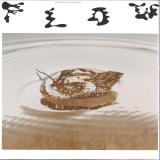
From the oscillating orchestral lullaby of “Stalactime | 鍾乳石時計” to the sweeping, sparkling dream sequence closer, “Shift Register | シフトレジスタ,” the album achieves the elusive goal of being more than the sum of its parts. This is music of rare air, elevated and amorphous, shimmering just out of reach. Though Edren and Takahashi have yet to cohabitate the same room in person (a fact that should be rectified soon by an astute festival booker), their palettes and poise are perfectly paired, twin fragilities woven into seven radiant and regenerative vibrational states. The cover design of a beatific, beaded leaf rippling on the surface of a hidden pond aptly captures the record’s muted majesty. Takahashi’s quiet pride is justified: “We are very happy with this time-consuming and carefully crafted work.”
Accepting the darkness can be a liberating experience. Realising, and struggling with just who we are and what world we live in requires it. By further complicating the fractured sense of beauty found on his droning 2022 release, ‘I dreamt we found a way’, Bristol-based composer, Rob Winstone creates a language that encapsulates the lifelong reach for our own personal heavens, along with the darkness and fear on which those foundations are built.
Winstone’s instrumental palette continues to reach out far from behind his keyboards, however the sound of ‘sifting through heaven’ is stripped back and pared down, putting melody front and centre. 'postcards and loose tea', a love song written for Winstone’s partner during a period coming to terms with health difficulties had previously self-released with heavy spectral and granular manipulation from the artist. Here Winstone re-presents the original: “the stripped back recording I made in my old damp and cold studio that was in a building that has since been demolished”. It reflects the composer’s own journey, doing away with veils and histrionics, and embracing emotional bliss wherever it can be found, warts and all. Even the rumbling dark ambience of ’hospital corridor’ - where distant chimings, groans, and droplets synthesized from field recordings made nervously in a hospital waiting for test results coalesce - harbours a sacred-seeming beauty and aseptic warmth within its very bleak sense of dread.
There’s no better way to describe Winstone’s method than ‘sifting through heaven’. The hymnal organ chords, sketched out acoustic guitar phrases, scattering drum thuds, and meditative field recordings may flit between tenebrous to incandescent, but his focus is always on the embrace of love; “a view of life that embraces positive growth, yet doesn't deny immense suffering,” as he puts it. The album is bookended by two of Winstone’s most outright peaceful moments, summarising his core message: 'in spite of it all...' '...love finds a way'.
Made across 2024 between London and Amsterdam, WITH A VENGEANCE (or WAV for short) is the sound of uptempo catharsis, of SHERELLE making sense of a turbulent and difficult moment in time in her personal life. Determined to write one track a day, the studio became a safe space for SHERELLE to channel anger and feelings of betrayal, her hard and fast club tracks turning darkness into the cerebral joy of overcoming adversity. From those intense daily writing sessions has emerged a sharp, finely-crafted 10-track LP that is powered by fierce feminine energy and reflects the hard/soft and light/dark dualities of the dancefloor and life itself.
WITH A VENGEANCE is also a rally cry for the 160 scene, designed to push the tempo in new, exciting and as yet undiscovered directions. Inspired by SHERELLE’s foundational influences such as Kode9, Scratch DVA, Machinedrum, Lone and SBTRKT as well as the soundsystem-shaking groove of grime’s R&G sub genre, the album is designed to change perceptions of what 160 can be. But don’t get it twisted: this isn’t a concept album. WAV is for the dancefloor, delivering shades of London, New York, Detroit and Chicago in ways that are guaranteed to raise gun finger salutes.
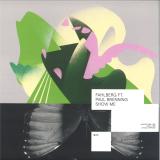
For the 23rd entry in our ICONYC catalogue, we welcome rising Swedish star Fahlberg and his collaborative single with German maestro Paul Brenning, ‘Show Me’. Amped by reworks and edits by Hunter/Game, BAILE, and KEVSKI, our latest delivery is a monumental EP that is bound to awe and inspire in equal measure.
Hinting at something emotionally gripping from the onset, the original version of ‘Show Me’ unfurls over a tight frame as a synthetic bed surges to the front before Fahlberg deploys a thundering bassline. Slowly, we start to sway, making our way to a break in the cloud while Brenning’s ever-alluring vocals glide over the piece in a spectral presence, immersing us deeper into the narrative, as crisp arpeggios make their way through brass swells and backing chords. Blissful, yet exciting at every turn, ‘Show Me’ is a dazzling collaboration that invites us to revel in the possibility of a new, warmer dawn.
Taking ‘Show Me’ in a slightly darker direction, Hunter/Game presents us with their own interpretation, an introspective juggernaut that is constantly evolving as it walks the tightrope between light and shadows like only this acclaimed duo can.
Adding a new layer of depth to this package, BAILE gifts us a wondrous remix that fragments ‘Show Me’ in a different light. Employing broken beats and lush, evocative moments, this softer twist is a mesmerizing creation bound to wash the pain away.
Completing this aural gem that is ‘Show Me’, avant-garde electronic-classical duo KEVSKI unveils an exquisite masterpiece, deconstructing the original skyscraper into a sublime menagerie of textures and melodic flourishes that blossom somewhere between melancholy and hope.
Soft lines draw a texture in the sky, marking time in the most unpredictable ways. A call comes from far away. It’s Romanian legend SEPP, who’s making his RE.FACE LIMITED debut with three tracks that carry his long-lasting, unique touch. Rolling, hypnotic, lush, as he blends rhythm and emotion, flooding the dancefloor with energy in a sensational manner.
2026 Repress
We feel like Frank & Tony and Smallville have been on the same musical wave-length since forever. Our musical paths have crossed back and forth over the years and we have always shared a lot of the same values- steadily putting out quality music, that stands the test of time - growing consistently - never stop following our very own way - always not-following trends forever..
Frank & Tony is the collaborative guise of Scissor & Thread co-founders Francis Harris and Anthony Collins aka Grant. Both have long been staples of the underground with material under their own names and numerous other guises shaping the musical landscape of House Techno and beyond since the turn of the millennium. Both lived together in New York and as Frank & Tony the pair have delivered multiple albums and many EP’s on their own label, Tokyo’s Mule Musiq and Pacific Rhythm- now they are warmly welcomed onto the Smallville Records roster with their latest collection of works.
‘Ways Of Mine’ leads on the A-Side and showcases the pairs signature deep hypnotic house style via soft billowing pads cascading metallic chimes psychedelic spoken word and dreamy dubbed out keys floating atop a robust bouncy rhythm
section.To open the flip-side title-track ‘After All’ lays down a subtly blooming chord sequence shuffled drums and bumpy bass stabs at its core all subtly nuanced while the latter half introduces more dynamic rhythmic elements and intertwined melodic touches. ‘Dimension’ then concludes the release diving deeper with saturated ethereal pads and bubbling resonant arpeggio lines alongside heavily swung crisp drums jazzy keys and delayed vocal chants.
After All comes with a full cover artwork by Stefan Marx.
All tracks written & produced by Francis Harris & Anthony Collins
Mastering and Vinyl cut by Helmut Erler at Lathesville
Finnish dub-techno craftsman TM Shuffle, head of Vuo Records, resurfaces with a deep and distilled EP that goes straight for the late-night heart of the dancefloor. Rooted in Tampere’s raw, analog dub sound, his productions have long balanced weight and warmth, smoked-out chords, rolling low-end and subtle shuffle that keeps the groove in constant motion.
The lead track “Kellari” dives into basement mode: pressure-cooker drums, slow-burning stabs and a humid, lived-in atmosphere that feels equally at home on a huge system or in headphones at 4 a.m. On the second original cut, TM Shuffle links up once again with long-time collaborator Monoder, the alias of Jussi-Pekka Parikka, known for his dubbed-out explorations on labels like Statik Entertainment and Pakkas-Levyt since the early 2000s. Their joint track stretches time, letting echo, tape hiss and distant melodic fragments float around a rock-solid groove, channelling years of shared studio language into one focused, hypnotic flow.
On the flip, Anton Kubikov (SCSI-9) steps in with a lush reinterpretation of Kellari. A true Russian techno veteran with a catalog that spans Kompakt, Force Tracks, Mayak and beyond, Kubikov melts the original into a widescreen, dream-state trip, soft-focus pads, gentle yet insistent percussion and that unmistakable rolling pulse that made his work so enduring. The remix doesn’t just extend the track; it opens a new dimension, turning the basement pressure into a slow-rising, celestial drift.
Pressed on limited coloured vinyl, this EP is built for selectors who like their dub techno deep, human and timeless, a record that will quietly live in bags for years and keep resurfacing whenever the room calls for true late-night elevation.
Berlin lo-fi crooner Der Assistent returns with "Ultramarin", a sun-faded suite of soft-focus pop, Balearic grooves and late-night yacht moods drifting between languages, moods and references – slightly surreal, and quietly melancholic.
Following the tropical haze of its predecessor "Amnesie am Amazonas", his third album makes a slightly bigger splash: classic late-80s digital pianos, downbeat grooves and flashes of dub-reggae intertwine with subtle soprano and alto saxophone lines that drift between lounge melancholy and nocturnal jazz.
Laid-back opening cut “Wenn der Scirocco weht” pays homage to Japanese lovers rock, while the dubby downbeat title track celebrates the color blue in French, English, Italian and German, echoing situationist slogans and painter Yves Klein’s idea of “the invisible becoming visible.” Lead single “Mann am Telefon” dives into hazy yacht-pop and lo-fi soul, gradually unfolding into an instrumental outro that recalls the early synth romanticism of Vangelis.
Across the album, Der Assistent traces a playful tale of split personalities – with subtle nods to Fight Club and Blade Runner – culminating in the lush closing 80s R&B ballad “Total Confusion”.
Written, recorded, produced and mixed entirely by Der Assistent, Ultramarin also inaugurates his new imprint of the same name.
RIYL: Fishmans, Eddie Chacon, The Zenmenn.
Mate is one of Spain's finest when it comes to quality deep house and this 22nd outing is further evidence. Shaka is behind the beats and kicks off with 'Love & Pain' which turns the joys and anguish of romance into a jazzy number with a feel-good groove and happy chords full of musicality. 'Sonic Of Joy' (feat Eve) is another one rich in jazzy synth work and swaying, vibey grooves that show off some serious piano chops. 'Inner Balance' shuts down with streaming organ chords lighting up the soft and cuddly kicks. It's an unmistakably uplifting end to a cultured EP.
Remixes by Blazej Malinowski, Claudio PRC, RCHTR & Invalid Request and a revisit by Re:Axis himself.
As the Derailed Records x Planet Rhythm vinyl saga continues, a new force materializes: the remix EP of Re:Axis's Ancient Ways. Reverent yet fearless, it transforms the original into something darker, deeper, and undeniably compelling.
Wrapped in a soft silver glow, this vinyl edition mirrors the legacy of its marbled-gold predecessor. The contrast is intentional, the pairing essential. Don't miss the chance to complete the set.
d B2 Back To The Now Revisited
Frits Wentink’s Bobby Donny returns for the fifth various artist 12” vinyl release in the Ace Series. Welcoming new additions, Glenn & Derrick for some peak time dancefloor business as well as Leigh Hunt who joins forces with label favourite Rico Scott. On the flip Dominic Oswald returns with two soulful and deep cuts. Six heavy heaters for house fans of the deeper persuasion. Another essential release from Bobby Donny!
A spectacular return for Shakarchi & Stranéus, the legendary Gothenburg duo's softfocus magic in full display on four new tracks, the first of many to come. Longtime Studio Barnhus heads will rejoice in familiar bliss from tracks like dreamhouse extravaganza "Donut Plains" and the triphop wonkiness of "Sandy Balls Resort", while "Emerald Hills" and "Royal Links" offer new, exciting pathways leading to
unexpected territories and increased bpm levels.
Some big names feature on the second volume of ENSOULED's 'Freedom, Innovation, Resonance' series, and they serve up suitably profound sounds. Dutch mainstay Orlando Voorn gets the hairs standing on end with his 'Deeper', a sumptuous blend of soft synths, undulating rhythms and spiritual keys. The Cee ElAssaad remix has still soft edges but a little more upright groove, and then Chicago legend Boo Williams cranks it up further with his loopy, melodically intense 'Loose Cannon'. Lastly, Nawfel's 'Fight Or Flight' is a textural deep house affair with mechanical, rigid rhythms softened by the lush pads. It echoes greats like Omar S and Theo Parrish and closes in style.
In spring 2025, Abul Mogard and Rafael Anton Irisarri created the source material for their second album, Where Light Pauses in the Silence of the Sun, during a three-day residency at Morphine Raum in Berlin. Functioning as both recording studio and performance venue, the space has no stage, with the audience gathered around the performers. Working within an open framework, the duo reshaped the music each evening while recording the performances live to multitrack. Rotary speakers, modular synthesizers and bowed guitar formed the core of their sonic language, captured through a 1970s mixing console and microphones placed around the room.
Back in Mogard’s studio in Rome, the material was further crafted as motifs were stretched, fragments isolated, and tempos dissolved. Irisarri recorded additional guitar textures and treatments in New York, while passages recorded by Martina Bertoni and Andrea Burelli in Berlin reinforced the harmonic centres and brought breath, refinement and a new sensibility to their compositions. The process continued as Mogard’s layering and subtraction reassembled everyone’s parts into the final arrangement.
The album opens with “In the Eastern Wild,” building from a sparse outline into a monumental formation of low-frequency weight, its internal motion shaped by the rotating Leslie speaker. “Over the Domes” widens into a broader acoustic field, where sustained modular tones meet waves of softly plucked guitar. The music then turns inward with “A Blue Descent,” centred on Bertoni’s cello, whose growling timbre introduces a melancholic depth.
At the album’s centre, “In a Quiet Radiance” unfolds around a slow guitar ostinato, its luminous stillness opening into a more expansive and reflective state. Across its ten-minute span, Burelli’s violin lines and Bertoni’s lower cello phrases gradually surface, weaving through the harmonic field. Mogard brings Burelli’s processed voice to the fore, its emotive, operatic presence becoming one of the record’s pivotal moments. “Of Blessed Ages” suspends the sonic flow, shifting between parallel major and minor chords as lingering, slowly decaying melodies shape the music’s internal drift. The closing “Among Shadows” settles into a darker resonance as layered textures recede.
Mogard and Irisarri’s shared language balances restraint and maximalism. UK magazine Crack describes the music as “a tidal wave held in suspension,” while Dutch newspaper de Volkskrant writes, “What a colossal sound, and how this music strikes at the emotions.” Reflecting on the residency sessions, Irisarri recalls: “At moments I genuinely couldn’t tell if a sound was coming from me or from Abul. It stopped feeling like two people making decisions and began to feel like we were inside a system moving on its own."
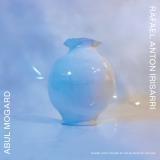
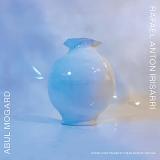
Marja de Sanctis’ cover artwork revisits the vessel sculpture from the duo’s first album, Impossibly Distant, Impossibly Close. There it appeared as raw, unfired clay. Here it has been fired in the kiln and finished with a glaze. Light gathers on its polished surface and spills into the surrounding space. As she explains, “I wanted to convey the idea of continuity within the duo, and the vessel became a kind of container for that idea. However, their music felt different this time, and with the collaboration of Martina and Andrea, I felt it should have a sleeker, softer, more glamorous look, very distant from the first raw appearance.” The transformation of the vessel from raw clay to fired form suggests a passage from immediacy toward permanence, mirroring the music’s gradual expansion.
In spring 2025, Abul Mogard and Rafael Anton Irisarri created the source material for their second album, Where Light Pauses in the Silence of the Sun, during a three-day residency at Morphine Raum in Berlin. Functioning as both recording studio and performance venue, the space has no stage, with the audience gathered around the performers. Working within an open framework, the duo reshaped the music each evening while recording the performances live to multitrack. Rotary speakers, modular synthesizers and bowed guitar formed the core of their sonic language, captured through a 1970s mixing console and microphones placed around the room.
Back in Mogard’s studio in Rome, the material was further crafted as motifs were stretched, fragments isolated, and tempos dissolved. Irisarri recorded additional guitar textures and treatments in New York, while passages recorded by Martina Bertoni and Andrea Burelli in Berlin reinforced the harmonic centres and brought breath, refinement and a new sensibility to their compositions. The process continued as Mogard’s layering and subtraction reassembled everyone’s parts into the final arrangement.
The album opens with “In the Eastern Wild,” building from a sparse outline into a monumental formation of low-frequency weight, its internal motion shaped by the rotating Leslie speaker. “Over the Domes” widens into a broader acoustic field, where sustained modular tones meet waves of softly plucked guitar. The music then turns inward with “A Blue Descent,” centred on Bertoni’s cello, whose growling timbre introduces a melancholic depth.
At the album’s centre, “In a Quiet Radiance” unfolds around a slow guitar ostinato, its luminous stillness opening into a more expansive and reflective state. Across its ten-minute span, Burelli’s violin lines and Bertoni’s lower cello phrases gradually surface, weaving through the harmonic field. Mogard brings Burelli’s processed voice to the fore, its emotive, operatic presence becoming one of the record’s pivotal moments. “Of Blessed Ages” suspends the sonic flow, shifting between parallel major and minor chords as lingering, slowly decaying melodies shape the music’s internal drift. The closing “Among Shadows” settles into a darker resonance as layered textures recede.
Mogard and Irisarri’s shared language balances restraint and maximalism. UK magazine Crack describes the music as “a tidal wave held in suspension,” while Dutch newspaper de Volkskrant writes, “What a colossal sound, and how this music strikes at the emotions.” Reflecting on the residency sessions, Irisarri recalls: “At moments I genuinely couldn’t tell if a sound was coming from me or from Abul. It stopped feeling like two people making decisions and began to feel like we were inside a system moving on its own."
Marja de Sanctis’ cover artwork revisits the vessel sculpture from the duo’s first album, Impossibly Distant, Impossibly Close. There it appeared as raw, unfired clay. Here it has been fired in the kiln and finished with a glaze. Light gathers on its polished surface and spills into the surrounding space. As she explains, “I wanted to convey the idea of continuity within the duo, and the vessel became a kind of container for that idea. However, their music felt different this time, and with the collaboration of Martina and Andrea, I felt it should have a sleeker, softer, more glamorous look, very distant from the first raw appearance.” The transformation of the vessel from raw clay to fired form suggests a passage from immediacy toward permanence, mirroring the music’s gradual expansion.
In spring 2025, Abul Mogard and Rafael Anton Irisarri created the source material for their second album, Where Light Pauses in the Silence of the Sun, during a three-day residency at Morphine Raum in Berlin. Functioning as both recording studio and performance venue, the space has no stage, with the audience gathered around the performers. Working within an open framework, the duo reshaped the music each evening while recording the performances live to multitrack. Rotary speakers, modular synthesizers and bowed guitar formed the core of their sonic language, captured through a 1970s mixing console and microphones placed around the room.
Back in Mogard’s studio in Rome, the material was further crafted as motifs were stretched, fragments isolated, and tempos dissolved. Irisarri recorded additional guitar textures and treatments in New York, while passages recorded by Martina Bertoni and Andrea Burelli in Berlin reinforced the harmonic centres and brought breath, refinement and a new sensibility to their compositions. The process continued as Mogard’s layering and subtraction reassembled everyone’s parts into the final arrangement.
The album opens with “In the Eastern Wild,” building from a sparse outline into a monumental formation of low-frequency weight, its internal motion shaped by the rotating Leslie speaker. “Over the Domes” widens into a broader acoustic field, where sustained modular tones meet waves of softly plucked guitar. The music then turns inward with “A Blue Descent,” centred on Bertoni’s cello, whose growling timbre introduces a melancholic depth.
At the album’s centre, “In a Quiet Radiance” unfolds around a slow guitar ostinato, its luminous stillness opening into a more expansive and reflective state. Across its ten-minute span, Burelli’s violin lines and Bertoni’s lower cello phrases gradually surface, weaving through the harmonic field. Mogard brings Burelli’s processed voice to the fore, its emotive, operatic presence becoming one of the record’s pivotal moments. “Of Blessed Ages” suspends the sonic flow, shifting between parallel major and minor chords as lingering, slowly decaying melodies shape the music’s internal drift. The closing “Among Shadows” settles into a darker resonance as layered textures recede.
Mogard and Irisarri’s shared language balances restraint and maximalism. UK magazine Crack describes the music as “a tidal wave held in suspension,” while Dutch newspaper de Volkskrant writes, “What a colossal sound, and how this music strikes at the emotions.” Reflecting on the residency sessions, Irisarri recalls: “At moments I genuinely couldn’t tell if a sound was coming from me or from Abul. It stopped feeling like two people making decisions and began to feel like we were inside a system moving on its own."
Marja de Sanctis’ cover artwork revisits the vessel sculpture from the duo’s first album, Impossibly Distant, Impossibly Close. There it appeared as raw, unfired clay. Here it has been fired in the kiln and finished with a glaze. Light gathers on its polished surface and spills into the surrounding space. As she explains, “I wanted to convey the idea of continuity within the duo, and the vessel became a kind of container for that idea. However, their music felt different this time, and with the collaboration of Martina and Andrea, I felt it should have a sleeker, softer, more glamorous look, very distant from the first raw appearance.” The transformation of the vessel from raw clay to fired form suggests a passage from immediacy toward permanence, mirroring the music’s gradual expansion.