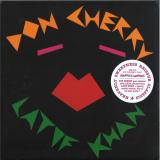
Don Cherry, armed with a voracious musical appetite and boundless imagination, first made a name for himself - though not always fully understood - alongside Ornette Coleman, playing trumpet or cornet. In Los Angeles and then New York, he stood at the heart of a revolutionary approach to improvisation based on melody rather than harmony, later baptized "Free Jazz," the final structural development of American jazz. Over time, he became a champion of improbable fusions - gradually integrating into his style a whole array of "exotic" instruments, and more importantly, the cultures from which they originated. Among them: India, Brazil, Africa, Indonesia, and even China. The time had come for the emergence of "world music": in hindsight, a patchwork rich in imagination and seduction, but once the novelty wore off, often lacking in substance.
In Don Cherry's case, however, the commitment ran deep - tied to his personal engagement with a global vision of art and the human condition. Ustad Ahmed Latif Khan, from the Delhi gharana (a musical lineage), was part of a new generation of accompanists - percussionists, sarangi players, flutists, etc. - who had extended both the technical and conceptual possibilities of their predecessors to gain recognition as soloists and soon to venture onto the international scene. Among them, Latif stood out for his taste for irregular, highly syncopated rhythmic patterns - rich in variety and originality. Don and Latif had never met before the recording session, but the two quickly recognised one another as kindred spirits - calm, focused... and full of laughter. Don clearly knew what he wanted to create, and nothing seemed to pose a challenge for Latif, who grasped the American's intentions immediately, warmed up his fingers at astonishing speed, and with his perfect pitch, naturally took on the role of tuning Don's diverse instrument collection to match whatever was found in the studio - from concert piano and Hammond B3 organ to chromatic orchestral timpani.
Cerca:the sol percussion
The seventh release on The Comfort comes from a legendary Finnish electro-disco duo known to any music nerd worth their salt: Putsch’79, the pair of Sami Liuski and Pauli Jylhänkangas. Across their shared catalog and solo projects, most notably Sami’s work as Bangkok Impact and 8Bit Rockets, their music has found a home on some of the most inspiring platforms and labels, including Creme Organization, WeMe, Viewlexx, Clone, Bunker, Klang Elektronik, and Klakson.
Heavy on bliss and warmth, the four tracks sit elegantly between italo, house, and disco, featuring sleek vocoders, beautiful arpeggios, soft percussion, gentle plucks, and just the right amount of low-end to hold it all together. Each track feels like being dropped into a different dream-state: from the bubbly B2 “Birdz” to the racy, forward-driving A1 “Estrange.” The grooves and soundscapes never resolve—they simply unfold—perfect for open-airs, afters, and hazy loft parties.
Some records are born on the dancefloor, some from vivid visions, and some—like this one—from the beauty of birdsong. Tracing its origin to a moment suspended between night and morning, sometime around 2016 or 2017, Birdz emerged from a shared experience: Sami and Pauli listening in awe as the world slowly woke up. This EP is their attempt to translate that fleeting encounter into music.
VIER - IIII, a project by: Machinedrum x Thys x Holly x Salvador Breed.
Across its eleven tracks, 'IIII' dissolves borders between breakbeat, trap-meets-gabber, skippy UK shuffle, halftime, jungle and cinematic electronica, music that shifts from serious voltage to full-colour euphoria. What ties it together is philosophy, not genre.
The group's working method began playfully in the studio with a ten-minute egg timer: each member would sketch for ten minutes, then pass it on. That rule became a ritual, a way to keep things human, spontaneous and shared. In VIER, every track passes through four sets of hands; every decision is a test of trust. What could have been chaos instead became a flow state, a cycle of surrender and discovery thatdefines their sound.
Following singles such as Frankfurt, Control, Where Were You, Solitu and Vai Pulando, 'IIII' stands as VIER's first full statement, a body of work that feels both playful and deeply considered. Moments of quiet bloom into distorted joy; melody drifts through broken percussion; endings turn into new beginnings.
Roughly three years after the release of Balts, Schreel Van De Velde’s debut album on Blickwinkel, the guitar and drums improv-centered duo is happy to present their sophomore album A One And A Two.
The Brussels-based musicians sound more decisive than ever: the loud became louder, the quiet became quieter, the weird became weirder and the nostalgic became more nostalgic. The fruit peeled off one of its own shells, getting closer to its heart.
The album came about as a result of 2 separate studio sessions. For a first one, they restricted themself to solely electric guitar and drums, without overdubs, and with most songs ending up as one-takers. A second one took place some months later in a different recording space, using classical guitar with a matching small, cute drum set-up.
On both sessions, the duo played the same compositions, with some additional improvisations. Afterwards they made a blend of both sessions, mixing both energies: A One And A Two. A new language, organic and well-considered, was found.
Throughout the album, touches of minimalism, American primitivism, free-improv, and 90s indie rock can be found, but always within the limits of Schreel Van De Veldes freshly found voice: one that combines sentiment and cerebrality, overview, playfulness and mystery.
Lucas Schreel is a classically trained guitarist based in Brussels. His first solo album We're Never Afraid of Getting Up Every Morning was released through Sentimental Records in 2019 and was well-received both in written-press (Humo, Enola & Indiestyle) and radio (Duyster, Radio 1 & Klara). Besides his solo work, Schreel is also a member of the lo-fi indierockband Kloothommel.
Acclaimed Brussels percussionist Casper Van De Velde made quite a name for himself through his bands like SCHNTZL, Bombataz, Donder among others. His work received prices at International Jazz Contest d’Avignon and Storm! Contest (Jazzlab). Casper is currently also a member of the recently formed An Pierlé Quartet.
- A1: (Part I)
- B1: Prelude (Part Ii)
- B2: Maiysha
- C1: Interlude
- C2: Theme From Jack Johnson
The capstone of Miles Davis’ electric period, Agharta reigns as a funk-rock fireball — a blazing comet streaked energy and elan, a fearless organism feasting on adventure and freedom, a seven-headed Godzilla stomping its way through Osaka, Japan. Recorded on February 1, 1975 at Osaka Festival Hall at the first of a two-show stand, the double album offers an endless abundance of surprises and shifts — as well as a road-proven ensemble whose chemistry and abilities equal that of any of Davis’ celebrated bands. If the true measure of jazz is the capacity to adapt to the moment and challenge perception, Agharta is consummate.
Sourced from the original master tapes, housed in a Stoughton gatefold jacket, and pressed at Fidelity Record Pressing in California, Mobile Fidelity’s numbered-edition 180g 33RPM 2LP set of this epic live release presents it in audiophile sound on a domestic pressing for the first time. Offering greater degrees of separation, detail, and richness than the compressed CD editions and more clarity, openness, and presence than older vinyl copies, this version of the 1975 release helps bring the concert stage to your home. Just make sure your turntable and speakers are up to the challenge of Davis and Co.’s explosive performances — and producing the decibels they demand.
Teeming with vibrant colors, tones, and pace, Mobile Fidelity’s reissue captures the hear-it-to-believe-it flow, sweep, and moodiness of the music. Though the group honors looseness and freedom with religious verve, the specificity and scale rendered by this remaster allows you to detect methods behind the alleged madness that are often otherwise harder to discern. This insight extends to the understated changes in volume, harmonics, and phrasings. In many ways, you can listen as Davis himself did that early February evening as he helped coordinate the overall direction and decided on whether to blow his wah-wah-wired trumpet or take a turn on the organ.
Tellingly, Agharta would likely never have been made if not for Davis’ ventures overseas and, specifically, to the Land of the Rising Sun. Having for years faced a backlash on his native soil for his choices to experiment and blow past all known borders, Davis was welcomed with open arms in Japan. The concert documented on Agharta — as well as the day’s later show, captured on the equally exciting Pangea — stemmed from a sold-out three-week tour that would ultimately mark Davis’ final public appearances for years, as he soon settled into semi-retirement and nursed the wounds connected to an unprecedented stretch of restless and relentless output.
For all the band-fueled merit of Agharta — and there’s plenty, given the cast of saxophonist Sonny Fortune, bassist Michael Henderson, drummer Al Foster, percussionist James Mtume, and guitarists Reggie Lucas and Pete Cosey seemingly blasts off to outer space and travels distant galaxies by the time this minimally edited record runs its course — Davis’ own playing often remains overlooked. As critics Richard Cook and Brian Morton observed, it is “often fantastically subtle, creating surges and ebbs in a harmonically static line, allowing him to build huge melismatic variations on a single note.” He attacks like a man on a mission, out to prove naysayers wrong and bent on trailblazing another new path forward. Convention and skeptics be damned.
Noisy and furious, dark and discordant, abstract and off-balance, radical and intense, abrasive and atmospheric, strangely beautiful and hypnotically eccentric: Agharta evades simple description, and refuses to be pinned down in any established category — rock, jazz, punk, ambient, prog, avante-garde, or otherwise. Shot through with trench-deep grooves, screaming riffs, scalding solos, and free-improv leads, its cosmic thrust comes on as the equivalent of an animated pointillist painting comprised of millions of textured dots, dashes, and dabs that hold your attention so raptly you want to revisit the ideas again and again.
Always steps ahead of everyone else, Davis knew what he was doing even when Agharta debuted in Japan before later hitting U.S. markets. Though “Maiysha” and “Theme from Jack Johnson” are identified in the track listing, the record contains a number of uncredited references to other Davis works, including a nod to “So What.” This decision to bypass labels only adds to the art of the reveal — the rare black magic in which Agharta expertly deals.
- 1: The Barbarian
- 2: Take A Pebble
- 3: Knife-Edge
- 4: The Three Fates A. Clotho B. Lachesis C. Atropos
- 5: Tank
- 6: Lucky Man
Supergroups existed before Emerson, Lake & Palmer formed in 1970. And, as we all know well, many came after. But few, if any, matched the English trio’s chemistry and its elevated combination of virtuosity, vision, and verve. Having influenced a multitude of followers, ELP’s prowess was obvious from the start. The band’s self-titled debut stands as a towering statement of creative imagination, execution, and discipline more than five decades after its original release.
Mastered at MoFi’s California studio, housed in a Stoughton jacket, and pressed at Fidelity Record Pressing, Mobile Fidelity’s numbered-edition 180g 33RPM LP of Emerson, Lake & Palmer presents the benchmark album in audiophile sound. Clear, dynamic, and balanced, this collectible edition honors the perfectionist approaches that both informed the playing and recording of the record.
Distinguished with black backgrounds, this reissue brings to light the epic scope, tonal depth, and mind-bending degrees of musicianship on display. Aspects — textures, nuances, effects, melodies, tempo changes — that go hand-in-hand with the trio’s compositions and interplay are rendered amid broad soundstages and delivered with pinpoint detail. Whether you’ve owned multiple copies of this touchstone or seeking out your first version, you’ll relish the presence, separation, imaging, and crispness that help make every song come across as if the group has set up shop in your listening space.
Opening the door to the seemingly infinite possibilities of progressive rock while steering clear of excess, Emerson, Lake & Palmer achieved a rare feat in that its complex, cerebral music didn’t prevent it from attaining mainstream success. The gold-certified effort launched the career of a band that would sell tens of millions of records. It also landed a Top 50 single in the form of the ballad “Lucky Man,” whose vocal harmonies, folksy strumming, multi-tracked instrumentation, and breakthrough Moog solo almost feel quaint in the face of the other fare on the album.
Comprised of genre-defying originals and hybrid arrangements of two classical pieces, the album Rolling Stone originally and rightly said is “best heard as a whole” matches outrageous ambition with the otherworldly skills of three musicians who remain among the finest to ever pick up their respective instruments. While Emerson soon drew the lion’s share of headlines for his ability on keys — clavinet, Moog, piano, Hammond organ, and pipe organ included — Greg Lake’s aptitude on guitar and bass, along with well as Carl Palmer’s monster talents behind the kit, created a three-headed hydra that devoured everything in front of it.
That extends to the radical reinterpretation of Bela Bartok’s “The Barbarian” that begins the LP, a performance that in less than four-and-a-half minutes runs the gamut from distorted to churchy to angular and blustery. More classical flourishes, keyboard wizardry, hard-rock heaviness, and gothic signatures emerge throughout “Knife-Edge,” which reimagines music by Leos Janacek and J.S. Bach — and ultimately invites you to explore a cathedral of sound teeming with separate bursts of keys and percussion.
And did someone say “drumming”? Check out Palmer’s monster salvo on “Tank,” a rhythmic showcase that marches out with knee-bent notes and mirror-reflected passages. Or dive into the mythological suite “The Three Fates.” Replete with three parts and Emerson playing the pipe organ at Royal Festival Hall, it shoots off sonic fireworks via sophisticated arpeggios, jazz improvisations, dancing counter-meters, sizzling chords, and a few explosions. Please don’t hold anyone at MoFi responsible if your system cannot handle it; this is heady stuff.
Indeed, everything on Emerson, Lake & Palmer is there for a purpose. Whether you aim to attempt to dissect all of the notes, shifts, and polyrhythmic bluster or just want to absorb this album as one living, breathing organism, this version invites you to do both as many times as you desire.
New York-based Patrick Sullivan AKA P-Sol has a terrific track record when it comes to refined re-edits and classy, sample-rich mash-ups. Even so, his latest effort, delivered on a tidy and must-check seven-inch, is particularly potent. On the A-side, he takes us into immersive, seductive and ultra-deep territory via the mid-tempo house headiness of 'Everybody' - a kind of 'quiet storm goes deep house' affair featuring warming electric piano chords, heady bass and selected vocal samples from a soulful classic. On 'Walk Away', he provides a warming, percussion-rich new take on R&B classic 'Don't Walk Away', adding her familiar vocals to a head-nodding instrumental full of mazy solos, rubbery bass guitar and handclap-heavy beats.
- Whispers For The Blessed
- Whispers For The Damned
- Whispers For The Living
- Whispers For The Dead
Das ist Kramers erstes Soloalbum seit fünf Jahren. Seine letzten Solo-LPs ,And The Wind Blew It All Away", ,Music For Films Edited By Moths" und ,Music For Pianos & Sunflowers" waren Teil seines 2020 AIR (Artist In Residence) Box-Sets für Joyful Noise Recordings. ,And The Wind Blew It All Away" war eine sanfte und magische Mystery Tour mit brodelnden akustischen Saiten, Orgeln, Klavieren und Mellotrons, Tonbandschleifen, gefundenen Klängen und einem Hauch von Percussion, untermalt von Kramers unverwechselbarer, eigenwilliger Singstimme und seinen Texten. Auf dieser neuen LP entfernt sich Kramer von Worten/Texten und widmet sich ganz den minimalistischen instrumentalen Drone-Gedichten, die ihn in seinen frühen Jahren als Komponist und Performer in der experimentellen ,Downtown"-Szene des New York der späten 70er Jahre erstmals faszinierten. Auf dieser neuen LP erkundet Kramer weiter die kreativen Umgebungen, die ihn zurück in den Wald der Ideen und organischen Einflüsse führen, die seit Jahrzehnten still vor sich hin brodeln, an einem Ort, an dem die Zeit immer Jetzt ist. Fans von Terry Riley, La Monte Young und Gavin Bryars werden von Kramers neuesten klanglichen Erkundungen fasziniert sein.
The inimitable Richard Youngs returns to Black Truffle with this third full-length for the label, Hidden. Like CXXI and Modern Sorrow, Hidden unfolds across two side-long pieces at once eminently listenable and possessed of the ‘bloody-minded’ dedication to ‘having an idea and sticking with it’ that Youngs himself has identified as one of the key qualities of his work.
At the core of both pieces are rapid, randomised arpeggios generated with a Moog Grandmother, hypnotic patterns that wouldn’t be out of place on a Berlin School classic. Alongside these arpeggios, across the seventeen minutes of the first side-long piece Youngs builds an airy structure of shakers, synthetic handclaps and a brief, repeated sample, impossible to identify but sounding like a glitched foghorn. Over the top we hear his unmistakable voice, repeating single syllables—Ha, Ho—with a slow delay, something like a lonely one-man-band take on Anthony Moore’s Pieces from the Cloudland Ballroom or a more musical elaboration of the hypnotically overlapping delayed phonemes of Anton Bruhin’s Rotomotor. Like much of Youngs' work, the arrangement of sounds is sparse, each layer punctuated by spaces that allow others to shine through, in a way that seems to have more to do with dub or early hip-hop than high-brow models of musical reductionism.
On the flipside, the arpeggios return, now accompanied by ringing, filtered guitar chords and long flute tones. The use of a similar ground layer across the two pieces with strikingly different overdubs calls up Youngs' first solo record, the classic Advent, reminding us of how consistent ‘theme and variations’ is as an approach in his enormous body of work. Joined by handclaps and a chiming sound, the piece almost feels like it is about to achieve dance-floor lift-off at times, only for the percussion to disappear and leave the listener once again floating among the guitar and flute, now joined by occasional cut-off vocal snippets, like a radio turned quickly on and off. The suspension of these disparate elements over the steady foundation of the Moog arpeggios might remind some listeners of the free-form studio explorations of Moebius & Plank and Holger Czukay or even give a nod to Youngs’ formative encounter with Cabaret Voltaire.
Like some of Youngs’ much-loved work with Simon Wickham-Smith, Hidden approaches relatively familiar sounds and instruments from skewed angles, delighting in loose structures of interaction that border on gleeful incoherence while remaining outwardly beautiful. Coming up to almost four decades of persistent activity, like little else in contemporary music Youngs’ work beams with the simple joys of exploration and experiment.
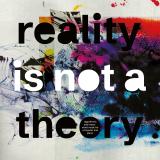
Recorded in concert at the University of Sheffield in March 2025, Reality Is Not A Theory is the first collaboration between Mark Fell and Pat Thomas. Major figures in British experimental music since the 1990s, Fell and Thomas have developed their rigorous practices from radically different backgrounds and perspectives: where Fell’s singular take on synthetic abstraction emerged from Sheffield’s electronic underground, Thomas is a virtuoso improvising pianist steeped in jazz and modernist art music who has simultaneously worked with sampler-based electronics for decades. As the record’s wonderfully academic subtitle explains, we are presented here with two sides of ‘algorithmic and improvised music for computer and piano’, exemplifying both players’ insatiable search for new (and sometimes uncomfortable) playing situations.
The performance begins with Fell’s electronics close to the timbres of acoustic percussion, attacks that suggest wood, metal or glass threaded along a rapid pulse while Thomas focuses on the lowest registers of the piano, deadening the strings. As Fell’s electronics start to ring out and occupy more harmonic space, Thomas turns to wide, repeated clusters, which slowly expand into patterns of chords. Like in his recent solo recordings and his trio work with Joel Grip and Anton Gerbal, Thomas’ playing combines extreme dissonance with a deep lyrical sense. Fell’s work gradually shifts its focus toward drum sounds, drawing on the microtemporal processes that have characterized his practice in recent decades. Heard together with Thomas’ probing piano, the computer sounds call up unexpected associations with the klangfarben antics of improv drummers like Paul Lovens or Tony Oxley. Throughout its second half, the music grows increasingly frenetic, as Thomas sounds out rapid, irregularly repeated figures and beautifully sour chords in the upper register, while Fell’s percussion develops into angular pan-pipe-like feedback and waves of glissandi.
With great confidence and patience, Fell and Thomas often let their individual contributions remain rhythmically distinct and unsynchronised, allowing unexpected correspondence and coincidence to guide the music’s development. Recorded in a hall named after Sheffield steel manufacturer and Master Cutler Mark Firth, the location might suggest a model for understanding how Fell and Thomas interact here: two workers in the same workshop, each immersed in their own part of the production process. Arriving in a striking sleeve designed by Mark Fell, with liner notes by Francis Plagne, Reality Is Not A Theory is an invigorating document of the meeting of two mavericks of contemporary music.
- Ah, Nyhetspamp
- Kuldeskrik
- Landsbysladder Petty Four
- Landsby Intermezzo
- Landsbysladder Pas De Deux
- Landsbyminiatyr
- På Jolla, Til Nordafjell
Green Vinyl. Twenty-five years after their first recording, Panzerpappa - perhaps Norway's most cordial avant-prog ensemble - felt the time had finally come to release their first-ever concept album. In 2025 the band will launch Landsbysladder, their eighth studio release. Landsbysladder is Norwegian for "village gossip" and the album comprises seven instrumental pieces centred on the themes of rumours, tales, and gossip in a small village - a musical chronicle of minor and major dramas unfolding in a tight-knit community where everyone knows everyone - or at least thinks they do. Landsbysladder tells a vivid story without uttering a single word. The music shifts between open, melodic passages and sudden bursts of intensity, drive, and complexity. Tempo changes, rhythmic twists, and harmonic detours mirror the unpredictable way gossip can spread, grow, and shift the mood in an instant. The album features several distinguished guest musicians: renowned folk artist Rannveig Djonne on diatonic accordion, seasoned performer Silje Hveem Lofthus on flute, internationally acclaimed soloist and professor Håkon Stene on tuned percussion, Håkon Borve on the rarely heard contra-alto clarinet, and last but not least, jazz luminary Ståle Storlokken - known from Elephant9, Terje Rypdal, Motorpsycho, and Supersilent - on synthesizer.
Karen Willems is a Belgian drummer/percussionist active in various fields. Started as a drummer in rock and pop bands. With a number of musicians she built up a tradition within improvised music and sound art. Since 2020, with ‘TERRE SOL’ Willems is searching for personal modifications within her play of instruments and objects, with the focus on solo work and compositions.
"When I make music, there’s no plan. I draw my inspiration from everyday life. Small encounters, people, and the greatest source, of course, is nature. There we find all the beauty, all the sounds we need. With my solo work I try to stay far away from my familiar drum set. Only then I can create a special universe. Eccentricity and playfulness go hand in hand with exercises in tension and release, and calls for connection in antisocial times. It's difficult in this world obsessed with productivity and results, and you really have to be crazy to release music these days. So ‘A Fool’s Guide to Reality’ is a fitting title." Karen Willems
All music performed by Karen Willems using citer, casio, fieldrecordings, tambourin, mikado, xylophon, pots, bells, kindergarten instruments, snare, noisebox, crispy shakers, synths, effects...
ORANGE SWIRL VINYL
Public Memory is the solo project of Brooklyn's Robert Toher, recorded over the course of a year as he lived in Los Angeles temporarily. Previously of the group ERAAS, Robert places a greater emphasis on electronics in this new project. Rhythm is at the forefront, with the tone informed by stripped down, narcotic impressions of krautrock, hypnotic percussion, and subtly layered atmospherics. Spectral vocals meld with delicate piano against hip hop beats and a dub sensibility, conjuring clouded lights, foggy glass in empty buildings, urban wraiths.To call it minimal would, on the surface, seem appropriate. Wuthering Drum does not need an abundance of flashes and frills to illustrate its point, nor does it need smoke and mirrors to mask a lack of vision. However, repeated listens yield layers of tonal variations, textural nuance, and tastefully placed overdubs. There is a slightly religious or spiritual element at Wuthering Drum's core; a sense of being in an existential crisis, while simultaneously being uplifted, in the face of change. This is the search for redemption in a far away place, away from comfort; it is adjustment to an inner dissonance, rather than the washing over of past fears and regrets with sterile holy waters.
Two years after making their bow via a fine contribution to the Claremont Editions 3 compilation, Nuremberg’s Neumayer Station are ready to drop their debut full-length excursion, the mesmerising and immersive Crossings.
The brainchild of drummer-turned-producer Michael Kargel, a musician with a bulging CV that includes stints in various German indie-pop and rockabilly bands, Crossings was co-produced and mixed by Frank Mollena (best known to Claremont 56 fans as the man behind the Fürsattl and Bambi Davidson projects), with additional contributions by Alexander Sticht and an impressive roll call of guest musicians plucked from Nuremberg’s vibrant musical underground.
Recorded at different points over the last three years, the eight tracks showcased on Neumayer Station’s inspired debut album draw influence from the hypnotism of classic German ‘kosmische’ recordings, the freewheeling and stoned headiness of CAN, and the gently unfurling beauty of sun soaked Balearica. Kargel, Mollena and their collaborators set the tone with opener ‘Unterführung’, where Sticht’s layered and sonically hazy vocalisations rise above space-rock guitar motifs, droning analogue synth sounds, languid bass and slow-motion drum breaks. With effects aplenty and all manner of melodic electronic flourishes, it’s a deeply psychedelic and mind-expanding affair.
‘Nalut’ follows, with Kargel’s own atmospheric howls and whistles cannily combining with sun-bright tropical guitars, echoing chords and delay-laden saxophone solos riding the dub-flecked, low-slung groove. The collective’s Balearic influences are explored in more sonic detail on ‘A Gentle Flow’, a shuffling and soft-focus affair marked out by emotive piano & jazz guitar, brushed percussion, sunrise-ready synths and pleasingly stretched-out electronic textures. Neumayer Station return to this drifting, morning-fresh and eyes-closed sound later in the LP, via the wonderous ‘Von der Morgenröte’.
The heady influence of spaced-out dub production techniques comes to the fore on ‘Bassrutscher’, an Alexander Sticht co-production rich in Americana-influenced guitar textures, metronomic dub bass, rim-shot heavy drums, mazy organ and orange-hued sundown sounds. It ushers in the more up-tempo shuffle of ‘Zielgerade’, an inner space, out-of-mind affair whose driving but loose-limbed groove provides a platform for exotic, droning and otherworldly guitar, sax and synth sounds. As with all great albums, Crossings gently builds towards a triumphant and memorable conclusion. The spacey Balearic/kosmische crossover of ‘Feeling Forst’, where darting intergalactic synth sounds rub shoulders with gentle acoustic guitars in a hallucinatory soundscape, tees up closing cut ‘Crossings’, the krautrock-rooted, sax-sporting slab of enveloping late-night beauty that first introduced listeners to Neumayer Station back in 2023. It’s a fitting conclusion to a staggeringly good debut album.
Boss Priester is a firm part of the house vanguard after solid outings on labels like Dungeon Meat, Ba Dum Tish and What NxT. Here he lands on Reliance with four more hefty slabs of chunky garage house that nod to old school UKG and bassline. 'Get Hip To This' has everything required to get lips curled and fists pumping, from the whirring baseline to the slick synth sequences. Job de Jong remixes with a bouncy house energy that's just as irresistible. 'Streetmaster' then rides on a plunging bassline with classic garage percussion and 'HWJAM' brings more bounce with some neon stabs and a super cool energy. Four stylish, useful cuts again from the in-form Dutchman.
Yamauchi Tetsu (Bass, Guitar, Vocal) / Eleanor Barooshian (Vocal) / Narita Masaru (Vocal) / Pipi Shibata (Guitar) / Ohno Katsuo (Keyboards) / Harada Hiroomi (Drums, Percussions) / Tsunoda Hiro
(Drums, Percussions) / Charlie (Percussions)
Strong groove and sharp guitar sound
Yamauchi Tetsu's first solo album recorded in Japan while still in Free
Yamauchi Tetsu, who became the bassist for the British band Free after playing for Mickey Curtis & Samurai, recorded his first solo album during a temporary return to Japan in 1972.
This is a full album with plenty to listen to, including the edgy guitars on "Wiki Wiki," the groovy funk rock on "First Time," "How To Cook," and "Orange Dog," and Eleanor's languid vocals
on "Alexander Stone," "Why," and "Baby Blue." Reissued with remastering by Makoto Kubota.
Commentary: Shinichi Ogawa
Remastering: Makoto Kubota
There are artists we occasionally happen across, even 14 years into our FatKidOnFire journey, where we know we need to work with them. There is material from said artists which sets our world on fire, and then there’s the four tunes that make up our first physical record in over two years. This one’s a long time coming, and also marks one of the first instances in FKOF Records where we welcome an artist to the family with a straight-to-record release. When you hear it, you’ll understand why. This is the long overdue FKOFv009…
Over the last decade and a half, the 140 landscape has been through its peaks and troughs. Tastes and styles change, but the one constant is when we find the right beats, bass and space we know we’re onto a winner. The international TRAKA collective caught our eyes and ears early on in their project – for all the right reasons. We’re delighted to welcome them to FKOF Records with a long-overdue record, as well as welcoming long time FKOF fam Oddkut back into the fold.
“The ninth outing on FKOF Records’ physical imprint opens with the anthemic voice of Rider Shafique joining forces with TRAKA for ‘Soo’. Hard-hitting truths, juddering percussion and a rolling low end so solid you can almost chew on it. Keep fighting and rise.
“Next up, we ratchet things up a notch with ‘Shock Em Up’. It’s an absolute unit of a tune, and when we get asked for what we mean by beats, bass and space this is our 2024 example. Effective heavyweight sonic warfare.
“FKOF009’s B-side opens with ‘Silus' – continuing along the foundations TRAKA laid on the A-side. Suffocating power, engaging atmospherics and a vibe that works at peak time on the dancefloor as well as it does opening or closing out the graveyard slot.
“We close out the record welcoming Oddkut back for his latest outing on FKOF Records with the TRAKA collab ‘Shake Junt’. It twists and turns through its first drop, before taking a completely new direction in the break. It’s an absolute groove and one that’s been a firm favourite for as long as it’s been in the bag.”
The perfect accompaniment to that deep fall feeling, Frank Maston's beloved 2025 single finally gets its long overdue vinyl release! As our friends New Commute articulated beautifully, "Foreign Affairs" drifts through London fog and Paris shimmer, its avant-lounge glow wrapping each melody in a wistful ache. On B-side "Liaison," ghostly strings and a solitary piano paint a deserted twilight shoreline, Pacôme Henry's distinct 16mm cinematography hovering nearby." We've pressed just 500 of these gorgeous records so, be quick, Maston always flies.
Originally written for a film Maston was scoring in 2024, he decided to keep it aside for himself. And, well, us all. The song has a vibe Maston has previously flirted with; he wanted to dive in...all the way: "The arrangement is huge, definitely the biggest I've written, and it merited live musicians playing together. Also another experiment, to do it with all live musicians playing my arrangements. I wanted to make something that you'd want to put on when you bring a date back to your place. It's on the edge of sappy but that's sort of the point. I decided to give myself an unlimited budget - just spend whatever was necessary to get the right musicians and record it the best way possible."
It's this dedication to sonic perfection which Maston is rightly lauded for. We couldn't not put this on a cute wee 7" when we heard it.
The A side, "Foreign Affairs", is a brilliant, Bacharach-esque romp with a bit of that unapologetically romantic Morricone angle. Says Frank: "I was trying to synthesize that sort of jazzy/sexy/classy/romantic mature sound, where the edginess is in these surprising chord changes and subtle arrangement cues."
A wonderful complement, the flipside "Liaison", evokes Martin Denny, but Eden's Island was in Frank's head, too. He wanted to take a deep dive into that exotica sound - a genre he'd referenced a bit but never fully committed to - so the piece is lavished with those big sighing strings and a pretty lush arrangement. Happily, it all sounds super rich. Also, "Umiliani is always a reference for this sort of thing (Il Corpo etc.), That almost mechanical arrangement of things moving together and a simple melody over it (something I nicked from Ennio)".
The two songs were recorded in Paris and London in the summer of 2024. Aside from the rhythm section and piano, there's vibraphone, a full string section, trombones and alto and concert flutes. "Liaison" boasts strings, vibraphone, a female choir and tenor sax. Maston played piano and acoustic guitar but that's it (as opposed to playing basically everything on Tulips). His friend Oscar Sholto Robertson played drums and percussion whilst Maston mainstay Elie Ghersinu (formerly of L'Eclair) played bass.
The theme for a lot of Maston's titles is that they have two meanings. So "Foreign Affairs" is both a reference to him living abroad and the idea of constant cultural diplomacy and then there's this sexy/cheeky interpretation of foreign affairs in a literal way - "an affair abroad, ooh la la!". The artwork for this 7" single has Roman campaign flags, referencing the foreign affairs in sort of a sassy way. There's a violence implied. But then if you look from a bit of a distance it looks like a bouquet of flowers. So Frank thought it went with the spirit of the title. Also, he's used a lot of roman motifs now so he kept that theme going, even with the terracotta cover.
This is a vitally important project for our Frank. He explains why, here: "For whatever reason, these songs really resonated with me. I feel like they are either the end of a stylistic era for me or the beginning of a new one. They're sonically the culmination of what I'd been working towards and trying to get better at since I started. If I heard this when I was making Tulips I would have said "YES! *This* is what I want to be doing!". So that's the essence of it. It's a statement and the intended reaction is "This is really good, but why now?". Like the edge to it is the context of someone making this sort of thing in 2025, which I think is a huge strength. The real heads will get it. My music always has like a 2-3 year latency until people really catch onto it, and these ones will have a nice payoff I think."
We couldn't put it better ourselves. So we haven't.
The Eves celebrate the first anniversary of their acclaimed EP Both Sides with
a special vinyl edition to be released in November 2025
Produced and co-written with Dan Gautreau (Alicia Keys, Paolo Nutini) Both Sides was
released only on CD and digital in 2024. The new vinyl edition of the EP features a
previously unreleased bonus track The Silence produced by Mark Morrow (wrest,
Swim School). Title track Both Sides features prolific drummer and percussionist Ash
Soan (Snow Patrol, Tori Amos, Del Amitri). The EP showcases the duo's distinctive
songwriting style that encompasses smooth vocal harmonies and thoughtful
production, culminating in a fresh yet timeless sound that delivers their signature
blend of melodic pop.
The Eves have been played across BBC Radio 2, BBC Radio Scotland, BBC Introducing.
Their song Brand New Day has over 137k streams on Spotify and spent 5 weeks on
the BBC Radio 2 playlist. It was also made 'Single of the Week' on BBC Radio Scotland,
played on Bauer Media's Forth 1 radio station, reached No. 6 and No. 15 in the iTunes
pop charts and iTunes main download chart respectively, charted in the Amazon 'New
Hot Releases' UK Chart, and made an impressive debut in the UK Official Charts
Company download and single charts in the top 65. The song also features on an
episode of 'The Kardashians' on Disney Plus and Hulu across America.
'Big Love' was adopted as the official anthem for Scottish Women's Football for the
2022/2023 League Season, and was the pair's first release as a co-write, written with
Jim Duguid (Paolo Nutini) and producer Lewis Gardiner (Ellie Goulding, Nick Jonas).
The track was also featured on BBC Scotland's most popular football show 'Off the
Ball' with Tam Cowan and Stuart Cosgrove.
The pair are seasoned performers having opened for major artists at sold out shows
including Belinda Carlisle, Sister Sledge and The Shires. They've toured extensively
with Skerryvore and Horse across the UK, opened for Callum Beattie, and have
performed at festivals including TRSNMT, Country to Country, Edge Fest, Tiree
Festival, Moonbeams and Fringe by the Sea, sharing stages with Wet Wet Wet, Sophie
Ellis-Bextor, Gabrielle, Tony Hadley and Heather Small.
Other highlights include performing at the Guinness Six Nations rugby for Scotland v
Wales at BT Murrayfield, recording a live session for BBC Scotland's 'The Quay
Sessions', and several TV appearances on BBC Scotland's 'The Edit' on national TV
and BBC i-Player and STV's 'What's On' and 'The Braw and the Brave' chat show.
- Nearly There
- Morning On K Road
- Another Fade
- Hadrian's Wall
- Daylight Daylight
- Loon
- A Walk
Steve Gunn ist seit über einem Jahrzehnt einer der Vorreiter der amerikanischen experimentellen / gitarrenorientierten Rockmusik. Nach drei gefeierten Alben, die er für Matador aufgenommen hat, erscheint sein siebtes Studioalbum - und erstes seit vier Jahren - bei No Quarter. Mit "Daylight Daylight" wollte Gunn etwas von der Intimität des Solospiels einfangen, das Gefühl der Möglichkeiten und Entdeckungen, das entsteht, wenn er sich hinsetzt, um zu schreiben, und gleichzeitig eine reichhaltige Klangwelt schaffen, in die der Hörer eintauchen kann. Anstatt wie bei früheren Alben eine Band zusammenzustellen, um die Songs auszuarbeiten, holte er sich einen einzigen Hauptmitarbeiter an Bord: den Produzenten James Elkington, einen alten Freund und langjährigen Mitarbeiter, der auch Gunns Album "The Unseen In Between" aus dem Jahr 2019 produziert hat. Elkington ist als Gitarrist bekannt, aber Gunn bat ihn, Arrangements für Streicher und Holzblasinstrumente beizusteuern, inspiriert zum Teil von der Musik, über die sie im Laufe der Jahre gesprochen hatten (z. B. Mark Hollis, Ennio Morricone, The Fall, Basil Kirchin), und von der Entwicklung ihrer eigenen Beziehung beim Aufnehmen von Platten - sowohl zusammen als auch mit anderen. Sie fanden schnell einen fruchtbaren Arbeitsprozess für "Daylight Daylight": Gunn nahm Solo-Demos auf und schickte sie an Elkington, der freie Hand hatte, die Arrangements selbst zu entwickeln. Sie arbeiteten hauptsächlich in Elkingtons Nada Studios in Chicago und fügten von dort aus weitere Elemente hinzu - einen Hauch von Synthesizer, eine Gitarren-Overdub, eine gedämpfte Percussion-Linie -, blieben aber ihrem ursprünglichen Ansatz der relativen Sparsamkeit treu. Macie Stewart (Violinen und Viola), Ben Whiteley (Celli), Nick Macri (Kontrabass) und Hunter Diamond (Holzblasinstrumente) leisteten ebenfalls Beiträge.