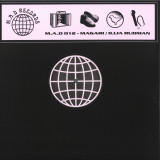
MAD012 has arrived! or as we’ve been referring to it the ‘M.A.D Garage’ EP. (as in Paradise Garage)
After receiving Magari and Ilija Rudman’s tracks within a short time of each other it felt like a perfect fit to pair them together. Both productions give a nod to the 80s House sound whilst expertly bringing the aesthetic up to date.
Magari has provided us with an eyes closed dub’d out groover and Rudman supplies a winding and weaving synthesised journey, giving a sonic glimpse in to his fully stocked studio.
It’s always been top of our list to work with the inimitable Mark Seven. His music is a staple of our sets and as many of you know, is somewhat of guiding light of our scene. Any fan of Parkway Records knows it’s always an exciting day when they announce something new, needless to say we are proud to present a Parkway Powermix on M.A.D.
Finally, our good friend, the extremely versatile Producer/DJ Manuel Darquart finishes off the record with a sublime rolling take on ‘Danceteria’. If somehow you didn’t know him already consider yourself informed.
Cerca:the sonic aesthetic
Christian Kleine continues to unearth long-lost transmissions with Electronic Music From The Lost World: Vol.2 - another batch of pristine artifacts from his personal DAT archive. Much like its predecessor, this release serves as both a time capsule and a reminder of Kleine’s effortless blend of melodic warmth, intricate rhythm programming, punk influences, and a deep-rooted love for the fringes of electronica.
Where Vol.1 felt like an invitation back to the late ‘90s, a time when IDM was still an evolving conversation, this second volume extends the dialogue, revealing more of the sonic experiments and fully-formed pieces that never saw the light of day. Tracks recall specific moments from Kleine’s time living in Berlin, an era of minimal comforts but maximal creativity, where all that really mattered was that the PowerPC, sampler, and synths kept running. This period of introspection, coupled with the musical freedom afforded by cheap rent and late-night school classes, shaped the deeply personal and solitary sound of these recordings.
Visually, Vol 2 shares its origins with the first volume, as Midori Hirano’s stark Berlin photography forms the foundation, and Noah M / Keep Adding pushes the imagery into a brighter, more reflective final space. Final touches remain in familiar hands, with LOOP-O on mastering and lacquer duties, bringing new life to Christian’s OG DAT recordings.
And much like the classic City Centre Offices era that shaped this sound and Kleine’s early career, this release nods to that legacy. A special limited 7” EP with two bonus tracks, designed in tribute to CCO’s iconic DIY aesthetic, will be available on release day direct from the label’s Bandcamp.
Under the motto «We become more from what is left, deliver else than just the now, build sound stories for the then», Sediments is the new label and sonic adventure launched by Estrato Aurora and d_o_ppelgaenger, partners in the electronic duo Pajaro Dune.
d_o_ppelgaenger || aka David Ortolà || is a pianist, composer, electronic music producer, teacher and scholar specializing in contemporary music and electroacoustic composition and performance. As a solo artist, he has composed multiple electronic, ambient and techno works, modular scores as Grooves #1 (2017) and Déjà vu (2024), unique musical events such as Efímeras for 20 Pianos (2011), compositions for piano and electronics as well as his latest release Live at Perpendicular (2024).
Live at Perpendicular 2024 is Sediment's inaugural offering. Recorded May 25, 2024 by d_o_ppelgaenger at Perpendicular Festival in the woods of Cuenca, Spain, this album is both an ambient live set and a sound journey inspired in the Doppelgänger archetype from the early gothic novel.
d_o_ppelgaenger's signature chiaroscuro medley of styles and ideas relies on narrative sound design, using both electronic production, classical instrumentation, field recording and generative synthesis. His music challenges the boundaries between acoustic and electronic sound calling on a wide range of oft-conflicting aesthetics: from early music to soundtrack atmospheres or disruptive avant-garde trends. This album explores the liminal terrain between divergent languages, trying to create perceptional experiences in search of empathy between the known and the misunderstood or the unheard-from.
|| We
become more from what is left,
deliver else than just the now,
build sound stories for the then. ||
Blank Code is a Detroit, USA techno outfit that have released music by artists like Bas Mooy, Mike Parker, Brian Sanhaji, DJ Hyperactive, Drumcell, and many more.
The newest Blank Code release is Decoder with his 'Distant Beings' EP, a fellow American from Dallas who has gained many devoted supporters from having releases on Jeff Mills' Axis Records, Amotik Records, TWR72's Float, Edit Select Records, Molecular Recordings, and Science Cult, amongst others.
Beginning with "Missing Sector," a dystopian and airy soundscape of captivating rattlesnake hisses and muted tones of melody and suspense amidst a stuttering kick pattern.
"Strange Interaction" follows with an abstract approach overall, but using a solid, rhythmic beat as a pulsing constant. Static crackles create mesmerising textures and light tom drums are met with wandering waves of analogue whispers and skipping hats.
"Farther" introduces deep and looping modular frequencies that dance around in a sci-fi aesthetic. This sublimely hypnotic track has an ethereal quality of patience and draws influence from dubby and atmospheric styling.
Finishing with "Elevation," it instantly has an experimental vibe that seems mysterious and menacing. Cyclical mid tones create a sonic suction before phasing pulses add even more tension to this esoteric adventure.
Every label’s first release sets a tone. With "Pegasi EP", Saraw establishes itself with a focus on sonic precision and ethereal atmospheres, exploring the intersection of house, techno, and minimalism. Founded by Root, the label debuts with Apolinic, a project that approaches these genres with a sharp, cinematic aesthetic. "Pegasi EP" emphasizes rhythm, space, and texture, with remixes by label owner Root and seasoned producer Tommy Vicari Jnr.
'Alt Nod De Cravata' (A1) builds around crisp percussion and evolving walls of sound, creating a subtle yet persistent momentum perfect for special peak-time moments. 'Root’s remix' (A2) deepens the original’s swing, heightening its hypnotic effect through morphing basslines, shuffling hi-hats, whispered vocal fragments, and emotive pads. 'Sense Of' (B1) plays like a sequel to A1, delving further into its subdued yet cinematic power, infused with oriental-tinged atmospheres. 'Tommy Vicari Jnr’s Remix' (B2) reshapes the original with a refined, pumping house structure, threading acidic undertones through the same atmospheric palette.
Saraw is centered on refined electronic music—focused, understated, and designed for both dancefloor action and deep listening, and "Pegasi EP" marks the beginning of a carefully curated catalog.
This album represents a significant evolution in the musical journey of Nick Viola, transitioning from the powernoise and heavy industrial sounds of his previous project, Fractured Transmission, into a techno-framed landscape. Spanning seven tracks, including remixes, the album features recurring sounds sourced from machinery, field recordings, and personal travels. These elements create an uneasy atmosphere oscillating between slight discomfort and absolute dread, offering a dystopian sonic experience fitting for the times we unfortunately live in.
The opening track, ‘A Ghost in Your World,’ sets an intense tone with distorted atmospheres and ‘It’s Still Real’ follows with a relentless pulse and swirling mechanical sounds, seamlessly flowing into Kenny Campbell’s remix of ‘A Ghost In Your World’, providing a cathartic release for the A side.
‘Drop Out,’ guides listeners on a psychedelic journey into the B side of the record, while ‘Negative Nancy’ ramps up the energy with an aggressive industrial techno assault offering an antagonistic jab at the current trend within the genre. Substencia’s remix of “Drop Out” delves deeper into psychedelia, offering an immersive trance-like experience relieving the tension of “Negative Nancy”.
The digital-only bonus track, ‘Tensor,’ maintains the album’s heavy industrial techno feel of a well-oiled machine, ready to pummel any underground sound system.
About Artist:
Nick Viola is a versatile electronic music producer known for his distinctive blend of industrial and techno music, drawing inspiration from a wide range of influences spanning from the gritty sounds of powernoise to the pulsating energy of techno.
Born and raised in Los Angeles, Nick began his musical journey immersed in the industrial club scene, where he cut his teeth performing at the legendary Los Angeles industrial club Das Bunker. Here, he honed his craft and developed a deep appreciation for the raw, aggressive textures of industrial music. As the driving force behind the project Fractured Transmission, he made a name for himself with his uncompromising approach to power and rhythmic noise, earning recognition for his intense live performances and relentless sonic assaults.
However, Nick was always drawn to the rhythms and sounds of techno, and in a bold move, he embarked on a new chapter in his musical career, transitioning from the abrasive sounds and rhythms of powernoise to recontextualizing those sounds into a more techno landscape. With this album, “A Ghost In your World”, he showcases his evolution as an artist, seamlessly blending the industrial aesthetics of his past with the pulsating energy and frame of techno.
Spanning six tracks, “A Ghost In Your World” is a sonic journey through dark, dystopian landscapes and pulsating dance floors, where distorted atmospheres and mechanical rhythms collide to create a mesmerizing and immersive experience. From the haunting textures of “A Ghost in Your World” to the relentless energy of “Negative Nancy,” each track offers a unique glimpse into Nick’s sonic universe, inviting listeners to explore new depths with each listen.
Written + Produced by: Nick Viola
Mastered by: Tim Vitek
Artwork: Permian Designs
Design by: Elaine Stam
The Magic Movement proudly presents Bosquemar's new EP "Manco"
The title track is a remarkable showcase of Bosquemar’s distinctive sound, combining field recordings as the main ingredient, acoustic instruments, electronic rhythms, and dub influences. Rodrigo Gallardo, a key figure in the South American downtempo scene and ex-member of the renowned band Matanza, adds his well known vocal presence to the track. His contribution infuses Manco with authenticity and depth, creating a rich, multi-layered listening experience.
On his new EP, Bosquemar invites listeners on a profound sonic journey, transcending typical boho aesthetics to explore deeper psychedelic territories. This single reflects his mastery of folktronica, blending traditional and electronic elements to craft a transformative sound that resonates deeply with the listener.
With Manco, The Magic Movement continues its tradition of curating innovative music that pushes the boundaries of organic and electronic fusion. By merging traditional instruments with modern production techniques, the label showcases the soulful depth and creative vision that define its releases.
Some of Stay True Sounds most celebrated hits of 2024 assemble on Stay True Cutz Vol. 8, the eighth vinyl edition of the label’s compilation series featuring standout sonics that defined a year. Opening with a record that fuses deep house and neo-soul, Jimpster’s remix of ‘Say Yes’ by SA torchbearer beatsbyhand, featuring Rona Ray on vocal duty, was the bestselling release of 2024 on the Traxsource Deep House chart. What follows is the compelling collaboration from two leaders of the Afro scene, China Charmeleon and Hypaphonik with ‘We R 1’ - plus jazz and house maestro Crackazat’s 3-step release ‘Can’t Blame A Soul’ (Mana’s Dub). Closing out this curation of four tracks that capture Stay True Sounds’ unique aesthetic is ‘SARS’, an original also from the mind of talented DJ and producer beatsbyhand.
Dajusch unleashes the 'Ambition EP', a raw and uncompromising statement of techno tradition. Berlin-based producer, DJ and sound engineer Dajusch returns with his latest four-track EP, a high-powered offering that channels the essence of Detroit and Chicago techno while pushing the boundaries of contemporary club sound. Known for his deep connection to electronic music's pioneering roots and his work behind the scenes as a mastering engineer, Dajusch brings an intense and refined energy to this release. The EP opens with the single 'No Mas', a relentless percussive workout where hypnotic synths intertwine with driving drum patterns, setting the stage for an unyielding ride. The title track 'Ambition' follows suit with a high-octane groove, combining raw machine-funk aesthetics with a pulsating bassline and intricate, evolving textures that command the dance floor. On the flip side, 'Split' takes a darker and more cerebral turn, layering industrial-tinged sonics over a tight, rolling beat, blurring the line between peak-time energy and introspective depth. Closing out the EP is '36g', a heady, propulsive cut that builds into a whirlwind of syncopated rhythms and distorted stabs, rounding off the record with a powerful, no-holds-barred climax. With Ambition, the Spandau20 artist Dajusch reinforces his position as a purist and innovator, delivering a release that feels both timeless and forward-thinking. Whether experienced in the heart of a sweaty warehouse or through the pulse of a late-night drive, this EP stands as a testament to the raw, unfiltered power of techno.
As the new year begins and resolutions spark against the
backdrop of winter's stillness, Circular Motions EP by Hamburg based DJ and producer OFF/GRID channels the fire of renewal through dubby, chord-driven techno. Known for his high-paced, grooving redefinition of dub techno, OFF/GRID brings euphoric intensity to the dancefloor, alongside moments of depth and
reflection that maintain unrelenting energy.
The EP features four thoughtful arranged peak-time tracks that blend old-school purism with vibrant and modern sonic aesthetics. Resonating with power and precision, these tracks represent the fire that fuels us even in the coldest moments, inspiring movement and momentum as 2025 unfolds.
Círculo Cerrado welcomes its first sub-label, E.T.D.G., where sound becomes a story.
Aniano invites you to an immersive auditory experience with Una Serie de Crímenes Sonoros. This first concept EP, weaving between fiction and reality, is predominantly driven by Techno, following the sonic direction previously explored in El Terror De Gáldar on Time To Panic. Naturally, it also features the hints of Electro and Minimal that have become hallmarks of Aniano’s music.
The record’s mysterious and spatial atmospheres draw heavily from 1980s sci-fi cinema and retro video game aesthetics. Rhythms from the iconic TR-909 and intricate synth work from the Nord Lead 2 crown this 12-inch release.
More than just a collection of tracks, Una Serie de Crímenes Sonoros is an exploration of human darkness through electronic soundscapes—a must-have for collectors of conceptual and boundary-pushing music.
- A1: Vajolet (Feat Lukas Lauermann, Wolfgang Pfistermüller & Flip Philipp)
- A2: Autostrada Del Brennero (Feat Diggory Kenrick)
- A3: Latzfonser Kreuz (Feat Mamadou Diabate & Hamidou Koita)
- A4: Lago Di Garda (Feat Roger Robinson)
- A5: Alfa Romeo 145 (Feat Kwame Yeboah)
- A6: Feltuner Hütte (Feat Osman Murat Ertel)
- A7: Avrupa Köprüsü (Feat Osman Murat Ertel)
- A8: Europabrücke (Feat Susanna Gartmayer)
- B1: Ancient Atoll (Feat Reinhilde Gamper, Martin Mallaun & Flip Philipp)
- B2: Latemar (Feat Reinhilde Gamper & Martin Mallaun)
- B3: Brennerautobahn (Feat Taka Noda)
- B4: Echoes Part I (Feat Flip Philipp)
- B5: Echoes Part Ii (Feat Flip Philipp)
- B6: Transit Tribe (Feat Didi Kern)
- B7: Latemar (Reprise)
12"[23,49 €]
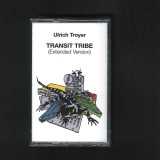
Ulrich Troyer has been producing music now solidly for over twenty years within a largely genre free framework, but whilst navigating forms such as avant-garde, techno, leftfield, field recording, electronica, glitch and ambient it is the aesthetics of dub that guide his creative direction. Not really recognisable in an orthodox form as remixed versions of roots reggae songs but in the way sonics are manipulated with space, the application and layering of delay, reverb and echo that fixes his output well within the scope of what might be called futurist dub.
The nearest comparisons to his new album TRANSIT TRIBE can only be established by a synthesis of some of the more adventurous explorations in modern music such as African Head Charge, Jon Hassell, Pole (Stefan Betke), Bill Laswell or even Miles Davis; featuring a diverse selection of artists and friends not only from Vienna and environs but also from around the world, sounds are not so much fused but allowed to float along the continuous flowing tide of warm waves of bass.
Rather than to allow the names of Ulrich Troyer's collaborators be merely listed in the album credits, what they bring to this joyful affair needs to be outlined, albeit briefly: Co-producer credits go to Osman Murat Ertel from Istanbul, who employed a variation on the old foolproof Nick Lowe method for checking out the impact quality of his own sound productions by playing tracks through his car sound system speakers!
Murat is a member of the electro-psych-folk group Baba Zula where he plays electric saz, oscillators and theremin and played a key part in the creative development of the album. Mamadou Diabate, the balafon master originally from Burkina Faso and now resident in Vienna, has developed his own unique technique of playing solos that replicate the sound of three instruments playing in unison; however the multi-talented Mamadou is engaged here on singing and playing the talking drum. From South Tyrol Reinhilde Gamper is a member of the experimental trio Greifer who are bringing the sound of the zither into the twenty-first century using new playing techniques and electronic gadgets. Susanna Gartmayer is an Austrian composer and bass clarinetist specialising in improv and multimedia sound research. Diggory Kenrick has been engaged with creating new dub fusions and also re-energising classic rocksteady and roots reggae classics, renowned for his interventions on flute. Didi Kern is an electronic dance musician and drummer from Vienna with a focus on free improvised music. Hamidou Koita, a singer and multi-instrumentalist, is from a traditional Griot family in Burkina Faso but now resident in Vienna and a regular musical partner of Mamadou Diabate playing drums and calabash. Austrian Lukas Lauermann is both a studio and live musician playing cello, also working on electronic sound design and writing string arrangements. He has recorded extensively and appeared on stage with both Mark Lanegan and Hans-Joachim Roedelius. Martin Mallaun is a Tyrol-born specialist in both the development of the zither in modern music and also as a researcher in the effects of climate change on the vegetation of Alpine ecosystems. Mystica Tribe is the musical alias of Tokyo-based dub/techno producer Taka (Takafumi) Noda. He collaborated with Vienna's own Vegetable Orchestra on 2020's "Transplants (Mystica Tribe Version)". After studying classical percussion Flip Philipp is now a jazz vibraphone player and member of the Vienna Symphony Orchestra. Wolfgang Pfistermüller is a member of the Vienna Trombone Quartet and the developer of the incredible bass-trombone Aurora with its uniquely warm and resonant sound. Roger Robinson is a renowned British poet, winner of many contemporary poetry prizes and member of the experimental music group King Midas Sound. Kwame Yeboah is a Ghanaian born UK based keyboard wizard who tours regularly with Yusuf / Cat Stevens, Ms. Dynamite and Pat Thomas.
So contained on the album is an astonishing mix of musicians and instruments: sounds of cowbells recorded in the South Tyrolean alps processed by modular synthesizers and heavy analogue bass synths combined with instruments such as zither, bass-zither, electro saz, flute, talking drum, trombone, cello, vibraphone, marimba, djembe, contra-alto clarinet, melodica, Farfisa - all bound together by organic live-drums and dub effects.
Liner notes by Steve Barker
Earquake 1991[22,48 €]
Earquake 1992[22,48 €]
Earquake 1993[22,48 €]
Earquake 1994[22,48 €]
Earquake 1996[22,48 €]
Earquake 1997[22,48 €]
Earquake 1998[22,48 €]
Earquake 1999[22,48 €]
It is the year 1995 and it’s summer, the second extremely hot summer after 1994, and the asphalt on Gladbacher Straße in Cologne is glowing. Ravers in much too wide and much too colorful clothes doze off in the glaring midday heat. These are the last days of the legendary Delirium record store, a socio-cultural biotope that would later become KOMPAKT. In June 1995, the store moved deeper into the Belgian Quarter, to Brabanter Straße 42 near Friesenplatz.
Wolfgang Voigt liked to wear too-big sunglasses even back then, just as he already had the master plan for the next few years, the new store, the renaming to KOMPAKT, and the upcoming takeover of the musical world order by minimal techno in his head. On less sunny days, the musician Wolfgang Voigt was tinkering with his very own label Profan, a new sound, new pseudonyms and masquerades. His alter ego Mike Ink had grown tired, another self, one of many, was now pushing forward to become the next torch in the storm.
By early 1995, the first Grungerman EP, "Hout," had been released on Profan. A nucleus of ambient loops that already announced the sonic aesthetics of GAS, stoic rhythmic structures that would shape the coming decade of minimal house and techno, and an all-encompassing gloom and heaviness that didn't want to fit at all with the gaudy reality of the nineties between Loveparade, Mayday and VIVA House TV. This probably most hedonistic decade of the 20th century had celebrated, besides techno, above all a rough guitar music called Grunge, coined and immortalized by a depressive, hyperactive and narcoleptic young man with matted blond hair who had taken his own life a year before. In no other track has Wolfgang Voigt packed these inner and outer contradictions of his art as well as of the mid-nineties more ingeniously than in "In Tyrannis". From wall to wall there are four steps.
"Klang" by Wolfgang Voigt originally comes from the first and only GAS EP on Profan, "Modern", from the spring of 1995 and is one of the most beautiful exhibits of Voigt's sound of those years, which relentlessly runs its course somewhere between glistening sunrises on Ecstasy and bad drugs in the dark Liquid Sky Cologne. With "Hocker DJ 1" and "Hocker DJ 2" there are two more musical references to this myth-enshrouded place in Kyffhäuserstraße, where for a few years the entire, so-called Sound Of Cologne had literally settled down.
Wir schreiben das Jahr 1995. Es ist Sommer, der zweite extrem heiße Sommer nach 1994, und der Asphalt auf der Gladbacher Straße in Köln glüht. Raver in viel zu weiten und viel zu bunten Klamotten dösen ihren Rausch aus in der grellen Mittagshitze. Es sind die letzten Tage des legendären Delirium Plattenladens, eines soziokulturellen Biotops, aus dem später die Firma Kompakt hervorgehen sollte. Im Juni 1995 erfolgte der Umzug tiefer hinein ins Belgische Viertel, in die Brabanter Straße 42 in der Nähe des Friesenplatz.
Wolfgang Voigt trug schon damals gerne zu große Sonnenbrillen, so wie er bereits den Masterplan für die nächsten Jahre, den neuen Laden, die Umbenennung in KOMPAKT sowie die anstehende Übernahme der musikalischen Weltordnung durch Minimal Techno im Kopf hatte. An weniger sonnigen Tagen tüftelte der Musiker Wolfgang Voigt an seinem ureigenen Label Profan, an einem neuen Sound, neuen Pseudonymen und Maskeraden. Sein Alter Ego Mike Ink war müde geworden, ein anderes Ich, eines von vielen, drängte nun nach vorne, um die nächste Fackel im Sturm zu werden.
Anfang 1995 war die erste Grungerman EP “Hout” auf Profan erschienen. Ein Nukleus aus ambienten Loops, die bereits die klangliche Ästhetik von GAS ankündigten, stoischen rhythmischen Strukturen, die das kommende Jahrzehnt Minimal House und Techno prägen sollten, sowie einer allumfassenden Düsternis und Schwere, die so gar nicht zur knallbunten Realität der Neunziger Jahre zwischen Loveparade, Mayday und VIVA House TV passen wollte. Dieses wohl hedonistischste Jahrzehnt des 20. Jahrhunderts hatte neben Techno vor allem eine raue Gitarrenmusik namens Grunge gefeiert, geprägt und unsterblich gemacht von einem depressiven, hyperaktiven und an Narkolepsie leidenden jungen Mann mit verfilzten blonden Haaren, der sich ein Jahr zuvor das Leben genommen hatte. In keinem anderen Track hat Wolfgang Voigt diese inneren und äußeren Widersprüche seiner Kunst wie auch dieser Zeit Mitte der Neunziger genialistischer verpackt als in “In Tyrannis”. Von Wand zu Wand sind es vier Schritte.
“Klang” von Wolfgang Voigt stammt ursprünglich von der ersten und einzigen GAS EP auf Profan, “Modern”, aus dem Frühling 1995 und ist eines der schönsten Exponate des Voigtschen Sounds dieser Jahre; ein Track, der irgendwo zwischen gleisenden Sonnenaufgängen auf Ecstasy und schlechten Drogen im dunklen Liquid Sky Cologne unerbittlich seine Bahnen zieht. Mit “Hocker DJ 1” und “Hocker DJ 2” finden sich zwei weitere musikalische Referenzen an diesen mythenumrankten Ort in der Kyffhäuserstraße, an dem sich für einige Jahre der gesamte sogenannte Sound Of Cologne im wahrsten Sinne des Wortes niedergelassen hatte.
In the intricate maze of Tokyos neon heartbeat, Yuki Takasaki, known as Altone, creates a world where time and sound dissolves into dub techno. Altones work, steeped with an old-school sonic palette, is a symphony of resonating bass lines, rustic layers and delicate synths, crafting a port rait that connects the fleeting with the timeless. Altones music t ranscends mere sound, offering an invitation to explore the shadowy corridors of consciousness and minimal dub aesthetics. Each original track unfolds like a tranquil journey through an urban nocturne, haunting and beautiful in its harmony. Brendon Moeller, a master of dub techno, reimagines Altones >Self Replication< In two distinct yet sonic territories. The first remix pulses with a futuristic rhythm, its syncopated beats dancing on the edge of awareness. The dub remix, by cont rast, plunges into a vortex where liquid acid intertwines with hypnotic bass lines, conjuring a dreamscape infused with laser guided drums and crystalline texture. Through these remixes, Moeller crafts a sonic voyage that weaves through the complex tapestry of the dub landscape and keeps reminding us that the territory is still vastly unexplored.
- A1: Vajolet Feat Lukas Lauermann, Wolfgang Pfistermüller & Flip Philipp
- A2: Autostrada Del Brennero Feat Diggory Kenrick
- A3: Latzfonser Kreuz Feat Mamadou Diabate & Hamidou Koita
- A4: Lago Di Garda Feat Roger Robinson
- A5: Alfa Romeo 145 Feat Kwame Yeboah
- B1: Feltuner Hütte Feat Osman Murat Ertel
- B2: Avrupa Köprüsü Feat Osman Murat Ertel
- B3: Europabrücke Feat Susanna Gartmayer
- B4: Ancient Atoll Feat Reinhilde Gamper, Martin Mallaun & Flip Philipp
Cassette[14,92 €]
Ulrich Troyer has been producing music now solidly for over twenty years within a largely genre free framework, but whilst navigating forms such as avant-garde, techno, leftfield, field recording, electronica, glitch and ambient it is the aesthetics of dub that guide his creative direction. Not really recognisable in an orthodox form as remixed versions of roots reggae songs but in the way sonics are manipulated with space, the application and layering of delay, reverb and echo that fixes his output well within the scope of what might be called futurist dub.
The nearest comparisons to his new album TRANSIT TRIBE can only be established by a synthesis of some of the more adventurous explorations in modern music such as African Head Charge, Jon Hassell, Pole (Stefan Betke), Bill Laswell or even Miles Davis; featuring a diverse selection of artists and friends not only from Vienna and environs but also from around the world, sounds are not so much fused but allowed to float along the continuous flowing tide of warm waves of bass.
Rather than to allow the names of Ulrich Troyer's collaborators be merely listed in the album credits, what they bring to this joyful affair needs to be outlined, albeit briefly: Co-producer credits go to Osman Murat Ertel from Istanbul, who employed a variation on the old foolproof Nick Lowe method for checking out the impact quality of his own sound productions by playing tracks through his car sound system speakers!
Murat is a member of the electro-psych-folk group Baba Zula where he plays electric saz, oscillators and theremin and played a key part in the creative development of the album. Mamadou Diabate, the balafon master originally from Burkina Faso and now resident in Vienna, has developed his own unique technique of playing solos that replicate the sound of three instruments playing in unison; however the multi-talented Mamadou is engaged here on singing and playing the talking drum. From South Tyrol Reinhilde Gamper is a member of the experimental trio Greifer who are bringing the sound of the zither into the twenty-first century using new playing techniques and electronic gadgets. Susanna Gartmayer is an Austrian composer and bass clarinetist specialising in improv and multimedia sound research. Diggory Kenrick has been engaged with creating new dub fusions and also re-energising classic rocksteady and roots reggae classics, renowned for his interventions on flute. Didi Kern is an electronic dance musician and drummer from Vienna with a focus on free improvised music. Hamidou Koita, a singer and multi-instrumentalist, is from a traditional Griot family in Burkina Faso but now resident in Vienna and a regular musical partner of Mamadou Diabate playing drums and calabash. Austrian Lukas Lauermann is both a studio and live musician playing cello, also working on electronic sound design and writing string arrangements. He has recorded extensively and appeared on stage with both Mark Lanegan and Hans-Joachim Roedelius. Martin Mallaun is a Tyrol-born specialist in both the development of the zither in modern music and also as a researcher in the effects of climate change on the vegetation of Alpine ecosystems. After studying classical percussion Flip Philipp is now a jazz vibraphone player and member of the Vienna Symphony Orchestra. Wolfgang Pfistermüller is a member of the Vienna Trombone Quartet and the developer of the incredible bass-trombone Aurora with its uniquely warm and resonant sound. Roger Robinson is a renowned British poet, winner of many contemporary poetry prizes and member of the experimental music group King Midas Sound. Kwame Yeboah is a Ghanaian born UK based keyboard wizard who tours regularly with Yusuf / Cat Stevens, Ms. Dynamite and Pat Thomas.
So contained on the album is an astonishing mix of musicians and instruments: sounds of cowbells recorded in the South Tyrolean alps processed by modular synthesizers and heavy analogue bass synths combined with instruments such as zither, bass-zither, electro saz, flute, talking drum, trombone, cello, marimba, djembe, contra-alto clarinet, Farfisa - all bound together by organic live-drums and dub effects.
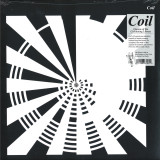
Queens Of The Circulating Library stands alongside Time Machines and Nurse With Wound's Soliloquy For Lilith as a post-industrial pinnacle of sensory-warping long-form drone.
Crafted by the distilled duo of Thighpaulsandra and John Balance, the 49-minute piece unfurls in swirling, cyclical waves, tidal as much as textural, channeling the spirit of levitational minimalism pioneered by La Monte Young. Touted as the first part in "a continually mutating series of circulating musickal compositions" upon its initial release in 2000, the album remains a compelling case study in Coil's exceptional capacity for mutation and extremes. The theatrical introductory monologue delivered by Thighpaulsandra's mother - a career opera singer, in her 80's at the time of recording - sets the stage for a grandiose ascension. Written by Balance, the text is declamatory but dreamlike, refracted through megaphone echo: "Return the book of knowledge / Return the marble index / File under "Paradox" / The forest is a college, each tree a university." As her voice fades, the lulling synthetic infinity deepens, congealing into transient crests of volume and haze, like slow-motion surf misting in moonlight. Thighpaulsandra describes their aesthetic intention as a "bliss out," static but shape-shifting, an amniotic drift towards an eternal vanishing point. A supreme sonic embodiment of the slogan on the sleeve of Time Machines, two years prior: "Persistence is all."
- A1: World Is Dog
- A2: Cctv (Feat Creature)
- A3: Yottabyte
- A4: Bad Pollen (Feat Billy Woods)
- A5: Slum Of A Disregard
- A6: Rfid
- A7: Instant Transfer (Feat Billy Woods)
- A8: Ikebana
- B1: In The Shadow Of If
- B2: Skp
- B3: Hushpuppies
- B4: 14 4 (Feat. Skech185)
- B5: Voice 2 Skull
- B6: Xolo
- B7: Zigzagzig
Black Vinyl[35,08 €]
We’re teaming up with ELUCID and Fat Possum for a limited edition of 300 copies of a Rush Hour black ice coloured edition.
E L U C I D, one half of the illustrious duo Armand Hammer, is here with the full-length follow-up to 'I Told Bessie'. Further experiments in the sonic, expanding on the 'live' side of music paired with the embracing of chaos. Something you haven't heard, or not so for a very long time. E L U C I D is here to reveal the bleakness of reality.
---------------------------------------------------------------------------------
''There is never time in the future in which we will work out our salvation. The challenge is in the moment; the time is always now.''
James Baldwin
A raw, crackling urgency runs through rapper-producer ELUCID’s new album REVELATOR like an underground power line. There is no space here for sepia-toned reminiscences or indulgent self-mythologizing. Intellectual rabbit holes have been filled in with concrete and rebar ; there is nowhere to hide and no off ramp from the audio Autobahn that ELUCID has fashioned—a renegade Robert Moses with gold fronts, bulldozing the homes of the powerful and the complicit. REVELATOR brims with the energy of now, with a refusal to look away. Carpe diem in a murder one mask.
Born in Jamaica, Queens, ELUCID has been on the cutting edge of New York’s underground scene since the mid-2000s. From the beginning, he has defied both convention and expectation. He ran with Okayplayer darlings Tanya Morgan, but his own music eschewed their throwback charm for glitchy noise experiments and bass-swamped culture jamming. His 2016 debut studio project Save Yourself (re-released in a deluxe edition last year) announced him in earnest. But in recent years, his Armand Hammer releases with partner-in-crime billy woods have received significant attention and acclaim. Serving as a followup to his last solo album—2022’s comparatively balmy I Told Bessie—ELUCID hoped to “re-distinguish” himself with REVELATOR, setting himself apart amidst the increasing attention around the music he and his friends are making together.
For ELUCID, this meant setting bold new challenges for himself. One of these was diving further into live instrumentation than ever before—”getting my Quincy Jones on,” as he puts it. The testing ground for this approach was Armand Hammer’s most recent project, 2023’s We Buy Diabetic Test Strips’ Möbius strip soundscapes, warmed with instrumental flourishes and skin-shedding beat progressions. With REVELATOR, though, ELUCID strove to create an atmosphere of chaos, embracing experimental electronics and atonal sample bursts. He worked on much of the album with co-producer Jon Nellen, who comes from a background in avant-garde and Indian classical music. “I wanted to get as freaky as I could at this moment. I wanted people to hear things, maybe for the first time, or in a way they haven’t for a long while,” the rapper explains.
ELUCID arrived at the studio with a collection of noise sources: non-referential samples, glitches and noises. Together he, Nellen, and others created forms out of them and, as ELUCID recalls, “just started playing drums with it.” Their fried, distorted sound was directly inspired by Miles Davis at his most uncompromising—specifically, the tone-clustering funk track “Rated X” from his 1974 double LP Get Up With It. At times, the pairing of rap with avant-fusion sounds also brings Emergency! from The Tony Williams Lifetime to mind, perhaps in an alternate timeline where the late drummer was listening to Ice Cube’s AmeriKKKa’s Most Wanted.
“The World is Dog,” REVELATOR’s lead single, functions as the album’s aesthetic thesis statement. Like the Davis track, the textures are punishing, the tonality is in free-fall, and the driving breakbeat of a groove cuts in and out unceremoniously. Avant-jazz bassist Luke Stewart, who appears throughout the record, holds the whole thing together just long enough for ELUCID to tightwalk over the beat. This tension is exactly where REVELATOR sets itself apart; in a time of drumless loops, and safe soul samples, this is a high-wire act with no safety net. Similarly, the song announces the themes of the album within just a few phrases, evoking the way societies accept and adjust to new levels of debasement and brutality while suffocating under the weight of history: “Can’t clock the kill, all a mystery/Forced past will eating everyone eventually/The world is dog.”
Many of the songs on REVELATOR grapple obliquely with dissolution and disenfranchisement in America and across the world—the grim realities of our domestic sociopolitical climate and our involvement in foreign conflicts. “Much of my artistic and political sensibility comes from the Black arts movement here in New York,” ELUCID explains. “Recognizing the interconnected global struggles against oppression, artists and thinkers created works and actions in solidarity with freedom movements in South Africa and Palestine.” ELUCID cites intellectuals like Amiri Baraka, Kwame Nkrumah, Audre Lorde, Sonia Sanchez, and Nikki Giovanni among his heroes. (One track on the album is specifically inspired by Lorde’s work, “SKP,” citing the scholar’s paper “Uses of the Erotic: The Erotic As Power.”) Songs like REVELATOR’s insistent closer “ZIGZAGZIG,” find ELUCID applying up-to-the-minute messaging, making explicit reference to the conflict in Gaza: “Feed a war machine…from river to sea, in lieu of peace.”
Despite ELUCID’s preference for cacophonous system overload here, the rapper also provides moments of respite. Recorded at The Alchemist’s Los Angeles studio, the laid-back, wheezing “INSTANT TRANSFER” is a collaboration with billy woods, which crystallizes their shared sense of creative determination. “With much momentum behind us and even more on the horizon, I knew a purpose, and that every step was ordered to that purpose,” ELUCID said of the experience. Meanwhile, the jittery “HUSHPUPPIES” is a playful anomaly on the track list, providing a snapshot of ELUCID watching his grandparents in the kitchen while preparing for Friday night fish fry dinners.
“Love still rules over on this side,” ELUCID says. ”I’m raising a family. We are making meaning and finding joy in the midst of all the fucked up-ness of everything around us because the alternative is cowardice and slow death. We remain rooted. We celebrate our people and our wins. Struggle is necessary.”
“IKEBANA” is one of ELUCID’s strongest statements of purpose on the record, blending the record’s heaviest themes with its most hopeful sentiments. supported by a shoutalong refrain and an urgent prog-funk groove. Breaking away from images of dissolution and crumbling societal systems that populate REVELATOR, ELUCID notes that the only way to navigate life’s bleakest landscapes is to cling to love and believe in those around you—to look forward toward something better that may or may not be possible. For the rapper, one of the album’s most trenchant lines comes during a centerpiece of a beat drop: “Being alive/I must look up.”
“The lyric ‘being alive I must look up’ is important especially in the context of this album. Much of the album imagery is harsh and reflects the actual doom some of us experience. But still I/we exist,” ELUCID explains.
Every artist is, in one way or another, the product of their time, bound by life’s leaden gravity to operate within the space of that which is already known. But there are some who are able to shake free of these ties, to shape the culture as it unfolds, to make the present their own.
Revelation, as a concept, points to the scales falling from people’s eyes—something that has been hiding in plain sight becoming clear. “The revelator relates to things that have been talked about, things that have been forecasted,” ELUCID adds. “And now they’re really here, and everyone sees it. And there’s no escaping.” REVELATOR plays out with the unmitigated power of those storms, laying waste to any genre conventions in pursuit of a certain physicality. Here, ELUCID develops a wholly distinctive musical language to explore our fractured modernity.
REVELATOR's packaging was designed by longtime Armand Hammer / Backwoodz art director, Alexander Richter.
Afterhours. continues its quest for exquisitely crafted minimal dance music and welcomes young talent Aron for its seventh release. "Limbic" features three original dancefloor cuts and a groove-focused remix by Arno, Pressure Trax's head honcho.
The "Limbic" EP starts with 'Prawn Repetitions' (A1), immediately locking the listener into a seemingly endless loop of stomping sub-bass, slippery drums, snipped chords and a mantra-like vocal stating "I'm a Shrimp" just enough times to hypnotize. 'Inverse Perspective' (A2) strips down the sonic space to focus on micro/macro rhythms, leaving just enough room for its haunting atmospheric pads to cut through. The track title "Limbic" (B1) is as wacky as it is catchy. Its sound design feels alien, not only in its wobbliness but also in the type of vocal snippets used and overall aesthetic graininess; yet, it remains highly stomping and dancefloor appropriate, with its second part elevated, and humanized, by (very) human melodies. Arno's Remix of "Limbic" (B2) deconstructs its every element, grounding the alien elements into a groove-centered, drum-machine-driven composition that embraces the harmonious aspects of the original without ever losing pace on its (very) insistent bass pattern.
Between the acoustic and the electronic, the four-by-fours and the breakbeat, Aron's tracks are as trippy as they are soulful: dense and detailed tracks with enough forward momentum to keep any room moving.
microCastle’s second offering of 2024 welcomes Upercent back to the label for a new EP. Since first appearing in 2011, Valencia based sound architect Upercent has developed a distinct brand of electronic futurism. An enthusiastic attitude towards experimentation, coupled with extraordinary creative vision has made the Spaniard one of the more unique artists to emerge in the last decade. Upercent’s first microCastle project, 2018’s 'Vuit', not only served as the imprint's second ever vinyl release, but continued the Valencia resident’s mission to create contemporary club tools and destabilizing sound explorations. Seemingly in constant motion moving forward, Upercent would go on to record projects for Diynamic, Kompakt and Watergate, amongst others, firmly establishing his place amongst the underground’s premiere talents. Now more than five years on from this elusive string of projects, it has been Habitat, Innervisions, Sum Over Histories and TAU which have been vehicles for his creative swell over the last two calendar years, reminding us of the niche he carved out during his initial rise, as he continues to maneuver himself through the confines of electronic music. With 2024 being highlighted by ‘Falling’, a two-track collaborative project with Germany’s Adana Twins, Upercent now returns to microCastle with ‘Persevere’.
Beginning with the organic monochromes of ‘Oracle’, Upercent’s craftsmanship reveals itself across the slow-burning piece, one where funked-up beats and rubbery basslines get peppered with skittering rhythms, thought provoking vocal samples and glitched-out electronics. Its subdued yet swing-heavy suspense while perfect for an astute dancefloor, also acts as an ideal segue into the hopeful qualities of ‘As It May See’. Paul Brenning’s vocals feature here, falling like raindrops atop woody kick drums and clustered sonics, eventually giving way to an interlude of soulful phrasing, coaxing beautifully with granular textures and ghostly swirls of wind, before tastefully moving forward as panoramic arps emerge for a mesmerizing finale.
Upercent’s distinct aesthetic continues on the fourth selection ‘Cult’. Perhaps the most direct composition on the EP, its six-minute running time quickly sets you adrift in a techno-inspired wasteland of deconstructed vocals and retro chord stabs. Both intimate and wide-ranging, it's a series of crystal-like drones which engulf your attention whole, creating a sombre, ceremonial backdrop for misty glitches and fog-like swells to create a scenic storyboard. Reverberating hits and twitchy rhythms fill the space of closer ‘Blau Cel’, a production where Upercent crafts a trek through mountainous dancefloor trails. Unbound by gravity, orchestral gestures sweep across mossy plains and frost-filled sighs, offering listeners another immersive journey into the uncharted realms of musical expression.
The record ‘Rīgas Elektromašīnbūves Rūpnīca (RER)’ has many distinctive characteristics. I would like to draw listeners’ attention to the fact that the recording was made with 16 microphones in an abandoned factory in Sarkandaugava (Rīga, Latvia). Over two days, KODEK recorded how the music sounds specifically in this vast space – how the window panes vibrate, how the metal lockers rattle, and how the sound waves propagate uniquely. This created a special and unparalleled musical sound. In this record, KODEK not only plays musical instruments but also the space itself, resulting in an added value or a new chapter in the history of world music – The Sound of Sarkandaugava. – Kaspars Rolšteins Artist bio: Musician Raivo Vainovskis, widely known as KODEK represents a narrow nonacademic electronic music genre while having proven his excellence and gained international recognition performing in countless electronic and experimental music festivals like CTM Festival in Berlin, Amsterdam Dance Event in Amsterdam, Cynetart Festival in Dresden, MUTEK festival in Montreal among others. KODEK is a core figure behind the globally acclaimed Latvian electronic music instrument manufacturer Erica Synths and often uses their synthesizers in his work. Since 2011 he co-organizes experimental music mini-festival Brīnumu Nakts in his native city of Madona which is one of the rare occurrences of such events outside the Latvian capital Riga. Since 2005 both in his releases and live performances he challenges his audiences with his unique stage presence and sonic aesthetic that is rooted in the spirit of truly independent music and art. KODEK has been nominated (and has won) The Annual Latvian Music Recording Award in the category ‘’The best electronic music album’’ for his ‘’Flavours From The Future’’ LP in 2012.