Adiel's "Il Significato Delle Parole Remixes" EP Returns with Captivating Remix Package includes Donato Dozzy & Pinch
In the ever-evolving landscape of electronic music, where sonic landscapes morph and intertwine, Adiel's "Il Significato Delle Parole" EP stands as a testament to the power of artistic collaboration and sonic exploration. Now, this boundary-pushing release returns with a mesmerizing remix package, featuring reinterpretations by acclaimed artists Donato Dozzy, Pinch and Adihell.
Originally conceived as a collaborative effort between Adiel and musician Flavio Accorinti, "Il Significato Delle Parole" delves deep into the intersection of techno and experimental sounds. Its tracks serve as conduits for a journey through fragmented realities, weaving together elements of cyberpunk futurism and introspective dreamscapes.
Leading the remix charge is none other than Donato Dozzy, whose masterful touch breathes new life into the EP's ethereal atmospheres. His reimagining of "Nulla Resta" takes listeners on a hypnotic voyage, layering intricate textures over a pulsating rhythm, while maintaining the track's emotive core.
Joining him is Pinch, a visionary producer known for his genre-defying approach to bass music. His Remix of "Sospesa" injects the track with a sense of urgency, blending dark trip-hop aesthetics with futuristic sound design to create a truly immersive sonic experience.
The EP also includes Adihells' captivating remix of "Nulla Resta," returning after leaving an indelible mark on the original release. This rendition adds another layer of depth and intrigue to the already mesmerizing collection. It's worthnoting that Adihells isn't merely an alias but rather a darker iteration of Adiel, embodying a distinct sonic persona.
Adiel is a visionary artist whose sonic explorations defy conventions and push boundaries. With a keen ear for intricate soundscapes and a fearless approach to experimentation, she continues to captivate audiences worldwide.
With these remixes, Adiel's "Il Significato Delle Parole" EP transcends its original boundaries, inviting listeners to explore new dimensions of sound and emotion. As words continue to shape our understanding of the world, this release serves as a reminder of the transformative power of music to unite and inspire.
Embrace the journey and let the music speak for itself.
Suche:the sonic aesthetic
Twin Cities duo Feel Free Hi Fi return to their in-house imprint Digital Sting with their first full length entitled “I was so far in I was out.” After two prior EP's and collaborations with Equiknoxx and Duppy Gun Feel Free Hi Fi deliver 8 new tracks of their distinct but eclectic digital dub. Amalgamating many of the sounds, sonics, and aesthetics of prior releases into these eight percussive instrumentals. The industrial dub and weirdo dancehall remain but the focus is further refined while also exploring environmental and cinematic sounds to create often dark and heavy versions that are as singular as they are collective, as introverted as they are expansive.
The records come in double sided silk-screened printed custom DJ Jackets, with Obi Strip style stickers and hand stamped white labels created and printed by Digital Sting.
microCastle’s first offering of 2024 welcomes Adrian Roman back to the label for his second artist showcase. Hailing from Spain, Adrian Roman first rose to prominence in 2021 with a string of superlative releases which redefined his sound, resulting in an aesthetic that was both cutting edge and effortlessly cool. F, nmully formed within the creative confines of his Castello studio, Adrian’s first microCastle project, 2022’s‘ Disturbing the Perception’ succeeded in showcasing his inventive approach to composition, while remaining club-effective, and in turn earning play from Aera, Fideles and Jimi Jules, amongst others. Moving forward the next eighteen months have proved to be impactful for the young Spaniard, recording standout projects for AZZUR and Sum Over Histories, releases which continued to build on his creative acumen, while remaining in the playlists of underground tastemakers Ame and Dixon. With 2024 beginning with Adrian’s latest Sum Over Histories vehicle ‘Oratorical Ability’, the Spaniard now makes a welcome return to microCastle with a six-track showcase entitled ‘This Is What I Was For A Moment’.
From the opening monochromes of ‘Le Sabbat’ Adrian’s craftsmanship reveals itself across this slow-burning piece, one where grating growls, granular flares and panoramic arps ultimately set the pace for the groove-centric ‘Customized Reality’. It’s here where Adrian puts a greater focus on the dancefloor, marrying hopeful vocal phrasing and silky chord stabs for a rejuvenating experience, while a drum-driven drop ultimately charts the course for a finale of deconstructed sonics and post-rave bliss. The haywire electricity of ‘Faces of Belmez’ finds the Spaniard once again flexing his creative muscles, as corrugated bleeps and cataclysmic rhythms provide a vast sense of space, creating the ultimate backdrop for distorted synths to propel choppy rhythms into dark underground passages, and perhaps onto some of the world’s most adventurous dancefloors.
The collection’s midway point is marked by the hypno-architecture of ‘Mind Design’. Trickling reverberations and long sighs of tonal tension wade through its pulsating framework, with frayed effects and thumping rhythms submerged beneath a buzzing panoramic glow. Played by Ame and sitting as one of the project's most enigmatic tracks is ‘TAGDI’ (They Are Gonna Do It). Tinted with contemplative synths and guttural vocals, Adrian’s unique emotionality peaks here, as he crafts a low-slung, slow-building dystopian romance, all while weaving in cerebral manipulations for an unforgettable ride. The mist breaks instantly on the collection’s final piece, as your thrusted into the muscular grooves of ‘Fear Track’. Horrifying vocal stabs strike, leaving the gauzy purple skies of ‘TAGDI’ behind for a more robust romp, one where anabolic bassline, retro-arps and off kilter percussion bring the release to a feverish peak. A fitting conclusion to a diverse collection of music, one where Adrian creates a journey that speaks to the complexities of life against an immersive and challenging backdrop.
Artwork: Maurcio Seidel
Analog Concept's SCENA ACID series enters its 3rd chapter, this time with Suseki presents '303 Variations' EP. True to the title and label aesthetic, these 4 tracks are full of fun personality and intricate, detailed production resulting in a seamless yet dynamic integration of techno based style.
Energetic, thoughtful, yet otherworldly & relentless perfection for the senses and dancefloor - within each track adventure, you'll be delighted with sonic travels through layered atmospheres of lysergic techno funk, progressive trance, electro, new beat, industrial vibes and more;
Suseki presents '303 Variations', … the confident acid with purpose that pushes the boundaries of your speakers and your imagination.
Garçon EP - an enthralling vinyl release from the talented musical explorers Kondo & Mhrrmv. The album demands the attention of minimalist enthusiasts, offering a unique immersion into a hypnotic and groove atmosphere.
"Garçon" and "Gettin' Naughty" transports the listener on a captivating journey through the nuances of housy minimal sound, creating rich and dense sonic textures that feel electrifying.
Two unique remixes of album tracks complement the vinyl experience. Remixes from ckb and lo:za provide a fresh perspective on the already captivating material, adding new layers of sonic depth and emphasizing the deep character of the album.
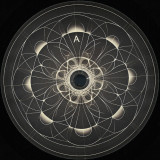
The vinyl cover, designed in a mandala style, reflects the album's aesthetic, where each detail holds significance. High-quality sound, a meticulously curated tracklist, and the vinyl atmosphere make "Garçon EP" a must-have for collectors and enthusiasts of deep minimal sound.
A defining time for many musicians pursuing the arts of exploring sonic palettes is the moment of learning a song, an instrument and recording it. The procedure of selection and layering of sounds. The idea of dissolving this mysticism and truly being in control of something. The realisation that there’s a lot more enigma coinciding with simplicity in music that you may not have realised before and discovering new journeys from there on in. The knowledge of its technicality brought with a background in contemporary songwriting becomes a quest for sounds surrounded by layers of storytelling. To establish a sonic aesthetic that represents yourself and what you want to present to the listener.
The recording of Passerella took place at the end of the summer of 2022 over one week of isolation and songwriting in a house on the shoreside of the lake Lugano. Layered with references from a contemporary approach to 80s synth pop, post-punk and dark wave, with subconscious derivations of Canzone Italiana as a foundation for a musical piece derived from Infesta’s childhood listening habits. Bare genuineness, emotional and aggressive at the right places, the way in which music captures the purity of intense feelings. Infesta’s work is presented in a raw quality which intimates the listener with an aspect of humanity grippingly relatable.
Cemented songs with a focussed vision, Infesta’s dark yet familiar world is one confused but shared among us all. The conceptuality of a traditional album dissolving into a musical diary. The music within this record is a rendering of the importance of having these songs compiled side-by-side as a way of storytelling. To keep the same picture of the exposure of a person through their music. Conflicting inner thoughts frolicking side by side. A gentle hand caresse gleaned by an author to its listener.
Pellegrino & Zodyaco, with their new single 'Malìa', continue the aesthetic and sonic journey of the project led by the Neapolitan producer, with a mixture of Neapolitan disco-funk and fusion steeped in Latin flavour that already explored the innermost corners of the soul with 'Quimere'. This new work captures the frenzy and vibrant character of Naples, with its rarefied atmospheres and infectious groove that evoke the beating heart of the city and take us on a journey through the wonder of life in search of the Mediterranean essence.
The 'Malìa' is enchanting, it’s that mysterious force that hides deep inside, transforming itself into a vortex of emotions through the fusion of involving rhythms and reflections on inner battles, on the importance of finding the 'light' to overcome conflicts and difficulties that hinder the ability to choose, a dreamlike mirage that opens a window on human vulnerability, a hymn to authenticity, to self-acceptance.
The celebration of dance in the Caribbean Escapade version is also an exhortation to escape from everyday life; it takes us into a sonic imagery that plays with the Neapolitan musical tradition and the freshness of Caribbean and Latin sounds. This summer single becomes an ode to the vital energy of dance music: there is no more time for hesitation, one must let oneself be carried away by the enthralling embrace of 'Malìa', like a call to awareness and the search for authenticity in life. Malìa becomes the guiding thread, the mystery that urges us to go beyond the confines of everyday life, to explore and celebrate the complexity of existence.
Drawing inspiration from the rich tapestry of Japanese culture, KIOTO has seamlessly integrated elements of tradition and modernity to create a unique auditory experience. The label's commitment to excellence is evident in every aspect, from the music itself to the meticulously designed artwork that adorns the record.
Featuring a carefully curated selection of well renowned artists, this vinyl record showcases their exceptional talent and sonic diversity. Audio Werner, Tommy Vicari Jnr (as V.I.C.A.R.I), Peer Du, and label founder Stevo have come together to craft a release that transcends genres, creating a musical journey that captivates listeners from start to finish.
KIOTO's debut release 裕治郎 - Yujiro 12" is not just a collection of tracks; it is a meticulously crafted work of art. The label's dedication to Japanese aesthetics is evident in the stunning artwork that graces the cover and the labels, transporting listeners to a realm where tradition and futurism intertwine.
Fractions are back with "Dimension X," a release that signifies the beginning of their new music label, NRG TRAX. This release is a statement of purpose, cementing the duo's signature high-energy sound and 00s aesthetics.
"Dimension X" takes listeners on a sonic journey through the duo's musical influences, showcasing their love for The Prodigy-inspired infectious leads and breaks, EBM-infused basslines and fast-paced tempos that are dominating the current club scene. Paying tribute to their previous two releases on Dax J's Monnom Black, this release marks the start of a new era for Fractions as they continue to push the boundaries of uncompromising club music.
Get ready to be transported to another dimension.
Alexander Skancke is making his debut on raum...musik with three techno-tinged tracks that perfectly display his immense talent and remarkable versatility in music production.
Over the past years, the Berlin-based, exquisitely friendly Norwegian face behind the desk of Bikini Waxx Records has gathered an extensive body of work brimming with quality.
The "Moon and the Sun" EP shows Alexander in total control of a hypnosis-inducing, slightly delirious dark room where Techno is the language of choice. Its title track 'Moon and the Sun' fills the entire A-side of the record with menacing vocal echoes on top of constant, bass-heavy locomotive grooves that are simultaneously dark and deeply shamanic. B-side's 'No Snakes Please' brings forward crisp, robust percussion arrangements and chugging basslines combined with euphoric (yet understated) vocal samples.
'LSD' finishes the EP with a deeper take on the sonic language explored thus far by adding spatial textures and a discrete bassline work to the mix while filling the space with razor-sharp drum arrangements for added excitement — Three different arrangements of varying aesthetics that are, ultimately, Alexander's very own vision of Techno.
Recently created Guatemalan label Identidata is extremely proud to present Sacratávica, the very first collected survey of Joaquín Orellana’s compositions. With a career spanning over 50 years of activity across contemporary art, performance, theater and sound art, Orellana is a highly singular figure in Guatamalan culture. Often considered to be the sole avant-garde composer in the country, his work has a deeply interdisciplinary quality. Most of his music was created using an orchestra of his self-built instruments, also known as Útiles Sonoros. Sitting at the border of sculpture, sound installation and musical instrument, these Útiles Sonoros, which he’s been building and developing since the late ‘60s, are at the center of his artistic activity.
Aside the obvious formal aspect, his compositions also have a strong political message, while being deeply rooted in Guatemalan history, folklore and various identities, both indigenous and modern. Playful opener “Híbrido a presión” was one of the first of his compositions to be performed entirely using the Útiles Sonoros. However, due to its technical complexity the piece was seldom reproduced, except for a later staging that Orellana directed in Louisville, Kentucky. “Ramajes”(1984), initially titled “Evocación profunda y ramajes de una marimba” , tracks the many incarnations of the marimba across history, before reaching its final form as one of Orellana’s instruments by combining vibrational percussion with melody and poetry fragments.
The title track, ‘’Sacratávica’’, represents one of the most ambitious and emotionally charged pieces from the album. An expansive 22 minute composition mixing textures that mimick field recordings and multi-layered vocal melodies culminating in choral catharsis, ‘’Sacratávica’’ deals in baroque maximalism without ever feeling cluttered. For the casual listener, the track immediately stands out, not only because of the moving vocal layered harmonies, but also through its epic scale and strong sonic narrative. Dubbed “Las voces del Rio Negro”, the piece references the massacres that took place in Coban during a period where the army massacred numerous towns, throwing the bodies in the nearby Rio Negro (the Black River).
Final track, “Fantoidea”, a glistening, metallic ambient improvisation, was a reimagining of Disney’s Fantasia using Paul Dukas’s “The Sorcerer's Apprentice” as inspiration.
Despite his work being presented in numerous exhibitions and concerts in various prestigious museums and theaters across the world, very few quality recordings exist to date. The only previously available recordings so far or either of very poor quality or did not receive enough attention. This is why, although The compositions presented not being previously unheard, having them all together in a high quality audio object represents a key moment In Guatemalan and Latin American culture.
Recorded on August 31st 2016 during a historical concert attended by over 1000 people at the Centro Cultural Miguel Angel Asturias, designed by Efrain Recinos, one of Guatemala’s leading contemporary artist from the last century, the four pieces were performed by a selection of over 90 musicians (including 60 vocalists) who were already familiar with Orellana’s instruments, cherry-picked from the Guatemalan Conservatory.
For the people behind Identidata, it has been a long and arduous process to put together these pieces. Trying to offer a panoramic view of Orellana’s work, the curators have selected pieces ranging from different decades and artistic periods. Sacratávica is a portrait of a singular artist whose work speaks not only to his culture, but carries strong aesthetic sensibilities that resonate universally.
Nico Motte returns to Antinote with his second album ‘The Missing Person’ after his 2015 introductory EP ‘Rheologia’, 2016’s ‘Life Goes On If You Are Lucky’ LP, and 2017’s ‘18 Rays’ EP collaboration with Zaltan and Raphaël Top-Secret. Truly though, Motte never really left, having been the aesthetic eye for each Antinote artwork since day dot. His visual style would prove pivotal to the labels decade long success in the leftfield music underground. But here Motte shows us once again that his skills don’t solely lie in graphic art.
A bandcamp review of Motte’s first LP reads ‘French late seventies synth-laden electronics of avant garde film soundtracks with a touch of early house, minimalism and Balearic…’
‘The Missing Person’ holds true to that balearic core while adding flavours of lollipop dub, sugary synth and Martin Denny-esque Exotica. Synth-Pop from a tropical island. Perhaps The Missing Person here is the album’s protagonist themself, having sailed away from the trivialities of urban life to lay on a white sand beach somewhere warm, drinking fresh coconut water and not giving a shit. A laissez-faire attitude.
Underneath the cool sonic facade of ‘The Missing Person’ Motte effortlessly meanders through pastel sounds drawn from an extensive collection of vintage synthesisers, drum machines and effects units at Synth City. The result: a smooth textured continuous listen of an ear off to somewhere far… island life perhaps? perhaps urban life in need of reprieve.
"Delivering his first solo EP in over two years, Blue Hour releases Origins, the 21st release on Blue Hour Music. Following a succession of remixes, V/A contributions and an EP under his Tracing Xircles alias earlier this year, the Berlin-based producer and DJ shares four tracks diving deeper into his UK roots. Channelling breakbeat, techno and trance with the hallmarks of 90’s rave, Origins builds upon the foundations created from his EP ‘Devotion’ in 2020.
In this eclectic EP, Blue Hour explores several sonic palettes. The title track blends celestial chords with urgent drums and acid basslines, while uplifting vocals and subtle melodies wind through the track. ‘True’ dips more heavily into breakbeat territory with evolving and immersive pads, soaring strings and a twinkling synth-line. A dynamic fusion of fast-paced energy and soft touches.
On the flip, ‘Emergence’ dances a delicate line between melancholia and elation, as dystopian chords pool with a squelchy acid sequence and a classic house vocal. ‘Searching’ closes on an ambient tip with spell-binding pads and an angelic melody, conveying a bright side to Blue Hour’s aesthetic, akin to Origins as a whole."
It might seem tongue-in-cheek on the surface, but the fact that the title of Eldritch Priest's sprawling debut vinyl release, Omphaloskepsis, is the Greek translation for “navel-gazing” unlocks something essential to the Vancouver-based composer and writer's singular outlook.
Perhaps even more telling is the title of Priest's 2013 book Boring Formless Nonsense: Experimental Music and the Aesthetics of Failure (Bloomsbury), whose 300-odd pages read as though you've been dosed with potent hallucinogens. Throughout the text Priest addresses—celebrates, even—the titular elements via various musical examples, including that of his peers. What's so bewildering it is that his descriptions of how boredom, formlessness, and nonsense manifest are laced with the very tactics he's depicting. Passages tie themselves in knots, footnotes engulf the “primary text,” he even deliberately misleads the reader.
The restless stasis of Omphaloskepsis could be regarded as an extension of this book's wayward spirit. Things unfold fairly slowly and consistently but it'd be a stretch to describe it as properly contemplative. Like attempting to meditate with a high fever, any sense of tranquility is constantly derailed as one succumbs to queasy agitation. The piece's foundation is a seemingly endless guitar melody; an organic meander that neither seems to repeat or offer any concessions to narrative directionality. Priest unfurls this rambling cantus firmus in a rich, clean, jazz-like tone, but as it's played, it's repeatedly tangled with snarls of dense digital processing and shadowed by stumbling virtual “band.” These strident interjections blatantly contrast with the guitar, yet they aren't so violent as to offer more than a faint itch of distraction. As such, the distinctive amorphousness that this piece asks us to inhabit for its 54-minute duration leaves a strong impression, but also feels utterly intangible.
In addition to his recorded forays, Priest's disorienting music has also been performed by top-tier interpreters such as the Arditti Quartet, Quatuor Bozzini, Philip Thomas, Anton Lukoszevieze, and Continuum. While living in Toronto he co-founded the collective neither/nor with John Mark Sherlock, which featured a cross section of musician-composers playing each other's work including Eric Chenaux, Doug Tielli, Eric KM Clark, Heather Roche, and Rob Clutton. “Though the name refers specifically to a loosely knit group of composers and performers,” remark's the collective's website “neither/nor is also a sensibility that refuses art’s messianic pretensions and the gaping maw of commercialized society, opting instead for art’s right to be esoteric.” In 2021, when Eric Chenaux and Martin Arnold relaunched their neither/nor-adjacent Rat-drifting imprint, an album by Priest, Many Traceries, was among the first to be released. Perhaps unsurprisingly, Priest was a student at the University of Victoria, a school that's come to be known for fostering such staunch individualists as Arnold, Linda Catlin Smith, Allison Cameron, and Anna Höstman.
As a scholar, Priest writes from a 'pataphysical perspective and deals with topics such as sonic culture, experimental aesthetics and the philosophy of experience. Priest brings these interests to his job as an Associate Professor in the School for the Contemporary Arts at Simon Fraser University, interests that also inform his work as a member the experimental theory group The Occulture. In addition to Omphaloskepsis, his new book, Earworm and Event: Music, Daydreams and Other Imaginary Refrains,
Baby Buddha is David Javelosa and musical partner Charles Hornaday playing instruments and providing their own whacked-out vocals. Baby Buddha really was less of a band than a project; a side project in fact, for some members of another group, Los Microwaves. Baby Buddha would eventually record and release an album, 1981's provocatively-titled Music for Teenage Sex on Robbie Fields' L.A.-based Posh Boy label.
Happily, the project's guiding creative light, David Javelosa has recently seen to a vinyl reissue of the now-40-year-old record, mystifyingly retitled Music for Teenage Sects. Definitely among the stranger releases of the new wave era, Music for Teenage Sex/Sects could perhaps only have been created when and where it was made. But on the occasion of its 40th anniversary, the music sounds as weirdly wonderful as ever. "We Are Not" sounds like Human League stuck in a car with The Residents. And their cover of "All Shook Up" sounds like a musical kin to those inscrutable eyeball guys too; it wouldn't be out of place on Meet the Residents. "Little Things" is a house-of-mirrors, scary track, with spoken-word vocals by Los Microwaves' Meg Brazill and label head Fields.
The album cover is slightly different as well: it displays a bedroom scene like the original LP, but with the young female model absent. The new release (on Javelosa's own Hyperspace Communications label) is pressed on beautiful translucent blue vinyl and comes in a gatefold sleeve with a lively collage of photos, buttons, gig posters. Limited to 500 copies.This playfully titled release features David Javelosa (on synth and vocals) along with Meg Brazill (on bass and vocals) plus drummer Todd "Rosa" Rosencrans. Side One features five studio tracks, none of which were included on the band's 1981 Posh Boy LP, Life After Breakfast. Three of these tracks were recorded in '82; there's no information regarding the provenance of the other two songs. The records' second side collects five live recordings, capturing Los Microwaves onstage in New York City (The Peppermint Lounge) and Boston as well as at San Francisco's own I-Beam, a venue that often played host to the band. Those tracks date form roughly the same ear, 1980-83. Sonically the songs variously recall Blondie, Flying Lizards, Gang of Four and a far less dour Human League. Importantly, the band rocks, even when it's employing a spare drum kit, solid but elemental bass, and monophonic analog synthesizers. The stripped down aesthetics of the group – necessitated by its minimalist instrumental approach – are nonetheless thrilling. Even if you weren't there in 1980, this'll take you back.
‘.dev’ was yet another collaborative piece from Agoria, aka Sebastien Devaud. As well as Blasé and STS, who returned after featuring on ‘Drift’, Devaud worked with Domino’s Ela Minus, flamenco innovator Niño De Elche, and the unique hip hop delivery of Rome Fortune across the LP, with additional collaborators including Sacha Rudy and Oscar winner (The Sound of Metal), Nicolas Becker.
Sonically, the LP saw Agoria presenting a kaleidoscopic haze of cinematic and evolving electronica that touched on house, techno, electro, hip hop, and beyond but beneath the aesthetics, ‘.dev’ was the work of an artist asking himself questions in order to create worlds out of his answers.
Beyond looking to question the very systems of the traditional album format, his holistic approach to AI and NFT’s within the thematic world of his work were laid out front and centre through the visual and conceptual identity surrounding the album.
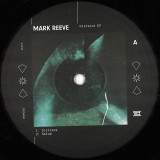
A firm Drumcode favourite, Mark Reeve is back with his latest techno opus.
Weaving his vitalising, biting techno through the seminal imprint since 2012, Reeve has since become a permanent fixture within Adam Beyer’s camp. He saw demand for his knockout ‘Run Back’ EP being matched and surpassed by his ‘Far Away’ EP. Staunch DC fans will also be familiar with Reeve’s output on the label’s A-Sides compilation series, and clubbers hot on the tails of Drumcode events will have caught him centre stage across a string of showcases, including the inaugural Drumcode Festival.
Reeve’s music invariably endorses an arresting sonic aesthetic, with intense melodies often driving in those eye-closing moments. The title track ‘Distance’ is an atmospheric opening gambit set to sonically massage the senses with uplifting pads and a radiant melody. ‘Serum’, a track recently road-tested by Beyer at a special event in collaboration with Cercle, soars and captivates as it progresses with a low-end rumble and intricate keys. ‘Fix Me’ is a vigorous techno workout that’s intent on energising a clubroom rammed with sweat-soaked dancers. Closing off the EP, ‘Filmwave’ rides a killer groove into a pit of punchy, powerful kick.
- A1: Terrace - Bewitched
- A2: Glenn Underground - Real Space
- B1: Felix Da Housecat - Temptation (Color Mix)
- B2: China White - Theme From The Underground
- C1: The Operator - The Mind Strike
- C2: Steve Poindexter - Body Jam
- D1: Mike Dearborn - Deviant Behaviour (Instrumental Mix)
- D2: Dj Skull - Don't Stop The Beat
The second edition of Dekmantel’s foray into the era-defining, trans-Atlantic, cult techno label that is Djax-Up-Beats, comes another re-issue of classic 90s cuts.
The label say "The Dutch label was responsible for releasing some of underground’s most foundational dance music, mixing together Chicago and European artists alike, and acting as the launchpad for some of today’s biggest producers. Featuring offerings from luminaries such as Felix Da Housecat, and Glenn Underground, alongside veterans such as Steve Poindexter, and DJ Skull, this second EP highlights the classic label’s old-school’s sound, while showcasing its diverse range, from dubbier, ambient moments, to wall-thumping, body crushing house force. Timeless music, repressed, and re-released for a new generation of DJs who covet the classic machine music.
The second re-issue EPs, offer a more introspective look at the label’s earlier releases. Leading Volume 2 is Terrace’s 'Bewitched', to which DJ Richard has described as being the defining track of the label’s beginnings with its "dreamy, Detroit-style techno mixed with the harder rave elements of Northern Europe”. Glenn Underground’s bass-roller 'Real Space' weaves together soulful passion and Chicago prime beats, while Felix Da Housecat’s Temptation — originally from 1993 — gets a well earned re-release, reminding us of the soulful, deep and lustful energy the producer once had. China White, whose name doesn’t get banded around as much as it should nowadays, see their ethereal hit 'Theme from the Underground' get another opportunity to bliss out the more upbeat rave community.
The energy turns darker with Frank de Groodt’s The Operator, breaking the outer-most barriers of electro-techno, with 'The Mind Strike'. Chicago and Dance Mania’s Steve Poindexter turns out rolling, dance-energy bomb 'Body Jam', while Mike Dearborn’s deliverance of unreal, dry techno in 'Deviant Behaviour' runs aplomb with classic drum-machine pulses, claps, and uncomfortable, yet punishing melodies. DJ Skull’s 'Don’t stop the beat' rides the EP with gushings of hand claps, and gentle, early 90s warm techno color, that transport you back to a time of more informed, and conscious electronic musings, a feeling that embodies Djax’s heyday.
Founded in Eindhoven at the turn of the 90s, Djax-Up-Beats quickly earned an international reputation for being a key source of Chicago house, acid techno, and floor-filling, heavy-hitting, straight up underground 12”s. It’s a sound that spawned the sonic aesthetics of today, and can be heard in the left field techno productions of the likes of Bjarki, Salon des Amateurs and other erstwhile analog junkies."
Mannequin's 100th - a comp looking forward featuring an international and serious cast... BIG TIP!
The modern synthwave scene would be significantly poorer without the keen ear and tireless efforts of the Mannequin label run by Alessandro Adriani. Geographically situated within the nerve centers of Rome and Berlin, yet with a musical spirit that easily transcends these boundary lines, Mannequin's back catalog has been an important component in the modular assemblage that makes up electronics-based independent music in the 21st century, and an important reference point for those who need to defend against the lazy accusations that this such is purely retro' in its form and content. Recent accolades and accomplishments - being named Resident Advisor's label of the month' for May of this year, starting the 'Death of the Machines' 12' series, and being given the 'green light' for bi-monthly parties at the Säule room in Berghain - have been earned through Mannequin's unflagging commitment to sonic diversity and Adriani's own realization that the anxious and sharp-edged sounds associated with, say, the Cold War of the 1980s can convey a completely different message today. Adriani says it best when claiming that there is no such thing as 'old' or 'new' music...only the music of now'. With this cogent statement of intent, Mannequin continues to go on exploratory missions to find the best and most relevant aspects of genres like acid, industrial, EBM, post-punk, coldwave and still more.
Which brings us to Mannequin's newest project and 100th release overall: the Waves of the Future double LP compilation, which itself is not a conventional retrospective collection. Case in point - none of the artists appearing on this collection have put out their own releases on Mannequin yet, despite acting as Mannequin's unofficial ambassadors (via DJ sets and other means). This makes the set even more compelling rather than less so, since it shows how Mannequin fits into a larger picture that includes other scene leaders and label owners including Beau Wanzer, Willie Burns (WT Records), Silent Servant (Jealous God) and Ron Morelli (L.I.E.S.). Of equal importance is how Waves of the Future projects a sense of aesthetic resilience and continuity, showcasing just how well the current artists allied with Mannequin employ and re-interpret the sonic lexicon that appears on that label's reissues of 'classic' acts such as Nocturnal Emissions, Bourbonese Qualk, Din A Testbild and Doris Norton.
However, none of this would matter as much if the music itself didn't have strong potential for lighting a blaze in the dark corners of the human imagination, and of course for forcing bodies into motion. Each track here pivots around a couple of key sound elements that seem to set the stage for the next track to come: see the sputtering / chopped ghost voices on Morelli's Charges Won't Stick,' which easily informs the slicing drone and authoritarian beat of Shawn O' Sullivan's Ill Fit,' which then lays down the emotional foundation for the sequencer-powered With You' from An-I & Adriani or the glassy landscape of Illum Sphere's Exhaustion'. Elsewhere, the wired mischief of Not Waving intersects easily with the spherical electro-funk and coded commands of Beau Wanzer. When all the disparate parts of Waves of the Future are soldered together, it perfectly illustrates Mannequin's non-linear philosophy and Adriani's suggestion that Mannequin listeners directly engage with the music rather than trying too hard to analyze or dissect it.
- 1: Psycho Killer
- 2: Heaven
- 3: Sugar On My Tounge (Dub)
- 4: Born Under Punches (The Heat Goes On)
- 5: Once In A Lifetime
- 6: I Zimbra
- 7: The Book I Read
- 8: Girlfriend Is Better
- 9: Mind
- 10: Burning Down The House
- 1: Uh-Oh Love Comes To Town
- 2: Seen And Not Seen
- 3: Road To Nowhere
- 4: Born Under (More) Punches (The Heat Goes On)
- 5: Take Me To The River
- 6: And She Was
- 7: This Must Be The Place (Naive Melody)
- 8: Crosseyed And Painless
Vinyl[32,35 €]
Naive Melodies is a bold and visionary tribute to the music of Talking Heads, reinterpreted through the lens of Black musical innovation. Curated by Drew McFadden — the creative mind behind BBE’s acclaimed Modern Love (David Bowie tribute album) — this new collection dives deep into the Afro-diasporic rhythms and experimental soul roots that helped shape Talking Heads’ unmistakable New Wave sound. Inspired by artists like Fela Kuti, Parliament, and Al Green — whose influences loomed large in the band’s rhythmic DNA — Naive Melodies shines a light on the Black music traditions that underpinned their artistry. Far from a conventional tribute, Naive Melodies reframes the band’s catalog through the voices and visions of a new generation of genre-defying artists. These interpretations illuminate the foundational grooves and sonic textures that fueled Talking Heads’ rhythm-forward aesthetic, bringing them full circle with authenticity. “With Naive Melodies, I wanted to spotlight the deep and often overlooked influence of Black music on the sound of Talking Heads, drawing from the rhythmic foundations of Afro-diasporic traditions, soul, gospel, Latin, and spiritual jazz. This project is a chance to reimagine Talking Heads’ legacy through the lens of the very innovations that helped shape it, bringing those influences to the forefront through the voices of today’s most forward-thinking artists.” — Drew McFadden The album features a globally minded lineup, including Liv.e, Bilal, Rogê, Miguel Atwood-Ferguson, Aja Monet, Georgia Anne Muldrow, Theo Croker, Kenny Dope, Rosie Lowe, Pachyman, W.I.T.C.H., and more — spanning Afrobeat, jazz, soul, funk, gospel, dub, electronica, orchestral, and Latin styles. It reflects not only the boundary-pushing ethos of Talking Heads, but also the influence of Black music as a cultural force that helped shape it. This is not just a tribute album — it’s a recontextualization. A cultural conversation. A rhythmic reawakening.