Hermon Mehari and Tony Tixier first met in 2010, in their early twenties, in a club on Paris's Rue des Lombards for a concert with saxophonist Rodolphe Lauretta. Over the next decade, the two musicians took opposite paths, while continuing to collaborate on two continents. The American trumpeter moved to France to discover European culture and the world cultures that coexist there, while the Parisian pianist of Martinican origin spent several years in the USA, immersing himself in the roots of jazz and Afro-American music.
In June 2024, the two musicians, who had been working for fifteen years on numerous albums and collaborations, and whose musical understanding had continued to be forged in clubs, festivals, and on recordings, met again for a duet at the TOC-TOC festival in the Puisaye region, where Antoine Rajon was a collaborator. Enthusiastic about the idea, the artistic director of the KOMOS label invited them back to his home in this corner of Burgundy to record this Fender Rhodes/trumpet formula. He called on sound engineer Christian Hierro, who traveled with his mobile studio for the album recording, then mixed and produced the master in his studio in Lyon, using the best analog equipment and his expert ear.
At dusk on November 12, 2024, the duo played eight tracks in a single, direct take on a 33-minute magnetic tape.
Four unusual cover versions were carefully chosen. "Maimoun" is a composition emblematic of pianist Stanley Cowell's style, also recorded by Marion Brown. George Duke's "The Black Messiah" was captured live by Cannonball Adderley's band on an album of the same name but has never been released as a studio version. "Hello To The Wind" was created by Bobby Hutcherson in 1969, sung by Eugene McDaniels. Finally, "Laini," dedicated by the great Martinican pianist Marius Cultier to one of his daughters, is a mazurka dear to Tony's heart.
Each of the musicians also contributed a composition: Hermon with "This Is Our Fantasy," written especially for the session, and Tony with "Poem For The Oppressed," a moving composition with an explicit title. Lastly, the duo improvised two tracks, without repetition, in mutual symbiosis and echo.
SOUL SONG captures a moment without enhancement, transformation, or additives, far removed from contemporary virtual technologies.
quête:the soul session
- July Blue Skies
- Sky Train Baby
- Venus Of Barsoon
- Ikuchi
- Summer Of Synesthesia
- Tsicroxe
Embark on a funky synth-drenched journey as the cosmic count Jimi Tenor reunites with Timmion Records' soul architects Cold Diamond & Mink for yet another album. When placed side by side with the fellows' recent effort "Is There Love In Outer Space? "July Blue Skies" glides on a slightly more raw and mystical plane. Crafted over fiery sessions between Tenor and Cold Diamond & Mink, this vinyl release offers six soul-grasping tracks ranging from mellow groove to soundtrack funk. The album's opening title song kicks off with an extended analog synth intro which eventually develops into a sweet romantic invocation, painting a sonic canvas reminiscent of a boundless summer sky. The most vocal tune of this quite instrumental set of songs "Sky Train Baby" propels the listener on a locomotive ride through the star systems while "Venus of Barsoon" with its drum breaks and fuzz sounds blast you straight into sci fi movie funk territory. The album's B-side opens with "Ikuchi," where Tenor's always trusted flute and tenor sax take the spotlight over the slinky library beats. Closing the album we discover two single releases, the sublime "Summer Of Synesthesia" and the demonic "Tsicroxe" both completely worthy to hear sequenced inside this album as well. This album might be just the Spring jam that you needed in your life.
- 01: I Think I Just Died A Lil Bit
- 02: Buzz 1
- 03: Cosas Mueren
- 04: Going Back Home On Street View
- 05: Buzz 2
- 06: Twerk Class (Radio Mix)
- 07: Buzz 3
- 08: There`s Still Fun Stuff To Do
- 09: In This Together
- 10: Buzz 4
- 11: 60° Easy Care
- 12: 143
- 13: Buzz 5
- 14: Tuesday Gossip
- 15: Buzz 6
- 16: I`ll Wait For You In The Mcdonalds Car Park
"The album was created in this back and forth of snapshots - we made most of the decisions impulsively without much questioning. That takes a lot of trust." — Violeta García & Hora Lunga
"I'll Wait For You In The Car Park", the first full length collaboration between Argentinian cellist, improviser and composer Violeta García and Swiss musician and composer Hora Lunga, is a work of extremes. Drawing from the realities of life on two continents, and embodying moods ranging from stoic desire to violent bursts, the album enciphers so-called ordinary moments from everyday life into an alluring collection of musical scenes. Seemingly inconspicuous moments are condensed into a tale of synchronicity: colliding time zones and seasons, metropolitan rhythms raining down onto a glacier's ice field, exploring places through street view, the serendipity of loitering at a kiosk. As such, "I'll Wait For You In The Car Park" brings documentary film essays to mind that carefully observe the private and everyday occurrences.
Violeta García and Hora Lunga crossed paths by chance in 2023 and began discussing and sharing music shortly afterwards. What started as a loose exchange of ideas, sending back and forth sketches and demos between South America and Europe, grew into several studio sessions in 2024. Being sucked into a "quite extraordinary flow", the two musicians recorded, arranged and intervened on a level playing field, using the studio as a playground to record musical layers and interweave them with field recordings and audio notes gathered over the course of a year. Speaking a kindred musical language, they quickly realized how their ideas clung to each other like two familiar souls, complementing, intertwining and merging. From gauzy and eerie textures, musical miniatures floating through time, howling and screaming strings, to tumbling and thundering basses – the sound of the ordinary shapes a body that vibrates, writhes and breathes.
Violeta García is a cellist, improviser and composer from Buenos Aires, Argentina. Based in Spain, she tours a lot with her band Blanco Teta. She is a performer in many art forms, including free improvisation, contemporary and trans-media experimental repertoire in violoncello and electronics and collaborations with dancers, film makers and visual artists. After years of studying classical and popular music on violoncello and, later, contemporary composition and improvisation, Violeta has developed her own musical voice needed to emerge beyond outside specific genres.
Throughout Swiss composer and musician Hora Lunga's work, the focus lies is on exploring boundaries, both musically and in terms of performance and content. Above all, genre designations lose all meaning, as the music always takes place within a dramaturgically conceived overall framework. In recent years, his projects have ranged from pop music productions to experimental works and sound performances, as well astheatre and film productions. His ensemble WIRREN consists of up to fifteen performers.
- Sisters Of The Moon
- Fire And Brimstone
When we last heard from Southern California's rock n' roll sorcerers Death Valley Girls, band orchestrator and mastermind Bonnie Bloomgarden was summoning the element of water and celebrating its tempestuous power on the triumphant 2023 single "I Am a Wave." Surrounded by a new cast of supporting musicians, Bloomgarden returns from a brief hiatus to pay homage to the magic of celestial bodies and to honor yet another classical element on a new two-song single. On side A, Death Valley Girls cover the Fleetwood Mac track "Sisters of the Moon," harnessing the original version's witchy mystery while bolstering its thunderous chorus by beefing up its ominous riffage. Bloomgarden's channeling of Stevie Nicks is downright eerie, pulling off such s striking timbral similarity you might almost mistake this rendition as a more electrified and tripped-out alternate take from the original Tusk sessions. On the flipside, Death Valley Girls pay reverence to the element of fire by taking on the Link Wray classic "Fire and Brimstone," summoning the original's swagger while transforming its tent-revival stomp into a mash-up of Phil Spector's girl-group majesty, Motown's hip-shaking soul, and punk's bombast. Surrounded by an ensemble of like-minded celestial witches, Bloomgarden takes Death Valley Girls' sound to new heights while elevating two beloved `70s tunes into modern day religious experiences.
- Honey
- Come Down Softly To My Soul
- How Does It Feel?
- I Believe It
- Revolution
- Let Me Down Gently
- So Hot (Wash Away All Of My Tears)
- Suicide
- Lord Can You Hear Me?
Spacemen 3 began assembling their third album, 1988's Playing With Fire, at perhaps the freest, most confident point in their career. Recording began with the band road-tested and rugged, even amidst the functional volatility that famously motivated their course. The sessions' first offering came in the form of "Revolution," a single of heroic Stooges-devotion and the most commercially successful release the group had to date. High expectations for the album were soon exceeded, as Playing With Fire would become Spacemen 3's crowning studio achievement and cement their rightful place on the vanguard of otherworldly rock 'n' roll.
An exquisite mix of stuttering tremolo guitars and wistful melodies, Playing With Fire sheds any trappings of revisionism and furnishes a nuanced grade of psychedelia. Epic entries like "Suicide" (named after the notorious NYC band) and the mesmeric "How Does It Feel?" catch Spacemen 3 at their celestial apex, the very point where their collective writing, performance and production would crest and wondrously splinter.
Includes download card and new insert with liner notes by Marc Masters.
In addition to being members of Miles Davis' band, John Coltrane, Red Garland and Paul Chambers recorded several projects together without the trumpeter. Soultrane is a superb quartet album featuring the three musicians along with drummer Art Taylor (he and Chambers were both members of the Red Garland Trio). The LP was recorded in between the two Miles Davis Sextet sessions that produced the album Milestones. Among the highlights are a lengthy reading of Tadd Dameron's "Good Bait", and Trane's earliest and probably best version ever of Billy Eckstine's ballad "I Want to Talk About You", which would become a favorite inthe saxophonist's live repertoire.
180-gram VIRGIN VINYL LIMITED EDITION. The Complete Album | Bonus Track
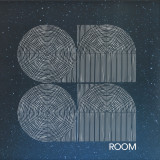
ANAN is a project born from the musical inspiration of DJs Roberto Agosta and Massimo Napoli (Galathea). The name ANAN comes simply from the repetition of the initials of their surnames. Room, their new album, refers to the space in Catania, Sicily, where the two artists create their music.
Room is a mature and intense album that draws inspiration from the two composers' favourite musical genres: jazz, 70s psychedelia, afrobeat, cumbia and soul. The ethereal sound of the album draws the listener into a melting pot of these musical styles that blend perfectly together, making the album versatile and innovative. Valuable arranger and performer Salvo Bruno ‘Dub’ masterfully colours and enriches the deep melodies of the recordings, as if it were a live session coordinated and directed by the two DJs on a super cinematic journey.
The Ibex Band, with Giovanni Rico and Selam Woldemariam at the creative helm, provided the musical backbone for legends like Aster Aweke, Girma Beyene, Tilahun Gessesse, Mulatu Astatke, and Mahmoud Ahmed, including the iconic album Ere Mela Mela, shaping modern Ethiopian music as we know it today. This 1976 album (Ge’ez Year 1968) played a pivotal role in that legacy and has now resurfaced to set the record straight.
There’s a tendency to talk about the seventies as a golden age of Ethiopian music. There are good reasons for that, and just as good reasons against it. However, the notion of a golden past privileges the role of Western explorers and suggests that the pinnacle of Ethiopia’s musical culture is something only a foreigner can appreciate and unearth. It downplays the complexities of Ethiopia’s culture and history, creating an artificial divide between then and now. And it underestimates the constantly evolving sound that has followed.
The legendary musical outfit The Ibex Band, later metamorphosed into The Roha Band, has played a central role in defining the sound of many of the greatest stars on the music scene of Ethiopia from the mid-seventies onwards–but their golden output has never really waned. The story of the origins of the band that provided the musical backbone for greats such as Aster Aweke, Girma Beyene, Tilahun Gessesse, backing the solo career of group member Mahmoud Ahmed as well as backing Mulatu Astatke and many others has yet to be properly told.
Two misconceptions plague the image of Ethiopian music, one is that the music is pure because it is, by some notion, unexploited, the other is that it is all traditional. To begin with, a combination of political changes between the late sixties and the mid-nineties created an environment where only the most dedicated and skilled musicians struggled on and pursued a musical career against fierce odds. The whole Ibex Band, with Giovanni Rico and Selam “Selamino” Seyoum Woldermarian at the creative helm, are arguably the origo of the vibrant scene in the mid-seventies, and the said pair are foremost responsible for not only navigating the band through troubled times, but also modernizing the 6/8 chickchicka rhythm to a contemporary form. Giovanni laid the rhythmic foundation with heavy looped basslines that reinvented traditional melodies as dance music, and with Selamino’s innovative guitar work they influenced scores of musicians from Abegaz Kibrework Shiota to Henock Temesgen. Even Giovanni’s Fender bass and Selamino’s Gibson guitar inspired younger musicians in their choice of instruments. Not only in choice of instruments but also in sound–even as the digital revolution hit Ethiopian music, a lot of popular music still took its cue from the masters from Ibex and Roha.
Ibex emerged out of the ashes of the sixties group the Soul Echos band, adding Giovanni and Selamino to their ranks and taking their cues from a slew of influences, such as Motown and The Beatles, fused with traditional music. A tighter-knit unit than most bands at the time – Ibex has remained six to seven members throughout their whole career, compared to many bands that were as large as fifteen or sixteen men strong when Ibex set out. Their playing has been viciously focused, economical yet heavy. Just a year before the recording sessions of the album in your hands, Giovanni and Selamino made a contribution to the popular musical lexicon of Ethiopia that was simply defining the popular sound: their arrangement and recording of bandmate Mahmoud Ahmed’s solo effort and real commercial breakthrough tune and eponymous album, Ere Mela Mela, from 1975.
Selamino has never limited himself to being an adroit lead guitarist, but has always been a scholar of history, and as such he has probably contributed as much to modern Ethiopian music with his guitar playing and compositions as with a deepened understanding of modern or contemporary – Zemenawi – Ethiopian music. Selamino’s contributions serve as a metaphor for those of the whole band, at one and the same time creating and defining a new, danceable and updated sound anchored in Giovanni’s bass, whilst also elevating the broader scene through their support for others on the scene and on top of that, increasing the understanding of the music.
There is an understandable desire to romanticize the musical heyday Ibex and Roha were at the forefront of, because so much of the output is sorrowfully hard to come by. Ibex creativity was nothing short of ridiculously fierce compared to many of their Western contemporaries. Based on their sheer recorded output alone they could have usurped the title “hardest working in show business” from James Brown, recording more than 250 albums or 2500 songs in the seventies and eighties. Some only surface as cassettes today, others were never given full LP release, and some are simply impossible to find today. In the light of that, it’s nothing short of a miracle that the recording Stereo Instrumental Music from 1976 (Ge’ez Year 1968) has resurfaced. Unearthed in perfect condition on a chrome cassette, this is musical history comes alive–to set the future straight. Stereo Instrumental Music was recorded in collaboration with Karl-Gustav Lundgren, a Swedish national working for the Radio Voice of the Gospel. It took two sessions at the Ras Hotel ballroom in Addis Ababa. The Ibex Band was the first band in Ethiopia to employ a four-track recorder for their recording (the first available in the country, lent by Karl-Gustav). Later the same week, Giovanni and Selamino realized that, lengthwise, the recorded material fell short of what they wished for, so they recorded four more tracks in one more session on a single-track recorder. The Ras Hotel and Ghion Hotel, where the Ibex Band held musical residencies were to Ethiopia in general and Addis Ababa in particular what Motown was to the USA and Detroit a few years earlier – a hotbed of musical creativity and showmanship.
The most astonishing thing about Ethiopian music of the last half century is how tradition and modernity are intertwined. Because of this feature, it’s kind of hard to tell when there ever was or when we are in a “golden age”. So much of music from the past has been criminally neglected, but because of the hardships in the past, it would be an oversimplification to say that said past was a golden age. Probably, the golden age is what we are approaching, because for the first time both the past and future are accessible, and the monumental contributions from before can lay a firm foundation for a thriving music scene today. The Ibex Band stands firmly in the past, present and the future. That, if anything, is golden.
The detailed history of Stereo Instrumental Music is in many ways unique. To begin with, it couldn’t have been recorded earlier (there were no four-track recorders available) and it really couldn’t have been recorded afterwards either, at least not in the years directly following, because of the toll the musical scene took from the unfavorable political climate that followed when the nascent Derg regime and rival groups tried to assert themselves, the musical equipment lent from The Voice of Gospel Radio simply disappeared from Ethiopia when the radio station folded in 1977. Karl-Gustav Lundgren,
the Swedish foreign national who assisted during the recording, worked with the Ethiopian Evangelical Church Mekane Yesus at the time, recalls how they only had about fifteen minutes to get the microphones in place for the recording as to not alert neither the management at Ras Hotel nor the authorities and most importantly, to complete the recording before the curfew came into effect at midnight. In leaping to the opportunity to use previously unavailable equipment to push their sound forward and improvising to meet the logistical challenges, the Ibex Band displayed the very avant-gardism and adaptability that explains their longevity as a band through the years. The recording of Stereo Instrumental Music is from a given time in history, but it sounds as beyond time.
Much of the energy that burst out of the scene that Stereo Instrumental Music came out of dissipated or got sidetracked during the societal changes Ethiopia went through in the 1970s and 80s. Whilst leaders might have professed to be revolutionary, the work ethic of the Ibex Band can truly be described as that. They never called it quits, but adapted, toured extensively abroad in Africa, Europe, and the Middle East, and found ways to work even in the face of the curfew that curtailed a lot of musical life. They even played major arenas in the nineteen eighties, despite said curfew and restrictions. The whole extent of their legacy has never been told, but their music speaks louder than words, so therefore… tune in to the Ibex Band’s Stereo Instrumental Music.
Unreleased Miami boogie and deep soul from the vault of Teddy Studstill. Mixed and mastered from the original session tapes recorded in the early eighties. Terrestrial Funk ties back to their first release with this Miami magic. Teddy Studstill, an unsung hero of South Florida who played guitar on Lang Cook's 'She's Hot With 2,000 Watts' unearths these timeless tunes he wrote four decades ago. Accompanied by Miami legends Luke Jasmin on the keys and vocalist Harris Mazyck. We're grateful Teddy has brought these tracks to light and now the world can finally indulge in their delight. *comes with double sided insert poster*
The Delights formerly unissued recording “Listen To Me Girl” first made it’s vinyl debut during 2017 when released back to back with Tearra’s modern soul anthem “Just Loving You” (SJ1008). Having sold out very quickly this release now commands a price of £60.00 a copy. So, with demand still high we have decided to release “Listen To Me Girl” for a second time with the addition of two recently found unissued master tape tracks, which make their vinyl debut as part of this 3 track EP.
The Delights story began in the early 1960’s while as a children’s group from Chester PA. known as ‘The Twilights’ they began entering local talent shows which culminated in a performance at Philadelphia’s prestigious ‘Uptown Theatre’ during 1963. ‘The Twilights’ made their professional recording debut in 1964 for Weldon McDougal III, Johnny Stiles and Luther Randolph’s Harthon Production’s label with “It’s Been So Long/She Put Me Down” (TW-34). A second Twilights 45 came in 1967 “Shipwreck/For The First Time” (TW-35) which sold sufficiently well to be picked up for national distribution by Cameo Parkway. The group consisted of four male vocalists, brothers Kemp “Toppy” Hill, Ellis “Butch” Hill (the eldest) and Jaime “Peanut” Hill and their friend Raymond, plus lead singer and only female member Brandi ‘Peaches’ Wells (born Marquerite J. Pinder) who was only 9 years old when she sang on the group’s first Harthon 45, (Jaime Hill reputedly never featured on either of the two Harthon 45 recordings).
The Hill Brothers were cousins of Manny Campbell and it’s through this family connection that the group came to Emandolynn Productions initially as backing singers before being persuaded by Manny to drop their former performing name of ‘The Twilights’, to become ‘The Delights’. Under Manny and fellow Philadelphian Charles J. Bowen’s tutelage they recorded the delightful crossover dance track “Listen To Me Girl” during the months of July and August of 1968. Recent unearthed master tape finds from these early sessions have since yielded the featured “Come And Rejoice” an energetic subtle gospel influenced dance track which Manny wrote and produced on them in the hope of giving them a wider body of work and appeal as he shopped their demos around local record companies. The original backing track to “Listen To Me” is also featured on this release.
During the mid-1970’s ‘The Delights’ under the tutelage of respected Philly producer, arranger and songwriter Morris Bailey Jr recorded two 45 releases for the Jamie/Guyden distributed Phil-L.A Of Soul label “It’s As Simple As That/I’ve Got Enough Sense” (PH-374) and “Face The Music/Things Ain’t What They Used To Be” (PH-379). Brandi Wells had left the group prior to the Phil-L.A Of Soul releases to firstly join Major Harris’s backing singers ‘Brown Sugar’ before forming the group ‘Breeze’ who backed fellow WMOT label stable mates Billy Paul, Fat Larry & Philly Cream (a.k.a Ingram). Breeze later evolved into the group Slick who recorded the self-named album which produced the chart hits “Space Bass” and “Sexy Cream”. In 1981 Brandi recorded her first solo debut album ‘Watch Out’ which reached #37 on the Billboard R&B Chart, her second solo album entitled “20TH Century Fox” followed in 1985 for the Omni label. She recorded the Butch Ingram penned “I Love You” 12” single for Butch’s Society Hill records in 1992. Sadly, Brandi Wells passed away in 2003 at the age of 47.
Repress!
Echospace Detroit is the label launched by Rod Modell (Deepchord) and Soultek's Steven Hitchell, two leading lights of the minimal dub techno scene. And as with anything Deepchord, the entire release has an air of mystery to it. Previously, as a near-mythical vinyl pressing with minimal packaging and restricted pressings, everything about Vantage Isle was geared toward the underground, or 'those who know.' However, there's nothing but love of craft driving these grooves, and now a lot more people will finally be able to hear this absolutely brilliant collection of spacial dub wonder on CD. Vantage Isle Sessions consists of a whopping 13 takes of the title track, reworked by Modell and Hitchell in various guises (cv313, Deepchord, Echospace, Spacecho), as well as a guest spot (and first ever remix) from Gerard Hanson (Convextion). Across their 13 versions, Modell and Hitchell manage to take the Deepchord template (analog synths, deep bass, gently throbbing beats, bursts of static and noise, and deep, deep chords) into a surprising variety of directions, akin to looking at the same giant glacier from a helicopter from every angle possible: some are beatless and undulating, some are pulsing and dynamic, some are looking up from under the ice and some are towering overhead. The aforementioned Convextion version is revelatory. It's built on cascading and echoing pieces of the original that are layered like shifting sands, for a distinctly dark and shimmering journey to the bottom of the frozen ocean and back. It's remarkable enough to get all these takes on one basic template to sound somewhat different, given that the source material is really just a skeletal array of sound sheets. Vantage Isle Sessions is for anyone looking for the logical successors to the Basic Channel throne, or just looking for something mellow for those steamy late summer nights. A stone-cold classic of the genre. Don't miss it." -Todd Hutlock, Stylus Magazine/Beatz by the Pound
"Steeped in mystery, Detroit musicians Rod Modell and Mike Schommer (aka Deepchord) are legendary for their hard to find twelve-inch dub techno releases. Their sound is heavily influenced by Berlin dub techno producers like Maurizio, Basic Channel, Chain Reaction, Rhythm & Sound, Blue Train and Pole. While the German sound often has a futuristic metallic edge, Deepchord are known more for the rust and grease, which is part and parcel of those metal parts. Static, analog sounds, deep bass thumps and, of course, deep chords blend in a timeless minimal manner. However, the real gems on this disc are the drifty ambient cuts devoid of beats. This is an excellent album that is on par with the classics from a decade ago!" -Exclaim
"In terms of ambient dub, if Basic Channel is the Father (the source, remote and inaccessible and very powerful) and Pole is the Son (dazzling but ultimately stranded halfway between man and the divine), than Rod Modell’s Deepchord and his Echospace label he run with Steve Hitchell is definitely the Holy Spirit." -Popmatters
"Deepchord’s dub-techno stealthily peels away melody, leaving a bare chassis of beats to ghost-ride down Woodward Avenue. Vantage Isle Sessions, which collects remixes of a 2002 Detroit Electronic Music Festival performance, finds the duo swerving through empty, neon-smeared streets, and recalls Berlin’s Chain Reaction label, minus the anemic minimalism." -XLR8R
"The album scales a magnificent peak in “Spacecho Dub II - Extended Mix” when smeary chords ricochet over a massively deep, bass-heavy pulse, and Hanson's light-speed missile of vaporous propulsion (“Convextion Remix”) is beautiful too.
Long may they run." -Textura
‘Vantage Isle’ is a tremendous achievement that will most likely be held up as a high water mark of the genre for years to come." -Resident Advisor
"My favorite mix is by Convextion (his first remix for another artist). Reedy, distant synth tones sound like a science fiction soundtrack overheard rooms away. An undercurrent of echoes, many difficult to describe, drift in a sonic syrup." -Gridface
"Modell’s music always seems to be in this suspended animation, adrift and afloat in a majestic emptiness." -Dusted Mag
CREDITS:
Written & Produced by Deepchord. Redesigned and Reshaped by Convextion (Gerard Hanson) cv313 (Stephen Hitchell) echospace / spacecho (Rod Modell + Stephen Hitchell)
Additional Mastering, Mixing and Engineering by Ron Murphy @ NSC Mastering, Detroit, USA. Side E/F Remastering and Lacquer cutting by Dietrich @ Complete, NYC, USA. (2018)
Songs about the unity of Sudan, peace between Muslims and Christians and the fate of war orphans, backed by grooves equally taking influence from Arabic sounds, American funk as well as neighboring Ethiopia.
Kamal Keila was among the first artist we met in Sudan during our two trips to Khartoum and Omdurman last year. He is one of the key figures of the Sudanese jazz scene that was a vital part of the musical culture in Sudan from the mid 1960s until the islamist revolution in the late 1980s. When we meet Kamal he luckily presented us with two mold covered studio reels.
Each tape included five tracks. One with English lyrics and another with Arabic ones. Musically you can hear the influence of neighboring Ethiopia much more than on other Sudanese recordings of the time, as well as references to Fela and American funk and soul. His lyrics, at least when he sings in English which gave him more freedom from censorship, are very political. A brave statement in the political climate of Sudan of the last decades, preaching for the unity of Sudan, peace between Muslims and Christians and singing the blues about the fate of war orphans called "Shmasha".
A note inside one of the boxes specified the track titles, durations and the fact that the sessions were recorded on the 12th of august 1992. Both sessions stand as a hearable testament how Kamal Keila stuck to a sound aesthetic from decades ago, while incorporating current events into his lyrics.
Kamal Keila's album is the first in a series of releases covering the Sudanese jazz scene on Habibi Funk. Be on the lookout for albums by The Scorpions and Sharhabeel coming soon.
2LP + Download Code + 8 Page Booklet
Much sought after “Everyone Has Got To Go”, a militant 1976 roots stepper by Jamaican/Canadian singer Prince Robinson, aka R. Man Prince.
Born in Rockfort, East Kingston, Robinson auditioned, like many other hopefuls at Studio One, in his early teens, but it was not his time and he would not record in Kingston until a decade later.
After migrating to New York and then Canada, Robinson returned to Kingston in 1976 to record two incredible roots anthems at Joe Gibbs studio “Everyone Has Got to Go” and the impossibly rare “Funny Dream”. He was joined by The Soul Foundation, a vocal trio who laid the track's beautiful harmonies plus some of Jamaica’s greatest session musicians, including Sly Dunbar and Robbie Shakespeare, who were not yet superstars.
The track was mixed at Channel One and the explosive “Super Bionic Version!” Dub by Ernest Hookim and Barnabas enters truly apocalyptic territory.
Luckily for all of us, inside a now battered briefcase that he took to Jamaica in 1976, Prince has kept his mastertapes and promo photos in pristine condition, knowing that his music had value and biding his time.
- A1: Echoes Of A Billion Sun's
- A2: Messages From The Andromeda Galaxy
- A3: Stardust Memories (Among The Stars Dreams And Memories)
- A4: Trailblazer Of The Cosmos (Comet Rider A Leap Of Faith Into The Unknown)
- B1: Seeds Of Light (Hope For Growth And New Beginnings)
- B2: Fragile Eden (Threads Of Emerald Green)
- B3: The Cold Embrace Of Infinity
- B4: The Star Charts We Shared (A Maurizio Requiem)
After a 30-year interstellar silence, the enigmatic producer Alien Signal—pioneering alias of Italian electronic composer Alex Silvi—reemerges with Whispers from Distant Suns, a transcendent odyssey that bridges retro-futurism and modern electronica. Hailed as a magnum opus, this album transcends genre boundaries, captivating ambient purists, downtempo aficionados, and even experimental listeners with its hypnotic fusion of analog warmth and digital precision.
Cosmic Tapestry of Sound
Drawing comparisons to Vangelis’ Antarctica and Alpha—but reimagined through a 21stcentury lens—Whispers from Distant Suns marries nostalgic synth textures with cuttingedge production. Silvi’s mastery of melody shines through in tracks like “Stardust
Memories” and “Fragile Eden” where shimmering arpeggios and celestial pads drift over robotic, glitch-infused drum patterns and sparse, meditative percussion. The result is a paradox: a retro-futuristic soundscape that feels simultaneously ancient and alien, familiar yet unexplored.
Listener Testimonials
Fans and critics have flooded forums with praise:
“An auditory revelation! It’s like Vangelis met Jon Hopkins in a nebula—vintage soul with a futuristic heartbeat.”
“The textures are gorgeously cinematic. Closing your eyes, you’re adrift in a Tarkovsky film scored for the Andromeda galaxy.”
The Vinyl Experience
Pressed on heavyweight vinyl, the album’s physical release amplifies its immersive qualities. The gatefold sleeve, adorned with surrealist astrophotography and metallic
foiling, mirrors the music’s cosmic ethos. Side A leans into Balearic serenity, with sundappled grooves and aquatic synth ripples, while Side B delves into darker, more
experimental terrain—think Aphex Twin’s Selected Ambient Works colliding with the organic rhythms of Jon Hopkins.
Maturity in Motion
This album is a testament to Silvi’s evolution. Tracks like “Seeds Of Light” and “Message from Andromeda Galaxy” showcase his refined ear for dynamics, balancing silence and sound with surgical precision. Vintage drum machines spar with glitches, while field recordings of crashing waves and interstellar static blur the line between Earth and cosmos. The closing track, “The Star Charts We Shared” crescendos into a 6-minute ambient requiem, leaving listeners suspended in a state of weightless awe.
Final Transmission
Whispers from Distant Suns is more than an album—it’s a transcendent odyssey. Spanning time, space, and the artist’s own creative evolution, this immersive work invites listeners to lose themselves in its ebb and flow. Designed for moments both intimate and expansive, its balearic-tinged atmospheres resonate equally through dawnlit Mediterranean terraces or the solitary glow of headphones in darkness. These are compositions that pulse, morph, and haunt the air long after the final note fades. A living soundscape meant to accompany life’s quiet revelations and clandestine joys—a soundtrack to your most personal moments, crafted as what the artist calls ‘private dance music.’
Tailored for the Discerning Listener
Whispers from Distant Suns is designed with the true connoisseur in mind. This album is a must-have for:
Vinyl Collectors & Audiophiles: Those who value the warmth and tactile experience of heavyweight, limited edition pressings
Electronic Ambient and Downtempo Fans: Listeners who appreciate immersive soundscapes that merge retro analog charm with modern digital innovation.
Retro-Futurism Enthusiasts: Fans of pioneering artists like Vangelis, Boards of Canada, and early Warp Records who seek music that bridges nostalgic synth textures with futuristic experimentation.
Experimental Music Explorers: Individuals drawn to sonic narratives that invite deep, contemplative listening—perfect for both introspective moments and immersive listening sessions.
This release is not just an album; it’s a curated experience for those who desire music as a multidimensional art form, merging the vintage allure of analog sound with a contemporary, cosmic vision.
For fans of: Vangelis, Biosphere, Jon Hopkins, early Warp Records.
Bells Are Ringing is the debut EP by Melbourne Funk 10 piece outfit Mondo Freaks, released following on from the single of the same name and a thrilling Dub Version by Harvey Sutherland.
Mondo Freaks formed originally as a concept band, equipped with an ever-evolving setlist of late '70s and early '80s Funk classics, their journey has seen them invited to be the backing band for the Australian tours of such luminaries as Leroy Burgess (the producer and artist behind Boogie and Disco favourites Black Ivory, Logg, Aleem, Inner Life, and Universal Robot Band) and the iconic Evelyn "Champagne" King. Having performed at the iconic local Meredith Music, Golden Plains and Panama festivals and at numerous residencies Mondo Freaks have carved their mark, returning now to ring in a new era of groove-soaked original music.
The band revolves around the rhythm section of in demand session bassist Luke Hodgson and drummer Graeme Pogson (GL, The Bamboos). Gathering some of the finest musicians from Melbourne's legendary Soul scene, they're accompanied by five incredible vocalists including Jade McRae, Susie Goble, Francisco Tavares, Aaron Mendoza and Jason Heerah.
New tracks on the EP include "Find A Way", which hits straight away with a percussion and synth hook, blending Jade McCrae's vocal delivery with an uplifting message about finding hope in trying times.
Also included is the Harvey Sutherland Vocal Mix of "Bells Are Ringing", which keeps much of the spaced out Larry Levan, Shep Pettibone re-edit approach that was on his much lauded Dub Version.
It's easy to see why his remix skills have been in demand and utilised by Disclosure, Khruangbin, BadBadNotGood, Tycho, Boston Bun, Lucius, Jungle Giants, Genesis Owusu and Franc Moody. On his own releases Sutherland has collaborated with the likes of DāM FunK and Nubya Garcia.Tightening its hold on the dancefloor, the beefed-up rhythm section rolls deep into the nocturnal hours, as mesmerising reverb loops elevate the track skywards.
Luke and Graeme got to know Harvey Sutherland when they played together backing Leroy Burgesson his Australian tour in 2018. After that Luke and Graeme played in Harvey's live band across the world and then contributed his 'BOY' album. "We were thrilled when he turned in his Dub of "Bells"", Luke said. "A kind of 'what would Shep Pettibone or Larry Levan do?' moment. It's like being transported to Compass Point Studios in '81!"
Mondo Freaks make Funk inspired by late '70s / early '80s era as it gently moved beyond Disco. That era has continued to inspire many artists, but what sets Mondo Freaks apart is their live instrumentation plus a focus on vocals and great songwriting, creating something beyond simply instrumental grooves.In the studio and in their full live lineup Mondo Freaks are a formidable ensemble who take their sound beyond mere homage, without a hint of irony or any knowing winks. Mondo Freaks simply breathe life into a timeless sound and make it feel more relevant than ever.
- A1: The Future (3 10)
- A2: Verbal Clap (3 14)
- A3: Much More (Feat Yummy) (4 03)
- A4: Shopping Bags (She Got From You) (3 53)
- A5: The Grind Date (3 25)
- B1: Church (5 14)
- B2: It's Like That (Feat Carl Thomas) (4 38)
- B3: He Comes (Feat Ghostface) (3 44)
- B4: Days Of Our Lives (Feat Common) (3 46)
- C1: Come On Down (Feat Flava Flav) (4 39)
- C2: No (Feat Butta Verses) (4 46)
- C3: Rock Co Kane Flow (Feat Mf Doom) (3 13)
- C4: Shoomp (Feat Sean Paul) (3 41)
- D1: The Grind Date (Instrumental) (3 26)
- D2: Verbal Clap (Instrumental) (3 18)
- D3: Shopping Bags (Instrumental) (3 57)
- D4: Days Of Our Lives (Instrumental) (3 44)
Diese Sonderveröffentlichung feiert den 20. Jahrestag von The Grind Date. Die LP ist als Splatter-Vinyl
in limitierter Auflage erhältlich und enthält neben dem Originalalbum 4 Instrumentalversionen der Haupttitel. Die 2CD enthält außerdem 2 brandneue Titel, die während derselben Sessions wie The Grind Date
aufgenommen wurden. Diese noch nie zuvor veröffentlichten Titel mit den Titeln „Respect“ und „Bigger“
ergänzen dieses bereits bekannte Album perfekt.
De La Soul ist eine einflussreiche Hip-Hop-Gruppe, die Ende der 1980er Jahre gegründet wurde. Das
Trio, bestehend aus den Mitgliedern Kelvin Mercer (Posdnuos), David Jude Jolicoeur (Trugoy the Dove)
und Vincent Mason (Maseo), ist für seinen einzigartigen Sound und seine innovative Herangehensweise an
Hip-Hop bekannt. Ihnen wird oft zugeschrieben, dass sie mit ihrem eklektischen Stil, ihrer Verwendung
von Sampling und ihren positiven Botschaften die Landschaft des Genres mitgestaltet haben.
„The Grind Date“ ist das sechste Studioalbum von De La Soul und wurde 2004 veröffentlicht. Das Album markierte eine bedeutende Rückkehr der Gruppe nach einer Pause seit ihrem letzten Album im Jahr
2001. „The Grind Date“ zeigt De La Souls charakteristische Mischung aus cleveren Texten, innovativer
Produktion und einer Mischung aus verspielten und introspektiven Themen. Das Album enthält eine Fülle
spannender Gastauftritte von Künstlern, darunter MF Doom, Ghostface Killah, Flava Flav und Sean Paul.
This special release marks the 20th anniversary of The Grind Date. The LP is available on limited edition splatter vinyl with the original album bolstered with 4 instrumental versions of the leading tracks. Meanwhile the 2CD also includes 2 brand new tracks which were recorded during the same sessions as The Grind Date. These never before released tracks entitled ‘Respect’ and ’Bigger’ perfectly compliment what is already a renowned album. "The Grind Date" is the sixth studio album by De La Soul, released in 2004. The album marked a significant return for the group after a hiatus since their previous album in 2001. It showcases De La Soul's signature blend of clever lyrics, innovative production, and a mix of playful and introspective themes. The album includes a plethora of exciting featured artists including MF Doom, Ghostface Killah, Flava Flav and Sean Paul.
- A1: Caravan (Tizol, Ellington) 5:50
- A2: Wishes (F. Sotgiu) 3:05
- A3: Ballad For Aisha (Tyner) 5:11
- A4: Stranatole (F. Sotgiu) 2:50
- B1: Black Bats And Poles (Walrath) 4:14
- B2: 7Th Street (F. Sotgiu) 4:48
- B3: Wise One (Coltrane) 3:24
- A1: Afro Blue (Santamaria) 3:37
- A2: Duke Ellington’s Sound Of Love (Miingus) 4:48
- A3: Take Five (Desmond) 5:00
- A4: Lotus Blossom (Strayhorn) 1:06
- B1: Passing (F. Sotgiu, L. Bonafede) 7:09
- B2: Calm (F. Sotgiu) 4:35
- B3: My Foolish Heart (Washington, Young) 6:37
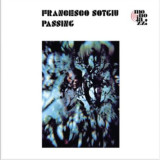
Francesco Sotgiu has forged a unique and very swinging project of songs. With a quintet consisting of Luigi Bonafede on piano, Emanuele Cisi and Riccardo Luppi on woodwinds, Salvatore Maiore on bass, Francesco on drums, and with special guest Paolo Fresu on trumpet to cap off this heartfelt collection. There is also a nice diversity of groups within this larger collection. A nice trio piece called “Calm” featuring Paolo Birro sitting in with Marco Micheli and Francesco. And one called “Lotus Blossom” where Francesco shows his considerable skills and soul on violin. But the bulk of the material is straight-ahead jazz and is totally swinging and soulful, proving that jazz has no borders and is a worldwide language to which Francesco has added to that tradition with this project and all the great voices he has included here. Bravo maestro.
This is the comment of Gil Goldstein, American accordion player who won 5 Grammys and collaborated with giants such as Gil Evans, Wayne Shorter, and Michel Petrucciani.
This record was recorded in the middle of the pandemic times, and most of the work for preparing this record took place via the telephone: the selection of the songs on paper, the exchange of ideas on arrangements, staff and instruments, a sort of “phone rehearsal” of the structure of the songs, with the choice of a solo; everything else, everything that will happen in the recording sessions, is the result of a controlled improvisation, a jam session masterfully captured in the studio through the use of well-positioned ribbon microphones.
This is why “Passing,” literally “passing” or “crossing”: because the musicians have gone through listening to these songs as teenagers, and find themselves today, as a mature meeting of old friends who create an informal game made of nostalgic fun, great personality, confrontation, and deep spirituality. In the classic “Caravan” by Ellington and Tizol or “Afro Blue” by Mongo Santamaria, Coltrane toning, the Latin accent of the rhythm section supports the interpretation of the theme and the interplay in the solos between the soprano and tenor saxophones by Cisi & Luppi, and the piano by Bonafede.
A certain elegance in the execution distinguishes pieces such as Duke Ellington’s “Sound of Love,” yet another tribute by Mingus to the Duke, with a calibrated solo on the double bass of Maiore and the flute by Luppi, the immortal “Take Five” by Paul Desmond, with the highlighted soprano by Cisi, “Wishes,” “7th Street,” and the eponymous “Passing,” all pieces composed by Sotgiu, characterized by the precise medium/fast drive of the drums and a certain “cinematic” taste of the main themes.
In songs such as “Black Bats and Poles,” composed by trumpeter Jack Walrath for the Mingus Orchestra, and in “Stranatole,” an original piece in which Sotgiu writes a theme of Monk’s influence and enjoys overturning the traditional “Anatole Jazz” structure, the quintet opts for an effective hard bop language, with exciting moments of dazzling virtuosity in Bonafede’s solo. While in Coltrane’s “Wise One” and McCoy Tyner’s “Ballad for Aisha,” we enter a modal, mystical, and ceremonial jazz, of a cosmic depth, which seems to hover in the sweet volume of the great hall of the recording studio. These are truly magnificent interpretations.
A special separate mention for two classics such as “My Foolish Heart” by Victor Young, performed in trio by Sotgiu, Maiore, and the unmistakable trumpet by Paolo Fresu, and the (unfortunately very short) “Lotus Blossom” by Billy Strayhorn and Duke Ellington, which in the piano-violin duo of Birro and Sotgiu, in a minute gives a suspended momentary magic, sums up the roots of African-American jazz music, and also referencing an old-fashioned Italian musical sensitivity, typical of Nino Rota’s music for Federico Fellini’s films.
- Soulville
- Late Date
- Time On My Hands
- Lover Come Back To Me
- Where Are You?
- Makin' Whoopee
- Ill Wind
The complete album - pressed on limited edition 180g vinyl
Tenor saxophonist Ben Webster (1909 - 1973) had already enjoyed a long and fruitful
career by the time this 1957 session was recorded. However, as Bob Blumenthal
explains in the original liner notes, he still wasn't known for the sensual ballad feeling
that became his trademark during the last two decades of his life. At that time, he was
still recognized for the hard blowing fast tenor sax style he played with both the Duke
Ellington Orchestra and his own multiple small groups.
Even though his repertoire was generally linked to that of Duke Ellington, this classic
Norman Granz produced session presents Webster playing four popular ballads and
two of his own bluesy compositions, Soulville and Late Date. On hand in support are
the incredible Oscar Peterson Trio (Herb Ellis, Ray Brown), and drummer Stan Levey.
"The by turns grizzled and vaporous-toned Webster really hit his stride on the Verve
label. This 1957 date with the Oscar Peterson Trio is one of the highlights of that
golden '50s run. After starting off with two bluesy originals, Webster gets to the heart
of things on five wistful ballads. Providing sympathetic counterpoint, Peterson
forgoes his usual pyrotechnics for some leisurely compact solos; his cohorts -
guitarist Herb Ellis, bassist Ray Brown, and drummer Stan Levey - are equally assured
and splendid. Newcomers shouldn't hesitate to start here." - ***** Stephen Cook,
AllMusic
15 years after it's original release, Freestyle Records serve up reissue for The Apples' Kings LP - fully remastered with a fresh new cut, it's sounding better than ever!
In a musical first for the band, they wrote, arranged and recorded Kings with specific collaborators in mind. They held sessions with two of their heroes; a congregation with two musical and spiritual father figures from opposite ends of The Apples rich spectrum: Fred Wesley (pioneer of funk trombone in particular and funk horn arranging in general with James Brown, The JBs) Shlomo Bar (vocalist, percussionist, godfather of Israeli world music).
The exciting process of these recordings exposed the band's many roots and influences; elements of The JB's funky foundations, cut 'n paste, soul, middle eastern and dub are all clearly displayed - strained through the band's unique decks-horns-sfx-bass-drums lineup. This release signified the next step in The Apples ever thickening groove stew, primed for festival and club stages with a relentless live set filled with runaway grooves, countless twists and turns, dizzying transitions, spontaneous arrangements, the occasional reworking of early 90's alt-rock fist shakers - plus the basic jump-up-and-down crazyness for which The Apples are known across dancefloors, soundsystems, playlists, films, televisions, cars and ears worldwide.
e B1 | Batash (Alwoojdi) feat Shlomo Bar