Coke Bottle Clear Vinyl. A trio of Kansas City soul sweepers, from the sprawling midwest burg's storied Cavern, Damon, and Forte concerns. Bump and the Soul Stompers' 1970 sweet soul double sider "I Can Remember" was a tail pipe-dragging, low rider classic in the making, had it ever been released. A few years later Jerald "Bump" Scott took his new group to Cavern's subterranean confines to cut the group harmony masterpiece "Living In The Past," but remained unissued prior to Numero's discovery of the Cavern tapes. As disco was cresting at the top of the next decade, Sharon Revoal tracked her James Brown meets James Bond stepper "Reaching For Our Star"_ the last 45 released on Marva Whitney's peerless Forte label.
Buscar:the sprawl
- 01: Intro
- 02: It`s Hard
- 03: Skeleton
- 04: You`ve Got To Stop Drinking That Juice That Makes You Shrink
- 05: Don`t Put Anything In There (Ewan Mix)
- 06: Voice Message
- 07: Chorus For The Open Room
- 08: 121
- 09: Loose2
- 10: Twenty Seven Past Four
- 11: Spit You Out Again
- 12: And Everybody Goes Bloody Mental
- 13: Ten Zithers
- 14: Body Left In The Snow
- 15: The Kindest Smile In A While
London based songwriter Louis Gardner offers his first mixtape, released via Goldsmiths University imprint NX Records. On For The Open Room, Gardner spirals artfully through outsider jazz, pop, folk and noise, landing sprawled in a territory all his own.
Tangled riffs and strange structures form the terrain for intimate, un-rugged vocals to float above. Starting life like brisk journal entries or misshapen doodles in digital fuzz, Gardner's stories bloom with stop-start tension, oscillating between tender and guttural, crude and complex.
For the open room captures a flow state of ideas, traces and associations - from the bubbling jazz congruence of "It's Hard", to plucked maximalist fragility on "Ten Zithers". Wrapping up with "Body Left in the Snow", Louis reveals mightily undulating piano chops - leaving us to wonder what else is withheld, and what might appear next.
Recommended for fans of Jandek, Mount Eerie, Arthur Russell.
Color Vinyl[14,08 €]
Reaching For Our Star b/w Run Between The Raindrops (While My Teardrops Fall). A trio of Kansas City soul sweepers, from the sprawling mid west burg's storied Cavern, Damon, and Forte concerns. Bump and the Soul Stompers' 1970 sweet soul double sider "I C an Remember" was a tail pipe-dragging, low rider classic in the making, had it ever been released. A few years later Jerald "Bump" Scott took his new group to Cavern's subterrane an confines to cut the group harmony masterpiece "Living In The Past," but remained unissued prior to Numero's discovery of the Cavern tapes. As disco was cresting at the top of the next decade, Sharon Revoal tracked her James Brown meets James Bond stepper "Reaching For Our Star"_ the last 45 released on Marva Whitney's peerless Fortelabel.
Black Vinyl[14,08 €]
Reaching For Our Star b/w Run Between The Raindrops (While My Teardrops Fall). Semi Opaque Natural VINYL. A trio of Kansas City soul sweepers, from the sprawling mid west burg's storied Cavern, Damon, and Forte concerns. Bump and the Soul Stompers' 1970 sweet soul double sider "I C an Remember" was a tail pipe-dragging, low rider classic in the making, had it ever been released. A few years later Jerald "Bump" Scott took his new group to Cavern's subterrane an confines to cut the group harmony masterpiece "Living In The Past," but remained unissued prior to Numero's discovery of the Cavern tapes. As disco was cresting at the top of the next decade, Sharon Revoal tracked her James Brown meets James Bond stepper "Reaching For Our Star"_ the last 45 released on Marva Whitney's peerless Fortelabel.
Ltd Silver Vinyl, DL card. From a long-forgotten trunk; two extended jams, twin slabs, circa 1989. Continuing Fire Records' series of classic remastered albums from Royal Trux, 'Hand Of Glory' is released on silver vinyl. This bad-ass black, white and blue magic is a kind of Burial Dub_ or so preached the sleeve of 'Hand Of Glory' on its original release in 2002. Legend has it, the two sides of this 40-minute gem were recorded between 1985 and 1989. The resultant mountain of creativity from where they hail were inevitably left under a scuzzy sofa as life and a career that ebbed and flowed over nine albums. Royal Trux became an inspirational tipping point for everyone from Pavement & Sonic Youth to the Black Keys, Kurt Cobain, The Avalanches & Hot Chip's Alexis Taylor. "I urge and encourage you to enter the harmolodic multiverse of their music." Alexis Taylor, Hot Chip. 'Hand Of Glory' is not like their other albums but then again none of their albums are alike, it's a two-faced masterpiece. Side one's 'Domo Des Burros'/'Two Sticks' is on par with Beefheart's sprawling 'Trout Mask Replica'. It plays out in 19 minutes, sounding like it was laid down on Warhol's sofa in The Factory; like Dylan's sprawling 'Desolation Row' with, background squalls, interruptions and both Neil Hagerty and Jennifer Herrema's overlayed stream of consciousness peeping through a multi-layered backdrop. It's just staggering. "Royal Trux were nothing if not fearless." Pitchfork. Side two's 'The Boxing Story', a loose homage to William Burroughs, moulds and morphs from tape to tape, a multi-speed soundtrack, while the dynamic duo press pause, guitars ring, occasional melodic lines arrive and evaporate. Lou Reed's pastoral 'Metal Machine Music' could perhaps be recognized as an older and perhaps less challenging sibling. A two-sided masterpiece featuring two wayward pieces of creative genius.
The two separate double vinyl sets are now available that correlate to the triple CD released earlier this year. TMTCH stumbled into existence onstage at the Alternative Country Festival, Electric Ballroom, Camden on Easter Sunday in 1984; after a long afternoon busking and drinking in a Hammersmith subway. They knew three chords and a hundred songs all of which sounded a bit the same, a frenzied skiffle that was exciting to jump around and drink snakebite to. If they thought about longevity at all, a lifespan of 40 days seemed most likely. It's forty years later and they are still running. Since those early days, and without much of a game plan other than always stepping onward, TMTCH have released around 20 albums plus many side projects, bootlegs, curios and an unknown number of T shirts. They've toured constantly, whether in dingy pub backrooms or Grand Ballrooms and Festival Stages. From Cairo to Reykjavik and all points in between, the TMTCH roadshow has shambled and thrilled through the decades, always passionate, always literate, occasionally dishevelled. Forty years of recording has spawned a vast back catalogue, well represented here by songs from each album, style and era; a tapestry of human stories and vibrant characters. So there are the fast sprints like early folk hoedown 'Ironmasters', the frantic shanty 'Raising Hell' and the amphetamine punk blues of 'Going Back to Coventry'. Then there are the waltzing folk ballads, from their impassioned version of the anti war standard 'Green Fields Of France' to the bitter regret of 'The Bells' and the righteous testimony of 'Our Day'. Elsewhere there are anthems galore; 'The Crest' a swirling gaelic chant, 'Rosettes', a fast marching assault of drums, fiddles and mandolins; historical epics such as 'Ghosts Of Cable Street', 'Shirt of Blue' and 'The Colours'; romantic ballads like the wistful 'Parted From You' and 'Island in The Rain'. All the eras are here; from the wiry lo fi of the first album, through the eighties into full blown MTV ready multi trackers with vast charging drums; the initial simplicity of their recipe deepening and darkening. And then on through the nineties, noughties and tens; always the double pronged vocals drifting between harmony and unison, always the celtic, folk and country tones vying for attention, the emotive fiddle, the top end mandolin above the thundering rhythm section. On through bouffant hair, spiky hair, dyed hair, thin hair and hats; on through Grunge, Baggy, Madchester, Rave, Britpop. On through the Miner's Strike, Poll Tax, New Labour, Iraq and Brexit. On through marriage, children, loss and revival. Forty years at the working end of rock and roll is a feat achieved by very few bands. It requires tremendous chemistry, a deep catalogue; both panoramic and miniature, a vital and irrepressible energy, all of which is on resplendent display in this sprawling 3 disc compilation. But most of all it requires an intense resilience, something that TMTCH possess in spades. Forty years on the run; was ever a band so aptly named?
Computer Future is the sprawling and ambitious third album by amorphous Brisbane, Australia garage rock outfit Velociraptor! The 14-song opus is the best recorded capture yet of everything that makes the ‘Raptors so beloved, a stream of addictively catchy rockers characterised by stupidly infectious melodies, an overabundance of earworm hooks, guitars aplenty plus of course their trademark gang vocals and harmonies. The shadowy cabal behind Velociraptor have returned from a spell away from the spotlight with renewed vigour and focus, more committed to and appreciative of their combined talents and chemistry than their younger selves, who were perhaps more about concerned about chasing good times rather than long ones. These days there are more cooks in the ‘Raptors kitchen than before but that’s only allowed them to expand the palette of the Computer Future menu without compromising on quality. Their distinctively melodic take on the garage rock form is still entirely evident, only it’s now augmented by quirkily compelling sonic detours into psych and new wave realms, the band all the while sounding wholly like themselves and nobody but themselves (apart from perhaps the Devo-indebted title tracks). In their halcyon days Velociraptor were a force to be reckoned with, an amorphous collective sometimes up to 12 members strong - many of them wielding guitars of some description - who partied hard and played even harder, attacking their live shows with unbridled glee and genuine gusto. They toured Europe/UK, and staged with bands the calibre of Black Lips, New York Dolls, OFF!, Radio Birdman and Violent Soho. The unparalleled camaraderie of their renowned live blitzes - plus sheer size of the band - at times threatened to overshadow the genuine strength of their songwriting and recorded output, but now with Computer Future those concerns are firmly in the past!
Mysterious, multifaceted collective i Häxa have unveiled their epic self-titled, full length debut; a ground-breaking conceptual double album shaped by a collision of ancient gods and bleeding-edge technology_ Released as four distinct Parts over the course of the year, `i Häxa' now comes together as a singular vision that weaves together genre-defiant soundscapes, abstract cinema and ancient meteorological mythologies from singer-songwriter and visual artist Rebecca Need-Menear (also of electronic alt-rock duo Anavae) and forward-thinking producer Peter Miles (Architects, Dodie, Fizz). i Häxa is a ritualistic dissection of the world as we know it, a forceful separation of the monotony of modernity from the rites and rituals that for centuries formed the foundations for who we are, how we came to be and where we claim to belong. Disjointed fragments of time collide. Two sides, one of logic and one of chaos, seeking unity and balance through an expression of freedom. This is i Häxa. Whilst the album is composed of four distinct movements, each consisting of four distinct tracks themselves; pulling them apart into easily digestible, standalone singles isn't an easy feat and, as is now clear from the project's sprawling cyclic nature, was never the intention. In an age of fast fun and instant gratification, the ties that bind these works together are intended to transcend tracklisting. With aural, visual and lyrical themes freely intertwining, i Häxa is something to be consumed whole; just as it will, in time, consume you. Charting an existential journey to the very depths of what makes us who we are, with every dark corner illuminated in glitched out, discordant glory; i Häxa is a project years in the making that draws simultaneously from rituals for old gods and the modern day deification of data. i Häxa is both heartwarming and horrifying; i Häxa is ancient history and hyper-real; i Häxa is everybody and no one at all. Check out if you like Radiohead, Julie Christmas, Agnes Obel, Bjork, Fever Ray, Massive Attack, Dead Can Dance, Emma Ruth Rundle, Jenny Hval, Cult of Luna, Eivor, Zola Jesus, Marissa Nadler, Soft Moon
Blue vinyl repress
With a voice of pure gold and a startling sensitivity for heartfelt pop songwriting, on No Reino Dos Afetos (In the Realm of Affections), Berle firmly embraces earnestness, through starry-eyed Brazilian love songs, ambient vignettes, warm, home-cooked beats and gentle strokes of MPB genius.
Maceió, the capital of Brazil’s Alagoas state on its sprawling east-coast, is home to pastel coloured colonial houses, white sand beaches and a brilliant young composer, poet and multi-instrumentalist named Bruno Berle.
With a voice of pure gold and a startling sensitivity for heartfelt pop songwriting, on No Reino Dos Afetos (In the Realm of Affections), Berle firmly embraces earnestness, through starry-eyed Brazilian love songs, ambient vignettes, warm, home-cooked beats and gentle strokes of MPB genius.
“It’s an album that was built from my desire to find beauty”, Berle explains - his simple, graceful words mirroring the graceful simplicity in his music. But amongst the simplicity, the compositions, arrangements and productions on No Reino Dos Afetos tingle with nuance and detail.
On the contemporary R&B inspired lead single “Quero Dizer” - produced by Berle and longtime friend and collaborator Batata Boy - the swirling, lo-fi, kalimba and guitar-fronted beat is turned into a feel-good hit by the ingenuity of Berle’s honey-soaked vocal melody.
Powerfully intimate, “O Nome Do Meu Amor” (My Love’s Name) is a guaranteed tearjerker, with Berle’s stunning voice soaring over gently plucked acoustic guitar and the textural flutter of soft movement, as if we hear him writing the song in the moment.
Drawing upon a close-knit, collaborative scene of Maceió artists and musicians, (of which Berle and Batata Boy are vital members), Berle also recorded some of his friends songs on the album, including João Menezes’ “Até Meu Violao”, the album’s beautifully laid back sunshine soul opener, which has all the charm of early-70s João Donato.
Having cut his teeth in soft-rock group Troco em Bala, and more recently finding himself embedded in both Rio and Sao Paulo’s contemporary music scenes - collaborating with the likes of Ana Frango Eletrico, who took the photo for the album cover - No Reino Dos Afetos is as musically diverse as Bruno himself. It’s hazy indie rock (“É Preciso Ter Amor”), calming ambient and field recording (“Virginia Talk”) as well as Berle’s own take on West African High Life (“Som Nyame”).
Instantly recognisable as a truly special artist, Berle’s character fills every corner of the sound, which is unsurprising considering he played most of the instruments.
As we approach the threshold leading us back to the Black Lodge on our transformative 8th journey, we are escorted through and beyond the mystical portal by the vigorous and fierce forces of Sneaker. Portrait in House is a collection of 3 resonant works, which are unified into a singular vision within its uncanny language that is rooted deeply in the foundations of Jak, New Beat, EBM, and Wave. Existing inside the liminal spaces of where light meets dark, we are presented with a documentation of dissonance and harmony. We begin our voyage with Jihad, a sluggish and slogging piece that unforgivingly drags us through the grime and the dirt in a ritualistic fashion that would have the ghost of Georges Bataille dancing in circles. Voices call out and howl into the dark as the drum patterns of the 707 rhythmically grasps onto its anarchic components. In the dark, we can see the light beyond the known universe. In the words of Sneaker "The name is not our message, but a document of an evident, traditional concept in (y)our world." As we find ourselves sprawled out on the ground following the 1st sonic stanza, a menacing voice bellows and warns that this is a Sax Track. Referencing Chicago icon Lil Louis, this work juxtaposes classical elements of house music together with the bare knuckled spirit of Jak. A magical spell led by disharmonious Portasound FM keys in conversation with a teetering sub bass, where at its core, this plus this, equals something that is uniquely familiar and unfamiliar at the same time. A number fit for any uncanny ritual that will fall under the night sky. Bringing our cosmic procession to a close we pick up the pace with a commanding number titled, Dance On, a no holds barred work that will possess your soul in the name of Jak. Flangers wail unforgivingly alongside a pulsating 101, as samples of the human voice are chopped up and arranged into a conversation that hypnotically calls for our bodies to be transformed into soft machines, while powered by ceremonious motions that are generated from the liberating process of ritual movement. We command you to dance! Words by Justin Aulis Long
Ltd Double Silver Vinyl, Monochrome edition artwork, DL card. Originally released in 1990, Royal Trux’s ‘Twin Infinitives’ is being re-issued in all its (yet to be translated) alien glory, by Fire Records. A dismantled overture that sprawls out over two records, an avant-garde masterpiece that was the spark for Drag City Records and generations of new sound seeking musicians. Hailed in the same immortal breath as Beefheart’s ‘Trout Mask Replica’, the Velvets’ at their frenzied peak and Ornette Coleman at his most avant-garde, the duo of Pussy Galore’s Neil "Michael" Hagerty and Jennifer Herrema recorded ‘Twin Infinitives’ while imbibing all kinds of mind-altering substances to create an inadvertent blueprint for what the duo was building with Moogs, guitars and melodicas to name a few ingredients. It is the legendary second album from the masters of the genre mashup - long before “genre mashups” even existed. Arguably, the term “mashup” was coined to describe what Trux, as they subconsciously scrolled through the radio stations of their lives. The album’s chaotic sound and offbeat construction laid the foundations for a string of Royal Trux albums that spiralled between genres, tunings, and noise. Through the 90s they would re-invent the rock ‘n’ roll ethic, straddle alien surf music, re-align boogie rock, not to mention 80s hair metal, and confound critics by their wildly meandering and courageous rites of passage. Remastered as part of a career spanning catalogue deal with Fire Records. The infamous and influential duo of Jennifer Herrema and Neil Hagerty will be delving into the archive with a comprehensive reissue series, unearthing the vaults and revisiting what made them such a compelling benchmark for their contemporaries and imitators. Reawakening their prolific output within a new monochrome vinyl series covering 1988-1993, they begin with their seminal deconstructed rock masterpiece Twin Infinitives. “Sounding like a subway ride inside a television inside an earthquake inside the end of the world and a pounding death rhythm of apocalyptic now.” Pitchfork. Track List: Disc One: A1 Solid Gold Tooth A2 Ice Cream A3 Jet Pet A4 RTX-USA A5 Kool Down Wheels B1 Chances Are The Comets In Our Future B2 Yin Jim Versus The Vomit Creature B3 Osiris Disc Two. C1 (Edge Of The) Ape Oven D1 Florida Avenue Theme D2 Lick My Boots D3 Glitterbust D4 Funky Son D5 Ratcreeps D6 New York Avenue Bridge
From Cape Town to Cairo, and now to fans, stages and screens around the world, PJ Morton shares his newest album, fully made in the motherland. Cape Town to Cairo is a collection of songs that he created in 30 days throughout 4 countries in Africa — South Africa, Nigeria, Ghana and Egypt. Described as the best trip of his life, this transformative journey began as just the seed of an idea last fall, but instantly grew into his most sonically-sprawling and immediately-inspired record to date. With no music, lyrics or preconceptions, he stepped foot onto the continent with two thoughts: a wild dream to write and record his next LP in less than a month, and a mission to immerse himself in as many different cultures, stories and communities as he could.
Surrounded by featured collaborators like Fireboy DML, Mádé Kuti, Asa, Ndabo Zulu, and Soweto Spiritual Singers, as well as additional producers including P.Priime and The Cavemen., his own live band and local musicians, PJ Morton used music as his common language. Always his greatest way of communicating, he expressed his feelings and experiences of Africa through songs he and others were forming together on the spot, side-by-side in different studios, cities and towns for the very first time. None of the tracks were written before he arrived or after he left, and the arrangements showcase both the countries’ native genres as well as the innate, stylistic instincts that have made Morton a 5x GRAMMY-winner and 20x GRAMMY-nominee, whether it be his soul, R&B and gospel roots, or the pop prowess he has further honed as a member of Maroon 5.
“When you’ve been in music as long as I have, you’re constantly looking for inspiration,” says PJ Morton. “And you’re looking for the things that made you want to do it in the first place. I’ve made albums every type of way you can think, so I wanted to try something I hadn’t done before. As a Black American who had never been to South or West Africa, I knew there was something there waiting for me. So I put a little pressure on myself to make a full record in a month, but I also said, ‘If I’m gonna go to Africa, I want to see Africa.’ We made music, but we also formed connections. We made new friends, and this is just the start.”
ESSENCE adds, "This trip is not just a physical move, it's a spiritual return…The soul of Africa pulses through every note he plays and every word he sings,” and VIBE adds that “the multi-faceted artist is fully embracing a new phase in his life.” Cape Town to Cairo marks PJ Morton’s first album since 2022’s Watch The Sun, which featured collaborations with Stevie Wonder, Nas, JoJo, Wale, Jill Scott, Alex Isley and more. Since then, Morton has become the first Black composer to write an original song for a Disney attraction, having just finished making the music for Tiana's Bayou Adventure, opening on June 28th, 2024 at Disney World and Fall 2024 at Disneyland. He also won his latest GRAMMY earlier this year, worked with Samara Joy on “Why I’m Here” for Regina King’s Netflix film Shirley, and landed a cover of his song “Don’t Let Go” as the soundtrack to Apple’s iPhone 15 commercial.
PJ Morton recently returned from headlining his debut shows in Asia, New Zealand and Australia, and announced an extensive Cape Town to Cairo Tour for North America summer and fall 2024. Following iconic performances at New Orleans Jazz Fest, The Kennedy Center, Roots Picnic and Newport Jazz Fest, Morton will embark on a run of more than 25 dates across the country, including New York City’s Beacon Theatre, Chicago’s Chicago Theatre, Nashville’s Ryman Auditorium, Los Angeles’ The Wiltern, and dozens of others.
On the heels of his headline tour and Maroon 5’s Las Vegas residency, PJ Morton will publish a life-spanning new book titled Saturday Night, Sunday Morning. The memoir sees him recounting and reflecting upon a trailblazing path that continues to defy expectations and straddle the tensions of music and faith, race and culture, expression and identity. As the son of two pastors and gospel artists, Morton grew up grounded by the sound of the Church, but soon found himself drawn to R&B, pop and soul, writing songs that the industry, his family and community struggled to understand. In the face of mounting pressure, rejection and constant miscategorization, he committed himself to a steadfast path of independence: making music on his own terms, launching his own record label, joining one of the biggest bands in the world while staying true to his New Orleans roots. The risks he took paid off, and through his transformation from preacher's kid to the busiest man in showbiz – performing everywhere from his local congregation to the Super Bowl, collaborating with everyone from his father to Stevie Wonder, Erykah Badu, Jon Batiste and Lil Wayne – he hopes to encourage readers and listeners to overcome obstacles as they seek their dreams.
Black Vinyl. In Rumi's poem A Great Wagon he writes of a place of total acceptance. "Out beyond ideas of wrongdoing and rightdoing, there is a field. I'll meet you there," It is a boundless, liminal space where we can release the judgments we make and carry of ourselves, and the comparisons to others. When we think of this field, there is a sense of tranquility that only comes when we are undisturbed by the shadow self and see existence as neither bright nor dim, white nor black. But as lead singer Greg Bertens explains, arriving there is a whole different story. "This is a poem I've returned to over the years, and I love the idea of this place, but getting there is life's journey." Bertens adds "I think the longing for and elusiveness of this field is a recurring theme in our music." Field is enveloped by themes of regret, disconnection and frustration but with the space to understand that these feelings are a natural part of the struggle between reconciling the inner and outer self. The Los Angeles/San Francisco-based group have been indie shoegaze stalwarts since their formation in 2001. After two decades and a handful of line-up changes, their extensive discography presents a dynamically textural, lush psychedelic rock that has featured guest appearances by members of Pavement, My Bloody Valentine, and Snow Patrol, among others. 2021's LP We Weren't Here (Sonic Ritual) was hailed for its dense instrumental blanket, where unrelenting hi-hats and heavy kicks exist alongside dreamy drone guitar. This propulsive nature permeates Field, as members Bertens, Noël Brydebell (vocals), Nyles Lannon (guitar), Jason Ruck (synths), Justin LaBo (bass), and Adam Wade (drums) produce a kaleidoscopic sonic landscape. Patient, sprawling instrumentation builds a foundation in which Bertens' themes of endurance, perseverance and clarity can bloom with a considered poise. As a lyricist who writes in response to the instrumental arrangements, rather than a focus on a specific theme or person, Field is a testament to Film School's ability to create in the moment, and to showcase the magic that stems from when we are truly present. With over two decades in the industry, Field cements Film School as a distinct, dominant force in the shoegaze scene. Soaked in an emotionally open, imaginative atmosphere, the album is both singular and expansive, and leaves the door open for a constantly evolving interpretation. Film School have never confined themselves to the rigidity of specifics, and it's on Field that they urge us to look beyond the binary of certainty, and to take a second look.
Cassette[14,08 €]
'In `All This and So Much More' Tasha is an artist flung open. For Tasha, the last few years have been propulsive, dynamic, bursting at the seams. They've included painful encounters with grief; a sudden break up; new flirtation; new hair; the glitter of world travel and not least, a role in Tony-nominated Broadway musical `Illinoise' which adapts Sufjan Steven's `Illinois' for the stage. If `Tell Me What You Miss The Most' was an introspective meditation on love with a few moments of glancing toward what's next, `All this and So Much More' is Tasha turned outward, flourishing, telling us what it's like to take life by the chin and look it in the eye. Take, for example "Eric Song." This was the first song to be written on the album, penned while Tasha grappled with the sudden, tragic death of Eric Littman, the co-producer of her last album. Though the instrumentation is a familiar 3/4 guitar strum, lulling us into a comforting waltz, Tasha's voice is breathy with grief, adding depth and dimension to the hushed sound. "No, I'm not alone after all / You must be near / Facing this soaring sprawl," she sings, transforming the experience of loss into a talisman of love and courage meant to help usher in a new self. Said a different way, `All This and So Much More' is a full-throated ode to all of the ups and downs of becoming. In the opening track, "Pretend," when Tasha sings about "feelings outgrowing this little life," we get the sense, both lyrically and sonically, of someone in the throes of growth. This is an album crafted with a big, ambitious sound (in part, thanks to the production of Gregory Uhlmann)_cinematic droning, orchestral woodwinds, dazzling arrays of jangling guitar, all lining up to capture a sweeping moment in Tasha's life. Written over the course of 2022 and 2023, right on the cusp of Tasha being cast in Illinoise, the songs in this album invoke friendship, heart ache, flirtation, doubt. From the social anxiety of "Party" ("Do they think I'm funny? / Did they like my jokes last night?") to the questing for meaning in "So Much More," Tasha brings us along on a journey of finding out that the person you wanted to be was inside of yourself, just waiting to bloom all along. She sums it up neatly in her final track, "Love's Changing," charging us with a brilliant, sweeping vision of the future, singing: "Suddenly the world is bigger than it ever felt before / Feel the weight of my future sinking in / See the joy I'm running toward." In `All This and So Much More,' Tasha asks us to consider abundance in its truest form. Our lives, a deluge of possible experience if only we will surrender to it, all the way from the citric ache of heartbreak to the chest bloom of new adventure.
Black Vinyl[23,49 €]
'In `All This and So Much More' Tasha is an artist flung open. For Tasha, the last few years have been propulsive, dynamic, bursting at the seams. They've included painful encounters with grief; a sudden break up; new flirtation; new hair; the glitter of world travel and not least, a role in Tony-nominated Broadway musical `Illinoise' which adapts Sufjan Steven's `Illinois' for the stage. If `Tell Me What You Miss The Most' was an introspective meditation on love with a few moments of glancing toward what's next, `All this and So Much More' is Tasha turned outward, flourishing, telling us what it's like to take life by the chin and look it in the eye. Take, for example "Eric Song." This was the first song to be written on the album, penned while Tasha grappled with the sudden, tragic death of Eric Littman, the co-producer of her last album. Though the instrumentation is a familiar 3/4 guitar strum, lulling us into a comforting waltz, Tasha's voice is breathy with grief, adding depth and dimension to the hushed sound. "No, I'm not alone after all / You must be near / Facing this soaring sprawl," she sings, transforming the experience of loss into a talisman of love and courage meant to help usher in a new self. Said a different way, `All This and So Much More' is a full-throated ode to all of the ups and downs of becoming. In the opening track, "Pretend," when Tasha sings about "feelings outgrowing this little life," we get the sense, both lyrically and sonically, of someone in the throes of growth. This is an album crafted with a big, ambitious sound (in part, thanks to the production of Gregory Uhlmann)_cinematic droning, orchestral woodwinds, dazzling arrays of jangling guitar, all lining up to capture a sweeping moment in Tasha's life. Written over the course of 2022 and 2023, right on the cusp of Tasha being cast in Illinoise, the songs in this album invoke friendship, heart ache, flirtation, doubt. From the social anxiety of "Party" ("Do they think I'm funny? / Did they like my jokes last night?") to the questing for meaning in "So Much More," Tasha brings us along on a journey of finding out that the person you wanted to be was inside of yourself, just waiting to bloom all along. She sums it up neatly in her final track, "Love's Changing," charging us with a brilliant, sweeping vision of the future, singing: "Suddenly the world is bigger than it ever felt before / Feel the weight of my future sinking in / See the joy I'm running toward." In `All This and So Much More,' Tasha asks us to consider abundance in its truest form. Our lives, a deluge of possible experience if only we will surrender to it, all the way from the citric ache of heartbreak to the chest bloom of new adventure.
"Kal Marks have never made a record as personal as Wasteland Baby. Though Carl Shane, the band’s vocalist-guitarist, has made a career off of exploring blunt, uncomfortable truths through song, with Wasteland Baby, he steered Kal Marks toward something utterly new. Shane looked inward to stare down a fear that had long plagued him: What would it look like to have a child in a world that looks like this? “The album was driven by the fears I’m having about being a father,” says Shane. “The initial spark was this fear, and I thought that maybe if I could express it, I could overcome it.”
What started out with this simple premise slowly grew into a sprawling, borderline-concept record. It’s no surprise, then, that Kal Marks went deeper and darker than ever before when writing Wasteland Baby. Though, in order to reach that final product, it required the band—bassist-vocalist John Russell, drummer Adam Berkowitz, and guitarist-vocalist Christina Puerto, who is also Shane’s partner—to interrogate every decision they made with exacting detail. ”We were really all on the same page in that we wanted to make something really, really special and that was going to require us putting a lot of ego aside and just trying to serve the songs as best as possible.”
“In an ideal world, Kal Marks will go on forever. But it may be the end of a chapter for a while. I don’t want it to be the end, but there was an element running through the album that maybe could be the end,” says Shane. No matter what the future holds, Wasteland Baby is an emphatic reminder to brush off the things that keep you from truly living and venture into the unknown."
On August 16, Toronto-based musician and producer David Psutka aka ACT! (fka Egyptrixx / Anamai / Ceramic TL) will release his latest project ‘Face to Face, Day by Day’ for his own Halocline Trance imprint.
This is is Psutka’s third album proper as ACT! following the release of the “sonic mixtape” ‘Universalist’ in 2018 and the augmented reality soundtrack ‘Grey Matter AR’ in 2021; a series of Snapchat filters created by artist Karen Vanderborght and soundtracked by ACT! which explored the poetic and existential potential of AR and social media.
“Aesthetic accidents in the periphery of the ‘work’ can be the message. In 2018, at an Egyptrixx concert at Bagni Misteriosi de Teatro Franco Parenti - a gorgeous, sprawling outdoor pool theatre in Milan - I had a clarifying moment. Gigs around then had mostly been in pummelling, dark music venues, so I wasn't prepared for this expansive space (and the thoughtful work of the organisers who had layered sheets of plastic film on the pool to parallel eco-materialist themes from a previous album). It was the midday soundcheck that struck me most - brittle digital sounds from the set echoed off the colonial Milanese facades and ricocheted down the Via Carlo Botta, pinging off buildings in the distance and clashing with the noise of traffic, tourists and whatever else. It was a strange, collisionist moment, and a reminder that my essential approach to music is, above all, a preoccupation with the materiality of sound.
Everything on Face to Face, Day by Day began as an improvisation. Openness to accidents and the emotional complexity that comes from centering them in composition has become important to my work, and helps the music go beyond the possibility of what is playable, imaginable. I also wanted to channel adventurous solo pop records of the 1970’s and 80’s, like Yasuaki Shimizu, Jon + Vangelis and Stevie Wonder. These came from an interesting era in commercial music as studio production techniques became increasingly formalised as compositional devices, like AMS RMX16 percussion sounds and early digital stereo effects.
Like many musicians, I’ve been travelling and performing less since the pandemic and as a result, have wanted studio sessions to feel more collaborative and improvisational. There were great writing and recording sessions for this album. Vox, synth, sax and guitar jams - much of what ended up on the record isn’t edited much, if at all. I jammed a sm57 into Colin Fisher’s sax bell and created feedback loops using various preamps and distortion units. The clunky sounds were sampled and used as percussion elements. I also had a great synth jam session with Jeremy Greenspan at Barton Building Studio in Hamilton, which was recorded by filmmaker Liz Adler.
I’ve had a few months to sit with this album and see clear throughlines connecting it to previous projects. There are aspects of the experiential and structuralist sound design ideas from the EGYPTRIXX records; and also some arrangement tricks borrowed from ANAMAI - specifically, the use of interruptionist sound events. Perhaps most of all, it feels connected to the Ceramic TL + Ipek Gorgun record ‘Perfect Lung’ and its splattered take on musical complexity. “ (David Psutka)
In addition to ACT!, Psutka has released music with numerous projects including Anamai, Egyptrixx and Ceramic TL, he has collaborated widely with artists such as Junior Boys, Ipek Gorgun, and Kuedo as well as Jessy Lanza (2016) and an official remix for Massive Attack’s ‘Hymn of the Big Wheel (2012). The contributions on this album, from Robin Dann and Ben Gunning, reflect the deeply collaborative nature of the Halocline Trance label and the Toronto creative scene more broadly.
Many of Psutka’s releases have received critical acclaim from media outlets such as Pitchfork, Exclaim, The Quietus and Resident Advisor. As a live performer, he has toured extensively including performing at Sonar Festival, Roskilde, Mutek, MOMA PS1 Warm-UP and CTM Festival. He’s also presented sound installations at various institutions such as Galeria Civica Commune di Modena, and Art Gallery of Ontario (AGO).
In 2015, Psutka launched Halocline Trance as a home for his various sound projects, events and collaborations. Now a creative collective and label, it has grown to include a diverse array of artists including Casey MQ, Xuan Ye, Myst Milano, Colin Fisher and others. The label is described as “genre-agnostic” and conceptually open, supporting work across a wide spectrum of creative fields including soundtrack recording, AR design and traditional artist albums. Their impeccable roster also includes, theorist/improviser Eldritch Priest, and AR/VR artist Karen Vanderborght. In recent years, Halocline Trance has established itself as a platform that facilitates many of Canada’s most exciting creative music projects. Many of the releases have received critical acclaim from outlets including Pitchfork, Exclaim, Bandcamp and Resident Advisor.
LTD COL. VINYL[33,40 €]
Returning from time apart to a world forever changed, dread-fuelled duo A SWARM OF THE SUN bring with them their fourth studio album, `An Empire'; its brooding, yet beautiful, melancholic narrative arc allows the band to dig ever deeper into desolation whilst a newfound lyrical focus adds a tenderness that is both harrowing and heartwarming at once. With the early bones of forthcoming `An Empire' tabled by events beyond their control in 2019, Erik and Jakob came together years later and scrapped them in favour of creating something entirely new; something distinctly different to break the cycle, defy categorisation and reflect the uncomfortable uncertainties of the times we now live in. The result is astounding; continuing the thread of narrative composition seen on `The Woods', `An Empire' is a six-track tale told in four distinct movements that are nothing short of devastating, from plaintive piano ballads to raw, full-band fury. For instance, taken from the album's third side, lead single `The Burning Wall' embodies this sprawling compositional feat perfectly, with the painfully frank opening couplet of "I know I fail you / I know that I run" establishing a gripping narrative trajectory backed by a simmering, impatient pulse that slowly and inevitably rises to an inescapable crescendo of cymbal chaos and wall-of-sound guitar drone. Elsewhere, 18-minute epic `The Pyre' represents Side B of `An Empire' with the confessional intimacy of a waltz-time ballad; the raw, wavering emotion of Jakob's words accompanied only by a haunting, lilting piano refrain before it too is consumed by the bittersweet might of post-rock euphoria to leave only embers of the apocalyptic lyrics in its wake_ `An Empire' marks a significant evolution of A Swarm of the Sun's already indelible post-metal sound. With increasingly bleak times forcing the band to reassess their relationship with creativity and suffering, this new body of work captures all the anthemic, intimate highs and crushing, debilitating lows of modern life on a knife edge.
Black Vinyl[30,04 €]
Returning from time apart to a world forever changed, dread-fuelled duo A SWARM OF THE SUN bring with them their fourth studio album, `An Empire'; its brooding, yet beautiful, melancholic narrative arc allows the band to dig ever deeper into desolation whilst a newfound lyrical focus adds a tenderness that is both harrowing and heartwarming at once. With the early bones of forthcoming `An Empire' tabled by events beyond their control in 2019, Erik and Jakob came together years later and scrapped them in favour of creating something entirely new; something distinctly different to break the cycle, defy categorisation and reflect the uncomfortable uncertainties of the times we now live in. The result is astounding; continuing the thread of narrative composition seen on `The Woods', `An Empire' is a six-track tale told in four distinct movements that are nothing short of devastating, from plaintive piano ballads to raw, full-band fury. For instance, taken from the album's third side, lead single `The Burning Wall' embodies this sprawling compositional feat perfectly, with the painfully frank opening couplet of "I know I fail you / I know that I run" establishing a gripping narrative trajectory backed by a simmering, impatient pulse that slowly and inevitably rises to an inescapable crescendo of cymbal chaos and wall-of-sound guitar drone. Elsewhere, 18-minute epic `The Pyre' represents Side B of `An Empire' with the confessional intimacy of a waltz-time ballad; the raw, wavering emotion of Jakob's words accompanied only by a haunting, lilting piano refrain before it too is consumed by the bittersweet might of post-rock euphoria to leave only embers of the apocalyptic lyrics in its wake_ `An Empire' marks a significant evolution of A Swarm of the Sun's already indelible post-metal sound. With increasingly bleak times forcing the band to reassess their relationship with creativity and suffering, this new body of work captures all the anthemic, intimate highs and crushing, debilitating lows of modern life on a knife edge.
Dawson’s latest offering, The Tinnitus Chorus, is an album of wide-eyed collaborations. He is joined by an inspired cast of revered friends and kindred strangers including Suso Saiz, M. Sage (Fuubutsushi), Eli Winter, K. Freund, (Trouble Books / Lemon Quartet), Dasom Baek, Lina Langendorf (Langendorf United), Vumbi Dekula, Jairus Sharif, Yutaka Hirasaka, and his bandmates in Peace Flag Ensemble. The collection is bookended by two pieces with Michael Grigoni. From birdsong and decaying tape to Western sprawl, each of Dawson’s previous solo records have moved in a singular direction but here he approaches things through a kaleidoscopic lens. While his weathered ambient sketches serve as a through line, they are woven with all manner of instrumentation from clarinet and modular synth to steel guitars and flugelhorn. Improvised Congolese guitar nuzzles next to American experimental folk. Handmade electronics give way to spiritual sax. M. Sage contributes something referred to as a “mystic music box”. The result is a strange and beautiful journey that feels lost between genres and yet wholly unified. Dawson reflects on the genesis of album with a smirk and a shrug. He has been marred by ear troubles in recent years and had been struggling to complete an album of solo material. The clicks, ringing tones, and hiss in his ears had been drowning out the ringing tones, clicks, and hiss in his studio. When he reached out to We Are Busy Bodies to provide an update on the record he was met with an unsuspecting proposal that perhaps he shift focus to an album of collaborations. The truth is he had been ruminating on the idea for years and the nudge from WABB proved to be the motivation he needed to shelve his insecurities and invite artists he admires to join him for The Tinnitus Chorus.
Hejira is the eighth studio album by Canadian singer-songwriter Joni Mitchell, released in 1976 on Asylum Records. Its material was written during a period of frequent travel in late 1975 and early 1976, and reflects Mitchell's experiences on the road during that time. It is characterized by lyrically dense, sprawling songs and musical backing by several jazz-oriented instrumentalists, most prominently fretless bass player Jaco Pastorius, guitarist Larry Carlton, and drummer John Guerin.
- A1: Peaks & Ferns
- A2: Sit In Your Discomfort
- A3: The People's Changes
- A4: The People's Shadow
- A5: To The Before Time
- A6: When We Could Dance Together
- A7: African Folk Song
- B1: Back In The Days
- B2: A Night In Berlin
- B3: Two Chords & The Truth
- B4: Quinnies For The Boys
- B5: Ancestral Mathematics
- B6: Crisis & Oppprtunity
Having gathered up praise from Mary Anne Hobbs, Cerys Matthews, Jamie Cullum, Gilles Peterson, Huey Morgan, The Guardian, Jazzwise and more, for his lauded ‘Crisis & Opportunity’, drummer and composer Myele Manzanza returns with the fourth instalment of his series, titled ‘Meditations’.
On ‘Meditations’, we see Myele revert to a purely acoustic line-up, channeling a focused and razor-sharp return to his Jazz roots. Showcasing an incredible level of musicianship between three musicians at the top of their game - including Matthew Sheens (Ross McHenry, John Patitucci) on piano and Matt Penman (Joshua Redman, Sfjazz Collective) on double bass - the trio exchange motifs over the length of 7 tracks.
Opening proceedings with frenetic rhythmic improvisation, complimented by melancholic and cinematic layers of sound, ‘Crayford’s Room’ is a tribute to Myele’s musical mentor back in New Zealand. Remembering his time as a student in Wellington, Myele shows his deep connection to his origins, manifesting itself as lament on ‘Winter’ and ‘Homesick’. Introducing hypnotic, contemplative melodies take centre stage on ‘Something Old Something New’ (the first single to be released from the project)’ It maintains a sense of tension and intrigue throughout, and intensity rises to a crescendo sending sonic particles sprawling into space.
Intuitive, darker and deeply contemplative, Myele shares his innermost thoughts on ‘Crisis and Opportunities Vol.4 - Meditations’. He divulges:
‘The personal angst and existential frustration I was going through across 2020 - 2022 I believe is well reflected here. The album is deeply informed by the musicianship and sound of my trio, Matthew Sheens on piano and Matt Penman on double bass. Knowing that musicians of their calibre were going to be involved gave me licence to go further in my writing, deploying odd time signatures, sharing the melody roles across the piano and the bass, and delving deeper into the nuances of what the acoustic piano / bass / drums trio can do. The compositions present a challenge even to the best musicians, and I knew that it was essential to have a team on this level to really move the music beyond an academic exercise and draw out the emotion and colour from the material.’
UNSURPASSED SPACIOUSNESS, IMAGING, AND TRANSPARENCY: MASTERED FROM THE ORIGINAL TAPES, MUSIC EMERGES WITH NEW DETAILS AND TONES
1/2" / 30 IPS analogue master - Plangent Processed - to DXD to analogue console to lathe
Love Over Gold is all about contrast, tension, and crafty composition. Dire Straits' fourth album finds the band continuing to evolve by welcoming increasingly bold arrangements and exploring moody variations. Parts edgy and sharp, and part seductive and relaxed, the five lengthy songs on Love Over Gold sprawl out like a long, winding road cutting through a pastoral landscape. The addition of a new rhythm guitarist, Hal Lindes, encourages deeper atmospheric interplay while the presence of engineer Neil Dorfsman – his first appearance in what would be a long string of collaborations with Mark Knopfler – ensures stunning sonic properties that now come to life like never before.
Mastered from the original master tapes and pressed at RTI, Mobile Fidelity's 180g 45RPM 2LP version of Love Over Gold teems with superb balances, front-to-back soundstages, and crystalline purity. The dead-quiet surfaces and extra-wide grooves bring forward previously obscured details, extra information, and mastering-studio-quality transients. The distinctive textures of a host of instruments – marimbas, acoustic and electric guitars, vibes, synthesizers – further enhance the ambitiousness of the 1982 album.
On this audiophile pressing, everything Knopfler does seemingly turn to gold. Gearheads will hear the unique characteristics afforded by his use of a Mesa Boogie Mark II guitar amplifier (soon again employed on Brothers in Arms) and carefully chosen selection of Schecter Stratocasters, 1937 National steel guitar, and Ovation six- and twelve-string models. Reference-level separation and lifelike imaging place Knopfler and company in your room, while tube-like warmth, spaciousness, and airiness causes the music to breathe anew. This LP will be in your rotation for months.
It doesn't take long to realize Love Over Gold is like no other Dire Straits album – and a staunch proclamation of independence from a band that continued to take longer creative strides with each successive project. Fearlessly extending over metaphoric hills, valleys, and plains for nearly 14-and-a-half minutes, the opening "Telegraph Road" is a guitar hero's dream and exhilarating showcase for Lindes' give-and-take capabilities. In tandem with keyboardist Alan Clark, Lindes provides the ideal foil for not only Knopfler but the long-time rhythm section of bassist John Illsley and drummer Pick Withers.
Taking its time to arrive at destinations, the quintet paints evocative musical and lyrical portraits steeped in patience, drama, and, often times, sadness. Desolate emotions colour the sweeping "Telegraph Road" and barren "Private Investigations," which finds Knopfler in the role of a tired private eye contemplating the emptiness and scars of his profession. Vocally, the Dire Straits leader remains in top form throughout, his whiskey-coated rasp conveying romantic ache, ongoing frustration, and what Rolling Stone beautifully deemed "wracking schizophrenia between the heart and the heartless, the loving and the pain."
Called Dire Straits' prog-rock statement, Love Over Gold is a classic that defies labelling and avoids ageing.
THE SINISTER DEBUT ALBUM OF PURE NORWEGIAN BLACK METAL
FEELING,FEATURING MEMBERS OF AURA NOIR, OBLITERATION &
CONDOR."Underground metal the way it should sound returns to
Kolbotn!" - Fenriz (Darkthrone)From the depths of Norway looms a new
rising beast of hate & misanthropy in the form of Avmakt
Featuring the duo of Kristian Valbo & Christoffer Brathen - known for their work
with such acts as Aura Noir, Obliteration & Condor - their debut album, 'The
Satanic Inversion of....', is a grim & revelatory offering. Primitive in a way that
captures the early magic of Kolbotn's metal kings, Darkthrone, as well as the stark
chaos of early-era Bathory along with their very own distinguishable stamp on the
genre, 'The Satanic Inversion of....' is a masterclass of real Black Metal feeling,
wrapped up in a hypnotic frenzy of ice-cold riffing.
Though both members had played in bands covering different genres since their
early teenage years, Black Metal had always been one of the most important as a
vehicle for an honesty & fierceness that resonated deeply within the duo, without
the need for extravagant clothing or pretentious concepts. And so Avmakt itself
was born as the vessel for channelling this stripped-down raw feeling.
Formed in 2020 & with their one & only demo release gaining traction in the
underground, the Norwegians quickly came to the attention of Darkthrone's Fenriz
& Peaceville Records & Avmakt was swiftly included on Peaceville's Black Metal
Compilation, 'Dark Side Of The Sacred Star' which launched at the end of 2022.
Avmakt itself means "powerlessness", the sense of being overwhelmed & not
able to have any influence - without choice, voice, or hope. And so, it is from far
down in this psychological abyss that Avmakt's ideas & expressions manifest
with the completion of their debut studio release; 6 sprawling epic tracks
recorded with the assistance of Arild Torp, also of Obliteration & encapsulating
such themes as emptiness, desolation & alienation in a powerful display of
sinister, uninhibited Black Metal.
More than two years after the release of 'Impressões de Outra Ilha', Discrepant's head honcho returns home under his birth name with the appropriately titled 'Exotic Immensity'. Conjured from the seeds of an exhibition of dioramas at Le Bon Accueil in Rennes, this double LP feels quietly epic in scope, a sprawling travelogue through imagined scenarios and what if possibilities. Discarding the more rough around the edges collages of previous works under a myriad of aliases - Discogs it, if you will -, Cardoso's approach here is more meticulously composed, with seamless transitions within his own personal soundworld giving way to this hallucinated landscape of field recordings, subtle electronic tweaks, cascading patterns, queasy ambiences and kösmiche-like synth harmonies.
Perfectly embodied in Evan Crankshaw's cut up poem, filled with occult and sci-fi references such as Agrippa's Book of the Occult, William Blake's Book of Urizen, Dr. Moreau or 50's pop-science books, the music on 'Exotic Immensity' transverses time and cartography in a deeply personal matter, from the cricket-like textures and reverse loops of 'Réplica(s)' until the closing moments with the touching chord progression and mangled voices of 'Pó Nuno'. In-between, the foghorn meets bass clarinet melody of 'Ossos' recalls the unassuming but essential harmonic patterns of Laurence Crane, surrounded by an almost percussive sheet of field recordings that drift into the gliding synth tones of 'Desumanização (I & II)' until tape orchestral swells carry us into the aether. 'Aquário Novo Mundo' brims in an undisplaced cartography, from electronic marimba stabs to synth choirs, the call of the loom to labyrinthine keyboard harmonies and underwater radiance. Are we still here? Somewhere? The muffled looped rhythmic sequence of 'Imagem/Miragem', cut by the glow of cascading synths doesn't offer a reply. Nor does it need to.
'Exotic Immensity' exists on the perpetual outside. Blessed be Cardoso for showing us a way in.
Sara May grew up on a dirt road just outside a small Ontario town known for its Honda plant and Potato Festival. Over the course of ten indie-leaning, alt-country tracks on 'Legacy', her latest album as Falcon Jane, she expounds on that origin story through the great archetypes of country music: the drinker, the vagabond, the absent father. She presents these characters with a clarity and empathy that feels almost transgressive-a loving touch that crosses our rural / urban divides. But these are Sara's stories too: her rural childhood, her move to Toronto, her current home in the working class town of Shelburne, and her life on the road. She comes by it honest. And the transformation on 'Legacy' isn't just lyrical. Alongside producer José Contreras (By Divine Right), Falcon Jane refine their sound-pushing toward folk and country like contemporaries Waxahatchee and Angel Olsen. May's voice, the one constant from 2015's 'Alive n Well' EP, through the dream pop of her 2018 debut album 'Feelin' Freaky', to the sprawling indie rock of 2020's 'Faith', is more powerful here, sitting atop the warm, Nashville-leaning production. The result is both striking and blindingly obvious: Sara May has found her way back home.
- A1: Bloc Party - This Modern Love
- A2: Ladytron - Destroy Everything You Touch
- A3: Cold War Kids - Hang Me Up To Dry
- A4: Arcade Fire - No Cars Go
- A5: Tomcraft – Loneliness (Radio Cut)
- A6: Mason Vs Princess Superstar - Perfect (Exceeder)
- B1: Sophie Ellis-Bextor - Murder On The Dancefloor
- B2: Mgmt - Time To Pretend
- B3: Babybird - You’re Gorgeous
- B4: Girls Aloud - Sound Of The Underground
- B5: The Killers - Mr Brightside
- B6: Benny Benassi & The Biz – Satisfaction (Uk Radio Edit)
- B7: The Cheeky Girls - Have A Cheeky Christmas
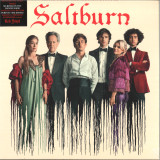
Motion picture soundtrack to the critically acclaimed 2023 black comedy starring Barry Keoghan, Jacob Elordi and Rosamund Pike. Includes the huge resurgent hits Murder on the Dancefloor by Sophie Ellis-Bextor and Perfect (Exceeder) by Mason vs Princess Superstar.
Saltburn is the 2023 black comedy psychological thriller film written, directed, and co-produced by Emerald Fennell. The film stars a student (Barry Keoghan) at Oxford University, who finds himself drawn into the world of a charming and aristocratic classmate (Jacob Elordi), who invites him to his eccentric family’s sprawling estate for a summer never to be forgotten. The film became one of the most-streamed films upon its streaming release on Amazon Prime Video in December 2023. It received critical acclaim and several accolades, including nominations for two Golden Globe Awards and five BAFTA Awards.
Debut standalone VHF album by the Elkhorn duo of Drew Gardner and Jesse Sheppard, a tight set of six studio recordings in a variety of moods and featuring a lot of new sound textures. Elkhorn’s prolific stream of releases since 2016 has highlighted their mastery of sprawling long-form, acoustic-driven hypno-jams, with an emphasis on live performance (including on their collaboration with Pelt’s Mike Gangloff on the Shackamaxon Concert album). The Red Valley is a more layered and composed-sounding set, with the duo overdubbing extensively on top of their own dual guitars. Leading off the LP, “Crystal Hummingbird” features one of their signature minor-modal vamps, with layers of fuzz bass, zither, and frame drum providing weight and psychedelic density. “Gray Salt Trail” continues the vibe, with thick fuzz vibraphone supplementing the cinematic palate, leading into the spare side-closer “Black Wind Of Kayenta,” where Sheppard plays electric 12-string and Gardner solos on acoustic guitar. Side two starts with “Road to Chaco Canyon,” a brooding duet that builds momentum with Gardner’s insistent frame drum cadence, dropping down into the quiet string pool of “Inside Spider Rock” (featuring Fern Knight’s Jesse Sparhawk on gloriously swirling lever harp) and the graceful finale “Jackrabbit Hops.”
Freefall Blue Vinyl[26,26 €]
Crack Cloud has always been something beyond a rock band: both profound and grand, vaporous and elusive. The first iteration of Crack Cloud was formed nearly a decade ago as a proxy-rehab outlet on the fringes of Calgary. Over time, two EPs and accompanying visual pieces were produced out of the residence known as Red Mile. By 2017, several members had relocated to Vancouver, working out of harm reduction centers and low-barrier shelters. Sobriety, self-reformation and the idealism of their work further formed an ethos for Crack Cloud. It was during these years that the band produced their astounding 2020 album Pain Olympics. At once, their vision became expansive, cinematic. Now, Red Mile is a bit of a homecoming. Members have returned to Calgary. But Calgary/home has become a liminal space, a place of flux. After a decade of personal and collective growth, what does home even mean? Red Mile is, for them, something like samsara: a return and a rebirth. Red Mile's sound breathes expansive energy into the circuitous, street bound sonics of Crack Cloud's prior material. Fizzling synths intertwine with chiming pianos. Songs layer like Russian nesting dolls; one may find a Ramones chorus set within a desolate Western prog soundtrack only to watch it erupt into a joyous anthem. Real-ass guitars _ alternately lilting, scuzzy and soaring _ ring out across wide sun-bleached spaces. In 2024, the cumulative effect is (in rock instrumentation terms) naturalistic. Any whiff of embalmed nostalgia is absent. Even the close of the album - a winding, almost Jerry Garcia guitar noodle that leads us out of Red Mile - is delivered without sentimentality. Principal songwriter Zach Choy's lyrics are cutting but merciful, with a sharp self-awareness that never slides into self-satisfaction. Crack Cloud as artists are critical _ and ultimately as forgiving _ of themselves as they are the melting world around them. The songs balance an easy charm and cathartic power: affirming life without denying death. Recorded predominantly between the outskirts of Joshua Tree California, and Calgary, Alberta, this record is informed by a bittersweet mélange of old and new. The sprawling, novelistic structures of their previous albums are condensed and sharpened, while maintaining their refusal to delve into superficiality. Through playful melodies and elliptical guitar soliloquy, they deliver a final product of exceptional depth and distinctly unprecious warmth. Crack Cloud have produced a mature, vital work that interrogates the platitudes of the rock-n-roll lifestyle, but ultimately exalts its sacredness. Red Mile's de facto thesis statement "The Medium" is itself a rock song meditation: an ode to the form and its practitioners. This genre that _ typical, repeatable, corporatized as it can be _ somehow still has the power to help us live through life. We see the dusty sentiment of "I love rock and roll" exhumed, taken apart, and stitched back together. It's a song guided by faith _ if the medium helps us proclaim our love today, it's worth protecting from derision tomorrow. We live in an era where music seems to love hitting its head against the wall. Crack Cloud's Red Mile is the sound _ the feeling! _ of the bricks giving way.
Black Vinyl[23,95 €]
Crack Cloud has always been something beyond a rock band: both profound and grand, vaporous and elusive. The first iteration of Crack Cloud was formed nearly a decade ago as a proxy-rehab outlet on the fringes of Calgary. Over time, two EPs and accompanying visual pieces were produced out of the residence known as Red Mile. By 2017, several members had relocated to Vancouver, working out of harm reduction centers and low-barrier shelters. Sobriety, self-reformation and the idealism of their work further formed an ethos for Crack Cloud. It was during these years that the band produced their astounding 2020 album Pain Olympics. At once, their vision became expansive, cinematic. Now, Red Mile is a bit of a homecoming. Members have returned to Calgary. But Calgary/home has become a liminal space, a place of flux. After a decade of personal and collective growth, what does home even mean? Red Mile is, for them, something like samsara: a return and a rebirth. Red Mile's sound breathes expansive energy into the circuitous, street bound sonics of Crack Cloud's prior material. Fizzling synths intertwine with chiming pianos. Songs layer like Russian nesting dolls; one may find a Ramones chorus set within a desolate Western prog soundtrack only to watch it erupt into a joyous anthem. Real-ass guitars _ alternately lilting, scuzzy and soaring _ ring out across wide sun-bleached spaces. In 2024, the cumulative effect is (in rock instrumentation terms) naturalistic. Any whiff of embalmed nostalgia is absent. Even the close of the album - a winding, almost Jerry Garcia guitar noodle that leads us out of Red Mile - is delivered without sentimentality. Principal songwriter Zach Choy's lyrics are cutting but merciful, with a sharp self-awareness that never slides into self-satisfaction. Crack Cloud as artists are critical _ and ultimately as forgiving _ of themselves as they are the melting world around them. The songs balance an easy charm and cathartic power: affirming life without denying death. Recorded predominantly between the outskirts of Joshua Tree California, and Calgary, Alberta, this record is informed by a bittersweet mélange of old and new. The sprawling, novelistic structures of their previous albums are condensed and sharpened, while maintaining their refusal to delve into superficiality. Through playful melodies and elliptical guitar soliloquy, they deliver a final product of exceptional depth and distinctly unprecious warmth. Crack Cloud have produced a mature, vital work that interrogates the platitudes of the rock-n-roll lifestyle, but ultimately exalts its sacredness. Red Mile's de facto thesis statement "The Medium" is itself a rock song meditation: an ode to the form and its practitioners. This genre that _ typical, repeatable, corporatized as it can be _ somehow still has the power to help us live through life. We see the dusty sentiment of "I love rock and roll" exhumed, taken apart, and stitched back together. It's a song guided by faith _ if the medium helps us proclaim our love today, it's worth protecting from derision tomorrow. We live in an era where music seems to love hitting its head against the wall. Crack Cloud's Red Mile is the sound _ the feeling! _ of the bricks giving way.
Slip this delirious disc out of the lime/slime green sleeve and you're up close and personal with the new chapter in the TD saga.
A dance floor triptych of such seismic scale that the crew spent two years trying to wrangle the tracks on wax, finally finding a plant with the power to press them up.
Sprawling across the A-side is the devastating 'Doner Summer', an instrumental extension of some lost Munich disco masquerading as an Anatolian excursion. Ditching the vocals and cutting the kase, the crew lay down a galloping groove topped with Turkish licks and disco strings, take us into the psychedelic swirl of a tumbling drum breakdown before hitting the big red button marked banger for a searing second half. Firing up the hardware, TD blast this one further into the Phuture, dropping technoid sequences, nagging 303 and Cowley-style FX fuckery for a full on club assault.
In the alternate B-side universe, Hans Zimmer lost his dread note and Denis Villeneuve was forced to turn to Talking Drums for the Dune soundtrack. They obliged with the sci-fi rai of 'Chaba Ranks', reshaping an Algerian OG with a dancehall kick, off beat vamps and star-crossed synths, then letting loose with a heavy bass tone.
|In time honoured fashion, the team also drop a dub version, cutting out the vocals and focussing on those additional elements for the wildly cosmic 'Chaba Skanks'.
Now who's getting the spice in?
Limited Press - Numbered Insert - Drum Fun Guaranteed !
Belgian progressive post-hardcore quintet Hippotraktor have announced their second full-length album, `Stasis'. The combination of impressionistic songwriting ambitions and powerful, narrative-charged lyrics proved to be a perfest match for the band so far. Operating at the intersection of Meshuggah's relentless, polyrhythmic pounding and Gojira's colossal atmospheric weight, Hippotraktor have expanded upon their already distinctive sound by introducing De Graef's vocals that bring with them an intriguing new dedication to musical storytelling. "Stasis tells a story of human nature," explains lead vocalist Stefan De Graef about the album's narrative. "As the protagonist enters a new world in which he is confronted with other humans for the first time, he acquaints himself with their customs and ethics, discovering generosity and empathy, but also greed, jealousy and hatred." Taken from the Greek for `stoppage', `Stasis' sees Hippotraktor doing anything but stagnating. Hippotraktor chart intricate melodies and sprawling riffs as a map showing how humanity has come of age in a chaotic world of its own making. Deftly unveiling tender truths whilst tenderly shrouding the violent majesty at its core, `Stasis' is a fitting soundtrack to life in a world that's hurtling towards a stand still.
Enjoy The Toons Records in conjunction with WaterTower Records, WB Games & DC Comics proudly presents Best of Batman: Arkham Knight, Music by Nick Arundel and David Buckley.
Curated by the games' composer, Nick Arundel, Best of Batman: Arkham Knight consists of 15 tracks from the 2015 video game. Each record comes housed in a 350gsm jacket with black inner sleeves and black flood printing inside the sleeve. Included with each record is a 12" x 24" foldout insert, featuring a collage of the game's main characters on one side, with a grand scale view of Arkham City on the other.
Best of Batman: Arkham Knight is a limited edition pressing.
Enjoy The Toons Records in conjunction with WaterTower Records, WB Games & DC Comics proudly presents Best of Batman: Arkham Knight, Music by Nick Arundel and David Buckley.
Curated by the games' composer, Nick Arundel, Best of Batman: Arkham Knight consists of 15 tracks from the 2015 video game. Each record comes housed in a 350gsm jacket with black inner sleeves and black flood printing inside the sleeve. Included with each record is a 12" x 24" foldout insert, featuring a collage of the game's main characters on one side, with a grand scale view of Arkham City on the other.
Best of Batman: Arkham Knight is a limited edition pressing.
Scoring the lives of small-time players, pimps, junkies, and prostitutes lurking around his simultaneously blessed and cursed existence, Wee mastermind Norman Whiteside lived in an entirely different Columbus than Capsoul's Bill Moss or Prix's Clem Price. Alternating between Stevie Wonder's dreamy soul and Sly Stone's druggy groove, You Can Fly On My Aeroplane bypasses Whiteside's everyday gritty street life reality, focusing instead on the airy sounds of fantasy and masquerade. Smooth, sexy, and synthy, You Can Fly On My Aeroplane is a peerless and sprawling psychedelic soul concept album and a sure'fire panty soaker to boot.
Outrageous white label manoeuvres from Manchester mates AR & BS, transporting a Yacht legend to the furthest reaches of the cosmos. Psychedelic sprawl, robo-drama, AOR emotion - this disc's got it all !
AR extends, expands and excels on his A-side epic, delivering a dance floor journey which moves from weirdo wonk to the hands-in-the-air heaven in a transformative ten minutes. The loose and lysergic groove of the intro builds into a How Shroom Is Now wall of sound, takes a detour into heavy hip hop headnod and settles into vocal sincerity, all before dropping that HUGE chorus. Festival tested and club ready - everyone say Armen!
On the flipside, we catch up with Stockport staple BS, who puts down the Pet Nat, swaps the grape vape for a gary and gets stuck into a serious slice of cosmic chug.
Slo-mo and sleazy, this arpeggiator heavy heater sees a crooning 80's vocal surf a mechanical groove purpose made for backwards dancers and eyeball lickers. The combination of wild emoting and synthetic drama is pretty much everything, but just wait for that breakdown.
Double A-side coz you gotta double drop your GARIES!
Jacken Elswyth is a London-based folk musician, banjo player, and instrument builder. At Fargrounds is her third solo album, her first for the Wrong Speed label and the latest in a rich catalogue that repositions the spectral, vulnerable sound of the banjo away from its familiar role as signifier of the past and onto lands brave, new and unexplored. “The living wood is imbued with qualities that require engagement and understanding. Working with cherry, oak or walnut involves naming it an equal partner. The parallel, synchronous transformations of wood into instrument, of growing tree into resonating sound, musical tradition into musical flourishing, lie at the heart of Jacken Elswyth’s practices both as an instrument builder and as a creative musician. One might consider her primarily as a worker in wood, but whose craft and fields of expression are absorbed by those transitional and interim processes that manifest change. The traditional tunes included here have been cultivated and maintained by generations of players and collectors, pruned, grafted, and shaped over time. However, in this setting, their long-established forms seem to morph and shift. They audibly accrue unique qualities, blossoming and swelling into new modes of being, bright-stepping arrangements unfolding with a liveliness hinting at practices of ritual and community. Meanwhile, other pieces, creative cornerstones of this collection, appear fluid, partially formed. They suggest not the cultivation of new growth from established stock, but instead the actions of something on the verge of taking form. Working with raw elements of melodic and tonal abstraction, they illuminate the process of emergence and evolution. In this context, the title At Fargrounds is telling. It suggests a point set at some distance from any centre of human concerns, a liminal space in which the cultivated world encounters the world of other living things in their living state. Here, the innate strangeness of the maintained environment–vast lawns, sculpted hedges, vacant playing fields–encounters sprawling vistas of driftwood, dense thickets of brambles, stony hillsides. Across a full century-and-a-quarter, long-standing rural and pastoral musical traditions, at some distance from their origins, have been preserved, nurtured and re-shaped under the folk revival. Placed here, these artefacts now sit in alignment with unvarnished documents featuring the raw elements of sound-making. Their working-together is achieved through a universally-applied interest in musical growth and development. The juxtaposition and combination of these elements gives evidence of new, emerging approaches to community and social music: familiar, known, yet charged with an alien vitality”–CWK Joynes. “...she knows how to knit atmospheres, and does so to especially powerful effect during Scene 4b’s three minutes of stunning bowed banjo, yearning with longing and dread, while showing off her talent, curiosity and range”–Jude Rogers review of Six Static Scenes (Guardian Folk Album Of The Month July 2022) "Jacken is an emotive player with high technical ability. Further, she builds banjos and other instruments, and that intimate knowledge of the bones and fibres holding everything together means that her playing has very few cracks" - Foxy Digitalis
Originally released in 1990, Royal Trux's 'Twin Infinitives' is being re-issued in all its (yet to be translated) alien glory, by Fire Records. A dismantled overture that sprawls out over two records, an avant-garde masterpiece that was the spark for Drag City Records and generations of new sound seeking musicians. Hailed in the same immortal breath as Beefheart's 'Trout Mask Replica', the Velvets' at their frenzied peak and Ornette Coleman at his most avant-garde, the duo of Pussy Galore's Neil "Michael" Hagerty and Jennifer Herrema recorded 'Twin Infinitives' while imbibing all kinds of mind-altering substances to create an inadvertent blueprint for what the duo was building with moog's, guitars and melodicas to name a few ingredients. It is the legendary second album from the masters of the genre mashup - long before "genre mashups" even existed. Arguably, the term "mashup" was coined to describe what Trux, as they subconsciously scrolled through the radio stations of their lives. The album's chaotic sound and offbeat construction laid the foundations for a string of Royal Trux albums that spiralled between genres, tunings, and noise. Through the 90s they would re-invent the rock 'n' roll ethic, straddle alien surf music, re-align boogie rock, not to mention 80s hair metal, and confound critics by their wildly meandering and courageous rites of passage. Remastered as part of a career spanning catalogue deal with Fire Records. The infamous and influential duo of Jennifer Herrema and Neil Hagerty will be delving into the archive with a comprehensive reissue series, unearthing the vaults and revisiting what made them such a compelling benchmark for their contemporaries and imitators. Reawakening their prolific output within a new monochrome vinyl series covering 1988-1993, they begin with their seminal deconstructed rock masterpiece Twin Infinitives. "Sounding like a subway ride inside a television inside an earthquake inside the end of the world and a pounding death rhythm of apocalyptic now." Pitchfork Ltd Double Silver Vinyl, Monochrome edition artwork, DL card.
- A1: Polaris (북극성) 04:22
- A2: Insomnia (불면증) 04:49
- A3: Arrival (도착) 07:44
- B1: We Shine At Night (우리는 밤이 되면 빛난다) 06:27
- B2: Parade 07:34
- B3: Sketchbook 07:02
- C1: Imagination 04:37
- C2: Sound Inside Me, Waves Inside You 05:13
- C3: Blossom 05:13
- D1: After The Magic 06:11
- D2: Your Place 10:51
"A sprawling patchwork of the artist’s dreams and fears, Parannoul’s third album After the Magic explores the enigmatic solo artist’s life in the wake of his second album’s overnight success.
Expanding on the shoegaze-shaded emo that made Parannoul’s To See the Next Part of the Dream so beloved by lo-fi and indie rock fans alike, After the Magic sees the anonymous auteur striving to write a follow-up as worthy of acclaim as the last.
Across the album’s ten songs, Parannoul plunges yet deeper into his diverse pool of influences, coming back to the surface with a record that captures and extends the magic of its predecessor. Unexpected flashes of orchestral ambient and glitched-out electronica meld seamlessly with Parannoul’s signature passages of noisy, distortion-laden shoegaze, offering a real time glimpse into the maturation of one of indie rock’s most exciting artists.
In the artist’s own words, “This album is not what you expected, but what I always wanted.”"
Reality Hacked Part 1 sees the long-awaited vinyl release of the Matthew Dear, Perel and Jonny Rock remixes of Mirage. Taken from Lost Souls Of Saturn’s album ‘Reality’, released on their Holoverse Research Labs imprint, the original tracks saw Seth Troxler and Phil Moffa teaming with vocalist Adam Ohr (aka Addy Weitzman of Footprintz and The Beat Escape) for a cosmic synth-pop anthem.
The first 12” collects together the irresistible house remix from Perel (DFA / Kompakt), Jonny Rock’s chugging rework by Jonny Rock, and the gloriously twisted sprawling take from Matthew Dear.
- A1: All I Really Want From You Is Love 04:26
- A2: Nowhere To Go But Home 05:48
- A3: In My Time (We Don't Belong) 03:13
- A4: Tonight (I Wanna Make It Out) 05:52
- B1: (I Gotta) Get It Together Again 04:22
- B2: Stara Paris Rescued Me 06:22
- B3: Just Get It Down 02:25
- B4: Let's Throw Some Mud Against The Wall 02:42
- B5: You Know I Feel Alright Now 04:33
Remastered vinyl of the original album which came out on CD only in 2005. Limited to 200 copies on classic black vinyl. This is an album that’s as alive as any could be. Indeed, far from sounding like the last desperate set of half-baked ideas from a once vital band (hello Oasis?) Artists Cannibals Poets Thieves is more like a debut album from a bunch of teenage upstarts: free from cynicism, fired with worldly wonder and chock full of ideas. This is certainly a different outfit from that of 1998, when they first wowed us (via John Peel, naturally) with the utterly essential sprawling noise that was The Things We Make. Long since stripped down by a series of resignations from a five strong collective to a taut three piece featuring founding members Chris Olley, James Flower and Chris Davis, the music has simplified considerably. Gone are the soundscapes of old, and in their place we have a series of sharp basslines, swirling keyboards, cutting guitar lines and the passionate hollering of frontman Olley. Opener All I Really Want From You Is Love is a perfect introduction to proceedings – a truly wonderfully distorted slab of indie rock, recalling early Jesus And Mary Chain in both its fuzz and, crucially, its wonderfully crafted tune. Next, Nowhere To Go But Home sounds like New Order if they’d emerged from Detroit in 1966. Tonight (I Wanna Make It Out) follows likewise with the best bassline Peter Hook never plucked. Throughout, Six By Seven manage to sound so natural, so refreshing free of the flab and introspection that a band on its last legs would usually succumb to. And whilst the momentum is momentarily lost as the drum machine makes an appearance to fashion the Suicide-esque trawl of Stara Paris Rescued Me, it’s not long before Just Get It Down muscles things back on course with a whispered Olley diatribe perched on top of more raw cacophony, before we reach the bitter end via the Depeche Mode-on-smack You Know I Feel Alright Now. Tracklisting:
Clear Vinyl[23,95 €]
Belgian progressive post-hardcore quintet Hippotraktor have announced their second full-length album, `Stasis'. The combination of impressionistic songwriting ambitions and powerful, narrative-charged lyrics proved to be a perfest match for the band so far. Operating at the intersection of Meshuggah's relentless, polyrhythmic pounding and Gojira's colossal atmospheric weight, Hippotraktor have expanded upon their already distinctive sound by introducing De Graef's vocals that bring with them an intriguing new dedication to musical storytelling. "Stasis tells a story of human nature," explains lead vocalist Stefan De Graef about the album's narrative. "As the protagonist enters a new world in which he is confronted with other humans for the first time, he acquaints himself with their customs and ethics, discovering generosity and empathy, but also greed, jealousy and hatred." Taken from the Greek for `stoppage', `Stasis' sees Hippotraktor doing anything but stagnating. Hippotraktor chart intricate melodies and sprawling riffs as a map showing how humanity has come of age in a chaotic world of its own making. Deftly unveiling tender truths whilst tenderly shrouding the violent majesty at its core, `Stasis' is a fitting soundtrack to life in a world that's hurtling towards a stand still.
In The Pit returns, again with four tracks from label boss Seb
Jay hailing from Adelaid e/Tarndanya, Australia. Two years
on from the inaugural release, Seb Jay draws his newest
works from the local scene's expansion beyond clubs & into
Adelaide's House & Techno landscape of thriving bar culture,
sprawling inner city parklands parties & warehouse shows.
All four tracks are re§ective of Adelaide's willingness to
venture into discerningly fresh, yet richly familiar dance §oor
territories & are particularly inspired by his own infamous
'Snake Pit' parties, with their distinctly diverse crowds &
literally folkloric stature. This is for the city we love & the
dancers willing to explore the realms of their new urban
arena.
Tangential Music is pleased to present the new album from veteran Spanish DJ and producer, Dj Toner (aka Antonio Herrera). Alongside his co-writer/arranger Daniel Molina and with guests that include the legendary Blue Note Records innovator Erik Truffaz and Grammy winning flautist and saxophonist Jorge Pardo, he has created a 10 track collection of slow-burning instrumentals that straddle the worlds of hip hop, jazz and electronica.
With a personal, precision tooled approach to his craft, the Andalusian has offered up an album of finely modelled downbeat moods.
At first glance, ‘Out Side’ is made up of recognisably superior hip hop instrumentals but if you listen carefully, and with patience, one can hear a craftsman at work. A wooden box is just a box until you look closer. The hidden joints, the perfect lining up of the grain, the years of artisanal graft and laser-focussed attention to detail that go into making something that has nothing present, that doesn’t deserve to be there. This is how Dj Toner operates.
The two singles that preempt the album’s release reveal different sides of his craft. ‘Camina’ struts with tough intentions. Soundtrack-y in an exploitation police drama manner, the get-out-of-my-way drum break and tension-filled chords suggest the bad cop, Erik Truffaz’s piercing lyrical trumpet lines, the good. The Afro-jazz horns led second release ‘Surprise’ is an altogether more playful, sunbaked affair. Sensual and slow-burning, there’s still an edge but it’s too hot to quarrel.
Dj Toner’s minimalist attitude to creation is shared with his co-composer Molina - an individual’s contribution may be cut to the bone, leaving just its aura or tone. The echo of a piano, a single blast of tuneful wind from a flute, a perfectly positioned drum hit.
Since the Wu-Tang Clan’s RZA began applying his beatmaking prowess to movie soundtracks, the hip hop instrumental has been acknowledged as something to listen to, as much as being used as a DJ tool or backing for an MC. Dj Toner’s instrumentals can, therefore, be seen as soundtracks. Soundtracks to his life and craft, vignettes of his environment in both the urban sprawl and the wider and slower spaces of “el campo”.
The sweet-tempered jazz-blues of ‘La Rimosa’ is a gentle welcome to the album. A simple, laid back groove with the most romantic of piano hooks that one could imagine Common dropping rhymes on. You’re kept on your toes with the odd purposeful moment of discordant interruption but the tender heart of the composition is never far away.
‘O’Beat’ hints at John Coltrane with the sparse but full-sounding upright bass before a head-snap break leads into a curious piano groove, a vintage organ swirls into a psychedelic fractal, whilst the bluesy female vocal snippets add the spice, that zing in the Granadan gazpacho.
The flamenco guitar driven ‘Flama’ is an excellent example of intricate sample placement and musicality. Old school (school yard) scratch interludes, sweet piano hooks, a minimalist but knife sharp flute contribution from Jorge Pardo, and the crunchiest of drums taking us for an intriguing walk round the corner.
We’ve mentioned them before but it’s on ‘Sweetband’ that we can feel that Wu-Tang dread hanging off its shoulders. A brooding orchestral number with powerful horns and a cavernous piano hit. The title of the piece is in stark contrast to the dark shadows of the tune.
Erik Truffaz returns in fine form on the super lethargic jazz-funk-hop of ‘The Day’. His instantly identifiable muted trumpet sound paints dazzling colours over the more earthy tones of the filtered down keys as a rubbery upright bass keeps the forward momentum. Dj Toner’s ‘Blessed Are The Weird People’ album, was rated in Jazz Magazine as one of the 20 jazz albums of 2021, so he isn’t some dilettante when it comes to playing with the complex hues of jazz but he does like to strip it to its bare essentials.
‘Fanega’ sees a gorgeous flute contribution from Jorge Pardo. An eerie boom-bap groove with sprinkles of electronic pulses and washed out chords is the canvas on which the award-winning multi-instrumentalist evokes the heat shimmer of the savannah.
‘Esperanza’ translates as ‘hope’ in English and this lovely slow, swinging jazzy groove really does provoke feelings of positivity and belief. Sublime vibraphone and another stunning trumpet offering from Erik Truffaz, take us on a journey of warm days and possibilities, the shuffling drums and sweet chord patterns are nicely finished off by a tranquil horn chorus towards its unhurried end.
‘Under Beat’ ends on a beefy boom-bap groove with a liquid funk bassline, elegant synth strings and old school scratching. Again, there’s that undisputable soundtrack edge, action and motion, the smell of the city.
There you have it, 10 tracks that go beyond the surface, deep into the dedicated craft of Dj Toner. Decades of experience and collaboration purified and refined into beat-heavy emotions, listen closely or crank it up, it’s down to you!
Yes' 90125 was a departure from their progressive style but it introduced the band to a new generation of fans, reaching No. 5 on the Billboard 200 and No. 16 on the U.K. albums chart. The 1983 album remains their best-selling album with more than 3 million copies sold in the U.S. "Cinema" earned the group a Grammy Award for Best Rock Instrumental Performance, while "Owner Of A Lonely Heart" was the band's first and only single to reach No. 1 on the Billboard Hot 100 chart.
Named for its Atco catalog number, 90125, the album — the band's 11th studio effort — it was born out of the band's self-reinvention. Begun as Cinema, a new band by Chris Squire and Alan White, the project grew to include the slick production of Trevor Horn, the new blood (and distinctly '80s guitar sound) of Trevor Rabin, and eventually the trademark vocals of returning founder Jon Anderson. His late entry insured that Rabin and Horn had a heavy influence on the sound. The album also marked the return of prodigal keyboardist Tony Kaye, whose crisp synth work on "Changes" marked the band's definitive break with its art rock roots.
"Owner Of A Lonely Heart" was a huge crossover hit, and its orchestral break has been relentlessly sampled by rappers ever since. The vocal harmonies of "Leave It" and the beautifully sprawling "Hearts" are additional high points,
90125 is a significant and well-regarded album in the Yes discography.
Analogue Productions is proud to offer the definitive reissue deluxe 180-gram 45 RPM 2LP of 90125. For Yes fans, this is a can't-miss addition to your album collection.
FREQ Records is the record label accompanying the manga "FREQ," created by Nicola Kazimir, illustrated by goodnewsforbadguys, and written by the legendary Dai Sato, who has written scripts for Ergo Proxy, Eureka Seven, Cowboy Bebop, Samurai Champloo, among many others.
The setting of Freq's lore unfolds in a futuristic realm where the influence of sound frequencies governs all aspects of life. In this world, everything from traffic and AR visuals to electricity, warfare, and of course, music, is orchestrated through the manipulation and extraction of sound frequencies. The narrative unfolds within the sprawling expanse of Rephlex, a vast city featuring diverse districts, factions, and social classes.
FREQ001, called Super FREQ, is composed by none other than Machine Girl, known for their breakcore-inspired sonic adventures and highly energetic live shows. For this EP, we might get a compositional glimpse of how Machine Girl will sound in the future.
- A1: Love To All Doulas! 03 52
- A2: Some Rest For The Midwives
- A3: Real Vital Organs
- A4: Surges, Expansions
- A5: In Appreciation Of Chico Hamilton's Vast Influence On The West Coast Sound
- B1: Birthworkers Magic, And How We Get Hear
- B2: This "I" Was Not
- B3: Placenta, Nourishment, New Home, The Galaxy
- C1: Carla's Beads
- C2: Moonlight Watsu In Dub
- C3: Generous Pelvis
- C4: Bi-Location
- D1: Play Kerri Chandler's Rain
purple 2x12"[29,37 €]
Placenta is the fourth collection of broadly imaginative and highly collaborative Carlos Niño & Friends music released on International Anthem since 2021. But perhaps more notably for the zeitgeist of today, it is the first new music to be released by Carlos Niño & Friends following the November 2023 release of André 3000’s New Blue Sun – an album which Carlos produced alongside André, while co-writing, performing, and co-mixing every song. The announcement of Placenta also comes while Carlos is in the middle of tours with André to support New Blue Sun, where Carlos wields an immense presence as music director, bandleader, and percussionist, and performs alongside many of the same musicians that are present on his recent & Friends albums, including this new one.
Placenta is announced on the 1st solar return of Moss Niño, of whom Carlos and his partner Annelise are Earth parents. Their experience of pregnancy, labor and delivery were all profoundly impactful for Carlos. Becoming a father again (a whole 25 years after the birth of Azul Niño, who has become a regular artistic collaborator for Carlos) he felt total Inspiration for this set of recordings, and hence it is perhaps the most conceptually-grounded Carlos Niño & Friends album we've yet to present–fully connected to the spirit of family, birth, and "how we get here."
In Niño’s words, Placenta is “dedicated to Mothers, Children, Babies, Aunties, Doulas, Midwives, Birthworkers...,” and a short list of track titles includes: "Love to all Doulas!," "Some Rest for the Midwives," "Real Vital Organs," and "Generous Pelvis." The centerpiece of the album, the sprawling "Placenta, Nourishment, New Home, The Galaxy," is an unbelievably vivid immersion in the sonic architecture of Niño's memory-scape...like being present in his energy field...or being present in a birthing room, or maybe even being born yourself. And it just might be the most powerful, unique piece of music Niño has ever created.
Featured artists on Placenta, in order of their entry on the album, include: Nate Mercereau, Jamire Williams, Sam Gendel, Jamael Dean, Dexter Story, Brandon Eugene Owens, Maia, André 3000, Jesse Peterson, Ariel Kalma, Surya Botofasina, Annelise, Haize Hawke, Aaron Shaw, Devin Daniels, Tiffany de Leon, Michael Bolger, Michael Alvidrez, Moss, Iasos, Photay, Deantoni Parks, Adam Rudolph, Andres Renteria, and Cavana Lee.
Tillla is 19 year old prodigal piano player Mateo Davis, a graduate of Purcell (Tirzah, Mica Levi, Jacob Collier) & a polymath musician, producer & mixer.
Third Person is Tillla's debut EP, a 13 track sprawling opus the then-18-yr-old made alone in his bedroom on a modular synth and dodgy copy of Ableton. The musicianship, depth and technical creativity in this record really is something that should be noted.
For more than twenty years, Ka Baird has explored the outer dimensions of sound through performance. Extending far beyond their roots in the psychedelic folk movement of the early aughts, Ka is known for their raw, boundary pushing solo performances that bridge experimental sound, performance art, and ritual. Their tool set in the live arena includes extended voice and microphone techniques, electronics, flute and piano. Bearings follows their 2017 debut Sapropelic Pycnic and Respires, their acclaimed 2019 album.
Initially conceived as a twenty minute composition and presentation commissioned by Lampo in Chicago in the spring of 2022, Ka first explored the concept of “bearings” through a series of intimate performances where they shifted guises between magician, shaman, clown, and athlete, all enduring ongoing states of groundlessness through a physically demanding performance that entailed both play and struggle. This piece, in tandem with the heaviness of caring for a dying parent during the subsequent year, laid the groundwork for Bearings, with the album’s final narrative structure revealing itself in the months after their mother’s death the following September.
Enlisting a cast of contributors including Andrew Bernstein (alto saxophone), Max Eilbacher (flute processing, electronics), Greg Fox (percussion), gabby fluke-mogul (violin), Henry Fraser (contrabass), Joanna Mattrey (viola), John McCowen (contra clarinet), Camilla Padgitt-Coles (bowls, waterphone) Troy Schafer (strings), Chris Williams (trumpet), Nate Wooley (trumpet), and their beloved cat, Nisa (purrs) to create a collective hum and thrum, Ka and company create sprawling minimalist densities, punctuated by abrupt starts and stops, complex harmonics and textures, percussive flourishes, and a single, cyclical lyrical phrase: “Here. Disappear. Poof!”
Ka considers the album to be a deviant nod to a song cycle, throughout which certain motifs are repeated in different configurations. In the album’s sonic lexicon, a trumpet blast signifies a birth or death, or a distant string motif denotes a memory. Bearings is a durational work of profound abstraction and focus, within which sonorous elements, structure, and meaning reach a single, unified form. This amounts to nothing short of a creative high-water mark for one of the most dynamic and uncompromising artists working in the landscape of music today.
Tulsa, Oklahoma's Unwed Sailor have been on a tear over the past few years. Following a quiet phase through much of the 2010s, they reëmerged with the aptly titled Heavy Age (2019), and two more full-lengths, Truth Or Consequences (2021) and Mute The Charm (2023), that chart a remarkable evolution of their bass-led, pop-leaning post rock. On Underwater Over There - their ninth LP overall - a current of 80s goth and jangle-pop runs beneath a litany of memorable hooks and compositional left turns, creating a propulsive and intricate world of sound. The band worked collectively on all elements of mixing and production to craft a meticulously layered environment, while maintaining an air of spontaneity and experimentation across the set. Early standout, "Final Feather", drifts through varying landscapes of airiness and haze on a high-neck bass hook, while the hum of voices adds a contrast of angelic comfort. Bearing influence from New Order and The Cure in particular, its balance of gravitas and shimmer is the result of founding member Johnathon Ford's intuitive writing method: the lead bass line comes first, followed by supporting melodies, drums, guitars, keys, and final detailing. "Dusty" is a prime example of this process, as Ford's powerful, low-end groove anchors a full-spectrum array of guitars, bells, and arpeggiations along with Matt Putman's energetic drum section. Its fluid pacing provides a perfect establishing shot, with shifting moods that gather into a coda guided by David Swatzell's harmonized, glittering guitar riffs - a sunrise after a moonless night. In quick succession, "Blue Tangier" widens the aperture with a pounding percussive refrain, vibrant bass tone and an unforgettable, fuzzed-out melodic motif. Sprawling centerpiece, "Junko", is a loose callback to 2003's The Marionette and The Music Box, its deliberate stride and interwoven melodies evoking the hands of a mechanical clock, and the anticipation of something long-awaited but nebulous. It drifts effortlessly from innocence to intrigue, expands into a mesmerizing howl, and vanishes abruptly into mist. While honoring their forebears in winks and nods, Unwed Sailor remain totally inimitable in their approach and style, twenty-five years into an acclaimed career. The band's clear vision for Underwater Over There has yielded some of their most indelible work, and their inventive, passionate approach gives a strong sense of plenty more beyond the horizon.
Saltburn is the 2023 black comedy psychological thriller film
written, directed, and co-produced by Emerald Fennell. The film stars a student (Barry Keoghan) at Oxford University, who finds himself drawn into the world of a charming and aristocratic classmate (Jacob Elordi), who invites him to his eccentric family’s sprawling estate for a summer never to be forgotten.
The film became one of the most-streamed films upon its streaming release on Amazon Prime Video in December 2023. It received critical acclaim and several accolades, including nominations for two Golden Globe Awards and five BAFTA Awards.
The music was created by Anthony Willis, who previously scored Fennell’s Promising Young Woman among others. Saltburn is available as a limited edition on white & black marbled vinyl and includes an insert.
- A1: Flesh Ribbons Streaming Water Spiders
- A2: Solo French Horn In Stuffetta
- A3: Giger’s Bust Of Mantegna
- A4: Grotesqueries Metallic Wallpaper
- B1: Giger’s Venusian Chestburster
- B2: A Movement In The Cenobytes Journey To 15Th Century Verona
- B3: Giger’s Balinese Green Vaults
- C1: (Salla D'arco, Mantua) On Automated Feather In Salla Zodiaco
- C2: (Salla D'arco, Mantua) Giger’s Zodiac Fountains
- D1: (Salla D'arco, Mantua) A Nymphs Posture In Azzure
- D2: (Salla D'arco, Mantua) Zodiac Sign Fish
- D3: (Salla D'arco, Mantua) Aquatic Flush Of Harpishord Vacui
An edit-reissue of this gargantuan double cassette released back in 2014 under the Typhonian Highlife moniker, 'H.R. Giger's Studiolo' finds netherworld voyagerSpencer Clark at a particularlybeguiling conjunction of his labyrinthine-esque soundworld. With complete disregard for linear timelines and trajectories, 'H.R. Giger's Studiolo' finds both inspiration in the swiss master's vision and the Cenobite iconographypreviously exploredby Clark on Fourth World Magazine's 'Pinhead in Fantasia'. The CD Head Cenobite picture adorning the cover makes the connection more than apparent.
A sprawling, two and half hour excursion on the tape version, here properly edited down to the wax container, the first two volumes of 'H.R. Giger's Studiolo' are some of Clark's most mystifying recordings. A baroque odyssey through an hermetic maze of alien voices, warping sound effects, oneiric keyboards and a quasi-orchestral sense of space and dynamics, 'H.R. Giger's Studiolo' feels like an hallucinatory fever dream still unlike everything else, either from before or after. Time doesn't apply here, anyway.
Mastered by Rashad Becker
Artwork by Spencer Clark
Blue Bendy are kicking off 2024 with news of their highly anticipated debut album ‘So Medieval’ which is being released via state51 on 12 April. Alongside this big announcement the band are sharing the latest new track from the record, ‘Come On Baby, Dig!’, and dates for their UK tour including their largest headline show to date at The Garage in London on 9 May and a special Album Launch Show in the band’s hometown of Scunthorpe to celebrate the release.
‘So Medieval’ captures all the musical foibles, idiosyncrasies and departures from the norm which Blue Bendy have displayed across their previous releases. Expressing their sound over the course of a full record for the first time, ‘So Medieval’ is an explosive mix of genre, atmosphere and emotions. The end result is something rare for a new band: a debut album which is as experimental as it is confident and assured, as tender as it is visceral, as quiet as it is loud, as bloody as it is teary.
Released 25th January, new single ‘Come On Baby, Dig!’ follows on from previously released album tracks ‘Cloudy’ and ‘Mr. Bubblegum’. Simmering down the tempo and darkening the mood, the track stacks forlorn lyrics against an assortment of riffs, tones and textures. The music video, directed by Michael Julings, depicts an unnamed character locked in an existential battle with an immovable black fridge. Starring Laura Schuller, a performance artist recently cast in the Marina Abramović retrospective at the RA, the video also features the band coming together to conjure supernatural powers at the video's climax.
Singer and lyricist Arthur Nolan explains that “Dig is dedicated to an old flame and a city break. I was eat pray loving, digging around for some culture in the wake of breaking up. The wheels came off the trip quickly, and now I won’t go back to Bologna, I’m banned.”
Building on the momentum of their 2022 EP ‘Motorbike’ Blue Bendy are stretching out into vast new sonic terrain. Their following two singles ‘Mr Bubblegum’ - a joyously intricate piece of experimental guitar pop - and the frenetic, propulsive yet incredibly deft sprawl of ‘Cloudy’, saw the band reach new heights creatively. Of the former, The Guardian enthused: “indie is riddled with addled, verbose frontmen right now, but none so rapturous as Blue Bendy’s Arthur Nolan: here he dances all over splayed post-rock and micro-cataclysms.”
Having toured as main support for Squid and Cola as well as playing packed out tents at festivals like End Of The Road and Green Man, Blue Bendy have struck a balance between being obviously skilled musicians, writing complex, layered, overlapping and ambitious compositions, while also utilising space, breadth, and restraint. Their music is bursting with dynamism, exploring push-pull dynamics that results in something ceaselessly unpredictable.
One of the greatest, heaviest, and most sought-after guitar records from 1970s West Africa, available on vinyl for the first time in over a decade!!!
Bamako, Mali, 1973: Rail Band, the official orchestra of the Malian state railway, drops their self-titled LP. It’s a relentlessly soulful and hypnotic blend of American funk, jazz horns, and Afro-Cuban music, reflected through centuries-old Mandé tradition and blasted at top volume by some of the continent’s greatest artists.
Led by legendary trumpet and saxman Tidiani Koné and held aloft by the intricate web of Djelimady Tounkara’s rumbling, reverb-soaked guitar, Rail Band’s sprawling compositions embody West African storytelling traditions while exulting in the technology and modernity of a newly independent Mali. Vocalists Salif Keita and Mory Kanté, two heroes of African music who would achieve global fame as soloists, are endlessly emotive, oscillating between silky ballads and funk screams. The band’s sound is filled out by layers of percussion, rolling guitars, and melodic horns filtered through the Caribbean.
Starting in 1970, Rail Band played five nights a week, from 2 pm til the early hours, at the Buffet Hotel de la Gare. Their audience was an international array of businessmen, young partiers, and people of the Bamako night. The band was incredibly versatile, switching genres, rhythms, and styles to meet their crowd. It was a volatile mix, one that would fall apart soon after these recordings were made, with Salif Keita’s departure to start the rival Les Ambassadeurs. Though Rail Band continued in many distinguished forms, the eight songs on this album reveal one of the greatest bands to ever exist, at the height of their creative powers.
On “Duga”, a composition dating back to the 13th century and passed on through oral tradition by the jelis (griots), the Rail Band replace balafon with the interplay of Cheick Tidiane’s speaker-rattling bass and Alfred Coulibaly’s tasteful organ. “Marabayasa,” with its iconic sax intro and Mory Kanté channeling James Brown, is a deep-cut favorite of DJs around the world. Part of a long and regal lineage of Malian guitar orchestras initially tasked with translating the region’s traditional music to modern instrumentation, Rail Band morphed and reenvisioned those traditions with a style and energy that has never been matched.
As Sonny Falls, Ryan Ensley makes rollicking and resonant rock songs that feel like self-contained journeys. The Chicago bandleader combines breezy, timeless songwriting with a bracing emotional potency that sneaks up on you. There are ample power pop hooks, driving riffs, and a consistently tasteful sensibility in these tunes that he’s been honing across four sprawling albums. His latest, Sonny Falls, feels like a new era for Ensley: not for any drastic sonic reinvention but for the fact that he took his time and didn’t rush himself for the first time in his career. The resulting 11 tracks on this album are his most cohesive, engaging, and immediate yet: a testament to Ensley’s patience and maturity as a songwriter.
A quietly influential figure among electronic and experimental circles since the late 90s, Berlin based sound artist Hanno Leichtmann has been developing a sprawling and idiosyncratic vision both as a creator and curator.
With a keen sense for charting new territories, Leichtmann's work spawns a multitude of languages that go from deli-cate ambient excursions to techno explorations or abstract sceneries on numerous sound installations, releases on such esteemed labels like Entr'acte or The Tapeworm and collaborations with artists like Valerio Tricoli or Jan Jelinek. A reflection of his keen sense of discovery.
Centered around the Villa Aurora Organ, an intriguing and mostly unknown instrument built in 1928/29 by the Artcraft Organ Company in Santa Monica, California, 'Outerlands' presents a deeply personal approach to the instrument's particular properties, very much in line with Discrepant's ethos. Consisting of a pipe organ, a wall mounted marimba and a two octave tubular bells/chimes ensemble, remotely controllable by MIDI, the Villa Aurora Organ's rich palette of sounds is translated into 12 short tracks capable of conveying the mesmerising spirits of minimalism, exotica and de-votional music.

Starting with the ecstatic sound of the pipe organ, 'Lucero' sets up the hypnotic mood for 'Outerland's excursions through moments of spiralling repetition - 'Tramonto' -, blissful contemplation - 'Sunset' or 'Notteargenta' - or underly-ing tension - ‘Coperto’. 'Espera' amps up the unease, with queasy organ tones lurking beneath marimba harmonic motifs that wouldn't sound out of of place on some survival horror movie, while 'Miramar' or 'Revello' bring an uncanny sense of familiarity through its repetitive melodies.
Drifting seamlessly through a variety of moods that somehow feel connected - the outerlands are within you, if you allow yourself to let go.
Black Truffle is thrilled to announce a major archival release from legendary American composer and live electronics innovator Richard Teitelbaum, centred around his soundtrack for Suzan Pitt’s cult 1978 animation Asparagus. Best known to some listeners for introducing Europe to the Moog synthesizer as a founding member of Musica Elettronica Viva in Rome, Teitelbaum’s extensive and radically experimental body of work includes collaborative recordings with master improvisers like Anthony Braxton, Andrew Cyrille and George Lewis, intercultural experiments combining electronics with non-Western instruments such as the shakuhachi, works for computer controlled piano, and large-scale multi-media operas. Recorded at York University, Toronto in 1975–1976, ‘Asparagus (European Version)’ sprawls across both sides of the first LP. Discovered by composer Matt Sargent in Teitelbaum’s tape archive, this is a previously unheard major work for Moog modular and Polymoog synthesizers, unique in Teitelbaum’s oeuvre for its lushness and gently melodic quality. The music unfolds slowly, submerging lyrical melodies and burbling arpeggios into uneasy, glacially shifting harmonic swells, the luscious texture thickened with subtle changes of modulation and phase, calling up the shifting layers of Costin Miereanu’s classic Derives or the kosmische Musik tradition more than any academic synthesizer exercise. Teitelbaum incorporated much of this material into his soundtrack for Suzan Pitt’s Asparagus, which receives its first official release here. Asparagus, famously paired with David Lynch’s Eraserhead for a two-year run of midnight screenings at New York’s Waverly Theatre, uses hand-drawn and stop animation to unfurl an oneiric succession of images, beginning with a sequence in which the female protagonist defecates two stalks of asparagus, which multiply and float out of the toilet bowl to form the letters of the title. Teitelbaum’s soundtrack interweaves delicate drifting tones from the ‘European Version’ with contributions from Steve Lacy and Steve Potts on saxophones, George Lewis on trombone and Takehisa Kosugi on violin. Edited closely to the film, even without images the soundtrack proposes a surreal journey through floating synth tones, squealing horns, propulsive arpeggios, distant chatter, and an old-timey waltz. The final side of the set presents a new realisation of Teitelbaum’s text score ‘Threshold Music’, performed at a memorial concert at Roulette, New York in 2022 by Leila Bourreuil (cello), Alvin Curran (sampler and objects), Daniel Fishkin (daxophone), Miguel Frasconi (glass objects) and Matt Sargent (lap steel). The piece asks musicians to match their instrumental volume to that of the sounds of the environment in which they play, sometimes with the addition of recorded environmental sounds, reinforcing frequencies they encounter in listening deeply to their surroundings. Here the players use a field recording taken at Teitelbaum’s home in Bearsville, New York, their long tones and shimmering, glassy textures delicately emerging from the white noise of the location recording. Released with the full approval of both Richard Teitelbaum and Suzan Pitt’s estates, Asparagus is illustrated with striking images from Pitt’s film and accompanied by detailed liner notes by Francis Plagne. These previously unheard pieces shed new light on the work of a key composer in the American experimental tradition, offering up some of Teitelbaum’s most beautiful and engaging music.
- John Conquest
- Sacramento & Polk
- Bury Me
- Everybody Loves Me
- Too Many Tears
- Castanuelas
- Outside Your Door
- Sensitive Boys
- Thought I D Let You Know
- Swallows Of San Juan
- Last To Know
- Mc Overload
- Inside This Dance
- Wave
- John Conquest
- Sacramento & Polk
- Bury Me
- Everybody Loves Me
- Too Many Tears
- Castanuelas
- Outside Your Door
- Sensitive Boys
- Thought I D Let You Know
- Swallows Of San Juan
- Last To Know
- Mc Overload
- Inside This Dance
- Wave
“This record breathes a second life into these songs,” says Alejandro Escovedo of Echo Dancing, the Americana pioneer’s new album where he reconceptualizes the songs of his storied career. The variety of songs range from his short-lived rock quartet Buick MacKane, rarities from his ‘80s alt-country outfit The True Believers, to the celebrated songs of his solo discography from his debut album all the way to his most recent sprawling masterpiece, The Crossing. Highlights include a reimagined trip-hop-funk hybrid of Escovedo’s “Castanets” (retitled here as “Castañuelas''), a blistering version of “Bury Me” that finds that songwriter now older than the characters he was singing about, as well as songs co-written with trailblazers such as Chuck Prophet, Peter Buck, Scott McCaughey and J. Steven Soles. At age 73, Escovedo continues to reshape his ever-changing sound and experiment with the boundaries of Americana music. The 2xLP vinyl edition of Echo Dancing is pressed on gold vinyl and arrives in a gatefold jacket.
Echo Dancing by Alejandro Escovedo, released 29 March 2024, includes the following tracks: "Bury Me", "Too Many Tears", "Outside Your Door", "Thought I’d Let You Know" and more.
This version of Echo Dancing comes as a 1xCD.
400 copies purple wax! Fold Out Poster, remastered & remixed by Eroc Welcome to the definitive Vortex. The LP you're holding has been on a journey, and no, not just shipping. Mouth's second after 2009's Rhizome, Vortex was mostly recorded in 2011 and 2012 over five sessions in a small space where the band rehearsed. Material was pieced together intermittently over a period of 11 months with Chris Koller handling guitar, keys and bass and Nick Mavridis on drums. That's where it started. Two construction projects: the studio and a recording that would help define the course of the band in classic and melodic progressive rock, happening almost simultaneously in a creative meta-narrative that could easily stand as analog for the depth of pieces like "Into the Light" or the sprawling "Vortex" itself, which opens the record (new and old editions) in an encompassing display of impulse and fluidity Through experiments in atmosphere like "March of the Cyclopes" and toward the finish of "Epilogue," Mouth married sounds that in other contexts would come up disparate, like finding a hidden magnetism between two north poles. Most of the Vortex songs were created on the spot in the studio.There would be no way to know it at the time, but this process would result in a collection of songs with a broad range, within as well as between the component tracks. "Parade" taps Sly Stone on the shoulder and asks if he wants to party (he does), while the penultimate "Soon After_" resonates with its smoky, mellow-jazz vibe. "Vortex" itself happens over six movements and was put together across different sessions, while "Epilogue" happened in a day. Dissatisfaction with the original mix - and when an album has as much put into its arrangements as Vortex, that balance matters - would lead Mouth to offer Out of the Vortex in 2020 as a collection of alternate versions of pieces like "Mountain" and "Parade," as well as the unreleased "Ready" and "Homagotago's Paddle Boat Trip," the latter an apparent successor to a cut from Floating. But sometimes a thing nestles itself into the back of your head and just won't leave, and Mouth's pursuit of a finished Vortex would lead them into the studio again. Koller handled the remix himself in Oct. 2023, and in addition to helming the new master, krautrock legend Eroc (who drummed in Grobschnitt) brought a gong to mark the beginning of "March of the Cyclopes." Like a lot of the finer touches on this Vortex, be it a hashed-out stretch in the title-track built on a drum/bass jam or just pulling the vocals and Hammond down a bit in "Epilogue," the result is a stylistic flourishing that was there all along throughout the journey and now can finally shine as the band intended. - JJ Koczan / Dec. 2023
LA/Joshua Tree based Sugar Candy Mountain deliver carefully built psychedelic odes in the style of Jacco Gardner and Tame Impala. Their breakout album 666 feels like something unearthed from a box of records found in your dad's garage, glowing wistfully with vintage inspired tones, rambling organs, fuzzed out guitars, shimmering keys and sprawling drums. Ash Reiter's woolly voice croons with the icy warmth of Francoise Hardy, while Will Halsey's tender Lennon-esque vocals uncoil with easy languor. Recorded with Jason Quever of Papercuts, the bands sophomore album sits comfortably between 60's Laurel Canyon bliss and more modern production of Dave Fridmann (Flaming Lips/Tame Impala). 666 is the band's first record after deciding to retire Ash Reiter's eponymous solo project to focus solely on Sugar Candy Mountain. With this shift Ash became more heavily invested in writing for the project. On 666 the band moves away from the grandiose production of their previous album, Mystic Hits, on which some songs featured over two hundred instrument tracks. The majority of basic tracking was done on Jason Quever's 16 track Ampex tape machine through a Neve console, and completed at the bands home studio. Under Quever's guiding hand, production on 666 is significantly simplified, favoring featuring strong melodies over the wildly playful orchestrations of Mystic Hits. Quever is also significantly featured on the record as a player, with his influence distinctly coloring the album.
Prolific outsider artist Andrew G. Thomson - aka AyGeeTee - brings his unique sonic language to Kit Records, with a frenetic peep into a sprawling archive of unreleased work.
About You mutates through elastic synthesis, torporific loops, dislocated percussion and the splattered voices of AyGeeTee's backing group, The Actress Pets.
What begins life as a dervish of repurposed instrumental fragments ('Today's W'), ghosts into mantric pop irreverence ('Troubled Dinghy'), burnished orbits of guitar ('Sweetness One') and shuddering avant rap atmospheres ('Raiders').
Recommended if you like Carl Stone, Odd Nosdam, Shit and Shine.
About You is pressed to a very limited run of 50 tapes, with artwork by Andrew.
What the listener might encounter on this album goes all the way down to the sound of a neuron transmitting pain, beatitude or any one of the countless senses and impressions we feel on any one day of life. N E U R O is the debut album by CURA MACHINES, a new project by Daniel Lea whose tracks are at once scientific in their capturing of the morphing of body cells as well as the larger expanses of a poetic filmscape of the contemporary metropolis.
The name CURA MACHINES comes from a sign Lea saw on a trip to Ancona, Italy at an abandoned hospital: Prima E Dopo La Cura (Before and after the cure). The sound in between, of what was lost or found, transmuted in the heavily manipulated and pulsating synthesisers, is the restoration here. With a physically visceral mix by Ben Frost and soaring re-amped bass textures from Yair Elazar Glotman, the album is lush with trans-morphing apeggia that shudder, quack and soar into ashen sparks.
Back in the turn of the 20th century the poet Rilke posited that the suture patterns of fused skull plates could potentially be played by the then-new technology of the gramophone, with each of us having our own personal tonal source code or anthem etched onto our skulls. And with a track like 'Suture' we have such an embodied sound: the close-up exhumation of the neural brain casing, stitched and sewn together in fleeting pulses of whisper and alarm.
The individual is exposed and isolated, but not without the promise of succour.
Or one also has the soundtrack to the loneliness of a morose private eye – a pulp novel set in a future time of neurosis or washed out euphoric beauty. It is here in tracks such as 'Terminal Zone' or 'Inversion Layers', music that is blinking in celluloid frames. The plot could easily be a sci-fi, paranoid tale of brain emulation, transhumanist crimes against humanity itself. After all this is Lea's soundtrack to Los Angeles, the city of angels that has been captured in countless movies: the racing tracking shot of the 2nd Street Tunnel at night, the freeways spreading out in a glorious sprawl of lit up veins and arteries. The last track 'Zosa' marks out the boundary line that delineates between day and night, when the lunar strains wane, the tides subside and the city comes to life.
- Down In The Country
- You Got A Spell On Me
- Shake Daddy Shake
- Tipping Strings
- Nitecap (Inst)
- Sweet Thing
- I'll Be There
- Somebody Got'a Help Me
- Love (It's Been So Long)
- The Hump (Inst)
- The Clown
- Who Wants Me Now
- Now That I'm Wise
- Tumbling Down
- Heavenly Father
- What Can The Matter Be
- Love Is So Mean
- You're The Only Thing I've Got Going For Me
- Every Now And Then
- Watch The Dog That Bring The Bone
- Messing Around
- How Can I Hit The Ball
- All Because Of You
- Standing By Love
- I Need You More
- Why
- Let Me Be Free
- Try
- Ain't That Sharp
- Too Beautiful To Be Good
- Breaking My Heart
- You Mean Everything To Me
- Charade
- Deep In Your Heart
Orange Vinyl[35,71 €]
Atlanta's original Eccentric Soul labels, Jesse Jones' Tragar & N ote concerns captured critical regional R&B, soul, and funk from 1968-1976. Compiling 34 tracks and sprawled across two LPs, this 15 year anniversary deluxe edition appears on vinyl for the first time. Featuring rareas- hens-teeth 45s by Eula Cooper, Tee Fletcher, Richard Cook, Frankie & Robert, Tokay Lewis, Nathan Wilkes, Chuck Wilder, Bill Wright, Sonia Ross, Sandy Gaye, Four Tracks, Young Divines, and several others we can't fit on a h ype sticker.
- Down In The Country
- You Got A Spell On Me
- Shake Daddy Shake
- Tipping Strings
- Nitecap (Inst)
- Sweet Thing
- I'll Be There
- Somebody Got'a Help Me
- Love (It's Been So Long)
- The Hump (Inst)
- The Clown
- Who Wants Me Now
- Now That I'm Wise
- Tumbling Down
- Heavenly Father
- What Can The Matter Be
- Love Is So Mean
- You're The Only Thing I've Got Going For Me
- Every Now And Then
- Watch The Dog That Bring The Bone
- Messing Around
- How Can I Hit The Ball
- All Because Of You
- Standing By Love
- I Need You More
- Why
- Let Me Be Free
- Try
- Ain't That Sharp
- Too Beautiful To Be Good
- Breaking My Heart
- You Mean Everything To Me
- Charade
- Deep In Your Heart
Black Vinyl[32,73 €]
Hotlanta Orange Marble Color Vinyl.
Atlanta's original Eccentric Soul labels, Jesse Jones' Tragar & N ote concerns captured critical regional R&B, soul, and funk from 1968-1976. Compiling 34 tracks and sprawled across two LPs, this 15 year anniversary deluxe edition appears on vinyl for the first time. Featuring rareas- hens-teeth 45s by Eula Cooper, Tee Fletcher, Richard Cook, Frankie & Robert, Tokay Lewis, Nathan Wilkes, Chuck Wilder, Bill Wright, Sonia Ross, Sandy Gaye, Four Tracks, Young Divines, and several others we can't fit on a h ype sticker.
Remastered and first ever vinyl and CD release When it came time to create "What I like to do," GRÓA took advantage of the prolonged standstill of lockdown and spent months on end in a friend’s studio, slowly building up an elaborate sonic world that unequivocally captures the joyful ferocity of their live show. To achieve the album’s glorious unpredictability, the band allowed themselves an even greater level of freedom in the writing and recording process. “All our songs are made in such different ways,” says Fríða. “Sometimes they come from us jamming in the garage, but other times we’ll sit down and draw a song on paper and then try to put the images to music. Another thing we love to do is switch instruments—when I hear Karó play the bass, for example, it gives me new ideas because she looks at the bass in a completely different way than I do. We’re always trying to find a new angle on what we’re creating.” Encompassing everything from the gorgeously ominous sprawl of “Ég skal bíða eftir þér” (“I will wait for you”) to the hypnotically loopy harmonies of “Grannypants,” What I like to do also marks the first GRÓA release to feature one of Karó self-built instruments. “For the last album I made a waterphone, which is a metal instrument that you pour water into and then play with a bow,” explains Karó, who’s currently studying new media compositions at university.
Car Therapy Sessions is an EP of new and re-imagined songs by Faye Webster recorded at Spacebomb Studios with a 24 piece orchestra. The orchestra was headed by Trey Pollard who was responsible for both conducting and arranging, and Drew Vandenburg produced and mixed the EP. Car Therapy Sessions will be available on vinyl in the fall and is available to pre-order on April 13th. "I have a vivid memory of walking around London in 2018 listening to a mix of Jonny, which I had just written. I remember thinking "I want to perform this song with an orchestra". I truly have had my heart set on it since then, always talking about it and figuring out how or when to make it happen," says Webster. On the EP, Webster reimagines three songs from her critically acclaimed 2021 release I Know I'm Funny haha and 2019's Atlanta Millionaires Club. The songs "Kind Of", "Sometimes" and "Cheers" take on a cinematic and glimmering new sheen. In addition to the title track -"Car Therapy" - she also shares a sprawling and emotional work - "Suite: Jonny" - which combines fan-favorites "Jonny" and "Jonny (Reprise)." The two songs originally appeared on the Atlanta Millionaire's Club tracklist, two different views on the same narrative. Here they're presented together. It's remarkable how beautifully Webster's work can take on this orchestral treatment. Like Cole Porter, or Judy Garland - her delicate and emotional delivery packs a gut punch when dramatized by the EP's robust arrangements.
- Diana Slowburner Ii
- On My Way
- Gone To Earth
- On The Run's Where I'm From
- Dim Stars (The Boy In My Arms)
- Trespassers In The Stereo Field
- Too Tired To Shine Ii
- It's Alright
- Magnificent Seventies
- Using The Hope Diamond As A Doorstop
- Blue Chaise
- Where Have All The Good Boys Gone
- White House
- Two Way Diamond I
- Two Way Diamond Ii
- Don't Wake Me
- Weather Report
- A Good Friend Is Always Around
- It's All About Us
- A Schoolboy's Charm
- The Wait
- New Drifters I
- New Drifters Ii
- New Drifters Iii
- New Drifters Iv
- The Golden Band
- I Must Soon Quit The Scene
- Will The Real Danny Radnor Please Stand?
- Diana Slowburner Ii
- High Fidelity Vs. Guy Fidelity
- Magnificent Seventies
- Waking Up Is Hard To Do
- Dr. Pepper
- The Only Living Boy Around
- It's All About Us
- On My Way
- Thin Fingers
- Living Room Incidental #2 / The Corduroy Kid
- Where Did You Come From?
- Too Tired To Shine I
- Queen Of Her Own Parade
- Mellow Fellow
- You Don't Want Me To Arrive, Do You?
- What Are We Going To Tell Guy?
- Where
Green White Vinyl[89,87 €]
Lo-fi, low budget, and low key, The American Analog Set's suite of hypnotic, neo-psychedelic, Texas sloth-kraut LPs appeared briefly on Austin's Emperor Jones label and slunk quietly into the sprawling indie underground as the old millennium crested. Gathered here are "The Fun Of Watching Fireworks", "From Our Living Room To Yours", and "The Golden Band" albums, garnished with period b-sides, outtakes, and demos. Remastered from the original analog tapes,this early-career spanning 5xLP box includes lyrics, photos, and ephemera from the before times.
- Diana Slowburner Ii
- On My Way
- Gone To Earth
- On The Run's Where I'm From
- Dim Stars (The Boy In My Arms)
- Trespassers In The Stereo Field
- Too Tired To Shine Ii
- It's Alright
- Magnificent Seventies
- Using The Hope Diamond As A Doorstop
- Blue Chaise
- Where Have All The Good Boys Gone
- White House
- Two Way Diamond I
- Two Way Diamond Ii
- Don't Wake Me
- Weather Report
- A Good Friend Is Always Around
- It's All About Us
- A Schoolboy's Charm
- The Wait
- New Drifters I
- New Drifters Ii
- New Drifters Iii
- I Must Soon Quit The Scene
- Will The Real Danny Radnor Please Stand?
- Diana Slowburner Ii
- High Fidelity Vs. Guy Fidelity
- Magnificent Seventies
- Waking Up Is Hard To Do
- Dr. Pepper
- The Only Living Boy Around
- It's All About Us
- On My Way
- Thin Fingers
- Living Room Incidental #2 / The Corduroy Kid
- Where Did You Come From?
- Too Tired To Shine I
- Queen Of Her Own Parade
- Mellow Fellow
- You Don't Want Me To Arrive, Do You?
- What Are We Going To Tell Guy?
- Where
- New Drifters Iv
- The Golden Band
Black Vinyl[83,99 €]
Lo-fi, low budget, and low key, The American Analog Set's suite of hypnotic, neo-psychedelic, Texas sloth-kraut LPs appeared briefly on Austin's Emperor Jones label and slunk quietly into the sprawling indie underground as the old millennium crested. Gathered here are "The Fun Of Watching Fireworks", "From Our Living Room To Yours", and "The Golden Band" albums, garnished with period b-sides, outtakes, and demos. Remastered from the original analog tapes,this early-career spanning 5xLP box includes lyrics, photos, and ephemera from the before times.
Special tour only numbered 3 cd package. (Albums Inc: Joan Of All / Get Well Soon / Sarabeth Tucek) #33 MOJO AOTY 2023 #28 UNCUT AOTY 2023 Sarabeth Tucek emerges from a decade-long hibernation with a new double-album Joan of All under the new moniker SBT – a longtime nickname given to her by the many musicians she has worked with throughout her career. After retreating from the fevered pace of the record business to concentrate on other creative endeavors, Sarabeth began to piece together the music that would eventually become her most ambitious, personal project yet – the sprawling double-album Joan Of All, which will be released world-wide on 19th May 2023 via her own freshly-minted imprint Ocean Omen. Sarabeth Tucek officially broke onto the music scene 2003 performing a series of spellbinding duets with Bill Callahan on the acclaimed Smog album Supper. This was swiftly followed by a memorable appearance in the prize-winning Brian Jonestown Massacre documentary DiG! Sarabeth also contributed material to their 2005 EP release, We Are the Radio. One of Sarabeth's compositions covered by the band on that EP, "Seer," would later be retitled and released in 2006 as Tucek's debut single, "Something for You”, which became Steve Lamacq’s Single Of The Week on BBC Radio 6 Music. Her self-titled debut album produced by Luther Russell and Ethan Johns hit stores the following year and garnered rave reviews in the press, leading her to supporting Bob Dylan and unfaltering support at the BBC. In 2011, Sarabeth followed up her extraordinary debut with a raw, uncompromising album entitled Get Well Soon, praised as an unflinching meditation on the subject of grief. This release made many year-end lists and the title track was featured on the first season of HBO’s Girls.
An F-bomb saturated hip-hop call & response club cut...from Sun Ra?! While the most renown track in this omniversal opus is the atomic expletive-filled repartee 'Nuclear War,' there is so much more to this dark mysterious journey through the mind of Sun Ra. The sprawling, suite-like 20-minute title track sustains a lyrical edge in spite of an open framework and textures, which encourage sonorities to surface and emerge from the band as if there was no human intention behind them. In opposition to 'Nuclear War,' Ra's organ playing here was built less on bombast and sonic terror than it is on whispers, stutters, shivers, and swells. Fireside Chat offers a wide stylistic array, as was the artist's intent, reflecting his eclectic, seemingly irreconcilable approach to compositional extremes. With Sun Ra you get everything... except predictability. First ever reissue of this iconic album!
A Fireside Chat With Lucifer by Sun Ra, released 2 February 2024, includes the following tracks: "Makeup" and more.
This version of A Fireside Chat With Lucifer comes as a 1xLP.
The vinyl is pressed as a yellow disc.
Theme Ltd. is back with its fourth wave of exclusive releases, this time on one-sided 7” vinyl. Allow these tracks to guide you through their diverse production as they blend genres and tone to provide insight into their fresh production technique.
‘Everywhere’ positions the listener in a gentle mood for love. Snares snap and mix with a slightly discordant, far piano as lyrics and chords bounce off each other at a steady tempo. We are apprehended by the doleful vocals that invite us to gaze with an ‘illuminated stare’, and as we diffuse into the end of the song, a cool-aired beat breakdown leaves us in media res. A sprawl of love left everywhere. Great !
FAZI are a post-punk band based in the ancient Chinese city of Xi'an. However, there is much more to their story than meets the eye_ With five immersive full-length records and a brief stint on peak-time commercial TV already establishing the four-piece at the forefront of a truly pioneering wave of alternative music in China, the Euro-pean re-release of their latest offering, `Folding Story', represents an incredible new beginning for a band who have already spent years honing their craft - transforming timeless traditions of love, life and death into a perpetual dance of fre- netic, krautrock energy and sprawling, shoegaze panoramas. Fittingly, `Folding Story' is itself a cyclic experience of rebirth, renewal and a return to origin. Album opener `Invisible Water' is a contemplative start as frontman Peng Liu's yearning vocals reach out across synthesisers reminiscent of sonar and the hypnotic lapping of water on an un- known shore. Described by Peng as an "artistic conception of amniotic fluid in the mother's body", this motif returns at the end of the album's final track, `Way to Atman', this time as a gentle tide washing away the ash of a spent funeral pyre. Just as the album and its protagonist is born at the beginning and dies at the end, by deliberately opening and closing `Folding Story' with the sounds of water, Fazi invite listeners to flow through the record on a never ending loop, to listen to a story without pause, one that rises from a whisper to a roar only to subside as quickly as it arrived. First released in 2022 on pioneering Chinese record label Space Circle, `Folding Story' is a collection of 10 tracks that serve as stories themselves as well as part of a universal narrative in constant flow. A phenomenal accomplishment, its forthcoming re-release in Europe via Pelagic Records will ensure that Fazi continue to blow as many minds and ruffle as many feathers as possible. Gatefold sleeve, silver offset ink, printed on special all-black cardboard. FFO Joy Division, Suicide, Savages, Cabaret Voltaire, Iceage, Gilla Band, Fontän
Dutch lute player and composer Jozef Van Wissem's new album The Night Dwells in the Day out 19th January 2024. “It's like a part of my body,” says Jozef Van Wissem of the relationship he has to his chosen instrument, the lute. “The complexity of it is what keeps me going because you can always find something new.” The ability to constantly extract something different and explore fresh terrain is evident throughout Van Wissem’s sprawling back catalogue and up to his latest album, ‘The Night Dwells in the Day’. Over the years he’s released countless solo albums stretching into double figures, there’s been collaborations with Jim Jarmusch and Tilda Swinton, award-winning computer game soundtracks, along with award-winning film soundtracks, from Jarmusch’s Only Lovers Left Alive to Pierre Creton’s 2023 film A Prince. Since studying the lute in New York with Patrick O'Brien in the 1990s, Van Wissem has gone on to create works equally as rooted in classical Renaissance and Baroque forms of lute music, as contemporary sounds spanning drones, electronics and field recordings. Throw in some of his formative influences from the no wave and industrial scenes, alongside a dedicated approach to minimalism and this has resulted in Van Wissem producing distinct and singular work whose sound is often a marriage of opposites; meditative and intense, forward thinking but with a sense of the arcane. The Quietus has called him “probably the most famous lutenist in the world”. The genesis for his latest album began during lockdown in Warsaw, where Van Wissem splits his time between Rotterdam. “The Call of the Deathbird” was the first song he wrote from the album and is the first to be shared, along with an accompanying video today. Over a hypnotic yet beautifully fluid and plucked melody - captures scenes of deserted streets, death and the intense isolation that gripped us all. One of the relatively rare tracks that Van Wissem sings on - along with some stirring and enveloping guest vocals from Hilary Woods (who will tour with Van Wissem later this year – details below) - his towering voice circles above the music much like the swooping deathbird he sings of. Normally Van Wissem writes all the music for one album within a confined period but this one song from a few years ago stuck around and took on a new lease of life and so joined a bunch of freshly written songs for the album. While one song written during, and about, the pandemic came to be the album’s centerpiece, the rest of the album grapples with the world as it moved on and all the dualism and dichotomies that followed. “It has to do with darkness and light,” Van Wissem says of the album. “The title can mean different things to people but sometimes people say that if I play a happy piece of music that it still sounds sad. So this is why I came up with that title.”
Andy Sharrocks started writing songs in 1976. He found a vehicle for these songs with punk band Accident On The East Lancs. This started out as a covers band, but Andy soon became frustrated when the other members wanted to stay that way. The band disintegrated but Andy retained the name, forming a new cutting edge four piece playing his songs. He financed their first single in 1979 on his own label Roach Records. This was a double A side as one of the sides was a ditty called We Want It Legalised. The other side was a Bo Diddley kind of groove called Tell Me What Ya Mean, which Record Collector magazine recently said sounded like a song The Strokes should cover. This line up fell apart when immediate success failed to arrive, but Andy formed another band out of the ashes of local band Wilful Damage, and the guitarist out of the original covers band. They recorded and released on Roach Records another double A sided single in 1981 as well as an album released on cassette tape on Cargo Records. The singles now exchange hands on the collectors market for over seventy pounds, the album has been rereleased on vinyl twice, once on a German label, and once on UK’s OZIT/MORPHEUS Records which came with a bonus live album The singles have been released on many punk compilations and We Want It Legalised is about to be released on a new Manchester punk compilation on Cherry Red Records. They played many free festivals including Deeply Vale three times, and did many great supports including The Fall, Tractor, Here And Now and Crass. Andy left the band in 1982 for personal reasons, and had a one single deal with I Believe In Love on the Vibes and Vibes record label in 1985. Refusing to compromise and do covers, Andy found it impossible to make a living doing his own material which was now primarily Americana, after discovering alt.country through Steve Earle and Lyle Lovett in 1985. He went on the road as a tour manager, which is where he met Hilly Briggs, who went on to produce Andy’s first solo album in 2004 called Walking In Familiar Footsteps, which featured ex Rolling Stones Guitarist Mick Taylor, Bluesband and Manfreds frontman Paul Jones and Bobby Vee’s sons Jeff and Tommy on drums and bass respectively. Andy was now living in London and was gigging regularly on his own or with a revolving circle of musicians going under the collective title of Andy Sharrocks & The Smokin’ Jackets. He played over five hundred gigs all over London and the UK. He also did many supports for Mick Taylor, Buddy Whittington, Steve Gibbons, The Strawbs, Curved Air, and supported John Mayall on a UK nationwide tour, and played the Jazz Café in Camden twice with John. He also played The Hells Angels Bulldog Bash three times, The Skegness Rock n Blues Festival, The Herelbeke Blues festival in Belgium and The Colne Blues Festival. In 2009 he released another album called Dirt with The Smokin’ Jackets, which came out to great critical acclaim. Andy is now releasing a triple album of truly magnificent UK Americana, called Country Rock n Roll n Durty Blues. Press Quotes : "Country Rock ‘n’ Roll ‘n’ Durty Blues is a sprawling album of original rock and blues which takes you from Muddy Waters to modern Americana" – Nigel Carr, Louder Than War // "Good honest earthy rock ‘n’ roll done the old fashioned way with passion and aplomb" – Mark Radcliffe, BBC // "Country Rock ‘n’ Roll effortlessly lives up to its title … and more" – Pete Feenstra, Get Ready To Rock // "As a listener it really is bloody good fun - Briticana, Americana with a very English voice
plastic death - the second album by glass beach - is a follow-up record almost five years in the making. The band's 2019 debut, aptly titled the first glass beach album , has over the years grown a cult fanbase for its unflinching depiction of queer life as mediated through social media, its oversized ambition, and its scrappy yet adventurous production. And while it took some time to arrive, plastic death sounds like the logical expansion of all the things that made their first album so special. Years and years of relentless writing, tinkering demos, cancelled tours and a few lockdowns only strengthen the chaotic core of what makes glass beach' s maximalist approach work so well. Frontperson and primary songwriter J McClendon is joined by lead guitarist Layne Smith, bassist Jonas Newhouse and drummer William White to create something adventurous on each song. Trumpet, trombone, violin, and even marimba dance and bloom alongside the band's own creative and dextrous instrumentation - a stunning, transformative creation that pulls from indie rock, jazz, prog, hardcore, metal, experimental, and beyond. Songs like lead single "the CIA," are examples of the band's ambitious writing. It's a dark, dancy, post-punk/jazz hybrid, a coordinated, breathless braid of synth and saturated guitar. Tension and confusion explode into a brutal modern metal climax to close the track, flickering with glitchy production zaps and razor-sharp stops. The artwork of plastic death is similarly rich with detail, resulting in a bioluminescent, fully-realized double album depicting sprawling scenes where moments of neon brightness shine momentarily in a dark undersea - a metaphor for the moments of optimism and catharsis glass beach provide on these songs. "This album is the Pacific garbage patch: cultural trash strewn together seemingly by accident, standing in stark juxtaposition to each other ," says McClendon. plastic death is a complete, uncompromising, playful work of art; every corner and crevice of the record's 13 tracks, each arrangement and timbre and texture, is alive with intention and possibility.
Car Therapy Sessions is an EP of new and re-imagined songs by Faye Webster recorded at Spacebomb Studios with a 24 piece orchestra. The orchestra was headed by Trey Pollard who was responsible for both conducting and arranging, and Drew Vandenburg produced and mixed the EP. Car Therapy Sessions will be available on vinyl in the fall and is available to pre-order on April 13th. "I have a vivid memory of walking around London in 2018 listening to a mix of Jonny, which I had just written. I remember thinking "I want to perform this song with an orchestra". I truly have had my heart set on it since then, always talking about it and figuring out how or when to make it happen," says Webster. On the EP, Webster reimagines three songs from her critically acclaimed 2021 release I Know I'm Funny haha and 2019's Atlanta Millionaires Club. The songs "Kind Of", "Sometimes" and "Cheers" take on a cinematic and glimmering new sheen. In addition to the title track -"Car Therapy" - she also shares a sprawling and emotional work - "Suite: Jonny" - which combines fan-favorites "Jonny" and "Jonny (Reprise)." The two songs originally appeared on the Atlanta Millionaire's Club tracklist, two different views on the same narrative. Here they're presented together. It's remarkable how beautifully Webster's work can take on this orchestral treatment. Like Cole Porter, or Judy Garland - her delicate and emotional delivery packs a gut punch when dramatized by the EP's robust arrangements.
Producer / composer / multi-instrumentalist Angel Marcloid records music under the moniker Fire-Toolz. Though Marcloid’s output emerges in a litany of aliases and projects — from the jazz fusion / new age of Nonlocal Forecast to the vaporous nostalgia of MindSpring Memories — the Fire-Toolz catalog remains the central focus of the prolific artist’s musical universe and a home for Marcloid’s most ambitious work.
"I am upset because I see something that is not there.", the fifth Fire-Toolz album to join the Hausu Mountain catalog since 2017, follows 2021’s sprawling double-album Eternal Home and 2022’s self-released EP I will not use the body’s eyes today. I am upset… offers listeners a prismatic cross-section of juxtaposed genres and compositional contortions to explore, maintaining Fire-Toolz’s signature density and complexity while tightening the scope of Marcloid’s experimentation into the project’s most focused song cycle to date.
Perhaps more than any previous Fire-Toolz album, I am upset... presents some form of pop music, carried in Marcloid’s passages of clean vocals, in the bright synth tones that animate its tracks, in the yearning saxophone lines that pour into view and whisk the narrative onto a new path. The format of a one-person “band” carries a different weight in a landscape of solo artists crafting modernist productions that don’t allude in the slightest to various twentieth-century rock-related traditions. Fire-Toolz exists on both sides of this divide. The music of Fire-Toolz draws energy on a moment-to-moment basis from the constant fluctuation between seemingly disparate styles, yet Marcloid repeatedly pulls off the impossible feat of making chaotic deviations and improbable jump-cuts between ideas sound holistic, as if such compositional gambits were already logical to begin with. Bursts of harsh textural noise cut into drifts of new age synth bliss, while screamo verses bookend passages of hyper-technical jazz fusion.
Northern Minimalism 3, the latest album from Mat Handley performing as Pulselovers, is a deeply personal “love letter to South Yorkshire, or at least to Doncaster and Sheffield”, not just the urban environment but the region’s post-punk and electronic-pop legacies.
Inspired by the concept of spreading a project over multiple formats taken from Virgin Prunes’ ‘A New Form of Beauty’, this is the first full album in Pulselovers’ on-going ‘Northern Minimalism’ series following a 7” and 10” release on other labels over the past few years.
Taking a different approach than the rurally-inspired ‘Cotswold Stone’ album, ‘Northern Minimalism 3’ delivers a sprawling, genre-hopping release that is less focused on melody but explores suburban drones and industrial rhythms.
“The term “Northern Minimalism” was coined by Simon Berkovitz of Sensory Leakage, who released my “Live at Doncaster College” tape in 2020,” adds Handley.
“I loved the description and wanted to use it to pay tribute to the early electronic and post-punk sounds I was listening to in the first two or three years of the 1980s, particularly The Human League (mk1), Cabaret Voltaire, John McGeoch (Magazine) and Eric Random.”
Seven suites of deep and sprawling sonic meditations built around ‘call and response’ improv sessions between Randy Raine-Reusch and Michael Red.
Slow and tempered recordings of Asian flutes, African harps, temple gongs and a myriad of obscure instruments from Randy Raine-Reusch's deep collection mutate and ebb into swirling gossamers of tone. Sonic incantations stretched and magnified further by Red's Sends. An otherworldly play between light and shadow worlds; at times idyllic and light-filled, at times dark and eerie– all engrossing. Dream-reality reconciliations weave between the spectral world of Michael Red's sound processes and the direct physicality of Raine-Reusch's playing. The tension across the pieces builds between the live playing and processing techniques, dutifully revealing a growing familiarity with collective transcendence through sound (bigger than the sum of its parts). Real-time interactive dream music.
Initially realized over the course of a few days in Randy’s instrument museum in Vancouver BC December, 2014 'ERAS' is made up of processed, and sometimes multi tracked, improvisations between Randy and Michael. Through these sessions Randy would choose instruments he sensed possibilities within, and Michael then revealed and sculpted these possibilities. Both resonating, sensing sonic structures, environmental nuances, and further worlds in each other’s art, all within the moment. Being present for each other, they acted on instinct, trusting a first thought, trusting each other; committing, responding to that commitment, then mutating and letting go. Always moving forward, synthesizing and letting the living moment lead the way.
The recordings were left to distill and mature for many years before the composers felt it was ready. With minimal judicious edits and a very light dusting of FXs, both careful to preserve the direct and intuitive process that permeates the recording, ERAS now emerges.
This record is massive and amazing. Nowhere To Go But Up is Guided By Voices’ third album of 2023 (and thirtyninth overall) and is a sprawling, wild adventure. With virtually no choruses and just two repeated lyrics in forty minutes, GBV is audacious and unafraid. One of the most fully realized works that Guided By Voices has created, Nowhere To Go But Up showcases an expert rock band at the top of their game. The band is on a roll and unstoppable. Following their monumental 40th Anniversary Celebration in Dayton, Ohio, GBV begins their fifth decade with a bang!
Tape
Vestigios, Aeondelit’s second full length record after recently releasing an EP of shifting club music influenced by postmodern philosopher Leotard on Tel Aviv’s Sadan records, tells a lucid, captivating story of heritage, transformation, vulnerability and healing. It will be released via Berlin-based art platform and record label Unguarded as a digital and tape release with an artwork created by Petra Hermanova, and will be accompanied by limited textile pieces by Diane Esnault. Aeondelit’s music is strongly influenced by the rocky surrounding of his hometown Manizales and fuses electronic sensibilities, ambient streams and avant-percussive rhythms that build his sound identity. Aeondelit's evocative music has previously been released via the Insurgentes imprint, Vienna-based Ashida Park and was recently featured on the 'Unguarded 2 – Entangled' compilation. Cortés describes the meaning of Vestigios as such: “The memories of past generations: the lives that burn within me, are the pillars of who I am. They constitute longings and traps, sin and strength, the temple that breaks down and rebuilds. The different dimensions of consciousness converge in the mind, which constantly tells us who we are, synthesizing and projecting our contradictions. The pain that comes with getting in touch with our vulnerabilities opens the doors to healing through confrontation. This lays the foundation for a more honest relationship with our past, present and future. 'Vestigios' is the bridge between the temporal and the eternal, the crystallized remnant of pain caused by transformation and recognition of the convulsive underworld of our psyche.” Aeondelit, birth name Sergio Cortés, is a Colombian music producer who explores themes related to technology and human condition in sound. He focuses on the creative use of sample manipulation techniques and digital sound synthesis to deepen the idea of a dialogue between computer and human, and how both influence each other. Deep in Colombia's Andes, surrounded by big mountains and the sacred Nevado del Ruiz, Aeondelit has been forging his own sound identity, exploring the intersection points between sparkly experimental club music and melodic ambient electronic. His first release Editing Destiny on the Colombian label Insurgentes was well received by the public and DJs, named one of the best albums of 2020 on Mixmag. His last release on Sadan Records, Anima Minima, was reviewed and premiered on platforms like DJ Mag, THE BRVTALIST and Orb Mag. He is also the co-founder of the independent record label Nvrclose, where his debut album as Æon Series: Dualidad, was released. About Unguarded: Unguarded is a Berlin based experimental electronic music label and art platform. In 2020 long-term collaborators Tim Roth aka Sin Maldita aka 1k Flowers and Phillipp Hülsenbeck founded Unguarded to foster forward thinking artists with a focus on exploring cross-disciplinary collaboration and embarking on sonic adventures. Unguarded was founded in a time of turmoil and uncertainty for artists and music, trying to keep personal connections alive through shared personal and collective experiences between doom and destruction and glistening hope. Amongst their own contributions, Hülsenbeck and Roth gather a collection of genre-defying works by longtime collaborators as well as artists they bonded with in recent years. Their releases constantly escape from definition but through entangling their unique artistic marks, this diversity remains absorbing and compelling throughout their sprawling sonic miasmas. Combining earth-shattering club cuts, equally elegant and bouncy, Unguarded contributes to and connects the experimental music scene in and outside of Berlin. We invite the curious to a deep, tense but rewarding experience.
Spencer Zahn's latest collection is a return to the hushed palette of solo piano lyricism. This focused sparseness comes after the sprawling, lushness of his critically acclaimed 2022 album, Pigments with Dawn Richard. Living life centered around composition. Zahn sets aside a window each day to commune with the piano, to and beauty in details. Statues I is the first chapter of an ambitious double-album The second installment, Statues II, will follow this fall and be accompanied by a gatefold vinyl, designed by longtime collaborator Hana Tajima.
The new recordings from The Dengie Hundred unfurl on Tain Records after a busy year releasing a solo tape on Sagome and a collaborative LP and tape with Japan Blues on Demdike Stare's DDS imprint.
Lammas Land is an album which meditates on the Walthamstow Marshes, an ever-changing watery landscape, rich with history and wildlife. The Dengie Hundred writes:
"I am sitting at my table overlooking the marshes listening to Lammas Land in November 2023, watching crows fight a never-ending aerial battle with the gulls. In summer, you can see bats from here every evening, fluttering around the windows as the light begins to fade, but today it is colder so there is smoke rising from the boats on the River Lea and the dog walkers are wrapped up tight against the wind.
Most of Lammas Land was made sitting right here, playing guitar and recording the sounds passing by. I would hang a microphone out of the window to capture the ‘putput’ boat which delivers provisions, or the trains that rattle along the tracks that cut across the marshes and up to Stanstead, carrying passengers to the airport and away.
I wonder what tourists make of the marshes as they cross them, the landscape opening up for a moment between the urban sprawl of the East End and the rampant development of Tottenham. They offer a jarring pause of green and sky. I feel very lucky to be living in that pause, a resident, for now…
The album contains a whole year of found sounds recorded from the window and while out walking. It is full of bird song and radio sounds, singing, life.
Many others have been inspired by this space, this pause. The author Esther Kinsky who wrote River, published by Fitzcarraldo Editions, captures this area so perfectly. I borrowed the two track names for this album from her book. I hope she doesn’t mind.
Also, the photographer Paul Fuller whose work reflects the atmosphere I feel here precisely. On hearing the music he wanted to collaborate on the Lammas Land project, He spent a year filming the marsh through the seasons. Some of his images are included with the vinyl release, and there is an accompanying film close to completion. I am so pleased this project is continuing in new forms.
The vinyl also contains a piece of writing, ‘Sound Fishing’, by Gemma Blackshaw, an author, art historian and curator who in a twist of fate also found herself spending time on the marshes, but that is her story, for another day."
The Dengie Hundred
Lammas Land
LP, with essay insert + five photographic prints
Cat No: TAIN02
Price: £14.49
Due next week
A: A hand full of ever thickening twilight
(Sample clips 1 / 2 / 3)
B: A string of pearls pulling
the night away
(Sample clips 1 / 2 / 3)
Fixed Abode labelhead Rainy Miller met Space Afrika through regular nights he runs at Salford’s The White Hotel, a hub for leftfield electronic music. What started out as an idea for a collaborative EP between Rainy and Space Afrika turned into a longer form project, with features from Mica Levi, Coby Sey, Richie Culver, Voice Actor and Iceboy Violet, amongst others. ‘A Grisaille Wedding’ is an immersive experience that fills the space these artists have come to dwell in during their creative journeys. It not only pushes the boundaries of music but also bridges regional dialects within the conversation of contemporary electronic music. Rainy Miller: “‘A Grisaille Wedding’ is a project based in the personification of the semi-fictitious world that Space Afrika have come to build over the years. Using musique concrete and British soundscapes, I wanted to fuse the sonic with both noise and the contemporary.” Space Afrika: “The record’s title figuratively describes the marriage of two similarly motivated perspectives, each affected by a common backdrop and familiar ground tread amongst the scrimmage of urban sprawl, sombre, a boisterous landscape and clouds of uncertainty.” Rainy Miller’s 2022 solo album was included in 6 Music’s Albums Of The Year and Crack Magazine’s Best Albums Of 2022. Following the LP release, Rainy Miller and Space Afrika will be announcing joint UK and EU live shows taking place at the start of 2024. For fans of Actress, Dean Blunt, Lee Gamble, Loraine James
Casual Treatment proudly presents his new imprint : Treatment Records; showcasing once again his diverse sonic palette.
Starting off with this four-tracker, "Comparative Anatomy EP" invites you to immerse yourself and explore the intricate anatomy of techno, offering both pulsating energy and transcendental moments for the dancefloor.
Bristol’s four-piece outfit Quade's debut album.
The first single ‘Of The Source’ will be released 4th October, alongside the album announce.
‘Of The Source’ opens in familiar territory for Quade, with distant drones and searching violin, before breaking down into perhaps the album’s most experimental track.
‘Nacre’ is the culmination of three years of work from the band, the blueprints of their songwriting and sound firmly established in the sprawling, haunting and yet hopeful record. Traipsing between gothic expansiveness and cosmic psychedelia, the record cannot be pinned down into one recognisable place. By the album’s close, the listener may be left wondering whether it was all a memory or a dream.
The recording and production of the record was collaborative, with the band drawing upon the services of Jack Ogbourne and Larry ‘Bruce’ McCarthy - two divergent pillars of Bristol’s music community - for engineering and mixing respectively.
Having gathered up praise from Mary Anne Hobbs, Cerys Matthews, Jamie Cullum, Gilles Peterson, Huey Morgan, The Guardian, Jazzwise and more, for his lauded ‘Crisis & Opportunity’, drummer and composer Myele Manzanza returns with the fourth instalment of his series, titled ‘Meditations’.
On ‘Meditations’, we see Myele revert to a purely acoustic line-up, channeling a focused and razor-sharp return to his Jazz roots. Showcasing an incredible level of musicianship between three musicians at the top of their game - including Matthew Sheens (Ross McHenry, John Patitucci) on piano and Matt Penman (Joshua Redman, SFJAZZ Collective) on double bass - the trio exchange motifs over the length of 7 tracks.
Opening proceedings with frenetic rhythmic improvisation, complimented by melancholic and cinematic layers of sound, ‘Crayford’s Room’ is a tribute to Myele’s musical mentor back in New Zealand. Remembering his time as a student in Wellington, Myele shows his deep connection to his origins, manifesting itself as lament on ‘Winter’ and ‘Homesick’. Introducing hypnotic, contemplative melodies take centre stage on ‘Something Old Something New’ (the first single to be released from the project)’ It maintains a sense of tension and intrigue throughout, and intensity rises to a crescendo sending sonic particles sprawling into space.
Intuitive, darker and deeply contemplative, Myele shares his innermost thoughts on ‘Crisis and Opportunities Vol.4 - Meditations’. He divulges:
‘The personal angst and existential frustration I was going through across 2020 - 2022 I believe is well reflected here. The album is deeply informed by the musicianship and sound of my trio, Matthew Sheens on piano and Matt Penman on double bass. Knowing that musicians of their calibre were going to be involved gave me licence to go further in my writing, deploying odd time signatures, sharing the melody roles across the piano and the bass, and delving deeper into the nuances of what the acoustic piano / bass / drums trio can do. The compositions present a challenge even to the best musicians, and I knew that it was essential to have a team on this level to really move the music beyond an academic exercise and draw out the emotion and colour from the material.’
Gombloh’s forgotten masterpiece
What if you have Brian Wilson and Bruce Springsteen rolled into one? And what if he came of age as an poor buskers in in Surabaya, Indonesia, but then summoned enough strength to record six albums that flew in the face of everyone in the country’s rock scene back in the early 1980s?
Genius, be they Brian Wilson or Soedjarwoto “Soemarsono” Gombloh, don’t conform to rules written for us mere mortals. They have their own way of doing things and in the case of Gombloh, writing music, conducting recording session and spending cash from his music, must be conducted on his own terms and his terms only. Studio time was expensive back in the early 1980s, yet Gombloh could be three-hour late for his session, and while engineers, session musicians and producers were jittery about the prospect of another botched session, Gombloh took his time for a nap before the recording begun.
Yet, some of his greatest works came into being in the wake of this napping session. Recording session for Sekar Mayang is no exception, despite the fact there’s foreboding sense of doom with Gombloh being unsure about the possibility of selling enough units to help his label break even. This is, after all, this is his last record with his band Lemon Tree’s. No one knew that Gombloh was operating with all his cylinders running and what came out of this Indra Record session, in the waning days of 1980, were some of the best compositions ever committed to magnetic tapes (to wax, if now you’re holding this on vinyl).
This is Gombloh at the peak of his creative genius. You can argue that his debut album Nadia & Atmospheer (what’s with the spelling mistake?) is the most sprawling and complex album (both sonically and thematically), but Sekar Mayang certainly had the best songs and I can make the argument that this album’s 10 songs are strong contenders for biggest hits in blues, country, psychedelic rock charts. “Prahoro & Prahoro” is one of those impossible song which appears to have sprung from a bottomless well of inspiration, encompassing King Crimson’s sprawling epic, Deep Purple’s deepest blues and Genesis’ most progressive tendencies. Or “Sekaring Jagat”, which begins as Lennon-McCartney lullaby before launching a thousand ships traveling to the end of the rainbow with children choir singing heavenly melodies backed by droning harpsichord and synclavier, while a buzzing Hammond B3 tightly locks with Gombloh’s guitar strumming.
For many of his fans, Gombloh is known as generous man of the people. A Robin Hood type if you please. He spent his royalty checks to buy foods for beggars and buskers and dish out some more to buy undergarments for Surabaya’s prostitutes. In Sekar Mayang, Gombloh went full Springsteen mode in “Mitra Becakan,” a social commentary that cut so deep you can end up with tears in your eyes and lump in your throat (even if you don’t understand any of its Javanese language lyrics). This is one the most devastating social commentary ever recorded for a pop song, and even if you discount the greatness of its musical composition, you chalk this up as a great social-realism poetry. His years of hanging out with pedicab drivers, street vendors and street-bound prostitutes certainly gave him enough insight into their (in)human condition.
Yet, a record this stellar was largely forgotten. First, this record was a flop upon its release in 1981. Indra Records reportedly only did one pressing on cassette tape and be done with it. For those who were lucky enough to have come across one of songs from this album on the radio were likely growing up in East Java, where Gombloh had a massive cult following early in the 1980s. Nothing was heard from this record again.
There were only a handful of cassette tapes from the first pressing found on second-hand market and I recently stumbled upon one online with a price tag of Rp 50 million (US$3,500). It’s no longer available now.
In Sekar Mayang, Gombloh harbours an obsession for a long-lost utopia, Java’s distant past, where farmers have their barn full of rice and corn, where blacksmith working around the clock making tools and children singing and dancing in their seminaries. Or the fact that he opens the song with stanza from Serat Weddhatama, arguably the most monumental poem in neo-classic Javanese literature, could be his pledge of allegiance. The question for him is should a modern-day Indonesia, rife with poverty, corruption and environmental degradation not be an anathema to that utopia?
In the end, you don’t need to be someone fluent in Javanese to enjoy this majestic record. And if this record turns out to be the last in Elevation Records catalogue and we shut down this label tomorrow, we will be very happy. Mission accomplished!
Black Vinyl[21,13 €]
Bathed in a green haze, the crowd oozed to the mutant rock and roll roaring from the basement's dusty depths — everything and everyone was sweaty and sticky. But as Speedy Ortiz crammed into the back corner, their grins just inches away from ours, D.C.’s Dougout became a moshed-and-sloshed sauna of 20-somethings delirious on rock euphoria.
After spending much of the new millennium bored out of my skull by network soap indie, Speedy Ortiz — not to mention its pals in Pile, Ovlov, Grass is Green and the rest of New England’s burgeoning basement scene — was rock's wild howl. The songs were unpredictable, yet weirdly memorable, swaggering with a winky and wry sense of self. Riffs would twist with a topsy tenderness, then slam a ruptured discord. Sadie Dupuis' sphinxian-yet-sensitive lyrics were not only matched but accentuated by her coil-sprung vibrato. How could Speedy Ortiz not immediately become my new favorite band?
What began as a short-lived solo project recorded in Dupuis' off-hours as a rock camp counselor became a four-piece band in Northampton, Mass., by the end of 2011: Dupuis on guitar and vocals with drummer Mike Falcone, bassist Darl Ferm and guitarist Matt Robidoux. They made cool mixtapes, cracked inside jokes and gushed about teenagers that opened for them on tour. They freaked out (via LiveJournal) when they met the bassist from Polvo or Helium's Mary Timony, but also rolled their eyes at '90s indie-rock comparisons. The band's first single — the gender-bending got-laid grunge yowler "Taylor Swift'' — elicited that rare response of the simultaneous giggle and headbang. The Sports EP amped up the taut yet rubbery riffery.
Released July 9, 2013, Major Arcana is filled with wedding chapel exorcisms, oiled-down attractants and criminally twisted puny little villains — this is Dupuis' haunted lexicon as she scales the toxic Aggro Crag of a breakup. And while Dupuis wrote these songs, the band's convulsing arrangements and diverse influences sprawled the squigglier edges of feedbacked fuzz to mete out matters of the heart. Falcone — who, it's worth noting, has a knack for vocal harmony — swung as much as he smashed the drums. In easily tipoverable songs, Ferm's burly bass and percussive overdubs gave the unruly glee its momentum. Robidoux ripped skronky guitar solos and countered Dupuis' riffs with decorative splatter. Over a four-day marathon session at Sonelab in Easthampton, recording engineer Justin Pizzoferrato sparked the studio imagination of Speedy Ortiz — not only leaning into gritty tones but layer-caking dense dynamics that made these songs pop and pulverize.
For all her sweet-toothed seething, Dupuis was not easy on herself. Everyone's allowed the idiot growing pains of your 20s and the misery that follows, but I can only imagine the emotional exhaustion that playing these songs on the road, night after night, must have wrought. "But you left something on my lips: a mark so sick," she repeats over the doomy destruction that ends the album. Thinking back to the many Speedy Ortiz shows I caught in those early years, including an unofficial after-after party for my own wedding, "MKVI" often served as the noisy down-and-out closer — heads would bang in solidarity as the crowd became co-authors in the chaos, the biting phrase now a hex, Speedy Ortiz forever our coven. —Lars Gotrich
To celebrate the 10th Anniversary of Major Arcana, Speedy Ortiz release a remastered edition on Carpark Records.
- A1: The Its Way
- A2: Mindful Solutionism
- A3: Infinity Fill Goose Down
- A4: Living Curfew (Feat Billy Woods)
- A5: Pigeonometry
- B1: Kyanite Toothpick (Feat Hanni El Khatib)
- B2: 100 Feet Tall
- B3: Salt And Pepper Squid
- B4: Time Moves Differently Here
- C1: Agressive Steven
- C2: Bermuda (Feat Lealani Teano)
- C3: By The River
- C4: All City Nerve Map
- D1: Forward Compatibility Engine (Feat Rob Sonic)
- D2: On Failure
- D3: Solid Gold
- D4: Vititus
- D5: Black Snow (Feat Nikki Jean)
A tech company's "senior spirit guide" finally comes to the defense of the "financially unsuccessful" Vincent van Gogh; wonders of the natural world are reimagined as "muster points for brainstorming innovators"; the "artificial char lines" on fast-food burgers are cited as if signs of the apocalypse. For the better part of three decades, Aesop Rock has used the syntax of the moment to pinpoint the fault lines in that moment's supposedly solid foundation. With his tenth album, Integrated Tech Solutions, Aes wields insidious corporatespeak as a tool to pry that parasitic worldview away from the parts of life that truly matter. A concept album about an organization offering "lifestyle- and industry-specific applications designed to curate a desired multi-experience," Integrated Tech Solutions picks apart the charlatan language that hears app inventors put themselves on continuums starting with cavemen and continuing through da Vinci. On "Mindful Solutionism," the wheel evolves seamlessly into modern agriculture - and then into atomic bombs, Agent Orange, cigarettes, and surveillance cameras. In a rare moment of transparency, the engineers Aes give voice to sum up this spiral in just a few words: "We cannot be trusted with the stuff that we come up with." Appropriately, the album sounds like the past and future at once. Largely self-produced, Integrated Tech Solutions catches Aes at his leanest and most innovative, leveraging "SolutionismÖs careening bounce against the wistful "By the River" or the slow creep of "Salt and Pepper Squid." The effect is a record that sounds itself like an organism growing, mutating, hurtling toward profitability - and then destruction. As fans have come to expect, Aes is cuttingly funny and slyly profound at once, whether recounting a childhood restaurant run-in with Mr. T ("100 Feet Tall") or quipping, on "Pigeonometry," that "white dove is a pigeon - you motherfuckers is bigots." At the same time, Integrated Tech Solutions is working on another parallel project: tracing the sprawl of modernity and cutting directly to its core. "I've been doing laps of the lost worlds," he raps on "All City Nerve Map," sounding at once wearied and reinvigorated. "I can draw a map to the raw nerve."
A tech company's "senior spirit guide" finally comes to the defense of the "financially unsuccessful" Vincent van Gogh; wonders of the natural world are reimagined as "muster points for brainstorming innovators"; the "artificial char lines" on fast-food burgers are cited as if signs of the apocalypse. For the better part of three decades, Aesop Rock has used the syntax of the moment to pinpoint the fault lines in that moment's supposedly solid foundation. With his tenth album, Integrated Tech Solutions, Aes wields insidious corporatespeak as a tool to pry that parasitic worldview away from the parts of life that truly matter.
A concept album about an organization offering "lifestyle- and industry-specific applications designed to curate a desired multi-experience," Integrated Tech Solutions picks apart the charlatan language that hears app inventors put themselves on continuums starting with cavemen and continuing through da Vinci. On "Mindful Solutionism," the wheel evolves seamlessly into modern agriculture—and then into atomic bombs, Agent Orange, cigarettes, and surveillance cameras. In a rare moment of transparency, the engineers Aes give voice to sum up this spiral in just a few words: "We cannot be trusted with the stuff that we come up with."
Appropriately, the album sounds like the past and future at once. Largely self-produced, Integrated Tech Solutions catches Aes at his leanest and most innovative, leveraging "Solutionism"'s careening bounce against the wistful "By the River" or the slow creep of "Salt and Pepper Squid." The effect is a record that sounds itself like an organism growing, mutating, hurtling toward profitability-and then destruction. As fans have come to expect, Aes is cuttingly funny and slyly profound at once, whether recounting a childhood restaurant run-in with Mr. T ("100 Feet Tall") or quipping, on "Pigeonome- try," that "white dove is a pigeon-you motherfuckers is bigots." At the same time, Integrated Tech Solutions is working on another parallel project: tracing the sprawl of modernity and cutting directly to its core. "I've been doing laps of the lost worlds," he raps on "All City Nerve Map," sounding at once wearied and reinvigorated. "I can draw a map to the raw nerve."
[f] Kyanite Toothpick [feat. Hanni El Khatib]
[k] Bermuda [feat. Lealani Teano]
[n] Forward Compatibility Engine [feat. Rob Sonic]
[r] Black Snow [feat. Nikki Jean]
With a voice of pure gold and a startling sensitivity for heartfelt pop songwriting, on No Reino Dos Afetos (In the Realm of Affections), Berle firmly embraces earnestness, through starry-eyed Brazilian love songs, ambient vignettes, warm, home-cooked beats and gentle strokes of MPB genius.
Maceió, the capital of Brazil’s Alagoas state on its sprawling east-coast, is home to pastel coloured colonial houses, white sand beaches and a brilliant young composer, poet and multi-instrumentalist named Bruno Berle.
With a voice of pure gold and a startling sensitivity for heartfelt pop songwriting, on No Reino Dos Afetos (In the Realm of Affections), Berle firmly embraces earnestness, through starry-eyed Brazilian love songs, ambient vignettes, warm, home-cooked beats and gentle strokes of MPB genius.
“It’s an album that was built from my desire to find beauty”, Berle explains - his simple, graceful words mirroring the graceful simplicity in his music. But amongst the simplicity, the compositions, arrangements and productions on No Reino Dos Afetos tingle with nuance and detail.
On the contemporary R&B inspired lead single “Quero Dizer” - produced by Berle and longtime friend and collaborator Batata Boy - the swirling, lo-fi, kalimba and guitar-fronted beat is turned into a feel-good hit by the ingenuity of Berle’s honey-soaked vocal melody.
Powerfully intimate, “O Nome Do Meu Amor” (My Love’s Name) is a guaranteed tearjerker, with Berle’s stunning voice soaring over gently plucked acoustic guitar and the textural flutter of soft movement, as if we hear him writing the song in the moment.
Drawing upon a close-knit, collaborative scene of Maceió artists and musicians, (of which Berle and Batata Boy are vital members), Berle also recorded some of his friends songs on the album, including João Menezes’ “Até Meu Violao”, the album’s beautifully laid back sunshine soul opener, which has all the charm of early-70s João Donato.
Having cut his teeth in soft-rock group Troco em Bala, and more recently finding himself embedded in both Rio and Sao Paulo’s contemporary music scenes - collaborating with the likes of Ana Frango Eletrico, who took the photo for the album cover - No Reino Dos Afetos is as musically diverse as Bruno himself. It’s hazy indie rock (“É Preciso Ter Amor”), calming ambient and field recording (“Virginia Talk”) as well as Berle’s own take on West African High Life (“Som Nyame”).
Instantly recognisable as a truly special artist, Berle’s character fills every corner of the sound, which is unsurprising considering he played most of the instruments.
In apartheid-era South Africa, gospel music provided solace and served as a tool for covert communication to circumvent the censorship of the settler regime. By the 2010s, South African gospel, deeply ingrained in the soul of Soweto, assumed a new role—as a heartfelt cry against persistent failures and shortcomings, a cry mourning a South Africa that never materialized.
A new South Africa needed a new gospel sound.
In 2016, nine young men from different parts of Diepkloof, a celebrated neighbourhood brimming with talent within Soweto's sprawling township, came together to form the sound of a new South Africa under the name Diepkloof United Voice.
Diepkloof United Voice's music has gone viral multiple times on TikTok, YouTube, and Facebook, garnering between 60,000 to 2 million views. The comments section displays flag emojis from Brazil to India, showcasing the global reach of their music.
This album was recorded on site in Soweto, in an abandoned classroom of Lebowa Elementary School in Diepkloof Zone 3, where the choir rehearsed for years. Amid rolling blackouts, Diepkloof United Voice poured their heart, soul, and vocal chords into their debut record, combining classic South Africa gospel, Soweto's own kasi soul, American blues, and Zulu flavor, to present the contemporary gospel sound of a changing South Africa.
The promise of a new South Africa might finally be realized, as Diepkloof United Voice guarantees the country's future is guided by the truth, uttered with each gasp of breath from their inimitable voices.
In apartheid-era South Africa, gospel music provided solace and served as a tool for covert communication to circumvent the censorship of the settler regime. By the 2010s, South African gospel, deeply ingrained in the soul of Soweto, assumed a new role—as a heartfelt cry against persistent failures and shortcomings, a cry mourning a South Africa that never materialized.
A new South Africa needed a new gospel sound.
In 2016, nine young men from different parts of Diepkloof, a celebrated neighbourhood brimming with talent within Soweto's sprawling township, came together to form the sound of a new South Africa under the name Diepkloof United Voice.
Diepkloof United Voice's music has gone viral multiple times on TikTok, YouTube, and Facebook, garnering between 60,000 to 2 million views. The comments section displays flag emojis from Brazil to India, showcasing the global reach of their music.
This album was recorded on site in Soweto, in an abandoned classroom of Lebowa Elementary School in Diepkloof Zone 3, where the choir rehearsed for years. Amid rolling blackouts, Diepkloof United Voice poured their heart, soul, and vocal chords into their debut record, combining classic South Africa gospel, Soweto's own kasi soul, American blues, and Zulu flavor, to present the contemporary gospel sound of a changing South Africa.
The promise of a new South Africa might finally be realized, as Diepkloof United Voice guarantees the country's future is guided by the truth, uttered with each gasp of breath from their inimitable voices.
Assiko Golden Band de Grand Yoff is the sprawling drum collective tearing up Dakar's nightlife scene. Senegalese poet Djiby Ly (Wau Wau Collectif) is backed by fourteen different percussive instruments plus horns, winds, balafon, and the occasional accordion, combining Count Ossie's spiritually elevated polyrhythms with Fela Kuti's orchestra and Tony Allen's groove. Based in the impoverished neighborhood of Grand Yoff and operating as a mutual aid group for the larger community, the band builds its songs on ancient rhythms passed on from Senegal, Cameroon and the infamous Gorée Island. In both Wolof and French, Djiby preaches a message of uplift and cooperation rooted in the Sufi teachings of the Mouride Brotherhood, as well as Christianity and animist religions. "Senegal, my life my joy" is the call and response chanted over cascading, infinitely layered drum patterns on opener "La Musique Du Coeur." "We build our own country" the band proclaims in Wolof on "Xarritt." For twenty years and across three generations of band members, Assiko have played raucous all-night jams at weddings, secret parties, and political rallies. Grainy cellphone footage of their live shows have spread online. But this is their first album, the result of a collaboration with Swedish musician and archivist Karl-Jonas Winqvist (Sing A Song Fighter), who met the band in Dakar in 2018 and facilitated recording sessions and overdubs via Whatsapp (no small feat with so many musicians). This is vital, exciting and innovative music, alive with energy and purpose, a band rooted in a very specific community but speaking to the world.
In late 2021 the JUBG gallery (run by Magazine's Jens-Uwe Beyer alongside Albert Oehlen and Alexander Warhus) showed the German brothers Schaufler. Matthias, a painter, and Aksel, a musician and DJ (Superpitcher), came up with an exhibition soundtrack that was released back then as one half of an ultra rare drawing / vinyl combination only. (https://jubg.space/editions)
Subsequently, the music caught Barnt's and Crato's ears. The bittersweet pulsating ode to being an artist, sprawling and boundless, complete with voices from the sky, seemed perfect for our label. We are happy to announce that the regular release of schaufler vs schaufler part 1 & 2 will indeed come out on Magazine now.
„Gut malen kann jeder Depp.“
Favourite Artists, DJ Koze, Robag Wruhme, Superpitcher etc.
As the front person of celebrated indie band Cymbals Eat Guitars, guitarist and singer Joseph D'Agostino spent over a decade setting autobiographical, emotionally vivid lyrics against a backdrop of soaring and compositionally ambitious rock. After four critically acclaimed LPs that solidified D'Agostino's reputation as a gifted songwriter, he chose to break from his long-term band and debut a new project: Empty Country. The project's second full-length is a thrilling affair, delivering an engaging and deeply moving rumination on time, family, and the disintegration of America. Although it is a record about the forces that drive Americans apart, it's also imbued with empathic love and an understanding of what binds people to family and country-in spite of the darknesses we encounter. The concept of a Great American Rock Album might scan as outdated in 2023, but with this sprawling and uncompromising epic, D'Agostino and Empty Country shatter ambivalence and confront the horrors with a community-minded sense of cautious optimism. "We may be staring into an abyss," says D'Agostino. "But we're all staring together." Despite the stoicism of its storytelling, Empty Country II cuts the darkness with beauty, humor, and an earnest belief in the transcendent power of rock music. Its sprawling and sonically adventurous arrangements range from luminous jangle-pop to scorching emo-punk to narcotized Americana. Empty Contry II featuring ome of D'Agostino's most danceable songs too. Legendary recording engineer John Agnello, whose previous collaborations with Cymbals Eat Guitars resulted in their 2014 high-water mark, LOSE, brought his trademark clarity and nuance to the process, helping Empty Country II crackle with a vital energy that imbues these stories with genuine lifeforce. RIYL: Silver Jews, Pixies, Husker Du, Wilco, Pavement, Superchunk, Modest Mouse. Ltd pink vinyl LP (500 copies ww)
- A1: Euphoria 1 49
- A2: Soft Hallucinations 2 00
- A3: Sky Move 2 40
- A4: Destroyed Dreams 2 06
- A5: Horror Trip 1 39
- A6: Floating Illusions 2 23
- A7: Lost Chance 1 46
- A8: The Morning After 3 15
- A9: Random Thoughts 1 12
- B1: Heroin 2 44
- B2: Night Trip 2 54
- B3: Day Trip 1 21
- B4: Dealer's Corner 3 23
- B5: Sad And Hopeless 1 53
- B6: Riding Pegasus 3 32
- B7: Hopeless Chaos 2 15
- B8: Goin' Mad 2 06
Sven Torstenson's notorious Drugs is a loopdigga's fever dream, bursting with breaks for days and featuring possibly the most iconic cover of all library music's cult classics. First released in 1980, it's now a hyper-rare and seriously sought-after electronic album full of experimental soundscapes and samples just waiting to be flipped. It's both terrifying and terrifyingly good. So much so, it's been brilliantly sampled by Kendrick Lamar and Chance The Rapper.
The sleeve describes Drugs as containing "the newest dimensions of electronic sounds. Dramatic underscores for all problems of today's life and society, at the border between reality and delusion." That's pretty spot-on. The fast moving "Euphoria" is an incredible, unignorable opener. It's loaded with disorientating effects and really needs to be heard to be believed. It's followed by the gorgeous "Soft Hallucinations", containing quiet, meditative and beautiful sounds - as the title suggests. One listen and you'll want to live in the warm embrace of this beatless, harmonic gem. Sinister squelchy synth stabs don't distract from the sheer beauty of the track's main (gentle) thrust. They only serve to elevate its trippy magic.
Next up, "Sky Move"'s agitated and repetitive rhythm makes it an intense listen but with a broad melody that will appeal to many. "Destroyed Dreams" utilises a muffled church organ and it sounds heavenly to begin with but it gradually invites increasingly distorted elements. Yes, you've had trips like this, we're pretty certain. Mental! Talking of bad trips, never have they sounded so good as "Horror Trip"; this fractured drama-synth just needs some some dusty beats to hold it up - get involved.
"Floating Illusions" almost sounds like a beatless Spiritualized bomb from the early-mid 90s; melodic, synthy, church organ-drenched. The mournful, dramatic "Lost Chance" pulses along on a bed of acidy synths whilst "The Morning After" is the sonic equivalent of the extreme fear and doom experienced in the aftermath of the previous night's carnage. Whilst somewhat uncomfortable listening, again, it's pretty compelling thanks to the myriad effects being expertly utilised. Fascinating. The sprawling, fragmented "Random Thoughts" is described as containing "confused melody phrases" - yeah, pretty much sums this one up.
The B-Side is ushered in by "Heroin" and it's as sketchy as you might think, all mysterious minor chords with a dominating - but not overbearing - bass refrain. Next up, the dream-like synthy fanfare of "Night Trip" climaxes after a few minutes of dramatic, ecclesiastical sounds whilst "Day Trip" layers its melody over a repetitive rhythmic base.
Next up, one of the *REAL* highlights makes itself known. Absolutely not to be missed, "Dealer's Corner" is all shifting tenors from quiet to hectic and back around again. The hectic parts are like a totally synthed-out-the-eyeballs jazz-funk collective wigging out with the latest electronic toys from 1980. This one totally SMOKES.
The dramatic "Sad And Hopeless" is appositely replete with dissonant, minor church-organ chords whilst "Riding Pegasus" uses a creepy ostinato bass melody to create irrational bleepy menace that's ripe for sampling. The penultimate track, "Hopeless Chaos" is another disorientating trip, a bleepy confection of sounds and phrases whilst closer "Goin' Mad" is all electronic percussion with an unpleasant rhthymic feel and irritating melody. Music to annoy your partner with!
Established in Munich in 1965 by Gerard and Rotheide Narholz, Sonoton introduced library music to Germany. Initially intended to cater to the country's new TV market, the library also provided an avenue for Gerhard Narholz's astonishing musical prolificacy, and soon became a haven for a wide range of European composers and musicians. In 1969, Sonoton struck a deal with the British label Berry Music for international publishing rights, exposing its catalog to a worldwide audience; when Berry was bought out by EMI in 1973, Sonoton transitioned into a full-fledged international label, with successes in the library and commercial fields and many innovations to its credit. Now a worldwide operation with hundreds of producers and composers under its employ, Sonoton nonetheless remains an independently run business still helmed by its founders - a remarkable achievement in an era when nearly every other major library has been absorbed by a multinational conglomerate.
The audio for Drugs has been remastered by Be With regular Simon Francis, ensuring this release sounds better than ever. Cicely Balston's expert skills have made sure nothing is lost in the cut whilst the original, iconic sleeve has been restored here at Be With HQ as the finishing touch to this long overdue re-issue.
The five members of Sun June spent their early years spread out across the United States, from the boonies of the Hudson Valley to the sprawling outskirts of LA. Having spent their college years within the gloomy, cold winters of the North East, Laura Colwell and Stephen Salisbury found themselves in the vibrant melting-pot of inspiration that is Austin, Texas. Meeting each other while working on Terrence Malick's `Song to Song', the pair were immediately taken by the city's bustling small clubs and honky-tonk scene, and the fact that there was always an instrument within reach, always someone to play alongside. Coming alive in this newly discovered landscape, Colwell and Salisbury formed Sun June alongside Michael Bain on lead guitar, Sarah Schultz on drums, and Justin Harris on bass and recorded their debut album live to tape, releasing it via the city's esteemed Keeled Scales label in 2018. The band coined the term `regret pop' to describe the music they made on the `Years' LP. Though somewhat tongue in cheek, it made perfect sense ~ the gentle sway of their country leaning pop songs seeped in melancholy, as if each subtle turn of phrase was always grasping for something just out of reach.Sun June returns with Somewhere, a brand new album, out February 2021. It's a record that feels distinctly more present than its predecessor. In the time since, Colwell and Salisbury have become a couple, and it's had a profound effect on their work; if Years was about how loss evolves, Somewhere is about how love evolves. "We explore a lot of the same themes across it," Colwell says, "but I think there's a lot more love here."Somewhere showcases a gentle but eminently pronounced maturation of Sun June's sound, a second record full of quiet revelation, eleven songs that bristle with love and longing. It finds a band at the height of their collective potency, a marked stride forward from the band that created that debut record, but also one that once again is able to transport the listener into a fascinating new landscape, one that lies somewhere between the town and the city, between the head and the heart; neither here nor there, but certainly somewhere.
Named for the rewind mechanism on the reel to reel tape machine on which the band tracked the album, Auto Locator coils up the chemical trails of ribbon binding old places and head spaces to our consciousness. Static and hiss leach between analog track layers, blurring the normal and paranormal to remind us that no memory is totally separate from a fiction - just like no drum track is totally separate from bass.
Over Auto Locator's ten songs, Del Paxton rip shit like a band entering their second decade of existence. On-the-nose opener "Freight Train Metaphor" throws listeners face first into the band's first album since 2017, with a syncopated pulse and arpeggiating guitar foreshadowing a record replete with punkish, serpentine composition. "Up With a Twist," the album's lead track, deals in Del Paxton's crashing punk vibrance, through which the band explores and laments the uninspired architecture of American sprawl.
Second single "Chart Reader", whose origins trace back to a psychedelic dream inspired by Wayfaring Strangers: Cosmic American Music, sees the trio dabbling in emo Americana, even featuring a nod to John Denver's "Take Me Home, Country Roads." Such unashamed references abound throughout Auto Locator, which takes further inspiration from bands like Mock Orange, Third Eye Blind, and Jimmy Eat World, all of whose influence can be heard on "Palpitations" and third single "Spiritual Gymnastics."
McCombs is one of the most highly regarded bassists/guitarists working today, known for his pioneering band Tortoise, his bass playing in Chicago"s Eleventh Dream Day, and his innovative instrumental group Brokeback. He has released albums with guitarist David Daniell, and collaborated with the likes of Tom Zé to Yo La Tengo, Stereolab to Daniel Lanois. In addition to being the touring bassist for The Sea and Cake, McCombs has somehow found time to form a new trio Black Duck with guitarist Bill MacKay, and percussionist Charles Rumback. Douglas McCombs" VMAKMcCombs" debut solo album is a mix of improvisation, textural explorations and recurring melodic themes. Taking after Brokeback"s classic Morse Code in the Modern Age: Across the Americas, "Two To Coolness" is a piece that McCombs refined through a series of improvised performances and features Calexico drummer John Convertino, as well as singer/guitarist/synth player Sam Prekop (also of The Sea and Cake). "Green Crown"s Step" was largely improvised working through melodies and patterns. The stately "To Whose Falls Shallows" reshapes three key themes that Tortoise and Brokeback fans will find to be signature McCombs, buoyed by fellow Brokeback member James Elkington (Tweedy), who also engineered and mixed the album. On the album, McCombs plays with spare instrumentation and primarily plays electric and acoustic guitars as well as the Bass VI, drawing out textures that stretch the scope of his instruments. McCombs" work is pastoral and expansive, his playing is refined and nuanced, and his melodies often bely his admiration for Ennio Morricone as his guitar imbues endlessly sprawling fields of the midwest with the same sense of magic. It is a true pleasure to hear him perform in such an intimate way. This is an absolute essential for followers of McCombs and newcomers alike, as the album lays bare his influence on each of his groups as well as firmly stakes McCombs as a force all his own.
Knifeplay's sophomore full-length, and first ever studio album Animal
Drowning is a sprawling landscape of shoegaze and lofty slowcore
The album finds the band in a blend of folk instruments, walls of distortion,
orchestral strings and delicate vocals, all carefully organized by Philadelphia
engineer/ producer Jeff Zeigler, known for his work with Nothing, Kurt Vile, and
more.
Though their sonic palette is vast, Knifeplay craft a cohesive aesthetic to carry
frontman TJ Strohmer's thematically heavy songwriting, which touches on loss of
all kinds against the backdrop of a nihilistic world. These songs cry out with
urgency no matter their ever-varied tempo and dynamic, each painting a unique
vignette of tragedy. Yet the band's dense, meticulously composed
instrumentation exudes beauty, creating a lightness to balance the subject
matter.
With Animal Drowning, Knifeplay goes deeper into the sonic experimentation and
brutally honest lyricism so beloved on their early bedroom recordings, creating an
enrapturing experience that deftly builds on previous work.
A resurgent Dog Meat Records is thrilled and proud to release a new album by a resurgent rock'n'roller and an old friend, PAT TODD and his band THE RANKOUTSIDERS. The seventh album by LA's finest rock'n'roll band comes some 36 years after the label's first dalliances with Pat, back when he fronted the legendary Lazy Cowgirls. The new album shows that Pat has lost none of his spark, that his voice and songwriting have only gotten stronger, and that he's got another killer band behind him, one that mixes classic '70s punk rock roots with country, blues and rock'n'roll in a manner that sits somewhere between Exile on Main Street and LAMF. The new album is highlighted as usual by Pat Todd's fantastic songs. A prolific writer with an eye on life in the margins - whether they be in small towns or the big sprawling city he has called home for 40 years - Todd routinely hits the mark where youth and the advancement of age find common ground in alienation and wilfulness. Pat knows that rock’n’roll is not necessarily a young person's game, and nor is it a glamourous one; the name he gave this band accurately points to where he and they are coming from. New originals like 'All We Have To Show', the horn-riffing rocker 'Living In A World of Hurt' and the raucous country-folk punker 'Goodbye to the World' are up there with anything he has ever written, and the Rankoutsiders play them even better than ever. Indeed, a couple of choice covers - a version of 'Hi Ho Silver Lining', sung by guitarist Nick Alexander and cut before Jeff Beck's unfortunate passing, and a version of David Johansen's old heartbreaker 'Donna' cut before word of Martin Scorsese’s Johansen documentary got out - shows by comparison to the original versions just how well these guys can crank it out. *** For over 20 years - from the early 80s to the early 00’s- Pat Todd fronted the undisputed Los Angeles roots-punk kings: THE LAZY COWGIRLS. Having landed in LA from the mid-west-meets-the south outpost of Vincennes, Indiana early in the decade, the Cowgirls sparked a new LA punk scene; their live album Radio Cowgirl was the first release on scene prime mover SFTRI -and ultimately inspired a resurgence of classic 1976 Ramones/Saints/ Heartbreakers-style punk that stretched across the US into Europe, Japan and elsewhere, inspiring bands like the New Bomb Turks, Oblivions, Teengenerate, Onyas and countless others. THE LAZY COWGIRLS were but a memory in 2006 when PAT TODD and the RANKOUTSIDERS’ 28 song double-disc debut, The Outskirts of Your Heart was released. Where most bands would have exhausted their creative gas to fumes with such an ambitious first release, this was only the beginning for the RANKOUTSIDERS. Prior to the new album Sons of the City Ditch, the RANKOUTSIDERS have released six full-length albums (yes, some are double discs) and over a dozen singles and EPs and have more releases queued up. Each and every one of them is a testament to Pat’s personal vision of raw, high energy rock’n’roll infused with elements of country and rhythm & blues, and documentary proof that the RANKOUTSIDERS are one of the hottest rock'n'roll bands on the planet. Indeed, it must be said the RANKOUTSIDERS truly are a band: energetically flanking Pat stage left is long-time guitarist and vocalist Kevin Keller; to the right is guitarist and founding member, Nick Alexander- the cool, calm and collected eye of the storm; bassist Steven Vigh holds the lower frequencies in check with steadfast authority, pushing the chorus to the next harmonic level, while drummer Walt Phelan drives the engine hard while keeping the band on the rails.
* New 2023 Vinyl pressings * Original Release Date: 10/25/1994 * Album Notes: Single LP + poster Mercyful Fate "Time" packs a nasty horror-metal punch. As always, metal icon and frontman King Diamond leads the way on Time with epic lyrics and instantly recognizable vocal range that defined the group's sound. Bandmembers, guitarist Hank Sherman, bassist Sharlee D'Angelo, and Snowy Shaw on drums do their usual fine job cranking out retro and near thrash metal riffs with biting precision. The sprawling "Lady in Black" is a clear standout, with its superior guitar grooves and relatively melodic and intelligible vocals. Other choice cuts include the crushing opener, "Nightmare Be Thy Name," and the title track,
- 1: And Then He Wrapped His Wings Around Me (Feat. Meg Baird And Walt Mcclements)
- 1: 2Arrivederci (Feat. Lol Tolhurst)
- 1: 3Blender In A Blender (Feat. Roy Montgomery)
- 1: 4Music For Applying Shimmering Eye Shadow
- 1: 5Horses, Glossy On The Hill
- 1: 6Yesterday's Parties (Feat. Rachel Goswell And Samara Lubelski)
INKWELL VINYL[24,83 €]
Through evocative, emotionally resonant music, Goodbye, Hotel Arkada , the new LP from American harpist and composer Mary Lattimore , speaks not just for its beloved namesake _ a hotel in Croatia facing renovation _ but for a universal loss that is shared. Six sprawling pieces shaped by change; nothing will ever be the same, and here, the artist, evolving in synthesis, celebrates and mourns the tragedy and beauty of the ephem - eral, all that is lived and lost to time. Documented and edited in uncharacteristically measured sessions over the course of two years, the material remains rooted in improvisation while glistening as the most refined and robust in Lattimore's decade-long catalog. It finds her communing with friends, contemporaries, and longtime influences, in full stride yet slow - ing down to nurture songs in new ways. The cast includes Lol Tolhurst (The Cure), Meg Baird, Rachel Goswell (Slowdive), Roy Montgomery, Samara Lubelski, and Walt McClements . "When I think of these songs, I think about fading flowers in vases, melted candles, getting older, being on tour and having things change while you're away, not realizing how ephemeral experiences are until they don't happen anymore, fear for a planet we're losing because of greed, an ode to art and music that's really shaped your life that can transport you back in time, longing to maintain sensitivity and to not sink into hollow despondency." For the title and inspiration, Lattimore's mind returns to the island of Hvar in Croatia, where she first saw those silver ladders at the water's edge. "There's a big old hotel there called the Hotel Arkada, and you could tell it had been hosting holiday-goers for decades in a great way. I walked around the lobby and the empty ballrooms and it looked like a well-worn, well-loved place. My friend Stacey who lives there told me to `say goodbye to Hotel Arkada, it might not be here when you get back' and I heard soon after that it was actually going to be renovated in a very crisp, modern way." Lattimore became fixated on the ingredients that make a place special _ for Hotel Arkada, the patinaed chandeliers, the patterned bedspreads, the echoes of its intangible charm _ and how when those leave this world, as they inevitably always will, it feels import - ant to memorialize them, "to bottle it for a brief second.
- 1: And Then He Wrapped His Wings Around Me (Feat. Meg Baird And Walt Mcclements)
- 1: 2Arrivederci (Feat. Lol Tolhurst)
- 1: 3Blender In A Blender (Feat. Roy Montgomery)
- 1: 4Music For Applying Shimmering Eye Shadow
- 1: 5Horses, Glossy On The Hill
- 1: 6Yesterday's Parties (Feat. Rachel Goswell And Samara Lubelski)
Black Vinyl[24,83 €]
Through evocative, emotionally resonant music, Goodbye, Hotel Arkada , the new LP from American harpist and composer Mary Lattimore , speaks not just for its beloved namesake _ a hotel in Croatia facing renovation _ but for a universal loss that is shared. Six sprawling pieces shaped by change; nothing will ever be the same, and here, the artist, evolving in synthesis, celebrates and mourns the tragedy and beauty of the ephem - eral, all that is lived and lost to time. Documented and edited in uncharacteristically measured sessions over the course of two years, the material remains rooted in improvisation while glistening as the most refined and robust in Lattimore's decade-long catalog. It finds her communing with friends, contemporaries, and longtime influences, in full stride yet slow - ing down to nurture songs in new ways. The cast includes Lol Tolhurst (The Cure), Meg Baird, Rachel Goswell (Slowdive), Roy Montgomery, Samara Lubelski, and Walt McClements . "When I think of these songs, I think about fading flowers in vases, melted candles, getting older, being on tour and having things change while you're away, not realizing how ephemeral experiences are until they don't happen anymore, fear for a planet we're losing because of greed, an ode to art and music that's really shaped your life that can transport you back in time, longing to maintain sensitivity and to not sink into hollow despondency." For the title and inspiration, Lattimore's mind returns to the island of Hvar in Croatia, where she first saw those silver ladders at the water's edge. "There's a big old hotel there called the Hotel Arkada, and you could tell it had been hosting holiday-goers for decades in a great way. I walked around the lobby and the empty ballrooms and it looked like a well-worn, well-loved place. My friend Stacey who lives there told me to `say goodbye to Hotel Arkada, it might not be here when you get back' and I heard soon after that it was actually going to be renovated in a very crisp, modern way." Lattimore became fixated on the ingredients that make a place special _ for Hotel Arkada, the patinaed chandeliers, the patterned bedspreads, the echoes of its intangible charm _ and how when those leave this world, as they inevitably always will, it feels import - ant to memorialize them, "to bottle it for a brief second.
Owners Club call themselves a "pub rock four piece" - but they are so much more than that. There's a through line in their taut, visceral guitar sound going from British greats like Roxy Music and Marc Bolan, through The Buzzcocks and The Jam before taking a detour off to NYC and nodding towards The Strokes and The Walkmen. The Dorking-based four piece are a blistering live act, with songs that range from singing about the long discontinued Double Diamond beer to vampires, the occult and an England that feels like a distant memory.
This EP will be the band's debut release on vinyl. Recorded at Small Pond Studios in Brighton in April this year, and produced and mixed by Matt Gleeson of WELLY fame, it presents three songs that brilliantly demonstrate what a ferocious, tightly-wound sound this Dorking four-piece can produce.
The lead single will be Double Diamond - a song that came about after a chance purchase of a Double Diamond-branded ashtray from a car boot sale by Dorking train station. The song is a romantic and messy vision of the life the ashtray’s lived, the pub it came from, the punters who left their fag ends in it and the messy nights and bar fights it’s witnessed. With sprawling synths, punchy guitar lines and tongue-in-cheek lyrics, the song is an anti-advertisement for a drink which no longer exists, as well as a look through rose-tinted beer googles at what Britain's night life - for better or (almost certainly) for worse - was once like. As the advert used to state: you know where you are with Double Diamond. It works wonders.
The American rock/metal band Alter Bridge released their third album AB III in 2009. It was a new venture in which they combined progressive metal and hard rock. The album received acclaim from many music critics. Rob Laing from MusicRadar called it “one of the guitar albums of the year” and Rick Florino from Artistdirect gave the record a perfect 5 out of 5 score and said “it’s a sprawling masterpiece that illuminates just how brilliant this band truly is". "Isolation", the band’s most successful single to date, is one of the many highlights the band recorded for this album. It doesn’t matter if you like to call it a metal or a hard rock album, because it’s the music that speaks for itself.
Alter Bridge was formed by Creed bandmembers Mark Tremonti, Scott Phillips and Brian Marshall. They recruited vocalist Myles Kennedy, and have since released five albums, all of which charted in both the UK as well as the US charts.
His jaw- dropping, natural sounding, and unschooled skill on acoustic guitar, matched with an authentic 'Belfast Blues' voice, drew comparisons to John Martyn and Rory Gallagher, with nods to Van Morrison and Foy Vance. In addition to being an acoustic guitar star, Dom is equally adept on electric guitar, showcasing his talents with his power trio.
Dom has won a handful of European and UK Blues Music Awards. His sophomore studio album, 'A Savage Life' received rave reviews with Rock and Blues Muse declaring, "Dom Martin is the next rising star in the global roots scene.
Jump aboard now before he passes you by." Blues in Britain declared that Dom was "A rare talent of such sheer genius," and Classic Rock effused, "The Belfast guitarist is a sprawling talent."
His latest effort,' Buried in the Hail 'was co- produced by Grammy nominated producers Chris O'Brien & Graham Murphy. The album takes the listener on a very personal journey. "Unhinged" is all anger and fury, sparks and smoke and flames, from screaming amps. Taking a positive turn is "Daylight I Will Find", a song about life's challenges and how through self- love, one can find the answers. The sole cover on the album is a broken down, heartbroken version of "Crazy".
Kool Keith has long been hailed as hip-hop’s greatest eccentric. Over the course of a career stretching back to the mid-’80s, he’s perfected a singular style of abstract yet deadly precise rhyming that often focuses on subjects such as science fiction, hardcore pornography, and a distrust for the music industry. His sprawling discography includes numerous collaborations and aliases, with some of the most acclaimed including Dr. Octagon and Dr. Dooom, Black Elvis & Tashan Dorrsett. He began his career as the mind and mouth behind the Bronx-based Ultramagnetic MC’s, whose influential debut, Critical Beatdown, was released in 1988. Following the release of the band’s third album in 1993, Keith headed for the outer reaches of the stratosphere with a variety of solo projects. His lyrical thematics remained as free-flowing as they ever were with the N.Y.C. trio, connecting up complex meters with fierce, layers-deep metaphors and veiled criticisms of those who “water down the sound that comes from the ghetto”. Keith’s latest LP “Mr. Controller” entirely produced by Junkaz Lou is yet another work of art. No MC on the planet is so grimy and yet so polished — after years in the rap game, Kool Keith’s as unique as ever. TRACKLIST
It’s been nearly eight years since the last Mondo Drag album came out. In that time, the Bay Area psych-prog band toured the US and Europe, performed at major festivals and—once again—reformed their rhythm section. But in the context of the band’s nearly two-decade existence, this period may have been the most fraught. Vocalist and keyboardist John Gamiño lost friends and family members. Meanwhile, humanity suffered the throes of a global pandemic. “It was a dark chapter,” he recalls. “I was going through a lot of stuff personally—there’s been a lot of death, loss of family members, and grief. Plus, the band was inactive. It felt like time was slipping away from me. I felt like I was wasting my opportunities. I felt like I wasn’t participating in my story as much as I could have.” This feeling of time slipping away is the prevailing theme on Mondo Drag’s new album, Through the Hourglass. “For me, Through the Hourglass really encompasses the quarantine/pandemic years,” Gamiño says. “But in a way that includes a couple of years before that for us, because the band was stagnant during that time. Living with that was really impactful on our daily lives. So, the album is reflective. It’s looking at time—past, present, future.” Luckily, Mondo Drag emerged from this dour period reborn. Freshly energized by bassist Conor Riley (formerly of San Diego psych squad Astra, currently of Birth), who joined in 2018, and drummer Jimmy Perez, who joined in 2022, Gamiño and guitarists Jake Sheley and Nolan Girard have triumphed over the seemingly inexorable pull of time’s passage. “Astra was the one contemporary band that we felt was on the same tip as us,” Gamiño says. “We saw the similarities and felt the same vibe. Conor moved to San Francisco in 2018 and heard we were looking for a bassist, so we got in touch. For us, it was like, ‘The synth player from Astra wants to play bass for us?’ We couldn’t think of anybody more perfect.” Perez, meanwhile, brings deep psych-prog knowledge and impeccable skill. “He’s an amazing drummer, and he allowed us to do what we’ve been trying to do,” Gamiño says. “Before he came along, it was like, ‘Where are the drummers who like psych and prog and can play dynamically?’ We ended up trying out metal drummers, but they couldn’t swing. Jimmy was the final piece of the puzzle.” The result is a dazzling and often plaintive rumination on the hours, days, and years—not to mention experiences—that comprise a lifetime. Two-part opener “Burning Daylight” smolders with melancholy, offering a whirl of multi-colored and hallucinatory imagery. “It’s about the California wildfires and a feeling of helplessness,” Gamiño explains. “There’s a juxtaposition between the dark lyricism and upbeat music which is meant to imply a sort of delusional state—and choosing our own delusion to overcome the crushing despair of reality.” Eleven-minute centerpiece “Passages” is a sprawling prog-rock adventure, festooned with lofty guitar melodies, sweeping organ flourishes and a delicately finger-picked outro. But the heaviest song, thematically speaking, might be the mournful and hypnotic “Death in Spring,” which borrows its title from the like-named Catalan novel. “In the novel, people are placed inside opened trees and their mouths filled with cement before they die to prevent their souls from escaping,” Gamiño explains. “The song is about three people I knew who lost their lives to gun violence, addiction, and mental health. It’s my way of cementing their souls in song form.” Mondo Drag fans might be surprised by this blend of hard reality with literary surrealism, but it’s a perfect example of how the last several years have impacted Mondo Drag—and Gamiño in particular. “On all of our previous albums, the lyrical content is more psychedelic and out there,” he acknowledges. “This is the most personal stuff I’ve ever done, so I’m definitely feeling vulnerable on this one.” The title Through the Hourglass comes from the opening of the long-running soap opera Days of Our Lives. It’s less inspired by a predilection for daytime TV than Gamiño’s connection with his late mother, who passed during the time since the last album. “I used to watch Days of Our Lives with her everyday growing up,” he explains. “The song is kind of a reinterpretation of the theme song, although it’s different enough that probably no one will catch it. Now that I’m getting older, I like to put these little Easter eggs in the songs for myself and for archival purposes—for memories.” Through the Hourglass was tracked at El Studio in San Francisco, with an additional ten days of recording at the band’s rehearsal space, which doubles as a hybrid analog-digital recording studio. The album was engineered and mixed by Phil Becker, drummer of space-punk mainstays Pins Of Light. “We’re still here,” Gamiño says. “We’ve been in the studio working on our craft and honing our skills. Now we’re re-emerging for the next stage of our life cycle.”
Piotr Kurek’s new album “Smartwoods” is a sprawling root system of tiny melodic phrases that loop and curl around subtly evolving instrumental thickets. The Warsaw-based producer and composer takes his cues from early music, baroque music and experimental jazz, entangling his influences with filigree traces of contemporary computer music and fueling it with sonic vapors from the near future.
Made up of seven distinct segments, the album blurs its acoustic and electronic elements into an illusory hedge of abstract sound. Harp, saxophone, clarinet, double bass, voices and guitar twist into computerized processes and synthesizer chirps, creating an uncanny dreamworld where the real isn’t always what it seems. Each player is entwined with the other to create a living, breathing whole.
Like Kurek’s painterly 2021 album “World Speaks”, “Smartwoods” is also inspired by visual art - particularly the whimsical work of Algerian-French graphic designer Jean Sariano. The album cover features artwork by Polish painter Tomasz Kowalski, whose shapeshifting creatures and miniature stories aptly reflect the music’s wild fantasy. The first manifestation of “Smartwoods” – a live show at Unsound in Kraków in 2022 – featured animations by Italian artist Francesco Marrello, who put together a visual treatment for the single “Harps”.
Music composed, arranged and produced by Piotr Kurek
Anna Pašic - harp
Tomasz Duda - clarinets, saxophone, flute
Wojtek Traczyk - double bass, electric bass
Piotr Kurek - keyboards, MIDI wind controller, electric guitar
Recorded in June and November 2022 by Piotr Kurek, Piotr Zabrodzki (Studio Pasterka) and Tomasz Duda
- 1: Hello
- 2: A Love From Outer Space
- 3: Crack Up
- 4: Timewind
- 5: What's All This Then?
- 6: Snow Joke
- 7: Off Into Space
- 8: And I Say
- 9: Yeti
- 10: Conundrum
- 11: Honeysuckleswallow
- 12: Long Body
- 13: In A Circle
- 14: Fast Ka
- 15: Miles Apart
- 16: Pop
- 17: Mars
- 18: Spook
- 19: Sugarwings
- 20: Back Home
- 21: Down
- 22: Supervixens
- 23: Insect Love
- 24: Sorry
- 25: Catch My Drift
- 26: Challenge
A.R. Kive collates the three most astonishing works from that most miraculous of duos - A.R. Kane - comprising the ‘Up Home’ EP from 1988 that signified the band’s dawning realisation of their own powers and possibilities, their legendary debut LP ‘sixty nine’ (1988) and its kaleidoscopic, prophetic double-LP follow up ‘i’ (1989).
In founder-member Rudy Tambala’s new remastering, the music on these pivotal transmissions from the birth of dream pop, have been reinvigorated and re-infused with a new power, a new depth and intimacy, a new height and immensity. Vivid, timeless and yet always timely whenever they’re recalled, these records still force any listener to realise that despite the habits of retrospective myth-making and the
safe neutering effects of ‘genre’, thirty years have in no way dimmed how resistant and dissident to critical habits of categorisation A.R. Kane always were. Never quite ‘avant-pop’ or ‘shoegaze’ or ‘post-rock’ or any of those sobriquets designed to file and categorise, A.R. Kive is a reminder that those genres had to be coined, had to be invented precisely to contain the astonishing sound of A.R. Kane, because
previous formulations couldn’t come close to their sui generis sound and suggestiveness. This is music that pointed towards futures which a whole generation of artists and sonic explorers would map out. Now beautifully repackaged, remastered and fleshed out with extensive sleeve notes and accompanying materials, ‘A.R. Kive’ reveals that 35 years on it’s still a struggle to defuse the revolutionary and inspirational possibility of A.R. Kane’s music.
A.R. Kane were formed in 1986 by Rudy Tambala and Alex Ayuli, two second-generation immigrants who grew up together in Stratford, East London. From the off the pair were outsiders in the culturally mixed (cockney/Irish/West Indian/Asian) milieu of the East End, with Alex and Rudy’s folks first generation immigrants from Nigeria and Malawi, respectively. The two of them quickly developed and fostered an innate and near-telepathic mutual understanding forged in musical, literary and artistic exploration. Like a lot of second-generation immigrants, they were ferocious autodidacts in all kinds of areas, especially around music and literature. Diving deep into the music of afro-futurist luminaries such as Sun Ra, Miles Davis, Lee Perry and
Hendrix, as well as devouring the explorations of lysergic noise and feedback from contemporaries like Sonic Youth and Butthole Surfers, they also thoroughly immersed themselves in the alternate literary realities of sci-fi and ancient history (the fascination with the arcane that gave the band their name), all to feed their voracious cultural thirsts and intellectual curiosity.
It was seeing the Cocteau Twins performing on Channel 4 show the Tube that spurred A.R. Kane into being - “They had no drummer. They used tapes and technology and Liz Fraser looked completely otherworldly with those big eyes. And the noise coming out of Robin’s guitar! That was the ‘Fuck! We could do that! We could express ourselves like that!’ moment”, recalls Tambala - and through a mix of
confidence, chutzpah, ad hoc almost-mythical live shows and sheer innocent will the duo debuted with the astonishing ‘When You’re Sad’ single for One Little Indian in 1986. Immediately dubbed a ‘black Jesus & Mary Chain’ by a press unsure of WHERE to put a black band clearly immersed in feedback and noise, what was immediately apparent for listeners was just how much more was going on here - a
tapping of dub’s stealth and guile, a resonant umbilicus back to fusion and jazz, the music less a conjuration of past highs than a re-summoning of lost spirits.
The run of singles and EPs that followed picked up increasingly rapt reviews in the press, but it was the ‘Up Home EP’ released in 1988 on their new home, Rough Trade that really suggested something immense was about to break. Simon Reynolds noted the EP was: Their most concentrated slab of iridescent awesomeness and a true pinnacle of an era that abounded with astounding landmarks of guitar-reinvention, A.R. Kane at their most elixir-like.
If anything, the remastered ‘Up Home’ that forms the first part of ‘A.R. Kive’ is even more dazzling, even more startling than it was when it first emerged, and listening now you again wonder not just about how many bands christened ‘shoegaze’ tried to emulate it, but how all of them fell so far short of its lambent, pellucid wonder. This remains intrinsically experimental music but with none of the frowning orthodoxy those words imply. A.R. Kane, thanks to that second generation auto-didacticism were always supremely aware about the interstices of music and magic, but at the same time gloriously free in the way they explored that connection within their own sound, fascinated always with the creation of ‘perfect mistakes’ and the possibilities inherent in informed play.
‘sixty nine’ the group’s debut LP that emerged in 1988 had
critics and listeners struggling to fit language around A.R. Kane’s sound. As a title it was telling - the year of ‘Bitches Brew’, the year of ‘In A Silent Way’, the erotic möbius between two lovers - and as originally coined by the band themselves, ‘dream pop’ (before it became a free-floating signifier of vague import) was entirely apposite for the music A.R. Kane were making. Crafted in a dark small basement studio in which Tambala recalls the duo had “complete freedom - We wanted to go as far out as we could, and in doing so we discovered the point where it stops being music”. There was an irresistibly dreamy, somnambulant, sensual and almost surreal flow to ‘sixty nine’s sound, but also real darkness/dankness, the ruptures of the primordial and the reverberations of the subconscious, within the grooves of remarkable songs like ‘Dizzy’ and ‘Crazy Blue’. Alex’s plangent vocals floated and surged amidst exquisite peals of refracted feedback but crucially there was BASS here, lugubrious and funky and full of dread, sonic pleasure and sonic disturbance crushed together to make music with a center so deep it felt subcutaneous, music constructed from both the accidental and the deliberate, generous enough to dance with both serendipity and chaos. ‘sixty nine’ remains - especially in this remastered iteration - ravishing, revolutionary.
The final part of this ‘A.R. Kive’ contains 1989’s astonishing double-LP ‘i’ which followed up on ‘sixty nine’s promise and saw the duo fully unleash their experimental pop sensibilities over 26 tracks, plunging the A.R. Kane sound into a dazzlingly kaleidoscopic vision of pop experiment and play. Suffused with new digital technologies and combining searingly sweet and danceable pop with perhaps the duo’s strangest and boundary-pushing compositions, the album did exactly what a great double-set should do - indulge the artists sprawling pursuit of their own imaginations but always with a concision and an ear for those moments where pop both transcends and toys with the listeners expectations. Jason Ankeny has noted that “In retrospect, ‘i’ now seems like a crystal ball prophesying virtually every major musical development of the 1990s; from the shimmering techno of ‘A Love from Outer Space’ to the liquid dub of ‘What’s All This Then?’, from the alien drone-pop of ‘Conundrum’ to the sinister shoegazer miasma of ‘Supervixens’ — it’s all here, an underground road map for countless bands to follow.” Perhaps the most overwhelmingly all-encompassing transmission from A.R. Kane, ‘i’ bookended a three year period in which the duo had made some of the most prophetic and revelatory music of the entire decade.
After ‘i’ the duo’s output became more sporadic with Tambala and Ayuli moving in different directions both geographically and musically, with only 1994’s ‘New Clear Child’ a crystalline re-fraction of future and past echoes of jazz, folk and soul, before the duo went their separate ways. Since then, A.R. Kane’s music has endured, not thanks to the usual sepia’d false memories that seem to maintain interest in so much of the musical past, but because those who hear A.R. Kane music and are changed irrevocably, have to share that universe which A.R. Kane opened up, with anyone else who will listen. Far more than other lauded documents of the late 80s it still sounds astonishingly fresh, astonishingly livid and vivid and necessary and NOW.
- A1: Return Of The Mecca
- A2: For Pete’s Sake
- A3: Ghettos Of The Mind
- A4: Lots Of Lovin
- A5: Act Like You Know
- B1: Straighten It Out
- B2: Soul Brother #1
- B3: Wig Out
- B4: Anger In The Nation
- B5: They Reminisce Over You (T.r.o.y.)
- C1: On And On
- C2: It’s Like That
- C3: Can’t Front On Me
- C4: The Creator (Remix)
- D1: Mecca And The Soul Brother (Remix)
- D2: The Basement
- D3: If It Ain’t Rough, It Ain’t Right
- D4: Skinz
Clear Vinyl
Repressed! Get On Down proudly present Mecca And The Soul Brother, the critically acclaimed 1992 full-length debut from Pete Rock & CL Smooth. The album is considered as one of the greatest Hip Hop albums of all time. Boasting tracks such as the first single, “They Reminisce Over You (T.R.O.Y.)”, a dedication to their deceased friend; “Trouble T-Roy”, which went on to become not only their signature hit, but also one of Hip Hop’s all-time great songs. The album is propelled forward by Rock’s quick, soulful interludes; usually bits of old R&B tunes layered with his signature trumpet and sax loops. Smooth’s liquid freestyle delivery pieces together the perfect vocal match that, together, creates a sprawling, nearly 80-minute-long album on which not a single song or interlude is a throwaway or a superfluous piece.
Mecca And The Soul Brother has stood the test of time. The release has been named one of the essential recordings of the 90s by Rolling Stone, appears on Ego Trips listing of the Top 25 Hip Hop albums released from 1980-1998, and appeared on The Source’s 100 Greatest Rap Albums of all time.
After 25 years of living his dream as one of hip hop’s most respected producers, Hi-Tek is digging back into his roots with a brand new trio of instrumental vinyl LPs in 2023. “Beatbox Studios (1995 MPC 60II)” is the first of the series, each featuring a selection of restored and remastered beats, carefully chosen from an archive of DAT tapes. These LPs manage to both provide a window into Tek’s development and to shine light on the work of an already enormously-talented musician whose beats would’ve sounded right at home on classic releases from the mid-1990s.
Having learned to make beats off of borrowed equipment as a teenager, the aspiring DJ/producer born as Tony Cottrell achieved a break of sorts when he was hired in 1995 to manage one of the rooms at Beatbox Studios, a sprawling complex in the Clifton neighborhood in Cincinnati. It became the go-to-spot in town for emerging talent, giving him a chance to learn about the intricacies of recording and to sharpen his communication skills with artists to maximize their performance The gig also gave Tek plenty of down time to practice on and to master the studio’s Akai MPC 60II while making his own music. It was around this time he began to collaborate with the top rap talent in Cincinnati, and he started regularly visiting New York City to plant seeds for new relationships in the industry.
Though his work eventually evolved far beyond the styles present on “Beatbox Studios,” here you’ll find many signature elements of that era’s contemporary New York sound: some snappy drums reminiscent of A Tribe Called Quest or Easy Mo Bee, plenty of horn stabs a la Pete Rock or Lord Finesse, and the kind of dark pianos and filtered bass lines that producers like the Beatminerz were steadily employing. These were his biggest influences at the time, and that was the sound of 1995. As it turns out, that classic sound remains in demand today, and while Hi-Tek was not a well-known name in hip hop circles at that time, the calibre of beats on “Beatbox Studios” prove that he was a talent to be reckoned with, even then.
In Rumi's poem A Great Wagon he writes of a place of total acceptance. "Out beyond ideas of wrongdoing and rightdoing, there is a field. I'll meet you there," It is a boundless, liminal space where we can release the judgments we make and carry of ourselves, and the comparisons to others. When we think of this field, there is a sense of tranquility that only comes when we are undisturbed by the shadow self and see existence as neither bright nor dim, white nor black. But as lead singer Greg Bertens explains, arriving there is a whole different story. "This is a poem I've returned to over the years, and I love the idea of this place, but getting there is life's journey." Bertens adds "I think the longing for and elusiveness of this field is a recurring theme in our music." Field is enveloped by themes of regret, disconnection and frustration but with the space to understand that these feelings are a natural part of the struggle between reconciling the inner and outer self. The Los Angeles/San Francisco-based group have been indie shoegaze stalwarts since their formation in 2001. After two decades and a handful of line-up changes, their extensive discography presents a dynamically textural, lush psychedelic rock that has featured guest appearances by members of Pavement, My Bloody Valentine, and Snow Patrol, among others. 2021's LP We Weren't Here was hailed for its dense instrumental blanket, where unrelenting hi-hats and heavy kicks exist alongside dreamy drone guitar. This propulsive nature permeates Field, as members Bertens, Noël Brydebell (vocals), Nyles Lannon (guitar), Jason Ruck (synths), Justin LaBo (bass), and Adam Wade (drums) produce a kaleidoscopic sonic landscape. Patient, sprawling instrumentation builds a foundation in which Bertens' themes of endurance, perseverance and clarity can bloom with a considered poise. As a lyricist who writes in response to the instrumental arrangements, rather than a focus on a specific theme or person, Field is a testament to Film School's ability to create in the moment, and to showcase the magic that stems from when we are truly present. Album opener "Tape Rewind" is a swirling rush of color, as sustained guitars, darkened bass lines and urgent, percussive swells dance alongside each other. "This is the newest of all the songs on the record and feels like a new level of heaviness for the band," Bertens explains, noting that its lyrical context of struggling to move past trauma adds to its cathartic essence. Field is bookended by heavier themes, with closer "All I'll Ever Be" taking on the perspective of those we hurt when we embrace our own toxic behaviors. Originally written to be a simple acoustic guitar and vocals song soon turned into an ethereal, effects-laden composition, with Noël's hazy lead vocals ushering in a new-found acceptance. "It's all I want / To be released / And all I can be," she laments, cementing Field's message of accepting ourselves in whatever form we find ourselves in. "Defending Ruins" is a murky relentless underworld, inspired by the freewheeling tones of Texas-based band Holy Wave. "Defending the ruins, defending remains," Bertens spits, among a richly-layered outro. "Don't You Ever" confirms Film School's ability to merge both delicate and growling instrumentation throughout the album, with the song's softly spoken section hovering above sparkling guitar. "Is This A Hotel" bends towards the electronic aspects of the band, with wailing synths accompanying a story of bitter desire. With over two decades in the industry, Field cements Film School as a distinct, dominant force in the shoegaze scene. Soaked in an emotionally open, imaginative atmosphere, the album is both singular and expansive, and leaves the door open for a constantly evolving interpretation. Film School have never confined themselves to the rigidity of specifics, and it's on Field that they urge us to look beyond the binary of certainty, and to take a second look
In 1972, a foursome of design students set out to make a record. This was, in many ways, a strictly creative endeavor. The quartet — composed of Dave Pescod, Alan Lewis, Phil Rawle, and Ted Rockley — were all trained, not as musicians, but as creatives. Art school heavyweights, the four were well-versed in the methodology of intentional experimentation, in the delicate balance of pushing the limits without completely unmooring oneself from a guiding creative intention. Emboldened by a high-brow familiarity with thoughtful experimentation and all the non-conviction of non-musicians, Bowes Road Band’s stint in the world of popular music yielded a record that is as much mind-melting as it is a direct product of its time. Their sprawling LP “Back in the HCA” embodies the exigence “art for art’s sake,” but it is for art’s sake that this record, however off the deep end it seems to travel (hear: “Doctor, Doctor”), remains a unified, and stunning, body of work. The LP’s do-ityourself garage rock noisemaking meets highfalutin creative processes. “Back in the HCA” is warbling psychedelic freakout (“Two Fingers,” “Doctor, Doctor”), Donovan-esque English countryside folk stylings (“Inside My Head,” “Goodbye to Rosie”), and avant-garde jazz improvisions (“Grass is Grass,” “Tomorrow’s Truth”) in one luminous release.
Originally an 9-track LP, Jakarta, Uno Loop, and Bowes Road Band decided to mine the six most cohesive tracks for the reissue, though the extras may be released somewhere down the line. Cohesion efforts aside, “Back in the HCA” stands alone in its singular conception of a genre-bending continuum — it evades definition. That said, the LP can easily be situated in the sonic environment in which it was conceived. By the end of the 60s, England was crawling with blues-based rock outfits that were starting to venture into prog rock territory. You can hear this popular dint cast over the folkier side of the LP. But Bowes Road Band was armed with their non-musicianship: they existed completely liberated from the motivating yet ultimately paralyzing lust for stardom. Enjoying this liberation, Bowes Road Band was utterly free to make noise. This freedom meant drawn out sax interludes amidst sweetly folk stylings (“Grass is Grass”) and Shaggs-like fuzzed-out freakouts that spiral into a void (Doctor, Doctor). This freedom also meant straight-forward tuneful cuts like “Goodbye Rosie” that conspicuously introduce heavily distorted auto-organ accompaniment mid-track amidst poignant lyricism. Bowes Road Band crafts a unified sound and then cracks it open.
With a completely off-the-radar status, Bowes Road Band could only press 50 copies of the record — 10 for each of them and 10 for the school. The band’s lifespan was to end there, or so they thought. “Back in the HCA” was the accidental fruit of a Berlin flea market treasure hunt by Jannis Stürtz, DJ and co-founder of Habibi Funk and Jakarta Records. After finding and sharing the LP with a few colleagues, Stürtz managed to get in touch with the band, get ahold of the master tapes collecting dust in Ted Rockley’s attic, and start the reissuing process. The record is still adorned with its original cover art designed by Alan Pescod, both reminiscent of bygone school days and the Zoom calls of yesterday — in short, reunion. Its re-discovery was happenstance and ought to be listened to as such. That is, “Back in the HCA” was not made to be listened to on a broad scale, or, at least, was not made with this goal in mind; it is neither in its time nor of its time. Of course, the group explicitly cites the folk tunes of the English countryside, the distorted rock groups that reigned during the record’s conception, and the fringes of psychedelic music that only the uber-underground might recognize (e.g., “Dreaming of Alice”). Yet still with these obvious influences, “Back in the HCA” always existed beyond the domain of both traditional musicianship and conventional commodification. Bowes Road Band’s DIY musicality beams through in technicolor across “Back in the HCA.” The vinyl includes an 8-page booklet detailing the albums creation and interviews with the band.
Lead single “Grass is Grass,” out July 14 along with album pre-order, encapsulates the record’s range: the track unfurls into a sprawling sax-driven trip following a sundrenched, Donovan-esque intro w/ lyrics “naively about parks and gardens, not marijuana!” The keyed-down folk cut “Goodbye to Rosie” is single 2 and elevates stripped-down acoustics with golden tinges, out August 4th. Focus track “Tomorrow’s Truth” constructs the fuzzed-out underbelly of acid folk. Listen for echoes of late Beatles, Mark Fry, and Donovan (if they were armed by an unshakabele willful naiveté). Like Sgt. Pepper’s on a shoestring budget—take a trip to the underground with LP “Back in the HCA,” available everywhere physically and digitally on September 1st via Jakarta Records and Uno Loop.
Besides online promotion from label profiles, the album will be further promoted by external agencies within the UK and US.
In the late 2000s a sprawling catalog of what is now genre-defining music was emanating from an unlikely place. Cleveland, Ohio has a broad reputation for many things, but in the aughts, psyche-expanding Kosmische wasn’t necessarily Cleveland’s calling card… until Emeralds. The trio of John Elliott, Steve Hauschildt, and Mark McGuire had released a profusion of limited-run cassettes, CD-Rs, and vinyl titles that had been passed around basement shows and then migrated to niche music communities online, creating a unique kind of murmur, even in the height of the DIY blog era. Three kids from the rust belt were crafting a distinctive and truly far-out strain of music on their own terms in the Midwest. They were flipping lids in wood-paneled basements and circulating around the underground with soaring sounds stylistically indebted to deep German electronic music pioneers and released with the ethos and twisted fervor of renegade Midwestern noise freaks. After several releases garnered a die-hard fandom in niche circles of internet/music culture, and then catching the attention of the late Peter Rehberg, the renowned artist and curator of the Editions Mego label, an expectation was set that the next Emeralds record was going to be a big one. And in 2010, Does it Look Like I’m Here? was it.
mp3s of this album; they can finally get a fresh copy on vinyl. Does It Look Like I’m Here? became a hallmark that would carve a path for an entire scene. Ghostly International is thrilled to reissue the album, remastered by Heba Kadry, including 7 bonus tracks exclusive to the digital album and CD. The limited edition 2xLP includes extensive liner notes by Chris Madak (Bee Mask).
- Gumbo’! 4 Tha Folks, Hold On
- Wayans Bros
- Roscoe’!
- Fk U Mean/ Hold Me Dwn
- Bussin’ (Cold)
- Pink & Green, White & Gold
- Back’!
- Doin Tew Much. (In My Mama Name)
- 4: Sho’7
- Living Proof (Family)
- Scurrrrd
- Smile (Wit Yo Gold)
- Call Tha Bro (Tapped In)
- Bravo’!
- Voicemails Uptown
- Big Ole
- Lng Hair Dnt Care
- Play On’! Inshallah
Pink Siifu’s latest release, GUMBO!, is another sprawling Afrocentric vision from one of the boldest voices in contemporary rap. Following up on 2020’s NEGRO, the album’s songs are as rich and varied as its titular stew. Siifu’s boundless style makes for an unpredictable but rewarding ride across the album’s 18 tracks, as he explores the diverse sounds of his influences and breaks new ground with a unique class of co-stars.
Siifu, born Livingston Matthews and raised between Alabama and Cincinnati, has already notched a conspicuous list of collaborations in his burgeoning career, from legendary producer the Alchemist to Australian electronic group the Avalanches. Siifu also embodies various inspirations through a range of alter-egos, often producing under the moniker “iiye,” or as half of the duo B. Cool-Aid with Ahwlee, both of which appear on GUMBO!.
The variety of guest features and production on GUMBO! only elevates Siifu’s ability to push the boundaries of genre and song structure. “Voicemails Uptown” (produced by Soulection’s Monte Booker) is the second of two back-to-back posse cuts, sporting five plus vocalists each. “Lng hair dnt care,” the album’s first single, was produced by Ted Kamal, who first garnered attention for his outside-the-box edits of contemporary rap staples. And while several of the album’s tracks are well within his bag, the jazzy, drumless loop on “Fk U Mean/Hold Me Dwn” could’ve been a cut off of his collab album with Virginia rapper Fly Anakin, FlySiifu’s.
Though rife with standout tracks, GUMBO! is greater than the sum of its parts. Siifu’s ambitious range and impressive pool of features create an otherworldly listening experience. Overall, it reflects an intense desire for self-expression and creative growth, one which he shares with many of his influences. Like Outkast, Sun Ra, Baraka, or Bad Brains, his unique soundscapes re-imagine a genre without restrictions, breaking new ground in search of artistic and personal freedom.
Carl Finlow keeps on keepin' on. Not only is Finlow one of the most respected names in electro, a producer who boasts a sprawling catalogue that takes in a wide variety of aliases, but he's also spent recent years establishing himself as a mainstay for Sheffield's Central Processing Unit label. Soft Robotics, the new EP from Finlow's Silicon Scally project, is the fifth Silicon Scally release in five years to boast one of CPU's instantly-recognisable black-and-white covers.
The reason that Silicon Scally and CPU keep linking up is simple; they're a perfect fit for one another. Central Processing Unit has established itself as a haven for post-Drexciya producers since launching in 2012, and there are few artists better than Finlow at building on the Detroit group's sound. The union bears fruit once more on Soft Robotics, an EP of lithe machine-funk jams that will both do damage in the dance and also reward more concentrated home listening.
Things begin at a steadier speed than one might expect. Rather than barrelling off with the kind of sinewy roller one associates with the CPU name, Soft Robotics' title-track takes things at mid-pace. The groove reveals itself without hurry, Silicon Scally adding or subtracting elements - twitchy modular loops, pensive pads, the occasional blurt of low-end - atop the chugging bass/drums groove. It's a track which wins you over with guile rather than force.
As the name of subsequent cut 'Jitters' intimates, this one picks things up a little after 'Soft Robotics'. The tempo is higher here, the central beat more nervy. At their cores, though, 'Jitters' and 'Soft Robotics' are kindred spirits. Here, another slyly insistent bit of drum programming comes swirled up with all sorts of extraterrestrial tones, from little nuggets of melody supplied by the keys to electrifying synth stabs and percussive squelches.
Things limber up further still on first B-side 'Spin Ratio'. The track's 808 kicks are punchier than those of the A-side jams, and there's a dizziness to the bass tone which gives 'Spin Ratio' an intriguingly off-kilter feel. Atop the booming beat we find ourselves hypnotised by cells of melody and harmony interlocking or moving apart - particularly the staccato module at the track's heart. Sure enough, 'Spin Ratio' is the Soft Robotics joint which cleaves closest to Drexciya, invoking other Detroit disciples like Jensen Interceptor in the process.
After Soft Robotics picks up speed in the middle, closer 'Super Fluid Tones' brings us back to where we started. This track returns to the more measured delivery of the record's opener - there's a steady pulse to the drums, and once again Silicon Scally packs the mix with so many intriguing whizzes, bangs, blips and blurts that it's impossible not be won over by this tune's construction. 'Soft Robotics' and 'Super Fluid Tones' bookend Soft Robotics very nicely, and Silicon Scally's smart pacing gives the EP a lovely ebb and flow.
The ever-excellent Carl Finlow drops a Silicon Scally release via Central Processing Unit for the fifth year running. Like its predecessors, Soft Robotics is an excellent and deftly-crafted collection of modern machine-funk.
RIYL: Drexciya, Jensen Interceptor, Fleck E.S.C., The Advent
- A1: Last Broadcast
- A2: Step Outside
- A3: Morning Haze
- A4: Broken Sleep
- B1: Long Highway
- B2: Rolling On
- B3: There Only Once
- B4: Out Of Place
- C1: Signals
- C2: Rise And Fall
- C3: Hideaway
- C4: Celeste
- D1: Long Highway (Inst.)
- D2: Out Of Place (Inst.)
- D3: There Only Once (Inst.)
- D4: Last Broadcast (Alt. Mix)
- D5: Celeste (Alt.mix)
Black Vinyl[26,85 €]
There's something intangible about Celeste, the Soundcarriers’ second album, originally released in 2010. It has a light, lucid quality, almost like driving exhausted through a strange city at night. Freeflowing yet tethered, dreamy yet attacking, the band continue the fight to reconcile competing impulses. Various threads just about keep the shimmering tapestry from tearing. Haunting folk melodies underpinned by rhythmic static and the physicality of the totally analogue recording and mixing, baroque keyboard counterpoints and sweeping arrangements. The opener “Last Broadcast” seems to encapsulate this but it's almost as if the album gets the angst out of its system with this track and is free to explore the quieter, less crowded back streets. After the smoke of “Last Broadcast” has cleared, the twisting road takes in the soft introspection of “Hideaway” and “Morning Haze”, both tracks morphing into heavy psyche grooves or the eastern tinged psyche funk of “Signals” and “Rise And Fall”. Or takes another turn with the tightly arranged opening segment of “Long Highway”. Somehow it still manages to fit in ‘60s pop gems like “There Only Once”. An album to really lose yourself in, yet more concise than the sprawling Harmonium and more relaxed and freeflowing than the nervy rush of Entropicalia, Celeste could be arguably their most indispensable album and not to damn it with faint praise, their most listenable.
If your brain has a shortlist of bands that instantly evoke New Wave, Suburban Lawns deserve a slot right next to the likes of Devo, Talking Heads and the B-52’s. After putting out two singles on their own Suburban Industrial imprint, the Lawns signed to I.R.S. Records and released their debut LP in 1981. While the band gained cult status thanks in part to a Jonathan Demme-produced music video which aired on Saturday Night Live, their self-titled album would sadly be the five-piece’s only full-length statement. Suburban Lawns’ asymmetrical aesthetic is personified by co-vocalist Su Tissue, whose mesmerizing stage persona was at once childlike and terrifying. Her unique style embodies the awkward/arty female singer of the Reagan era, while the group’s male vocals—courtesy of Frankie Ennui, Vex Billingsgate and John McBurney—maintain the satirical themes of Southern California’s postwar mirage of limitless sprawl. Suburban Lawns’ catchiness can be attributed to their drum-tight performance and taut songwriting. Listen to the vocal trade-offs on “Anything,” which could have easily come out on any purely Punk label from LA at the time, while Tissue’s deadpan delivery on “Janitor” glides into the best art-warble this side of Lene Lovich, broaching the possibility of nuclear annihilation with a murmured “Boom, Boom, Boom, Boom.” From a West Coast scene dominated by 7-inch singles and EPs, the Suburban Lawns’ lone LP remains in a class with precious few. It’s not surprising that they found acceptance in the Hollywood punk scene, despite their Long Beach roots, and would influence other bands such as Minutemen. This is not a disc that will get parked in your collection hoping to get pulled once in a while; this is a record you will play.
In an era defined by futility, isolation, and precarity, it can be difficult to envision a utopia. But on Skeleten’s thrilling, immersive debut album, Under Utopia, the Sydney musician dares to imagine new ways of being that are not characterized by doom or despair. Across eleven tracks of free-flowing, transcendent, and often euphoric electronic music, Skeleten praises the power of comradery and community; while dreaming of a future that is joyously boundless.
Skeleten, real name Russell Fitzgibbon, has always been fascinated by the ideas of utopias. He’s thought a lot about how the concept has shifted and morphed throughout history, and how the goal post for a utopia is always moving further and further away. “We're more familiar with the idea of a dystopia in the modern world - that's more close to our consciousness. I think on this album I wanted to explore the importance of imaging and embodying a new world.”
Written before and during the pandemic, the album was born out of a desire to connect with others and to shake the mantle of introspection that had been placed on his previous works. From the opening notes of the otherworldly album opener “Generator”, it's clear that this record prioritises immediate pleasures without forgoing intimacy. The lyrics are also more explicit, reaching outward with inviting choruses and mantra-like melodies. “I think the album came out of the experience of feeling this great desire to reconnect and dreaming of the power of community,” says the musician.
This is especially present in lead single ‘Sharing The Fire’, a song that crackles with optimism. A sprawling dance track with pulsating synths and Fitzgibbon’s gentle, warm vocals, the song is about futures that are full of brightness and bliss. As the artist repeats in the song’s chorus: “for all that you know, summer could be around the corner.” The song is about an “almost frustrated desire to connect with more people and feel that sense of community through shared goals.” The accompanying video clip, shot on 35mm, is similarly invested in ideas of companionship and gathering. Shot in a clinical, drab office space, friends and revelers fill the space with warmth and energy.
Elsewhere, this invocation of paradise is infused in the stripped-back, singular title track “Under Utopia”. The song was significant to Fitzgibbon, as it allowed him to gather all his thoughts and ideas about his new music under one message. “It’s something I wrote when I had this collection of songs and wanted to give it a single voice, which was about seeing the world entirely new, full of hope and beauty, and all of us underneath pushing it upwards.”
An antidote for gloom presented in Under Utopia is the transformative power of love. There’s “Heart Full Of Tenderness”, a woozy, languorous love song, awash with cloudy vocals and glistening synths; the truncated beats and hypnotic pleading of “Territory Day” and “Right Here It’s Only Love” which explores the icier and ambient side of R’n’B.
Another hallmark that characterizes Under Utopia is Fitzgibbon’s airy and spacious mix, which gives his songs room to sprawl out and simmer; as well as allowing his calming baritone to come to the fore. This is notable in the contemplative, synth-laden “Colour Room”, the funk-tinged “Walking On Your Name,” the previously released “No Drones in the Afterlife,” and the beloved early single “Mirrored,” which speaks of finding yourself through a connection to those around you.
Fitzgibbon has been enmeshed in the Sydney music scene for years. Skeleten emerged out of a need to experiment and make music without worrying about the outcome. “It was just me making music that felt right, and very much focusing on this kind of meditative aspect of exploring without any goal,” says Fitzgibbon. But as the project has evolved, the artist has gained clarity on what he hopes his music will achieve: bringing people together, and creating an atmosphere of elation. Or as Fitzgibbon puts it on Under Utopia’s hallucinatory album closer “We’re gonna get everything we need in the world.”
Habibi Funk is excited to share “Marzipan” - our first full length contemporary release courtesy of Beirut’s multi-instrumental phenom Charif Megarbane, also known as the man behind prolific Cosmic Analog Ensemble. The LP is a journey into Charif’s styling, one he terms “Lebrary”: a vision of Lebanon + Mediterranean expressed through the kaleidoscopic sonics of library music. Drawing from artists that encapsulates the HF sound, such as Ziad Rahbani, Ahmed Malek and Issam Hajali, Charif translates these influences into an LP that is equally at home in ’23. We always wondered why Charif’s music stayed under the radar for so long, that all changes with “Marzipan”.
Charif Megarbane, the staggeringly prolific producer, instrumentalist, and all-around musical mastermind returns with full LP “Marzipan.” Following his previous release of EP “Tayara Warak” in 2022, “Marzipan” is a sonic journey that seeks to capture the full scope of Megarbane’s habitus. As a composer and producer, Megarbane touts hugely versatile, sometimes volatile musicianship — his 100+ catalogue of projects (including legendary groups like the Cosmic Analog Ensemble, Free Association Syndicate, Monumental Detail, etc.) features a huge domain of sonic direction. This collection was previously developed in Megarbane’s own Hisstology label which hosts a wealth of collaborative efforts. Now, Habibi Funk represents Megarbane under his own name. Megarbane finds a sonic through-line in his surrounding soundscapes as he draws on the chaotic energy of the crowded Beirut metropolis (“Souk El Ahad”), the warm atmosphere of the Lebanese countryside (“Chez Mounir”), or the lushness of a Mediterranean beach resort (“Portemilio”). Reflecting the aural composition of his direct surroundings into kaleidoscopic instrumentation provides a unique insight into how one musical phenomenon transposes sight into sound. Habibi Funk is thrilled to share “Marzipan” and finally throttle this under-theradar phenomenon into the solo spotlight. Despite the magnitude of his catalog, Megarbane’s LP sounds as fresh—as resolutely inspired—as a debut record. “Marzipan” continues down the winding path he trod on EP “Tayyara Warak” (released Decmber, 2022) which features solid footing in the hectic city sounds Megarbane hears as home. Despite his obvious musical acumen, Megarbane’s greatest talent seems to be his open ears. In many ways, “Marzipan” is a cartographic feat — it travels and traces a journey across many dimensions (both sonic and physical). Megarbane’s instrumental catalogue is vast: toy glockenspiel, harpsichord, pedal steel, a classic Wurlitzer, et al are used liberally on the record. The resultant sound is as sprawling as the musician’s instrumental dexterity. “Marzipan’s” closing track “Bala 3anouan” can be translated loosely to “without address” — a fitting final word. Despite the entire record being a sincere testament to Megarbane’s environmental approach to music-making, the record is not bound to any particular coordinates, or any particular sound for that matter. The vastness of his influences — beloved artists like Ahmed Malek and Issam Hajali (both Habibi Funk veterans); West African funk deep cuts; European cinematic scores; et al — result in a record of somewhat unparalleled expansiveness. Floating melodies and frantic rhythmic interludes both find natural homes across “Marzipan.” The record is tinged with psychedelic elements—fuzz-drenched guitar, sliding microtonal interludes, hypnotic rhythmic breakdowns. Reflecting on his creative process, Megarbane cites a stream of consciousness approach: “It’s a very spontaneous, playful, and diary-like approach and workflow…I trust my instinct because instinct is based on experience.” Lead single “Souk El Ahad” opens the roll-out with a raucous energy, out June 12. Megarbane abstracts busy city sounds into a psychedelic framework, casting technicolor hues on everyday experience. Following is second single “Pas de Dialogue” out June 23. The track jerks the listener towards a more meditative state with lulling harpsichord and expanding, cinematic sound. “Marzipan” will be available physically and digitally everywhere on July 14, 2023. Be sure to listen for focus track “Chez Mounir” that captures the warmth of community in a joyful, laidback groove.
Uncover greater insight into the world of Charif Megarbane in the booklet accompanying the LP
Selected Classics presents a crucially curated cross section of Colorado producer Andrew Dahabrah, aka FOANS’ finest work, sourced from a nearly six-hour self-released vault of tracks posted to his Bandcamp in 2018. Simply called Classics, the sprawling 100-song digital collection was intended as the project’s final offering- a comprehensive culling of the hard drive, after which there’d be “no looking back”.
Fortunately, minds have changed, and FOANS remains extant, but an air of finality and desperation still haunts these tracks, born of bruised emotions and the burnout of working seven days a week “in the middle of nowhere” as an electrician in isolated oil fields. It’s music of hidden hours and private survival, slipstreaming through sleek cybernetic house, gauzy matrix ambience, low-slung dusty jack, and woozy fractal techno. Placeless and weightless, heady and kinetic, Selected Classics distills Dahabrah’s sidewinding inner vision to its swooning fiber optic essence.
On their sophomore effort Tusky, surrealist duet Robbie & Mona ascend beyond the lo-fi scrawlings of their debut album to something altogether more grandiose. Between the lights down drama of sprawling opener ‘Sensation’, to the ‘roll credits’ coda of closer ‘Always Gonna Be A Dead Man’, Tusky exists as a glitzy, lucid journey playing out before the listener.
While debut album EW captured William Carkeet and Ellie Gray as they were finding their feet with one another, creating Tusky was a wholly symbiotic process from day one. “We got better at knowing what each other wanted,” William offers. “This was the album that we were trying to make from the beginning.”
Simultaneously evoking multiple eras of music, the album drifts through worlds of synth pop, jazz, trap, drill, ballroom waltz and leftfield electronica, with the scatterbrain sound palette melded by a peppering of instrumental motifs and William’s addiction to sampling sounds across multiple tracks. “I wanted there to be this weird dimensional thing going on,” William explains, “where songs from the album are playing in multiple places.”
The record sees an expansive cast of musicians assembled, with a much heavier focus on live instrumentation than previous outings. Alongside the expected fare of crackly synths, samplers and drum machines, Tusky gets its glossy sheen from a rich tapestry of jazz drums, double bass, grand piano and saxophone.
Most of the tracks are laden with improvised saxophone from Campbell Baum (Sorry, Broadside Hacks) and Ben Vince (Housewives, Joy Orbison), much of which was scrambled by William in post-production, lifting scraps from one song and layering them atop an entirely different track. Elsewhere, session musicians were cherry picked, including Bingo Fury, his drummer Henry Terrett, and a string ensemble led by Caelia Lunniss and Jo Silverston (Spindle Ensemble).
Most surprising is a rap feature from Monika (of South-East London collective Nukuluk), who brings album centrepiece ‘Mildred’ to new heights with a fiery verse on pain. Aside from being the most unlikely addendum to a sombre piano ballad, it demonstrates Robbie & Mona’s natural state of playfulness, forever following emotions and sensuality over any notion of traditional compositional boundaries.
Many of Tusky's tracks owe their inception to cinema, be it the soundtrack to Betty Blue, the glowing films of Wim Wenders, or the surprising parallels between La Belle Et La Bete and Bad Boys. Equally, much of Robbie & Mona's new-found sense of tension and spectacle comes from William’s recent work soundtracking independent filmmakers, while Ellie gave greater priority to threading a narrative through her stream of consciousness writing style.
In all its majesty, Tusky celebrates creativity with creation. “If you begin to see fiction as real, you can reincarnate and become different things. You can grow,” Ellie implores. “Nothing stays the same. You can shed old characters in yourself. There’s great joy in that.”
Nothing compares to Lewis Taylor and nobody crafts a "B-Side" quite like him. Indeed, his long deleted B-Sides are the stuff of legend. So, gathered together for the first time on one slice of wax, we present The Damn Rest: an album's worth of B-Sides from the era of the 1996 Lewis Taylor ("Damn") album. More off-the-wall and abstract than the album proper, these rare, underheard tracks burst with Lewis's uncompromising genius. A lot more experimental, the music is still drop dead beautiful. The Damn Rest is the essential bridge between Lewis Taylor and Lewis II.
Lewis Taylor's self-titled masterpiece from 1996 was to be originally called Damn. You can see the word right there on the from cover. However, concerns over distribution in the US scuppered this desired title. When thinking about what to call this collection of essential B-Sides from the era of that first album, we thought The Damn Rest would be appropriate. But these tracks aren't simply throwaways or outtakes, as Lewis himself states: "each little group were recorded specifically for the release of each 'single'." These B-Sides were simply the next thing to happen after self-titled, and before Lewis II. In other words, you need this!
The collection opens with "Asleep When You Come", the A2 on the original "Lucky" 12". It's a slow-mo string-drenched soul offering, cast in cinematic soft-focus with a vocal performance from the heavens set against wonky, shuffling drums and delicate instrumental flourishes. Beautiful. Also from the "Lucky" single, "You Got Me Thinking" may actually be Lewis' funkiest moment and is definitely one of our favourites, a great, gently psychedelic funky club track, that's for sure. Next, the gorgeous, meandering "I Dream The Better Dream" is just sheer, metronomic bliss, with shades of Stevie Wonder. Just ask D’Angelo, who included the track on his Feverish Phantasmagoria show for Sonos. Not only a celebrity-fan-favourite, it's Lewis's, too: "My favourite has always been this track. In my fantasy it’s what early Soft Machine would’ve sounded like if Marvin Gaye was their lead singer."
As we move to the B-sides from the "Whoever" single, the first to feature is "Pie In The Electric Sky / If I Lay Down". It's a brilliantly sprawling classic. A head-nod funk workout in two parts; part psychedelic heavy soul jam, part breezy Marvin-esque near-instrumental of the deeply lush variety. It needs to be heard to be believed. Astonishing! Flip over for "Waves", a shimmering, dramatic, sweeping string-led fan favourite. The climax of the song is just too stunning for words. It's followed by the deep wyrd-soul of "Trip So Heavy" the final, dizzying track from the "Whoever" single and another celestial funk delight featuring strings, organ, twisted bass and heavy drums. From the "Bittersweet" 12", "A Little Bit Tasty" is a building, schizophrenic soul-jazz epic that starts out with Lewis performing a call and (distant) response with himself over a gentle mid-90s drum loop before snatches of heavy, crunching metal guitars blast apart the otherwise neat song structure. Ultimately, it's unarguable that The Damn Rest is worth it for the inclusion of the jaw-dropping "Lewis III" alone. A dazzlingly lush and stunningly sophisticated prog/soul hybrid that owes as much to "Pet Sounds" as "What's Going On" with arrangements that grow and unfold in layers. Just sparkling.
A compilation like this feels like one of those promo-only rarities they used to give out to a select few back in the good old days, so when it came to the artwork it only made sense to follow what Cally Callomon (head of Island’s art department) had done for the singles and promos back in the 90s. He even did us some fresh scribbles of “The Damn Rest” to match his handwriting that’s all over the first album and its singles. We hope you like it as much as the music contained within. Simon Francis’s vinyl mastering ensures these classic recordings sound as great as they deserve to. The record has been cut by Cicely Balston at Air Studios and pressed at Record Industry. We've lost Prince. We still have Lewis.
Phi-Psonics is a meditative, deeply soulful immersive jazz group from
Los Angeles, led by bassist Seth Ford-Young and featuring Sylvain
Carton on woodwinds, Mitchell Yoshida on electric piano, and Josh
Collazo on drums. Their deeply soulful music draws on jazz and
classical influences together with Ford-Young’s own musical
experiences, relationships, and his introduction to spirituality, yoga and philosophy at a young age, along the way they create something
uniquely their own, beautiful landscapes for your thoughts to roam
within.
Octava is their second album and like the Cradle before it’s emotional,
introspective, and unusual approach to spiritual jazz offers us a
beautiful space for uplifting contemplation and wields a quiet power to create a spiritually inspiring world of timeless, warm melodies and
instrumental exploration for the deep listener. Originally from
Washington DC area, Ford-Young moved to California in the early 90s
and fell in love with the deep sounds of the upright bass and the music of Charles Mingus, John and Alice Coltrane, and Duke Ellington along with Bach, Chopin, Pärt, and Satie. He immersed himself deeply in music and keen to learn combined intense personal study with
collaborations, tours, and recordings with artists such as Tom Waits,
Beats Antique, and John Vanderslice. In 2010 he moved from the SanFrancisco Bay area to the Los Angeles hills and continued his
explorations and although Phi-Psonics music has been described as
spiritual jazz, or deep immersive listening music but this is music for
fans of Radiohead and The Invisible as well as fans of Alice Coltrane
and Pharaoh Sanders.
The album opens with Invocation as we embark on our journey. The
repeated melody at the end feels ancient but also contains an energy
that is driving forward. An Offering is a humble but beautiful tune full of texture and colour. We Walk in the Gardens of Our Ancestors shows clear eyed reverence for those who came before us as we walk through their gardens. Green Dreams is a tender, gentle love song to Seth’s wife.Where We've Been Is a group improvisation centered around the drums. Lunar Reflections is a romantic ode to nature that draws inspiration from where Seth lives a green oasis within the sprawling cityscapes of LA. Becoming draws on memories of the dark days of 2020 but this was a period that was also full of beauty and light and this song elevates and uplifts us. Finally New You offers hope of change
Phi-Psonics is a meditative, deeply soulful immersive jazz group from
Los Angeles, led by bassist Seth Ford-Young and featuring Sylvain
Carton on woodwinds, Mitchell Yoshida on electric piano, and Josh
Collazo on drums. Their deeply soulful music draws on jazz and
classical influences together with Ford-Young’s own musical
experiences, relationships, and his introduction to spirituality, yoga and philosophy at a young age, along the way they create something
uniquely their own, beautiful landscapes for your thoughts to roam
within.
Octava is their second album and like the Cradle before it’s emotional,
introspective, and unusual approach to spiritual jazz offers us a
beautiful space for uplifting contemplation and wields a quiet power to create a spiritually inspiring world of timeless, warm melodies and
instrumental exploration for the deep listener. Originally from
Washington DC area, Ford-Young moved to California in the early 90s
and fell in love with the deep sounds of the upright bass and the music of Charles Mingus, John and Alice Coltrane, and Duke Ellington along with Bach, Chopin, Pärt, and Satie. He immersed himself deeply in music and keen to learn combined intense personal study with
collaborations, tours, and recordings with artists such as Tom Waits,
Beats Antique, and John Vanderslice. In 2010 he moved from the SanFrancisco Bay area to the Los Angeles hills and continued his
explorations and although Phi-Psonics music has been described as
spiritual jazz, or deep immersive listening music but this is music for
fans of Radiohead and The Invisible as well as fans of Alice Coltrane
and Pharaoh Sanders.
The album opens with Invocation as we embark on our journey. The
repeated melody at the end feels ancient but also contains an energy
that is driving forward. An Offering is a humble but beautiful tune full of texture and colour. We Walk in the Gardens of Our Ancestors shows clear eyed reverence for those who came before us as we walk through their gardens. Green Dreams is a tender, gentle love song to Seth’s wife.Where We've Been Is a group improvisation centered around the drums. Lunar Reflections is a romantic ode to nature that draws inspiration from where Seth lives a green oasis within the sprawling cityscapes of LA. Becoming draws on memories of the dark days of 2020 but this was a period that was also full of beauty and light and this song elevates and uplifts us. Finally New You offers hope of change
Japanese folk-rock legend Morio Agata stunned fans with this way-outta-left-field dispatch - a synthesizer-laden, new-wave/post-punk classic. Originally released by Osaka’s Vanity Records in 1980 and back on vinyl for the first time in nearly 40 years, this fully authorized reissue has been remastered from the original analog tapes. In tip-on sleeve, with double-sided insert.
50 years ago, Hokkaido-born singer-songwriter Morio Agata released his debut single, Sekishoku Ereji (Red Elegy), an emotive, shuffling piano ballad that (shockingly) sold half a million copies in Japan. While he would never have another Top-40 hit, Agata would spend the next half century issuing a series of idiosyncratic, experimental pop albums. Today, he’s a beloved cult figure, still actively touring and recording in his seventies.
In his first decade as a recording artist, Agata released a stream of classics right out of the gate — Otome No Roman (1972) melded American-styled folk rock with traditional Japanese melodies, Zipangu Boy (1976) was a sprawling, Haruomi Hosono-produced psychedelic opus, and Kimi No Koto Suki Nan Da (1977) saw Agata tackle slick, lightly funky AOR. While this sort of stylistic schizophrenia might sink your average artist, Agata’s singular voice and magnetic charisma elevates everything he touches, and subsumes it all into Morio Agata World — a joyous, playful and frequently unhinged world.
Arguably the biggest left-turn of Agata’s early career, however, came in 1979, when legendary experimental label Vanity Records’ Yuzuru Agi paired Agata with major players from his label’s roster and the Osaka punk scene for an impromptu recording session. An impressive list of musicians took part (SAB, Yukio Fujimoto (Normal Brain), Masahiro Kitada (INU), Taiqui (Ultra Bide), Jun Shinoda (SS), Chie Mukai (Che-Shizu), and others) and even though they all came from different wings of the underground music scene, together they built an arresting, minimalistic bedrock of synthesized and acoustic sounds for Agata to work his magic over. The recording sesssions were tense and it took a while for the collective to find their footing. But the hard work paid off — Norimono Zukan is a masterpiece of ramshackle new wave and droning dirges, topped off with Agata’s unmistakeable croon, at times delicate, other times twisted. It’s a relatively short album, but a deep one, and Mesh-Key is honored to introduce it to a new generation of music fans.
Clear Vinyl
Cairo’s trip hop, illbient and club producer Hashem L Kelesh aka Dijit documents a decade of sprawling productions at his home studio, fuelled by the energies of his friends and collaborators.
Populated with the vocal presences of vocal spars Deedz, 7aleeb, and Lella, ‘The Room’ is a metaphoric synecdoche for Kelesh’s studio output between 2008-2019, featuring 9 tracks of lo-slung but levitating trip hop and illbient that overlaps his productions on the long sold-out ‘Hyperattention: Selected Digital Works Vol.1’ album, and augmented by a number of fiery percussive pieces and future folk works that give a wider frame of reference to his style.
While the album follows the smoke curl dynamic of his previous work, the glorious mesh of electro-chaabi breaks and Eno-esque ambient guitar licks on ‘Dreak’, and the heat-seeking street rave scenes of ‘Saga’ will no doubt disrupt your preconceptions, while his folk prayer-like ‘Loli’ reaffirms a knack for captivating downbeats. ‘Leban’ brings a chopped ’n screwed trip hop temporality, deploying laminar layers of male/female vocals that inevitably call to mind Tricky via Leila Arab, while ‘Hasheesh’ trades in red-seal levels of heads-down pressure shades away from Portishead or even Pessimist’s snapped productions.
Dijit smartly manages to keep it all just the right side of gloomy though, with the shatterproof tension between screwed vox and ascendant hyaline electronics on ‘Hamhama’, or likewise in the high-register piquancy and celestial chorales of ‘Dream of a bee’, while the upfront burst of drums in ‘Saga’ will bring heads to their feet.
Gladstone Deluxe is a New York based artist, producer and percussionist whose work takes form in recorded music, installations and live performances. Stone has performed as a soloist at the Kennedy Center, worked as a technical audio engineer, a software engineer and as an installation artist addressing concepts of rhythm, geometry, the black body and technology. “Spherical Intelligence” is Stone’s first appearance on vinyl. The crux of the record is three live performances recorded at his studio in West Harlem. These sprawling improvisations wove acoustic and electronic percussion, ambience and melody into forms that span the chasm from soundscape to advanced and intelligent club music. The stems were captured and then arranged into club-oriented tracks aimed directly at DJ and dancer. The result is an EP of cerebral, percussion-intensive music for the mind and body that reclaims and re-envisions the term “Intelligent Dance Music” from the Afrofuturist’s perspective.
**BACK IN PRINT ON SINGLE LP**After three albums filled for the most part with quick song bursts and the occasional longer track, the eight-song long Bullhead found the Melvins stretching out a bit more at points, this time allowing the heavily stoned tempos plenty of time to really sprawl all over the place. There are fewer sudden shifts between fast and slow moments as well, and a lot more pure lava-flow beat-over-head feedback sludge and noise. It's not all ten mph deliberation, though - "Zodiac" shows the trio at full speed and blasting aside anything that might be so foolish as to get in its way, not to mention one unhinged Osbourne vocal lead. If grunge was achieving breakthrough status in Seattle, it was being perfected in its rawest sense on this album. Opening cut "Boris" does all this in excelsis - the band's longest recorded song at this point, nearly ten minutes long, it practically drips from the bongwater of eight million potheads, with Osbourne invoking his own brand of demons over the deep crawl of the music. Osbourne here really has got the dramatic, theatrical Ozzy Osbourne attitude down, with the occasional double-tracked vocals adding to the off-kilter intensity of the performances. Crover again shows his worth on the drums - he plays things slow most of the time but, crucially, never once sloppily - while Black keeps the bass going, however relatively unheard under Osbourne's guitar attack. "It's Shoved" is the not-so-secret highlight of Bullhead, Crover's brisker drum work and Black's sharp bass playing heralding a wild lead-guitar melody and a great ensemble performance. However, efforts like "Anaconda," with its slowly uncoiling power, and the intense "If I Had an Exorcism," which gets all the more wired and wound up as it goes (Black's bass here is some of her best), are no slouches. (All Music)
Like a winding system of trails and paths cutting through a digital forest-scape, M. Sage's Paradise Crick is shaped by time. Full of wonder and charm, designed patiently and from a rich, curious mulch of synthesized and acoustic sound, the versatile American artist and magic realist's new suite of music is an imaginary destination and a pastoral fantasy that envisions the natural and fabricated worlds as one. Matthew Sage is a musician, intermedia artist, recording engineer and producer, publisher, teacher, partner, and parent. Assembling a sprawling and idiosyncratic catalog of experimental studio music between Colorado and Chicago since the early 2010s, recent highlights include The Wind of Things (Geographic North, 2021), an ensemble-recorded expression of bow-splashed nostalgia, and the four seasonal albums of Fuubutsushi, the improvisatory ambient jazz quartet he formed with friends from afar in 2020. Sage renders projects with nuanced velocity and a completist sensibility _ when it's finished, it's done _ which is what makes Paradise Crick, his debut for RVNG Intl., a compelling outlier. Sage first staked his tent in Crick's conceptual campground five years ago from his home studio in Chicago (he's since returned to Colorado, home to the mountains and prairies often personified in his work). He had just read Richard Brautigan's Trout Fishing in America, a kaleidoscopic reflection of pastoral America's shifting identity by way of magical fishing sojourns. Inspired by that feeling, of getting lost but finding oneself in through the outdoors, he amassed over seventy demos documenting a fictional soundtrack for camping. Pull up to this park, and the sign might read, "Welcome to Paradise Crick. Fire Danger Is Low." The sequence, pruned down to thirteen tracks, courses the dewy mornings, afternoon hikes, and firelit nights of a weekend expedition. While Sage is not a filmmaker, he views the method of making this album as a similar form of world-building via structure, narrative, formal elements, and editorial refinement. Contrasted with his collaborative craft, here he is a sole auteur reclined in total autonomy, able to improvise scenes and implement special effects at will. A parallel precedent for such unchecked imagination in the M. Sage canon is A Singular Continent, his 2014 album that tilted its compass to a faraway land. Where Continent built its world layering samples as composition, Paradise Crick deploys a balance of accessible song structures with experimental instrumentation and sound design. Speckled with harmonica, autoharp, chimes, penny whistle, voice, hand percussion, and other mysteries, Crick's texture is treated as a sensorial adventure; the swamps gurgle, the lakes glisten, and the valleys breathe in robust HD. The rhythms are loose and buoyant, bursting with a few `kick and snare' moments shaped by Sage's lifelong love for drumming and headphone prone electronic music. Crick bumps more than most anything he's done before; crackling static pulses and lush vibrations reveal an intrinsic groove, a hidden beat map. In the landscapes of Paradise Crick, science and magic co-exist, 5k boulders and midi frogs share the frame with real-life memories of Midwest camping trips and the desire to feel extra human in a digitized space. Sage strived for "nature in the holodeck" but couldn't help leaving fingerprints in the simulation, and it's these traces of spirit and character that give Paradise Crick its strange allure. The album's bubbling sense of play, melody, and timbre takes cues from left-field electronic lineage; synth pioneers like Tomita and Raymond Scott up through the more expressive pop tendencies of Woo, Stereolab and the Cocteau Twins, and into contemporary composers like Sam Prekop. The album's vocabulary is uncomplicated; the gestures are sweet and inviting, intended to lull the listener. As much as Sage continues to be an experimentalist by nature in his work, with Paradise Crick, he spins a narrative. Not necessarily a concept album, but rather an invitation to take off for a weekend. That's the modus operandi down here in the Crick, we stretch out. M. Sage's Paradise Crick will be released May 26, 2023 in LP, CD, and digital editions. A portion of the proceeds from this release will benefit Earthjustice, the premier nonprofit public interest environmental law organization.
Finally back on vinyl, this time a limited pressing of 500 copies on 180g white vinyl, 'More Wealth Than Money' by Normil Hawaiians quickly sold-out upon its initial release in 2017.
'More Wealth Than Money' proved a vastly ambitious debut album, sprawling across four sides of vinyl in a way that still feels truly expansive, brave, cinematic even. From the plaintive pastoralism of 'British Warm' to the transcendental vistas of 'Other Ways Of Knowing', the album constantly surprises with its ringing trails of guitar, motorik pulse and synth rambles. From the striving incursion of 'Sally IV' to the softly spoken disbelief of 'Yellow Rain' the album is nothing short of a waking dream. Guy Smith's vocal floats through the album in a haunting manner, at times heartfelt at others overcome. He's on a quest to his own celestial city and we can stay for the whole journey if we only listen.
Described by the press upon its release in 1982 as an "absolutely mesmerising double album travelling through progressive rock, via industrial folk to freaky art-punk whilst sounding delightfully coherent" and "a huge slab of mindblowing dark psychedelia" the album was critically acknowledged for its peculiarly British kosmische. However, for an album so indebted to the fertile soil from which it sprang, it's curious that 'More Wealth Than Money' never came out officially in the UK. The band's label Illuminated were temporarily blacklisted by their distributor because of unpaid debts and so the album was only available from the band at concerts within the UK. The bulk of the record's sales went to mainland Europe on export.
Upset The Rhythm are now very proud to finally give 'More Wealth Than Money' the release it's always deserved. On December 1st, 35 years since the album first appeared, Upset The Rhythm will be reissuing the newly re-mastered 'More Wealth Than Money' album, alongside a further full-length collection of demos and unreleased tracks from the album's overlooked corners. Both the 2xCD and DLP versions also come with a booklet contextualizing the release, full of anecdotes and photos from all band members.
Track listing:
Jimmy LaValle’s The Album Leaf has spun from solo outlet to full band and back in its nearly 25 years. His acclaimed catalog spans releases for labels such as Sub Pop, City Slang, Relapse, and others. He also composes music for film and television, scoring over 20 projects (narrative features, documentaries, and TV series) since 2009. The cinematic sensibilities of The Album Leaf were present from the beginning. His 1999 debut introduced the start of a signature sound: melodic and meditative electro-organic soundscapes constructed with guitar, percussion, Rhodes, and field recordings.
His seventh full-length LP, and first since 2016, arrives in 2023 via Vancouver’s Nettwerk Records. FUTURE FALLING finds LaValle working with an array of musicians, shaping slightly darker, more spacious, and synth-driven songs with contributions from Bat For Lashes, Kimbra, and many others.
The music registers a shade darker and more synth-driven than most moments in his acclaimed catalog, a bridge between shadowy, cerebral terrain and dreamy precision pop, where softly percussive frameworks meet shimmering sound design and emotive instrumentation.
LaValle sees the construction of FUTURE FALLING as less conventional than past work. Contributions were done remotely with a “throw everything at it” mindset, making LaValle the arranger of layers from all over: drums, synths, horns, violins, voice, and more. LaValle created a pastiche of these layers and elements; in some cases even moving vocal takes to new tracks entirely. Without the in-the-room dynamics, he had more time to experiment, adding and subtracting ad infinitum.
The album opens on “PROLOGUE,” an evocative, slow-building instrumental that rides a pattern into a symphonic sea of static. Keys and horns glide atop the rhythmic pulse of “DUST COLLECTS,” setting the contemplative scene for “AFTERGLOW,” the record’s most pop-minded performance. Here Kimbra, the Grammy-winning New Zealand singer-songwriter, renders a striking recollection of past love as percussive elements shimmer and swirl.
A plaintive piano line moves throughout “Cycles 19.9” encircled by light ambient washes, both a valley between two peaks and a powerful composition in its own right. “Future Falling” follows; with origins tracing back to 2015, the track embodies the full sonic journey LaValle has taken. All the hallmarks of The Album Leaf — melodic builds, vivid sprawl, tonal shape-shifting — assemble to a blissful finish.
For the next stretch, “Cycles” begins with a uneasy Rhodes loop that builds and erupts into a wall of texture paving its way into “Give In,” where LaValle models a movement that begins subtle and measured before curving up with skyward, percussive bursts (“Stride”) and settling back down to the album’s back-half centerpiece, “Near” featuring the acclaimed English artist Natasha Khan aka Bat For Lashes. “Do you feel me near?” she sings into a mist of widescreen synths and soothing, distant drum beats as if searching through the dark.
Svart Records unveils “Sutra”, the new album from grand master avant-garde overlords Yakuza. An genre crushing album of forward thinking metal for the modern age, “Sutra” is a powerhouse of unlimited expression and molten riffs. Formed in 1999, Chicago based heavy hybridizers Yakuza, are in a genre all of their own, which Pitchfork describe as a “a specialized and strange alloy”. So eclectic and hard to pigeon-hole, their music has been described over the years as everything from avant-garde metal, progressive metal, alternative metal to experimental rock, jazz metal, art metal and post-metal. Incorporating psychedelic rock jams that sprawl into heavy, sludging Doom with jazz influences, while also incorporating breakneck grind riffs and grooves, makes Yakuza’s new album “Sutra” a long awaited and insanely enjoyable feast of frequencies. From their break-out debut album “Amount to Nothing” in 2000, which was met with critical acclaim, Yakuza have been a phenomenon in the world of heavy music, hot on the tongues of those who know. Their second album “Way of the Dead” in 2002 landed Yakuza a deal with Century Media and worldwide notoriety, securing them live slots with like-minded progressive heavyweights like Candira, Opeth, The Dillinger Escape Plan, Lacuna Coil and Mastodon.
Bristol's new wave dance floor instrumentalists announce their new album 'Ruins Everything' releasing on Worm Discs. Snazzback’s
electrifying chemistry has wowed audiences at Ronnie Scott’s, festivals such as Glastonbury, Boomtown & Shambala and gained support from BBC Radio heavyweights including Gilles Peterson, Jamz Supernova and Jamie Cullum. Snazzback's music is a collage, collectively constructed, torn up and glued back together in unexpected ways, bringing a renewed, daring energy to UK dance music.
The 7-piece embrace their experimental beginnings to create a sound
fusing abstract beats with spiralling improvisation. Their music is soaked in influences including interlocking West African rhythms, rootsy Brazilian flavours, sprawling soundscapes, deep dubstep
basslines and flickering arpeggiators. A collaborative instinct runs through the group, and an eclectic choice of vocalists keeps their
compositions shimmering with new possibilities.
Elza Soares’ 34th studio album and her first to feature previously unrecorded material exclusively composed for her. Over a sprawl of distorted guitars, squalling horns, taught strings and electronic shards, samba is savaged by rock ‘n’ roll, free-jazz, noise and other experimental music forms as Elza tackles the burning issues of 21st century Brazil: racism, domestic violence, sex and drug addiction.
A true legend of Brazilian music Elza has an incredible musical oeuvre that stretches back over seven decades mixing samba with jazz, soul, funk, hip hop and electronica. Her life-story is a rags-to-riches-to-rags rollercoaster of triumphs and tragedies that has made her a voice for Brazil’s repressed female, black, gay and working-class populations.
Recorded with a who's who of fusion titans including trumpeter Eddie Henderson, bassist Stanley Clarke, and keyboardist Herbie Hancock, Dance of Magic channels the lessons drummer Norman Connors learned in the employ of Pharoah Sanders, Sam Rivers, and Sun Ra, marshalling Latin rhythms, electronic textures, and cosmic mysticism to create non-denominational yet deeply spiritual funk-jazz. The sprawling 21-minute title cut spans the entirety of the record's first half, capturing a monumental jam session that explores the outer edges of free improvisation but never steps past the point of no return.
Connors' furious drumming is like a trail of bread crumbs that leads his collaborators back home. The remaining three tracks are smaller in scale but no less epic in scope, culminating with the blistering "Give the Drummer Some." by Jason Ankeny
Dauw presents 'babel', the debut album from Belgian duo ZONDERWERK. The duo’s name means ‘’without work’’, but it also comes from “bijzonder werk”, where bijzonder is particular, special, unique. They like to work with images/paintings that are “bijzondere werken”, odd works.
babel is an ambitious exercise in translating images into sound. babel was initially created for the eponymous theatre piece by architect and artist Steve Salembier. Inspired by the biblical legend, Salembier envisions the legendary city as an abstract, sprawling modern metropolis in continuous flux. Its steel and glass skeleton is a representation of both an accumulation of overlapping contemporary cityscapes and a metaphor for the anonymous repetitiveness of our daily routines mirrored by the architecture. Subway lines, sky scrapers and whirling highways converge into a megalopolis of monstrous proportions. Despite the composition’s initial context as soundtrack for a theatre play, for the band this album is seen as a standalone work, whose complex sonic material can be appreciated without having seen the piece.
Their score focuses on fleshing out the imposing imaginary universe both in terms of scale and meaning. One of their biggest inspirations were Michael Woolf’s photographs, which served as the basis for the original theatre piece. His use of grey and repetition is translated into looped harmonies and fine-grained drones that progressively open up like blooming ice flowers.
With sounds of bells and metal as their primary materials, Carrijn and Sanders build soundscapes that are at once seductive and unsettling. The atmosphere on tracks like “DreamArp4Kort4” make for majestic, mysterious synths conjuring otherworldly visions, while the angelic glockenspiel set against subtle explosions in “VuurFeest” suggest a serene yet potentially dangerous place. Other tracks like “RoomCarousselTapeLoop5” create multi- layered textured drones through the process of tape decay, a commentary on the cannibalistic nature of the city.
Resulting from an arduous improvisational processusingold samplers with elements such as the Beam harp, a self-made metal instrument with piano strings, reel to reel tape recorders, field recordings and violin, babel perfectly captures the oxymoron of the man-made concrete jungle that is at once inhospitable yet endlessly awe-inducing.
ZONDERWERK is a duo consisting of Linde Carrijn and Dijf Sanders who started this project during the pandemic as a way of exploring their relationship as creative partners. Carrijn has a background in acting but recently came more to the fore as composer/performer with original scores for theatre and her other band Brik Tu-Tok founded with multi-disciplinary artist Maxim Storms. Sanders is a composer and gear enthusiast, more well-known for his eclectic works that draw from a wide-array of non-Western music. His milestone-album Moonlit Planetarium paved to way to a broader audience and recognition from major press in Belgium. In 2021, his work as a producer was recognized with a nomination at the Music Industry Awards.
“Shambly Television Personalities/Swell Maps style earworm indie rock.” Brooklyn Vegan
“RIPPER! Melbourne’s TERRY return to complete a hat trick of three albums in three years (TERRYilogy?) that leaves the piss streak that is the rest of indie pop in 2018 dribbling down its own leg in the dust.” 8/10 CLASH
Call me Terry! It’s been a hot minute since we last heard from Terry, what’s he been up to? Five years on from their last album, ‘I’m Terry’, the Australian post-punk quartet proudly present their new record, ‘Call Me Terry’, for release on April 14th 2023.
Terry is made up of pairs Amy Hill & Al Montfort, and Xanthe Waite & Zephyr Pavey who started playing together for the fun of it in 2016. Seven years, four albums and three EP’s later, Terry is ready to pick up the phone again. Over the past few years Terry have kept themselves busy - but not only with Terry things. On top of numerous releases with alternating side projects (Constant Mongrel, The UV Race, Primo!, Sleeper & Snake, Chateau, Rocky, the list goes on… ) members of Terry have moved interstate, undertaken studies, had children and started new fields of work.
Terry began sharing the demos for ‘Call Me Terry’ online with each other in 2020 - as we all did - before getting together in 2021 at their trusty rehearsal space to record the beds. Overdubs were completed at Terry’s homes over the following year. Lyrically, in true Terry fashion, the record wastes no time in scrutinising Australia’s corrupt, colonial history. They sing it loud and sprawl it across the jacket of this record, highlighting the greed, privilege and entitlement of white, wealthy “Australia” which they won’t stand a second for.
Musically, ‘Call Me Terry’ still has the classic Terry sound; the four vocals singing as one gang, sharp guitars and quirky, burbling synths, the rolling bass and drums, all amidst their clever, dancey pop songs. Since day dot it’s been hard to reference a band that really sounds like Terry, which is always amazing. Truly a sound of their own!
But the sugar on top here may just be some of their finest horn, string and piano performances to date - all of which never feel crowded, cluttered or over-involved. More just excellent, necessary melodies. Rest assured Al still gives his famed Fuzz Factory a workout - and throws his tremolo into the pedal chain. It goes off. Tremolo is the order of the day for Amy and Xanthe too who also embrace the wobble, whilst Zephyr keeps the pulse of their politico-pop anchored.
Terry isn’t afraid to call the shots and Terry isn’t afraid to point the finger. Listen to what Terry has to say.
Red Vinyl
“Shambly Television Personalities/Swell Maps style earworm indie rock.” Brooklyn Vegan
“RIPPER! Melbourne’s TERRY return to complete a hat trick of three albums in three years (TERRYilogy?) that leaves the piss streak that is the rest of indie pop in 2018 dribbling down its own leg in the dust.” 8/10 CLASH
Call me Terry! It’s been a hot minute since we last heard from Terry, what’s he been up to? Five years on from their last album, ‘I’m Terry’, the Australian post-punk quartet proudly present their new record, ‘Call Me Terry’, for release on April 14th 2023.
Terry is made up of pairs Amy Hill & Al Montfort, and Xanthe Waite & Zephyr Pavey who started playing together for the fun of it in 2016. Seven years, four albums and three EP’s later, Terry is ready to pick up the phone again. Over the past few years Terry have kept themselves busy - but not only with Terry things. On top of numerous releases with alternating side projects (Constant Mongrel, The UV Race, Primo!, Sleeper & Snake, Chateau, Rocky, the list goes on… ) members of Terry have moved interstate, undertaken studies, had children and started new fields of work.
Terry began sharing the demos for ‘Call Me Terry’ online with each other in 2020 - as we all did - before getting together in 2021 at their trusty rehearsal space to record the beds. Overdubs were completed at Terry’s homes over the following year. Lyrically, in true Terry fashion, the record wastes no time in scrutinising Australia’s corrupt, colonial history. They sing it loud and sprawl it across the jacket of this record, highlighting the greed, privilege and entitlement of white, wealthy “Australia” which they won’t stand a second for.
Musically, ‘Call Me Terry’ still has the classic Terry sound; the four vocals singing as one gang, sharp guitars and quirky, burbling synths, the rolling bass and drums, all amidst their clever, dancey pop songs. Since day dot it’s been hard to reference a band that really sounds like Terry, which is always amazing. Truly a sound of their own!
But the sugar on top here may just be some of their finest horn, string and piano performances to date - all of which never feel crowded, cluttered or over-involved. More just excellent, necessary melodies. Rest assured Al still gives his famed Fuzz Factory a workout - and throws his tremolo into the pedal chain. It goes off. Tremolo is the order of the day for Amy and Xanthe too who also embrace the wobble, whilst Zephyr keeps the pulse of their politico-pop anchored.
Terry isn’t afraid to call the shots and Terry isn’t afraid to point the finger. Listen to what Terry has to say.
- A1: Last Broadcast
- A2: Step Outside
- A3: Morning Haze
- A4: Broken Sleep
- B1: Long Highway
- B2: Rolling On
- B3: There Only Once
- B4: Out Of Place
- C1: Signals
- C2: Rise And Fall
- C3: Hideaway
- C4: Celeste
- D1: Long Highway (Inst.)
- D2: Out Of Place (Inst.)
- D3: There Only Once (Inst.)
- D4: Last Broadcast (Alt. Mix)
- D5: Celeste (Alt.mix)
WHITE/YELLOW VINYLS[26,85 €]
There's something intangible about Celeste, the Soundcarriers’ second album, originally released in 2010. It has a light, lucid quality, almost like driving exhausted through a strange city at night. Freeflowing yet tethered, dreamy yet attacking, the band continue the fight to reconcile competing impulses. Various threads just about keep the shimmering tapestry from tearing. Haunting folk melodies underpinned by rhythmic static and the physicality of the totally analogue recording and mixing, baroque keyboard counterpoints and sweeping arrangements. The opener “Last Broadcast” seems to encapsulate this but it's almost as if the album gets the angst out of its system with this track and is free to explore the quieter, less crowded back streets. After the smoke of “Last Broadcast” has cleared, the twisting road takes in the soft introspection of “Hideaway” and “Morning Haze”, both tracks morphing into heavy psyche grooves or the eastern tinged psyche funk of “Signals” and “Rise And Fall”. Or takes another turn with the tightly arranged opening segment of “Long Highway”. Somehow it still manages to fit in ‘60s pop gems like “There Only Once”. An album to really lose yourself in, yet more concise than the sprawling Harmonium and more relaxed and freeflowing than the nervy rush of Entropicalia, Celeste could be arguably their most indispensable album and not to damn it with faint praise, their most listenable.
- 1: Young Poet Be Free
- 2: Houdini’s Spell
- 3: Digits
- 4: Freak
- 5: A Mile In My Head (Feat. Archie Shepp)
- 6: Blank Canvas (Feat. Archie Shepp)
- 7: How I Kick It
- 8: The Uh Huh
- 9: Clouds
- 10: The Gift
- 11: Rustic
- 12: Two Seconds Til’
- 13: The Life In It
- 14: A Lost Season
- 15: 21St Century Moses
- 16: Anthem (Feat. Archie Shepp)
- 17: Anecdote Island
MC/Lyricist Raw Poetic (aka Jason Moore) announces Space Beyond The Solar System, his new album out December 9th on 22nd Century Sound, and presents its lead single, “A Mile In My Head,” featuring legendary saxophonist Archie Shepp. Although Space Beyond The Solar System could be considered a concept album by its outcome, its inception started from a string of experiments between Moore and frequent collaborator/producer Damu the Fudgemunk. These initial sessions had no specific direction but became the catalyst for what would become a prolific wave of Raw Poetic projects; five of which have been released since 2020.
It was these initial sessions and the demos they produced that convinced Shepp—who is also Raw Poetic’s uncle—to record what would eventually become 2020’s Ocean Bridges, a collaborative album from Raw, Damu, and Shepp, praised by The FADER as “modern masterpiece at the intersection of rap and jazz.” The trio’s collaboration continues on Space Beyond The Solar System, which boasts three tracks featuring the jazz legend, including today’s “A Mile In My Head,” a sprawling and thought-provoking album stand-out.
At two hours, absorbing Space Beyond in its entirety may be overwhelming for most, especially in the present day, but Raw and Damu are very aware of this. With a total of over 40-plus years of experience between the vocalist and producer, the two of them went down memory lane taking every influence and experience in their personal histories to extract ingredients for a groundbreaking statement. Space Beyond The Solar System is their most comprehensive environment to date.
The creation of Space Beyond sparked a conversation between Raw and Damu about their creative chemistry, with Raw likening their direction to a “space beyond the solar system.” His comment was a eureka moment for the two artists, giving their wandering efforts a sense of definition that was needed. “I think we’ve been exploring music beyond our limits for a few years,” says Raw Poetic. “It’s hard to tell where we’ll land, but we are constantly pushing our way out of the norm. Hence the title, ‘Space Beyond the Solar System.’ It’s just to say, this is new territory for us. Where the sky was once the limit, now it’s just the start.”
New year, new energy, new music...
We’re all waiting for that tune to land in our lap, reach up and slap us simultaneously in the ears, feels, souls and feet. That big sonic blast of emotion and inspiration that sets the tone and gets us excited about a new season of shows.
Hard Times Records present ‘All I Need’, a powerful, slab of house music positivity that smacks of ‘first anthem of the year’ vibes and comes courtesy of one of house music’s biggest pioneers AND a certified UK House music institution that permanently changed the face of global club culture over 30 years ago... Steve ‘Silk’ Hurley and Hard Times.
Neither Hurley or Hard Times need any introductions, but both have histories that deserve so much more than this hype-fuelled promo blurb. Steve ‘Silk’ Hurley is a certified legend. As one of the pioneering House music artists to emerge from Chicago’s primordial 80s phenomenon and the first ever to score a UK number one Hit with ‘Jack Your Body’, the multiple Grammy nominated artist has been a powerful source of energy and inspiration ever since as one of the most consistent forefathers of this scene.
Hard Times have played an equally influential role and are arguably responsible for some of the most defining moments in uk House Music. One of the first club nights to import the US titans to UK dancefloors, the Yorkshire brand were instrumental in creating a blueprint in international DJ culture as they invited the biggest pioneers and legends to their events that began in the sleepy town of Mirfield, but eventually sprawled across the UK with line-ups that ranged from Todd Terry to Masters at Work to Deep Dish and every titan in between. A dominant force throughout the 90s, Hard Times wound down in the 2000s as its founder Steve Raine took a break from the industry to become a sheep farmer, which he still does to this day... Safe in the knowledge that he helped to create an ethos for uncompromising underground House Music that remains steadfast to this Day.
The Hard Times label originated back in 1994 And ran alongside the club night, boasting a small but elite catalogue. It’s about to thrive on a whole new level as Hard Times returns as a label with its first new material for over 20 years with ‘All I Need’.
Timeless yet forward-thinking, loaded to the brim with precision groovemanship, glazed with a strong Latin twist and sprinkled with the gorgeous vocals of Sara Garvey, who many will instantly recognise from her Nightmares On Wax collaborations, ‘All I Need’ is a pedigree house anthem-in-waiting. Universal in vibe and spirit, fully transcending trend or flavour-of-the-month fickleness, this taps into the source and has full potential to be the first big boundary-breaking house hit of 2023... 36 years after Steve ‘Silk’ Hurley topped the charts with ‘Jack Your Body’!
It comes complete with a rainbow of remixes from some equally eye-opening heavyweights: Alex Arnout, Eddie Leader, Terry Farley & Kevin Swain and DJ Skip (who runs S&S Records with ‘Hurley) all provide different perspectives on ‘All I Need’, giving it even more scope and depth to slap us simultaneously.
Balearic believers rejoice! Japanese tropical-fusioneers Coastlines are back with the worldwide vinyl release of Coastlines 2. The follow-up to their classic debut, this is the sound of Coastlines's global influences. If the dedication to intricate sonic details is particularly Japanese, the overarching feel captures the sprawling grandeur of the international balearic community. As they put it, Coastlines 2 presents "a more precise and beautifully polished magic hour." If that isn't Balearic, we don't know what is.
Takumi Kaneko and Masanori Ikeda don’t radically alter their sumptuous template with this second LP; and we wouldn't want them to. Yet with a more focused flow from first track to last, both Coastlines and Be With feel this is an even stronger album than their first. One thing that hasn't changed is the use of instrumentals instead of words to express their themes; namely, "the emotional expression of being soaked."
Opener "Tenderly" is appropriately titled, a gentle Latin shuffle easing you back into the Coastlines sound. An organ-heavy synthy exotica that's in step with Lovelock's contemporaneous "Washington Park". Their über-horizontal take on Hawkshaw & Bennett's "Mile High Swinger" (from Synthesiser And Percussion, reissued by Be With!) evokes cocktails-by-the-pool as the sun slowly sets. The blunted deep jazz-funk swing of "Alicia" is a rearranged reimagining of the Gabor Szabo song from his classic Jazz Raga LP. This here sounds like an outtake from The Chronic.
As the sun goes down, "Combustione Lenta" soundtracks the relaxing slow burn of an idyllic bonfire on an isolated beach. Displaying a beautiful new side of Coastlines, we're treated to Moments In Love vibes and melancholic guitar arcs. The piano-laden early morning wonder of "Night Cruise" started life as a completely different song, but the duo found a particularly good loop from the initial sketch and reconstructed it into this sophisticated 80s instrumental soul groove. "Waves And Rays" is all undulating acid waves and lighthouse light. A chopped and screwed steel drum G-Funk with soaring synths and nods toward the squelchy machine soul of Mtume and Jam & Lewis. Yes, *that* good.
The bouncy futureboogie cosmic chug of "Sky Island" represents the beginning of the sunrise, casting images of 80s Japanese fusion and definitely one to play out early doors to get the crowd stepping. "Area Code 868" is the strutting staccato sound of Joe Sample waking up in the Caribbean to craft his piano funk drenched in sunshine. Accordingly, the tentative, naive melodies of "Sand Steps" represent that vivid feeling first thing in the morning, as you step on to the sandy beach in the sunshine and take a deep breath. The world is yours.
The emotional, organ-piano-steel drum-driven "Song For My Mother" is a slo-mo show of sincere gratitude to all the great mothers. "Yasmin's Theme" is Coastlines's Brazilian homage, recalling for them that early summer feeling. It's propelled laconically by the carnival beat of batucada`s big bass surdo drum and complimented by sweeps of warm keys and radiant vocal harmonies. Blissful beatless closer "Asafuji" conjures a scene from a wonderful morning spent with the people of Shizuoka, the symbolic mountain of Japan, Mt Fuji and its inhabitants. It sounds like Dâm-FunK jamming with Sabres Of Paradise.
Coastlines 2 was painstakingly crafted, across the pandemic, at Masanori's rented place in Tokyo and then brought back to his home studio and worked on slowly and repeatedly. With limited time to see each other, the duo became more united in their "consciousness with natural progress."
Mastered by Simon Francis and cut by Cicely Balston at Air Studios, this magnificent double LP has been pressed by the good people at Record Industry.
Mongolian producer BODIKHUU returns with a sonic journey through Japan in the form of 13 instrumental hiphop vignettes. “I wanted to portray the 80s Japanese atmosphere through my style,” Bodikhuu writes from his home in Ulaanbaatar, the coldest capital city on earth. “Even though I have never been there, this is my way of saying that I have seen the place.” Unable to travel to Japan, Bodikhuu instead conjures an imagined city through sound. “Tokyo” evokes the neon, sweat, traffic, exhaust, gloaming towers and “monotonous lonely lives” of the sprawling megalopolis through its music. The album is a rich collage of cast-off sounds and razor sharp interpolations of city pop, obscure Japanese jazz, and 80s J-pop, all expertly chopped up on one of the few MPC-1000s in Ulaanbaatar. Faded voices over thundering drums give tracks like “Office Melancholia” and “Subway” a sense of place and emotional weight uncommon in beat tapes. In our new reality, where we all yearn for places we can’t reach, Bodikhuu’s lonesome aural sojourns hit especially hard. “Tokyo” builds on the international success of 2019’s “Rio/Bodianova” (the first Mongolian hip-hop record on vinyl), which found Bodi traveling through Rio on a lush bed of 1970s bossa nova and tropicalia. On this album, we’re jet-propelled into the 80s - all smooth surfaces, shimmering synths, and twinkling lights. Collaged cut-up artwork by Digital Sting (FeelFree Hi-Fi), warm analog master from Dave Vettraino (International Anthem) and loud-cut 160gm vinyl from Smashed Plastic in Chicago complement Bodikhuu’s considered beats.
Liturgy transcends the traditional parameters of what constitutes a rock band. Founded by Ravenna Hunt-Hendrix, Liturgy is a part of a shared discipline of composition, art, and philosophy that thrives on exploring the spaces between. Liturgy"s signature use of rhythmic complexity and repetition are exponentially amplified to maximalist proportions on 93696. Along with guitarist Mario Miron, bassist Tia Vincent-Clark, and drummer Leo Didkovsky, Hunt-Hendrix utilizes Liturgy"s past ruminations on burst beats and circuitous phrases as colors to paint rich murals that overwhelm and invigorate the senses. 93696 is the purest synthesis of the diversity of Liturgy, a sprawling and monumental double album exploring religion, cosmic love, the feminine, and metamorphosis while manifesting the ecstatic with breathtaking grandeur. Liturgy is the project of Ravenna Hunt-Hendrix, whose yearning, energetic "transcendental black metal" exists in the space between metal, art music and sacred ritual. Its current lineup features Mario Miron (guitar), Tia Vincent-Clark (bass) and Leo Didkovsky (drums).
Title paraphrase of the legendary British film the crying game, track titles that refer to stories of Philip dick or William Gibson, melancholic pads a la Derrick May and jazzy melodies compose a hybrid of acid and drum and bass that brings to mind the braindance and breakcore sound of the UK . Αthens Computer Underground's The Crying Came is a sophisticated soundtrack of hardware electronica.
Ground Groove, the third full-length release from the LA-based, Iranian-American producer and DJ, Maral, begins with an invocation: the sprawling, achingly heavy Feedback Jam opens the floodgates of history. Conventional (linear) spacetime collapses, crushed beneath the track’s lumbering 4/4 heartbeat and successive waves of distortion. As each wave recedes, samples trickle forward in the mix — seeking, perhaps, to fill the void. Voices and instruments rise and fall in uncanny reverse. Overlapping, implied melodies flicker into focus, then flit away. Feedback Jam is at once an initiation ritual, and a thesis statement for the record that follows.
Drawing upon a vast personal archive of Iranian folk, classical, and pop recordings (some sourced from mixtapes made by her parents in the eighties/nineties), Maral presents, on Ground Groove, a further refinement of the signature “folk club” sound she developed as a live DJ— a sound she would later codify on Mahur Club (2019) and Push (2020). By collecting, dissecting, and re/presenting sonic fragments from Iran, Maral practices a kind of dance-floor ethnomusicology. The subject of her inquiry: Iranian
culture and contexts, throughout history and in the present. But, crucially, this inquiry is instantiated within and throughout the body of the listener, whether this listener is dancing in the club, or riding the train, nodding along with headphones on.
Maral speaks of being in collaboration with her samples, treating each as a distinct bandmate, often consulting with an artist’s catalog (or even a single recording) as one would a trusted creative partner. In so-doing, Maral claims to seek to transcend the self. In this regard, her output neatly triangulates contemporary dance and heavy music with much of the traditional religious music that she samples. Broadly speaking, each of these idioms addresses a desire —shared by audience and performer alike—to transcend the self through volume, repetition, and movement.
Having, in her youth, studied the Setar under Nader Majd (the founder of Virginia’s Center for Persian Classical Music), Maral cycled through various genres (ex: punk, emo, dub) in her adolescence and early twenties, all the while expanding her knowledge of, and appreciation for, Iran’s diverse musical traditions during regular summer trips to Tehran. In college, Maral taught herself to make beats with a ripped copy of Ableton (which remains her DAW of choice), eventually transitioning to playing and hosting various club nights. Forever abiding by an autodidactic, DIY impulse to create art and foster community, Maral relocated to Los Angeles in 2013, where she quickly immersed herself in the city’s numerous overlapping music scenes.
Collaboration (beyond sampling) has proven an important component of her process, with notable spoken word contributions from the likes of Lee Scratch Perry and Penny Rimbaud, as well as a 2021 Panda Bear collab track (On Your Way), which the Animal Collective founder co-produced. Maral is equally attentive to the visual components of her records (album art, music videos, etc.), drawing upon the work of peers and friends for inspiration.
Indeed, the genesis of Ground Groove can be traced back to an audio-visual collaboration between Maral and the artist Brenna Murphy, originally commissioned for the 2021 Rewire Festival — a project that would eventually serve as the album’s foundation. Tracks eight through eleven on Ground Groove comprise Maral’s half of this installation, with tracks one through seven composed afterwards, inspired by the fruits of Maral and Murphy’s collaboration. Murphy’s visuals will be released alongside Ground Groove as a visual accompaniment. Additionally, Murphy designed the album’s art, directed the video for the lead single (the aforementioned Feedback Jam), and is featured on track six, Shy Night.
Composed largely on Ableton, Ground Groove features more frequent and more prominent live recordings from Maral (guitar, bass, and vocals) than either Push or Mahar Club. The cult favorite Roland MC-909 groovebox rears its head on Mari’s Groove. Mixed by Trayer Tryon (Hundred Waters) and mastered by Daddy Kev, the attention to sonic quality on Ground Groove constitutes another significant step in Maral’s development as a studio artist.
Ground Groove’s eleven tracks are “grooves” in the obvious sense, in that they are each driven by a persistent, propulsive rhythm, but the album’s title may just as well suggest the glacial passage of time—the scope of human history, in which individual voices, like streams, carve paths (impossibly) through earth and stone, winding their way to the vast sea of the present.
By now a regular and esteemed presence among the Discrepant sprawling household via releases with projects such as Alförjs or Jibóia, Mestre André "resurrects" his O Morto alias (bad pun somewhat intended) after 2016 'The Forest, The People And The Spirits'. With a diaristic approach where field recordings function as remnants of his surrounding reality and subsequent memories to be processed and recontextualized into an expressionist whole, O Morto expands that previous Discrepant release sonic palette unto uncharted cartographies.
Based on a number of field recordings taken during a life-changing trip to Morocco that felt like a fever dream, 'Dans La Gorge D'un Monstre' reenacts that hazy and hallucinatory mindframe through five tracks where no vivid recollection persists, tainted by the extrasensory feeling of not being quite there. A sonic fiction that goes from the processed cymbals and pummelling drums of 'The Gorge' with Andrés' mates in Jibóia, through moroccan Gimbri player Ayoub El Ayady and Khalid Boulhaman’s rattling Krakebs on 'Lila' and the slowed down Eccojams vibes of 'Out of the Atlas' to the dreamy aquatic soundscapes and arpeggios of the appropriately titled ‘Princesas Batráquio'. Comprising the whole of the B side, 'A Desert of Rain' is a slow evolving wonder where gong-like tones drift beneath scrambled transmissions of unknown origin, eventually giving way to synapse inducing drone motifs and scraps of realities collapsing among themselves - fire into water, a jetstream into steps, maybe none of this.
Along with the LP, the release comes with a companion piece tape titled 'Iffrits Habitent', a more impressionistic and unadulterated account of the same travel that could well be this side of the mirror. Then again, maybe he never made it from the other side. Who's to know?