
10
High Roller Records, black vinyl, ltd 300, lyric sheet, A2 poster
pre-ordina ora24.11.2023
dovrebbe essere pubblicato su 24.11.2023
25,00 €
High Roller Records, black vinyl, ltd 300, lyric sheet, A2 poster
dovrebbe essere pubblicato su 24.11.2023

High Roller Records, blue vinyl, ltd 300, lyric sheet, A2 poster
dovrebbe essere pubblicato su 24.11.2023

Ted Milton and Graham Lewis return as Elegiac with their second release – a four track EP inch titled “Meet My Stalker”. The pair of idiosyncratic sonic stylists, bullish outsiders with a Dadaist's ear for unexpected rhythms and ear-catching turns of phrase return showcasing a new track – the title of the EP - along with three bass heavy dubbed out no wave versions of tracks from their self titled debut LP.
Ted Milton is a prolific poet, with several volumes under his belt, as well as an avant-garde puppeteer. Yet he's probably best known as vocalist/saxophonist with psycho-funk afro punk fake no-wave pogo jazz trio Blurt. Milton's group has produced an impressive string of albums, not to mention his numerous solo recordings.
Meanwhile, Edvard Graham Lewis has a history of strong solo releases, both under his own name and as He Said. And of course, as bassist, lyricist and sometime vocalist with post punk innovators Wire, he's been responsible for numerous landmark releases, from 1977's Pink Flag, to 2003's Send, to 2020's Mind Hive.
Arranged, like the album, by electronic composer and sound artist Sam Britton whose sure touch pieces all the elements together. Kicking off with a stripped down driving shortened version of “He Folds” with its eerie honking sax and kraut like pulsating bass the perfect complement to Milton’s chorus echoing throughout. “Boat” is another album track beefed up with Milton’s chants backed by layered percussive blasts and squawking sax. “Meet My Stalker” makes its first appearance here with its infectious snarling looped bassline and Milton’s refrain “It’s a wind up”. Closing out with another album highlight an elongated version of “Vancouver Slim” all synth bleeps and ricocheting grumbling sax and hypnotic vocals. Punchy, idiosyncratic, packed with melody and groove, this second release is the fascinating sound of an evolving Elegiac.
Ordina ora e ordineremo l'articolo per te presso il nostro fornitore.

ENG On his 13th album Jay-Jay has captured something magical on every track "Rorschach Test" is the newest venture of the Swedish Trip Hop Crooner Jay-Jay Johanson, who's been hailed as one of the most influential artists, and best voices of his generation, kind of legendary pioneer from the late 90's. On his 13th album "Rorschach Test" Jay-Jay has indeed captured something magical on every track. From « Romeo », « Why wait until tomorrow » until « Cheetah ». A strong sign that he's still on top of his game.
dovrebbe essere pubblicato su 08.09.2023

When picturing the German techno scene, one likely imagines the concrete monoliths of its capital city Berlin rather than the vineyards and valleys of the enchanting city of Stuttgart in the southwest. But small cities lack the oversaturation and noise of the metropolis, allowing them to develop their own inspired and distinctive subcultural visions. Stuttgart’s David Löhlein exemplifies this potential, manifesting a singular style of sight and sound through his Vision Ektase project and residency at Lehmann Club. Now, Löhlein’s warm-blooded techno is slinking, slithering and seducing its way through BNR, with the upcoming Hotel Pool EP release.
There’s no hesitation before plunging into the EP’s titular track, with its rushing fingered basslines and rolling polyrhythms. Löhlein cites solo travels in Columbia as the source of his Latin influences, and one hears them throughout “Hotel Pool” in vocal and percussive samples. Elements more commonly found in Latin and tribal house feel uncommonly fresh once Löhlein recontextualizes them within a 144 bpm techno foundation. The words “groovy” and “sexy” are usually reserved for the stuff of Buddha Bar compilations, but “Hotel Pool” is exhilarating because it serves both of the former and none of the latter.
A stream of hedonism flows beneath all of the four-tracker, but if the opener is erotic, A2 “La Piscina” is psychedelic. The bass flutters like a mescaline come-up, as infinite loops of chattering voices and deep bamboo pipe notes mesmerize. Again, Löhlein takes certain genre tropes - in this case from psytrance - and transposes them through his own stylistic signature with thrilling results. Ask Löhlein if he likes psytrance and the answer might be “Yes, when it’s techno.”
Leading the flip, “Cuando Vengas” heats up around a dark and sticky loop of ambiguous, organic origin. Here Löhlein’s masterful sample and drum programming is clearly on display, with vocal chops and subtle rhythmic variations leading the dancefloor to shivering bliss. The EP closes with “I Just Want,” a sparse, cold, and bitcrushed stalker of a track that seems to answer Baudrillard’s famed question “What are you doing after the orgy?” That the Hotel Pool EP’s wild romp ends in the Berlin oeuvre perhaps proves the city’s primacy in the German techno scene, but after a few listens one begins to wonder what rare pleasures they’ve been missing in David Löhlein’s Stuttgart.
Ordina ora e ordineremo l'articolo per te presso il nostro fornitore.

The duo WILDES from the south of Germany, consisting of Jana Pantha and Jenny Tulipa, presents a musical mix of electro-synth-pop, post-punk and dark disco influences. After the release of their first EP “RAWWR” in 2021, their debut album entitled “KLISCHEE” will be released on 3 February 2023. Released via the Kommando 84 label, the album features 11 songs and a musical re-interpretation of German-language Neue Deutsche Welle sounds. The songs combine spoken word passages in which the singers combine a certain irony with word-playful rhymes. In addition to world-political, social issues, the songs revolve around the complexity of the new romance in love - between cosmos and stereo. The strong and experimentally avant-garde lyrics accompany the danceable pulse of the drum computer, melodic synth waves and the shimmering solos of the lead guitar.
The album “Klischee” begins with an electro-pop track that combines consistent grooves with atmo- spheric sound arrangements and a lead guitar that accompanies our journey to the moon. With the chorus’ high-pitched words, „Konsum - leg mich auf den Moon“ (“Consumption - put me on the Moon”), WILDES dryly yet humorously allude to a society that couldn’t fly “higher”.
The following cheeky song Leger in Schwarz combines impeccable post punk with influences from the NNDW scene. A short love story led by the electronic beat of the synthesizer makes the hearts of the night beat faster. With casual reduction, a guitar riff leads through the song. The guitar solo finally rounds off the plea about the longing for a good flirt.
Italo disco shimmers and pulsates on the driving song Capri. With lyrics like “Pack the boats - Vai a bordo”, Capri is a homage to the tried and tested Italo feeling with a cappucino on the terrazza, or indeed on the yacht with a view of the rocky walls of the island. An electric charge of sequencers and synth tracks acts here as a lightness of being in contrast to the porosity of the rock.
An electrifying electric guitar solo kicks off the fourth track with a mysterious invitation to Steig ein translated, get in. Hypnotised by the lights of the road, dazzled in the side mirror, a clearly repeating rhythm leads into the chorus and through the coming verses. English spoken-word lyrics add to the stoicism of the German language. The song’s great power ends with the line Lost in the dark, holding open the finale of the “Night Drive” encounter.
Digital and stereo on all channels, the distinctly tight and robust rhythm sounds in the song Apparat. A clear and simple synth melody is heard as a contrast and the electric bass gives the balance of the machine at points. Hiddenly, WILDES points here to the superior power that can control human action beyond all limits. A piece as a laudation to all the science fiction novels that play with the switching of the individual parts.
Side One of the vinyl is finalised by a song called La Grande Bellezza that motivates to dance and sing along. The punky pop craft lives through the recurring beat of the rhythm guitar. Here the focus is on the woman in all her facets. The great beauty, una donna, who can do everything as well as wanting everything and nothing...a strong woman who, however, also staggers and wants to jump off the cliff. Clearly and distinctly, the musical accompaniment of the drum machine and the accompanying synth melody reflect hidden parallel worlds and the ambiguity of character - of life? We get a desire for more and turn the round record.
The B side starts with a powerful guitar riff, complemented by a catchy and strong bassline that runs through the song. In this work, WILDES provocatively describes the West’s lust for the much-cov- eted Schwarzes Gold black gold. The song is reminiscent of the works of the band D.A.F. and thus ties in with the electronic punk sound spate.
The driving guitar riff joins in with the reduced synth bass sequence - the electro-pop song with the title Hitze (Heat) came onto the digital music market as the first single from the LP in the summer of 2022. Pulsatingly, the drum computer lets the beats vibrate to the rhythm of heated air. The duo po- etically describes heat with supercooled voices, a clarity in the sky that makes everything flow, that makes the breath dry. The work ends with a melodic synth solo.
Ich lad dich ein, I invite you - we have all said or heard this sentence before. A chance meeting of two people later leads to the altar in love. A far-reaching question that more or less arises in many love relationships at some point “Do you dare?” positions itself in lyrical contrast to the simple ques- tion in the refrain “Do you need sugar?”. WILDES plays with laconic poetry and, full of irony, makes the listeners think about living together. Krautrock contours are skilfully used in this piece. Reduced to the essentials, the chorus immediately sticks in the ear. A cheerful mix of steel drums and infec- tious solo.
Toccami - touch me! We sit on padded leather chairs - “you’re a rocket! Peng Puff Peng” - this song by the band WILDES joins experimental art-punk-pop, electronically with flowing synth waves we take off immediately. Melodically sung, lyrical layers of lyrics dance loosely light and gracefully in the ears of the viewer. The rhythmic beat visualises the feeling of floating in a spaceship. It’s love in the universe - “I love you, my darling” sounds tipsy in the beat-heavy disco refrain.
Hypnotically, WILDES launches into the final song of the entire LP. The title Zone takes us on a journey through time. Inspired by the film Stalker, we find ourselves in a science fiction setting that couldn’t be more present in today’s European events. The musicality of the electric guitar riffs ac- companied by simple new wave drums drives the listener into unknown realms.
Repetition and electronic synth sounds play a compositional role alongside rocking guitar riffs like their forerunners in the NDW scene. Lyrically, each song varies between pop-romantic and politically critical passages. Listeners start pondering about hedonistic life and its consequences. Sometimes it feels like listening to a Tarantino soundtrack in German, other times it feels like listening to an 80s track by a James Bond. Science fiction fantasies and reality add up in dadaistic theatricality to spir- ited synthpunk of the New German Wave from the South. Discoid beats and driving drums in digital are included.
dovrebbe essere pubblicato su 21.04.2023

Liberation is the latest evolution by David West, a dedicated underground dweller and traveler with his groups Rat Columns and Rank/Xerox and previously spotted in Lace Curtain and Total Control. Many familiar elements of West's songwriting creep out from the speakers this time around, albeit in a sonically more adventurous and personal manner. Swathed in analogue and FM synths, pinned down by near-funk drum machines, and with a vision expanded into the past and future. While in previous incarnations, West's alienated and fragile vocal has battled with jangling guitars and distortion, Liberation sets free his woes and ruminations into space. Taking inspiration from the heyday of Mute Records, the beginnings of electronic dance music's rudimentary sampling, broken and sound art, Liberation's debut LP is 10 songs of the road, about the nameless ghosts on the highway, accidental lovers, the alienation of the stranger in a strange land, the unbearable weight of freedom.
Beginning with a curveball, Liberation's first vocal sets out the position of the forever-cuckold, the sad lover hanging on: Looking For A Lover combines a Roland 707's loping mid-tempo with creeped-out synth lines as West intones his intentions close to the ear. Continuing in a more baroque manner, Move Me makes astounding use of string samples and space, with esteemed engineer Mikey Young's (Total Control / Eddy Current Suppression Ring) production prowess making for a distilled yet inviting loneliness. Forget is the night-drive centerpiece of the album, a 7 minute that erupts into a nihilistic sub-disco darkness. A constant theme of Liberation is the friction between West's characters: a frustrated love in victim-status paired with a menacing intent. The adorable, fragile stalker in the moonlight, illuminated by Whatever You Want, a
subjugated protagonist offering they have while the city burns. The brightest pop moment of the album has this in abundance: Cold And Blue, a classic synth pop jam to be played on repeat til the end of time, like New Order played by one man in his bedroom, with no drugs for a cushion, coming down the stairs, she looks like a perfect fear and Im a monument to your existence. But West has moments of touching sincerity that speak direct to the listener, as in album highlight Leaves Falling; a sparse string arrangement frames his vocal, "why do I keep falling for you I must just really like to be alone." Liberation is the freedom from attachments, about how sometimes they're what you want most.
dovrebbe essere pubblicato su 21.04.2023

Limited Edition COLOR green lime Vinyl – 75 units Hand numbered
Orlando Voorn is a Dutch DJ and electronic music producer. As a solo artist he has released work since the early 80s under a large amount of aliases containing Balance, Frequency, Baruka, Basic Bastard, Fix, Dope Dog, Boy, Stalker and The Nighttripper. He also produced tracks with Blake Baxter under the name Ghetto Brothers and with Jeff Porter as Designer Loops.
Voorn won the Dutch DMC DJ Championships in 1986 which meant the beginning of a large number of released tracks. As a professional DJ he released his first club tracks under the record label Lower East Side Records. Together with Detroit techno music pioneers Juan Atkins, Derrick May and Blake Baxter he produced tracks under various labels. Voorn's music is characterized by its variety of styles such as Techno, Drum n bass, Ambient, Hip hop and Electro. By many people Orlando Voorn is considered the first one to establish a connection (in music) between Detroit and Amsterdam.
Ordina ora e ordineremo l'articolo per te presso il nostro fornitore.

dovrebbe essere pubblicato su 14.04.2023

The American garage rock band Louis XIV was formed by singer and guitarist Jason Hill, guitarist Brian Karscig, Drummer Mark Maigaard and bassist James Armbrust. In total, the band released three studio albums, including the third album from 2008, Slick Dogs And Ponies. It was released onAtlantic Records and featured the popular tracks “Guilt By Association”, “Air Traffic Control” and “Stalker”. It was their last album before disbanding in 2009. Jason Hill continued his musical career as a composer for film music and is best known for scoring Gone Girl, Mindhunter and Love, Death And Robots amongst others.
Slick Dogs And Ponies is available as a 15th anniversary edition of 1000 individually numbered copies on translucent green coloured vinyl and includes an insert.
dovrebbe essere pubblicato su 27.01.2023
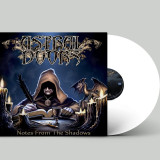
White Vinyl
Wiederveröffentlichung des im Jahr 2014 erschienenen siebten Albums der schwedischen Hardrock Legende. Die limitierte Neuauflage erscheint auf weissem Vinyl inkl. Bonus Track sowie neuen Liner Notes von Astral Doors Sänger Nils Patrik Johansson.
"Notes From The Shadows" (das siebte Album der Band) führt uns zu der dunkleren Seite der Band mit einem näheren Blick in die schwarze Bibel. Ein rein böses Heavy Metal-Album, das die okkulten Texte zum klassischen Heavy Metal zurückbringt.
Elf außergewöhnliche Tracks, gemischt und gemastert im Black Lounge Studio in Grangärde von Jonas Kjellgren (Raubtier).
"Notes From The Shadows" hat sich als ein großer Schritt in der Karriere der Band erwiesen und wird nun als Ltd. Edition White Vinyl wiederveröffentlicht.
dovrebbe essere pubblicato su 02.12.2022

After the boundary breaking, experimental excursions of recent album 'In The Wild,' Brooklyn- based FaltyDL was hungry to return to the dancefloor music that made his name. That hunger shines through on his 'Rich Prick Poor Dick' single - a sleek, stripped back duo of dancefloor stalkers.- Recommended for fans of Floating Points, Four Tet, Machinedrum, Martyn.
- Heavyweight 180g 12' vinyl in a 3mm spined sleeve.
Ordina ora e ordineremo l'articolo per te presso il nostro fornitore.

Die Titanen des Thrash Metal sind zurück!
Megadeth veröffentlichen am 02. September ihr sechzehntes Studioalbum „The Sick The Dying… And The Dead!“ mit 12 brandneuen, unveröffentlichten Songs. Nach dem GRAMMY-gewinnenden Erfolgsalbum „Dystopia“ bleiben die vier Metalheads voll auf Erfolgskurs und lassen jedes Fan-Herz höherschlagen. Auch dieses Mal geht es um schmetternde Gitarren, fette Drum-Sounds und die markerschütternde Stimme von Frontmann und Produzent Dave Mustaine. Von nostalgie-getränkten Songs wie “Night Stalkers” mit
Mega-Feature Ice-T hinzu dem emotionalen und namensgebenden Song “The Sick The Dying… And The Dead” ist alles auf dem umfassenden Album vertreten.
Mustaine zeigt sich mehr als glücklich: „For the first time in a long time, everything that we needed on this record is in its right place. I can’t wait for the public to get hold of this!”.
Das Album erscheint als Jewel-Case CD und Gatefold 2LP
dovrebbe essere pubblicato su 02.09.2022

Born in Marseille, Bonnie Li grew up in Hong Kong, began her adult life in
Paris and is now based in Berlin
She writes, composes and sings her melancholic and touching ‘Trip Pop’ in three
languages (English, French & Chinese Mandarin), giving her music a multi-lingual
cinematic experience.Described as "smoky Portishead-esque glittery Trip Hop" by
The Line of Best Fits and “Dark and Fascinating” by Rolling Stone Magazine.
dovrebbe essere pubblicato su 05.06.2022

On their first official collaboration, Japanese noise pioneer Masami Akita aka Merzbow and Australian sound sculptor Lawrence English present a harrowing, surrealist portrait of nocturnal industrial activity, spawned by field recordings made in a sprawling factory complex seven hours north of English's home in Brisbane. He characterizes the area as "uneasy and unsettling," awash in the sickly glow of smelters and refinement machinery, somehow not of this world - a liminal quality vividly captured in Andrei Tarkovsky's sprawling purgatorial opus, Stalker, to which the title alludes. Akita, too, described early drafts of Eternal Stalker as feeling "like the soundtrack to a dystopian science fiction opera." A mood of mechanical dread and ruined futures permeates each of the album's seven potent compositions. Opener "The Long Dream" sets the stage with steady rain on sheet metal, punctured by thunder and metallic echoes, reverberating to the rafters in a collapsing warehouse. Quickly the tempest rises. "A Gate Of Light" and "Magnetic Traps" both convulse in churning furies of electric demolition and rattling chains, roaring and relentless. "The Visit" and "Black Thicket" operate more at a distance, surveying the topography of steam, rust, and liquid metal from above, their flickers of violence swallowed by blankets of darkness. This is noise at its most elemental and unknowable: brooding, bristling, and opaque, stalking forbidden peripheries of chaos and creation. Discussing Akita's music, English refers to its "intense substrata that is purely psychedelic; it consumes and confounds." The seasick swells of friction and fracture subsume the listener, forcing an auditory surrender: "this saturation of the senses can be a euphoria." Proof comes halfway through "The Golden Sphere," when the howling mayhem subtly recedes, revealing an eerie siren drone hovering in the void, like the resonance of a dead star galaxies away. Slowly a seething, venomous wall of volume returns, shredding the signal until its frequencies fray, whipping away into the eye of the storm. The combined effect merges obliteration and liberation, rapture and ravagement; it's the sound of dissolution as resolution, uprooted and unmoored, finally freed from form.
dovrebbe essere pubblicato su 03.06.2022
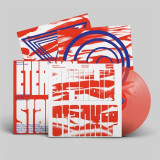
On their first official collaboration, Japanese noise pioneer Masami Akita aka Merzbow and Australian sound sculptor Lawrence English present a harrowing, surrealist portrait of nocturnal industrial activity, spawned by field recordings made in a sprawling factory complex seven hours north of English's home in Brisbane. He characterizes the area as "uneasy and unsettling," awash in the sickly glow of smelters and refinement machinery, somehow not of this world - a liminal quality vividly captured in Andrei Tarkovsky's sprawling purgatorial opus, Stalker, to which the title alludes. Akita, too, described early drafts of Eternal Stalker as feeling "like the soundtrack to a dystopian science fiction opera." A mood of mechanical dread and ruined futures permeates each of the album's seven potent compositions. Opener "The Long Dream" sets the stage with steady rain on sheet metal, punctured by thunder and metallic echoes, reverberating to the rafters in a collapsing warehouse. Quickly the tempest rises. "A Gate Of Light" and "Magnetic Traps" both convulse in churning furies of electric demolition and rattling chains, roaring and relentless. "The Visit" and "Black Thicket" operate more at a distance, surveying the topography of steam, rust, and liquid metal from above, their flickers of violence swallowed by blankets of darkness. This is noise at its most elemental and unknowable: brooding, bristling, and opaque, stalking forbidden peripheries of chaos and creation. Discussing Akita's music, English refers to its "intense substrata that is purely psychedelic; it consumes and confounds." The seasick swells of friction and fracture subsume the listener, forcing an auditory surrender: "this saturation of the senses can be a euphoria." Proof comes halfway through "The Golden Sphere," when the howling mayhem subtly recedes, revealing an eerie siren drone hovering in the void, like the resonance of a dead star galaxies away. Slowly a seething, venomous wall of volume returns, shredding the signal until its frequencies fray, whipping away into the eye of the storm. The combined effect merges obliteration and liberation, rapture and ravagement; it's the sound of dissolution as resolution, uprooted and unmoored, finally freed from form.
dovrebbe essere pubblicato su 03.06.2022

Carpenter Brut bezieht seine Einflüsse aus 80er-Jahre-Fernsehshows und B-Filmen, die mit Synthesizern bestückt sind. Der geheimnisvolle und diskrete Mann hinter dem Fünfeck - oder, wie seine Fans es nennen würden, das Brutagram - erinnert an eine Begegnung zwischen Justice Beats und dem Universum von John Carpenter. Wenn man jedoch die von ihm selbst produzierten EPs hört, würde man einen Hintergrund aus Beton und Metall erkennen, der für Dario Argento und die religiöse Erziehung mit Gewalt steht. Das erklärt seine Vorliebe für den Okkultismus, seine Leidenschaft für Kitschsounds und seine Vorliebe für alle Arten von Genuss.
Nach der Veröffentlichung seines ersten Studioalbums „Leather Teeth“ im Jahr 2018 und einer Reihe von Konzerten in ganz Europa und Nordamerika kehrt Carpenter Brut mit seinem zweiten Album zurück.
dovrebbe essere pubblicato su 01.04.2022

dovrebbe essere pubblicato su 25.03.2022

Orange vinyl[22,48 €]
Der renommierte Komponist/Regisseur John Carpenter und seine kreativen Mitstreiter Cody Carpenter und Daniel Davies haben auch zum zweiten Teil der neuen "Halloween"-Trilogie, "Halloween Kills", den Soundtrack beigetragen. Wie der Film selbst bleibt auch Carpenters Filmmusik dem Geist dessen treu, was das Original von 1978 so großartig gemacht hat, und bringt es gleichzeitig fest in die Gegenwart. Die Musik ist unverkennbar John Carpenter: die düsteren Vintage-Synthesizer-Klänge, das atemberaubende Gefühl der Bedrohung, das mit nur wenigen dissonanten Tönen hervorgerufen wird. Doch mit einer breiteren Klangpalette, neuen digitalen Techniken und einem tieferen Sinn für Musikalität ist der Score zu "Halloween Kills" das Werk eines Meisters, der auch nach fast 50 Jahren in seiner Karriere immer wieder an seine kreativen Grenzen geht und neue Wege findet, seine Fans zu begeistern und zu erschrecken. John Carpenters hypnotisches Thema zu seinem Horror-Meisterwerk "Halloween" aus dem Jahr 1978 hat mittlerweile für Generationen von Kinobesuchern die Angst vor Slasher-Stalkern verkörpert und sich so sehr in die Popkultur eingewoben, dass es zum musikalischen Kürzel für das gesamte Horror-Genre geworden ist. Es sind nur fünf Noten, die auf einem Klavier gezupft werden, so spärlich arrangiert, dass es sich wie kaum mehr als eine Skizze anfühlt, so einfach, dass ein ungeübter Spieler es leicht aufschnappen kann, aber es ist eine der größten musikalischen Errungenschaften des Kinos. 2018 kehrte Carpenter zum ersten Mal seit "Halloween III: Season of the Witch" von 1982 zu dem Franchise zurück, das er mit seiner ikonischen Schöpfung ins Leben gerufen hatte, ließ die 40 Jahre an Fortsetzungen und Reboots unter anderen Filmemachern hinter sich und kehrte zu seiner ursprünglichen Vision zurück. Während David Gordon Green die Regie für den neuen "Halloween"-Film und seine Fortsetzungen übernommen hat, ist Carpenter geblieben, um ihnen ihre unverwechselbare akustische Identität zu verleihen, die zu "Halloween" gehört wie die Totenmaske und das schimmernde Schlachtermesser von Michael Myers.
dovrebbe essere pubblicato su 15.10.2021

Orange vinyl[22,48 €]
Der renommierte Komponist/Regisseur John Carpenter und seine kreativen Mitstreiter Cody Carpenter und Daniel Davies haben auch zum zweiten Teil der neuen "Halloween"-Trilogie, "Halloween Kills", den Soundtrack beigetragen. Wie der Film selbst bleibt auch Carpenters Filmmusik dem Geist dessen treu, was das Original von 1978 so großartig gemacht hat, und bringt es gleichzeitig fest in die Gegenwart. Die Musik ist unverkennbar John Carpenter: die düsteren Vintage-Synthesizer-Klänge, das atemberaubende Gefühl der Bedrohung, das mit nur wenigen dissonanten Tönen hervorgerufen wird. Doch mit einer breiteren Klangpalette, neuen digitalen Techniken und einem tieferen Sinn für Musikalität ist der Score zu "Halloween Kills" das Werk eines Meisters, der auch nach fast 50 Jahren in seiner Karriere immer wieder an seine kreativen Grenzen geht und neue Wege findet, seine Fans zu begeistern und zu erschrecken. John Carpenters hypnotisches Thema zu seinem Horror-Meisterwerk "Halloween" aus dem Jahr 1978 hat mittlerweile für Generationen von Kinobesuchern die Angst vor Slasher-Stalkern verkörpert und sich so sehr in die Popkultur eingewoben, dass es zum musikalischen Kürzel für das gesamte Horror-Genre geworden ist. Es sind nur fünf Noten, die auf einem Klavier gezupft werden, so spärlich arrangiert, dass es sich wie kaum mehr als eine Skizze anfühlt, so einfach, dass ein ungeübter Spieler es leicht aufschnappen kann, aber es ist eine der größten musikalischen Errungenschaften des Kinos. 2018 kehrte Carpenter zum ersten Mal seit "Halloween III: Season of the Witch" von 1982 zu dem Franchise zurück, das er mit seiner ikonischen Schöpfung ins Leben gerufen hatte, ließ die 40 Jahre an Fortsetzungen und Reboots unter anderen Filmemachern hinter sich und kehrte zu seiner ursprünglichen Vision zurück. Während David Gordon Green die Regie für den neuen "Halloween"-Film und seine Fortsetzungen übernommen hat, ist Carpenter geblieben, um ihnen ihre unverwechselbare akustische Identität zu verleihen, die zu "Halloween" gehört wie die Totenmaske und das schimmernde Schlachtermesser von Michael Myers.
Ordina ora e ordineremo l'articolo per te presso il nostro fornitore.

Introducing USA based artist Jon Linskey aka ‘Sectra’ to Tectonic! With a truly unique sound, Sectra’s music sits among the crushing, claustrophobic weight of Shapednoise drone spaces, the percussive dexterity of a Detroit techno wizard and summoning the power of DMZ with sub bass sonics designed to hug your ankles.
‘A Demon In My View’ runs at a dangerous 90bpm, a total night stalker of a beat riddled with menace and the deep stench of fear. You will be scared, but that’s OK, we’ll get through this. ‘Counter Culture’ runs at 126bpm and projects us far out into distance space for a Sci-Fi adventure to a distant galaxy with a techno shaped rocket to propel us out there (well, there’s a 4/4 kick in there at least..).
Flip for ‘Ashes’ where we get a hint of dubstep influence melded with mangling technology and more perfectly placed sounds. Lastly we turn to ‘Bedlam’ which takes the pace down a few notches and we find ourselves hypnotized in a half-step, rocking gently, wrapped in a blanket, slowly shaking off the trauma.
Ordina ora e ordineremo l'articolo per te presso il nostro fornitore.

This very one Lost Boy from Brazil washed ashore the Lowlands' 'Finis Terrae', a produce of first-generation 'Shock Doctrine' and a real 'carioca' borne on the New World's 'Bossa Nova' and 'Esplendor Geometrico' of old 'Ancien Regime' para-military junta hat delivers quite some maximally dark and manic minimal wave of late, at times even slightly reminiscent of Siouxsie and the Banshees and of Joy Division, and all sung through old and charming, slightly dissonant 'Samba' melody lines vaguely hailing from certain sinister up-hill 'Cicade de Deus' margins of a distinctly distant 'Vagamundo' Purgatory past in either the Portuguese, the English or the Spanish tongues, rendering the paranoia 'facsimile in Limbo' of the coming Futurist Global Orderly State, this deep-state 'Novo Estado Novo' within the current 'Nova Bossa Nova', this 'Guerra Nova Prometheida por uma Terra Nova Prometida', the World's Electronic New Wave 'Fado' of Digital Panopticon and similar forms of purely A.I.-bot-generated (nothing personal!) Totalitarian Torture 'Technique du coup d'Etat' in genuine random numbers as already foreseen and shown to all some long time before in the Magic Green on that 'Funky Dollar Bill', 'Novus Ordo Seclorum'... Mastered by Guy Tavares
Ordina ora e ordineremo l'articolo per te presso il nostro fornitore.

'Deutsche Krimi passionnel' oder 'Ostalgie fuer begeisterte Kranken'? Well, this album may very well have been the perfect soundtrack of some very obscured 5-year-planned and very mentally disturbing, for truly some very fucked-up alienating D.D.R. / East German Democratic People's Republic remake of Tarkovski's old sci-fi classic 'Stalker' and that somehow, thank God, never made it to the Elevated Socialist Working Masses, for otherwise that 'Berliner Mauer' would have collapsed much earlier and certainly with a hell lot of more drastic damage! I mean, ''Mein Selbstmord! Im Monschein hinter dem Baum!'', now, what psychotic poetry of Goethean-Nietzschean 'Faustian' 'Sturm und Drang Tragoedie' and Romantic Mass-Industrial 'Todestrieb' Mantra is that? 'Das Ewig Weibliche (oder gibt's vielleicht auch Das Ewig Maennliche?) des alten Werthers Leiden in Teutobuerger Schwarz-und-buchenwaldklinik?' For this dark synth-guided croonin' could have turned into the ultimate 'Alan Vega Suicide' Project of the Soviet Bloc, its bloody very last Collective Act! Mastered by Guy Tavares.
Ordina ora e ordineremo l'articolo per te presso il nostro fornitore.

Science Cult presents the Kinetic Series: A limited edition of Picture Discs with kinetic artwork crafted by Chris Dowding. First up are Odd Oswald and Stephan Barnem with their “Horror Haus” EP, an homage to 1980’s Horror movies accompanied by a funky electro remix from Jensen Interceptor. Unique moving artwork is present on both sides, including markers for track start and end points.
Ordina ora e ordineremo l'articolo per te presso il nostro fornitore.

When Molly Nilsson began recording her second album Europa in 2009 the world seemed to be at a turning point and
she along with it. In the aftermath of a global financial crash, at the dawn of a new decade, the Stockholm-born, Berlinbased
singer was busy moulding her songwriting into an idiocyncratic, personal mythology that would take her to every
continent, speaking directly to hearts in every corner of the globe. The first album on her own Dark Skies Association
imprint, the first recorded in her home studio The Lighthouse, Europa broke new ground for Molly Nilsson at the time. But
also it spoke earnestly to the world about an idealism, an openness and hope that has not dimmed in the 11 years since
its release. Europa contains the songs of a young, idealistic songwriter coming to terms with her genius for cutting to the
chase, saying it as it is and, most importantly, as it should be. Over 10 years on the artists’ vim and urge for... more
credits
dovrebbe essere pubblicato su 12.03.2021

In collaboration with Brooklyn-based artist RDO/ATK, Sophia Saze makes her long-awaited return to her Dusk & Haze imprint with four slamming cuts on a release entitled ‘Stalker’.
Born in Tbilisi and now residing in Philadelphia after years living a nomadic lifestyle, Sophia Saze began her creative journey in her formative years with classical music and dance training. With a solid and natural musical foundation, Sophia became engulfed by electronic music leading to the launch of her Dusk & Haze imprint in 2017, before dropping a remix of Heathered Pearls on Ghostly International and the release of her much lauded debut album on Kingdoms. ‘Stalker’ sees her team up with old friend RDO/ATK who has been soaking up the dancefloor since the early 90s. With much of his influence stemming from the early east coast rave and club scene, his sound maintains a homage to the past without getting stuck in it. A sucker for a dirty 303, a breakneck amen, or a crushed 909, RDO/ATK’s style spans across genres from jungle to acid to broken beat and everything in-between.
The EP kicks off with a dynamic, jungle roller entitled ‘Stalker’ featuring old-school, amen breaks, stirring yet intriguing synths and hefty bass shatters balancing styles of glitch and funk together with pure class whilst ‘Fucking Crazy B’ lays focus on cold, syncopated grooves, chopped up shrieks and screams from a video of a traumatic personal incident and shimmering pads moving into ominous territories.
On the flip, ‘Talk To You In Your Brain’ delivers relentless kicks and spiralling acid squelches peppered with chilling vocal samples and frazzled fx that pulsates strikingly throughout until ‘Acid B’ rounds off proceedings with an effervescent, warehouse techno cut as the electrifying modulations bounce gracefully off the menacing percussion and slashing, 303 tones.
Ordina ora e ordineremo l'articolo per te presso il nostro fornitore.

Masked Techno assassin Buried Secrets returns to Soma with a massive new release featuring his signature hard and distorted Techno with the Destiny Defeated EP. With several Soma releases under his belt including 2020's huge "Of Lost Things EP", Buried Secrets continues his assault with this massive new EP.
Ordina ora e ordineremo l'articolo per te presso il nostro fornitore.

Stix Records proudly presents Push Push by Taggy Matcher (aka Bruno « Patchworks » Hovart), back with upraising singer LMK, with a strong message to all the street stalkers harassing women!
After the success of “My Man”, from Singasong album in 2014, every visit from LMK at Taggy Matcher’s studio is the occasion to embrace their shared love for vintage “Rub A Dub”, a genre that she champions.
“Push Push” is an assumed tribute to the early digital productions of King Jammy, one of the best references when it comes to marry Lo-Fi & strongness. LMK sings with conviction a clear message to all the stalkers: “Push Push / Get Out Of My Way”… the message is quite clear! On B side, you’ll find the instrumental version for all DJ’s & MC’s ready to blast through their soundsystems.
Ordina ora e ordineremo l'articolo per te presso il nostro fornitore.

Parasols (Ali Renault) applies ABS to the bpm with the new beat friendly ‘Diaz’; a slasher disco stalker prowling the lower east side of somewhere deep in your residual nightmares. Red Corner thwacks hard and dusky like a dustbin full of grit. Now your as giddy as the time you had your first bucket. The mutated commentary that underpins this clash of pans melts woozily into ‘Sacrifice’, which comes on all Baldelli inspired like some Rimini horror fest where Benetton and Timberlands frug it out amongst shadows in the Mediterranean dusk. Bursting with energy the finalimente of this accomplished brace of toons is possibly the standout, ‘Cessana Learning’ leers and lurches with weird gut belches that are both melodic and disorienting at the same time; shifting gears midpoint into some glorious electro chimes that will strike a chord with fans of other post techno luminaries such Ed DMX. Get some of this, enjoy flagellate and try to stay conscious!
Ordina ora e ordineremo l'articolo per te presso il nostro fornitore.

Following his incredible debut album 'Talisman', Whiney has stepped back into the lab to cook all manner of big, beefy dancefloor beasts. The 'Waystone' LP boasts his most widespread set of influences yet with drum & bass fusions of trip-hop, grime, UK hip hop and ambient across 14 outstanding tracks.
Album highlights include the tumbling jungle rumbler 'The Capital' that scatters down with snappy amens in a perfect storm. Plus the unmissable 'Triple Duppy Demon'; a menacing tribal stalker rearing its head in a display of raw beats and bars from Manchester's own Levelz crew member Truthos Mufasa, alongside a production pairing with Hugh Hardie.
'Waystone' also sees the triumphant return of the dream-team-supreme! Hospital's wordsmith Inja joins forces with Whiney on 'Mission'. This certified heater is a grisly tirade of dancefloor chaos, a worthy successor to fan favourites 'Flashlight' and 'She Just Wanna Dance'.
Of course Whiney's second long-player is also packed with showstopping solo productions such as 'Dismissed', 'Slingshot' and half-time triphop switch up 'Darkest Night'
Ordina ora e ordineremo l'articolo per te presso il nostro fornitore.

Following on from his sort of nihilistic but also maybe kind of apocalyptic Inherit The Earth LP (April 2017), Slugabed's Pandæmonium EP appears to be the result of him tumbling deeper into his own insides and nding some pretty hellish things. It has a nice front cover, painted by Parker S Jackson. Look him up on the internet!
Pandæmonium is the Capital City of Hell, according to John Milton's Epic Poem, Paradise Lost. It is all full of beasts and demons and stuff. It's AWFUL! But it's also very well designed (by an architect from Heaven, no less!) and fairly well-run. There's a nice John Martin painting of Satan, like, presiding at, um, the infernal council. It's based on Paradise Lost. This EP is about fallen Angels and stuff. Big, grand horridness. The devil in us all, or something. There's a track called Boney Horse.
There's some jazzy bits, sure. There's some noisy bits, yeah. Overall, a slightly unsettling atmosphere, okay! But it's also quite a beautiful lil record, and I'm hoping Slugabed has worked through some stuff and feels a bit better. Pandæmonium features two remixes from Sluga's sworn enemies, Kai Whiston & IGLOOGHOST respectively.
Ordina ora e ordineremo l'articolo per te presso il nostro fornitore.

KARIN RABHANSL hat ihre Seele an den Teufel verkauft. Zumindest hat es sich gelohnt: Tod & Teufel, das vierte Studioalbum der Sängerin und Gitarristin aus dem niederbayerischen Trautmannsdorf, ist eine Mörder-Scheibe geworden: Leichtfüßig grenzüberschreitend, frei von jeglicher Befindlichkeitssäuselei und weder Kaff noch Großstadt (weil du das Mädchen zwar aus dem Wald, aber den Wald nicht aus dem Mädchen kriegst). No fillers just killers, wie man in KARINs Heimatdorf unweit von Passau zu sagen pflegt. Oder wie es die Menschen in ihrer derzeitigen Wahlheimat Nürnberg auszudrücken pflegen: Liederbayern strikes back! Zugegeben: Tod & Teufel, die neue LP/CD von KARIN RABHANSL, ist ein wenig sinister geraten. Ein düsteres Rockalbum mit krummen Taktarten und allerlei Geschrei. Eine Dämonenplatte. Diesmal ist die Ringelprinzessin abgetaucht in die Abgründe und Untiefen der menschlichen Seele. Rabhansl erzählt von Werwölfen und Irrlichtern, über Alter, Einsamkeit, Stalker, Organhandel, faustsche Vertragsangebote und darüber, dass man es eh keinem Recht machen kann auf dieser Welt. Auch musikalisch hat sich einiges getan. Wenn man schon eine Rockband hat, dann kann man es auch mal ordentlich krachen lassen, nickt das Stromgitarren-Mädchen und gibt die Devise aus: Pop raus, Rock rein! Das neue Programm ist gestartet. Die Themen werden wilder, die Ziele exotischer. Ab jetzt ist wieder alles offen im Rabiversum: KARIN RABHANSL segelt weiter ins Abenteuer, immer der Nase nach, und wahrscheinlich ist es das, was wir an der liederbayerischen Niedermacherin am allermeisten mögen: ihre Neugier. Und ihre Unerschrockenheit.
dovrebbe essere pubblicato su 19.10.2018

Following 2017's 'Path of Ruin', DJ Richard returns to Dial with his much-anticipated sophomore LP, 'Dies Iræ Xerox'. Undoubtedly one of the most distinctive and fully-formed electronic producers in recent memory, DJ Richard imprinted the sound of a bubbling US underground with his label, White Material, founded in 2012 alongside Young Male. His first solo LP for Dial, 2015's 'Grind', found DJ Richard delicately establishing a discipline between his East Coast noise heritage and a physical, emotive tradition of house music, mastered during an extended stay in Berlin. Now firmly settled once more in his hometown of Providence, 'Dies Iræ Xerox' is a personal and uncompromising journey that finds the Rhode Island native in reflective form, journeying without compromise into both his creative influences and personal psyche. In part adapting its title from the Latin hymn 'Dies irae', otherwise known as 'Day of Wrath', 'Dies Iræ Xerox' melds the physical and psychological aspects of DJ Richard's production ethos in sharper, more widescreen vision than before; the oceanic swells of ambience yet more powerful, and the rigid basslines sharper still. With the chaos of the Berlin club scene an increasingly distant memory, the album is enriched with a contemplative, even brittle tone, as informed by film soundtracks and literature as the pulse of city living. Still, this is new material from DJ Richard, a touring DJ as distinctive as any other to be found behind the decks at some of the world's finest clubs and festivals. On 'Dies Iræ Xerox', the artist finds the space to write 'the records I really want to play', and each suggests a template for genuine dancefloor transcendence, beginning with the electrifying 'Vanguard' . The sludgy yet sophisticated crawl of 'Tunnel Stalker' sets the tone for the menacing yet somehow melancholy EBM of 'In Broad Daylight', while the record draws to a breathless close with the affecting, drum machine lethargy of 'Gate of Roses'. Drawing little distinction between his more physically rousing material and searching soundscapes, 'Dies Iræ Xerox' instead finds a passage of catharsis throughout both. 'Dissolving World', the album's breathtaking centerpiece, is a choral feature hypnotically overwhelmed by walls of electronic feedback, forging a dramatic link between old ways and new. On the bold and near-beatless 'Ancestral Helm' and 'Final Mercy', DJ Richard seems to grant both music and raw emotion the ability to simply float in the air, brilliantly, poignantly unresolved. If 'Grind,' inspired by the weathered coastlines of Rhode Island, was a record concerning "the border between civilization and the ocean," then 'Dies Iræ Xerox' is an unapologetic follow-up concerning that between macabre obsessions and fear of death. Produced during a murky, transitional period, DJ Richard found himself particularly drawn to Medieval European art and mysticism, fascinated by depictions and philosophies of the antichrist and end-times. Greatly influencing the uncompromising, apocalyptic tone of the album, these investigations have created an engaging and personal vision of the 'Day of Wrath.'
Ordina ora e ordineremo l'articolo per te presso il nostro fornitore.

Ordina ora e ordineremo l'articolo per te presso il nostro fornitore.

The Band > SCARLETT'S FALL is a duo formed in 2014 by Ruth Childs (British-American performance artist and singer based in Geneva) and Stephane Vecchione (Swiss performance artist and musician based in Lausanne). They define themselves as dirty-girlie-kitchen-pop mixing catchy melodies and repetitive looping with fragile vocals and provocative texts. Out of their playfully ironic and poetic universe you can ear shades of CAN, Broadcast and Young Marble Giants. SCARLETT'S FALL toured their first album all over Switzerland and supported Tricky, Peaches and Anika.SCARLETT'S SCARED' is SCARLETT'S FALL ironically seductive second album. It all started with an (blue) demonstration vinyl entitled 'The Incredible Sounds of the Synclavier II' released by New England Digital Corp in 1981 to promote the first digital sampling system. Its content gave the basic atmosphere for the whole album: each of the 10 tracks samples a specific Synclavier sound. Add haunting melodies, mysterious vocals and fun beats and you get 'SCARLETT'S SCARED' complete. As the title suggests 'SCARLETT'S SCARED' is about being scared and takes its roots from vintage movies such as Klute (1971) and Metti Una Sera a Cena (1969) that deals with phone stalkers, insomnia, sexual tension, vampires, ghosts and explosive watermelon attack!
dovrebbe essere pubblicato su 02.05.2017
