Recorded sporadically over five years from 2015 to 2019, Sixty Summers was shaped profoundly by Stone’s key collaborators on the album: Thomas Bartlett, aka Doveman, and Annie Clark, the Grammy-winning singer, songwriter and producer known as St. Vincent. Bartlett and Clark were the symbiotic pair Stone needed to realise her first pop vision. A wizard of production and songwriting, Bartlett helped coax Sixty Summers’ independent, elemental spirit from Stone, writing and recording over 50 demos with her at his studio in New York. Itself a thoroughfare for indie rock luminaries, some of whom, such as The National’s Matt Berninger and Bryce Dessner, ended up on the album, Bartlett’s studio was perfect fertile ground for Stone’s growth.
Clark was the incisive yang to Bartlett’s yin, a sharp musical polymath who, when presented with the work Bartlett and Stone had made together, quickly helped fashion Sixty Summers into the album it was destined to be. Contributing vocals and guitar in addition to production, Clark’s revered acidic touch ignited the sparks of Stone’s creations.
The scope of Sixty Summers is dizzyingly vast; miles away from Stone’s past work, it is a world unto itself, a surreal and breathtaking new landscape. Where Stone’s previous solo records, 2010’s The Memory Machine and 2014’s By The Horns, found her grappling with the natural darkness that comes with loving too much, Sixty Summers finds Stone claiming every part of herself: fire, fury, love, lust, longing. Touching on reference points as disparate as the avant-funk of Talking Heads (on ‘Break’) the romantic 2am musings of Serge Gainsbourg (‘Free’, ‘Dance’) and the sleek, ecstatic synth work of Lorde’s Melodrama (‘Substance’), Sixty Summers is an album you can dance to and one you can lose yourself in completely.
Search:the stone
Heavy Psych trio from Portugal based in North London. Mainly influenced by 60's psychedelia and 70s Prog with hints of modern Stoner and Space Rock. They deploy their magic fog into the room to take the entire audience on a journey from the edge of a rugged desert to the outer edges of distant galaxies. The acid-doused amps of Madmess vent serpentine psych and bleed the deepest shades of violet from the electric heart of Rock & Roll. Madmess are Luis Moura (Drums), Vasco Vasconcelos (Bass) and Sam Paio (Guitar) Resident Records: "Heavy stoner riffage smashing against crashing drums is always a winner, in our book, & this one happens to be an especially yummy chunk of squealing fuzz" More Fuzz “ This Portuguese trio’s Psychedelic/Space rock conjures images in my mind of the power of a rocket launch, followed by the serenity of orbit before smashing back through the atmosphere and returning to Earth.”
- 1: Love Has Finally Come At Last
- 2: It Takes A Lot Of Strength To Say Goodbye
- 3: Through The Eyes Of A Child
- 4: Surprise, Surprise
- 5: Tryin’ To Get Over You
- 6: Tell Me Why
- 7: Who’s Foolin’ Who
- 8: I Wish I Had Someone To Go Home To
- 9: American Dream
Womack updates his material for the 80s, creating grown-up sensual soul.
The passion for earthy R&B seemed to have dimmed as the 80s began.
Synthesised confections abounded and veteran Bobby Womack, the Midnight Mover, was at a crossroads. His peers were either in the wilderness (Marvin Gaye, James Brown and Isaac Hayes) or otherwise indisposed (Sam Cooke, Jackie Wilson, Sly Stone), so it was left to Womack to fly the flag for down-to-earth, quality soul.
Womack had been a recording artist for best part of two decades when he made The Poet. After making his name with The Valentinos in the 60s, he cut a string of heartfelt, emotional albums for Minit, United Artists and Columbia throughout the 70s. The Poet was written with great optimism; Womack was out of contract and was approached by agent Otis Smith to set up on his new label, Beverly Glen.
Working with Patrick Moten, Womack crafted eight songs that sounded breathlessly contemporary. If this material had been put in the hands of a soul crooner, it could have sounded perfunctory. The Poet works because of the juxtaposition of Womack’s feral growl with the album’s sweet, smooth, urbane soundtrack. This is grown-up, sensual music; from So Many Sides of You to its epic closer Where Do We Go From Here, this is a luscious collision of Womack’s soul mastery and slick musicianship. It rises and falls, with Womack sidestepping cliché thanks to his preaching, heartfelt delivery. For example, when he cries “I wanna dedicate this song to all the lovers tonight / And I expect that might be the whole world,” on If You Think You’re Lonely, it sounds honest, simple and sincere.
The Poet put Womack back on the map, and gave him his first US R&B chart-topper and first mainstream top 30 album. It was adored in the UK, and sent many back to investigate his grittier 70s heyday as an albums artist. The album became the best-selling record of Womack’s career
Womack cut the equally sublime follow-up The Poet II, released in 1984.
Daryl Easlea – BBC
After two UK #1 albums, 2 million album sales and an array of international acclaim, you might’ve thought you knew what to expect from Royal Blood. Those preconceptions were shattered when they released ‘Trouble’s Coming’ last summer. Hitting a melting pot of fiery rock riffs and danceable beats, they delivered something fresh, unexpected and yet entirely in tune with what they’d forged their reputation with.
The reaction was phenomenal, with highlights including 20 million streams, a premiere as Annie Mac’s Hottest Record and a run on Radio 1’s A-list and earned alternative radio support and media attention across the globe. In short, Royal Blood are primed to be bigger than ever before. That feat is set to be realised when they release their eagerly anticipated third album ‘Typhoons’ on April 30th via Warner Records.
When Mike Kerr and Ben Thatcher sat down to talk about making a new album, they knew what they wanted to achieve. It involved a conscious return to their roots, back when they had made music that was influenced by Daft Punk, Justice, and Philippe Zdar of Cassius. It also called for a similar back-to-basics approach to what had made their self-titled debut album so thrilling, visceral and original.
“We sort of stumbled on this sound, and it was immediately fun to play,” recalls Kerr. “That’s what sparked the creativity on the new album, the chasing of that feeling. It’s weird, though - if you think back to ‘Figure it Out’, it kind of contains the embryo of this album. We realised that we didn’t have to completely destroy what we’d created so far; we just had to shift it, change it. On paper, it’s a small reinvention. But when you hear it, it sounds so fresh.”
Those traits pulsate throughout the new single and title track. Kerr’s spiralling bass riff casts an hypnotic allure as it grows in intensity, while his vocals switch at will between a raw rock roar and a soulful falsetto. It’s underpinned by Thatcher’s thundering beats, his taut rhythms infused with groove-laden hi-hats.
After setting the tone with ‘Trouble’s Coming’, the album opens in breathless, take-no-prisoners style with the fierce metallic grooves of ‘Who Needs Friends’ hitting an early visceral peak. Royal Blood further reference their fresh array of influences by deploying vocodered vocals on ‘Million & One’ before dynamically switching between the biggest contrasts of their sound with ‘Limbo’. Already a fan favourite having been a regular during the duo’s 2019 shows, ‘Boilermaker’ lives up to its reputation and is more than matched by ‘Mad Visions’, which evokes a hyper-aggressive Prince. It ends with a final surprise in the shape of the stark piano ballad ‘All We Have Is Now’, a vulnerable and revealing reminder to live in the moment.
That song’s unguarded sentiments gives the album a redemptive finale. Whether directly or allusively, the album focuses on exploring the flipside of success that they’ve experienced. It comes from the realisation that success is much more complicated than it seems and that having the time to regain perspective is a precious commodity which becomes ever more elusive. The situation called for reflection and change, which Kerr addressed in Las Vegas. He downed an espresso martini and declared it to be his last drink, and soon discovered that his new-found sobriety would have a positive impact upon his creativity and life as a whole.
That new approach manifested itself in the duo’s decision to produce the majority of ‘Typhoons’ themselves. ‘Boilermaker’ was produced by Queens of the Stone Age frontman Josh Homme, the two bands having first connected when Royal Blood supported them on a huge North American tour. Meanwhile, the multiple Grammy Award winner Paul Epworth produced ‘Who Needs Friends’ and contributed additional production to ‘Trouble’s Coming’.
After two UK #1 albums, 2 million album sales and an array of international acclaim, you might’ve thought you knew what to expect from Royal Blood. Those preconceptions were shattered when they released ‘Trouble’s Coming’ last summer. Hitting a melting pot of fiery rock riffs and danceable beats, they delivered something fresh, unexpected and yet entirely in tune with what they’d forged their reputation with.
The reaction was phenomenal, with highlights including 20 million streams, a premiere as Annie Mac’s Hottest Record and a run on Radio 1’s A-list and earned alternative radio support and media attention across the globe. In short, Royal Blood are primed to be bigger than ever before. That feat is set to be realised when they release their eagerly anticipated third album ‘Typhoons’ on April 30th via Warner Records.
When Mike Kerr and Ben Thatcher sat down to talk about making a new album, they knew what they wanted to achieve. It involved a conscious return to their roots, back when they had made music that was influenced by Daft Punk, Justice, and Philippe Zdar of Cassius. It also called for a similar back-to-basics approach to what had made their self-titled debut album so thrilling, visceral and original.
“We sort of stumbled on this sound, and it was immediately fun to play,” recalls Kerr. “That’s what sparked the creativity on the new album, the chasing of that feeling. It’s weird, though - if you think back to ‘Figure it Out’, it kind of contains the embryo of this album. We realised that we didn’t have to completely destroy what we’d created so far; we just had to shift it, change it. On paper, it’s a small reinvention. But when you hear it, it sounds so fresh.”
Those traits pulsate throughout the new single and title track. Kerr’s spiralling bass riff casts an hypnotic allure as it grows in intensity, while his vocals switch at will between a raw rock roar and a soulful falsetto. It’s underpinned by Thatcher’s thundering beats, his taut rhythms infused with groove-laden hi-hats.
After setting the tone with ‘Trouble’s Coming’, the album opens in breathless, take-no-prisoners style with the fierce metallic grooves of ‘Who Needs Friends’ hitting an early visceral peak. Royal Blood further reference their fresh array of influences by deploying vocodered vocals on ‘Million & One’ before dynamically switching between the biggest contrasts of their sound with ‘Limbo’. Already a fan favourite having been a regular during the duo’s 2019 shows, ‘Boilermaker’ lives up to its reputation and is more than matched by ‘Mad Visions’, which evokes a hyper-aggressive Prince. It ends with a final surprise in the shape of the stark piano ballad ‘All We Have Is Now’, a vulnerable and revealing reminder to live in the moment.
That song’s unguarded sentiments gives the album a redemptive finale. Whether directly or allusively, the album focuses on exploring the flipside of success that they’ve experienced. It comes from the realisation that success is much more complicated than it seems and that having the time to regain perspective is a precious commodity which becomes ever more elusive. The situation called for reflection and change, which Kerr addressed in Las Vegas. He downed an espresso martini and declared it to be his last drink, and soon discovered that his new-found sobriety would have a positive impact upon his creativity and life as a whole.
That new approach manifested itself in the duo’s decision to produce the majority of ‘Typhoons’ themselves. ‘Boilermaker’ was produced by Queens of the Stone Age frontman Josh Homme, the two bands having first connected when Royal Blood supported them on a huge North American tour. Meanwhile, the multiple Grammy Award winner Paul Epworth produced ‘Who Needs Friends’ and contributed additional production to ‘Trouble’s Coming’.
Womack updates his material for the 80s, creating grown-up sensual soul.
The passion for earthy R&B seemed to have dimmed as the 80s began.
Synthesised confections abounded and veteran Bobby Womack, the Midnight Mover, was at a crossroads. His peers were either in the wilderness (Marvin Gaye, James Brown and Isaac Hayes) or otherwise indisposed (Sam Cooke, Jackie Wilson, Sly Stone), so it was left to Womack to fly the flag for down-to-earth, quality soul.
Womack had been a recording artist for best part of two decades when he made The Poet. After making his name with The Valentinos in the 60s, he cut a string of heartfelt, emotional albums for Minit, United Artists and Columbia throughout the 70s. The Poet was written with great optimism; Womack was out of contract and was approached by agent Otis Smith to set up on his new label, Beverly Glen.
Working with Patrick Moten, Womack crafted eight songs that sounded breathlessly contemporary. If this material had been put in the hands of a soul crooner, it could have sounded perfunctory. The Poet works because of the juxtaposition of Womack’s feral growl with the album’s sweet, smooth, urbane soundtrack. This is grown-up, sensual music; from So Many Sides of You to its epic closer Where Do We Go From Here, this is a luscious collision of Womack’s soul mastery and slick musicianship. It rises and falls, with Womack sidestepping cliché thanks to his preaching, heartfelt delivery. For example, when he cries “I wanna dedicate this song to all the lovers tonight / And I expect that might be the whole world,” on If You Think You’re Lonely, it sounds honest, simple and sincere.
The Poet put Womack back on the map, and gave him his first US R&B chart-topper and first mainstream top 30 album. It was adored in the UK, and sent many back to investigate his grittier 70s heyday as an albums artist. The album became the best-selling record of Womack’s career
Womack cut the equally sublime follow-up The Poet II, released in 1984.
Daryl Easlea – BBC
A reliable traditionalist with a penchant for bittersweet songs of heartbreak and loss, Ashley Monroe pulled a complete 180 for her spectacular new album, Rosegold, riding the joyful emotional wave that followed the birth of her son to create her most ecstatic, blissed-out collection yet. Written and recorded over the past two years, the record finds the GRAMMY-nominated Nashville star pushing her sound in bold new directions, drawing on everything from Kanye West and Kid Cudi to Beck and The Beach Boys as she layers lush vocal harmonies atop dreamy, synthesized soundscapes and sensual, intoxicating beats. Monroe worked with a variety of producers on the album, letting the tracks dictate her direction rather than any arbitrary adherence to genre or tradition, and the result is a record as daring as it is rewarding, an ecstatic, revelatory meditation on happiness and gratitude that tosses expectation to the wind as it celebrates our endless capacity to love, and to be loved, even in the midst of chaos and tragedy.Born in Knoxville, TN, Monroe first began turning heads in Nashville as a teenager, when she arrived in town with a notebook full of mature, emotionally sophisticated songs that belied her young age. A jack-of-all-trades, she picked up work behind the scenes at first, singing on sessions at Jack White’s Third Man Studios and penning tunes that would appear on albums by the likes of Guy Clark, Carrie Underwood, Jason Aldean, and Miranda Lambert. Monroe and Lambert forged a close personal bond through their collaborations, and in 2011, they teamed up with fellow Nashville journey woman Angaleena Presley to launch the critically acclaimed trio Pistol Annies, which would go on to top the Country Album charts, crack the Top 5 on the Billboard 200, and earn a GRAMMY nomination for Best Country Album. Monroe’s solo output was equally lauded, with NPRhailing her work as “subtle and breathtaking” and Rolling Stone praising her writing as “riveting and sharp-witted.” Over the course of three studio albums, Monroe would land her own GRAMMY nomination for Best Country Album, share bills with the likes of Vince Gill and John Prine, and perform everywhere from The Tonight Show and Conan to Late Night and The View.
2x Grammy nominated band Gojira have announced details of their long-awaited new album, FORTITUDE, which will be released April 30th via Roadrunner Records and have released the forthcoming album’s first single, “Born For One Thing”. FORTITUDE stands is Gojira’s first album in five years and the follow-up to 2016’s Grammy nominated LP MAGMA.
Recorded and Produced by Joe Duplantier at Silver Cord Studio - Gojira’s Ridgewood, Queens, headquarters – and mixed by Andy Wallace (Nirvana, Rage Against The Machine), FORTITUDE is a collection of songs urging humanity to imagine a new world—and then make it happen. The band initially laid the foundation for FORTITUDE last year with the surprise release of the 2020 single “Another World.” NPR hailed the track as “an apocalyptic banger,” while STEREOGUM declared, “Gojira are one of this century’s most important underground metal institutions.” Voted by fans as the #1 release on REVOLVER’s “5 Most Anticipated Albums of 2021,” FORTITUDE continues Gojira’s career-long tradition of harnessing their music as a vehicle for environmental activism with songs like “Amazonia” and “The Chant” not only surveying critical cases, but also catalyzing listeners to take action.
On 2016’s MAGMA, Gojira found strength—and crossover success—through a singular commitment to self-reflection. The intensely personal record, penned in memory of the Duplantier brothers' late mother, was a painful significant turning point for the French group. The album earned the band two GRAMMY nominations - ‘Best Metal Performance’ and ‘Best Rock Album,’ and upon release, MAGMA took the #1 spot on BILLBOARD’s ‘Hard Rock Albums’ chart, a first for a French band. MAGMA also asserted itself as one of the most acclaimed albums of 2016, earning METAL HAMMER’s coveted “Album of the Year” title while also landing on ROLLING STONE’s “Top 20 Metal Albums of 2016,”
Rock band Ego Kill Talent—Jonathan Dörr vocals, Jean Dolabella [drums, guitar], Raphael Miranda [drums, bass], Niper Boaventura [guitar, bass], and Theo Van Der Loo [bass, guitar] —had been pivoting for most of 2020. The band was confirmed for a spring tour of South America with Metallica and Greta Van Fleet, set to perform at the majority of the Danny Wimmer Presents Festivals in the U.S., to tour with System of a Down in Europe, and to perform at many key European festivals. All told, EKT had booked 35 shows and 21 key festivals across three continents. They have supported Foo Fighters, (having been hand selected by Dave Grohl) and Queens Of The Stone Age
They are known for switching instruments amongst members while playing and were eager to show off their live prowess to audiences worldwide. However, due to the COVID-19 pandemic and the subsequent global shutdown, Ego Kill Talent, like so many others, were forced to get creative —revamping and revising tour and album release plans.
EKT elected to split their full-length The Dance Between Extremes into three EPs due to the pandemic. The Dance EP landed on June 27 and The Dance Between EP dropped Dec 4. The third, final, and full release The Dance Between Extremes arrives on March 19, 2021.
Jack Nitzsche, a close collaborator of master producer Phil Spector, was an American musician, arranger and film music composer who worked extensively as keyboard player with high caliber rock stars like the Rolling Stones and Neil Young, among others. "The Lonely Surfer" originally released on Reprise records in 1963 was the first album under his own name. An all instrumental mix of Surf aesthetic and
eclectic orchestral arrangements featuring great West Coast based studio musicians such as guitarist Tommy Tedesco, drummer Hal Blaine and pianist Leon Russell. A golden summer classic full of surfing
sounds and vibes that can be easily summed up in one word: Timeless.
- 1: Califia (Stone Rider) - Featuring Suzi Jane Hokom
- 2: The Bed
- 3: Sleep In The Grass - Featuring Ann-Margret
- 4: Leather And Lace - Featuring Nina Lizell
- 5: If It's Monday Morning
- 6: The Night Before
- 7: Bye Babe
- 8: Victims Of The Night - Featuring Ann-Margret
- 1: Chico - Featuring Ann-Margret
- 2: Hey Cowboy - Featuring Nina Lizell
- 3: No Train To Stockholm
- 4: Won't You Tell Your Dreams
- 5: Nobody Like You - Featuring Suzi Jane Hokom
- 6: Trouble Maker
- 7: What's More I Don't Need Her
- 8: Come On Home To Me
- 9: I Just Learned To Run
Erster Release der Light In The Attic Re-Issue Serie zu Ehren von LEE HAZLEWOOD mit Stücken von so essentiellen Alben wie ,Cowboy In Sweden". Mit Duetts mit Suzi Jane Hokom, Ann Margret und Nina Lizell. Extensive Linernotes und bisher ungesehene Photos. Mit seinem Schnurrbart und dem klingenden Bariton war LEE HAZLEWOOD einer der Stars der späten 60er Jahre. Obwohl er wahrscheinlich am bekanntesten wegen seiner Arbeit mit NANCY SINATRA ist (er schrieb ihren Megahit ,These Boots Are Made For Walking"), leistete HAZLEWOOD auch fernab dieser besonderen Glamourkönigin beachtliche Arbeit und fand später große Fans in BECK, SONIC YOUTH und JARVIS COCKER. Für den Record Store Day 2012 präsentiert Light In The Attic den Startpunkt einer Anthologie mit ,Singles, Nudes&Backsides", die LEEs beste Solosongs und Duetts seines Lee Hazlewood Industries Sublabels (LHI) versammelt. Die Serie wird sich Material von LHI widmen (das hier zum ersten Mal von den analogen Originaltapes neu gemastert wurde), zusammen mit LEEs Output bei anderen Labels, Raritäten, unveröffentlichten Schätzen und den Filmen von Torbjörn Axelman. Man muss nur das Cover anschauen: umringt von nackten Mädchen, die alle einen unechten Schnurrbart tragen, spielt HAZLEWOOD im Anzug leicht unsouverän den Playboy. Exakt wie dieses Photo zeigen auch die Songs einen gespaltenen Mann: er ist der zärtliche Romantiker, der gebrochene Loser und der zerfurchte Cowboy zugleich.
Finest French jazzy beats "JAZZ LIBERATORZ", their 1st single "What's Real" featuring Aloe Blacc, who was also featured on Avicii, which was suddenly released in 2003 and later released on Stones Throw has finally become a 7-inch vinyl! B-side is a the single "Music Makes The World Go Round (2004)" featuring great talent of the West Coast underground "Declam", this is a special version which is remixed by 20Syl who is the MC / track maker of Hocus Pocus, France.
CLAMM could not have come from anywhere other than Melbourne, Australia. Theirs is a city that bleeds music. Iconic bands such as Eddy Current Suppression Ring and Total Control have built on the city's history of open-hearted, fist-in-throat, fiercely independent music. Scenes centring around labels like Antifade, Flightless and Cool Death have held the torch for countless groups as good as any in the world. However, CLAMM arrived completely apart from any established scene or sound. They began playing shows in 2019, sharing bills with virtually anyone who would have them. Jack Summers (vocals/guitar) and Miles Harding (drums) had been friends and musical collaborators since early childhood. Under various banners, they performed for years with friends and siblings across Melbourne's underground landscape. It wasn't until they found Maisie Everett (vocals/bass) that the CLAMM picture was complete. Debut album Beseech Me was recorded with Nao Anzai (Rolling Blackouts, Floodlights, NO ZU) and mixed and mastered by Total Control's Mikey Young.
Deap Lips is Wayne & Steven from THE FLAMING LIPS with Julie & Lindsey from DEAP VALLY. This special collaboration came together after a friendship formed between the bands.- - The seeds of Deap Lips were first planted years ago, when Troy and Edwards each fell in love with the music of the Flaming Lips. The Lips' 1999 classic The Soft Bulletin is one of Edwards' top ten of all time. "You can listen to their entire catalogue and the experience is so intact, full of experiments, philosophy, hooks, and the sublime," says Edwards. "There are very few artists who can offer the same experience on a decades-spanning deep dive."
Flash forward to 2016 as Deap Vally were touring with Wolfmother and Coyne turned up at a show in Raleigh (Edwards was on maternity leave at the time). Wayne, in town scouting the best edible giant gummy props, came for the show and Troy and Coyne were introduced after the set.
After that chance meeting Coyne started following Deap Vally on Instagram and would tag them in random posts of the Lips in the studio, much to their delight and amusement. Deap Vally wondered:
is Wayne hinting at a collaboration? They had this theme on the brain as Edwards and Troy had recently embarked on a series of yet to be released collaborations with the likes of KT Tunstall, Peaches, Jamie Hince (The Kills), Soko, Jenny Lee (Warpaint), Jennie Vee (EODM), Zach Dawes (Queens of the Stone Age, Mini Mansions), and Ayse Hassan (Savages).
On October 12, 1929, Kathryn Culp and Sammie Lee Brown had the idea to name their first-born baby Napoleon. With such a vital beginning, little Nappy was already predestined to hit the mark, so from a very young age he stood out for his vocal qualities, well cultivated in gospel, which he practiced assiduously in The First Mount Zion Baptist Church run by his father.
To Mr. Brown's chagrin, after his first forays into religious music participating in vocal gospel groups such as The Golden Crowns, Golden Bell Quintet and The Heavenly Lights, with whom he recorded his first single for Savoy in 1954, the young Napoleon decided to try his hand at secular music, convinced by Herman Lubinsky, the big boss man of the New Jersey label.
In this way, between 1954 and 1962, Napoleon recorded a total of 28 singles at Savoy, clearly marking the transition from Rhythm & Blues to Rock’n’Roll, and also his subsequent jump to Soul, being the natural link between the late 40s southerners like Wynonie Harris or Big Joe Turner and artists like Jackie Wilson or James Brown, who cemented the black sounds of the 60s.
This LP includes a compilation of some of his best songs at Savoy, high class rock'n'roll, with a lot of dancefloor favourites like DON'T BE ANGRY, compiled in its two versions, or JUST A LITTLE LOVIN ', but also his more Bluesy sides, with songs like the fabulous DOWN IN THE ALLEY, which would be recorded years later by that certain singer born in Tupelo, Mississippi, that many times declared how much he dug Nappy Brown’s Rhythm & Blues.
In the same bluesy way Nappy wrote the iconic THE RIGHT TIME, one of the first stones of the Soul cathedral, originally recorded by Nappy on 1957, and revised one year before by Ray Charles. Ray’s version, renamed Night Time Is The Right Time, would be included as the main theme of the award-winning film IN THE HEAT OF THE NIGHT. We´ve also included Nappy’s own answer to this song, recorded in 1961 and titled as ANY TIME IS THE RIGHT TIME.
Finally can´t avoid to name some of the backing musicians you´ll hear in these tracks, Sam ‘The Man’ Taylor, Mickey Baker, Panama Francis… have a look on notes bellow, oh boy! the A-Team of the mid-century New York Rhythm & Blues!
Nappy disappeared from the music scene in 1962, remaining anonymous until 1969, when he would return to Rhythm & Blues on Elephant Records with an LP whose title could not be more eloquent: THANK YOU FOR NOTHING.
Since then, Nappy was very active until his death in 2008, alternating his love for gospel and Rhythm & Blues, touring the United States and Europe and releasing no less than a dozen LPs.
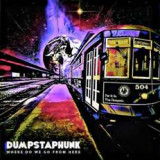
"Where Do We Go From Here" is Dumpstaphunk's first album in seven years. It will be released on April 23, 2021 on The Funk Garage, an imprint of Mascot Label Group.
Over its past 17 years, Dumpstaphunk has earned its reputation as the most well-regarded next-generation New Orleans live powerhouse, the type of band whose live shows attract sit-ins from legends like Carlos Santana, Bob Weir and Trombone Shorty. Alongside Hall, Daniels, Alex Wasily, Ryan Nyther and drummer Devin Trusclair, cousins Ivan and Ian Neville have built upon their family’s iconic NOLA legacy as they’ve transformed Dumpstaphunk into the city’s pre-eminent 21st-century funk-fusion export.
The band’s mix of classic and modern influences can be heard throughout the party-friendly mix of R&B, funk, rock, swamp-pop and blues of "Where Do We Go From Here," from the slap-bass rave "Make It After All" to the band's contemporary renderings of NOLA R&B rarities (the 1975 Blackmail gem "Let’s Get At It") and early Seventies classics (Sly and the Family Stone's "In Time”).
‘Where Do We Go From Here’ is perhaps the best evidence yet of Dumpstaphunk’s ability to strengthen and transform their singular NOLA roots in combination with the deeper outside musical and philosophical influences on which the band is founded.
Veteran NYC based Scottish electronic musician Drew McDowall's latest work is his loftiest, most liturgical, and least industrial outing to date —and potentially the apex of his recent discography.Named after an ancient Greek word for votive offering, Agalmaexudes a hooded, devotional aura, creaking and keeling under vast rafters of stone, stained glass, and shredded wires. It's a music of majesty and mystery but also modernity, McDowall's refined modular system shape-shifting strings, piano, pipe organ, and choral masses into disorienting synthetic mirages of the sacred. He cites the intersection of “joy, terror, and the elegiac” as a centering inspiration –or, phrased more bluntly, “that 'what the fuck is going on' feeling.”
As a career collaborator himself, with stints in Coil, Psychic TV, and countless other shorter-lived partnerships, it's telling that McDowall chose this project to gather such an impressive spectrum of peers. Italian synthesist Caterina Barbieri, American drone organist Kali Malone, prolific multi-instrumentalistRobert Aiki Aubrey Lowe, operatic Humanbeast vocalist Maralie Armstrong-Rial, Saudi producer MSYLMA, and warped futurist beat-makers Bashar Suleiman and Elvin Brandhi cameo across the album's 42 minutes, contouring McDowall's nuanced negative spaces with shudders, shadows, and shivering flickers of serenity. Each of them shines in their spotlight, elevating these elusive alchemical states into surreal revelations of texture and transcendence.
McDowall's original working title for the record is revealing: Ritual Music.He speaks of his creative practice in ceremonial terms, negating binaries by seeking the middle path to anuminousequilibrium that erases the distinction between the inner and outer worlds.These compositions feel similarly processional and intuitive, at the crossroads of holiness and hallucination, the sacred vertigo of yawning naves rising into untouchable night skies. It's a vision of industrial music as enigma and invocation, cryptic hymnals of shroudedbeautysummoned in catacombs and crumbling cathedrals.
Despite its depths, Agalmais also an album of immediacy and emotion. Celestial laments of and for times of unrest and suffering. McDowall characterizes his initial intention for this music as an to attempt to convey experiences he felt incapable of putting into words: “To try and approach sublimity, or at least acknowledge it in some way.”Agalmamore than acknowledges the ineffable –it embodies it.
A chirp, a wine and a gurgle are the sounds that make the song of swallow. You won't find any of them on here though. The third installment of this sampler series features well-rounded dance and prance material instead. Four artists, four hits. Berlin duo Cyrk pay tribute to their favorite Sunday parties with Italo Blade. Barely hidden by its name, it cuts right through any heart of stone with aural infatuation and elation. Portraying the best moment in someone's life after a gig at the infamous Papaya Playa Project, Smallville records associate Snad, delivers a skippy and irresistible MPC jam that makes one want to whistle along. The baroque effect and element of Voon's music is a given. The Italian duo made that clear with Rose in Japan and is able to repeat the trick with Brando. Like Rondo Veneziano at a rave, it's larger than life and happily jumping over the inhibition gate of restraint. Finally, Lukas Lehmann takes the boiling pot off the stove. Juno Cuts A Caper is an ode to synthesizer number six of the renowned Roland series and a masterclass in simmering down. All in all: fun, fun, fun.-
Built on a foundation of authenticity, passion and innovation, Archie Lee Hooker & The Coast to Coast Blues Band is a spearheading group that has established itself in the world of music. Formedby Archie Lee Hooker, the nephew of John Lee Hooker, Archie and his leading handpicked team arehighly recognised for creating compelling, soul-enriching productions that leave their audienceswanting more.
Archie was born on Christmas Day of 1949 in Lambert, Mississippi, just 20 miles from thecrossroads where Robert Johnson supposedly sold his soul to the devil. He was the son of a sharecropper, and up until age thirteen, that was the life he was accustomed to. That all changed when he headed up north and found himself standing in the big city of Memphis,Tennessee.
The paved roads and city lights felt like a new world to Archie, one that was filled with opportunities. Inspired by the Memphis music scene, it didn’t take long for Archie to begin singing with his first gospel group called The Marvellous Five. However, December of 1989 was when hispassion for Blues started to surface. During this time, Archie lived with his uncle, John Lee (the Boogieman himself) until his death in 2001. Being surrounded by him and other committed, talented, and influencing musicians is what became the catalyst for Archie to crave sharing his own life experiences through music and leave his lasting impression.
Though Archie left for France in 2011 to join Carl Wyatt & The Delta Voodoo Kings to tour Europe, he eventually chose to seek the right musicians to have on his side. He wanted a team that resembled family, chemistry, and a bond unlike any other. Once he found them, Archie founded the Archie Lee Hooker & The Coast to Coast Blues Band, which was specially named after the late John Lee’s Coast to Coast Blues Band. Since then, the crew has done nothing but thrive and impress.
They released their first album called ‘Chilling’ under the French label Dixiefrog in 2018, which received a 5-star review in Rolling Stone Magazine. Fast forward to today, they have recorded a new 12 song CD called ‘Living in a Memory’, and this all-original playlist of storytelling art is set to be released through Dixiefrog worldwide on April 16th, 2021. In the end, every song and performance that Archie Lee Hooker & The Coast to Coast Blues Band creates paints an incredible picture that inevitably provokes uplifting emotional influences and invested attraction.
They are entirely passionate about delivering remarkable music, and continuously provide fully authentic productions that have shaped them to become what they are today. With their immense drive and determination, it is exciting to see what they will launch next.
Columbia, South Carolina’s Chaz Bundick (aka Toro y Moi) rose to the fore of the music blogosphere in sum- mer 2009 when he and a few peers made their hazy bedroom recordings the most talked-about sound of the season. Critics across the board took notice of the range of his compositions, and his debut album, Causers of This, showcased his ability to make elements of Brian Wilson’s pop, 80s R&B, and Stone’s Throw hip hop coalesce into a distinct sound that’s as suitable for a dancefloor as it is a pair of headphones.
When Chaz first signed to Carpark Records, the plan was to release two records in 2010 — one electronic and one with live instrumentation — and although it didn’t quite fit into the same calendar year as his debut, Underneath the Pine is that latter offering. This release sees him following the same creative urges to com- pletely different ends. Having spent the year listening to film composers like Ennio Morricone and François de Roubaix, Bundick returned to his home in Columbia, the birthplace of many Toro tracks of yore, to bring his new ideas to fruition. The result of these sessions is an album evocative of R. Stevie Moore’s homespun rumi- nations, David Axelrod’s sonic scope, Steve Reich-ian piano phrasing, and the pervasive funk of his first record. Underneath the Pine announces a new phase for an art- ist whose talent defies classification.