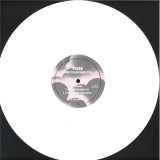
“MARK” is the new solo record from acclaimed drummer and composer Mark Guiliana: an auditory manifestation of one of theworld’s most creative and innovative musical minds. Ever since the first day he picked up a pair of drum sticks, Mark Guiliana has been instinctively exploring and absorbing themusic and rhythms that have been ever-present in his life. Fast forward to the present day and he has earned a formidable reputation as a world-class drummer, composer and thinker at the forefront of contemporary jazz and beyond. Guiliana’sartistry defies convention, weaving together a musical output beyond jazz with the ultimate goal of creating compelling musical narratives.
His songs serve as a conduit for his relentless quest for creativity, striving to share his sonic visions withthe world in their most unadulterated form. Guiliana’s new album “MARK”, represents an introspective voyage into his creative depths. On the record, Mark performs soloon a wide array of devices; you can hear his quintessential grooves intermixed with intriguing percussive soundscapes,sublime tapestries of synthesisers and fragments of spoken word. “MARK” is an album that peels back the layers of Guiliana’sexperiences, reflections, and the wisdom gleaned from a life immersed in music. It transcends genres and defiescategorisation, floating in the boundless space of pure expression.
Through music and through life, Mark looks into the mirrorand asks eternal questions of identity and growth: who am I, where am I going and what do I stand for? This album invites listeners to share in Mark’s personal dialogue, offering a sanctuary where they can begin to untangle and examine themselves track by track. “MARK” is an exploration of new and uplifting musical territory, unrestricted by norms andfree from preconceived ideas or satisfying (but ultimately unfulfilling) genre expectations. It embodies the impact of Guiliana’sjourney, marking his evolution as an artist. This record echoes the spirit of freedom, the courage of inquiry, and the beauty of unfettered expression.
Pearlescent White Vinyl with A5 card inserts.

Search:the tape
Real Gone Music is proud to present the original mono version of what most folks consider to be the single greatest postwar album of Western music, Marty Robbins’ 1959 record Gunfighter Ballads and Trail Songs. Everything about this album is iconic, from its “quick draw” cover art to the songs it contains—“Big Iron,” “Cool Water,” “The Master’s Call,” “Billy the Kid,” “The Strawberry Roan,” and, of course, “El Paso” (here in its rare, full-length version)— that have come to define the Western genre. And the music has never sounded better than it does here: this silver and red “Bullets ‘n’ Blood” pressing was remastered from the original tapes by Vic Anesini at Battery Studios in New York. Comes complete with the amazing original album art, too…a classic album now even collectible than before!
The first time we discovered Emanuel‘s voice was during the making of Pinnacle Sound‘s album Soul Medicine (BAT 007), it was in 2021. Some slaps leave a deep and indelible mark. We knew then that a new adventure was about to be born. Everything comes in time to those who wait, and what was supposed to happen happened: Emanuel contacted Bat Records for the realization of his new project. Nations Shall Know is the fruit of this meeting.
Emanuel & The Bionites are the many facets of one man. A diligent producer, it is with a selection of his best compositions that he knocks on the door of Bat Records to put his unique style on tape. The idea is clear, to produce a Showcase album: for each vocal, a dub mixed by the flagship duo Dub Shepherds. From a children’s song with soulful power in the introduction to “Arkitect“, to Africa as the central theme on “Imansion“, to the pure song of praise on “Jah Love“, through warm riddims carrying texts with apocalyptic resonances like on the title “Nations Shall Know”, there will be something for everyone.
And in discomix, ladies and gentlemen, following Emanuel‘s favourite format! Latest illustration of a rising figure of a certain Roots revival in Europe, this album will reconcile young zealous dubbers and old reggae backpackers.
a a1. Arkitect (Discomix) 8.25
[b] a2. Imansion (Discomix) [7.28]
[c] b1. Jah Love (Discomix) [8.26]
[7.42]
black LP[20,13 €]
“Is that what you wanted, Alfred?” we hear in Miles Davis’ unmistakable rasp at the end of “One for Daddy-O,” making it clear that the legendary (and assertive) trumpeter was not just playing the role of sideman on Somethin’ Else, the sole Blue Note album by Cannonball Adderley.
The alto saxophonist was a member of Davis’ band at the time and the depth of their musical camaraderie lifts this session up to rarefied heights throughout, from the breath-taking performance of “Autumn Leaves” that opens the album to the thrilling call-and-response theme of the title track. Pianist Hank Jones, bassist Sam Jones, and drummer Art Blakey round out the quintet on this timeless classic.
This Blue Note Classic Vinyl Edition is all-analog, mastered by Kevin Gray from the original master tapes, and pressed on 180g vinyl at Optimal.
SIDE A/B BLACK / WHITE / NEON MAGENTA VINYL, limited to 100 copies. REPRESS of the legendary album. Prior to the formation of Queens of the Stone Age, bassist/singer Nick Oliveri recorded some originals with ex-Kyuss bandmates Josh Homme (guitar) and Brant Bjork (drums), plus Karma to Burn's Rob (drums) and others. But once recording was completed, Oliveri decided to shelve the tapes; it wasn't until several years later (well after Queens of the Stone Age began to establish themselves) that the bassist decided to release the songs on a friend's indie label, Southern Lord Records. Going by the name Mondo Generator, 11 tracks were compiled for the 2000 release Cocaine Rodeo. The majority of the songs are much more raw and hardcore/punk-based than Oliveri's output with QOTSA, as evidenced by such tracks as "Shawnette," "Uncle Tommy," "Unless I Can Kill," and "I Want You to Die."
LIMITED 100 copies - heavy 180g pressing! Dive deep into the hypnotic cruise of "Sticky Traxx", the inaugural installment in a series of EPs by the skilled artist Jay Albert. The classic 3-tracker comes with "Waterfloor 4AM" on the A side, where Albert weaves a sonic tapestry that's as warm as it is dancefloor friendly. "Overcome" and "Undermine" ond the flip however are tracks that can glue a DJ set together. Imagine just a basic House groove that makes you move. Add a pinch of deepness and even techyness and you get there.
We are speaking about work tools for DJs who know how to get the hands up without a big drop. With beats, chords and basslines that are as sticky as the title suggests, this EP will resonate with enthusiasts seeking a more soulful and groove-filled experience on the floor. Now? Time to close your eyes and give yourself to the power of music.
Enjoy The Ride Records in conjunction with Lionsgate, SModco & Destro Films proudly presents the Clerks III Soundtrack. Curated exclusively for vinyl and cassette tape by Kevin Smith and Enjoy The Ride Records, the Clerks III Soundtrack contains a selection of James Lewis Venable's score to the film, along with a collection of songs played throughout the film.
The vinyl release features Matt Taylor's art on the gatefold jacket and has a double-sided full-color insert, featuring stills from the film and additional art from Matt Taylor. Pressed across 5 colorful themed variants RST THC, Clerks III Swirl, Quick Stop, Smoke (Secret Stash), and a Mondo Exclusive Split, this pressing is limited to 1,500 copies.
SPEED und Hardcore sind zwei Worte, die zu einem Synonym geworden sind: Die in Sydney, Australien, ansässige Band hat das Genre durch
berauschende Live-Auftritte, Musikvideos und die Treue zu sich selbst für sich beansprucht.
Die fünfköpfige Band hat den Begriff ONLY ONE MODE geprägt, und so ist es keine Überraschung, dass er auch den Titel ihres ersten Albums darstellt
Das Debütalbum ist ein Beispiel für das Wachstum der Band, ohne dabei den SPEED-Ethos zu vernachlässigen. Das ist es, worum es ihnen geht:
Hardcore, hart gespielt, schnell gespielt, "für uns, von uns" - explizit, unmittelbar, definitiv - in Anspielung auf all die entscheidenden Bands, die vor
ihnen gekommen sind.
Im Juni sind Speed auch in Deutschand live zu erleben.
Repress!
Formed in 1968, Jazz Sabbath was considered by many to be at the forefront of the new jazz movement coming out of England at the time. The eagerly awaited debut album, scheduled for release on Friday 13th February 1970, was cancelled when news broke that founding member and pianist Milton Keanes was hospitalised with a massive heart attack which left him fighting for his life.
The record company shelved the album and cancelled the scheduled release out of financial uncertainty of releasing a debut album from a band without its musical leader. When Milton was released from hospital in September 1970, he found out that a band from Birmingham, conveniently called ‘Black Sabbath’, had since released two albums containing metal versions of what he claims were his songs.
All recalled Jazz Sabbath albums had been destroyed when the warehouse burned down in June 1970; which turned out to be a case of insurance fraud by the label owner, leaving only a few bootleg tapes of Jazz Sabbath’s live performances as proof of existence.
The album masters were said to be lost in the fire, but were actually misplaced and gathered dust in the basement vaults of the recording studio. These tapes have now been remixed and, half a decade later, will finally be heard; proving that the heavy metal band worshipped by millions around the world are in fact nothing more than musical charlatans, thieving the music from a bedridden, hospitalised genius.
Repress!
Formed in 1968, Jazz Sabbath was considered by many to be at the forefront of the new jazz movement coming out of England at the time. The eagerly awaited debut album, scheduled for release on Friday 13th February 1970, was cancelled when news broke that founding member and pianist Milton Keanes was hospitalised with a massive heart attack which left him fighting for his life.
The record company shelved the album and cancelled the scheduled release out of financial uncertainty of releasing a debut album from a band without its musical leader. When Milton was released from hospital in September 1970, he found out that a band from Birmingham, conveniently called ‘Black Sabbath’, had since released two albums containing metal versions of what he claims were his songs.
All recalled Jazz Sabbath albums had been destroyed when the warehouse burned down in June 1970; which turned out to be a case of insurance fraud by the label owner, leaving only a few bootleg tapes of Jazz Sabbath’s live performances as proof of existence.
The album masters were said to be lost in the fire, but were actually misplaced and gathered dust in the basement vaults of the recording studio. These tapes have now been remixed and, half a decade later, will finally be heard; proving that the heavy metal band worshipped by millions around the world are in fact nothing more than musical charlatans, thieving the music from a bedridden, hospitalised genius.
- A1: Boyfriend
- A2: Uma
- A3: No 1 Fan
- A4: Brand
- A5: Purr (Interlude)
- A6: Seles
- B1: Grow
- B2: Pretty Head (Interlude)
- B3: Cicciolina
- B4: Penny For Love
- B5: Skin (Interlude)
- B6: Feigned Sleep
- B7: Horse
- C1: No 1 Fan (Ep Version)
- C2: Worri
- C3: Horse (Ep Version)
- C4: Sunny Pie
- C5: Cicciolina (Single Version)
- D1: Purr (Davies 7" Version)
- D2: Space Between Your Moles
- D3: Seine
- D4: If Jfa Were Still Together
- D5: Ghost Of Fun
Milky Clear Vinyl[35,71 €]
Driven by lust-fueled limerence and drifting far from conformity, Butterflies Don't Go Away captures Majesty Crush's transient, yet subversive mark on the landscape of American shoegaze to come. Tracked between 1991-1995, the quartet reimagined the collapse of the American rust belt as a late-night, nail biting fever dream/revenge fantasy. This deluxe 2xLP compiles their Love 15 album, singles, EPs, and rarities, all remastered from the original tapes, with thorough annotation and visual documentation in a 24-page booklet. An immortal transcendence if there ever was one.
Color Vinyl[24,58 €]
Valley of Rain was Tucson’s Giant Sand’s debut album recorded in 1983, and eventually released by 1985. It included Howe Gelb on vocals, guitar and Winston Watson on drums for most of it, Tommy Larkins on drums for some of it and Scott Garber on fretless bass for all of it. At the time of the recording, Howe was unacquainted with the possibilities of tube (valve) amps and had recorded most of the album with a Roland JC120 at the miraculous 8 track facilities of The Control Center in Korea Town, Los Angeles by Ricky “Mix” Novak. This impromptu recording had occurred because the band refused to cancel their first Los Angeles live gig, at Madame Wong’s, when the band (Giant Sandworms) had broken up days before in Tucson. Instead, Howe headed out anyway with Scott, the newest member who’d only been in the band for about a year, after band mainstays Billy Sed and Dave Seger reasonably decided ‘enough was enough’ following a rough and tenuous year spent in the lower east side of NYC attempting to further the band circa 1981/82. Tucsonan Winston Watson, (who would go on to tour with Bob Dylan in the 90s, as well as Alice Cooper, Warren Zevon etc ) was already living in Los Angeles and was brave/kind enough to jump in for the live date with no rehearsal. The result was so sparked with adrenalin, that the trio set up an impromptu studio session the next day to attempt to capture the sonic thrust on tape. The total cost of the day and a half recording was $400 including one 1” reel of 30 minute tape. When Enigma Records offered to release the album they requested another 15 minutes of music to make it a full LP. Ron Goudie was then called in to oversee the extra recordings at a Venice, CA studio called Mad Dog with Eric Westfall engineering. Tommy Larkins, who had been on the previous country punk album of Howe’s “The Band of ... Blacky Ranchette” came in to drum for those last 3 songs. It was there when Howe borrowed an amp that had been stored at the studio did he discover the bolster of a tube amp and his world changed. The amp was a slightly modified Fender Twin Reverb owned by Robbie Krieger of The Doors. 30 some years later, now that the band had been put to sleep indefinitely, those very first songs had begun creeping into the last Giant Sand tours. It somehow seemed appropriate to give them another shot with the proper amp just to see what they could’ve been. What made the idea more approachable was the availability of both original drummers living back in Tucson. The first attempt came last summer with both Winston & Tommy and Thøger Lund on bass, as well as the 2 newest members, 29 year old Gabriel Sullivan and 23 year old Annie Dolan on double neck guitars. The sound was insane. The funny part was Gabriel, who engineered and mixed the session, gave it an intentional 80s production sound. Howe later explained to Gabe he had been at war with that production trend since those first original recordings. So they all tried it again at Christmas time, this time with a newly discovered Fender 30 amp that had only been in production from 1980 – 1983. This new re-recording of that first album now sounds like it should’ve sounded. It was re-done for $400 and the same day and a half session time as the original. Scott Garber even drove up from Austin TX with his fretless to play so that the album is literally the originally line up for at least half of the songs. And yes, no pedal boards were used too. The band intends to tour this summer playing only those Valley of Rain songs. Giant Sand Returns To Valley Of Rain.
- A1: Hey Mami
- A2: Dreamy Bruises
- A3: Could I Be
- A4: Wolf
- A5: Dress
- B1: H S.k.t
- B2: Coffee
- B3: Uncatena
- B4: Play It Right
- B5: Come Down
- C1: Hey Mami (Rick Wade Remix)
- C2: H S.k.t. (Dntel Remix)
- C3: Coffee (Helado Negro Remix)
- D1: Hey Mami (Charles Spearin Remix)
- D2: H S.k.t. (Hercules And Love Affair Remix)
- D3: Coffee (J Rocc Remix)
Black/White Split Colour Vinyl. Recorded in a little bedroom studio out in Durham, North Carolina, Amelia Meath and Nick Sanborn's debut LP as Sylvan Esso arrived in 2014 at the juncture of pop and experimental. Even now, years later, the LP remains an urgent and fitting introduction to a push-and-pull that would go on to inform the duo's sound - a thoughtful headiness that also wants you to get out on the dance floor. A blend of analog and digital, Meath and Sanborn were two unexpected puzzle pieces fitting together with singular ease, producing a ten-track LP that was both minimalist and shimmering, with dark undulations rippling beneath the synthy-surface and crystalline quality of Meath's voice. Before all of the international touring and festival headlining and critical acclaim and Grammy nominations, Sylvan Esso was just a shot-in-the dark of musical chemistry gone right. The original album bio for the self-titled presciently sets the stage for the thesis that has gone on to guide Meath and Sanborn's writing since then: "a collection of vivid addictions concerning suffering and love, darkness and deliverance" arriving as "a necessary pop balm, an album stuffed with songs that don't suffer the longstanding complications of that term." And so, even as the band continues to evolve and becomes amorphous, there's still that argument about what pop can be at its core. This is just the beginning of that conversation captured on tape. In honor of the record's ten year anniversary, North Carolina-based indie label Psychic Hotline will release a deluxe reissue, complete with previously unreleased material. Featuring essential singles "Coffee", "Hey Mami," and "H.S.K.T.", the expanded edition also includes remixes from J Rocc, Rick Wade, Helado Negro, Dntel, and more. The deluxe 2LP package sports an all-over foil inversion of the original album's iconic foil "SE" logo.
Top-Mixtape-Collage von Death Is Not The End mit Auszügen aus Soundsystem-Tapes aus Manchesters berühmter Street-Soul-Szene der späten 1980er bis Mitte der 1990er Jahre. Jetzt auch auf Vinyl. Cut-Up-DIY-Kassettenaufnahmen von Broadway, Stereo Dan & Soul Control, die von 1988 bis 1996 bei Dance- und Blues-Partys in Süd- und Zentral-Manchester auflegten
In a joint venture with Weird Vacation, fmd is pleased to announced the long overdue reissue of the classic Plush debut album, More You Becomes You. Originally released in 1998, More You Becomes You was revered upon release and has been remastered from the original tapes by Jason Hillier with new Digital and DL masters created by Bob Weston who also recut new lacquers for the vinyl reissue. Described by Uncut magazine as “One of the most charismatic and eccentric pop craftsmen of the past twenty years”, Liam Hayes has been making critically acclaimed records since the 90’s. His first single “Three-Quarters Blind Eyes b/w Found a Little Baby” released under the moniker Plush, was cited by the NME as being “..one of those rare records - and incredibly rare debuts - that instantly seems a classic..” Although he emerged from the Chicago indie-rock scene, Hayes is often compared with artists such as Jimmy Webb, Brian Wilson, Laura Nyro and Harry Nilsson. Like some of the best folk-pop or soft soul from the 1960’s and 1970’s there is a timeless quality to his music. Re-release of debut album More You Becomes You is remastered from the original analogue tapes by Jason Hillier and recut for vinyl by Bob Weston, who also remastered the CD and Streaming formats. A deluxe 12 page full size booklet comes with the LP version (which also comes packaged as close to the original as possible, with a printed outer envelope/bag) and a 20 page booklet comes with the CD version put together by Liam and Jason Harvey, with Sleeve Notes by John Mulvey.
- A1: Dire Wolf
- A2: The Race Is On
- A3: Oh Babe It Ain't No Lie
- A4: It Must Have Been The Roses
- B1: Dark Hollow
- B2: China Doll
- B3: Been All Around This World
- B4: Monkey And The Engineer
- B5: Jack-A-Roe
- C1: Deep Ellum Blues
- C2: Cassidy
- C3: To Lay Me Down
- D1: Rosalie Mcfall
- D2: On The Road Again
- D3: Bird Song
- D4: Ripple
"To celebrate the Grateful Dead's 15th anniversary in 1980, they did something extraordinary: they played a fifteen-show run in San Francisco, and an eight-show run in New York City, with the most exciting of these being an additional, acoustic 45 minute set to open every show, their first acoustic sets since 1970. These sets saw the reinterpretation of some classic Dead and solo songs, older traditional songs from the jugband days and the 1970 acoustic sets, and some new additions to the Dead's repertoire. Recorded to 32-track tape (two 16-track tape machines synced up), Reckoning is one of the greatest, most clear sounding live records the Dead ever produced. Featuring countless classics including “Cassidy”, “Bird Song”, “Monkey and the Engineer”, and “Ripple”. • Will be newly mastered by GRAMMY® Award-winning engineer David Glasser, Produced for release by the Dead’s Audio Archivist and Legacy Manager, David Lemieux"
I have a lot of beats lying around that I keep meaning to use for something. File under "Beats to Use". I thought I'd put them together on a little beat tape.
In my folders, my beats have random names like "BEATS 114 S_Z - 82" so in needing to give these ones names and in homage to "Special Herbs" I have named them all after drugs. Broadly these beats are pretty menacing, and have a big electronic influence.
I thought they sat well together and alongside the vocal feature from Jam Baxter. Some beat tapes are full of vocal samples or play continuously. I wanted this one to hark back to some of the beat albums of the late 90s that were meant for beat juggling with, cutting or rapping over. So here we are.
Mario Rusca is most probably the biggest living Italian jazzman. His major influences are Duke Ellingtons composing abilities and Hampton Hawes' brilliant sound. He immersed himself in the harmonic inventions of the incredible pianists of the 60s and 70s: from Bud Powell to Bobby Timmons, Wynton Kelly and Bill Evans. Mario Rusca has been the house pianist of Capolinea, the most important Italian jazz club of the 70s and 80s. He went on to perform in important national and international settings-representing Italy in the "Piano Solo'' category of the "International Festival of Varsavia" and participating with his quintet at the "International Festival of Montreal". He has collaborated with a multitude of prestigious names: Chet Baker, Tony Scott, Curtis Fuller, Gerry Mulligan, Lou Donaldson, Art Farmer, Bob Berg, Lee Konitz, Dusko Gojkovic, Al Gray, Kay Winding, as well as Stefano Bagnoli, Enrico Rava, Tullio De Piscopo, Kenny Clarke, Stan Getz, Jimmy Owens, Toots Thielemans, Gianni Basso, Pepper Adams, Steve Lacy, Steve Grossman, Franco Ambrosetti, Woody Shaw, and Eddie "Lockjaw" Davis. With Gerry Mulligan, in particular, he toured in 1976 and with Lee Konitz, he recorded Wheres The Blues? at the end of the 90s. In this regard, Suspension in 1975 with Tullio De Piscopo and Recreations in 1976 with the phenomenal Larry Nocella playing saxophone are still very beautiful and modern recordings. As Mario says, "In jazz, you choose the companions that you can dialogue the most with.there needs to be an interplay, there needs a...a way of feeling, which is why you choose musicians because they feel like you, or, if nothing else, they follow you". The chemistry between the three of them is perfectly aligned, synergistic. Tonys drums and Riccardos bass create a soft and essential rhythmic tapestry that never hinder the creative prowess of the band leader. Here Mario Rusca is interpreting the most dynamic jazz standards. Blues for Gwen by McCoy Tyner, Blues Walk by Lou Donaldson, Blue Minor by Sonny Clark, Turnaround by Ornette Coleman, Bass Blues by John Coltrane or even Super Jet by Tadd Dameron. You cant help but imagine yourself on top of a convertible, smiling and carefree, while they travel through the soloist progressions of Turnaround and Super Jet. We need to underline the four originals included in this recording: Blue Dream (for Allerim), Tempo Blues, Double Horn e Monochrome Blues, extremely suggestive compositions, rich of intuitions and which well exhibit Mario Rusca composition skills and his ability to play the blues. MONOCHROME BLUES is a winning trio album which will deeply please the most demanding jazz hears. The musicians Mario Rusca (piano) Riccardo Fioravanti (bass) Tony Arco (drums)
- A1: As Can Be
- A2: My Smile Is A Rifle
- A3: Head (Beach Arab)
- A4: Big Takeover
- A5: Curtains
- A6: Running Away Into You
- B1: Mascara
- B2: Been Insane
- B3: Skin Blues
- B4: Your Pussy's Glued To A Building On Fire
- B5: Blood On My Neck From Success
- B6: Ten To Butter Blood Voodoo
- C1: Untitled #1
- C2: Untitled #2
- C3: Untitled #3
- C4: Untitled #4
- C5: Untitled #5
- C6: Untitled #6
- C7: Untitled #7
- C8: Untitled #8
- D1: Untitled #9
- D2: Untitled #10
- D3: Untitled #11
- D4: Untitled #12
- D5: Untitled #13
2024 Repress
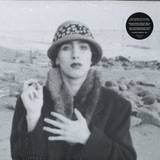
Niandra LaDes And Usually Just A T-Shirt is the first solo record by John Frusciante. Between 1990 and 1992 the guitarist made a series of 4-track recordings, which at the time were not intended for commercial release. After leaving the band Red Hot Chili Peppers in 1992, Frusciante was encouraged by friends to release the material that he wrote in his spare time during the Blood Sugar Sex Magik sessions.
Originally released on Rick Rubin's American Recordings label in 1994, Niandra LaDes is a mystifying work of tortured beauty. Frusciante plays various acoustic and electric guitars, experimenting with layers of vocals, piano and reverse tape effects. Channeling the ghosts of Syd Barrett and Skip Spence, his lyrics are at once utterly personal and willfully opaque.
Frusciante's rapidfire, angular playing shows how key he was in the Chili Peppers' evolution away from their funk-rock roots. His cover of "Big Takeover" perfectly deconstructs the Bad Brains original with laid-back tempo, twelve-string guitar and a fierce handle on melody.
The album's second part - thirteen untitled tracks that Frusciante defines as one complete piece, Usually Just A T-Shirt - contains several instrumentals featuring his signature guitar style. Sparse phrasing, delicate counterpoint and ethereal textures recall Neu/Harmonia's Michael Rother or The Durutti Column's Vini Reilly.
On the front cover, Frusciante appears in 1920s drag - a nod to Marcel Duchamp's alter-ego Rrose Sélavy - which comes from Toni Oswald's film Desert in the Shape.
This first-time vinyl release has been carefully remastered and approved by the artist. The double LP set is packaged with gatefold jacket and printed inner sleeves.