Entering the abandoned warehouse full of haze and blinded by the strobe lights, you feel the rush when the bass kicks in. You have no idea if the year is 1996 or 2026, but it doesn't matter as long as you are alive.
Indeed, another batch of forgotten and previously unreleased radioactive acid techno has surfaced on the anonymous, vinyl-only Kilotoni imprint — possibly their strongest release so far.
A1 The peak of acid techno is perhaps found in its most stripped-down form. As the bass line throbs your breath out, you try to chase the kick drum in a game of hide-and-seek until complete exhaustion. It's something you play after the copies of Betty Ford and Sync In start to melt during a nuclear reactor accident.
A2 A ravey or hard-techno-oriented approach is applied to the acid techno formula here. The squelching, pulse-width-modulated synth makes for an eerie yet irresistible call to the dance floor. The snare rolls might just be your guilty pleasure.
B1 The flip side opens with funkier techno that the Voyager probes could bump to in outer space a million years from now. A wild acid line is accompanied by playful chords and beats. Detroit influences meet Nordic melancholy.
B2 The kick drum keeps pounding its way through while a lonely TB-303 is traveling in its own space and time. Influenced perhaps by the Midwest acid techno style, this could be a mid-90s DAT-tape lost inside the transatlantic postal system on its way to the Analog Records USA headquarters.
Buscar:the tape
Returning with his first artist album in 13 years, revered techno innovator Mike Parker continues to shape out his explorations around 170 with his latest work for Samurai Music, Echo Disintegrator. Transcending genre lines with his unmistakable sonic stamp, the seasoned US producer crafts an extended trip through his exacting, lithe frequencies and brutalist rhythms. As evidenced on recent EPs Envenomations and Sabre-Tooth, Parker can comfortably slip into a hard-stepping D&B structure and make it his own. 'Earth Energy Imbalance' leaps forth with precision and purpose, wrapping atonal synth shapes around the stark beat in staggering high definition. 'Positronic Tentacles' finds a similar rolling momentum, even threading ruthlessly trimmed vocal snatches into the lyrical pulse of the lead tones. 'Radiative Force' teases its own mutant funk out of the envelopes shaping the molten sonics coursing through the middle of the frequency range. Elsewhere, Parker explores a variety of accented grooves around typical D&B tempos, remaining reliably broken while dipping into half-time space on 'Lunar Nocturne' and finding a low-slung swagger in the carefully deployed pressure of 'Ghost Rain' and 'Echo Disintegrator'. 'Beat Activator' pivots on a dense bed of bass with a crooked, off-beat slant before 'Dragon Bravo' casts a similarly dembow-informed beat into a dense tapestry of cyclical machine shrieks and snarls. There is a ruthless consistency to Parker's approach across Echo Disintegrator, riding the loops without flinching and forcing the focus deep into the minutae of every sonic element. Both brilliantly functional and profoundly subtle, there's a visceral, physical quality to the sound design that makes it a listening experience like no other.
Over a decade has passed since this 12" was released, and it has truly aged like fine wine. This release features 2 timeless cuts from the mind and soul of cv313 mixed and recorded near the heart of Detroit. This was beautifully remastered by dub innovator and pioneer, Stefan Betke POLE @ scape mastering in Berlin, DE. The recordings were pulled from the session masters conducted by Bazza @ Alchemy Mastering in London to ensure a perfectly balanced mix and preserving the soul and spirit of the original tape masters while focusing on enriching every finite detail. While listening to these remasters you can feel the analog warmth of the original tape recordings, with a low end rumble in a way only POLE could pull off! On the A side we have cv313's classic "Lost Sequence" culled from the celebrated Japan exclusive "live" double CD album released back in 2009. On the B side there's a rare live version performed by intrusion at a loft event put on by the good folks over @ Little White Earbuds. This rare recording was reduced and stripped down, core traces of the original swim inside oceanic bass and modulated high end frequencies creating an atmosphere all of its own. This is one for the heads and a true lesson in space and bass!
Presenting the 2nd in the series of Persian remix EPs, following the bumping Dub House remakes from Picasso, the label is joined by Yorkshire’s own young electronic folklore master, a fast-rising name, Miles J Paralysis.
Whereas Picasso took the first Dubplate ‘Space Within Art’, here Miles J delves in to the follow up ‘Smoke Dub’, turning out a selection of dubwise cuts that build on the dark electronics of his excellent debut releases for his Crying Outcast label.
Yorkshire born and based, with a love for the Moors, as well as the teachings of lore, magick and mysticism, this young producer has been emersed in music since a young age, with a penchant of Dub, Hip Hop and Reggae.
Starting with Survival Dub, the anthemic Ragga Dub original morphs into 2 parts, first heading down Paralysis’s alley of dark and brooding production marrying perfect touches of the vocal samples, before the amen break builds the track to the light.
Smoke Mari follows, the languid Digibreaks chugger, utilizing Linval Thompson’s iconic vocals, now comes as a deep meditative Dub excursion. Stripped back to a raw essence, the vocals whirl, while hypnotic keys and dub bass complete the psychedelic mosaic.
There Is No Love is modern dub style, off beat syncopation, reverb, tape delays and heavy vocal sampling all in the mix. The breakbeats of the original are jettisoned for a Dub (Drug) Chug, the atmospherics seeking the dark corners. “These are the last days; can’t you see the sunshine…”
Zatoichi’s Troubles ends the pack, the trip hop, Depth Charge dub bass cut transforms at the mixing desk of Miles J in to Dub Techno territory, haunting, melodic. Miles J’s love of the deeper side of electronic music expanded. Club music but not produced for clubs. Made for the discerning.
Paralysis the Mystery.
Over a decade has passed since this was released, and it has truly aged like fine wine. This release features 2 timeless cuts from the mind and soul of intrusion, mixed and recorded near the heart of Detroit. This was beautifully remastered by dub innovator and pioneer, Stefan Betke POLE @ scape mastering in Berlin, DE. The recordings were pulled from the session masters conducted by Bazza @ Alchemy Mastering in London to ensure a perfectly balanced mix and preserving the soul and spirit of the original tape master. The first incarnation of "A Gentle Embrace" came in the form of three extended reshapes from cv313 & variant and now we're proud to offer the original work on beautiful crystal/silver mixed clear 150 gram wax! :)
On side A the most pristine of dub techno is on offer here, this is Detroit techno stripped down to its most minimal core. A gorgeous subtle ambient soundscape exploring the deepest end of dub and house with gentle surges of organic elements, field recordings and modular movements simply out of this world. The "Reduction" mix on side B captures those chilling glacial soundscapes, trademark basslines and mesmerizing gaseous atmospheres subtly layer into the mix. Otherworldly to say the very least, this is music to swim in, breathe in and to pray to - for the spirit and the soul. Essential!
Over a decade has past since this was released, and it has truly aged like fine wine. This release features 2 timeless cuts from the mind and soul of cv313 mixed and recorded near the heart of Detroit. This was beautifully remastered by dub innovator and pioneer, Stefan Betke POLE @ scape mastering in Berlin, DE. The recordings were pulled from the session masters conducted by Bazza @ Alchemy Mastering in London to ensure a perfectly balanced mix and preserving the soul and spirit of the original tape masters. This EP features two equally seductive cuts opening with "Fading Lights" which finds its pulse in the rhythmic elements while floating in a world of vaporous mist and resynthesized stardust. On the B side "Magenta" fills the space with ghostly apparitions and a rather hypnotic hook; pushing the boundaries of the spiritual principles found in the power of repetition. Close your eyes and drift into 14 minutes of endless flotation as modulating low frequencies massage your brain and mind, dive deep into a fathomless analogue world!
The Bait label is back with more stylish deep dubstep swagger, this time from various artists who know how to crank up the low end pressure. Eva Loveless opens up with 'Juniper red' which harks back to classic Techtonic sounds where techno and bass come together for front foot forward momentum. Slimy Ape's 'Guro' is a hefty stepper with dubby undertones and plenty of open space for the tape hiss to hiss and the conscious vocals to drift in. Furtive's 'Stormlight' is ice cold and minimal, with skeletal rhythms punctuated with clacking hits and doused in bass. Last of all, Buckley's 'Introspective' is a twitchy broken beat with classic dub techno chords and yelped vocals injecting some fragmented soul.
“Estonian cultural theoretic Tõnis Kahu once said that Black Metal is men seeking for masculinity while their bodies lack the capacity to catch up and are lagging behind. In the age of microplastics and low-testosterone, Tapetud Rott is asking for ancestral guidance from George Michael. Each day with the growing pains of maturity they can only dream about living somewhere so happy-go-lucky and tranquill as the city that once provided the suitable breeding ground for giving birth to such an agressive and theatrical expression that could mark its cadaverous polar opposite. The mask they now so falsely wear is one seeking for Vitamin D inside the heart of a deceased Rat.”
Limited Black 7-inch Vinyl
Music by Robert Nikolajev & Mikk Madisson
Recorded in Tallinn
Mastered By The Bastard
- Romance Of The Black Pain Otherwise Falin’ Love With
- Reapers Of The Night
- The Night Wind, The Candle Flame At Dawn
- Bird Cals In The Dusk
- White Awakening
- The Night, Assassin's Night
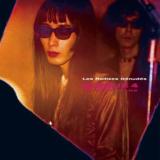
Les Rallizes Dénudés returns with Disque 4 -’76 Studio et Live-, the latest in the ongoing series of official archival releases from the celebrated Japanese underground band.
In 1991, Les Rallizes Dénudés released what would become the only official albums issued during the band’s lifetime: ’67-’69 STUDIO et LIVE, MIZUTANI / Les Rallizes Dénudés, and ’77 LIVE. What no one knew at the time was that Takashi Mizutani was already deep into preparing another record.
Disque 4 reconstructs the track list Mizutani had put together for that fourth album. This includes the single “White Awakening," recorded in 1976 at the studio in Takadanobaba BIG BOX as part of the sessions that would become known among collectors as the “Virgin Demos.” Production and mastering of this archival release were handled once again by Makoto Kubota, assembling the album from the masters left behind by Mizutani, utilizing newly discovered tapes as additional sources.
Prepared by Mizutani using a variety of formats, including U-Matic, open reel, and DAT, the tracks were originally labeled with working titles such as “Disque 4” and “Record No. 4,” indicating that Mizutani intended them for inclusion on a possible fourth album. The recordings were taken primarily from studio sessions that all seemed to have taken place around 1976, which aligns with the claim that Mizutani himself once made that “there exists an album of studio recordings made with the same members as ‘77 LIVE.” His notes also suggest an attempt to sequence the tracks as a vinyl LP, splitting them into A and B sides. It's not hard to imagine that in the era of CDs in the early 1990s, an album on analog LP would have been an extremely difficult sell. Thus, the “Fourth Album” had become another lost piece of the intricate Rallizes myth.
Les Rallizes Dénudés may be notorious for the colossal volume and extended song lengths in their live settings. But this work, centered around studio recordings and condensed onto a single LP record, transcends the common impression of the band’s aggressive flood of noise. Instead, the “lyricism” at its core emerges with striking clarity. And needless to say, this is precisely the charm of the Rallizes that continues to captivate fans worldwide today.
Certain paths necessitate and call for one singular long sequence in order to arrive at a fully formed conversation or reasoning. Nothing seems to broadcast it more clearly than the trajectory Brussels based Italo-Vietnamese artist Nguyễn Zen Mỹ embarked on during the last decade as Radio Hito.
After a string of highly cherished and sought out tape releases, Radio Hito’s new album ‘L’uso e gli attributi del cuore’, co-released by Maple Death & Meakusma, unfolds with devastating
clarity, a profound balance of depth, minimalism and emotional grounding. A ten-sequence song cycle for voice and MIDI soundfonts adapted from the 2021 book by French poet Claude
Royet-Journoud.
Written and recorded between January 2023 and August 2025, the cycle evolved through nearly 80 live performances from Galicia to Kazakhstan before arriving at its recorded form. Set to an Italian libretto adapted from Royet-Journoud’s text ‘L'usage et les attributs du cœur’ (POL, 2021), the work revisits the tradition of the 19th-century Lied — art song built on existing poetry— transposed into a radically economical contemporary setting: voice and Casio CTK workstations.
"I was interested by this incompleteness CRJ mentions - by the ‘suspension’ of meaning questioning readability and intelligibility. I ‘resisted’ to CRJ’s texts since I met him and got to know his work. … It seems to me that when playing the songs, I submit an object to be completed by the audience."
Radio Hito’s distinctive approach to setting poetry to music — spare arrangements, strophic repetition, and a voice suspended between recital, fm transmission and canzone — creates a language of its own, reaching new heights on ‘L’uso e gli attributi del cuore’, songs that are formally rigorous, emotionally restrained, and shaped by the discipline of sustained live performance, interlocking into a coherent cycle.
Rather than illustrating the poem, Radio Hito approaches it as a space of suspension. Royet-Journoud described poetry as a “profession of ignorance” where meaning remains incomplete; these songs extend that trembling state, allowing repetition, digital timbre, and restraint to hold the text open.
Often misread as minimal synth or romantic chanson, Radio Hito’s practice is rooted instead in the lineage of the art song and song cycle: open structures, close attention to language, and a live performance economy that pushes the voice at the heart of the stage. The choice of accessible keyboard workstations — light, portable, and embedded in contemporary popular culture — replaces the historical piano.
Radio Hito creates fantastical, mirage-like songs, intimate yet elusive. Her music is forlorn chanson for the digital age; bringing her haunting and beautiful vocalisations into conversation with MIDI soundfonts and humble-yet-deep casio compositions. Music that strides for simplicity, yet lands miraculously within an entire new universe, a uniqueness achieved from like-minded spirits such as Ghedalia Tazartès, Savina Yannatou & Lena Platonos, Dorothy Carter, cycles that trickle down into estuaries.
“Radio Hito's set is superb. Sitting on the altar steps with a synth, her fabulously expressive vocals colour sparse, pensive compositions.” The Wire
'Matsuli Music is proud to announce the first vinyl reissue of Philip Tabane’s Sangoma ("Spiritual Healer") since its 1978 release. Remastered from the original tapes with lacquers cut by Frank Merrit and pressed on 180g heavyweight vinyl at Pallas in Germany, this definitive edition re-asserts the power of one of South Africa’s landmark recordings. Featuring new liner notes by cultural critic Kwanele Sosibo and artwork restoration by Siemon Allen, Sangoma returns in full force through an extended Malombo line-up, fronted by Tabane's spellbinding guitar - ancestral, timeless, and unbound.
'Philip Tabane (1934–2018), the mercurial guitar genius of South African music, forged a sound that was as rooted in the spirit world as it was in daily life. With the Malombo Jazzmen of the 1960s, Tabane disrupted Western notions of “jazz,” bringing the resonant rhythm of cowhide malombo drums into the foreground. While outsiders and the uninitiated often reached for labels like “primitive yet sophisticated,” Tabane and his collaborators named it more truthfully: “music of the spirit.”
'By the time of Sangoma, Tabane stood at a crossroads. Fresh from a period of three years’ touring in the United States where he graced the Newport Jazz Festival, and played alongside Miles Davis, Herbie Hancock, Pharoah Sanders and others, he brushed off comparisons with characteristic self-assurance: “No, I don’t play like Miles. Miles plays like me.” Back home in South Africa, and with a newly signed international distribution deal with WEA Records, he harnessed this momentum into a larger band setting, capturing a rare intensity.
'The result was Sangoma—an album that bridges contradictions: expansive yet intimate, celebratory yet haunted by exile and return. Tracks such as “Sangoma,” “Hi Congo,” and “Keya Bereka” are not simply performances but living testaments, songs that would remain in his repertoire for decades. Unlike the moody, immersive character of much of his work, here Tabane is on the move—urgent, restless, uncontainable. As he announces on the second track, “Maskanta wa tsamaya” (“something that kicks ass”).
More than four decades on, Sangoma is both an historical document and a timeless invocation. From his home in Mamelodi to the world and back again, Tabane’s spiritual healing endures—raw, electric, and unbowed.'
Released in 1979, Tete Mbambisa's Did You Tell Your Mother delivers the ultimate blend of African groove with American modal grace, making it one of the all-time classic albums of South African jazz. With Mbambisa presenting original compositions at the piano alongside Basil "Mannenberg" Coetzee on tenor sax and flute, the acoustic quartet featured here is rounded out by Zulu Bidi from the band Batsumi on bass locking in with Dollar Brand drummer Monty Weber. This 2026 reissue presents a flat transfer of the master tapes with album artwork restored using illustrator Hargreaves Ntukwana's original ink drawing.
A self-taught musician, it was as leader of the vocal group The Four Yanks in the early 1960s that Tete Mbambisa’s music career took off. With encouragement from Abdullah Ibrahim, he dedicated himself to the piano and went on to record with The Soul Jazzmen in 1969. Mbambisa's solo recordings from the 1970s, produced by Rashid Vally for the independent As-Shams/The Sun record label, document his creative peak as a recording artist and have contributed to earning him an honorary doctorate and a place among the figureheads of South African jazz history.
Fresh from the success of his debut solo LP ‘How To Kill A Butterfly’ out last year on High Focus Records, Farma G returns with the anticipated full-length follow up ’Nearly Nothing’s Enough’.
An album anchored in his notorious musical adventures as 1/2 of Task Force, Bury Crew and Mud Family, but very much informed by the state of 2026 Britain and beyond, Farma’s new body of work is fuelled by equal parts venom and deep introspection across 12-tracks courtesy of Brighton based producer Relense.
With one eye on following ‘How To Kill A Butterfly’ with something of equal standing, Farma revisited the fundamentals in the hope of better understanding what he really wants to say with the music he makes. By channelling feelings of familiarity and seeking out emotional connections to his past he created a record that feels both concise and expansive.
With the help of Relense’s gritty analog instrumentals, Farma found himself journeying across subjects and bandwidths; from exploring the mind of a conspiracy theorist on ‘X-Files’, to being a zen master with a mountain on his back on ‘Sun Wukong’, before returning to earth for a typical day in the life on ‘Mr Moany’, ‘Nearly Nothing’s Enough’ is an album that took Farma home and he is delighted to welcome you on the journey.
- A1: If Sunlight Passes Through (Excerpt) - Molinaro
- A2: Luz Violeta - Pablo Color
- A3: Theme From Extase - Left Bank
- A4: Patterns - Carlos Nino & Friends Feat Zeroh, Jamael Dean & Jesse Peterson
- A5: Créme (Rough Mix) - Suzanne Kraft
- B1: In The Light Of Sprint - Bsa Gold
- B2: Ridge Of Tocco - Moliaro
- B3: The Cloud Is Back - Kaidi Tatham
- B4: Secret Beach - Jonti
- B5: Too Many Letters - Fourth Kind
- C1: Cinnamon Vision - Ashtrejenkins
- C2: Gears Not Working (Alternate Take) - The Abstract Eye
- C3: Persistere - Afrikan Sciences
- C4: Waver Track - Legowelt
- D1: Starr22 - K15
- D2: Suspicious Numbers - 2000Black
- D3: Freedom Live - Build An Ark With Special Guest
- D4: Atairs Flight - Alex Attias & Sassy J
Sassy J’s acclaimed A Sanctuary tape mix arrives as a double vinyl release, featuring 18 of the 22 original tracks. All exclusive and previously unreleased music by 17 contemporary artists including Molinaro, Carlos Niño & Friends, K15, Kaidi Tatham, Legowelt, Afrikan Sciences, AsheTreJenkins, 2000Black and many more. A journey through sounds, spheres, moods and dynamics dedicated to the unity and empowerment of the independent artists.
This first new volume of edits from Big Baba finds Elado digging with intent rather than on a purely nostalgic tip. Fresh off his Razor-N-Tape run, he opens the series by rewiring rare global grooves for contemporary club floors. The EP moves fast and wide as Bollywood disco mutates into techno on 'Disko Disko!', while Yeah Yeah flips obscure 80s Thai boogie-funk into something elastic and punchy. 'EL SOL' slides in as a proto-house warm-up weapon, patient but charged. Then there's 'YOR YOR', a joyous Bukharian disco edit that feels almost mythical in its rarity. Colourful and confident, and full of heat.
- Sea Ceremony (With Karen Vogt)
- Coral And Bones (With Laryssa Kim)
- Heartsea (With Vargkvint)
- Naiade (With Mt Fog)
- Moon And Mirrors (With Elska)
- Daughter Of The Abyss (With Singer Mali)
- Serpentine (With Nightbird)
- Their Voices Rise Above The Waves (With Yellow Belly)
- For All The Sea-Girls (With Nadine Khouri)
- Ondine (With Astrid Williamson)
- Coda (With Camilla Battaglia)
Oceanine, Jolanda Moletta’s third album and her first for Beacon Sound, is a powerful and ethereal statement of artistic community. Expanding on her previous work, each track represents a collaboration with a different female vocalist, with the foundational elements being generated entirely by her own voice. By turns haunting, enchanting, and inspiring, you won’t want to come up for air once you’ve been pulled under. Representing a
musical practice that is distinctly feminist, this is an album with a longer view in mind, to an age when the altars were to goddesses and women were centered as powerful beings representing the earth’s cycles of regeneration and renewal. Oceanine then, in all its beauty, can be viewed as an album of survival. It is deeply transportive, accessing something that lies within all of us. As the late, great Lithuanian folklorist and archaeologist Marija Gimbutas noted, “We must refocus our collective memory. The necessity for this has never been greater as we discover that the path of 'progress' is extinguishing the very conditions for life on earth.”
Jolanda Moletta is a multimedia artist and one-woman electronic choir. She creates wordless compositions through extended vocal techniques, integrating wearable-controlled live processing, alongside symbolic visuals. Moletta considers her performances to be a collective ritual and creates her Sonic & Visual Spells following the cycles of nature and the moon. Jolanda's 2022 critically acclaimed album Nine Spells was released on the Ambientologist label, followed by Night Caves on Whitelabrecs in 2025. Moletta’s artistic practice is a radical and spiritual journey through sound art, ritual, and the symbolic archaeology of the feminine.
Oceanine is inspired by sirens, water nymphs, and the timeless call of the sea. At its core lies Jolanda’s deep, lifelong connection to the Mediterranean Sea and to the ancient and modern myths and folklore that have emerged from its waters. Growing up by the Mar Ligure, Jolanda was surrounded by stories carried by salt, wind, and waves: legends of sirens, echoes of ancient voices, and the sea as both origin and oracle. This intimate relationship with the Mediterranean is not merely a backdrop, but a living source that shapes Oceanine’s emotional, symbolic, and sonic world.
Each track features a different female vocalist, creating a rich tapestry of voices, styles, and perspectives. This artistic choice not only broadens the album’s sonic palette, but also deepens its narrative core: celebrating the power, beauty, and mystique of feminine energy through myth, history, and sound.
The entire album is built exclusively from the human voice, processed and layered, yet always remaining voice, and nothing else. For each piece, Jolanda invited every vocalist involved to contribute a raw stem: a short, unedited melodic fragment of just a few seconds, inspired by the album’s themes. These intimate vocal seeds became the foundation of each track: the guest artists’ voices appear as brief, melodic stems, while the entire surrounding “orchestral” fabric is created solely from Jolanda’s own layered and processed voice. In this way, Jolanda’s voice becomes the Ocean itself, embracing, absorbing, and carrying the sirens’ calls within a vast, immersive soundscape. Every song is a unique expression of the feminine experience, revealing its depth, complexity, and emotional range, echoing the call of the sea and the many faces of the siren archetype.
The figure of the siren has transformed across centuries. In myths of Ancient Greece and Rome, sirens were hybrid beings, part woman, part bird, whose irresistible songs lured sailors to their doom. During the Middle Ages, the image shifted toward the half-woman, half-fish figure, often associated with temptation and danger. Historically, the voice of women has often been feared. Sirens were considered harbingers of misfortune not simply because they seduced or destroyed, but because they were powerful liminal beings.
In Ancient Greek, sirens functioned as psychopomps: figures who existed between worlds and guided souls, especially between life and death. Their songs were believed to carry forbidden knowledge, including prophetic insight and the ability to reveal truths about fate and the future. The danger of the sirens lay in what they revealed: knowledge that humans were not meant, or ready, to hear.
Oceanine confronts this legacy head-on. The voices heard throughout the album are not merely beautiful: they are dark and luminous, wild and enchanting, magical, soothing, dreamy, and at times fractured or distorted. They whisper, lament, beckon, and enchant. Like sirens, they skim the surface of the water and sink into its depths, hovering on the edge between tenderness and danger, vulnerability and power. They rise toward the sky, dissolve into mist, and return as echoes charged with raw, elemental emotion: voices that seduce, warn, mourn, and remember. They refuse to be reduced to decoration.
Alongside the album’s release in May, Oceanine will also unfold as a visual and performative work through a short art film. The film includes a live session recorded inside a sea cave facing the Mar Ligure, the very coastline where Jolanda spent her childhood, dreaming of sirens and listening to the sea as if it were speaking directly to her. This site-specific performance reconnects the music to its place of origin, allowing the voice to resonate within stone, water, and air, and transforming the cave into both a sanctuary and a threshold between myth and reality.
What if the sirens’ songs were considered dangerous because they carried another truth, an ancient truth long forgotten?
Oceanine embraces the idea that we are still deeply woven into myth. Though we may see ourselves as rational and modern beings, our world is saturated with ancient symbols and archetypes, often distorted, simplified, or stripped of their original meaning. And if those symbols are allowed to shift, if the mirror once held by the siren becomes an invitation to look beyond appearances and into what has been obscured, then we may finally uncover a deeper truth and reclaim the voice that was always ours.
Oceanine is not just an album. It is a reclamation, a spell, and a call from the depths.

- The Age Of Innocence
- Berceuse In A-Flat Minor, Op. 45
- Keepsake
- Untitled Ii
- One Shall Sleep
- Wishful (Draft)
- Cover Me
- Atonement
"I wanted to travel / Home into somewhere,"Ana Roxanne breathes across an eerie suspended drone on "The Age of Innocence". "I wanted to try / And go very far." These are the first words we hear on Poem 1 and reintroduce an artist who's in a conspicuously different phase of her life than she was when her debut album, Because of a Flower, sprouted nearly six years ago.
Heartbroken and reflective, Roxanne surveys the transformations that followed and displays a new-found boldness. Her voice is naked, vulnerable and alive, no longer shrouded in tape noise or looped and echoed beyond recognition beneath layered electroacoustic textures.
Throughout the course of Poem 1, Roxanne displays her skill as a singer and songwriter in the classic sense, using the limited instrumentation simply to accent her exposed tones. Muted piano phrases and plucked bass notes languidly trail her anguished siren song on "Berceuse in A-flat Minor, Op. 45", making each word count.
On "Keepsake" meanwhile, she sounds as if she's alone in an abandoned bar, stroking the dust off the piano's keys as she inventories her emotional scars. There's a smell of old whisky in the air, but Poem 1 is a remarkably sober album; never wallowing in self pity, Roxanne finds catharsis in the logic of her expressions, twisting out the edges of her memories into surreal, cinematic asides. "Untitled II", the album's pronounced, uninhibited centerpiece, delivers on the Lynchian promise that's been present since her first EP, 2019's ~~~. "
And when she interprets the Robert Schumann's lied "Stille Tränen" on "One Shall Sleep", she turns Justinus Kerner's words into a whispered echo of her own grief, narrating the 19th century poem over syrupy synthesizers and strings. There's a light emerging on the horizon, though; burying her past on the choral standout '"Cover Me", Roxanne shifts the pace and the mood on 'Atonement', lifting her voice into a gentle lilt.
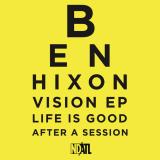
Increasingly essential US artist Ben Hixon drops sublime deep house EP on Kai Alce's faultless NDATL Muzik. The six classy tracks will appeal to those who appreciate the subtleties of the classic Midwestern sound.
Ben is a Texas-born, but Brooklyn-based artist who has become a firm favourite of true deep house heads in the last year or so. He has put out several EPs on Dolfin, all of which find a perfect sweet spot between immersive atmospheres and late-night drive. Dusty analogue textures and frayed edges define his drums, while the subtle details are intelligent and add effortless emotion. He is a perfect fit for NDATL Muzik, the Atlanta label that has long been a flagbearer for well-crafted house grooves like these.
'Taping' kicks off with heavy kicks that swing under gentle chords that are perfect for after dark. There's a persuasive bump in the beats that will get early evening dancers primed and ready for more. Next up we have 'Y Do U Get So Nervous' - a mastery of sampling with nagging vocal hooks, cascading piano keys and wet finger clicks all adding soul to another low-key but all-consuming groove. 'Area Code 336 Phone Rings' is a higgledy-piggledy tapestry of toms and stuttering kicks with vocal fragments to match - the thrill is the looseness of it all. The smouldering and meandering 'December Blackout' is for gazing off it into the distance at the busy yet muted jazz keys that twinkle like faraway stars. 'It's Like A Vision' picks up the pace with more closely stacked kicks but still oodles of cuddly warmth and smudged synth work, before '0823' ends with a decidedly heavy feel - spare, lump drums unfurl beneath forlorn synths that feel utterly bruised and heartbroken.
Ben Hixon's deft artistry makes these quiet, texture tunes irresistibly danceable yet emotionally profound.
- Chains Chains
- Long Gone
- The Wild, The Willing And The Innocent
- It's Killing Me
- Makin' Moves
- Lonely Heart
- Couldn't Get It Right
- Profession Of Violence
- Long Gone
- Chains Chains
- Lonely Heart
- Cherry
- Mystery Train
- Only You Can Rock Me
- Too Hot To Handle
- Lights Out
- Rock Bottom
- Doctor Doctor
- Shoot Shoot
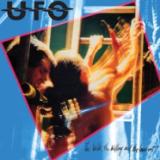
Newly remastered from the original tape transfers, the album now sounds more dynamic and detailed than ever, reaffirming its place as one of UFO's most accomplished works. This deluxe edition also includes a brand-new mix of the previously unreleased Live at the Hammersmith Odeon, recorded on 29th January 1981, by Brian Kehew, offering an electrifying snapshot of UFO's energy on stage. Original 7" edits of the two singles released with this album are included as well as an alternative mix of album standout "It's Killing Me". The set is rounded out with newly written liner notes by Michael Hann, featuring fresh interviews with Phil Mogg and Andy Parker, alongside a collection of previously unseen photographs from the era -- making it an essential addition for fans and collectors alike.


![Cv313 - lost sequence ep [remastered]](https://www.deejay.de/images/l/6/5/209165.jpg)


![Cv313 - fading lights [remastered]](https://www.deejay.de/images/l/1/6/163616.jpg)