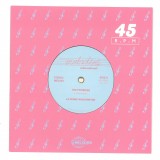
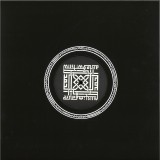
Nihiloxica is a project that harnesses the full force of the ancient Bugandan drumming tradition of Uganda and focuses it on the contemporary dance floor through a dark lens of techno sensibility.
Formed by UK musicians Spooky-J & pq and members of the Nilotika Cultura Ensemble and incubated in Kampala by acclaimed label Nyege Nyege Tapes the cross-continental band explore the common ground between techno an tradition, a conversation between two cultures with a common aim: to mak people dance. Already tearing apart dance floors and festivals across the worl with an at once transcendental and earth-shattering live show, Nihiloxica ar
only just getting started.
Deluxe 2 x 140g LP edition, gatefold sleeve, colour innersleeves, includes download card.
quête:the tape
We're glad to be back with our latest reissue, a couple undercover soul gems from the Midwest originally self-released in 1984: LaVerne Washington's "The Promise" and "I Found What I've Been Searching For".
LaVerne has dedicated her life to the arts in every possible way. As an artist herself but also behind the scenes, helping and supporting her contemporaries fulfil their callings. Charlie Parker, Count Basie, Ella Fitzgerald, Mary Lou Williams - LaVerne grew up in Kansas City listening to the all time jazz greats, and soon discovered she was blessed with a keen sense for playing music by ear, playing the piano to what she would hear on the radio. In her teens whilst the 60s transitioned to the 70s' disco and funk era, LaVerne was there to witness it all, and she would go on to study music at the Charlie Parker Academy where she was inspired to become an entertainer.
At Langston University, LaVerne kept studying music where her career blossomed, founding and touring the US with the gospel group "Emery Shaw and the Voices of Praise", singing in several college bands and with her choir "The Voices Of Bethel". LaVerne would go on to perform notably with her bands "LaVerne Washington and Rococo" and the "LaVerne Washington Quartet", and record several songs in KC including "The Promise" and "I Found What I've Been Searching For" in 1984 before moving to Washington DC.
In DC, LaVerne was offered a position as a Program specialist with the National Endowment For The Arts where she started supporting other artists through her work. Over the next couple decades, LaVerne became an associate producer for the Rhythm and Blues Foundation and the Pioneer Awards Ceremonies held in New York, Philadelphia and Los Angeles, which saw the likes of Prince, Aretha Franklin and Jerry Butler attending among others. She has also managed and was mentored by DeeDee Sharp and consulted with artists including Bonnie Raitt (who acted as a mentor to Laverne as well), Kim Weston, Kathy Sledge (SisterSledge), Smokey Robinson and G.C Cameron (Spinners). During that time, LaVerne has kept singing, on her own and as a backing vocalist for DeeDee Sharp and Freda Payne and has never stopped her lifelong dedication to music and the Arts.
The Promise original 7" was LaVerne's last recording in Kansas City before her move to DC and the beginning of her involvement behind the scenes. Channelling her gospel roots - with impeccable arrangement, a contagious drum machine led rhythm section, soaring vocals and relatable lyrics, "The Promise" is guaranteed to bring back smiles to dancefloors and living rooms alike! "I Found What I've Been Searching For" on the flip is a beautiful soul ballad which really showcases the strength and emotion in LaVerne's voice.
Back again in it's original 7" format, we've had the audio transferred and restored from the original 24 track tape provided by LaVerne, and got the recordings re-mixed for the best possible sound! Floating Points behind the mixing desk for this new iteration of a lost classic, comes with a 14"x14" poster of the original picture
It is possible that a deeply fickle Bryn Jones, who was never happy with remixes of Muslimgauze music apart from his own, might be with this one.
Extreme, an earlier Muslimgauze label, had a long history of remixing the material Bryn sent to them and this was the main reason for the artist to move to the staalplaat label.
It’s an interesting coincidence that Extreme hired Anders Peterson to remaster Muslimgauze for them. In the process of listening to masters and studying the music, the idea of a remix or ‘rework’ seemed an intuitive next step, reflects Peterson, “The remixes are based on various material from about 6 DAT tapes. I did not choose any specific tracks, rather sections and parts of all the recordings on those tapes. I did not seek to do a remix, it just grew up of that remastering project. I think I could not find any artist in any genre, anywhere, that would be more interesting to rework / remix than Muslimgauze, so I definitely feel very honored having been able to record these remixes.”
Musically, this release falls in line with the more deep spiritual, meditative, abstract side of Muslimgauze, which is often overlooked. The music remains timeless, the production as crisp as ever. Those familiar with the Muslimgauze oeuvre know this music is more than just a series of infectious rhythmic works. Rather a historical document, a musical commentary on the tumultuous times that inspired it; a reflection on the Iran/Iraq war, Operation Desert Storm, the Soviet invasion of and retreat from Afghanistan and the first Intifada. Anders Peterson brings the music of Muslimgauze and successfully found new ways to reveal the artistries from one of the 20th century’s more intriguing artists. Through circumstance, Staalplaat is to ensure that the remix project sees the light of day, now available on the evidently timeless medium of a vinyl record.”
After his debut album for Discrepant (Papillon, 2013) and a couple of tapes for Dinzu Artefacts (Aqueducts, 2017) and Sucata tapes (Cercueill Flottant, 2019) Papillon aka Gonçalo F. Cardoso returns to the wax treatment for one last hurrah into the depths of tropical disquiet.
Taking liberties from Henri Charriere’s book sequel of the same name, Banco, the audio reader here dives straight up/down into a world of random dream logic. The same themes of Nightmare vs paradisiac dreams are present here yet with more nuance than the first volume. The adventure here is more subdued, less spiritual as most of it is lived outdoors, free from the states shackles of abuse. A lighter tone then, for what will probably be the last Papillon adventure. As with the first volume the album counts with contributions from fellow label artists, Mike Cooper, Cédric Stevens, David Daan and Yannick Dauby all feature in a way or another, raw or cooked into a boiling pot of irreverence.
All tracks were composed and edited by Gonçalo F Cardoso in the island of La Gomera, Lisbon and London between 2017-2019.
Composed & Performed by Gonçalo F. Cardoso with guest appearances by Mike Cooper, Yannick Dauby, David Naan and Cedric Stevens*
Special vinyl one time pressing to 300 copies
Mastered by Rashad Becker
ALTER is proud to present ‘Tendrils’, the first LP release from London based artist & musician Malvern Brume. After gathering some hushed praise from the UK underground for a couple of excellent cassette releases and strong local live performances, ‘Tendrils’ is the first definitive document of the Malvern Brume sound world. His instrumentation and sound sources would be considered familiar staples in the world of “experimental” music, but Salter does an admirable job of making them his own. Comprised of 8 pieces, this is electronic music at its core but a kind that sounds as if it’s being played through fog. Like spores growing on a damp surface. Densely composed and thick with an almost asphyxiating atmosphere - even during the record’s more minimal moments - track titles like ‘Caught In The Exhaust Trails’ and ‘Sunk Into Plastics’ only heighten the tone further.
Salter was originally born in the countryside and since relocated to London, a place he finds “over stimulating in every sense”. Much of ‘Tendrils’ could be taken as a response to the city and a means of equating the two. Camberwell is listed as the location for composition, but field recordings are attributed to rural landmarks. The Rollright Stones on the Oxfordshire / Warwickshire border and Seven Sisters Cliffs by the English Channel are two in case, but despite their picturesque origins Salter renders them into abstract clatter. As if dubbed from the private tape archive of an old eccentric. In addition, synthesised electronic tones hum and buzz, occasionally giving away to strange, slurring sequences that sound like lost transmissions from the radiophonic workshop. Despite the nod to this electronic music institution, it’s lacking the sincere level of esteem that can turn one into a heritage act. There is a strangeness and distant other worldliness to the music that feels unselfconscious and keeps Malvern Brume from being easy to define by contemporary terms.
Salter says the album is defined by movement and the environments that have inspired him over the years. In his own words, “each of these tracks is inspired by a journey or moving through a space, not in a wishy-washy cosmic sense but more as a practical A to B.” With that in mind, ‘Tendrils’ is perfect music for solitary inner-city marshland walks and urban bike rides to forgotten local suburbs.
Marcos Cabral returns to L.I.E.S. with a new six track mini lp after a run of cult releases for The Trilogy Tapes as Chemotex. Here we get Cabral in top form falling somewhere in-between his last works for L.I.E.S. and Chemotex tracks. Through the record we get a rough yet refined style moving from metallic gnarled electro to melodic IDM and/or destructive the electronics as heard on "Secret Air". Our favorite being the introspective closer "Wearing Petrichor" Cover photo licensed from legendary NYC street photographer, Richard Sandler.
Digging deep into the annals of Gospel now, the name Pastor TL Barrett should be familiar to the eagle eyed crate diggers amongst you. An extremely "colourful" character from Chicago's Southside neighbourhood who found himself on the wrong side of the law for his involvement in some activities of a dubiously illegal nature, more importantly, besides this the pastor was widely known for his community activism and positive sermons preaching love and responsibility. Shady past aside, this fantastic 1976 LP entitled "Do Not Pass Me By" is a real Gospel beauty and features 8 tracks of resplendent hands in the air rejoicement. Having never been reissued before this rare as gem is finally back out in the open, complete with it's incredible untampered with sleeve artwork and design. Barrett's unique voice and message is timeless and instantly recognisable, you can't help but become one of the congregation whilst listening to these wonderfully rousing and positive paeans to the lord almighty. Saying that, even if you find yourself to be a non-believer, the soul, funk and jazz stylings (with the odd flourish of synth!) the good pastor is laying down will be equally as alluring to those of you who dig those particular sounds. "Do Not Pass Me By" was originally released on Miami's TK Disco offshoot Gospel Roots, it's the Pastor's second release on the label and is a beautiful snapshot of how things might have gone down at his "Mount Zion Baptist Church of Universal Awareness". A unique LP with with a somewhat lo-fi charm, the tracks contained run the gamut from slow, downtempo ballads to roof raising, danceable Disco-esque anthems.
This is the first time that "Do Not Pass Me By" has been reissued on vinyl, fully remastered from Gospel Roots/TK's original tapes, represented the way the the LP was issued in 1976 with all original cover and label artworks intact. Now, almost 40 years after it's original release the album has now been made available again for 2016, fully licensed in conjunction and with the full permission of Henry Stone music / TK Disco, Miami, FL.
2020 Re-issue of Keith Kenniff's debut album under his Helios moniker. Originally only released on CD in 2004 via Miami based Merck Records, this album of hazy ambient electronica is now presented as a vinyl edition for the first time.
AllMusic Review by Joshua Glazer:
"Those who mistake ambient music for an endless tapestry of unwavering atmosphere, pleasant yet indistinguishable, should be handed as an argument to the contrary this album by a recent signee to Merck's rapidly expanding roster. Through 13 tracks of inarguably pretty music, Keith Kenniff displays the musical equivalent of a genius screen actor, able to send a million moods and messages with the most subtle of facial gestures. The opening pair of songs, "Velius" and "Cullin Hill," point to a blissful treat which sits on just the right side of new age symmetry (particularly given the former's live glistening piano treatment). But only eight beats into "Nine Black Alps," the sensation is irreversibly altered by a single, mournful bass note which rumbles like Hades against the bucolic tone that lead up to it. Unshackled, Kenniff continues to roam, drifting into circular beats on "Two Mark" before wandering off into weightless asphyxiation on "Samsara." He even allows for the organic sound of faint acoustic guitar and piano to join his endless travels, giving a moment of real world clarity at the eye of this hallucinogenic work. Few could get away with a singular ghostly voice transmission without implying a stretch for ideas, but by the time he reaches the song, "Suns That Circling Go," Kenniff is so recognized as an explorer that you cannot be surprised by where he may arrive next."
Ryan Lee West aka Rival Consoles announces details of his highly anticipated new album Articulation, released on Erased Tapes on 31 July 2020.
‘Articulation’, the lead track and album centrepiece, links the record back to the analogue fluidity and colour of 2016’s Night Melody. The division of varying time signatures, intertwined with a complex structure of notes, creates an expression of a moving structure and conjures a dreamy motorik energy. Ryan Lee West explains, "The title track is about articulation and playfulness with shape and time. Its structure is very machine-like, but I was really interested in how melody and sense of story could develop out of this, and it became an exploration of mathematical structures - patterns and shapes having a conversation. I love that something on paper can appear rigid and calculated, but then take on new meaning based on the context that surrounds it, or how it changes over time."
Articulation (which follows 2018’s Persona) was conceived with a very visual way of thinking, unusual for the London musician and producer. During the writing process Ryan drew structures, shapes and patterns by hand to try and find new ways of thinking about music, giving himself a way to problem-solve away from the computer. The album title references a piece by the avant-garde contemporary composer Györgi Ligeti, though not for its music, but for the non-traditional graphic score that accompanied it.
“I find electronic music is often battling to say something with integrity because technology and production can easily get in the way. I think the goal of a lot of electronic composers is to find a balance between the vision of the idea and the power of possibilities on the computer. With a pen and paper sketch you can compose and rethink ideas without technology getting in the way, so for me it acts as a very helpful tool to refresh the process.” - Ryan Lee West
The idea of using analogue drawings and tools to bolster digital creations can be heard in the structure of the pieces that make up Articulation from the broody techno opener ‘Vibrations on a String’ all the way to the album’s boundless closer ‘Sudden Awareness of Now’. While the anthemic rise and fall of ‘Still Here’ and the beatless ambient meditation ‘Melodica’ evoke a certain nostalgia, ‘Forwardism’ achieves the very opposite by burying its melody within the fast-paced rhythm of its pulsating synths.
Rising out of birdsong heard from his studio window, ‘Sudden Awareness of Now’ has a particular urgency about it and seems to perfectly capture a longing for escape. Built around a simple and repetitive melodic theme, expanding and retracting over the course of its seven-minute odyssey, Lee West explains; “I like the fact that if you say something over and over again in music, then over time it can become something else, something reflective.”
Since the release of Persona, Ryan Lee West has taken his captivating live A/V set to all corners of the world. Last seen live on stage with 17 players of the London Contemporary Orchestra for a sold-out orchestral performance at Southbank Centre’s Queen Elizabeth Hall in January 2020.
Meanwhile Lee West has kept busy. After contributing an exclusive track titled ‘Them Is Us’ to Adult Swim’s coveted Singles series, he recently shared the beautifully textured solo piano piece Winter’s Lament on this year’s Piano Day. He has also been in high demand as a composer, scoring Charlie Brooker’s much talked about Black Mirror episode Striking Vipers, composing original music for Secret Cinema presents Stranger Things as well as renowned choreographer Alexander’s Whitley’s groundbreaking new work Overflow which was set to premiere at London’s Sadler’s Wells Theatre this spring.
Articulation will be available worldwide on 31 July, with live activities to be announced as soon as the situation allows safe event planning
Sublime, unique, sexy and peculiar unreleased scores by electronic and jazz pioneer Ron Geesin, made for the sublime, unique, sexy and peculiar films by maverick director Stephen Dwoskin. There. we’ve said it. And if you have not heard of one or either of these two dudes it doesn’t really matter. Geesin made great music and worked with Pink Floyd. Dwoskin made odd films, most of them are in the BFI permanent collection. They are great and a bit strange.
These superb unreleased soundtracks come from a fascinating, progressive and important period in British film history. They represent an intriguing collaboration between the lively Ron Geesin from Scotland and the American Stephen Dwoskin, who both met in London.
Musically they are minimal, charismatic and quite groundbreaking. Here is the story…
HISTORY:
Steve Dwoskin arrived in London in 1964, aged 25, with several 16mm films in his trunk, shot in the cold-water flats of Greenwich Village. He had been on the fringe of the Factory scene, and some of his films starred Beverly Grant, ‘the queen of the underground’. But they had scarcely been seen, and they didn’t have soundtracks. For almost a year they stayed in the trunk, and stayed silent. Then he met Ron Geesin, somewhere around Portobello Road.
‘Slept last night, completely dressed after working over 12 hours on sound tracks at Ron’s,’ wrote Dwoskin in his diary for 29 July 1965. ‘My films are not anywhere near being anything. I need more energy, more concise and positive ideas and less inhibition. And of course space, money and people.’ Dwoskin, who taught and practised graphic design by day, had recently decided to stay in London beyond the term of the Fulbright scholarship that had brought him there.
Ron, living with Frankie in a basement flat in Elgin Crescent – they would marry the next year, with Dwoskin as best man – was about to leave the Original Downtown Syncopators, the trad jazz band he had joined aged seventeen-and-a-half, and was trying to go solo. On stage he would make vigorous use of piano and banjo; at home Frankie had bought him a new kind of instrument – a tape recorder. ‘Soon I had one tape recorder, two tape recorders, three tape recorders.’
Ron, wrote Dwoskin in his unpublished autobiography, ‘loved to record, and to cut and splice the quarter-inch recording tape to make new sounds. This triggered in me the idea of getting back to my films and finishing them’. Soon he was living in a dank basement in Denbigh Road, a few minutes’ walk from Elgin Crescent. Ron’s soundtracks for Dwoskin’ films, recorded in the Geesins’ flat, encompassed Ron’s very eclectic range of styles – madcap piano and fretted banjo as well as tape manipulation.
Aside from Ron’s soundtracks, some of which belong to films that no longer exist (including Pot Boiler), Frankie would act in one of the films that Dwoskin either lost or never finished during these years. He was disabled, having contracted polio as a child, and Ron and Frankie were both carers and collaborators; Ron had met him when he was struggling into his car.
There was no London equivalent to the underground film scene that Dwoskin had known in New York, and his films remained unseen until such a scene began to come into being, in the autumn of 1966. Some of them made their debut at the Mercury Theatre, near Notting Hill Gate, that September. Dwoskin wrote that Alone, starring Zelda Nelson (from Ron Rice’s Chumlum), and Chinese Checkers, with Beverly Grant and Dwoskin’s friend Joan Adler, went over best.
Soon both Dwoskin and Geesin became involved in the nascent London Film-Makers’ Co-op, which put on screenings in Better Books on Charing Cross Road – ‘if you can call them screenings,’ Ron recalls; ‘I’d call it fifteen blokes in various stages of disarray, peering through the smoke’. One or more of the films had been ‘striped’ with magnetic audiotape; with others ‘we had no means of direct syncing to the picture, so he started the film and I started the tape recorder’.
In the same autumn, Dwoskin moved into a flat almost opposite the Geesins on Elgin Crescent. More collaborations followed, including Naissant, on which Gavin Bryars, whom Geesin had met during a stint on the northern club circuit with novelty act Dr Crock and His Crackpots, played double bass.
Around the end of 1967 Geesin released his first solo LP, A Raise of Eyebrows, and Dwoskin won recognition the Fourth Experimental Film Competition, aka EXPRMNTL 4, an occasional film festival staged at Knokke-le-Zoute in Belgium. By now the films had optical soundtracks.
It was only after this that Dwoskin completed his first ‘British’ films, including Me Myself and I, with Barbara Gladstone, an American dancer who had appeared in Barbara Rubin’s Christmas on Earth, and with whom Dwoskin and Geesin had at one point devised a stage show, never produced. For Moment, a single-shot film, Geesin provided his most experimental score yet. At the time of its debut in 1970, Dwoskin and the Geesins were sharing a house in Ladbroke Grove.
By then, Ron was working with Pink Floyd, and soon afterwards he and Frankie moved out to the country, to be replaced by Bryars both in the house and as Dwoskin’s principal collaborator.
Until now these scores have remained part of the Geesin Archive and have never been issued.
The super-producer duo behind the mega-hit “Let’s Go Dancing” makes their return at a time when there is nowhere to go dancing to, and no us to let go dance there.
“Your home is now the club, which makes it my responsibility,” says Tiga, safe inside a thick denim containment suit. “This is not the time for relentless bangers, no matter how amazing they sound when live-streamed by the world’s loneliest DJs. ’This Is a Dream’ is an epic poem, an immunity passport to the boundless dimensions that lay beyond the veil of slow wave sleep. For I am Sleeporus, musical ferryman to the realm of night. My toll is $1.29 on Beatport, and your pillows are my decks, and also the boat. I hope that’s clear."
Immediately contradicting his no-bangers edict, Tiga describes “Crushed by Meditation” as a weirdo freakout soundtrack for washing each grape individually. This scathing commentary on poorly curated self-care employs bizarre bits of tape found in a piece of gear the two purchased before flea markets were against the law.
“Foraging is the future of sampling. But I alone believe that humanity was destined for more than living underground, eating from a can. I only pray to Father Time and Mr. Destiny that we’re not too late."
*** Ltd. Edition 300 Copies on RED VINYL with insert! ***
These rare recordings were recorded as part of the legendary prescription label album series in the late 1990's that resulted in the album "Astral Disaster". Coil were invited to record at Sun Dial's studios beneath the London Bridge Hop Exchange. This studio was originally know as Samurai studios that was originally built and owned by Iron Maiden.
The premises in Victorian times was an old debtors prison which had three levels underground, and still had the original chains, manacles and wrought iron doors from the old prison. This caught the attention of John Balance and was very keen to record there.
At Gary Ramon's invitation, Coil spent a number of days recording at the studio during Halloween 1998 and they developed a number of tracks some of which resulted in the "Astral Disaster" album. For various reasons, some of the unissued material and mixes released on this album were omitted from the original Astral Disaster album, and so now is the opportunity to listen to the second volume of "The Astral Disaster sessions".
The album includes all previously unissued mixes and alternative versions, and includes "The Mothership" which was the first version that was later remade in the sessions as "The Mothership and the Fatherland".
Taken from the master tapes and remastered by Denis Blackham.
- A1: Unoxuno - Manifestación En La Superficie
- A2: Quum - Persecución
- A3: Alan Courtis- Los Fieltros
- A4: Pabloreche - Residuo
- A5: Alfredo Horacio Pérez - Avalokiteshvara I
- A6: Unoxuno - Buenos Aires Psicótico
- A7: Luis Marte - Simples Máquinas
- A8: Quum - Stress
- A9: Pabloreche - Rompo
- A10: Conducto - Círculos
- A11: Esófago Zombie - On-Off
- B1: Las Cintas Magnéticas - Pistas Nro 4 & 8
- B2: Zigo - Delureos
- B3: Conducto - Malla
- B4: La Espora Invasora - Comegato
- B5: Jaime Genovart - Querandíes
- B6: Francisco Ali-Brouchoud - Bashō
Late 20th Century outsider music from the outskirts of Buenos Aires featuring Alan Courtis, Pablo Reche, Quum and many more artists from the Argentinian underground.
Setting out as an archaeological excavation, literally exhuming material which has been under the surface for more than two decades, this special compilation features work by established and under the radar artists that helped set the now fertile Argentinian underground.
All tracks were directly digitized from the original cassettes masters (half of them never previously released either). The emphasis being to maintain the original sound quality as it was produced at the time (hence the cassette format). The compilation also showcases a broad spectrum style of music that was done at a specific time with very primitive gear - not by choice but because of the obvious economic restrictions of accessing sophisticated equipment forced these musicians on the DIY road. Domestic tape recorders making cassette loops, broken record players, toy keyboards and the noisy ‘fingers on circuitry’ long before Nicolas Collins championed it on Hand-made electronic music.
Whilst some artists actually had access to professional synths and drum machines (Unoxuno, Quum, Jaime Genovart), they still lacked of standard recording equipment. A crucial document then showing how their unique approach to music making influenced the forthcoming experimental scene of South America making these artists influential cult figures of the underground.
Compiled by Juan José Calarco y Pablo Reche
Digitized & Mastered by Juan José Calarco
- A1: Berserk In A Hayfield - After Dusk
- A2: The Lord - Controversial
- A3: Silicon Valley - Electro Switch
- A4: Neutron Scientists - Cabaret Futurama
- A5: Lives Of Angels - Artificial Ignorance
- B1: Modern Art - Golden Corridor
- B2: The Lord - Gonna Dream My Life Away
- B3: Echophase - Controlled Experiment
- B4: Disintegrators - Radioactive
- B5: Mystery Plane - Burning Desire
- B6: Modern Art - Dimension 2
Here is the highly anticipated sixth volume of the well received electronic compilation series from the relaunched 1980's color tapes label. As with the other volumes you can find great examples of cold wave, minimal wave and synth electronics and pro to EDM made by obscure British bands in the 1980's such as: Berserk In A Hayfield, Lives of Angels, Silicon Valley, Modern Art, Disintegrators, Echophase, The Lord and Mystery Plane
"Up there with V-O-D selections, the Color Tapes series so far has provided invaluable insight to hidden or much lesser-known currents of the ‘80s cassette subculture which gave birth to myriad artists, styles and industry conventions whose influence can still be felt over 30 years later. " - Boomkat
“Electronic work that’s way different from mainstream pop of the period - often forgedout of the same instrumentation as the hits - but in a stripped down way - with lots of dark and moody corners!” Dusty Groove
“Evil Synths and evil beats” - Norman Records
“Gary Ramon’s re-born Color Tapes imprint is every bit as essential as it’s Minimal Wave and electro-focused predecessors” - Juno
Limited edition of 500 copies comes with poster insert
*** Ltd. Edition 500 Copies on BLACK VINYL with insert!
These rare recordings were recorded as part of the legendary prescription label album series in the late 1990's that resulted in the album "Astral Disaster". Coil were invited to record at Sun Dial's studios beneath the London Bridge Hop Exchange. This studio was originally know as Samurai studios that was originally built and owned by Iron Maiden.
The premises in Victorian times was an old debtors prison which had three levels underground, and still had the original chains, manacles and wrought iron doors from the old prison. This caught the attention of John Balance and was very keen to record there.
At Gary Ramon's invitation, Coil spent a number of days recording at the studio during Halloween 1998 and they developed a number of tracks some of which resulted in the "Astral Disaster" album. For various reasons, some of the unissued material and mixes released on this album were omitted from the original Astral Disaster album, and so now is the opportunity to listen to the second volume of "The Astral Disaster sessions".
The album includes all previously unissued mixes and alternative versions, and includes "The Mothership" which was the first version that was later remade in the sessions as "The Mothership and the Fatherland".
Taken from the master tapes and remastered by Denis Blackham.
Vinyl reissue of the now classic 1971 album. Produced by Transamericas in collaboration
with the band from original master tapes, in a fully analog process at recording studios in María Pinto
(Chile), London and Haarlem (Holland).
Los Jaivas (“El Volantín”) is the first LP by Chilean rock band Los Jaivas, one of South America's biggest names in the fusion of folk roots and psychedelia during the 1970s. Los Jaivas were born in the city of Viña del Mar, with their five members determined to guide their initial sound through improvisation and experimentation, «trusting that in time a language would emerge that would give us our identity», in their own words.
This debut album (popularly known as El Volantín - The Kite -, because of its cover illustration) combined the free-flow of extended electrical pieces with more conventional three-minute songs filled with references to Chile's popular culture and the musicians’ own upbringing. Theirs was a solitary path, not just for the band but also for the beginnings of Chilean rock. Los Jaivas blazed a trail that was rich in musical references, with ideas inspired by Jimi Hendrix, the Congolese Missa Luba, Argentinian folk (Atahualpa Yupanqui, Ariel Ramírez), South American avant-garde composers (Ginastera, Villa-Lobos, Violeta Parra), the experimentation of pianist Henry Cowell, Caribbean rhythms and Miles Davis’ trumpet re-inventions.
Principal is the new solo project by producer and musician Rasmus Allin, who’s first album Treacherous Dub will be released on the Copenhagen-based label StereoRoyal in July 2020.
Best described as an homage to old-school Jamaican dub, Principal’s music features live recorded drums and other instruments. Fused with electronic elements, it celebrates the sound of the original dub pioneers.
Born in 1970, Rasmus Allin has been working as a producer, musician, and songwriter since the mid-nineties, primarily within the realm of electronic music. Inspired by the British trip hop and drum ‘n’ bass scene, he soon gravitated towards Jamaican dub, rocksteady, and reggae. "I found my inspiration in the old Jamaican dub masters like Lee Scratch Perry, King Tubby, Augustus Pablo, and Scientist. I’ve spent endless hours in the studio trying to replicate their sound, using old tape delays, filter boxes, and modulation effects,” he says.
In 2002, Allin formed the band Junkyard Productions, playing major venues and festivals like Elysee Montmartre, Le Triptyque, Télérama Dub Festival, and Roskilde Festival while touring through Denmark, Germany, Switzerland, and France. Alongside this, he continued to hone his skills in producing, co-writing, and remixing music, working with top Danish pop and reggae acts the likes of Natasja, Pharfar, Wafande, Shaka Loveless, and the British girl band All Saints.
Treacherous Dub will be released on vinyl and all major streaming platforms, and will be Allin’s first album of pure instrumental dub tracks —an ambition he’s been wanting to fulfil for years. Marking his debut as a solo artist, the album also marks his premiere as a visual artist, with the album cover lithograph made by Allin himself. For Rasmus Allin, the collaboration with StereoRoyal offered “the perfect opportunity to give the tracks the finishing touches.”
StereoRoyal is a Danish library music label founded in 2010 by and specializes in off-kilter music for film and TV. Originally, the label focused on electronic genres, but over the years has grown to include a broader variety of music produced by some of the most talented composers in Scandinavia.
- A1: Keep Yourself Alive
- A2: Doing All Right
- A3: Great King Rat
- A4: My Fairy King
- B1: Liar
- B2: The Night Comes Down
- B3: Modern Times Rock'n'roll
- B4: Son And Daughter
- B5: Jesus
- B6: Seven Seas Of Rhye
- C1: Procession
- C2: Father To Son
- C3: White Queen (As It Began)
- C4: Some Day One Day
- C5: The Loser In The End
- D1: Ogre Battle
- D2: The Fairy Feller's Master Stroke
- D3: Nevermore
- D4: The March Of The Black Queen
- D5: Funny How Love Is
- D6: Seven Seas Of Rhye
- E1: Brighton Rock
- E2: Killer Queen
- E3: Tenement Funster
- E4: Flick Of The Wrist
- E5: Lily Of The Valley
- E6: Now I'm Here
- F1: In The Lap Of The Gods
- F2: Stone Cold Crazy
- F3: Dear Friends
- F4: Misfire
- F5: Bring Back That Leroy Brown
- F6: She Makes Me (Stormtrooper In Stilettos)
- F7: In The Lap Of The Gods...revisited
- G1: Death On Two Legs (Dedicated To
- G2: Lazing On A Sunday Afternoon
- G3: I'm In Love With My Car
- G4: You're My Best Friend
- G5: 39
- G6: Sweet Lady
- G7: Seaside Rendezvous
- H1: The Prophet's Song
- H2: Love Of My Life
- H3: Good Company
- H4: Bohemian Rhapsody
- H5: God Save The Queen
- I1: Tie Your Mother Down
- I2: You Take My Breath Away
- I3: Long Away
- I4: The Millionaire Waltz
- I5: You And I
Universal Music are proud to release all hit Queen studio albums sourced from the original master tapes mastered by Bob Ludwig. This 18 vinyl LP box set comes with a lavishly illustrated 12 x 12 inch 108 page hardback book which features introductions to each album, quotes from Queen themselves, hand-written lyrics, rare photograhs, memorabilia, and information on singles and videos. *Re-press