For it’s second-release, Planisphere returns once more to the Berlin studio of Swiss-Turkish producer Mehmet Aslan, who has fast become one of the most fiercely individual and increasingly prolific emerging artists in some time.
This three-track EP is arguably Aslan’s most-refined work to date, aiming squarely at heads-down dancefloors, riding on sophisticated and hypnotic grooves. On ‘Comme II Faut’, a minimal beat unravels Aslan’s textural, traditional samples, delivering a woozy and intoxicating atmosphere.
Meanwhile, ‘Lobster Is Coincidence’ christens the EP with its title and a stop-start slice of unpredictable, cut-up psychedelia, utilizing obscure samples to generate esoteric funk. On the contrary, Aslan executes a tapestry of tightly-wound and no less entrancing rhythms on ‘Kakusui’, which evolves intriguingly with a subtle half-step and further echoes of Aslan’s unique musical heritage.
quête:the tape
- A1: Why Spend The Dark Night With You?
- A2: Moondog Nocturne Suite (Part 1)
- A3: Moondog Nocturne Suite (Part 2)
- A4: Moondog Nocturne Suite (Part 3)
- A5: Avenue Of The Americas (51St Street)
- A6: 2 West 46Th Street
- A7: Lullaby (2 West 6Th Street)
- A8: Fog On The Hudson
- A9: Utsu
- A10: On & Off The Beat
- A11: Chant
- A12: From One To Nine
- B1: Untitled Chant #1
- B2: Untitled Chant #2
- B3: Untitled Chant #3
- B4: Untitled Percussion Solo #1
- B5: Untitled Percussion Solo #2
- B6: Untitled Percussion Solo #3
- B7: Untitled Chant #4
- B8: Untitled Percussion Solo In Traffic #1
- B9: Untitled Percussion Solo In Traffic #2
A survey of Moondog’s earliest recorded works - many of them unreleased until now - through a collaboration by Mississippi Records and Lucia Records. From 1954 - 1962 eld recordist Tony Schwartz frequently checked in with Moondog, his favorite street musician.
Tony Schwartz made recordings of Moondog’s earliest com- positions as they were coming into focus. Sometimes these recordings were made right on the street as Moondog busked, sometimes they were made in Schwartz’s studio, and sometimes they were made on NYC rooftops. The resulting recordings, many of which had never been released, were deposited at the Library Of Congress as part of the Tony Schwartz Collection in 2006 when Schwartz passed away, and this record was culled straight from these original tapes.
Side one kicks o with an unreleased version of Moondog’s classic composition “Why Spend The Dark Night With You?” fol- lowed by the rst ever complete recording of his “Nocturne Suite,” a beautiful piece of classical music performed with members of the Royal Philharmonic. The side ends with the complete “On The Streets Of New York” 7” EP, which was released on Mars records in 1955 and subsequently re-released by Honest Jon’s Records in 2004 on their excellent Moondog anthology. Side B features sketches of Moondog compositions never released, many with the man himself howling and chanting over his homemade percussion set.
Moondog’s music is as universal as it gets - part classical music, part Native American, part European folk, and part something completely unique. Moondog is one of the towering gures of 20th century music. This record comes with liner notes featuring never before released interviews with Moodog by Tony Schwartz and is housed in an old school “tip on” cover. All tracks fully licensed from the Library of Congress.
Tape / Cassette
Mark Gergis is a producer, musician and audiovisual archivist known for his radio and video productions, recordings and performances. His work has focused on regional folk-pop music from the Middle East and Southeast Asia, including choubi and dabke from Iraq and Syria. As an archivist, Gergis is currently working on the project Syrian Cassette Archives, for which he aims to restore, preserve, catalogue and share his large collection of Syrian media from what can be called Syria’s ‘cassette era’ (1970s–2010). As an artist, under his name and others (Porest) he has released music on the Sublime Frequencies, Discrepant and Nashazphone to name just a few. It’s a wonder that amongst this hectic schedule he still finds time to present us with a new (old) collection of early century recordings (1999-2013).
Locational recordings, radio and TV intercepts, cassette excerpts, environments and street music all expertly all expertly meshed up into a vivid sound journey from places that were (and might) never be again.
''M'acko'', ''Kokoloko Tani''and ''Abidjan Adja'' are deep mid-tempo Ivory Coast Boogie Synth steppers, heavy production!! Funny fact.., the 1986 LP is mixed by Sammy Massamba!
Berlin based cellist and composer 'Anne Müller', announces the release of her long awaited debut solo album 'Heliopause', on November, 22th. 'Heliopause' follows several Erased Tapes releases featuring Anne, including her celebrated collaboration with Nils Frahm titled 7fingers, appearances on Ólafur Arnalds & Nils Frahm’s Collaborative Works, Nils Frahm’s All Melody and his acclaimed soundtrack for the film Victoria, Lubomyr Melnyk’s Fallen Trees, as well as the two bespoke solo pieces Walzer für Robert and Bel Tono for the label’s 5th and 10th anniversary box sets. In fact, a glance at Müller’s Discogs boasts credits on over 60 releases since she began recording in 2007.
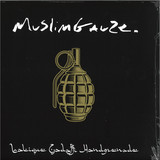
iven Jones’ rather slack approach to track titles (both being consistent with and sometimes even just supplying them), it’s a bit of a relief to realize that two tracks with the same name are indeed related. In the case of “Arab Jerusalem”, which makes up nearly half of the newly-released Lalique Gadaffi Handgrenade, that kinship is immediately apparent even though both tracks are clearly their own experiences.
Released as the first track on the Minaret-Spearker picture disc 7” in 1996, “Arab Jeruzalem” (spelling also sometimes being fairly slack) is 5:42 of effectively shifting dark ambience, wordless female vocals drifting over the hand percussion, chimes, and static of the track, with eventual conversational loops discussing... something underneath. The end of that version is especially striking for the way the woman’s wordless singing starts being sampled in such a way that it overlays the whole track (and, slightly, itself). The almost 24-minute “Arab Jerusalem” here might be called the Deer Hunter version of the same story, building with great patience and many more abstract detours towards what now seems like simultaneously an excerpt and, now, a climax. As with many of Jones’ more ambient tracks, the great length just lets it cast its spell more thoroughly and entrancingly.
The other three tracks, meanwhile, suggest some of Jones’ other work but never evoke them as directly as “Arab Jerusalem”. “Jordan River” is nearly as long (a second shy of 20 minutes) but strips out the vocal elements in its predecessor, focusing instead on a more active percussive workout (analogue and digital both) and a river of hiss running down the center of the track. The title track of Lalique Gadaffi Handgrenade might bring to mind the title of “Lalique Gadaffi Jar” from Libya Tour Guide (last reissued by Staalplaat in 2015), but if they’re sonically related Jones must have practically melted the other track to get this one. And the closing “Desert Gulag” (like the title track, a much more manageable length than the first two epic tracks here) bears a slight resemblance to “Negev Gulag” from 1996’s Fatah Guerrilla, here what was a piercing, repetitive drone is softened and looped over more of Jones’ percussion. The result is a well-rounded release that shows off many aspects of Jones’ sound as Muslimgauze, while existing (like many of these DAT tapes do) in conversation with much of his previously released work.
Originally slated for release in 1993 by Super Doppler Communications. It was primitively programed on 8-track sequencer then recorded on a 4-track tape machine in Hani's spare bedroom studio in Denver, Colorado. 26 years later, now Hani's name became internationally known & till this day he continues to produce & remix under many aliases while running his own label Soterios Records. In 2017 Hani started receiving several purchase requests from seekers of this nameless track from Jeep Warehouse Beats Vol:1 on B-side called 'Vector Selector'. During the search for the master DAT, Hani found this extended version now available for the first time on Jeep Warehouse Beats Vol:1.5. Included on the B-side is a track never before released from the same year 1993 that was slated for a single release. We are happy to make both tracks available with some help from Synchrophon in France.
Limited Edition 200 units with Unreleased Veggi Grooves from 90's & Extended Version of Vector Selector. Be quick !
o
- A1: Theme For A Hunter (2:12)
- A2: The Hunter (Link 1) (0:11)
- A3: The Hunter (Link 2) (0:09)
- A4: The Hunter (Link 3) (0:09)
- A5: Heavy Lead (1:43)
- A6: Uneasy Silence (2:05)
- A7: Hideout (1:56)
- A8: Hideout (Shock) (0:08)
- A9: Hideout (Let Down) (0:16)
- A10: Approach (2:00)
- A11: Approach (Shock) (0:08)
- A12: Approach (Sting) (0:08)
- A13: Approach (Exclamation) (0:07)
- A14: Flashing Knives (1:18)
- A15: Solid Pursuit (1:04)
- A16: Flying Squad (1:08)
- A17: Nightwatch (2:44)
- B1: Adventure Story (1:23)
- B2: Adventure Story (Link 1) (0:11)
- B3: Adventure Story (Link 2) (0:10)
- B4: The Investigator (2:48)
- B5: Passing Hours Suite (4:21)
- B6: The Set Up (2:01)
- B7: Stake Out (2:17)
- B10: Speed Trap (Link) (0:13)
- B11: Battle (1:00)
- B12: Battle (Link 1) (0:06)
- B13: Battle (Link 2) (0:17)
- B14: Attack (0:51)
- B15: Casing The Joint (1:33)
- B16: The Foil (1:31)
- B17: Scream (0:11)
- B18: Meanwhile (0:12)
- B8: Knife Edge (1:33)
- B9: Speed Trap (0:55)
They Say: “Composite themes and incidental cues for dramatic application”.
We say: Well, it’s definitely dramatic. No wonder this LP was mined by a multitude of 70s and 80s crime shows. Much like Beat Incidental, this true gem includes a raft of enjoyable sub-ten second incidental cues alongside satisfyingly stretched out, hard-knocking sleuth-funk.
The Hunter (Drama Suite) / Adventure Story is a real library-head’s library album. We’re treated to some of the best works of no less than five different heavyweights of the genre: drummer Brian Bennett, guitarist Clive Hicks (of The Gentle Rain), saxophonist Duncan Lamont, rock bassist Dave Richmond and keyboard session giant Steve Gary! Something of a dream line-up, they each contributed stellar efforts to create one of the most sought-after of the legendary KPM albums.
Both sides of this LP are dripping with insidious grooves and dramatic spy-score themes, bursting with heavy guitars, swirling flutes, creeping piano-funk and drum breaks galore. Originally released in 1975, it’s clear that these library heroes were heavily influenced by the tough funk and street soul sonics emerging from the cutting edge Blaxploitation soundtracks.
Dave Richmond’s taut swagger and wah-wah guitar licks of “Nightwatch”, Steve Gray’s sleazy horn and clav-funk on the A-side opener “Theme For A Hunter” and Brian Bennett’s rolling strut of “The Investigator” are just three of the highlights here. That last one being sampled by Jeff Jank under his Captain Funkaho guise on “My 2600” for Stones Throw back in 1999.
As with all of our KPM re-issues, the audio for The Hunter (Drama Suite) / Adventure Story comes from the original analogue tapes and has been remastered for vinyl by Be With regular Simon Francis. We’ve taken the same care with the sleeves, handing the reproduction duties over to Richard Robinson, the current custodian of KPM’s brand identity.
And don’t worry! Those KPM stickers aren’t stuck directly on the sleeves!
With EXHIBITION's second performance, RICO PUESTEL proudly presents the new series-within-the-series "SOLLING", conceptually fulfilling the "triad of A" throughout the canvas of this record: Acid, analogicity and anachronisms.
After recently telling a vast and mesmerizing story on Adana Twins' TAU label, RICO PUESTEL now immerses into his defining habitat roots and creates the long-planned first soundtrack chapter of SOLLING: A central German uplands area in Lower Saxony, spreading into the North of Hesse, shaped by mixed forests, its rural imprinting, a widespread range of regionally varyiing cultural idiosyncrasies and a century-extending history, including the shattering throughout the welters of the Thirty Years' War.
Being the first of several planned chapters, pre-production mostly takes place there while the music is traversed by sound recorded in that area, leading to an existence irreversibly connected to its birthplace.
The impetuous opener "Tilly", characterizing the essence of Johann T'Serclaes von Tilly who commanded the Catholic League's forces in the Thirty Years' War, overrunning the SOLLING throughout 1624 and 1625, culminates in one retro-futuristic affair, building into a overwhelming storm of percussion tapestry and intertwining layers of acid.
The A2 follow-up "Clava" takes the initial impetus to a superior level, overriding itself with an unpredictable enigma-melody after laying the foundation of a high-density groove architecture - all of this representing the almost intangible chasms of a unicum street and its geographical expanse, filled with Rico's far-reaching primordial retrospections, seemingly connecting several contingent coordinates of mysterious happenings over two decades while anticipating the future.
Ultimately, the AA-flipside delivers the groundbreaking SOLLING composition "Pro Foreste Sulgo", presenting an ancient-like struggle of dark and light as told by the principles of nature with two melodic themes, circling around themselves, bound to collide and meld like atoms - all placed within the treetops, shaken by the wind, overlooking a future that might already has been...
They Say: “Driving brass and sax ensemble over funky rhythm section, playing tracks of various feel and style”.
We say: From the Lincoln Continental that memorably adorns the cover to the tranquil funk contained within, this glowing ode to the grooving force of 70s American soul music is ice cool all over. With brilliant contributions from the Three Key Alans™ (Hawkshaw, Parker, Tew) as well as Mike Moran, Les Hurdle and Keith Roberts, this is driving music for only the vibiest cats.
Originally released in 1976, The All American Powerhouse is one of the very best of the Themes library releases. It’s killer. A feast of dramatic jazz, horizontal, melodic funk and bouncing sunshine-y West-Coast feels throughout, there also lurks an intense injection of the Blaxploitation sound. Understandable, given the subject matter and year it was released.
Highlights include Alan Parker’s confident, horn-heavy wah-wah-fuelled album-opener “Sweeny Todd”, Hawkshaw’s graceful “Getaway” glide and dramatic, breathless “Speed Run”, Mike Moran’s loose, organ-driven propulsive B-Boy classic “The Pick-Up” and Keith Roberts’ percussive tour de force “Overide” that closes out the LP.
Yet, perhaps the most significant track here is Les Hurdle’s long-adored “Soul Train”. A grooving, bass-heavy library classic, it’s all swirling strings, stabbing horns, heavy open drums and melodic funk-rock guitars. Add in the funky clavinet, and the combination works beautifully.
As with all of our other Themes re-issues, the audio for The All American Powerhouse comes from the original analogue tapes and has been remastered for vinyl by Be With regular Simon Francis. We’ve taken the same care with the sleeves, handing the reproduction duties over to Richard Robinson, the current custodian of KPM’s brand identity.
- A1: Canaveral Scape (2 45)
- A2: Source Of Energy (2 36)
- A3: Sequence Of Events (3 14)
- A4: Nuplex (3 58)
- A5: Low Profile (4 53)
- A6: Tension And Release (3 38)
- B1: Keeping Pace (3 36)
- B2: Jaguar (2 41)
- B3: Giant’s Causeway (2 59)
- B4: Fugitive (3 08)
- B5: Rock Climb (2 33)
- B6: Heavy Load (2 26)
- B7: Flight Of The Phoenix (2 50)
They Say: “Descriptive scores for scenes of visual impact”.
We say: Arguably the single greatest album in KPM history. An ensemble piece of staggeringly heavy works from none other than Brian Bennett, John Scott, Steve Gray, Jim Lawless and Johnny Pearson.
For our immense pleasure, Visual Impact includes the insanely ace “Nuplex” by Brian Bennett, a nagging, sweeping, punchy funk piece that exists in a world of its own. If you don’t know, get to know - the record’s worth getting for this track alone. The same goes for the beautifully paced, string-drenched, horn-fed LP opener “Canaveral Scape”, courtesy of John Scott. Truly sublime. Other highlights on the A-side include Bennett’s easy, bass-heavy jazz groover “Sequence Of Events” and the spare, building, undercover funk of Steve Gray’s aptly-named “Low Profile”.
The B-side is straight-up fantastic. The percussive, vibey exotica of Jim Lawless’s “Keeping Pace” is followed by five tracks of slick, weighty funk breaks from Johnny Pearson. Check the pure groove of “Jaguar” with its head-nod drum break intro, the creeping piano-strings combo and… er… giant neck-snapping breaks of “Giant’s Causeway”, the speaker-smashing progressive bass groove of “Fugitive”, the tense "Rock Climb" and the sheer heft of "Heavy Load". Library largeness. If that isn’t enough, John Scott’s incessant “Flight Of The Phoenix” ends the session, brilliantly pilfered by M.O.P. for their much-loved “We Run New York”.
Originally released in 1976 but wonderfully timeless, Visual Impact is a rare example of a library record that’s genuinely great listen from start to finish. Just too good…
As with all of our KPM re-issues, the audio for Visual Impact comes from the original analogue tapes and has been remastered for vinyl by Be With regular Simon Francis. We’ve taken the same care with the sleeves, handing the reproduction duties over to Richard Robinson, the current custodian of KPM’s brand identity.
And don’t worry! Those KPM stickers aren’t stuck directly on the sleeves!
They Say: “Documentary and industrial underlays for current themes of modern life”.
We say: Mind-blowing, percussion-heavy, Afro-tinged, cosmic-disco library bomb.
This is the one. An absolutely outstanding record from 1983 and definitely one of the hardest to find on the collectable German library label, Coloursound. The Now Generation (Percussive Underscores) is comfortably one of the very best library records full stop.
The record comes galloping out the gate with a pair of rapid synthy-eurodisco bombs - the title-track and “Panama” - before slowing down to a woozy pace on “Inorganic Matter”. “African Nightclub” sounds like it reads, and is a particular favourite of Prins Thomas. Indeed, it was used to great effect on his seminal Cosmo Galactic Prism mix for Eskimo back in 2007. It’s followed by the dark, druggy, slow motion industrial groove of “Grease Plant” before “Southerly” lifts the tempo to close out side A with its Latin funk strut of bells and melancholic keys.
For us, though, it’s all about the opener to side B: “Mechanical Heart”. Seven minutes of building, mid-tempo disco-funk joy, deceptively explosive, club-ready gear for body and soul. The back cover dryly describes the track as “Guitar and percussion, light industrial underlay”. Hmmm. How about, “after finally emerging from a particularly heavy week jamming in a sunless, lawless German warehouse, Chic warily press record on a wayward, illicit instrumental for basement gatherings”. Just wait for those drums at the 3 minute mark…
The beatless ambience and menacing stabs of the proto-electro “Chemical Threat” follows, before the open drums and incredible fills of the metronomic “Steady Going” and fantastically monotonous funk breaks of “Nepal Trek” round out this sensational set.
This is a library masterpiece in no uncertain terms, full of synth funk, afro beats, exotica, leftfield madness, dance floor dynamite and all-around greatness.
As with our KPM and Themes re-issues, the audio for The Now Generation comes from the original analogue tapes and has been remastered for vinyl by Be With regular Simon Francis. Richard Robinson has brought the original Coloursound sleeve back to life in all its metalic silver glory.
- A1: Cold Sweat (1 50)
- A2: Unease (2 41)
- A3: Aftermath (1 45)
- A4: Isolation (2 34)
- A5: The Unknown (2 42)
- A6: The Manipulator (3 12)
- A7: Space Probe (2 50)
- B1: Psychosis (2 54)
- B2: At Risk (2 53)
- B3: At Risk (Link) (0 26)
- B4: Manhunt (3 00)
- B5: Flying Squad (2 40)
- B6: Dead End (1 11)
- B7: Collision Course (1 47)
- B8: Voodoo (1 13)
They Say: “A selection of suspense underscores and drama blackcloths which vary in intensity and cover a wide range of suspense and drama situations”.
We say: A breaky, funky library great masquerading as a horror score. Oh, and the cover art is amazing.
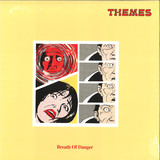
Breath Of Danger was originally released in 1974, and rounded up a killer ensemble cast of library legends including Alan Hawkshaw, Brian Bennett, Alan Parker, David Lindup, Kenny Salmon, Barry Morgan and Ray Cooper.
Lindup’s opener “Cold Sweat” sounds like hip-hop-friendly mode Axelrod and, indeed, was brilliantly sampled by Kool Keith for his Dr. Dooom project. Alan Hawkshaw and Brian Bennett’s “The Manipulator” sounds like it arrived straight out of the same sessions as their legendary Synthesizer & Percussion LP from the same year.
Over on the B-side Alan Parker’s “Psychosis” is a moving and beautifully restrained funk-guitar/cello/harp workout. Stunning. Kenny Salmon’s “Flying Squad” is a sleazy, flute-enhanced gem and the album closes with “Voodoo”, a seventy second riot of sound and colour from the dynamic drumming-percussion duo of Barry Morgan and Ray Cooper.
Sonically, there’s a widescreen vitality in all these tracks thanks to the driving rhythms, vibrant horn sections and blazing guitar work. It renders Breath Of Danger - 45 years old - truly ageless. The Themes series is known for having particularly striking sleeves, which was unusual for library records at the time, and Breath Of Danger’s scraps of comic-book crazy make for one of the most eye-catching.
As with all of our other Themes re-issues, the audio for Breath Of Danger comes from the original analogue tapes and has been remastered for vinyl by Be With regular Simon Francis. We’ve taken the same care with the sleeves, handing the reproduction duties over to Richard Robinson, the current custodian of KPM’s brand identity.
Melbourne based producer Louis Marlo returns to Merriware with five meditative cuts, entitled Stained Glass. Recorded between 2014-2018, the EP is the culmination of experiments with tape loops, the 303 and 606, and processed guitars and electric pianos.
Vital Sales Points:
Early airplay from Moxie and Andrew Weatherall.
Upcoming premieres through Orb Mag and Hypno Groove
- A1: Miss Love (First Version)
- A2: Here Come I, Here Is Me (First Version)
- A3: Hospitals
- A4: One Moment It Will Last
- A5: North South East The West
- B1: The Rose (First Version)
- B2: Mister Nothing
- B3: Looking For
- B4: Roots Of Life
- B5: What's There Left
- C1: Twinkling Stars
- C2: Blinded By The Lies
- C3: Bullshit
- C4: Foolin
- C5: How's About The Aims In Life
- D1: Intro (Live In Queekhoven 1982)
- D2: Miss Love (Live In Queekhoven 1982)
- D3: Here Come I, Here Is Me (Live In Queekhoven 1982)
- D4: The Rose (Live In Queekhoven 1982)
- D5: Something Between You & Me (Live In Queekhoven 1982)
Early Days maps out Nine Circles interpretation of Cold Wave and Minimal Synth. Unbelievably the tracks are mostly from a brief time period, ’80—’82. Alienation and uncertainty course through the 2LP with heavy Yamaha chords, metallic machine beats and brittle vocals.
Nine circles was formed in the early 80s by Peter Van Garderen and Lidia Fiala. In 1980 there was a band called Genetic Factor. This band split up when their three members got girlfriends and they started to make music together with their girls. So at that time there were 3 bands living together in one house.
One of the couples were Peter van Garderen and Lidia Fiala. Lidia had been writing lyrics since she was 15 years old. Nine Circles was born. Within 2 years they wrote about 60 songs.
Also living in the house was Richard Zeilstra, who had a job at the VPRO radio, hosting a show called „Spleen“ where he gave New Wave bands a chance to play. He asked bands to send tapes to him and the best bands had the opportunity to play live at the radio and also got the chance to be on the „Radio Nome“ compilation. Peter and Lidia sent their tape to him and were the only ones from this house to be on the show. Richard knew their music was special. Nine Circles never played a live show on stage, only one concert live at the radio which is also featured on this LP.
Two years later Peter and Lidia split up and Nine Circles disappeared. In 2009 Lidia’s son googled her name just for fun and found a lot about the band Nine Circles. Lidia was surprised, she never knew how popular Nine Circles have been over the years. She got herself on Facebook and since then she got in touch with many people and decided Nine Circles should come back! Peter was not able to join the band these days, he had a different life but he was supporting Lidia and liked that she enjoyed doing music again. Peter still had all the old recordings and sent Lidia a lot of the music they made together back in the days. The best tracks are collected on this 2LP.
Together with Per-Anders Kurenbach Lidia revived Nine Circles. They recorded new material (released on the album „Alice“) and played live until Lidia had to stop playing live for health reasons in 2016. Nevertheless they‘re working on a follow-up album called „Emerge“ which is planned to be released in 2020 and hopefully Lidia will be able to go on stage again soon.
2024 Backstock
After having released several solo works of both artists, Dauw announce the first collaborative full album by The Humble Bee & Benoît Pioulard; 'I suppose I'm your future'.
Both artists hold a very special place in the history of the label. The Humble Bee was already present from the very beginning and, in hindsight, definitely has put an important mark on the musical aesthetics we've been developing throughout the years. On the other hand, we crossed paths with Benoît Pioulard several years ago through our ongoing Living Room Concert Series in which he offered one of the most magical evenings to date. Given their mutual love for the tape medium and melancholic compositions, we only had to connect the dots as we were pretty sure that some magic was up in the air.
It goes without saying that we were uttermost happy when they both accepted our invitation to work on a collab album. Even though we didn't know where their efforts would end, it already felt like a victory that we, as a label, were able to link these artists. Above all, the art of curating can be considered as an essential feature of running a label but for us it is also the most wonderful part about it. Linking artists to each other, like we also did in our Dialog Tapes or Illuminine Reworks series, even goes a step further as it makes new connections, pushes boundaries and ultimately can result in an unexpected enrichment of the musical field.
"I always look forward to the Dauw collaboration releases. Most of the creativity for these lays within their curation: it brings together artists that, although arc in the same orbit but somehow never cross paths. The beauty of collaborating is that we learn from having to give space to another creative force, working alone we fall back on what we know and what we have already done. Although I wasn't paired with Tom for earlier projects, the guys at Dauw thought (and rightly so) that it was about time we crossed our musical paths for an lp." (The Humble Bee)
- A1: Dur Dur Band - Daraadaa Muxibo
- A2: Omar Shoolil - Hab Isii
- A3: Mukhtar Ramadan Idii - Check Up My Head
- B1: Bakaka Band - Geesiyada Halgamayow
- B2: Fadumo Qassim & Waaberi Band - Waa Kaa Helaa
- B3: Iftin Band - Sirmaqabe
- C1: Mukhtar Ramadan Idii - Baayo
- C2: Ahmed Shimaali & Ahmed Sharif "Killer" - Hoobeya
- C3: Dur Dur Band - Shaleedayaa
- D1: Dur Dur Band - Ladaney
- D2: Bakaka Band - Gobonimada Jira
- D3: Iftin Band - Ii Ooy Aniga
After being blown away by a few tunes - probably just as you will be after listening to this - Samy Ben Redjeb travelled to the infamous capital city of Somalia in November of 2016, making Analog Africa the first music label to set foot in Mogadishu.
On his arrival in Somalia Samy began rifling through piles of cassettes and listening to reel-to-reel tapes in the dusty archives of Radio Mogadishu, looking for music that ‘swam against the current’.
The stars were aligned: an uncovered and unmarked pile
of discarded recordings was discovered in a cluttered corner of the building. Colonel Abshir - the senior employee and protector of Radio Mogadishu’s archives - clarified that the pile consisted mostly of music nobody had manage to identify, or music he described as being ‘mainly instrumental and strange music’.
At the words ‘strange music’ Samy was hooked, the return flight to Tunisia was cancelled. The pile turned out to be a cornucopia of different sounds: radio jingles, background music and interludes for radio programmes, television shows and theatre plays. There were also a good number of disco tunes, some had been stripped of their lyrics, the interesting parts had been recorded multiple times then cut, taped together and spliced into a long groovy instrumental loop.
Like everywhere in Africa during the 1970s, both men and women sported huge afros, bell-bottom trousers and platform shoes.
James Brown, Stevie Wonder, Marvin Gaye and The Temptations’ funk were the talk of the town. In 1977, Iftin Band were invited to perform at the Festac festival in Lagos where they represented Somalia at the Second World Black and African Festival of Arts and Culture.
Not only did they come back with an award but they also returned with Afrobeat. While Fela Kuti’s ‘Shakara’ had taken over the continent and was spreading like wildfire throughout Latin America, it was the track ‘Lady’ that would become the hit in Mogadishu.
ALTA’s debut release, 'Reasons' is the product of many long nights making music together in a back room at Hannah and Julius’ Brunswick home. It was self-recorded over 10 months, from January 2018 to November 2018, using midnight sessions, tape delay effects and a literal room full of wall to wall synths to carve out a world all their very own. "It's a collection of songs written together in our home studio - No cowriters or anything, just us two experimenting making the music,” says the band.
The album was later mixed by Seekae’s George Nicholas in Sydney and mastered by Grammy-winning engineer Chris Gehringer at Sterling Sound (Rihanna, Janelle Monae, Chvrches).
Thematically, the album’s title alludes to the sense of complacency that often sets in when people start making excuses for themselves.
“It’s this internal thing,” Julius explains, ‘always coming up with reasons why things did or didn’t happen, or reasons why someone else did something. Often it’s self-preservation but it’s also bullshit.”
‘Push’ follows on from previous singles ‘Figured Out’, ‘Back On It’ and ‘Twisted’, which have just under 2 million streams on Spotify since their release and are receiving global attention, with spins on BBC Radio 1 and praise from the likes of The Line of Best Fit and CLASH.
At streaming, ALTA have seen huge support locally and internationally, with their 2019 releases featuring in Spotify’s New Music Fridays, Indie Arrivals, The Local List, Just Chill, Front Left, New Dance Beats and The Office Stereo, plus Best Of The Week on Apple Music.
Melbourne fans will witness ALTA performing tracks from Reasons for the first time ever at Northcote Social Club on Saturday 5 October. Tickets are on sale now via Northcote Social Club’s website.
Reasons is an intricate and emotional body of work that will see ALTA step out from Melbourne’s underground scene, and into the international limelight. Pre-order your copy today.
The vitality you hear on Antique Blacks is a testament to the unique energy of the community around The Foxhole Cafe in Philadelphia, as Ra honed his unique brand of Afro-Futurism through the late 60';s and 70's. Cosmic theatre, spiritual chants, and experimental electronics make this record an essential document that was ahead of its time. Ancient to future! BIG TIP !
The 1970s saw change in Sun Ra's recorded output, and as far as we can tell, the content of his live performances. By the middle of the decade, Sun Ra's music no longer seemed comprehensible as part of the jazz New Thing – quirkier, more idiosyncratic elements were more to the fore.
At this time, 1974, every Sun Ra record still surprised, and seemed radically different from everything else he had released up to then. The musical universe proposed by free jazz had never circumscribed Sun Ra. He had been part of the movement, but was able to use the possibilities it suggested without being limited by its conventions.
The Antique Blacks illustrates this well. Recorded as a radio broadcast in Philadelphia, according to Dale Williams, it has a well defined but oddball structure. Sun Ra was a master architect, very concerned to use the unfolding of an album, a broadcast or a live performance to create a satisfying structure.
Song No 1 starts on an upbeat note, it's a lively, tonal introduction, featuring John Gilmre on tenor saxophone, Sun Ra on roksichord, Dale Williams, then aged 15, on guitar, and Akh Tal Ebah on trumpet.
Sun Ra's poetry is featured on There Is Change In The Air, a track which has on occasion been used for the album title: in its original incarnation as a Saturn LP, there was no dedicated sleeve artwork, and this record appeared under many names. Ra's poetry is allusive, elusive and paradoxical, and this was its first major appearance on a record. During instrumental passages, Dale Williams' guitar is heard, along with the saxophones of Marshall Allen and Danny Davis.
The Antique Blacks is a similar setting for a Sun Ra poem, which encompasses "spiritual men", and Lucifer as a dark angel. The Arkestra is heard in conducted improvisational ensembles, in between the sections of the poem.
This Song Is Dedicated To Nature's God has Arkestral vocals, with John Gilmore's voice in th foreground. Williams' guitar is once again prominent in the instrumental passages.
Sun Ra's poetic declamations provide the structire for The Ridiculous I and The Cosmos Me, which also has a fine unaccompanied tenor solo by John Gilmore, keyboard improvisations by Sun Ra, and closes with bass clarient from Eloe Omoe.
Sun Ra's keyboards are heard with minimal Arkestra support on Would I For All That Were – a fine synthesiser improvisation, with electric piano left hand accompaniment.
Tension is resolved by Space Is The Place, which rounds the album out in an upbeat mood, with Akh Tal Ebah, James Jacson and Sun Ra prominent among the vocalists. The closing section includes the chant Sun Ra And His Band From Outer Space, often used at the close of live performances. This isn't strictly live, though: in one line the vocal is played backwards on tape!
RAVE026 is a double hammer of blitzkrieg gabber and seething acid trance/schranz from Service
Animal (Vereker) and Crime Unit, featuring material previously issued on impossible-to-find
tapes by the cult, DIY label; Live Adult Entertainment
The punkish reputation of Live Adult Entertainment precedes them as one of the underground’s
keenest yet elusive operations to emerge in recent years. Based in Thessaloniki, a port city in
northern Greece, they’ve released some 28 tapes, CDR’s and lathe cut vinyl of musick ranging from
psy-trance to industrial noise and concrète since 2017, and always in editions ranging from zero
to 20 tops, leading to feverish and frustrated reactions from those listeners who’ve chanced upon
their YouTube videos before they get taken down. Finally, this 12” features the first readily available
and properly mastered LAE material on a physical format.
On the A-side, Endangered Species label boss Oliver Vereker adopts his gabber alias Service
Animal for his first outing proper since appearing as Renoir on his label’s 2017 CD, ‘Death Always
Follows’. Revolving material originally available on tape in edition of 20 copies, it boots off with
the 12-hp hoof and dive-bombing drones of ‘Core Of Reality’ next to the evil Arcardipane styles of
‘F.T.W’, which are both produced with the same, powerful conviction in charred black metal, noise
and hardcore techno that made his 2015 releases as Restraint and Grace so vital, only with added
acceleration and syncopation.
The B-side follows with a pair of seething workouts from the ‘Cyber Afterbirth Vol.1’ mix by
LAE co-owner, Crime Unit. Hearkening back to a sound that was ubiquitous between Hackney
Warehouses and small-town UK/European techno clubs in the late ’90s/early ‘00s, they are
ravenous examples of the LAE aesthetic, applying scuzzy DIY principles to gnashing German
schranz and adrenalising acid trance with ruthlessly direct results that pack one of the meanest
breakdowns you’ll hear this year. Trust they will mercilessly sort the dancers from the posers.