Babau is the pantropical project of Artetetra founders Matteo Pennesi and Luigi Monteanni in which a fascination with exotica, world music 2.0 and field recordings meets the compositional and improvisational techniques of computer music. Their latest work, the album »Stock Fantasy Zone«, was recently released on Discrepant and they have been nominated Shape artists 2023. The duo has participated in various Italian and non-Italian festivals such as Fusion, Club to Club, Nextones, Outernational Days, Camp Cosmic and Saturnalia.
»Flatland Explorations« is an ever-growing collection of completely improvised attempts at mapping the surface and irregular shapes of Babau's sonic flatland by means of audio manipulations and digital sorceries. Joining live recordings with studio material and field recordings, the duo crafts its unique sound made of granular illusions, midi extravaganza, wind instruments' acrobacies, and vocal calembours. The results have been remarkably described as 'the sound of a continent moving, ethnicities, animals, plants and mineral included.
Out of the stack, the flatland has no boundaries.
quête:the techniques
- 1: Workaround One
- 2: Workaround Two
- 3: Workaround Three
- 4: Workaround Four
- 5: Workaround Five
- 6: Clouds Strum
- 7: Workaround Six
- 8: Workaround Seven
- 9: Workaround Eight
- 10: Workaround Nine
- 11: Square Fifths
- 12: Workaround Bass
- 13: Pause
- 14: Workaround Ten
‘Workaround’ is the lucidly playful and ambitious solo debut album by rhythm-obsessive musician and DJ, Beatrice Dillon for PAN. It combines her love of UK club music’s syncopated suss and Afro-Caribbean influences with a gamely experimental approach to modern composition and stylistic fusion, using inventive sampling and luminous mixing techniques adapted from modern pop to express fresh ideas about groove-driven music and perpetuate its form with timeless, future-proofed clarity. Recorded over 2017-19 between studios in London, Berlin and New York, ‘Workaround’ renders a hypnotic series of polymetric permutations at a fixed 150bpm tempo.
Mixing meticulous FM synthesis and harmonics with crisply edited acoustic samples from a wide range of guests including UK Bhangra pioneer Kuljit Bhamra (tabla); Pharoah Sanders Band’s Jonny Lam (pedal steel guitar); techno innovators Laurel Halo (synth/vocal) and Batu (samples); Senegalese Griot Kadialy Kouyaté (Kora), Hemlock’s Untold and new music specialist Lucy Railton (cello); amongst others, Dillon deftly absorbs their distinct instrumental colours and melody into 14 bright and spacious computerised frameworks that suggest immersive, nuanced options for dancers, DJs and domestic play. ‘Workaround’ evolves Dillon’s notions in a coolly unfolding manner that speaks directly to the album’s literary and visual inspirations, ranging from James P. Carse’s book ‘Finite And Infinite Games’ to the abstract drawings of Tomma Abts or Jorinde Voigt as well as painter Bridget Riley’s essays on grids and colour. Operating inside this rooted but mutable theoretical wireframe, Dillon’s ideas come to life as interrelated, efficient patterns in a self-sufficient system.
With a naturally fractal-not-fractional logic, Dillon’s rhythms unfold between unresolved 5/4 tresillo patterns, complex tabla strokes and spark-jumping tics in a fluid, tactile dance of dynamic contrasts between strong/light, sudden/restrained, and bound/free made in reference to the notational instructions of choreographer Rudolf Laban. Working in and around the beat and philosophy, the album’s freehand physics contract and expand between the lissom rolls of Bhamra’s tabla in the first, to a harmonious balance of hard drum angles and swooping FM synth cadence featuring additional synth and vocal from Laurel Halo in ‘Workaround Two’, while the extruded strings of Lucy Railton create a sublime tension at the album’s palatecleansing denouement, triggering a scintillating run of technoid pieces that riff on the kind of swung physics found in Artwork’s seminal ‘Basic G’, or Rian Treanor’s disruptive flux with a singularly tight yet loose motion and infectious joy. Crucially, the album sees Dillon focus on dub music’s pliable emptiness, rather than the moody dematerialisation of reverb and echo. The substance of her music is rematerialised in supple, concise emotional curves
and soberly freed to enact its ideas in balletic plies, rugged parries and sweeping, capoeira-like floor action. Applying deeply canny insight drawn from her years of practice as sound designer, musician and hugely knowledgable/intuitive DJ, ‘Workaround’ can be heard as Dillon’s ingenious solution or key to unlocking to perceptions of stiffness, darkness or grid-locked rigidity in electronic music. And as such it speaks to an ideal of rhythm-based and experimental music ranging from the hypnotic senegalese mbalax of Mark Ernestus’ Ndagga Rhythm Force, through SND and, more currently, the hard drum torque of DJ Plead; to adroitly exert the sensation of weightlessness and freedom in the dance and personal headspace.
Now a regular on the label, scene stalwart Chronicle continues his joyful journeythrough a landscape of dancefloor-friendly atmospherics.
A1 - Air Temple
Chronicle opens the EP with Air Temple, an immensely playful track with a superb 2-step hot pants break, programmed superbly with layers of depth generating anenergetic and immensely danceable tone, following the deliciously smooth late 90'sGLO-style intro. Lush female vocal samples perfect for the vibe are present and correctwhile micro melodies pan across the mix adding a wonderful texture.
A2 - Everblue
A delicately ominous intro with pads, whooshing samples and rustic synths precede adensely crafted slew of old-school analogue breakbeats laid in a subtle arrangement,bringing a blend of energy perfect for dancefloors and home listeners alike. Vocalsamples are programmed and twisted like instruments as Chronicle embarks on aspace odyssey with memorable melodies you'll keep discovering listen after listen.
AA1 - Encarta
Next up we have Encarta, which sets out intentions quickly in the introduction with abouncy, clean breakbeat which is quickly bolstered by a superb 2-step old school drumloop to create a pulsating energy. A myriad of samples are collected and fleckedthroughout the mix, while Chronicle's editing techniques mimic a skilled DJ cuttinganother break in and out to satisfying effect towards the back end of the main phases.
AA2 - Angular Momentum
Closing a diverse and uniquely atmospheric EP, Chronicle opens Angular Momentumwith a patchwork of synths and pads, ushering in a serene, simple high note melodyabove the driving breaks - detailed with distinctive cymbals that give the track's nameserious validity. With a slew of samples darting in both the foreground and backgroundfor the listener to enjoy, this is a piece which will live long in the memory.
Words by Chris Hayes (Spatial / Red Mist)
- 1: Give It Up
- 2: Blue Sunshine
- 3: Feels Like Love
- 4: Soul Sleep
- 5: Wet Dream
- 6: Love Is Distraction
- 7: Chinatown Style
- 8: The Body You Deserve
Psychic 9-5 Club marks the beginning of a new chapter for HTRK. It's an album that looks back on a time of sadness and struggle, and within that struggle they find hope and humour and love. It's Jonnine Standish and Nigel Yang's first album recorded entirely as a duo— former band member Sean Stewart died halfway through the recording of their last LP, 2011's Work (Work, Work).
Though the record is instantly recognisable as HTRK—Standish's vocal delivery remains central to the band's sound, while the productions are typically lean and dubby—they've found ample room for exploration within this framework. Gone are the reverb-soaked guitar explorations of 2009's Marry Me Tonight and the fuzzy growls that ran through Work (Work Work). They've been replaced with something tender, velvety and polished. This is HTRK, but the flesh has been stripped from their sound, throwing the focus on naked arrangements and minimalist sound design.
The album was recorded at Blazer Sound Studios in New Mexico with Excepter's Nathan Corbin, who had previously directed the video clip for Work (Work Work) cut "Bendin." Inviting a third party into their world was no easy decision, but in Corbin they found a kindred spirit. The LP was then refined and reworked in Australia at the turn of 2013, before the finishing touches were applied in New York during the summer.
Of all the themes that run through Psychic 9-5 Club, love is the most central. The word is laced throughout the album in lyrics and titles— love as a distraction, loving yourself, loving others. Standish's lyrics explore the complexities of sexuality and the body's reaction to personal loss, though there's room for wry humour—a constant through much of the best experimental Australian music of the past few decades.
Standish explores her vocal range fully—her husky spoken-word drawl remains, but we also hear her laugh and sing. Equally, Yang's exploratory production techniques—particularly his well-documented love of dub—are given room to shine. They dip headlong into some of the things that make humans tick—love, loss and desire—with the kind of integrity that has marked the band out from day one. Psychic 9-5 Club is truly an album for the body and for the soul.
- Act Like You Know
- Act Like You Know (Dub)
The first single from the forthcoming Skinshape x Horus dub album, "Act Like You Know" is a soulful reggae reworking of Fat Larry's Band's 1982 classic, featuring smooth vocals from Andy Platts (also Mama's Gun, Young Gun Silver Fox). Produced using fully analogue techniques and recorded in the spirit of vintage Jamaican dub, this 7" is a perfect blend of oldschool authenticity and modern production finesse. Skinshape (Will Dorey) and Ben Bell (Horus Records / Lion Vibes) bring over two decades of collaboration and deep roots to this project. Known for their love of rare roots reggae and dub, the pair are now crafting original material with the same dedication to sound and detail that defined the golden era of Jamaican music. Released as white label 7" vinyl in plain white sleeve with dub version of Act Like You Know on the flipside.
- A1: Filastrocca (Nursery Rhyme) 1:11
- A2: Scuola Di Retorica (School Of Rethorics) 2:08
- A3: Retarius In Lotta (Retarius' Fight) 2:13
- A4: Scena, Fiaba, Pantomima (Scene, Tale, Pantomime) 5:24
- A5: Quartilla 0:31
- A6: Quartiere Dei Bordelli (Brothels' Quarter) 2:26
- A7: Mercato, Nebbia (Market, Fog) 1:02
- A8: Orgia (Orgy) 2:34
- B1: Bali 7:02
- B2: Epitaffio (Epitaph) 1:09
- B3: La Nave (The Ship) 1:34
- B4: Inizio Tempesta (Storm Begins) 1:04
- B5: Tempesta Violenta (Violent Storm) 1:30
- B6: Succhiata (Sucking) 0:12
- B7: Naufragio (Shipwreck) 1:33
- B8: Giardino Di Circe (Circe's Garden) 0:43
- B9: Proseleno 0:51
- B10: La Maga (The Witch) 1:19
- B11: Mangiando Il Cadavere + L'uccello (Eating The Corpse + The Bird) 2:27
Within the world of theatrical archives, there are the known, the unknown, the forgotten, and the lost. Demetrio Stratos' stage compositions for Teatro dell'Elfo's groundbreaking 1979 production Satyricon - directed by future Oscar winner Gabriele Salvatores - represents one such lost artifact now wondrously returned to life. This radical sonic work, integrating extended vocal techniques, Balinese instruments, and pioneering whale song recordings, stands as the final masterpiece of Italy's most visionary vocal experimenter, lost for over four decades until Die Schachtel's extraordinary recovery. As Stratos himself explained: "The musical operation performed on Satyricon is particular: the composer-musician here does not compose, but borrows ready-made music, vivisects it, melts it, intervenes and recomposes it on magnetic tape. The structure of the signifier, from a morphological point of view, presents itself as a conceptual collage." The music is obtained by utilizing compositions and musical elements from David Behrman, Joan La Barbara, Balinese Ketyak, Turkish Nay flute, Yugoslavian bagpipe, Pan flute, and whale song, with synthesizer interventions by Paolo Tofani. It began as part of something known - a wild, immersive theatrical event that inaugurated Teatro dell'Elfo's historic venue in 1979, was almost entirely forgotten, becoming lost and then unknown. The original production marked a radical departure for the company: no longer popular street theatre, but a dark, immersive, sophisticated spectacle that transformed their space into a rough wooden arena with a sand floor. Demetrio Stratos, working with Paolo Tofani (fellow Area member), created an entire sonic universe that subverted every conventional function of stage music. Their composition wasn't accompaniment, but autonomous sonic dramaturgy that integrated extended vocal techniques, archaic electronic elements, Nay flutes, Balinese instruments, and pioneering whale song recordings. The result was a three-dimensional soundscape that enveloped audiences, creating an otherworldly acoustic dimension. Stratos' score even intervened in the actors' vocal delivery, with the recordings capturing both the performance and his coaching sessions with the cast. The production featured young actors destined for fame - Elio De Capitani, Ferdinando Bruni, Cristina Crippa, Corinna Agustoni, Ida Marinelli - guided by Gabriele Salvatores in this adaptation of Petronius' ancient novel. Shortly after the Satyricon performances, Stratos was hospitalized for the condition that would lead to his death at just 33 years old. This work represents his final composition - a haunting farewell from one of Italy's most innovative sound artists. Die Schachtel presents this recovered work in collaboration with Teatro dell'Elfo, pulled from the original magnetic tape and carefully restored. Satyricon '79 is one of the great artifacts of 1970s Italian avant-garde - a wild, grinding sonic expose which sucks the ear into its depths, made in the spirit of collaboration and creative risk-taking. The edition includes critical apparatus with essays, testimonies from protagonists, and period photographic documentation, documenting an unrepeatable moment where theatre, vocal research and sonic experimentation converged. This release marks a poignant moment in experimental music history - Stratos' final work, now rescued from the archives and restored to its rightful place in the canon of Italian avant-garde masterpieces. A true wonder of towering historical importance. As essential as it gets for any fan of experimental music, or the history of the Italian avant-garde. Fully restored and newly mastered from the original analog tapes. Absolutely essential.
Sonetos del Amor Oscuro is an ode performed by four enchanted souls who have intertwined their hearts and conjured harmonies and rhythms that wander endlessly among the spellbinding words of a poet from Granada... Federico García Lorca;
He wrung, pushed and vibrated words like tectonic plates, transforming plains into poetic mountain landscapes. He then covered them with a Moorish carpet of snow crystals and had them reflected by the dark locks of hair of a gypsy girl from Albaicín who, with a voice forged in gold and silver, sings her little sister to sleep with a soothing lullaby.
Helena Casella – vocals
Myrddin De Cauter – flamenco guitar
Stijn Kuppens – cello
Stefan Bracaval – flute, bass flute
Helena Casella, the Belgian-Brazilian vocalist with a deep, soft and warm voice, translates her multicultural background and personal thoughts into music in a passionate, soulful and refined way. With her roots in an exceptionally musical family, her music exudes this unique heritage. She effortlessly interweaves genres such as R&B, soul, hip hop and modern jazz, while remaining true to the vibrant sounds of Brazil, an essential part of her roots.
Her debut album was released earlier this year on W.E.R.F. records.
Myrddin De Cauter's music is deeply moving, complex, passionately rhythmic and deeply emotional. He has mastered the compás of flamenco, which gives him the freedom to converse with elements from jazz or classical music. His speed sometimes seems otherworldly, but those who take the time to listen closely to his music will quickly discover an immense world of pure emotion, beauty and tranquillity. After six albums and countless concerts, Myrddin proves that great virtuosos do not necessarily have to come from Spain. At the tender age of eleven, his father taught him to play the clarinet in jazz and gypsy swing style; he became part of the family orchestra and gained his first experiences on stage. A classical melody composed on the guitar prompted him to ask his father to teach him the basics of flamenco guitar. Soon after, Myrddin seemed ready for the real thing and went to Andalusia to learn from Manolo Sanlucar and Gerardo Núñez. This inspired him to compose in his own unique language, deeply rooted in the pure flamenco tradition but enriched by boundless creativity.
Stijn Kuppens is a cellist, composer and producer. In his own genre, which he describes as non-classical cello, he uses the cello in his own unique way. His profound knowledge of the complex history and techniques of the style is clearly audible: Kuppens' mastery of classical music is evident in every note he plays, whether he is performing solo or collaborating with other musicians. His skill as a musician and ambition to explore the boundaries of conventional classical music is evident in his ability to seamlessly blend different genres.
Stefan Bracaval is a classically trained flutist who graduated from the Royal Conservatory of Antwerp. His fascination with the expressive potential of improvisation led him to jazz, where he became a self-taught jazz flutist. Bracaval has collaborated on projects with prominent jazz figures such as Charles Loos, Bert Joris and the Brussels Jazz Orchestra. In addition, he worked as a soloist and arranger with the VRT Radio Choir in 2016. Bracaval leads the Stefan Bracaval QU4RTET, which emphasises the flute as a central jazz instrument and brings new repertoire rooted in jazz traditions.
Live
31/10/2025 – Café Silverio, Gent (BE)
15/01/2026 – Kloosterkapel Diepenbeek (BE)
16/01/2026 – ‘t Ey, Belsele (BE)
17/01/2026 – Sint-Luciakerk (kerkconcerten Merode), Engsbergen (BE)
23/01/2026 – Muziekcentrum Dranouter (BE)
'Songs and Bodies' is best described as hypnagogic post-rock, an impressionistic blur of dissociated riffs, jazzy rhythms and half-heard voices that casts a beguiling digital silhouette of '90s indie music. The album began as a personal experiment, a question that emerged as Piotr Kurek cast his mind back to the era that birthed bands like Gastr del Sol, Bark Psychosis, Labradford and The Sea and Cake. Curious how this music might sound in today’s cultural climate, he started recording sketches at home on guitar and keyboard, applying the same advanced processing, editing and manipulation techniques that had nourished his last run of albums. Early on, he brought in drummer Mateusz Rychlicki and bassist Wojciech Traczyk, layering their performances into the evolving material. These ideas might have remained in that unvarnished state had Unsound not suggested a live performance of the work in October 2024. Spurred by the invitation, Kurek hardened his resolve, finishing a crumpled, uncanny set of half-songs that extend the chimerical sonic universe of the jazz-inspired 'Smartwoods' and its baroque predecessor 'Peach Blossom'.
Not an exercise in nostalgia, 'Songs and Bodies' is an examination of the '90s and '00s experimental rock canon that isolates its humanity as the world stares down a new technological dawn. At a glance, Kurek's songs are remarkably organic, diaphanous guitar-led meditations embellished with era-specific organ and electric piano vamps, cryptic vocal utterances and dusty drums, but it's all an illusion. Listen a little closer and the wrinkles appear—the robotic, garbled articulations, awkward tempo fluctuations and charming hiccups.
Kurek distills these vulnerabilities and blemishes to present a deeply personal but relatable abstraction of familiar sounds and gestures. It's the closest the composer has come to old-fashioned songwriting, but the end result is the same: an invitation to look beyond the frosted glass of an increasingly digital existence.
Two years after making their bow via a fine contribution to the Claremont Editions 3 compilation, Nuremberg’s Neumayer Station are ready to drop their debut full-length excursion, the mesmerising and immersive Crossings.
The brainchild of drummer-turned-producer Michael Kargel, a musician with a bulging CV that includes stints in various German indie-pop and rockabilly bands, Crossings was co-produced and mixed by Frank Mollena (best known to Claremont 56 fans as the man behind the Fürsattl and Bambi Davidson projects), with additional contributions by Alexander Sticht and an impressive roll call of guest musicians plucked from Nuremberg’s vibrant musical underground.
Recorded at different points over the last three years, the eight tracks showcased on Neumayer Station’s inspired debut album draw influence from the hypnotism of classic German ‘kosmische’ recordings, the freewheeling and stoned headiness of CAN, and the gently unfurling beauty of sun soaked Balearica. Kargel, Mollena and their collaborators set the tone with opener ‘Unterführung’, where Sticht’s layered and sonically hazy vocalisations rise above space-rock guitar motifs, droning analogue synth sounds, languid bass and slow-motion drum breaks. With effects aplenty and all manner of melodic electronic flourishes, it’s a deeply psychedelic and mind-expanding affair.
‘Nalut’ follows, with Kargel’s own atmospheric howls and whistles cannily combining with sun-bright tropical guitars, echoing chords and delay-laden saxophone solos riding the dub-flecked, low-slung groove. The collective’s Balearic influences are explored in more sonic detail on ‘A Gentle Flow’, a shuffling and soft-focus affair marked out by emotive piano & jazz guitar, brushed percussion, sunrise-ready synths and pleasingly stretched-out electronic textures. Neumayer Station return to this drifting, morning-fresh and eyes-closed sound later in the LP, via the wonderous ‘Von der Morgenröte’.
The heady influence of spaced-out dub production techniques comes to the fore on ‘Bassrutscher’, an Alexander Sticht co-production rich in Americana-influenced guitar textures, metronomic dub bass, rim-shot heavy drums, mazy organ and orange-hued sundown sounds. It ushers in the more up-tempo shuffle of ‘Zielgerade’, an inner space, out-of-mind affair whose driving but loose-limbed groove provides a platform for exotic, droning and otherworldly guitar, sax and synth sounds. As with all great albums, Crossings gently builds towards a triumphant and memorable conclusion. The spacey Balearic/kosmische crossover of ‘Feeling Forst’, where darting intergalactic synth sounds rub shoulders with gentle acoustic guitars in a hallucinatory soundscape, tees up closing cut ‘Crossings’, the krautrock-rooted, sax-sporting slab of enveloping late-night beauty that first introduced listeners to Neumayer Station back in 2023. It’s a fitting conclusion to a staggeringly good debut album.
'Total Spook' mixtape is Artetetra's homage to the forgotten cassette and CD culture of mass-distributed commercial Halloween sound effects, horror tales, and spooky music productions across the eighties and nineties.
Mainly produced in the U.S. these objects featured some of the famous names of the entertainment and commercial industry such as Prince's Dr. Fink (yes, that synth master), Elvira, the Mistress of the Dark and Hallmark as well as unknown and anonymous creatives and artists. In these tracks engineers, musicians and producers arguably had carte blanche in experimenting with extreme samples and vocal manipulation, time-based effects, extended techniques, spooky sound fonts and stock sound effects developing their unique ideas around the sound ambience of the Halloween and horror imagery's campy cliches.
After digging around 30 hours of material gathered from dedicated YouTube channels and playlists such as the ones created by 'Beetlemuse' and 'Caleb Jones', I have compiled a 100' mixtape showcasing some of the most endearing, weird and experimental sound designs long forgotten in the vaporware-like consumer culture of the '80s and ‘90s.
- Rock Music
- The End
- Hopeless
- Eating Away
- Headache Of The Year
- Ungrateful
- Staring At A Wall
- We Sat In The Car
- Panic Attack
- Watching A Video
- The Best Of Me
- By Myself
- Still Life
Los Angeles artist and musician Shlohmo returns with a vinyl repress of two of his defining albums: "Bad Vibes" and "The End". From the first sounds of Henry Laufer"s early work, it was clear he was forging a new path in electronic music - melding hazy textures, emotive melodies, and fractured beats into a sound both intimate and expansive. Bad Vibes introduced Shlohmo"s lo-fi, slowmotion approach, crafting emotive atmospheres that would influence a generation of West Coast producers. The End, a cinematic journey of chaos and calm, cemented his status as a visionary, blending apocalyptic tension with moments of quiet reflection, made with drum machines, vintage synths, and improvised recording techniques.
- Big Feelings
- Places
- Anywhere But Here
- It Was Whatever
- Parties
- Just Us
- Sink
- I Can't See You I'm Dead
- Trapped In A Burning House
- Get Out
- Your Stupid Face
- Seriously
- Same Time
Los Angeles artist and musician Shlohmo returns with a vinyl repress of two of his defining albums: "Bad Vibes" and "The End". From the first sounds of Henry Laufer"s early work, it was clear he was forging a new path in electronic music - melding hazy textures, emotive melodies, and fractured beats into a sound both intimate and expansive. Bad Vibes introduced Shlohmo"s lo-fi, slowmotion approach, crafting emotive atmospheres that would influence a generation of West Coast producers. The End, a cinematic journey of chaos and calm, cemented his status as a visionary, blending apocalyptic tension with moments of quiet reflection, made with drum machines, vintage synths, and improvised recording techniques.
Daniele Baldelli
Considered one of the first DJs in Italy, Daniele Baldelli began his career in 1969 mixing vinyl at the Tana Club in Cattolica (his hometown),
predating the birth of the modern DJ by several years. In the following years, he solidified his talent and technique at histor such as the Tabù Club, Baia degli Angeli, and Cosmic. From 1979 to 1984, Baldelli created his unique and eclectic style, blendi ic clubs ng seemingly distant sounds and musical styles, complementing them with tempo adjustments (bpm) and deliberately extreme equalization,
creating a truly distinctive sound, known as "Afro Disco." Soundscapes and tribal percussion blend with early electronic music experiments, and Baldelli's sets become truly mystical experiences, where, for the first time, the temples are replaced by the dance floor.
The documentary film "A Cosmic Life" has just been released, starring Daniele Baldelli alongside other illustrious guests from the nightclub scene, recounting the history and formation of this movement from the 1970s to the present.
Gaudi
A producer/musician among the most highly regarded on the international dub/electronic scene, over the past 30 years Gaudi, from his
London studio, has contributed significantly to expanding the boundaries of musical genres with high-profile releases and innovative
music production techniques. Recently nominated for a Grammy Award with 'Mass Manipulation', the album he produced for the reggae
band Steel Pulse, and also nominated for a World Music Award with his album 'Dub Qawwali' with Pakistani singer Nusrat Fateh Ali
Khan, Gaudi has collected a series of number 1s on the international charts: Billboard - with the album 'Heavy Rain' by Lee "Scratch"
Perry, 'Vessel of Love' by singer Hollie Cook and with 'Mass Manipulation' by Steel Pulse -, UK Chart n.1 with the album 'Prism' by the
band The Orb (with whom he has collaborated as a producer and keyboardist since 2008), with 'Blue Monday' - by Gaudi himself with
the band Dub Pistols -, UK Dance Chart n.1 with 'Jus Come rmx' produced with DJ Angelino for Cool Jack. He also reached no. 41 the UK charts with the album ‘Midnight Rocker’ by reggae singer Horace Andy (known to the general public for his hits with Massive in
Attack), no. 13 with the album ‘Dubwise 2’ by the band Dreadzone and no. 5 in the Italian charts with the song ‘Lasciala Andare’, written
by him for Irene Grandi. With 19 solo albums and 350 remixes and productions under his belt, Gaudi, with his artistic versatility, has
worked with Groove Armada, UB40, Simple Minds, Brian Ferry, Devo, Big Audio Dynamite, Damian Marley, Seun Kuti, Mad Professor,
Trentemøller, Grandmaster Flash ft KRS-One, Lamb, Don Letts, The Beat, Deep Forest, African Head Charge (in which Gaudi is a keyboardist and dubmaster), Elisa, Scientist, Dub FX, Roedelius, Caparezza, Caravan Palace, EMF, Sizzla, Jovanotti, Sly & Robbie, Piero Pelù, Youth of Killing Joke, and Maxi Priest, to name just a few. Capleton,
Daniele Baldelli & Gaudi
DJ Daniele Baldelli and producer Gaudi first met three years ago at the Jazz Cafe in London. Mutual respect and an innate need to
create new stylistic fusions were the catalysts for Baldelli and Gaudi, leading to a series of subsequent meetings that inevitably culminated in the need to create music together. The project began at Gaudi's Metatron Studio in London using analog equipment and later
moved to Baldelli's studio in Cattolica, where the two organically defined their sound, also inspired by Baldelli's precious record collection. The duo consolidated a powerful compositional symbiosis, and the project, born from a simple initial groove, later transformed
into an entire EP consisting of four original tracks and a highly innovative sound, featuring fusions of psychedelic-funk, tribal-dub,
electronic-disco, and, of course, "Afro-Cosmic"! Daniele Baldelli and Gaudi began their sonic collaboration without setting any stylistic
direction and with the intention of not creating pre-established goals to achieve; it is a project of pure artistic freedom guided by their
compositional instinct and their experience. Constantly active with their evenings and live concerts, Baldelli and Gaudi have performed
individually in many of the best international clubs and festivals.
2025 Repress!
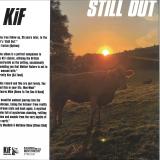
Recorded in a remote cabin on the Devon coast, STILL OUT is an album-length collaboration between musician-filmmakers – and childhood friends – Will Cookson and Tom Haverly. A reflection on friendship, landscape and the passing of time, it inspired a road trip from North Yorkshire to North Devon they took together in the summer of 2024, and forms the soundtrack to a film of the same name which had its premiere screening as part of Stroud Film Festival in March 2025.
Like the film, STILL OUT is also an oblique homage to The KLF’s iconic 1990 album Chill Out, which the Gloucestershire-based pair revisited after it turned up unexpectedly a few years back in Tom’s dad’s record collection. Inspired to create their own recording using a similarly free-spirited process, Will and Tom relocated to the Devon coast in late summer 2023, splicing together a 40-minute mix from their personal archive of recordings and found sounds in a remote cabin with no electricity or mobile reception.
"It came together using cut-and-paste techniques, with ongoing shifts and tweaks,” says Will. “The final result was an audio collage that felt like something legendary hip hop producers The Bomb Squad might make - if ambient music was the only material in their sample library."
Using ‘ambient’ as a starting-point rather than an end in itself, they took inspiration from across the musical spectrum – classic-period Brian Eno, Philip Glass, Bill Evans, plus outliers such as 80s singer-songwriter Virginia Astley and the late DJ-producer Andrew Weatherall. The connections, though, are anything but obvious as the audio shifts seamlessly from field recordings and spoken-word interludes to mood pieces and snatches of vintage pop.
Edited and assembled using freely available open source programs, the source material was often radically altered using tools such as “PaulStretch”, a digital sound-morphing algorithm that allows users to stretch audio files to extreme lengths.
"When we found ourselves in a creative slump or unsure how to navigate a tricky part, we'd say, ‘Let's put some syrup on it and slow it down,’” says Tom. “That always helped us get back on track during late-night recording sessions at the cabin."
Part-soundtrack, part-meditative experiment, STILL OUT is intended as a reflection on the mental and emotional shift that occurs when stepping away from the routine of daily life – an album that forms a celebration of our ever-changing relationship to the world around us and the mystery of what it means to pass through time and space.
“The true follow up, 35 years later, to The KLF’s ‘Chill Out’”.
JD Twitch (Optimo).
An ambient journey reflecting on friendship, the British landscape - and The KLF’s landmark album Chill Out
"This record and film are just lovely. You need this in your life. Moo-Moo!” Balearic Mike (Down To The Sea & Back)
"The album is a perfect companion to the KLF classic, utilising the British countryside as the setting, occasionally reminding you that Mother Nature is not to be messed with.” Strictly Kev (DJ Food)
"A beautiful ambient journey into the landscape, taking the listener from reality to dream state and back again. A mystical realm full of mysterious chanting, rattling trains and sounds from the very depths of the earth."
Lally MacBeth & Matthew Shaw (Stone Club)
In the two years since Parallel Minds’ Juno-Award-winning 5th release Homesick by label co-founder Ciel, we have taken our time reassessing our next moves as the larger dance music scene experienced a paradigm shift. What does it mean to release music made by underground artists from lesser-known scenes like Toronto at a time when bookers and A&Rs are taking fewer risks than ever before? How do we truly celebrate the musical diversity of electronic music when the bottom line threatens to reduce any and all forms of risk-taking?
You just do it, of course.
In truth, few artists have come to represent the music scene in the Big Smoke more than Phèdre, and having seen the duo’s progression from indie weirdo-pop to live hardware act to breakbeat wunderkind in the last decade has been nothing short of amazing. It’s really artists like these that inspired us to start the label in 2018, and we are super elated to usher in PM006 with their long-awaited album, Liquid Constancy.
On its face, Liquid Constancy is a breakbeat record. There are housier joints, to more bassy Baltimore club bangers, to breakneck footwork and jungle steeped in sunshine. All of them share a distinctly syncopated, dubwise rhythm that grounds the album’s tracks. With some having been developed as early as seven years ago, these tracks had their genesis in Phèdre’s mostly improvised live hardware sets from some of Toronto’s most notorious warehouse raves. Primarily powered by two Korg Electribe ESX-1s and the semi-modular Moog Mother-32, the jams found new life in the studio when the duo began recording them as tracks, which demanded a mindfulness of their permanence that Daniel Lee and apè Aliermo at first found intimidating.
Over time, the pair developed a synergistic workflow that pulls from Daniel’s background in drums and apè’s keen ear for texture and movement. They sourced samples featuring voices of BIPOC and feminist icons, drew from their shared love of sci-fi and kung fu movies, and from their Filipino, Chinese, German, and Surinamese backgrounds. Samples were manipulated via techniques like lowering bit rates and adjusting speed to maximize usage due to the Electribe’s limited sample time, which was a subtle way of injecting their interests into their music without being too on the nose. Growing up in the melting pot of the GTA, going to raves as teens, bumping post-punk, industrial, electro, hip-hop and 90s R&B — these experiences all had an undeniable influence on Liquid Constancy. As kids of immigrant parents, equally informed by both their adopted and native cultures, Phèdre makes music informed by sampling and defined by cultural hybridity. In times like these, what is more feel-good than believing in music as a universal language that brings our different backgrounds together?
As trans-Atlantic alchemists pulling from a shared dialectic that somehow encompassed both postmodern deconstructionist tendencies and a delightfully subversive sense of poptimism, it’s easy to see how David Cunningham and Peter Gordon immediately hit it off upon initially meeting each other back in the late-1970s at the height of their youthful transgressions. Having initially worked together on the second Flying Lizards’ LP fourth wall, with its ingenious fusion of dismantled rhythms and rearranged melodies juxtaposed against the slyly sultry singing of Snatch’s Patti Palladin— with Gordon adding a few sprinkles of mischievous sax in the mix— it’s no wonder the collaboration would lead to further musical adventures.
Which leads us directly to the genesis of The Yellow Box. Embarking on a collaborative exercise in the structural repurposing of music as untethered puzzle pieces in need of rearrangement with no predetermined outcomes, the duo gave birth to a project that would see them move through both time and recording studios across Europe, taking nearly two years from 1981-1983 to complete. Enlisting the great Anton Fier on drums from The Feelies/Lounge Lizards nexus and John Greaves on bass from Henry Cow/Soft Heap lore to round out their dueling creative counterparts, the album would be something of a lost treasure until its eventual release on Cunningham’s Piano imprint in 1996.
Cinematic in scope, and filled with drifting drones, beautiful counter-melodies, eery minimalism, Kraftwerkian synthesizers, looped voices, skronky interludes, and other shifting undercurrents of sound, it was an album that utilized both a diverse array of expressive languages, as well as early sampling techniques and prepared instruments, well before most people were thinking in such expansive, integrated terms at the dawn of the 80’s. But such is life at the vanguard of new music. And one of the reasons that it likely sat on the shelf for so long before finally being released well over a decade later. Like a sparser, less groove-oriented version of My Life in the Bush of Ghosts, or a more radical take on the experimental work of Can’s Holger Czukay, The Yellow Box stands at the crossroads of time and technology, fusing multiple strands of musical thought and compositional techniques into a disjointed whole that somehow still comes off as a conceptually complete record.
Now, here it is again, over 40 years later, with perhaps even more historical resonance than it had before, remade and remodeled just waiting to be rediscovered again.
- 1:
- 2:
- 3:
- 4:
- 5:
- 6:
- 7:
- 8:
The Sludge Of The Land is the new album by digital folklore and post-exoticism Italian duo Babau. Their first full length since 2023’s Flatland Explorations Vol. 2, with The Sludge Of The Land Babau lands on Impatience with their signature audio-prestidigitation at it’s most disorientingly pungent and zonked, a uniquely contemporary approach described as the sound of a continent moving; animals, plants and minerals included.
As part of a residency at Casa degli Artisti, Milan, in 2022, Babau turned their atelier into a recording studio and performing venue thanks to Francesco Piro, who produced the entirety of the album. There, the duo improvised with different acoustic and digital instruments for several hours a day. Returning after ten years to a sound more akin to a band or small orchestra, Babau re-explores tropes and themes of exotica and jazz from their unique and off-kilter perspective of terminally-online diggers-dwellers of the internet flatland.
An homage to digital content consumption and dopamine-infused sensory overloads, The Sludge Of The Land imagines itself as an abstract sonic wunderkammer of online detritus. By diving into the world of ‘sludge content’: audiovisual chaos produced by mixing different content using split screens or dizzying patchworks of videos, Babau celebrates the formless, viscous goo, spam, chum and slop of out-of-context moving image, fast paced digital videos and lo-fi mp4 artifacts. By endlessly spiraling into the non-spaces of The Net, Babau explore the uncharted parageographies of lavacasts, mysterious Chinese anthropozoomorphic legendary beings, vampiric doomscrolling glides and doppelganger, ctrl+c & ctrl+v spiritualism. These ghosts of pointless microevents and traveling-without-moving bedroom boredom are stuffed by Babau with the epic tone and compositional approach of exotica and world music 2.0 reveries, resulting in an absurd, playful narrative of the dangers and allures of the web.
Bringing together the sound of Richard Hayman and Black Dice, Korla Pandit and Sun Araw, Tony Scott and Carl Stone, once again the duo crafts a compelling audio-textual hallucination of transglobal chimera. A multi-fi, extremely layered treasure of fifth world music.
RIYL - Sun Araw, the strangest corners of the internet, Senyawa, digital wind instruments, Nuke Watch, Black Dice, exotica, hallucinating.
Babau is the pantropical project of Artetetra founders Matteo Pennesi and Luigi Monteanni, where their fascination with exotica, world music 2.0, and field recordings merges with the compositional and improvisational techniques of computer music.
Their latest work, All the Gurls were at the Women’s Archo Ashinto, was recently released by Bamboo Shows, while the previous Stock Fantasy Zone and Flatland Explorations Vol.2, were released by Discrepant. They were selected as SHAPE+ artists in 2023, and the duo has performed at various festivals in Italy and beyond, including Fusion, Club to Club, Terraforma, Nextones, Outernational Days, Camp Cosmic, and Saturnalia. For years, they have been striving to synthesize what has been described as the sound of a continent in motion—people, animals, plants, and minerals included.
The Sludge Of The Land was produced and mixed by Francesco Piro at Casa degli Artisti, Milan, and co-produced by Babau
Drums by Giovanni Todisco, bass by Francesco Piro and piano on A4 by Vittorio Cosmo.
Master by Nick Foglia.
Art by Luca Schenardi.
Unchained is the long-standing guitar-based project of Nate Davis, originally from Providence, RI, and based in France for over a decade. In his two most recent LPs—Gabbeh (2024, A Colourful Storm) and Frontalier (2025, Stern Records)—Davis strives to describe a new path for outsider jazz instrumentalism that remains committed to harmonic and rhythmic form while placing greater emphasis on sonic texture through experimental production techniques.
Release Description:
Unchained—a name which at the project's inception or on earlier recordings spoke perhaps to the ecstatic saturation of high gain guitar—has over the past three albums (N.D. Visitor, Pic, and Gabbeh) come to represent more and more an acknowledgement of and sensitive remove from a crashing world. An excuse of oneself from trend towards a siloed artistic development.
On Frontalier, Nate Davis crosses further into this patient personal lexicon of guitar composition, presenting a new set of richly developed songs and leaps in arrangement which may very well shock Unchained fans the world over. The sympathetic geometric guitar themes of the earlier second-period Unchained style are almost entirely absent, making way for a fully realized presentation of the jazz, MPB, and fusion influence present to varying degrees on the previous three albums. Davis's keen sense of melody and songcraft have never been stronger, here landing on music which is at moments evocative of Wes Montgomery, Allan Holdsworth, Jobim, or the jazzier impulses of Lô Borges. Distinct in Davis's music, however, is what these references might belie: an innate tending towards repetition as an affective tool—one which has less to do with the aesthetics of the scene from which the project emerged than it does with devotional prayer. In this way it feels as if Unchained has always been music for living. What was once a maximalist expression of youth has matured into the sound of living with and in the world and an empathic transmuting of all the joy, disappointment, and ambivalence that comes with it. Songs that feel like the sort of thinking one does looking out the window on a long train ride, or the routinism of internal and external life and the breaking out of it. As much as it will be recognized by the fandom as a significant step forward, Frontalier serves also as a perfect gateway for new listeners to the singular music of Unchained.
First Word Records are proud to present the sophomore solo EP from Victoria Port.
'Barefoot In The Garden' is a 5-track selection merging classic soul with contemporary sounds.
Put together from sessions recorded at the world famous Abbey Road Studios in London, and Victoria's home studio Candle Shop, this project exemplifies her talents as a singer-songwriter, developing upon the building blocks of her debut EP 'Did it Again' and Victoria's work as one half of electronic-soul duo, Anushka (BBE / Tru Thoughts / Brownswood).
On this EP, Victoria is accompanied by a wealth of talented artists in their own right, including frequent collaborators Hemai and JNR Williams, the highly-acclaimed drummer Moses Boyd, and vocalists such as Lea Lea, to name just a few.
The sonic tapestry stitched together on this EP epitomises the quality of British soul music of modern times; a vintage symphonic feel approach with modern-day production techniques, encompassing the Ronson-era of the late great Amy Winehouse, to the pack leaders of nowadays such as SAULT and Jungle. It's a logical progression considering Victoria's lifelong influences of US luminaries like Minnie Riperton, Gladys Knight, Nina Simone and Dionne Warwick.
Her fanbase includes Gilles Peterson (BBC 6 Music / Worldwide FM) who has tipped her as "an exciting emerging new artist whose sound fits alongside current successful acts like Cleo Sol, Lynda Dawn and Yazmin Lacey."
Victoria's previous EP had support from a wide range of tastemakers, including Cerys Matthews, Huey Morgan, Somewhere Soul, Mo Ayoub (Selector Radio), Ronnie Herel (Mi-Soul Radio's "One to Watch"), Tony Minvielle (Jazz FM) and across platforms like Rinse FM, NTS, Soho Radio and Global Soul, whilst her work with Anushka also received airplay from Annie Mac, Jamz Supernova, Huw Stephens and BBC Radio 1.
Victoria says "this EP comes from a place of nostalgia. It's kind of reflective of parts of life up to this moment, culminating in 'Barefoot in the Garden'. I guess it's me starting to understand the things that are truly important to me. How I want to love and be loved, the way I want to spend my time, and just me starting to filter out a lot of the noise. Sonically it's been such a dream to explore elements of old soul and jazz with so many incredible musicians, and to put our own unique spin on the genre."
Already a seasoned live perfomer, additionally to various live appearances solo past & forthcoming including We Out Here, Jazz Cafe, Koko and the London Jazz Festival, Victoria Port is set to be one of the leading lights in the world of British soul music. This EP provides some solid examples as to why.
'Barefoot In The Garden' is due to be released on vinyl and digital, November 7th 2025.
Der meistgesampelte Reggae-Song aller Zeiten“ - Billboard Magazine Film / TV / Videospiel-Soundtrack: Inc. Ozark. Dexter. Belly. The Interview. Skate. Reebok und viele mehr Gesampelt von Lauryn Hill. Beyonce. Kanye West. Rihanna. Jay - Z. Groove Armada etc.
Aufgeführt in den 500 Greatest Songs Of All Time: Rolling Stone Magazine Ein letztes Mal auf einer 7"-Single und mit der entscheidenden Dub-Version des Original Stalag 17 instrumental
Limitierte Auflage in illustrierter Hülle - nicht verpassen!