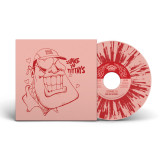
Toy Tonics sublabel Kryptox comes with a new album by Greekharpist SISSI RADA. "Demeter in Aexone" is a 45" pure soloimprovisation on harp. Using no post production techniques and nooverdubs, the album was recorded one afternoon in her studio inVoula, Athens, overlooking the ancient demos of "Aexone". It is atribute to the ancient myth of Persephone, the daughter of thegoddess Demeter, to whom the Eleusinian Mysteries were dedicated.
Search:the techniques
- A1: Gonna Get You
- A2: Working Woman
- A3: Coffee High
- A4: Everything Holds Blame
- A5: Snake Charmer
- A6: Free Vibes (Instrumental)
- B1: Love Alarm
- B2: Out Of Fashion
- B3: Nothing For Nothing
- B4: Magic Time Machine
- B5: The Time Is Right For Love
- B6: Hold Fast
- C1: Working Woman (Kenny Dope Mix)
- C2: The Time Is Right For Love (Swing-O Aka 45 Remix)
- C3: Coffee High (Bellevilloise)
- C4: Snake Charmer (Instrumental)
- C5: Free Vibes Part 2 (Vocal Version)
- D1: Burn This Disco Out
- D2: Magic Time Machine (Maida Vale)
- D3: June (Printemps De Bourges)
- D4: Hold Fast (Jr Blender Remix)
- D5: The Time Is Right For Love (Flute Version)
- D6: Working Part 2 (Instrumental)
15 years onwards from the original release in October 2009, "This Is …" by Gizelle Smith & The Mighty Mocambos remains a classic in its genre. Upfront, raw and melodic, this super sister funk album has not aged at all. Now, in 2024, it is time for a proper re-release with unreleased bonus tracks, rare remixes and a limited edition double vinyl album. Welcome to the deluxe version of "This Is …" by Gizelle Smith & The Mighty Mocambos.
Read here what the original release sheet said about the album:
"Strong album – packs a serious punch" Craig Charles Funk and Soul Show, BBC 6 Music
"A breath of fresh air" Keb Darge
"Really amazing stuff, full of killers" Nick / Record Kicks
"Definitely recommended" Peter Wermelinger, Funky & Groovy Music Records Lexicon
"What a fantastic album – this is proper funk" Tobias Kirmayer, Tramp Records
Ever since their first collaboration on the "Mocambo Funk Forty Fives" compilation, things have gained momentum for Gizelle Smith, the "Golden Girl of Funk", and the much respected Hamburg-based label and live band The Mighty Mocambos. Their first single "Working Woman" became an overnight smash and a prime-time club favourite of funk & soul DJs from all over the world. Initially released on the Finnish private press label Old Capital, producer legend and Grammy nominee Kenny Dope (Masters at Work, Bucketheads) picked up and remixed the song for his own label Kay Dee Records. Gizelle Smith & Mocambo now step up with a full-length album of bonafide sister funk. In the days of digital recording and Pro Tools editing, they show true exception to modern techniques and create their highly regarded, unique and raw soul sound, by making use of simple dynamic microphones and reel-to-reel tape machines. In a genre which is often littered with overused clichés of the past, the charismatic Gizelle Smith adds a lot of her own flavour rather than slavishly copying icons of bygone decades. The result is a refreshing alternative to post-millenium plastic pop without being a mere retro rip-off. From the heavy and determined "Gonna Get You" to vulnerable, gospel-tinged laments such as "Coffee High", "This Is Gizelle Smith & The Mighty Mocambos" is just as deeply rooted in the music from the golden era of soul as it is a modern masterpiece in its own right. Blazing horns, soulful guitars, driving drums and basslines combined with Gizelle's gripping and powerful voice all weave together to create a long player that is varied and coherent at the same time.
Following releases on Sähkö Recordings and The Trilogy Tapes, "Fever of the World" is the Soda Gong debut by Memotone, the nom de plume of UK-based multi-instrumentalist Will Yates. As a collection, it is both intimate and expansive, like the feeling of gathering one's thoughts before setting off on a long journey or committing to an irrevocable course of action. Throughout, Yates' talents as both player and sound designer are on full display, as are the sonic signatures that have come to characterize the Memotone catalog: low-lit, ECM-inflected noir; evasive and evolving loop-based accretions; and mellifluous mosaics of keys, guitar, reeds, and percussion. It is patient and focused music, built around production techniques and compositional ideas that have been perfected both in studio and in live performance over a period of several years. "Catherine, On Fire" sets the scene, one of two languid, longform selections, and develops slowly from a spare, harmonic-laden guitar loop into a bed of rippling textural ambience and woozy clarinet filigree. Later, "The Bus" and "When the Bakery Has What You Want and It's Cheap" conjure images of rain-streaked windows, fanciful baked confections, and grey skies broken finally by sunlight. Warm, generous, and comfortable in its own skin, this is music that reminds us that when it feels easy to resign ourselves to world weariness, we should pause for a moment and listen to the rustle of the leaves. The wind knows not to linger.
Forgetting You Is Like Breathing Water, the self-titled debut from the duo of trumpeter Will Evans and guitarist, synthesist, producer and multi-instrumentalist Theo Trump, arrives like a vault revelation. It feels like a decades-old yet newly unearthed masterwork of gorgeous ambient improvisation, the sort of thing scholars live to research and shepherd into deluxe reissue.
The patient, crystalline chords that swell and resonate like a series of confessions; the textured brass murmurs that suggest a ’60s or ’70s Fire Music master at their most poignant. Provocative found-sound experiments threading arcane religious recordings through dystopian soundscapes. Ear-shattering free-noise tumult. Where and when did this music come from? Who are these voices?
As it turns out, Forgetting You Is Like Breathing Water springs from an engrossing human story, though it isn’t necessarily the one you’d expect. This work of stunning maturity is in fact an entrance by two little-known explorers in their early 20s, who grew up together in Virginia, in the shadow of the Blue Ridge Mountains. It documents one of those perfect, sparkling moments in post-adolescence when big decisions and responsibilities are right around the corner, but for a spell, two young artists are able to create among the comforts and nostalgia of their shared past.
It also represents a reunion of sorts, as Evans and Trump connected as toddlers, became inseparable as boys, then pursued independent lives and creative paths as young adults. “Theo is my oldest friend,” Evans says, “and I feel like that’s what this band is — us meeting right in the middle of our interests.”
Now, having conjured this magic, they’ve detached once again: Evans, whose other works include the indie/avant-jazz unit Angelica X, is currently based in New York City. Trump recently moved to England, where he’d participated in his family’s theatre company, to go to school and further his solo ambient project. “This album didn’t start out as something super ambitious,” Evans explains. “It was more just an excuse to spend time together again and make music.”
***
In conversation, Evans and Trump are a delight, especially for cynics who might think that Gen-Z is only capable of doomscrolling. They come across as kindly young intellectuals who grew up using the internet as it was intended, for exposure to ideas and art across genres and generations. Trump points to indie-folk and the oracular post-rock of late Talk Talk, Bark Psychosis and Gastr del Sol. Pressed for his guitar heroes, he cites Bill Orcutt, Mary Halvorson and Marc Ribot, and mentions his devotion to alt-country. Heyday electro-industrial stuff like Skinny Puppy and Nine Inch Nails also meant a lot to him.
Evans is equally intrepid, though his background has a greater jazz focus. Ambrose Akinmusire, among today’s most thoughtfully commanding trumpeters, is a favorite. As for the soulful murmur he offers throughout Forgetting You, Pharoah Sanders’ wistful and lyrical contributions to Floating Points’ work is a touchstone.
The two grew up down the street from each other in the northern Piedmont town of Batesville, Virginia. Their families were friends, holidays were celebrated together and they became the most loyal of pals. As children they had a pretend band.
Then life unfolded, they attended different schools and their paths diverged. Evans discovered John Coltrane and became a jazz obsessive, as Trump found punk and hardcore and later began making ambient music. As a dedicated jazz trumpeter, Evans studied formally and widely; Trump was an autodidact, teaching himself guitar and absorbing synthesis and production techniques. The late teens and very early 20s brought moves away from home and back to home, as well as plenty of listening and learning. The Covid pandemic meant an opportunity to reconnect on long walks. Through it all, together and apart, they remained reverent of each other.
By early 2023, they found themselves living again among the Blue Ridge Mountains. In the evening, after giving trumpet lessons in Charlottesville, Evans would make the eerily beautiful trek “over the mountain” to Trump’s home in Staunton, Virginia. They’d talk and eat and begin to improvise, deep into the night. Evans played trumpet and sometimes drums. (Given the wee-hours recording schedule, the neighbors didn’t appreciate the latter.) Trump plugged a rickety, junk-store Telecaster-style guitar into a cheap solid-state amp and explored open tunings; he also layered on lap steel, electric bass, synths and electronics.
They locked in and relished each other’s gifts. In Trump, those include patience and intentionality and sonic decision-making; for Evans, a distinctive trumpet sound that both musicians think of as a singer’s voice. “Will’s playing is so thoughtful and well placed,” Trump says. “My goal from a producer’s mindset is that the trumpet will occupy the space that vocals would take.”
Often, they got lost in the best way. “The thing I look for most when I’m playing is that feeling of disappearing into what you’re doing,” Evans says. “Usually when that happens, the music is good.”
By the same token, they didn’t pursue free improvisation as an ethic, or as a pure process. Their goal was something closer to spontaneous composition. “We were trying to make good songs,” Evans says simply. Later, Trump did brilliant post-production work, expanding a modest setup into an enthralling soundworld. Under his judicious editorship, music that was wholly improvised sounds at times like a carefully composed new-music commission.
The results speak for themselves. “A Happy Death” summons up a swath of American desolation through the viewfinder of Wim Wenders. “Flesh of Lost Summers” and “Partings” are highlights from an essential ECM LP that never was. “A Collapse of Horses” infuses those seminal post-rock influences with the plod of doom metal or slowcore. The album’s final track, “The Mountains Are a Dream That Calls to Me,” was in fact the first thing the duo recorded, as an evocation of those twilit drives across the Blue Ridge Mountains. “Looking back at what we chose to name the songs,” Evans says, “and some of the sounds and how they make me feel, there is an air of impermanence and loss to this album.”
“I’m excited for everything that’s to come,” he adds, “but I recently thought, ‘Damn — that’s not going to happen again.’ It was a privilege for us to have that time together.”
2024 Repress
Seasons are changing - energy is shifting. The next Frenzy release is here, presenting the next-best-local talent on the block: Levzon. This born-to-be gearhead from the outskirts of Amsterdam began experimenting with electronic music as a youngster. Immersing himself in a variety of genres throughout his early years, he decided to take the next step and provide an output for his vision on techno as 'Levzon'. For our next Frenzy adventure, he is going all out for the first time, profiling his sound through a 4-track heavy-hitting EP with old-school-induced cuts and loopy basslines, including two remixes by like-minded associates.
Imagine an era where speed has no limit and the night knows no dawn. That's about the atmosphere 'Mambata' is creating at the start of the A-side. Followed by drum-led 'Bang the Drums', Levzon continues to ride the wave of heat, pressure, and movement. The adventure doesn't end here yet: talent on the rise Phil Berg is providing a perfectly executed dubby remix of 'Bang The Drums' Enter the B-side where a body-heavy peak time experience is awaiting you with 'Baraa'. A true weapon on the dancefloor. At the end of his story, Levzon leaves us with the beautifully composed 'Baila', casting a subtle rhythm of basslines with funk-induced vocals within a more subtle tempo. To close off the record in style, Ruiz OSC1' provides a remix of 'Baila' - throwing her 90s rave techniques into the battle.
»lacuna and parlor« is anchored in the left-field chamber music and incidental recordings that have long accented more eaze’s roving sound. Composed with one ear pressed to the rich textures of instrumental recording environments, this is a resonant and tactile collection tinged in rephrased space and skewed time.
Taking the rudiments of tonal music theory as her conceptual base, more eaze formed the compositions around her own manipulations of these core principles. Simple chord progressions stretch over minutes rather than seconds, for example, while elsewhere specific tonal signifiers were deleted from harmonic progressions, altering the expectations of these tropes.
These and many other bespoke techniques underpin compositions that span Americana-inflected ambient ballads and jaunty string recitals. With wistful vocals, bursts of improvisatory noise, loose chatter and overdubbed room sounds flowing in and out of the mix, more eaze invites us to lounge and linger in these lacunate moments, at once heard, felt and imagined.
You may not have heard of Long Beach O.G. Greg Royal aka Pür Royale, but you're definitely familiar with his work. With a resume of remix, production, engineering, and editing work ranging from Dr Dre's "The Chronic" to Bobby Brown's "My Prerogative", to the dub version of Patrice Rushen's "Feels So Real", Greg left an indelible mark on contemporary black music from the mid-80's to mid-90s.
In 1993 however, a one off 100 copy house 12" self titled as "Royal Phenomena" on the surface didn't seem to quite fit with the more traditional hip-hop and r&b output of his extensive discography. I only found out it existed through connecting with another unsung west coast pioneer, Aaron Paar, for Must Have's 2016 Teflon Dons compilation. Greg is credited as a mixing and recording engineer on practically every release on Aaron's own consistently excellent label Worldship. After listening to Aaron tell his story, it was clear Greg's studio experience and mentorship were key elements in the development of Aaron's signature tough SP-1200 house sound. "Royal Phenomena" remains an elusive connecting point for LA hip-hop and underground deep house, and Greg and Aaron remain friends and frequent collaborators.
Aaron put me in touch with Greg, who miraculously kept his original DAT tape recordings of these unique house excursions and was happy to finally share them with a wider audience. Blending hip-hop production techniques, west coast Latin sleaze, midwestern minimalism, and a dash of UK bleep, the LA underground house sound remains singular.
Carla Boregas is a Brazilian musician, composer and sound artist. By merging synthetic and acoustic instrumentation and techniques, Boregas builds up sonic scenarios driven by an invisible force, where the sensation of presence and discovery lies between density and delicacy. Her work spans composition, improvisation, performance, sound installation and radio art, and aims to transport the listener to different subjective perspectives of time and space, to invoke memories and to reflect about the nature-human relationship.
Carla Boregas writes: "Using a Tascam Portastudio 4-track cassette recorder, I invited three musicians to improvise alone with the sound recording of the sea that I did in Massaguaçu, the place where I used to live in Brasil. The recorder that I used had a defect in one of its tracks, therefore I could only invite two musicians – Vinicius Cajado (double bass) and Réka Csiszér (cello), plus the sea in another track. While listening to the tracks together, I felt a deep sense of absence ("ausência" in Portuguese). Perhaps due to their sonorous answers surrounded by the tape hiss? Because that's one of the symbolic meanings of the ocean? Maybe "saudades do mar, de estar ao seu outro lado"? Who knows – listening can be something very mysterious. Afterwards I played with and interweaved them all: the sonorous sea, Vinicius Cajado, Réka Csiszér and the absence - "Absência Tape" is the final result." – Carla Boregas, Berlin, 8 August 2024.
Originally released on KLIK Records, in 1975, Dread Locks Dread became one of the new Front Line label’s first key releases when reissued in 1978.
One of reggae’s best and most recognizable ‘toasters’, Big Youth broke new ground as a DJ in the early ’70s with a flowing, chant-like cadence that was equal parts melodic and invigorating, applying his infectious vocal approach to heavy social and political lyrics.
A huge favourite of the punk and new wave artists at the time of release, Big Youth was embraced by The Clash, via Don Letts, and PiL, amongst others. John Lydon was part of Richard Branson’s A&R envoy to Jamaica, helping sign credible artists to his new Front Line reggae label.
Featuring the legendary Skin, Flesh & Bones band, formed around Lloyd Parks (bass), drummer Sly Dunbar (before he started working with Robbie Shakespeare), Ansel Collins on keyboards, and trombonist Vin Gordon. The album was produced by Tony Robinson and Errol Thompson and mixed at the famous Joe Gibb’s studio.
Dread Locks Dread skanks from punchy, rhythm-heavy reggae to the deepest, dubbiest roots. The hypnotic Some Like It Dread reworks Dennis Brown’s “Some Like It Hot”, where the DJ’s toast is entwined with a bluesy harmonica (the dub version re-titled (Black Man Message). Also features a fiery version of Burning Spear’s “Marcus Garvey” (Marcus Garvey Dread), a tasty take on the John Holt classic “Keep on Moving” – Moving On and a scintillating dub of the Techniques’ rocksteady masterpiece You Don’t Care.
Not your typical DJ album by any means, the music equals the toasts and vice versa – an essential release for a dub fan or a Big Youth supporter.
Re-mastered at Abbey Road Studios, London.
Out of print for over 20 years!
Uni Cover[11,72 €]
Born and raised in Sicily but now based in Berlin, SLV is known for his innovative approach to techno and its various shades. He has released on revered labels like Soma and received support from key industry players who respect his ability to blend old-school vibes with modern production techniques. Away from the club, he also produces music for film soundtracks, adding a sense of cinematic edge to his techno cuts and is a master of both analog and digital technologies - a true audio engineer who crafts unique, compelling sounds. Having previously featured on the labels Federation of Rytm III compilation, he returns to SHDWs Mutual Rytm imprint with his Night Echoes EP to open up October.
Graustufen opens with punch drum programming and scintillating percussion that dances atop the groove as booming bass brings serious weight down low. The superb Grand Cayman is another potent techno weapon, this time with icy synth atmospheres and eerie moods pervading the tightly programmed drums and bass to deliver an unstoppable force. Voids brings urgent funk with its hunched-over, closely stacked kicks and suspensory pads, which never let up and keep you locked in the moment, while Elastik Pho echoes a classic Detroit sound with its soul-drenched beats and serene, uplifting, beautiful hi-tek style. Last but not least, That Night shows SLVs extraordinary range as it brings some soulful vocal loops and optimistic chords over thunderous drums, which are sure to power dance floors through to euphoria. The EP includes two digital bonus cuts: Basic Uno, which is a raw, percussive and heads-down banger, and Persistence Of Memory, which is stripped-back, glitchy and dubby techno for strobe-lit warehouses.
Maelstrom returns to Central Processing Unit for the fourth time, and it's the one born Joan-Mael Péneau's lengthiest drop on the Sheffield label yet. The French artist has been a mainstay in the European electro game since the 2000s, and Malestrom brings that experience to bear on new LP The FM Tapes. He goes about this album with the assurance of a seasoned pro, combining his mastery of electro production techniques with a trademark guile to craft an expertly-paced eleven-track affair.
The first section of The FM Tapes sets out the album's stall with style and aplomb - listeners are in store for a rich feast of off-kilter machine-funk which will feature no shortage of intriguing detours. On opener 'Ondes Courtes' the mix throbs with all manner of strange electronic gristle: a distorted bass hum rattles the monitors; wisps of distortion float across the mix; eerily pretty keys wax and wane before giving way to a radar pulse.
'Ondes Courtes' is an ominous slouch of a scene-setter, and it lines things up perfectly for following cut 'Alt50ser' to lock in. This track's churning, gurgling mid-tempo rattle brings to mind the wacky insistence of Modeselektor. Maelstrom repeats the slow-fast one-two again directly afterwards - 'La Vie Sociale Des', a strange nugget that sounds like an early Eski instrumental stripped for parts and blasted into the cosmos, is an ideal prelude to the twitchy space-funk of 'My Digitone'.
Maelstrom's staying power in the electro world comes, in no small part, from his ability to apply his delightfully idiosyncratic choices to some of the genre's staple production tropes. On The FM Tapes, he marks himself out once more as a pleasingly unorthodox talent by taking tracks in unexpected directions to produce surprising - and often rather moving - results.
There are multiple cuts here which channel the more cerebral end of Richard D. James' AFX/Analord output: 'My Digitone' may be a quicksilver techno-electro number, but there's still something cinematic about the synth treatment here which softens the edges; 'Suede's minor-key oscillations bring other CPU veterans like Cygnus and Bochum Welt into view; 'Res 06', one of two Fasme collaborations on the record, is full of pathos even as the beat programming bangs and whirrs throughout.
While there's a deep emotional undercurrent to The FM Tapes, though, Maelstrom's commitment to bringing the thrills surfaces time and again. If 'Res 06' had Maelstrom and Fasme getting wistful, the album's other Fasme link-up 'Trempo' is one of the hardest club joints here, a piece of old-school Detroit energy replete with some great cascading drum production. Indeed, 'Trempo' comes in the middle of a run towards the album's end where Maelstrom takes the handbrake off - there's a wild-eyed sense of fun to 'The Operator' and 'Upside Down DX7' which has one thinking of the zany cut-and-thrust of KiNK's best work.
Maelstrom's latest drop for Sheffield's Central Processing Unit label is an album of leftfield electro numbers that bring both pounding beats and poignant production.
RIYL: KiNK, Modeselektor, Cygnus, Bochum Welt, AFX
‘Lead You To Water’ marks a new chapter for Quinn Oulton, built around the foundations of 90s and 2000s RnB, whilst carving room for his unconventional production techniques and distinctive songwriting voice. Sitting somewhere in between Sampha, Mk.gee and Nick Hakim, a central thread to his approach on the project is simplicity – rather than relying overtly on production elements to embellish the sound of the songs, Quinn instead sought to create spacious pieces that stand on their own, stripping the core of his creativity down to voice and acoustic guitar.
Over the past year, the prolific multi-instrumentalist and songwriter has been refining his sound and production style. Collaborating with artists including Linden Jay, Reuben James and Col3trane, and relocating from his London base to LA and Berlin, he’s been on a creative drive, pushing his forward-thinking RnB to new places and amassing millions of streams in the process.
The South London-born and bred multi-instrumentalist, vocalist & producer has always been a musical explorer. With a foundation deeply rooted in jazz, he possesses a profound understanding of complex musical concepts which he translates seamlessly into the more mainstream genres of contemporary RnB and alt-pop. With Quinn’s music, you can expect to hear beautifully constructed, classic-sounding tracks with hidden layers for appreciators of depth and detail.
a A1 - When You're Near [ft. Rich]
Analog Mutants consist of Phill Most Chill on the vocals, DJ Snafu of Bankrupt Europeans fame on production and the inimitable DJ Grazzhoppa on the cuts.
Vocals: Phill Most Chill
Phill Most Chill grew up in Conecticut half hour away from Boogie Down Bronx and by the late 80s had already established himself in the hip hop scene, having released a very strongly received (and eventually highly collectible fetching amounts in the high three digits) single (On Tempo Jack/ That Girl), the preccedent setting left field Baritone Tiplove releases and writing for the seminal Rap Sheet magazine. The Arcahaelogists' Classics and Soulman's World of Beats tape series and column further established him as an elite beatmaker and sample collector, with highly acclaimed producers seeking him out to purchase records in conventions. The random rap craze brought renewed attention to Phill Most's releases in the late 90s, leading to reissues of On Tempo, the release of previously unissued Baritone Tiplove records, his return with the Lo-Fi EP, and then the highly influential Fast Rap EP on Nobody Buys Records which led to a flurry of funky uptempo releases across the globe again. The interest in Phill Most records over the whole 2010s was rabid, with further releases produced by Bankrupt Europeans, Mr. Fantastic and Chris Read flying off the shelves, and two full length albums produced by 90s stalwarts Paul Nice and DJ Format, as well as the recent Jorun-PMC album being now considered classics in the boom bap scene. Having now signed with Chuck D's Spitslam label, Phill Most continues his journey in stepping all over MC conventions, and these first two Analog Mutants release are a perfect example of this.
Produced by DJ Snafu
DJ Snafu has been part of the Bankrupt Europeans crew since 2004, co-founding Nobody Buys Records in 2012 with the other two Bankrupt Euros members. Huge collector of vinyl from the 50s ad 60s primarily, and with an interest in modular production, FM synthesis and marrying modern techniques with the love of sampling old records, the Analog Mutants project is his first without the Bankrupt Euros crew. Having produced among others for Chill Rob G on his seminal return to music with the classic Tell 'Em on the Chilled Not Frozen EP, Roc Marciano on the Goodfelons label, DITC legend AG on The 21st Day and Chicago legend MC Juice's return to vinyl after 15 years, this is Snafu's first whole album to produce since Rise of Demigodz' debut album The Cornerstone in 2006 (released in 2013). Snafu shows he's honed his skills and developed an even crazier side to his production in the 5 year that passed between the last Bankrupt Euros project and the Analog Mutants album and the first three Analog Mutants singles are a sign of things to come in the post Bankrupt Euros years.
Scratches: DJ Grazzhoppa
DJ Grazzhoppa got infected in 1983 with the hip hop virus, demolishing local DJs and winning the European DMC Championships in 1991, and taking 3rd place in the ITF World Championships in 1998! His unique and immediately recognizable style was first heard on Blade's legendary 12” Clear The Way, and caught so many ears that the list of MCs and producers who queued up to work with him is seemingly endless. From MF Doom, Ruste Juxx, Guilty Simpson and Cage to Necro, Keith Murray, Big Daddy Kane, Kool G Rap and of course the Bankrupt Europeans projects with Phill Most Chill, MC Juice and Chill Rob G! This is a short list of a page of credits spanning over 4 pages long- if you have hip hop records, Grazzhoppa is already in your collection!
Analog Mutants consist of Phill Most Chill on the vocals, DJ Snafu of Bankrupt Europeans fame on production and the inimitable DJ Grazzhoppa on the cuts.
Vocals: Phill Most Chill
Phill Most Chill grew up in Conecticut half hour away from Boogie Down Bronx and by the late 80s had already established himself in the hip hop scene, having released a very strongly received (and eventually highly collectible fetching amounts in the high three digits) single (On Tempo Jack/ That Girl), the preccedent setting left field Baritone Tiplove releases and writing for the seminal Rap Sheet magazine. The Arcahaelogists' Classics and Soulman's World of Beats tape series and column further established him as an elite beatmaker and sample collector, with highly acclaimed producers seeking him out to purchase records in conventions. The random rap craze brought renewed attention to Phill Most's releases in the late 90s, leading to reissues of On Tempo, the release of previously unissued Baritone Tiplove records, his return with the Lo-Fi EP, and then the highly influential Fast Rap EP on Nobody Buys Records which led to a flurry of funky uptempo releases across the globe again. The interest in Phill Most records over the whole 2010s was rabid, with further releases produced by Bankrupt Europeans, Mr. Fantastic and Chris Read flying off the shelves, and two full length albums produced by 90s stalwarts Paul Nice and DJ Format, as well as the recent Jorun-PMC album being now considered classics in the boom bap scene. Having now signed with Chuck D's Spitslam label, Phill Most continues his journey in stepping all over MC conventions, and these first two Analog Mutants release are a perfect example of this.
Produced by DJ Snafu
DJ Snafu has been part of the Bankrupt Europeans crew since 2004, co-founding Nobody Buys Records in 2012 with the other two Bankrupt Euros members. Huge collector of vinyl from the 50s ad 60s primarily, and with an interest in modular production, FM synthesis and marrying modern techniques with the love of sampling old records, the Analog Mutants project is his first without the Bankrupt Euros crew. Having produced among others for Chill Rob G on his seminal return to music with the classic Tell 'Em on the Chilled Not Frozen EP, Roc Marciano on the Goodfelons label, DITC legend AG on The 21st Day and Chicago legend MC Juice's return to vinyl after 15 years, this is Snafu's first whole album to produce since Rise of Demigodz' debut album The Cornerstone in 2006 (released in 2013). Snafu shows he's honed his skills and developed an even crazier side to his production in the 5 year that passed between the last Bankrupt Euros project and the Analog Mutants album and the first three Analog Mutants singles are a sign of things to come in the post Bankrupt Euros years.
Scratches: DJ Grazzhoppa
DJ Grazzhoppa got infected in 1983 with the hip hop virus, demolishing local DJs and winning the European DMC Championships in 1991, and taking 3rd place in the ITF World Championships in 1998! His unique and immediately recognizable style was first heard on Blade's legendary 12” Clear The Way, and caught so many ears that the list of MCs and producers who queued up to work with him is seemingly endless. From MF Doom, Ruste Juxx, Guilty Simpson and Cage to Necro, Keith Murray, Big Daddy Kane, Kool G Rap and of course the Bankrupt Europeans projects with Phill Most Chill, MC Juice and Chill Rob G! This is a short list of a page of credits spanning over 4 pages long- if you have hip hop records, Grazzhoppa is already in your collection!
Analog Mutants consist of Phill Most Chill on the vocals, DJ Snafu of Bankrupt Europeans fame on production and the inimitable DJ Grazzhoppa on the cuts.
Vocals: Phill Most Chill
Phill Most Chill grew up in Conecticut half hour away from Boogie Down Bronx and by the late 80s had already established himself in the hip hop scene, having released a very strongly received (and eventually highly collectible fetching amounts in the high three digits) single (On Tempo Jack/ That Girl), the preccedent setting left field Baritone Tiplove releases and writing for the seminal Rap Sheet magazine. The Arcahaelogists' Classics and Soulman's World of Beats tape series and column further established him as an elite beatmaker and sample collector, with highly acclaimed producers seeking him out to purchase records in conventions. The random rap craze brought renewed attention to Phill Most's releases in the late 90s, leading to reissues of On Tempo, the release of previously unissued Baritone Tiplove records, his return with the Lo-Fi EP, and then the highly influential Fast Rap EP on Nobody Buys Records which led to a flurry of funky uptempo releases across the globe again. The interest in Phill Most records over the whole 2010s was rabid, with further releases produced by Bankrupt Europeans, Mr. Fantastic and Chris Read flying off the shelves, and two full length albums produced by 90s stalwarts Paul Nice and DJ Format, as well as the recent Jorun-PMC album being now considered classics in the boom bap scene. Having now signed with Chuck D's Spitslam label, Phill Most continues his journey in stepping all over MC conventions, and these first two Analog Mutants release are a perfect example of this.
Produced by DJ Snafu
DJ Snafu has been part of the Bankrupt Europeans crew since 2004, co-founding Nobody Buys Records in 2012 with the other two Bankrupt Euros members. Huge collector of vinyl from the 50s ad 60s primarily, and with an interest in modular production, FM synthesis and marrying modern techniques with the love of sampling old records, the Analog Mutants project is his first without the Bankrupt Euros crew. Having produced among others for Chill Rob G on his seminal return to music with the classic Tell 'Em on the Chilled Not Frozen EP, Roc Marciano on the Goodfelons label, DITC legend AG on The 21st Day and Chicago legend MC Juice's return to vinyl after 15 years, this is Snafu's first whole album to produce since Rise of Demigodz' debut album The Cornerstone in 2006 (released in 2013). Snafu shows he's honed his skills and developed an even crazier side to his production in the 5 year that passed between the last Bankrupt Euros project and the Analog Mutants album and the first three Analog Mutants singles are a sign of things to come in the post Bankrupt Euros years.
Scratches: DJ Grazzhoppa
DJ Grazzhoppa got infected in 1983 with the hip hop virus, demolishing local DJs and winning the European DMC Championships in 1991, and taking 3rd place in the ITF World Championships in 1998! His unique and immediately recognizable style was first heard on Blade's legendary 12” Clear The Way, and caught so many ears that the list of MCs and producers who queued up to work with him is seemingly endless. From MF Doom, Ruste Juxx, Guilty Simpson and Cage to Necro, Keith Murray, Big Daddy Kane, Kool G Rap and of course the Bankrupt Europeans projects with Phill Most Chill, MC Juice and Chill Rob G! This is a short list of a page of credits spanning over 4 pages long- if you have hip hop records, Grazzhoppa is already in your collection!
Originally released to a fan base and music press that were unprepared for the band to move on from the punk fury of "Crossing The Red Sea", The Adverts "Cast Of Thousands" has since been recognized as a lost classic of the time. TV Smith's cutting observational lyrics and sharp musical instincts saw his song writing grow and move in unexpected directions. The primal thumping was replaced by dynamic and driving drumming, acoustic guitars and probing solos emerged, and Tim Cross joined to add keyboards and fill out the overall sound. The one constant was the pounding throb of Gaye Advert's bass. Encouraged to experiment by surprise producer Tom Newman (Mike Oldfield "Tubular Bells") the band found themselves stretching creatively, both in song writing and recording techniques. They might agonize over the sound of recording a match being lit in the middle of one song, while doing a single take of a vocal via a microphone hung in the bathroom for another. Giant choirs were built meticulously over multiple tracks, while the sound of a rat running through the reverb room would be captured forever. The results wrapped some of TV's best songs in strange and inventive sounds to compliment his anti-pop smarts and rock and roll heart. They did not know it at the time, but the band was falling apart. Tensions would soon rise to the level that replacement players were called in to finish their final tour. Punk fans left them in droves. Critics skewered the singles from the album. Their record label had moved on to the next big thing. Feeling that they had reached a creative peak made the tumble even harder to swallow. Time has been very kind though, and fans discovering punk after the first wave have been able to hear "Cast" for what it is - a brilliant and biting collection of rock and roll. Still full of stomp and swagger even when stripped down on "My Place" or via the anthemic surge of "Television's Over", with TV's hook factory on full display on the anti-love song "Love Songs", and the band closing the album with the creeping ballad "I Will Walk You Home"; The Adverts had grown from a great punk rock band to a great rock band. Black vinyl.
The multi-media project Kraftwerk was started in Düsseldorf, Germany 1970 by Ralf Hütter and Florian Schneider. They set up their electronic Kling Klang Studio where they conceived and produced all Kraftwerk albums.
Kraftwerk created the soundtrack for the digital age of the 21st century. AUTOBAHN 1974, RADIO-ACTIVITY 1975, TRANS EUROPE EXPRESS 1977, THE MAN-MACHINE 1978, COMPUTER WORLD 1981, TECHNO POP 1986, THE MIX 1991, TOUR DE FRANCE 2003. Their compositions, using innovative techniques, electronic sounds and synthetic voices combined with computerised rhythms, had a major musical influence on Electro, Hip Hop, Techno and Synth-Pop.
2026 Repress
Un-American Activities is the 11th Studio album by Molly Nilsson. Written and recorded entirely on location in California at the former home of writer, poet and early opponent of the National Socialist regime in 1930s Germany, Lion Feuchtwanger and his wife Marta. An album of experimentation, genre-mashing and, above it all, Nilsson’s instantly recognisable melodic skill and empathy, it continues the songwriter’s explorations of power, freedom, oppression and its opposing force, a love unbound.
After accepting an artist residency as part of the Villa Aurora program, Nilsson began work crafting a new album from scratch in a new environment, afforded the freedom, space and time to challenge her practice and take her music into new territory. The resulting work, Un American Activities, is a love note not only to the artist who was among the very first to be declared an “enemy of the state” by the Nazi regime but also to both the eternal struggle he fought and the human spirit that pervades all of Nilsson’s best work. It is also a double-pointed poison pen letter: a critique of the new forms of oppression wielded by her temporary adopted country of the USA but also an acknowledgement of the promise it always offers but never fulfils.
Along with the novel use of colour and photography in the artwork for Un-American Activities, there are swathes of new techniques, genres and timbres new to Molly Nilsson’s music in evidence, 16 years into her music career. On Jackboots Return is an icicle-cold New Beat track that deals directly with the current situation in Germany and the resurgent Nazi-affiliated AfD. The question the song asks is, what’s the timeframe we’re talking about? Is this the 30s, or somewhere a lot closer to home? The beat is picked up on The Communist Party, Nilsson’s deepest bow to House music, evoking the early 90s Rave pioneers, Belgian 80s music and Vogue-era Madonna. Here the lyrics are direct quotes from the McCarthy-era, anti-Communist pamphlet 100 Things You Should Know About Communism in the U.S.A. The Beauty Of The Duty does to pounding Electro what Nilsson’s last album Extreme did to Metal: subsume it into the Molly Nilsson aesthetic. It goes hard.
While Un-American Activities finds Nilsson experimenting, creating instinctive music on a first-thought-bestthought basis there are still “classic” Molly moments liberally spread throughout. Excalibur feels like the Molly of old, an absolute star of a chorus refrain smudged with the vaseline of fuzz and hope, Red Telephone is wide-eyed, slathered in reverb and chorus effects, distorted with soaring melody, a heart-tugger that tugs the body upwards to the heavens with each evolving wave. Glistening digital tones wash through the album, providing a Y2K etherealness to Nilsson’s audacious Stars and Stripes reference to Wetcheeks. Perhaps the album’s standout, however, is Palestine (Somewhere Over The Rainbow), which is suffuse with empathy, solidarity and, in referencing the classic socialist-penned canon song from The Wizard Of Oz, speaks directly to the tradition of fighting oppression with full hearts of hope.
Limited Edition of 1000 Opaque Pink 180 Gram Vinyl LP. Kiss Each Other Clean, Iron & Wine's fourth full length record was originally released in 2011 and came three years after his biggest selling record up to that point, The Shepherd's Dog. The bands two earlier albums had been sparse, intimate solo affairs that offered no hint of the direction he would take with records three and four. Like The Shepherd's Dog, Kiss Each Other Clean is layered with textures, poly-rhythmic sounds and a more is more approach. His lyrics sprung to life in ways initially unimaginable to early fans and critics helping each song tell its story and build to climaxes thru various sounds and editing techniques. However what remained at the core of KEOC, and what fans of the band had come to love, was the song writing and singing of principle songwriter Sam Beam. Beam's ability to invite you in with his hushed singing tone and knack for a melody remained front and center even in his drive to replicate something in the vein of Waits' Swordfishtormbones Principle recording for KEOC was at home in Dripping Springs, Texas where Beam resided at the time. After laying down the bulk of the record Beam moved recording to Chicago to work with Brian Deck. A cast of musicians helped Beam find his sound and see his vision for KEOC including Joe Adamik (Califone), Jim Becker (Califone), Thomas Bartlett (Doveman), Stuart Bogie (Antibalas), Rob Burger (Tin Hat Trio), Benny Massarella (Red Red Meat/Califone), Chad Taylor (Chicago Underground Duo) and Matt Lux (Isotope 217). With KEOC Beam and company brought in soft rock smoothness, dub reggae textures, and instruments that hadn't been featured on previous records. The vintage synths on 'Monkeys Uptown', the Stevie Wonder funk on 'Big Burned Hand,', the strum and drang of 'Walking Far From Home' all give the otherwise very organic-sounding arrangements a welcome cheesy kick. The record also produced the biggest radio single of the bands career with the vintage AM friendly vibes of 'Tree by the River.' It was an adventurous period in the career in Iron & Wine and one in which Beam was defying categorization.
“The Firebird” is a ballet and orchestral concert work by the Russian composer Igor Stravinsky. It was written for the 1910 Paris season of
Sergei Diaghilev’s Ballets Russes company based on the Russian fairy tales of the Firebird and the blessing and curse it possesses
for its owner. The Firebird’s mortal and supernatural elements are distinguished with a system of leitmotifs placed in the harmony dubbed
“leit-harmony”. Stravinsky intentionally used many specialist techniques in the orchestra, including ponticello, col legno, flautando, glissando,
and flutter-tonguing. Set in the evil immortal Koschei’s castle, the ballet follows Prince Ivan, who battles Koschei with the help of the magical Firebird.
Recorded in 1961 by The Columbia Symphony Orchestra.
This version in limited pressed on Solid Orange vinyl.