Hermon Mehari and Tony Tixier first met in 2010, in their early twenties, in a club on Paris's Rue des Lombards for a concert with saxophonist Rodolphe Lauretta. Over the next decade, the two musicians took opposite paths, while continuing to collaborate on two continents. The American trumpeter moved to France to discover European culture and the world cultures that coexist there, while the Parisian pianist of Martinican origin spent several years in the USA, immersing himself in the roots of jazz and Afro-American music.
In June 2024, the two musicians, who had been working for fifteen years on numerous albums and collaborations, and whose musical understanding had continued to be forged in clubs, festivals, and on recordings, met again for a duet at the TOC-TOC festival in the Puisaye region, where Antoine Rajon was a collaborator. Enthusiastic about the idea, the artistic director of the KOMOS label invited them back to his home in this corner of Burgundy to record this Fender Rhodes/trumpet formula. He called on sound engineer Christian Hierro, who traveled with his mobile studio for the album recording, then mixed and produced the master in his studio in Lyon, using the best analog equipment and his expert ear.
At dusk on November 12, 2024, the duo played eight tracks in a single, direct take on a 33-minute magnetic tape.
Four unusual cover versions were carefully chosen. "Maimoun" is a composition emblematic of pianist Stanley Cowell's style, also recorded by Marion Brown. George Duke's "The Black Messiah" was captured live by Cannonball Adderley's band on an album of the same name but has never been released as a studio version. "Hello To The Wind" was created by Bobby Hutcherson in 1969, sung by Eugene McDaniels. Finally, "Laini," dedicated by the great Martinican pianist Marius Cultier to one of his daughters, is a mazurka dear to Tony's heart.
Each of the musicians also contributed a composition: Hermon with "This Is Our Fantasy," written especially for the session, and Tony with "Poem For The Oppressed," a moving composition with an explicit title. Lastly, the duo improvised two tracks, without repetition, in mutual symbiosis and echo.
SOUL SONG captures a moment without enhancement, transformation, or additives, far removed from contemporary virtual technologies.
Cerca:the travel
Marina y su Melao is a band from Barcelona led by Puerto Rican Marina Molina. After a period of live activity, in 2025 they will release their debut album, "Rezo al agua", where Puerto Rico's bomba, an eminently rhythmic genre, expands to fuse with the colours and flavours of other Afro-Caribbean sounds. Tradition and folklore are embodied in a powerful and innovative conception.
In "Rezo al agua", Marina Molina expresses an attachment to the land, the landscape, the culture, the beliefs and the environment where she was born, Puerto Rico. She does this through bomba, one of the country's most identifying musical expressions. Bomba is as old as the slavery of those who gave birth to it in order to tell their tribulations and hopes, armed with the instrument they had at hand: the drums. It is a kind of meta-genre that includes a multitude of rhythmic varieties.
But Marina is something more than bomba, the legacy she received from her elders and which she does not wish to turn into a frozen object of veneration, an untouchable totem, mystical and ruled by norms bequeathed by the years. Marina, who has Colombian blood in her veins, is an artist of today, of a world in which cultures can mix, people migrate, influence each other, travel, exchange their cultural traces, can see online what happens at the other end of the world and thus open the window that facilitates the mixing of identities. These mixtures redraw borders and genres, allowing popular music to avoid its fossilization.
Marina grows in this fertile territory. She has a ductile and powerful voice, as clear as her strong, independent mindset. This is a remarkable element in the lyrics of the album, which despite being written from a current perspective, contain the sense that popular lyrics have always had: they explain life with the small letters of the everyday. And all this is presented in the bomba genre. Impure. There is an African guitar, a pedal steel guitar, a Wurlitzer, an accordion and everything that Marina and Miguelito Superstar, the album's producer, thought was necessary to accentuate the musicality of a full voice and drums that resonate raw with the vibration of tradition. A tradition now in the hands of a woman who aspires to her own space in life, to write her own chapter.
All Bad, the latest album from Nick Shoulders, ultimately encapsulates everything that makes Shoulders’ inimitable form of country music so vital: a heady balance of dazzling musicianship and punk defiance, coupled with gritty eccentricity and a generational connection to the roots of the genre. With a singing style inherited from his family’s vocal lineage, Nick’s songs achieve the rare feat of imparting difficult truths while inciting a certain joyful abandon, balancing a sound forged by years of hard travel with a heartfelt reverence for the origins of country music. In the spirit of Hazel Dickens and Jimmy Driftwood, the incisive yet wildly jubilant All Bad vocally objects to the reckless destruction of the natural landscape and development run rampant, while still offering plenty of joy and dance-ready rhythms. Spanning a variety of early country styles, the album’s infectious harmonies shine alongside everything from jangling cajun waltzes to surf-rock infused bluesy ballads–all tied together by a voice seemingly out of place in this century, yet ever ready to speak up about its problems.
Released via Gar Hole Records (a label founded and co-owned by Shoulders), All Bad marks the first LP made with his longtime band, the Okay Crawdad, since 2019’s premier full-length Okay, Crawdad and their subsequent pandemic-imposed hiatus. After writing most of the album from the front seat of a tour van, the Fayetteville, AR-based musician and bandmates Grant D’Aubin (harmonies/bass), Cheech Moosekian (drums) and Jack Studer (lead guitar) recorded the album in a home studio on the banks of the mississippi river with New Orleans collaborators Ross Farbe and Sam Doores.
1990's Recurring, the fourth and final studio album by Spacemen 3, is often considered the introduction of two brilliant solo projects (Spectrum and Spiritualized) rather than the work of a functioning band. While Spacemen 3's departing statement surely reveals a deep divide within the S3 camp – each side of the LP was written by Sonic Boom and Jason Pierce separately and, unlike previous releases, the two do not play on each other's songs – Recurring maintains a cohesive, dreamy feel with its chief sonic officers backed by fellow travelers Will Carruthers, Mark Refoy and Jon Mattock.
Opening saga "Big City (Everybody I Know Can Be Found Here)" marries ambient haze with narcotized indie rock, while "I Love You" manages to arrange a beautiful flute alongside a defiantly throbbing bass track. "Hypnotized," a reimagined fuzz-pop hymn, would become the group's first entry in the UK Singles Charts. Recurring lays bare the essence of Spacemen 3's persistent sound, rooted in both aural expansion and phenomenal songwriting.
Includes download card and new insert with liner notes by Marc Masters.
LA-based composer/producer/guitarist Dustin Wong returns to Hausu Mountain with Gloria, his third album on the label since 2018. Wong has established a multifaceted career over the last two decades that encompasses his solo work centered around guitar performance and live looping, roles as a guitarist in Baltimore-based bands Ponytail and Ecstatic Sunshine, and a wide catalog of collaborations with artists including Takako Minekawa, Good Willsmith, and Patrick Shiroishi. In composing his solo music, Wong has always transmuted his own life experiences into the thematic source material for emotionally resonant works rippling with fine-grain details and intricate looping architectures. With Gloria, the composer channels specific memories and pieces of his family history into a deeply personal narrative arc focused on his grandmother Gloria Violet Lee Wong, who passed away in January 2024, just shy of her 96th birthday. Using a road trip they took together down the west coast of America in 2023 as the direct inspiration for the individual scenes and flashes of imagery that form the album’s continuously unfolding structure, Wong presents Gloria as a memorial to her storied life and a celebration of the warmth and kindness that characterized their close relationship. A moment-to-moment travelogue that zooms out in its full scope to evoke a multi-generational memoir that spans decades and continents, Gloria gives Wong space to open his heart and uncover his roots — all while experimenting with new techniques in live performance and sound design that lead his music into territories that he has never before explored.
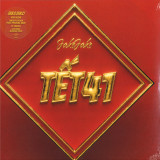
T?t 41 is the latest record by modular synthesist and Berghain resident JakoJako (Sibel Koçer), marking her album debut for Mute.
Recorded during a trip to Vietnam and bookended by field recordings from T?t Lunar New Year celebrations, the album is illuminated by references to Koçer's heritage. The melodic palette breaks away from traditional Western scales, drawing instead from the tonal intricacies of the Vietnamese language, inspired by overheard conversations. The album and track titles further honour the vibrant T?t festivities, shrines, and landmarks she encountered during her travels.
This album is, in many ways, a distillation of ideas she has been exploring for years. Tapping into a deep understanding of machine-based music, crafted with a minimalist setup consisting of a Eurorack and Waldorf Iridium Core, T?t 41 reflects on notions of rebirth, and the pursuit of a sonic core. From this simplicity emerge some of her most expansive, unworldly compositions to date.
T?t 41 is available on vinyl in a limited run of just 500 copies worldwide.
Higher is the third release of french producer Antoine Bourachot. You will find three originals that confirms his love for groove filled music ranging from pop to club ready tracks. This vinyl also includes remixes from Myd, Diogo Strausz and Art of Tones to continue things of the dancefloor. The sun is never far.
Repress
Traveling time to the year 1979 we find ourselves on the Gulf Coast of Florida in a city called Sarasota. Sal Garcia leads Omni, the resident band at the Columbia, a Spanish restaurant operating in the city since the turn of the century. Sal and his band look to record a single ironically called Disco Sucks but the restaurant isn't willing to fund a record with the word 'sucks' in it, so the band changes the track title to 'Disco Socks'. The song is a disco odyssey with driving drums, ethereal flutes, playful lyrics, and a synth solo for the gods. On the b side there's a little latin number called 'Sarasota (Que Bueno Esta)'. An ode to their city, the song praises Sarasota for its beautiful women and precious beaches. Sal is still living his dream playing at piano bars in the city. Terrestrial Funk provides you with the first officially licensed reissue of this rare disco 12". Floridian Love.
- Collection 001 - 001 A 23:46
- Collection 001 - 001 B 23:48
- Collection 002 - 002 A 18:12
- Collection 002 - 002 B 20:54
- Collection 003 - 003 A 22:14
- Collection 003 - 003 B1 09:33
- Collection 003 - 003 B2 05:25
- Collection 004 - 004 A 16:11
- Collection 004 - 004 B1 07:08
- Collection 004 - 004 B2 09:52
- Collection 005 - 005 A1 08:38
- Collection 005 - 005 A2 08:54
- Collection 005 - 005 B1 07:14
- Collection 005 - 005 B2 03:53
- Collection 005 - 005 B3 03:57
- Collection 005 - 005 B4 04:03
- Collection 006 - 006 A1 17:35
- Collection 006 - 006 A2 05:12
- Collection 006 - 006 B 23:12
- Collection 007 - Merzrock B1 + Dubbing 5 11:21
- Collection 007 - Merzrock A1 + Anemic Pop 1 02:00
- Collection 007 - Merzrock A1 + Anemic Pop 2 08:32
- Collection 007 - E-Study #3-1 + Merzsolo 1 15:49
- Collection 007 - E-Study #3-1 + Merzsolo 2 05:58
- Collection 008 - Concrete Tape Ph#1~ 05:19
- Collection 008 - E8 A1 + 006 A1 06:03
- Collection 008 - Merzsolo 10/6.81 A1 10:36
- Collection 008 - E8 B2/Concrete Tape Ph#1~ 06:28
- Collection 008 - Sans Titre Merz 1 + Tape Loops 04:54
- Collection 008 E6 A3 + Concrete Tape Ph#1~ 06:46
- Collection 008 - Merzsolo 10/6.81 A5 + Violin 03:21
- Collection 009 - N.a.m.4 + E-8 06:11
- Collection 009 - Telecom 1/3 + N.a.m.5 17:32
- Collection 009 - E-3-1-1 11:24
- Collection 009 - E-3-1-2 01:50
- Collection 009 - Tape Loop + Noise 1 (Concrete Tapes) 02:39
- Collection 009 - Tape Loop + Noise 2 (Concrete Tapes) 04:25
- Collection 010 - 007 B1 + Ah Corps 11:47
- Collection 010 - E3 B2 + Ah Corps 11:28
- Collection 010 - N.a.m.6 With Radio & Tapes 22:47
Carrying on their longstanding dedication to the seminal output of Merzbow, Urashima returns with what is unquestionably their most ambitious release to date: “Collection 001-010”, a deluxe, 10 LP vinyl box set limited to 299 copies, gathering together the entirety of the project’s first ten releases, originally released in 1981. Encountering the band in its early incarnation of the duo of Masami Akita and Kiyoshi Mizutani, raw, exposed and bristling with energy, foreshadowing numerous trajectories they would follow over the coming years, these astounding full lengths - the majority of which have never been released on vinyl - come housed in a beautifully produced, deluxe wooden box, with each LP in its own individual sleeve reproducing the original artwork, and a LP-sized 32-page book containing reproductions of artworls and collages by Masami Akita, an interview conducted by Jim O'Rourke, and liner notes penned by Lasse Marhaug, Thurston Moore, and Akita himself, amounting to what is unquestionably one of the most historically significant releases we’re likely to encounter in 2025.
Deluxe Edition of 299 copies, remastered from the original analog tapes by Masami Akita, each LP comes in its individual sleeve reproducing the original artwork, also includes a LP-sized 32-page book. ** Since its founding during the late 2000s, the Italian imprint, Urashima, has become a definitive voice in the landscape of noise. Bringing forth beautiful limited edition releases, they’ve sculpted a singular vision of one of the most vibrant and revolutionary bodies of experimental sound to have graced the globe. Among the many projects that they have supported over the decades, there has been an undeniable dedication to the output of the seminal Japanese noise outfit, Merzbow, making a significant amount of the project’s out of print back catalog available across a range of formats. Now they return with what is arguably their most stunning and ambitious release dedicated to the project to date: “Collection 001-010”, gathering the entirety of Merzbow’s first ten releases, largely privately released by the band on cassette across 1981, in a deluxe, 10 LP vinyl box set. Representing what is effectively ground zero in Japanese noise and collectively amounting to some of the most sought after releases ever produced within that movement, Urashima’s truly beautiful collection comes fully remastered by Masami Akita himself from the original tapes, presenting all but a small number in their first ever vinyl pressings, with each LP housed in its own individual sleeve reproducing the original artwork, alongside a LP-sized 32-page book containing reproductions of artworks and collages by Masami Akita, an interview conducted by Jim O'Rourke, and liner notes penned by Lasse Marhaug, Thurston Moore and Akita himself. Towering with energy and groundbreaking creative vision, within the realms of noise and experimental music, releases don’t get more monumental or historically important than this!
Merzbow came roaring onto the Tokyo scene in 1979, and remains, to this day, one of the most prolific and aggressively forward-thinking projects in experimental music. Eventually becoming the solo vehicle for the efforts of Masami Akita, in its earliest incarnation the project was the duo of Akita and Kiyoshi Mizutani, taking their name from German artist Kurt Schwitters' pre-war architectural assemblage, The Cathedral of Erotic Misery or Merzbau, and quickly set out to challenge entrenched notions of what music could be. Embracing technology and the machine, even in its earliest iterations, Merzbow pushed toward new territories of the extreme, arriving at a space of pure, unadulterated sonic onslaught that has continued, for over 40 years, to set the pace for the entire genre of noise, and has remained one of the movement’s most important, definitive voices, continuously laying the groundwork for countless artists who have followed in its wake.
When dealing with historical gestures, there’s an invertible aura surrounding original line-ups and early statements, and rightfully so. It is often within a band’s debut that we catch the purest glimpse of the raw energy and creative ferment that made them what they are. This is certainly the case when regarding the coveted early releases of Merzbow, capturing the emergence of the project in its form as the duo of Masami Akita and Kiyoshi Mizutani as they helped set the blue print from the then emerging movement of Japanese noise. Over the course of its nearly five decades of activity, Merzbow has always been noted for how prolific and ambitious the project is. This was no less the case in the very beginning. While they were active for roughly two years prior, in 1981 alone they issued ten self-released cassettes numerically titled “Collection 001-010”, albums which have both individually and collectively become holy grails in the realms of noise, with only two - “Collection 007” and “Collection 009” - ever receiving vinyl reissues prior to now.
As Lasse Marhaug deftly articulates in the newly commissioned liner notes for “Collection 001-010”, despite having been recorded in different location across a span of time, the sum total of Merzbow’s first ten releases might be best regarded as a single release to be listened to in the same, durational sitting, with the material standing well apart from what most came to expect from Merzbow, while foreshadowing numerous trajectories the project would take over the coming years. Not only do these recordings feature a vast array of instrumentation - tapes, acoustic and electric guitar, violin, drums, voice, recorder, organ, found sounds, clarinet, homemade and prepared instruments, a vast arsenal of effects and electronics, and piano, to only begin to scratch the surface - the majority of which would disappear from the project’s active sources of sound generation over the subsequent years, but there is a slow pacing and raw sense of openness and exposure that reveals strong connections to the avant-garde improvisations of groups like AMM, Musica Elettronica Viva, and Gruppo di Improvvisazione Nuova Consonanza, the psychedelia of groups like Taj Mahal Travellers and Flower Traveling band (both of whom Akita mentions having seen in youth within his interview with Jim O’Rourke), and rock in general - albeit in fully abstracted forms - unspooling as brittle, pointillistic, textural, raw and abrasive forms, that occasionally flirts with unexpected tonal sensibilities. As Marhaug describes it in his excellent liner notes: «Sonically, “Collection” sounds more sparse and stripped. It’s dry sounding, up-front, no reverb, and there’s less heavy low-end grime and thin on the signature frequency sweeps. Viewed in a 1981 context, musically, it’s more akin to what the LAFMS (Los Angeles Free Music Society) pool of artists were doing at that time than what was happening in industrial music... There’s a strong playfulness throughout, like the sound objects are being explored for the first time, without neither restraint nor hurry. Events are allowed to be fully examined before the music moves on, or simply cuts off. To a large degree, the music on “Collection” feels acoustic in nature, although a Electro-Harmonix ring-modulator features prominently throughout.»
Easily described as a rarely encountered revelation into the original and earlier documented studio sound of Merzbow, “Collection 001-010” collectively amounts to an engrossing sonic journey in its own right, while also allowing for important, often overlooked connections drawn from numerous other creative wellsprings, notably free jazz, underground rock, the output of European and Japanese avant-garde music, as well as Dada, Fluxus, and Mail Art, much of which, beyond the illumination made possible by the sounds, Jim O’Rourke’s fantastic interview with Akita, published in the booklet, further explores, offering great insights into the origins of Merzbow and the thinking behind the project, as well as aspects of the earliest days of Japanese noise.
Following the success of last year’s Walks - their first album of completely original compositions - Group Listening release a new 12” vinyl of Tell Everyone Everything via PRAH Recordings.
The title track and artwork are informed by decay, expiration and musical renewal.
“The title comes from a music festival that happened a few years back in Bristol. A really small DIY festival, called Tell Everyone Everything. I really liked the title - so I stole it. The name stuck in my mind as something very open and positive - a radical action. It could be taken as a proposal for progressive change, or a revolutionary art manifesto,” explains Paul Jones.
“The cover art is a photo that I took a long time ago somewhere on a beach in Sir Benfro (Pembrokeshire). The colours are all weird because it was taken on a very expired roll of Kodachrome. It’s sort of eerie. The bucket and spade had just been left there. It was one of the last ever rolls of Kodachrome to be processed, I snuck it into the developers on the last month they were still open, just before the very last processing plant was shut down forever.”
The release features remixes by both Ancient Plastix (who the duo toured with in 2024) and Loggsplitter. The band were delighted with the results: “I loved watching Ancient Plastix every night and was thrilled when he agreed to remix our song. It turned out great too”, says Stephen. Of the Loggsplitter remix Paul says: “It’s like a hot blast of compressed air travelling across the downs from a ravers airhorn. Lush”
- 1: Forgiveness
- 2: Embrace
- 3: Present Past
- 4: Compassion
- 5: Reflection
- 6: Past Present
- 7: Revelation
- 8: Peace
- 9: Heart
- 10: Gratitude
- 11: Acceptance
past present (tone poems across time)" is Mark de Clive-Lowe's exquisite new solo album and his debut for Greg Boraman's Impressive Collective label in partnership with BBE Music. Previously the pair released the Pharoah Sanders tribute album 'Freedom', and the equally lauded 'Hotel San Claudio' in collaboration with Shigeto & Melanie Charles. A deeply personal sonic exploration by Mark, "past present" is a reflection on family, heritage, and healing which was created in tandem with retracing his late father’s journey across Japan 70 years ago. The project is a collection of ambient jazz, emotional cinematic soundscapes that weave analog synths with field recordings from Japanese sacred sites and nature locations. "past present” partially came into existence thanks to the perseverance of producer, percussionist and Mark’s friend Carlos Niño, who after experiencing Mark's multi-layered motifs in the studio and in live contexts over many years explains, "I kept hearing him make an album like this, I kept telling him that he needed to, and that it would be his best album yet. Subtle, poetic, solo, texturally rhythmic, expressive, full of rippling layers, and arrangements representing such profound thoughts, feelings, relationships, and memories". Mark also took on board Carlos' recommendation of recording the bulk of "past present" at Ken Barrientos’ analog synth studio, 'The Breath' in Pomona, California - where he utilized no less than 22 different keyboards to create the ethereal and engaging soundscapes across all 11 tracks, also intertwining his own field recordings made during a long, explorative stay in Japan. Being such an individual and personal concept, it was only correct that Mark wrote the extensive album liner notes, to fully illustrate the decades-long backstory to this stunning collection. Mark completes the album's presentation using archive images from his family's private photo collection - an entire process he likens to time travel and signs off to the listener by stating that he hopes "it takes you on your own journey of imagination and reflection, leading to unexpected places, just as it has for me
- Creases Of Desire
- Incense Puma At The Foot Of The Staircase
- The Pauper
- Snake Eyes
- Velvete
- Mosquito Boat
- Setanakam Acid
- Elephant
- Cold Sweat
- You Didn’t Hear It From Me
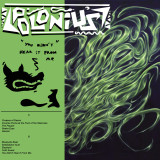
Full page feature in Wire Magazine (March 2025, Issue 493) 'the freak audio series continues with the lysergic You Didn't Hear It From Me which combines dubbed out sampledelia and metallic beats with ghostly saxophone soaked in an acid bath'
Polonius AKA Egyptian-French artist Seif Gaber, whose works spans a decade of “science fiction archeomiragical time travel" explorations and is an important piece of the healthy electronic/far out mosaic in Milan.
With a considerable number of releases under his name, both self released and through such likeminded labels as Ikuisuus, Goaty Tapes or Sun Araw's Sun Ark, Polonius grand vision encompasses a myriad of languages culled from kosmische travelings, exotica's dreamlands, soundtrack psychedelia, spiritual jazz escape routes and transmuted beat science to convey them into a sonic fiction where all these trails intertwine in a cosmological soundscape filled with wonder and speculation.
Building on last year's more beat-centric excursions of his self-titled vinyl debut on Stoned to Death, Polonius' first entry into the Discrepant extended family via Souk finds him dwelling deeper into rhythmic mystic extrapolations through a series of hallucinatory tracks. Conveying jungle's kinetic energy, dubwise meditations on bass weight, collapsing beats, globetrotting percussion accents and synth-driven night drives, 'You Didn't Hear It From Me' finds Polonius with a strong sense of purpose and direction, reconvening bits and pieces from the netherworld into a more urban scenario, not quite any we can stand or dance on. Just dream of.
This is soul travelling music from the Nordic countries. As the theme of the album is inspired by the journey of migrating birds – Maija Kauhanen and Johannes Geworkian Hellman invite the audience to travel with them through an enchanting musical landscape. As world touring artists and virtuoso players of their traditional instruments the kantele and the hurdy-gurdy – Maija and Johannes are internationally recognized as a forefront force of the modern Nordic Folk music scene,
Japanese pianist Yumiko Morioka initially released Resonance, her first and only solo recording, on Akira Ito's ‘Green & Water’ imprint in 1987. Whilst by no means a commercial failure, the album was mostly found in the background of Japanese TV documentaries, maternity clinics and healing shops before drifting into relative obscurity.
By 1994, Morioka had relocated to America and her solo music career had given way to the joys of starting a family and her new life in California. It was, and still is, a shock for her to learn that Resonance had gained the attention of a new audience outside of Japan through blog posts and YouTube album uploads.
After hearing Resonance for the first time ourselves back in early 2017, we tried for months to track Morioka down about a reissue. This news reached her at a particularly trying time in her life following the devastating loss of her home in the 2017 California wildfires.
Her home had recently been razed, destroying all of her possessions, musical equipment, scores and recordings. Morioka was lucky to escape with her life; her quick thinking neighbour raised the alarm in the middle of the night giving her just enough time to escape safely before then tragically watching her home burn to the ground.
In the aftermath, Morioka returned to Japan in an attempt to rebuild her life. She found work writing music for commercial projects and pop acts before recently opening her own chocolate shop in the Jiyugaoka neighbourhood of Tokyo - back where it all began.
‘’Space and time moved at a different speed than now’’ – Yumiko Morioka
A lifelong student of the piano, Morioka was born in Tokyo in 1956. A child prodigy, she took up the instrument under her mother’s tutelage at just three years old and by her teens she had won multiple piano scholarships. Her talent was so obvious that she was invited to train in America, eventually graduating from the San Francisco Conservatory of Music with a piano major during John Adams’ reign as head of composition.
After graduation, Morioka returned to Japan but struggled to find her place musically, working mostly on commercial songwriting assignments. Frustrated, and at times embarrassed by her musical output, she turned to the works of Brian Eno and the surroundings of her coastal home in the Izu Peninsula south of Tokyo for inspiration. It was here that she began to work on the compositions that would eventually become Resonance.
Recorded on a Bösendorfer grand piano, much of Resonance was made in an attempt to soothe her creative soul. Constructed from unwritten improvisations with additional instrumentation added later, Resonance explores the space between notes. As such, it's a record that feels open and inviting, permeated throughout with a sense of confident serenity.
The sparse, delicately played notes are allowed to reverberate and echo through the spaces between themselves, giving each track a feeling of both grandeur and intimacy. Like the great pioneers of classical and ambient music, there's a timelessness to Resonance - a comforting, familiar feeling, as if these melodies have always existed.
Resonance drew influence from the popular environmental music culture prevalent in Japan during the late 80s, but it was also heavily inspired by Western musicians such as the avant-garde Parisian composer Erik Satie. Listening today, it still feels fresh and pertinent; a warm, contemplative reflection of a travelled woman.
Resonance has been lovingly remastered by Séance Centre's Brandon Hocura and given new artwork by Métron Records’ label head Jack Hardwicke.
- A1: Beginnings Are Such Delicate Times
- A2: Eclipse
- A3: The Sietch
- A4: Water Of Life
- B1: A Time Of Quiet Between The Storms
- B2: Harvester Attack
- B3: Worm Ride
- B4: Ornithopter Attack
- B5: Each Man Is A Little War
- B6: Harkonnen Arena
- B7: Spice
- C1: Seduction
- C2: Never Lose Me
- C3: Travel South
- C4: Paul Drinks
- C5: Resurrection
- C6: Arrival
- C7: Southern Messiah
- C8: The Emperor
- C9: Worm Army
- D1: Gurney Battle
- D2: You Fought Well
- D3: Kiss The Ring
- D4: Only I Will Remain
- D5: Lisan Al Gaib
Deluxe Version[73,91 €]
Mutant und WaterTower Music präsentieren den Soundtrack zu "Dune: Part Two" mit dem Score des Oscar-prämierten Komponisten Hans Zimmer, einem majestätischen und mitreissenden Meisterwerk, das zu einem der besten Filme des Jahres passt. Hans Zimmer liefert als Meister der kontemplativen und epischen Themen sowohl wunderschöne und zärtliche Liebesthemen wie auch kühne und bedeutungsvolle Schlachtrufe, die die Hörer in ferne Länder entführen, in denen sie für immer verloren gehen möchten.
2xLP schwarzes Doppelvinyl in bedruckten Innenhüllen im Gatefold, Erstpressung im bedruckten Kunststoffaussenschuber. Beide Formate mit Linernotes von Hans Zimmer & Denis Villeneuve.
ver the years, Andreas O. Hirsch has shaped a distinctive sound, exploring the possibilities of the electro-acoustic instruments he const- ructs. The Carbophone as well as the Electrified Palm Leaf are plucked instruments akin to the African Kalimba or Mbira. In combination with effects and loops, Hirsch creates an experimen- tal space, influenced by early electronics, Asian and African music as well as the possibilities of editing and collage. The majority of the pieces on The Salamander Treaty were made using the Carbophone Jr., a small traveling version of his original Carbophone which was the basis of the previously released Early Carbophonics. Shaped by the joy of discovery, the eight tracks traverse peculiar worlds of sound, carried by a warm downbeat and analogue vibe. Alongside the Car- bophone Jr., other instruments come into play: a vibrato-soaked guitar leads through the slowly evolving ‘Rise’, marked by a recurring Shepard tone and sounds made by striking the bars of an antique wall clock. In the straightforward yet sub-aquatic ‘Te- atime Unlimited’, a pitch-shifted Morse key wanders erratically in the background. Tape-delayed har- monicas serve as a flying carpet for ‘Drifting Newts’, and rubber bands make their melodic-rhythmical appearance through ‘Back Door Minimal’.
The Salamander Treaty refers to War with the Newts, a prophetic and black-humoured science fiction novel by Karel Čapek from 1936, which tells the story of the rise of the salamanders, who become in- creasingly intelligent and eventually begin to compete with mankind. The album is a pacifist response to this dark scenario: Hirsch’s salamanders prefer to hang out under the stars (‘Drifting Newts’), drink tea (‘Tea Time Unlimited’) and — as illustrated on the back cover — write conspiratorial-pacifist demands instead of calling for war (e.g., ‘Teaoism International’, ‘White Lilies’, ‘For Congress’). In image and word, the album invites looking at the term ‘treaty’, which phonetically contains the words ‘tree’ and ‘tea’, as a friendly reminder that the drafting of every treaty and agreement on this planet should be accompanied by a peaceful spirit.
Music, mix and artwork by Andreas Oskar Hirsch. Mastered by Volker Hennes. Pressed on BioVinyl by Optimal, who state that their manufacturing process reduces CO2 emissions by approximately 90% for the PVC component. 12“ LP, coloured sleeve, download code included,
LIMITED TO 100 COPIES!.
- Anxious
- Daisy Fields
- Bubba
- The Worst Best Drug
- Service Song
- Boy
- In A Bubble
- Splash
- I Know Nothing
- Billions Of People
- Split In The Sky
Posthumous record releases are always charged with emotion but when the release comes from a 17 year-old artist that was just getting started it is heartbreaking Anxious is a mesmerizing selection of songs that explore the highs, lows and uncertainty of teenage life through the eyes of Nell and is the follow-up to Where The Viaduct Looms, her debut collaboration with The Flaming Lips that explored the works of Nick Cave.
Guided by the talented Jack and Lily Wolter of Penelope Isles, who helped shape Nell's songs, some of which had been in the works since she was twelve years old, the result is an album brimming with emotion, playful melodies and a depth that hints at what Nell's future may have held. Nell's record includes three songs which were written in partnership with Canadian folk band Shred Kelly with whom she spent winter evenings writing in her hometown of Fernie, British Columbia, huddled round the fre in 2022. Jack and Lily Wolter subsequently completed these songs and the rest of the works in Brighton in 2023.
Nell's frst and only studio recording session at Bella Union's studio in Brighton at the tender age of 15 was an intense mix of long days with Jack and Lily expertly teasing out what was really going on in Smith's mind with the help of Doritos, Fizzy sweets, Coca Cola and inspiration gained by sneaking her into venues to see local bands play.
A lot of Nell's creative drive was rooted in raw teenage emotions; apprehension; love; travel; gratefulness; ambition; and grief. These moods are visited throughout the tracks on the album with an instrumental approach that brings joy into even the darkest of songs.
- A1: Leuchtturm (Remastered 2025) 04 28
- A2: Neuland (Remastered 2025) 05 30
- A3: Ag Penthouse ( 2 Epoche ) (Remastered 2025) 05 17
- A4: Unland (Remastered 2025) 05 39
- A5: Ral 7035 (Remastered 2025) 04 09
- B1: Wanderlust (Remastered 2025) 06 50
- B2: Distel (Remastered 2025) 07 16
- B3: Traumschön (Remastered 2025) 05 29
- B4: Junge Männer Von Gestern (Remastered 2025) 01 43
- B5: Der Endlos Blaue Himmel (Remastered 2025) 01 55
Originally released on CD only – those were the days – “Triola im Fünftonraum“ counts as one of the most iconic albums of the early Kompakt era. Experience this timeless masterpiece of lush electronica lovingly restored and remastered for the first time on vinyl – 21 years after its inception.
We found this review from back in the days that perfectly sums up what “Triola im Fünftonraum” is all about:
The press material for “Triola im Fünftonraum” made allusions to home listening, when the album is mostly about movement… in a car …preferably a fast one … on a muggy spring day.
This might catch followers of producer Jörg Burger off guard. Up until this point, the producer’s Triola tracks – limited to three consecutive appearances on Kompakt’s yearly Pop Ambient series and a spot on “Leichtes Hören Teil 1” – were free-floating ambient washouts (albeit wondrous free-floating ambient washouts) with no pulse. The album, on the other hand, is beat-driven. Though still resolutely ambient – more an update of Burger’s lushest Bionaut tracks, only fully engaging instead of mildly diverting.
The soft, synthetic hand drums and tranquil vapors of “Leuchtturm” from Pop Ambient 2003, remain untouched and begin the album. Two other tracks that might sound familiar receive dynamic overhauls, now supported with quick dance rhythms and additional layers of synth gauze; the whispy flute trills and lightly flickering keys of “AG Penthouse”, for instance, are melted into a churning rhythm and some singing keyboard vamps that resemble a relaxed take on Tangerine Dream’s suspenseful soundtrack work for “Thief” (minus the crazy guitars).
What really makes the whole thing glow is the manner in which the tracks are attached, flowing in and out of another, rising and cresting and receding, with supreme poise – even if its title provides no indication, the album is as much a travelogue as Carl Craig’s “Landcruising”, Morgan Geist’s “Driving Memoirs” and Model 500’s “Deep Space”.
These are some of Burger’s most inventive productions, a remarkable feat since he’s been doing this so long. Catch yourself in the right frame of mind and you’ll wonder if everything he has released has been one extended ramp-up to this. In this age, it’s also refreshing to have a purely ambient techno album with absolutely no connection to “Boards of Canada”.
In other words, it’s a landmark for both its label and its genre.
Andy Kellman
Copyright 2025 TiVo Corporation
Ursprünglich nur auf CD veröffentlicht – das waren noch Zeiten – zählt „Triola im Fünftonraum“ zu den ikonischsten Alben der frühen Kompakt-Ära. Dieses zeitlose Meisterwerk schwelgerischer Electronica erscheint nun 21 Jahre nach seiner Entstehung erstmals liebevoll restauriert und remastered auf Vinyl.
Wir haben diese zeitgenössische Rezension gefunden, die perfekt zusammenfasst, worum es bei „Triola im Fünftonraum“ geht:
Das Pressematerial für „Triola im Fünftonraum“ spielt auf das Zuhören zu Hause an, obwohl es in dem Album hauptsächlich um Bewegung geht … in einem Auto … vorzugsweise einem schnellen … an einem schwülen Frühlingstag.
Das könnte die Fans des Produzenten Jörg Burger überraschen. Bis zu diesem Zeitpunkt waren die Triola-Tracks des Produzenten – beschränkt auf drei aufeinanderfolgende Auftritte in der jährlichen Pop-Ambient-Reihe von Kompakt und einen Platz auf „Leichtes Hören Teil 1“ – frei schwebende Ambient-Auswaschungen (wenn auch wundersame frei schwebende Ambient-Auswaschungen) ohne Puls. Das Album hingegen ist beatgetrieben, obwohl es immer noch entschieden Ambient ist – eher eine Aktualisierung von Burgers üppigsten Bionaut-Tracks, nur dass es voll und ganz fesselt, statt nur leicht abzulenken.
Die sanften, synthetischen Handtrommeln und die ruhigen Dämpfe von „Leuchtturm“ aus Pop Ambient 2003 bleiben unangetastet und bilden den Auftakt des Albums. Zwei weitere Stücke, die einem bekannt vorkommen könnten, erhalten eine dynamische Überarbeitung, die nun von schnellen Tanzrhythmen und zusätzlichen Schichten von Synthesizer-Gaze unterstützt wird; die flüsternden Flötentöne und leicht flackernden Tasten von „AG Penthouse“ zum Beispiel verschmelzen zu einem aufgewühlten Rhythmus und einigen singenden Keyboard-Vamps, die an eine entspannte Version des spannenden Soundtracks von Tangerine Dream erinnern, der für „Thief“ (ohne die verrückten Gitarren) verwendet wird.
Was das Ganze wirklich zum Leuchten bringt, ist die Art und Weise, wie die Tracks miteinander verbunden sind, wie sie ineinander fließen, ansteigen und ihren Höhepunkt erreichen und wieder abklingen, und das mit höchster Gelassenheit – auch wenn der Titel nichts darauf hindeutet, ist das Album ebenso ein Reisebericht wie Carl Craigs „Landcruising“, Morgan Geists „Driving Memoirs“ und Model 500s „Deep Space“.
Dies sind einige von Burgers einfallsreichsten Produktionen, eine bemerkenswerte Leistung, wenn man bedenkt, wie lange er schon dabei ist. Wenn man sich in die richtige Stimmung versetzt, fragt man sich, ob alles, was er bisher veröffentlicht hat, eine einzige Vorbereitung auf dieses Album war. In der heutigen Zeit ist es auch erfrischend, ein reines Ambient-Techno-Album zu hören, das absolut nichts mit „Boards of Canada“ zu tun hat.
Mit anderen Worten: Es ist ein Meilenstein für das Label und das Genre.
Andy Kellman
Copyright 2025 TiVo Corporation
- The Archer
- I Had A Dream
- Chicken Little
- Mr. Tap N' Go
- Barstow
- Sugar
- Powder Man
- It All Comes Back To You
- Bible Head
Chris Goss is one of the elusive geniuses of American music As the singer, guitarist and driving force behind Masters Of Reality, he's spent more than 40 years charting his own musical journey, travelling from mystical blues to desert rock to psychedelia-edged beauty via all points in between.
Now Goss has returned under the Masters Of Reality banner with The Archer, their frst new album in 16 years.
Since the start of the 21st century, Goss has balanced his work as a producer with his Masters Of Reality output. There have been three more studio albums under the Masters Of Reality name: 2001's Deep In The Hole, 2004's Give Us Barabbas and 2009's Pine/ Cross Dover. Each was a self- contained musical universe, reafrming Masters Of Reality as a band outside of the mainstream music industry.
Now, 15 years after his last release under the name, Chris Goss has fnally returned with Masters Of Reality. Like everything they've released since their inception over 40 years ago, it's another step on a journey that has continuously moved forward, never repeating itself or being swayed by external infuences.
First Masters Of Reality album in 16 years
Chris Goss is considered "The Godfather Of Desert Rock" having produced records for Kyuss and Queens Of The Stone Age among many others. Extensive touring in 2025
- Aboubakrin
- Awa
- Tassi
- Kante Manfila
- Chérie
- Soundiata
- Laban
- Tu Vas Me Manquer
- Proud
The idea of an acoustic album had long been dismissed by the artist himself. "I"m not a guitarist; I use the guitar to compose", he used to say, reluctant to expose this level of vulnerability. However, in 2023, during the Kyotophonie Festival in Japan, organized by photographer Lucille Reyboz and encouraged by producer Laurent Bizot (No Format!), something changed. Surrounded by the spirituality of a Zen temple and supported by his loyal musicians - Badié Tounkara on ngoni and Mamadou Koné on percussion - Salif agreed to bare himself like never before. The title So Kono, meaning "in the room" in Mandinka, reflects both the simplicity and depth of this album. Recorded in the intimacy of his hotel room, So Kono captures the very essence of Salif Keita: a powerful voice, shaped by trials and travels, elevated by minimalist arrangements. Blending reimagined classics and new compositions, this album resonates as a sincere and timeless work, reaffirming why Salif Keita is considered one of the greatest living singers, across all cultures and continents.