Human Remains follows Creatures of the Deep and Black Sarabande as the final installment of a trilogy of piano based recordings by Robert Haigh for Unseen Worlds. The trilogy marks the end of the late era of solo albums by Haigh before he steps away from music production. The title, Human Remains, was initially based on a painting of the same name by Haigh that is suggestive of an ancient structure resolute in the wake of overwhelming forces. As a metaphor for our current times, it could be interpreted as human frailty in the face of nature's unyielding dominion. Conversely, it could represent the persistence of human spirit and resourcefulness in the midst of catastrophe and upheaval. The album opens with 'Beginner's Mind' - a semi-improvised motif develops into an impressionistic refrain. This is followed by "Twilight Flowers" and "Waltz On Treated Wire" - intimate, monochrome piano portraits. Later tracks such as "Lost Albion" and "Signs Of Life" build on skeletal piano motifs with subtle electronic washes, textures and field sounds. The album ends with the elegiac "On Terminus Hill" where a stately piano refrain explores a series of sparse harmonic variations evoking a sense of closure.
Cerca:the trilogy
After his latest ‘Youth EP’ that experimented with spacious vocal chops and whimsical soundscapes, Nocow returns with a relentless flurry of blows on the heavily computerized ‘Magnit EP’ released on npm. Featuring gloriously broken melodies and hard-hitting rhythm, Nocow explores the darker, more formulaic side to his sound. Brooding acid-infused synths shimmer across the four tracks, morphing between moods as the EP progresses. ‘Magnit S’ kicks off the EP with scattered bass hits, driving dark techno arpeggios, and a hint of footwork-esque percussion. The intense atmosphere is a relatively new direction for Nocow, straying from his more meticulous, introverted beats prior. ‘Kali’ incorporates warbled synth with a more subdued rhythm, playing with a modular sound and distant echoes of robotic vocals. This fragmented track is more akin to his 2018 sound of the Voda/Vozduh/Zemlya trilogy as the kinetics of sound play a strongly defined role in the overall sonics. ‘Sputnik’ commences with a blistering arpeggio of bit-crushed synth and chimes. The rocket-propelled pacing creates a frantic, yet ultimately controlled piece, worthy of a place in a club 300 years from now. Yet, after the frenzy comes the calm. The closing track ‘Extasy’ grinds the EP to a kaleidoscopic halt. Vocoder passages drift across the dense soundscape as Nocow transports you to an other-world, filled with spacey percussion. This closer is a well-deserved return to solid ground, following the perpetual trio of dark, yet utterly compelling techno pieces. Once again, Nocow exhibits his multi-faceted approach to electronic music that truly sets him apart.
Widely considered as one of Canada's most prolific guitarists, Steve Hill
has won a JUNO Award, the International Blues Challenge, and too many
Maple Blues Awards to count
A guitar stylist with a wide musical vocabulary, he has performed over 2,500
concerts in many configurations. For the past 10 years, he has toured extensively
throughout Canada and Europe supporting his critically acclaimed Solo
Recordings albums trilogy and his one- man band show. Heralded wherever he
goes, the guitarist, singer, drummer, harmonica player, songwriter and
accomplished producer is a musical force to be reckoned with. The acclaimed
singer- songwriter celebrates his 25th year as a recording artist with this
release.On Dear Illusion, the multi-instrumentalist shares the spotlight with a horn
section, The Devil Horns, as well as 7-time UK Blues Awards Drummer of the Year
Mr. Wayne Proctor. Mr Proctor also mixed and mastered the upcoming
record.Three years in the making, the album is without a doubt, a step up for the
artist, both in terms of maturity and execution, and is his best production to date.
- 1: Aomawa
- 2: Birth / Speed / Merging - Part 1
- 3: Birth / Speed / Merging - Part 2
- 4: Birth / Speed / Merging - Part 3
- 5: Birth / Speed / Merging - Part 4
- 6: Reaffirmation - Part 1
- 7: Reaffirmation - Part 2
- 8: Reaffirmation - Part 3
- 9: Reaffirmation - Part 4
- 10: Jamaican Carnival - Part 1
- 11: Jamaican Carnival — Part 2
- 12: Black Man And Woman Of The Nile
Strut present 3 separate reissues of the 1970s album trilogy from Idris Ackamoor & The Pyramids. As students at Antioch ollege, Ohio, alto saxophonist Idris Ackamoor, flautist Margaux Simmons and bass player Kimathi Asante created three lasting monuments in sound — Lalibela, King of Kings, and Birth / Speed / Merging, a trio of albums produced without any label backing or distribution between 1972 and 1976. Their music is unique among the varied canon of avant-garde and experimental music of 1970s America: high intensity African-styled percussion topped with songs, chants, and horns, laced with African instruments and arranged into long, flowing suites that surge and roll.
Birth/Speed/Merging was recorded in 1976 after the band's move to San Francisco. The album closes the Pyramids' 70s trilogy and makes more use of studio technology: adding overdubs and other effects, a marked departure from the previous two releases, though at no cost to the urgent message and energy of their earlier works.
2LP black vinyl in a gatefold sleeve, polylined inners and download code. 2 x CD in 6 panel digifile sleeve.
When Darren Hayman made his debut in 1997 with the acclaimed indie band Hefner his lyrical remit was the broken hearted. His early songs told the story of the lonesome and lost, and broken dreams of love on the back streets of London. After Hefner, Hayman’s palette grew to include a unique take on place and memory. In the early 2000s he wrote a trilogy of albums around the history of Essex. In 2012 he made an instrumental album describing the tranquillity of Lidos. In 2016 Darren was awarded ‘Hardest Working Musician’ by the Association of Independent Music for his epic project on Thankful Villages, the 55 villages that survived the Great War with no casualties. His most recent record, 12 Astronauts, tells the personal story of the only men to have walked on the Moon. Darren is continually obsessed with the idea of what songs can be, and the stories they can tell. As he explains, “With projects like Thankful Villages, I became interested in what a record could be, using field recordings, interviews and songs to make sound collages. I wanted to return to the stricter art of song writing and try and make the twelve best compositions I could. I wanted to make useful songs, words that could be comfort, not just thoughts that would depress.” // "bold and unique" The Sunday Times // "Its delicately observed song cycle unfolds like a novella or short film, with tracks that might seem slight in isloation gaining resonance in situ." Q // “Bugbears is a rich and warming curio, and there’s something quietly noble about Hayman dragging the thoughts of these long-dead writers back into the light.” Mojo // “uniquely intimate and very satisfying” - BBC // “Hayman has hit a creative purple patch… a treat”. Mojo
'Transplant Rejection’ is the second in a trilogy of cassette albums released via Muscut in the latter half of 2022. The work of Estonian artist and IDA Radio co-founder Robert Nikolajev, this collection of seven ‘almost’ dark ambient tracks embody the melancholy of autumn whilst hinting at the forthcoming eternal winter. A man with many hats, Nikolajev operates on the fringes of the leftfield house underground for labels such as Incienso, Collect-Call and Sad Fun as well as being one half of the sporadic DIMA DISK act with Ragnar Rahouja. Eschewing the more rhythmic side of his productions for this Muscut tape, Nikolajev taps into the fictional soundtrack atmospheres the label is known for and brings his own brand of wistful, introspective world-building by way of machine harmony to the now Tallinn based imprint.
There’s a lo-fi, grainy quality running throughout the collection, a kind of sepia-toned nostalgia that envelops the listener and disorientates any perception of time or place. Buried vocal fragments sit in the mix on ‘Stifled’ alongside decaying synthesiser drones whilst ‘DDM’ channels an edgy post-rock dirge with its use of sagged bass guitar. Overall, an inspired look into the more ‘at home’ side of this increasingly prolific Estonian artist.
Strut present 3 separate reissues of the 1970s album trilogy from Idris Ackamoor & The Pyramids. As students at Antioch ollege, Ohio, alto saxophonist Idris Ackamoor, flautist Margaux Simmons and bass player Kimathi Asante created three lasting monuments in sound — Lalibela, King of Kings, and Birth / Speed / Merging, a trio of albums produced without any label backing or distribution between 1972 and 1976. Their music is unique among the varied canon of avant-garde and experimental music of 1970s America: high intensity African-styled percussion topped with songs, chants, and horns, laced with African instruments and arranged into long, flowing suites that surge and roll.
King Of Kings was recorded in 1974 and features a wider array of instruments including Ugandan Harp and Balafon. Perhaps best known for the expansive "Nsorama (The Stars)" a seminal work of Spiritual Jazz.
- A1: Dome
- A2: Glass Acc
- A3: Bläser
- A4: Zither
- A5: Audiolab
- A6: Grm
- A7: Ziegenmelker
- A8: Faust
- A9: Karelia Suite
- A10: Silver Bowl (Bohlen/Pierce)
- A11: Gong Gran
- A12: Clickey
- A13: Loop Voix Gran
- A14: Stadtpfarrkirche
- A15: Liquid Plate (17-Tet)
- A16: Gilbert Plasma
- B1: Jeph
- B2: Singing Stone K-Board (Pythagorean)
- B3: Underground Records
- B4: Morgenmelodie
- B5: Var Soundscapes
- B6: Arctic Winds
- B7: Blue
- B8: Happy Metal
- B9: Travelizer 2
- B10: One Man Crowd
- B11: V_Room 2
- B12: Kontour
- B13: Zymbol
Magazine is glad to announce the album Waves 3 by Curd Duca,
the third and last part of the trilogy Waves: Austrian electronic composer Curd Duca is widely known for his 1990es series of critically acclaimed easy listening 1-5 (Normal) and elevator 1-3 (Mille Plateaux).
After a long break from the studio, Duca has issued part 1 of the Waves series in late 2020 on Magazine. This was in fact his first album in 20 years. The Waves recordings pick up the thread of his 90s work and open up a new chapter. Again, everything is shifting constantly and all tracks are quite different (soft, rough, melodic, abstract ... ), but complement each other in a surprisingly coherent way to form an idiosyncratic universe.
While other experimental artists can sound as if they're attempting to lift lead weights over their heads, Duca is content flicking feathers into their faces. After his impressive 1990s/00s run on Normal and Mille Plateaux, Curd Duca had disappeared for 20 years before emerging from the aether last year.
The albums of the new "Waves" Trilogy represent a flawless examination of sound and texture. The Vienna-based producer still straddles high and low culture, but approaches his sonics with a more historically aware ear. So plain and resonant gong recordings are placed next to pop music loops and DSP-fractured cut-ups, and icy electronic jams nudge up against cassette warped instrumental sketches.
Waves 3 is a continuation and culmination of the series. In the final chapter, we’re drawn in with church bells on dome, but quickly transported to another era entirely with the crackly bläser and absurd zither, a tongue-in-cheek plunderphonic experiment assembled from zither samples. Duca follows this evocative run of tracks with a machine-gun blast of experimental sound, from the percussive 500 GRM to the ferric ASMR birdsong of ziegenmelker.
This is Duca at his most uncompromising, grabbing central European culture and dragging it through his array of processes. Playing the album from beginning to end opens up a weightless cut-and-paste mixtape, stitched together with expert foresight and a knowing wink to camera.
Like the best psychedelic experiences, memories are triggered and turned inside-out, and knowledge is allowed to blossom. Curd Duca has been refining his process for three decades now, and few artists have quite the same ability to challenge, provoke, and inspire.
"Under This Hunger Moon We Fell" is the new album from the uniquely talented, multi-instrumental artificer Lomond Campbell, the third and final instalment of his experiments using tape loops at the heart of his music making process. Campbell notes that "as the album was nearing completion there was a particularly dramatic Supermoon called a Hunger Moon. Apparently it has this name because it occurs right at the end of winter, when predators are at their most lethal and desperate, and those seen as less powerful are preyed upon". These themes can be clearly heard on an album that feels cold and bleak in tandem with moments of vulnerability and tenderness. "Under This Hunger Moon We Fell" stalks from the shadows with a natural, quiet confidence before exploring more carnal heaviness and occasionally brutal displays of dramatic tension. It meditates in cycles and is at both times predator and prey, conveying the balance of these relationships with its cinematic compositions. The album ranges from soft, delicate atmospheric musings such as "Bastard Wing" and "Leave Only Love Behind" to the dark electronics of "And They Are Afraid Of Her" and "Phonon For No One", which Campbell describes as "akin to a massive machine starting up, like a huge sinister power mobilising". During its gloomier moments, "Under This Hunger Moon We Fell" buries tonally ambiguous ambience underneath hazy, distorted textures created via the gradual degradation of the tape. It creates a dream-like backdrop with a moody undertone created by deep basslines and hulking percussive elements, blended with orchestral sounds that add an air of humanity. Although his music is grounded in sound it often incorporates sculpture, engineering, product design and visual art. Using a combination of hardware hacking and industrial manufacturing techniques, Lomond builds his own unique instruments and devices for creating sound which he combines with modular synths, piano and voice. The album also sees Campbell"s vocal debut on "For The Uncarved", having originally written the part for a friend. "I was supposed to be recording her album in my studio The Lengths, but she was struck down with Covid so the session was scrapped. It felt like the album needed some kind of human element so I resorted to singing the part myself". "Under This Hunger Moon We Fell" concludes a trio of albums using tape loops, which was kickstarted with an email from Lomond"s long-time friend and collaborator King Creosote. He was looking for a custom tape looping machine so Lomond set about designing and building a unique music machine, inspired by Reich and Basinski, that plays 10 second tape loops which disintegrate over time as they pass near a rotating magnetic disc. Campbell built and then tested the machine by recording a series of improvisations with it which became LUP, the first album in the trilogy.
The end of the Doc Pavlonium's trilogy has come. Third and final chapter of the series.
"Is 2333 dc and humanity decided to leave planet earth as they don't need it anymore. The Earth is only but a limit to the inescapable human evolution: from simple terrestrial to new outer space inhabitants who are able to live without a planet, nature, art or music. In this robotic, hi-tech, and perfectly controlled future, somebody will be wondering if they can discover another moon, another sun, another galaxy..."
Available on limited edition translucent gold vinyl and very limited vinyl-style cd. "The Young Ones' Flaming Lips meet Jacques Brel in a pean to lost youth, 'Comme dans un Reve' Dream bossa chanson a la Gainsbourg/ Birkin. ‘Dreams’ is the second of the final trilogy of albums by critical darlings The Real Tuesday Weld following last year's acclaimed noir-themed ‘Blood'. This collection references late sixties songwriting a la Lee Hazlewood, Jimmy Webb and Burt Bacharach with nods to Flaming Lips and Tin Pan Alley, all mixed up with hazy lo-fi electronica, ghostly atmospherics and cinematic instrumentals. Guest vocalists A Girl Called Eddy, Sephine Llo and Oriana Curls provide a counterpoint to main man Stephen Coates' Gainsbourg-like crooning. Continuing the band's long preoccupation with dreams, the songs were written in the early morning or late evening on 'either side' of sleep: ‘I’d rise super early and go straight to it with the emotion of the night’s imaginings still heavy on me or work in that strange space-time just before sleep claims us”. The album is sequenced in an approximation of a life, from youth to age, with the band’s perennial focus on London, love, the English landscape and time passing. ‘Bone Dreams Blood’ in particular is a sonic memorial to friends loved and lost in the life of London. "beautiful...giddily recalls Gainsbourg, Pulp, Cole Porter, early Disney soundtracks and seedy postwar revue bars" SUNDAY TIMES // "Utterly unique, utterly delightful" THE TELEGRAPH // "These heart-pricking songs speak to us all" WORD // 'Utterly decadent and darkly humorous' TIME OUT LONDON // 'Superbly atmospheric' UNCUT // Track listing: 1 The Young Ones 2 Kinky Love 3 Bone Dreams Blood 4 I Awoke to Find I was Dreaming 5 Ever After 6 Lost Endeavour 7 Curtain Call 8 Comme Dans un Reve 9 Bodhisattva of the Gulag 10 Everything 11 Last Light
A deluxe, remastered, 20 year anniversary edition of the Heads’ third album proper, the under-rated gem in their canon that is “Under Sided”.
Originally released in 2002 on the Sweet Nothing label (SNLP/CD 11), Under Sided was recorded in 2001 at WhiteHouse Studios in Weston Super Mare, with Martin Nichols engineering. The band had previously recorded tracks for Mans Ruin 10” at these studios (also famous for Ripcord, Heresy, Slowdive, Hardskin, Decadence Within, Icehouse.. amongst many others!).
For the reissue, the original recordings were remastered for vinyl and CD by long time Heads Masterer (!) Shawn Joseph. The resultant 8 tracks, spread over 4 sides of vinyl are some of the best music the Heads have recorded, after a bit of a hiatus following their 2000 US tour / Peel session (included in the boxset / on the 2CD version here), the band regrouped and worked out the tracks for the album, relentless rehearsing for the recording. Very few shows happened in that 2001-2002 timeframe.. band members were busy, earning a living, getting on with life, but they still had some riffs/songs there.
Upon release in 2002 the album got great reviews in the press, from Kerrang and MOJO to the Sunday Times, all helping the Bristol fourpiece confirm their cult status, which has continued to current times..
The remastered album is being reissued as a 4LP + 2CD boxset. The extra 2LP features their Peel session from 2000, as well as a couple of compilation tracks (For Mad Men Only / Born To Go), and some unreleased demo versions, as well as 2 exclusive to this set CDS that feature nearly 150 minutes of Live recordings (mastered, but RAW!) from their gigs on the Thekla in Bristol and rehearsal room tapes in 2001 and 2002.
The boxset will also have a special slip-mat, stickers, and a 24 page booklet of photos /writings, including recollections by each band member, and others including Stewart Lee.
Under Sided is a pounding sike-nightmare that shows the Heads at the peak of their powers, there’s a flow throughout the album of melding psychedelic noise rock to unrelentin rhythms and creating a bad trip for all listening.. open battering-ram “Dissonaut” is a staple in their live shows to this day… even the gentle sooth of “Energy” is enveloped by a white noise fury.. the intensity of some of the tracks: the terror inducing “Bedminster” or “False Heavy” (a tour worn riffmonger from 2000) or the Magnet-esque “Heavy Sea”, showed the band as ferocious as any of the insurgent “stoner” genre of that time.
They were never going to make their living out of touring, record sales… as Hugo mentions in his notes for the booklet, “.. we had less boundaries and felt we could experiment more and not worry about commerciality…” but they were able to make this album.
A deluxe, remastered, 20 year anniversary edition of the Heads’ third album proper, the under-rated gem in their canon that is “Under Sided”.
Originally released in 2002 on the Sweet Nothing label (SNLP/CD 11), Under Sided was recorded in 2001 at WhiteHouse Studios in Weston Super Mare, with Martin Nichols engineering. The band had previously recorded tracks for Mans Ruin 10” at these studios (also famous for Ripcord, Heresy, Slowdive, Hardskin, Decadence Within, Icehouse.. amongst many others!).
For the reissue, the original recordings were remastered for vinyl and CD by long time Heads Masterer (!) Shawn Joseph. The resultant 8 tracks, spread over 4 sides of vinyl are some of the best music the Heads have recorded, after a bit of a hiatus following their 2000 US tour / Peel session (included in the boxset / on the 2CD version here), the band regrouped and worked out the tracks for the album, relentless rehearsing for the recording. Very few shows happened in that 2001-2002 timeframe.. band members were busy, earning a living, getting on with life, but they still had some riffs/songs there.
Upon release in 2002 the album got great reviews in the press, from Kerrang and MOJO to the Sunday Times, all helping the Bristol fourpiece confirm their cult status, which has continued to current times..
The remastered album is being reissued as a 4LP + 2CD boxset. The extra 2LP features their Peel session from 2000, as well as a couple of compilation tracks (For Mad Men Only / Born To Go), and some unreleased demo versions, as well as 2 exclusive to this set CDS that feature nearly 150 minutes of Live recordings (mastered, but RAW!) from their gigs on the Thekla in Bristol and rehearsal room tapes in 2001 and 2002.
The boxset will also have a special slip-mat, stickers, and a 24 page booklet of photos /writings, including recollections by each band member, and others including Stewart Lee.
Under Sided is a pounding sike-nightmare that shows the Heads at the peak of their powers, there’s a flow throughout the album of melding psychedelic noise rock to unrelentin rhythms and creating a bad trip for all listening.. open battering-ram “Dissonaut” is a staple in their live shows to this day… even the gentle sooth of “Energy” is enveloped by a white noise fury.. the intensity of some of the tracks: the terror inducing “Bedminster” or “False Heavy” (a tour worn riffmonger from 2000) or the Magnet-esque “Heavy Sea”, showed the band as ferocious as any of the insurgent “stoner” genre of that time.
They were never going to make their living out of touring, record sales… as Hugo mentions in his notes for the booklet, “.. we had less boundaries and felt we could experiment more and not worry about commerciality…” but they were able to make this album.
A deluxe, remastered, 20 year anniversary edition of the Heads’ third album proper, the under-rated gem in their canon that is “Under Sided”.
Originally released in 2002 on the Sweet Nothing label (SNLP/CD 11), Under Sided was recorded in 2001 at WhiteHouse Studios in Weston Super Mare, with Martin Nichols engineering. The band had previously recorded tracks for Mans Ruin 10” at these studios (also famous for Ripcord, Heresy, Slowdive, Hardskin, Decadence Within, Icehouse.. amongst many others!).
For the reissue, the original recordings were remastered for vinyl and CD by long time Heads Masterer (!) Shawn Joseph. The resultant 8 tracks, spread over 4 sides of vinyl are some of the best music the Heads have recorded, after a bit of a hiatus following their 2000 US tour / Peel session (included in the boxset / on the 2CD version here), the band regrouped and worked out the tracks for the album, relentless rehearsing for the recording. Very few shows happened in that 2001-2002 timeframe.. band members were busy, earning a living, getting on with life, but they still had some riffs/songs there.
Upon release in 2002 the album got great reviews in the press, from Kerrang and MOJO to the Sunday Times, all helping the Bristol fourpiece confirm their cult status, which has continued to current times..
The remastered album is being reissued as a 4LP + 2CD boxset. The extra 2LP features their Peel session from 2000, as well as a couple of compilation tracks (For Mad Men Only / Born To Go), and some unreleased demo versions, as well as 2 exclusive to this set CDS that feature nearly 150 minutes of Live recordings (mastered, but RAW!) from their gigs on the Thekla in Bristol and rehearsal room tapes in 2001 and 2002.
The boxset will also have a special slip-mat, stickers, and a 24 page booklet of photos /writings, including recollections by each band member, and others including Stewart Lee.
Under Sided is a pounding sike-nightmare that shows the Heads at the peak of their powers, there’s a flow throughout the album of melding psychedelic noise rock to unrelentin rhythms and creating a bad trip for all listening.. open battering-ram “Dissonaut” is a staple in their live shows to this day… even the gentle sooth of “Energy” is enveloped by a white noise fury.. the intensity of some of the tracks: the terror inducing “Bedminster” or “False Heavy” (a tour worn riffmonger from 2000) or the Magnet-esque “Heavy Sea”, showed the band as ferocious as any of the insurgent “stoner” genre of that time.
They were never going to make their living out of touring, record sales… as Hugo mentions in his notes for the booklet, “.. we had less boundaries and felt we could experiment more and not worry about commerciality…” but they were able to make this album.
The most beautiful themes of the famous science fiction universe Star Wars created by the American director George Lucas are now gathered in this exclusive vinyl record! First conceived as a cinematic trilogy in 1977, the franchise now counts films, series, novels and other goodies taking place «a long time ago in a galaxy far far away» in which a conflict between Jedi knights and Sith warriors remains.
The award-winning Star Wars soundtrack composed by John Williams and inspired by Wagner’s operas has influenced the greatest film musics. They are performed by The City of Prague Philharmonic Orchestra.
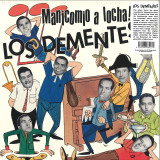
This album marks the debut recording for Venezuela's Velvet label by pianist Ray Pérez and his trombone-led salsa band Los Dementes. Heavy dance numbers and the distinctive vocals of Perucho Torcat make this historic 1967 rarity a sought-after collector's item. Now the LP has been lovingly restored, mastered from the original tapes, with its original artwork intact, preserving the legacy of Los Dementes for today's generation of salsa lovers everywhere. First time reissue. Salsa pianist, vocalist, composer and arranger Ray Pérez, acquired his nickname "Loco" by being a free, independent spirit, an innovator and iconoclast who was initially branded as "crazy" for the freshness and audacity of his sound. Amazingly, he is not that well known in the US, where he spent some time in the late 1960s and salsa was king during the 1970s. Yet he was quite popular in his home country from the beginning, especially amongst the working class of Caracas and Maracaibo, who adopted Cuban music played by New York Puerto Ricans as their own and called it "salsa" years before the term was employed by US labels like Fania as a marketing tool. Pérez is revered in Venezuela, as well as in Mexico and Colombia, and his storied career, which spans seven decades and thousands of concerts, has yielded more than 35 albums recorded by his various bands, including Los Dementes, Los Kenya, and Los Calvos, all of which are collector's items today. At the start of 1967 Pérez debuted Los Dementes, with vocalists Claudio Zerpa and Perucho Torcat backed by an ace band featuring only trombones in the brass section. Titled "¡Alerta mundo! Llegaron los 'The Crazy Men'" the record was released on the small Venezuelan label Prodansa. Soon after, Prodansa folded and Los Dementes were left without representation or much compensation for their efforts, being paid only in records. In the end of February of that year, Pérez returned to Caracas from a stint in Maracaibo in order to finish his first LP with the well-established and larger Velvet label, entitled "Manicomio a locha". In the first quarter of 1967, Velvet unleashed a trilogy of salsa records in order to compete with rival label Palacio and their recent success with Federico y su Combo Latino: "Porfi '67 Salsa & Boogaloo" by Porfi Jiménez y su Orquesta, "Guasancó" by Sexteto Juventud and lastly "Manicomio a locha". The LP begins appropriately with the boisterous title track, written by the band's conguero Carlos "Nené" Quintero, who would become a legend in coming years. Torcat describes a jam session in mental institution and introduces the band, with tasty solos by trombonist Rufo García followed by Ray on piano. Already you can hear something was different about Ray and his "Crazy Men"-a sound as wild and innovative as what was happening in New York with Eddie Palmieri, but with a more unhinged, raw feeling in line with Willie Colón and other younger Nuyorican bands. Next up is an intriguing track sung in a mix of Italian, English, Spanish and Papiamento by Pérez himself, performed in the complicated rhythm of the mozambique, an Afro-Cuban carnival beat developed in the early 1960s. This is followed by the heavy dancer 'Rico guaguancó', penned by Angelito Pérez, which changes from the guaguancó to the mozambique rhythm mid-way through, proving that Los Dementes were "different from the rest" as the lyrics say. 'Puerto Libre', sung by Torcat, is dedicated to the Venezuelan island of Margarita in the Oriente region, and the independent spirit of its working people. The rhythm changes from guaguancó to guajira and back again but remains danceable all the way through. The side closes out with a "3 in 1" medley inspired by the popular formula of the mosaicos of Billo's Caracas Boys, seamlessly knitting together several different tempos, rhythms, moods and compositions. Side two starts strong with the fierce yet satirical 'Corte e' patas', then 'Alma Cumanesa', a typical folk song refashioned as a guaguancó. This is followed by the funky 'Guajira con Boogaloo'. The tune echoes the sound of young Latin New York, pointing out the connection between Cuban and African American soul music. The pace picks up again with 'Fiesta de trombones', a hot descarga and then the album closes with another medley. Though this marks the end of a rather short album, it also signaled the emerging success of Los Dementes and their involvement with the salsa boom in Venezuela, quickly selling out of its initial run of 1000 records and making for a memorable debut on the Velvet label. Now this rare and sought-after LP has been lovingly restored, mastered from the original tapes, with its original artwork intact, preserving the legacy of Los Dementes for today's generation of salsa lovers everywhere.
SECOND TITLE IN THE LOCKDOWN TRILOGY 'CLAUSTROPHOBIC
UNIVERSE' NOW AVAILABLE ON VINYL.In 2020, Polish Prog multiinstrumentalist Mariusz Duda (Riverside, Lunatic Soul) decided to
conduct an experiment
He set out to create a third music world, independent of his band 'Riverside' &
solo project, Lunatic Soul. A world which would differ stylistically from the
previous two & underline the first steps he took in music.
30 years ago, a certain shy boy fascinated by the works of Jean Michel Jarre,
Vangelis & Tangerine Dream, locked himself up in his room & started to think up
his original music stories. He recorded them on cassette tapes, created covers
for them & arranged them on the shelf next to those of his masters. 30 years
later, when the world was taken over by a pandemic & an international lockdown,
Mariusz was beamed back to his childhood bedroom, where he was reading &
drawing comic books, playing games, listening to lots of music from cassette
tapes... & recording his own electronic sounds. "Why not do it again?" he thought
to himself, feeling inspired. "Why not create a new project where I will play only
the keyboards? And why not sing it just like I used to when I was a kid? Simply
'Mariusz Duda'".
And that's exactly what he did. Between 2020 & 2021, he recorded & released
online three electronic albums that make up the "Lockdown Trilogy".
'Claustrophobic Universe' is not an album inspired by books about astronomy &
astrophysics. It's an album about a journey into our mind. The universe here is a
metaphor for our escape from reality, escape to the place where we soothe our
response to stimuli.
MARIUSZ DUDA'S SECOND IN THE TRILOGY IS OUT VIA KSCOPE
Deeply ingrained into the fabric of the British electronic music landscape, Luke Vibert shows no sign of slowing down, after an illustrious career spanning three decades (to date!). Vibert returns to Hypercolour after 2020’s hugely successful trilogy series (Amen Andrews/Modern Rave/Rave Hop) with his 18th album (not counting albums released under his other monikers Kerrier District, Plug, Wagon Christ et al).
‘GRIT.’ finds Vibert in playful mode (and, let’s face it, whenever isn’t he!), as twelve tracks of acidic and squelching drum machine tracks come rolling out to play. Bouncy and hypnotising 303 jams of the highest order are served up here, with rhythms pulled from the electro, garage and house pools, all delivered in Vibert’s inimitable style.
Emotional Rescue completes the Dancefloor Records trilogy with a detour from House to the oft forgotten movement, Freestyle. Shavonne's So, Tell Me, Tell Me is a unique combination of all time-classic, but underground jam too. Emanating out of Hamilton, Ontario the one off project came about when Rose Iovio was introduced to Massimo Rosati. Her voice and tone instantly made the team pitch at their love of the burgeoning Freestyle scene and the raw track was soon formed. Things came together when they fell in to the orbit of Dancefloor's Jeffrey Osbourne. His expanding labels were looking at the new scene via the M-Pire label and under his guidance the record developed and was released in 1989. With 3 versions included here, the breathless vocals of the original Vocal Mix encapsulate Freestyle in essence. Pitched Lovers vocals atop arpeggios, electro-house bass and skipping hats meets breaks-influenced percussion and its all there. Do you smirk or dance For the deeper heads simply flip it for the Trance Mix. Accentuating the bass, added Enigma-style vocal samples and a yearning key line and you have a late night heads down DJ tool. The Dancefloor series ends with the all out Clubhouse Mix. A time capsule in vinyl form, everything is thrown in the mix. Held together with a stepping bass line and stabbing keys and there you have it - things can also end with an E.
WRWTFWW Records couldn't be happier to announce the release of Yutaka Hirose’s never-heard before 11-track collection TRACE: Sound Design Works 1986-1989, available on double LP and double CD, with liner notes from the artist.
TRACE is a collection of 11 unreleased tracks produced by Yutaka Hirose between 1986 and 1989, during the Sound Process Design sessions, right after the release of his classic Soundscape series album Nova. Sound Process Design was Satoshi Ashikawa's label, home of the Wave Notation trilogy (Hiroshi Yoshimura’s Music For Nine Postcards, Satsuki Shibano's Erik Satie 1866-1925 and Satoshi Ashikawa's Still Way). Following Wave Notation, Sound Process Design worked with museums, cafes and bars to create site-specific soundscapes, starting with the sound design of the Kushiro Museum. Yutaka Hirose was called to work on these projects.
Rather than simply providing pre-recorded compositions, Hirose sought to create a "sound scenery". To achieve this, he participated in the conception of the space and paid particular attention to the accidental combination of sounds by placing the speakers, using a multi-sound source, and following the concept of "sculpturing time through sound".
The composer explains: "sculpturing time through sound means that time, the space itself, the sound played in it, and the audience all become one sculpture. It is close to the idea of a Japanese tea ceremony where you use all of your 5 (or 6) senses to taste the tea."
TRACE: Sound Design Works 1986-1989 is divided into two parts. The Reflection segment is based on an ambient soundscape. It narrates "a sleep that starts with the sound of water droplets at dawn and slowly disappears into darkness" and feels like a natural and soothing progression of Nova. It was played in entrance halls, at events, in cafes and bars. The Voice from Past Technology segment expresses the dream world born out of that sleep and is based on what Yukata Hirose calls hardcore ambient, environmental music with a noise approach. It was played in museums and science centers.
All in all, TRACE is a crucial addition to every Japanese environmental music fan’s collection, alongside Midori Takada’s Through The Looking Glass, Hiroshi Yoshimura’s Green, Satoshi Ashikawa’s Still Way, Motohiko Hamase’s Notes of Forestry, Inoyamaland’s Danzindan-Pojidon, and Yutaka Hirose’s very own Nova.