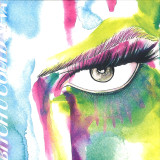
Two years after their previous effort, regular as clockwork, Swiss throbbing synth pop duo Veil Of Light is back with a new album and what can we say? These guys keep on getting better and better.
If you have followed the Zurich-based outfit over the past few years, you must have noticed the constant moving towards 80’s FM new wave and synthpop tones – without losing their electro/body music outline – that have marked the band’s parable, especially since their latest Landslide LP.
Sundancing is their sixth full-length and it stays the course, bringing what we’ve just said to the next step. Nine new dancy and bright tunes with emotional depth that blend lush instrumentation and robust rhythms, guided by funky and rubbery basslines. Syncopated rhythm sections match suburban cool synths in the lead single Apricot Kiss and Hypersleep, while Raindancing and Tonight summon a sinuosity long gone since the mid Eighties. The musical backdrop here serves as the fundament for emotional vocals delivering lyrics dealing with the fragility of love, joy and loneliness.
There’s some subtle addictiveness to these songs, one that will gently grab you by the collar of your coat and stick the refrains from Sundancing inside your head for good.
Veil Of Light might make it look easy to keep it neat without being minimalist, intimate without being depressing, romantic in the most true sense of the word, but we know that’s possibly the hardest thing to do.
Search:the true tones
Soma proudly presents Functional Designs, the latest collection of nocturnal environments from Deepchord, marking his first full length album release on Soma in 5 years. The enigmatic Detroit based producer once again transports us into his sonic realm via night-walks through numerous cities before being transmuted into aural excellence through field recordings, holographic synth tones, cosmic sounds and the hiss of electric wires. All swimming around in filtered 4/4 beats and subterranean basslines. The album is a perfect example of electroacoustic techno transmitted from undisclosed locations, the amalgamation of swirling tapestries of sound, deeper than night and lifeforms moving around underneath the grid.
The album glistens into existence with the beatless Amber breathing life into the project before the eventide of Darkness Falls offers a beautifully subtle and contemplative atmosphere. The guiding light of Transit Systems continues to offer up melancholy with echoing percussion and drifting soundscapes. The highly processed acoustics of Strangers brings a sense of intrigue to the album's journey as Modell works in the most percussive track so far. Panacast is exotic dub techno at it's finest, with warping and perfectly crafted synth work building gently over the top of sub heavy beats, glued perfectly together by the hiss of the collected found-sounds. In a slight rise in tempo, Cloudsat, makes a journey skyward, collecting mood and feelings from high altitude with its emotive synth work. The reverberating halls of Pressure again work as a testament to Modell's sonic crafting - honing in on specific artefacts from his field recordings, imbuing them with deeper purpose. The perfectly titled Ebb and Flow drifts effortlessly on a tide of evolving, blissful sound waves crashing to shore as each one overlaps the other. Beginning the descent into the final part of the album, you begin your ride across a cosmic plain, lit by the glistening and ethereal Sun. The meditative Memories opens a conduit to other realms as the album closes out with the elysian melodies of Drassanes.
Deepchord once again proves he is a producer like no other. A true sonic sculptor who uses his real world experience to create vast, unparalleled soundscapes that captivate and enthral the listener.
Kerri Chandler returns to his own Kaoz Theory label with ‘Prayer’, featuring the vocals of F L Brown, and in true Chandler fashion comprised of a variety of mixes on the single
Over the past twenty releases Kaoz Theory has showcased material from the likes of Ben Rau, Satoshi Tomiie, DJ Sneak, DJ W!ld, Art Department and DJ Deep as well as of course material from the label-boss himself, Kerri Chandler.
Here the latter deliver his latest single, entitled ‘Prayer’ and as the name would suggest channelling gospel house influence in varying forms.
The ‘Media Mix’ leads the way over choppy bass stabs, cinematic piano lines and shuffled 909 drums. Followed by the instrumental for those who like to get the heads down, and just groove.
The ‘623 Again Vocal Mix’ on the flip, shifts things into Dub Techno realms courtesy of a bumpy, driving rhythm, unfaltering stabs and robust low-end tones.
To wrap things up the ‘Feel Mix’ follows next, stripping things back to crunchy drums, airy chords and a snaking bass groove.
Soft Echoes presents the first physical edition of ‘In a Few Places Along the River’ by Abul Mogard as a limited run of 500 vinyl copies. Originally released digitally in 2022, the album now appears in its intended form, marking the label’s second release.
Three long pieces, composed between 2019 and 2022, emerged from Mogard’s meticulous experimentation with analogue and digital instruments. Slowly evolving harmonic fields of layered drones and spectral textures drift across the record. They are enhanced by reverb from Scotland’s Inchindown oil tanks, which hold the longest reverberation of any man-made structure, giving the music a haunting resonance and a sense of suspended space.
‘Against a White Cloud’ and ‘In True Contemplation’ open the album with their nocturnal tones that gradually intensify into dense, immersive waves of sound. Side B is devoted to the 21-minute elegiacal piece ‘Along the River’, which flows between weight and silence, unfolding with reflective depth and moments of subtle transcendence. As one listener observed, “His music doesn't break the wilful suspension of disbelief: you stay in its trance.”
“Recording for this album began in 2019, when I was still living in London,” Mogard explains. “The first version of ‘Along the River’ was created at my studio near Brick Lane. It started with experimenting around a chord progression inspired by a classical piece I had once been recommended, though, strangely enough, I no longer recall what it was. Early in 2022, I revealed the identity behind Abul Mogard and wanted to mark this new period, so I decided to release it quickly, by myself, as digital-only.”
After returning to Rome, Mogard created the other two pieces, working with new digital instruments alongside his modular synthesiser, and integrated recordings from the London sessions. The music reveals a patient attention to texture and space, defining his usual restraint. Mogard adds, “I was trying to explore very subtle changes in the spectral characteristics of the music using extremely slow, intertwined tones.”
Described by critics as one of Mogard’s most melancholic and absorbing releases, the album maintains an austere beauty and contemplative weight, leaving a lingering impression that lasts far beyond the final note.
The music has extended beyond the album itself, with tracks appearing in films and contemporary artworks. Most notably, Swedish artist Peder Bjurman’s ‘Slow Walker’ audiovisual installation and French filmmaker Fleuryfontaine’s politically charged animated film ‘Soixante-sept millisecondes’.
Mastered by Rafael Anton Irisarri and cut to vinyl by Lupo, the record emphasises the clarity and depth of Mogard’s frequencies, with each layer precisely balanced. The cover artwork and design are by Marja de Sanctis, who has collaborated with Abul since his first cassette release in 2012.
- A1: Svitanie - Jonáš Gruska
- A2: Yamaha Birds Pt 1 - Dialect
- A3: La Guardiana De Las Ondas Radiales 1 - Makakinho Do Amor
- A4: Sonderbare Ereignisse Am Lake Hillier - Baldruin
- A5: Kirkas Laulu, Haalea Valo - Olli Aarni
- A6: Wind Up Paradise Birds -Øyvind Torvund, Bit20 Ensemble, Trond Madsen, Jørgen Træen, Kjetil Møster
- A7: Whizz -Vic Bang
- A8: A Glitch In The Jungle - Grykë Pyje
- A9: Harpusta / Tarjous -Tomutonttu
- B1: Vögel Unserer Heimat - Native Instrument
- B2: Irekle Qoştar - Hmot
- B3: Ptakodisk - Artificial Memory Trace
- B4: Mijn Papegaai Fluit Pure Tonen - Floris Vanhoof
- B5: Aviary - John Also Bennett
- B6: Susurrus - Cheryl E Leonard
- B7: The Wild Birds Of Bluesealand - Mike Cooper
- C1: Un Signe Sylvestre - Matthias Puech
- C2: Barrockstadt Feathered Symphony - Enchanted Lands
- C3: Kolibřík - Ursula Sereghy
- C4: Pigeon Tones For Eggflute - Ecka Mordecai, Malvern Brume
- C5: Bird To Bottle - Banana, Alexandra Spence, Mp Hopkins
- C6: Whistle & Bag - Rie Nakajima
- C7: The Listener - Martina Lussi
- D1: Clivis - James Rushford
- D4: Synthetic Birdsong - Andrew Pekler
- D5: 030652_0125ꜱ12 ᴡᴀᴠ - Atte Elias Kantonen
- D6: Dive Woodz - Kensho Nakamura
- D7: Time Flys - Felicity Mangan
- D8: While They Gathered My Ears Grew - Maria Komarova
- D9: Birds In Gutter - Misha Kurilov
- D2: Three Calls - Kate Carr
- D3: Starlings Gulls Doves - Infant
When you listen to birds, they usually talk about food, sex/family, or anxiety. If they knew about the true nature of humanity's cruel and exploitative relationship with birds, they would be discussing rebellion. Humanity's current trajectory about birds is to cause the extinction of one-third of all bird species by the end of this century.
This record crystallises the borders between memory, beauty, and anxiety. At the core is an amalgam of all the birds we have met and heard, their sounds synthesised from a blend of memories. Esthetically it simulates the qualities of bird sounds, hitting similar frequential sweet spots. There is a great variety of birds captured here, from high to low frequencies, from solo voices to groups, from birds standing on their own to complex world-building, where the bird voices are part of an ecosystem, becoming one of the instruments.
You could stop there, enjoying this record on a musical level, but it invites us to do one step further, to consider reconfiguring our relationship with the Earth and its inhabitants. To question our impact, and to ask why we need synthetic bird music. Is it just a visionary endeavour or is it because we are failing at fostering a world in which organic birds and other creatures can thrive?
32 artists from the whole world, including our favourite artists from Eastern Europe, have contributed to this compilation both with new and previously released music. Their music is ordered from dawn to dusk and into the night. For many of the artists it's their first time on mappa, but some have previously released an album with us.
- La Tienda De Dona
- La Hoja Sagrada
- Caminar En El Mercado De Las Brujas
- El Grande Pacifico
Sajama Line, an EP crafted by the young producer Zgelt. Through this release, the artist narrates moments from his
journey between Chile and Bolivia, expressed through his music. Like a true travel diary, Zgelt illustrates and recounts his
experiences in these regions, all while staying true to his artistic touch, navigating between Dub Techno and Minimal sounds.
Introspective and danceable tones that will take you beyond the boundaries of electronic music.
- A1: (Part I)
- B1: Prelude (Part Ii)
- B2: Maiysha
- C1: Interlude
- C2: Theme From Jack Johnson
The capstone of Miles Davis’ electric period, Agharta reigns as a funk-rock fireball — a blazing comet streaked energy and elan, a fearless organism feasting on adventure and freedom, a seven-headed Godzilla stomping its way through Osaka, Japan. Recorded on February 1, 1975 at Osaka Festival Hall at the first of a two-show stand, the double album offers an endless abundance of surprises and shifts — as well as a road-proven ensemble whose chemistry and abilities equal that of any of Davis’ celebrated bands. If the true measure of jazz is the capacity to adapt to the moment and challenge perception, Agharta is consummate.
Sourced from the original master tapes, housed in a Stoughton gatefold jacket, and pressed at Fidelity Record Pressing in California, Mobile Fidelity’s numbered-edition 180g 33RPM 2LP set of this epic live release presents it in audiophile sound on a domestic pressing for the first time. Offering greater degrees of separation, detail, and richness than the compressed CD editions and more clarity, openness, and presence than older vinyl copies, this version of the 1975 release helps bring the concert stage to your home. Just make sure your turntable and speakers are up to the challenge of Davis and Co.’s explosive performances — and producing the decibels they demand.
Teeming with vibrant colors, tones, and pace, Mobile Fidelity’s reissue captures the hear-it-to-believe-it flow, sweep, and moodiness of the music. Though the group honors looseness and freedom with religious verve, the specificity and scale rendered by this remaster allows you to detect methods behind the alleged madness that are often otherwise harder to discern. This insight extends to the understated changes in volume, harmonics, and phrasings. In many ways, you can listen as Davis himself did that early February evening as he helped coordinate the overall direction and decided on whether to blow his wah-wah-wired trumpet or take a turn on the organ.
Tellingly, Agharta would likely never have been made if not for Davis’ ventures overseas and, specifically, to the Land of the Rising Sun. Having for years faced a backlash on his native soil for his choices to experiment and blow past all known borders, Davis was welcomed with open arms in Japan. The concert documented on Agharta — as well as the day’s later show, captured on the equally exciting Pangea — stemmed from a sold-out three-week tour that would ultimately mark Davis’ final public appearances for years, as he soon settled into semi-retirement and nursed the wounds connected to an unprecedented stretch of restless and relentless output.
For all the band-fueled merit of Agharta — and there’s plenty, given the cast of saxophonist Sonny Fortune, bassist Michael Henderson, drummer Al Foster, percussionist James Mtume, and guitarists Reggie Lucas and Pete Cosey seemingly blasts off to outer space and travels distant galaxies by the time this minimally edited record runs its course — Davis’ own playing often remains overlooked. As critics Richard Cook and Brian Morton observed, it is “often fantastically subtle, creating surges and ebbs in a harmonically static line, allowing him to build huge melismatic variations on a single note.” He attacks like a man on a mission, out to prove naysayers wrong and bent on trailblazing another new path forward. Convention and skeptics be damned.
Noisy and furious, dark and discordant, abstract and off-balance, radical and intense, abrasive and atmospheric, strangely beautiful and hypnotically eccentric: Agharta evades simple description, and refuses to be pinned down in any established category — rock, jazz, punk, ambient, prog, avante-garde, or otherwise. Shot through with trench-deep grooves, screaming riffs, scalding solos, and free-improv leads, its cosmic thrust comes on as the equivalent of an animated pointillist painting comprised of millions of textured dots, dashes, and dabs that hold your attention so raptly you want to revisit the ideas again and again.
Always steps ahead of everyone else, Davis knew what he was doing even when Agharta debuted in Japan before later hitting U.S. markets. Though “Maiysha” and “Theme from Jack Johnson” are identified in the track listing, the record contains a number of uncredited references to other Davis works, including a nod to “So What.” This decision to bypass labels only adds to the art of the reveal — the rare black magic in which Agharta expertly deals.
Back in 1988, disco rap aficionado and collector Dave Lee put together a compilation titled 'Back To The Old School', showcasing some of the best of the genre, most of which had never been issued before in the UK . Fast forward to 2025 and Dave's label Z Records has managed to procure the rights to a few choice old school cuts for a (sort of) follow up. The difference is this time Mr Lee has remixed and re-worked the songs for today's dancefloors while preserving their original flavour and integrity. In this first part of the series we have TJ Swann's 1981 jam 'Get Fly', re-tracked and taken into lo-slung yacht rock funk territory with a sizzling synth solo for good measure, a perfect compliment to TJ's smooth NYC flow. Terry Lewis & Wild Flower are up next on the A-side, with a boogie rich, mid-tempo stomper with a heavy funk bottom end and a message that still rings true in this day and age. Mike T's 'Do It Anyway You Wanna' finishes things up with a compulsive dose of jazz-tinged disco rap that goes straight for the jugular, super charged slap bass underpinning sharp sax and flute motifs while the rich tones of Mike T slide over the top. Dave Lee yet again providing a masterclass in production.
Moving freely through time and space via experimental DIY recordings since 2009, Joasihno return with their fourth album "Spots".
“Find your spot in the shade,” a truly laid-back and incredibly soft-spoken MC once advised, yet in a world that seems to get shadier every day, it’s probably time to finally get out and face the sun. Southern German experimental pop duo Joasihno – initial solo founder Cico Beck (The Notwist, Aloa Input, Spirit Fest) and drummer/composer Nico Sierig (Instrument, Fehler Kuti) – seem to know exactly when it’s time to shine. Idiosyncratic genre tweakers since day one, they have been operating at their own pace, mostly staying in their own shady corner. Yet, almost a decade after their most recent “Meshes” (an album that came with a whole legion of tiny music robots), it’s high time for them to take over more corners, to reclaim even more spots between lo-fi and sci-fi, retro electronica and contemporary classic. Drawing upon influences as varied as Reich, Riley, and Ryuichi, múm, Meek, and Moondog, while also nodding to other experimental twosomes (e.g. The Books), the duo’s fourth full-length “Spots” is set to arrive via Alien Transistor in late 2025.
Leaving soulless automation and all things artificial to others, Joasihno launch the latest record on “2 Squares” that feel like a peaceful, almost bucolic version of retro space age: lights blink ever so softly as easy-going bass tones point at today’s introspective flight arc. Electronic shapes align and things lift off – with a majestic 8-bit sunrise soon appearing right in front of us. Whereas playful title song “Spots” is a miniature Rube Goldberg kind of device, with quirky plucked strings and glitches setting off more and more contraption layers, “Crackleboom” is uncharted energy, an open landscape, an expanding bonfire that leads to a long-forgotten piano, all dust-covered in some kind of saloon. Space might be only noise to others, here, it’s foreboding screeches (“Dizzle Whistle”) that make room for A-side center piece “Forest Lights”: a steady beat that lures us to a clearance in the woods. Things break and shatter in the distance, but this spot right here is for hypnosis, dancing, sylvan spirits. And yeah, it’s surprisingly hot down here in the undergrowth…
Opening side B with a fun banger that takes the unhinged dancing to the playground – “Characa Orb.” feels like French kids on swings going crazy, a tipsy, tongue-in-cheek electro blow-out between Oizo and Orbis Tertius –, things get even more cinematic throughout the second half. Even the cheapest, lo-fiest gear is sufficient to make “The Slow Hour” glow like true, timeless pop royalty. In fact, the very same pop spirits roam and celebrate freely in the chirpy coves of mesmerizing “Detune Lagoon” – more hand-crafted sci-fi/lo-fi loops you’ll only find after facing the ghosts of Lynch or Sakamoto on those night-time trails under the “Deep Moon”. It’s all DIY spots, spots that leave room to dream or dangle, drape yourself over or dive into. Returning to the leafy bower on a melancholy post rock tip, we eventually learn that “Death Is Real” – and so we’re left with a laterna magica that turns and turns and turns. It’s a beautiful spot where light and shadows keep on dancing, just like they’ve always done, ever since the dawn of this madcap universe.
Mr Bongo proudly presents, ‘AFIM’, the second solo album by one of Brazil’s most exciting new talents, Zé Ibarra. You may be familiar with the hypnotic, entrancing tones of Ibarra’s vocals through his work with the Latin Grammy award-winning, four-piece, Bala Desejo and the band Dônica. He has also toured with the musical titan, Milton Nascimento, performing guitar and vocals, which is quite the honour and a testament to Ibarra's craft. As a solo artist, he has performed headline solo shows in Japan, Portugal and the US, as well as recently completing a support tour with the great, Seu Jorge.
‘AFIM’ is comprised of eight tracks, featuring Zé’s own compositions as well as cover versions of tracks by contemporaries and friends, Sophia Chablau, Tom Veloso, and Dora Morelenbaum. It combines elements of MPB, jazz, pop and progressive rock in a bold, authoritative style. The album represents the intersection between different facets of the artist, from the stripped-down, intimate, guitar singer-songwriter, to dense arrangements with sweeping strings sections. Writing this album allowed Ibarra "to explore sides of myself that had not yet been organized in an album: a certain darkness, a more cinematic musicality, a desire for new soundscapes.
The album features the single, 'Transe', a song with an instantly comforting tone reminiscent of classic Brazilian songs of the past (think Caetano Veloso). It is built on a rhythmic guitar that supports dynamic sound layers, opening space for Ibarra's intense interpretation. Cinematic atmospheres that lend an air of mystery come courtesy of string arrangements by Jaques Morelenbaum.
His unique cover version of Sophia Chablau's 'Segredo' is equally compelling, taking Sophia's punky-indie original in a different direction and making it feel like his own. 'Essa Confusão', a song celebrating the intensity of love and co-written by Dora Morelenbaum, is steered into epic, 70's AOR, singer-songwriter territory with wind arrangements by Ibarra, Jorge Continentino and strings by Jaques Morelenbaum.
The album is the result of the collaboration of experienced musicians and long-time partners of Ibarra. Fellow Bala Desejo and Dônica member Lucas Nunes co-produced the album. The core band featured on the record consists of Lucas Nunes on organs, Alberto Continentino on bass, Daniel Conceição and Thomas Harres on drums and percussion, Rodrigo Pacato on additional percussion, Chico Lira on Fender Rhodes and Guilherme Lírio on guitar.
The overall feel of the record is archetypically quintessential without slipping into retro mode. It is a stunning album from one of the finest musicians of his generation. A true star of Brazil’s blooming contemporary scene.
- Tegami
- Wakare No Kotoba
- Takaramono
- Inaka
- Kabutomushi
- Yoake
- Kodoku
- Tsukino
- Muchuu
- Hfoas
STRAWBERRY VANILLA VINYL[23,49 €]
'Mei Semones' sweetly evocative blend of jazz, bossa nova and math-y indie rock is not only a way for her to find solace in her favorite genres, but is an intuitive means of catharsis. "Blending everything that I like together and trying to make something new - that's what feels most natural to me," says the 23-year-old Brooklyn-based singer-songwriter and guitarist. "It's what feels most true to who I am as an artist." Plinking guitar tones and asymmetrical time shnatures exemplify her forays into angular indie rock more now than ever before, especially on her debut Bayonet Records single "Wakare no Kotoba"-its wide-interval arpeggios in odd meters being some of the most technically difficult guitar work Mei has ever implemented in her songwriting. Translated to "parting words" in English, the self-described "anti-love song" serves as a farewell to a toxic friendship, complete with orchestral swells and crashing guitars. Originally from Ann Arbor, Michigan, Semones began playing music at a young age, starting out on piano at age four before moving to electric guitar at age eleven. After playing jazz guitar in high school, she went on to study guitar performance with a jazz focus at Berklee College of Music. College is where she met her current bandmates, including string players Noah Leong and Claudius Agrippa, whose respective viola and violin add softness and multidimensionality to Mei's intricate guitar work. After releasing a slew of singles and an EP in 2022, coinciding with her move to New York City, Mei and her band have since gone on to collaborate with post-bossa balladeer John Roseboro and embark on their first-ever tour with the melodic rock outfit Ravi, Semones chronicles infatuation, devotion, and vulnerability in her songs, complete with sweeping strings, virtuosic guitar-playing and heartfelt lyrics sung in both English and Japanese, that have all become part of her sonic trademark: ornately catchy, genre-fusing compositions serving as the backdrop to tender lyrics touching on the universalities of human emotion.
Black Vinyl[22,27 €]
'Mei Semones' sweetly evocative blend of jazz, bossa nova and math-y indie rock is not only a way for her to find solace in her favorite genres, but is an intuitive means of catharsis. "Blending everything that I like together and trying to make something new - that's what feels most natural to me," says the 23-year-old Brooklyn-based singer-songwriter and guitarist. "It's what feels most true to who I am as an artist." Plinking guitar tones and asymmetrical time shnatures exemplify her forays into angular indie rock more now than ever before, especially on her debut Bayonet Records single "Wakare no Kotoba"-its wide-interval arpeggios in odd meters being some of the most technically difficult guitar work Mei has ever implemented in her songwriting. Translated to "parting words" in English, the self-described "anti-love song" serves as a farewell to a toxic friendship, complete with orchestral swells and crashing guitars. Originally from Ann Arbor, Michigan, Semones began playing music at a young age, starting out on piano at age four before moving to electric guitar at age eleven. After playing jazz guitar in high school, she went on to study guitar performance with a jazz focus at Berklee College of Music. College is where she met her current bandmates, including string players Noah Leong and Claudius Agrippa, whose respective viola and violin add softness and multidimensionality to Mei's intricate guitar work. After releasing a slew of singles and an EP in 2022, coinciding with her move to New York City, Mei and her band have since gone on to collaborate with post-bossa balladeer John Roseboro and embark on their first-ever tour with the melodic rock outfit Ravi, Semones chronicles infatuation, devotion, and vulnerability in her songs, complete with sweeping strings, virtuosic guitar-playing and heartfelt lyrics sung in both English and Japanese, that have all become part of her sonic trademark: ornately catchy, genre-fusing compositions serving as the backdrop to tender lyrics touching on the universalities of human emotion.
Hollie Cook, one of reggae’s most exciting voices, makes a return to the label that released her cherished debut album in 2011. Landing back on Mr Bongo, 'Night Night' is a stand-alone aperitif and taster of what to expect from the next era in Hollie's musical journey
Revisiting her roots, this latest single embraces the trademark reggae / tropical pop sound Hollie found fame with on her first two albums. With a career that has gone from strength to strength since those formative days, the buoyance, charisma, and confidence gained in those subsequent years are on show for all to see.
Recorded at Crosstown Studios in London with the General Roots band and produced, mixed and dubbed by Ben McKone, ‘Night Night’ documents the longing of a lonely lover. Grounded in a sound system rattling bass line, strutting guitars and shimmering keys provide a sunshine-infused contrast. Hollie’s smooth sultry tones radiate throughout, backed by the legendary Horseman on toasting duties - a collaboration that hasn’t been heard since Hollie’s first album. Trading verses, the warmth of Hollie's velvety vocals balances Horseman's raw explosive energy in an absorbing harmony.
In true reggae style, the 7" single is backed with a classic dub mix, adding spacey reverb and delays, whilst giving Hollie and Horseman a more spacious streamlined flow in the mix.
LA's Elbow Grease label takes a sharp left turn from dance floor-finessing singles to their first full-length
release via the elusive yet illustrious band KAMM, who return in extra fine form for their third and
presumably final album offering, following the sudden tragic death of core member Alland Byallo last
year. Surviving bandmates Marc Barrite aka Dave Aju, Kenneth Scott, and Marc Smith chose the
inspirational higher ground, finishing off what they had begun with Byallo prior to his passing, resulting in
this sublime musical love letter of an LP.
In keeping with the band’s broad influence canon, we are treated to a blend of sonic flavors from
across the genre spectrum with Barrite and Byallo’s jazz upbringings ringing true at the center, then
branching out through golden era hip-hop feels, phased-out psych funk, warm smokey soul, and of
course generous helpings of intricate electronic layers and innovative treatments, as all band members
have become notorious for in their respective solo bodies of work.
While highly personal by nature, including otherworldly cover art based on Byallo's last paintings, the
musical content contained on the album is also widely universal - from opener “Crystalline Dreams”
serpentine tones turned slo-mo funk bomb, to the triptych Bossa boom-bap of “No Deal”, the timely
political calls of uptempo jazz burner “Your Honor”, the intimate upright-led tribute tales of “Angels
Flight”, to the sleek electro rhythm changes of mid-set breather “How Long?”, a deeply felt take on our
mobile-reliant fate in “S.I.M.”, the expansively expressive depth of “Coordinates”, then closing it out with
the title track featuring a grand finale chorus of Byallo’s best friends and fam from around the world
joining in the “Let The Light In” chant, with as much uplifting intention as possible to capture on record.
A loving collective embrace and very welcome reminder to help lighten these darker days
- Web Of Unfolding Appearance
- Figure Of Reflected Light
- Trancher And The Inheritors
- True Dimension (From The Opaque-Spike)
Entering its 26th year of activity, the morphing, Los Angeles based experimental outfit, Sissy Spacek, joins Shelter Press with Entrance, among the project's most captivating outings to date. Encountering the duo of John Wiese and Charlie Mumma joined in various configurations by an incredible cast of collaborators - Tim Barnes, Marco Fusinato, Aaron Hemphill, Brad Laner, Katsura Mouri, Ralf Wehowsky, and C Spencer Yeh - collectively transformed into a series a deeply intimate and delicate gestures of musique concrète, Entrance radically repositions the possibilities presented by group improvisation outside of time and place. Founded at the end of the last millennium, the Los Angeles based project, Sissy Spacek, initially emerged from the knotted, fiery context 1990s American noise and grindcore, producing sheets of visceral sonority that quickly set the scene on its head. Going through numerous evolutions, before eventually settling as a duo of John Wiese and Charlie Mumma - joined by a rotating and often recurring cast collaborators - over the last 25 years the band has continuously entered states of evolution that have defied the expectations of its own context, seeding the sonic extremes noise with subtle and sophisticated approaches to free improvisation and musique concrète. Fiercely positioning its efforts within the outer reaches of contemporary experimental music, while resisting the constraints of a singular sound or proximity, Wiese regards Sissy Spacek as being primarily centred around the practice of musique concrète and the pursuit of extremes. From its earliest releases - collage treatments of material gathered from the band's full throttle practice sessions - the project's conceptual framework has continuously evolved within a deeply engaged process of experimentation, not only reworking tactical approaches, but also definitions and perception regarding the location and action of their work. In recent years, this has led to an increasingly varied and diverse output. Percolating within, is a thread marked by a striking sense of delicacy and intimacy, driving forward while doubling as an unexpected challenge, in real time, to perceptions connected to the band's past. Entrance is the most recent of these. Embarking upon the four compositions that comprise the finalized four sides of Entrance, Wiese and Mumma enlisted longstanding collaborators, Tim Barnes, Marco Fusinato, Aaron Hemphill, Brad Laner, Katsura Mouri, and C Spencer Yeh, as well as new initiate, Ralf Wehowsky (of the seminal German electronic noise collective P16.D4), requesting a contribution of sounds from each, determined by a general set guidelines that dictated certain qualities the given sonorities, while allowing for the expression of each player's distinct creative voice. The sets of resulting recordings were then chopped, harvested, manipulated, and reassembled as the four tape compositions that make up the album - Web Of Unfolding Appearance, Figure Of Reflected Light, Trancher And The Inheritors, True Dimension (From The Opaque - Spike) - each blurring the lines of authorship and clear creative proximity in remarkable ways. Where historical gestures of musique concrète tend to draw upon non-instrumental sound sources - regarding its sonorous material as raw elements, unburdened by inherent meaning or association, to be transformed and imbued with musicality - Sissy Spacek turns this position on its head. Entrance comprises works of musique concrète that not only draw upon instrumental sound sources, with all their possible meanings or associations, but also individual characters and personalities of their players, crediting each resulting piece to its respective configuration of contributors. As such, Entrance is an effort of sound collage defined by a rare sense of intimacy and humanity: four pieces that often take on the resemblance of group improvisation, but have, in fact, been assembled outside of time and place. Bent under the ever-present hand of Wiese's tape treatments and manipulation, each of the album's four compositions unfurl startling states of sonic abstraction and percolating texture, marked by a striking sense of hard-shifting structure, that culminate as tense, driven manifestations of ambient music: scrapes, squeals, rattles feedback, rolling drums, bouncing tones, whispers, bent electronics, electric artefacts, and seemingly everything else under the sun, configured into immersive, sublime mediations in sound from the most improbable events.
Danish drummer Daniel Sommer completes his internationally acclaimed Nordic Trilogy (featured in Stereogum, Downbeat Magazine, Bandcamp"s Best of Jazz and more...) with the release of Lost Threads on March 21st, 2025, via April Records. Following As Time Passes and Sounds & Sequences, the highly anticipated third chapter features Finnish pianist Artturi Rönkä and Swedish bassist Thommy Andersson. Together, the trio embarks on a deeply introspective exploration of time, space, and their shared Nordic spirit of improvisation. Described by Sommer as "a process-oriented project prioritizing musical risk and flow," the Nordic Trilogy has sought to illuminate Nordic approaches to composition and improvisation across generational and stylistic divides. With Lost Threads, this vision culminates in a collection of music that embraces vulnerability, spontaneity, and togetherness. "Most of the music emerged as Daniel and I improvised in my living room in Helsinki," Rönkä recalls. "Later, when Thommy joined us for a couple of concerts and recording sessions... his highly personal way of playing the bass inspired Daniel and me to try to develop the music in further, unexpected directions." The result is a dynamic and emotionally resonant album, recorded live in a Helsinki studio with all three musicians in the same room, without headphones or edits whatsoever. The title track and Den ensommes dans pulse with energetic groove and rhythm, while pieces like Meditation, Silent Steps, and Forgotten Song float with a haunting, rubato lyricism. With influences ranging from Nordic folk, Western Classical music and the jazz tradition, Lost Threads continues the trilogy"s history of blurring the boundaries between composition and improvisation. The trio"s collective sound-anchored by Rönkä"s nuanced piano, Andersson"s deeply personal bass tones, and Sommer"s textural drumming-creates a sonic landscape both timeless and contemporary. As the trilogy closes, Lost Threads invites listeners into a contemplative space where silence and sound intertwine, offering a balm for the modern world"s relentless pace. True to the spirit of the Nordic Trilogy, it stands as both a conclusion and a testament to the boundless possibilities of collective improvisation.
Tuning the Wind was created in 2022 as an installation piece. Since then, it has been adapted into multichannel, 4DSOUND, and stereo installations, as well as performed live on numerous occasions around the world. The piece has a duration of 36 minutes and 15 seconds. For the vinyl pressing, it has been divided into two parts.
Composer Aimée Portioli, known professionally as Grand River, recorded various types of wind and then reworked them through layering and pitch adjustment to create a musical piece where the wind itself becomes a prepared instrument. At times, the sound of the wind is tuned to the 440 Hz reference, while at other times, the instruments are tuned to the sound of the wind. In Tuning the Wind, nature and music merge seamlessly. Synthesizers and wind recordings become indistinguishable, blending natural sounds with human-made instruments. The boundary between a gust of wind and an instrument-generated sound fades away. Human artistry and nature’s symphony merge to become one.
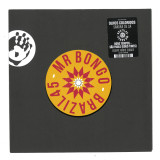
Wind is air in motion. It makes no sound until it encounters an object. The sounds it produces depend on the strength of the wind and the shape and material of the object it touches. When the wind blows, trees sway, buildings rattle, materials move, and sound waves are generated. Some believe that temperature changes create layers of air, and that the friction between them forms a unique sound—perhaps the true voice of the wind, which birds may be the only creatures capable of recognising. Sometimes the wind howls; at other times, it sings or whistles, shifting from a gentle murmur to an angry roar. The wind’s range of frequencies, tones, and timbres is vast and varied. Tuning the Wind is a piece about the wind, made with the wind—an abstract expression of our ongoing conversation with nature.
Concept, composition and production by Aimée Portioli. Wind recordings by Aimée Portioli and Pablo Diserens.
Mastered by Rafael Anton Irisarri. Front cover photo by Bárbara Cameán and Aimée Portioli. Back cover photo by Maria Louceiro. Design by Daniel Castrejón.
Generally regarded as the first true 'new age' record, Steve Halpern's 1975 private press LP has long been in demand by collectors. In particular, the very first pressing of the album included an extraordinary long-form jazz funk track called 'Something for Every Body Suite' that was removed from subsequent versions. Eating Standing is proud to reissue Halpern's classic long-lost original version of the album, officially licensed from Halpern himself that includes this heavy groove-laden masterpiece. This is the very first ever full reissue of the first press album with full reproduction of the artwork. Original copies cost over $700 (assuming you can even find one) but now this incredible landmark album is available once more to enjoy. "Reissued for the very first time since 1975 in its original format and track listing, a legendary album that is considered a game-changer in music. Steve Halpern's landmark album 'Christening For Listening (A Soundtrack For Every Body)' is considered by many to be a crucial and defining album that pointed the way ahead. Predating the ambient/experimental work of Brian Eno, Steve Hillage and even Mort Garson's 'Plantasia', Steve Halpern's 'Christening For Listening' was the first album to explore what became known as 'new age' or ambient music, exploring the effect of tones and rhythms on the human body and mind as well as plants and other organisms. Originally issued as a private pressing in 1975, the very first issue of this album had an extraordinary extended jazz funk track on the B side, a DJ/Samplers delight – DJ Gaslamp Killer is a huge fan. This track, 'Something For Every Body Suite', was never included on any of the subsequent represses making the very first pressing incredibly rare and almost impossible to find. It's reissued here for the very first time, with full repro of the original artwork plus a Q&A by Tony Higgins with Steven Halpern himself.
1/4" / 15 IPS / Dolby A Analogue Copy to DSD 256 to analogue console to lathe
Carlos Santana and Company Return to a Dynamic Blend of R&B, Latin, Funk, and Rock: Amigos Aims for the Hips, Spreads Joy, and Includes “Europa (Earth’s Cry Heaven’s Smile)” Amigos has been beloved for decades by both long-time and recent Santana admirers, with multiple generations of fans drawn in by the record’s contagious blend of R&B, Latin, rock, and funk elements. As well as its immense accessibility. Coming off a series of albums that heavily leaned into jazz fusion, the band returns to the more dynamic and concise approaches of its earlier works without losing the sense of adventurousness, craftsmanship, and virtuosity that turned it into a juggernaut embraced by both the mainstream and experimentally minded communities.
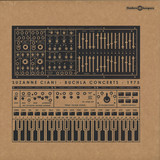
Mastered at Mobile Fidelity’s in-house studio in California, pressed at Fidelity Record Pressing, and strictly limited to 3,000 numbered copies, Mobile Fidelity’s 180g 33RPM LP of Amigos presents the 1976 album in audiophile sound for the first time on a domestic release. Part of the reissue label’s Santana series, this collectible version features quiet surfaces and black backgrounds that help reveal the intricate details, distinguished tones, and cohesive interplay that cause Santana’s music to take flight.
The enhanced aural perspectives extend not only to Carlos Santana’s intoxicating fills and solos, but to the rich tapestry of the rhythmic, melodic, and vocal elements that help Amigos feel as fresh today as it did several decades ago. This LP shines a beaming light on the surrounding musicians that simultaneously feed off and inspire their bandleader. The solidity and depth of the bass lines; the wash of the organ; the scope and carry of the vocals; the grip and weight of the low-end frequencies; and, possibly the most enticing traits, the textures of the acoustic guitars, numerous percussive devices, and then-modern synthesizers: all come across with tremendous presence and energy.
Entirely appropriate for a set that kicks from the start, with the opening “Dance Sister Dance (Baila Mi Hermana)” true to the song title’s combination directive-invitation meaning. Tropical, soulful, upbeat, and liberating, it beckons hips to shake and delicious libations to pour. Clinking cowbells, spirited background vocals, hand-tapped congas, and Carlos Santana’s six-string magma pour forth with abundance. The song sets the mood and expectations for a record that contains not an ounce of filler, and which inspires and spreads joy at practically every turn.
On the gold-certified Amigos, the ensemble never seems to run short of zest or happiness. Key in on the Latin bite and searing guitar architecture of “Take Me With You,” an instrumental that shifts tempo at its midpoint and sparkles with a samba-like outro that aims to put everyone in earshot on the dance floor. Surrender to the slow-burn of “Tell Me You Are Tired,” sent up with Greg Walker’s sympathetic vocals and spun around with whirling funk accents. Marvel at the Spanish guitar introduction, Mexican folk foundation, group vocals, and extroverted grooves of the forward-propulsive “Gitano,” with lead singing by conga/bongo expert Armando Peraza.
Having reached the Top 10 in the United States and spawned the hit “Let It Shine,” Amigos marked the final stint for bassist David Brown, the last of the group’s famed Woodstock lineup to depart. His contributions feel especially spirited throughout the album, compass readings that the group uses to chart their course. Just listen to how his passages pop on “Let Me” and frame the can’t-get-it-out-of-your-head “what you need is what you want” refrain. And while Carlos Santana remains the centerpiece of the brilliant and meditative “Europa (Earth’s Cry Heaven’s Smile),” Brown serves as a trustworthy anchor and friendly advocate.
- Yoake
- Kodoku
- Tsukino
- Muchuu
- Hfoas
'Mei Semones' sweetly evocative blend of jazz, bossa nova and math-y indie rock is not only a way for her to find solace in her favorite genres, but is an intuitive means of catharsis. "Blending everything that I like together and trying to make something new - that's what feels most natural to me," says the 23-year-old Brooklyn-based singersongwriter and guitarist. "It's what feels most true to who I am as an artist." `Tsukino', Mei's debut, self-released EP, is being released physically for the first time ever on Bayonet Records! The EP will be released by itself on CD & Tape formats, and will be included in a vinyl pressing on the B-side of Semones' landmark EP, `Kebutomushi'! Plinking guitar tones and asymmetrical time signatures exemplify Semones' forays into angular indie rock more now than ever before. Originally from Ann Arbor, Michigan, Semones began playing music at a young age, starting out on piano at age four before moving to electric guitar at age eleven. After playing jazz guitar in high school, she went on to study guitar performance with a jazz focus at Berklee College of Music. College is where she met her current bandmates, including string players Noah Leong and Claudius Agrippa, whose respective viola and violin add softness and multidimensionality to Mei's intricate guitar work. After releasing a slew of singles and an EP in 2022, coinciding with her move to New York City, Mei and her band have since gone on to collaborate with post-bossa balladeer John Roseboro and embark on their first-ever tour with the melodic rock outfit Raavi. Semones chronicles infatuation, devotion, and vulnerability in her songs, complete with sweeping strings, virtuosic guitar-playing and heartfelt lyrics sung in both English and Japanese, that have all become part of her sonic trademark: ornately catchy, genrefusing compositions serving as the backdrop to tender lyrics touching on the universalities of human emotion.
'Mei Semones' sweetly evocative blend of jazz, bossa nova and math-y indie rock is notonly a way for her to find solace in her favorite genres, but is an intuitive means ofcatharsis. "Blending everything that I like together and trying to make something new -that's what feels most natural to me," says the 23-year-old Brooklyn-based singer-songwriter and guitarist. "It's what feels most true to who I am as an artist." Plinking guitar tones and asymmetrical time signatures exemplify her forays intoangular indie rock more now than ever before, especially on her debut Bayonet Recordssingle "Wakare no Kotoba"_its wide-interval arpeggios in odd meters being some ofthe most technically difficult guitar work Mei has ever implemented in her songwriting.Translated to "parting words'' in English, the self-described "anti-love song" serves as afarewell to a toxic friendship, complete with orchestral swells and crashing guitars. Originally from Ann Arbor, Michigan, Semones began playing music at a young age,starting out on piano at age four before moving to electric guitar at age eleven. Afterplaying jazz guitar in high school, she went on to study guitar performance with a jazzfocus at Berklee College of Music. College is where she met her current bandmates,including string players Noah Leong and Claudius Agrippa, whose respective viola andviolin add softness and multidimensionality to Mei's intricate guitar work. After releasinga slew of singles and an EP in 2022, coinciding with her move to New York City, Mei andher band have since gone on to collaborate with post-bossa balladeer John Roseboroand embark on their first-ever tour with the melodic rock outfit Raavi. Semones chronicles infatuation, devotion, and vulnerability in her songs, complete withsweeping strings, virtuosic guitar-playing and heartfelt lyrics sung in both English andJapanese, that have all become part of her sonic trademark: ornately catchy, genre-fusing compositions serving as the backdrop to tender lyrics touching on theuniversalities of human emotion.
It’s 2024 and Egyptian-born artist of South Sudanese origin Sam Alfred has had a monstrous 12 months. A new year means stepping in a new zone with new tunes. This is Forward Step.
First is the title track “Forward Step (Journey Mix)”, an epic cow-bell-laden house hammer that blooms into a euphoric flower. Running with a 90’s club flavour, Sam lays airy synths over punchy piano and rave stabs while an all-powerful speech plays out, celebrating the idea that we’re all in control of writing our futures. There’s a bubbling over of excitement on this one as it builds and builds and builds!
Up next is “Care 4 U” – a crunchy drum club roller paired with fuzzy bass tones and a super hooky vocal loop. A section that’s been lodged in our brains from the moment we heard it. Toss in airy pads and a key melody that’s also impossible to forget and this track’s got you hook, line and sinker. In true Sam Alfred style, “Care 4 U” is yet more proof that this lad is a wizard at writing jacked-up club cuts, each full of fizz.
Third in line comes “Keep It” a relentless hypnotic piece of techno. Outer space synths drone while shuddering percussion rumbles beneath. It’s here where the EP takes a darker turn. The curtain closer and focus track for the EP drop is “Distance” – an acidic house track to seriously lock and load to. Characterised by sharp hi-hats and lively keys, as its name suggests this one goes and goes and goes.
Warehouse Find!
Swedish DJ/Producer Christian Nielsen debuts on Maceo Plex's Ellum imprint with the ‘Love Struck’ EP this May.
The four track EP continues a strong start to 2020 with releases from Raxon and Avision and, true to the label’s form, is all about weighty, characterful cuts from Nielsen, an artist who has previously chalked up releases for the likes of Kompakt, Of Unsound Mind and Play it Down.
The titular opener of ‘Love Struck’ is a swaggering, low slung affair with a growling bassline underpinning a pitch shifted vocal refrain and piercing rave stabs - a mutant beast which fuses techno, Garage and rave aesthetics in anthemic style. The skeletal rhythms and gritty acid flair of ‘For Myself’ follow in a track that, through some nifty builds, manages to pull off a big room energy as much as it does a basement vibe. ’Switch’ is next up and, with a rock solid groove, vocal sample and subaquatic tones, displays just how well Nielsen can create a monster with few elements. The heaviest track, ‘Pulse’, rounds off ‘Love Struck’ with a huge, padding kick drum and resonant percussive lead doing the heavy lifting while counterpointed by judiciously employed warm, cossetting jazz flute licks
- A1: Blunt Later For It (Stephen Brown Remix)
- B1: Vincent Desmont Thrust It (Markus Suckut Remix)
- B2: The Cruiser The Venue (Sawlin Remix)
- C1: B+A+D Moon, Sea And Waves (Alek S Remix)
- C2: B+A+D Moon, Sea And Waves (Alek S D-Town Edit)
- D1: Blunt 1Non1 (Joe Metzenmacher Remix)
- D2: Vincent Desmont Archensweet (Ashcaa Remix)
- E1: Ashppe Flexit (Drexl Remix)
- E2: Ashppe Fudge It (Simon Ferdinand Remix)
- F1: Ashppe Let's Do It (Alpha Gpc Remix Dub Mix)
- F2: Ashppe Let's Do It (Redrop Remix)
VDR Remixes: Beyond Music
The concept for this remix album evolved gradually through various encounters and exchanges. Despite its complexity, the project would not have come to fruition without the firm dedication of each artist involved.
Artists were given the freedom to select any track from my discography for their remix. With no directives, the LP's magic emerged from their unique styles and creative visions, resulting in a diverse palette of tones and rhythms.
The first record opens with Stephen Brown's electrifying remix of Blunt's "Later For It," originally released on Bright Sounds. Stephen's reinterpretation infuses the track with dark, captivating techno.
On the B-side, Markus Suckut presents his masterful adaptation of "Thrust It," a track marking my first release. Following this, Sawlin transforms "The Venue" from The Cruiser series, infusing it with his signature 'Made by Sawlin' style.
The second record continues with two compelling versions of "Moon, Sea and Waves" by Alek S. These reinterpretations—one dub techno and the other Detroit-oriented—offer a unique and immersive vision of the B+A+D tracks, originally released on Newmont.
On the flip side, Joe Metzenmacher delivers a daring electro remix of "1NON1" on D1, followed by Sicaa's bass music rendition of "Archensweet" on D2.
The third record is entirely dedicated to remixes of the Ashppe series, which I hold dear. Drexl provides a powerful breakbeat cut of "Flexit," a true bomb. Simon Ferdinand from Polycarp Records, with whom I had the pleasure of working, captures the punch and melancholy of "Fudge It". The LP concludes with two Dub 3.0 adaptations of "Let's do it" by Anthony Cacharron, using the aliases Alpha GPC and Redrop, ending on an exploratory high note.
A heartfelt thank you to all the remixers for their boundless creativity and commitment to this project
2024 Repress
Finders Keepers invite you to witness the incredible first ever Buchla synthesiser concerts/demonstrations providing a distinctive feminine alternative to The Silver Apples Of The Moon if they had ever been presented in phonographic form. This is history in the remaking.
This spring Finders Keepers Records are proud to release an archival project that not only redefines musical history but boasts genuine claim to the overused buzzwords such as pioneering, maverick, experimental, groundbreaking and esoteric, while questioning social politics and the evolution of music technology as we've come to understand it. To describe this records as a game-changer is an understatement. This record represents a musical revolution, a scientific benchmark and a trophy in the cabinet of counter culture creativity. This record is a triumphant yardstick in the synthesiser space race and the untold story of the first woman on the proverbial moon. While pondering the early accolades of this record it's daunting to learn that this record was in fact not a record at all... It was a manifesto and a gateway to a new world, that somehow never quite opened. If the unfamiliar, modernistic, melodic, pulses, tones and harmonics found on this 1975 live presentation/grant application/educational demonstration had been placed in a phonographic context alongside the promoted work of Morton Subotnick, Walter Carlos or Tomita then the name Suzanne Ciani and her influence would have already radically changed the shape, sound and gender of our record collections. Hopefully there is still chance.
In short, Suzanne was a self-imposed twenty-year-old employee of the Buchla modular synthesiser company, San Francisco's neck and neck contender to New York's Moog. Buchla was run by a community of festival freaks and academic acid eaters whose roots in new age lifestyles and the reinvention of art and music replaced the business acumen enjoyed by its likeminded East Coasters. In the eyes of the consumer the creative refusal to adopt rudimentary facets like a piano keyboard controller rendered the Buchla synthesiser the more obscure stubborn sister of the synth marathon, steering these incredible units away from the mainstream into the homes and studios of free music aficionados, art house composers and die-hard revolutionaries. Championed and semi-showcased by composer Morton Subotnick on his albums The Bull and Silver Apples Of The Moon, Buchla's versatility began to open the minds of a new generation, but the high-end design features and no-compromise modus operandi was often confused with incompatibility and, in the pulsating shadow of Moog's marketing, the revolution would not be televised nor patronised. Suzanne Ciani, as one of the very few female composers on the frontline (and also providing the back line) did not lose faith.
These concerts' are the epitome of rare music technology historic documents, performed by a real musician whose skills and academic education in classical composition already outweighed her male synthesiser contemporaries of twice her age. At the very start of her fragile career these recordings are nothing short of sacrificial ode to her mentor and machine, sonic pickets of the revolution and love letters to an absolutely genuine vision of and 'alternative' musical future. In denouncing her own precocious polymathmatic past in a bid to persuade the world to sing from a new hymn sheet, Suzanne Ciani created a bi-product of never before heard music that would render the pigeon holes ambient' and futuristic' utterly inadequate. Providing nothing short of an entirely different feminine take on the experimental records' of Morton Subotnick and proving to a small, judgmental audience and jury the true versatility of one of the most radical and idiosyncratic musical instruments of the 20th century. These recordings have not been heard since then.
The importance of these genuinely lost pieces of electronic musics puzzle almost eclipses the glaring detail of Suzanne's gender as a distinct minority in an almost exclusively male dominated, faceless, coldly scientific landscape. Those familiar with Suzanne's work, a vast vault of previously unpublished non-records', will already know how the creative politics in her art of being' simultaneously reshaped the worlds of synth design, advertising and film composition before anyone had even dropped a stylus in her groove. Needless to say this record, finally commanding the archival format of choice, courtesy of the Ciani and Finders Keepers longstanding unison, was not the last first' with which this hugely important composer would gift society, and the future of a wide range of exciting evolving creative disciplines.
You have found a holy grail of electronic music and a female musical pioneer who was too proactive to take the trophies. With the light of Buchla and Ciani's initial flame Finders Keepers continues to take a torch through the vaults of this lesser-celebrated music legacy shining a beam on these non-records' that evaded the limelight for almost half a century. You can't write history when you are too busy making it. With fresh ink in the bottomless well, let's start at the beginning. Again. You, are invited!
10-piece UK afro-fusion outfit TC & The Groove Family are proud to share their new EP ‘We Have Each Other’. Releasing on Friday 7th June via Bridge The Gap, the project sees the band refine the sound debuted on their 2022 album ‘First Home’. Returning to work once again with producer Tom Excell (Nubiyan Twist, ONIPA), the project explores a darker sonic palette, channelling a deep appreciation of UK bass and electronic music alongside afro-jazz sounds and hip-hop sensibilities.
The record documents a time of change within the group - a new lineup, plus members living in different cities and pursuing various paths - whilst also reflecting the turbulent socio-political climate, and the major shifts and changes on the horizon for humanity. However, despite the heavy subject material, the band strike an optimistic, uplifting tone, with MC Franz Von channeling the music into a message encouraging listeners to look around and embrace
community, whatever that may look like. Bandleader Tim Cook shares:
“Our collective purpose is to craft music that empowers and energises individuals to embrace their true selves with pride, celebrating the unity and strength we radiate as one community. No one needs to be alone when they are striving for common humanity. No one should be lonely when we celebrate each other, drawn together by a sound that says it’s good to be me, it’s better to be us. As our MC, Franz Von says, music brings peace, love & energy”.
Opener and lead single ‘Stand Strong’ is a love letter to afrobeat, creating a contemporary twist with its Khruangbin-esque guitar lines and weaving horns, whilst ‘Here, Now’ takes the tempo down to an atmospheric haze of dubbed-out ambient effects, pierced by uplifting horn melodies. ‘Blessed’ sees the group welcome Nubiyan Twist’s Aziza Jaye for a dancehall-meets-North African-flavoured feature, subtly reimagining what Elephunk era Black Eyed Peas would
sound like today.
At the EP’s centre-point and emotional peak, title track ‘We Have Each Other’ showcases the band’s jazz fusion, Latin and dark electronic influences. The tracks growling, subbed-out bass tones return as a theme for ‘Wile Out’ - a UK hip-hop & jungle tinged collaboration with SANITY complete with virtuosic, tight-knit grooves, furious horn lines and a whirlwind of immersive turntablism.
Originally formed in Leeds, TC & The Groove Family’s sound reflects the diverse musical and cultural backgrounds at the core of the project, with songs exploring grooves and genres including afrobeat, broken beat, jungle, jazz and grime. Their music has drawn widespread acclaim, supported by tastemakers including Jamz Supernova and Craig Charles on BBC Radio 6, BBC Introducing West Yorkshire, Jazz FM, Rinse FM, Radio FIP and more. The group have performed at the likes of Glastonbury, We Out Here, Greenman and Boomtown, and will embark on a UK tour across May & June in support of the release of ‘We Have Each Other’.
Two Italians step into the Bordello. Both are armed. Their weapons of choice? The synthesizer sounds of italo, new beat and wave. LVCA and Otis have been raised on the sounds of their homeland, adopting its analogue sound while adapting it to their own style. The result is a brooding mix of addictive lines and vocoder fire.
“Ritmo Electronico” opens with a steel-edged snare driving smeared synths through the city dusk, robotic lyrics menace this sleazy neon-stained scene of cracked mirrorballs and flaring machines.
Listeners are pulled into the underbelly of A Promise In The Cold Night with the murky “Tanzen”. Alex Vincent’s words are shrouded in glitch, bright burbling bars and a clean clap offering a path of light to help the listener navigate their way. The true coldness of the night arrives with the stabbing keys of “Synthesised Emotion”. Through a haze of hi-hats, an electrical smoke of blacks and greys fizz with juddering volts as passions pour through cable and wire. That haze grows thick in the close. Through a mist of distortion, a “Sphere Of Light” penetrates. Pin-pricks of percussion are dowsed in aquatic tones before a syrup of static is poured across proceedings, lost vocals ghost in this fog of bending bodies and forms.
"Remembering is not the opposite of forgetting," Casey MQ sings at the start of Later that day, the day before, or the day before that, his new LP and Ghostly International debut. It's a phrase fittingly misremembered from something the LA-based, Canadian-born composer came upon as he spiraled into unconscious and subconscious-led writing sessions at the piano. Casey's known for his 2020 breakthrough release babycasey, which gave voice to songs seen through the lens of childhood, various film score work and collaborations with artists such as Oklou (who returns here), Eartheater, and Vagabon. His gifts as a producer and songwriter are rooted in textural world-building and the excavation of personal truth. With Later that day... he questions what is true entirely, understanding our mind's tendency to bend and project onto pictures of the past. Across vivid, baroque pop balladry, Casey MQ reorients his recording project and point of view under the notion that memories are malleable. All the joy, pain, love, and loss housed within remembrance is open to interpretation and deconstruction, which he does deftly, with curiosity and complete artistic freedom. "It's a memory album," Casey puts it simply, winding up for the deeper unpacking, "and it might be a breakup album, too_there are more questions than answers." Engaging his dreams and sitting with sheet music at his newly acquired piano, he looked to new and old inspirations including the works of Claude Debussy, Joni Mitchell, and Joe Hisaishi's beloved Studio Ghibli film scores. "Since I was young, I always wanted to write a piano album." babycasey's studied electronic sound isn't wholly abandoned on Later that day... instead, it comes through like an atmosphere, giving Casey's more spacious, minimal arrangements a distinct luster and sheen. The textures and tones shift from song to song as if mirroring the way our minds constantly recontextualize, remember, and forget. Cathartic opener "Grey Gardens" _ its title derived from a dream abstractly related to the Toronto restaurant, but not the 1975 film, which he cites as another coincidental false memory _ presents the record's plaintive, haunted feeling. "Even if not reading into lyrics, sonically I wanted it to feel like you're being pulled into a universe. Not fantasy or otherworldly per se, something more tangible, of the body and mind," Casey says. "Hearing it back, I realized this track was the key to unlocking it." His tender falsetto hovers above ambient washes and echoed keys, each word falling carefully in the crevices. "Asleep At The Wheel" unfolds on arpeggiated synth before a burst of symphonic color; the synth returns inverted to harmonize with the outro, "I love a car crash, I love a story, I love a memory, I swear it's real..." Casey leans into digital imagination on the warm, introspective "Me I Think I Found It." Subdued, stuttered percussion underscores the singer as he cycles through pixelated imagery _ screenshots, smiles, streetlights _ searching for higher meaning through love. Built on ascendent chord distortions, "Dying Til I'm Born" gives the record one of its boldest pulses of emotion. The back half stretches out; "Is This Only Water" is sparse and foggy, "Baby Voice" is intimate and desperate for something to remain. "Words For Love" grooves on guitar, and "Tennisman9" aches in heartbreak. French musician Marylou Mayniel, aka Oklou, appears as the collection's only guest for the closing duet, "The Make Believe," a bright and buoyant send-off that gives Later that day... both a sense of resolve and cyclical-motion. "We are young, under the sun," they sing together, a parting image brimming with lightness.
New music from Philadelphia’s recently rediscovered soul powerhouse Ron Aikens and his backing band the Hip Tones is a soon-to-be classic double sider. Following in the traditional “soul 45 rpm” single format, a ballad side with a funk side on the flip, here is the first physical release from the forthcoming LP “Ron And The Hip Tones”. The lowrider soul feel on “Tear On My Chin” comes from a brainstorming session with Ron, producer P. Maxwell Ochester, and the two main songwriters Dave Cope & Fred Berman.
It tackles heartache, pain, and loss coupled with the slow grinding groove only true heartache can produce. On the flip, you will find a nod to Ron’s former band, Power Of Attorney, and their breakout single “Changing Man” which inspired the uptempo groove and sweet flute part. Hinting at the classic Philly Soul style, there are lush strings and as a bonus, the impactful and powerful message delivered by Philadelphia poet Ursula Rucker.
With base notes of Texas country, full bodied Americana and flutters of rim-shot percussion, Elliott BROOD infuse their own experiences into the 1970s hit. Transformed into a true country ripper, “Bluebird Wine” chirps and hops along with a peppy verve. True to form, Elliott BROOD layer on their signature stomp and clap sound and their unique blend of vocal tones, creating an elixir of lifestyle, a feeling to imbibe that brings joy and fullness.
- The Time Has Come
- Don't You Know
- Money Man
- I'm Mad
- Walk Proud
- So Called Friend (Oh! What A Friend)
- Lighten Up Baby
- Cool It Baby
- My Lover
- Knock On Wood
- Misery
- Don't You Fool Me
- Leave Me Alone
- Shut Up (Demo)
- (C'mon) Dance To The Drumbeat
- Acey Deucey
- Doin' The Snake Hips
- Let's Do The Hunch
- Jet Set
- Turkey Trot
- Foggy Bottom)
- Only True Love
- Need Of Love
- I Got To See My Baby
- If I'm Dreaming
- False Pride
- Prove It
- My Assurance
Karamel-farbiges Vinyl. Die Consolidated Productions von Mel Alexander, die von 1961 bis 1991 am äußersten Rand des hart umkämpften Musikgeschäfts von L.A. tätig war, gehörte zu den am längsten bestehenden unabhängigen Plattenfirmen in schwarzem Besitz im 20.Jahrhundert. Verstrickt in ein verwirrendes Netz von Labels - darunter Ajax, Angel Town, Car-AMel, Emanuel und Kris - versammelt diese erste Ausgabe 28 schwelende R&B-Songs von Lee Harvey, B.B. Carter, Marilyn Calloway, Del Reys, Deb Tones, De Velles, Gene Russell's Trio, Jimmy "Preacher" Ellis und Ty Karim. Consolidated Productions Vol. I wurde von den originalen 1/4-Zoll-Bändern neu gemastert und enthält sorgfältig recherchierte Anmerkungen, eine Diskografie und Fotos von einem wichtigen Produzenten.
'Mei Semones' sweetly evocative blend of jazz, bossa nova and math-y indie rock is notonly a way for her to find solace in her favorite genres, but is an intuitive means ofcatharsis. "Blending everything that I like together and trying to make something new -that's what feels most natural to me," says the 23-year-old Brooklyn-based singer-songwriter and guitarist. "It's what feels most true to who I am as an artist." Plinking guitar tones and asymmetrical time signatures exemplify her forays intoangular indie rock more now than ever before, especially on her debut Bayonet Recordssingle "Wakare no Kotoba"_its wide-interval arpeggios in odd meters being some ofthe most technically difficult guitar work Mei has ever implemented in her songwriting.Translated to "parting words'' in English, the self-described "anti-love song" serves as afarewell to a toxic friendship, complete with orchestral swells and crashing guitars. Originally from Ann Arbor, Michigan, Semones began playing music at a young age,starting out on piano at age four before moving to electric guitar at age eleven. Afterplaying jazz guitar in high school, she went on to study guitar performance with a jazzfocus at Berklee College of Music. College is where she met her current bandmates,including string players Noah Leong and Claudius Agrippa, whose respective viola andviolin add softness and multidimensionality to Mei's intricate guitar work. After releasinga slew of singles and an EP in 2022, coinciding with her move to New York City, Mei andher band have since gone on to collaborate with post-bossa balladeer John Roseboroand embark on their first-ever tour with the melodic rock outfit Raavi. Semones chronicles infatuation, devotion, and vulnerability in her songs, complete withsweeping strings, virtuosic guitar-playing and heartfelt lyrics sung in both English andJapanese, that have all become part of her sonic trademark: ornately catchy, genre-fusing compositions serving as the backdrop to tender lyrics touching on theuniversalities of human emotion.
Dire Straits never made a big to-do about its final run. In classic understated British fashion, the band simply let its music speak for itself. And how. Originally released in September 1991, On Every Street became the group's swan song – a lasting testament to the influence, musicianship, and integrity of an ensemble whose merit has never been tainted by cash-grab reunions or farewell treks. It remains an essential part of the Dire Straits catalog and a blueprint of the distinctive U.K. roots rock the collective played for its 15-year career.
Sourced from the original master tapes, housed in gatefold packaging, and pressed at RTI, Mobile Fidelity's 180g 45RPM 2LP set of On Every Street presents the album like it has always been meant to be experienced: in reference-grade audiophile sound. Recorded at AIR Studios in London and produced by Dire Straits leader Mark Knopfler, it features all of the band's sonic hallmarks – wide instrumental separation, visceral textures, seemingly limitless air, broad soundstages, atmospherics that you can almost reach out and feel. Each element is made more vibrant, physical, and lifelike on this collectible reissue, which marks the first time this 60-minute work has been available at 45RPM speed.
Afforded generous groove space and black backgrounds, the songs from On Every Street burst with nuanced details and vibrant colors. Dire Straits' playing appears to float, their intricate performances organized amid hypnotic, fluid, three-dimensional arrangements. Mobile Fidelity's definitive-sounding set also brings into transparent view Knopfler's finely sculpted guitar lines, expressive tones, and laid-back vocals – as well as the balanced accompaniment from his band mates. Here's a record on which you can hear the full blossom and decay of individual notes, and imagine the size and shape of the studio. It is in every regard a demonstration disc. And it happens to be filled with timeless fare.
Remarkably, On Every Street almost never came to light. Dire Straits initially dissolved in September 1988 after touring behind its blockbuster Brothers in Arms and suffering the departure of two members. At the time, Knopfler professed his desire to work on solo material; bassist John Illsley also explored side projects. But Knopfler's decision in 1989 to form the country-leaning Notting Hillbillies reignited a spark to reconvene his primary band and craft a fresh batch of songs. Six years removed from Brothers in Arms, Knopfler, Illsley, keyboardist Alan Clark, and keyboardist Guy Fletcher teamed with A-list session pros – steel guitarist Paul Franklin, percussionist Danny Cummings, saxophonist Chris White, guitarist Phil Palmer included – to create what still stands as an unforgettable farewell.
The platinum record brings the band full circle in that it returns Dire Straits to a quartet formation; finds the group refreshingly out of step with the era's prevailing trends; and sees Knopfler and Co. knocking out song after song with the deceptive ease of a punter tossing back a pint at a pub. That subtle cool, clever poise, and innate control – signature traits that no other band ever matched – dominate On Every Street. Knopfler's clean, virtuosic six-string escapades unfurl with dizzying melodicism and economical efficiency. Led by his winding fills and focused solos, Dire Straits traverse a hybrid landscape of rock, jazz, country, boogie, blues, and pop strains with near-faultless prowess.
More than any other entry in the group's oeuvre, On Every Street welcomes quick detours down back alleys and into the depths of human souls. What makes it more brilliant is its staunch refusal to cater to commercial expectations or take advantage of prior successes; every passage feels true, every measure echoed in the service of song. It's evident in the humorous satire of "Heavy Fuel," closeted desperation of the witty "Calling Elvis," and shake-and-bake bounce of "The Bug." It pours from the album's darker corners, as on the high-and-lonesome melancholy of the title track and bruised emotionalism of "When It Comes to You."
Hinting at the open-minded approaches and boundless curiosity he'd embrace as a solo artist, Knopfler doesn't limit himself when it comes to style or subject matter. Look no further than "You and Your Friend," a shuffle whose all-inclusive lyrics encourage an array of interpretative meanings. Another of the album's deep cuts, "Iron Hand," comes on as one of the band's most memorable moments – the narrative addressing the abuses of power at the 1984 Battle of Orgreave during the U.K. miners' strike. Given cinematic heft by the expert production, the true-fiction account puts into perspective the richness, poetry, and depth of On Every Street.
"Every victory has a taste that's bittersweet," sings Knopfler on the title track. At least that bittersweetness seldom sounded so damn good on record.
1000 miles away from the beating musical hearts of Rio and São Paulo in the late ‘70s, the Brazilian city of Belém gave rise to a little-known record label called Erla - Estudio Rauland. Though not prolific in its output, the label made up for it in quality and experimental offerings, with several records on the label now becoming sought-after pieces among collectors. One such release is the sublime four-track psych, MPB, rock EP by singer-songwriter Jarbas Mariz.
They say never judge a book by its cover, though on this occasion you pretty much can. The wonderful tripped-out ‘70s artwork by Baby is a sure-fire indication of the music lying within. Though the EP was recorded in ‘77, it clearly gained inspiration from the psychedelic hippy idols of the previous decade and could easily have been a soundtrack to an acid trip scene in an obscure Brazilian movie.
Low-fi and quirky, there are moments of beauty and splendour but also hints of darkness; with a sublime balance of music and styles throughout. At points Jarbas will have you drifting through a folk flute daydream, the next moment a growling, psych-distorted guitar breaks and parts the calm. An ability to make those elements blend cohesively is where Jarbas’ true brilliance shines through.
Jarbas played, and still plays, with some of the key figures in Brazil's musical underground. Guilherme Coutinho (whose Guilherme Coutinho - E O Grupo Stalo album from ‘78 was also re-issued on Mr Bongo) features on electric piano for this release, with fans of his work being able to pick out his tones and playing style. Elsewhere, Jarbas also collaborated with the late great Lula Côrtes on the 'Bom Shankar Bolenath' album from 1988 and 'Rosa De Sange' from 1980. He was a member of the wonderful Cátia de França band and is a regular in the legendary Tom Zé group.
'Transas Do Futuro' is a special record and one we are honoured to be reissuing.
Cryovac is a family of artists that work as one machine. Individual style bands together and moves, as cogs, this machine forward. A.Garcia maintains and manages production on every level, even the pressing at the world famous Archer Record Press. Cryovac is a collaboration between artists and craftsmen to make a quality product. Each project Cryovac champions is meant as a gift for the true believer.
Cryovac #28 starts out with Jason Garcia's frantic head banger “Trapped in purgatory”. This classic 4/4 rocker builds intensity by layering screaming tones to crescendo in a steady drive. “Ichabod”, Garcia’s second track on the A side, is a spartan groove with a stoic delivery of minimalism; a stripped down rhythm with a serious attitude.
A.Garcia and M.Kretsch begin the B side with a reggae-punk techno experiment that delivers a rowdy funk.“Rock the dance bah” is Clash inspired minimal with a walking bassline, texas style percussion, and a guitar twack on the up beat. Garcia and Kretsch collab again on the B2 with “Stillgar”; a blend of synths working around each other as one storm guiding a rambunctious beating to a mystic reverie. These tracks illustrate the duo's production method and approach to the techno sound.
Our artwork for this release was provided by Nick Retzlaff. He is an artist and stand-up comic living with autism, and expressing his unique view of the world.
SOURCED FROM THE ORIGINAL MASTER TAPES: 2LP SET PRESENTS 1991 ALBUM IN 45RPM SPEED FOR FIRST TIME.
PCM Digital Master to Analog Console to Lathe.
Dire Straits never made a big to-do about its final run. In classic understated British fashion, the band simply let its music speak for itself. And how. Originally released in September 1991, On Every Street became the group’s swan song – a lasting testament to the influence, musicianship, and integrity of an ensemble whose merit has never been tainted by cash-grab reunions or farewell treks. It remains an essential part of the Dire Straits catalog and a blueprint of the distinctive U.K. roots rock the collective played for its 15-year career.
Sourced from the original master tapes, housed in gatefold packaging, and pressed at RTI, Mobile Fidelity’s 180g 45RPM 2LP set of On Every Street presents the album like it has always been meant to be experienced: in reference-grade audiophile sound. Recorded at AIR Studios in London and produced by Dire Straits leader Mark Knopfler, it features all of the band’s sonic hallmarks – wide instrumental separation, visceral textures, seemingly limitless air, broad soundstages, atmospherics that you can almost reach out and feel. Each element is made more vibrant, physical, and lifelike on this collectible reissue, which marks the first time this 60-minute work has been available at 45RPM speed.
Afforded generous groove space and black backgrounds, the songs from On Every Street burst with nuanced details and vibrant colors. Dire Straits’ playing appears to float, their intricate performances organized amid hypnotic, fluid, three-dimensional arrangements. Mobile Fidelity’s definitive-sounding set also brings into transparent view Knopfler’s finely sculpted guitar lines, expressive tones, and laid-back vocals – as well as the balanced accompaniment from his band mates. Here’s a record on which you can hear the full blossom and decay of individual notes, and imagine the size and shape of the studio. It is in every regard a demonstration disc. And it happens to be filled with timeless fare.
Remarkably, On Every Street almost never came to light. Dire Straits initially dissolved in September 1988 after touring behind its blockbuster Brothers in Arms and suffering the departure of two members. At the time, Knopfler professed his desire to work on solo material; bassist John Illsley also explored side projects. But Knopfler’s decision in 1989 to form the country-leaning Notting Hillbillies reignited a spark to reconvene his primary band and craft a fresh batch of songs. Six years removed from Brothers in Arms, Knopfler, Illsley, keyboardist Alan Clark, and keyboardist Guy Fletcher teamed with A-list session pros – steel guitarist Paul Franklin, percussionist Danny Cummings, saxophonist Chris White, guitarist Phil Palmer included – to create what still stands as an unforgettable farewell.
The platinum record brings the band full circle in that it returns Dire Straits to a quartet formation; finds the group refreshingly out of step with the era’s prevailing trends; and sees Knopfler and Co. knocking out song after song with the deceptive ease of a punter tossing back a pint at a pub. That subtle cool, clever poise, and innate control – signature traits that no other band ever matched – dominate On Every Street. Knopfler’s clean, virtuosic six-string escapades unfurl with dizzying melodicism and economical efficiency. Led by his winding fills and focused solos, Dire Straits traverse a hybrid landscape of rock, jazz, country, boogie, blues, and pop strains with near-faultless prowess.
More than any other entry in the group’s oeuvre, On Every Street welcomes quick detours down back alleys and into the depths of human souls. What makes it more brilliant is its staunch refusal to cater to commercial expectations or take advantage of prior successes; every passage feels true, every measure echoed in the service of song. It’s evident in the humorous satire of “Heavy Fuel,” closeted desperation of the witty “Calling Elvis,” and shake-and-bake bounce of “The Bug.” It pours from the album’s darker corners, as on the high-and-lonesome melancholy of the title track and bruised emotionalism of “When It Comes to You.”
Hinting at the open-minded approaches and boundless curiosity he’d embrace as a solo artist, Knopfler doesn’t limit himself when it comes to style or subject matter. Look no further than “You and Your Friend,” a shuffle whose all-inclusive lyrics encourage an array of interpretative meanings. Another of the album’s deep cuts, “Iron Hand,” comes on as one of the band’s most memorable moments – the narrative addressing the abuses of power at the 1984 Battle of Orgreave during the U.K. miners’ strike. Given cinematic heft by the expert production, the true-fiction account puts into perspective the richness, poetry, and depth of On Every Street.
“Every victory has a taste that’s bittersweet,” sings Knopfler on the title track. At least that bittersweetness seldom sounded so damn good on record.
Elements of Life brings a full on boogie disco tune with some 80s synth goodness. The backgrounds are provided by an all star cast of singers including Cindy Mizelle, Audrey Wheeler, Anané, Dawn Tallman, and Ramona Dunlap. The song is penned by Nico Vega, just at 19 years old writing lyrics with the soul of a person who’s been through various experiences in life. It isa statement song coming from an adolescent stating where we are in the world today with war, and encouraging all to stop fighting, “no more war”,“Let Us Shine Bright As Day”, “Let Us Find A Peaceful Way”, “Let Me Hear You Say”, these words are crying out to the world.
Remixes by Josh Milan on the Josh Milan Honeycomb versions, feeding us an early 80s tune reminding us of the seminal label West End Records. The Louie Vega mixes stay true to the Elements Of Life sound mixed with some Detroit bass groove and synth overtones. A bonus track also added to the release featuring Axel Tosca on keyboards is entitled “Los Tonos Sagrados” which means The Sacred Tones.This instrumental has the early afrobeat rhythm with Axel Tosca ripping through with an organ solo and snare hits accenting the drums and music.Take a listen and enjoy the sounds of “Let Us Shine” and “Los Tonos Sagrados” and it’ll sure to have you with your arms up and eyes closed singing along with the choon in no time!! Available soon at all streaming and digital outlets, with vinyl coming too!!
Robert Hood's techno and Femi Kuti's Afrobeat intertwine in a new form where jazz-grooves reign supreme. For the fourth season of La Compagnie des Indes & Sourdoreille "Variations" live series of creations for France TV, the duo were united around the singer and producer James Brown, performing a tribute to the legendary Godfather of Soul who passed away in 2006. This "Variations" album is the live recording of this unique collaboration and performance, capturing a very special moment in time.
The evening witnessed a meeting of two icons in their own genres: one with synths and drum machines, the other on saxophone: Robert Hood and Femi Kuti embody excellence in their respective fields and the pair combined to make something truly unique, soulful, funky and spontaneous. Recorded in one 30+ minute take, "Variations" is embellished by Femi's exquisitely free-flowing yet restrained saxophone, whilst Hood anchors the groove with layers of pads and kicks with the long-time mastery of a true DJ.
Alongside Jeff Mills and Mad Mike, Hood is one of the original members of Detroit techno group Underground Resistance. His style is characterised by minimalist and experimental tones with an assertive groove. Throughout the '90s, he helped pave the way for techno to flourish - giving birth to minimal techno with his seminal album "Minimal Nation". Since then, he has been consistently forwarding electronic music culture with ground-breaking productions, sensational performances and his M-Plant label.
Alongside him, Femi Kuti takes on every musical style with his saxophone, which he plays with a virtuoso touch: pop, soul, electronic music and Afrobeat, of which he is one of the leading exponents. The son of Afrobeat singer and political activist Fela Kuti, he has inherited his father's zeal for both music and activism, where he continues to highlight the plight of most Nigerians living conditions in the oil rich state.
With "Variations" the duo capture an explosive combination on a special night in Paris 4 years ago, November 2019, filmed at the ADP Group headquarters (Paris Aéroport - Charles de Gaulle (CDG) - Roissy).
"It is so amazing when a vision comes to fruition. I enjoyed collaborating with the legendary Femi Kuti for this special project." Robert Hood
Orange Vinyl[13,40 €]
Berlin party series and label AWAY Music continues its limited vinyl series called "Reissued", dedicated to re-releasing iconic cuts from the vast collaborative catalog of Move D & Pete Namlook. The third installment "Reissued 3", which follows the series' first two EPs from previous years, features again some exceptional pieces that were previously only available on CD. Move D and Pete Namlook are electronic visionaries whose 26-album relationship explored and intertwined psychedelic synthscapes, deep house and techno, future jazz, and downtempo on Namlook's cult imprint Fax Records. Their innovative and influential works keep inspiring electronic music producers today, showcasing their willingness to collaborate and push the boundaries of electronic music. First up on the A side, “Der Strahlender Verlierer”, from the 2006 Album “Let the Circle Not Be Broken”, begins atmospherically before pushing subtly into open filter and undulating synth territory. Introspective and accepting, the piece gradually lets the sum of its parts coalesce into a peaceful whole with sustained chords and the flicker of played steel strings.
“Hardwired Tangent” from the 2001 Album “Wired” rounds out the first side with edgier and more ominous tones. Brooding and bubbling its way through artificial textures absorbed by carefully weighted rhythmic tension. Shuffling jazz electronics. The moody low-mid hum providing buoyancy throughout. Also from the 2001 album, the B side’s “Hardwired Hypotenuse + Asymptote” is a synthetic journey. Textural, pseudo-organic, pulsating with urgency. The motoric percussion imparting structure to the sonic alchemy. Tactile yet integrated components offer the listener (or dancer) multiple entry points into the music. This is both artful and kaleidoscopic — a treatise on contemplative and psychoactive house music.
"Reissued 3" is a true testament to the innovative spirit and pioneering work of Move D and Pete Namlook. With these tracks now available on vinyl for the first time, AWAY's limited series is a must-have for old and new fans alike.