NO MORE don't need much of an introduction - the legendary Kiel-based (No)Wave / PostPunk band project took the worlds dancefloors by storm with the release of their seminal single "Suicide Commando" in 1981 which was later re-introduced to the Techno / Electro youth of the world, when Munich's DJ Hell famously reinterpreted the tune in 1998.
Still actively touring and releasing on a regular NO MORE are now making their debut on the freshly launched Intrauterin Recordings-offshoot EL CABALLO SEMENTAL..
The labels cat.no. 001 is a first time on vinyl release taken off NO MORE's "The Return Of The German Angst" digital mixtape and sees one of the bands hit tunes being reworked in a unique, highly captivating manner, pressed exclusively as a limited to 200 copies whitelabel edition on purple / violet vinyl.
"123456789 (baze.djunkiii + Herr Brandt Dream A Nudream Remix)" exceeds the bands natural musical realm by far and transfers the song into MoombahGoth / DubWave territories previously unheard of, not only for a classic band like NO MORE.. The rework picks up latest developments from the urban and bass music world whilst keeping the haunted vibe of the original songs chorus intact, slighty references NuBeat / PostPunk and Dub, adds lush, dreamy Cosmic guitar textures and even winks to the underground whistle and rave posse with a sweet as candy piano breakdown.
In their conjunctional remix work we see Intrauterin Recordings-founder baze.djunkiii, quality electronic music activist and prolific DJ for more than 20 years, and Herr Brandt, founding member of the classic German Wave / Indie / Alternative outfit The Convent as well as of the praised underground Synth Pop / Minimal Wave band Sonnenbrandt, effortlessly merge the best of two musical worlds to create something new and captivating, like they used to do on the decks with their former BETA-ZERFALL parties which were the main and initial reason the two of them and NO MORE came together in the first place.
a A- 123456789 BAZE.DJUNKIII + HERR BRANDT DREAM A NUDREAM REMIX
Suche:the unheard
“Requiem” is the name of the new Cold Beats Records release. The reference number 14 of the catalan label is written by L´Avenir, the cold synth side project of veteran electronic musician and sound artist Jason Sloan. Known throughout the space and ambient music scenes for his contemplative electronic soundscape work for close to two decades; Sloan founded L’Avenir in 2012 to explore his long time love of synthnpop and dark minimal wave music created purely from analog and vintage equipment. While still retaining the atmosphere of his solo records, the music of L’Avenir is rooted in the tradition of the minimal, analog, synthesizer music of the late 70′s and 80′s ( Fad Gadget, Depeche, Click Click, Chicago’s Wax Trax Records scene etc…). Growing up through the original scene while it was happening, it’s no suprise that Sloan’s music would eventually move in this direction. While releasing over a dozen solo albums and E.P.’s under his own name, Sloan has played live all over the US, Canada and Europe including the influential Live Constructions radio program at Columbia University, STEIM in Amsterdam and Philadelphia’s The Gatherings concert series, one of the country’s oldest continuing ambient and electronic music series. Sloan is a Professor teaching full-time in the Interactive Arts department along with being the founder and program coordinator for the Sound Art concentration at the Maryland Institute College of Art in Baltimore, Maryland. L’Avenir returns with Requiem, the fourth, full-length album for Barcelona’s Cold Beats Records. Requiem finds L’Avenir visiting themes of postmodernity, alienation and spiritualism while expanding the sonic palette far beyond his minimal synth beginnings. The music of L’Avenir has, at times, been compared to 4AD era Clan of Xymox or mid-period Depeche Mode. But while echoes of the former can be heard, L’Avenir brings a uniquely fresh perspective unheard in other bands of the genre. Requiem features eight new songs and is available on limited edition blood red vinyl. Requiem is L’Avenir’s sixth release was written and recorded between February 2018 and January 2019 in a Minimal Space, (Baltimore). Limited edition of 300 copies lacquered pressed on 140 gr. high quality red vinyl and digital album.
Dutch underground acid-techno act Random XS strikes again with two rugged and authentic dance floor rockers. After a long awaited re-release of their Djax-Up-Beats classic 'Give Your Body' last year on Delsin, they return with a pair of fresh and unheard acid jams on the closely related MOS Recordings. Both tracks recorded in the early '90s, but only recently finalized and improved for heavy club impact. It's an EP full with gurgling 303 grooves and raw energy in the traditional and energetic Random XS way.
South east London songwriter and visual artist Jerkcurb has today announced his hotly-anticipated debut album Air Con Eden - set for release on Friday 13 September via Handsome Dad Records. The culmination of several years of intense creative focus, Air Con Eden reflects on Jerkcurb instigator Jacob Read’s recent real life events, losses and tragedies as well as more cryptic, fictitious perspectives and surreal adopted personalities. The record’s euphoric lead single ‘Timelapse Tulip’ arrives alongside today’s news - accompanied by a stunning, intricate 3D animated video courtesy of a collaboration between Read, director Gilbert Bannerman and production designer Theo Boswell. Read will tour the U.K. in October to celebrate the album's release with a hometown headline at Chat's Palace included on the run.
Having fully emerged in 2016 with the flourishing ‘Night On Earth’ - a streaming hit with 2,700,000 spins to date - and subsequent tracks ‘Voodoo Saloon’ and ‘Little Boring Thing’, there’s been a growing sense of an artist climbing into maturity with each succeeding release, video and gig laying the foundations for Jerkcurb’s burgeoning cult status. Radio and press took to Jerkcurb instantly with BBC Radio 6 Music inviting him in for a live session on Tom Ravenscroft’s show, also making an appearance as a guest on Steve Lamacq’s Thursday Round Table, while esteemed publications like Dazed, Vice, Noisey and Wonderland have all thrown their weight behind his music and art. Indeed, Read has been heavily immersed in his art and animation all the while, exhibiting at the Tate Britain and also being commissioned by them to create a promo for their installation Aftermath: Art in the Wake of World War One and drawing praise from It’s Nice That along the way.
There’s a near impossible richness to Read’s songwriting form on Air Con Eden, with its as-yet-unheard title track offering perhaps the clearest distillation of the record’s predominant theme: time at its malleable and fraught. Inspired by Victor Gruen - the pioneering designer of shopping malls in the United States - Read unpacks the idea of being trapped in an eternity that feels like an endless present tense, the passing of the seasons reduced to a standstill in a pristine shopping mall; a symbol of both stasis and comfort; an Eden without the possibility of an ending.
Untameable Anatolian feline fuzzy folk funk finally uncaged. A spontaneous Turkish-Norwegian-Dutch expedition, where seafaring jazz cats entangled with fugitive roadies and Tee-Set mods, makes the story of Durul Gence’s highly anticipated/ill-fated Asia Minor Mission group the stuff of lost-rock legend and remains one of Turkish music’s great “what ifs?” The black cat is finally out of the bag...
Having forged a celebrity status as one of Turkey’s premier percussionists and bandleaders, Durul Gence assembled the underground fusion group known as Asia Minor Mission (AMM) in early 1972 (with Irfan Sumer, Oguz Durukan and Ugur Dikmen) while trying to escape the constant daze of paparazzi camera flashes that followed him across Turkey. During a far-fetched post-gig brainstorm the group pondered relocating to Norway (based on fact that none of them had ever visited the country) when a local seaman who claimed to have recording studio connections in Oslo overheard them. Enlisting the roadie services of a streetwise Istanbul taxi driver friend on the run from the police AMM took the plunge, accepting the sailor’s offer of passage on his next sailing.
In these new idyllic surroundings, the same region that played host to fellow Turkish percussionist Okay Temiz, Durul found the peace he desired discovering a muse in Norway’s welcoming creative climate. Much like Barıs Manço and Mogollar in France, Cem Karaca and Gökçen Kaynatan in Germany, Gence’s relationship with Norway rekindled a passion for composition in ways he couldn’t have imagined in his homeland, opening doors thought previously unreachable. As a potential prodigal son for Anadolu pop Durul joined a wider pop-cultural diaspora alongside electronic pioneer Ilhan Mimaroglu, Tülay German (aka Tuly Sand) Kardasllar’s “Alex” Wiska (collaborator with Krautrockers Can) and Maffy Falay from the band Sevda.
Despite a blooming fan base and original repertoire the Nordic dream was not to be and after two years without a studio session, AMM called it quits during a tour of Holland after which Durukan and Dikmen went home to join Cem Karaca’s band Dervisan - Dikmen’s keyboards feature on Finders Keepers releases by Turkish singer Selda (FKR011). Retreating to the city of Delft to ponder his next move, Durul met Peter Tetteroo, former vocalist from successful Dutch psych-pop combo Tee-Set, who also found himself in a lonely boat after the demise of his long-running group. As an AMM fan, Tetteroo suggested they record two Gence penned AMM demos for Dutch Philips signed exotic songbird Sasi Naz at Peter’s home studio. A session was hastily arranged and a talented, yet unconfirmed, guitarist was enlisted. Durul maintains it was the work of Ferry Lever from Tee-Set/After Tea, something Ferry has denied, and with Tetteroo having died in 2002 the question remains. Upon entering the humble studio Durul stumbled upon a skeletal drum kit. Lacking hi-hat, toms or even a snare he cobbled together a bongo and a tambourine and set to work. Together, under the watchful eye of Tetteroo, the pair jammed stripped back versions of the AMM live staples Black Cat and Boo Song, with an added freak factor otherwise missing from their jazzier approach. Laid down in just 30 minutes, with Gence’s accomplished guide vocals and fuzzy overdubs, the rudimentary but professional recordings never made it to Philips execs and the tapes returned to Turkey under Durul’s arm as one of only two documented AMM recordings (the other being a live performance in Oslo’s Hennie-Onstad Art Centre in May 1973).
Unintended for commercial release, curiouser and curiouser, Finders Keepers proudly present these previously unheard tracks sourced directly from original tapes, which stand as a testament to the inimitable talent of Gence and the only studio document of the mythical AMM Turk jazz funk troubadours, representing a pop-psych Hollandaise holiday postcard which has taken five decades to be delivered. 45 revolutions later... The cat’s got the cream.
Concentric Circles presents ''For the Moment'', which features tracks from some of Di Stefano's early cassette releases, as well as a number of unheard explorations of Indian polyrhythms from the early 90s. Di Stefano’s prescient and unique work will appeal to fans of Cybe, Joel Graham, UnknownmiX, Zru Vogue, and provides a fascinating view of the 80s US electronic underground.
American-born, Japan-based composer John Di Stefano self-released a number of cassettes as part of the 80s DIY underground on his own imprint Oktron Produktions, including Klang's Drift, a collaboration with Joel Graham.
Living in San Francisco, Di Stefano had access to multiple University electronic music studios, where he had an impressive array of synthesizers at his fingertips, including both Buchla and Serge modular systems. Combining his knowledge of modular synthesis with a background in percussion, his early releases were a uniquely human approach to electroacoustic music, with flourishes of post punk in the mix. Di Stefano developed an interest in world music, studying Indian music theory and tabla, and after an extended trip to Indonesia in the mid 80s, he was particularly drawn to Javanese gamelan music. Future recordings would forever be indebted to the sounds he heard during those travels.
There can't be too many truly unknown golden era rap records left in 2019, but this is about
as close as it gets. Without a Discogs entry and as far as we can tell only one copy ever sold
online ($800!), 'Poetry' is a rarity in the truest sense. That is despite it being featured on a
recent DJ Shadow mix, which you would have thought would turn up some copies, but
instead left many collectors scratching their heads as to the identity of this previously
unheard track.
Not only is it incredibly rare, it's incredibly dope too! A Josh Davis co-sign always helps
but throw a dope guitar riff, 'Funky Drummer', 'Numbers' and 'Nautilus' (for the remix) into
the mix and you can't really go wrong. We still can't figure out which mix we like best so
you can decide that for yourselves.
S.W.A.T. were from Wichita, Kansas, of all places and have a whole album worth of
unreleased material from back in the days so there's a possibility we'll see more from them
in the future, but until then enjoy the masterpiece that is 'Poetry'!
These versions are taken from Marc’s own tapes. All royalties go to the ‘Light of Love Foundation’ for the Marc Bolan School of Music & Film. ℗ 2019 Easy Action Recordings Ltd © 2019 Easy Action Recordings Ltd. 700 copies pressed on cream vinyl. Rare and unheard versions of these songs remastered from Marc’s own personal copies, recently repatriated with the estate. Presented in high quality reverse board 3 mm spined sleeve with photo from Peter Sanders
- A1: Why? (Remastered)
- A2: It Ain’t Necessarily So (Remastered)
- A3: Screaming (Remastered)
- A4: No More War (Remastered)
- A5: Love & Money (Remastered)
- B1: Smalltown Boy (Remastered)
- B2: Heatwave (Remastered)
- B3: Junk (Remastered)
- B4: Need A Man Blues (Remastered)
- B5: I Feel Love/Johnny Remember Me (Remastered)
This era defining, pop classic includes debut single ‘Small Town Boy’, a huge global hit, which continues to resonate with today’s LGBT+ generation and remains a dance-floor staple. To celebrate the 35-year anniversary of Bronski Beat’s forming, ‘The Age Of Consent’ has been remastered and expanded. Available on limited edition pink vinyl and deluxe CD/Digital with 20 bonus tracks including demos, remixes, BBC session and unheard material.
Walls, Corridors, Baffles is the debut album of Swiss musician and producer Samuel Savenberg aka S S S S. Following various releases on Haunter Records, aufnahme+wiedergabe, and Hallow Ground, his LP on Präsens Editionen tries to find an approach to an artistic expression beyond tropes of darkness, harshness and excess. Thus, the aesthetic of Walls, Corridors, Baffles is radically and uncompromisingly sober. Instead of focusing on a conceptual or symbolic treatment of sound as an abstraction, Savenberg emphasizes its materiality. The album consists of eight pieces strung together into a manifesto which calls for a febrile embrace of an unheard-of, intense sobriety.
In Walls, Corridors, Baffles, unadulterated percussive force meets an astoundingly precise and frugal vocabulary of electroacoustic sounds, as for example on the opener “Deserter”. Passages extended over long melodies invite the listener to lose oneself in the contrastive emptiness. Central to the work are the affective qualities of the music which lapses only at moments into a more defined emotional quality – as on the final track “Nothing But the Circulation of Air”.
*Edition of 300 copies
In her varied career that would combine art gallery installations, major film soundtrackings and commissions for Atari, Suzanne Ciani’s earliest experiments remain some of her most challenging, beguiling and timeless... Flowers Of Evil ticks all the above boxes and flicks switches that would power-up a new uncharted universe of her own musical modernité. Finders Keepers present the first-ever release of these vital archive recordings.
As a genuine vanguard of electronic music composition at the forefront of the modular synthesiser revolution in the late 1960s, Suzanne Ciani’s forward-thinking approach to new music would rarely look to the past for inspiration, which makes this unheard composition from 1969 a rare exception to the collective futurist vision of Ciani and synthesiser designer Don Buchla. In choosing to adapt the controversial prose of French poet Charles Baudelaire, Suzanne would join the ranks of ongoing generations of pioneering musicians like Olivier Messiaen, Karlheinz Stockhausen, Serge Gainsbourg, Etron Fou Leloublan, Celtic Frost and Marc Almond (not forgetting Star Trek’s William Shatner!), all equally inspired by the 19th century writer’s works of “modernité” (modernity), a self-coined term dedicated to capturing the fleeting, ephemeral experience of life in an urban metropolis, best exemplified in his symbolic, erotic and macabre ode to Parisian industrialisation, Les Fleurs du mal (Flowers Of Evil).
In her varied career that would combine art gallery installations, major film soundtrackings and commissions for Atari, Suzanne Ciani’s earliest experiments remain some of her most challenging, beguiling and timeless... Flowers Of Evil ticks all the above boxes and flicks switches that would power-up a new uncharted universe of her own musical modernité. For the many enthusiasts that have already drawn the parallels between Baudelaire’s writings and experimental/electronic music (a relationship rivalled only by the likes of J. G. Ballard and Aldous
Huxley) some might instantly recognise an unconscious sistership between this recording and another 1969 electronic adaptation of Flowers Of Evil by celebrated female electronic composer Ruth White. An interesting distinction of White’s excellent version of Flowers Of Evil (released via Limelight records, home to the likes of Fifty Foot Hose and Paul Bley) is that its dark tone generation and vocal manipulation was created with a Moog synthesiser, the commercially triumphant
rival to Suzanne and Don’s Buchla Systems (Buchla and Moog’s historic, simultaneous, neck-and-neck synth developments are well documented.) The fact that Ciani’s version was never intended for commercial release (not unlike her 1975 Buchla concerts, which could easily have taken Morton Subotnick’s Bull by the horns!) is also poetically reflective of the nature of Ciani and Buchla’s alternative perspective. The choice to present this extract from Flowers Of Evil in its intended French language further distances Ciani’s faithful reaction from some of its better-known variations. Having attempted to voice the poem herself, the multilingual Italian-American composer’s French accent did not meet her own standards, resulting in the request for a fellow unnamed French student who lived on campus at Mills College in Oakland to accurately verbalise the section of Baudelaire’s collection entitled Élévation.
Celebrating its 25th anniversary, Far Out Recordings proudly presents two albums of previously unheard Azymuth demo recordings from 1973-75
Since their debut album release in 1975, Azymuth have risen to rank alongside the world’s greatest jazz, funk and fusion artists. As young men in Rio de Janeiro, they stood out for both their exceptional talent as musicians, and their wild rock ‘n’ roll antics in the predominantly middle-class worlds of bossa nova and jazz. Their signature ‘Samba Doido’ (crazy samba) sound ruptured the tried and tested musical structures of the day, resulting in what can only be described as an electric, psychedelic, samba jazz-funk hybrid.
Before they became Azymuth, José Roberto Bertrami (keyboards), Ivan ‘Mamão’ Conti (drums), Alex Malheiros (bass) and Ariovaldo Contesini (percussion) played backing band to just about every major artist in Brazil. Bertrami was also contracted as an arranger and songwriter at some the biggest labels of the era: Polydor, Philips, Som Livre, and EMI being just a few. Azymuth’s name can be found on record sleeves by the likes of Jorge Ben, Elis Regina, Marcos Valle, Ana Mazzotti and countless others. But at the dawn of the seventies, fascinated by developments in improvisational music - from jazz in the US, to progressive rock in the UK and of course samba, bossa and tropicália on home turf - the energetic young group were inspired and ready to move forward. Any spare moment in which they weren’t in sessions and writing music for other artists, they would be carving out their own sound.
These previously unheard recordings took place between 1973-75 at Bertrami’s home studio in the Laranjeiras district of Rio de Janeiro. At the time of recording, there was nothing in Brazil, less the world that sounded anything like them, so perhaps it’s unsurprising that when Bertrami presented his demos to the record companies he had been working for, he was turned away, and told in effect that the music was ‘wrong’.
One of the demos ‘Manhã’ would be picked up by Som Livre and Azymuth released their seminal debut album in 1975. Throughout the late seventies and eighties, the group released a series of now classic albums for Milestone Records, before taking an indefinite hiatus to pursue their individual careers.
When English producers Joe Davis and Roc Hunter arrived in Brazil in 1994 to record the first Azymuth album in over a decade, Bertrami dug out the demos which had sat virtually untouched for over twenty years. Joe recalls how he was “blown away by the freedom and intensity of the music, as well as the genius of the ideas musically.” Beginning a long and fruitful relationship, ‘Prefacio’ would be the first track Azymuth recorded for Far Out Recordings and was released on the Carnival album (1996).
Along with ‘Manhã’ and ‘Prefacio’, only a handful of these demos were ever professionally recorded and released, making this the first opportunity to hear many of these early Azymuth compositions in their raw, original form.
On every track the frenetic energy in the studio is palpable, giving the recordings a beautifully personal feel and a sense of the phenomenally creative vision Bertrami, Malheiros and Conti were realising at the time. Fifty years on, Azymuth’s earliest recorded music retains an ineffable, futuristic quality, standing amongst their most captivating and moving work.
Credits:
Keyboards: José Roberto Bertrami (Mini Moog Series One, Arp Omni, Arp 2600, Arp Solina Strings, Fender Rhodes 88, Hammond B3 with box speaker, Clavinet with Wah Wah)
Drums: Ivan ‘Mamão’ Conti
Bass: Alex Malheiros
Percussion: Ariovaldo Contesini
Produced by Azymuth and Jose Roberto Bertrami
Recorded at José Roberto Bertrami’s home studio in Laranjeiras, Rio De Janeiro, Brazil between 1973–1975.
Issue and project co-ordinator: Joe Davis
Tape transfers by Roc Hunter (thanks to Simon Hitner)
Mastered by Daniel Maunick at the Sugar Shack, Lanark, Scotland
Mastered by Frank at Carvery Cuts
All tracks published by Far Out Music Publishing/Westbury Music LTD
Celebrating its 25th anniversary, Far Out Recordings proudly presents two albums of previously unheard Azymuth demo recordings from 1973-75
Since their debut album release in 1975, Azymuth have risen to rank alongside the world’s greatest jazz, funk and fusion artists. As young men in Rio de Janeiro, they stood out for both their exceptional talent as musicians, and their wild rock ‘n’ roll antics in the predominantly middle-class worlds of bossa nova and jazz. Their signature ‘Samba Doido’ (crazy samba) sound ruptured the tried and tested musical structures of the day, resulting in what can only be described as an electric, psychedelic, samba jazz-funk hybrid.
Before they became Azymuth, José Roberto Bertrami (keyboards), Ivan ‘Mamão’ Conti (drums), Alex Malheiros (bass) and Ariovaldo Contesini (percussion) played backing band to just about every major artist in Brazil. Bertrami was also contracted as an arranger and songwriter at some the biggest labels of the era: Polydor, Philips, Som Livre, and EMI being just a few. Azymuth’s name can be found on record sleeves by the likes of Jorge Ben, Elis Regina, Marcos Valle, Ana Mazzotti and countless others. But at the dawn of the seventies, fascinated by developments in improvisational music - from jazz in the US, to progressive rock in the UK and of course samba, bossa and tropicália on home turf - the energetic young group were inspired and ready to move forward. Any spare moment in which they weren’t in sessions and writing music for other artists, they would be carving out their own sound.
These previously unheard recordings took place between 1973-75 at Bertrami’s home studio in the Laranjeiras district of Rio de Janeiro. At the time of recording, there was nothing in Brazil, less the world that sounded anything like them, so perhaps it’s unsurprising that when Bertrami presented his demos to the record companies he had been working for, he was turned away, and told in effect that the music was ‘wrong’.
One of the demos ‘Manhã’ would be picked up by Som Livre and Azymuth released their seminal debut album in 1975. Throughout the late seventies and eighties, the group released a series of now classic albums for Milestone Records, before taking an indefinite hiatus to pursue their individual careers.
When English producers Joe Davis and Roc Hunter arrived in Brazil in 1994 to record the first Azymuth album in over a decade, Bertrami dug out the demos which had sat virtually untouched for over twenty years. Joe recalls how he was “blown away by the freedom and intensity of the music, as well as the genius of the ideas musically.” Beginning a long and fruitful relationship, ‘Prefacio’ would be the first track Azymuth recorded for Far Out Recordings and was released on the Carnival album (1996).
Along with ‘Manhã’ and ‘Prefacio’, only a handful of these demos were ever professionally recorded and released, making this the first opportunity to hear many of these early Azymuth compositions in their raw, original form.
On every track the frenetic energy in the studio is palpable, giving the recordings a beautifully personal feel and a sense of the phenomenally creative vision Bertrami, Malheiros and Conti were realising at the time. Fifty years on, Azymuth’s earliest recorded music retains an ineffable, futuristic quality, standing amongst their most captivating and moving work.
Credits:
Keyboards: José Roberto Bertrami (Mini Moog Series One, Arp Omni, Arp 2600, Arp Solina Strings, Fender Rhodes 88, Hammond B3 with box speaker, Clavinet with Wah Wah)
Drums: Ivan ‘Mamão’ Conti
Bass: Alex Malheiros
Percussion: Ariovaldo Contesini
Produced by Azymuth and Jose Roberto Bertrami
Recorded at José Roberto Bertrami’s home studio in Laranjeiras, Rio De Janeiro, Brazil between 1973–1975.
Issue and project co-ordinator: Joe Davis
Tape transfers by Roc Hunter (thanks to Simon Hitner)
Mastered by Daniel Maunick at the Sugar Shack, Lanark, Scotland
Mastered by Frank at Carvery Cuts
All tracks published by Far Out Music Publishing/Westbury Music LTD
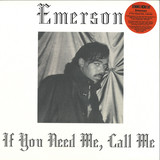
Kalita's obligatory Record Store Day offering is something rather special: synth-funk visionary couple Emerson and Leora Sandidge's mythical unreleased album finally sees the light of day, following Emerson's sole private press seven-inch single release way back in 1988. Those two tunes ("Sending All My Love Out" and "Why Are You So Cold?") make the cut on this belated debut set, alongside six other previously unreleased recordings from the same sessions. Their take on electrofunk, boogie and '80s soul is colourful, soulful and synth-heavy, with the included tracks veering from up-tempo club workouts (see "Raw Deal Cocaine Kills") and fizzing dancefloor pop workouts, to sugary ballads and seductive slow jams. In other words, it's a more than tidy selection of rare and unheard gems.
Almost four decades since it’s domestic release, Karen Marks’ 1981 single Cold Café has finally reaped it’s deserved international credit to become one of Australia’s most recognised minimal wave recordings. Efficient Space now showcases the Melbourne artist’s brief but entire discography, including two previously unheard demos, all produced with experimental synthesist Ash Wednesday (The Metronomes, Modern Jazz, Thealonian Music). A rarity in the then male dominated industry, Marks found her footing in music, first through rock journalism and then in band management. Formally of Adelaide, newly arrived synth-punks JAB (Johnny Crash, Ash Wednesday and Bodhan X) approached her for representation, subsequently contributing tracks to seminal 1978 snapshot Lethal Weapons and playing the Crystal Ballroom’s opening night. Wednesday and Crash would soon dissolve JAB, enlisting Mark Ferry and Sean Kelly to create Models. Still under Mark’s management, Models became one of the fastest rising new bands of the punk movement, playing to full houses of dedicated and frenzied fans everywhere. Sadly, internal frictions forced Wednesday and Marks to leave after two years, with Crash following three months later. Her creative relationship with Wednesday fortified with the co-production of his 1980 machine-pop prank Love By Numbers, her swooning chorus uplifting his deadpan count to 100, before the two collaborated on Marks’ own recording persona. Immortalised by the icy Oz wave of Cold Café, her Astor issued 7″ also boasted the caffeinated flip Won’t Wear It For Long - a should be hit with guitar from future Icehouse member Robert Kretschmer.
With a discography held in such high esteem amongst fans of conceptual French pop and soundtrack composition, the likelihood of finding an unturned stone amongst maestro Jean-Claude Vannier’s fertile psychedelic rockery falls somewhere between slim and skeletal. Even the most intrepid explorers of the most fearless and fastidious nature should naturally expect to encounter one or two shadowy characters when braving the oblique corners of the Vannier vault, but few lost souls cast a darker silhouette than the cinematic obscurity known only as La Bête Noire (The Black Beast).
Lost and presumed missing for decades the soundtrack tapes to this lesser-known 1983 French thriller (featuring a cast culled from films such as Alphaville, The Modern Couple and Sweet Movie) captures the revered composer and arranger of Serge Gainsbourg’s Histoire De Melody Nelson embarking on a darker exploration of free jazz, frenzied batucadas and cyclic carousel psychedelia. Counting key players of the French jazz scene within its ranks, The Insolitudes group comprises a crack team of Palm/Futura/Actuel/Saravah regulars such as saxophonist Philippe Mate´ (Acting Trio/Mate´-Vallancien/Tacet) alongside drummer Bernard Labat (Mad Ducks) and legendary Arpadys/Voyage rhythm masters Marc Chantereau and Pierre-Alain Dahan (Brutus Drums) all of whom alongside Michel Zanlonghi (Ensemble De Percussion De Paris) make up this thunderous, tumultuous, four-headed rhythm machine bridging an authentic gap between The Jef Gilson Groups and France’s signature “cosmic” revolution. Naturally these previously unheard compositions are spearheaded by lead pianist and composer Vannier and for devotee’s of his 1972 concept album L’Enfant Assassin Des Mouche there is much to admire and cross-reference herein.
Having been the most loyal and long-running guardians of Jean-Claude’s monster archive over the past two decades Finders Keepers Records are proud to present this first catch of newfound vintage Vannier discoveries on this limited and unlikely free jazz 45 single (which should find a perfect home between coveted Euro jazz 7”s by Krzysztof Komeda, Franc¸ois Tusques and Brussels Art Quintet). Almost 15 years since Finders Keepers once liberated the Mouches it is now time to set free another Black Beast amongst discerning listeners.
After The First Wave Of Artists That Have Broken The Ice With Their Way Of Combining Contemporary Symphonic Music With Electronica And Jazz On The European Side (olafur Arnalds, Nils Frahm, Max Richter) - Now There Is A New Generation Of Young Musician Breaking Boundaries On A New Level. Especially In Germany There Is A New Wave Of Artists That Bring The Thing On A Whole New Level. These 20 - 25 Year Old People Don't Just Imitate What The Bigger Names In The Scene (the Fathers) Have Done But Develop The Style To A Totally Different Level And Add New Ideas Instead Of Just Copying What The Older Guys Did. This New Wave Of Artists Have A Huge Musical Knowledge, Have Studied At The Best Music Academies, Learned To Play "classical" Instruments And Know How To Improvise On A Very High Level. They Have Been Raised In 2 Different World: Studied The History Of (contemporary) Classical Music And Also Been Influenced By What's Happening In Electronica Evolution Of The Last 25 Years. Ralph Heidel Is One Of These New Kids In The German Scene. Coming From Munich, The 25 Year Old Extremely Talented Musician Studied Saxophone And Composition At The Munich Academy Of Music (known For Being The Best Music School In Germany. Think Julliard Or Berklee). He Graduated In 2018.leering Everything About The Music Of 20th Century Composers (charles Ives, Alfred Schnittke, Giöyrgi Ligeti Etc). At The Same Time He Grow Up With The Music Of Electronic Producers Like Alvo Noto, Boards Of Canada, Jon Hopkins, Jan Jelinek, Four Tet Since Early Days. And: He Comes From A Jazz Musicians Family And Has Grown Up By Listening To The Jazz Collection Of His Father. Studied Saxophone Since Age Of 12 With A Big Passion For The More Advanced Jazz. In His Own Music All This Comes Together. "moments Of Resonance" Are Seven Compositions Full Of Brilliant Little Ideas, Harmonic Complexity, Unheard Music Surprises, Clever Citations, Dramatic Evolutions, Big Explosive Moments, Meditative Moments And Euphoric High Points. This Album Is An Extremely Emotional Work Of Art For Strings, Saxophone, Drums, Bass And Electronics. Ralph Heidel And His 7 Piece Ensemble Homo Ludens Connect Contemporary Chamber Music With Electronica, Ambient, Post Rock And Avant-garde Jazz. On A Highest Possible Musical Level - Without Getting Too Abstract And Incomprehensible. Everything Is Composed And Improvised. Nothing Is Sampled. You Find Wild Punk-jazz Parts That Recall John Zorn Or Mahavishnu Orchestra And Romantic Passages That Make You Think About European Impressionistic Composers Like Ravel Or Debussy. But Nothing Is Imitated, Everything Gets Broken Up Through An Expressive New Way Of Using Harmonization And Melodic Composing. Sometimes The Band Flies Through An Ambient And Drone Universe But One Moment Later The Music Evolves Into An Explosive, Impossible To Describe Musical Moment. One Of Heidel's Biggest Ability Is To Melt Electronic And Organic Elements Into A New Unheard Sound.
Letherette return to Wulf with a selection of DJ edits from last years Mander House Volume 1. The vinyl release comes with 3 extended tracks from the original release as well as an unheard track from the vaults - 'Just For You'. Vinyl purchases will come with a free download of bonus track 'Just For You (Live)'
Fifth part of the Strata-East Dolphy Series, Glass Bead Games is arguably the crown jewel of the Strata East movement, an amorphous genre that treads an unusual path between post-bop, 70's avant-garde and spiritual jazz, with a groove.
Glass Bead Games is full of revelations at many levels. First, the decade of the 1970s did produce genuinely creative, "human" new music flowing from the jazz mainstream; second, Bill Lee was more than Spike's dad: he was a superlative bassist, a team player of the first order, a powerful catalyst who, if anything, deserves to be better known than his son; third, Billy Higgins was, as so many musicians insist, a once-in-a-lifetime drummer—the bellows inspiriting the collective flame.
Most importantly, Clifford Jordan was an artist of the first order, his playing so effortless and unforced, unselfconscious and focused, mature and wise that, at a time when altissimo fury was all the rage, it's small wonder his authentic voice frequently went unheard. His musical rhetoric is so personally expressive, its substance so compelling, the listener couldn't care less about the extraordinary technique required to convey its captivating message. Compared to some of his more acclaimed peers he's a less aggressive yet paradoxically more directive and shaping influence. The climaxes, rather than spelled out, are merely suggested, registering with deep and lasting impact on the listener. It all comes down to learning the language, those precious little beads. Not every player, including Jordan or the listener, can use it like Shakespeare, but all can learn to read Shakespeare and understand its principles of arbitrariness and serendipity, of invariance and transformation.
Jordan, no less than Shakespeare, requires a like-minded cast of players—in this case four musicians of such redoubtable proficiency that each remains committed to keeping the beads in play. He's not a man content with a mere musical "dialogue" with his fellow musicians nor is he about to take the initiative in pulling his troops up to his level. Instead he begins to tell a musical story that's so compelling his three comrades are inspired equally to contribute to a collaborative narrative. This is brilliant music-making by a Coltrane- influenced successor who feels no obligation to mime the predecessor. It may be the most significant saxophone performance on record since Coltrane and, providing the listener stays with it for any length of time, the most deeply satisfying. Jordan's game—so effortless, unforced, and "level"—erases distinctions between composed and improvised, soloist and ensemble, narrator and narrative, the dancer and the dance. It seems incapable of wearing out its welcome.
By Samuel Chell/All About Jazz
The Conspiracy Hailed From Mount Pleasant, A College Town In The Center Of Michigan. Originally Formed As The Allusions, They Became Nino & The Nomads Before Changing Their Name To The Conspiracy In 1966. For The Next Few Years The Group Stayed Busy On The Live Circuit. "we Were Booked All Over The State," Remembers Singer Aquilino Soriano. "every Weekend We'd Be Somewhere. We Were About Two And A Half Hours From Detroit, So We'd Go Down South, We'd Go Up North, We'd Go Everywhere. There Was This Network Of Teen Clubs Where Kids Didn't Have To Be 21 And Everybody Could Go. It Was Fantastic." In 1967 The Group Had What Aquilino Describes As "probably Our Apex Moment". Kustom Amplifiers Sponsored A Statewide Battle Of The Bands Tournament, And The Conspiracy Battled Through Several Rounds Of Competition To Make It All The Way To The Finals In Saginaw. "it Was A Statewide Thing That Culminated There," Remembers Aquilino. "question Mark & The Mysterians And A Couple Of Others That Were Notables Were Also In It - And We Won It! We Got Our Award From Bob Seger." The Prize Was Thousands Of Dollars Worth Of Gigs And A Tuck And Roll Kustom Pa System, Which The Band Put To Use As They Moved Forward Into 1968, Brimming With Confidence. A Roving Capitol A&r Man Caught Their Show In Cadillac, Michigan, And Encouraged Them To Write Some Original Songs And Go Into The Studio. So In 1968 That's What They Did. `dream World' And `with You' Were Recorded At A Studio In Grand Rapids And The Session Turned Out Exceptionally Well. "it Just Floored Me That We Didn't Sit Down And Write Some More Songs," Says Aquilino, "because I Thought We Did A Pretty Good Job." `dream World' Is Particularly Great With A Soulful Lead Vocal, An Insistent Fuzz Guitar Line, Waves Of Hammond Organ, A Catchy, Harmonized Chorus And An Insistent Dance Groove. Shades Of The Doors, The Young Rascals, The Blues Magoos And Src. A Mixdown Of The Tape Was Forwarded To Their Contact At Capitol Records, But Ultimately No Deal Was Signed. "we Were Just Starting To Separate From High School," Remembers Aquilino. "it Was The Start Of That Transition. I Was Class Of '67, They Were Class Of `68. There Was The War In Vietnam. You Could Go To College To Avoid The Draft. It Was A Lot Of Decisions And I Guess What Happened Is Nothing Really Happened From Us Recording. I Mean They Liked It, They Made Us An Offer, But I Think That The Parents Weren't Really Happy With That. I Think That There Was Some Dissent In The Band Too." The Conspiracy Broke Up In Early 1969 And The Tape Of The Only Original Songs They Ever Played Remained Unreleased And Unheard Until 2018, When Soriano Brought The Original 1" 8-track Session Tape Into Earthling Studios In El Cajon, California, Where It Was Mixed And Mastered By Mike Kamoo For This Release. "getting This Out On Vinyl - It's What We Dreamed Of!" Aquilino Grins. "even If It Took Fifty Years To Happen!" Mike Stax