An absolutely legendary album from Lebanon by Issam Hajali’s group Ferkat Al Ard, “Oghneya” stands out as one of the great musical gems of the Arab world. A groundbreaking release from 1978 that represents the meeting point of Arab, jazz, folk and Brazilian styles with the talent of Ziad Rahbani, who did the albums arrangements. Filled with a variety of sounds and genres, from Baroque Pop to Psych-Folk to flashes of Bossa Nova, Tropicalia and MPB, “Oghneya” is like if Arthur Verocai took a trip to Beirut in the 70’s to record an album.
In 2015 we heard Ferkat Al Ard’s music for the first time, a Lebanese trio compromised of Issam Hajali, Toufic Farroukh and Elia Saba. It was a stunningly unique release that blends traditional Arabic elements, jazz and Brazilian rhythms hand in hand with poetic-yet-politically engaged lyrics. The band was active in the left-wing movement of Lebanon of the time and they communicated their political ideas candidly through their songwriting.
In our mind the idea was to see whether Issam was interested in re-releasing “Oghneya.” He was not opposed to it, but also made it clear that it was not his priority for a first project. He suggested we start with his first album, before Ferkat Al Ard was formed, “Mouasalat Ila Jacad El Ard,” which was recorded in 1977 in Paris together with his friend Roger Fakhr (whose work we have been privileged to re-release in the meantime as well.) “Mouasalat Ila Jacad El Ard” is melancholic, stripped-down, guitar-based folk intertwined with jazz-fused breaks, and the unique sound of the santour glistens through. While the music is very accessible, some song structures are rather atypical, neglecting common patterns of verse, hook, verse, hook. The lyrics mostly trace back to the poetic work of Palestinian author Samih El Kasem, with one song also written by Issam, who composed the music for the whole album.
We re-released Issam’s “Mouasalat Ila Jacad El Ard” in 2019 to a great reception, with positive reviews all over the place and an ongoing appreciation for the album. This meant it was time for us to undertake an “Oghneya” re-release again!
If you compare “Mouasalat Ila Jacad El Ard” and “Oghneya,” one apparent distinction is the strong Brazilian influence in the music. Issam Hajali explained that you can already hear traces of this influence on his debut, but it’s “Oghneya” where this musical relationship really peaks. Lebanon and Brazil have had a strong connection for nearly a century due to the continuous flow of immigrants from one country to the other. Today, Brazil has the largest Lebanese diaspora in the world, the “Brasilibanês”. The migratory route was not a one-way street, however, and some Lebanese returned to their home country, taking recordings of the music they learned to love in Brazil with them. They were followed by Brazilian musicians who visited primarily Beirut during the 1960’s and the first half of the 1970’s, just like many other musicians from around the world. In these years between the independence and the beginning of the civil war, Beirut became even more of a cultural center and regional hub than it already was.
Bossa Nova, at that time, was one of the defining sounds of Brazilian popular music. Issam Hajali remembers hearing it at a bar in Beirut’s Hamra district in 1974, which hosted musicians from Brazil playing the occasional gig. When Issam had returned from Paris in 1976 he got to know Ziad Rahbani, son of Fairouz, who had a shared passion with Issam for a lot of things, among them Brazilian music. Issam showed him some of the tracks he was working on, and Ziad agreed to help with arranging. The music that evolved from this cooperation between Ferkat Al Ard and Ziad Rahbani’s arrangement is, to put it lightly, outstanding. Issam’s singing is embedded into the uniquely beautiful string arrangements backed by the band’s poignant, swinging groove. The lyrics of the songs on “Oghneya” are based on poems by Mahmoud Darwish, Samih Al Qasem and Tawfiq Ziad, three pillars of Palestinian poetry within the last century, and their influence on “Oghneya” was itself a strong political statement during the Lebanese war.
“Oghneya” was eventually released in 1978 by the band themselves on cassette tapes. Finding a blank tape that fit the playing time proved to be impossible during the war so they needed to open up the case of each cassette to physically cut down the tape and customize it to the playing time. The album was well received, though some cultural critics deemed it too “occidental” in its sound. While the cassette was circulating, Ziad Rahbani started a label called Zida, together with Khatchik Mardirian. They decided to help the band with a re-release on vinyl in 1979, a year after “Oghneya” was originally released on cassette.
Sadly, there are two tracks from the original release of “Oghneya” that did not make it onto the reissue. “Ghfyara Ghaza” was replaced by the song “Juma’a 6 Hziran.” while “Huloul” was taken off without a replacement. This happened as a precondition from the band for this reissue to happen. We would have loved to include all tracks, but the decision ranged between having either a reissue like the one we put out or no reissue at all. Thus, an easy choice for us.
As always both vinyl and CD come with an extensive booklet with an interview with Issam as well as unseen photos from the recording sessions.
Buscar:the unseen
Kicking off proceedings on new label, Scene Unseen is Yorkshire’s finest, Jinjé a.k.a. Lee J Malcolm.
Scene Unseen will focus on exploring and showcasing scenes from around the world (some seen or some maybe unseen), as well as releasing music from artists who incorporate sounds from across the globe within a music style that's closer to home. This is where Jinjé steps in, delivering an EP of Afro-funk and Afro-tech. He draws upon his usual duties as a fine Techno, House and Electronica producer and combines them with rhythms inspired by African and Indian music, using instruments (played and recorded live by Jinjé) and field recordings from both regions.
Jinjé (Lee J Malcolm) has released on labels such as Messrs. Kicks & Drums, EPM Music, Mesh and Ostgut Ton. He was also a founding member and mainstay in the Leeds band, Vessels (Different Recordings), until leaving a couple of years ago to concentrate on solo projects.
The track names tell all, as Jinjé gives a clear nod to the Africanism is his music. First track, 'Ngoma' is a name used across Africa to describe certain drums and percussive instruments, which can be heard here, like Djembes from the Conga region, as well as live and acoustic components, blended with modular and other electronic sounds.
'Burkina Faso' takes us west and hits the ground running with a vocal sample of Tribal women from the area, singing praise and joy to engineers who have come to provide fresh water to the village: "Praise God for they have come to build us a well." The progression of the track is based around this joy and develops nicely alongside some intense bass and drums.
'Dusk' is inspired by thoughts of the Serengeti planes at night fall, all built around Jinjé's live M'bira plugged into a modular synth, grouped with live flute and field recordings from India which provide additional percussion.
'Ya Maji' is a collection of high energy rhythms from a Moroccan frame drum, congas, clapping, live bass, distorted marimba and the mighty Korg Ms20 playing the lead synth lines.
Last up is 'Jara', a nod to Steve Reich and his six marimbas, as well as drawing inspiration from Fela Kuti. Vocal samples bring in more of the field recordings Jinjé made in India, as well as the clapping elements. Acoustic and electronic sounds intertwine to great effect and sum up the EP as a whole.
Look out for more from Jinjé in this musical direction as he seeks to bring these tracks and future ones to a live band setup.
Mark Du Mosch is a master of electronics. Gracing a glut of labels in a career spanning more than a decade, he arrives at Schrödinger’s Box with a very special release. Presence is a fiver tracker of enviable quality. Set in the canon of warm techno, Du Mosch focuses on melody and texture. “Studio M Uno” is bright and unassuming, “Koriander” both assured and fragile. The tracks on offer feel like the musical accompaniment to a Summer’s day, a time where cares are in the present and future worries do not exist. The unseen complexities of the everyday are an audio focus, the intertwined interplay of drum patterns in “Mrk I Utilities” and the mechanical dawn of the title piece throb with a human pulse. Always present, but never imposed, is the techno composition that brought this dutchman to the attention of so many. This is plain to hear in the diverse threads that are collected to produce the rich and varied closer, “Too Much.”
"bit by bit" is the first full-length release from Toronto-based singer-songwriter Evan J Cartwright. This self produced album from the go-to drummer/collaborator (The Weather Station, U.S. Girls, Brodie West) presents a highly singular songwriting vision that combines existential lyrics with masterful musicianship. Steeped in jazz melodicism, Cartwright’s trumpet-like phrasing mixed with contemporary composition presents an eclectic art song performed by an artist that could perhaps be best described as a post-modern Chet Baker. Deep poetic observations on love and time paint an affecting picture of an artist reflecting on life’s universal truths. Visual in nature, "bit by bit" places its audience within a world of musical leitmotifs extracted from field recordings of bells and birdsong. Collected during years of touring, these sounds evoke extant spaces beyond that which the music inhabits. The use of this source material in its unaltered form evokes the feeling of a technicolour European film at one moment and then, as the extrapolated melodies are meticulously translated into electronic tone bank sequences, a modernist setting the next. One carillon melody is used as the basis for a wealth of the album’s musical material before its origin is finally revealed by the chiming of bells in the last seconds of the album. The result is a fragment of space between the constructed world of the musical compositions and the candid world of documentation, inviting the listener to ponder whether those two worlds are distinct or whether the songs and music are not simply “field recordings” themselves. Throughout "bit by bit" Cartwright drops staggering revelations hiding in plain prose that often involve the contemplation of time. In I Don’t Know he states “if I only trusted time / then I would wish it all away” and nearing the album’s end he opens impossibly blue with the phrase “the impossible truth of time”, playfully inserting a pregnant pause before the word time. A drummer’s fixation, to be certain, the album’s recurring theme of time is eclipsed only by Cartwright’s contemplation of human relationships. Here he elaborates on some of the album’s subjects: “Many of the lyrics circle, and try to give a name to the illegible space between human beings. “i DON’t know” celebrates the fact that we will never truly understand what love is. Its message is one of assurance. It says that we can never really touch love, and that is ok. “and you’ve got nobuddy” refers to life’s great tragedy: that we are unable to read each others’ experiences, and in reaction to this, we separate ourselves.” The entirety of "bit by bit" is a continuous work. There is seldom a clear demarcation of where one piece ends and another begins and when this does occur, it is done crudely, as if someone is flipping through a series of broadcasted channels. At times words are sliced right out of their lines and replaced by pure tones. This is both a comical interpretation of censorship and a reminder that there are things in life that will forever remain unseen and illegible. In fact, this statement lies at the centre of the LP and although hidden beauty does reveal itself through repeated listenings, "bit by bit’s" eccentric world remains just out of reach — an imaginary second story room viewed from a crowded city street.
Nectar’s Kamila Glowacki spent four months painstakingly painting the album cover for No Shadow on canvas. A pink mirror reects the image of lemons posed directly in front of it as well as the unseen, empty space beyond. Flip over the record and you’ll ‑nd the tracklist printed on the back of the canvas, revealing the physical record itself to be a facsimile of Glowacki’s painting. Inspired by Dutch still life paintings, Glowacki describes the process as a meticulous labor of love that required her to “wring out every possible drop” of herself into the band’s latest release. No Shadow is two works in one, then: an album and a painting created in separate but parallel artistic processes, two mirror images in constant conversation with one another. No Shadow follows up Nectar’s 2018 full-length debut Knocking at the Door with ten tracks co-produced by Glowacki and Champaign-based composer and producer Andrew M Rodriguez. Recorded over the course of a year, No Shadow finds Glowacki at her most self-assured as a songwriter and vocalist. No Shadow’s title references the dual concepts of certainty and enlightenment. Evoking Plato’s allegory of the cave, Glowacki describes turning to face the sun and rejecting the false illusion of reality created by the darkness of depression.
- A1: Over The Edge
- A2: Doom Town
- A3: So Young
- A4: Messenger
- A5: Romeo
- B1: Now Is The Time
- B2: What Is
- B3: No One Wants An Alien
- B4: The Lonely One
- B5: No Generation Gap
- B6: This Time
- C1: Mistaken Id (Live)
- C2: No Solution (Outtake)
- C3: Doom Town (Alternate Mix)
- C4: The Lonely One (Alternate Mix)
- C5: Now Is The Time (Alternate Mix)
- C6: Romeo (Alternate Mix)
- C7: Our Past Life (Demo)
- A1: Nothing It Can (2022 Remaster) 04 52
- A2: Your Zenith (2022 Remaster) 02 10
- A3: In Everything Was Given (2022 Remaster) 04 30
- A4: Nature People (2022 Remaster) 01 26
- B1: Bold Advances (2022 Remaster) 03 12
- B2: Equal Ourselves (2022 Remaster) 04 03
- B3: Ours Everyday (2022 Remaster) 03 18
- B4: Ideals Or Hopes (2022 Remaster) 03 47
Originally released in 2012 on the artist's own Unseen label only in digital formats, Moiety by Helios aka Keith Kenniff is finally getting its well deserved physical release in a new 2022 vinyl edition, remastered by Taylor Deupree.
In 2012, Kenniff shared this free, digital-only collection called Moiety, which marked a notable shift in pace, both in output and style. Slower, more meditative than past work, Moiety honed in on Kenniff's proclivity as an ambient producer. Moiety is a stunning piece of work, largely instrumental with vocals as an instrument rather than a voice. It's a visceral listen with cinematic scope. No surprise that the opener "Nothing It Can" is one of Helios' most streamed tracks in his whole catalog.
- A1: Hope Valley Hill (2022 Remaster) 05 23
- A2: Come With Nothings (2022 Remaster) 05 08
- A3: Fourteen Drawings (2022 Remaster) 04 37
- A4: Backlight (2022 Remaster) 04 55
- B1: The Red Truth (2022 Remaster) 04 43
- B2: A Mountain Of Ice (2022 Remaster) 04 30
- B3: Shoulder To Hand (2022 Remaster) 05 22
- B4: Hollie (2022 Remaster) 04 41
Originally released in 2008 on Type Recordings, Caesura by Helios aka Keith Kenniff returns in a new 2022 edition vinyl re-release, remastered by Taylor Deupree.
Keith Kenniff had been with Type from the very beginning, and in the fifth year of the label he offered his fifth gorgeous release. In those five years Keith's style had evolved constantly, with his drifting piano compositions taking the Goldmund label and the Helios sound moving out from underneath the clipped beat-heavy electronics of 'Unomia' and into a more unique place, even incorporating vocals on the 'Ayres' mini album. 'Caesura' however was his 'proper' follow-up to the acclaimed 'Eingya', and has seen Keith return to the instrumental sound he knows so well. In fact in many ways 'Caesura' is a more electronic work than its predecessors, blending layer upon layer of synthesizer and adding his assured drumming to come up with the perfect meeting of indie-pop and ambient music. The haunting cinematic element is still present of course, but these songs are more rounded and confident than any in Keith's career to that point.
From the delicate bliss of 'Hope Valley Hill' which opens up the album with gauzy nostalgia and, as the title promised, hope, through the chunky pop of 'Come With Nothings' it is clear that Keith's music is as arresting as it ever was. Taking cues from the lilting indie-electronics of Ulrich Schnauss and the unfussy ambience of Brian Eno, Keith manages to inject this with his knowledge as a composer. The epic harmonies of 'Backlight' for instance reveal a lightness of touch rarely heard in the genre with sweeping synthesized chords buzzing alongside Keith's signature guitar.
Accompanied by more gorgeous artwork from Matthew Woodson, 'Caesura' still is a glowing record for the winter months, and a glimmer of hope to keep the seasons at bay.
- A1: Intro To The Underpool: The Path, The Gate, The Field, The Well
- A2: Keening Into Ffynnon Llanllawer
- A3: In The Cave Of The Cailleach's Death-Birth
- A4: Gathering Around Pair Dadeni
- A5: Brigid Wakes To Find Her Voice Anew The Little Flowers & Birds Show Themselves
- B1: Imbolc Dawn Atop Ynys Wydryn Ice Melts As The First Resplendent Rays Of Spring Pour Over The Horizon
- B2: The Tempest On Trefasser
- B3: Don Danann Dana Danu Ana
- B4: Standing Stones Singing/Cellphone Towers Ringing Up To The Darkening Sky
- B5: In Sadness For Our Dying World (Here Come The Christians) (Here Come The Christians)
Consequence and more. Emma Ruth Rundle's second instalment in her Electric Guitar series, EG2: Dowsing Voice, is almost like the soundtrack to a film that hasn't been made. The mostly instrumental record follows her on a trip to the Welsh coast and down a magical well into the waters of nature, myth and the Old Golds - by way of her improvised music. The 40 plus minute album was sewn together from recordings channeled during her month-long solo journey in the early days of 2020 and completed before 2021's critically lauded album Engine of Hell was even written. Unlike Electric Guitar One, EG2: Dowsing Voice features vocal improvisation, unconventional singing and extended vocal techniques free from lyrics - like the throat singing on "In the Cave_" which is meant to be the voices of crones gathering in a rhythmic and physical ritual. Rundle was led to these voices by unseen forces along with the immense impact of the Welsh water: ocean, rivers springs and wells that gave the album its extended title Dowsing Voice. While there is some focus on vocal and story here, her textural and even bombastic guitar improvisations are featured throughout the album. For Rundle, the Electric Guitar series will always be about inspired, unplanned moments like this at its core.
In the post-pandemic era that we now live in, some artists have used its abnormal reality as an abstract muse or a reason to expand their repertoire into unseen territory or styles. Fortunately, the Charlotte, NC native with the gritty, gospel-flecked croon does neither. Instead, Hamilton returns with familiar collaborators (9th Wonder, Jermaine Dupri, James Poyser) and his signature Southern grit and lyrics, planting those winning elements, ten toes down, into contemporarily-rendered, yet unabashedly-influenced,1970s-era soul. Sometimes those aspects are shimmering and glossy, such as the awe-struck, surrendering ode, "White Hennessy," the buoyant Curtis Mayfield-channeling title track and "Real Love," a boom-bap-heavy groove with a mellow, half-spoken and half-sung tribute to the emotion (with FL's Rick Ross anchoring the bridge). His Generation X roots are also in display on the bass-dropping and ice-flossing "I'm Ready," with ATL's own Lil Jon.
"Back in the black." "Black Power!" "Give me five on the black-hand side." "Always bet on Black." In a literal sense, the color black is created by the complete absence of light or the total absorption of all shades. It represents solemnity, sophistication or literal all-encompassing darkness. But for the people residing within its varying hues, blackness signifies all that is meaningful, fly and pertinent to their culture and way of life. The rich contrasts of black life, and the layers of emotion in-between, are what Anthony Hamilton is exploring throughout his seventh studio album, Love Is the New Black
Berlin and London based avant-pop duo Private Agenda will release their second full-length album – A Mannequin – on Lo Recordings on 22 October via digital, limited-edition LP and music box formats.
A Mannequin: Twelve tracks corresponding to twelve character traits, imagined as personalities in musical form. What are the dichotomies that define us? Our seen and unseen selves, the façade and the fundamental, the real and the imaginary. The result is musical hyper-realism.
"The exquisite corpse shall drink the new wine", wrote the French Surrealists almost 100 years ago, and from this missive stems the parlor game in which we partake here. Through obscuring the tower itself, they cobble together meandering staircases in which to ascend with absent-minded haste; spontaneous line-weaving amasses figures and phrases into new planes of thought, therefore holding captive the illusion of creative reciprocity. Although housed in unrecognizable quarters, dull rain now tallies itself upon your window panes just as it once kept count on theirs. Apparitions unknown sound instruments of winding origin in celebration of the ink dry in the well. A graffito of tea leaves stains the porcelain cup.
This cloven tall-tale traces an epistolary journey between id and consciousness upon a page that has been adorned and wiped clean again and again and again. The wet meadow expands and contracts within a breath, moving through the windpipe to expel upon the glistening dew. From this dew rises anthills of diminishing complexity, and busying themselves within insanity, the occupants labor to hold fast against the unseen wave of oblivion.
An exercise in aleatoric sentence-finishing between two aligned performers, The Exquisite Corpse Shall Drink the New Wine mimics the economics of unconscious beauty-making to such a degree that light will neither pass through it nor divert its path. Draw upon it what you will, and ready yourself for the unrelenting ataraxy.
Berlin and London based avant-pop duo Private Agenda will release their second full-length album – A Mannequin – on Lo Recordings on 22 October via digital, limited-edition LP and music box formats.
A Mannequin: Twelve tracks corresponding to twelve character traits, imagined as personalities in musical form. What are the dichotomies that define us? Our seen and unseen selves, the façade and the fundamental, the real and the imaginary. The result is musical hyper-realism.
Recorded in 1991 by the quintet of vocalist Billie Ray Martin and Birmingham-based electronic musicians Brian Nordhoff, Joe Stevens, Les Fleming and Roberto Cimarosti, Electribal Soul was conceived as the sequel to the band’s 1990 debut album, Electribal Memories.
Electribal Memories had yielded the hits ‘Talking With Myself’ and ‘Tell Me When The Fever Ended’ and pushed Electribe 101 to the forefront of a crossover electronic scene that fused dance music with pop savvy. They were snapped up by Phonogram, managed by Tom Watkins and hailed as “the next band to meet the Queen” by i-D. The band took the coveted support slot for Depeche Mode on their epochal World Violation tour and supported Erasure at Milton Keynes Bowl. Seen as the next big thing, everything pointed toward enduring critical success for Electribe 101, and the band settled into putting their second album together.
“There was a degree of confidence among us when we came to write the second album,” recalls Billie Ray Martin. “To me, the songs we put down sound like some of our finest moments.” More immediately lush and warm than the dancefloor-friendly structures of Electribal Memories, the clue to the sound of Electribal Soul lies in the second word in its title: soul. Songs like the aching sensuality of opening track ‘Insatiable Love’ or the emboldened defiance of ‘Moving Downtown’ showcase Billie Ray Martin’s distinctive vocal range as it moves from haunting quiet to dramatic, euphoric rapture. Lyrics from ‘Moving Downtown’ had found their way into ‘Pimps, Pushers, Prostitutes’ by S’Express, and the song would appear as ‘Running Around Town’ on Martin’s 1996 solo album. The strikingproduction on the version of the song presented on Electribal Soul suggests classic late sixties soul influences, such as those of legendary Motown producer Norman Whitfield, with the long shadow cast by Kraftwerk never being far away.
‘Deadline For My Memories’, the song that provided the title for Martin’s first solo album, was originally intended for the second Electribe 101 album. Its lyrics document a sense of freedom and liberation from the darkness of a bad relationship, accompanied by jazzy piano and organ sounds over a quiet rhythm and discrete electronics. In contrast, ‘A Sigh Won’t Do’ finds Martin in soothing vocal mode, despite its devastating message about the final ending of a strained relationship, her lyrics framed by restrained and subtle beats and sounds.
To spend time with Martin’s voice on Electribal Soul is to find yourself moved deep into the ordinarily impenetrable emotional corners of your own psyche. “I was into big ballads at the time and listening to all kinds of US and UK singers, and I was also young enough to want to prove myself as a belter of ballads,” explains Martin of the classic soul edge the album showcased.
Electribal Soul heads into darker territory with ‘Hands Up And Amen’. Originally written by Martin in Berlin in the period before moving to London and forming Electribe 101, the song was then perfected and enhanced by the band’s production nous. ‘Hands Up And Amen’ savagely documents the mugging of a woman in Queens, NY at gunpoint, only to resolve itself with a middle section that nods reverently toward gospel tradition. The song coalesces around a regimented break and burbling synths, finally ending with layers of urgent synth sounds.
Meanwhile, a cover of Throbbing Gristle’s ‘Persuasion’ takes us into a seedy world of sexual coercion and creepy infatuation, predating Martin’s chilling version of the track with progressive house unit Spooky two years later. Supported by a minimal, nagging rhythm and barely-fluctuating sounds, Electribe 101’s take on ‘Persuasion’ makes for uneasy listening, even though Martin manages to inject a sort of twisted sympathy for the protagonist as the song progresses.
That Electribe 101 were as comfortable offering complicated, nuanced tracks like ‘Persuasion’ alongside pop house bangers like ‘Space Oasis’ – written by Billie Ray Martin with Martin King before Electribe 101 was formed – is testament to the way the band wove their way effortlessly through electronic music reference points. Framed by light, jazzy piano melodies and string sounds, the energy of ‘Space Oasis’ soars so high that it could easily reach the moon, while highlighting how well-suited Martin’s voice has always been to club music. We hear the same reminder of her dance music credentials on ‘True Memories Of My World’, finding her describing a Hollywood actress who reflects on being used by directors to sell her ‘tears’.
Hooking up with the Birmingham-based Nordhoff, Stevens, Fleming and Cimarosti after placing a Melody Maker ad in 1988 (“Soul rebel seeks musicians – genius only”), it was clear that Martin had found a group that recognised the unique power and importance of her voice. Having worked with genres as diverse as reggae, rock and R&B, the four producers proved to be perfect collaborators, presenting carefully-sculpted backdrops that emphasised the towering emotional dexterity of her voice.
“Listening back to these tracks now, I was reminded of what a bunch of great musicians they were,” says Martin. “They had a rule that if a part still sounded good after a day or two then it could stay. If it bothered the vocals, it would go.” Even more so than on Electribal Memories, Electribal Soul places Martin at the captivating centre of these pieces, surrounding her voice with everything from dubby rhythms to chunky R&B beats to nascent trip hop breaks; wiry, acid-hued synths uncoil gently without ever dominating, while horn samples and lush, disco-inflected strings provide a rich, naturalistic accompaniment for Martin’s emotional outpourings.
The band finished mixing the album at London’s Olympic Studios in 1991. They were assisted by Apollo 440’s Howard Gray on production duties for ‘Deadline For My Memories’, ‘Insatiable Love’ and ‘Space Oasis’, with Gray supported by talented engineer Al Stone. Pre-release promo tapes were issued and an enthusiastic energy started to build around the band’s anticipated second album.
It was not meant to be. Against a backdrop of a worsening relationship with Tom Watkins, and a disinterested Phonogram, instead of receiving a positive reaction to the new tracks, Electribe 101 were swiftly dropped by their label. Electribal Soul languished, unreleased, and the band yielded to pressures that had been building and split up. After collaborating with Spooky and The Grid, Billie Ray Martin went on to release her seminal debut solo album in 1996, with it securing the era-defining hit ‘Your Loving Arms’, while the other group members continued to work together as The Groove Corporation.
Thirty years after the songs were recorded, we’re now finally able to hear what the second and final chapter of Electribe 101’s story sounded like. Electribal Soul shows that the band had really only just got started when they dropped their first album in 1990. Heard only by a select and privileged few, what followed elevated the band’s music to a completely new level, making Electribal Soul musical buried treasure of the most precious and rare variety.
Electribal Soul will be released on LP, CD and digital formats on 18th February 2022 through Electribal Records. The physical formats include extensive liner notes from Billie Ray Martin, and the album sleeve features unseen archive photographs by Lewis Mulatero from the original 1990 sessions with the band that were never used in the sleeve designs for Electribal Memories.
Les Disques du Crepuscule present a new, remastered vinyl edition of Quart de Tour, Mon Amour, the highly collectible debut album by enigmatic Belgian duo Piscine et Charles, originally released by the label in 1984.
This remastered 2021 reissue retains the original cover art, as well as adding text and previously unseen images from the Piscine et Charles archive, plus a digital copy (MP3). A limited edition of 500 copies only has been pressed on turquoise vinyl.
A duo comprising Dominique Outers and Luc Raemdonck, Piscine et Charles taped their debut album at Daylight Studio in Brussels with engineer Didier de Roos (Univers Zero, Tideline), along with several guest musicians and classical singer Lucie Grauman. A concept album of sorts, Quart de Tour, Mon Amour (which translates as Quarter Turn, My Love) combines literary lyrics with music described as a ‘neat fusion of coldwave, electronics and lounge-jazz, predating acid-jazz by about five years and conjuring impressive atmospheres.’
Despite failing to reach a wide audience at the time, the album has since become a sought-after collector’s item, with the title track recently appearing on acclaimed anthology set Uneven Paths: Deviant Pop From Europe on Dutch label Music From Memory. ‘A very unique sound, Piscine et Charles explore a poetic, romantic and enigmatic musical realm where synth-pop meets jazz and spoken word.’
A pulversing album that not only increases their sonic intensity tenfold, but expands their palate from a chaotic hardcore base into grindcore, noise rock and even figurative elements of death and black metal.
This is not for the faint of heart. ‘Caged In Gold’, is a 10 song excursion in dissonance, does everything it needs to in the time it takes most bands to open up. Their sophomore album is supremely dark, engagingly short, sharp, shock to the system. If further musical pointers are needed then perhaps the menace of early gaza and the turn- on- a- dime musical dexterity of breather resist often combined with grindcore would be a good place to start.
Collection of ten unreleased demos written for the ninth PJ Harvey studio album The Hope Six Demolition Project, including demos of ‘The Wheel’ and ‘The Community Of Hope’. Features brand new artwork with cover art based on a drawing by Polly Jean Harvey, plus previously unseen photos by Maria Mochnacz and Seamus Murphy. Artwork is overseen by Michelle Henning with Rob Crane. Mastering by Jason Mitchell at Loud Mastering, under the guidance of long time PJ Harvey producer John Parish.
Lemonheads’ seminal album ‘It’s A Shame About Ray’, lovingly reissued for it’s 30th Anniversary. The long overdue reissue includes a slew of extra material, including an unreleased ‘My Drug Buddy’ KCRW session track from 1992 featuring Juliana Hatfield, B-sides from singles ‘It’s A Shame About Ray’ and ‘Confetti’, a track from the ‘Mrs. Robinson/Being Round’ EP, alongside demos that will be released for the first time on vinyl. This reissue celebrates their prestigious fifth album, these deluxe bookback editions feature new liner notes and unseen photos.
Described by music journalist and author Everett True as “A 30-minute insight into what it’s like to live hard and fast and loose and happy with like-minded buddies, fuelled by a shared love for similar bands and drugs and booze and freedom.”. ‘It's A Shame About Ray’ had a considerable impact back in those heady, carefree days of '92, the record perfectly captures Dando’s ability to effortlessly encapsulate teenage longing and lust over the course of a two-minute pop song.
Singles such as 'My Drug Buddy' and the breezy perfect pop of the title track might stand out (plus the add-on of 'Mrs. Robinson' which later copies included), but the album's real strength lies in the tracks in-between; the truly fantastic 'Confetti' (written about Evan's parents' divorce), and the eye-wateringly casual acoustic cover of 'Frank Mills' (from the "hippie" musical Hair), a version that seems to resonate with every ounce of pathos and emotion felt for the lost 1960s generation. To hear Evan Dando sing lines like 'I love him/but it embarrasses me/To walk down the street with him/He lives in Brooklyn somewhere/And he wears his white crash helmet' is to truly appreciate how wonderful and tantalising pop music can be. Then, there's the rush of insurgency and brattishness on the wonderfully truncated 'Bit Part'; the topsy-turvy 'Ceiling Fan In My Spoon'... this was male teenage skinny-tie pop music on a level of brilliance with The Kinks, early Undertones, Wipers.
- A1: The Sky Without You
- A2: It Gets Easier
- A3: World Of Echo
- A4: Something Like Love
- A5: Jenny Holzer B. Goode
- B1: Way Of The World
- B2: Riverside
- B3: We All Fall Down
- B4: No Getting Out Alive
- C1: The Looking Glass
- C2: Love Is The Frequency
- C3: Gyre And Gimble
- C4: Lifeline
- C5: She Calls The Time
- D1: Sidewinder
- D2: When The Lights Go Down
- D3: This Is Our Year
- D4: Holiday In The Sun
‘Flicker’ is the second album from Ride guitarist and songwriter Andy Bell. Written almost as a conversation with his teenage self, it follows the triumphant solo debut that was 2020’s ‘The View From Halfway Down’. This 18-track double album finds Andy moving towards classic songwriting, notably on the reflective lead single ‘Something Like Love’, the strident harmonies of ‘World of Echo’, the joyous refracted loops of ‘Jenny Holzer B. Goode’ and the fuzz-laden late-’60s balladeering of ‘Love Is The Frequency’. Stylistically, the four sides of ‘Flicker’ take in everything from modern psychedelia to fingerpicked folk, whimsical baroque pop, and Byrdsian 12-string beauty. It’s a breathtaking array and makes it even more abundantly clear that Andy has entered a purple patch in his songwriting, hitting a new velocity in contrast to his initial inhibitions about becoming a solo artist. He gradually overcame these after the passing of David Bowie in 2016, with the Thin White Duke’s bountiful 50 years of music providing inspiration from beyond the grave. ‘Flicker’ is also an apt description for the genesis of the album. At the start of 2021, Andy returned to the stems of the recording sessions he made at Beady Eye and Oasis bandmate Gem Archer’s North London studio and added fuel to the fire, writing melodies and lyrics and turning them into fully formed songs. The same sessions were also the starting point for ‘The View From Halfway Down’ and this album picks up where that one left off, quite literally, with the very first words being “I was halfway down…”. This is the first of several playful, possibly intentional, references to albums and song titles that litter the record like a musical breadcrumb trail. As much as this is a modern sounding and forward-looking record, it’s also very much about looking back, something that is clear from the first glimpse of the front cover – a previously unseen outtake from Joe Dilworth’s photo sessions for the inner sleeve of Ride’s debut album, ‘Nowhere’. “When I think about ‘Flicker’, I see it as closure,” explains Andy. “Most literally, on a half-finished project from over six years ago, but also on a much bigger timescale. Some of these songs date back to the ’90s and the cognitive dissonance of writing brand new lyrics over songs that are 20-plus years old makes it feel like it is, almost literally, me exchanging ideas with my younger self.” This conversation takes place across ‘Flicker’’s 18 tracks. Essentially it advises us to stop worrying about the future and enjoy each day as it comes, embracing the crushing, unpredictable lows of life as much as the almighty highs of being in love. Some of it remains unspoken, taking place sonically rather than verbally: the album has a reflective, meditative feeling throughout, exploring many aspects of mental health, and the beautiful stillness of first single ‘Something Like Love’ could almost be a musical salve to the heartache 19-year-old Andy poured into ‘Vapour Trail’ in 1990. “The ‘Flicker’ I’m talking about in the lyrics is that flame that makes a person who they are,” explains Andy. “I wanted to find that in myself, so I went back to the teenage me – a technique I learned in therapy and have been doing ever since – and got some advice on how to live and be happy in the 2020s.“‘The View From Halfway Down’ was about turning 50 in a very weird time of introspection. ‘Flicker’ is about gathering the tools to equip myself mentally for life in 2022 and beyond – post-pandemic, post-Brexit, post-truth.”
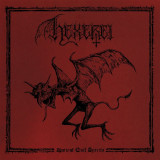
Berserk Finnish raw black metal disease Hexerei bring us their venom-soaked debut full-length abomination "Ancient Evil Spirits", a deranged aural gateway to unseen depths of madness and total hell that will reshape the listener's idea of terror and toss them into the outermost circles of insanity. Comprising of four primordial stabs of blown out and feral homicidal rawness, "Ancient Evil Spirits" overboils from the witches cauldron with the quintessence of evil like an acid-drenched spell, invoking ancient evil forces, uncontrolled hysteria, and malevolent plague-ridden rituals to torment the listener with merciless violence and abandon. Reminiscent in its malevolence and primeval cruelty to ancient black metal cults like Darkthrone, Mayhem, Cultes Des Ghoules, and Katharsis, Hexerei however push these limits further and redefine the very concept of total aural filth by working the formula into a wider canvas, with lengthier compositions, an even more perverse emphasis on primitivism, and a more unpredictable and ambitious songwriting that has unearthed truly unsettling and terrifying new manifestations of the craft.
- A1: She Loves The Way They Love Her
- A2: Misty Roses
- A3: Smokey Day
- A4: Caroline Goodbye
- A5: Though You Are Far Away
- A6: Mary Won't You Warm My Bed
- B1: Her Song
- B2: I Can't Live Without You
- B3: Let Me Come Closer To You
- B4: Say You Don't Mind
- B5: Are You Ready
- B6: I've Always Had You
- C1: Sing Your Own Song
- C2: Caroline Goodbye
- C3: I'd Like To Get To Know You Better
- C4: Though You Are Far Away
- C5: Too Much Too Soon Last Night
- C6: I Wonder If You Know What You've Begun
- D1: I Won't Let You Down
- D2: You Gave Me A Reason
- D3: I'm Coming Home
- D4: I Really Do Love You
- D5: Let Me Come Closer To You
- D6: You Really Were A Surprise
Colin Blunstone and Sundazed Music celebrate the 50th anniversary of
Colin's post Oracle opus One Year with an expanded edition! The half,
itself titled, That Same Year, gives you a deeper introspective look into
that time in his life
The album largely features Colin singing accompanied solely by his acoustic
guitar.That Same Year includes beautifully sparse demo versions of three songs
from One Year including 'Caroline Goodbye' and 'Let Me Come Closer To You'
where Colin is joined by fellow Zombie Rod Agent on piano. Three songs have
Colin joined by Zombie bassist Chris White on classical guitar. Beyond the three
familiar songs you will find Colin's familiar voice and wit come through on eleven
completely unheard compositions all penned for the One Year album; including
'Sing Your Own Song' where sings of reading about his own death in Rolling
Stone.One Year is an album that somehow manages to be both lush and sparse
at the same time and always deeply intimate. That Same Year finds a way to
bring your listening experience to a deeper level of intimacy.In addition to penning
most of the album, Colin also penned the liner notes that fill the gatefold jacket
along with unseen photos from that year. The notes go track by track through One
Year along with some background on That Same Year.
- A1: Bless This Morning Year (2020 Remaster) 06 05
- A2: Halving The Compass (2020 Remaster) 05 29
- A3: Dragonfly Across An Ancient Sky (2020 Remaster) 05 44
- A4: Vargtimme (2020 Remaster) 03 59
- B1: Coast Off (2020 Remaster) 04 55
- B2: Paper Tiger (2020 Remaster) 04 36
- B3: First Dream Called Ocean (2020 Remaster) 03 54
- B4: The Toy Garden (2020 Remaster) 04 45
- B5: Emancipation (2020 Remaster) 02 35
Repress
Originally released in 2006, Eingya by Helios aka Keith Kenniff returns in a new 2021 edition vinyl re-release, remastered by Taylor Deupree.
Beginning the album on a high with the pastoral beauty of "Bless This Morning Year," Kenniff showcases of what he does best: heartbreaking guitar and piano melodies punctuated by crumbling beats and backed by the most atmospheric synthesizer sounds this side of Eno's Apollo. The appetizing "Halving the Compass" blends subtle field recording with the kind of piano melodies so beautiful they could be compared to Virginia Astley or Harold Budd. This is followed by the album's clear highlight, "Dragonfly Across an Ancient Sky." It's an unsurpassable folk guitar piece with a decomposing percussive background and the sort of melodies that would turn evil tyrants into weeping babies. An album that could appeal as easily to fans of Nick Drake as to fans of Boards of Canada or even early AIR, this truly has something for everyone.
Raised in rural Pennsylvania, Kenniff put out Helios's 2004 debut album, Unomia, while studying percussion at Boston's Berklee College of Music. Since then, he's released six more albums as Helios, in addition to collaborating with his wife Hollie Kenniff in the shoegaze-inspired pop duo Mint Julep and composing music for films and archival use.
"A protracted sunset of an album guaranteed to see you through the longest days of summer and into the twilight of the autumn." - The Wire
"A soundtrack of molasses-sweet, midsummer sunset melancholy and pastoral mellifluence." - Tinymixtapes
Eve Adams offers solace within life's shadows. Un-numbing senses with anthems of surrender and tender-hearted tales that tingle with Californian folk-noir, her album Metal Bird takes flight with the turbulence and romance of Hollywood’s golden age, and meditates on the mysteries of love, death, insecurity and loneliness.
Like a match struck in a cobwebbed attic, Adams voice is a fiery detective, unafraid to explore the unseen; the liminal spaces between mourning and rapture, between the coldness of a corpse and the heat of cremation. Imagery of flight and the denial of gravity floats slyly through the ten songs on Metal Bird by the California-born musician and hints at the experience of being caught in purgatory, like a passenger on a plane ride from Hell to Heaven.
Combining airy folk with haunting soundscapes the album takes listeners on an auditory voyage from sonorous lullabies, to dreamy ambience, skeletal jazz, 1930s torch songs and 1940s film noir. Metal Bird has a distinct, genuine tone, with orchestral arrangements, ambient hallucinations and high fidelity vocals that are unafraid to be heard loud and clear.
For those who are hopelessly enamoured with a by-gone time, there is solace in these songs and sounds. Flickering back and forth between dread and hope, the unrelenting march towards a spiritual transformation and the realization that each of us are driven by our own dreams and as much as we want to hold it in our hands, often it is intangible. The sublime remains elusive, existing somewhere in the heart, and it sounds like Eve Adams knows this best.
- 1: Don't Fall
- 2: Intrigue In Tangiers
- 3: Monkeyland
- 4: Second Skin
- 5: Singing Rule Britannia
- 6: Pleasure And Pain
- 7: Return Of The Roughnecks
- 8: A Person Isn't Safe
- 9: In Shreds
- 10: Splitting In Two
- 11: Here Today
- 12: Thursday's Child
- 13: Paper Tigers
- 14: Return Of The Roughnecks
- 15: Less Than Human
- 16: Splitting In Two
- 17: Here Today
Celebrating The Chameleons’ 40th Anniversary, this
iconic concert is released on vinyl for the very first
time.
The Camden Palace was a special performance
recorded on the 11th of September 1984 for a satellite
TV broadcast and features Middleton’s finest on top of
their game, playing tracks taken from ‘Script of the
Bridge’ and ‘What Does Anything Mean? Basically’.
This album also includes four bonus tracks from the
Arsenal concert, which was recorded for an
independent Catalonian local TV channel in 1985.
The cover art has been exclusively designed by
Chameleons guitarist Reg Smithies, who designed all
the official Chameleons studio releases.
The Chameleons are an acknowledged influence on
future generations of indie and alternative rock bands,
including Stone Roses, The Charlatans, Smashing
Pumpkins, The Flaming Lips, The Killers, The Horrors,
The National and Interpol. Oasis main songwriter Noel
Gallagher claims The Chameleons were an early
influence on his song writing and stated in a recent
interview: “I’d forgotten how much ‘Strange Times’
meant to me. It came out in ‘86. I was 19!! I’ve been
listening to it every day since and I have to say it’s
blown my mind… again! It must have influenced my
early years as a song writer because I can hear ME in
it everywhere!!”
Double LP pressed on ‘Chameleon’ (orange / blue)
coloured vinyl. Also includes a copy of the album on
CD, previously unseen photos and poster.
Dark cineastic soundscapes meet african Jazz at times reminicent of Mulatu.
Ahmed Malek was one of the most important musicians of the Algerian scene of the 1970s. His sountrack works that were composed for various Algerian movies of the time fuse Arabic influences with jazz, psych and funk influences Original copies of his vinyl releases have been sold for enormous amounts. For this release we combined the strongest tracks from his releases with a selection of unreleased material straight from the families archive. The vinyl edition comes with a 8 page 12' size booklet, the cd version with a 16 page booklet with lot of unseen photos, an interview with the artist from 1978 and an introduction to Algerian cinema.
- A1: Dick Khoza And The Afro Pedlars - Chapita
- A2: Ensemble Of Rhythm And Art - Pelican Fantasy
- A3: Spirits Rejoice - Sugar Pie
- B1: Makhona Zonke Band- The Webb
- B2: Abacothozi - Night In Pelican
- C1: The Black Pages - There Goes
- C2: The Headquarters - Moshate
- C3: The Shyannes - Asso-Kam
- D1: Almon Memela’s Soweto - Pelican City
- D2: The Drive - I Have A Dream
‘The Afro Modern Seventies Sounds of Soweto’s First Nightclub
• Over ten years in the making, this is the first compilation from South African vinyl re-issue specialists Matsuli Music
• Ten track double gatefold album journey through jazz, funk, fusion and disco, detailing the incredible story and sounds behind the Soweto nightclub during the height of apartheid
• Uniquely South African take on the trans-Atlantic sounds of Philadelphia, Detroit and New York City
• Cover artwork by Zulu Bidi (of Batsumi fame) with unseen photographs, and liner notes by Kwanele Sosibo featuring interviews with key musicians, players and a former president of South Africa
• Audio mastered and cut for vinyl by Frank Merritt at The Carvery with heavyweight 180g vinyl pressed at Pallas in Germany
A night-time haunt in the backstreets of Soweto run by a well-known bootlegger should have been a prime zone for nefarious underworld activities. Instead, it nurtured an underground of a different kind. Soon after its opening in 1973, Club Pelican became a spot where musicians steeped in the tradition of South African jazz began to cook up experimental sounds inspired by communion, competition and the movements in funk and soul blowing in from the West. Located in an industrial park on the western edge of Orlando East, Soweto, Club Pelican was off the beaten track, among a matrix of railway and industrial infrastructure. In a different time and place, this would have been a prototypical nightclub location, except there was no local precedent to follow. This was Soweto’s first night club.
In the intervening years, this location has served to heighten the now-defunct spot’s legendary status as a singular venue, one that ruled the night in the Seventies. Initially called Lucky’s and established in 1973, the Pelican’s impact on the Soweto cultural landscape was immediate. Lorded over by a charismatic figure known as Lucky Michaels, the club became the jewel in a nondescript collection of family businesses. It boasted a diverse pool of talent in its succession of house bands and an A-list of ghetto-fabulous singers as
its cabaret stars. Its VIP section was a veritable who’s who of Soweto society and its stage, hosting a mix of the day’s pop culture infused with the creativity and individual histories of the musicians, the Pelican filled a live music vacuum.
One Night in Pelican captures the halcyon seventies period with a single nightclub embodying an indomitable spirit of its troubadour players. While schooled and rooted in “standards” and local forms, the music could take any direction, at a moment’s notice. This compilation features all the key groups and players of the time: Abacothozi, Almon Memela’s Soweto, The Black Pages, Dick Khoza and the Afro Pedlars, The Drive, Ensemble of Rhythm and Art , The Headquarters, Makhona Zonke Band, the Shyannes and Spirits Rejoice.’
- A1: I Dig Everything
- A2: You've Got A Habit Of Leaving
- A3: The London Boys
- B1: Karma Man
- B2: Conversation Piece
- B3: Shadow Man
- C1: Let Me Sleep Beside You
- C2: Hole In The Ground
- C3: Baby Loves That Way
- D1: Can't Help Thinking About Me
- D2: Silly Boy Blue
- D3: Toy (Your Turn To Drive)
- E1: Liza Jane
- E2: You've Got A Habit Of Leaving (Alternative Mix)
- E3: Baby Loves That Way (Alternative Mix)
- F1: Can't Help Thinking About Me (Alternative Mix)
- F2: I Dig Everything (Alternative Mix)
- F3: The London Boys (Alternative Version)
- G1: Silly Boy Blue (Tibet Version)
- G2: Let Me Sleep Beside You(Alternative Mix)
- G3: In The Heat Of The Morning
- G4: Conversation Piece (Alternative Mix)
- H1: Hole In The Ground (Alternative Mix)
- H2: Shadow Man (Alternative Mix)
- J1: The London Boys (Unplugged & Somewhat Slightly Electric Mix)
- J2: Karma Man (Unplugged & Somewhat Slightly Electric Mix)
- J3: Conversation Piece(Unplugged & Somewhat Slightly Electric Mix)
- K1: Shadow Man (Unplugged & Somewhat Slightly Electric Mix)
- K2: Let Me Sleep Beside You (Unplugged & Somewhat Slightly Electric Mix)
- K3: Hole In The Ground (Unplugged & Somewhat Slightly Electric Mix)
- K4: Baby Loves That Way (Unplugged & Somewhat Slightly Electric Mix)
- L1: Can't Help Thinking About Me (Unplugged & Somewhat Slightly Electric Mix)
- L2: Silly Boy Blue (Unplugged & Somewhat Slightly Electric Mix)
- L3: Toy (Your Turn To Drive) (Unplugged & Somewhat Slightly Electric Mix)
- H3: Toy (Your Turn To Drive) (Alternative Mix)
- I1: In The Heat Of The Morning (Unplugged & Somewhat Slightly Electric Mix)
- I2: I Dig Everything (Unplugged & Somewhat Slightly Electric Mix)
- I3: You've Got A Habit Of Leaving (Unplugged & Somewhat Slightly Electric Mix)
Parlophone Records/ISO Records are proud to announce TOY:BOX. The previously unreleased TOY album will be released on 7th January 2022, the day before David Bowie’s birthday. Available in six 10” vinyl versions, TOY:BOX is a special edition of the TOY album. The ‘capture the moment’ approach of the recording sessions are extended to the sleeve artwork designed by Bowie featuring a photo of him as a baby with a contemporary face. The package also contains a 16-page full-colour book featuring previously unseen photographs by Frank Ockenfels 3.
TOY was recorded following David's triumphant Glastonbury 2000 performance. Bowie entered the studio with his band, Mark Plati, Sterling Campbell, Gail Ann Dorsey, Earl Slick, Mike Garson, Holly Palmer and Emm Gryner, to record new interpretations of songs he’d first recorded from 1964-1971. David planned to record the album ‘old school’ with the band playing live, choose the best takes and then release it as soon as humanly possible in a remarkably prescient manner. Unfortunately, in 2001 the concept of the ‘surprise drop’ album release and the technology to support it were still quite a few years off, making it impossible to release TOY, as the album was now named, out to fans as instantly as David wanted. In the interim, David did what he did best; he moved on to something new, which began with a handful of new songs from the same sessions and ultimately became the album HEATHEN, released in 2002 and now acknowledged as one of his finest moments.
- A1: There Is No Time (Prelude)
- A2: The Call
- A3: Theme De Crabtree
- A4: Road Of The Lonely Ones
- A5: Loose Goose
- A6: Dirtknock
- A7: Hopprock
- A8: Riddim Chant
- B1: Sound Ancestors
- B2: One For Quartabe / Right Now
- B3: Hang Out (Phone Off) (Phone Off)
- B4: Two For 2 - For Dilla
- B5: Latino Negro
- B6: The New Normal
- B7: Chino
- B8: Duumbiyay
Now Available On Cassette Tape! Music By Madlib Arranged By Kieran Hebden. Gil Evans to Miles Davis…. Holger Czukay to the ensemble known as Can….Jean Claude Vannier to Serge Gainsbourg on Histoire de Melody Nelson. That’s the only way to explain the specificity of Four Tet and Madlib’s collaboration, in this special album that showcases a two-decade long friendship that has resulted in an album that follows Madlib’s classics like Quasimoto’s The Unseen, Madvillainy and his Pinata and Bandana albums with Freddie Gibbs. “A few months ago I completed work on an album with my friend Madlib that we’d been making for the last few years. He is always making loads of music in all sorts of styles and I was listening to some of his new beats and studio sessions when I had the idea that it would be great to hear some of these ideas made into a Madlib solo album. Not made into beats for vocalists to use but instead arranged into tracks that could all flow together in an album designed to be listened to start to finish. I put this concept to him when we were hanging out eating some nice food one day and we decided to work on this together with him sending me tracks, loops, ideas and experiments that I would arrange, edit, manipulate and combine. I was sent hundreds of pieces of music over a couple of years stretch and during that time I put together this album with all the parts that fitted with my vision.” - Kieran Hebden AKA Four Tet
February 2021. During a stay in an isolated house in the Alpes-de-Haute-Provence, I returned to four compositions Renaud Bajeux had sent me a few months prior. I had listened intently and enjoyed them very much, but in this new setting, at this very moment, they took on another dimension. For several days, I went on long walks in the surrounding nature and this album, all in half-light, became an obsession. In sync with the perfection of this moment, with this place, it began to haunt me from dawn till long past dusk. At times calming and meditative, at times wild, rugged, and maybe even dangerous, the music seemed to mirror the mountain landscape encircling me. It became evident that Seeking a Vision would be released on Fragments.
Seeking a Vision follows Renaud Bajeux’s first album, Magnetic Voices from the Unseen (Nahal Recordings, 2019), an exploration of electromagnetic fields. In this second opus, Bajeux works with the sound palette of a Serge synthesizer, combining its polymorphic sounds with field recordings of nature. The album’s four parts can be seen as a continuous mental journey through multiple layers of consciousness. Carried by whispering winds and the cracklings of a campfire, they proceed toward meditative states and obscure inner landscapes.
Seeking a Vision was recorded during an INA GRM residency. Elevation was commissioned by the INA GRM.
Renaud Bajeux is a French composer and film sound designer. His work his primarily based on field recordings and modular synthesizers. It can be located at the crossroads of electroacoustic music, noise, and ambient. Renaud Bajeux’s most recent release is a duet with Antoine Gilloire titled Underwater Soil (Superpang, 2021).
All tracks performed and composed by Renaud Bajeux. Mastered by Stephan Mathieu. Artwork by Morgan Cuinet. Layout by Romain Barbot.
Late 1980’s to early 90’s guitar pop/rock n roll band from Dunedin, New Zealand. Stephen featured David Kilgour, Alf Danielson, Geoff Hoani, and Stephen Kilroy.
Formed by David Kilgour after The Clean first split. They released an EP on Flying Nun records in 1988 as a three piece, later added another guitarist and recorded for a record that didn’t happen. Remastered, rescued and compiled for this release. New art and liner notes, insert with prev. unseen photos and fliers. Tracks from the Dumb EP, Radar of Small Dogs, as well as studio tracks from sessions towards the never-completed LP.
Interview with David Kilgour about the band coming up in the next Maggot Brain issue.
"Stephen Kilroy recently reminded me that my idea for the band was to have no aspirations, apart from making new music, and that it was a casual experiment. I’d forgotten that. I remember having a long break after the Clean first split. I wanted to keep making music in a low-key way, and with other musicians I could write and share the spotlight with. I’ve always wanted to be in someone else’s band." - David Kilgour, from the Maggot Brain interview.
Originally recorded in 1986
featuring Nate Morgan and Horace Tapscott
Finally on LP as originally intended:
Straight from the 1/2” MASTER TAPES (All Analog Cut)
With Unseen Photos from the recording session
Tip-On Sleeve
Insert with Liner Notes by Mark Weber
First official Nimbus vinyl release of this classic album. LP cut directly from the 1/2” Master Tapes, this is, without a doubt, the definitive version of “Sharps and Flats” … the sound is akin to sitting in the control room while the band recorded, very detailed and deep in presentation and articulation. One of the very best (and also very last) studio recordings that Tom Albach undertook in the USA for his Nimbus label… this album sat in the vaults for many years before a cd was issued in the early 2000’s. (Unfortunately, the Cd and subsequent versions were sourced from a dubious DAT transfer which was 4 generations removed from the master tapes (at best).) This is really the first opportunity to hear the album as it was originally intended… Featuring a tip- on sleeve with session photos and a great shot of Jesse from the original cover shoot, and an insert with a new essay by Mark Weber.
One of the Netherlands most exciting rising names, Utrecht’s Locklead is emerging into the spotlight in style. Known for serving up heavy-hitting stabs of dancefloor driven material across SlapFunk, Pleasure Zone and Dungeon Meat, he now takes things deeper and brings his surging momentum to countryman Chris Stussy’s Up The Stuss imprint for the label’s first album release.
Stepping out into fresh territories, his eight-track debut LP ‘Square One’ showcases a previously unseen side to the Dutchman, revealing a collection of lush, deep journeys coupled with crisp house and vibrant, spacey cuts along the way.
Spoken word recordings from Gregory Corso, Tina May Hall, Sam Lipsyte, Christine Schutt, Gary Lutz, Allen Ginsberg, Dawn Raffel, Jason Schwartz, Kathryn Scanlan, Scott McClanahan, & Terry Southern. About 40 years ago, in a record shop on Long Island during a weekend visit there to see my parents, i found a double-LP that looked like something i should definitely buy. It was called "BIG EGO", by the The DIAL-a-POEM POETS. On the cover was a picture of John Giorno (a great poet Ed Sanders had turned me on to) on a NYC rooftop with Philip Glass, Meredith Monk, and two kids. It cost $2. I bought it and rushed back to my parents house, where i still had my old turntable in the basement, not far from my Jimi Hendrix and Zappa Crappa posters, and my framed portrait of John Cage. My copy of Eno's "Discreet Music" was still on the turntable, having been left there years before, when i'd fled Long Island for good. I lifted it from the platter, gently slid it back into its sleeve, like a priceless religious artifact, and put Side A of the Dial-a-Poem LP on. I almost lost my mind while listening to it. The next day i went back to the same record shop looking for more DIAL-A-POEM LP's. i found two. One had a long list of names on the back, some famous, and some i'd never heard of before. I bought both LP's, and an hour later, for the first time in my life, i was exposed to the art of Laurie Anderson, whom i'd never heard of before. This was 1978. Her contribution was a piece called "Time To Go". It changed my life. Or at least, that’s how I remember it. I was just a kid, so there were a lot of moments like that, around then. Nowadays, these moments can be had in seconds, with a click of the cursor. That evening, as i sat alone by my imaginary campfire (ie; that record player in my parents basement), i promised myself that someday, somehow, i would embark upon a WORDS & MUSIC project that might move people the same way i was moved when i first heard Laurie, and Robert Wilson & Christopher Knowles, and Burroughs, and Ginsberg, and Corso, and Anne Waldman, and John Ashbery, and the great Charles Olson, and so many others. Words, for the very first time, had wielded the same power as music. And it was visceral. Just like music. It ran deep. It was a FEELING. John Giorno died in 2019, but he kept poetry alive like nobody's business. I was lucky enough to have spent some time with him in the early 1980's, when i was briefly a member of The Fugs, and often found myself surrounded by those Ginsberg called, "...the greatest minds of my generation". Ed Sanders (who'd ushered me into that scene) once told me that when he came to NYC, it was easy to go to a cafe, or to St Marks Church, and hear Burroughs, Corso, Ginsberg, and all the greats, reading their poetry. He said that even if you were just a bum on the street, you could just walk right up to them, and start a conversation. They were totally accessible, if they were in the right mood at that particular moment. So i was shocked when Sanders told me he didn't approach any of them, not even once, til he'd been going to their readings for nearly ten years. "For almost a decade, I went to every reading, every lecture, every panel discussion. But I never went near them. Never approached them. Not even once", Sanders told me. "For ten years, all I did, was listen." It took me four decades, but ... better late than never. I finally made WORDS & MUSIC, Book One.
Strut presents the 1973 Egyptian jazz classic, 'Egypt Strut' by Salah Ragab and Cairo Jazz Band. The vinyl album is released in its original Prism Music Unit artwork.
Inspired by a concert in Cairo by Randy Weston in 1967 encouraging Pan African unity, drummer Ragab, Eduard “Edu” Vizvari, a Czech jazz musician, and Hartmut Geerken of Goethe Institut vowed to create Egypt's first jazz big band. Following the Arab-Israeli war, Ragab became a Major in the Egyptian army and had unparalleled access to the military's 3000 musicians spanning Upper and Lower Egypt, along with a wide range of instruments. Part of the barracks were christened the Jazz House and, following a crash course in jazz history by Geerken, the Cairo Jazz Band was born, playing their first concert at Ewart Memorial Hall at the American University in 1969. Further inspired by Sun Ra & His Arkestra's first visit to Egypt in 1971, Ragab recorded an album for the Egyptian Ministry Of Culture a year later, entitled ‘Egyptian Jazz’, later released as 'Egypt Strut', a perfect fusion of jazz with Arabic modes with tracks referencing Islamic festivals, Egyptian landmarks and friends and family dear to Ragab. The
Wire’s Francis Gooding summarises the album as “esoteric African American Egyptianism and radically spiritualised modal jazz taken up by
Ragab as the tool for a form of mystical Egyptian nationalism – a triumphalist military jazz, angled in Ra-like fashion towards the Gods of the New Kingdom.” The vinyl album is released in its original Prism Music Unit artwork and is packaged with the original house bag designs. CD version includes extra unreleased tracks and a 24 page booklet featuring unseen photos and extensive liner notes by Francis Gooding (The Wire)
German electro producer Martin Matiske has recently breathed new life into his Blackploid alias. The project's revival continues to bear fruit with the Strange Stars EP, Matiske's third Blackploid release of 2021 and second for Central Processing Unit after issuing March's Cosmic Traveler EP through the Sheffield label.
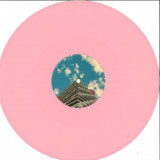
Blackploid's two CPU drops have more in common than just stargazing titles. Those who enjoyed Cosmic Traveler will find plenty to like again in these four tracks, with Matiske serving up another quartet of snappy machine-funk joints this time around. However, while there is certainly a throughline between Cosmic Traveler and Strange Stars, this EP also finds Blackploid pushing the envelope at points by taking risks with his synth tones which thrill and enliven the record.
In keeping with the cosmic theme of Blackploid's recent output, Strange Stars kicks off with 'Star Patrol'. While this opening cut is full of the same needle-gun basslines and dinky synths that characterised Cosmic Traveler, the drum programming eschews the broken beats favoured by many in the scene for a straight house/techno snap. It makes for a very groovy jam, one with Drexciya, Computer World-era Kraftwerk and a pinch of Space Dimension Controller in its mix.
Indeed, the only track on Strange Stars which skips along on a broken beat is second entry 'The Signal'. 'The Signal' also features some of Blackploid's most impressive electronics programming to date, announcing itself with a brilliantly unusual synth that sounds like an old video game unit which has just gained sentience. When this alien tone is combined with another precision-engineered bassline the track invokes the grizzly bangers of the L.I.E.S. label, though the keyboard stabs which enter periodically also hint to the funkier electro of, say, Egyptian Lover.
'The Unseen', the first B-side of Strange Stars, finds Blackploid bringing together many of the things which made the two previous tunes such standouts. A steady four-on-the-floor and a slightly haunted feel to the synth choices casts back to 'Star Patrol', but much like 'The Signal' this joint also features some rather weird tones which are a hair's breadth away from machine malfunction. It's a feeling which runs through to closing cut 'Light Corridor', a number where melodies and anti-melodies zip around an array of gurgling electronic cells.
Martin Matiske's fine run of Blackploid EPs continues with the intergalactic electro stylings of Strange Stars.
RIYL: Drexciya, Cardopusher, Legowelt, Beau Wanzer, Jensen Interceptor
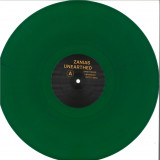
With her second full-length album, Zanias condenses her post-punk, techno and italo influences into a collection of simultaneously brooding and uplifting pop songs. ‘Unearthed’ explores the multiplicities of human connections, written at a time when connectedness was a resource more scarce than ever before. Field recordings from nature, vocal samples and an array of acoustic instruments are manipulated within a structure of catchy melodic synth maneuvers and driving rhythms, accompanied by her familiar and powerful voice conveying personal musings on hopeless desires and stoic acceptance. ‘Unearthed’ seeks the light and finds it within the exquisite pain of reckoning loneliness.
Green Gold Vnyl
With her second full-length album, Zanias condenses her post-punk, techno and italo influences into a collection of simultaneously brooding and uplifting pop songs. ‘Unearthed’ explores the multiplicities of human connections, written at a time when connectedness was a resource more scarce than ever before. Field recordings from nature, vocal samples and an array of acoustic instruments are manipulated within a structure of catchy melodic synth maneuvers and driving rhythms, accompanied by her familiar and powerful voice conveying personal musings on hopeless desires and stoic acceptance. ‘Unearthed’ seeks the light and finds it within the exquisite pain of reckoning loneliness.
Clear Gold Vnyl
With her second full-length album, Zanias condenses her post-punk, techno and italo influences into a collection of simultaneously brooding and uplifting pop songs. ‘Unearthed’ explores the multiplicities of human connections, written at a time when connectedness was a resource more scarce than ever before. Field recordings from nature, vocal samples and an array of acoustic instruments are manipulated within a structure of catchy melodic synth maneuvers and driving rhythms, accompanied by her familiar and powerful voice conveying personal musings on hopeless desires and stoic acceptance. ‘Unearthed’ seeks the light and finds it within the exquisite pain of reckoning loneliness.