Search:the used

Styles
All
BORGHESIA - RESISTANCE (TAPE)

Matrix Music Arhiv (MMA) are proud to announce a re-issue of the highly sought-after album 'Resistance' by the seminal Yugoslavian electronic rock band Borghesia, originally released in 1989 on Play It Again Sam/PIAS (Europe), Wax Trax (USA) and Jugoton (former Yugoslavia). Available on 2Lp, 2CD & 1MC (MC original album only). The re-issue features a carefully remastered edition along with the exclusive bonus live album "Dal Vivo A El Paso", recorded in December 1988 during their performance in Torino, Italy, on one of their European tours. This recording features very different, raw and at times 'dubbed up' versions of their early tracks such as 'Naked, Uniformed, Dead', Am I? and Him (On). The historical perfectly captures the atmosphere and energy of their live appearances at the time. Borghesia (Italian for 'bourgeoisie'), who were formed in Ljubljana (Slovenia) in 1982, had always considered its art to be far broader than just sonic. Borghesia's transgressive, transdisciplinary alloy of film expression, distinctively physical performative practices, usage of new technology and conveniently abrasive EBM (electronic body music) musical production hasn't only been ground-breaking in terms of the holistic, visual/sonic presence of an art collective, but had a rather decisive influence on the general aesthetics of the immensely important Yugoslav subcultural landscape of the 1980s. Borghesia was one of the first bands from the East of the Iron Curtain who used the VHS video medium to distribute their art and was also one of few projects from socialist Yugoslavia to successfully penetrate the curtain itself, reaching international audiences. A series of their releases in the fruitful period between the years 1987 and 1991, including the Resistance album itself, was released by the legendary Belgian label Play It Again Sam (PIAS). The band dissolved in the mid-1990s and then continued their work in 2014. In line with Borghesia's unique social engagement, progressiveness and political criticism, Resistance is one of their most powerful statements. It's the ultimate fight the power manifesto, which makes punk and hip-hop albums of the time sound like children's songs. This is not music for nodding your head to; it's tactical broadcast for the nocturnal resistance to this very day. Borghesia didn't address control only - they sampled the political top, the secret police and explicitly connected authority with dominance. The production of the album isn't clean or polished. On the contrary - Resistance sounds like it was created in a bunker, using stolen military equipment and synthesisers. Borghesia's genius lies in their understanding that the relentless, mechanical EBM beat was the sound of the State - and by hijacking it, turning the system's own rhythm against itself they created the most powerful form of sonic insurgency. And since history repeats itself while the little man learns slowly, the re-release of 'Resistance' comes at the right time. The dark clouds of violence are already looming over Europe, they've never really left the Middle East, and the levers of power and capital ever so louder, not even covertly at all incite: war, war, war! In these times the only appropriate answer is: revolt, rebel, Resistance!

pre-order now21.08.2026

expected to be published on 21.08.2026

16,77 €
BORGHESIA - RESISTANCE LP 2x12"
  • 1: THEME ONE (RESISTANCE MIX)
  • 1: 2MESSAGE
  • 1: 3IF
  • 1: 4KONFLIKT (CONFLICT)
  • 1: 5OCTOBER
  • 1: 6RUMOURS
  • 1: 7YOUNG PRISONERS
  • 1: 8DISCIPLINE
  • 1: 9MALI OVEK (THE LITTLE MAN)
  • 1: 0PIAS
  • 1: POLICE HOUR
  • 1: 2MORE RESISTANCE
  • 2: 1HUNTERS (LOVCI)
  • 2: AM I?
  • 2: 3SENTENCED TO DEATH (NA SMRTNO KAZEN)
  • 2: 4WHO TURNED OFF THE LIGHT? (KDO JE UGASNIL LU?)
  • 2: 5HIM (ON)
  • 2: 6NAKED LUNCH (PASTO NUDO)
  • 2: 7SO YOUNG (TAKO MLADI)
  • 2: 8RUGGED CITY (OGOLELO MESTO)
  • 2: 9MUD (BLATO)
  • 2: 10NAKED, UNIFORMED, DEAD (GOLI, UNIFORMIRANI, MRTVI)
also available

BLACK VINYL 2LP[28,78 €]

Cassette[16,77 €]


Matrix Music Arhiv (MMA) are proud to announce a re-issue of the highly sought-after album 'Resistance' by the seminal Yugoslavian electronic rock band Borghesia, originally released in 1989 on Play It Again Sam/PIAS (Europe), Wax Trax (USA) and Jugoton (former Yugoslavia). Available on 2Lp, 2CD & 1MC (MC original album only). The re-issue features a carefully remastered edition along with the exclusive bonus live album "Dal Vivo A El Paso", recorded in December 1988 during their performance in Torino, Italy, on one of their European tours. This recording features very different, raw and at times 'dubbed up' versions of their early tracks such as 'Naked, Uniformed, Dead', Am I? and Him (On). The historical perfectly captures the atmosphere and energy of their live appearances at the time. Borghesia (Italian for 'bourgeoisie'), who were formed in Ljubljana (Slovenia) in 1982, had always considered its art to be far broader than just sonic. Borghesia's transgressive, transdisciplinary alloy of film expression, distinctively physical performative practices, usage of new technology and conveniently abrasive EBM (electronic body music) musical production hasn't only been ground-breaking in terms of the holistic, visual/sonic presence of an art collective, but had a rather decisive influence on the general aesthetics of the immensely important Yugoslav subcultural landscape of the 1980s. Borghesia was one of the first bands from the East of the Iron Curtain who used the VHS video medium to distribute their art and was also one of few projects from socialist Yugoslavia to successfully penetrate the curtain itself, reaching international audiences. A series of their releases in the fruitful period between the years 1987 and 1991, including the Resistance album itself, was released by the legendary Belgian label Play It Again Sam (PIAS). The band dissolved in the mid-1990s and then continued their work in 2014. In line with Borghesia's unique social engagement, progressiveness and political criticism, Resistance is one of their most powerful statements. It's the ultimate fight the power manifesto, which makes punk and hip-hop albums of the time sound like children's songs. This is not music for nodding your head to; it's tactical broadcast for the nocturnal resistance to this very day. Borghesia didn't address control only - they sampled the political top, the secret police and explicitly connected authority with dominance. The production of the album isn't clean or polished. On the contrary - Resistance sounds like it was created in a bunker, using stolen military equipment and synthesisers. Borghesia's genius lies in their understanding that the relentless, mechanical EBM beat was the sound of the State - and by hijacking it, turning the system's own rhythm against itself they created the most powerful form of sonic insurgency. And since history repeats itself while the little man learns slowly, the re-release of 'Resistance' comes at the right time. The dark clouds of violence are already looming over Europe, they've never really left the Middle East, and the levers of power and capital ever so louder, not even covertly at all incite: war, war, war! In these times the only appropriate answer is: revolt, rebel, Resistance!

pre-order now21.08.2026

expected to be published on 21.08.2026

30,88 €
BORGHESIA - RESISTANCE LP 2x12"

Matrix Music Arhiv (MMA) are proud to announce a re-issue of the highly sought-after album 'Resistance' by the seminal Yugoslavian electronic rock band Borghesia, originally released in 1989 on Play It Again Sam/PIAS (Europe), Wax Trax (USA) and Jugoton (former Yugoslavia). Available on 2Lp, 2CD & 1MC (MC original album only). The re-issue features a carefully remastered edition along with the exclusive bonus live album "Dal Vivo A El Paso", recorded in December 1988 during their performance in Torino, Italy, on one of their European tours. This recording features very different, raw and at times 'dubbed up' versions of their early tracks such as 'Naked, Uniformed, Dead', Am I? and Him (On). The historical perfectly captures the atmosphere and energy of their live appearances at the time. Borghesia (Italian for 'bourgeoisie'), who were formed in Ljubljana (Slovenia) in 1982, had always considered its art to be far broader than just sonic. Borghesia's transgressive, transdisciplinary alloy of film expression, distinctively physical performative practices, usage of new technology and conveniently abrasive EBM (electronic body music) musical production hasn't only been ground-breaking in terms of the holistic, visual/sonic presence of an art collective, but had a rather decisive influence on the general aesthetics of the immensely important Yugoslav subcultural landscape of the 1980s. Borghesia was one of the first bands from the East of the Iron Curtain who used the VHS video medium to distribute their art and was also one of few projects from socialist Yugoslavia to successfully penetrate the curtain itself, reaching international audiences. A series of their releases in the fruitful period between the years 1987 and 1991, including the Resistance album itself, was released by the legendary Belgian label Play It Again Sam (PIAS). The band dissolved in the mid-1990s and then continued their work in 2014. In line with Borghesia's unique social engagement, progressiveness and political criticism, Resistance is one of their most powerful statements. It's the ultimate fight the power manifesto, which makes punk and hip-hop albums of the time sound like children's songs. This is not music for nodding your head to; it's tactical broadcast for the nocturnal resistance to this very day. Borghesia didn't address control only - they sampled the political top, the secret police and explicitly connected authority with dominance. The production of the album isn't clean or polished. On the contrary - Resistance sounds like it was created in a bunker, using stolen military equipment and synthesisers. Borghesia's genius lies in their understanding that the relentless, mechanical EBM beat was the sound of the State - and by hijacking it, turning the system's own rhythm against itself they created the most powerful form of sonic insurgency. And since history repeats itself while the little man learns slowly, the re-release of 'Resistance' comes at the right time. The dark clouds of violence are already looming over Europe, they've never really left the Middle East, and the levers of power and capital ever so louder, not even covertly at all incite: war, war, war! In these times the only appropriate answer is: revolt, rebel, Resistance!

pre-order now21.08.2026

expected to be published on 21.08.2026

28,78 €
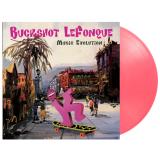
Buckshot Lefonque - Music Evolution LP
  • A1: Here We Go Again
  • A2: Music Evolution
  • A3: Wasineveritis
  • A4: James Brown (Part 1 & 2)
  • A5: Another Day
  • A6: Try These On
  • A7: A Buckshot Rebuttal
  • A8: My Way (Doin' It)
  • A9: Better Than I Am
  • B1: Jungle Grove
  • B2: Weary With Toil
  • B3: Black Monday
  • B4: Phoenix
  • B5: Samba Hop
  • B6: And We Out
  • B7: One Block Past It

Music Evolution is the second and last album by the all-star jazz/hip-hop/R&B fusion project Buckshot LeFonque. Led by none other than jazz saxophonist Branford Marsalis and DJ Premier, the project was named after Buckshot La Funke, a one-time pseudonym used by alto sax legend Cannonball Adderley for contractual reasons.

The album features guest performances by rapper Guru, Matrix actor Laurence Fishburne, and the highly regarded session musician David Sanborn. While his brother Wynton holds conservative views regarding jazz, Branford is quite the opposite. On Music Evolution, he effortlessly embraces and fuses hip-hop, R&B, and rock into a sonic explosion infused with the joy of playing. The track "Another Day", featuring the soulful voice of Frank McComb, was especially popular in the Netherlands, reaching number 4 in the Dutch singles chart.

Music Evolution is available as a limited edition of 1000 copies on pink vinyl and includes an insert.

pre-order now21.08.2026

expected to be published on 21.08.2026

31,72 €
Nick Mitchell Maiato - Náquera LP
  • 1: Two Right Feet
  • 2: Critical Mass
  • 3: Los Serranos
  • 4: Riki Rachtman
  • 5: The Angle
  • 6: Flamebait
  • 7: Crosshairs
  • 8: The First P.o.W

Coming in hazy and heady, an end-of-summer cosmic jammer from Nick Mitchell Maiato, full of big choruses, blazing guitars, country honk, and deep grooves—replete with funky horn section. It’s been four years since Poolside, the last release by One Eleven Heavy (Mitchell Maiato’s sometimes-band with James “Wooden Wand” Toth), and that time has clearly been used for some serious woodshedding on the auteur’s part. On Náquera, named after the Spanish pueblo in which he resides, Mitchell Maiato’s songwriting, vocals, and guitar playing all come into sharp focus as he mans the wheel on an ocean drive of interwoven electric guitar dueling, funky multi-movement jams, bittersweet odes to uncomplicatedness, and rolling rockers. Featuring an effortlessly graceful preface by Macon, GA piano prodigy Gavin Rushing, “Riki Rachtman” is a cosmic americana ballad examining the state of heavy metal in contemporary pop culture from the perspective of a disgruntled first-person narrator. “Critical Mass” is a soaring, two-chord ode to dropping out, with an opening organ salvo by Grateful Dead midi-tech Bob Bralove, a monster, key-changing guitar duel at its core, and a fat, snaking bass groove by Otto Wilberg (Mitchell Maiato’s former colleague in Desmadrados Soldados De Ventura).“Flamebait” is one of the record’s big surprises with its almost Lennon-esque rock-and soul slab of technocracy bashing, its woozy, three-part horn section, and its improvised, sun-scorched guitar solo slap-dab in the middle.And, on “The Angle,” we get an homage to rock-and-roll pool hustler narratives framed within an expansive country-funk jam that nods to Mitchell-Maiato’s love of Parliament and Grateful Dead in equal measure.

pre-order now21.08.2026

expected to be published on 21.08.2026

22,06 €
aisie - Black Fire Dream

aisie

Black Fire Dream

12inchS33033
Studio 33
17.08.2026

aisie returns with a transformative descent into the darkness, assembled entirely from snippets of obscure educational science shows, ghost station radio transmissions, vinyl record detritus and blown-out microscopic field recordings.

Twisted into mystifyingly revelatory aural documentations of moments that never were, it unfolds like a dream sculpted out of shadows. Enchanting, enigmatic and elusive like the origins of the source material used for its creation.

pre-order now17.08.2026

expected to be published on 17.08.2026

19,12 €
Envee - Wyszymory LP

Envee

Wyszymory LP

12inchUKM133LTD
U Know Me Records
14.08.2026

There are two version of the LP - limited to 100 numbered copies with transparent wax and classic black wax edition. Both 180g with special OBI strip.

Maciej Envee Goliński is an artist who probably needs no introduction. He has been working with U Know Me practically since the label's inception. His last album ("Time & Light") made a huge impact worldwide, but we had to wait eight years for the next vinyl release. In the meantime, Maciej has certainly been busy – he has released numerous club singles under several aliases, and has helped record and mix numerous albums from the world of jazz, soul, and electronica. "Wyszymory" is a carefully crafted concept album, inspired by our roots. "Wyszymory" is an album on which every open-minded listener will find something that has been playing in their soul for a long time...


"Of all things visible and invisible, my life is most filled with music and a fascination with sound. It matters not whether they are natural or artificial, isolated or resonating through space. Sounds that evoke
memories, as well as those entirely new. Some of them have resonated unchanged for thousands of years. Certain resonances and rhythms have remained unaltered for generations so distant that they have left no other trace in human civilization.

This bond with our ancestors truly fascinates me. Ever since I realized it, I have become more attuned to inspiration. Listening to traditional and classical music, I kept finding new anchor points. I was constantly surprised by new invitations to ponder what connects – or divides – the pulse of our region’s traditional music with the rhythms of Africa, the tribes of the vast East, or the frozen North. My great authority, Tomasz Stańko, in interviews conducted by Tomek Michałowski, used beautiful parables of love and creativity to bring me closer to the ­Cro-Magnon cave artists. The Icelandic literary magician Andri Snær ­Magnason, in his book On Time and Water, captivated me with the fascinating observation that through emotional contact, words, ideas, or memory, we reach back and forward two or even three generations – spanning a period of about 270 years. Then there is Sam Kowalski, who with his wonderful obereks played on the gitalele, took me on a hypnotic journey, from which one returns with a deep admiration for the art of musical storytelling, passed down from generation to generation. Finally, my own children surprise me with talents, behaviors, and increasingly distinct features of those generations that now dwell only in my hazy memory and on old photographs.

I wanted the protagonists of this album to be the very phenomena that modern humans share with their ancestors, ­regardless of the level of civilization. Most vital among them is the relationship between humans, nature, and their own emotions. Wyszymory has nothing to do with an academic study, though I did delve into Slavic mythology, archaeology, and history in search of inspiration. Nor is it an album of traditional music, even if such music is present thanks to wonderful instrumentalists. I managed to invite artists who cross boundaries daily, working not only with Polish music but also with Hindu and African traditions, and even jazz, with its long history of blending influences. Naturally, the album became a kind of sonic comic book, where individual scenes and stories – the sounds, pulsations, and ideas on how to use them – came to me over time, often under unique circumstances and in inspiring contexts."
Envee

pre-order now14.08.2026

expected to be published on 14.08.2026

34,41 €
Jim Sharp - NUYORICAN FUNK / BÉ LA SOUL (7")

Jim Sharp channels his Latino alter ego Jaime Filoso on a pair of spicy tracks by musical neighbours. The A side uses a Salsa break used by a naughty rabbit but keeps the original vocals intact. The flip is a chilled out Samba number with a famous D&B guitar lick.

out of Stock

Order now and we will order the item for you at our supplier.

Last In: 29 days ago
14,71 €
Wiregrass Sacred Harp Singers - Songs From The B. F. White Sacred Harp (Tape)
  • 01: The Happy Sailor
  • 02: Blooming Youth
  • 03: Weeping Pilgrim
  • 04: There We Our Jesus Shall Adore
  • 05: Bound for Canaan
  • 06: Cuba
  • 07: Firm Foundation
  • 08: Florida
  • 09: Desire For Piety
  • 10: Ragan
  • 11: Struggle On
  • 12: Ninety-Fifth Psalm
  • 13: Fallen by the Way
  • 14: Happy Home
  • 15: Coronation
  • 16: The Dying Boy
  • 17: The Fathers Boundless Love
  • 18: The Christians Flight
  • 19: Give Me Just a Little More Time

Recorded April 17 and 18, 1993, at the Union Grove Baptist Church, Ozark, Alabama.

The Wiregrass Singers' Dewey Williams began learning the shape-note tradition in his childhood. He studied under Judge Jackson, who authored the landmark 1934 hymnbook The Colored Sacred Harp. In 1971, Williams formally organized The Wiregrass Sacred Harp Singers to preserve the music full-time. This unified troupe began touring nationally and leading workshops, which ultimately launched them onto stages at the Smithsonian and Newport folk festivals up until Williams' passing in 1995 when the group disbanded. The African-American Sacred Harp tradition in the Wiregrass region has steeply declined since the start of the 21st century, due to an aging generation of singers, and today it is largely sustained through archival preservation and occasional multi-book singing meetups.

This raw recording, made at the Union Grove Baptist Church, Ozark in mid-April 1993 finds the group singing from B. F. White’s The Sacred Harp (1844), which together with his brother-in-law William Walker’s Southern Harmony (1835) formed the musical backbone of generations of Southern music and Southern musical styles.

"On almost any Sunday between the months of March and October, the season most conducive to travel and outdoor dinner-on-the- grounds, Sacred Harp devotés join with fellow songsters at the County Line Church in Slocomb, or the Mount Sinai Church in Henry County, or the Union Grove Baptist Church in Dale County, or at any one of a dozen or so churches in the southeast Alabama counties of Barbour, Coffee, Dale, Geneva, Houston and Pike, to form the square and sing fa-sol-la. Approximately fifteen African-American Sacred Harp singings occur annually in the Wiregrass region of southeast Alabama. A singing tradition characteristically associated with white culture in the Deep South, southeast Alabama has enjoyed a vibrant African-American Sacred Harp tradition for well over a century.

On a day of a typical African-American Sacred Harp Singing, the participants arrive casually in the late morning, seat themselves in the square according to voice part, and begin to sing. A dinner break occurs in the early afternoon, and the singers enjoy a covered-dish "dinner-on-the-grounds" (or in the church basement) prepared by the women. The most intense and emotional singing typically occurs after the dinner break. Each singer takes a turn leading the song of his choice. He walks to the middle of the square, calls out the song's page number and waits for the designated tuner to key the song. Singers are discouraged by the other singers from repeating a song that has already been sung, or "used." This proscription is often dispensed with, however, if the singer is particularly young, particularly old, or if the song has special significance to the individual song leader (perhaps the favorite song of a recently deceased relative).

Every singer is given an opportunity to lead a song. Often, older or more infirm singers will request younger singers to lead their songs for them. The motions of the song leaders are highly stylistic and often emotional. Young children are taught in singing school to mark time with their right arm while holding the book in their left. Typically, a singer will stand in place at the center of the square while leading the singing of the notes. When he begins to lead the lyrics portion of the song, he will often begin to "walk time," rhythmically pacing from one side of the square to the other, being careful never to turn his back on the tenor section. This "walking time" is unique to the African-American tradition. As a singer grows more confident he develops his own distinctive leading style. During fuguing songs in particular, he may gesture to each section of the square as its part joins in. Skilled song leaders often elicit applause or other emotional responses from the group. Occasionally a singer may fall into a state of spiritual ecstasy and "get happy." The episode might include a personal testimonial followed by a repeat of the last verse or refrain from the previous song. The singings break up around 5 P.M."
—Henry Willett, 1997 credits

pre-order now07.08.2026

expected to be published on 07.08.2026

16,77 €
Prisoner - Prisoner

Prisoner

Prisoner

12inchWKC7585501
Wicked Cool Records
07.08.2026
  • 1: La femme qui s'était faite toute seule
  • 2: Jeu de main, jeu de vilain
  • 3: Je ne retiendrai que toi
  • 4: Borne pour obéir
  • 5: Am I an Al?
  • 6: Ton histoire n'est pas mon histoire
  • 7: Il nous faudrait une bonne guerre
  • 8: L'enfant qui est en moi parle
  • 9: Le trouble fête
  • 10: Le paradis perdu
  • 11: Le village olympique
  • 12: Le retour de l'homme qui valait mieux
  • 13: Raumpatrouille
  • 14: Les peine à jouir

The self-titled debut from French outfit PRISONER arrives as a raw, hypnotic burst of modern garage rock—less a traditional song-based album and more a mood piece built from repetition, texture, and atmosphere. Released on Wicked Cool Records, the record leans into a stripped-down philosophy: riffs first, everything else second. Unlike many garage releases, Prisoner is largely instrumental, with vocals used sparingly— often as distant, almost incidental elements rather than the focal point. This gives the album a cinematic, drifting quality. Tracks like “Je ne retiendrai que toi” and “Il nous faudrait une bonne guerre” feel less like songs and more like evolving soundscapes, driven by cyclical guitar figures, motorik rhythms, and a persistent, almost trance-like momentum. The result is hypnotic rather than explosive: music that pulls you inward instead of shouting at you

pre-order now07.08.2026

expected to be published on 07.08.2026

26,47 €
JANE WEAVER - SEVEN DAY SMILE

JANE WEAVER

SEVEN DAY SMILE

12inchFIRELP794
Fire Records
07.08.2026
 
7

Erstmals seit der ursprünglichen Veröffentlichung zurück, und nun auch endlich auf Vinyl erhältlich! Janes zweites Album aus dem Jahr 2006 - eigentlich eine Zusammenstellung von Songs und Aufnahmen, die noch vor ihrem Debüt entstanden - ist eine augenzwinkernde Sammlung moderner Alltagsdramen. Es bietet ein breites Spektrum an schwebenden Dreampop-Stücken, die sich auf bittersüße Geschichten aus dem Leben in kleinen Mietwohnungen konzentrieren und eine wunderbare Balance zwischen atmosphärischem Americana und hauchzartem New Folk halten. Das unter Mitwirkung von Doves und Andy Votel entstandene Werk ist ein Downtempo-Spiegelbild der Post-Britpop-Ära des Nordens, geprägt von schwungvollen Rhythmen und lebensnahen Beobachtungen. ,Seven Day Smile" vereint Sessions für das unveröffentlichte ,Supersister"-Album mit eigenen Heimaufnahmen und bleibt so eine zutiefst persönliche Songsammlung.

pre-order now07.08.2026

expected to be published on 07.08.2026

25,63 €
Candi Staton - Back To My Roots (LP + 7")

Soul Music legend Candi Staton returns to her down-home Alabama roots on her 32nd album, Back to My Roots. The twelve-track Americana set features an array of Staton-penned originals and some well-chosen covers.

"These songs represent my roots," Staton adds as she reflects on her many trials and triumphs. "Even the new songs on some level represent something I've experienced and that's what real soul music is about." Back to My Roots was produced by Staton with her second eldest son, Marcus Williams, a professional drummer who has toured with the likes of Peabo Bryson, Isaac Hayes, and Tyler Perry. They brought in Mark Nevers of Lambchop fame, who produced three of Staton’s prior Americana albums for Honest Jon’s and Thirty Tigers, to sweeten certain tracks. “Some of the first songs I ever heard were songs like `Peace in the Valley’ and `It’s Gonna Rain,’” says Staton. “The new songs or cover songs are tracks that remind me of that era when I was growing up as a child and evolving as a young woman. That’s why I named the album Back to My Roots because I’m going back to the roots that made me who I am.”

Staton received the Americana Music Association UK’s highest honour, the International Lifetime Achievement Award, at the UK Americana Music Awards ceremony at Hackney Church in London last year for her southern soul work that stretches from her 1969 Muscle Shoals hits to her more recent collaborations with the likes of Americana kings Jason Isbell and John Paul White.
The album opens with a mid-tempo Bonnie Raitt-styled contemporary blues “I Missed the Target Again” that finds Harry Connick Jr.’s longtime guitarist Jonathan DuBose Jr. (aka the Prophesying Guitarist) showing off his skills that set the tone for the song and the album.

Staton’s older sister, Maggie Staton Peebles (who alongside Staton was a member of the Jewel Gospel Trio in the 1950s), joins her for two duets. The first, “It’s Gonna Rain,” features just a drum, steel guitar and vocals. “My mother used to sing that song to us all the time when I was a child,” Staton recalls. “It’s a really soulful kind of song I wanted to revisit.” They then take turns leading Thomas Dorsey 1939 gem “There Will Be Peace in the Valley” that Elvis Presley popularized in the 1950s.

“Hang on in There” is a new, mid-tempo song that has an old school gospel flavour and features vocals from veteran bluesman, Larry McCray.
While in Europe in 2023 for her farewell concert tour that took her to the Glastonbury Festival and Love Supreme, Staton and her British band, PUSH, went into a London studio to record a new version of The Rolling Stones’ 1972 gem, “Shine A Light.” “I love the way that came out,” Staton says. “We put a big choir on it and put our own twist on it.”
From there, Staton revives another Thomas Dorsey classic, “The Lord Will Make a Way Somehow,” with a bluesy vibe. When Al Green started recording gospel in the early 1980s, he re-introduced this song into the culture.

“God’s Gonna Use Me Anyway” is a new mid-tempo blues with subtle Caribbean influences.

The mood takes a turn on “1963.” It’s a poignant, spoken-word reflection on September 15, 1963, when four black girls were killed in the Birmingham Church bombing. “I was in the city that day and I remember the chaos and horror after the bombing,” Staton recalls. “Just thinking of how racism and hatred caused those men to kill those girls was so emotional for me that I could only do it in one take.”

It's a perfect segue into "Reach Down and Touch Heaven," a haunting, plea for divine intervention into the affairs of mankind. "That's straight Baptist," she says. "I used to be a church pianist back in the 1960s. I've never played piano on one of my records before so that's a unique song for me because I’m finally playing on one of my records. The message of that song is about the homeless. It came to me when a homeless person on the street asked me for $5. When God touches your heart to help somebody else that’s heaven to God’s hears. So, when we reach into our purse or wallet to help someone, we’re touching heaven."

Staton offers love as an antidote to hate on the bouncy, Motown-styled, “Love Breakthrough.”

Her publicist brought Aaron Frazer & the Flying Stars of Brooklyn NY’s 2017 cut “My God Has a Telephone” to Staton’s attention. She shifts the track from a retro 1960s groove to more of a 1980s Malaco Records arrangement, a subtle but distinct variation. Staton brought in her longtime friend and STAX Records legend, William Bell (“I Forgot to Be Your Lover” and “Trying to Love Two”), to add raspy seasoning to the track.

The album closes with the wistful, “In God’s Hands We Rest Untroubled,” that was originally written and recorded by the late country star, Lari White, who died in 2017 at the age of 52. “Lari sent me that song to consider at least ten years ago and I always loved it,” Staton says. “The record label didn’t want it on the album or something, so I just held it.”
Staton says, “I grew up hearing a lot of these old songs when they were new songs. I toured with the Jewel Gospel Trio in the 1950s and we got to know people like Mahalia Jackson, Sam Cooke and others who sang these types of songs. So, I’m sort of paying tribute to them and the influence they had on me by refreshing these songs and making new songs in the old style.”’

pre-order now31.07.2026

expected to be published on 31.07.2026

29,20 €
Magyar Posse - Random Avenger
  • 1: Whirlpool Of Terror And Tension
  • 2: European Lover / Random Avenger
  • 3: Sudden Death
  • 4: One By One
  • 5: Popzag
  • 6: Black Procession
  • 7: Intercontinental Hustle
also available

Green Vinyl[26,47 €]


Magyar Posse’s third album Random Avenger out on vinyl for the first time ever in July via Svart Records Looking back, it was the golden age of Magyar Posse. The album Kings of Time had received a tremendous response from both critics and music lovers. The band was touring intensely in Finland and abroad. By now, the band was a well-oiled machine, ready to capture the successor to their celebrated second album. The band decided to follow a different path compared to the creation of Kings of Time: they would record their third album alongside the well-known, slightly eccentric engineer and producer Jani Viitanen. The recognizable Magyar Posse style was present in the pieces of Random Avenger, but something was slightly different. The new music was more rhythm-based, more riff-based and in places more joyous than the dynamic minor key avalanche of Kings of Time. Consciously or unconsciously, the band members saw that they had travelled the Slavic melancholy road as far as possible with the previous album. The success of Kings of Time felt like a positive push, not an extra pressure on their shoulders. It was only natural to strike again while the iron was hot. Many of the pieces had been already developed by the time Kings of Time was released, which eased the production of Random Avenger. After the meticulous but relatively swift mixing and mastering process, the band members were satisfied with the result. The only component that made some of them blush was the cover art – graphic designer Tom Backström had glaringly used photos of empty stages in forgotten community centres and the like. The beauty or the ugliness is once again in the eye of the beholder. Right after its release, Random Avenger got a very positive response, but not as overwhelming as Kings of Time – which was to be expected, as the previous Magyar Posse album had probably been the most universally praised Finnish album of the whole decade. Mikko Elo, musician / journalist, Pori, Finland, March 1st 2026

pre-order now31.07.2026

expected to be published on 31.07.2026

25,63 €
Magyar Posse - Random Avenger

Magyar Posse

Random Avenger

12inchSRE711LPB1
Svart Records
31.07.2026
  • 1: Whirlpool Of Terror And Tension
  • 2: European Lover / Random Avenger
  • 3: Sudden Death
  • 4: One By One
  • 5: Popzag
  • 6: Black Procession
  • 7: Intercontinental Hustle
also available

Black Vinyl[25,63 €]


Magyar Posse’s third album Random Avenger out on vinyl for the first time ever in July via Svart Records Looking back, it was the golden age of Magyar Posse. The album Kings of Time had received a tremendous response from both critics and music lovers. The band was touring intensely in Finland and abroad. By now, the band was a well-oiled machine, ready to capture the successor to their celebrated second album. The band decided to follow a different path compared to the creation of Kings of Time: they would record their third album alongside the well-known, slightly eccentric engineer and producer Jani Viitanen. The recognizable Magyar Posse style was present in the pieces of Random Avenger, but something was slightly different. The new music was more rhythm-based, more riff-based and in places more joyous than the dynamic minor key avalanche of Kings of Time. Consciously or unconsciously, the band members saw that they had travelled the Slavic melancholy road as far as possible with the previous album. The success of Kings of Time felt like a positive push, not an extra pressure on their shoulders. It was only natural to strike again while the iron was hot. Many of the pieces had been already developed by the time Kings of Time was released, which eased the production of Random Avenger. After the meticulous but relatively swift mixing and mastering process, the band members were satisfied with the result. The only component that made some of them blush was the cover art – graphic designer Tom Backström had glaringly used photos of empty stages in forgotten community centres and the like. The beauty or the ugliness is once again in the eye of the beholder. Right after its release, Random Avenger got a very positive response, but not as overwhelming as Kings of Time – which was to be expected, as the previous Magyar Posse album had probably been the most universally praised Finnish album of the whole decade. Mikko Elo, musician / journalist, Pori, Finland, March 1st 2026

pre-order now31.07.2026

expected to be published on 31.07.2026

26,47 €
Awa Ly - Five and a feather LP
  • A1: Storyteller
  • A2: Let You Down
  • A3: Let Me Love
  • A4: Help You Out
  • A5: Here
  • A6: Friendship
  • B1: Sunflowers
  • B2: You Will Be Mine
  • B3: Stranger
  • B4: Wide Open
  • B5: I'll Be Gone (Bonus Track)

To mark its 10th Anniversary,
discover Awa Ly's Album "Five And A Feather" (Including one previously unreleased track) On Vinyl For The First Time !

One night, Awa had a dream.

The atmosphere was enchanted, almost mystical, enveloped in a setting that summoned the moon, the Earth, and the elements. An ancestral blend of Native American and African cultures, a shamanic being was there, speaking in an unknown language, narrating stories both real and imagined. She received these tales from others, made them her own, absorbed them, shared their joy, and soothed their harbored pain or sadness.

Upon waking, the shamanic narrator had vanished, but her presence was still palpable; Awa made her the storyteller of this new album: Five and a Feather.

Five, like all things counted by fives: the senses, the oceans, the lines of a musical staff, the fingers on a hand. And feather, the magical element that connects them-the very one Awa used to write and compose the ten tracks of this new album where, under the brush of SainaSix, she becomes the first Black woman immortalized in Mucha's Art Nouveau aesthetic.

Ballaké Sissoko's kora, Paco Sery's senza, Greg Cohen's double bass, Faada Freddy's vocals, the steel guitar, or the erhu (Chinese violin) are all elements that illuminate the shamanic storyteller's tales.

Produced alongside the duo Jean Lamoot and Pascal Danae (winners of the 2015 Victoires de la Musique in the World Music category with their band Rivière Noire), Five and a Feather faithfully captures the warm atmosphere of live-recorded sessions where instruments answer and interlock with one another, creating the perfect showcase for the album's principal instrument: Awa's voice.
Words that she delicately places or lets fall onto the notes like tears of joy or sadness, flowing from that source called love.

An album written, composed, and recorded like fine lace, starry with details that only reveal themselves to those who know how to seek them out.

pre-order now31.07.2026

expected to be published on 31.07.2026

25,63 €
Loren Connors & David Grubbs - Somewhere in the Wind

Somewhere in the Wind is the third record that Loren Connors and I have made together. Of the three, it’s the first that consists exclusively of electric guitar duos and it’s the first that was recorded live. To me it feels very much like a live record; this music happened in crowded rooms in Brooklyn on two dates in 2025 and there’s an urgency to connect with others and a pleasure in doing so that can be heard on both of these tracks. On the first of our duo records (Arborvitae, 2003) I primarily play piano, and on the second (Evening Air, 2024) we switch off on piano and guitar. Both of those albums bespeak the privacy of the recording studio, where time is suspended and one can explore the quietest of sounds. By contrast, Somewhere in the Wind is the noisiest, most raucous and most free of our duo records. It’s the sound of us taking it to the stage.

I became a fan of Loren’s playing from the moment that I first heard it, after happening upon a beat-up copy of In Pittsburgh circa 1992 in a used bin in the Dr. Wax record store in Chicago where my then-bandmate Bundy K. Brown worked. Everyone has taken a chance on a record because it looked interesting and wouldn’t set you back too much. In that regard In Pittsburgh was the find of a lifetime. I had just switched from playing in a postpunk power trio (Bastro) to making mostly drummerless respect-your-neighbors music (Gastr del Sol), and Loren’s pacing and touch and his lovely, unaffected compositions had me from the first listen. Not long after that, Jim O’Rourke and I reissued In Pittsburgh on our Dexter’s Cigar label, and I fondly remember first meeting Loren in New York’s Grand Central Station—so glamorous for this country mouse—and taking the train upstate with him where he shared a bill with Gastr del Sol. During soundcheck, Jim, Loren, and I played together for a bit and Loren’s approach to the instrument was something that one could instantly sink into, the kind of situation where there are no mistakes. I still feel that when we play together.

David Grubbs

pre-order now31.07.2026

expected to be published on 31.07.2026

30,21 €
ANNĒ & Sera J - Symbiosis

ANNĒ & Sera J

Symbiosis

12inchMR-019RP
Mutual Rytm
24.07.2026

2026 Repress

SHDW's label Mutual Rytm rounds out another year with 'Symbiosis' - an excellent split EP from Greek artists ANNE & Sera J, featuring six fresh cuts and four digital bonuses.

The release title comes from the Greek word 'Symbiosis', which means living closely together for a significant period and can be used to speak of a mutually beneficial interaction between individuals. And that is precisely what can be said of ANNE and Sera J, who have grown through life as partners and, more recently, as musical peers. This split EP is their first release alongside one another, and one that presents the story of their innermost feelings, with their full label debut following fine contributions to the label's 'Federation Of Rytm II' compilation back in March.

ANNE has had a busy few years making her mark with potent techno on labels such as Soma, Hardgroove, and Life In Patterns, while Sera J is just as revered for his tunes on the likes of Out Of Place, DifferentSound and more.

ANNE takes the A-side, firstly with the fiery diva vocals and thumping techno drums of 'Heal My Soul' and then the more physical and banging drum programming of 'Turn Back Time'. It's a big, metallic cut with rumbling bass and sleek synths peeling off the groove, while her final track 'Zephyrus' has plenty of infectious bounce and eerie pads to keep dancers on their toes.

On the flip, Sera J kicks off with the electrifying synth stabs and cantering techno power of 'Blue Dancers' and then offers up 'Common People' as twisted leads and slamming drums all run through with alien sound effects and bright stabs. To close, 'Delusion' is a psychedelic cut with roaming leads that bring plenty of cosmic energy to the unrelenting kicks.

In addition, each artist serves up a pair of digital bonuses: ANNE with the hurried funk of 'Serene' and loopy intensity of 'Victor', and Sera J with the liquid, dubby dynamics of the hard-hitting 'Intensity' and monstrous energy of 'Bodies Don't Lie.'

out of Stock

Order now and we will order the item for you at our supplier.

Last In: 6 days ago
12,56 €
Chris Connelly - War.Poem LP
  • A1: War Poem Zero
  • B1: War Poem 1
  • B2: War Poem 2
  • B3: War Poem 3
  • B4: War Poem 4
  • B5: War Poem 5
  • B6: War Poem 6
  • B7: War Poem 7

“WAR.POEM” was recorded at THE ROCK NOIR studio in 2025/2026 as a reaction to a piece I read on the Israeli military use of FLECHETTE SHELLS in Gaza, this led to a much deeper study of the 20th/21st century history of war. The album was composed entirely using a TAPE O MATIC 710 reel to reel from 1958, a 1960’s mayfaair JVC reel to reel, aa 1965 G.E. solid state portable reel to reel from 1965, a portable 1970’s Panasonic cassette player, a ring modulator as well as various other effects and synths.
The loop that is the basis for WAR POEM ZERO which takes up the whole of side one, happened by accident when I put a reel on the wrong way up, it produced aa sound of such great melancholy and beauty, I just let it play…
This album owes a debt to “SWANSONG” by NURSE WITH WOUND from the album “A MISSING SENSE” where experimental sound is used as an anti war protest.
Chris Connelly 2026
You are unlikely to hear a record of such brutal intensity, or indeed authenticity as this. To call it “old school industrial” would be to do it a disservice, but also not THAT wide of the mark. It is packaged sympathetically to Chris’ previous release for the label, the long sold out LP “White Phosphorous”.
It is limited to 300 copies pressed in military grey vinyl.

pre-order now24.07.2026

expected to be published on 24.07.2026

23,95 €
Converge - Hum Of Hurt

Converge

Hum Of Hurt

12inchDW267V1
Deathwish Inc.
17.07.2026
  • 1: Slip The Noose
  • 2: Dream Debris
  • 3: It Used To Matter
  • 4: Doom In Bloom
  • 5: It Only Gets Worse
  • 6: Hum Of Hurt
  • 7: Nothing Is Over
  • 8: Detonator
  • 9: I Won't Let You Go
  • 10: It's Not Up To Us
also available

Fist In The Gold Vinyl[32,35 €]


Following the release of Love Is Not Enough, Hum of Hurt delivers a raw, emotionally exposed exploration of the human condition, born from sessions that ultimately yielded two distinct records. This new ten-song album stands as a powerful statement piece that confronts the cost of a life devoted to creation, while enduring the weight of inner conflict and external turmoil.

pre-order now17.07.2026

expected to be published on 17.07.2026

26,85 €
Valtteri Laurell - Visions of Dilla

Finnish jazz producer Valtteri Laurell reworks some of J Dilla’s most iconic beats into adventurous big band versions. With drummer/producer Teddy Rok (Teppo Mäkynen of Five Corners Quintet, Stance Bros. etc.), flutist extraordinaire Elena Pinderhughes and Laurell’s own 17-piece Ricky-Tick Big Band, he creates a big band album that you never thought you would hear. Using the sparse and visionary beats of J Dilla as a starting point, Laurell has composed and arranged material on top of the original versions, performed by Ricky-Tick Big Band. ”My original idea was to write very abstract big band moments, that would be like samples Dilla might have used in his work. During the process though, on some of the tracks I started to feel more of a Bob James or Henry Mancini vibe in the arrangements, so the end result is a hybrid of those worlds. Naturally, the spirit of Gil Evans and the later work of Duke Ellington is also floating in the air”. To create a strong connection with the original material, Laurell asked Dilla-aficionado and drummer/producer Teppo ”Teddy Rok” Mäkynen to work with him on the rhythmic side of the pieces. Teddy Rok also mixed the album. As a special guest star, flutist Elena Pinderhughes is featured on Won’t Do and Rico Suave Bossa Nova. Ricky-Tick Big Band, which Laurell founded in 2010 is also well on display here, with rising baritone sax star Linda Fredriksson featured on Beej-n-Dem and trumpetist Jukka Eskola featured on Y’All Ain’t Ready.

out of Stock

Order now and we will order the item for you at our supplier.

Last In: 76 days ago
32,35 €
Willie Rodriguez and His Orchestra - Soogie LP
  • 1: My Dog Soogie
  • 2: La Puerta Del Dolor
  • 3: El Chivo
  • 4: Grande
  • 5: Los Callos De Dolores
  • 6: Por Que Yo Te Amo
  • 7: Al Compas Del Guiro
  • 8: Pauls Thing
  • 9: Salsa Con Willie Rodriguez

1969 salsa gem originally released on Mary Lou Records, one of the labels in the right place at the right time, just before Fania smashed almost all the competition. The album is mostly comprised of guaguancós, boleros, and improvised-space-filling descargas (jam sessions). We are now happy to reissue this rare and in-demand album after decades unavailable! It includes an insert with liner notes. "Soogie" (1969) was Willie Rodríguez's first album for Mary Lou Records. Mary Lou Records, at that time, was also one of the labels in the right place at the right time, just before Fania smashed almost all the competition. The album is mostly comprised of guaguancós, boleros, and improvised-space-filling descargas (jam sessions). This is remarkable, as it hardly includes boogaloo, which was still prevalent during those years, yet already on the way out. According to Bobby Marín, its musical director "we didn't call it salsa at the time; it had no name. It was mambo or música movida, they used to call it on the radio." The first tune, 'My Dog Soogie,' which provides the title for the recording, is a playful guaracha about a dog The following track is the wildly popular 'La Puerta del Dolor.' 'El Chivo' (the goat) is a spicy guaracha, which changes into a son montuno-guajira. 'Grande' is a guaguancó, followed by 'Los Callos de Dolores,' also a delightful guaguancó. Then comes the ballad 'Porque yo te Amo,' a monster hit of the sixties by popular Argentine singer Sandro. Next we have 'Al Compás del Güiro,' a guaguancó, with the delicious chorus that goes "cómo va, cómo va, cómo va, mi güiro cómo va." 'Paul's Thing' is an instrumental guaguancó, with engrossing sax solos. Finally, we have the smashing, extended descarga 'Salsa con Willie Rodríguez.' We are now happy to reissue this rare and in-demand 1969 salsa gem after decades unavailable!

pre-order now10.07.2026

expected to be published on 10.07.2026

22,27 €
Chaos In The CBD - Multiverse EP

repress !

'Multiverse' is a word used to describe an infinite group of disparate universes including the ones currently inhabited by humans. A myriad of realms that sit side by side, undetected by our senses, surround us at any given moment. The multiverse theory was first confirmed by tracking leakage of electromagnetic waves filtering from one dimension into the next. When these waves were transposed to fit into frequencies audible by the human ear, the recordings were studied by a team of scientists, who found that they contained rhythmic elements that resembled a speech pattern of an alien language.

After years of research and manipulation the audio was found to be a looping recording of an alien voice speaking the words: 'IDWT005; coming soon to a universe near you.'

out of Stock

Order now and we will order the item for you at our supplier.

Last In: 13 days ago
13,87 €
Various - Tchic Tchic: French Bossa Nova 1963-1974  Colored Edition LP 2x12"
 
22

Ever since the late 1950s bossa-nova revolution, Brazil’s influence on French music has been undeniable. Pierre Barouh, Georges Moustaki and a vast array of lesser known artists, all made the Musica Popular Brasileira (MPB) an axis of promotion at the service of a cool and metaphysical, modern and mixed Brazilian lifestyle. Some were seduced by the poetic languors of the bossa, some were looking for fun, and others just loved the American hybridization of jazz-bossa, jazz-samba.


What is bossa nova? One of its creators, Joao Gilberto said: "Its style, cadence, everything is samba. At the very start, we didn't call it bossa nova, we sang a little samba made up of a single note - Samba de uma nota so .... The discussion around the origins of bossa nova is therefore useless”. It is nevertheless useful to remember that these magnificent Brazilian songs, which the guitarist describes as samba, were shifted and balanced around improbable chords. "I like things that lean, the in-betweens that limp with grace," said Pierre Barrouh, quoting Jean Cocteau.


With emotion, arrangements for violin and supple guitar licks, bossa nova rapidly changed. A transformation that can be heard in the Tchic, tchic, French Bossa Nova 1963-1974 compilation, the result of a cultural reappropriation, which traveled through the United States and supplemented itself in France.

A musical revolution that has remained significant, bossa nova was born in Rio. From 1956 to 1961, Brazil lived through its golden years. In five years, the country had invented its modernist style. Elected president in 1956, Juscelino Kubitschek de Oliveira, an elegant man with a broad forehead, brandished a promising slogan: "Fifty years of progress in five years". He quickly got to work. Not worried about increasing debt, he launched the project for a new federal capital, Brasilia, designed by the communist architect Oscar Niemeyer. Volkswagen opened state-of-the-art factories and created the “fusquinha”, the Beetle. In Rio, the Vespa made its first appearance. The Arpoador Surf Club crew run into the “girl” from Ipanema, Helô Pinheiro - the tanned garota ("chick"), between a flower and mermaid, who at 17 walked by the Veloso bar, where the fiery author and composer, Tom Jobim and Vinicius de Moraes, were getting drunk on whiskey. From then on, bossa symbolized cool.

In 1958, Joao Gilberto recorded Chega de Saudade, which the directors of Philips denied, calling it "music for fagots". The marketing director, who believed in it, secretly pressed 3000 78-inch vinyls and distributed them at schools around Rio, creating a tidal wave.

American jazzmen then took over. In particular, trumpeter Dizzy Gillespie and guitarist Charlie Byrd. In November 1962, the Brazilian Ministry of Foreign Affairs funded a "Bossa-Nova" concert at Carnegie Hall in New York, inviting the genre’s pioneers. Unprepared, the show soon turned to disaster. But the troupe was invited to the White House by Jackie Kennedy. The first lady loved "the new beat" and in particular Maria Ninguem, a song by Carlos Lyra, later covered by Brigitte Bardot.

In Brazil, the 1964 military coup quickly ended this euphoria. The destructive atmosphere that ensued pushed many Brazilian musicians to leave, if not to exile. Thus, Tom Jobim, Sergio Mendes and Joao Gilberto arrived to the United States. In New York, Joao Gilberto met saxophonist Stan Getz. At the time, he was married to the Bahianese Astrud Weinert Gilberto, who had a German father. She had never sung before, but she knew how to speak English. Getz therefore asked her to replace her husband on The Girl From Ipanema. The Getz/Gilberto record with Tom Jobim on piano, was released in March 1964. Phil Ramone, the "pope of pop" was in charge of sound.

Bossa nova arrived in Paris through the classic “guitar-voice” channel (Pierre Barouh, Baden Powell, Moustaki…) But France loved jazz and Paris had already welcomed its American contributors. All these good people were to pass through Saint-Germain-des-Prés. The cabaret l'Escale became the Mecca of Latin American sound where one could find Pierre Barrouh and his friends, such as the Camara Trio, samba-jazz aces, whose only record was published by the Saravah label. With a band strangely called Les Masques (a band that included Nicole Croisille and Pierre Vassiliu, among others), the Camara Trio recorded an interesting Brazilian Sound, including the track Il faut tenir which is present on this tasty compilation of rarities.

Other enlightened musicians can also be found on the compilation, such as Jean-Pierre Sabar (songwriter for Hardy, Auffray, Leforestier ...) and the French pop rock organist Balthazar. In 1975, Sabar recorded Aurinkoinen Musiikkimatka on a Finnish label, which featured the crazy Vai, Vai, included on this record. We are now following the footsteps of Brazilian electronic musicians such as Sergio Mendes, Eumir Deodato or Marcos Valle who created funk and disco sounds on their keyboards and synthesizers. A style that influenced Véronique Sanson when she wrote Jusqu’à la Tombée de la nuit in 1969 for Isabelle de Funès, the niece of Louis and a great friend of Michel Berger - Sanson did end up singing this track on her 1992 Sans Regret record.


The pinnacle of exoticism and travel, Sylvia Fels’ Corto Maltese includes bongos, sea mist and ocean sounds. The title was taken from Jacky Chalard’s concept album written in 1974, Je suis vivant, mais j’ai peur (I am alive, but I am scared), based on Gilbert Deflez’s science fiction novel.


However, bossa nova extended the scope of popularity. "In the 1970s, I was a fan of Sergio Mendes, Getz / Gilberto. I fell in love with this music that I knew because I had been an orchestral singer, " explained Isabelle Aubret, who in 1971 delivered a composite record of covers by the very funky Jorge Ben, Orfeu Negro, Tom Jobim, Vinicius de Morais and Jean Ferrat. "I recorded this album for Meys Records in Paris, far from Brazil, with wonderful musicians, François Raubert, Roland Vincent, Alain Goraguer...". The latter wrote the arrangements for Casa Forte, a very percussive title borrowed from Edu Lobo, one of the initiators of the bossa who spent time in California. "Jazz and bossa came together and produced very rhythmic music. I love singing, it allows me to dream, to have fun, to feel a high on stage, and these songs brought me joy, made me swing, my singing felt like a dance.”


The world tours of French singers and their desire for the tropics, often brought them to Rio with its hills, forests, caipirinhas and tanned bodies. There are surprises though, like this Iemenja (Iemenja is the goddess of the sea in the Afro-Brazilian candomblé religion). Not unlike the composer and musician Jean-Pierre Lang, based in Sao Paulo, Claire Chevalier taught Brazil to Brazil. In 1970, the singer and painter published a 45-inch vinyl, Mon mari et mes amants (My husband and my lovers), under the improbable pseudonym of Clarinha (little Claire). She was then living in Rio, with her husband, Joël Leibovitz, who founded a band called Azimuth, and who owned a record label specialized in "sambas enredos" songs for samba school parades.


For its B side, she asked Pierre Perret to come up with lyrics for a song composed by Carlos Imperial: "Oh goddess of the sea, o goddess Iemenja, I bring a white rose to adorn your long hair ..." . "Perret came to see us, and we had fun, remembers Joël Leibovitz. We wrote Lemenja for fun, we recorded it at the Havaí studio, behind the Central do Brasil the central station. Erlon Chaves, the arranger who worked with Elis Regina, joined us" adding his share of Afro-Brazilian percussions and funky brass to the mix.

There is a common misunderstanding in Franco-Brazilian history: that bossa, admittedly hedonistic, is perceived as funny, even though the poets who wrote the texts are often philosophizing on the human condition. Its French interpreters pull it towards a carnival inspired universe, far removed from its fundamental essence. Thus, Jean Constantin covered the famous Samba da minha terra, an ode to the art of samba written by the classic Bahian composer Dorival Caymmi, renaming it with the enticing title of Pas tant de tchi tchi pompon: "On your pier there is no tchi tchi / when you arch your back, you know everything is alright ”(lyrics by Gérard Calvi). This expedited bossa aims for the absurd, but retains a certain elegance.

Indeed, Jean Constantin was not an idiot, the rather large man had a huge mustache and liked fantasy, (Les pantoufles à papa, Le pacha, inspired by cha-cha-cha-cha, salsa and jazz) but he was also the lyricist of Mon manège à moi interpreted by Edith Piaf, the composer of Mon Truc en plume by Zizi Jeanmaire and the soundtrack of François Truffaut’s 400 Blows. Le Poulpe, published in 1970, from which this bossa is extract, was arranged by Jean-Claude Vannier, an accomplice of Serge Gainsbourg’s Melody Nelson. In short: "There is enough of samba / By looking at the parasol / Because my poor cabeza / Is going to die in the sun".

Even the American actress Marpessa Down, who was at the heart of the bossa nova revolution with her role as Euridyce in Marcel Camus’ film Orfeu Negro, winner of the 1959 Cannes Palme d'or, fed the clichée with Je voudrais parler au petit cuica - "Tell me how you manage to always make people want to dance / It's true, I must admit that I cannot resist your magic" - in consequence, once can hear the cuica, a little drum inherited from the Bantu.


But bossa nova had many angles. Societal, of course, pushing actresses who were symbols of women's liberation like Brigitte Bardot, Jeanne Moreau, or Sophia Loren to engage in the exercise of accelerated bossa. In February of 1963, Sophia Loren made a record in French in Rome, Je ne t'aime plus, featuring the song De jour en jour, a bossa written by two Italians, Armando Trovajoli and Tino Fornai, which was released a little later by Barclay. Bossa accompanied the 1960s, a decade of moral liberation. Ann Sorel, who interpreted La Poupée des favellas, caused a sensation with L’amour à plusieurs, a provocative song written by Frédéric Bottom and Jean-Claude Vannier. As for the actress Andrea Parisy, she displayed her bourgeois cheekiness in Marcel Carné's Les Tricheurs before interpreting Les mains qui font du bien. And Magalie Noël, the friend of Boris Vian, who sung Johnny fais-moi mal, was hired to sing Une énorme Samba, composed by Alain Goraguer (arranger to Gainsbourg, Bobby Lapointe and Jean Ferrat) with lyrics by Frédéric Botton.

But in the end, of what wood is bossa nova made of? The answer is given by Christianne Legrand, daughter of Raymond the conductor, and sister to Michel the composer: "With me, with jà" - jà means "immediately" in Portuguese. In 1972, the singer, an expert in vocal jazz and a member of the Double Six, published Le Brésil de Christianne Legrand. Two songs included on the Tchic Tchic compilation that demonstrate how bossa, jazz, funk, rock, etc. work like a swiss army knife: the music is used to denounce broken systems, or miracles, HLM et ciné roman, Cent mille poissons dans ton filet, two songs from the O Cafona soundtrack, a successful telenovela broadcast, at the time in black and white, on TV Globo. The first was adapted in French by the fighter and friend of the Legrand tribe, Agnès Varda. The second is content with a play on words, jostling them into a summer fun.


Véronique Mortaigne

out of Stock

Order now and we will order the item for you at our supplier.

Last In: 82 days ago
27,31 €
Andrei Ciubuc - House Mi Ep

analoque records returns with its third release, welcoming Andrei Ciubuc for a tightly crafted 3-tracker. True to the label’s timeless character, the record moves through rolling grooves, old-school energy and deep-rooted aesthetics.

High-quality mastering and cut, pressed on 180g black vinyl.

out of Stock

Order now and we will order the item for you at our supplier.

Last In: 85 days ago
13,40 €
VARIOUS - VIBRACID 5 - THE RHYME EP

In a dystopian universe where elites manipulate memory to control the population. Vibracid emerges as a technique of liberation through sound: a method for erasing induced memory.

THE RHYME marks the counterattack phase. The insurgents infect the system used by the elites for control and reprogram it from within: patterns, voices and sequences as active code.

Contemporary bass, electro, breaks, acid and rave converge as transmission vectors. Each track operates as a unit of intervention within this science fiction scenario.

At this stage, new signals are incorporated. Power, with a solid trajectory within the underground circuit, opens the EP in a forceful way, with an acid, surprising and spectacular impact. Exieve, a young producer from Chernihiv, continues the attack with a raw tension where vocals cut through the signal like sharp fragments. Alongside them, Lups Digga, Atix, Parand and Calagad 13 continue expanding the system’s reach.

out of Stock

Order now and we will order the item for you at our supplier.

Last In: 81 days ago
18,07 €
Piebald - Tales For The Rages
  • 1: Still On the Couch
  • 2: This Thing Is Old
  • 3: Used to Good Advantage
  • 4: Gentlemen Callers
  • 5: Conundrum Speculator
  • 6: More Month Than Money
  • 7: Fun Destroyer
  • 8: Power Smile
  • 9: No One Seems To Mind

  • 10: Dance Till We Fall Apart
  • 11: Cooler Heads Prevail
  • 12: Strangest Dream
  • 13: River Below
pre-order now03.07.2026

expected to be published on 03.07.2026

23,49 €
Ragnar Johnson & Ralph Harrisson - Ethiopian Musics 1971 LP 2x12"

For nearly four decades, since its founding during the mid 1980s, the Belgian imprint, Sub Rosa, has continuously plumbed the depths of numerous, radical creative histories, assembling a catalog of releases that has almost no equivalent, while remaining nearly impossible to nail down. That said, for most of its run, Sub Rosa has been primarily recognized for its rigorous explorations of the lesser explored shadows of experimental sound practice (sound-art, sound-poetry, early electronic and electroacoustic music, free-improvisation, etc.), delivering a remarkable body of artifacts that have collectively helped to rewrite history in their wake. While it's always been impossible to anticipate where the label might take us next, threading their catalog are plenty of releases that throw further wrenches in the cogs, expanding our understanding of what they pursue, as in the case of a handful of titles, appearing as early as the 1980s, dedicated to ethnographic field-recordings from various parts of the world. Among the most striking and celebrated of these was 2017's Ethiopian Urban And Tribal Music: Mindanoo Mistiru / Gold From Wax, comprising an astounding body of recordings made by Ragnar Johnson and Ralph Harrisson in Ethiopia during 1971, reissuing material originally released by Lyrichord the following year. Now, Sub Rosa returns to the incredible work embarked upon by the pair and captured on that same trip with Ethiopian Musics 1971, comprising the recordings originally released by Ocora shortly after their completion, expanded in this edition to include an entire disc of never before released music. Widely regarded as some of the most important field-recordings ever made of indigenous Ethiopian folk music (as captivating and intoxicating as they are revelatory: providing insights into the roots of the country's singular traditions of popular music and jazz that have come to be celebrated the world over), this incredible collection is issued by Sub Rosa in a beautifully produced 2LP edition, complemented by a four page insert providing detailed descriptions of each song, as well as notes by the ethnomusicologists and recordists, as well as a 2CD edition, with a twelve page booklet. Insanely good and absolutely essential for any fan of field-recording, ethnomusicology, the music of Ethiopia, or the label's mission at large. Once again, Sub Rosa has defied our expectations and delivered a remarkably important intervention in the history of recorded sound.

Located in the Horn of Africa region of East Africa, few cultures are distinctly singular, while being so diverse (containing 80 distinct ethnic groups who speak 70 languages and 200 dialects) as that of Ethiopia. The home to some of the oldest surviving sects of Judaism, Christianity, and Islam (each contributing important aspects of its collective cultural body), particularly the country's culinary and musical traditions have become celebrated the world over, and (generally speaking) feel entirely independent of those of its neighbors. Given this, it's unsurprising that, during the summer of 1971, the young ethnographer, Ragnar Johnson, accompanied by Ralph Harrisson, traveled to Ethiopia to begin his brief career as a field recording ethnomusicologist, capturing material on reels of magnetic tape that would be subsequently released across three LPs for Lyrichord and Ocora, respectively, coming to form a cornerstone of documentation and study of the country's many indigenous musical traditions, as well as providing wide, global access to them for the first time. While Johnson's recording career was relatively brief, ending toward the end of the decade when he began to focus more on teaching in UK universities, with a focus on the anthropology of art and social anthropology, his impact on the field was lasting. Between 1971 and 1979, in addition to those he made in Ethiopia, he made hugely significant recordings in Yemen (also issued by Lyrichord before being reissued by Sub Rosa) and Papua New Guinea, which were originally released by David Toop's Quartz Publications to wide celebration, before being revisited by Ideologic Organ in 2023.

While it's worth noting that commercial releases of ethnomusicological recordings by labels like Folkways, Lyrichord, and Ocora were still in their relatively early days when he entered the field, Johnson's recordings quickly stood apart for their vivid qualities and clarity of space, allowing them to stand the test of time. As he later stated: "I used a Uher Report L stereo tape recorder, BASF quarter inch tapes at a recording speed of seven and a half inches per second with two directional microphones mounted to record an isosceles triangle of stereo sound," he reveals. "The location of the microphones and musicians was critical. The musicians were fully informed of all aspects of the recording process."

Johnson's recordings are extremely vivid, there is a clear sense of space and the cries of the flutes exist across the entire stereo field. It's a reflection of Johnson's skill as a field recordist that his recordings continue to be reissued over forty years later. "I used a Uher Report L stereo tape recorder, BASF quarter inch tapes at a recording speed of seven and a half inches per second with two directional microphones mounted to record an isosceles triangle of stereo sound," he reveals. "The location of the microphones and musicians was critical. The musicians were fully informed of all aspects of the recording process… I used to enjoy being in the moment and hearing something wonderful despite the stress of the vigilance required to ensure that the recordings were accomplished according to plan. The responsibility is to record and document the music as effectively as possible so that it has been preserved for posterity. It is better to actually record music than to sit in a seminar room debating the ethics of recording music." It is this very ethos and sense of clarity that can be encountered across the length of Ethiopian Musics 1971.

For the sake of clarity, the two LPs of material that comprise Ethiopian Musics 1971 should be regarded as a single body of recordings alongside those made in Ethiopia by Ragnar Johnson and Ralph Harrisson during the summer of 1971 (previously issued by Lyrichord and reissued by Sub Rosa), and as two that have, until now, remained historically distinct. The first LP gathers that material released by Ocora during the early 1970s on Musiques Ethiopiennes, while the second comprises (as far as we can tell) twelve never before issued recordings, expanding the journey and making this the definitive edition of the release with its incredible total of 23 recordings of songs, allowing it ever greater scope to achieve the recordists' modus operandi of capturing the broadest and most diverse cross section of Ethiopia's many musical cultures, ranging from different forms of urban music captured in Addis Ababa, documenting largely orally transmitted idioms within which lyrical content is given greater emphasis than the instrumental components (played on masenko fiddles, craar and bagana lyres, washint flutes and kabaro drums), to folk idioms hailing from the Danakil desert and the border regions with Sudan and Kenya. There are songs sung and played in bars, divination chants, laments, dances, Christian songs, and Amharic sung poetry, to only begin to scratch the surface.

Ethiopian Musics 1971 is one of those rare albums where each musical moment is pure, intoxicating gold, while also being greater through the sum of its parts. There are the many songs, forming a rich tapestry of remarkable range across the respective two LPs/CDs (moments that wondrously flirt with sonic abstraction; hypnotic rhythms; pulsing chant; melodies that, in structural arrangement and tonal combination, help us reframe how such a thing might be understood, and a great deal more), each imbued with a remarkable directness and emotive sensibility, and there is the stunning quality of these recordings themselves, transporting each sound to our ears as though we intimately share its creator's space, while being imbued with the pure heart and remarkable spirit with which they were made. As we said before, it's little wonder, once heard, why these recordings and this music feels as fresh and relevant (enduring more than 50 years) today as when they were made. Once again, Sub Rosa has raised the bar with this essential addition to the incredible work that Ragnar Johnson and Ralph Harrisson did back in Ethiopia during 1971, radically expanding our access to the sounds that they captured with these stunning, beautifully produced 2LP and 2CD editions. Absolutely engrossing from the first sounding to the last, this one can't be missed.

pre-order now26.06.2026

expected to be published on 26.06.2026

23,95 €
SONGS:OHIA - DIDN'T IT RAIN
  • 1: DIDN'T IT RAIN
  • 2: STEVE ALBINI'S BLUES
  • 3: RING THE BELL
  • 4: CROSS THE ROAD MOLINA
  • 5: BLUE FACTORY FLAME
  • 6: TWO BLUE LIGHTS
  • 7: BLUE CHICAGO MOON

Random Color ReVINYL Edition. Never has a Songs: Ohia album's process been so integral to its overall feel as is the case with DIDN'T IT RAIN, the band's sixth proper full-length. The album, like the working class South Philadelphia neighborhood in which it was birthed, has a real used goods kinda feel to it. Engineer Edan Cohen employed what some may consider "old-fashioned" recording techniques -- the entire album was recorded live with no overdubs, the full band playing in one room with the players always within arms' reach of one another; singers Jason Molina, Jennie Benford and Jim Krewson (the latter two of Jim & Jennie And The Pinetops) sharing microphones singing live together, sometimes sitting in chairs, sometimes standing. The result is a sound which resembles the warmth and personality of the classic Muscle Shoals Sound recordings of the early- to mid-70s: Willie Nelson's PHASES & STAGES, the Rolling Stones' "Wild Horses", and others by Aretha Franklin, Boz Scaggs, Bob Seger, Lynyrd Skynyrd and Wilson Pickett.Inspired by the Mahalia Jackson song of the same name, the title track is a beautiful song about the shifting tides of life and the old cycle of "a lot of shit going down before shit clears up". It's a damn fine place to start an album that seems in no hurry whatsoever to make a universal statement, instead perfectly content to walk its own path toward resolution. And damn if Songs: Ohia principal songwriter Jason Molina hasn't gone and created a record that is even more intensely personal and healing than any of his previous works. Neil Young had his AFTER THE GOLDRUSH, this is Molina's DIDN'T IT RAIN. Indeed, this is the album with which Molina really leaves his mark as a serious songwriter and artist. On 1999's genre-bending Ghost Tropic full-length, Songs: Ohia made it clear that it could make a cohesive album that took its listener on a journey from front to back. Its dislocated feel set a haunting tone, and its largely instrumental and drone-like quality was the process of the Ohia eluding itself and its own tendencies, searching for the underside of its roots freshly yanked. With DIDN'T IT RAIN, Molina & Co. return to the beauty of the song form and offer up a startlingly soulful and introspective song cycle in which Molina -- accepting a comfortable degree of anonymity amongst the other players -- meditates on what it means to feel rooted again (in the city of Chicago, where he's called home for the past three years), sounding more sturdy at his core than ever.

pre-order now26.06.2026

expected to be published on 26.06.2026

22,27 €
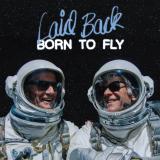
Laid Back - Born To Fly LP

Laid Back

Born To Fly LP

12inchBMVI011
BROTHER MUSIC
26.06.2026

Laid Back in Top Form: New Music Flowing After 47 Years
After 47 years together, the iconic Danish duo Laid Back continue to defy expectations, entering a new and remarkably productive creative phase.
Their upcoming album, Born to Fly, captures their unmistakable sound while showcasing a renewed sense of energy and inspiration

“We feel like we are meant to make music. And when we play music, it feels like we’re flying,” says John Guldberg, reflecting on the album’s title and spirit.

Long known for their unhurried approach to releasing music, Laid Back now find themselves in unfamiliar territory. Guldberg describes a surge in creativity that has
turned their process on its head.
“It’s kind of funny — Laid Back has always taken its time making records. We’ve been behind schedule for most of our career. Now it’s the opposite:
I’m actually starting to worry about whether I’ll have time to release everything I’ve got in me,” he says.

Their current workflow reflects this momentum. Guldberg develops initial ideas,which he shares with Tim Stahl, who then brings them to life with vocals and instrumentation.
“When he sends me something and I start singing and playing on it, that’s when it really becomes Laid Back,” says Stahl.

The duo’s creative output has accelerated to such an extent that even ahead of the release of Born to Fly, they already have enough material prepared for more than a double album for their next project.

“It’s about making the most of the time you have left. I used to feel there was plenty of time and no need to rush. Now time feels much more valuable,” Guldberg adds
.
Alongside their creative resurgence, Laid Back are also seeing a shift in their audience demographics. Streaming data and live performances indicate a growing younger fanbase — a development that has taken the duo by surprise.
“I’m really looking forward to getting back out on stage. We still have the urge to perform, and we love making people happy. That’s what our music is for,” says Stahl.
Born to Fly is set for release across CD, vinyl, and digital formats. Laid Back will also perform in selected cities across Europe later this year 2026.

“We hope people can hear that we’ve grown — and that it still makes sense for us to make new music,” says Guldberg.

out of Stock

Order now and we will order the item for you at our supplier.

Last In: 29 days ago
20,59 €
shinetiac - Not All Who Wander Are Lost

Shiner, Pontiac Streator and Ben Bondy’s debut as shinetiac is a downtempo pleasure, now on vinyl.

All three members of Shinetiac are best known for their tenure in the neo-ambient weeds, gathering bounties for 3XL, Quiet Time, Motion Ward and of course Huerco S.’s West Mineral. Anyone familiar with their various side projects and solo deployments will have already clocked their obsessions with classic dreampop, trip- hop and cloud rap, and those influences are fully thrust into the foreground here, with the more trad ambient elements used as little more than decoration. ‘Star Frog Dilla’ opens the set and combs illusory Olive-like vocal harmonies over a jumble of choppy jazz samples and sirens, with a glitch-heavy beat that harks back to an earlier, simpler iteration of IDM. What makes it so inviting is that Shinetiac fashion a loveletter to pre-internet cultural collisions, pooling their empathetic energies in a lushly amorphous slant on ambient dance strung between classic Trip Hop, HD late ‘90s / early ‘00s electronic music x vaporous hypermodernism.

out of Stock

Order now and we will order the item for you at our supplier.

Last In: 76 days ago
28,15 €
Old Saw - The Wringing Cloth LP 2x12"

'Like the sharpshooting carnival contestant who knows that the winning practice isn’t to aim for the red star itself, but rather to shoot out a perimeter around the star and thus remove it, Old Saw have historically dealt with forms by tracing their boundaries rather than going for the target outright. If the first three records hinted at but never touched song-shaped forms, The Wringing Cloth makes at least glancing contact while retaining the layered haze and drawl that threads their sound together.
'Contrary to the often-used ambient tag, Old Saw shows up here in a markedly active and sculpted form — manipulating, unwinding, and pivoting with a strange and warped precision. What has always been uncanny about this music is that it arrives in a state at once familiar and obscured, like a memory weighed down with sensory information but no identifying details to place it.
'The Wringing Cloth walks off further into that geographical dream without time or language until it’s just a speck of light.'

out of Stock

Order now and we will order the item for you at our supplier.

Last In: 3 months ago
30,46 €
Channel One Pres. - 100 Tons Of Dub LP

The mighty Channel One Studios,Kingston, Jamaica, has its place set in Reggae's Musical History.Its distinctive sound the studio created on opening its doors in 1972 to its closure in the early 1980's made it the Producers, Singers and Musicians studio of choice during this furtive period. Achieving that vibe and clarity, separated it from the other Kingston establishments.

Run by the Hookim Family's four sons, Jo Jo the eldest followed by Paulie, Ernest and Kenneth. Their father originally came from China and married a Chinese Jamaican lady and settled in the St Andrews district before moving to Kingston Town itself. The family business was built on jukeboxes and one armed bandit machines in and around Kingston. A lucrative venture until the gaming laws changed in 1970, outlawing the gaming machines. So the music side of the business would have to be expanded. So it was decided to open a studio to make the music to supply their already established Jukebox enterprise. The four brothers opened Channel One Recording Studios in 1972 at 29 Maxfield Avenue, Kingston 13. Initially as we stated the purpose of the studio was for the brothers use only, but this would soon change when the various Producers all looking for that Channel One sound came asking for studio time.

The brothers had used the services of Bill Garnet a renowned and well respected technical engineer on setting up the studio. They spent a lot of time laying out the space to get the right acoustics and picking the right quipment. They went with a four track API desk and the best quality microphones such as Neuman, Sony and AKG, vital in obtaining the quality sound and track separation that would prove so worthwhile after the music was recorded to give the best flexibility on the final mix downs. Jo Jo would take over the production duties after the initial hiring of Syd Bucknor a producer who had worked closely with Coxonne Dodds Studio 1 stable. The first release on the Channel One label would be 'Don't Give Up The Fight' by Stranger Cole and Gladstone 'Gladdy' Anderson.The initial two thousand run being swallowed up by their Jukebox interests and so the steady flow of hits would run up to the brake through hit of 1975 'Right Time' by  the Mighty Diamonds.

1977 saw Jo Jo extending his stays in New York to a semipermanent status, returning mainly to oversee recording sessions and then taking the results back to America for worldwide distribution. His brother Paulies senseless killing in that year also added to Jo Jo's decision to spend more time with his Hit Bound Manufacturing set up in New York. The Channel One studio would be upgraded in 1979 to sixteen tracks and although Jo Jo and Ernest still covered the mixing and engineering duties Kenneth would now supervise sessions. An often untold part of Channel Ones history is the involvement of Producer Niney The Observer. The mid to late 1970's were heavy times both musically and politically and Maxfield Avenue was in the heart of this crossfire. Some artists and musicians were weary of using the establishment especially when sessions ended late at night and exiting the studio at these times could be somewhat dangerous. But Niney’s fearlessness seen him over running and in many cases running the all night sessions with his trusted set of musicians loosely called The Soul Syndicate. Having the run of the mighty Channel One studio's allowed Niney to build up and work on a stockpile of rhythms that he still has yet to unleash on the world. We have been lucky to select a bunch of material from Niney's vaults for this release. Some great unreleased rhythms and some different cuts to some tracks you might already know. Niney's work with Dennis Brown and his own distinctive heavy roots style productions have been documented and indeed his work on Channel Ones Yellowman releases stand tall also. We hope this fine set of Niney Productions set inside the hollowed walls of Channel One will sit beside them as they so richly deserve.

out of Stock

Order now and we will order the item for you at our supplier.

Last In: 5 years ago
14,71 €
Capcom Sound Team - Monster HunterWorld: Iceborne (Original Soundtrack) (LP 4x12"
  • A1: Succession of Light
  • Anomaly in the Forest
  • Harbinger
  • Hoarfrost Reach: Small Monsters Abound
  • Roars Across the Hinterlands
  • Theme of Seliana
  • B1: First Council Meeting - Daily Matters / Iceborne Version
  • Red Glare in the Darkness - Nargacuga: World Version
  • The Beast Bares Its Fangs - Tigrex: World Version
  • The Comforts of Home
  • The Defense of Seliana
  • C1: The Scorching Blade - Glavenus: World Version
  • Brutish Indigo - Brachydios: World Version
  • Banquet in the Snow - Lunar Terrace
  • Second Council Meeting - Tension / Iceborne Version
  • Behold, the Ruler of the Frost
  • D1: Seliana, Ready for War
  • Splendiferous Silver Sovereign - Velkhana
  • Steam at Our Backs
  • Morning Star of the Dark Tide - Namielle
  • Songs of Triumph in the Winter Sky
  • E1: The Dark Spell
  • From the Rumblings Come a Song
  • A Single Bloom in an Eternity
  • The Bird at Daybreak
  • Tales Spun through Song
  • F1: Spark of Blue - Zinogre: World Version
  • The Howling Lone Wolf - Yian Garuga: World Version
  • Nay! The Honor is All Ours
  • Congregation of the Fearless
  • A Collection of Rewards
  • G1: Empress of the Flame - Lunastra: World Version
  • The Voracious Devil - Deviljho: World Version
  • Winter Star Soiree
  • World's End - Arch-Tempered Nergigante
  • H1: Pursuing the Mother Goddess
  • The Brilliance that Rules the Everstream - Kulve Taroth: Confrontation
  • The Brilliance that Rules the Everstream - Kulve Taroth: Transformation
  • The Brilliance that Rules the Everstream - Kulve Taroth: Tremor
  • Sapphire Star - World's 1st Anniversary Commemorative Song
also available

LP 2x12"[39,08 €]


o black heavyweight LPs
o 39 tracks from the expansion to Monster Hunter: World
o Rigid board outer box
o Printed inner sleeves

The fearsome co-op team of Laced and Capcom have hunted down more rousing music from the Monster Hunter series.

Monster Hunter World: Iceborne was a significant expansion to the hit action role-playing game, introducing players to the icy environs of Hoarfrost Reach and pitting them against intimidating foes including Velkhana and Zinogre.

The sound team for Iceborne comprised Akihiko Narita, Akiyuki Morimoto, Zhenlan Kang, Yuko Komiyama (comymusic), and Tadayoshi Makino (SpinSolfa Co., Ltd.). In true series fashion, the composers used rip-roaring orchestral and percussive instrumentation to alternately rouse and soothe players; from the propulsive "Spark of Blue - Zinogre" to the homely, Celtic folk-inspired "Theme of Seliana".

This vinyl set features artwork by Capcom highlighting the game's key monsters, with tracks pressed to heavyweight vinyl.

All music has been specially mastered for vinyl by Joe Caithness.

pre-order now19.06.2026

expected to be published on 19.06.2026

86,13 €
Carola - The Observatory EP

Quinoa’s 8th reference goes off the beaten track, literally. Carola (f.k.a. Mägitee), comes at us with four stripped-back cuts that invite us into unexplored emotional realms. Consistent, throbbing, and rich in texture, it contains just enough of everything and not too much of anything.

The story starts on the A side with “Siouxsie”’s melee of drums and swells that instantly transport us to the smokey comfort of a dance floor, lost in the ecstasy of intertwining bodies.

It follows with “0863”, with a name that winks at his roots hailing from the Appenine mountain chain in central Italy. Its warm, intimate touch sets a suspended tone to the release.

On the flip side the energy shifts, with escapism-anthem “Getaway” whose strings and dreary vocals invoke a nostalgia of futures-to-be in places that may never exist.

Finally, the EP closes off with the title track “The Observatory”. Named after the Griffith Park Observatory, a place where he regularly used to wander at night in the company of deer, coyotes, and the Los Angeles lights. Its deep bassline and intense echoes aim to captivate the most avid stargazers.

We hope this music will touch you as much as it touched us.

out of Stock

Order now and we will order the item for you at our supplier.

Last In: 7 days ago
13,24 €
Mark Ambrose / Serious Cut - Remedy EP

An inspired link up between UK and continental producers - yeah, in your face, Brexiteers - as Brit talent and Crayon boss Mark Ambrose joins forces with Spanish duo Serious Cut aka Raul Zapata and Ivan Martinez, across four irresistible cuts. 'Remedy' nods its head subtly to the Diana Ross (and then Associates) classic 'Love Hangover' while enchanted, spacious and spacey grooves do their thing, while the cherry on top of 'Deep Track' proves to be some neat sci-fi spoken word, not to mention the kind of soft, jazzy chords that Global Communication's house productions used to revel in. Flip it over for the more electroid 'Talk Box' and the unashamedly Windy City-referencing 'Auto Level. Four sides of a classic sound, three great producers, two sides of top vinyl and one must buy bit of vinyl.

out of Stock

Order now and we will order the item for you at our supplier.

Last In: 46 days ago
13,87 €
Marc Richter - Coh Bâle

Marc Richter

Coh Bâle

12inchCELL-11LP
Cellule 75
18.06.2026

This new album compiles several songs made in the years following Black To Comm's classic "Alphabet 1968" album. Originally released on the seminal Type label in 2009 (and to be reissued on Cellule 75 this year) "Alphabet 1968" combined the sound of vintage shellac and vinyl loops with broken electronics and field recordings, the press release mentioning disparate influences "ranging from Moondog to Basic Channel by way of Bernard Herrmann". In a beautiful one-page review in The Wire magazine (later reprinted in his book Ghosts Of My Life) Mark Fisher compared Richter's music to JF Sebastian’s miniature automata in Blade Runner ("with their bizarre mixture of the clockwork and the computerised, the antique and the ultramodern, the playful and the sinister"), ETA Hoffmann's inventor-magicians and Auguste Villiers de l'Isle-Adam's 1886 tale of Thomas Edison's (fictitious) construction of an artificial human.

Now titled "Coh Bâle" (inspired by a strange dream) these recordings were supposed to become a follow-up to said album but for reasons unknown it never materialized and the album seemed forever lost. At the time Richter started to dive deeper into several strains of (so-called) world music aka the folk music of Southeast Asia and Eastern Europe as well as liturgical and medieval music, the Kraut-Electronica of Harmonia and several certain Mediterranean experimentalists from the 1980's who started to merge their mostly electronic and field recording based compositions with traditional musics from all over the world by way of new sampling technology.

Many of the songs for the album were recorded while travelling and at various residencies around Europe: a detuned piano in a Thessaloniki basement (Richter played at a children's birthday party there), vintage synthesizers in the GRM studios in Paris, decaying acoustic instruments found in an old Black Forest mansion, childrens' voices at a workshop in Karlsruhe's ZKM Institute; then mixed on headphones in the ICE trains running between these places and his hometown Hamburg.

"Coh Bâle" is taking inspirations from old Nonesuch Explorer and Ocora LP's, Crammed Records, 80s Mediterranean Ambient (Nuno Canavarro, Roberto Musci) combined with the DIY spirit of Deux Filles and Flaming Tunes and the playfulness of Asa Chang & Junray. The songs are both mysterious and transparent, intricate and frugal, vibrant and patient. One of the album's unexpected climaxes is a gorgeous (artificial) berimbau version of the Welsh traditional "Iechyd o Gylch".

No two songs feature the same instrumentation and many acoustic sources (pianos, flutes, wood percussion, viola, tablas, autoharp) were disassembled and later coalesced into new configurations or used as virtual instruments; later combined with samples, field recordings, electronics and (on a few tracks) autotuned vocals reminding of recent works by the likes of Claire Rousay or More Eaze.

We had to wait for a worldwide pandemic for Richter to dig deep into the vaults and finally bring these recordings to light. This is the 2nd release from his archives after the "Diode, Triode" LP which presented Musique Concrète/Acousmatic recordings made at INA/GRM and ZKM. Another massive Double-CD (MM∞XX Vol. 1 & 2) was released last year featuring collaborations with 33 artists such as Andrew Pekler, Richard Youngs, Eric Chenaux, Maja Ratkje, Radwan Ghazi Moumneh of Jerusalem In my Heart, GRM boss François Bonnet (Kassel Jaeger), Felix Kubin, Timo van Luijk (In Camera, Af Ursin), Luke Fowler and many others, showing Richter's versatility and his willingness to reinvent himself for every new release.

Marc Richter is widely known under his Black To Comm moniker, having released (at least) 12 albums under this alias in the last 20 years. He is currently signed to the Thrill Jockey label. Richter composes soundtracks for film and has worked with visual artists such as Mike Kelley and Ho Tzu Nyen. He also records as Jemh Circs and Mouchoir Étanche for his own Cellule 75 label (named in tribute to the late Luc Ferrari).

out of Stock

Order now and we will order the item for you at our supplier.

Last In: 3 months ago
20,13 €
Eddie Watkins Jr. & Legacy - Love Is Hard To Find / Did You Notice (My Love Grows) (7")
  • A1: Love Is Hard To Find
  • B1: Did You Notice (My Love Grows)

Soul Direction presents the second instalment of unissued tracks from the writer and composer behind the music of 70s group Legacy.
These two tracks came from two master tapes, and after further conversations with Eddie, he shared: “The lead vocals on Love Is Hard to Find were Delbert Nelson (who also
performed some backing vocals for The Funk Brothers) and me, Eddie Watkins Jr.” Eddie is also the lead vocalist on “Did You Notice” (I Used to Love You.)

pre-order now18.06.2026

expected to be published on 18.06.2026

19,75 €
David Guriev - Erica Cruz

David Guriev

Erica Cruz

12inchXRD041
Exarde
16.06.2026

To get with down roots of the label you have to get down with its people. For one of these key roots, you have to hear and understand what David Guriev has to say with the audio message that’s getting translated to us as listeners. Being one of allies of the label and the non-stop behind the scenes inspiration, David has created a 5-track extended play named after one of his favorite female boxers named Erica Cruz. From the side of the cinematic importance, Erica has appeared momentarily in our lives, with a brief timing that the world has provided her. However she has never left the idea that has given the birth to this EP, and more or less has started the discussion of what it is to be or not to be like Shakespeare himself used to talk about after a good soul-searching session.

stock from01.10.2026

Last In: 26 days ago
12,82 €
Tracy Bryant - The Well LP

Tracy Bryant

The Well LP

12inchTGR054
Taxi Gauche
12.06.2026

"Imagine a classic singer/songwriter record loaded with the intimacy and grit reminiscent of Alex Chilton or Nikki Sudden." Shindig

Los Angeles singer-songwriter Tracy Bryant returns with his new album The Well, which is his first release since 2019’s critically acclaimed Hush. His fourth solo album, The Well marks a striking new chapter, trading his signature guitar-driven sound for piano-led songwriting that took root during the pandemic. The album was born out of one of the most turbulent periods of his life, written in the wake of his father’s sudden passing and birth of his first child. It was produced by longtime friend and compatriot Joo-Joo Ashworth at Studio 22 in Cypress Park, CA, and mastered by Dave Cooley at Elysian Masters. The nine songs are filled with raw emotion and driving motorik rhythm, telling tales of loss and love, relationships beginning and ending.
 
When the pandemic upended Bryant’s promotion for Hush and brought his 2019 European tour to a halt, he found himself at home rediscovering his musical roots at the piano, listening to Vince Guaraldi and Arthur Russell to take inspiration for the song structures. Without a band around, Bryant used the instrument to create both rhythm and melody, which resulted in a repetitive and precise backbeat, which was elevated when he began working with drummer Carmeron Gartung to rehearse the new songs. This different approach would define the style of The Well, creating an amalgamation of sounds with classic songwriting structures blended with post-punk, 90s indie, krautrock and psychedelia.
 
To produce the record, Bryant turned to Joo-Joo Ashworth, who share a friendship stretching back to 2011 (when Joo Joo was only 18) when both of their bands, Corners and Froth, were at the forefront of the bourgeoning Los Angeles/Echo Park music scene of the time and embarked on their first national tours together. Ashworth, who has since become one of underground music’s most respected producers, recorded the album throughout 2024/2025 on half inch tape at Studio 22 in Cypress Park, California, giving The Well a warm, considered sound that matches the weight of its subject matter.
 
The album’s emotional core was forged by two significant life events arriving in close succession. In January 2022, Bryant’s father passed away unexpectedly at the age of 67. Just three months later, Tracy and his wife welcomed their first child. The Well is a direct result of those experiences, a songwriter processing grief and joy, endings and beginnings in real time. 
 
The nine songs take the listener on a meticulously crafted journey through the nooks and crannies of Bryant’s mind. Spanning 37 minutes, the album is an exploration of classic songwriting elements moving fluidly between driving beat punk, like “Weight” and “Widow”, and more melancholic tracks like “Halfway” and “Danny”. Album opener “Cold Floor” sets the tone immediately, Bryant’s lyrics confronting the day of his father’s death with unflinching directness – the breezy California piano sound is in direct contrast to the heavy theme. The Bowie-esque title track is perhaps the album’s most expansive moment – a fully realised epic composed with a dynamic flare. 
 
 The Well feels like an arrival. Dramatic and expansive, it is a true, visceral reflection of the life changing events that altered the course of Bryant’s life. Fans will be surprised by the heavy focus on piano but they will welcome the change as a bold turning point for an artist who has lived long enough to know exactly what he wants to say. 

Some previous press:

"feels like a slice of California, down to its ringing post-surf guitars and bright melodies, but cross-cut with a folk sensibility more aligned to the work of Elliot Smith or, on occasions, Conor Oberst." Uncut - lead album review

"…sees the Los Angeles rocker confront both the finer and uglier aspects of love and life, combining classic rock with psychedelic tinges and catchy melodies." Evening Standard 4*s

pre-order now12.06.2026

expected to be published on 12.06.2026

20,97 €
Original Soundtrack - Back To Titanic (2x12")
  • A1: Titanic Suite
  • B1: An Irish Party In Third Class - Gaelic Storm
  • B2: Alexander's Ragtime Band - I. Salonisti
  • B3: The Portrait - James Horner
  • B4: Jack Dawson's Luck
  • C1: A Building Panic
  • C2: Nearer My God To Thee - I. Salonisti
  • C3: Come Josephine, In My Flying Machine - Máire Brennan
  • C4: Lament
  • C5: A Shore Never Reached
  • D1: My Heart Will Go On (With Dialogue From The Film) - Celine Dion
  • D2: Nearer My God To Thee - Eileen Ivers
  • D3: Epilogue - The Deep And Timeless Sea

Back to Titanic is the second soundtrack album released for the ultimate classic film Titanic. Composer James Horner created a new suite of light and dark music to represent "the soul” of his original score. The inspiration used in composing the original soundtrack formed the basis for the new pieces Horner developed for this album. It features a piano solo performed by James Horner in “The Portrait” and newly recorded suites by the London Symphony Orchestra and the Choristers of King's College.

The first highlight is the opening 19-minute suite, "Titanic Suite", which captures the essence of the film. The other major suite is the final track, titled “Epilogue - The Deep and Timeless Sea”. James Horner returns to the main Titanic theme in a subtle way, honoring the losses of the disaster.

The soundtrack of Back to Titanic is available as a limited edition of 1500 individually numbered copies on violet vinyl. The records are packaged in a deluxe sleeve finished with linen laminate and includes a 4-page booklet with liner notes by director James Cameron.

pre-order now12.06.2026

expected to be published on 12.06.2026

43,66 €
Items per Page:

Language

N/ABPM
Vinyl