Italian-Austrian sound poet & vocalist NicoNote (Music From Memory, Mille Plateaux,Rizosfera, Rough Trade) presents new album ‘REGOLA’ A suite in nine movements inspired by the mythic medieval composer Hildegard von Bingen (1098-1179) (RIYL Björk, Anohni, Meredith Monk, Elizabeth Fraser, Lena Platonos, Anna Caragnano & Donato Dozzy) An ambitious, conceptual work of hypnotic, immersive electronics & transcendent, experimental vocals, exploring the enduring influence of the polymathic German saint & philosopher.
Nine visionary and ritualistic soundscapes harnessing the voice as an instrument of transcendent expressive power; a visceral, timeless exploration of human nature. ‘REGOLA’ (Italian for ‘RULE’) is a record that calls for a contemplative form of deep listening, a time-dilating experience in which the polyphonic voices of NicoNote ascend, opening up a portal into an archaic, eternal past, where lost sounds coalesce with future revelations.
Поиск:the voices
Все
The multi-media project Kraftwerk was started in Düsseldorf, Germany 1970 by Ralf Hütter and Florian Schneider. They set up their electronic Kling Klang Studio where they conceived and produced all Kraftwerk albums.
Kraftwerk created the soundtrack for the digital age of the 21st century. AUTOBAHN 1974, RADIO-ACTIVITY 1975, TRANS EUROPE EXPRESS 1977, THE MAN-MACHINE 1978, COMPUTER WORLD 1981, TECHNO POP 1986, THE MIX 1991, TOUR DE FRANCE 2003. Their compositions, using innovative techniques, electronic sounds and synthetic voices combined with computerised rhythms, had a major musical influence on Electro, Hip Hop, Techno and Synth-Pop.
2024 Repress
Hart & Tief returns. Pampa's dark bastard. The Proverbial black sheep. For the second statement from the label, we have the twin voices of DJ Koze and Robag Wruhme. Both are masters at remaining simultaneously identifiable yet surprising, and the freedom afforded by this fledgling label sees them push their respective milieus. Driven see's Koze return to previously mined percussive tropes and plumb a new minimalist clarity of emotion through maximal means. The track thuds, clicks and pumps in a singular trajectory that belies its complexity and compliments its title. Not to be outdone, Robag Wruhme provides X-mop 198, a slice of linear horror-techno that deftly re-contextualises its simplistic components in to a jagged and constantly surprising listen, creating a form of body music for the mind.
Permanent Parts is the second album released by visual artist Katharina Grosse (synthesizer) and musician Stefan Schneider (synthesizer; So Sner, To Rococo Rot). Grosse and Schneider were joined at Galerie Max Hetzler on 29 April 2023, performing as part of the Spectrum without Traces exhibition, by three artists who all generally work within improvised music – Carina Khorkhordina (trumpet), Tintin Patrone (trombone and electronics), and Billy Roisz (noise generator, piezo and mini cymbal). Permanent Parts is an extraordinary set of recordings that inhabits multiple zones at once: within its thirty-five minutes, we can hear the interactions of non-idiomatic collective music making, and the electronic glimmers of electro-acoustics, while, at the same time, the music remains untethered to genre.
This capacity to work within liminal zones makes perfect sense when thinking about both Grosse’s and Schneider’s prior work, whether the energetic diffusions and spatial explorations of Grosse’s artistic practice, or the slippery texturology of Schneider’s recent work with electronics. Khorkhordina, Patrone and Roisz all find their own ways into this dynamic, too, and Permanent Parts feels like an equal exchange of presence and contribution; there are no hierarchies here. This might explain the music’s curious sense of development, where several elements are allowed to exist alongside each other, not in direct contact but in a mode that’s somewhere between carefree layering and unconscious juxtaposition. The musicians are listening, but not just with their ears – their skin, their bodies are hearing, too.
When talking about Permanent Parts, Schneider is careful to place it within contexts that are specific, to some degree, but which allow for difference to blossom. “Although it was recorded live, it somehow was not meant to be a documentation of a live event in the first place. The five piece line up that appears on the record had met for the first time only a few hours before the concert took place.” While it might take a leap of faith for all parties to walk together, and so willingly, into a place of such freedom, of such risk, there is clear sympathy here between the musicians, and a shared appreciation of the immediacies of the situation.
It also throws some of our preconceptions about this music out of the window. “The record does not feel like a document of a performance as the music was not pre-composed and there was no reference,” Schneider continues. “Perhaps it was not even an improvisation?” For Grosse, her musical relationship with Schneider similarly shakes free from expectation: “My sound does not exist without Stefan’s. It is neither written down nor is it improvised. It is instantaneous.” When thinking about the five-piece exploration on Permanent Parts and asked to expand on what each musician brings to the table, she continues, “We all love the thrill of an unknown encounter and we seem to have a need for building connections through the thicket of our voices.”
There’s a curious phrase on the back cover of the album, before the artists are listed: “Wir sind eine Batterie / We are a battery.” This sums up the spirit of Permanent Parts. Schneider recalls that Grosse said this phrase to the musicians at the start of the performance. Grosse explains further, “The figure of the battery referred to our placement in the space building out a small circle facing one another from where the sound could spill into the impressive volume of the gallery.” The battery as an arrangement of similar devices; but I also think of charge, and the conversion of chemical energy, and of fortification. It’s a poetic metaphor that sums up much of the febrile pleasure of the music contained on these Permanent Parts.
– Jon Dale, Melbourne
The unconscious and unknown must be really nice places. In any case, if you take the second album of Menelaos Tomasides under his given name as travelogue. A trip into dreamlike territory, yet concrete enough, a journey without target yet looking forward and looking back into familiar places, „dreamhike“ both continues and departs from the style Menelaos has found earlier, in “When the Moon Comes Through”, or his more conceptual-intentional “31 Minuten” works. As the album title - which roughly translates to “dream hiking” but also hints on “walkabout” and “songlines” – suggests, we are rambling between the real and the imaginary. From the bucolic border triangle of Belgium, Germany, and the Netherlands to the buzzing streets of the capital of Cyprus, where Menelaos has lived for many years, the tracks are about real places, about real experiences and emotions yet interwoven with a dreamlike fabric. Something that is just not tangible, yet substantial and palpable. Something concrete that manifests in the genuine and special sound design of this records - basically all of Menelaos’ works - his really special treatment of dynamics and loudness. It is one of the very few records where the established language of music making, specifically Techno, House, Dub, and early 2000’ Electronica, the clicks, thumps and plops from an earlier age of electronic music, transmogrify into slow movements of something new. Something that is gentle and truly personal, looking inwards. There are four-to-the-floor beats, there is wobbly bass, and dubby chords, even sublimated clarion calls. There is an immense energy in these tracks, the sheer materiality of low frequencies of a massive sound system manifested in a tiny room. Yet it is without any aggression, stripped bare of sonic pressure. It is quiet music no matter how high you turn up the volume. A rare treat, that requires exceptional skills and exceptional restraint and control on the technical side of music making. Probably it is a result of Menelaos specific combination of instinctual, intuitive approach to making music, which meets a genuine love for sound in seemingly endless loops of refinement that can lead to such a result as „dreamhike“. The elegant floating balance of control and playful experimentation manifests for example in a track that continues the ongoing collaboration with seasoned Cologne improviser Achim Fink on bass trumpet. Not only in this respect, the album can be described as a product of openness. It comes from a lot of taking in the world, of travel, of places and people met, of friendship and conversation (not necessarily with words). The deep trip of “dreamhike” further manifests Menelaos as one of the truly independent voices of electronic Cologne and beyond. Somewhat alike in character and attitude probably to what late Pete Namlook has established for Frankfurt with his label Fax +49-69/450464 (though ultimately warmer and much less uncanny) Menelaos has found his very own sound and vision. Music that answers to no one but speaks to everyone. Uncompromising yet gentle to the core: kind sounds from a kind spirit, arguably the most extraordinary and valuable quality music can have these days.
Combining the signature soundscapes of Scorn with tartareous textures, the current album "The Only Place" reaches a psychedelic groove, based on what Harris calls "Pushing an original idea further" with his own shades of light and dark and celestial electricity of what SCORN is. These 10 tracks add elements unheard in Scorn since Evanescense and Gyral - ethereal ambiences and floating, near-melodic-but-not-quite moments, a signature of Harris' abilities to generate feelings in a lost world of his own creation. Mick Harris is one of the world's greatest compositional treasures. Starting his career as the energy dynamo behind the drum kit of the UK's Napalm Death, he made the term Blastbeat a household reference, wrote the band's music on his mother's one string guitar, and joined the Guinness Book of World Records for composing the world's shortest song. In the decades succeeding, he has re-inventedmusic several more times, from the wild abstract jazz of Painkiller with John Zorn and Bill Laswell, to the drowning ambience of his Lull project, all while continuing to build a world that he can truly call his own - the dark post-dub of SCORN. "Reaching 54 this year - this won't stop the challenge, driving me more so now than ever" - says Mick Harris, commenting on the recent phase in his creativity. The pandemic isolation and lockdown pushed the work of the maestro more than anything else could have. In 2021, his output is ever-increasing, releasing the newest collabs with Justin K. Broadrick and the single "Distortion", featuring one of the most outstanding voices of hip-hop - Kool Keith - his closest collaborator, Ohm Resistance founder - Submerged. Commenting on the release of "Distortion", Mick Harris said to mxdwn: "I enjoy collabs - they bring something different to the swim." Working on his own and collaborating with everyone from Sleaford Mods' James Williamson, on the previous SCORN release or with Kool Keith and Submerged on "Distortion", Mick Harris never had problems with putting energy into beats and sound landscapes, combining various surreal elements with three basic elements that always push Harris further, that are extremely crucial for both Mick Harris and SCORN as a project - frustration, anger and anxiety. 2024 vinyl version on orange coloured vinyl!
Rage Queen Delilah Bon is a force to be reckoned with blending elements of hip-hop, nu-metal, and riot grrrl ethos into her signature "Brat Punk" style. Her music serves as a fierce anthem for marginalized communities, particularly women, non-binary and the LGBTQ+ community. Her performance at the 2023 Glastonbury festival garnered acclaim from Kerrang!, who hailed her as a ‘standout voice in the rise of bold and bratty heavy music’. This recognition secured her a coveted spot on Kerrang!'s 'Sound of 2024' artist list and further recognition as ‘New Noise’ artist in Metal Hammer magazine and full feature in Clash Magazine. 2024 promises to be a monumental year for Delilah Bon, with a series of highly successful single and video releases to date and her highly anticipated album ‘Evil, hate Filled Female’ due for release in September. She’s also playing a host of Summer festivals including Download, Glastonbury, 2000 Trees and several European festivals including Rock For People in Czech Republic and Metropolis Festival in the Netherlands, with more to be announced! Her singles from the upcoming album, “Maverick” and "Finally See Me” have received widespread support from BBC Radio 1 and Kerrang! Radio, earning coveted spots as Track of the Week’ on Alyx Holcombe’s BBC Radio 1 Introducing Rock Show, ‘Future Flavour’ on Nels Hylton’s BBC Radio 1 Future Alternatives and ‘Track of the week’ on Kerrang! New Noise with Hope Lynes. She’s also had major editorial support from Spotify, Apple Music, Deezer and Amazon Music, including her 3rd Misfits 2.0 playlist Cover artist. Delilah Bon's international appeal was further solidified by her support slot on US artist Scene Queen's UK tour in 2023 and performances at sold-out arena shows in France earlier this year supporting French band Shaka Ponk. Notably, she made National television appearances on Le Late Show and Taratata TV in France, showcasing her magnetic stage presence to a global audience. With her bold persona, genre-defying sound, and unwavering commitment to amplifying marginalized voices, Delilah Bon continues to cement her status as a trailblazer in the music industry.
For our second release, circuit|breaker quips back the stacked offering of CBRK001 with another dynamic double LP, exhibiting some of the best local and international talent that’s cropped up on our radar over recent years.
The label is as driven as ever to build a bridge between our community and the wider electronic
music domain, giving artists a platform to preach the sound that speaks to them, and this release is but another stepping stone towards greatness, for us and for them.
CBRK002 opens up with a rolling, gritty number that could only be Fergus Sweetland, as metallic voices beckon forth on ‘Untitled (ARP 1.02)’. Hasvat Informant, whose thunderous reputation precedes him, then storms the barn with the explosive ‘Abispa Ephippium’. The B-side shifts gears to Goa’s Dotdat and his frantically groovy track ‘Holo’, followed by a gorgeous minimal number by Berlin-based Pino Peña – Mia’s Pocket; one that’s sure to get summer dancefloors pumping.
The C-side of the record contains two heaving tracks, the C1 from the prominent force of Cloudy Ku with ‘A Room of One’s Own’, and the C2 from the dark visage that is disgrays with
‘Turmstraße’. The final side of the record has Amsterdam legend Juan Sanchez open the filter with a warm, jacking submission in ‘Indulge’, while the Berliner Marsch takes us home with a
devious timbre that will have bodies glued to the floor on ‘Into You’.
Over a catalog of six albums, Native Harrow have produced a discography of “rich, engrossing records” and “instant classics” while single-mindedly following their own artistic code, acquiescing only to the exigence of the song: each song its own world with its own rules.
Formed a decade ago, Native Harrow spent their first five or six years crisscrossing the United States and Canada on numerous tours, averaging more than 150 concerts per year in 47 states and 4 provinces, on the back of two self-released albums, Ghost (2015) and Sorores (2017). In 2019, they released Happier Now, partnering with London alt-country stalwarts Loose Records. The record garnered glowing reviews, with Rough Trade selecting it for its album of the month, writing “Beautifully soaring... rolling grooves ground languid and dreamy clearwater shimmers of sound.” The critical acclaim and Americana chart success of the album prompted three back-to-back UK tours in 2019 and early 2020, ultimately leading to a three-year stint living and touring in the UK and Europe. In this time, Native Harrow released two more critically acclaimed records with Loose; Closeness (2020) and Old Kind of Magic (2022), playing for audiences ranging from rock clubs in Norway and Sweden to opera halls in Portugal, and every stop in-between, as well as performing at festivals such as BST Hyde Park (supporting the Eagles and Robert Plant & Alison Kraus), Greenman Festival, Black Deer Festival, The Great Escape, Celtic Connections, Moseley Folk Festival, SXSW, and many more.
Following the eruption of its title track, Side A of “Divided Kind” transitions nimbly through hazy tremolo-laden dusty canyons, past an intimate soulful love letter, and towards a moody anthem of devotion buoyed by propulsive grooves, before ultimately settling on a gentle bird’s-eye-view of love and transcendence. Side B opens with the debut single, “Goin’ Nowhere” a soul transmission over incendiary bass and undulating layers of guiro, congas, tambourines, shakers, and handclaps that sidesteps into moments of infinite dial-toned burnished, Rhodes-propelled soul-jazz and self-assured blues rock à gogo before ending in a spectral folk reading on celestial meditation.
“Divided Kind” was produced and recorded by the pair, in their home studio surrounded by the vintage acoustic and electric guitars, dusty semi-functional amplifiers, and out-of-date Rhodes, B3, piano, and assorted percussion they’ve grown accustomed to. Chicago-based Alex Hall was again drafted to add drums and to mix, and Philadelphia drummer and engineer Joshua Friedman mastered the record. London-based musician Joe Harvey-Whyte added the pedal steel to “Borrowing Time”, with all other voices and instruments being performed by Tuel and Harms.
Get Nuff Nuff Data is a series of books exploring positive forces in contemporary music in relation to place and culture.
This book opens the series with the stories of musician I Jahbar and his surrounding community, set in the outskirts of Spanish Town, Jamaica. In 2011 I Jahbar collaborated with a duo of California based experimental musicians, and his acrobatic performance on their track ‘Spy’, inspired the founding of a record label named ‘Duppy Gun’. Their music captivated me like nothing had before. It was difficult to frame, drawn towards an innovation in sound, while embodying some ancient energy. 'Duppy Gun’ has paved its own unique path in dancehall music ever since, showcasing the power of international creative collaborations, by linking Jamaican lyricists with producers from different parts of the world.
There’s a little family formed around those musical projects, of goodhearted, talented individuals.
Led by a growing curiosity, I came to Jamaica, offering to create a visual aspect to the ongoing dancehall movement. During 3 weeks of collaborating with I Jahbar, we worked on a shared vision of promoting the voices of emerging vocalists and documenting their creative spirit.
The feeling of being welcomed to step into an unfamiliar narrative inspired the creation of this series, examining the perceptions of ones belonging and idea of home. Through segments of monologues and conversations, nature and portrait photographs, the book portrays a bond between people and their surrounding land, what they seek to change or wish to cherish and preserve. Get Nuff Nuff Data is dedicated to the simple lines that connect us all, each individual story exists as a universal one.
* Part of the book takes place online, including access to ‘unprintable data’. Exclusive video, audio, and downloads.
Details:
Self published
Designed by Matúš Hnáts
Printed by Tiskárna Helbich
500 copies, Swiss binding, 120 pages, 16x24cm
Printed on Fedrigoni 135gsm Symbol Tatami White
ISBN 978-965-598-736-2
(Barcode on the Last page of the book)
Max Jaffe wasn’t planning on creating an album commemorating the decade-plus he spent living in New York City while recording Reduction of Man. Operating as a preemptive elegy, Reduction of Man traces Jaffe’s musical trajectory while in New York City - a process of becoming fluent in several musical languages and cultures all at once, rather than the linear education of an MFA musician (which Jaffe also is). Jaffe’s second “solo” album finds him at the helm of an ensemble - leading the project as he plays: one hand drumming, the other composing and editing on the fly, shepherding multiple musical voices towards a single end - a sinewy tension between noise and groove.
Porches veröffentlichen sechstes Studioalbum "Shirt"
Porches, das Projekt des New Yorker Musikers Aaron Maine, veröffentlicht sein sechstes Studioalbum "Shirt" am 13. September bei Domino. "Shirt" ist teils angstbesetzte Fantasie, teils bekenntnishaftes Melodrama - ein Rockalbum, das zwischen Realität und Fantasie oszilliert und sowohl die Unschuld der Vorstadtjugend als auch die ausgefranste Realität des Erwachsenseins widerspiegelt. Es ist eine Mischung aus chaotischen Impulsen, unstillbaren Wünschen und einer immerwährenden Sehnsucht und spielt mit der Spannung zwischen der eigenen Person und dem eigenen Image - dem Gewicht der Träume, die an der Realität zerschellen. Das Ergebnis ist etwas Vertrautes und Unheimliches zugleich, eine hymnische Hommage an diese inhärente Dualität, die auf krachenden und schmeichelnden Klängen beruht. "Shirt" ist sofort als das bisher stärkste Album von Porches zu erkennen. Grungige Gitarren, die bedrohlich glänzen, Schlagzeug und Bass, die einem warm in den Magen schlagen, durchsetzt mit Momenten unheimlicher Ruhe, um ein körperliches Gefühl von Spannung und Entspannung zu erzeugen, das in jedem Track mitschwingt.
Eine prägnante Platte, die den Hörer in einen fiebrigen Zustand versetzt. Shirt's hormonelle Rocksongs kollidieren mit emotionalen Balladen und erzeugen eine dynamische Spannung, die den Hörer vorantreibt. Auf "Shirt" geht es ebenso um die Höhepunkte wie um die Banalität zwischen den denkwürdigsten Momenten des Lebens, wobei nicht nur der erste Kuss gefeiert wird, sondern auch die damit verbundenen Ängste.
Porches veröffentlichen sechstes Studioalbum "Shirt"
Porches, das Projekt des New Yorker Musikers Aaron Maine, veröffentlicht sein sechstes Studioalbum "Shirt" am 13. September bei Domino. "Shirt" ist teils angstbesetzte Fantasie, teils bekenntnishaftes Melodrama - ein Rockalbum, das zwischen Realität und Fantasie oszilliert und sowohl die Unschuld der Vorstadtjugend als auch die ausgefranste Realität des Erwachsenseins widerspiegelt. Es ist eine Mischung aus chaotischen Impulsen, unstillbaren Wünschen und einer immerwährenden Sehnsucht und spielt mit der Spannung zwischen der eigenen Person und dem eigenen Image - dem Gewicht der Träume, die an der Realität zerschellen. Das Ergebnis ist etwas Vertrautes und Unheimliches zugleich, eine hymnische Hommage an diese inhärente Dualität, die auf krachenden und schmeichelnden Klängen beruht. "Shirt" ist sofort als das bisher stärkste Album von Porches zu erkennen. Grungige Gitarren, die bedrohlich glänzen, Schlagzeug und Bass, die einem warm in den Magen schlagen, durchsetzt mit Momenten unheimlicher Ruhe, um ein körperliches Gefühl von Spannung und Entspannung zu erzeugen, das in jedem Track mitschwingt.
Eine prägnante Platte, die den Hörer in einen fiebrigen Zustand versetzt. Shirt's hormonelle Rocksongs kollidieren mit emotionalen Balladen und erzeugen eine dynamische Spannung, die den Hörer vorantreibt. Auf "Shirt" geht es ebenso um die Höhepunkte wie um die Banalität zwischen den denkwürdigsten Momenten des Lebens, wobei nicht nur der erste Kuss gefeiert wird, sondern auch die damit verbundenen Ängste.
Im Kopf eines Vigilanten tobt ein Krieg. A Killer's Confession erzählen ihn laut auf ihrem vierten Album und MNRK Music Group Debütalbum Victim 1.
Die Band um Sänger und Mastermind Waylon Reavis geht über den Punkt ohne Wiederkehr hinaus und kanalisiert die fesselnde Abscheulichkeit
wahrer Verbrechen zu einem Soundtrack aus melodischem Hardrock mit Anflügen von hämmerndem Metal und heimtückischem Industrial. Eine fast
ein Jahrzehnt dauernde Reise führte zu diesem Punkt. Nach drei bahnbrechenden Alben mit Mushroomhead zog sich Waylon von der Musik zurück,
bis sie ihn 2016 wieder einholte. Er tauchte wieder an der Spitze von A Killer's Confession auf und lieferte drei kultige Lieblingsalben: Unbroken
2017, The Indifference of Good Men 2019 und Remember [2021]. Auf dem Weg dorthin verzeichnete die Band zig Millionen Streams und arbeitete
mit jedem zusammen, von Brian "Head" Welch von Korn und Love And Death bis hin zu Chad Gray von Mudvayne und HELLYEAH.2022 ging Waylon
mit seinen Kollegen und Produzenten Dusty Boles [Make Me Famous] und Evan Mckeever [Nine Shrines] ins Studio. Als er diese Vision zum Leben
erweckte, entstand das zehn Tracks umfassende Äquivalent zu "falling down a YouTube rabbit hole of unsolved mysteries". Am Ende erzählt A Killer's
Confession eine Geschichte, von der man sich nicht mehr abwenden kann.
Im Kopf eines Vigilanten tobt ein Krieg. A Killer's Confession erzählen ihn laut auf ihrem vierten Album und MNRK Music Group Debütalbum Victim 1.
Die Band um Sänger und Mastermind Waylon Reavis geht über den Punkt ohne Wiederkehr hinaus und kanalisiert die fesselnde Abscheulichkeit
wahrer Verbrechen zu einem Soundtrack aus melodischem Hardrock mit Anflügen von hämmerndem Metal und heimtückischem Industrial. Eine fast
ein Jahrzehnt dauernde Reise führte zu diesem Punkt. Nach drei bahnbrechenden Alben mit Mushroomhead zog sich Waylon von der Musik zurück,
bis sie ihn 2016 wieder einholte. Er tauchte wieder an der Spitze von A Killer's Confession auf und lieferte drei kultige Lieblingsalben: Unbroken
2017, The Indifference of Good Men 2019 und Remember [2021]. Auf dem Weg dorthin verzeichnete die Band zig Millionen Streams und arbeitete
mit jedem zusammen, von Brian "Head" Welch von Korn und Love And Death bis hin zu Chad Gray von Mudvayne und HELLYEAH.2022 ging Waylon
mit seinen Kollegen und Produzenten Dusty Boles [Make Me Famous] und Evan Mckeever [Nine Shrines] ins Studio. Als er diese Vision zum Leben
erweckte, entstand das zehn Tracks umfassende Äquivalent zu "falling down a YouTube rabbit hole of unsolved mysteries". Am Ende erzählt A Killer's
Confession eine Geschichte, von der man sich nicht mehr abwenden kann.
2024 repress
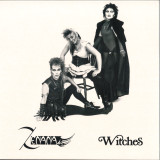
Rush Hour’s RSS series excels in unearthing buried treasure, offering a second chance for artists and releases that have long been overlooked. That’s certainly the case with ‘Witches’, the superb sole single by British 1980s wave trio Zenana.
Originally released on seven-inch by the tiny PRM label in 1986, ‘Witches’ was the product of a sister-brother songwriting team whose music was mostly recorded in the front room of a terraced house in Nanpean, a small industrial village in Cornwall, England’s most south-westerly county. While the single was infectious, impeccably produced and dancefloor-ready, it sold in limited quantities at the time.
Zenana’s story can be traced back to the early 1980s, when singer-songwriter Anita Tedder founded the all-female trio as a vehicle for her musical ambitions. To bring her songs to life, she joined voices with her brother Mike, an early adopter of electronic music who had built a studio – nicknamed MFR, short for ‘Mike’s Front Room’ – in his Cornish home.
Countless Zenana tracks were recorded at ‘MFR’ between 1984 and ’86, with the resultant demo cassette securing the band a management contract, a slew of live bookings, a video shoot and even a television appearance. Buoyed by this underground success, they headed to the remote Sawmills Studio in Cornwall – famously only accessible by boat – to re-record ‘Witches’, a song inspired by local folk tales of witches gathering near Mike’s home.
While this version of ‘Witches’ failed to make an impact at the time, it has become something of a cult classic following its’ rediscovery by crate digger Kiernan Abbott – and subsequent championing by other dusty-fingered DJs including Antal, Skyrager, Trevor Jackson and Luke Una – in early 2023. The buzz inspired Zenana to perform live again for the first time in decades, with the story of their surprise comeback being covered by British media outlets including the BBC and (more surprisingly) the Daily Mail.
Now presented in re-mastered form, ‘Witches’ is a genuinely slept-on gem. Propelled forwards by punchy drum machine beats, a killer synth bassline and fizzing keyboard sounds, the song benefits greatly from strong vocals and an extra-percussive middle eight layered with vocalisations, cosmic spoken word sections and swirling noises.
It comes backed by a brand-new extended ‘spell of love’ courtesy of Bristol duo Bedmo Disco, AKA music journalist Matt Anniss (author of Join The Future: Bleep Techno and the Birth of British Bass Music) and DJ/production partner Gareth Morgan. Anniss is a long-time friend of Mike and Anita Tedder who has fond memories of visiting Mike’s home studio with his family around the time that ‘Witches’ was recorded.
Working from Zenana’s original MFR eight-track recording (tapes of the single version were lost years ago), Anniss and Morgan have turned in the extended ‘dance mix’ the track never had first time around. More atmospheric, clandestine and dancefloor-focused, it offers authentic nods to New York proto-house, mid-80s Shep Pettibone dubs, and the pioneering synth-pop productions and dub mixes of Factory Records regular Martin Rushent.
Reissue
'Find Me Finding You', the new album from the new organization called the Laetitia Sadier Source Ensemble, manages to strike new chords while touching familiar keys in the song of life.
From its percolating opening beat, 'Find Me Finding You' locates new systems within the sound-universe of Laetitia Sadier. This in itself isn't a surprise - Laetitia has relentlessly followed her music through different dynamics and into a variety of dimensions over the course of four solo albums since 2010 (not to forget her three albums with Monade and the long era of Stereolab) - but the nature of the construction here stands distinctly apart from her recent albums. Laetitia was inspired by a mind's-eye envisaging of geometric forms and their possible permutations. As she sought to replicate the shapes in music, this guided the process of assembly for the album.
Part of the freshness of 'Find Me Finding You' comes from working and playing within the Source Ensemble and exploring new sound combinations via a set of youthful and evolving musical relationships. Laetitia recognized the energy of the tracks in their initial form and sought to preserve their vitality by not retaking too many performances - instead, the rawness in the tracks was retained and refined at the mixing stage, maintaining an edge throughout. When we hear synth lines diving, lifting and drifting, unusual guitar textures, the plucked sound of flat wound bass strings or the bottomless pulsing of bass pedals stepping out of the mix with an exquisite vibrancy, this is the sound of the Source Ensemble.
A key to Laetitia's music is her use of vocal arrangements. Throughout 'Finding Me Finding You' the shifting accompaniment creates space to bring this element gloriously forward. Arranged by Laetitia with Joe Watson and Jeff Parker making string charts that were subsequently transposed to vocal parts for several songs, richly arranged choirs of voices provide depth along with the thrilling presence of extra breath in the sound. Laetitia's community-politic is well-served by the groups of voices lending support to the machining of the song craft, providing additional uplift to her quintessentially forward-facing viewpoint - as well as massed voices from three different countries sharing space in harmony.
Working in collaboration is Laetita's tradition and a key to this album's view on being free together. The designation of Source Collective implies a new togetherness phase, alongside long time collaborators Emmanuel Mario and Xavi Munoz, keyboard and flutes parts played by David Thayer (Little Tornados) were essential contributions, as well as further keys, synths and electronics from Phil M FU and several intense guitar sequences from Mason le Long. Chris A Cummings (aka Marker Starling, Laetitia's favourite composer) graciously wrote 'Deep Background' for her. The duet with Hot Chip's Alexis Taylor on 'Love Captive' (not to mention Rob Mazurek's distinctive coronet playing) gives voice to an ideological cornerstone of 'Find Me Finding You'
`Think Differently' is the debut LP by the duo of Callahan & Witscher. Jeff Witscher has been one of the most daring voices in underground American music for two decades, highlighted by releases on Pan and NNA Tapes. Jack Callahan's focused, uncompromising approach to sound caught the attention of both Demdike Stare's DDS label and Swiss composer Jürg Frey, who took Callahan on as his first composition student. Fans of their individual work might expect opacity, disruption, or rhythmic irregularity from their collaboration, but `Think Differently' sounds like a pitbull in a convertible, a sand-kicking beach party, the dopamine hit you get from 311 or Smash Mouth. It's a punchy, crunchy, highly infectious record. How did Callahan & Witscher cut the path from the ghostly margins of avant garde musics to the gutters of post-grunge American hard rock? In the words of Callahan, "at some point, you start to need a stronger drug." The most potent characteristic of this stronger drug is the guitar. And not just any guitar, but a sassy, contagious, blithe guitar. Its presence is a drastic shift for two guys who've combined to make dozens of records over the years, not a single one of which has a recognizable guitar sound on it. Alongside the cool breezes and hyperactive fretwork of Callahan's guitar playing, the songs are backboned by strutting, groove-happy vocals: all bark, all bite. Every song is a careful collage, light but dense, ornate with gang choruses, soulful femme vocals, autotune and whisper scratches. This accumulation almost manages to hide the record's potent undertow of dread. `Think Differently' unfolds carefully, a slow-motion demolition that reveals the anxiety of second guessing, the exhaustion of tour, creative bankruptcy, willful misunderstanding, the pain of caring. Setting this lyrical cynicism against such sonic glee isn't a spoonful of sugar, it isn't a bait-and-switch, it isn't a prank. After all, the dumb bliss of Sugar Ray's "Fly" shades a song about Mark McGrath's mom dying. "All Star" is about climate change. Most Sublime lyrics are a bummer. But there's still room for a raised beer, for a dumb grin. Like these ancestors, Callahan & Witscher aim at maximum uplift, at sounds that warm and dazzle like a sped-up sunrise. In spite of overdraft fees, in spite of bad art, in spite of self-doubt.
BASIC is a mind-meld between Chris Forsyth, his frequent running partner (and formidable 6-string thinker) Nick Millevoi, and Mikel Patrick Avery (Natural Information Society). "This Is BASIC", their debut album, is a complex and entrancing instrumental LP recasting forgotten scraps of guitar history into a moving mosaic of strings, skins and electronics. Taking inspiration (and their name) from the 1984 Robert Quine/Fred Maher album ("Basic"), Forsyth and Millevoi got together for a run of low-key jam sessions using an Alesis drum machine for rhythm tracks and forging a collaborative language from angular polyrhythms, pulsing baritone-guitar lines, and shimmering chorus-pedal washes (another stylistic nod, this time to the glistening post-punk of the Durutti Column and numerous 4AD bands). Avery was soon enlisted on drum kit_a setup that quickly morphed into a single drum, bell, and a bespoke electronics rig of his own creation. The trio quickly flowered into an improvisational swirl of disorienting electronics, hypnotic throb, and dense flanged-guitar harmonics: three unique voices spinning a complex conversation of textures and rhythms.