Original Gravity Records announces a deadly new 7" from Boss Foundation, the fresh alias of producer and multi-instrumentalist Neil Anderson. Previously known as Woodfield Rd Allstars for his vintage Jamaican (predominantly instrumental) output, Anderson now moves forward under the sharper, more genre-focused name Boss Foundation—a banner that reflects the heavy, stripped-down, late-’60s Boss Reggae style at the core of his sound.
Side A: The Henchman
A tough, propulsive Boss Reggae instrumental driven by a fierce groove, The Henchman comes armed with vintage-style pistol-shot effects and a pair of unmistakable Dennis Alcapone vocal drops, giving the cut the swagger and tension of a lost 1969 sound-system special. Heavy, atmospheric, and tailor-made for selectors who favour harder-edged instrumentals.
Side B: Pressure Version
An organ-led version built on the riddim Anderson created for The Pioneers’ 2025 recording of “I Feel So Bad” (the Jackie Edwards classic). Featuring Abramo Riti on Hammond organ, Pressure Version offers a warm, melodic excursion that highlights the depth and movement of the rhythm—spacious, soulful, and crafted with the sensibilities of a classic late-’60s version cut.
Pressed in a strictly limited edition, this double-sided killer marks the official debut of Boss Foundation, signalling a powerful new chapter in Original Gravity’s ongoing commitment to era-authentic Jamaican sounds.
Cerca:the wood
Inspired by Sam Kidel’s ›mimetic hacking‹ concept, Berlin-based composer Jasminev Guffond pipes opiated brass and woodwind motifs into a reverb chamber modelled on an Amazon fulfilment centre.
»Muzak for the Encouragement of Unproductivity« is a poetic inversion of Muzak’s traditional role in stimulating seamless productivity in the workplace. Beginning as a pre-radio music distribution network (1934, U.S.), Muzak was transmitted along electrical wires with the intention of being at once ubiquitous and indiscernible, always present yet easily ignorable. As a pseudo-science the aim was to capitalize on the potential of music to have a psychological effect on listeners, and with the goal of maximum productivity, was employed as a sonic disciplinary force in the work place.
Previously installed for Dystopia Sound Art Biennial (2024), at the Amazon Packing Station located before HAUNT-Frontviews in Berlin, Muzak for the Encouragement of Unproductivity sonically addresses utopic notions of seamless, efficient productivity, inherent to capitalist cultures, and their very real dystopic effects from labour exploitation to the impacts of over-production on the environment. This poetic inversion, further developed as an album, is not meant as a kind of melodic control but rather a reflective space in which to consider the benefits personally, globally and environmentally, of slowing down.
Reverb, essential to the Muzak aesthetic, is programmed (using convolution reverb) with the dimensions of the Berlin Amazon fulfillment centre, DBE2. Amazon fulfillment centers are global contemporary factories, promising a consumer utopia of next day delivery of almost any product imaginable. Inspired by Sam Kidel’s concept of »mimetic hacking«(1), the reverberation characteristics of the DBE2 facility perform a symbolic sonic break-in to the guarded Amazon fulfillment center, a trespass to the flow of production.
Guffond’s ambient Muzak with its drifting horn, clarinet and synth-like modulations is just too down-tempo for upbeat spending. If this is Muzak it is possibly Muzak for the end of the world, thoughtfully seeking transcendence through implied questioning after all avenues for shopping have been exhausted.
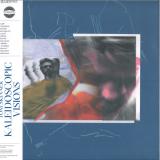
Drummer-composer Tom Skinner announces Kaleidoscopic Visions, his second solo album, out 26th September 2025 via Brownswood Recordings and International Anthem
Kaleidoscopic Visions unfolds across two distinct sonic landscapes. Side A presents entirely instrumental compositions performed by Skinner's live Bishara band—bassist Tom Herbert, cellist Kareem Dayes, and Robert Stillman and Chelsea Carmichael on various woodwinds and reeds—with electric guitar on two tracks courtesy of Portishead's Adrian Utley. A drummer-composer bringing his wealth of experience to bear on the role of bandleader, Skinner composed primarily on guitar, embracing the freedom that came with writing on his secondary instrument.
These compositions include "Auster," dedicated to late novelist Paul Auster, and "Margaret Anne," which honours Skinner's mother Anne Shasby, a former classical concert pianist prodigy who abandoned her own promising career in the face of systemic misogyny, only to impart on her son what Skinner calls "the gift of music."
Skinner’s musical world opens further on Side B, where a collection of poised vocal collaborations stretch out from jazz and improvisation towards a more dream-like, soulful sound. The centerpiece is "The Maxim," a ten-minute collaboration with Grammy Award-winning Meshell Ndegeocello, a dubby, spacious meditation on life and death, delivered with a free-spirited grace. For Skinner, working with Ndegeocello—whom he first saw at Glastonbury as a teenager in 1994—represents a full-circle moment, indicative of the indirect paths and inspirational detours that have shaped his life.
The album goes on to feature South Carolina-based singer Contour (Khari Lucas) who appears on the low-lit soul ballad ‘Logue’, and closes with ‘See How They Run’, featuring London keyboardist-vocalist Yaffra (Jonathan Geyevu). It is the album’s most overtly lyrical track, an articulate exposition of jazz-inflected spoken word that speaks not only to the genre-fluid nature of the music but the breadth of Skinner’s palette.
This should come as no surprise. On Kaleidoscopic Visions, one of London’s most vital musical figures gives us a sparkling glimpse of the multi-coloured lens through which his unique sound is now refracting.
"Next up in Mr Bongo's Groove Merchant Records reissue series, we present the only solo album saxophonist Ramon Morris recorded as a bandleader. Having cut his teeth playing with the iconic band Art Blakey & The Jazz Messengers and working with other jazz greats, including Reuben Wilson, Shirley Scott, Rashied Ali Quintet, and Woody Shaw, 1973 saw Ramon take the step into solo territory. The resulting album Sweet Sister Funk became a certified classic and a landmark showcase of the cherished ‘70s jazz-funk sound, later sampled by the likes of DJ Premier, The Alchemist and DJ Shadow.
Originally released on Sonny Lester's iconic Groove Merchant record label and produced by Lester himself, Sweet Sister Funk is a jazz-funk masterclass. It features a slick line-up including Cecil Bridgewater on trumpet, Mickey Roker on drums, and Albert Dailey on electric piano. Rich and beautiful, the seven songs ebb and flow in energy, fusing jazz funk and soul jazz with style and swagger. There are bags of groove with Ramon and Cecil trading off on sax and trumpet in an effortless conversation throughout the LP, supplemented by brilliant solos from the rest of the players.
A gold mine of sampling material, the album includes a sublime cover version of The Stylistics' much-loved 'People Make The World Go Round', which was sampled by DJ Shadow on Blackalicious's 'Swan Lake' in 1994. Elsewhere, the percussion and bass intro of the opening track 'First Come, First Serve' is a sampler's delight - a deep, heavy groove with a fine saxophone workout by Ramon. Head to 'Don't Ask Me' and you’ll find the swinging horn intro that formed the basis of 'You Came Up' by Big Pun featuring Noreaga from 1998, whilst 'Wijinia' has echoes of ‘70s indie jazz by labels such as Strata East & Black Jazz.
Here at Mr Bongo, we are proud to be delving into the vaults of Groove Merchant Records once again, reissuing this iconic LP from Ramon Morris."
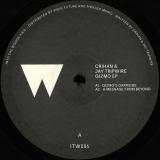
Into The Woods returns to wax with “Gizmo,” marking Crihan and Jay Tripwire’s first collaborative project. Three stripped, hypnotic cuts from two masters of the craft. The aim of this series remains unchanged: to present forward-thinking expressions of minimal. Music for Carpenters and DIY enthusiasts!
Blue Lake reveals his most ambitious album yet, which finds its visionary creator Jason Dungan harnessing the collective alchemy of his band, with ten spirited tracks that resonate with a powerful directness, evoking an ecological connection to the wider world.
The solo project (Blue Lake), now on its fifth album, found its name and inspiration via Don Cherry's 1974 live album, sparking a creative epiphany in Dungan, who set off on a path into his own untapped sonic world, guided by what he cited as the emotional potential found within non-lyrical composition. With a newly inspired ethos aimed toward creating direct and simple instrumental music imbued with a deep sense of feeling, Jason began combining an array of musical elements that gave rise to his highly revered album 'Sun Arcs' (2023), with its "ornate, zither-led lattices" (Pitchfork, Best New Music). Conceived in the blissful isolation of a Swedish cabin set in the woods, this was music that soundtracked spring in full bloom. Then, in contrast to the solitary approach of 'Sun Arcs', the highly lauded mini-album 'Weft' (2025) began to set the tone for a more band-oriented approach to delivering the Blue Lake sound. Jason had by this time experienced a special collective energy with his band during a swathe of live performances, which he then sought to harness and distill on 'The Animal', leading him to take the project into a traditional recording studio (The Village) and its limitless potential along with his gifted cohorts.
'The Animal' at its core vividly celebrates human collaboration and is deeply rooted in a sense of community and non-hierarchical connectivity. The group's creative alchemy transcends outwards and beyond the musicians performing together, to summon an inclusive, existential and ecological connection to the wider world and its inhabited spaces. The album contemplates the idea of the human as an animal as Dungan explains: "I'm quite fascinated in thinking about humans more as part of the animal environment and not as something that's so separated into a "human" realm, or sitting on top of a hierarchical pyramid. So the Animal is also me, or us - that we are just living, existing, in the same way as a piece of moss or a sparrow or a cow.
'The Animal' is a form of musical metamorphosis, still acoustic, yet more amplified, elevating it to new dimensions. The Blue Lake project takes on a new lease of life to encompass collaboration with Jason Dungan bound in a universal connectivity, resulting in his most ambitious album to date. A harmonious rejoicing that cements his reputation as a transformative presence in contemporary music.
- A1: Talla 2Xlc - Bliss (Original Mix)
- A2: Xijaro & Pitch - Sic Parvis Magna (Original Mix)
- A3: Ultra - Free (Talla 2Xlc & Para X Original Mix)
- A4: York, Fawzy, Winterborn - Tales Of The Truth
- A5: Dj Eternity - Atmosphere
- B1: Talla 2Xlc - Bliss (Extended Mix)
- B2: Xijaro & Pitch - Sic Parvis Magna (Extended Mix)
- B3: Ultra - Free (Talla 2Xlc & Para X Extended Mix)
- B4: York, Fawzy, Winterborn - Tales Of The Truth (Extended Mix)
- B5: Dj Eternity - Atmosphere (Extended Mix)
Vol. 1[16,77 €]
Mit World of Trance Vol. 2 erscheint die nächste farbige Limited Edition, kuratiert von Talla 2XLC und gefüllt mit zehn sorgfältig ausgewählten Trance-Hymnen. Die Vinyl präsentiert alle Titel in ihren Original- bzw. Radio-Mixen, während die beiliegende CD sämtliche Tracks in den kraftvollen Extended Versions enthält.
Side A bietet melodische Höhepunkte wie Talla 2XLCs „Bliss“, XiJaro & Pitchs episches „Sic Parvis Magna“, das energiegeladene „Free“ von Ultra, Talla 2XLC & Para X, gefolgt von „Tales Of The Truth“ von York, Fawzy & Winterborn sowie DJ Eternitys atmosphärischem „Atmosphere“.
Side B entfacht weitere Trance-Power mit Tallas „No Fate“ (Zyrus 7 Mix), dem antreibenden „Double Down“ von Woody van Eyden & James Cottle, dem intensiven Zyrus 7 Remix von „Illusion“, dem beeindruckenden „Perplexagon Part 3“ im Daniel-Kandi-Remix sowie dem emotionalen Abschluss „Spirit“ von Talla 2XLC & Ralphie B.
Ein hochwertiges Sammlerstück voller Melodie, Energie und Emotion – World of Trance Vol. 2 ist pures Gold für jeden Trance-Fan.
World of Trance Vol. 2 is the next colourful limited edition, curated by Talla 2XLC and filled with ten carefully selected trance anthems. The vinyl presents all tracks in their original or radio mixes, while the accompanying CD contains all tracks in powerful extended versions.
Side A offers melodic highlights such as Talla 2XLC‘s ‘Bliss’, XiJaro & Pitch‘s epic ‘Sic Parvis Magna’, the energetic “Free” by Ultra, Talla 2XLC & Para X, followed by ‘Tales Of The Truth’ by York, Fawzy & Winterborn and DJ Eternity‘s atmospheric ‘Atmosphere’.
Side B unleashes more trance power with Talla‘s ‘No Fate’ (Zyrus 7 Mix), the driving ‘Double Down’ by Woody van Eyden & James Cottle, the intense Zyrus 7 remix of “Illusion”, the impressive ‘Perplexagon Part 3’ in the Daniel Kandi remix, and the emotional finale ‘Spirit’ by Talla 2XLC & Ralphie B.
A high-quality collector‘s item full of melody, energy and emotion – World of Trance Vol. 2 is pure gold for every trance fan.
‘Açid Blüüs Räägs Vol.2’ is the latest evolution of the sound of last year’s Volume 1. The debut album was described by Joe Banks for Shindig! Magazine as; “Shivering slabs of drone blues transcendentalism…a burning junkyard of sheet metal blues… Hot stuff.” Volume 2 builds on the skronk blues guitar, sax and electronic drones of it’s predecessor, to explore cosmic free jazz, concrete exotica and dub, channelling influences of Moondog, Terry Riley, 75 Dollar Bill and Wolf Eyes. Playing like the imagined film soundtracks to a dystopian, re-wilded, post eco crash world in the style of Tarkovsky's ‘Stalker’ and ’Solaris’, Jodorowsky's surreal desert western ‘El Topo’, or the early novels of JG Ballard. This new collection sees the addition of minimal analogue drum machine loops as well as live instrumental contributions from the new players of the ever evolving Invocation band, plus some superstar guest contributors.
Featuring five brand new tracks, including the forthcoming single; ‘Cosmic Fanfare’, has already picked up BBC 6 Music support from Gideon Coe. The new album was mixed by Alex McGowan (aka Captain Future) of Space Eko Studios and features Invocation band regulars Rick Jensen of Apocalypse Jazz Unit, Skronk and Oneirologist on sax and bass clarinet, Will Emms aka Tiki Eerie on melodica, horns and claviola, plus special guest appearances from Duke Garwood on clarinet and Mikey 'Moondog' Chestnut of Snapped Ankles on bass synth. “….Acid fried kosmiche blues meets drone raag transcendentalism”. Jonny Halifax is a primitivist free blues outsider, sonic shaman of the acid fuzzed lap steel guitar, demented blower of the howling harmonica of doom. His new band project now combines avant swamp blues heaviosity with kosmic free jazz experimentalism in a fluid collective of godless raag brut improvisations - sonic visions of an hallucinatory apocalyptic near future. Inspired by Henry Flynt’s avant bluegrass experiments fusing country blues with eastern acoustic musical stylings, Spacemen 3’s contemporary sitar music, and the monolithic drone doom immersion of Sunn 0))), THE JONNY HALIFAX INVOCATION build hypnotic instrumental soundscapes using lap steel and homemade slide guitars, harmonica and alto sax. Underpinned by layers of acoustic and electronic drone instruments and fed through an arsenal of pedalboard electronics that would make Kevin Shields weep, the blues are transmogrified, unhinged, reduced and re-imagined as intoxicating, trance-inducing, feedback-drenched noise paintings. THE JONNY HALIFAX INVOCATION follows Jonny’s junkshop skronk blues one man band Honkeyfinger, and the Julian Cope endorsed gospel fuzz psychedelia of Jonny Halifax & The Howling Truth, whilst not forgetting his ambient drone metal side project; Deathenteredinerror. His musical CV also includes studio contributions to tracks by Andrew Weatherall’s Two Lone Swordsmen, UK metal behemoths Orange Goblin, Heck and Melting Hand.
On “Cold Sweat,” James Brown famously called to “give the drummer some.” In 1974, Philadelphia vibraphonist Khan Jamal called to Give the Vibes Some, with superb results. Pianist and composer Jef Gilson’s PALM label gave Jamal the platform he needed to deliver a thorough exploration of contemporary vibraphone. After launching PALM in 1973, Gilson quickly demonstrated that he would only produce records not found anywhere else. Give the Vibes Some, PALM number 10, was another confirmation of this guiding principle.
Raised and based in Philadelphia, Khan Jamal took up the vibes in 1968, after two years in the army during which he was stationed in France and Germany. Decisively drawn to the instrument by the work of the Modern Jazz Quartet’s Milt Jackson, Jamal studied under Philadelphia vibraphone legend Bill Lewis and soon made his debuts in the local underground.
Early in 1972, Jamal made his first recording, with the Sounds of Liberation. The band attempted an original fusion of conga-heavy grooves with avant-garde jazz soloing. Saxophonist Byard Lancaster, an important figure in Jamal’s development, contributed much of the solo work. Later in 1972, Jamal made his leader debut with Drum Dance to the Motherland, a reverb-drenched, never-to-be-replicated experiment with live sound processing. Both albums appeared on the tiny musician-run Dogtown label.
“We couldn’t get no play from nowhere. No gigs or recording sessions or anything. So I took off for Paris,” Jamal recalled in a Cadence interview with Ken Weiss. “Within a few weeks, I had a few articles and I did a record date. It didn’t make me feel good about America.” That was in 1974, while Byard Lancaster was recording the music gathered on Souffle Continu’s recent The Complete PALM Recordings, 1973-1974.
Jamal’s record date delivered Give the Vibes Some. At its core, it was an exploratory solo vibraphone album, even if two tracks added (through technological resourcefulness?) a très célèbre French drummer very much into Elvin Jones appearing under pseudonym for contractual reasons. Another track, for which Jamal switched to the vibes’s wooden ancestor, the marimba, added young Texan trumpeter Clint Jackson III. The most notable article published on Jamal during this stay in France was a Jazz Magazine interview. Jamal’s last word there were “The Creator has a master plan/drum dance to the motherland.” “Give the vibes some” could be added to this programmatic statement.
Lantern in the Woods is the new album from musician and multi-instrumentalist Misha Sultan – a project that marks an important milestone for the artist. It is his first work conceived and realized as a coherent, unified statement, from the earliest ideas and sounds to the final mastering.
The story of the album began back in 2021 in Saint Petersburg, during studio jam sessions with Anton (Mårble), Vova Luchanskiy, and Nikita (Minereed). These live
improvisations eventually led to the formation of the collective Sri Primat and left a significant imprint on Misha Sultan’s solo sound. Some of the instrumental parts on the album were recorded during this period, preserving the spirit of spontaneity and open dialogue between the musicians.
Later, after moving to Thailand, Misha recorded the second half of the material. These tracks absorbed the atmosphere of southern nights, tranquility, and comfort – bringing a distinct “bedroom jazzy vibe”, a touch of sentimentality and gentle melancholy into the music.
The album offers a beautiful blend of jazz and various other influences. At its heart, it’s a search for balance between memories and the present moment, between nature and the city, between the light of the lantern and the darkness of the woods.
“It was especially important to me that my friends and close people were involved in this album. Their presence gave the music that warmth and personal feeling I value so much. My brother Zhenya (Dyad), Anton (Mårble), Vova Luchanskiy — they all contributed a part of themselves to these tracks, as did Nina Livanova, who recorded vocal parts for several songs,” says Misha.
Lantern in the Woods is a soft and sincere work, where all things intertwine naturally.
- A1: To The Wilder
- A2: Any Love Of Any Kind Feat Bryce Dessner
- A3: Black Drift
- A4: Story Of Rainy
- B1: Are You There
- B2: Asphalt Maelstrom
- B3: Fragile Things
- B4: Quiet Strike
- C1: Amekara Nijie
- C2: Tmrrw
- C3: Minus Sixty One
- D1: And Now The Bonus Tracks Feat Hideo Kojima
- D2: To The Wilder Feat Elle Fanning
- D3: Any Love Of Any Kind (Choir Version)
- D4: To The Wilder (Piano Version)
- D5: To The Wilder (Instrumental)
WOODKID komponiert die Musik zum heiß erwarteten PlayStation-Spiel "Death Stranding 2: On The Beach". Mit seinem neuen Album "WOODKID FOR DEATH STRANDING 2: ON THE BEACH" zum sehnlichst erwarteten Spiel von Hideo Kojima hebt WOODKID die Idee von Game-Musik auf ein neues Level. Die Songs sind inspiriert von Kojimas Erzählkunst, seinen Figuren und der Welt von Death Stranding - und entfalten sich als eigenständiges Werk voller Tiefe, Kontraste und Atmosphäre.WOODKID, bürgerlich Yoann Lemoine, ist ein französischer Sänger und Komponist. Mit seiner stilsicheren Kombination aus orchestraler Dramatik, elektronischer Präzision und emotionalem Tiefgang hat er sich international einen Namen in der Musik- und Filmwelt gemacht - sowohl als Musiker als auch als Videoproduzent für Künstler:innen wie Rihanna, Lana Del Rey, Pharrell Williams oder Harry Styles. Seine Musik wurde für zahlreiche Film-, Serien- und Videospielproduktionen eingesetzt (Arcane, Assassin's Creed, The Umbrella Academy). Für seine Arbeiten wurde er mehrfach für Grammy- und MTV-Awards nominiert, seine Single "Run Boy Run" wurde weit über fünfhundert Millionen Mal gestreamt. Auch in der Modewelt ist WOODKID präsent - etwa mit Musik für die Shows von Louis Vuitton oder Dior.Über drei Jahre hinweg arbeitete WOODKID eng mit Kojima und dem Team von Kojima Productions zusammen, um Musik zu erschaffen, die weit über klassische Soundtracks hinausgeht. "Jeder Song, jedes Thema wurde in zahllosen Varianten und Schichten komponiert", erklärt WOODKID. Das Ergebnis ist ein Album, das cineastische Orchesterarrangements mit elektronischen Klanglandschaften und eindringlichen Gesangslinien verbindet."Death Stranding 2: On The Beach" ist das neue Werk von Hideo Kojima, einem der visionärsten Köpfe der Gaming-Welt. Als Fortsetzung des vielfach ausgezeichneten ersten Teils, der über 20 Millionen Spieler:innen weltweit erreichte, führt das Spiel die Themen Verbindung, Isolation und Verantwortung in eine neue erzählerische Dimension. Das Spiel besticht zudem durch einen hochkarätigen Cast - darunter Norman Reedus, Léa Seydoux, Troy Baker, Elle Fanning und Shioli Kutsuna - und eine Geschichte, die von den globalen Erfahrungen der letzten Jahre inspiriert ist.Von zarten Melodien bis zu eruptiven Breakcore-Momenten - jeder Track erzählt eine Geschichte. Für die Aufnahmen reiste WOODKID zwischen Paris, Los Angeles und Tokio, um die kreative Vision Kojimas einzufangen. "Es ist manchmal schwer, Hideos Vision ganz zu verstehen, weil sie sich ständig verändert. Man muss dem Prozess vertrauen - und das Ergebnis ist immer überwältigend", sagt er. Was dabei entstand, ist mehr als ein Soundtrack: Es ist ein Manifest künstlerischer Freiheit, ein musikalischer Gegenentwurf zu Konventionen - und eine Hommage an das Anderssein.Die erste Single "To The Wilder" erschien im März 2025 und verzeichnet bereits über 3,7 Millionen Streams weltweit. Das Album erscheint digital, sowie als Vinyl- und CD-Edition - beide mit dem großartigen Artwork des Spiels und als liebevoll gestaltete Sammlerstücke für die internationale Fancommunity.Neben WOODKIDs Album erscheinen zwei weitere Veröffentlichungen zum Spiel: ein Score-Album sowie ein weiteres Song-Album mit noch nicht angekündigten Künstler:innen. Beide erscheinen digital, ebenfalls bei Milan Records.Das Spiel "Death Stranding 2: On The Beach" erscheint am 26. Juni 2025 exklusiv für PlayStation®5.
- A1: The Village Circle
- A2: The Facilitator
- A3: The Offering (Feat. Sypha)
- A4: The Mountain Top
- B1: The Initiates Piece (Feat. Billy Woods)
- B2: The Cleansing
- B3: The Ama (Feat. The Stooky Bros)
- B4: The Shadow Dancer (Feat. Sypha)
- C1: The Burial (Feat. Talibah Safiya)
- C2: The Farmer
- C3: The Serpent Charmer
- D1: The Serviceman
- D2: The Poet Pours Liberations
- D3: The Shamans (Feat. Shabaka Hutchings)
- D4: The Home Celebration
Temple Needs Water. Village Needs Peace." is a philosophical exploration into the essence of community, spirituality, and transformation.
This 15-track collaboration between producer Real Bad Man and Memphis rapper LUKAH medi-tates on themes of unity, leadership, sacrifice, and renewal. With contributions from billy woods (Armand Hammer), Adrian Utley (Portishead), and Shabaka Hutchings, this album ascends through personal and spiritual achievements, delves into the duality of knowledge, the unseen forces, and the cyclical nature of life and death.
The album reflects on growth, resilience, duty, ancestral wisdom, and the healing power of words, culminating in a celebration of inner peace and communal harmony. With a backbone of musically ambitious beats and soul-baring verses, this album carves its mark as the year's most enthralling listen.
- A1: After All This Time, Beirut
- A2: To Die On Any Hill (If It_S Easy Enough To Climb)
- A3: Wooden Giants And Mechanical Birds
- A4: In Dandelion Fields
- A5: Of The Always Puzzle Of Living And Doing
- A6: For Now We Leave The Sky To The Tyrants, And Dig
- B1: Everyone I Love Is Sleeping And I Love Them So So Much
- B2: The Familiar Scenography Of Electrons Waltzing Across The Screen In Your Peripheral Vision, You Avoid Its Gaze Like A Tired Husband You Have Outgrown
- B3: There Are Glorious Labyrinths In The Ground For Those With The Claws To Find Them
- B4: You Saw What You Were Looking At And You Touched What You Were Touching
- B5: Sounds From Home
'Yara Asmar’s new album presents 11 pieces recorded over the past year between the small town of Alfred in upstate New York and Beirut. These sometimes fragile and tentative sound sketches reflect the times as Yara steps out, as if onto ice, into a new life on a new continent during a time of tragedy, turmoil and upheaval. She works with unfamiliar instruments, new materials and new sounds to build on her intimate style; homemade mechanical music boxes and a personal archive of family recordings form the backbone of its delicate textures. Asmar explores the peculiar resonance of the metallophone and her collection of deconstructed toy pianos, and guides her music into ever more surreal territories. The result is a work that is dreamlike, fragmentary and strangely timeless.'
Vibe Ride is the sixth release of Adam Rudolph's Hu Vibrational project and marks his 60th release as a leader or co-leader. Comes with insert and download code.
“With every record, the goal is to explore new creative territory,” explains Rudolph. Vibe Ride continues a deeper exploration of a trance-like groove and a conceptual framework known as Sonic Mandala. This album marks the most complete realization of that idea, partly due to the group's experience touring beforehand. That time on the road helped to refine ideas and strengthen musical chemistry. The recording process unfolded organically—likely due to the long-standing collaboration within ensembles like Go: Organic Orchestra and Moving Pictures, where the musicians have developed a deep familiarity with the shared musical language.
Sonic Mandala refers to a musical approach distinct from traditional linear structures of theme and development. Found in cultures across the globe, it may represent one of the oldest forms of musical expression—predating written history by tens of thousands of years. Today, it is most vividly preserved in the music of the Ituri Forest peoples (Aka, Baka, Ba Benzele, Mbuti), whose sound traditions revolve in cyclical, orbit-like patterns. Vibe Ride seeks to bring that ancient sense of circularity into a contemporary—and perhaps even futuristic—context.
The ensemble of Vibe Ride—Alexis Marcelo, Jerome Harris, Harris Eisenstadt, Neel Murgai, Tim Kieper, and Tripp Dudley—brings exceptional creativity and skill to the project. While grounded in the sonic languages of today, their performance channels an ancient vibrational lineage, connecting with ancestral sound makers who were attuned to the rhythms of the sun, moon, stars, and seasons. Human beings have always been deeply responsive to natural cycles.
Like a mandala, where the circle reveals itself as a spiral—always returning, but never to the exact same point—the Sonic Mandala musical experience spirals through motion. Refined signal patterns emerge through overtone-rich instrumentation. The groove becomes a threshold, shifting the listener from passive observation into active, even transcendent, participation. With open ears and an open mind, the sound spirals inward—toward a primal center—and outward into the cosmos. When this elevated state is shared among participants, it creates what mystics describe as resonance.
Vibe Ride thrives on the distinctive sonic voices of its players, interwoven with care and nuance into the compositions. Hu Vibrational merges elements of world music, electronica, and improvised jazz into something both funky and spiritual, intense and soothing.
Using signature techniques of organic orchestration, layered arrangement, and electronic processing, the compositions are sculpted from percussion, electronics, and ethereal textures. Rhythmic foundations drawn from diverse traditions serve not as endpoints, but as building blocks. As the saying goes, “Orchestration is the key.” In shaping the sound, the aim was to discover fresh ways of balancing structure and sonic color. As Don Cherry once said: “The swing is in the sound.”
The audiophile LP was carefully recorded, mixed, and mastered by James Dellatacoma—longtime engineer for both Bill Laswell and Rudolph—at Laswell’s Orange Studio.
“This crew artfully blends together to create a seamless tapestry of rhythm… the end results are mesmerizing. Hu Vibrational is all about communing with the groove spirits and creating worlds where earthy rhythms and other-worldly sounds are one.”
— Dan Bilawsky, All Music Guide
“You can be sure that when Adam Rudolph and an ensemble of breathtaking drummers get together mystical and wonderful things will happen.”
— Raul da Gama,
“A stunning effort, enjoyable and grows with repeated listening.”
— Stefan Wood, Freejazzcollective
Continually are proud to present Tonchius - Waiting for Tee EP, the long-anticipated debut EP from Continually label head and boss-lady Tonchius. This four-tracker move between steady percussion rhythms, minimalistic acid grooves, electro-breaks, and rooted in the raw energy of hardware drum machines and synthesizers. Crafted over several years, each track weaves together influences from Norwegian woods, mythology, and layered electronic soundscapes. A-side opens with "Metawoods" which builds on hypnotic evolving acid lines and grounded percussion, while “Ørret” continues the acid with a psychedelic flavour. On the flip-side, the title track "Waiting for Tee" pushes into bass-filled and breaky patterns, before "Pica Pollo" rounds off with a playful, percussive flow carried by a dreamstate foundation.
The electronic producer Franz Kirmann returns to Bytes for his eighth solo album. The “Almadies” are long wooden boats used by Senegalese fishermen. It is also the name of the neighborhood where Kirmann grew up, in the suburbs of Dakar, Senegal, near the Atlantic Ocean. "These new compositions are the result of sound experiments conducted over the past few months and reflections on the concept of mind-constructed geographies," Kirmann explains. "The way memories and souvenirs shape an image of a place or country that is part reality, part fantasy, part cliché, yet also deeply personal. This experience is influenced by education, social background, history, and other socio-economic factors. " The ten tracks are crafted from collages of electronic sounds blended with field recordings from various places Kirmann has visited — from Dakar to the Caribbean, as well as London and Paris. His aim is to blur the line between electronically generated sounds and real soundscapes, creating music where it becomes difficult to distinguish the real from the constructed. All the sounds on the album were produced using synthesizers and field recordings. No drum machines, percussion or traditional acoustic instruments were used. Influences include Brian Eno and John Hassell’s Fourth World, Vol. 1: Possible Musics (1980), described by Hassell as "a unified primitive/futuristic sound combining features of world ethnic styles with advanced electronic techniques" , which also works in the context of Almadies. Another big influence was Ariel Kalma’s Le Temps Des Moissons (1975) as well as artists including O Yuki Conjugate and Robert Aiki Aubrey Lowe to Susumu Yokota and Michael Banabila.
- A1: Bambu" (Melvin Sparks)
- A2: Knock On Wood (Steve Cropper, Eddie Floyd)
- A3: Bus Ride (Wilson)
- B1: Orange Peel (Wilson)
- B2: Twenty-Five Miles (Johnny Bristol, Harvey Fuqua, Edwin Starr
- B3: Blue Mode (Wilson)
The organist’s classic 1970 album. His third record for Blue Note and one of the key soul-jazz workouts of the era. Recorded at the Van Gelder Studio on 12th December 1969. Produced by Blue Note co-founder Francis Wolff. Featuring a red-hot backing band of tenor saxophonist John Manning, guitarist Melvin Sparks and drummer Tommy Derrick. Highlights of the album include Wilson’s dynamic originals ‘Bus Ride’, ‘Orange Peel’ and the title track, plus great covers of Eddie Floyd’s ‘Knock On Wood’ and Edwin Starr’s ‘Twenty-Five Miles’. Wilson recorded two subsequent Blue Note albums: Set Us Free and A Groovy Situation.
- A1: Title Screen
- A2: Not Hecn Around
- A3: This
- A4: Turing Complete
- A5: Dumplings
- A6: Ooo What’s That Feat Quelle Chris & Cavalier
- A7: Frogtown
- A8: Night Time Feat E L U C I D
- A9: Jocelyn
- B1: Dragoncurve Feat K-The-I???
- B2: Orange Tree
- B3: Yeahyeah Feat Pink Siifu
- B4: The Center Feat Moor Mother & Billy Woods
- B5: Lights On At The Club
After a busy summer on the road, Silverlining launches Forgotten Chorus, a new imprint for deep, hypnotic and abstract body music. The idea was born at a festival, where low frequencies drifting through the natural filter of English woods prompted him to mentally fill the gaps of the higher registers. Three weeks later, he wrote ‘Salvaged Chimes (From the Rubble of Sound)’, an almost verbatim recreation of the track he’d imagined. For Silverlining, this moment of embracing discarded sound became emblematic of how overlooked voices, such as those of the oppressed and forgotten, can still resonate if we choose to listen differently.
This concept led to experimentation with flint-knapper John Lord and conceptual artist Antonia Beard, whose recordings he sampled of the ancient practice of striking flint, humanity's first technology. Those sounds were then cut and made into all the instruments, save for the TR-909, that comprise 'Attuned To Detune'. The EP’s lead track, ‘Folk Dust’, pushes high-tempo breakbeats through Silverlining’s own lens on UK broken techno, balancing raw energy with ethereal melodies.
Forgotten Chorus seeks to celebrate the beauty in sounds and stories that fall outside the dominant narrative. Its debut release, a fast-paced, three-track techno EP by Silverlining, embodies this spirit and marks another step in his evolving exploration of new sonic ground.
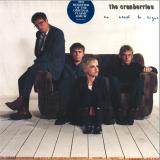
- A1: Ode To My Family (4 31)
- A2: I Can't Be With You (3 04)
- A3: Twenty One (3 08)
- A4: Zombie (5 08)
- A5: Empty (3 26)
- A6: Everything I Said (3 51)
- A7: The Icicle Melts (2 52)
- B1: Disappointment (4 10)
- B2: Ridiculous Thoughts (4 27)
- B3: Dreaming My Dreams (3 36)
- B4: Yeats' Grave (3 04)
- B5: Daffodil Lament (6 06)
- B6: No Need To Argue (2 53)
Double[34,03 €]
Zur Feier des 30-jährigen Jubiläums erscheint das bahnbrechende mit Multi Platin ausgezeichnete Album
und Meisterwerk der Cranberries „No Need To Argue“. Das Album enthält neu abgemischte Remastered Audios vom Produzenten des Originalalbums Stephen Street, 2 brandneue Remixe von Iain Cook
von Chvrches, unveröffentlichte Live-Musik von Woodstock ’94 und das unveröffentlichte Demo des FanFavoriten „Zombie“.
- A1: Sir Benni Miles
- A2: Roaches Don’t Fly
- A3: Black Sunlight Featuring Kayana
- A4: Indian Summer
- A5: Aubergine Featuring Fielded
- A6: God’s Feet
- A7: Peppertree
- B1: Scaffolds
- B2: Falling Out The Sky Featuring Earl Sweatshirt
- B3: Wishing Bad Featuring Curly Castro & Amani
- B4: Chicharrones Featuring Quelle Chris
- B5: Squeegee
- B6: Robert Moses
- B7: Stonefruit
Looking back more than four years later at Haram, it is easier to see the forest for the trees. At the time, much of the attention fell on how this outsider duo would fare under the bright lights- which was fair, Armand Hammer had never done a single producer record before- and here they were working with a living legend. Now, with a little distance, it’s easier to see how Alchemist stepped out of his comfort zone to meet them where they were, and how all three artists then absconded for parts unknown. The flashbulb energy of “Bring The Stars Out”, asymmetric drone of “Chicharrones”, fugue-bounce of “God’s Feet”, and good luck finding analogues for “Peppertree” or “Stonefruit”. Haram doesn’t sound like anything else in the ALC discography, nor in Armand Hammer’s, for that matter. Haram was a one-shot kill that somehow contained some of the most accessible work ELUCID and billy woods had ever done, as well as some of their most experimental, and it all sounded cohesive.
Needless to say, they didn’t do this alone; KAYANA’s golden voice upps the wattage on “Black Sunlight,” while Fielded’s sultry alto gets chopped and screwed on “Aubergine”. Earl Sweatshirt’s cameo on the sun-soaked “Falling Out the Sky” is already a classic. Curly Castro, Amani, and Quelle Chris all turn up the heat when called upon.
But since we are talking about retrospect here, the thing about Haram isn’t that it still sounds as good as it did when it came out. The amazing thing is that it actually sounds even better than it did then. You don’t have to take our word for it either, run it up one time, with the lights low and something on ice, see if it doesn’t take you somewhere new, again.
Big Thief will release their sixth studio album, Double Infinity, on 5 September 2025.
Double Infinity is the follow-up to 2022’s Grammy-nominated album, Dragon New Warm Mountain I Believe In You, recorded last winter at the Power Station, New York City. For three solid weeks, the trio would ride bicycles on frozen streets between Brooklyn and Manhattan, meeting in Power’s Station’s warm wood-panelled room. Together with a community of musicians (Alena Spanger, Caleb Michel, Hannah Cohen, Jon Nellen, Joshua Crumbly, June McDoom, Laraaji, Mikel Patrick Avery, Mikey Buishas) they would play for nine hours a day, tracking together – simultaneously – improvising arrangements and making collective discoveries. Double Infinity was produced, engineered and mixed by longtime Big Thief collaborator Dom Monks.
“How can beauty that is living be anything but true?” Adrianne asks as she drives nose against the future with childhood mementos on ‘Incomprehensible’. She understands, “everything I see from now on will be something new.” The silver hairs on her shoulders are new as well. Yet fear of aging is cracked by proof. If a life is shaped by living, “Let gravity be my sculptor, let the wind do my hair.” Being born, then staying a while, remains the greatest mystery. Adrianne claims her place and time. “Incomprehensible, let me be.”
g 7. Grandmother ft. Laraaji
[g] 7. Grandmother [ft. Laraaji]
[g] B2. Grandmother [ft. Laraaji]
[g] B2. Grandmother [ft. Laraaji]
Deruta Records opens its catalog with “Dela Secu” ,a two- track EP from acclaimed Romanian producer Cezar Lazar. The EP stands out as a musical manifesto, challenging the techno-house scene’s drift into mainstream quicksand.
“Solo 2305” introduces the EP with orchestral strings and a polymetric woodwind theme anchored by a steady groove, crafting a soundscape where tension and release unfold with precision. The woodwinds’ evolving motif lends a lyrical contour that completes the arrangement. “Yaka Yaka” turns toward intricate syncopations, its rhythmic complexity enriched by subtle orchestral inflections. A central polyrhythm drives the track, heightening its tension while adding depth to the groove.
Mastered by Vlad Caia and cut to lacquer by Mike Grinser, the tracks are crafted for the dancefloor, shaped by Cezar’s signature lyrical motifs that define his standing in minimal and experimental techno.
This debut sets the tone for Deruta Records: boundary- blurring and unapologetically underground.
- A1: Laraaji
- A2: Peshawar
- A3: Calypso Gene (Feat Silka & Cleo Reed)
- A4: Glue Traps (Feat Quelle Chris)
- A5: Scandinavia
- A6: Nil By Mouth
- A7: Dogeared (Feat Kapwani)
- B1: Crisis Phone (Feat Pink Siifu)
- B2: Moonbow
- B3: No Grabba
- B4: U Know My Body
- B5: Longjohns (Feat Quelle Chris & Cleo Reed)
- B6: California Games (Feat Earl Sweatshirt)
- B7: Super Nintendo
Armand Hammer und The Alchemist erschaffen Welten. Ihre erste war Haram, die nach wie vor in ihrer Umlaufbahn gefangen ist, gleichermaßen üppig wie bedrohlich. Ihre neue Welt heißt Mercy und besteht aus Blut und Imperium, Kinderlachen, unbezahlten Strafzetteln und Dingen, die noch nicht geschehen sind. Die Rapper ELUCID und billy woods werden am Mikrofon von Earl Sweatshirt, Quelle Chris, Cleo Reed, Pink Siifu, Kapwani und Silka begleitet. The Alchemist hat alles andere übernommen.
Arriving two years after the first chapter, Absurd Matter 2 isn’t just a sequel, it’s an evolution, redrawing the boundaries established by its acclaimed predecessor. The Berlin-based Italian producer tempers his confrontational sonics with rare moments of introspection, shifting seamlessly between blown-out noise, warped hip-hop, mutant club experimentation, and weightless ambience. Textures disintegrate and reassemble, rhythms flex and crumble, and every detail balances on the edge of fantasy. It’s a poetic, layered response to Nino Pedone’s changing physical reality: the gradual hearing loss and perceptual renegotiation triggered by Ménière’s disease, which struck him in 2022. At first, the experience felt like betrayal, a brutal disconnection from the very sense that had shaped his life. But over time, the disorientation turned into a strange kind of focus. The silence between sounds became as expressive as the sounds themselves.
The first Absurd Matter was a visceral reaction to trauma; the second is more reflective – an ambiguous chronicle of sensory recalibration. Pedone doesn’t represent his altered inner reality through extremes, but through depth, zooming in on illusory distortions, tense rhythmic fluctuations, and fragmented sonics. Dense, immersive, and mystical, the album mirrors Pedone’s evolving relationship with perception itself.
Tinnitus-like feedback wails and noir-ish strings introduce “Repeater”, making it immediately clear that Pedone is painting a more delicately finessed image this time around. Fleshed out by raps from cult MCs billy woods and E L U C I D, the track is marked by subtle, sophisticated contrasts: the blurred, inverted rhythms that couch Armand Hammer’s haunted back-and-forth, and the glitchy interference that offsets the lavish orchestral phrases. Backwoodz associate Fatboi Sharif lends his Lynchian drawl to “Bandage Chipped Wings”, grounding Pedone’s lysergic rhythmic distortions with syrupy, horror-inspired couplets. Pedone also invites discomfort into “Crash Landing”, with droning, metallic tones that contradict South Central rapper ICECOLDBISHOP’s elastic flow. “Bitch, I don't give a fuck about anybody,” he squawks over Pedone’s incongruous rasping textures and time-warped beats, “cash out at any party.” Working alongside London’s Loraine James on production, Pedone reunites with Moor Mother on “I Saw The Light”, blending James’ soft-focus atmospherics with soundsystem-damaging, overdriven bass hits and rusted percussive snips. Moor Mother’s assertive words hover over the wreckage, tightening Pedone’s themes of overstimulation and altered awareness as they stutter and veer off course, vanishing into the backdrop.
Contrasting his more pensive experiments, Pedone’s dancefloor deviations are more concentrated on Absurd Matter 2 than ever before. He torches a stuttering dembow structure on “X”, obfuscating the rhythm’s familiar energy with disturbing audio hallucinations. On “Splintered”, he reunites with Kenyan prodigy Slikback, mangling neon-lit trance arpeggios with dissociated trap rhythms. He sharpens his skills to a fine point on “Oblivion Step”, observing 2- step through a lens of distortion and personal abstraction, shaking blipping synth leads over neck-snapping drums and counteracting the momentum with airless sci-fi soundscapes.
Perhaps the album’s most surprising moment arrives with “Viel”, which features vocals from Los Angeles-based composer Kaitlyn Aurelia Smith. Together, Pedone and Smith chance upon their notion of dub techno, fogging synth stabs and ghostly vocal traces into eerie harmonic distortions. On some level, it’s almost pop music, a far cry from the bleak dissonance of Absurd Matter and a hopeful way to reframe turbulence as transformation. Absurd Matter 2 doesn’t simply document a process; it enacts one. It doesn’t offer clarity; it invites disorientation. It’s not a map of the labyrinth, but a foghorn piercing the darkness.
Despite immense challenges, SOYUZ have delivered a career-defining album in KROK.
“Krok” means “step” in Belarusian - and for Alex Chumak and his band this word comes with a lot of meaning. It’s the title and theme that ran throughout СОЮЗ (SOYUZ)'s fourth album, reflecting the journeys the band has navigated in recent years, having moved to Warsaw due to political unrest in their homeland of Belarus and the outbreak of war in Ukraine. Embracing the uncertainty became both the inspiration and main lyrical theme for Alex Chumak, SOYUZ’ composer and arranger, who also decided to go a step further and change the language in which he writes songs from Russian, which is used as lingua franca in many post-Soviet countries, to his native Belarusian. The result is nine songs about dreams and outer space, ordinary miracles, things very close and very distant at the same time.
In early 2022, Chumak and original members, Mikita Arlou and Anton Nemahai, joined tens of thousands of Belarusians seeking safety abroad. Resettling in Warsaw, the band released Force of the Wind in October 2022, garnering widespread acclaim, a string of major European gigs, and led to Polish musicians Albert Karch and Igor Wiśniewski joining the band.
Deeper and more melancholic than previous works, KROK is quintessentially SOYUZ, laced with hope, dreams and a celebration of life. Given the difficulties with finding rehearsal and recording spaces in Warsaw and the departure of the drummer Anton Nemahai from the band, Chumak explored alternative options. He reached out to friend and fellow musical collaborator, Sessa, about the possibility of recording the new album in his recently finished studio in São Paulo, with Sessa and Biel Basile coming onboard as recording engineers.
At the tail end of 2024, Chumak and SOYUZ’ new drummer, Albert Karch, made the trip to São Paulo to record the first sessions for KROK. Laid down directly to tape, these sessions featured prominent Brazilian musicians Sessa, Biel Basile, and Marcelo Cabral, with a guest vocal feature by Tim Bernardes recorded at a later date. The final touches were then added back in Europe. Lush string and woodwind arrangements written by Chumak and Karch were recorded at the Polish Radio studio in Warsaw, and Rhodes parts were added by Chumak at Sven Wunder’s studio in Stockholm.
Though primarily recorded in Brazil, KROK is not a Brazilian or MPB album. It blends the band’s Eastern European roots with jazz, folk and global influences. The genre of the music is hardly identifiable: there are folk ballads and jazz-driven pop compositions covered in lush and often dissonant string and woodwind arrangements where each note is placed with care and meaning behind it.
The title track was the first song Chumak wrote in Belarusian as an adult, making for a fitting opener and one of the band’s finest tracks. Darker than most of SOYUZ’ songs, the tensions lift and lighten as the track progresses. The cinematic library jazz of 'Voo Livre', with ghostly vocals sung by Ciça Góes and Ina, feels like a modern twist on the Italian library composer Alessandro Alessandroni through its sublime choir and woodwind orchestration. Elsewhere, the heartfelt 'Lingua Do Mundo', composed, written, and sung by Chumak and the incredible Tim Bernardes, features one of the standout string arrangements from Chumak and Karch. 'Cichi Karahod' is an instant SOYUZ classic, almost Pat Metheny-esque as it opens, with the acoustic guitar and bass riff transitioning into jazzy AOR / pop-folk territory. The record closes with 'Smak žyćcia', a gentle, dreamy spoken-word poetry piece in Japanese by singer-songwriter Manami Kakudo.
- A1: Yellow Days
- A2: Find A Way
- A3: Everyday Words
- A4: It’s Ok, Feel It
- A5: Windup
- B1: Get Along
- B2: Smile Today
- B3: Inner Meaning
- B4: Nostalgia
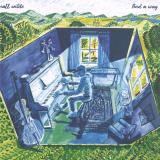
'Find a Way' is the new album from Manchester-based pianist, composer, and producer Matt Wilde, released via his own imprint Hello World Records. The album serves as a reminder that creativity should be accessible and the importance of opening yourself to the unexpected as you 'Find a Way' through all endeavours. Digging into improvisation and jazz harmony on the LP, he crafts a sound that bridges jazz, hip hop, and electronic music, adding: "The creative act is not a matter of waiting for the perfect conditions, but of moving gently, insistently, through the imperfect".
Focus and title track "Find a Way" encapsulates this journey of process. Humans are known for adaptation and response when they face challenges, seeking solutions towards a better world. "Find a Way" leans into our instinctive reaction to improvise and reshape, taking the listener on an unexpected journey. The opening loop could as easily feel at home as part of an electronic soundscape, developing into a clock-like effect from the drums. This keeps time, allowing a duet between keys and trumpet to unfold, symbolising the individual, imperfect and non-linear paths we all carve out day to day.
The album was funded by Arts Council England and created in close collaboration with trumpeter and composer Aaron Wood, with the pair recording in Aaron's rural DIY studio in Huddersfield. Through improvising upright piano, Rhodes and trumpet over intricately programmed beats, the duo captured the spontaneity that makes jazz feel alive, but with the forward-facing touch of Ableton live production. "I actually had live drums recorded for this project and then deleted all of them and instead programmed intricate drums on Ableton live myself to create the kinds of drum sounds I could hear in my head," Matt adds, explaining the onerous process that truly made 'Find a Way' a labour of love.
Matt Wilde discovered jazz through an unconventional journey, and 'Find a Way' is an introspective map of this musical development. Starting out as a self-taught beatmaker, growing up Matt made tracks for friends in the grime scene before falling in love with jazz through the sample-heavy works of Madlib, J Dilla, and Pete Rock. Hints of this influence can be found on "Windup", driven by a deeper bass and a glitchy intensity not commonly associated with jazz. There are also nods to the weekly DJ residencies Matt had in his late teens, establishing a love for club music at iconic Manchester venues like Sankeys. "It's Ok, Feel it" incorporates pitched-up kicks and crisp, papery snares that pay tribute to UK dance culture and the foundation of connection in this world.
Guided by values of accessibility and creativity, Matt has become a key voice in the UK's boundary-pushing jazz and beats scene. His debut album 'Hello World' alongside EPs and single releases, have been championed by the likes of BBC Radio 1, Jamie Cullum and Soweto Kinch (BBC Radio 2), 'Round Midnight (BBC Radio 3), and across BBC 6Music, Jazz FM and Worldwide FM. He has performed headline shows at Band on the Wall (Manchester) and The Lower Third (London) and showcased his music at Brick Lane Jazz Festival and London's iconic Jazz Café.
A proud Mancunian with Polish roots, Matt's values-driven approach reflects his passion for community and empowering others through the arts. Matt founded the UK's first youth-led charity and is a trustee of Manchester music charity Brighter Sound. Driven by these values of equality and inclusion, Hello World Records strives to champion grassroots music with a backbone of fairness built into the business model. The imprint is named after Matt's debut album, released via Band on the Wall Recordings; simultaneously championing the music scene and global musical footprint of Manchester and highlighting the importance of artists reminding people: Hello World, I've made it. I'm still here.
- Martha Cleary, Glow Artists
Presenting a joyous double dose of Brazilian pífano magic by João do Pife, taken from his iconic Folclore Alagoano LP and pressed for the first time on 7” vinyl. The infectious, uplifting energy of the instrumental track 'Garoto Do Pife' has been a dancefloor weapon for revered selectors such as Gilles Peterson, Cliffy and the Mr Bongo DJs, and we are proud to be reissuing it for the first time.
The pífano, pifaro or pife, which creates the distinctive melodies in these tracks, is a simple seven-hole woodwind instrument from the Northeast region of Brazil. Often made out of bamboo or taquara wood, they are rich in folkloric music tradition and paired with percussion instruments to form the Bandas de Pífanos groups, which originated from the Northeastern states of the country. "Pifeiros” such as João do Pife, Edmilson do Pífano, and Carlos Malta brought the pífano into a wider public eye through their albums and vinyl recordings.
A part of pífano maestro João do Pife’s rich legacy, these two mesmerizing and timeless tracks originate from his sought-after 1975 LP Folclore Alagoano, released on the Tropicana label. Born João Alfredo Marques dos Santos in 1943, in Riacho das Almas, João do Pife became an ambassador of Northern Brazilian culture and folklore through his music, which placed the pífano centre stage.
For this 7" issue, we have curated two of our favourite tracks from the album, 'Garoto Do Pife' and 'Homenagem a Ludugero', that exude a driving and joyous dancefloor energy. With lively accordion and organ accompaniments that weave around João do Pife's sublime pífano playing, they channel a folk spirit that will resonate deep within your soul.
As inspiration for the picture sleeve, we have adapted the original cover photo art for this 7 inch issue. João do Pife’s music, which is housed within, will sweep you away to Northeastern Brazil in an instant.
Returning for a full EP under the new solo alias, Wilba brings fresh twist on his trademark Duowe sound, reimagined through a more emotive and immersive lens. Inspired by sets seen over festival this latest offering brings four moody cuts that blur the lines between Electro and Tech House.
Stripped-back drum grooves, rumbling basslines, and echo-laced synths designed to move bodies and minds deep in woodland rave clearings.
Retracing steps of old habits, this time with a few new tricks.
The Danish/Norwegian duo of Ida Urd and Ingri Høyland believe that music is an extension of one’s immediate sensory environment. Duvet, their collaborative full-length debut, explores the way that creating sounds together is intertwined with various quotidian actions: establishing surroundings, rearranging furniture, moving towards the light, collecting flowers or other objects for aesthetic and sensuous impulses. Through a quiet and attentive process, music becomes a way of nurturing space: a soft architecture for play, writing, care, or simply rest.
Sonically, Duvet feels like an extension of Høyland’s last album, 2023’s Ode to Stone, which also featured Urd along with ambient musician Sofie Birch and visual artist Lea Guldditte Hestelund. But where that album, created in response to an open call for work themed around Denmark’s national parks, suggested rolling landscapes and endless horizons, Duvet turns inward, countering chill winds with glowing warmth. Its eight tracks seek a balance between abstraction and melody, intention and happenstance.
“We had a truly inspiring and rewarding process working with Birk Gjerlufsen Nielsen from Vanessa Amara, who co-produced and mixed the album with us,” Ingri adds. “He approached the material with great care and sensitivity, while also bringing his own distinct presence and creativity into the sound.”
Høyland and Urd both studied at the Rhythmic Music Conservatory in Copenhagen, which has turned out many acclaimed artists over the past few years, including Erica de Casier, Astrid Sonne, and Smerz. Over many years, the two composers have developed a collaborative method based on connection and trust. A practice, they write, “where composing, or rather suggesting, sounds and melodies for one another is a way of carefully talking, mending emotions and obstacles. Saying yes to one another. The compositional space becomes a nest for entangling whatever emotions, thoughts, or barriers one of the composers brings to the given day or moment.”
Quiet and contemplative, Duvet is simple on the surface but rich in timbral, textural, and emotional complexity. Høyland and Urd sourced their sounds from an array of instruments and techniques—electronic devices, modules, pedals, and also electroacoustic treatments of various wind instruments.
Mixing primarily through analog tape units added further mystery and depth, weaving together wordless voices and unknown sounds—breathing, rustling, perhaps the coppery gleam of Urd’s electric bass—into a dynamic matrix. Like a nest, pull one twig and the whole thing unravels.
In the winter of 2023, Ingri Høyland and Ida Urd retreated to a summer house along the coast to create the album. Picture the scene: an abiding quiet all around. Gardens carpeted by snow; beach grass silvery against the silvery sky; a tendril of smoke rising from the chimney. Not another soul in earshot. This sanctuary was the perfect setting to yield this meditation on shelter, trust, and communication. The two composers hope the album can be a similar space for others—a temporary space of residence, it can represent a summerhouse, a cabin in the woods, your favorite bench or wherever you need to go. “The album also works really well when picking out apples in the supermarket” Urd laughs.
- A1: When I Sing, I Slip Into The Microphone. Into That Void, I Bring Comrade "Prayers", Then, Turning To Face The Outside, Together We Explode. Part I
- B1: When I Sing, I Slip Into The Microphone. Into That Void, I Bring Comrade "Prayers", Then, Turning To Face The Outside, Together We Explode. Part Ii
- C1: When I Sing, I Slip Into The Microphone. Into That Void, I Bring Comrade "Prayers", Then, Turning To Face The Outside, Together We Explode. Part Ii (Continued)
- D1: When I Sing, I Slip Into The Microphone. Into That Void, I Bring Comrade "Prayers", Then, Turning To Face The Outside, Together We Explode. Part Ii (Conclusion)
- D2: When I Sing, I Slip Into The Microphone. Into That Void, I Bring Comrade "Prayers", Then, Turning To Face The Outside, Together We Explode. Part Iii
Among the true Keiji Haino devotees, Nijiumu’s Era of Sad Wings (released on P.S.F. in 1993) has always held a special place in the pantheon. Operating for only a few years in the early 90s and apparently only performing a handful of shows, Nijiumu operated at the opposite end of the dynamic spectrum to Haino’s famed power trio Fushitsusha, dwelling in a hushed, meditative realm of mysterious droning sonorities and free-floating melodies that occasionally erupts into violence. Black Truffle is pleased to announce a new double-LP edition of a lesser-known 1994 Nijiumu recording, When I sing, I slip into the microphone. Into that void, I bring comrade “prayers”, then, turning to face the outside, together we explode. Here, Nijiumu is the trio of Haino, Tetuzi Akiyama and the obscure Takashi Matsuoka, the three performing on a wide variety of string, wind and percussion instruments, as well as electric guitar and bass, and Haino’s unmistakeable voice.
Like on the early solo Haino album that shares the group’s name (released on P.S.F. in 1993), the instrumentation swims in reverb (the use of which Akiyama recalls as ‘a kind of point of the band’), often obscuring the instrumental sources. On the short opening piece, a distant reed instrument arcs long buzzing melodies over a bed of cymbals and gongs, like a psychedelic take on Tibetan music. The epic second part, occupying almost 50 minutes, begins as a splayed, near-formless cloud of electric guitar and bass, shadowed by bowed and plucked strings, the three elements working through twisting atonal shapes. At various points in the recording, we hear what seems to be the sounds of musicians moving between instruments, their shuffling and bumps fitting seamlessly into this radically open music. Eventually, what sounds like electric guitar moves closer to the foreground, fixing on a repeated melodic cell around which hover mysterious clouds of long tones and a sporadic shaker. At the half-hour mark, the music begins to build to a violently emotive climax, Haino’s impassioned vocal cries punctuating a lumbering, bass-heavy murk, contrasted at points by what sounds like a tin whistle. Suddenly, the volume drops to a near-whisper, opening the way for the stunning final moments, which touch on the slow-motion balladry of Haino’s classic Affection, here given an eccentric twist by an occasional woodblock hit. The third piece opens with a hazy trio of rumbling bass, bowed strings and abstracted slide guitar, the latter calling to mind some of Akiyama’s later solo work. Eventually joined by Haino’s voice, its fragile, haunted tone might remind the listener of the man in black’s documented love of the madrigals of the murderous Count Gesualdo, before the recording abruptly breaks off mid-note. In this new edition, the Nijiumu trio recording is supplemented by a piece recorded solo by Haino in 1973, a bracing electronic blowout stretching almost half an hour. Using a homemade electronics setup to unleash a barrage of crunching distortion and shuddering harmonic fuzz, it takes its place in the canon of extreme live electronics next to Robert Ashley’s Wolfman and Walter Marchetti’s Osmanthus fragrans, looking forward to extreme noise years before Merzbow. Taken as a whole, these four sides of music are a stunning document of some of the lesser-known waystations of Haino’s singular creative path.
- A1: Will Thomson / Paul Mottram — Electrospheres / Incandescence (2025 Medley)
- A2: Paul Lewis — Hello Spring
- A3: Douglas Wood — Making Parts
- A4: Paul Lewis — Goodbye Autumn
- A5: Paul Lewis — Colourful Life Suite Flowers
- A6: Peter Nicholas — Pastoral Reflections
- A7: Vince Cross — One Summer’s Night
- A8: James Harpham — Slow Motion
- A9: James Harpham — Candle Flute / Mexican Motel (2025 Medley)
- A10: Cliff Johns — Man O’vibes
- A11: James Harpham — Asian Dolls
- A12: James Harpham — Pastoral
- A13: James Harpham — Flower Garden
- A14: Liane Carroll — Sweet Dreams
- A15: Bob Cort — Humming Song
- B1: James Harpham — Flight Landing
- B2: John Hyde, Andrew Procter — Promise Of Beauty
- B3: Trevor Nightingale — On The Wing
- B4: James Asher / Pete Willsher, Tony Kelly — Extra Silky / Funk Fobia (2025 Medley)
- B5: Trevor Nightingale — Wastelands
- B6: Stan Medcalf / Pete Giles, Sean Houchin — Computer Games / Night Trawler (2025 Medley)
- B7: James Asher — Asian Workload
- B8: John Brown — Slope Soaring
- B9: James Harpham — Star Blossom
- B12: John Hyde, Andrew Procter — Private Thoughts
- B10: Harry Wild — Barcarolle Blues
- B11: David Stoll — Tight Corner
Since the 1940s, Library Music has lurked in the shadows, peripherally touching our lives through TV and film. Among the stalwarts of the industry was UK's Studio G, with cues heard on Doctor Who, and sampled by the likes of The Chemical Brothers, and Tyler, the Creator. Jazz Dispensary's Dream a Dream with Studio G: Cratedigger's Archive (1970–2009) culls some of their most sought-after cuts, with liner note commentary from Saint Etienne’s Bob Stanley, and illustrations by Ivan Minsloff.
- A1: If It Matters
- A2: Wreckage
- A3: Turn Ugly
- A4: Exoskeleton
- A5: Cuckoo Goes The Clock (Feat Cam Thomas)
- A6: The Moment That You Know (Interlude)
- A7: Nichiyoubi (Feat Célia Tiab)
- B1: Take Cover
- B2: The Fool (Feat Sly5Thave)
- B3: Truman
- B4: Withdrawn (Feat Scarlett Fae)
- B5: Phone Home (Feat Aaron Wood &Amp; Célia Tiab)
Nigerian-born, London-based singer, songwriter, musician and producer Steven Bamidele presents his keenly anticipated sophomore album, 'THE CRASH!' – a sonically rich exploration of purpose, doubt and personal reckoning. Written against the backdrop of an ever-changing world, the album combines soul, rock, jazz, acoustic and electronic textures, along with daydream-esque storytelling for a thought-provoking journey in pursuit of something real in an age of hyper-curation and superficiality.
At its core, 'THE CRASH!' is a soulful meditation on the weight we place on relationships, the fundamental cost of growth, and the search for direction in an imperfect world. It's a deeply personal project, shaped by Steven's own journey through faith, disillusionment and self-discovery. Raised in a strictly Christian household, Steven's first crisis of belief came at 17, when he began questioning the very foundations of existence. As his faith unravelled, music became his new guiding force – a source of direction, discipline and identity. But as he turned 30, disillusionment crept in once again. The stark realities of the music industry, coupled with global uncertainty, reignited that same despondent weight he had battled in his youth.
"It was an intoxicating feeling when I was younger and had no responsibilities, to foolishly believe I was the first person in history who'd worked something out that no one else had. It gave me this twisted sense of power and was a big creative motivator. Where I'm at now, nihilism is debilitating, boring and unhelpful. I've worked to find a way to channel those feelings into this project. I'm really proud of it."– Steven Bamidele
Drummer-composer Tom Skinner announces Kaleidoscopic Visions, his second solo album, out 26th September 2025 via Brownswood Recordings and International Anthem
Kaleidoscopic Visions unfolds across two distinct sonic landscapes. Side A presents entirely instrumental compositions performed by Skinner's live Bishara band—bassist Tom Herbert, cellist Kareem Dayes, and Robert Stillman and Chelsea Carmichael on various woodwinds and reeds—with electric guitar on two tracks courtesy of Portishead's Adrian Utley. A drummer-composer bringing his wealth of experience to bear on the role of bandleader, Skinner composed primarily on guitar, embracing the freedom that came with writing on his secondary instrument.
These compositions include "Auster," dedicated to late novelist Paul Auster, and "Margaret Anne," which honours Skinner's mother Anne Shasby, a former classical concert pianist prodigy who abandoned her own promising career in the face of systemic misogyny, only to impart on her son what Skinner calls "the gift of music."
Skinner’s musical world opens further on Side B, where a collection of poised vocal collaborations stretch out from jazz and improvisation towards a more dream-like, soulful sound. The centerpiece is "The Maxim," a ten-minute collaboration with Grammy Award-winning Meshell Ndegeocello, a dubby, spacious meditation on life and death, delivered with a free-spirited grace. For Skinner, working with Ndegeocello—whom he first saw at Glastonbury as a teenager in 1994—represents a full-circle moment, indicative of the indirect paths and inspirational detours that have shaped his life.
The album goes on to feature South Carolina-based singer Contour (Khari Lucas) who appears on the low-lit soul ballad ‘Logue’, and closes with ‘See How They Run’, featuring London keyboardist-vocalist Yaffra (Jonathan Geyevu). It is the album’s most overtly lyrical track, an articulate exposition of jazz-inflected spoken word that speaks not only to the genre-fluid nature of the music but the breadth of Skinner’s palette.
This should come as no surprise. On Kaleidoscopic Visions, one of London’s most vital musical figures gives us a sparkling glimpse of the multi-coloured lens through which his unique sound is now refracting.
2025 Repress
Renowned producer and DJ Yuri Suzuki is back with a bang, releasing his latest record titled "Border" via the iconic Detroit Underground label. This new release features eight electrifying acid tracks that blend the infectious grooves of jacking house and the driving energy of techno.
Yuri Suzuki has been a pivotal figure in the electronic music scene, known for his unique sound and innovative production techniques. With "Border," he takes listeners on a journey through the pulsating heart of the underground music culture. Each track showcases his knack for crafting infectious rhythms and hypnotic melodies, making this vinyl a must-have for any serious collector or DJ looking to elevate their set.
The tracks on "Border" are a perfect representation of the classic acid sounds that have been making a resurgence in recent years. From the moment the needle hits the vinyl, listeners are transported to a world where the dance floor is king, and the beats are relentless. Yuri's signature style shines through, combining crisp percussion, gritty basslines, and infectious samples that create an irresistible urge to move.
“Most of these tracks were produced in the 90s, in my small room at my parents' apartment in Tokyo. At the time, I hadn't experienced a real rave, and my exposure to the culture was limited to the information I could find on the early internet. As a result, the music I created was inspired by an imagined rave scene, capturing the essence of something both distant and exciting.” - Yuri Suzuki
- A1: Domed
- A2: The Beautiful Silence
- A3: Rive Droite
- A4: Mary Of The Woods
- B1: The Way The Land Lies
- B2: The Legend Of Mucklow
- B3: Untitled
- B4: Candace
- C1: Stay Away From The Accordion Girl
- C2: The Saracen's Head
- C3: On This Day
- C4: A Man With A Drum
- C5: Under The Stars
- D1: Fellows (Demo)
- D2: Autumn Girl (Demo)
- D3: Fold & Fold Again (Demo)
- D4: Burn (Demo)
- D5: Keep The Flame (Demo)
- D6: This Way (Demo)
‘(Listen for) The Rag and Bone Man’ - Reissued and available on vinyl for the first time, was the album that marked the renaissance of the band in 2007, bringing them out of the quietest and most hermetic period of their existence and setting them back on course to establishing themselves as the global, underground phenomenon that they are today.
This new, remastered, edition includes six previously unreleased pieces, written during the same period but not included on the original album.
A work that takes us on a dreamlike journey through dark landscapes coloured by a guitar that brings to mind the trademark sound of their formative years and populated by characters as diverse as the nursery rhyme like ‘A man with a drum’ to William Faulkners ‘Candace’.
The vinyl comes as a gatefold, double album. Also available on CD with booklet including lyrics and photographs. ‘And Also The Trees’ are currently writing their sixteenth studio album and will be performing live in numerous European venues throughout 2025.
The formative years of Hunter Thompson’s music as Akasha System were seeded and shaped by the shrouded meadows and wet woodlands of the Pacific Northwest: Sea Glass, Shadow Self, Echo Earth, Geomind. But pandemic flux flipped the script, prompting a migration to the monsoon tropics of Tampa. Heliocene ushers in a fresh chapter in the Akashic record, recasting the project’s precision synergy of cellular melody, holographic pads, spiral tribalism, and eco-futurist swing for a new solar age.
The album’s eight songs were recorded across 2023 and 2024, inspired by explorations of the many sanctuaries hidden in Florida’s ragged paradise: singing towers, ancient grottoes, emerald lagoons. From vortex house (“Purity Vector,” “Sun Particle”) to mirage electronica (“Haunted Planet,” “Soma Totem”) to hand drum divination (“Terraform Dream”), the sides flow, glow, and gleam, dialed in but dreaming out, tracing radiant waves of the eternal now.
“This album is a meditation to experience where and when you are, fully and wholly, regardless of where the path leads.”