In four short years of existence, Green Lung have risen from the murk of the UK heavy underground to become a true cult band with a devoted following. Debut album Woodland Rites, released independently in early 2019, quickly garnered attention, resulting in a single being named ‘Track of the Week’ in the Guardian, plays on Daniel P. Carter’s Radio One Rock Show, a tour with fellow UK heavies Puppy and festival appearances across Europe. This brought the band to the attention of the wider music industry, and after multiple offers (including one from a major label) the band decided to stay true to their roots and sign with the Finnish audio wizards at Svart Records, home to several of their doomy inspirations including Reverend Bizarre and Warning. Svart’s deluxe reissue of the album, and the preceding EP Free the Witch,sold out several runs. Two years later, the folk horror-obsessed fivesome have re-emerged from their mulchy catacombs armed with dozens of freshly-whittled riffs. Black Harvest, the sequel to Woodland Rites, is a more colourful, widescreen reimagining of the band’s sound - Dawn of the Dead to its predecessor’s Night of the Living. Recorded at Giant Wafer Studios in rural mid-Wales over the course of two weeks with longtime producer Wayne Adams (Petbrick, Big Lad), it’s a more expansive and textured record than anything the band have done before, boasting a cinematic quality and more attention to detail.
Suche:the wood
It’s almost four years since their last opus - two years since the most-recent run
of live shows. Now, Bitchin Bajas return from whatever kind of rare ether they
occupy when they’re at home, bearing the riches of the whole cosmos in their
hands. And strictly OG as well - on cassette only.
‘Switched On Ra’ is the outcome of a typical Bajas exercise: pouring some out
for the pioneers that came before (as they’ve done with Bitchitronics and their
participation in the annual Chicago performance of ‘In C’ over the years). It’s a
nice way to get a flow - they play a little of themselves, then some for the
pioneers, then a little more for the band. Before long, they’re playing with the
inspirations twined, as they can only come from within.
For ‘Switched On Ra’, this meant a deep delve into the song-book of one of their
soul-predecessors, Sun Ra, whose music is literally written in the Bajas DNA.
Digging into this music sounded wild on paper: the drone synth group taking on
the Arkestra harmonies and Ra’s loose grooves? The trick was to get that sense
of rhythm to translate across the spectrum from Ra to Bajas, in a way that
worked for them both.
Their rearrangements of the tunes went good - up and down the EQ band, they
were finding the round sounds and jagged edges that brought Ra’s music into
their own thing. Then at the last minute, there was another twist - why not pay
tribute to the Queen herself, and think of the arrangements with a Wendy Carlos
vibe? A little side homage? After all, ‘Switched on Bach’ was visionary, bringing
analogue synths from the outside all the way into the mainstream in the late 60s -
and this take on Ra is meant to take him to new ears everywhere.
Sun Ra of course was his own kind of original keyboard visionary, using electric
keyboards in the late 40s and 50s to fill a role in jazz that had traditionally been
played on acoustic piano only. Once he’d done so, he took his writing in
directions inspired by the electricity, places no one had thought to go before
then.
Bitchin Bajas have been content to dominate in a microtonal world, usually
without a single chord to be found anywhere. But here, they step up righteously,
their vibe triangulated as they bring Ra’s music forward with some Wendy C
style, making an unexpected space for all to thrive. There’s a real feeling of joy
as these collected signals bounce off the tape and through the speakers into
your space.
To get this unique colloid exactly right, Bitchin Bajas used nineteen different
keyboards. They abstained from deploying their arsenal of reed and woodwind
instruments: everything had to be on the keys. This meant Yamahas, Rolands,
Korgs, Casios, a MicroMoog and of course their trusty Ace Tone organ. They
even broke out the Crumar DS-2, to have some of Ra’s chosen tone in the mix.
Then Jayve Montgomery added an EWI as a solo voice on a few tunes, just to
get some air-blown signal (and a natural shout out to EWI master Marshall Allen)
in there, after all. It felt like somewhere in the universe, Ra was decreeing it.
Folk Implosion's fan favorite album is available on cassette for the first time! They say there's always something special about the first time and this record is that first time for the Folk Implosion. The band left the acoustic guitars and fragmentary sketch modus operandi of their earlier cassette behind to focus on an eccentric version of home studio craft, held together by a few cheap microphones (including a Radio Shack PZM) and a Tascam cassette 4-track recorder sequestered under the eaves of a 3rd floor, Cambridge Massachusetts double-decker house apartment. Wood floors and Christmas lights were as much a part of the vibe as an Ampeg VT 40 guitar amp and a small chord organ. The duo would wait until the downstairs neighbor went to work in the morning and then would play until the tunes snapped like a high-pitched snare drum. The setup would close down just before the neighbor came home from work, keeping the peace long enough to see the project through to completion. Once tracked, the band snuck into Fort Apache studios with Tim O'Heir (producer of Sebadoh's 'Bakesale' LP) early one morning, freeloading off the Sebadoh sessions that were set to get going that afternoon. Tim mixed the songs through a very hi-fi Neve board in a matter of hours with the Tascam sitting right on the giant board like a tugboat keeping time with an oil tanker. The duo hoped that the spirits of ancestors like The Troggs, Devo, Al Green, and The Bee Gees would be pleased with the scent of tribute that arose from the ashes of the pyre. Today, they are pleased to see the Slaps and the Sputniks on view again nearly 30 years later. Tracklisting: 1. Blossom 2. Sputnik's Down 3. Slap Me 4. Chicken Squawk 5. Spiderweb-Butterfly 6. Had To Find Out 7. Better Than Allrite 8. Why Do They Hide 9. Winter's Day 10. Boyfriend, Girlfriend 11. Shake A Little Heaven 12. Waltzin' With Your Ego 13. Take A Look Inside 14. Start Again
Minas-cover Minas is a world music duet comprised of Orlando Haddad and Patricia King. Minas reflects a perfect musical marriage with a stage presence and chemistry that only a lifetime can produce. Drawing on the passionate styles of Brazilian and American roots music, the two create a fresh and innovative sound. With a catalog of 8 recordings released on their label Bluezul and a collection of over 100 songs, they have been building their reputation. Multi-talented as composers, vocalists, and instrumentalists, and equally comfortable in Brazilian jazz, folk, and classical genres, Minas is now bringing their world music approach to the Beatles with their latest album titled Beatles in Bossa. This re-imagination of fourteen Beatles' songs is infused with American Jazz and Brazilian styles of Bossa Nova, Samba, Choro, Partido Alto, Afoxé, Marcha Rancho, and Frevo. "Blackbird" has a nylon-strung guitar and vocal intro that sets the tone for this Brazilian-themed arrangement. Minasminas-1 transforms the melody to something new while still keeping the theme recognizable. The male and female vocals of Haddad and King blend beautifully as the band builds a relaxed Brazilian feel. John Swana plays an expressive Evi solo, adding a modern color while still being vivid. Haddad wrote this creative arrangement with a fresh approach to this classic Beatles melody. "With A Little Help From My Friends" is another Brazilian arrangement that is all Minas. The concept came from Haddad and King with the horn arrangement provided by Andrew Neu. Haddad's nylon-strung guitar keeps a Latin pattern as the horns accent the two vocalists trading phrases of the melody. Neu plays an exciting solo. The arrangement is rewarding, enabling us to hear the melodic lines, harmony, and orchestration from a different perspective.minas-2Minas' Beatles in Bossa impresses with its natural, vibrant, and heartfelt presence, allowing us to hear and appreciate the colors and textures of the exceptional music of the Beatles through a Brazilian perspective and thoughtful performances.
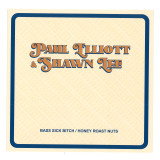
Quirky as fuck!' is the term to describe the latest killer 45 from Paul Elliott & Shawn Lee.
Since they crossed paths over a decade ago, Paul (Eleven76/Hot Border Special/The Mighty Mocambos) & Shawn (Ping Pong
Orchestra/Young Gun Silver Fox) have collaborated on many impressive projects including the critically acclaimed documentary The Library Music Film. The pair share a love of weird, exotic, otherworldly sounds that can usually only be found in classic library music.
However, with their latest release on Farfalla Records, they take the listener on a deep dive into the strange, percussive and unusual
world they inhabit!
'Bass Sick Bitch' begins with a glitchy toy rhythm and leads into a voice memo of a wooden 'Jank tone' instrument that Shawn had
played and recorded for Paul to hear. Paul's low slung drums and percussion take off and the pair exchange phrases on some of their
unusual instruments. This one has a head nod groove and a breakbeat that poppers, lockers and bboys can get down to...
'Honey Roast Nuts' is introduced with a rhythm Paul literally played on an old tin of Honey Roast Nuts, hence the name....Shawn creates
the vibe with Polynesian Ukulele, guitar and retro futuristic synthesized sounds, all the while a 70s inspired bass guitar keeps the mood up. The middle of the tune is stopped in its tracks when a voicemail recording from Paul's phone pops up and Shawn's fried brain takes us out with a modulated guitar!
Take a trip with Paul Elliott & Shawn Lee, It's all good in the motherfucking hood yo!
Dickie Landry & Lawrence Weiner's Having Been Built on Sand was conceived as a vinyl edition and released by the Rüdiger Schöttle gallery in Munich with sleeve design by Weiner. The piece consists of eight untitled tracks. Lawrence Weiner, Tina Girouard, and Britta Le Va recite text with Dickie Landry’s woodwinds, all recorded in the natural reverb of Robert Rauschenberg’s studio, a former mission and chapel in Lower Manhattan. Layering Girouard in English, Le Va in German, and Weiner in English and German blocks of related or physically proximal texts repeat, invert, and intersect with Landry’s music as a constant. The layers of text and sound have meanings that fluctuate in complexity and scope, and like much of Weiner’s work, beyond mere facts.
The first piece is a trio for Landry’s keening tenor, repeating winnowed but breathy lines that contrast with and buoy Le Va’s clear, husky phrases, building in intensity as Weiner, in English, offers statements that are caught just off mic. The third cut adds Girouard, and one can hear woven parallels in the two women’s voices, cadences, and pitches, with Weiner’s cutting inflection dancing amid them. Landry’s bass clarinet is rich in its warble, full and gentle with woody footfalls that demarcate shapes through the chorus. Vocal rhythmic cycles, wordless in nature, are the energy that courses through the fourth song, urgent and sweaty as Weiner recites statements of political position in the Middle Ages, Le Va declaiming alongside in German. On soprano saxophone for the fifth tune, Landry pierces and darts in a bright manner in a private dialogue with himself, echoing Steve Lacy as female voices nearly bury one
Born and raised in the piney woods outside of Haynesville, Louisiana, Chris Canterbury comes from the grimy remnants of a small oil patch town, a way of life that is slowly fading but still lingers in the songs he sings. Born to a working-class blue-collar family, Chris struggled to find the middle ground between his grandfather’s Southern Baptist sermons and the honky-tonk mystics that he discovered on old vinyl records in high school. Armed with an old thrift-shop guitar, Chris began playing and writing stories about life from a unique but oddly familiar point-of-view. Songs about liquor stores, truck stops, low-rent motels, and the grifters and transients that frequent them. It doesn’t matter if it’s a pool hall or a theater, a festival or a front porch, Chris’s live sound is the whiskey-laden prospectus that anyone with a struggle can relate to.
Jude Woodhead AKA Saint Jude is a born and bred South London based producer who first approached songwriting after being diagnosed with Tinnitus which prevented him from pursuing his DJ career. While his previous works found space between genres, with elements of indie, ambient pop, hip-hop, Uk garage and noise, his debut self-produced album 'Signal' - out in November 2022 - rejects the limitations of genres altogether while anchoring his music firmly in the sounds of his native South London.
Conceptualized during the lockdown in 2020, ‘Signal’ is a self-portrait about coming of age during a time of political crisis and social change. Enlisting the help of past collaborators and friends (Aga Ujma, Low Loudly - Sarah from Drug Store Romeos - Louis Culture, Trim, HALINA and Zeke Ultra), Jude uses a wide range of voices to communicate different perspectives on his subject matter.
Live At The L.A. Forum präsentiert einen außergewöhnlichen Auftritt der Jimi Hendrix Experience im April 1969. Vor einem ausverkauften Haus spielten Hendrix, Schlagzeuger Mitch Mitchell und Bassist Noel Redding ein einzigartiges Set mit Highlights wie "I Don't Live Today", "Purple Haze", "Red House" und einem erstaunlichen Medley aus "Voodoo Child (Slight Return)" und "Sunshine Of Your Love" von Cream. Diese unverfälschte Aufnahme, die von Hendrix' langjährigem Tontechniker Eddie Kramer neu abgemischt wurde, fängt die Jimi Hendrix Experience in ihrer unvergleichlichen Hochform ein. Ein Teil dieses Auftritts war zuvor Teil einer kurzlebigen Westwood One Radio-Dokumentationsbox Lifelines 1990-1992, war aber seit zwei Jahrzehnten nicht mehr in irgendeiner Form erhältlich. Die CD-Veröffentlichung mit einem 24-seitigen Booklet - komplett mit Linernotes von Billy Gibbons von ZZ Top, der die Show aus erster Hand miterlebte - gibt diesem bahnbrechenden Auftritt die richtige Plattform und präsentiert den kompletten Auftritt, der direkt von den originalen 8-Spur-Masterbändern abgemischt wurde.Enregistrée au printemps 1969 devant un public déchaîné et à guichets fermés, la performance captivante de la formation originale (Jimi Hendrix, Mitch Mitchell et Noel Redding) n'a jamais été publiée dans son intégralité. Cet album sort à temps pour le 80e anniversaire de la naissance de Jimi Hendrix. Après le succès massif du tiercé gagnant Are You Experienced, Axis: Bold as Love, Electric Ladyland en 1967-68, le trio est devenu l'attraction internationale la plus populaire du rock. C'est au L.A. Forum que le groupe dévoile pour la première fois la fameuse reprise de « The Star Spangled Banner », que Jimi allait canoniser quatre mois plus tard à Woodstock. Le live comprend «Purple Haze» et un medley incendiaire de 17 minutes de « Voodoo Child (Return) » et « Sunshine Of Your Love » de Cream. Le concert a été enregistré simultanément par Wally Heider et Bill Halverson, et récemment remixé par Eddie Kramer, producteur et ingénieur de longue date de Hendrix, pour une fidélité audio maximale et inclut une préface de Billy Gibbons de ZZ Top, qui a assisté au concert en 1969.
Die 1984 gegründete Band Sepultura ist der
wahrscheinlich größte brasilianische Musikexport und
feierte im Laufe ihrer Karriere weltweit große Erfolge. Bis
heute haben sie fünfzehn Studioalben veröffentlicht und
weltweit über 20 Millionen Einheiten verkauft. "Dante XXI",
ursprünglich 2006 veröffentlicht, ist das 10. Studioalbum
der Band und basiert auf den drei Teilen von Dantes
"Göttlicher Komödie": Hölle, Fegefeuer und Paradies.
Following on from the success of "Tape 1/Tape 2" and "Tape 3/Tape 4" on Soundway Records, Felbm delivers an extended vinyl edition of his 2021 cassette release "Elements of Nature". Field recordings and an array of new instruments and textures abound, as Felbm explores new territory in library music, jazz and classical contemporary. The album includes obi strip, fold-out poster and 2 vinyl-only tracks.
- A1: Breathe (Feat Lily James)
- A2: Coconut Grove (Feat Homeboy Sandman)
- A3: Don't Even Try It (Feat Liam Bailey)
- A4: Lesson 1956 (Feat Jamie Cullum & Dj Woody)
- A5: My Energy (Feat Eva Lazarus)
- B1: Feel Like Home (Feat The House Gospel Choir)
- B2: Airplane Mode (Feat Lily James & Choosey)
- B3: Harder I Rock (Feat Choosey)
- B4: Way Home (Feat O Love)
- B5: Don't Mean A Thing (Feat Beardyman)
Dressed in a powder blue suit with the frilly shirt to match, DJ Yoda invites you to be his +1 for ‘Prom Nite’, his new album promising retro Americana full of daydreaming reverie, international megastar guests, trip hop acknowledging the likes of Morcheeba and Nightmares on Wax, and the turntable extraordinaire’s bread and butter of cuts, beats and rhymes.
Certainly no stranger to retro sounds having famously peppered his DJ and AV sets with the unexpected the world over, and his ‘How to Cut n Paste’ mix series going all the way back to the 30s, Yoda’s harp-laden puppy love vibe spreads from the sweet and mellow sound of 2019’s ‘Home Cooking’, an album described as ‘boundary-breaking’ by Mojo upon slotting nicely into the UK’s blooming jazz canon. Think deliciously harmonised doo-wop murmuring ‘Goodnight Sweetheart’ with an eye for dreamboats en route to Makeout Point – on ‘My Energy’, Eva Lazarus takes the form of an earth angel, with Yoda on jukebox cut-ups, taking it back to starry-eyed, clean cut days of wonder (or more recently, Little Mix’s ‘Love Me Like You’).
Beginning enigmatically with the assistance of Hollywood A-lister (and former next-door neighbour) Lily James, ‘Breathe’ demonstrate Yoda’s continued evolution as a musician (not to mention shrewd decision maker), with James’ vocal confidence - a little Lana del Rey to her breathiness - returning on the velvet-smooth ‘Airplane Mode’. It’s a smartly executed soundclash accentuated by LA rapper Choosey, the star of the album’s straightest hip-hop shooter ‘Harder I Rock’. Homeboy Sandman adds some kick to the prom punch with typical wordplay sent down ‘Coconut Grove’, and Liam Bailey is perfectly cast for the darkly cinematic sway of ‘Don’t Even Try It’.
On an album of many talking points, the LP’s crowning glory is opening single ‘Feel Like Home’: featuring the vocal comforts of the House Gospel Choir, it’s your go–to pick-me-up when the chips are down, targeting the hairs on the backs of necks like a softer focus version of Jamie xx’s ‘Loud Places’. Extended into an alternative, equally uplifting form by Beardyman’s ‘Don’t Mean Thing’, summer festival season already has its homecoming anthem.
With tongues wagging, the twists and turns step away from Heartbreak Ridge when O Love tucks into the mouthwatering shopping list funk of ‘Way Home’; and ‘Lesson 1956’, featuring Jamie Cullum and DJ Woody, jauntily pays homage to classic Cut Chemist alchemy, Yoda’s celebrated turntable tomfoolery back in full effect and extending the flavours found in ‘Home Cooking’.
Again maximising the experience and enjoyment gained from recording live instruments and prioritising songs over beats, Yoda continues to progress with a mixture of risk-taking, elite musicianship, nostalgia brought bang up to date, and ultimately, good clean fun capable of stirring your soul, making ‘Prom Nite’ a date to remember.
Magpie artwork supplied by London’s ENDLESS, whose signature style has tagged Liberty and Lagerfeld as but two high profile clients, Yoda again maximises the experience and enjoyment gained from recording live instruments and prioritising songs over beats. His continued progress mixes risk-taking, elite musicianship, nostalgia brought bang up to date, and ultimately, good clean fun capable of stirring your soul, making ‘Prom Nite’ a date to remember.
Featured 7” Vinyl singles:
Feel Like Home (feat. The House Gospel Choir)/ Don’t Mean A Thing (feat. Beardyman)
My Energy (feat. Eva Lazarus)/Lesson 1956 (feat. Jamie Cullum & DJ Woody)
Toronto’s Dan Lee steps out of the spotlight and into the producer’s chair on the new collaborative Lee Paradise LP, Lee Paradise & Co., due October 28 2022 on Telephone Explosion. Lee Paradise & Co. follows 2020’s critically acclaimed The Fink LP, and finds Lee flipping the shadowy nihilism of the project’s previous releases upward into a sort of cybernetic universality. This is Dan Lee in producer mode, veering away from the pursuit of a singular musical direction rooted in personal vision, towards of a process rich in collaboration, emotional expansion and tonal exploration.
Starting off as a set of mood-focusedinstrumental sketches drafted by Dan on his own, the compositions began coloringthemselves in after he started sending the tracks out to collaborators, asking them to contribute without much in the way of direction or intention. With help from an ensemble cast of artists including Carlyn Bezic (Jane Inc.), Jonathan Pappo (Scott Hardware, No Frills, Ducks Ltd), Scott Hardware, Isla Craig, Victoria Cheong (New Chance), Jay Anderson, Charise Aragoza & Lukas Cheung (Mother Tongues) and Daniel Woodhead (Moon King), nearly every aspect of this album’s creation eventually became open to collaboration, from musical performances, lyric writing, and vocals all the way through to mixing and mastering.
Sonically, the record is still unmistakably Lee Paradise: a widescreen polyrhythmic psychedelia that melts, bubbles, whirrs and klanks; the sound of the human and the machine grooving in accordance towards new futures. The album’s sonic palette is at once synthetic, warm and extraterrestrial. Arpeggiated square wave melodies dance in lockstep with crunching hi-hats, digital bells and chimes fall like crystal rain in stereo above plush pads and gurgling bass figures. Used to finishing the records on his own, Lee mixed this album with Montreal’s Asher Gould-Murtagh and the results are spacious, dusty and dubbed out. “Carnival” sets the scene with it’s stuttering, busted funk groove and ribbons of aqueous vocal harmony from New Chance’s Victoria Cheong. “Raffles”(featuring one of Daniel’s two vocal performances on the record) radiates a mellow optimism in its solar-warped balearic bliss. The album’s final track, “Youngish” is a gliding, melancholic downtempo instrumental thumper saturated in a kaleidoscopic array of lysergic tones. As always, the record anchors itself to the dancefloor with the screwed-down electro of “Cement”, the swinging midnight afterglow of “Leaving” and “CS2X”’s fluttering rave arpeggios.
Lee Paradise & Co. is the sound of an expert producer and sound sculptor conceding to the elusive flows of inspiration, knocking genre conventions askew and hopscotching between a variety of styles, musical identities and sound worlds with absolute panache.
Written and recorded between 1972 and 1982 in Western Oregon, Back to the Woodlands is a previously unreleased, and nearly lost, album made by Ernest Hood during the same era as his near mythical album Neighborhoods . A visionary combination of field recordings, zithers, and synthesizers, Back to the Woodlands offers an unprecedented depth of access to this singular artistic mind. Born into a musical family, Ernest Hood began a promising career as a jazz guitarist during the 1940s, touring internationally with his brother Bill Hood and the saxophonist Charlie Barnet , before contracting polio in his late twenties. The disease left Ernest unable to play the guitar and confined him to a wheelchair for the rest of his life. It also forced him to adapt and innovate around his musical practices in the face of adversity; Hood's value of sound matured with a remarkably democratic and nonhierarchical approach and application. Taking up the zither, a less physically-demanding stringed instrument to the guitar, embarking upon the unprecedented process of incorporating field recordings into his work as early as 1956, and eventually discovering the synthesizer, Hood's music became imbued with optimism and subtle cultural critique. This ethos and technique - refined over the coming decades - would lay the groundwork for a sprawling body of radio work, mail order recordings for homebound listeners, and Neighborhoods , self- issued as a small vinyl edition in 1975. Where Neighborhoods , a nostalgic opus, drawing from a well of collective memory of the 1950s, is defined by traces of human activity, Back to the Woodlands leaves the modern world behind, delving into Hood's love for nature. Only recently discovered in his archives, the album dramatically expands his concept of "musical cinematography," imagistically triggering states of sensory memory from within its zither and synthesizer melodies, intertwined with field recordings made during Hood's extensive travels throughout Oregon. If Neighborhoods is a retreat into the gauzy joys of a romanticized past, Back to the Woodlands is an immersion in the timeless sanctuary of the natural world. A fascinating counterpoint to its predecessor, Back to the Woodlands brings us even closer to Hood's belief in the transportive qualities of sound; that field recordings could serve as a vehicle for the imagination and liberation, particularly for those with similar mobile disabilities as his own. Across the album's twelve compositions, the rippling instrumental harmonics - shifting between abstraction and playful melody - fold so seamlessly into the birdsong, bubbling brooks, and other environmental ambiences, that they often give the impression of having been recording within the landscapes toward which they whisper. Falling somewhere between the immersive calm of healing music and New Age, the creative field recording practices of sound ecologists world building for Folkways, and the jazz infected ambiences during Obscure / Editions EG's highest heights, Back to the Woodlands sculpts an singular proximity of music for its moment; a form of ambient sonic realism that draws the consciousness toward its surroundings as much as within. Working closely with his estate to maintain his original vision, Freedom to Spend has restored and remastered this never before released, lost masterpiece by Ernest Hood from the original tapes. Ernest Hood's Back to the Woodlands will be issued on vinyl, as well as on CD in combination with its contemporary Where the Woods Begin , with new liner notes by Michael Klausman . On behalf of Ernest Hood and Freedom To Spend, a portion of the proceeds from this release will benefit Oregon Wild, an organization dedicated to protecting and restoring Oregon's wildlands, wildlife, and waters as an enduring legacy for future generations.
Written and recorded between 1972 and 1982 in Western Oregon, Back to the Woodlands is a previously unreleased, and nearly lost, album made by Ernest Hood during the same era as his near mythical album Neighborhoods. A visionary combination of field recordings, zithers, and synthesizers, Back to the Woodlands offers an unprecedented depth of access to this singular artistic mind.
Born into a musical family, Ernest Hood began a promising career as a jazz guitarist during the 1940s, touring internationally with his brother Bill Hood and the saxophonist Charlie Barnet, before contracting polio in his late twenties. The disease left Ernest unable to play the guitar and confined him to a wheelchair for the rest of his life. It also forced him to adapt and innovate around his musical practices in the face of adversity; Hood’s value of sound matured with a remarkably democratic and nonhierarchical approach and application.
Taking up the zither, a less physically-demanding stringed instrument to the guitar, embarking upon the unprecedented process of incorporating field recordings into his work as early as 1956, and eventually discovering the synthesizer, Hood’s music became imbued with optimism and subtle cultural critique. This ethos and technique - refined over the coming decades - would lay the groundwork for a sprawling body of radio work, mail order recordings for homebound listeners, and Neighborhoods, self-issued as a small vinyl edition in 1975.
Where Neighborhoods, a nostalgic opus, drawing from a well of collective memory of the 1950s, is defined by traces of human activity, Back to the Woodlands leaves the modern world behind, delving into Hood’s love for nature. Only recently discovered in his archives, the album dramatically expands his concept of “musical cinematography,” imagistically triggering states of sensory memory from within its zither and synthesizer melodies, intertwined with field recordings made during Hood’s extensive travels throughout Oregon. If Neighborhoods is a retreat into the gauzy joys of a romanticized past, Back to the Woodlands is an immersion in the timeless sanctuary of the natural world.
- A1: Two 6’S Upside Down Feat. Woody Guthrie
- A2: Talking Jukebox
- A3: Ten Times More Feat. Woody Guthrie
- A4: Never Git Drunk No More Feat. Nikki Lane
- A5: All You Fonies
- B1: The Last One Feat. Evan Felker Of Turnpike Troubadours
- B2: Cadillac, Cadillac
- B3: Waters Are A’risin
- B4: Where Trouble Is At
- B5: Dig A Hole
- B6: Never Git Drunk No More Feat. Nikki Lane (Alternate Version)*
Crystal Clear Vinyl[36,51 €]
Dropkick Murphys veröffentlichen ein Album, das anders sein wird, als alles, für das die Bostoner Punkband bisher bekannt ist: Sie vertonen Woody Guthries Worte auf 'This Machine Still Kills Fascists'. Das Album wird am 30. September über PIAS/Dummy Luck Music (das bandeigene Label) auf CD erscheinen und am 11. November auf Vinyl.
In den 10 Songs auf 'This Machine Still Kills Fascists' übersetzen Dropkick Murphys Woody Guthries ewige Sticheleien gegen das Leben - viele davon aus den 1940er und 50er Jahren - in die Gegenwart, wobei die daraus resultierende Musik unheimlich relevant für die heutige Welt ist. Und das alles ohne ihr übliches Arsenal an E-Gitarren. Tatsächlich wurde kein einziger Verstärker verwendet, sondern DKM nutzten ihre ganze Kraft, um Woodys Texte zum Leben zu erwecken.
- A1: Two 6’S Upside Down Feat. Woody Guthrie
- A2: Talking Jukebox
- A3: Ten Times More Feat. Woody Guthrie
- A4: Never Git Drunk No More Feat. Nikki Lane
- A5: All You Fonies
- B1: The Last One Feat. Evan Felker Of Turnpike Troubadours
- B2: Cadillac, Cadillac
- B3: Waters Are A’risin
- B4: Where Trouble Is At
- B5: Dig A Hole
- B6: Never Git Drunk No More Feat. Nikki Lane (Alternate Version)*
Black Vinyl[32,56 €]
Dropkick Murphys veröffentlichen ein Album, das anders sein wird, als alles, für das die Bostoner Punkband bisher bekannt ist: Sie vertonen Woody Guthries Worte auf 'This Machine Still Kills Fascists'. Das Album wird am 30. September über PIAS/Dummy Luck Music (das bandeigene Label) auf CD erscheinen und am 11. November auf Vinyl.
In den 10 Songs auf 'This Machine Still Kills Fascists' übersetzen Dropkick Murphys Woody Guthries ewige Sticheleien gegen das Leben - viele davon aus den 1940er und 50er Jahren - in die Gegenwart, wobei die daraus resultierende Musik unheimlich relevant für die heutige Welt ist. Und das alles ohne ihr übliches Arsenal an E-Gitarren. Tatsächlich wurde kein einziger Verstärker verwendet, sondern DKM nutzten ihre ganze Kraft, um Woodys Texte zum Leben zu erwecken.
Eugene Lamont Johnson a.k.a E Lamont Johnson or Lamont Johnson holds the distinction of being the first internationally recognized fretless bassist in R&B music. Born April 20th 1955 in Highland Park, Michigan. Lamont rose to prominence as a session musician on Gloster Williams &The King Vision’s 1977 gospel album project “Together” (Gospel Roots -5005). In the same year Lamont featured as part of the celebrated Detroit based band Brainstorm their best-selling 1977 album “Stormin’” for Tabu Records. Brainstorm was initially formed during 1975 by bandleader and saxophonist Charles ‘Chuck’ Overton, and included lead vocalist Belita Woods, Lamont Johnson on Fretless bass, Renell Gonsalves on drums, Trenita ‘Treaty’ Womack on percussion, flute and backing vocals, Bob Ross (a.k.a Professor RJ Ross) on keyboards, Gerald ‘Jerry’ Kent on guitar, Jeryl Bright on trombone and ‘Leaping’ Larry Sims on trumpet and flugelhorn. The album was recorded during 1976 and released the following year. It contained the disco hit “Loving Is Really My Game” the popular “Wake Up And Be Somebody” and the radio hit “This Must Be Heaven” a beautifully crafted ballad featuring the lead vocals of Lamont which still receives continued airplay to this day. Lamont did not feature on the band’s two subsequent album projects “Journey To The Light” (Tabu 35327) in 1978 and “Funky Entertainment” (Tabu 35749) in 1979.
The year1978 was to prove to be one of the most prolific of Lamont’s recording career, playing bass on three studio albums. Firstly, on Hamilton Bohannon’s “On My Way” (Mercury SRM-i-3710), Jimmy McKee’s “First Time Out” (Champion- 8083N5) and Keith Barrows “Physical Attraction” (Columbia JC-35597) albums respectively. The final project of that year would be Lamont’s own album project “Music Of The Sun” (Tabu-35455) featuring Lamont on both bass guitar and vocals, the album also spawned two lead 45’s “Sister Fine/Yours Truly, Discreetly” and “Hey Girl/Differently”.
During 1979 Lamont would feature as a guest bassist on a further two studio album projects, firstly the self-titled debut album of fellow Detroit musicians Chapter 8 (Ariola 50056) followed by another self-titled album “Nightflyte” (Ariola 50060) who’s line-up included Howard Johnson prior to him embarking on a solo career. During 1980 Lamont began work on a second solo album for Tabu. Two lead 45 singles were recorded “Rock You Baby/Something More” (Tabu ZS9-5521) followed by the album’s title song “Rhumba” backed with the modern soul favourite “Masta Luva” (ZS9-5525) for whatever reason CBS/Tabu decided to shelve the remainder of the project. Later recording projects to feature Lamont instrumental talents were Was Not Was ‘s “Tell Me I’m Dreaming and Robert Lowe’s “Double Dip” jazz funk album. Later solo CD album projects from Lamont, “This Must Be Heaven” arrived in 2004 and “Amore’ Dance” in 2001 both on his own Allee Records Label. From the mid 70’s through to the present day, Lamont has been a notable electric bass instructor in the Detroit area and beyond. As well as the previously mentioned projects, Lamont and many of his prot’eg’es work can be found on many other world renown artists recording projects the most notable being, Earth Wind & Fire, The Dramatics, Anita Baker, Lady Gaga, Alicia Keys, Phyllis Hyman, Beyonce, Howard Johnson, David T. Walker, Aretha Franklyn, Stevie Wonder, Herbie Hancock, George Duke, The Temptations, The Winans amongst others.
Fast forward to the present and Soul Junction have licensed two previously unissued dance orientated Lamont Johnson produced compositions for this 45sinlge release with more to come. Under the project/artists name of “Lamont Johnson & Eugene” the recordings feature several different local Detroit musicians and vocalists. The a-side is a male vocally led early 90’s mid-tempo feel good dance number. While the b-side in contrast is a more synthesized bass driven 80’s female dancer which should appeal to the Boogie crowd,
Enjoy.
- A1: Ulakanakulot (2022 Remaster)
- A2: Decline And Fall (2022 Remaster)
- A3: Sweethome Under White Clouds (2022 Remaster)
- A4: Bau-Dachöng (2022 Remaster)
- B1: Baby Turns Blue (2022 Remaster)
- B2: Ballad Of The Man (2022 Remaster)
- B3: Walls Of Jericho (2022 Remaster)
- B4: Caucasian Walk (2022 Remaster)
- B5: Theme For Thought (2022 Remaster)
…If I Die, I Die was released only weeks before the Heresie box set. The two albums show very different faces of the Virgin Prunes – one that explored mythical worlds and another that showed their surrealistic interest in the creative power of insanity. They also highlight the ways in which the band enjoyed experimenting with different genres, sound forms and recording techniques. As Friday has commented recently, ‘The Virgin Prunes contained four different bands at the same time.’
The album was recorded at the Windmill Studios in Dublin in the summer of 1982 and produced by Wire’s Colin Newman. Rather than adopt an A/B format, the sides of the 1982 vinyl and album cover, which was designed by Steve Averill, were given brown and blue colours, signalling earth and sky respectively. The art work on each side of the sleeve was also inverted so that either side could be read as the front cover. Ursula Steiger’s photography captured, on the brown side, the band running through a forest like a nomadic tribe. On the blue side we then find them in different costumes, performing with fire and mannequins within a derelict building.
This 40th Anniversary Edition of the album sees a full remaster housed in a Limited Edition Special Finish Gatefold Sleeve on Transparent Vinyl. This Deluxe LP also comes with a 16 page booklet featuring sleeve notes by Dr. Jonathan Wood exploring the writing, recording and production of the record. Plus an exclusive 12x12 Art Print. The album is also available as 2CD Mediabook & Digital Deluxe.
The third studio release from the There’s Something About Mary star Produced by Beserkley Records founder Matthew King Kauffman and pop-legend and Rock ‘n’ Roll Hall Of Famer, Kenny Lagun. Available CD & LP, with an exclusive green colored variant for Independent retail Jonathan Richman’s intended Beserkley catalog is available again. His true releases, Jonathan Richman & The Modern Lovers and Rock ‘n’ Roll With The Modern Lovers are back, as originally intended, on CD and LP with exclusive coloured variants for Independent retail. Enter Back In Your Life. While credited to Jonathan and the Modern Lovers (which now included Andy Paley – Brian Wilson, Chris Isaak, NRBQ, John Wesley Harding), the release was Jonathan, accompanied on about half of the material by the Lovers. It followed the 'Live' record” Another musician on the record, and co-producer, was Kenny Laguna, whose work with Buddah Records (The Ohio Express, 1910 Fruitgum Company, The Lemon Pipers,) plus Tommy James & The Shondells, Crazy Elephant, Bow Wow Wow, and Joan Jett. Laguna was a perfect person to put Jonathan’s sound where it needed to go. Featuring the Richman staples, “Abdul And Cleopatra,” “Affection,” and the title track, Back In Your Life signals the ending of his Beserkley tenure, but with much more to come . . .