After the release of the charts hitter “Don’t Need Your Love” earlier this year it’s now time to follow up with the last two songs out of the reel to reel tape
recorded by The Words at Talun & Trc Studios in Indianapolis in 1982. I feel I really need to explain what went on with the original recordings though. Please be
patient and ber with me. A magnetic tape recorder is made basically by two parts, one electronic and one mechanical. I’ll leave the electronics out of this as it
has no relevance here, to talk about what occurred with the mechanical, specifically with the “heads”, which are the most important part of the recording
action. They are components to be treated with great care, especially when they need to be cleaned; their good condition strictly depends on the functioning
of the entire recorder and - in part - also on the life of the tape. In this case the tape was found god knows where and played again exactly 40 years after the
recording session, on a reeltape player which had good part the “heads” very damaged. The artists themselves transferred it on digital doing it with what they
had on hand, that is basically nothing. It resulted in a stereo soundfile which had the right channel completely flat. Basically the music could be heard on the
left ear only, full of that noise only a cheap and malfunctioning Akai could provide. It took a hell of a restoration to make this second release possible and we
hope you will appreciate the undertaking well beyond the music, that is awesome on its own. Thanks to the first release we think you already know a lot about
Herman Slaughter and The Words of Wisdom. For those who are new to these artists, this awesome band started earning some good popularity at the
crossing of the seventies and eighties. Stable artists at the legendary Lamp - the so called “Naptown’s Motown” - these guys were part of the sparkling funk
soul scene of Indianapolis alongside the likes of The Vanguards and The Fabulous Souls. Support The Words of Wisdom and bring home one of the last slices
of original soul from Napptown’s legacy
Suche:the words of wisdom
- A1: Can I Live Feat. Precious Okoyomon 02:36
- A2: M32 Riddim 04:06
- A3: One Exists Or Agrees To Exist 05:00
- A4: Don't Panic Feat. Ms. Carrie Stacks 02:58
- B1: Duppy Know Who Fi Frighten 06:31
- B2: Helicopter Hovers Over My Crown Heights Apartment 05:19
- C1: Exorcise The Language Of Domination Feat. Juliana Huxtable 06:12
- C2: B2B Feat. Suutoo 05:32
- D1: Effects Of Resistance Feat. Khanyisile Mbongwa 06:12
- D2: Black Trans Masculine Experience (Instrumental) 08:55
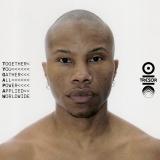
May 2026 marks the arrival of TYGAPAW (aka Dion McKenzie)’s first full-length album on Tresor Records, entitled Together You Gather All Power Applied Worldwide. An acronym of its creator’s name, TYGAPAW’s third studio album is a deeply personal collection of music building worlds where Black queer and trans siblings can thrive, while unifying dancefloors worldwide. A proposition that collective wisdom liberates us from the matrix of domination we live within. The album unfolds as the latest chapter in TYGAPAW’s ongoing techno opera opus, continuing to center the voices of Black women, which surface as layered incantations rather than lyrics - powerful, haunting, sensual, activating.
With the process of creating the album starting in 2023, as TYGAPAW (Dion McKenzie) was in the first year of their transition, the music reflects the intensity of that period, where they were experiencing deplatforming as a response to the shift in their physical appearance: Tracks like ‘M32 Riddim’ and ‘Helicopter hovers over my Crown Heights Apartment’ feature high-paced rhythms intersecting with intense siren-like synths to form demanding compositions echoing a heightened sense of alert. Yet throughout the album, relief comes in the form of TYGAPAW’s vocal features, co-conspirators, and chosen family, whose voices are treated with reverb and echo, a sonic fingerprint that leads back to the pioneers in the legendary studios of TYGAPAW’s native land, Jamaica, an important reminder that the past will always inform the future. It is an album for dancers first and foremost, where joy, defiance, and integration with the natural body coexist, and every drop feels less like a climax than a transformation. Expect a bass that permeates your soul and melodic synthesized sequenced phrases echoing the dancehall eras of TYGAPAW’s youth, reshaped into hypnotic melodies that glow over industrial kicks designed to command attention, reasserting Jamaica's pioneering yet often overlooked contribution to electronic music.
In the opening track, ‘Can I Live’, Precious Okoyomon’s words feel like the beginning of a ritual; setting the intentions for the rest of the proceedings. As McKenzie puts it, their “work is about regeneration, resetting, getting integrated into nature, and about rebirth. That’s the tone I wanted to set at the outset of the album.” Ms Carrie Stacks continues this thread of support in ‘Don’t Panic’ with heavily processed vocals on top of a beat that takes inspiration from another important ingredient in the antidote to the oppression of isolation: Ballroom culture. “ I feel like I found my queerness in Ballroom, that’s why this track is very important to me.”
Echoes of NYC Black queer nightlife scene also permeate in the energetic drums of ‘Exorcise the Language of Domination’, in which Julianna Huxtable’s spoken performance complements the various movements and tones of the music. “My producer brain thought this was the one that Juliana’s vocals would be best suited for. I hinted: ‘what do you think of this one?’ She just went into her notes and picked some passages to go with the first section of the track. From there, it was a year-long process of development. It required time and space for this thing to evolve, but I think it’s one of the most powerful tracks on the album.” London’s SUUTOO contributes the album’s only musical collaboration on ‘B2B’, a track that emerged from sessions in McKenzie’s New York studio where the real objective was to connect and have fun; a time out from the demands of life outside.
The album closes out with a double hit of emotion in the form of ‘Effects of Resistance and Black Trans Masculine Experience’. The former features South African scholar Khanyisile Mbongwa drawing connections that exist between Africa and the Black diaspora, whilst looking to the future and calling for a shared sense of community.
The latter piece, an instrumental version of the piece which featured on the IMMIGRANT E.P. of 2025 is a gentle and deeply affecting end to the record, a place of peace and acceptance. This end-of-cycle tone is mirrored in the sleeve photography, which also ties back to IMMIGRANT by finally revealing what was hidden: a portrait of the artist fully self-actualized; a step towards true inner liberation. TYGAPAW is sonically defiant across this album; bass frequencies feel tactile — less heard than inhabited — infectious lead synth melodies remain with you long after the track ends. An overall sound that leaves asserting an urgent need for connection. From Detroit to New York to Berlin to Jamaica, despite geographic distance, this album reminds us that we remain in solidarity, recognising that meaningful world-building requires collective input and action, both personal and communal, if we are to move toward liberation.
Micro Orbit presents ... Paularner, a project where Arno Völker and Paul Walter, two craftsmen of the European scene, fuse raw emotions and technical finesse into a unique sound, crafting a timeless vinyl for the purists and the seekers.
- A1: The Village Circle
- A2: The Facilitator
- A3: The Offering (Feat. Sypha)
- A4: The Mountain Top
- B1: The Initiates Piece (Feat. Billy Woods)
- B2: The Cleansing
- B3: The Ama (Feat. The Stooky Bros)
- B4: The Shadow Dancer (Feat. Sypha)
- C1: The Burial (Feat. Talibah Safiya)
- C2: The Farmer
- C3: The Serpent Charmer
- D1: The Serviceman
- D2: The Poet Pours Liberations
- D3: The Shamans (Feat. Shabaka Hutchings)
- D4: The Home Celebration
Temple Needs Water. Village Needs Peace." is a philosophical exploration into the essence of community, spirituality, and transformation.
This 15-track collaboration between producer Real Bad Man and Memphis rapper LUKAH medi-tates on themes of unity, leadership, sacrifice, and renewal. With contributions from billy woods (Armand Hammer), Adrian Utley (Portishead), and Shabaka Hutchings, this album ascends through personal and spiritual achievements, delves into the duality of knowledge, the unseen forces, and the cyclical nature of life and death.
The album reflects on growth, resilience, duty, ancestral wisdom, and the healing power of words, culminating in a celebration of inner peace and communal harmony. With a backbone of musically ambitious beats and soul-baring verses, this album carves its mark as the year's most enthralling listen.
Originally released following his acclaimed sophomore album, HYBRIDISM finds Ecuadorian producer Nicola Cruz at the height of his exploratory powers. Now reissued on limited editon green vinyl, this expansive EP re-emerges with renewed relevance—blending North African rhythms, ethereal Persian motifs, and vocal fragments that evoke both ancient traditions and imagined worlds. A contemporary take on global exotica, HYBRIDISM is a vital entry in Cruz’s ever-evolving sonic journey.
'Aima’, named after the refrain sung by Igbo girls from Nigeria, creates the illusion that you’ve dusted off a lost LP. The aesthetic details recall expertly produced French exotica from the 70s, an overall feeling of warmth and character rarely pulled off with such panache.
‘Naeku,' in Cruz’s words, is "a sorrowful song in minor tonalities, but with a warrior energy, strength and forward vision: a soul departs, but a new one arrives in the name of Naeku, a maasai child. Not all grief needs to be a suffering; a feeling which I can relate to the place I come from with a Quechua word: Llaquilla - triste, pero feliz (sad, but happy). As always, the 303 adds that heart touching feeling.” If there’s a template for Multi Culti’s ethos, Cruz has synthesized the formula: Masai lamentation filtered through Quechua wisdom with a touch of 303 for the soul.
'Drom Tradisie' is a nostalgic vignette that captures the fantasy of a scenic horizon on a lost beach, a portrait done with the FM domain of synths that somehow associates with tropical imagery.
'Third Eye Dub’ takes things deeper, exploring the fractal realm of concentration, a point where the Oud (played by Nasiri) acts on the pineal gland. This inward journey through the cavernous depths of the subconscious sails on a smooth modular groove that transports the listener across this psychic expanse, a filigree of Persian harmonies (in Shur, to be exact) tracing outlines in the dark.
Finally, 'Kawe’s Dream’ ventures even further into the imaginary spaces of the mind. It is an aural reconstruction of the Tibetan Bardo Thodol, or ‘Book of the Dead’, a sacred text that guides the spirit through the passage out of the body. In Nicola’s words "To paint that depth, I had these Tibetan chants in mind, that I ended up crafting with Ableton's vocoder over a piece of Ayan’s vocals (sung in a made-up language). A few notes, and it gave the gravity I was looking for in the song.” Stuff that only a producer as capable as Cruz could pull off.
Hybridism’s five tracks are sonically diverse, yet all possess an ephemeral quality, a pastoral, transitory feeling that travels through the music - we listen to the sounds pass us by, we might even catch a hook or two, but the feeling is of sand running through our hands, deep, elusive, beautiful.
Rick Holmes’ breath-taking track, ‘Remember To Remember’ gets its first ever officially licensed, remastered reissue on Gold Mink Records. With prices of the original topping £60 this one will be a welcome sight for many.
Title track, ‘Remember To Remember’ is a celestial, emboldening downtempo cut. Beginning with the timeless line, ‘Pass the information, extend the knowledge…’ Rick dives into a spoken word stream of inspirational black artists and key figures whose most memorable words and song titles are framed into snippets of wisdom that get ever more significant the greater in number they become. A powerful monologue, in Rick’s warm reassuring tones, shining a light on those men and women who have made ‘strong contributions to mankind because of their compassion and humanitarianism’, laid over instrumentation you lose yourself in just as easily.
‘Remember to remember, to never forget.
How Long… how long… how long will it take man?
For us to come together.
It will take us as long as you make it…’
Words that ring just as true today, as they did 40 years ago, yet with a new sense hope in the air and prospect of progress approaching.
The B side houses another of Rick’s mesmerising monologues – ‘To The Unknowledgeable One’ motivational, moving and smooth as you like.
Licensed from Uno Melodic Records, Inc, courtesy of Expansion Records.
As we get into the groove of the summer time; it comes with great pleasure to introduce the next release instalment that comes as a collaborative pressure of collectivity & quality musicianship to produce the EP that we had decided to title as the 'Forward On Riddim' which best describes the vast amount of works that has been going on with this link up between Ashanti Selah & Hark's riddim factory (many work in yet to be released in the pipeline!)
Featuring on the Forward On Riddim we have the vocal works of Zed Regal with a version called 'Magical Connection' which describes the deep sense of understanding and empathy between what would be seen as a search for the search of that divine soulmate.
Then leading into the next version on the riddim 'Overstand' with a message of upliftment for the good of Humanity to rise up and stand as one for the right cause in the spirit of Equal Rights & Justice for all Mankind - that is what we must overstand!
Last but not least we have the real deal artist Mad Sam with a track that he had voiced with no rehearsal fresh from the vibes of JA called 'Unbreakable' preaching words of wisdom to the youths of today to keep it firm and always show love & respect to receive it!
Hope you feel the vibe and message in the music as we bring you these heartikal sounds with an immense line up of top-class international musicians in what turned out to be the first collaborative project between Ashanti Selah and Zac Harkavy!
credits
Whispers from Ancient Vessels is a collection of tales, ‘speakings’ and relationships with nature’s beings such as trees, the sea and the inner self.
The tracks pose as reflections of relearning to join with nature again. To grieve and to hope. To take in wise words, to listen to truth that can feel intense. Reconnection can be a painful process.
The sounds and the visual identity of Whispers from Ancient Vessels is an attempt to remove the rose tinted view of nature and to put it at the forefront of the piece. Nature often tends to be a pretty backdrop where we come and go as we please. But this is a reminder that it is not separate from us and we exist as one. To realise its beautiful evil.
To amplify alternative communication. The tracks are about listening to the wisdom of the earth, translating it and taking the wisdom on board. Being vulnerable to the rawness and darkness of the earth. Being vulnerable to truth, to change and proximity. Succumbing to oneness.
Recorded live during Nuits Sonores, Brussels, 2022. Tomorrow Comes The Harvest is a theory initiated and put into action by late Afro Beat creator and Nigerian Drummer Tony Allen and Deroit Techno’s Jeff Mills. Each belonging to a long tradition of using music to reach higher levels of consciousness, along with veteran keyboardist Jean-Phi Dary, the three toured internationally until the untimely death of Tony Allen in 2020.
Wanda Felicias beeindruckendes Debütalbum ,Now Is The Time_" bei Timmion Records bietet eine dynamische Auswahl an Soul-Songs, die sowohl zeitlos als auch erfrischend aktuell wirken. Unterstützt von den analogen Grooves von Cold Diamond & Mink präsentiert Felicia eine Reihe von Geschichten, die in Vintage-Grooves versunken sind, aber für jede Zeit genau richtig sind.Mit Wurzeln in der New Yorker House- und Acid-Jazz-Szene - und nachdem sie sich jahrzehntelang aus dem Rampenlicht zurückgezogen hatte - kehrt Wanda mit einer gereiften Stimme und einem gereiften Geist zurück, bereit, jeden mit einem schlagenden Herzen zu beeindrucken. Jeder Track auf ,Now Is The Time_" fühlt sich gelebt an: vom schlurfenden Bounce von ,Stuck On You" über den blühenden Optimismus von ,Flowers in the Garden" bis hin zur introspektiven, funkigen Poesie von ,Reflections of Love".Auf dem gesamten Album singt Felicia mühelos, unterstützt von Cold Diamond & Minks reichhaltiger, aber dicht gewebter Palette aus Rhythmusgruppe und Horn-Riffs. Zusammen schaffen sie eine rootsige Klanglandschaft, die den Soul der späten 1960er bis frühen 1970er Jahre mit einem modernen Touch verbindet. Ob Sie sich nun von der Beat-Ballade ,All in the Game" oder dem Southern Soul von ,Until You're Mine" angezogen fühlen, dieses Album schafft seinen eigenen Raum jenseits von Trends - es zelebriert Handwerkskunst, Emotionen und zeitlosen Groove.
- Until You're Mine
- Flowers In The Garden
- Stuck On You
- Reflections Of Love
- You Don't Care
- Ain't No Way
- Words Of Wisdom
- Oh It Was Love
- All In The Game
- Now Is The Time
Transparent Pink Vinyl[22,27 €]
Wanda Felicias beeindruckendes Debütalbum ,Now Is The Time_" bei Timmion Records bietet eine dynamische Auswahl an Soul-Songs, die sowohl zeitlos als auch erfrischend aktuell wirken. Unterstützt von den analogen Grooves von Cold Diamond & Mink präsentiert Felicia eine Reihe von Geschichten, die in Vintage-Grooves versunken sind, aber für jede Zeit genau richtig sind.Mit Wurzeln in der New Yorker House- und Acid-Jazz-Szene - und nachdem sie sich jahrzehntelang aus dem Rampenlicht zurückgezogen hatte - kehrt Wanda mit einer gereiften Stimme und einem gereiften Geist zurück, bereit, jeden mit einem schlagenden Herzen zu beeindrucken. Jeder Track auf ,Now Is The Time_" fühlt sich gelebt an: vom schlurfenden Bounce von ,Stuck On You" über den blühenden Optimismus von ,Flowers in the Garden" bis hin zur introspektiven, funkigen Poesie von ,Reflections of Love".Auf dem gesamten Album singt Felicia mühelos, unterstützt von Cold Diamond & Minks reichhaltiger, aber dicht gewebter Palette aus Rhythmusgruppe und Horn-Riffs. Zusammen schaffen sie eine rootsige Klanglandschaft, die den Soul der späten 1960er bis frühen 1970er Jahre mit einem modernen Touch verbindet. Ob Sie sich nun von der Beat-Ballade ,All in the Game" oder dem Southern Soul von ,Until You're Mine" angezogen fühlen, dieses Album schafft seinen eigenen Raum jenseits von Trends - es zelebriert Handwerkskunst, Emotionen und zeitlosen Groove.
On 2018’s “Folk”, New Orleans songwriter and singer Sabine McCalla presents her own interpretation of grass-roots southern music. Combining elements of jazz, country blues, calypso, New Orleans R&B and Haitian creole compas, Sabine spins stories of heartbreak and hope through intimate arrangements and honest inflections. Recorded by Sam Doores (the Deslondes) and Duff Thompson (Mashed Potato Records), “Folk” exposes Sabine’s love of laments and folk spirituals, her penchant for simple truths and her interest in divining fundamental wisdom about love and loss from a small tangle of words. Commanding in its simplicity, with most songs sung a capella or with minimal guitar or vocal accompaniment, the EP’s five songs tell the stories of lost souls and broken hearts, embedded with painful truths that come to us calmly, the ones that are physically and psychically impossible to ignore.
Lars Bartkuhn returns to Rush Hour with “See The Light”, as deep and complex as we have come to expect but as always his ever-present hunt for new inspiration and unique approaches is clearly evident across all 3 mixes of this beautifully deep yet pulsating track!
Originally written as a final foray into house music for the legendary Needs co-founder, this production aimed to “push boundaries within the world of electronic dance music, integrate fresh new elements, bring new compositional perspectives to the listener and to create overall rewarding experiences.”
It’s a deeply personal track, best summarised by the incredible piano solo in the Full Experience Mix. In Lars’ own words, “I am ten million light years away from being a good pianist, but for some reason I NEED to play those kind of things…even if they are raw, primitive and incomplete and lack parameters like elegance, fluidity and wisdom - I need to express myself in that very moment in this exact way.” It’s these unrestrained moments of brilliance that create rich palettes of sound with deep textures, organic rhythms and joyful melodies that keep your ear constantly engaged.
The Full Experience Mix is a near-13 minute trip through lush vocals, complex percussion, deep chords and raw piano solos that guides the listener through the changing motions of “See The Light”. Backed by two dub mixes, Inner Experience hones in on the keys and synths - truly elevating those striking notes. Opening with atmospheric percussion, the Dub Reprise settles into a chugging rhythm that brings the drums to the forefront.
“When a musician/composer really goes ‘all in’ there is almost nothing impossible. If you really pour out your heart and give all the sweat and tears you have you create a kind of zone where everything fits together in mysterious ways.” - Lars Bartkuhn
- A1: Del Jones - The Last Letter
- A2: Herb Johnson - Where Are You
- A3: Timothy Mcnealy - Will You Be There
- A4: Little Beaver - Do Right Man
- A5: Soul Superiors - Trust In Me Baby
- A6: Outback - Strangers In Our Homeland
- A7: The Montecarlos - If You Leave
- A8: Words Of Wisdom - You Made Me Everything
- B1: Soul Charges - My Heart Beats For You
- B2: The Power Of Attorney - I'm Just Your Clown
- B3: James Reese - Throwing Stones (Kenny Dope Mix)
- B4: Richard Marks - I'm With You Love
- B5: Bonnie Floyd - You're My Everything
- B6: The Ledgends - A Fool For You
- B7: Apple & The Three Oranges - Moonlight
This anthology follows Now-Again's Loving On The Flipside, issued more than a decade ago. And that anthology itself got its start in a different time, a decade even earlier - the era in which Now-Again's Egon and his friends chased down funk 45s and the odd LP for their testosterone riddled, aggressive sound. Often times the funk song on one of their chosen is would be the throw-away b-side, the hasty afterthought the band cobbled together the night before hitting - or while in - the studio because they'd put all of their energies into writing the amazing ballad that would ensure their entry in soul's history books. Every once in a while, that funk song they coveted could have been - in an alternate universe - a ballad. The Third Guitar's "Baby Don't Cry," El Pooks* "I Could Do The Impossible" and Spider Harrison's "Beautiful Day" all fit into this category. That realization notwithstanding, more often than not they shined over the ballads to get to the tough stuff. Then they started flipping those funk records over to find some loving on the flip side. Some marvellous tunes were there to be found. This is the long awaited follow up. Contained within this anthology are some of the greatest soul ballads that go sweet with a beat - or, to follow our tagline, epitomize "sweet funk." Most of these songs have never been compiled. Some have never been issued in any form. Some, like the Ledgends entry here, were sampled to great success (in that case for Freddie Gibbs and Madlib's "Deeper"). Some haven't been sampled, but, like Herb Johnson's entry, are patiently awaiting their day. It should go without saying that we're proud to present this music in good conscience; with the full participation of everyone but the most obscure names contained within. And, for those who we've not yet been able to contact, this is our message: We've found your brethren, we've placed them beside you on an album that we hope you feel is befitting of your collective contributions to soul music and now we're just waiting for you. Though the music you recorded is from the years past, vour time is now.
Tradition shapes your work. For saxophonist and bandleader Shabaka Hutchings, that's something he's long understood. After years spent in the orbit of London's jazz circuit, he examines and reimagines his influences with a dexterity that's unique. Drawing out the vision underlying his new album, he says, I see energy as being a form of wisdom to be passed down through the ages.'
Unpicking the album's title, he continues, "When we study the music, the lives, the words of our master musicians we obtain a glimpse of that artist's essential energy source. This is the core vitality of the individual which leads them to utilise the musical specifics of their chosen genre in a way that mirrors their inner source of power. This is an intuited wisdom that's handed to us from the legacies of our elders.
The album is a document of sessions combining Hutchings with a group of South African jazz musicians he's long admired. His connection to the group was Mandla Mlangeni (bandleader of the Amandla Freedom Ensemble), whom he'd flown there to play with over the past few years. Recorded across just one day, the group drew on their South African lineage - heroes like Zim Ngquwana and Bheki Mseleku - to bring their own slant to the American jazz lineage which is reconfigured in Hutchings' compositions themselves.
Going beyond the jazz greats Hutchings cites, influences are drawn from plenty of other sources: Caribbean calypso, central African song structures and Southern African Nguni music all play a part. Bringing together those ideas with the contributions of his bandmates is, he explains, crucial to what he sees in the role of an album artist. Even though I wrote all the music, for me, the leader of the project isn't the person who writes all the music but the one who has a vision for how certain musical elements will be combined."
A regular sight on stages around London and beyond, playing - and often leading - groups like The Comet Is Coming, Sons of Kemet and Melt Yourself Down, he's part of a generation whose idea of jazz is pointedly unrefined. That's to say, Wisdom of the Elders comes from an artist interested in the indefinable gaps more than fitting into boxes.
Free jazz poetry by a spry, 85 year old Joe McPhee, adapting his renowned improvised practice to words - juxtaposed with Mats Gustafson’s sparing brass and electric gestures. It’s an utterly timeless and transfixing salvo, another shiny notch for Smalltown Supersound’s Le Jazz Non Series.
As a common ligature to the OG free jazz scene of ‘60s NYC, with formative binds to its European offshoots and the experimental avant garde, Joe McPhee is a true force of nature who has represented jazz at its freest over a remarkable lifetime. In duo with Swedish free jazz and noise standard bearer Mats Gustafson, he upends expectations with an astonishingly vivid and upfront example of his enduring contribution to freely improvised music. In 11 parts he variously reflects on everything from the neon sleaze and scuzz of NYC to contemporary US politicians and laugh out loud imitations of his previous sparring partners such as Peter Brötzmann, with a head-slapping immediacy that leaves you reeling, spellbound.
McPhee’s flow of rare, organic cadence, ranging from urgent to contemplative and dreamlike, is blessed with a unique turn-of-phrase that surely mirrors his decades of instrumental work. Gustafsson, meanwhile, dextrously takes up the mantle with a multi-instrumental spectrum of sounds, leaving McPhee unbound and able to float and sting on the mic. There’s obvious wisdom in his perceptively penetrative observations, as derived from a rich cultural life well spent, but also a playful naivety and levity in his ability to veer from almost melodic speech to explosive aggression and a knowing, bathetic wit. It’s perhaps hard to believe that McPhee only started incorporating and performing spoken word in his work in the past ten years, a half century since his declaration of “What Time Is It‽” announced his arrival on a legendary debut ‘Nation Time’ (1971), ushering in one of free jazz’s most singular characters in the process.
Oscillating between discordant reflections on life as a touring musician, set to Gustafsson’s skronk and culminating in a snort-worthy imitation of Peter Brötzmann’s gruff German accent, on ‘Short Pieces’ or the glowering growl and noise exhortations of ‘Guitar’, he evokes a more sweetly consonant calm in ‘When I Grow Up’ and eerie threat of ‘The Dreams Book’, and viscerality of ‘Disco Death’, where Gustafson’s tonal versatility comes into hugely mutable play, whilst McPhee’s extraordinary, unaffected voice is a constant. It’s perhaps McPhee’s balance of cool measuredness and wellspring of barbed energies that allows us, at least, to get the most out of this one; not stifling with mannered or manicured enunciation that can trigger certain icks; keeping close to the nature of spoken word in a way that avoids cliche and becomes inherently critical of it within his purposeful, non-hesitant clarity and unflinching approach.
Now on our sixth release & going strong, Brooklyn Sway returns with a heady combination of local producers, further-afield figures and scene-setting interludes to get that real Bucktown mood, accompanied by bold new artwork from NYC "Grafstract" muralist Fumero.
After words of wisdom from originator David Morales, St. Xose, patron saint of afterhours, re-rubs his own entry from BKS-01 into an electro flip with a forceful but smooth strut, Nathan Nothing's ephemeral vocals vanishing in spaces between steady bass pulses and broken beats. Those looking for late-night addresses check Noha's 'Madison Street 932', where the PanickPanick! label head proves his local cred with a funky, vocal sample-driven house jam equally at home on its eponymous street corner or somewhere later, darker, and preferably inside.
Label regulars DeWinter & Emma return with 'Unity', the spoken word Spanish vocals interweaving with choppy snare patterns and a room-filling reverberating bass roar that hits paydirt when English vox and a kick hit late in its second half. C&K are local legends Connie & Karina, and while that may not be some punters' first guess for their moniker's meaning, the track is an exercise in restraint and class, jaunty house swathed in dub echoes and hand drums that positively sways when the trombone lead swings in to carry the tune.
Strange Power!, the fifth record from Durham, NC-based songwriter and poet Anne Malin Ringwalt, emerges from the darkest waters of the self into a world remade. Releasing in conjunction with her second book of poetry, What Floods (Inside the Castle, Oct. 2024), Strange Power! overflows with Ringwalt's teeming and sensuous personal symbolry: glowing lilacs and gentle queens, dolphins wild and girls who grew up brave _ T.S. Eliot sung by Cat Power, backed by Mount Eerie. She sings: "I rose up from water." Ringwalt writes and performs with the authority of a lifetime spent harnessing the alchemy of storytelling; her belief in the power of words to heal and transform is palpable in each achingly- delivered lyric. Made amidst profound inner and outer change, Strange Power! also sees Ringwalt taking up the role of self-producer for the first time, mirroring and supporting the record's Orphic quest by gathering contributions from a coterie of friends wielding an electric range of American instruments. Violins, vibraphones, drum machines, electric guitars dappled with spring reverb, wind-blown shells, and a host of other numinous sounds form an unfurling and shadowy world which was then carefully honed during the mixing process (shepherded by Michael Cormier-O'Leary and Lucas Knapp) _ settling the final record in an eerie meridian between spareness and verdancy. The result is a beguiling and darkly blooming realm: the sound of a personal cosmos being remade, piece by piece. Ringwalt is at the height of her spirit as both songwriter-poet and singer, her willowy voice by turns conjuring and keening as she reckons with her deep past and the stories told since. Opening track "The Pines" sets the stage for a record of truly life-long scope: "I was a child, now I hold her / I was asleep for many years." Some songs, like the gorgeous "North Carolina" and "The Saint," were written as early as 2013 but, Ringwalt says, "insisted upon being remembered" as the record took shape; in its final form, they serve as inciting moments of self-discovery before the journey to come. "The Visionary" recalls one of Ringwalt's earliest musical breakthroughs _ her re-rendering of an Emily Brontë poem into a song at age 15 _ and, she says, "`cites' the melody of that song in the context of this new one _ a holding of the past and present and every layer in between/beyond, in utter solitude _ a solitude that reflects certain aspects of abandon as a child and an adult..." This unusually lengthy time-scale lends Strange Power! a deeply moving sense of narrative fullness. Stretches of the record _ particularly the "Judgment Day" ? "River" ? "Lilac Bloom" trifecta that form the black heart of Side 1 _ may recall familiar wanderings of personal underworlds such as Mount Eerie's Lost Wisdom Pt. 2 or Neil Young's Ditch Trilogy. Yet this hollowed landscape is in turn exorcized by the a capella "I Know," in which Ringwalt sings "I won't be gutted by you / For giving and trying to heal / I won't be gutted, I am not a fool / I deserve a love that is new" before the song concludes with a piano passage that recalls hymnal music _ suggesting a faith in life itself to offer new beginnings. Side 2 features some of Ringwalt's most powerfully introspective writing to date, as the songwriter casts off myth after myth in her search for personal transformation. By the final song, "Stories," the energy that has been gathering all throughout the record breaks loose as Ringwalt reflects: "I wrote so many stories, not knowing what the end was." But at this stage in the journey, we know there is no such thing as an ending; if the healing process is never complete, the storyteller's strange power is what finally offers liberation.
- The Sage
- Deathwill
- 죽음이두려울때까지
- 풀이
- Confluence Loop
- 나락
- Noise And Cries
As part of Subtext's 20th anniversary, Subtext presents the debut album from bela as a co-release with Unsound.
bela was based in Seoul when they began to develop the framework for 'Noise and Cries (굉음과울음)'.Chewed up by a society that's slow to embrace those who exist on the margins, they and their close friends became fixated on the concept of death. "I wanted to cry, I Wanted to die," they recall. "The precariousness of living in South Korea hits different. I thought, let's share what is killing us." bela refused to lose hope, so they inventoried the sounds, experiences and emotions that had formulated their identity and wondered how this might form a different sort of South Korean musical expression. They considered the guttural death metal growls and industrial music they heard when they began to interface with Western culture as a teenager, the idiosyncratic folk rhythms that rattled away in the background of state events, the evocative, euphoric drones that had offered them solace, and the heady, cybernetic maximalism that's come to define contemporary queer club music.If this was going to be an album about death, bela knew wouldn't it be preoccupied with loss, but rooted in a deep desire to regain the will to live.
'Noise and Cries (굉음과울음)' is the first time bela has recorded their voice, and they metamorphose it from moment to moment, embracing a precarious vulnerability. Opener 'The Sage' references Jungtaryeong, two well-known arias from the Korean Pansori tradition - a folk form that is usually performed by a drummer and a singer. Screaming, whispering and rasping, bela twists borrowed words from the original arias, repurposing them to highlight the hypocrisy and brutality of patriarchal wisdom.
These bellowed phrases contrast with an abrasive rhythm that bela based on the eatmore jangdan, an irregular, traditional beat that's been remoulded into a jerky, electro-acoustic call to action. Even if the gargled Korean wordplay can't be fully understood, the mood translate flawlessly. On 'Death Will I', they reassemble the damaged relationship between a queer child and their
Taken from from Skinshape’s 8th studio album ‘Craterellus Tubaeformis’. For fans of Khruangbin, El Michels Affair, Madlib, Bonobo. Will Dorey aka Skinshape has proven himself time and again a connoisseur for the cosmopolitan, across a prolific career expertly exploring understated sounds and theatrical textures. Taking his place alongside the likes of Khruangbin, Tame Impala, Bonobo and Madlib, Skinshape’s global kaleidoscopes are loaded with warmth and wisdom created on vintage analogue equipment applying a perfectionist’s touch. As a former member of indie band Palace, he has played everywhere from Glastonbury and BBC Maida Vale to headlining Shepherd’s Bush Empire. Skinshape’s words on the tracks. The Ocean: “This one is dedicated to all the surfers out there. Following the theme of 1960s rock and combining it with subtle elements of 90s beats (that you may not be able to hear).” The Longest Shadow (feat. Andy Platts): “This song takes a more experimental route than some of the more 'psych' tracks on the album. The hot vocals of Mamas Gun frontman Andy Platts lends the track a deep soul vibe, whilst Jon Moody (of the band Franc Moody) lends his piano skills for an electric solo in the latter part of the track.” Support from BBC 6 Music, BBC Radio 2, Jazz FM, Soho Radio, MOJO, Uncut, Shindig etc.
- 01: In
- 02: The Big Idea (Feat. Lewis Parker)
- 03: Push
- 04: The Art Of Celebration
- 05: Tea Break
- 06: Chef Yg
- 07: Gringo Lingo (Feat. Red &Amp; Nico Suave)
- 08: I.c
- 09: What Eye See, Pt. 2 (Feat. Devise)
- 10: City Breaks
- 11: Liquid Love
- 12: Everything Is Alright
- 13: Dancing Shoes (Feat. Mr Thing)
- 14: Spit Fire (Feat. Kyza Smirnoff)
- 15: Out
First Word Records is proud to bring you 'The Essance' - the classic debut album by Essa (formerly known as Yungun), originally released in 2004, now released on vinyl & digital for the first time, 20 years on!
A lyricist, lawyer and a Londoner, legendary MC Essa has earned praise over the years from artists such as Nas and Mark Ronson, as well as performing and recording with legends like De La Soul, Wu-Tang Clan, Guru, Slum Village and Pharoahe Monch.
This 15-track album is considered one of the greats to emerge during UK Hip Hop's "golden era"; a vibrant time for the genre when artists such as Ty, Jehst, Roots Manuva, Klashnekoff, Skinnyman, Task Force, Doc Brown and Foreign Beggars were garnering huge fanbases, and an eco-system of shops like Deal Real, club nights like Kung Fu, labels like Lowlife, and stations like Itch FM were prevalent, while BBC 1Xtra was a mere infant.
'The Essance' includes production and features from luminaries such as Harry Love, Mr Thing, Lewis Parker, Kyza, Devise & Ben Grymm, to name a few.
Esteemed author Musa Okwonga says on the reissue liner notes "the most startling thing about 'The Essance' was its range. Yungun (Essa) was one of the few MCs who could perfectly walk the paths of hope and melancholy with equal ease, whose artist name belied the wisdom of his lyrics. Beyond that, his delivery was supremely self-assured, filled with a swagger he could always justify.
Yungun's gifts also extended to the stage, where he was one of the best young actors that many of his contemporaries had seen, and to languages, which saw him writing and rhyming in Spanish with a notable flourish. He was also someone who constantly walked between two worlds, excelling in one of the country's most competitive academic environments during the day and then delivering a soaring radio set by night. Raised in a vibrant vein of North London, endlessly curious about the world around him, Yungun's fine ear for music and passion for the variety of life made him someone who could reach all audiences.
'The Essance' is a beautifully-woven meditation on the human condition, one which takes you from the dancefloor to the summer afternoon barbecue to the bathroom mirror; yet it is also the opening statement of a unique career."
In the words of Essa himself "my key goal for this album was to span so many moods and styles that I couldn't be categorised, leaving me free to then go in whatever direction I chose. I was almost too successful with this – I would later struggle to pin down my own identity, both on and off the mic, as a rapper slash lawyer, of mixed-heritage, blessed to be able to enter many circles but feeling truly at home in none. As I write this, twenty years (plus a marriage and several children) on, I finally feel more at peace with being undefinable, and am getting better at bringing my full, authentic self into as many aspects of life as I can. I am grateful to be able to look both back and forward, with equal passion."
'The Essance' was followed with a collaborative album with DJ Mr Thing ('Grown Man Business'), then some years later on First Word with 'The Misadventures of a Middle Man' in 2014. There's also a forthcoming project in the works, due for release Summer 2024 with all-new material produced by Pitch 92. Both these releases also coincide with the 20th anniversary of the First Word label (named "label of the year" at the 2019 Worldwide Awards).
A timeless piece of work, 'The Essance' is true-skool boom bap through and through that stands up two full decades later, from the ethereal anthem 'Liquid Love', to the uptempo bounce of 'Dancing Shoes', to the grit of 'The Big Idea', to the thought provoking 'What Eye See Pt.2', to bangers like 'Push' or 'Spit Fire', this is an essential addition to the collection of any discerning hip hop head.
'The Essance' is due to be released on vinyl & digital worldwide on February 23rd 2024.
Albert Hammond is one of the most prolific, versatile songwriters and performers of his or any generation. His earliest solo hits include “It Never Rains in Southern California” and “The Free Electric Band.” His contributions to popular music (writing and and/or contributing to hit songs by Tina Turner, Whitney Houston, Willie Nelson and Julio Iglesias, Diana Ross, Starship, The Hollies, Joe Cocker, Johnny Cash, Aretha Franklin) cross genres and generations. Body of Work is an all-new, original, and essential addition to this iconic canon. Written during a time of tumultuous change, Body of Work is the moment a master songsmith takes a step back to reflect on the world, “This is the first step I had to take and the album is what I discovered about me and all of us once I started here,” says Albert. “I can feel the discomfort and impatience in it. That’s just the honest feeling when the world changes for you from oasis to desert, from beauty to chaos… freedom to fences.” From gutsy opener “Don’t Bother Me Babe” through the wistful “Looking Back” and closing with the reflective “Goodbye LA,” Body of Work is an album for the ages, crafted with 50 years of words, experience, and wisdom.
The Dutch dance project Twenty 4 Seven scored several major hits during the Nineties. The group was founded in 1989 by producer Ruud van Rijen, who is seen as a pioneer in Eurodance. He was one of the first to put together a male rapper and female vocalist. In 1993 he gathered singer Nance Coolen and rapper Stay-C. I Wanna Show You is their third studio album, originally released in 1994. Two singles were released from this album: "Oh Baby" and "Keep on Tryin'". The group received the Dutch Export Award of 1994 for this record. In 1996, the album also received a Golden Award in South Africa. It reached its highest position at #1 in the (RiSA) South African Album Charts. I Wanna Show You is available as a 30th anniversary edition of 500 copies on translucent red coloured vinyl and includes an insert.
Sun Ra is better known to most as a musician than a poet, but he identified equally as both. My Words Are Music provides direct access to the sentiments of a poet who never called Earth home. The spoken word album hosts an inspired array of artists who personally chose their favorite Sun Ra poems to recite. Freed from the page, his poetry acquires an unexpected simplicity and poignance it possessed all along.
This all-star and intergenerational lineup of artists conjure wisdom from his words: spoken word elder Abiodun Oweyole of The Last Poets; rapper, and singer-songwriter Saul Williams; jazz experimentalist Melanie Charles; British-Trinidadian poet, novelist and musician Anthony Joseph; poet Mahogany L. Browne; poet, playwright, and conceptual artist Carl Hancock Rux; musician/digital composer L’Rain; singer, actor, and director Tunde Adibempe of TV on the Radio singer; British DJ and BBC radio host Zakia Sewell; ballistic hip-hop poet Jive Poetic; and longtime members of the Sun Ra Arkestra, Marshall Allen, Knoel Scott, and Tara Middleton.
Punctuated by impish electronic interludes composed and played by Marshall Allen, these voices bless Sun Ra’s poetry with new life My Words Are Music offers the opportunity to follow Sun Ra into a
better future. “Prepare for the journey,” he writes in his poem “The Cosmic Age”, “You have a rendezvous / With the living wisdom.” My Words Are Music is a project developed in conjunction with Living Sky, the all-instrumental Sun Ra Arkestra album released on Omni Sound in 2022
There’s a big clue to the pacific wisdom of The Orchestra in the Sky in the artist name – Hochzeitskapelle + Japanese Friends. For this is, indeed, music based in, and resonating with, friendship, camaraderie, collaboration, and creative exchange. Across two albums – one documenting recordings from Tokyo, the other an expansive double album of sessions from Kobe – Hochzeitskapelle gather around them some of the finest voices in Japanese independent and underground pop music, like Tenniscoats, Eddie Marcon, Yuko Ikema, and Kama Aina, and explore an open field of music, full of creative encounters.
You may already know Hochzeitskapelle as the German instrumental quintet formed by members of The Notwist, Alien Ensemble, and friends from the jazz scene. Across three albums, one a collaboration with Kama Aina (2018’s Wayfaring Suite), they’ve developed a way of playing together that’s intimate and playful, rich and human; it’s a music that’s deliberately rough around the edges, and that nestles cosily into the everyday. Their relationship with Japanese indie has developed over the years, doubtless encouraged by Saya´s „Minna Miteru“, compilations series of Japanese indie pop for Morr Music. A peripatetic gang, Hochzeitskapelle also recently backed Japanese singer-songwriter Makoto Kawamoto on her new album, Hikari.
In many ways, The Orchestra in the Sky feels like the culmination of a set of ongoing cross-cultural exchanges: the Minna Miteru compilations; tours of Japan by Hochzeitskapelle and The Notwist; and indeed, Markus Acher’s Spirit Fest group with Saya and Ueno of Tenniscoats. The latter are present throughout much of The Orchestra in the Sky, and Saya’s voice is particularly winning on songs like “Tsuki no oto”, where the two outfits are joined by brass ensemble Zayaendo. There are several lovely turns from singer-songwriter Yuko Ikema, and Eddie Marcon appear twice; their songs are still beautiful, spectral acid folk, but with Hochzeitskapelle filling the details with lush, sad brass and strings.
But it’s also the potentially lesser-known names that shine through The Orchestra in the Sky, like the frail folk of Gratin Carnival; the delightful, gentle pop songs by sekifu and Zayaendo member, Kanako Numata; a trio of beautiful, stumble-drunk melodies played in swaying consort with popo. That group, along with the presence of Zayaendo, Fuigo, and Mitamurakandadan?, make strong connections with the Japanese underground’s love of brass bands, partly informed by the tradition of chindon’ya, marching bands that walk the streets of Japanese cities. They also all appeared on the recent Alien Parade Japan compilation of such groups, assembled by Acher and Saya.
All things converge, then, on The Orchestra in the Sky, a smart, spirited collection of heavenly pop songs, intimate folk melodies, lungfuls of joyous brass, deep weeping strings, and swooning sighs. The last words go to Acher himself: “Many things we did in the last years come together here and it feels like something special was captured.” We hope you like what you hear.
- A1: Garden Of Peace - Hochzeitskapelle, Tenniscoats
- A2: Higasa Amagasa -Hochzeitskapelle, Gratin Carnival
- A3: Itsuno Manika Watashitachi - Hochzeitskapelle, Eddie Marcon
- A4: Kaze No Uta - Hochzeitskapelle, Tenniscoats
- B1: Kitakana St March - Hochzeitskapelle, Satomi Endo
- B2: Kuroganemochi - Hochzeitskapelle, Eddie Marcon
- B3: Poisong - Hochzeitskapelle, Tenniscoats
- C1: Big Park - Hochzeitskapelle, Kanako Numata
- C2: Unknown Street - Hochzeitskapelle, Gratin Carnival
- C3: Miracle Happy - Hochzeitskapelle, Mitamurakandadan?
- C4: Dep - Hochzeitskapelle, Popo
- C5: Gold Rush - Hochzeitskapelle, Popo
- D1: Boat - Hochzeitskapelle, Popo
- D2: Ashioto - Hochzeitskapelle, Kanako Numata
- D3: When The Wind Blows, The Bucket Maker Gains - Hochzeitskapelle, Satomi Endo
- D4: Coppepan - Hochzeitskapelle, Mitamurakandadan
There’s a big clue to the pacific wisdom of The Orchestra in the Sky in the artist name – Hochzeitskapelle + Japanese Friends. For this is, indeed, music based in, and resonating with, friendship, camaraderie, collaboration, and creative exchange. Across two albums – one documenting recordings from Tokyo, the other an expansive double album of sessions from Kobe – Hochzeitskapelle gather around them some of the finest voices in Japanese independent and underground pop music, like Tenniscoats, Eddie Marcon, Yuko Ikema, and Kama Aina, and explore an open field of music, full of creative encounters.
You may already know Hochzeitskapelle as the German instrumental quintet formed by members of The Notwist, Alien Ensemble, and friends from the jazz scene. Across three albums, one a collaboration with Kama Aina (2018’s Wayfaring Suite), they’ve developed a way of playing together that’s intimate and playful, rich and human; it’s a music that’s deliberately rough around the edges, and that nestles cosily into the everyday. Their relationship with Japanese indie has developed over the years, doubtless encouraged by Saya´s „Minna Miteru“, compilations series of Japanese indie pop for Morr Music. A peripatetic gang, Hochzeitskapelle also recently backed Japanese singer-songwriter Makoto Kawamoto on her new album, Hikari.
In many ways, The Orchestra in the Sky feels like the culmination of a set of ongoing cross-cultural exchanges: the Minna Miteru compilations; tours of Japan by Hochzeitskapelle and The Notwist; and indeed, Markus Acher’s Spirit Fest group with Saya and Ueno of Tenniscoats. The latter are present throughout much of The Orchestra in the Sky, and Saya’s voice is particularly winning on songs like “Tsuki no oto”, where the two outfits are joined by brass ensemble Zayaendo. There are several lovely turns from singer-songwriter Yuko Ikema, and Eddie Marcon appear twice; their songs are still beautiful, spectral acid folk, but with Hochzeitskapelle filling the details with lush, sad brass and strings.
But it’s also the potentially lesser-known names that shine through The Orchestra in the Sky, like the frail folk of Gratin Carnival; the delightful, gentle pop songs by sekifu and Zayaendo member, Kanako Numata; a trio of beautiful, stumble-drunk melodies played in swaying consort with popo. That group, along with the presence of Zayaendo, Fuigo, and Mitamurakandadan?, make strong connections with the Japanese underground’s love of brass bands, partly informed by the tradition of chindon’ya, marching bands that walk the streets of Japanese cities. They also all appeared on the recent Alien Parade Japan compilation of such groups, assembled by Acher and Saya.
All things converge, then, on The Orchestra in the Sky, a smart, spirited collection of heavenly pop songs, intimate folk melodies, lungfuls of joyous brass, deep weeping strings, and swooning sighs. The last words go to Acher himself: “Many things we did in the last years come together here and it feels like something special was captured.” We hope you like what you hear.
- A1: Kesunyian Jiwa (Emptiness Of Soul)
- A2: Untuk Bungamu (For Your Flower)
- A3: Harapan Hampa (Empty Hope)
- A4: Ratapan Anak Tiri (Wailing Of Adopted Child)
- A5: Djangan Menggoda (Don’t Tease)
- A6: Hilang Tak Berkesan (Gone Without A Trace)
- A7: Pantun Nasehat (Words Of Wisdom)
- B1: Renungkanlah (Think About It)
- B2: Penggoda Djiwa (Seducer Of Soul)
- B3: Peristiwa Lama (Past Incidence)
- B4: Tudjuan Bersama (Common Goal)
- B5: Djangan Mengharap (Don’t Hold Out Hope)
- B6: Pesta Tjahaja (Party Of Light)
- B7: Seloka Gembira (Poetry Of Joy)
"Robert Johnson" of Indonesia's Orkes Melayu music finally comes out from the shadows. Between 1961 and 1964, Kelana Ria recorded 48 songs that were spread over four records, Kafilah, Yam El Shamah, Ya Mahmud and Ya Hamidah, which become the primary sources for this compilation.
Recorded in 1995 and 1996, mostly in John Fahey"s room at a Salem, Oregon boardinghouse, the performances on Proofs and Refutations prefigure the ornery turn of the page that marked Fahey"s final years, drawing another enigmatic rabbit from his seemingly bottomless musical hat. Cloaked in the language of dogma - what is he proving? refuting? - this is Fahey dancing a jig in the Duchampian gap, jester cap bells a-jingling. True believers? He"s got something for you: an uncompromising vision that you can sneer at ("guy can"t play anymore and refuses to concede!") or embrace as evidence of his genius ("the reinventor does it again!"). Skeptics? He"s there with you, too: sending up the fallacy of certitudes altogether. Institutions, systems, accepted wisdoms. Heroes. Alternative facts, indeed. Right out of the gate, Fahey re-materializes before us, somewhere between Oracle of Delphi and Clown Prince at Olympus. Mounting a thundering dialectic from on high, "All the Rains" resembles nothing else in his extensive discography - betraying roots in everything from Dada to Episcopal liturgical chant - and contains nary a plucked guitar note. You can"t fool him! When the lap steel of yore appears on "F for Fake," it serves more as soundbed for an extended sequence of vocal improvisations, running the gamut from wordless Bashoian caterwauling to free-form (but decidedly fake) Tuvan, even revealing a burnished falsetto in the process. Fahey takes on a different kind of provocation in the two acoustic guitar-based tracks closing Side 1 - "Morning" parts 1 and 2 - the first of 4 recordings in this session that have him wrestling with the ghost of Skip James, perhaps Fahey"s effort to wrench the "bitter, hateful old creep" (his words) back into the grave. Anchoring Side 2 is the two-part "Evening, Not Night," the second half of his extended cathexis on James (and the latter"s avowed castration complex - another story for another day, perhaps). Bit of a chill in the air - where"s the impish Fahey from earlier? Unmistakably working through some psychic wounds here, we might think: the unheimlich rendered in glistening viscera. Or is he playing with our notions of authenticity, of his reputation as troubadour of raw emotional states, a pilgrim of the ominous, the simmering unconscious? These cards are kept decidedly close to the vest. The opening and closing pieces again feature Fahey"s guitar as drone soundbed - employing distortion, oscillation, and an altogether absurd quotient of reverb to create texture and harmonics that are - if we wanna go there - not dissimilar to the sustained tonic clusters of Tibetan singing bowls, the hurdy gurdy, Hindustani classical music, or La Monte freaking Young. Portions of this material appeared on obscure late "90s vinyl in the 7" or double-78 rpm format, but as a "session" it has lain dormant more than a quarter century now. Taken together, we can now see these tracks as secret blueprints to latter-day Fahey provocations, several years prior to records like 1997"s City of Refuge and Womblife.
Limited Edition 500 LPs for RSD2023 – 250 ‘Sugar Mountain’ Gold LPs! / 250 ‘Restless Rollin’ Black LPs! (randomly inserted) . From the makers of 'Hillbillies In Hell'...
Full Throated, Big Chested Country, Hollyweird Pop and Velveteen Popcorn for the working stiffs.
Deluxe Gatefold LP with exclusive scholarly liner notes by Alvin Lucia! Non-Returnable.
Full dynamic range 2023 remasters direct from the first generation analogue master tapes!
Best known as one of the original Godfathers of '50s Rockabilly, Dorsey Burnette had a fascinating 1960s solo pivot to epic, widescreen vistas of Existential Incarcerations, Serpentine Temptations, Cold War Escapees, Luciferian Combats, Eco-Armageddons and Creationist Heavens.
Blessed with a bold set of tonsils and a song-writing genius, Burnette is largely forgotten today but his hits (and misses) offer a brash landscape of Spiritual-Crooner Belters and Hillbilly Backwoods Swelters.
Lusty, loud and proud, this set examines unheard and underrated sides cut for various mid-'60s labels as Burnette sought a home for his unique Hillbilly Popcorn Pop.
Antediluvian Survivalism and Biblical Environmentalism, Ancient Traditionalism and Passionate Hedonism.
The best of Dorsey Burnette's 1960s sides stand alone as Wry Depression-Era Fables, Swinging Tower of Babel Ballads, Devilish Tribulations and Forceful Masculine Declarations.
Eons in the making – ‘Hard Working Man' captures and chronicles the stellar output of a prodigious wordsmith and eccentric, arcane thinker. Fundamental Questions and Timeless Revelations, Dorsey
Burnette channelled Eternal Wisdom through Blood, Sweat and Big Beat Ballads.
Many of these sides are impossibly rare and are reissued here for the very first time. All for your primal listening pleasure
Pink Vinyl[20,55 €]
Last year's Big Time brought Angel Olsen to a deeper, truer sense of self than ever before. Borne from the twin stars of grief and love, the album delivered beautiful sense of certainty, the sure-footed sound of an artist fully, finally at home with herself. But within that wisdom comes the realization that there is no finish line, no destination or static end point to life while you're living it, and Forever Means collects songs from the Big Time sessions that hold this common theme. They are, in Olsen's words, "in search of something else." "I was somewhere traveling," says Olsen, "stopped for a few days and wandering the city, and I was thinking `what does `forever' really mean? What are the things I'm seeking in friendship or love, and how can `forever' be attainable if we're always changing?'" Sitting with the reality of that entropy, Olsen realized "maybe the secret to ongoing love is to embrace change as part of love itself, that forever must have something to do with playing, looking, constantly searching things out for yourself, never letting yourself think you're finished learning or exploring." `Forever'", says Olsen, "remains curious while trying also to be kind and honest." All this packs into the four precious songs that comprise Forever Means, songs from Olsen's roads traveled and the ones ahead. "Nothing's free / like breaking free" Olsen sings, comfortable with the costs of her clarity, her heart and voice fixed on the present, the future, the not-yet-known and the beautifully unknowable
Black Vinyl[20,55 €]
Last year's Big Time brought Angel Olsen to a deeper, truer sense of self than ever before. Borne from the twin stars of grief and love, the album delivered beautiful sense of certainty, the sure-footed sound of an artist fully, finally at home with herself. But within that wisdom comes the realization that there is no finish line, no destination or static end point to life while you're living it, and Forever Means collects songs from the Big Time sessions that hold this common theme. They are, in Olsen's words, "in search of something else." "I was somewhere traveling," says Olsen, "stopped for a few days and wandering the city, and I was thinking `what does `forever' really mean? What are the things I'm seeking in friendship or love, and how can `forever' be attainable if we're always changing?'" Sitting with the reality of that entropy, Olsen realized "maybe the secret to ongoing love is to embrace change as part of love itself, that forever must have something to do with playing, looking, constantly searching things out for yourself, never letting yourself think you're finished learning or exploring." `Forever'", says Olsen, "remains curious while trying also to be kind and honest." All this packs into the four precious songs that comprise Forever Means, songs from Olsen's roads traveled and the ones ahead. "Nothing's free / like breaking free" Olsen sings, comfortable with the costs of her clarity, her heart and voice fixed on the present, the future, the not-yet-known and the beautifully unknowable
Angel numbers: a series of recurring numerical patterns or sequences which those who believe in such things invest with cosmic significance.
Also, the name of the forthcoming album by Hamish Hawk – an apt title for an artist who bounces between scepticism and wonder, who alchemises the quotidian, who is engaged in a constant quest to outwit and outflank the ordinary. With the release of Heavy Elevator in September 2021, Edinburgh-based Hawk established himself as a writer of heartfelt, headstrong, unashamedly literate songs to stimulate both pulse and psyche. Heavy Elevator offered words to savour and tunes to relish. The songs were filmic and romantic, blending wit, wisdom, resignation and beauty with a kind of sceptical joie de vivre, delivered in a rich baritone that has drawn comparisons to everyone from Jarvis Cocker to Scott Walker. A singer of style and guile peddling accessible intelligence: what’s
not to love? Heavy Elevator established a powerful artistic imprimatur which nonetheless felt neither defining nor confining. While the album has been justly lauded, Hawk’s next steps have moved the story considerably further forward. Angel Numbers meets growing expectations head on, with panache and aplomb.
Angel numbers: a series of recurring numerical patterns or sequences which those who believe in such things invest with cosmic significance.
Also, the name of the forthcoming album by Hamish Hawk – an apt title for an artist who bounces between scepticism and wonder, who alchemises the quotidian, who is engaged in a constant quest to outwit and outflank the ordinary. With the release of Heavy Elevator in September 2021, Edinburgh-based Hawk established himself as a writer of heartfelt, headstrong, unashamedly literate songs to stimulate both pulse and psyche. Heavy Elevator offered words to savour and tunes to relish. The songs were filmic and romantic, blending wit, wisdom, resignation and beauty with a kind of sceptical joie de vivre, delivered in a rich baritone that has drawn comparisons to everyone from Jarvis Cocker to Scott Walker. A singer of style and guile peddling accessible intelligence: what’s
not to love? Heavy Elevator established a powerful artistic imprimatur which nonetheless felt neither defining nor confining. While the album has been justly lauded, Hawk’s next steps have moved the story considerably further forward. Angel Numbers meets growing expectations head on, with panache and aplomb.
Angel numbers: a series of recurring numerical patterns or sequences which those who believe in such things invest with cosmic significance.
Also, the name of the forthcoming album by Hamish Hawk – an apt title for an artist who bounces between scepticism and wonder, who alchemises the quotidian, who is engaged in a constant quest to outwit and outflank the ordinary. With the release of Heavy Elevator in September 2021, Edinburgh-based Hawk established himself as a writer of heartfelt, headstrong, unashamedly literate songs to stimulate both pulse and psyche. Heavy Elevator offered words to savour and tunes to relish. The songs were filmic and romantic, blending wit, wisdom, resignation and beauty with a kind of sceptical joie de vivre, delivered in a rich baritone that has drawn comparisons to everyone from Jarvis Cocker to Scott Walker. A singer of style and guile peddling accessible intelligence: what’s
not to love? Heavy Elevator established a powerful artistic imprimatur which nonetheless felt neither defining nor confining. While the album has been justly lauded, Hawk’s next steps have moved the story considerably further forward. Angel Numbers meets growing expectations head on, with panache and aplomb.
The first collaboration album between Noveliss and Dixon Hill comes in the form of a concept album based on the I Ching or Book of Changes. The track list was constructed using the ancient text and its overall theme stems from the wisdom therein. Conceived, written, and recorded in isolation, Book of Changes sets Noveliss as a hermetic sage seeking balance and enlightenment over Dixon Hill's ethereal musical backdrops. Dixon Hill used samples, live instruments, and field recordings to create the sonic template for this record. Each song transition smoothly from one to another using melodic elements and natural sounds to tether the songs together for a cohesive listening experience. TRACKLIST: 1. Empty 2. Feng Shui 3. Loss for Words 4. Sincerity and Reverence 5. Scheminonameanin' 6. Truthsayer 7. Escaping 8. Spirit Bomb 9. Cold Mountain 10. Permanent Waves
Nightlands is the solo project of The War on Drugs’ bassist and multi-instrumentalist Dave Hartley. Amid massive global paradigm shifts Dave Hartley (aka Nightlands) became a father twice over and left his native Philadelphia for Asheville, where the pace of daily life is slower and it's easier to maintain a zoomed-out perspective on modern life. From the newfound refuge of a studio he built using the bones of a barn attached to his hundred-something-year-old house in the mountains, Hartley has tailored a collection of well-crafted pop rock, pointedly titled Moonshine. Guided by some of the harmonic sensibilities that have helped make The War on Drugs a force in modern music, Moonshine combines immaculate-yet-dense vocal stacks and billowy clouds of effected keyboards with classic songcraft, revealing previously unseen acreage in the unfurling dreamscape that is Nightlands. The surrealistic album art by Austin-based illustrator Jaime Zuverza depicts an archway opening to the stars over the surface of an idyllic sea flanked by both moon and sun. Similarly, Moonshine reveals portals within portals leading to ever deeper places in Hartley's vocal-centered labyrinth. Throughout the album, there are plenty of buoyant high moods where the pitter-patter of drum machine and humming digital organ hints at Hartley's low-key tropicalia streak, but the lyrics anchor the dreaminess in real-world sorrow and resignation. Nowhere are these sentiments more apparent than on the title track, a nearly acapella recitation of "America the Beautiful" that poignantly hovers over a mirage of soft keyboards before dovetailing into Hartley's own words about the hypocrisy of the American dream. "This was never intended to be an overtly political record" he admits. "I have so many friends who are able to process the frustration of current events gracefully or with wisdom or in a nuanced way, but I often find myself just consumed with anger about it all. I decided to just let that come out, and it manifested itself lyrically." Moonshine's wide-eyed, utopian instrumental backdrops provide sharp contrast to Hartley's lyrics, which sting even harder within the sweetness. Even in light of the album's vocal emphasis, Hartley's history as a bassist brilliantly beams through Moonshine, giving effortless and sprightly movement to songs like "Down Here," which also features an extended section of saxophone lent by his Western Vinyl labelmate, Joseph Shabason. In addition to Shabason, the album hosts a short list of remote collaborators including four of Hartley's bandmates from The War on Drugs, Robbie Bennet, Anthony Lamarca, Eliza Hardy Jones, and Charlie Hall, as well as exotica virtuoso Frank Locrasto (Cass McCombs, Fruit Bats), and producer Adam McDaniel (Avey Tare, Angel Olsen). Hartley was forced to keep the guest list small out of the necessity of pandemic isolation, coupled with his move to a smaller city, all of which challenged him to do most of the album's heavy lifting right down to the mixing duties, resulting in the most independent effort of his career. By that measure, Moonshine is also the clearest image yet of Dave Hartley as a person and creator.
Born in a Gambian griot family, kora virtuoso and afro-fusion pioneer Jally Kebba Susso has been active in the UK music
scene for twenty years. While based in London, he has tirelessly, through both personal and collective endeavours, built a
singular musical identity by working hard on making the timeless Mandinka kora, an instrument he's been playing since
his youth, sound like never before, combining the ancient West African strings with forward-thinking aesthetics and myriad
of musicians and producers from the thriving London music scene such as Onipa, Dark Sky and Kay Suzuki.
Jally Kebba Susso has already released two albums as a solo musician ("Malaye Warr", 2012 and "Banjul - London",
2017), as well as a member of the successful afro-fusion band Afriquoi, whose latest EP has garnered a very wide
support, culminating in several million streams and performances on some of UK's biggest festival stages (Boomtown,
Glastonbury).
Freedom! A heartfelt shout expressing the newfound joy of an African musician whose working conditions, despite his
long-standing roots in the London music scene, have sometimes been precarious.
A newfound freedom to be able to look ahead and fully persue one's need of self-actualisation. Hence this new EP, written
with the help of Jally's accomplished band members (Yuval Juba Wetzler, Nim Sadot and Oli Arlotto) and produced
by Tom Excell (Onipa, Nubiyan Twist), whose 4 tracks all deal with topics (identity, homesickness, family, social justice)
which are dear to Jally's heart as a Gambian native and West African musician settled in Europe.
A pleasant atmospheric opener, "Wulu Doula" rides on a classic Afrobeat groove, while Jally reminds us how we are only
what we become, no matter where we come from and who we inherit from.
"Justice" is a stomping mandinka funk hit, in which "freedom, equal rights and justice" are claimed by Jally for all fellow
artists and musicians from the West African diaspora working in Europe.
Clearly anchored in Gambian music tropes and reminiscent of the pioneering mandinka fusion of Ifang Bondi, "Fakoly"
tells the story of Jally's family lineage, as a member of the 74th Susso generation. As Jally puts it, "being a griot is a way
of life".
Homesickness can be a bitter feeling. But you can turn it around. That is exactly what Jally achieves with "Banjul", a
cheerful, funky tribute to the Gambian capital, in which Jally grew up, learning words of wisdom from his elders.
Running with the ball that 2020’s “Serve To Serve Again” punted forward, this album marks another energetic break towards the goal for Vintage Crop. ‘Kibitzer’ sees the band define their field of play, more melodic at times, still bruising, forever droll. These ten tracks of ‘snappy as elastic’ Australian punk are packed with tensile riffage, hefty beats and witty refrains of everyman curiosity.
‘Kibitzer’ was written in quick response to their critically lauded ‘Serve To Serve Again’ album. Harsh guitars, a brutish rhythm section and a knack for always having the right words at hand are still abundant, but this time Vintage Crop’s songs expand upon their forceful nature with greater harmonic arrangement. It was recorded by Jasper Jolley in one single session on a former apple orchard in Geelong, a backdrop that mirrors the band’s own organic growth whilst highlighting their willingness to approach capturing their own sound their own way. The album was then mixed and mastered by Mikey Young.
‘Kibitzer’ delves into themes of identity, resilience and acceptance; some of the more upbeat notions that the band have dealt with to date. ‘Casting Calls’ opens the record, slamming through the speakers with gusto and setting the tone for the following 30 minutes. “It’s rolling, we’re rolling, we’re winding back the tape, we’re getting better with each take” sings lead songwriter Jack Cherry. Accepting your limitations and taking pride in your work are key themes on ‘Kibitzer’. In fact ideas around learning, growing and being able to take things in your stride are strongly felt through their entire body of work. These themes hit home with the album’s title too, with Cherry feeling that ‘Kibitzer’ is an apt way to describe a lot of the band’s focus. “I feel like a lot of our lyrics over the years have been our unsolicited opinions on other people’s situations, the very definition of the word Kibitzer. So for this record we wanted to lean into that tendency by acknowledging it and even go as far as stamping it on the album cover.”
Musically the band have expanded their palette on this album; exploring a world of rhythmic harmony and a newfound vocal melodicism. There’s also greater lyrical elaboration and considered song structures at play. ‘The Duke’ is a mob of rollicking chants and heavy hitting, catchy to the core. ‘The Bloody War’ is a more sanguine reflection of tumbling drums, struck chords and shrill keyboard warble. “He’s got the keys to the universe and they’re hanging from his belt loop, his wit is as quick as lightning, his disapproving gaze is the thunder that follows” pipes Cherry on ‘Double Slants’, guitars chiming through the hubbub. ‘Hold The Line’ turns the wry amusement of dealing with cold callers into a fidgety anthem of knowing frustration. Whilst ‘Switched Off’ even welcomes the introduction of horns (courtesy of Heidi Peel) to the group’s repertoire, ushering in an unexpected serenity into their tough sound.
Running with the ball that 2020’s “Serve To Serve Again” punted forward, this album marks another energetic break towards the goal for Vintage Crop. ‘Kibitzer’ sees the band define their field of play, more melodic at times, still bruising, forever droll. These ten tracks of ‘snappy as elastic’ Australian punk are packed with tensile riffage, hefty beats and witty refrains of everyman curiosity.
‘Kibitzer’ was written in quick response to their critically lauded ‘Serve To Serve Again’ album. Harsh guitars, a brutish rhythm section and a knack for always having the right words at hand are still abundant, but this time Vintage Crop’s songs expand upon their forceful nature with greater harmonic arrangement. It was recorded by Jasper Jolley in one single session on a former apple orchard in Geelong, a backdrop that mirrors the band’s own organic growth whilst highlighting their willingness to approach capturing their own sound their own way. The album was then mixed and mastered by Mikey Young.
‘Kibitzer’ delves into themes of identity, resilience and acceptance; some of the more upbeat notions that the band have dealt with to date. ‘Casting Calls’ opens the record, slamming through the speakers with gusto and setting the tone for the following 30 minutes. “It’s rolling, we’re rolling, we’re winding back the tape, we’re getting better with each take” sings lead songwriter Jack Cherry. Accepting your limitations and taking pride in your work are key themes on ‘Kibitzer’. In fact ideas around learning, growing and being able to take things in your stride are strongly felt through their entire body of work. These themes hit home with the album’s title too, with Cherry feeling that ‘Kibitzer’ is an apt way to describe a lot of the band’s focus. “I feel like a lot of our lyrics over the years have been our unsolicited opinions on other people’s situations, the very definition of the word Kibitzer. So for this record we wanted to lean into that tendency by acknowledging it and even go as far as stamping it on the album cover.”
Musically the band have expanded their palette on this album; exploring a world of rhythmic harmony and a newfound vocal melodicism. There’s also greater lyrical elaboration and considered song structures at play. ‘The Duke’ is a mob of rollicking chants and heavy hitting, catchy to the core. ‘The Bloody War’ is a more sanguine reflection of tumbling drums, struck chords and shrill keyboard warble. “He’s got the keys to the universe and they’re hanging from his belt loop, his wit is as quick as lightning, his disapproving gaze is the thunder that follows” pipes Cherry on ‘Double Slants’, guitars chiming through the hubbub. ‘Hold The Line’ turns the wry amusement of dealing with cold callers into a fidgety anthem of knowing frustration. Whilst ‘Switched Off’ even welcomes the introduction of horns (courtesy of Heidi Peel) to the group’s repertoire, ushering in an unexpected serenity into their tough sound.