Duca un rotolo. Les star tape edit. Equipaggi.
Casinoboy returns after a decade in hiding. Young Sex. Slow Sex. Mr Sexy. Then the grande secret. The Unknown. Nuova. Acid. Jack. Geile. Bang. Hehe, Hoho. He is Rune. A legend. Mumble-grumble. Lindbaek knows the score. Disco, disco, disco. Cut, edit, splice, dice. Pumper.
Finale Campioni. Chuncho. Khidja edit v dub v techno. Who wins?
Поиск:the young p
Все
Two worlds collide to offer a brand new project. The lo-fi rock from Emilie Zoé and Nicolas Pittet blends perfectly with the sounds of the machines and samples of the leader of The Young Gods, Franz Treichler. The sound triangulates and takes the shape of an /A\. Zoé is an artist who converts the ghosts of everyday life into electric fulgurations on the extreme fringes of pop and rock; Pittet is her drummer, but above all he’s an all-round musician, as comfortable backing Lee ‘Scratch’ Perry’s primal dub as he is
fiddling with electronics (e.g. his project Kera); and of course, Treichler is the well-known leader of The Young Gods, and band that’s been setting the bar since 1986 when it comes to transforming rock by infiltrating its genome into machines.
This diversity of backgrounds, tastes and experiences might at first sight have appeared as a reason to stay apart from each other, but instead it’s proved to be a vector of mutual attraction. What /A\ offers contains no foreign matter: Treichler, Pittet and Zoé’s aesthetics are intertwined through subterranean links that strike by their clarity, like the pieces of a puzzle that is both unexpected and surprising.
It’s through this profound entanglement that the pieces, one after the other, succeed in materialising hitherto unseen faces. They create something new: Hotel Stellar delivers an otherworldly blues, a slow snake that oscillates between the abyss and redemption; We Travel the Light, with its guitars measured in megatons, invents the notion of a steamroller possessed by insane joy; Count to Ten is a wash of restrained melancholy infused with almost Birkin-like touches, which, as the minutes go by, bristles with scratches and sandy echoes, like synthetic dub; The Leaves is yet another strange beast which could be considered as the evolution of a trip hop theme that would have been left to mature for a few decades in the noblest of drums. “It’s red, it’s hot” says Zoé when asked to analyse the record. “You can feel like there’re waves coming at you, but you never really know when.”
The Byson Family started 2021 in style, when their self-released, limited
edition debut album ‘Kick The Traces’ made a big impact from its soft
release.
It debuted at #1 on Independent Breakers; #3 on Scottish Albums; #5 on Americana Albums; and #9 on Independent Albums. Now ‘Kick The Traces’ is set for
a much wider discovery, with the release of its Expanded Edition on September
10th via their own Seshlehem Records label.
Press play on ‘Kick The Traces’ and you’ll discover rootsy heartland rock that’s
as evocative of sprawling road trips through America’s open highways as it is
soundtracking an escape into the Scottish Highlands. It’s a sound that echoes
the great bands whose music never ages: the strut of The Stones, the beatific
beauty of The Byrds, the riffs and reflection of Neil Young. But they’re also kindred spirits to the artists who extend that lineage in new ways: the joyous rush
of The War on Drugs and the alt-country adventures of Wilco, with a touch of
Calexico’s desert noir.
The Byson Family will make their long awaited return to live shows in September. They’re set to headline a homecoming show at Glasgow’s historic St. Luke’s
on September 25th. They’re also confirmed to support the resurgent Del Amitri
on a tour that includes the London Palladium and two nights at Glasgow’s Barrowlands.
- A1: Homage
- A2: Rolling 50 Deep (Feat. Sheek Louch, Styles P, Benny The Butcher, Bun B, Ghostface Killah, Raekwon, Az, Papoose, Ransom, Memphis Bleek, Billy Danze, Lil Fame, Dave East, 3D Natee, Joell Ortiz, Saigon, Mistah F.a.b., Chris Rivers, Jon Connor, Twista, E-40, Nino Man, Shoota, Mysonne, Sauce Money, Ice-T, Trick Trick, Rj Payne, E-A-Ski, Fred The Godson, Loaded Lux, Termanology, Young Noble, Edi, Locksmith, Cassidy, Maino, Vado, Rockness, Dj Paul, Mc Gruff, Stan Spit, Uncle Murda, Cory Gunz, Melle Mel, Grandmaster Caz, Trae Tha Truth, Bynoe, Hocus 45Th & Royce Da 5'9)
- A3: It's About To Go Down (Feat. Ghostface Killah, Busta Rhymes & Junior Reid)
- B1: Where Is The Love (Feat. Conway The Machine, Sheek Louch & Jhonni Blaze)
- B2: Man Down (Feat. Juicy J, Jim Jones, Phresher, Bun B & Pesh Mayweather)
- B3: Rhyme Or Die (Feat. Joell Ortiz, Papoose, Ransom & Tre Williams)
- B4: We Get Busy (Feat. Az, Papoose, Bun B, Benny The Butcher, Trae Tha Truth, Zone & Ghostface Killah)
- B5: Lose Control (Feat. Emc Scotty, Billboard Baby, 6 Keys & Sammi J)
- B6: Street Life (Feat. Dave East, Vado & Julian Morgan)
The longstanding DJ comes through with a brand new album for the modern times, keeping the tradition alive through a stacked tracklist of heavy hitters. With an extension of the popular posse cut, “Rolling 25 Deep,” DJ Kay Slay ups the ante with an 18 minute anthem, “Rolling 50 Deep,” featuring the likes of Benny The Butcher, Bun B, Styles P, Ghostface Killah, Raekwon and more. He further adds to his track record of pairing together artists for hit records with cuts from Ghostface Killah & Busta Rhymes, Conway the Machine & Sheek Louch, and Juicy J & Jim Jones.
LONE - ABRAXAS EP IS A THREE TRACK EXCURSION INTO ETHEREAL ACID
Lone reveals the first physical release on his new imprint, Ancient Astronauts, which has been set up to release new material whilst working on his next studio album.
The three track EP, Abraxas, sees the producer carry out his first experiments with 303 acid packaged up in a breakbeat club tool focused sound – an idea which was sparked from hearing friends playing ‘90s drum and bass at slower speeds than usual.
The result is a rip-roaring trio of tracks, with the heavy bass rumbles and searing squelch of Abraxas undoubtedly cementing the title track as the chosen club destroyer. Young Star Cluster follows up with a marriage of the rolling funky drummer break with bursts of 303 acid and Lone’s trademark empyrean breakdowns before How Can You Tell takes us deeper still, with choral pads opening the door to another chapter in the multifaceted producer’s sound.
Avant-garde cosmic sounds from Senegal, Wau Wau Collectif's "Yaral Sa Doom" is a groundbreaking album spanning borders and musical scenes. Inspired from West African tradition, Sufi praise songs, spiritual jazz, and dub rhythms, the effect is a genre defying entry in outernational sound. Hypnotic percussion loops across sweeping pads, call and response chants echoes layer over electronic beats, and children's voices sing out to recordings of crashing waves. In 2018, Swedish music archeologist and leftfield musician Karl Jonas Winqvist traveled to Toubab Dialaw, Senegal, a small fishing village turned hub of Senegal's bohemian art scene. Over the next weeks, local musicians, percussionists, poets, and beat makers came together, sketching out ideas and recording free improvisation. Winqvist returned to Sweden, trading recordings back and forth over WhatsApp with Senegal based collaborator and studio engineer Arouna Kane. "Yaral Sa Doom" is a Wolof phrase that means "educate the young." Central to the album is this theme of education, with songs that directly address social issues facing contemporary Senegal, education, and immigration. "Today you must educate children with an instrument and art, when you teach them an instrument you teach them to use their spirit," says Djiby Ly. With over 20 contributing performers from Senegal and Sweden, Wau Wau Collectif's debut is layered and complex, yet maintains a central vision. "It's like diving into the sea," explains Kane. "There are all different species of fish swimming around, but together they make the ocean." Nonetheless, it's also a geographic anomaly, made possible only by exchange of the internet age. An exceptional recording on its own, "Yaral Sa Doom" is a visionary entry in the future of transglobal collaboration
BARBARA JEAN ACKLIN was working as a receptionist at Brunswick Records in 1966 when she co-wrote “Whispers (Getting Louder)” which became one of Jackie Wilson’s biggest hits and secured her a recording contract with the label. In 1968 she hit with “Love Makes A Woman” peaking at #15 on the Billboard pop chart. “Am I The Same Girl” followed in ’69 barely breaking the Hot 100. Dusty Springfield covered the song later that year giving the singer her final chart hit, peaking at #43 in the UK. Salena Jones cut a credible jazzy interpretation in 1970 and the British pop group Swing Out Sister scored a #21 UK hit in 1992 after first hearing the song in a Manchester Northern Soul club.
Brunswick producer Carl Davis was inspired to remove Acklin’s vocal and replace it with a piano solo shortly after the original release. He called the instrumental “Soulf Strut” and attributed it to Young-Holt Unlimited providing them with a #3 hit in the USA.
After a year of enforced isolation, we've all become experts at introspection. After all if the outlook is grim, why not look inwards instead? Just don't be surprised when all that naval gazing gives you a bellyache. Luckily, Cass. is back on the Growing Bin with the beguiling beauty of 'Ambient Music For A Young Girl', a soothing set which demands your full attention.
In the era of deserted dance floors, when the house and techno crowd export uninspired ambient to keep the streams flowing, Cass. offers an alternative approach to slow listening straight from the heart. Niklas came to Basso with a wealth of sensuous sounds to curate for a new LP, and these six expressionistic vignettes sit together like paintings at an exhibition. All born from the same brush but varied in tone, texture, mood and approach, they achieve an immersive effect without ever fading into the background. Sonic synonyms of Rothko, Turrell and Kapoor, each imbued with hidden depth, each utterly compelling, each conveying a profound calm.
The debut “Moover” EP from the young Bulgarian producer and DJ - Raredub (Petar Vasev) on Sofia Records features energetic and emotional music that finds its place equally in those hands-in-the-air moments in the middle of the dancefloor, as well as laying on a carpet in the afterhours.
Far from formulaic fast-food dance clichés, SOF005 offers fine and delicate layers but as always with its base in spicy street rawness.
Playing the records from start to finish one finds immersed in care-free optimistic melodies, passing through deeper and dreamy sequences, towards stripped down and honest groove. All garnished with the youthful energy that Raredub generates.
Flambéing it all, we have Sofia’s own KiNK collaborating on the track “How The Fire Started” urging all DJs and dancers to grab a fire extinguisher.
With this EP Raredub displays his unique musical personality combined with a strong execution - forming something very special that promises to age well.
The legendary Daniele Baldelli began to propose the two Azymuth’s tracks taken from the album ‘Light As A Feather’ in his DJ sets at Discoteca Cosmic the two Azymuth’s tracks taken from the album ‘Light As A Feather’ the same year in which they were released: 1979. And a trace of this has remained in his legendary mixed tapes of those years.
Today he remixes and models them as he deems most suited to a Cosmic DJ set.
In addition to the two Remixes released with his right arm Marco Dionigi there is a totally resonated cover version of ‘Jazz Carnival’ and the original 1979 ‘Young Embrace’.
THE NIGHT FLIGHT ORCHESTRA is back! The band that formed as an idea of friends from several well known rock/metal bands (SOILWORK, ARCH ENEMY, MEAN STREAK) back almost a decade ago and has been dropping jaws ever since. With 5 albums already under their belt, 2 nominations for the Swedish Grammies, countless live shows and praises from fans and media alike, TNFO have steadily upped their game when it comes to paying tribute to a decade that influences all sorts of people and even industries to this day - the 80s. With hits like ‘Domino’, ‘Lovers In The Rain’, ‘West Ruth Ave’, ‘Divinyls’ or ‘This Time’, the band manages to maintain a variety of vibes and emotions within every album. From hard rockers, poppy digressions to progressive epics, disco-esque songs and almost cheesy yet loveable ballads.
Enter 2020, TNFO had just released their recent record, ‘Aeromantic’, and kicked off their European tour in support of it, when the Covid-19 pandemic hit. Björn Strid, the AOR dictator helming this exceptional collective called NFO, recalls “We made it one week into the tour after some absolutely amazing shows and then it all went south and we had to go home. Just about everyone on the tour got sick when they came home, with varied conditions.”
The band didn’t step back and accept the situation but decided to do what they do best instead: “It was pretty clear after some months into the Covid madness, that it was here to stay and that we weren’t gonna be able to tour for quite some time. So we made the best out of it. The remedy was simply to hit the studio again as soon as everybody was well again. It ended up being an incredibly creative 1,5 years and so many amazing songs came out of it.”
That being said, the second part of the ‘Aeromantic’ saga really captures what this band is all about: being in motion and romanticizing traveling, sometimes even with a broken heart - accompanied by the good things in life. Namely with songs like ‘White Jeans’, yet another jaw dropping classic rock gem about hot young love, cramped with nostalgia, or ‘Change’, which encompasses all the vibes you know from your favorite decade: Urgency, emotion, warmth and excitement. But also groovy danceable songs like ‘Chardonnay Nights’, a groovy, dreamy, yet uplifting homage to parties and hot love, or ‘Burn For Me’, a true feel good anthem for the summer - driving people to dance in the streets, all worries aside, to a brighter future.
On the other hand there are tracks like the almost progressive ‘Amber Through A Window’. A little throwback (at least titular) to the NFO’s epic 2017 album ‘Amber Galactic’: “Amber is with us wherever we go and I think she’ll keep coming back. She’s our mascot of escapism. The song was very interesting to compose. It takes you on quite a journey with key changes and goes from minor to major when you least expect it and throws you between different set of emotions. At the same time it feels pretty direct and operates like a mini epos. Really happy with how it turned out“, cites Strid.
Besides all this, the band has also stepped up their game when it comes to music videos for their timeless anthems. “White Jeans” for instance features Swedish TV personality Fredrik Lexfors and is a sweet little homage to the LGBTQIA+ community. “Fredrik is a good friend of mine and has loads of experience in the musical/theatre world and is super creative. He created this character called ”Kantorn” (The Cantor) some years ago and became a hit on YouTube. He has a very twisted and unique way of singing and acting, which is very funny. He was a part of Sweden’s Got Talent TV Show and went really far and became a crowd favorite. Fredrik has a lot of friends in the LGBTQIA+ community and I also have quite a few. We saw it as a joyful tribute and we’ve only gotten really good response. It’s of course also humorous but has a very nice balance and a very positive message.”
The bold and jovial video for “Burn For Me” on the other hand maybe among the biggest and best productions, the NFO ever recorded for the depths of the internet: “I’ve had this idea to film a ”Dancing in the Streets” video, where curious people come out of the woodworks and join the party in the streets. It’s a very classic 80’s scenario and very common in videos back then. Sort of the video to IRENE CARA’s ”Fame”. You don’t see it very often these days. We felt that it was needed and after “Burn For Me” was done I immediately envisoned it being the perfect ”post corona dancing celebration in the streets-song”.”
Those two videos are by far not everything the band will have to offer visually, but we won’t tell any more just for now. To be continued…
With all that new greatness up their sleeves, NFO are ready to take the world by storm – again! Even though coming up with a setlist for their scheduled tour starting in September may prove to become problematic according to the AOR Dictator: “Making a setlist might end up being a nightmare haha… I would be up for doing only songs off »Aeromantic I« and »Aeromantic II« since that’s really where we’re at right now, but I think most of our the Midnight Flyers would like to hear some old stuff, too. Maybe we could get away with it as long as we play “West Ruth Ave” as the ending song and create the good old conga train?”
When his mother brought Stanley Turrentine’s Salt Song LP back from a trip to Canada, Julien Lourau, then a teenager, was impressed by the scope of the sound and the groove of the saxophone. He was also charmed by the lush arrangements and funky sound of the record, typical of releases on the CTI label. Created by producer Creed Taylor, CTI left an imprint in the minds of 70s jazz fans much like Blue Note did in the 60s, and it even ended up releasing work by artists who started out on this mythical label such as Stanley Turrentine and Freddie Hubbard. The two even shared the same sound engineer, the great Rudy van Gelder.
Yet CTI, though highly prolific during its 15 years of activity, has not benefitted from the same aura as its predecessor. “To breathe life into this album, I listened to a wealth of CTI releases and discovered some I had never heard before. I noticed, oddly, that many of today’s musicians know very little about CTI - a label unfairly considered as minor.”
The choice of tracks was determined by Julien’s personal tastes, always keeping in mind a desire to help people discover them yet focusing on the joy of actually playing them too.
"The album is made up of 9 pieces. Mathieu Débordes got everything down to the nearest note before we even attempted to play them. CTI didn’t hold back in fuelling their compositions with brass and violins, but I erased this aspect and pared things down to a bass, drums and two keyboards."
English drummer Jim Hart, someone Julien worked with during his London years, propels the group - from hard-bop polyrhythms with “drum & bass” inflections to a reworking of classic Red Clay.
Sylvain Daniel on the bass and Arnaud Roulin on the analogue keys are two musicians close to the saxophonist, and that he met when they were students in 1999 while organising a master class at the Conservatoire de Nantes. Since then, they have become his esteemed companions.
The collaboration with young pianist Léo Jassef began on this recording, where he also plays the Prophet 5. The dynamic and overlap of the many keyboards played by Arnaud and Léo bring the record a richness of timbre and harmony that the strings and brass provided on the CTI recordings.
For the final track on the record, Julien called upon his friend of 30 years, guitarist Bojan Z, for a fresh, Gospel take on Love and Peace, a track recorded by Quincy Jones in 1969, which here, is dedicated to Bojan’s recently departed brother.
“When it comes down to it, this album really is as I had imagined it, with, luckily, a few unexpected turns. I created a playlist I then claimed as my own. But in the end, I must admit that I would have loved to have composed some of these tracks.”
Un Singe En Hiver (“A Monkey in Winter”) starred the greatest name of the
time in French Cinema, Jean Gabin and a “rising newcomer”,
Jean-Paul Belmondo.
This is popular early 60s mainstream French cinema, with a certain ‘quality’
that would not be to the taste of the nouvelle vague aficionados. In fact this
film is nothing less than the reflection of a certain Gaullist spirit of rebellion,
fiercely individualistic and disabused of all ideologies.
The music of Michel Magne outlines the nostalgic wanders of Albert Quentin
(Jean Gabin) who after an adventurous youth on the Yang-Tse-Kiang now lives
a quiet life with Suzanne (Suzanne Flon) whom he met at the Bourboule and
manages the Stella hotel at Tigreville (actually Villerville in the Normand Calvados) and takes care of Gabriel Fouquet (Jean-Paul Belmondo), a young adman
whose heart was broken in Madrid.
The genius of Magne is found in his evocations of Spain and China not as they
were at the time but as the two main characters picture them with the help
of not just a few drinks. Here is a jolly good record you will want to go back to
every time the right-minded ones try to mess with your basic rights.
Givin' It Back is the ninth album released by The Isley
Brothers on their T-Neck imprint in 1971. After years of having white Rock acts covering their most famed material, particularly, 'Shout' and 'Twist And Shout', the Isleys decided to do the same to music made famous by white artists such as Stephen Stills, Eric Burdon and Neil Young.
Among the songs they covered were 'Spill The Wine',
'Love The One You're With', the social commentary medley of 'Ohio' and 'Machine Gun' (from Jimi Hendrix), 'Fire And Rain' by James Taylor and Bob Dylan's 'Lay
The Isleys' perseverance paid off when their covers of 'Love
The One You're With', 'Lay Lady Lay' and 'Spill The Wine' became charted hits. Bill Withers plays guitar on the Isleys
3 + 3 is the eleventh studio album by American musical group The Isley Brothers, released under T-Neck/Epic Records. It marked the first time the group officially included six members instead of three: older brothers Ronald, Rudolph and O’Kelly Isley were joined by younger brothers Ernie and Marvin as well as their brother-in-law Chris Jasper. The album was very successful, which can be attributed to the successful singles “That Lady”, “What It Comes Down To” and “Summer Breeze”. 3 + 3 ultimately became the band’s first platinum album. The album was included in the book 1001 Albums You Must Hear Before You Die and was also ranked #464 in Rolling Stone’s 500 Greatest Albums of All Time list in 2020
Before joining vibraphonist Terry Gibbs’ quartet in 1962, Detroit-born pianist Alice McLeod
played intermissions at the Paris Blue Note and appeared on French TV with saxophonist
Lucky Thompson, reaching Gibbs’ attention in a duo with vibraphonist Terry Pollard; in the
quartet, she became the perfect foil for Gibbs, her understated piano making room for his
intense improvisation, stepping up with her own expression when needed. El Nutto, their
third LP, captures Alice at her best in this setting, as heard on the reveries of ‘El Flippo’ and
the title track, this solid set of Gibbs originals showing her virtuosity, composure and
curiousness, which would soon reach more cosmic highs, once she became Alice Coltrane.
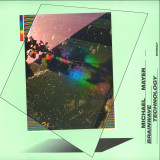
Michael Mayer’s latest EP, Brainwave Technology, comes at you purposeful, stealthy and sly. It’s a glorious left turn for the redoubtable producer, one that sees his typically lean and lithe productions buffed to a metallic, futurist sheen. There’s a gleam in the eyes of tracks like “Brainwave Technology” and “Alpha” that speaks of serious fun, of the intersection of the pleasure zone and the frontal lobe.
“Brainwave Technology” itself is informed by Mayer’s deep dive into the thorny terrain of artificial intelligence, transhumanism and posthumanism. Inspired by reading German philosopher Richard David Precht, Mayer found himself heading down the “proverbial rabbit hole,” as he describes it, “watching hours of YouTube material by self-proclaimed prophets of these ‘inevitable’ changes to come.” Never one to be taken in by the egotist’s dance, Mayer’s cynicism about the whole endeavour is tempered, a little, by the deeper questions that these figures gesture towards: “Is it really an evolutionary step that man and machine become one? Or is it rather a marketing plot by Silicon Valley billionaires?”
On “Brainwave Technology”, Mayer plays the charlatans at their own game, turning their logic against them by exposing the fruitiness of their ‘visions’. “I chose irony as my sword with which I chopped off some quotes from some of those batshit crazy prophets and self-promoters,” he explains of the drooling psychobabble he drops in the track’s lacuna. There’s a sense of humour here – how could you not laugh at these hungover egotists? – but there’s levity too, a sense that Mayer’s using sound to expose the contradictions and double-speak at the heart of these half-formed ideas. It’s a Burroughsian tactic, to slice into the heart of the voice to see what hidden truths surface.
It was Burroughs, too, who once said that “when you cut into the past, the future leaks out”; Brainwave Technology cuts into the logic of the futurologist to leak out the messiness of modern reality. On “Alpha” and “Gamma”, Mayer seems to conjure up the stark, ominous music that’d soundtrack a science fiction reinterpretation – or preinterpretation – of our modern malaise, all funereal wreaths of electronic noise and clatterboxing beats. As the EP resolves with “Device For The Young At Heart”, Mayer’s questions are piling up: “Do we want to become immortal and live on as a download? Do we really give up on Earth and put all our effort into colonising Mars?” There are no answers, of course, but plenty of imaginings-to-be. Brainwave Technology soundtracks both dystopian and utopian possibilities of what could come next.
- 1: You Go Girl!
- 2: You Ain't Takin' My Man
- 3: For Gato
- 4: Oh Henry!
- 5: To The Stars Major Tom
- 6: Oh No You Did Not!
- 7: To Feel
- 8: To Feel Embraced
- 9: Slappin’ Yo Face
- 10: Mmmmkayy I'm Goin' Out Now And I Don't Want Any Trouble From You!
- 11: Queenie Got Her Blues
- 12: Sparkle On Sad Sister Mother Queen
- 13: No Exit
A vibrant electronic fusion of lounge, jazz, and disco is maybe not the first (or fifth) thing you would expect to hear from one of the world’s most renowned modern composers and ambient tape loop pioneers, but upon first listen, it makes so much sense that one wonders why it didn’t happen sooner.
After years of producing and mentoring slews of young artists in 1990s Williamsburg, Brooklyn, William Basinski moved to Los Angeles. There he hired a young studio assistant, Preston Wendel, who eventually introduced his own works to the curious composer. That spawned a creative partnership that inspired Wendel to persuade Basinski to haul out his saxophone. Five years later, SPARKLE DIVISION has arrived with their enchanting debut album, To Feel Embraced.
Produced by SPARKLE DIVISION at Basinski’s Musex International in Los Angeles, the duo were joined by a few notable friends: Mrs. Leonora Russo (who Basinski affectionately calls “the true Sicilian Sparkle Division, my Brooklyn Mom, the Queen of Williamsburg”) offers her sparkling voice to “Queenie Got Her Blues”; fabled free-jazz icon and genuine bodhisattva, the late Henry Grimes, contributed upright bass and violin to the aptly-named “Oh Henry!” (“Lotta babies gonna be born from this one,” Henry and Margaret Davis Grimes playfully declared); and London vocalist Xeli Grana offers her ethereal voice to the album’s meditative title track.
Somewhere Different is Brandee Younger’s major label debut album, out August 13th on impulse! Brandee composed and recorded the album in New York City and at the legendary Van Gelder Studios in New Jersey from November 2020 to February 2021. Somewhere Different evokes nostalgic Black soul, informed by pioneering harpists Alice Coltrane and Dorothy Ashby as well as ‘90s R&B groups like SWV and Xscape. Side A is introspective and downtempo, soundtracking months of isolation during the pandemic, while side B includes raucous rock arrangements and more vigorous tracks. Features Allan Mednard on drums and Rashaan Carter on bass, with appearances by legendary bassist Ron Carter, trumpeter Maurice Brown, tenor saxophonist Chelsea Baratz, flutist Anne Drummond and drummer Marcus Gilmore. Ron Carter on “Olivia Benson” and “Beautiful is Black”. Tarriona “Tank” Ball (from Tank and the Bangas) on “Pretend”
Ephat Mujuru exemplifies a unique generation of traditional musicians in Zimbabwe. Born under an oppressive colonial regime in Southern Rhodesia, his generation witnessed the brutality of the 1970s liberation struggle, and then the dawn of independent Zimbabwe, a time in which African music culture - long stigmatized by Rhodesian educators and religious authorities - experienced a thrilling renaissance. Under the tutelage of his grandfather, who was a respected spirit mediumand mbira master, Ephat showed an early talent for the rigors of mbiratraining, playing his first possession ceremony when he was just ten years old. By then, guerilla war was engulfing the country and his grandfather Muchatera tragically became a victim of the violence, a devastating blow to the young musician. In the midst of the liberation struggle, mbira music became political. Eventually, the Rhodesians were defeated, but rather than return to the past, the nation of Zimbabwe was born and a new future unfolded. Ephat threw himself into the spirit of independence, singing of brotherhood, healing, and unity: crucial themes during a time when the nation's two dominant ethnic groups, the Shona and the Ndebele, were struggling to reconcile differences. Ephat's band would eventually follow the popular trend and add electric instruments. But before that, he and Spirit of the People released two all-acoustic albums, and they may well be the most exciting and beautiful recordings he made in his career. Mbavaira, the second of these albums, was released in 1983. As the independence years moved on, there would be fewer and fewer commercial mbira releases. But for the moment, Ephat had the required stature and reputation. Also, with the energy and drive we hear in these recordings, the album could easily rival the pop music of its day. Within a few years after the release of Mbavaira, it and albums like it became harder to find in Zimbabwean record stores. Ephat adapted to the times and formed an electric band. They recorded more albums over the years but none of them have the particularly delicious energy of Spirit of the People in the first years of Zimbabwe's independence.