Lutalo's highly visceral folk goes electric on The Academy, the Vermont multi-instrumentalist, songwriter and producer's debut LP. Recorded in January 2024 at the storied Sonic Ranch and self-produced along with Jake Aron (Snail Mail, Protomartyr, L'Rain), The Academy feels like watching the best underground film you've seen in years; establishing Lutalo as a singular voice of this generation of indie rock. Lutalo describes The Academy as their "first chapter" - a time capsule of the lessons they've learned in their 20-something years of life. "This record is exactly that: a `record' of my early life," they say of their debut album, out via Winspear. "The experiences, thoughts and feelings I was holding at those times and am currently processing. To me, this is the first big stamp of my existence I'm sharing." While Lutalo's 2022 EP Once Now, Then Again introduced them as a lo-fi acoustic guitar wunderkind, The Academy is bigger and bolder without compromising Lutalo's inviting sense of emotional intimacy, inspired by alt-rock veterans like Thom Yorke and Rob Crow as well as electronic greats like Aphex Twin and Bowery Electric. The Academy's grander arrangements are heard in the biting adrenaline rush of "Ocean Swallows Him Whole," or the anti-war jangle of album closer "The Bed." Their lyrics are often deeply intuitive, flowing as a stream of consciousness, albeit with weighty meanings. With their unique baritone and finesse for lyrical world building, Lutalo cuts to the bone-while only just beginning to reveal the depth of their artistry and vision.
Buscar:their ocean
Lutalo's highly visceral folk goes electric on The Academy, the Vermont multi-instrumentalist, songwriter and producer's debut LP. Recorded in January 2024 at the storied Sonic Ranch and self-produced along with Jake Aron (Snail Mail, Protomartyr, L'Rain), The Academy feels like watching the best underground film you've seen in years; establishing Lutalo as a singular voice of this generation of indie rock. Lutalo describes The Academy as their "first chapter" - a time capsule of the lessons they've learned in their 20-something years of life. "This record is exactly that: a `record' of my early life," they say of their debut album, out via Winspear. "The experiences, thoughts and feelings I was holding at those times and am currently processing. To me, this is the first big stamp of my existence I'm sharing." While Lutalo's 2022 EP Once Now, Then Again introduced them as a lo-fi acoustic guitar wunderkind, The Academy is bigger and bolder without compromising Lutalo's inviting sense of emotional intimacy, inspired by alt-rock veterans like Thom Yorke and Rob Crow as well as electronic greats like Aphex Twin and Bowery Electric. The Academy's grander arrangements are heard in the biting adrenaline rush of "Ocean Swallows Him Whole," or the anti-war jangle of album closer "The Bed." Their lyrics are often deeply intuitive, flowing as a stream of consciousness, albeit with weighty meanings. With their unique baritone and finesse for lyrical world building, Lutalo cuts to the bone-while only just beginning to reveal the depth of their artistry and vision.
Aesthetically, Ed Schrader’s Music Beat hates to tread water. At the same time, the Baltimore-based two-piece of vocalist Ed Schrader and bassist Devlin Rice won’t force their songs to fit a preconceived style. “The next album’s always gotta be different from the last one. We’re different people from record to record. So, writing authentically to ourselves will always bring our work to a place that we haven’t been to yet,” Rice said. Schrader added, “We’re terrified of turning into AC/DC. We never want to be married to one scene or time or sound. We want to be the Boba Fett of bands! Constantly altering the way in which we make records has been pretty key in that process.”
For Orchestra Hits, the band’s latest, that alteration was welcoming longtime musical comrade Dylan Going into the fold as a co-writer and co-producer. A songwriter in his own right, a guitar sideman for ESMB on their last two tours, and a collaborator with Rice in the noise riffage band Mandate, Going had both a unique vision and an intimate familiarity with the ESMB vibe.
“Dylan came to every show we’ve ever played in New York—no matter how weird it was,” Schrader said. “He’d be standing there ready to move an amp or feed us barbecued cactus after the gig and toss on some Golden Girls so we could decompress. It felt like family as soon as we began working, but I honestly had no idea how damn good he was at tossing out these hooks.”
According to Schrader, the songs “just poured out of us” over the course of a highly caffeinated three-day weekend in a tiny room in Devlin’s house while his cat, Sandy Goose, screamed continually. “It was like three kids hiding from the world to get into some lovely mischief,” they said. The lack of external pressure in the process gives Orchestra Hits an almost paradoxical vibe. For all of the album’s layers, that mix live and sequenced instruments, it never loses the raw energy of a small handful of friends in the same room plugging in, cranking up, and playing until they pass out.
Lyrically, the album finds Schrader, now 45, meditating on experiences in their youth to make sense of the present moment. “We are not into the garden,” Schrader wails on the relentless “Roman Candle,” a song about the sad debacle of Woodstock ’99, and a direct response to Joni Mitchell’s “Woodstock,” a utopian ode to hippie idealism. A 19-year-old Schrader, having snuck into Woodstock ’99 through a hole in the fence, was there the night members of the crowd used candles intended for a vigil for victims of the Columbine High School massacre to set fires all over the grounds. Even before the fires, Schrader remembered feeling disconnected from the music, the nostalgic cash grab, and the meatheads in the crowd. After watching a press tower collapse, they boarded a random shuttle bus and were dropped off near a Denny’s. “It was a far cry from the Garden of Eden,” Schrader said. “That experience defined what I didn’t want to be a part of, and yet America is more like Woodstock ’99 than ever.”
With percolating synthesizer arpeggios, and climbing bass grooves, “IDKS” is the album’s dance-floor slapper. “’IDKS’ is a funny one,” Schrader said. “We already had a pretty satisfying suite of songs when Dylan was packing up to head back to New York, but he missed the train because of a freak snowstorm. Realizing he’d be stuck in town another day, he says to me, ‘Here’s this other weird thing I have.’ It was ‘IDKS.’ The hooks were so good I felt like Homer Simpson at a free donut convention. I just dove right in, and we cranked that baby out in like 20 minutes.”
Lyrically, “IDKS” is a letter from the true self to public-facing self. “It’s an angry song,” Schrader said. “Because the public-facing self is always looking for an easy escape, but it forces the true self into a cage. I honestly thought my lyrics were corny and was about to change them, but Dylan was digging it just the way it was. So that’s what you hear.”
With the soaring “Daylight Commander,” the band went against all of their musty-basement-bred instincts. “I went full High School Musical with the vocals,” Schrader said. “At first it felt almost embarrassing, but I remember reading somewhere that Bowie recommended always floating a little bit above your comfort zone, and that’s what we did here.” The song is part exercise in absurdity and part pop Trojan horse. “If ever we had a ‘Shiny Happy People’ moment, I guess this is it,” Schrader said.
Electric, their third album, came out in 1987 and really caused the band to explode to new levels of fame. It contains the massive hits "Love Removal Machine", Wild Flower" and "Lil" Devil" and was produced by Rick Rubin. Electric is a seminal work, featuring some of the band"s most iconic songs. It is a departure from the band"s previous work, with a raw, agressive and stripped-down sound. The album"s opening track, "Wild Flower," sets the tone with its pounding drums, blistering guitar riffs, and Ian Astbury"s wailing vocals. Electric was a commercial and critical success, propelling The Cult to the forefront of the hard rock scene and cementing their status as one of the most influential bands of the era. The album remains a touchstone for hard rock and heavy metal fans, a classic work that captures the spirit of rebellion and the power of rock and roll. The Cult has remained an important and enduring force in the rock music world. The band has sold millions of records worldwide and has earned critical acclaim for its powerful live performances. The Cult continues to tour and record new music, and their influence on rock music shows no sign of diminishing.
- A1: Primordial Forest (The Lost World Jurassic Park)
- A2: Medal Of Honor
- A3: Bristow And Bristow (Alias)
- A4: Secret Weapons Over Normandy
- A5: The Incredibles Suite
- A6: Take A Hike (Lost)
- B1: Life And Death (Lost)
- B2: Sky High
- B3: Space Mountain
- B4: The Family Stone Waltz (The Family Stone)
- B5: Le Festin (Ratatouille)
- B6: Ratatouille
- B7: Roar! (Cloverfield)
- C1: Casa Cristo (Speed Racer)
- C2: Land Of The Lost
- C3: Enterprising Young Men (Star Trek)
- C4: Married Life (Up)
- C5: Let Me In
- C6: Lax (Lost)
- D1: The Turbomater (Cars 2)
- D2: A Man, A Plan, A Code, Dubai (Mission: Impossible - Ghost Protocol)
- D3: Monte Carlo
- D4: Super 8 Suite
Mutant is proud to present Academy Award-winning composer Michael Giacchino's latest album, Exotic Themes for the Silver Screen – Volume 1, featuring iconic scores from Giacchino's extensive portfolio rendered in the retro lounge style of Exotica from the 1950s.
“It's no secret that we at Mutant are huge fans of Michael Giacchino,” says Spencer Hickman, Co-Founder of Mutant. “We're excited to release a retrospective of his astonishing three decades as a composer. Rather than just curating a simple compilation of his previous works, Michael went back into the studio, rearranged and re-recorded every major theme from his career. These tracks have been recorded in an Easy Listening style inspired by such greats as Martin Denny and Les Baxter, creating not just a unique and incredible look back at some of the most beloved movie and television themes of the modern age, but also bringing a fresh, exciting take to the beautiful journey he has taken us all on with him. It feels like you are discovering these songs for the very first time: timeless, beautiful, and a joy to listen to. These newly recorded themes transport you to a far-off sunset, looking out at the ocean, complete with a cocktail in hand, providing a much-needed escape from the stress of modern times, and we can all agree that is something we all crave right now.”
Exotic Themes for the Silver Screen – Volume 1 spans nearly two decades of Michael Giacchino’s music, from his early video game scores to his television hits and blockbuster films. The album transforms these works through the lens of Exotica, replacing epic strings and thundering drums with vibraphones and marimbas.
“This album was inspired by the work of Arthur Lyman and Martin Denny,” says Giacchino. “What would they do with the Star Trek theme? Or video games like Medal of Honor? It was a way for me to play in that world I loved so much growing up. I thought it would be fun to create a fantasy world, where this album was recorded back in 1967 and then lost, only to resurface today.”
The album showcases Giacchino’s unerring talent for melody, stripping down grand symphonies to their essential elements while retaining their aesthetic and emotional core.
“So much was rooted in the big orchestral sound, so it was really about scaling it back. The real trick is figuring out the little fun hooks and things you can add along the way. There were no rules; I was up for anything. It was a way to re-engage with the material and be creative in a new way.”
Exotic Themes for the Silver Screen – Volume 1 includes an array of reinterpreted pieces from Michael Giacchino’s career. Highlights include ‘Primordial Forest’ from the 1997 video game The Lost World: Jurassic Park, ‘Life and Death’ from Lost, the theme from Ratatouille, ‘Roar!’ from Cloverfield, ‘Enterprising Young Men’ from Star Trek (2009), ‘A Man, A Plan, A Code, Dubai’ from Mission: Impossible - Ghost Protocol, and a Super 8 suite.
Featuring package design by Luke Insect, and liner notes by Charlie Brigden.
Coming out on September 6th on Sharptone Records, Sundiver is Boston Manor’s fifth album and one that represents a glimmering dawn for the Blackpool five-piece. Grown from a seedbed of optimism and sobriety, the LP celebrates new beginnings, second chances and rebirth. With two members recently stepping into fatherhood, hope is baked into every note. “Datura came out of these really dark few years over the hangover of the pandemic,” Henry reflects. “I'd been struggling a lot with drinking and not taking care of myself and bad mental health and stuff. We wanted Sundiver to be the next morning of the following day.” He explains that it feels good this time round to write through the lens of positivity. “The themes began to emerge, of rebirth, spring, dawn, sunshine and then other elements just started to fit into that.” It was during the making of Sundiver that Henry found out he was going to be a dad. This album is a significant one for the band. Originally coming out of the emo and pop punk scene, they’ve explored sonics and genres throughout their career, taken risks and achieved more than they could ever had dreamed of. They’ve grown up as Boston Manor – their lives and the world changing around them. They’re now taking stock, at a crossroads of the band they were and the band they could be.
While writing the album, they revisited the bands that shaped them in the late 90s and early 00s. “I was listening to the music I loved when I was a teenager and I just thought, why don't we make music like our favourite bands?”, guitarist Mike Cuniff remembers with a smile. “So we brought our interests to the table that way. Y2K kind of vibe. There are elements of Deftones, there are elements of Portishead in there, some Garbage, The Cardigans.” He laughs and adds NSYNC to the list of inspirations. From this cocktail of classics comes a dynamic and ambitious record, rich with depth, groove and more hooks than Peter Pan’s nightmares. Lyrics that foxtrot from parallel universes to personal growth, vivid dreamscapes to raw grief. Individually they’re single strokes full of meaning and magic. Together they’re a landscape.
Container (out Feb 15th) is the first single and it’s them at their best – impassioned and infectious. “This song is about the stagnancy of life creeping up on you & how that can bring about change.,” Henry explains, citing Ocean Song by US band Daughters as an inspiration.
The concept of the butterfly effect is present on Sundiver – how small actions can lead to big changes. This is no clearer than on their second single, Sliding Doors (out April 5th). It has the golden sound of late 90s Lollapalooza rock – think Smashing Pumpkins - rebooted with crisp 2024 production and a potent heaviness. In the lyrics Henry wonders, what if?, pondering on what could be. The idea that there are infinite versions of you whose lives splinter off in different directions at every decision you make. That there’s another you out there somewhere right now reading this sentence, and another me writing it. “So much is down to chance and circumstance,” Henry says. “You might catch that train and your life totally changes. Or you might miss it and things stay the way they are.”
Heat Me Up (out May 30th) is defiant and victorious, the audio equivalent of quitting your shit job and driving into the hot summer sun with a head full of dreams. “The lyrics are about love and gratitude,” Henry shares. “Another theme on the record is just appreciating what you have. It’s about not taking for granted the things that you've been afforded.”
There was some natural magic in the creation of Sundiver. They worked with their usual producer, Larry Hibbitt, and engineer, Alex O’Donovan, but instead of recording in London again they ended up in the green pastures of Welwyn Garden City. “Because Larry lives out in the countryside now, it was a way different environment and way different experience recording this time,” Mike remembers. “That contributed a lot to the brighter sound of the record.” The daily barbecues they had during their recording sessions imbued the process with harmony – five old friends spending quality time together and making quality music.
However, the album is by no means one-note. Birthing this new world they’ve created wasn’t without it’s pain, and that can be heard in the heavier moments on Sundiver. What Is Taken Will Never Be Lost is the most-stripped back on the album, a slow rock number seasoned with the downtempo Portishead influence. The heartfelt lyrics are Henry’s way of processing the loss of his grandfather, who died in a hospice last year(?). “It was just fucking horrible. It was always cold when I went there and they were always trying to get rid of me. The song title, What Was Taken Can Ever Be Lost, is the idea of his memory fading at the time because of dementia.” Henry goes onto explain that shoeboxes of photographs, diaries and a legacy is what he’s left behind. “He lived a really rich life and it has really impacted me and my father. His legacy is etched into the fabric of history in a very small way.” This song continues the connection between his grandfather and the band, as his painted face is emblazoned on the cover of the very first Boston Manor EP, Driftwood. As well as emotionally heavy themes, there’s heaviness in the music of Sundiver too. The closing song, Oil In My Blood, descends into an intense shoegaze outro with Debbie Gough from Heriot screaming hellfire. It’s in moments like this that the band show us aggression and fury can be as much a part of positive change as quiet introspection. The last lyrics of the song, “It resets and starts again,” leaves us in contemplation as the final chord rings out.
Touring the US, Europe and Japan over the years makes for an impressive CV, but if you know anything about Boston Manor you’ll know that they’re all about their hometown. Their choice to work with Blackpool-based photographer Nick Barkworth is testament to that. They’ve been working with him since the pandemic. “He captures Blackpool in a light that really reflects the weirdness and quirkiness of the town,” Henry says.” He's got a really good way of presenting that.” For the Sundiver cover, Nick photographed a 30ft tall abstract glass sculpture made by the local artist John Ditchfield. A striking and bewitching monolith that’s familiar to them but unusual to most people. “It has such kind of a gravity and power to it,” Henry describes the sculpture which stands in a field just outside of the seaside town. “It reminds me of either an explosion or a star or a supernova. To me it represents new life, power and radiance.” Boston Manor have got a knack for that - connecting the otherworldly and the everyday, the stars and the streets.
They’re a band known for using their music to make bigger statements about society. This time round they’re harnessing the uplifting power of music, and the communion it creates, as an antidote to the daily doom and isolation. “It seems like absolute chaos out there at the moment,” Henry says. “You’ve got Gaza and Israel, you've got Russia, you've got the fact that 40% of the world is going to have an election this year and increasingly most governments are leaning very far to the Right. The internet is dividing everybody, people are getting poorer and more desperate. It's really, really scary.” They considered trying to tackle the weight of it all in their music. “We could’ve written Welcome to the Neighbourhood on steroids, where it's just absolute darkness and misery”. He’s referring to their 2018 concept album that deals with class, inequality and the bleaker side of Blackpool. “But I think it's really important to write something that people can be immersed in and find some sort of solace in. Somewhere they can escape to from the modern day pressures and everything that’s going on. We’re all in this together.”
Japanese vibraphonist and marimba player Masayoshi Fujita returns with Migratory, his masterful new solo album, where his sonic explorations into the unknown continue.
In 2019, after 13 years of living in Berlin, Fujita returned to his native Japan with his wife and their three children, fulfilling his life-long dream of living and composing music in the midst of nature. The family found their new home in the mountain hills along the coast of Kami-cho, Hyōgo, three hours west of Kyoto.
Once settled in, Fujita spent his time turning an old kindergarten into his own music studio, Kebi Bird Studio, which became the birthplace of Migratory. On his new album, the composer and producer masterfully reimagines and mesmerises with his trademark sounds of vibraphone, and resumes his experimentation with the marimba and synthesisers that he first incorporated on his 2021 album, Bird Ambience, which followed the release of his acclaimed vibraphone triptych: Stories (2012), Apologues (2015) and Book of Life (2018).
On Fujita’s ever-evolving list of collaborators, Migratory introduces vocals from Moor Mother on ‘Our Mother’s Lights’ and Hatis Noit on ‘Higurashi’, as well as shō and saxophone to its soundscapes. Whilst at a music residency in Stockholm in 2021, Fujita met Swedish shō player Mattias Hållsten. Although it was a brief encounter, the two musicians stayed in touch. During a visit to Japan, Hållsten stopped by the studio and played on three of the tracks, including the alluring album closer ‘Yodaka’, exceeding Fujita’s own expectations.
Japanese vibraphonist and marimba player Masayoshi Fujita returns with Migratory, his masterful new solo album, where his sonic explorations into the unknown continue.
In 2019, after 13 years of living in Berlin, Fujita returned to his native Japan with his wife and their three children, fulfilling his life-long dream of living and composing music in the midst of nature. The family found their new home in the mountain hills along the coast of Kami-cho, Hyōgo, three hours west of Kyoto.
Once settled in, Fujita spent his time turning an old kindergarten into his own music studio, Kebi Bird Studio, which became the birthplace of Migratory. On his new album, the composer and producer masterfully reimagines and mesmerises with his trademark sounds of vibraphone, and resumes his experimentation with the marimba and synthesisers that he first incorporated on his 2021 album, Bird Ambience, which followed the release of his acclaimed vibraphone triptych: Stories (2012), Apologues (2015) and Book of Life (2018).
On Fujita’s ever-evolving list of collaborators, Migratory introduces vocals from Moor Mother on ‘Our Mother’s Lights’ and Hatis Noit on ‘Higurashi’, as well as shō and saxophone to its soundscapes. Whilst at a music residency in Stockholm in 2021, Fujita met Swedish shō player Mattias Hållsten. Although it was a brief encounter, the two musicians stayed in touch. During a visit to Japan, Hållsten stopped by the studio and played on three of the tracks, including the alluring album closer ‘Yodaka’, exceeding Fujita’s own expectations.
Rose Main Reading Room, the fourth full length by Peel Dream Magazine, is a lush, inviting headphones record; the kind of album made to accompany city bus rides and rainy-day solo trips to accidental destinations. The band, whose name nods to the BBC Radio 1 legend John Peel — arbiter of all things underground, quality, and (it must be said) "cool" — has since its inception been a genre-hopping experiment, jumping from motorik krautrock to shoegaze and space age pop, and their newest work is a perfect starting point for the uninitiated, beckoning toward a newfound romance and nostalgia with their catchiest collection of songs to date. Across its fifteen songs, Rose Main Reading Room ultimately proposes a world of marvels and compelling complexity: “Oblast” cheekily prods at mutually assured destruction; “Ocean Life” explores the infiniteness within ourselves; while “R.I.P. (Running in Place)” unpacks an all too familiar stagnation. It’s all part of, and crucial to, Rose Main Reading Room’s transportive power, ever reaching for the wonder and magic of the world we live in.
- Ocean Motion Mildew Mind
- Yes Sir Ree
- I Can’t Stand It
- Country Time
- If I Were A Poet
- Torero Piece
- Peachy Keen-O
Carving an unlikely and elaborate niche in the stoney academic landscape
which she once shared with the likes of Phill Niblock, John Cage and Sorel
Hayes, the excitable proto-punk poèmes sonores of the linguistic loose
cannon known as Beth Anderson first rolled through New York in the mid-
1970s (from Kentucky via San Francisco) like a jumbled tumbleweed of lost
Letterism, face paint and threadbare drummy funk to astonish gallery floors,
lecture theatres and loft apartment stages.
One thousand leagues under the radar of the commercial music industry,
with a sense of humour that elevated way above her highbrow peer group,
the music of Beth Anderson has successfully evaded the pressing plant for
most of her creative career, and not unlike fellow New York gallery actionist
Suzanne Ciani, it has taken decades to successfully collect and contextualise
these early recordings - expanding her elusive discography beyond the rare
and mysterious solo single entry in the process.
When uttered amongst the type of vinyl vampires that haplessly gravitate
between both art school vintage vanity pressings and family funded plunder
funk, there’s an outside chance that the name Beth Anderson might muster
some vague recognition on account of her one and only solo wax sojourn
into the expansive DIY market. In 1980 the 45rpm single, ‘I Can’t Stand It’,
combusted into the consciousness of adventurous participants with its deep
rhythmic backbeat (courtesy of future Sonic Youth / Dinosaur Jr producer
Wharton Tiers, member of the new wave band Theoretical Girls), climaxing
with two colourful and commanding linguistic tantrums before disappearing in
a puff of smoke leaving would-be fans dumbstruck without so much as a
label name or distribution contact to explain what they had just heard.
For those who have spent the subsequent years on the edge of that same
seat, it might come as some comfort knowing that somewhere out there,
there is also a contrasting world of gallery patrons and experimental sound
poetry enthusiasts that similarly didn’t know that their regular performance
poet Beth Anderson even made the ambitious pop record. For the uninitiated,
the enigmatic Beth Anderson has straddled both sides of the art / rock fence
placed between two equally niche pastures.
Hopefully this first ever vinyl compendium will succeed in joining the dots,
loops, yelps, squeaks, beats and repeats. Let us follow Beth’s lineage, along
her magnetic tape highways crossing multiple boundaries in a hope to bridge
unlikely anti-genres like ‘yoga punk’, ‘ramble rap’, ‘combustion pop’ and
‘formroom funk’… all of which were officially neatly bracketed under the
curious Text-Sound movement where Beth garnered utmost respect as a key
practitioner.
"Following a nearly seven-year hiatus, deathcore titans Oceano erupt with full force on their highly anticipated sixth album, Living Chaos. Featuring nine earth-shattering tracks written by Adam Warren and Scott Smith, including the acclaimed single “Mass Produced,” the next chapter of Oceano expands their patented deathcore punch with brutal breakdowns and seismic atmospheres on tracks like “The Price of Pain” and “Wounds Never Healed.”
One of the most established and long running bands in the modern Deathcore scene, Oceano have attracted global acclaim and attention with their heavy touring schedule and increasingly punishing studio releases."
- A1: Thats How It All Is (Feat Kevin Mark Trail)
- A2: Dumplings For Dinner (Feat Omar)
- A3: Long Road
- B1: No Crime To Try
- B2: Work It Out (Feat Ange Williams)
- C1: Clearer Skies (Feat Kevin Mark Trail)
- C2: Sherwood Ave (Kitchen Party)
- C3: Everything I Have To Give
- D1: That Love (Feat Louis Baker)
- D2: Some Kind Of Blockage
Black Vinyl[30,88 €]
The records is released in two options. Both hvae 180g vinyl records. The first version has two black vinyls and the second limited edition (numbered 100 pieces) has one turquoise vinyl and the other red.
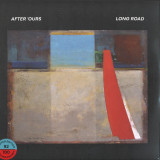
Over the last three decades, Auckland, New Zealand, has given birth to several generations of musicians, DJs, and producers who operated within the interzone between jazz, blues, soul, funk, Latin music, hip-hop, house, boogie, and broken beat. Across two slow-cooked albums that sit at the intersection of machine funk and vivid live instrumentation, Odyssey (2016) and their forthcoming sophomore release Long Road (2024), After 'Ours - the group project of pianist and composer Michal Martyniuk and drummer, guitarist and producer Nick Williams - have comfortably located themselves within this antipodean tradition.
Born and raised in Auckland, Nick Williams grew up surrounded by music from a young age. At home, his mother, Mary Anne, a record collector and DJ with deep, diverse vinyl crates, kept his ear sharp. By the time he was eight years old, he was regularly joining his musician father on stages across Australia in his blues rock band Slippery Sam. In his early twenties, Nick began leading the eleven-piece Auckland Latin-dub-funk fusion big band Tangent, who performed regularly until the late 2000s.
Michal Martyniuk, on the other hand, grew up on the opposite side of the world in Szczecin, Poland. After playing classical music for twelve years and attending jazz school, he relocated to New Zealand with his family in his teens. While studying at Auckland University Jazz school, Michal came into the orbit of the legendary New Zealand saxophonist, composer, producer, and band leader Nathan Haines, who brought him into the same world as future collaborators like Tama Waipara, Batacada Sound Machine, Sola Rosa and Nick.
Inspired by the rich stories of jazz, neo-soul, electronica, and dance music from both sides of the Atlantic Ocean and the open-eared Auckland scene they emerged from, After 'Ours formed in 2011. Born out of a friendship cultivated through playing together at bars and nightclubs around town and home studio sessions. "Nick had family and work, so I had to wait all day," Michal says. "We'd come to the studio at 10 PM and go till 3 AM. That's how we came up with the name.
Session by session, After 'Ours revealed itself to be a creatively fertile meeting of minds. "We both have our angles, but it works well in the end," Nick reflects. "It takes the music to a place we can't get to by ourselves."
Between 2011 and 2016, they wrote and recorded Odyssey with a cast of musical collaborators that included KP, Sharlene Hector & Kevin Mark Trail (UK), Matt Nanai, Nathan Haines, Jakub Skowronski, Nick's partner Ange Williams (nee Saunders) and British producer Mike Patto from the lauded UK future jazz group Reel People. Influenced by the smooth yacht rock of Steely Dan and Donald Fagan, the warm midtempo bounce of A Tribe Called Quest and J Dilla, and the complex jazz/RnB bop of Robert Glasper, Odyssey was a labour of love that emphasised community, warm-hearted hospitality, and care.
Seven years on, they're finally ready to return with Long Road, an album that contains some of their best work yet. As well as reconnecting with past collaborators Kevin Mark Trail and Ange Williams, Long Road sees After 'Ours calling on assistance from Louis Baker, Jakarta-based saxophone player Kuba Skowroński, bassist Dan Antunovich, Los Angeles-based drummer Chris Bailey and the journeyman British soul artist Omar Lyefook.
Across ten songs that plot a stargazed course through their antipodean spin on UK broken beat, jazz, modern soul, and blues rock, Nick and Michal build on everything they learned while writing and recording Odyssey. In the process, they take their joyful musical visions to sublime new heights.
Human Worth are proud to present the killer debut EP 'God Pile' from Leeds duo Grub Nap, featuring members of Thank, Dvne and Cattle, with a portion of proceeds donated to charity. Grub Nap are a 50/50, double headed, four legged, semi haggered, party at the front business at the back mash up of Dan Barter (Dvne, Joe Pesci) and Steve Myles (Thank, Cattle, Groak, Khuda). They first played together in a hardcore band in their late teens and have teamed back up to churn out sludgecore for folks with short attention spans and no interest in wizards or flag waving. A reunited earful, a midlife distraction, a questionable whiff from the back of the fridge. Crawl on in, the water’s foul. 'God Pile' is a golden brown, 15 minute, crumbly, introspective riff lattice. Snappy(ish) songs about greed, crippling anxiety, suburban nuclear mishaps and flagellant rozzers – 6 knuckle dragging clods of down tuned insolent rage. So pummelling is their racket, that they caught the ears of "supergroup" Empire State Bastard (featuring members of Biffy Clyro, Oceansize and Slayer) who invited the duo on the debut UK tour. Human Worth have pressed up a limited edition of black vinyl, with a stunning etching on side B featuring the art of Steve Myles, with 10% of all proceeds donated to Leeds Mind – promoting positive mental health and wellbeing and providing help and support to those who need it most.
Mystery colored vinyl (a unique and kooky mix-up from an exotic palette) and including an insert with a unique drink recipe by Martin Cate and more. Limited edition of 600 copies only!
Lush and exciting, rich and vibrant, the modern masters of exotica - Ixtahuele's 2nd album is finally available again. Guiding your mind's eye over oceans and mountains, through jungle and desert, teasing and enticing your ears with layered soundscapes and catchy melodies, you'll find yourself whistling along on a winding mountain road, stalking through the rainforest, or humming lazily on a tropical beach. Building on their previous releases, both musically and thematically, the group flirts with jazz, mambo, and space age pop, all the while retaining their classic acoustic exotica sound and a high level of musicianship. This is music to lounge by the pool to, to armchair travel, to share a cocktail with a lover or a friend or to imbibe sacred libation in the rumpus room or Tiki bar. Sophisticated and savage, it's exotica for the modern age!.
- A1: Thats How It All Is (Feat Kevin Mark Trail)
- A2: Dumplings For Dinner (Feat Omar)
- A3: Long Road
- B1: No Crime To Try
- B2: Work It Out (Feat Ange Williams)
- C1: Clearer Skies (Feat Kevin Mark Trail)
- C2: Sherwood Ave (Kitchen Party)
- C3: Everything I Have To Give
- D1: That Love (Feat Louis Baker)
- D2: Some Kind Of Blockage
Color Vinyl[35,71 €]
The records is released in two options. Both hvae 180g vinyl records. The first version has two black vinyls and the second limited edition (numbered 100 pieces) has one turquoise vinyl and the other red.
Over the last three decades, Auckland, New Zealand, has given birth to several generations of musicians, DJs, and producers who operated within the interzone between jazz, blues, soul, funk, Latin music, hip-hop, house, boogie, and broken beat. Across two slow-cooked albums that sit at the intersection of machine funk and vivid live instrumentation, Odyssey (2016) and their forthcoming sophomore release Long Road (2024), After 'Ours - the group project of pianist and composer Michal Martyniuk and drummer, guitarist and producer Nick Williams - have comfortably located themselves within this antipodean tradition.
Born and raised in Auckland, Nick Williams grew up surrounded by music from a young age. At home, his mother, Mary Anne, a record collector and DJ with deep, diverse vinyl crates, kept his ear sharp. By the time he was eight years old, he was regularly joining his musician father on stages across Australia in his blues rock band Slippery Sam. In his early twenties, Nick began leading the eleven-piece Auckland Latin-dub-funk fusion big band Tangent, who performed regularly until the late 2000s.
Michal Martyniuk, on the other hand, grew up on the opposite side of the world in Szczecin, Poland. After playing classical music for twelve years and attending jazz school, he relocated to New Zealand with his family in his teens. While studying at Auckland University Jazz school, Michal came into the orbit of the legendary New Zealand saxophonist, composer, producer, and band leader Nathan Haines, who brought him into the same world as future collaborators like Tama Waipara, Batacada Sound Machine, Sola Rosa and Nick.
Inspired by the rich stories of jazz, neo-soul, electronica, and dance music from both sides of the Atlantic Ocean and the open-eared Auckland scene they emerged from, After 'Ours formed in 2011. Born out of a friendship cultivated through playing together at bars and nightclubs around town and home studio sessions. "Nick had family and work, so I had to wait all day," Michal says. "We'd come to the studio at 10 PM and go till 3 AM. That's how we came up with the name.
Session by session, After 'Ours revealed itself to be a creatively fertile meeting of minds. "We both have our angles, but it works well in the end," Nick reflects. "It takes the music to a place we can't get to by ourselves."
Between 2011 and 2016, they wrote and recorded Odyssey with a cast of musical collaborators that included KP, Sharlene Hector & Kevin Mark Trail (UK), Matt Nanai, Nathan Haines, Jakub Skowronski, Nick's partner Ange Williams (nee Saunders) and British producer Mike Patto from the lauded UK future jazz group Reel People. Influenced by the smooth yacht rock of Steely Dan and Donald Fagan, the warm midtempo bounce of A Tribe Called Quest and J Dilla, and the complex jazz/RnB bop of Robert Glasper, Odyssey was a labour of love that emphasised community, warm-hearted hospitality, and care.
Seven years on, they're finally ready to return with Long Road, an album that contains some of their best work yet. As well as reconnecting with past collaborators Kevin Mark Trail and Ange Williams, Long Road sees After 'Ours calling on assistance from Louis Baker, Jakarta-based saxophone player Kuba Skowroński, bassist Dan Antunovich, Los Angeles-based drummer Chris Bailey and the journeyman British soul artist Omar Lyefook.
Across ten songs that plot a stargazed course through their antipodean spin on UK broken beat, jazz, modern soul, and blues rock, Nick and Michal build on everything they learned while writing and recording Odyssey. In the process, they take their joyful musical visions to sublime new heights.
Formed back in 2011 in Savannah, GA, Triathalon consists of Chad Chilton, Hunter Jayne and Adam Intrator. Over the years the band has experimented with multiple sounds, releasing 3 albums, one EP and has shared collaborations with several artists. Their newest release "Sleep Cycle" blends fresh but familiar sounds; there's a meditative quality to the music that is especially welcoming in the current climate. Mastered by long time collaborator Alex Previty, a few of the tracks across the EP have mantra-like lyrics - simple thoughts repeated over and over that twist and turn and slowly morph into subtle ear worms.
Bónus, the new EP from prolific Detroit techno producer, Rebecca Goldberg includes 3 brand new acid tracks on the A side plus 3 remixes from mainstay Icelandic producers $leazy, Andartak and Thiz.One on the B side.
Goldberg released the A1 first single, Bleikur, a fast-paced 909/303 workout, over 3/03 weekend to coincide with her appearance on HÖR and debut DJ set at the world renowned Berlin techno club, Berghain. The single release was accompanied by a music video created by Georgian photographer Nina Nayko.
The A2 title track, Bónus, waxes squelchy and post-apocalyptic, while the A3 inside track, N.A.O., blends intricate layers of synths and drum patterns creating a dream-like experience. N.A.O. is an acronym for North Atlantic Ocean, Goldberg’s muse.
In addition to her original tracks, for the B side Rebecca enlisted the help of three producers from the North to provide their own unique takes on Bleikur (it means Pink in Icelandic).
Bónus EP is produced and arranged by Rebecca Goldberg.
Additional remix production by $leazy, Andartak and Thiz.One.
Mastered by Andy Toth.
Record pressed at Archer Record Pressing Co. in Detroit, MI.
2024 Detroit Underground
The second LP by Tokyo ambient conceptualists UNKNOWN ME began as a commission for historic Japanese cosmetic conglomerate Shiseido, conjuring audio approximations of seasons and scents, but soon flowered into its own refracted and rarefied environment: Bitokagaku. Translated as “beauty and science,” the album is the foursome’s first composed solely with software, reflecting the collection’s utopian, laboratorial muse.
From levitational electronica (“A Rainbow in Meditative Air”) and vaporous downtempo (“Dancing Leaves”) to planetarium reverie (“Kitsune No Yomeiri”) and AI IDM (“Retreat Beats”), the music moves like weather patterns in a bio-dome: dazzling, microcosmic, and delicately calibrated. Percolating synths crossfade with field recordings from Shiseido’s research division; the sound of streams and distant birds blur into a processed haze; clinical voices read lists of precious stones. It’s a vision of new age as soft robotics, of serenity streamlined by sentient systems.
UM’s team of engineers (Yakenohara, P-RUFF, H. Takahashi, and Osawa Yudai) cite an eclectic swath of inspirations behind Bitokagaku – molecules, stars, Kenji Miyazawa, Akira Kurosawa, even “the sparkle of rainbows” – but their guiding artistic principle is as ancient as it is eternal: “beauty.”
Norway's progressive sludge masters are about to release the sequel to their highly acclaimed debut album "Animist". The upcoming release, "Determinist", will hit fans of The Ocean, Mastodon, and Igorr right in the face. With expanded diversity, heavier and more of the good stuff - Just the right kind of heavy! The new album takes the listener out of the prehistoric world from "Animist" and into the current and future era of determinism: Humanity has left the world of mysteries, wonders, and chance. In a reality where all is calculated, analyzed, and predetermined, humans thrive on scientific progress, but at what cost? If everything is certain, humans have deprived themselves of the illusion of free will and the wonders of life. Octohawk's sophomore album, Determinist, is a synopsis of the deterministic era, from the humble experimental beginnings to the complete coalescence with ever-flowing information. Each of the seven tracks represents the significant stages in this endeavor, from man on the ground to being a part of the eternal stream.