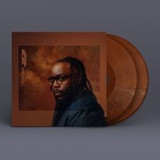
FATSO JETSON was formed in Palm Desert, CA, in 1994 and are often credited as one of the fathers of the desert strain of stoner rock made most famous by their slightly younger neighbours Kyuss and Queens of the Stone Age. While musically similar to some of their stoner brethren, FATSO JETSON incorporate a broader variety of musical influences that includes punk, blues, jazz and surf music. That is not to say that the band isn't capable of dishing out supremely heavy riffs... Certainly grounded in dense hard rock, FATSO JETSON experiment with many musical textures, angular instrumental epics, and bizarre lyrics to create a punk, blues art rock all their own. In 1995, the group recorded their debut "Stinky Little Gods" and followed that up in 1997 with "Power of Three" (both appeared on SST). Brant Bjork briefly joined up as second guitarist and appeared on two 7" releases. The band then teamed up with Bongload Records, who released FATSO JETSON's third full-length, "Toasted", in 1998. Guitarist and old friend Gary Arce joined the band to record their fourth LP "Flames for All" in 2000 for Artist Frank Kozik's Mans Ruin Label. FATSO JETSON also contributed to "The Desert Sessions" releases that Josh Homme organized, bringing desert musicians and other creative like-minded rock musicians together to collaborate. It was Homme's record label Rekords Rekords that released the next FATSO JETSON album in 2001 "Cruel and Delicious". For this session the band was joined by Vince Meghrouni on Sax and Harp, adding a new dimension to FATSO's hard to pin sound. The band continues with this line up in 2009. There must be something in the sand of sweltering Palm Desert, a California town that has birthed Kyuss and Queens of the Stone Age, as well as Fatso Jetson. Like Kyuss/QOTSA, Fatso Jetson built a name for themselves by putting their own unique spin on the Sabbath sound, but unlike their counterparts, larger than life singer/guitarist Mario Lalli's true love lies in both jazz (Thelonious Monk, Eric Dolphy) and experimental rock (Frank Zappa, Devo). On paper, this conglomeration of different styles sounds like the perfect recipe for a train wreck, but it somehow all comes together on disc, as evidenced by the trio's 2003 offering, Cruel & Delicious. Issued on old pal Josh Homme's label, Rekords Rekords, the trippy songs perfectly fit the feel of the album's cover (a sun-bleached photo of a long stretch of desert highway), especially such standouts as the saxophone free for all "Drinkin Mode," the melodic "Light Yourself on Fire," the bouncy instrumental "Heavenly Hearse," a barely recognizable cover of the Devo obscurity, "Ton O Luv," and the jazzoid freak-out, "Pig Hat Smokin." Cruel & Delicious is an enjoyable slice of hard rock, well off the beaten path. Originally released on CD via Josh Hommes rekords rekords label. Right in time for its 20th Originally released on CD in 2001 on Josh Hommes own Rekords Rekords-label and now on vinyl for the first time! 20th anniversary! Remastered for the vinyl release. This record is a classic and we’re happy and proud to put it out on wax! Track listing: Pleasure Bent; Drinkin’ MODE; Light Yourself On Fire; Died In California; Heavenly Hears; Ton O Luv; Pig Hat Smokin’; Superfrown; Iron Chef; Sunshine Enema; Party Pig; Stranglers Blues; Mountain Of Debt
quête:thelonious monk
One of the most active bebop trumpeters, Kenny Dorham started in the big bands of Mercer, Ellington, Lionel Hampton, Billy Eckstine and Dizzy Gillespie and eventually landed in the Charlie Parker Quintet. In addition, he was a charter member of Art Blakey’s Jazz Messengers, recorded as a sideman with Thelonious Monk and Sonny Rollins and replaced Clifford Brown in the Max Roach Quintet. Throughout his career he can be heard playing trumpet on various recordings with Lou Donaldson, Sonny Stitt, Fats Navarro, Kenny Clarke, Mary Lou Williams and many more musical legends.
“Quiet Kenny” is a jazz masterpiece. Recorded by the great Rudy Van Gelder with a group of musicians playing at the top of their game, this title continues to be one of the most collectible Jazz LPs due to its high demand and short supply.
PLAYERS:
Kenny Dorham, trumpet
Tommy Flanagan, piano
Paul Chambers, bass
Art Taylor, drums
Debut solo project Marek 'Latarnik' Pędziwiatr - musician, composer, pianist & synth wizard. Best known from his bands EABS & Błoto and Jaubi's "Nafs At Peace" album
Influenced by the sound of solo recordings by Thelonious Monk, Ahmad Jamal, McCoy Tyner and Emahoy Tsegué-Maryam Guèbrou, Latarnik gave up electronics in order to record an intimate debut album, commemorating his great-grandmother, using a hundred-year-old Steinway & Sons grand piano and analogue tape. Deeply spiritual and emotional solo piano works from one of the leading lights of the new Polish jazz scene!
Stefan Schwanders Repeat Orchestra presents “Infamous Lost Tracks”, an album appearing out of the blue, coming from spheres where time, space and Zeitgeist are nothing more than words.
With the Repeat Orchestra Schwander (who of course also is Harmonious Thelonious, A Rocket In Dub, Antonelli and a lot more) found a unique way of channeling deep House Music, a minimalistic setup and an idea of creating enjoyable music into amazing tracks that sound so effortless and natural. From first track "Call And Response" on it’s obvious that the main thing that this album is about is the groove, sometimes euphoric, sometimes quite unobtrusive but always irresistible, build from massive basslines, complex rhythms and the masterfully performed interplay of repetition and modulation. Warm harmonies, multilayered (at times quite unusual ("Nightdubbing")) melodies and subtle arrangements complete these Infamous Lost Tracks and their very own formular between Düsseldorf, Chicago and Lagos. There’s nothing harsh in this music, no aggression, still it’s far from being tame or tranquil: The pumping energy of "A Means To An End" or the sublime liquid shuffle of "Less Sensational" show the swing and kick inside these works that are made for delight but not to please.
And “Monks In A Club” is the most brilliant example of dancefloor understatement that you’ll ever hear in your life. Reduction, elegance and the right kind of mania concentrated into some minutes of pure club heaven. Handclaps, nonchalance & madness. An essential singularity and the swan song to the Repeat Orchestra, there will be no more of it. Get It And Smile.
Re-mastering by: Ray Staff at Air Mastering, Lyndhurst Hall, London
Charles Tolliver / Music Inc ‘Live In Tokyo 1973’ 180g Vinyl (Pure Pleasure) 5/5
It’s incredible to witness this resurgence of Strata-East’s recordings over the last few years – an appreciation for the label’s ground-breaking approach to music-making, backed by a phenomenal catalogue, continues to attract listeners both new as well as its devoted faithful once again giving rise to its revered and cult-like status. The label’s return to prominence and its subsequent reintroduction to new audiences has been aided, in no small part, by reissues like these – Pure Pleasure as a prime example of a label that lovingly curates these treasured releases, repackaging them for vinyl enthusiasts the world over.
There’s certainly a keen eye that goes into the joyous task of plunging through the Strata-East vaults and although Charles Tolliver and Music Inc’s ‘Live in Tokyo 1973’ isn’t as forgotten a treasure as previous Pure Pleasure reissues of projects like Stanley Cowell’s ‘Such Great Friends’ may be, it’s no less of an incredible project to revisit in this way.
Recorded 7th December 1973, the fifth album by trumpeter Charles Tolliver and his quartet of musicians comprising Music Inc performed a 50-minute set in Tokyo’s Yubinchokin Hall. The performance was initially released through Strata-East the following year and would even be revisited a further time by Mosaic Records in 2005 as part of a three-disc box set – all of this a true testament to the masters of the craft gracing the stage on this night.
Despite the slew of releases with Music Inc, Tolliver boasts an incredible resume that has seen him perform alongside luminaries including Horace Silver, Andrew Hill, Roy Ayers, Gary Bartz amongst others. Born in Jacksonville, Florida, and raised in New York from the age of 10 years old, Tolliver’s inspired contributions to jazz couldn’t be celebrated enough – from his innumerable successes as a musician in his own right to his achievements as co-founder of Strata along with Stanley Cowell. Despite neither having any formal or business training, Tolliver and Cowell’s pioneering efforts positioned them as beacons for being an independent, black-owned success story.
With the Music Inc quartet comprised of bassist Clint Houston, drummer Clifford Barbaro and Stanley Cowell on piano, Tolliver and company present a set of five compositions including tracks from the pen of the trumpeter himself (‘Drought’ and ‘Stretch’) as well as a heralded rendition of ‘Round Midnight’ initially composed by Thelonious Monk. Kicking the project off with the exquisite slow build of ‘Drought’ which starts with Tolliver’s trumpet holding court on centre stage while the glorious crescendo builds around him. ‘Stretch’ eschews in another high-energy number before making way to the sublime lament of ‘Truth’.
‘Live in Tokyo 1973’ is certainly a project that has been afforded its due reverence over the years but once again, an exceptional performance from Charles Tolliver and Music Inc benefits from an unrivalled presentation at the hands of Pure Pleasure. By Imran Mirza/ukvibe.org - est.1993
- 01: Mister Don Cherry Comprit Que Leur Esprit Etait Abattu Et Repeta Dune Voix Musicale Quelques Blagues Reservees Pour Les Temps De Detresse
- 02: Sunny, Archie, Clifford, Meme Combat
- 03: Que 100 Fleurs Sepanouissent
- 04: La Revolution Est Une Transfusion Sanguine Voila La Mer, Voila La Vie
- 05: La Bourgeoisie Perira Noyee Dans Les Eaux Glacees Du Calcul Egoiste
- 06: Liberez Michel Le Bris_
- 07: Vie Et Mort De Lalexandrin
To avoid the “Quésaco?” on the sleeve of Piano Dazibao, François Tusques explains everything: A wall mural on which the Red Guard expressed their opinions during the Chinese proletarian cultural revolution. So much for the “Dazibao”, very good; but the piano in all that?
The piano, François Tusques was self-taught and his work was influenced by Jelly Roll Morton and Earl Hines before discovering Thelonious Monk, Bud Powell and then... free jazz. In Paris in 1965, Tusques mixed with Michel Portal, François Jeanneau, Jean-François Jenny-Clark, Aldo Romano or Jacques Thollot. He also met Don Cherry and above all recorded, with other like-minded Frenchmen (Portal and Jeanneau alongside Bernard Vitet, Beb Guérin and Charles Saudrais), the first album of free jazz in France, named... Free Jazz.
In 1967, Tusques again served up Le Nouveau Jazz, this time in the company of Barney Wilen (and Guérin, Jenny-Clark, Romano). Three years later his thirst for freedom led him to isolation; between May and September 1970, the pianist recorded, at his home, the first of two albums that he would release on Futura Records: Piano Dazibao and Dazibao N°2.
Under the influence of Mao and Lewis Carroll, the free spirit roamed and composed seven tracks which are not so much free as libertarian. As an homage to some friends (Don Cherry, Sunny Murray, Archie Shepp, Clifford Thornton but also Colette Magny, Michel Le Bris or the Théâtre du Chêne Noir), the pianist played cascading bouquets of notes, free-form wanderings, blues-ambushed dances, growls, discords, a fatal requiem... A cherished freedom, songs of hope and demands, François Tusques offers the most unrelenting of independent records.
Art Blakey is one of the greatest jazz drummers and first made name for himself in the 1940s when working with bebop musicians Thelonious Monk, Charlie Parker and Fletcher Henderson. In the mid-1950s, he then formed The Jazz Messengers together with Horace Silver, which quickly became known as an incubator for young talent. 35 years after forming The Jazz Messengers, Blakey entered his final year still at it. Due to the many promising young players around the time, he expended the collective from its usual quintet or sextet into a septet for this fine recording session. Because Blakey constantly persuaded his musicians to write music, The Jazz Messengers stayed young in spirit, just like its leader.
Chippin’ In is available as a limited edition of 750 individually numbered copies on red coloured vinyl and includes an insert with upcoming titles from the Timeless Records 45th Anniversary Jazz Series.
- 1: The Believer (Live)
- 2: Intro (Live)
- 3: Oracle (Feat. Kendrick Scott)
- 4: Law & Order (Live)
- 5: Walter Speaks (Feat. Walter Smith Iii)
- 6: New Gospel (Live)
- 7: Lullaby (Feat. Joel Ross)
- 1: Perpetual (Feat. Harish Raghavan)
- 2: Autumn (Live)
- 3: The Thump (Live)
- 4: New Paths (Live)
- 5: Farewell (Feat. James Francies)
- 6: A Portrait Of Fola (Live)
New Gospel Revisited is the new album from the fearless and formidable American composer and trumpeter Marquis Hill. A live recording that revisits and reinterprets his debut 2012 album New Gospel, this time round employing a band of super-heavyweight musicians including Walter Smith III, Joel Ross, James Francies, Kendrick Scott and Harish Raghavan. Marquis Hill’s rise over the last few years has been striking and there’s no letting up. Since winning the prestigious Thelonious Monk Institute Jazz Composition award he has demonstrated full command of his art and built a reputation for synthesizing what he describes as the essential elements of the Africa-American creative heritage including contemporary and classic jazz, hip-hop, R&B, house and neo-soul. Now, his sights are set even higher. New Gospel Revisited, is an extraordinary live recording that reimagines his debut as a leader with a new band, a new focus and a sharpened ear as a bandleader, composer and performer. The set is breathtakingly good with a band that sounds as inventive and creative as it reads on paper. “… New Gospel was my debut album and my first completed production. To revisit this music in a fresh way, with a new band has been uniquely invigorating —and hugely rewarding.” Marquis Hill
Clear Orange Vinyl w/ bone splatter. Limited edition of 300. Linernotes written by Josh Homme. Originally released on CD in 2001 on Josh Hommes own Rekords Rekords-label and now on vinyl for the first time! 20th anniversary! Remastered for the vinyl release. There must be something in the sand of sweltering Palm Desert, a California town that has birthed Kyuss and Queens of the Stone Age, as well as Fatso Jetson. Like Kyuss/QOTSA, Fatso Jetson built a name for themselves by putting their own unique spin on the Sabbath sound, but unlike their counterparts, larger than life singer/guitarist Mario Lalli's true love lies in both jazz (Thelonious Monk, Eric Dolphy) and experimental rock (Frank Zappa, Devo). On paper, this conglomeration of different styles sounds like the perfect recipe for a train wreck, but it somehow all comes together on disc, as evidenced by the trio's 2003 offering, Cruel & Delicious. Issued on old pal Josh Homme's label, Rekords Rekords, the trippy songs perfectly fit the feel of the album's cover (a sun-bleached photo of a long stretch of desert highway), especially such standouts as the saxophone free for all "Drinkin Mode," the melodic "Light Yourself on Fire," the bouncy instrumental "Heavenly Hearse," a barely recognizable cover of the Devo obscurity, "Ton O Luv," and the jazzoid freak-out, "Pig Hat Smokin." Cruel & Delicious is an enjoyable slice of hard rock, well off the beaten path
Jeff Parker's Forfolks - a new album of solo guitar works - was recorded by Graeme Gibson at Sholo Studio in Altadena, California (aka Jeff's house) over two days in June 2021. It includes interpretations of Thelonious Monk's "Ugly Beauty" and the standard "My Ideal," plus six original compositions including "Four Folks," "La Jetée" (a tune he recorded with Tortoise in 1998), and four totally new loop-driven, stratiform works that marry melodic improvisation with electronic textures. "It's a particular thing to hear Jeff play solo," writes veteran Chicago musician and longtime Parker collaborator Matthew Lux in his liner notes for Forfolks. "He is an unusually selfless improviser, oftentimes laying out and highlighting the contributions of his band mates... On this recording, however, he is by himself, joined only by his own ideas, looped or frozen, to flesh out the music he's creating in his mind. Hearing him craft entire sound worlds on these eight selections gives us an opportunity to really see how Parker orders sound." Forfolks follows Parker's critically acclaimed 2020 record Suite for Max Brown, which Pitchfork called an "effortlessly detailed album, full of tradition and experimentation that spans generations ... It lives at the vanguard of new jazz music." The album went on to debut at No. 1 on Billboard's Current Contemporary Jazz Chart.
Blue Note founder Alfred Lion considered pianist Herbie Nichols to be a composer who was as original and important as Thelonious Monk. Little-known in his time, recognition has grown in recent years for Nichols’ unique compositions like “The Third World,” “2300 Skidoo,” and “Step Tempest” which were presented on The Prophetic Herbie Nichols, Vol. 1 and Vol. 2 featuring Al McKibbon on bass and Art Blakeyon drums. The two 10” LPs are combined here onto a single 12” LP presented in a gatefold with the Vol. 1 cover on the front, the Vol. 2 cover on the back and liner notes on the inside. This Blue Note Classic Vinyl Edition is all-analog, mastered by Kevin Gray from the original master tapes, and pressed on 180g vinyl at Optimal.
Jeff Parker's Forfolks - a new album of solo guitar works - was recorded by Graeme Gibson at Sholo Studio in Altadena, California (aka Jeff's house) over two days in June 2021. It includes interpretations of Thelonious Monk's "Ugly Beauty" and the standard "My Ideal," plus six original compositions including "Four Folks," "La Jetée" (a tune he recorded with Tortoise in 1998), and four totally new loop-driven, stratiform works that marry melodic improvisation with electronic textures. "It's a particular thing to hear Jeff play solo," writes veteran Chicago musician and longtime Parker collaborator Matthew Lux in his liner notes for Forfolks. "He is an unusually selfless improviser, oftentimes laying out and highlighting the contributions of his band mates... On this recording, however, he is by himself, joined only by his own ideas, looped or frozen, to flesh out the music he's creating in his mind. Hearing him craft entire sound worlds on these eight selections gives us an opportunity to really see how Parker orders sound." Forfolks follows Parker's critically acclaimed 2020 record Suite for Max Brown, which Pitchfork called an "effortlessly detailed album, full of tradition and experimentation that spans generations ... It lives at the vanguard of new jazz music." The album went on to debut at No. 1 on Billboard's Current Contemporary Jazz Chart.
The Esbjörn Svensson Trio, e.s.t. for short, are still
celebrated today as one of the most important and
influential European jazz bands of the last 20
years.
In 1999, the three Swedes achieved their
international breakthrough with ‘From Gagarin’s
Point Of View’. A star rose in the musical sky and a
unique world career followed. But sometimes stars
shine for much longer than one thinks. On ‘e.s.t.
Live 95’ there are recordings that prove that this
was also true for the Esbjörn Svensson Trio.
The band, founded in 1993, found their very
specific sound early on but it was not initially
noticed outside its home country. In 1995, when
the trio’s namesake still wore long hair and a
headband, these recordings were made at various
locations in Sweden. And whoever hears how the
trio played back then is left breathless.
Much of what distinguishes e.s.t. was already
strongly pronounced here: the coherence and
powerful grip of the playing; the catchy themes that
immediately jump out at the listener and yet do not
become clichéd; the fusion of the music of role
models like Thelonious Monk and Keith Jarrett into
a style of their own, always infected by the forward
thrust of rock. Magical moments were saved for
eternity by these recordings.
Now this e.s.t. early work is available on double
vinyl.
Forming off the back of contemporary jazz outfit Zeitgeist, Voronoi take the power and rhythmic complexity of heavier prog-metal and fuse it with the sophistication of classical music and jazz. A passion for science fiction thematically drives the band’s heaving and
chopping style, whereas artists such as Autechre, Car Bomb, Tigran Hamasyan and J.S. Bach help shape the rigid, experimental structure of The Last Three Seconds.
“Compositionally and stylistically we have moved into much heavier territory than our contemporary jazz foundations,” says Keyboardist Aleks Podraza. “It really shows. If you were to put this record against the first tunes we played together as Zeitgeist, it would be like introducing a much capable Thelonious Monk to a less hectic Dillinger Escape Plan.”
As the first single off The Last Three Seconds, Gamma Signals serves as a toe in the water for the depth of things to come. The full-bodied riffwork captures the stop-start format of prog-metal heavyweights without being explicitly metal. Yet beyond this, glitchy, experimental electronics cut through the composition like a knife. The final product is something that captures the magic of the cosmos – a place where worlds orbit worlds, genres orbit genres. Each element remains different and unique, but still intrinsically tied to the other.
“Gamma Signals is about pulsars and how when Jocelyn Bell-Burnell first discovered them, the media thought they were aliens trying to contact us,” says Podraza. “Broadly, this song is about my love for and fascination with cosmology as a whole. That's a theme that runs through the veins of most of the album.”
Those following Vorono’s career will need little convincing on the quality of The Last Three Seconds. Collectively, band members have performed and recorded with groups like The Cinematic Orchestra, KOYO, NJYO, Jenova Collective, The Often Herd, Mik Artistik’s Ego Trip, Wandering Monster and more. This in turn has garnered sizable attention at festivals such as Leeds and Reading Festival, Download Festival, Ronnie Scott’s Jazz Club - not to mention Voronoi’s thrashing set at 2019’s ArcTanGent.
The cool and collected chaos of The Last Three Seconds serves as a snapshot of this live energy, as passion and fury hum at the end of every complex composition. From start to finish, the record is nothing less than executed perfectly, undoubtedly appealing to even the most seasoned of prog-lovers
- A1: Sonny Rollins Quartet - Tenor Madness
- A2: Miles Davis & The Modern Jazz Giants - 'Round Midnight
- A3: The Miles Davis Quintet - Oleo
- B1: The Miles Davis Quintet - Airegin
- B2: Tadd Dameron - Soultrane (With John Coltrane)
- B3: Art Taylor - Cta
- B4: Thelonious Monk - Monk's Mood
- C1: Thelonious Monk - Epistrophy (With John Coltrane - Alternate Take)
- C2: Thelonious Monk - Trinkle, Tinkle (With John Coltrane)
- C3: Thelonious Monk - Nutty (With John Coltrane)
- C4: The Red Garland Quintet - Birks' Works (Feat John Coltrane & Donald Byrd)
- D1: The Red Garland Quintet - Billie's Bounce (With John Coltrane)
- D2: Miles Davis - Someday My Prince Will Come
This collection showcases some of Coltrane's best recordings as a side artist and features collaborations with such jazz greats as Miles Davis, Thelonious Monk, Sonny Rollins, Tadd Dameron, and Art Taylor. Primarily focusing on Coltrane's recordings as side man from 1956 and 1957 on the Prestige, Riverside, and Jazzland labels, it also includes a guest appearance (and legendary tenor saxophone solo) with Miles Davis on the track "Someday My Prince Will Come" (from the 1961 Miles Davis Columbia album of the same title). The 2-LP vinyl edition contains two extra tracks that are not available on the CD and digital editions: Nutty (Originally released on the album Thelonious Monk with John Coltrane (Jazzland JLP 46) and Birks' Works (Originally released on the Red Garland Quintet album Soul Junction featuring John Coltrane and Donald Byrd). The liner notes were written by Doug Ramsey, winner of the Jazz Journalists Association’s Lifetime Achievement Award. Ramsey is the author of the award-winning biography Take Five, The Public and Private Lives of Paul Desmond. His other awards include two ASCAP Deems Taylors.
- North American version on CLEAR vinyl (2XLP) - Limited DOUBLE 180g Vinyl Edition (500 copies) with obi strip - Rare Dutch studio recordings, one of Art's last sessions before he passed away - Comes with insert/liner notes // Art Blakey (1919-1990) actually needs little introduction, the American Jazz drummer and bandleader made a name for himself in the 1940s & 1950s playing with contemporaries such as Miles Davis, Dizzy Gillespie and Charlie Parker. He is often considered to have been Thelonious Monk's most empathetic drummer (he played on both Monk's first recording session in 1947 and his final one in 1971). In the decades that followed Blakey recorded for all THE labels that mattered in the field of jazz (Columbia, Blue Note, Atlantic, RCA, Impulse!, Riverside, Prestige, Verve, etc.). His collaborations were numerous and include working with equally legendary artists such as Sonny Rollins, Max Roach, Chet Baker, John Coltrane_.and countless others.Art Blakey was a major figure and a pioneer for modern jazz, he assumed an aggressive swing drumming style early on in his career and is known as one of the inventors of the modern bebop style of drumming. His signature polyrhythmic style was amazing, exuding power and originality, creating a dark cymbal sound punctuated by frequent loud snare and bass drum accents in triplets or cross-rhythms. A loud and domineering drummer_but Blakey also listened and responded to the others in the band. He was an original, an important drummer you'd hear_and would recognize immediately.Art Blakey was inducted into the Downbeat Jazz Hall of Fame (1981), the Modern Drummer Hall of Fame (1991), the Grammy Hall of Fame (1998 and 2001) and was awarded the Grammy Lifetime Achievement Award posthumously in 2005. He was sampled and remixed by renowned acts such as Raekwon, Black Eyed Peas, A Tribe Called Quest, Digable Planets, Buscemi, KRS-One and Madlib.In the mid-1950s he and Horace Silver formed `The Jazz Messengers': a group that Blakey would perform and record with for the next 35 years. Originally formed as a collective of contemporaries_but over the years the band became known as an incubator for young talent that included artists such as Freddie Hubbard, Wayne Shorter, Cedar Walton, Chuck Mangione, John Hicks_and MANY others. Art Blakey went on to record dozens of albums with a constantly changing group of Jazz Messengers. Blakey's final performances were in July 1990. He died on October 16 of lung cancer. The legacy of Art Blakey and his band is not only the music they produced, but also the opportunities they provided for several generations of jazz musicians.Released on the legendary Dutch jazz label Timeless Records and one of his final recordings_on the album we are presenting you today (Chippin' In) you'll find ten sublime tracks recorded at Rudy van Gelder's Recording Studio in February 1990. Art Blakey passed away just 8 months after these tracks were cut and you can't hear any signs of him slowing down at all. For these specific recordings, The Jazz Messengers were expanded from its usual quintet or sextet into a septet and they showcase their energetic signature sound with remarkable style, musical knowledge, a dash of good humor and camaraderie you'd expect from a world class band who have entertained, thrilled and amazed for almost five decades. The line-up on these fantastic sessions includes non-other than Essiet Okon, Geoff Keezer, Dale Barlow, Javon Jackson, Frank Lacy, Steve Davis and Brian Lynch_impressive to say the least!Chippin' In sounds as successful, young and vibrant as ever! Expect supercharged hard bop with striking notes, no-holds-barred musicianship, high swinging solos, screaming choruses and plenty of solid virtuosity to spare. This electrifying set of tracks contains both originals and several eclectic versions of standards_making this release a bonafide hit and a must have for any self-respecting jazz fan or collector.
Maya Dunietz is a prodigy pianist, an avant-garde sound artist, an award winning composer and mom to four.
A dubious character, a local legend and an inspiration for a generation of musicians. This is a unique kind of jazz. Glimpses of folk lullabies, African scales and rhythms, moments that border with free jazz, and homage to the old school traditions of stride, blues and to the great Thelonious Monk. Maya blends her infinite influences into a mind expanding groovy, never-dull journey.
This EP is Maya’s first solo release; with her as the leading voice and visionary.
Tenor saxophonist Barney Wilen was not quite 21 years old at the time of this meeting with Milt Jackson, Percy Heath, and Kenny Clarke, three veterans of the Modern Jazz Quartet. But the young man is surprising mature and confident throughout the session, interpreting several of Django Reinhardt's compositions, along with a few by his French contemporaries and a pair of his own works. What's surprising about this session is the rare opportunity to hear Jackson exclusively as a pianist, as his playing is a bit more reserved than on vibes. The leader digs into his rhythm section's element with his original "B.B.B. (Bag's Barney Blues)", giving them a full chorus before making a convincing statement himself. The quartet's fluid arrangement of Thelonious Monk's "Epistrophy" swings. Percussionist Gana M'Bow is added for both "Swing 39" and "Minor Swing" to add an exotic touch. Barney Wilen easily holds his own on his first major meeting on a record date with major American jazz stars.
Miles Davis recruited Wilen for his European tour dates at this time (1957), a measure of Davis’s estimation of the young Barney.
Nach seinem letztjährigen Livealbum „8: Kindred Spirits“, das anlässlich seines 80. Geburtstags erschien, legt der ungebrochen schöpferische Saxophonist Charles Lloyd jetzt mit „Tone Poem“ ein großartiges neues Studioalbum vor. Aufgenommen hat er es mit seinem Ensemble The Marvels, einem genreübergreifenden Quintett mit Bill Frisell an der Gitarre, Greg Leisz an der Pedal Steel Gitarre, Reuben Rogers am Bass und Eric Harland am Schlagzeug. Zu hören sind neun neue, dynamische Instrumental-Tracks, Lloyd-Originale sowie handverlesene Perlen aus den Federn von Ornette Coleman, Thelonious Monk, Leonard Cohen, Gabor Szabo und Bola de Nieve. Die Doppel-LP-Ausgabe von „Tone Poem“ erscheint - der Albumtitel legt es nah innerhalb der erfolgreichen audiophilen Tone Poet-LP-Serie von Blue Note Records, in der üblichen hochwertigen Ausstattung: 100% analoge Produktionsschritte vom Erste Generation-Masterband, Pressung in 180g Vinyl bei RTI, laminiertes Tip-On-Gatefold-Sleeve und wattierte Innenhüllen.
Abbey Lincoln, often remembered for her seminal work with Max Roach, was a powerful performer and indeed one of the greatest Jazz voices of all time. "Straight Ahead" stands as one her best albums. Lincoln is matched here by a ultra-stellar line up including Jazz masters such as Booker Little — trumpet, Julian Priester — trombone Eric Dolphy — alto saxophone, bass clarinet, flute, Walter Benton and Coleman Hawkins — tenor saxophone, Mal Waldron — piano, Art Davis — bass, Max Roach — drums, Roger Sanders and Robert Whitley — congas. "Straight Ahead" is the perfect combination between Lincoln 's strong "Afro-Blue" tone singing, conscious lyrics and angular modern Jazz arrangements. Recorded in New York in a one-off studio session held on February 22, 1961 and released by Candid Records in the same year, the album includes highlights such as Oscar Brown jr's "When Malindy Sings", Thelonious Monk's "Blue Monk", Billie Holiday and Mal Waldron's "Left Alone" and "African Lady" a Randy Weston composition based on lyrics by the great writer Langston Hughes.
It seems that every major jazz artist has a one-off sort of record in their discography, be it with strings, voices, spoken word or - as in this case - a foray into the funkier side of jazz. Charlie Rouse (going here as Charles Rouse) gets his chance on Two Is One, a funky soul jazz excursion on Strata-East, the artist-run label where creativity and pushing boundaries was at the forefront. Playing mostly with a group of session musicians, Rouse put together an album that may stray a bit from his hard bop roots, but is nonetheless an enjoyable and at times inventive record. The style of music played here - sophisticated soul jazz with some post bop and spiritual jazz thrown in for good measure - is very much a product of it's time. 1974 saw a whole slew of artists stretching the boundaries of what jazz music could be, combining elements from the past two decades into electric jazz adventures. The piano-less group that Rouse put together is a funky one, with lots of rhythmic playing behind either the searching solos of Rouse on the tenor or some inventive electric guitar work from either George Davis or Paul Metzke who appear together on all but a couple of tracks. Cal Scott gets plenty of time to shine throughout on what sounds like an electrified cello, an unusual instrument for modern jazz to be sure, but one that manages to fit in just fine here.
The first side of the album is all slow burning soul jazz, highlighted by the opening track "Bitchin'" where Rouse shows off that he is more than capable of setting down soulful lines over a funky backbeat. The second side is where the group gets a whole lot more inventive, particularly on the title track where they mix some post bop madness with the soul jazz sound. "Two Is One" features different tempos throughout: in the "first section" the bass plays in 9/8 time, the drums in 6/8 time and the cello and tenor are in 3/4 time. For the "second section" the rhythm section switches to 7/8 time while cello and tenor move to 4/4 time. Stanley Clarke is on bass here and his deep and twisty electric bass line is placed prominently up front.
"Two Is One" is certainly the highlight of the album from a pure jazz standpoint, and it lives up to it's title, which according to Gene Lewis' liner notes is taken from a Thelonious Monk phrase meaning two people so in tune with one another that they become one. The album finishes off with "In His Presence Searching," a spiritually informed jazz number that is reminiscent of the work being done during this period by the likes of Pharoah Sanders and Gary Bartz, (while not being quite as out there as their best work). The tune is all rhythmic glory, with Rouse and Scott playing introspective and penetrating solos throughout. It's a nice album closer, and a good reminder that while Two Is One may be best known for it's funkier excursions, Rouse had a few tricks up his sleeve and the album, when taken as a whole, is a complete statement from a legendary jazz musician.
James Giuffre was an American jazz clarinetist, saxophonist, composer, and arranger, notable for his development of forms of jazz which allowed for free interplay between the musicians. His 1960 album Western Suite features an unusual trio of clarinet, guitar and valve trombone. The first half of the album is devoted to Giuffre’s country music/folk- inspired suite, while the second half features a lengthy and abstract version of the big band standard “Topsy” and a Thelonious Monk song.
- A1: Impressions Of Copenhagen/R.v
- A2: The Northstar
- A3: I’ll Say No This Time
- B1: Quiet Dawn
- B2: Why Am I Here?
- B3: Lush Life (Bonus Track)
Re-mastering by: Ray Staff at Air Mastering, Lyndhurst Hall, London
Originally released by Theresa in 1981, this frequently exquisite set features the McCoy Tyner-inspired piano of Joe Bonner on four originals, Cal Massey's "Quiet Dawn," and "Lush Life." Bonner and a rhythm section are joined by a string quartet, trumpet, trombone, and flutist Holly Hofmann (the leader provided the arrangements) for music that is both lyrical and often passionate. Bonner is an underrated talent, and this is one of his finest recordings. by Scott Yanow
Bonner is only the second-most famous pianist born in Rocky Mount, N.C., behind Thelonious Monk. It’s indicative of Bonner’s lack of fame and appreciation that Monk is listed as a notable resident on Rocky Mount’s Wikipedia page, but Bonner is not.
But the pianist Bonner was most often compared to was not Monk but McCoy Tyner. Scott Yanow’s allmusic review of Impressions of Copenhagen said Bonner’s piano playing was “McCoy Tyner-inspired.” Bonner’s admittedly biased drummer, Tom Tilton, even felt Bonner surpassed Tyner. “Joe Bonner has all the power of McCoy, he has all the capability of McCoy, but he’s so much more romantic,” Tilton said, according to westword “I mean, I’ve been there time after time where there were tears running down people’s faces when he would play a ballad. He could captivate a room like nobody I’ve ever experienced before.”
Bonner did most of his playing over the last two decades in Denver, where he was beloved and appreciated. Even Gov. John Hickenlooper was a Bonner fan. “He was without question, the most talented piano player I’ve ever heard,” the governor told the website heyreverb in a remembrance of Bonner. “… I want people to know that I loved Joe Bonner.”
It takes one to know one. Which is why jazz drummers have always
been ready to join the queue when assessing Art Blakey's influence,
not only in the field of percussion but in the shaping of his chosen
genre. Max Roach described him as "An original - the only drummer
whose time I recognise immediately. When I first met him on 52nd
Street in 1944, he already had the polyrhythmic thing down. He was
doing it before anybody else." Thelonious Monk Jr concurred: "When
I became a drummer, I learned how to swing from Art Blakey. What
he did with the hi-hat and his roll got pressed into my soul. He had a
primal approach to drums." All of which warmed the ears of Blakey,
who admitted that his aim was to be one of the greatest drummers in
the world- an ambition which he undoubtedly achieved
- 1: Five Will Get You Ten
- 2: Subdued
- 3: Sundu
- 4: A Fickle Sonance
- 5: Enitnerrut
- 6: Lost
Classic 1961 hard-bop album by the alto sax great. McLean’s fifth Blue Note LP. Recorded at the Van Gelder Studio on 26th October 1961. Featuring Tommy Turrentine (trumpet), Sonny Clark (piano), Butch Warren (bass) and Billy Higgins (drums). Showcasing fine McLean originals (the title track and ‘Subdued’), the only Thelonious Monk/Sonny Clark collaboration (‘Five Will Get You Ten’), plus Clark’s ‘Sundu’, Turrentine’s ‘Enitnerrut’ and Warren’s ‘Lost’. Includes session photography by Francis Wolff and liner notes by legendary jazz writer Ira Gitler.
With the original UK 7” of this release now as rare as hen’s teeth, and with the group having recently ‘reformed’ for one last album together, the Mr Bongo replica re-release of this 1990 masterpiece by Gang Starr couldn’t be more timely.
The now-legendary duo of DJ Premier and Guru dropped this at the height of hip-hop’s sampling of jazz, which had led to a creative leap forward for the genre. Yet while others plundered in the dark, this instant classic wore its influences on its sleeve and paid verbal homage to the musicians they were sampling. The “melodious funk” of “Thelonious Monk” gets namechecked, while the track samples two of his records, including 1958’s Bop gem ‘Light Blue’.
While both versions presented here have common elements, the ‘Movie Mix’ – so-named for the song’s appearance on the soundtrack to Spike Lee’s mythic jazz biopic ‘Mo’ Better Blues’ – goes in a few different directions to the ‘Video Mix’. Rather than just drop in an instrumental for the B-side, DJ Premier instead shows his versatility by switching up the base track (Kool & The Gang’s 1971 ‘Dujii’) and layering in other samples. In more ways than one, his virtuosity here echoes the improvisation of a jazz musician, akin to Denzel Washington’s Bleak in the movie.
Of course, he’s not the only show in town. The late Guru’s voice is as mellifluous as an instrument itself here, his potted history of the genre and the artists of jazz delivered with his own unmistakable cadence. Without this record, would he have gone on to make his ‘Jazzmatazz’ projects.
Vol.8 PT2[26,01 €]
Vol.1[23,49 €]
Vol.13 PT2[23,40 €]
Vol.13 PT1[23,49 €]
Vol.15[26,47 €]
Vol.16[26,01 €]
The Blue Note Record label needs little introduction. Musically, graphically and sonically iconic, the label created and defined the golden age of modern jazz on record. Founded in 1939 by German émigré Alfred Lion, the label's roster of artists is a litany of giants - Thelonious Monk, Sonny Rollins, Horace Silver, Lee Morgan, Art Blakey, Lee Morgan, Herbie Hancock and many more. With peerless musicians in the grooves, the legendary Rudy Van Gelder behind the boards, and graphic design genius Reid Miles creating emblematic artwork for every release, Blue Note - 'the Cadillac of the jazz lines' - was outstanding in every way.
Volume 8 of Jazzman's Spiritual Jazz series takes a close look at the deeper side of Blue Note - from the experimental avant-garde explored by younger musicians such as Bobby Hutcherson, Joe Henderson and Pete La Roca, to the exciting new developments in modal sounds put forward by stalwarts Hank Mobley, Jackie McLean and Duke Pearson. The music we have selected shows how musicians working with the label responded to a period of dramatic social and sonic change, charting the route toward the esoteric and spiritualised sounds that would dominate the deepest jazz of the 1970s.
As ever, Blue Note had lit the path, and this new Spiritual Jazz collection shows that the progressive and underground jazz sound of the 1960s was not only the preserve of obscure artists and private pressings. Blue spirits and heavy sounds on Blue Note - the finest in jazz since 1939, brought to you by Jazzman.
Originally Hailing From Columbus, Ohio, Where He Was Born In July 1948, Bill Mason, The Son Of A Baptist Minister, Had First Learnt Music In Church. Starting Out On Piano He Switched To Organ In His Late Teens. Mason Had Come To Bob Porter's Attention When As Part Of The Bryant Group He Recorded At Prestige On Two Sessions In 1971. Bill Mason Proves Himself A Formidable Leader With His Solo Album, The Aptly Titled Jazz-funk Outing gettin' Off'. The Album's Physicality Is Astounding, Mason Is An Extraordinary Soulful Hammond Organist, Conjuring Spiraling, Spellbinding Grooves That Seem To Grow Deeper And More Relentless With Each Successive Track. He Also Proves His Talent As A Composer With Originals Like "mister Jay" And The Scorching Title Cut Standing Tall Alongside Covers Highlighted By Al Green's Immortal "let's Stay Together".
Gettin' Off Features Idris Muhammad On Drums, Which Means A Frenzy Of Funky Jb-influenced Over-the-top Soul-jazz Drumming. Featured On Bass Is The Legendary Gordon Edwards (known For His Work With James Brown, Weldon Irvine, Funk Inc., Aretha Franklin, Etc.) And Saxophone Duties Are Handled By Hubert Laws (quincy Jones, Gil Scott Heron, Moondog).
All Of The Above Is Carefully Overseen By Engineer Rudy Van Gelder & Producer Bob Porter (known For Their Work With Herbie Hancock, Coltrane, Thelonious Monk, Miles Davis...and Many Others). Bill Mason's First (and Only) Album Was Originally Released In 1972 On Eastbound Records, Super Rare And Fetching Large Sums On The Collectors Market, Now Finally Back Available As A Limited Deluxe Vinyl Edition (500 Copies). This Album Also Comes With The Original 1972 Art By Prestige Records Photographer Al Johnson.
At last, the vinyl reissue of this masterwork, adding two hitherto unreleased gems recorded solo for Charles Fox's Radio 3 programme Jazz in Britain, in the same few months of 1980 as the stunning Aida performances.The phrase 'in the moment' is often bandied about with reference to free improvisation, and indeed there's no better way to describe Derek Bailey's playing. The acoustic guitar is notoriously lacking in natural reverberation — notes barely hang in the air for a couple of seconds before they disappear — which explains the almost non-stop flow of new material in these stellar performances. Bailey knew from one split-second to the next exactly where to find the same pitch on different strings, either as a stopped tone or a ringing harmonic, and there's never a note out of place. 'He who kisses the joy as it flies,' in the words of William Blake, 'Lives in eternity's sunrise' — and this music is forever in the moment, constantly active but never gabby, kissing the joy.One of the special pleasures of the BBC set is the guitarist's own laconic commentary, a deliciously deadpan description of what he's doing while he's doing it — 'I like to think of it... as a kind of music' — and the interaction between words and music is a particular delight. 'You may have noticed a certain lack of variety,' he quips, while unleashing a furiously complex volley. Is it a coincidence that the final seconds recall the famous cycling fifths of the coda to Thelonious Monk's Round Midnight Surely not — for Bailey, like Monk, was a note man par excellence. And they're both still alive and well in eternity's sunrise.
more talking all that jazz, more high aiming music by fumio itabashi: mule musiq is ready to release another record by the legendary japanese jazz pianist, born in ashikaga, tochigi in the year 1949.
this time his first solo record ever: the heavy jazzing 'nature', which has never been reissued on vinyl since its birth in 1979. it has been recorded at nippon columbia 1st studio, tokyo from march 13 to 15 in the year of its release.
it features itabashi making feverish love with the piano and sharing the studio with the great bass players hideaki mochizuki and koichi yamazaki, drummers kenichi kameyama and ryojiro furusawa, soprano saxophonist yoshio otomo and vibraphone wizard hiroshi hatsuyama.
they all joined him to perform his very own songs, composed by itabashi himself and produced by ryonosuke honmura, who also produced japanese jazz heroes like saxophonist keizo inoue during his career.
but enough background information. what counts is sound. it is fresh, propulsive, twitchy and melodi-ous from the first to the last tone. sometimes the instrumentalists play a classic solo in an overall deep modal jazz atmosphere that seems to be made for cats that love the good old stars and inventors - from john coltrane to mile davis, from thelonious monk to art blakey.
'nature' also shows how deep itabashi studied the history of the genre, while keeping his very own vision of jazz alive. the man that made his professional debut as a member of the sadao watanabe quintet in 1971 and that also was a member of the elvin jones jazz machine world tour from 1985 to 1987, plays the piano in all tempos: nervous high-flying quick, deeply blue blues style slow.
besides the traditional jazz flavours, you get a feeling of mind-expanding spiritual jazz, that grand mas-ters like pharaoh sanders or gary bartz turned into a sacred music genre. a master-class record in ravishing big city jazz music, adventurous, sometimes meditative, sometimes faster than the speed of light, always grooving with a bright, pure-toned sensibility and deeply soulful melodic imaginations.
it extends the jazz history with a fine balance between tradition and innovation. and it stays infectious all the time while sounding surprisingly fresh due to a lot of thrilling musical spontaneity that touches profoundly even though all notes have been written down by fumio itabashi before he and his combat-ants entered the studio.
and maybe that's the mystery of these timeless five at times epic recordings: all notes been written on paper but each musician had the freedom to dance with them in his very own unique way. so, turn the volume loud and get ready to be steamrolled by fumio itabashi's 'nature', an inebriant album that is talking all that jazz deeply!