Сделать предзаказ22.05.2026
он должен быть опубликован на 22.05.2026
11,72 €
он должен быть опубликован на 22.05.2026

This tidy joint release between Future Rootz and Luchando Music compiles rare recordings from 1970s and 80s Cuba, all sourced from private archives and reel-to-reel tapes. This is the sort of selection to get serious diggers hot under the collar as it explores funk-driven arrangements, jazz-informed horn sections and rhythm-led compositions contoured with Afro-Cuban percussion. There is plenty of tape saturation and analogue noise present throughout that reinforces the archival origins of the music and instrumentation centres on brass, keys and layered percussion, with grooves built from syncopated patterns and live ensembles. Alongside the music, restored credits and contextual research foreground the musicians and recording histories behind these previously unavailable works. Do not sleep on this one.
он должен быть опубликован на 22.05.2026

он должен быть опубликован на 22.05.2026
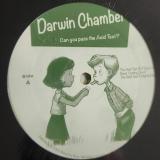
Darwin Chamber is a veteran of the prog game, and now that sound is very much back en vogue, it's no wonder new generations are falling for the American's sounds. Back in March, he dropped this EP which was inspired by a San Fran acid trip, and it became an instant classic that meant the initial translucent yellow vinyl edition, limited to 303 copies, soon sold out. Now it reappears on black wax and obviously it still bangs. 'The Acid Test (DJ Spun mix)' is a heavy, raw jam with plenty of trippy details, warped pads and vocals that come and go so subtly you can't really be sure they're there. 'Never Coming Down' is a deep and dark workout with cold analogue hits and paranoid vocals, then '25th Century Acid Cat' is a little brighter with its synths but no less of a mind-fuck. 'Get Down' is gurgling, coruscated, sleazy and mid-tempo acid techno for the freaks. Brilliant.
он должен быть опубликован на 22.05.2026

Originally released in 2014 on cassette and digital only, Till Human Voices Wake Us was the first album by the Iranian artist on Umor Rex. It became a key work in our catalog, and now, 12 years later, it is available on vinyl for the first time. This is the first in a series of four special, limited reissues to be released in 2026 to mark the 20th anniversary of Umor Rex.
Till Human Voices Wake Us comprises ten tracks with a clear and carefully structured script, based on poems by T.S. Eliot, highlighting Siavash Amini’s work as a composer for theater, film, and art exhibitions. His music deliberately leans toward ambient expressions, at times recalling Morricone’s Western film scores. The interplay between synthetic and digital elements, together with multilayered, soul-healing electric guitar passages, creates an opulent sonic texture that moves between dramatic and melancholic moments with a finely constructed, fluid dynamism.
There is an emotional depth in each piece, guided by tonal variations and shifting textures that turn the music into a mental journey, with landscapes, a sense of cold resolution, and the quiet inevitability of an ending. Till Human Voices Wake Us was Amini’s first album on a non-Iranian label. Following this release, he has also published work, in addition to Umor Rex, on labels such as Room40, Hallow Ground, and Opal Tapes, among others, and is now considered one of the most prominent figures in Iran’s experimental music scene.
All music by Siavash Amini. Original master by Nicholas Szczepanik. Remastered for vinyl by Rafael Anton Irisarri. Artwork by Daniel Castrejón.
"Already established within Iran’s music scene, Siavash Amini has crafted a powerful signature sound that blends meticulously assembled ambient synthesis with languid electric guitar melodies, recalling Lanois and Eno’s classic Apollo." — THE QUIETUS (Tristan Bath)
он должен быть опубликован на 22.05.2026

он должен быть опубликован на 22.05.2026
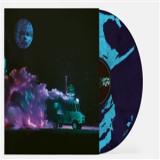
Limitierte Auflage von Alex Gs Original-Soundtrack zu ,I Saw the TV Glow", gepresst auf blauem Glow-Vinyl, mit holografischem Cover und einem ,Mr. Melancholy"-Aufkleber. Der von Alex G komponierte Soundtrack zu ,I Saw The TV Glow" (Original Motion Picture Score) wurde am 16. Mai 2024 von A24 Music veröffentlicht und umfasst 20 atmosphärische und eindringliche Titel. Das Album hat eine Spieldauer von 41 Minuten und enthält Titel wie ,Opening Theme from The Pink Opaque" und ,Downed Power Line", die die unheimliche Klangwelt für Jane Schoenbruns Film untermalen. Dieses Projekt ist Alex Gs zweiter Film-Score nach seiner Arbeit an ,We're All Going to the World's Fair". Der Alex G Original Score von "I Saw The TV Glow" unterscheidet sich vom Soundtrack-Album des Films, auf dem Künstler wie Caroline Polachek, Phoebe Bridgers und Sloppy Jane zu hören sind.
он должен быть опубликован на 22.05.2026

The story continues...Five years after "Twentieth EP," the label bosses return for the label's 31st release.A record comprised of one side each. DJ Steaw on side A and Gunnter on side B. Thisrecord showcases all facets of both artists, 100% in keeping with the label's signaturesound. The record is powerful. Be prepared for the club effect…
Есть у нас в наличии и готов к отправке

180g
Our very first release on the label back in 2018. We are always being asked if we will repress it again, and now we have. But this time it's slightly different to our first pressings - for this repress we took the original DAT rips to Dapz at Compound Audio for him to master. And then those masters were shipped to Beau at Ten Eight Seven Mastering. So now this release is audibly similar to our other releases over the past 8 years - and in turn the label has been updated. So for those collector headz out there, it'll always be apparent which pressing this one is.
он должен быть опубликован на 22.05.2026

Following up on the hidden wonder of Ellis Swan's twilight folk-noir masterpiece 3 AM (Quindi Records, 2022), Altrimenti commissions three bold remixes by Madteo, Simone and Mass Prod, with a wayward slant to rival Swan's own outsider status.
он должен быть опубликован на 22.05.2026

“One of Berghain’s longest-serving residents, Luke Slater has been defining bleepy, polyrhythmic, industrial-strength techno as Planetary Assault Systems since the mid-nineties. P.A.S albums tend to come together in their own time:
“External signals and signs combine until the recipe feels right, both musically and from being ‘out there’,” Slater adds. “10 years since I released Arc Angel on Ostgut Ton, and it’s a fitting pleasure to combine live show ideas and studio work for the new album, served up with raw energy” That patience runs through his whole Ostgut catalogue; since Temporary Suspension brought its machine-tooled weight and alien feeling to the label in 2009, each P.A.S. release on Ostgut Ton has been its own quest for discovery, from The Messenger’s search for sounds not yet present in club music to Arc Angel’s focus on melody to the deep hypnosis of Plantae.
His new album, Planetary People has the deliberate imagination and depth of a record that took its time, shaped as much by live rooms and crowds as by the studio.
“Into The Night” creates a haunting, dystopic environment of corroded acid saturated in echo, absorbing from the first second. “Labyrinth” breaks into buoyant tribal percussion, modulated chirps trading off over propulsive drums. “Quadrant 10” is clean, delay-drenched techno, buzzing with noise splatters over saturated thuds. “Sermon Of The Light Tides” scrambles metallic bell sequences that distort and evolve throughout, reminiscent of a dial-up modem crossed with a game of Frogger, squelching between percussive bursts and stripped-back kicks. “Brave Cosmo” is tormentingly menacing, eerie synths panning around buried vocal fragments over frantic percussion. “Retina Burn” rolls on fierce, cement-mixer 909 cycles, rave stabs over a ride that locks you in, the whole track stuttering and repeating before stripping back to a bare echoing kick and building itself again. “Thunder Major” barrels on open hats and reverb-drenched claps ricocheting through twisting wreaths of delay, mesmeric and relentless. “Beton Brut” marches juggernaut percussion stamping through hall reverb so vast you can visualise the room, the darkest and most unrelenting track on the record. “No Ninja” crunches in metallic and immediate, a wiry plucked lead threading through glitch with the bass held low and deep, mixed so precisely you can see every layer stacked in your mind’s eye. “Ha Jam” is danceable techno with plenty of funk and a sophisticated looseness, a vocal laugh bouncing off clanging metal blocks and rave stabs. “Lynx” lowpasses its rave stabs and crystalline beeps, chirpy hats ticking, cold metal repeats, old school and mesmeric. “Generation Slip” closes everything out, ominous and churning, skittering percussion and electrical sparks rattling through steel, a freight train barrelling on into oblivion.
он должен быть опубликован на 22.05.2026
Mark Reeve starts 2026 in prime form with ‘Body Drops’, a quick-fire follow-up to his recent A-Sides contribution ‘My Mind’.The veteran artist has an inimitable touch in the studio going back over 15 years and can always be relied upon to deliver high-impact techno creations. Tracks such as ‘Run Back’, ‘Distance’ and his collaboration with Adam Beyer ‘Nine of You’ make thrilling reference points.‘Body Drops’ found its way onto Drumcode via Bart Skils. “Bart and I have a very good musical understanding and we really respect eachother. So, when he said I think this would fit to Drumcode, I was like ok let me send it. Adam came back to me with a massive yes, and it went from there.”He continues: “I can see that a new peak-time sound is evolving. Very modern and groovy sounding, which is exactly what I like. I guess all the other tracks on Drumcode that have come out recently got me very inspired.”The track is a gem. Driven by an otherworldly stomping riff, it immediately strikes you with its unique sonic character. Huge without being banging, watch this fit a variety of high-impact moments.‘Feed My Fire’ is a rolling big-bodied track that sees elements of prog,techno, psy and silky chords combine for a chugging dancefloor cut.“This is a personal favourite of mine simply because it’s so groovy andfits more intimate sessions. But I also tested it in front of bigger crowds and it really does the job.
Есть у нас в наличии и готов к отправке
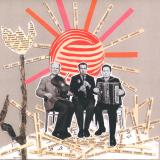
"There is a suspicion that no one really knows how to deal with the legacy of the past." — Siarhiej Kraŭčanka
Malenčyk / Lami is a double vinyl release pairing previously unpublished archival recordings of Belarusian fiddler Stanisłaŭ Malenčyk with a response to that archive by Italian sound artist Giovanni Lami.
Stanisłaŭ Malenčyk (1928–2007) was a self-taught fiddler from a small village in Western Biełaruś, born on land that was then Polish territory. He never studied music formally and never worked on a collective farm — he supported his family solely through playing, crafting his own violins and harmonicas by hand. The music he played was made for a community: weddings, christenings, a room full of people, a shared life. As life shifted toward the cities and the village dissolved, that music lost the only place it could exist. By the end of his life, Malenčyk — nearly blind — was playing for whoever happened to be there: at the local bazaar, on district buses, moving through the aisles. He simply couldn’t stay home. He had to play.
These recordings were made by ethnographer Mykoła Kozienka in Ščučyn in 1999 and have not been released until now.
Giovanni Lami approaches this archive from a distance that could hardly be greater — geographical, cultural, temporal.
Credits:
Record 1 (Side A/B) — performed by Stanisłaŭ Malenčyk,
recorded by Mykola Kozenka in Shuchyn, Grodno Region, Belarus in 1999.
Record 2 (Side C/D) — produced by Giovanni Lami.
Mastering by Siarhej Cviki and Anton Aniščanka
Archival research by Alaksej Krukoŭski and Alaksandr Baroŭski
Cover Artworks by Volha Savič
Cover design by Ihar Jukhnievič
Project curation by Anton Aniščanka
Project assistance by Alaksiej Šumakovič
Texts by Siarhei Kraŭčanka (essay, editing, translation),
Alaksej Krukoŭski and Alaksandr Baroŭski (Malenčyk biography),
Giovanni Lami (artist statement)
Есть у нас в наличии и готов к отправке

An’archives presents 'sensitive', a new album, and the first solo vinyl release, by Japanese keyboardist and synth player, Mitsuhisa Sakaguchi. A deftly assembled suite of glistening electronic tonalities, 'sensitive' is the latest in a lengthy run of excellent, idiosyncratic albums by Sakaguchi. A low-key yet productive artist, Sakaguchi has released banks of solo titles via his own Bandcamp page, and is also an in-demand improvisor for electronics: see, for example, recent collaborations with Yoshiki Ichihara ('TO(R)RI INFRANTA', 'Ftarri', 2025), Tatsuhisa Yamamoto ('non equal mad', self-released, 2020), and the - trio with Yamamoto and Uchihashi Kazuhisa ('self-titled', Modern Obscure, 2023).
'sensitive' is a startling album for many reasons, not least its rich attention to detail. Sakaguchi’s ear is sensitized to the complexity of electronic sonority, something he’s developed through decades of performance and improvisation, though he’s not limited to that language. “I mainly use multiple synthesizers and process the sounds with effects,” he clarifies, detailing his approach to his music. “I also use a lot of acoustic sounds such as field recordings and percussion; sometimes I also use sounds such as prepared piano.”
Indeed, you can hear this see-sawing balance between the electronic and acoustic written across 'sensitive' – see the activated cymbals that twist and stutter through the first half of “metatoxic”, which are soon replaced by a similar stream of burbling synth-flow. The opening “sensitive rot” folds field recordings into Sakaguchi’s electronic kit to such a degree that the differing forms dissolve into each other; on “green shrine”, the field recordings are more present, yet still poetically framed, taken as they are “from the mountains of my hometown, Yawata City, Kyoto,” Sakaguchi explains.
The tender balance achieved by Sakaguchi as he moves between practices, tonalities and temporalities helps manifest the guiding conceptual force behind 'sensitive', where Sakaguchi explores a cleansing reverie. “What I wanted to portray with this album was to create an album of sounds that shattered and reassembled my current ‘sense’ and ‘toxins’,” he nods, “along with the ‘nature’ around me. Electronic sounds, our bodies, the environment around us, and nature all blend.”
From there, Sakaguchi attempts a transformation, or transmutation – an alchemical process of exchange. “I am attempting to explore whether it might be possible for the sounds to come closer to each other,” he concludes, “or perhaps even to interchange places.” On the five pieces that comprise 'sensitive', you can hear this fusing and exchange. Inhabiting similar spaces as the music of Nuno Canavarro, Asmus Tietchens, Omit, and other like-minded visionaries, 'sensitive' traverses curious, quixotic terrain between electronic composition, electro-acoustics, and improvisation.
Есть у нас в наличии и готов к отправке

"Melodic, dreamy bedroom pop with a nostalgic sheen" is how Tom Davies, creator of brand new dream-pop artist Flopsy's dream, describes this charming little album.
Some of you may know him as GeoWizard; the mad British adventurer/YouTuber who travels in straight lines, but here you get to see or indeed hear a completely different side to him - one that sings in soft, tuneful tones reminiscent of Damon Albarn or Ray Davies, builds ethereal, layered harmonies that wouldn't sound out of place on a Fleet Foxes track, and crafts gorgeous guitar and synth parts that could easily have come straight out of John Frusciante or Kevin Parker's handbook.
Written in a young Davies's bedroom between the years of 2008 and 2014, the songs themselves are far from brand new, but with the help of his good friend and writing partner Liam Rhodes (with whom he played in Birmingham Psychedelic outfit "Kinds of light"), Davies has brought these sentimental tracks to life whilst keeping them bang in line with their original vision.
The result is an album that doesn't really fit into any specific genre, in fact you could argue it's just regular old generic pop, but there's an innocence and a playfulness in there that disarms the listener and transports them to a simpler time when melody ruled supreme.
Есть у нас в наличии и готов к отправке

Есть у нас в наличии и готов к отправке
ICONYC presents the third installment of a compilation series in perpetual bloom, Florilegia III. This new compendium of previously unreleased cuts balances vigor and depth, with unbridled passion and refined elegance for a captivating garland, featuring the sounds of AE:THER; Pole Position; Argia; Max Menaged, matteomie, & Adassiya; ALPHADOG; Marc Gonen & Island Hill; AIKON; Lexer; Still & Bense; Khainz & ZENON; Agustin Giri & Gespona; Deniz Tekin, Aliot & Tolu; Jordan Lev & Nael; and Convolute.
он должен быть опубликован на 25.05.2026

Moscow's newly emerging Noots makes debuts with an EP that dissolves genre boundaries. Ambient washes, deep house grooves, jungle echoes and experimental textures coexist in a fluid internal architecture. Field recordings, from the daily hum of Moscow's Preobrazhenskaya Ploshchad metro to a friend's impromptu garage session, weave seamlessly into the music to ground his often abstract compositions in the real world. There is beauty in the green synths of 'Sudden Shift' and a blurry psychedelic edge to the ambient pads of 'Flowing Harmony' while a standout Nookie remix takes things into silky d&b territory.
он должен быть опубликован на 26.05.2026

Music never exists in a vacuum — every scene and sound evolves from the non-stop exchange of ideas between different groups and cultures. Traditions get passed down from one generation to the next, and then individual heads take influence from their own unique perspective. Sometimes, certain people strike upon fusions that spark massive new movements, but even those rarest innovations came from somewhere.
Jon E Cash knows this more than most — the legendary beats he started putting out at the turn of the millennium had their own disparate roots and influences which he had the motivation to put together into a sound he called sublow. There wasn't any other reference point for this music — when he took the first white labels of 'Drop Top Bimmer Kid' into Blackmarket Records in Soho, London, he had to describe it to a puzzled Nicky Blackmarket and J Da Flex as being, "between garage and hip-hop."
Playing catch-up in 2004, Rephlex Records nodded to sublow when trying to introduce a wider audience to the sounds which had been tearing up the London underground. "Grime. Sublow. Dubstep... It's Music. Different people call it different things depending on when they discovered it." But Jon E Cash's sound was rooted in more than the UK garage that had dominated the clubs through the late 90s, reaching way back to his pre-teen days when the first waves of hip-hop culture crossed the Atlantic and broke in the UK.
25 years on, it's a fine time to reflect on the impact of the music Cash made at the turn of the millennium. History looks back favourably on what he and the Black Ops crew were doing with sublow in the early 00s. The timing meant it ran in parallel with what was happening over East with Pay As U Go, Roll Deep et al, and of course there was crossover. Every DJ and every MC was on the hunt for the best beats they could find. But there's a whole different swagger to sublow — a different web of influences, a different intention and so a different outcome. It's still there in the beats Cash is making more than 20 years later — his 3dom Music label is carrying upfront productions with that sublow DNA coursing through their veins. Whatever the beat or the tempo, the drums are still hard as nails, and the bass is tuned for maximum rave damage.
Есть у нас в наличии и готов к отправке

Death Is Not The End collaborate with Uzbek label Maqom Soul to deliver an LP counterpart to last year's mixtape of the same title, compiling specially picked & fully licensed individual belters from the ex-soviet studios of Central Asian republics between 1978 and 1989 - incl. Uzbek, Tajik, Kurdish & Uyghur artists pulling traditional folk motifs together with pop & rock and psych elements.
"These recordings do not form a smooth or coherent history. They feel more like a sequence of discoveries made at different moments and in different circumstances. Songs and instrumental pieces that once lived inside specific contexts radio broadcasts, philharmonic programs, touring routes now sit side by side, revealing hidden connections as well as clear fractures between them.
Nasiba Abdullaeva appears here as a voice from the end of an era. Trained within a conservatory system, she worked inside the format of the Soviet pop song while filling it with melodic logic that did not come from Moscow or Leningrad. Her voice is soft and sustained, shaped by Eastern melisma, and it never functions as decoration. Even in tightly structured songs there is a sense of resistance, an effort to preserve a musical language rooted in Uzbek tradition rather than fully adapted to an all Union standard.
The ensemble Sintez, later renamed Navo, represents a different path. Beginning as a student rock group, the band was gradually absorbed into the official VIA system with all its limitations and compromises. Yet it was precisely within those boundaries that Sintez and Navo developed a recognizable sound. Electric guitars and jazz rock harmonies do not overpower the folk material but remain in tension with it. Their recordings feel like negotiations between what the musicians wanted to play and what they were allowed to perform.
The Tajik ensemble Gulshan reflects an institutional approach carried to a high professional level. Formed under television and radio structures, the group treated folk material almost as a written score. Carefully constructed arrangements, close attention to orchestration, and restrained use of pop techniques define their sound. There is less spontaneity here, but a strong sense of discipline and structure, where national melody becomes part of a carefully controlled sonic framework.
Koma Wetan occupies a very different space. Formed in the 1970s, this Kurdish rock group approached poetry and folklore as tools of cultural assertion. Their psychedelic rock never feels like a stylistic borrowing. Instead it functions as a contemporary vessel for language and themes that might otherwise have remained unheard. Even today these recordings sound fragile and stubborn at the same time.
The Uyghur ensemble Yashlik, closely connected to a musical drama theatre, operated somewhere between stage performance and popular music. Their songs are built on folk melodies but shaped for wide audiences. What emerges is a constant attempt to preserve the recognizability of Uyghur musical identity without freezing it in a folkloric frame. Yashlik's music exists in a state of balance between representation and development.
Digging Central Asia does not attempt to establish hierarchies or offer a single wayof listening. Names and dates matter less than the sound itself. Tape noise, abrupt transitions, and unexpected timbres remain part of the material rather than flaws to be corrected. This music existed at the crossroads of multiple routes geographic, cultural, and ideological. Heard today in a new context, it no longer feels peripheral. Instead it stands as a reminder that the history of popular music is far more fragmented, layered, and polyphonic than it is usually allowed to be."
Есть у нас в наличии и готов к отправке
