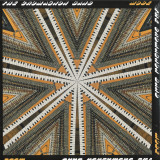
We are very happy to present our first vinyl release named The Sinergy between light and darkness.
We believe that when 2 forces as powerful as light and darkness merge, they create an omnipotent unit, giving birth to amazing creations, works of art like this release.
For this release, 4 tracks have been carefully selected that create a balance and synergy between light and darkness.
On side A we have Alquimic, curator of this project, with his track Reloaded, and Artesano Titer, a great Uruguayan artist who made us vibrate in the first edition of Cosmic Dance with his live set around the mountains of the Sacred Valley, and where he played for the first time this gem called Shake it.
Vibrant synthetic sequences, enveloping rhythms and bass lines and cozy melodies are manifested on this side.
On the other hand, on the B side we have Samuel Jabba, a great Colombian artist with countless incredible releases and a unique style with his track Schizoid, and Nicolás Longo, a great emerging Uruguayan artist who we had the pleasure of meeting and experiencing his music in the city of Cusco, with his track Secuencias en Capital.
On this side, dark and enveloping melodies, retro-futuristic atmospheres, vibrant rhythms and a lot of mystery are evident.
Suche:they live
Releasing as a vinyl 45, Bad Night is the lead offering from The Cromagnon Band's new album Mode. This is the band's second LP and the first of theirs to be released on BBE Music. Mode itself is an album of cinematic and psychedelic dark Funk tinged and tinted with Nordic psych/jazz, classical, boom-bap Hip-Hop breaks and riff heavy rock. Bad Night is backed with Quadrant, a stand alone track that won't be on the album, thus making the vinyl single release a unique addition to the music lover's record collection. That said, these are are two tracks which give both a genuine flavour of the forthcoming album as well as the band's own musical influences and heritage as instrumentalists and producers. The Cromagnon Band's recording technique of taking breaks, riffs and melodies from favourite tracks and then improvising from there with completely live jam sessions in the studio allows them to record in their distinct and trademark 'reverse engineering' style. The trio of Drummer Tom Watt, Bassist Lenny Walker and multi-instrumentalist Bert Page work by making music as a team, playing for hours and united by a love of Hip-Hop breaks and psychedelic Jazz/Rock/Funk and classical music. They choose to record only instrumentals which allows space for Bert to weave intricate soundscape with Fender Rhodes, Moog, Sax and Clarinet over the beats and breaks they have written from their improvised jams. Bad Night b/w Quadrant are the lead releases from The Cromagnon Band's new album Mode. They will be released as a 7" vinyl and digitally.
- A1: World Is Dog
- A2: Cctv (Feat Creature)
- A3: Yottabyte
- A4: Bad Pollen (Feat Billy Woods)
- A5: Slum Of A Disregard
- A6: Rfid
- A7: Instant Transfer (Feat Billy Woods)
- A8: Ikebana
- B1: In The Shadow Of If
- B2: Skp
- B3: Hushpuppies
- B4: 14 4 (Feat. Skech185)
- B5: Voice 2 Skull
- B6: Xolo
- B7: Zigzagzig
Black Vinyl[35,08 €]
We’re teaming up with ELUCID and Fat Possum for a limited edition of 300 copies of a Rush Hour black ice coloured edition.
E L U C I D, one half of the illustrious duo Armand Hammer, is here with the full-length follow-up to 'I Told Bessie'. Further experiments in the sonic, expanding on the 'live' side of music paired with the embracing of chaos. Something you haven't heard, or not so for a very long time. E L U C I D is here to reveal the bleakness of reality.
---------------------------------------------------------------------------------
''There is never time in the future in which we will work out our salvation. The challenge is in the moment; the time is always now.''
James Baldwin
A raw, crackling urgency runs through rapper-producer ELUCID’s new album REVELATOR like an underground power line. There is no space here for sepia-toned reminiscences or indulgent self-mythologizing. Intellectual rabbit holes have been filled in with concrete and rebar ; there is nowhere to hide and no off ramp from the audio Autobahn that ELUCID has fashioned—a renegade Robert Moses with gold fronts, bulldozing the homes of the powerful and the complicit. REVELATOR brims with the energy of now, with a refusal to look away. Carpe diem in a murder one mask.
Born in Jamaica, Queens, ELUCID has been on the cutting edge of New York’s underground scene since the mid-2000s. From the beginning, he has defied both convention and expectation. He ran with Okayplayer darlings Tanya Morgan, but his own music eschewed their throwback charm for glitchy noise experiments and bass-swamped culture jamming. His 2016 debut studio project Save Yourself (re-released in a deluxe edition last year) announced him in earnest. But in recent years, his Armand Hammer releases with partner-in-crime billy woods have received significant attention and acclaim. Serving as a followup to his last solo album—2022’s comparatively balmy I Told Bessie—ELUCID hoped to “re-distinguish” himself with REVELATOR, setting himself apart amidst the increasing attention around the music he and his friends are making together.
For ELUCID, this meant setting bold new challenges for himself. One of these was diving further into live instrumentation than ever before—”getting my Quincy Jones on,” as he puts it. The testing ground for this approach was Armand Hammer’s most recent project, 2023’s We Buy Diabetic Test Strips’ Möbius strip soundscapes, warmed with instrumental flourishes and skin-shedding beat progressions. With REVELATOR, though, ELUCID strove to create an atmosphere of chaos, embracing experimental electronics and atonal sample bursts. He worked on much of the album with co-producer Jon Nellen, who comes from a background in avant-garde and Indian classical music. “I wanted to get as freaky as I could at this moment. I wanted people to hear things, maybe for the first time, or in a way they haven’t for a long while,” the rapper explains.
ELUCID arrived at the studio with a collection of noise sources: non-referential samples, glitches and noises. Together he, Nellen, and others created forms out of them and, as ELUCID recalls, “just started playing drums with it.” Their fried, distorted sound was directly inspired by Miles Davis at his most uncompromising—specifically, the tone-clustering funk track “Rated X” from his 1974 double LP Get Up With It. At times, the pairing of rap with avant-fusion sounds also brings Emergency! from The Tony Williams Lifetime to mind, perhaps in an alternate timeline where the late drummer was listening to Ice Cube’s AmeriKKKa’s Most Wanted.
“The World is Dog,” REVELATOR’s lead single, functions as the album’s aesthetic thesis statement. Like the Davis track, the textures are punishing, the tonality is in free-fall, and the driving breakbeat of a groove cuts in and out unceremoniously. Avant-jazz bassist Luke Stewart, who appears throughout the record, holds the whole thing together just long enough for ELUCID to tightwalk over the beat. This tension is exactly where REVELATOR sets itself apart; in a time of drumless loops, and safe soul samples, this is a high-wire act with no safety net. Similarly, the song announces the themes of the album within just a few phrases, evoking the way societies accept and adjust to new levels of debasement and brutality while suffocating under the weight of history: “Can’t clock the kill, all a mystery/Forced past will eating everyone eventually/The world is dog.”
Many of the songs on REVELATOR grapple obliquely with dissolution and disenfranchisement in America and across the world—the grim realities of our domestic sociopolitical climate and our involvement in foreign conflicts. “Much of my artistic and political sensibility comes from the Black arts movement here in New York,” ELUCID explains. “Recognizing the interconnected global struggles against oppression, artists and thinkers created works and actions in solidarity with freedom movements in South Africa and Palestine.” ELUCID cites intellectuals like Amiri Baraka, Kwame Nkrumah, Audre Lorde, Sonia Sanchez, and Nikki Giovanni among his heroes. (One track on the album is specifically inspired by Lorde’s work, “SKP,” citing the scholar’s paper “Uses of the Erotic: The Erotic As Power.”) Songs like REVELATOR’s insistent closer “ZIGZAGZIG,” find ELUCID applying up-to-the-minute messaging, making explicit reference to the conflict in Gaza: “Feed a war machine…from river to sea, in lieu of peace.”
Despite ELUCID’s preference for cacophonous system overload here, the rapper also provides moments of respite. Recorded at The Alchemist’s Los Angeles studio, the laid-back, wheezing “INSTANT TRANSFER” is a collaboration with billy woods, which crystallizes their shared sense of creative determination. “With much momentum behind us and even more on the horizon, I knew a purpose, and that every step was ordered to that purpose,” ELUCID said of the experience. Meanwhile, the jittery “HUSHPUPPIES” is a playful anomaly on the track list, providing a snapshot of ELUCID watching his grandparents in the kitchen while preparing for Friday night fish fry dinners.
“Love still rules over on this side,” ELUCID says. ”I’m raising a family. We are making meaning and finding joy in the midst of all the fucked up-ness of everything around us because the alternative is cowardice and slow death. We remain rooted. We celebrate our people and our wins. Struggle is necessary.”
“IKEBANA” is one of ELUCID’s strongest statements of purpose on the record, blending the record’s heaviest themes with its most hopeful sentiments. supported by a shoutalong refrain and an urgent prog-funk groove. Breaking away from images of dissolution and crumbling societal systems that populate REVELATOR, ELUCID notes that the only way to navigate life’s bleakest landscapes is to cling to love and believe in those around you—to look forward toward something better that may or may not be possible. For the rapper, one of the album’s most trenchant lines comes during a centerpiece of a beat drop: “Being alive/I must look up.”
“The lyric ‘being alive I must look up’ is important especially in the context of this album. Much of the album imagery is harsh and reflects the actual doom some of us experience. But still I/we exist,” ELUCID explains.
Every artist is, in one way or another, the product of their time, bound by life’s leaden gravity to operate within the space of that which is already known. But there are some who are able to shake free of these ties, to shape the culture as it unfolds, to make the present their own.
Revelation, as a concept, points to the scales falling from people’s eyes—something that has been hiding in plain sight becoming clear. “The revelator relates to things that have been talked about, things that have been forecasted,” ELUCID adds. “And now they’re really here, and everyone sees it. And there’s no escaping.” REVELATOR plays out with the unmitigated power of those storms, laying waste to any genre conventions in pursuit of a certain physicality. Here, ELUCID develops a wholly distinctive musical language to explore our fractured modernity.
REVELATOR's packaging was designed by longtime Armand Hammer / Backwoodz art director, Alexander Richter.
Anadol and Marie Klock have teamed up for a joint album, La Grande Accumulation. They met two years ago at a festival in England crowded with violent seagulls and outsider musicians. Klock being prone to barking on stage and Anadol not laughing at jokes she doesn’t find funny, they straight away had the intuition that they would meet again. And so they did, a few months later, at Anadol’s studio in Istanbul.
Today, the two Pingipung artists present the fruit of this musical friendship. La Grande Accumulation was born out of the peculiar atmosphere of the studio neighbourhood in Büyükada, an island where thousands of cats run free and humans randomly destroy things during apocalyptic times when parts of Turkey had just been turned into dust by terrible earthquakes. The French lyrics are inspired by hours of conversations, the music is consequently drenched in absurdity, overflowing with a strong urge to live and enjoy. According to the LP sticker, this album has been certified “Best handshake of 2024”, and stickers never lie.
La Grande Accumulation brings together Marie Klock's mysterious metaphors and Anadol's intriguing radiophonic psych-pop. Stretching forms beyond common sense to see how long they can resist is probably their favourite game. The result are six highly imaginative tracks that challenge the sub-3-minutes standards of Spotify pop.
Gözen Atila aka Anadol is well known to the Pingipung audience, with three solo LPs on the label. Her music follows a kind of collage logic, she interweaves countless styles, combining field and studio recordings with obscure quotation marks here and there. "I hope no one will come and explain this music to me, because it's the most beautiful music there is", says Kristoffer Cornils about her solo album Felicita.
Marie Klock is a French writer and musician who produces songs oscillating between synthpop and neo-folk, full of anarchic humour and existential dread. Her recent solo LP on Pingipung was a captivating tribute to the recently deceased poet Damien Schultz entitled Damien est vivant.
Marie Klock delivers her lyrics in song or spoken word, stream-of-consciousness musings on strange human adventures, and her rich keyboard melodies culminate in a nonchalant dialogue with the bass trombone (La Reine des Bordels). In the opulent opening piece (La Grande Accumulation), a woman is cursed to take home everything she kicks in the street; a bit later, we stumble upon a ghoul hiding in the gutter (Sirop amer), Mona Lisa loses her teeth (Sonate au Jambon) and a warthog struggles to climb the stairs of a silver tower (Sabots triviaux).
La Grande Accumulation was mixed and mastered by Jonas Romann at Chaos Compressor Club in Hamburg and cut to vinyl by Kassian Troyer at D&M in Berlin. It's an audiophile LP that invites to focus on every detail in this heap of musical ideas.
- A1: Incognito Rhythm
- A2: Things To Do Remix (With Drama1)
- B1: Just Saw Johnny
- B2: Deepest Darkest Jungle
- C1: High Time
- C2: Ribena (With Papa Levi)
- D1: Beautiful Thing (Ft. Pinty)
- D2: All I Need In This World Is You
- E1: Wutt
- E2: Pianos Raining Down (165 To 134 Bpm Mix) (With Mcdonald & Jannetta)
- F1: Ooh Boy
- F2: Sound System Love
Fresh off a rework of Papa Levi with single Ribena, London’s jungle pioneers 4am Kru drop their highly anticipated debut album Incognito Rhythm featuring all the tracks that have cemented their reputation as the go-to act for raw, live jungle music.
Having already taken the 2024 festival circuit by storm with appearances at Outlook Origins, Boomtown, Boardmasters, Reading+ Leeds, The Blind Tiger, Parklife Waterworks, Boundary and a milestone Saturday night closing set at Glastonbury’s Temple Stage, 4am Kru continue to draw audiences into the madness of their raucous blend of 1993-1994 influenced jungle. First bursting onto the scene post-lockdown, the falling monitors and flying bodies of their shows were particularly thrilling for ravers who had turned 18 in isolation.
Originally developing their live sound in indie bands while sharing a studio in Tottenham, the duo quickly realized that the traditional DJ set couldn’t contain the energy of their act. They have since surrendered to the chaos of their incredibly physical performances, nursing chipped bones and back injuries, deep finger taping, chalking up and wearing shoes designed for skipping rope whilst rewiring what it meant to move their bodies. Their innovation extends to the equipment, with the duo reinventing a way to deliver their signature throbbing basslines with a Roland SPD SX drum pad as thick as a car tire. Their upcoming UK tour this October promises to further showcase their immersive, disruptive sound.
4am Kru’s latest single Ribena breathed new life into Papa Levi’s iconic British reggae classic Militancy following the release of hard-hitting Wutt this past July, setting the stage for their most ambitious project yet. Their debut album draws from a wide range of influences in addition to 4am Kru’s signature blend of 90s jungle flavours, from obscure slow jam R&B like Angela Bofill, Janet Jackson and Prince, early hardcore bands like Hüsker Dü, off kilter Scottish folk, and even classical music. The project is a snapshot of the incognito, nocturnal world that the duo have dwelled in for the past two years, a time capsule of well-worn songs played between midnight and 4am. An extraordinary debut, 4am Kru’s Incognito Rhythm is an immersive, razor sharp, face melting journey through their show-stopping live sound.
On his latest full-length, Low End Activist swerves towards weightless grime and suspended hardcore miniatures to tell a very personal story. The UK-rooted producer continues his habit of zeroing in on a distinct approach for each release, leaving a logical breadcrumb trail of soundsystem science in his wake as he channels decades of bass absorption into 14 atmospheric cuts that prize patience and precision over obvious club functionality.
Municipal Dreams plays out as a semi-autobiographical tour through the Blackbird Leys estate that the Activist grew up on. It’s a lived reflection on inequality and the ripple effect it has in working class communities, using the sonic palette to set the mood and scattering pointed samples throughout to spell out the story.
In sampling the exhaust of a stolen Subaru Impreza, ‘TWOC’ looks back to the recreational car theft which was standard entertainment for the kids in his community. There’s an underlying idea that this ‘council estate sport’ wouldn’t have been so prevalent if there were public services and opportunities presented to the scores of disaffected youth looking for somewhere to direct their energy and frustration.
In ‘Just A Number (Institutionalised)’ LEA alludes to the shattered juvenile detention system, growing up seeing friends and family members locked up at ease with little to no support on being released back into society, just meant that the same cycles of behaviour would play out over and over.
‘Violence’ samples from a short film shot by the drama division of the Blackbird Leys Youth Club to evoke the physical threat which formed a background hum to life on the estate. The industrial mechanics of the local car factory, which served an integral role as a workplace for many in the community, gets sampled in ‘They Only Come Out At Night’ while the ‘Everyone I look up to are either junkies or criminals’ sample in ‘Broke’ looks to a lack of positive role models.
Municipal Dreams isn’t a one-note indictment of life on the estate, ‘Innocence’ captures the simplicity of a child at birth before their environment has time to shape them. The Hope interludes cut through the grim honesty of the longer tracks while a subtle thread of wry humour finds its way into some of the talking heads cutting through the signature LEA murk.
But honesty is the operative word here, and the message feels all the more meaningful at a time when the UK’s social divisions are laid bare in the wake of a devastating stretch of austerity. Returning to Blackbird Leys to shoot images for the photo-zine and album cover, the Activist found the local community centre being demolished. The local pub stands derelict, its faded Welcome sign a grimly ironic portent of the options facing children of the estate in the wider world.
Funnelling his memories, hopes and fears into a singular twist on the bass weight tradition, LEA captures evocative scenes that land somewhere between kitchen sink realism and rave futurism.
Trance Pandemic is back with new full cover EP - masterpiece of Dima Phase designer.
The musicians' solo sound is changing, they continue to search for themselves, thereby releasing without losing the atmosphere and drive in their music.
Komponente takes its rhythm from 707 drum machines and 80s synths, adds a TB 303 and wraps it in long pad melodies in Boston Dynamics.
In Acid Explorer, he builds electro-trance with the sound of a nuclear siren using Elektron machines and packs everything into his favorite voice presets from Korg. New and old music technologies are intertwined into one whole, giving birth to new sounds from the late 20th and early 21st centuries.
Kurilo continues to work with modern sound machines, drawing on the best and creating a smooth, even groove.
If you like trance synthesizers, mysterious melodies, then your choice is Eating Raoul, nothing more, a sound inspired by the New York night where Evgeniy currently lives.
Not From New York carries a different trip, but no less atmospheric, deep bass and acid accents - everything you need for a dense sound on your sound system, be it a club or rave party or a home sound system or headphones.
In general, although the release is different, it is united in one thing: atmosphere and melody.
A sense of destiny hangs over Sentir Que No Sabes, Mabe Fratti’s fourth solo-credited album released in a five year span. Her work has always possessed a finely tuned sense of drama capable of expressing a range of emotional states, and across this new album, she conveys the struggle to process various relationships or situations–and the actions that come next. Sentir Que No Sabes is urgent and clear, poppy, generous and approachable, while showcasing a considerable emotional hinterland. It is also, as Fratti is quick to mention, “groovy.”
Written and recorded with her partner, multi-instrumentalist, and co-composer Héctor Tosta (I.La Católica, Titanic), Sentir Que No Sabes is the result of an intense, detail-oriented process. Fueled by a new confidence gained in their collaborative project, Titanic, and its critically acclaimed 2023 LP, Vidrio, the two hunkered down in the familiarity of their studio (aka Tinho Studios) to bash out the initial sonic coordinates of her new record. “We talked and talked, and discussed ways of playing and recording, until things became inevitable,” Fratti explains. “We recorded a bunch of demos at our home studio and that meant we had a lot of time to re-edit and experiment. We really dug in. We were super focused on detail.” Tosta also took up the controls as producer and arranger-in-chief for all additional instruments. The album was later completed at Willem Twee Studios in Den Bosch in the Netherlands, and Pedro y el Lobo Studios and Soy Sauce Studios, in Mexico City.
For the final studio recordings, the pair were joined by drummer Gibran Andrade and trumpetist Jacob Wick to fill out and expand on Tosta’s percussion and brass arrangements. This small group of friends were able to work quickly and openly, and without fear: a testament to the exhaustive groundwork put in at Tinho Studios. This can be heard in three short, intermediary tracks that also manage to be the most aggressive on the record: “Kitana” (a scratch-laden instrumental that acts as a strange prelude for the last track, “Angel nuevo”) and a pair of two-minute instrumental interludes, “Elastica” I and II. None are throwaway mood pieces; rather they act as emotional cue cards, and hint at the way Fratti and Tosta created the overall atmosphere of Sentir Que No Sabes.
A strong sense of rhythm irrigates the sound from the jump, as heard on the glorious opening track, “Kravitz.” Here, the brilliant plucked cello line acts as a bassline and props up the steady thump of the kick drum. The cello’s growl serves as a conduit for a set of slightly paranoid lyrics that tell us “Quizás haya oídos en el techo” (“maybe there are ears in the ceiling”), while the song also introduces another staple of the record: the clever brass stabs, whistles, parps, and other interjections that paint a canvas of traffic in a city. It’s a postmodern, widescreen sound that for some might recall The Blue Nile’s Hats.
Sentir Que No Sabes is a record full to the brim with a modern pop sensibility, invoked by the sort of magpie spirit that ensnares anything it can find, repositioning sounds for the here and now. The keys and melody on the melancholy “Pantalla azul” (“Blue screen error”) transport us back to the glossy mid-1980s. “Oídos” (“Ears”) is a beautiful slice of contemporary, hybrid pop, in which Fratti’s vocal lines delicately spin themselves around the lean structures erected by the brass and drums, and the descending “plink” of a set of piano chords. Then we have a gloriously strong ending with the swell of “Angel nuevo” (“New angel”), another cinematic track full of gentle, instrument-rich swells and eddies that manages to be almost endless in its range–and yet intensely personal, as Fratti’s voice is close, almost whispering in your ear. A much needed lullaby for our fractious times.
The lyrics, for their part, have a stop-start quality to them, and hint at the small, incremental emotional taxes we pay through just living our lives. They circle around the music like birds waiting to swoop. There is something of the spiritual in all of Fratti’s work that expresses itself in a form of yearning: she looks to new horizons while personal dramas find themselves internalized, contextualized, and then dealt with through metaphor. Here, she was keen to mention Tosta’s constant encouragement in her finding a path to best sing or phrase her words to impart their maximum effect. “Hector was super inquisitive about my lyrics and asked me questions about what I meant, which sometimes is something you don't wonder so much about in isolation,” Fratti explains. “Besides, he is a great poet, and you can see that in what he did on the Titanic record. This made me go deeper into my lyric writing and definitely transformed it into something that I feel super happy about now.”
Take “Enfrente” (“In Front”), a track that initially comes across as a languid, glossy number, with plucked cello strings standing in for a bass line and brittle synth parts. Soon we catch on to a brilliant minor chord switch, which mirrors the fear and doubt expressed in the lyrics as someone “trembles up to the podium” in a “search for meaning.” There’s also the startling introduction of a vocoder in “Quieras o no” (“Whether you want it or not”); it comes precisely at the point Fratti sings “Quieras o no es un desastre” (“Whether you want it or not, it's a disaster”). Moments like these leave room for interpretation and, over time, create a strong bond between the listener and the record.
In fact, across Sentir Que No Sabes, each phrase–whether instrumental or vocal–becomes at some level emblematic of acts and moods that impart deep emotional significance. We see this best on “Intento fallido” (“Failed attempt”), which could be the score to feeling trapped in self-doubt, only to suddenly be sprung free by the song’s gloriously upbeat ending. On “Márgen del índice” (“Index margin”), the quicksilver switch between initial disharmony and a beautiful melody is breathtaking, all augmented by evocative arrangements, textured production, and the slightly playful, gnomic lyrics. The track’s emotional ecosystem allows another brilliant ending, which uses the simple repeated phrase, “Cómo lo va a ver?” (“How are you going to see it?”).
So what to make of Sentir Que No Sabes? High gloss Pastoralism? The sound of a city-bound, post-post modern soulscape? No matter the emotions evoked, it's the work of an artist coming into their own, and creating a benchmark record.
Eaux proudly announces a new collaborative mini-album from label boss Rrose and Polygonia. Containing six tracks and over 40 minutes of music housed in a fully printed sleeve with artwork by Jon-Paul Villegas, the record focuses squarely on the dancefloor while infusing it with the kinds of psychoactive drones, intricate polyrhythms, and relentless modulations that have come to identify both of their approaches to sound. Featured heavily are their shared interests in sonic shapes that resemble natural forms and conjure tactile feelings, in this case related to themes of skin-like surfaces and circulatory systems experienced simultaneously on a micro and macro level. While several of the tracks hover in a flexible tempo range between 125 and 130 bpm, "Stretcher" reaches up to 142, and the closing track "Vena Cava" trades the kick drums for spectrally processed percussion and endlessly diverging high-frequency pulses.
The story behind the release starts in 2022, when Rrose reached out to Polygonia after noticing that her tracks were appearing in their sets more frequently than any other artist. Never before had Rrose proposed a collaboration with someone they hadn't met before, but there was such an obvious connection in their approach to sound that it felt necessary. As it turns out, Polygonia had only become interested in techno after hearing Rrose perform at a festival in 2018. It all made sense, and they began sharing sketches and unfinished ideas with each other, trading them back and forth until they reached completion. Without any announcement of their collaboration, the two artists have since been asked to share the stage together several times. It seems there are other people out there sensing a connection...
Bios:
RROSE
Rrose is an alias of the multi-disciplinary artist Seth Horvitz, born and raised in California, and currently based in London. Active since 2011, the Rrose project explores the intersection of hypnotic techno, experimental composition and psychoacoustic phenomena with a meticulous touch. The first major breakthrough was 2012's "Waterfall" for Sandwell District which followed "Motormouth Variations," a collaborative project with composer, improviser, and activist Bob Ostertag. After the shuttering of Sandwell District, Rrose established Eaux, a home for further solo productions and collaborations. Building on his studies in electronic composition and history at Mills College, Rrose's electronic pieces blur the lines between thrillingly claustrophobic club tracks and destabilizing sound art explorations. In 2015, she released an extended version of James Tenney's postcard composition "Having Never Written a Note For Percussion" for solo gong, and in 2018 collaborated with Charlemagne Palestine on "The Goldennn Meeenn + Sheeenn" for two grand pianos. These works overlapped with the development of Rrose's singular techno: EPs like "Vanishing Pools," "The Ends of Weather" and "Arc Unknown" as well as 2019's debut LP "Hymn to Moisture" and last year's follow up "Please Touch." Rrose is also active as a touring DJ and live performer, equally comfortable commanding sweaty warehouse dancefloors and seated audiences in historic concert halls. Appearances include Unsound, Atonal, Semibreve, Dekmantel, Mutek, Sonic Acts, Nuit Sonore, Mostra, Parallel, Theatre Graslin, Nextones, and Berghain.
-----
POLYGONIA
Polygonia represents a multidisciplinary music and art project conceived by Lindsey Wang from Munich, Germany.
She draws inspiration from her many years of practicing various acoustic instruments and her keen interest for other cultural forms of expression, which she translates into the digital language of electronic music and art.
Her productions' soundscape exudes a mystical, organic quality, featuring intricate and compelling rhythms. Polygonia's sound palette ranges from energetic, groovy Deep Techno, Downtempo, Grey Area to textural and/or harmonic Ambient. Besides, she is not afraid to include influences from the genres House, Drum and Bass, Electro etc.. In addition inspiration from nature play a major role in many of her productions. Exemplary for her style are for instance her 'Otro Mundo' EP (2023) on Bambounou's Bambel Imprint, her 'Bloom' EP (2022) on the American record label Sure Thing, the release 'Deformed Human Nature' (2021) on her own label IO, as well as the album 'Abbilder einer vergessenen Welt' (2021) on the Korean label Huinali.
Her DJ and live sets too reflect her passion for different genres. Depending on the time of day and setting, Polygonia shows a different musical side. What unites all her dance music sets is the hypnotizing effect that invites to completely lose oneself in the world of sounds for a longer period of time. Several voices from the audience also confirm that the musician always tells a complex story within her mixes, allowing for very clear highs and lows. In the same set there can be very harmonic passages, which provide emotional moments and on the other hand extremely texture-heavy dark tracks, which establish a connection with the subconscious and put the listener in a kind of trance.
Polygonia has already visited numerous of prestigious venues. She is now a regular at Tresor or Berghain in Berlin and additionally started her residency in 2023 at Munich-based BLITZ club.
Kolida Babo is the collaboration between two Greek woodwind musicians from separate regions - Socratis Votskos is from Pella, and Harris P. is from Athens. Their self-titled debut album was recorded in improvised live-take sessions beginning on the night of the “Kolida Babo” folk rituals of music and dance in northern Greece in winter 2013. They explore the ancient music of Armenia and the folk traditions of northern Greece’s Epirus and Thrace regions alongside abstract electronics and free jazz.
Their debut album was released by MIC Records (London) in 2019 to rave reviews. Other notable releases include the Jazzman Records jazz45 series and the soundtrack for the documentary ''Gospel of Michiel'' and "Loxy". Their music was supported by BBC 6Music, BBC Radio 3 - Late Junction, NTS, Soho Radio, WorldWide Fm as well as the Greek National Radio. Last but not least, they have performed in various places around Greece and Europe including festivals like CTM, Archipelago Festival and Vinterjazz Festival.
In their second full-length album Spirits of Mauronoros set to be released in 27/09/2024 by Veego Records, Kolida Babo revisit an old forgotten place in northern Epirus Greece, near the Greek-Albanian borders.
A spiritual music journey dedicated to the old village of Mauronoros (Black Mountain) and its people. This village is one of the many villages in Greece that is totally abandoned as a result of the economic crises and cultural changes that Greece faced in the last century. This profound depopulation of the area left behind ruins that echo its past trials and tribulations. However the traditional sounds of the village keep reappearing in urban centers like ghosts that haunt everyday life. This sonic dialogue between "modern" and "traditional", between "the peaceful countryside" and " turbulent urban centers" sometimes looks irrelevant and outdated but is of great consequence. It transports the listener in an unspecified time and place devoid of any cultural and geopolitical connotations and thus leaves them wondering for a freer and more authentic way of life.
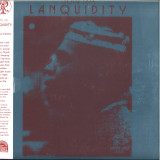
Strut proudly presents a special edition, deluxe repress of Sun Ra’s classic ‘Lanquidity’, for the 25th anniversary of the label. Housed in a tip-on sleeve with OBI strip, this new special editions features an A2 poster including a rare Veryl Oakland photograph of Sun Ra in his home, as well as liner notes by Tom Buchler (Philly Jazz), Michael Ray and Danny Ray Thompson (Sun Ra Arkestra) and Bob Blank. Originally released in 1978 on Philly Jazz, ‘Lanquidity’ was recorded overnight at Bob Bank’s Blank Tapes studio on 17th July 1978 following a performance on Saturday Night Live. “Most critics felt that it was more of a fusion-inspired record,” explains Michael Ray. “As the name suggests, the album is liquid and languid.” Bob Blank adds, “Musically, it was very ad hoc and freeform. There were horn charts but most tracks came out of improvised jams. Sun Ra just did his thing.”
The album 'Lanquidity' consists of five smooth tracks from the Sun Ra discography. It begins gently with 'Lanquidity,' a spontaneous composition by Sun Ra described by Danny Ray Thompson as reminiscent of an Ancient Egyptian Stargazing Ceremony, plotting the stars and planets. 'Where Pathways Meet' follows, featuring Sun Ra's funky interpretation of an Egyptian march, evoking the image of Pharaoh rallying his troops. 'That’s How I Feel' maintains a relaxed groove, featuring reflective trumpet lines from Eddie Gale and solos by John Gilmore and Marshall Allen, with Allen's oboe described as reminiscent of snake-charming. 'Twin Stars Of Thence' dances around Richard Williams' celebrated elastic bassline, while the haunting closer, 'There Are Other Worlds (They Have Not Told You Of),' epitomizes "space music," described by poet Mama Nzinga as 'The essence of light. Spirit takes a ride inside the deep dark space of just being.' Start to finish, Lanquidity remains an effortless, psychedelic pleasure and one of the strongest in the Ra 70's discography.
This new deluxe LP edition of ‘Lanquidity’ features the widely distributed version of the album originally released on Philly Jazz and reflects the album’s original packaging with a metallic foil / magenta sleeve, housed in a tip-on sleeve with OBI strip and featuring both liner notes and a limited edition poster, to celebrate 25 years of Strut records.
- A1: Jake Muir - Mirage
- A2: Pent & Dylan Kerr - Incoherences
- A3: Flora Yin Wong - Oath
- A4: Qwqwqwqwa - Shadow (Ft. Sop.io)
- A5: Ex Wiish & Dorothy Carlos - Assimilation
- A6: Nexcyia & Mu Tate - Sans Titre
- A7: Tati Au Miel - House Of Gold
- B1: Kamran Sadeghi - Formula Fiction
- B2: A... ...Cha.... A... I Feel Like A Ghost Uh
- B3: Eric Frye - Plague Chain
- B4: Maxwell Sterling - Xiahe Tears
- B5: Muein - Creep
- B6: James K - Sketch 4
29 Speedway is a record label and performance series based in Brooklyn, NY featuring forward-thinking improvisational music and live multimedia. Founded in 2020 by Ben Shirken a.k.a. Ex Wiish (‘Shards Of Axel’, Incienso 2023), 29S serves as a platform for artists exploring the fringes of interdisciplinary art and music. Hosting D.I.Y-guerrilla style sound and performance art concerts at Pioneer Works (NYC), Public Records, and in Europe in partnership with Index Records, they have worked with artists such as James Hoff, J. Albert, Yolabmi, Robert Aiki Aubrey Lowe, AceMo, Flora Yin Wong, Nexcyia, Young Boy Dancing Group, UMFANG, Color Plus, Poncili Creación, Special Guest DJ, Arushi Jain, Drumloop, Isabella Koen, Ben Bondy, Kamran Sadeghi, Yawning Portal, James K., Syndey Spann, Debit, Pent and many others.
Resident Advisor called their most recent compilation record ‘Channel Plus’ “one of the most stunning documents of the ‘modern ambient-techno movement pioneered by labels such as Motion Ward and West Mineral’, with a focus on New York as well as a global outreach that encompasses chilled-out trap, electro, downtempo and even early '00s electroacoustic music”. Their debut solo artist release from J. Albert and Will August Park, entitled “Flat Earth” (2023), was based on free improvisation and ambient jazz, receiving praise from Philip Sherburne, Shawn Reynaldo, and was included in RYMs top EPs of the year. 29S has been written about on ID, Bandcamp Daily: Best Ambient, Boomkat, Paper Mag, Artnet, Dazed, Clot Mag, Nina Protocol, and Document Journal.
The newest release from 29 Speedway, UltraBody, is a compilation record featuring the music of Jake Muir, Pent & Dylan Kerr, Nexcyia & Mu Tate, James K, Flora Yin-Wong, Ex Wiish & Dorothy Carlos, Kamran Sadeghi, Tati au Miel, James Hoff, Eric Frye, Muein and Maxwell Sterling. The record is emblematic of the artists who have performed at 29 Speedway shows in New York and Europe during the past two years, and is the third in a series released by the label.
The record was born out of a desire to investiage how the self, spirituality, and language are intertwined with the intervention of subjectivity by new technologies. With increasingly sophisticated tech, and the supposed ability to remake the world and ourselves, what differentiates our individual discretion from the will imposed upon us by software? Quoting Walter Chaw from his piece on David Cronenberg’s Videodrome, “Decades of rampant, unregulated and ill-considered technological leaps have begun to evolve, to mutate, humans at a biological level”. This haphazard acceleration towards a techno-utopic transformation of humanity has faulted, and as William Gibson put it, is leading us to live in a “half assed singularity”. In this reality, artistic processes are influenced by excessive access to computational tools and assistance, but not utterly controlled.
This in-between state of dominion is explored in 29 Speedway: UltraBody. “Incoherences” samples the utterances of Dylan Kerr’s voice processed between Pent’s percolated glazes, muddying the gulf between vaporous ambient and reflexive sound design. The voice on James Hoff’s “A... ...Cha.... A... I feel l” was created by trying to get voice cloning technology to sing a gps data stream, the music an extrapolation from an earworm he got stuck in his head while shopping in Kyoto. On “Plogue Chain”, Eric Frye’s most speculative sci-fi observations spiral into a glazed pool of digital cacophony, while Kamran Sadeghi’s “Formula Fiction” is an experiment in (un)controlled generativity. Incorporating minimal pings from a 3D simulation scene based on gravitational interaction, cello bits evolve on “Assimilation”, a collaboration between Ex Wiish & Dorothy Carlos.
On UltraBody, sound has no separate existence from space.
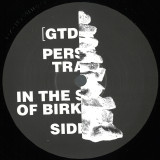
For his second outing on Gated, the mighty Perseus Traxx expands on tracks that debuted during a 2021 live set. They were so strong we asked him to refine them so we could get them on wax.
The A-side kicks things off in typically deep bass-led style, with the acidic breaky Sheet 96, followed by the title track In the Shadow of Birkby Fell, which takes things a tad tougher.
Flipping to the B, Ancestral Technologies kicks out the most up-tempo of the four tracks, while The Edge of Time closes the EP with a warped, lo-fi groover for the early hours that brings back a touch of the breaks.
Dejan Dex from 005 is back but with Blagoj in their mischievous music duo: Son Kota. From Misla to Termos, Dejan brings forth a new level of artistry with his right hand partner in this sizzling 3 track compilation. Literally sizzling, Termos isn’t shy in sound, waking up the listener with profound, sexy yet soothing beats in a humble, homemade kind of way.
“Our inspirations range from day to day activity. From 80’s pop rock music and good movies to tv shows and live sets from artists that we admire, together we combine all the sounds we hear into one full package.” - Son Kota
Son Kota - A story of two artists meeting halfway, making an alias to expand their music horizons. Focused on finely shaped sounds, and digging deeper as they can into the house music world.
Producing for 13 years running, Son Kota began paving their way around the same time. Coincidence? We think not. Destined to work together, Blagoj and Dejan were passionate pioneers on the Macedonian music scene with their like minded approach to genre identity and track ideation. Officially born in 2017, Son Kota was given its project name meaning “sounds of happiness” in French/Japanese dialect.
The two exude a sense of genuine awe and wonder for minimalism, and the blissful feeling it evokes.
Echoing the 90s once again, Son Kota offers a fresh batch of 3, including a remix by Arapu, each having its own musical idiosyncrasies.
Top of the track list is the dark and moody Vroche: a somewhat psychedelic ensemble of broken beats and synth stabs for the adventurous minimal listener. Up next is Termos, a marvelous piece that embodies classic house qualities peppered with nostalgic melodic elements. Finally, Arapu spins this record further with his own interpretation of Termos, bringing his signature touch to the table. Any Satya fan and production nut will be sure to appreciate his groovy minimal hypnotic flavors.
Grammy Award-winning band Phoenix returns with their next full length, Alpha Zulu, due out 11/4/2022. This follows their 2020 single "Identical,'' which went #1 at AAA radio, from the Motion Picture "On The Rocks". The project was recorded during the height of the pandemic in Paris, at the iconic Louvre museum. Phoenix are set to perform at festivals like Primavera Sound (Barcelona), We Love Green (Paris) and Austin City Limits (Texas) and will embark on a full headline tour in the US, UK, and EU in Sept 2022. The band has seen over 1.5B+ streams across their catalog, and have previously headlined Coachella, Governors Ball, Primavera Sound, Austin City Limits, and more. They've performed on Saturday Night Live, The Tonight Show with Jimmy Fallon, amongst others.
Sameheads & Mutant Radio are going a teenie weenie bit further and unifying their ongoing collab in plastic. The kind you play, not the stuff you throw away.
Released in Spring, at a party we’re throwing together in Tbilisi, this little beaut is a double sided 7”.
The MUTANTHEADS split 7” features some solid sound rep from both projects….
For Sameheads, Andrea & Alexander release their first material together, acting as a kind of trailer to an upcoming album released later this year on R-I-O. The track “Olias” finally gets its press after once being performed live at the fabled Sameheads festival “City of a Thousand Suns”… those were the days eh…..
On the Mutant Radio side, fresh talent TINA delivers her debut release, and for that matter, the first ever track Mutant have put onto a piece of vinyl….. The track “Vacation” is the squelchy black sheep counter balance to the silky synth vibe of the other side. Just how they like it.
The release will be up for pre-order from next week, and the digital stuff too…. Just the 300 copies available…… So,,, fix up look sharp……
- A1: Juanita Bonita
- A2: Cumbia Candelosa
- A3: El Mecanico
- A4: Tus Ojos
- A5: Que Te Pasa
- A6: Brisa, Mar Y Arena
- B1: Venenosa
- B2: Uey’ Je’ Je’ Pa’
- B3: El Canje
- B4: Dime Pa’ Quien
- B5: El Guarachero
- B6: Solo Estoy
- C1: La Luna Y El Pescador
- C2: Noche De Fiesta
- C3: Acuarela Cumbiambera
- C4: Las Diez Velas
- C5: El Chontaduro
- C6: Orlandito
- D1: Fiesta Tropical
- D2: Cumbia Del Caribe
- D3: Guepa…Je
- D4: Buenas Noches Diciembre
- D5: Alma Quibdoseña
- D6: Asi Se Baila Cumbia
This album takes you back to Colombia of the 50s and 60s. In those days, the tropical music of the Caribbean and Pacific coasts took over the country's mainland music scene by storm. One of the key figures during this period was Edmundo Arias. Together with Lucho Bermúdez and Pacho Galán, Arias is seen as one of the ‘big three’ composers of Colombian tropical music.
He was a rather introverted person who avoided being in the spotlight at all cost, leading to his work being less known than his contemporaries. With this album we hope to highlight the amazing legacy Edmundo Arias has left us. Think of big bands with sharp dressed musicians playing the finest cumbias, porros and other tropical sounds in fancy ballrooms on a hot evening in Medellin or Bogota.
Liner notes:
Edmundo Dante Arias Valencia was born in Tuluá, Valle del Cauca, on the 5th of November 1925. He came from a family of musicians. His father, Joaquín Arias Cardoza was a band leader and composer who taught his children to play music. Arias learned to play many instruments such as the guitar, bass, bandola (pear shaped string instrument related to the mandolin), tiple (12 string guitar), clarinet and saxophone. He proved to be a very talented musician and together with his father and his older brother Ricaurte he formed the ‘Trio Arias’. The family lived in different cities across Colombia depending on where they found work. When his father died unexpectedly in 1948, Edmundo and Ricaurte had to support their family working as musicians. In 1951, Arias decided to move to Medellín, in those days the heart of the Colombian music industry and the city where the most important record companies and the best musicians were based. It didn’t take long before Arias made a name for himself as a musician, composer, arranger and band leader for Colombia’s leading labels at the time; Zeida, Ondina, Silver and Sonolux. For the latter, he would eventually become the artistic director. Over the years, he wrote hundreds of songs, recorded many albums with his own orchestras or with the Orquesta Sonolux and collaborated with a countless number of musicians, often uncredited.
Together with Lucho Bermúdez and Pacho Galán, Edmundo Arias is seen as one of the ‘big three’ composers of the tropical music of Colombia. But despite the fact that Arias was renowned, very little is known about his personal life. He was a humble man who preferred to work in the background and avoided being in the spotlight at all cost. He declined interviews and kept away from public life. On some live performances of the orchestra that carried his name, Arias asked one of his musicians to pretend to be him, so that he wouldn’t have to come on stage. You might think that Arias was shy or anti-social, but this was not the case. Most people he worked with described him as a very jovial, good humoured person and enjoyed working with him.
His invisibility in public life belied how present he was behind the scenes. If he wasn’t working on his own productions, he was regularly collaborating with other musicians. Arias had his hand in the work of many of his colleagues and was a mentor for young artists. Some even say that in those days all the musicians in Medellín had worked with Arias in one way or the other. He had a strict working regime: composing, arranging and recording at night while sleeping during the day. He was also very productive. The story goes that on one occasion, he wrote arrangements for a 16 piece band in just a few minutes while the band was recording another song. His hard work and productiveness resulted in hundreds of compositions and many records that carry his name.
Edmundo Arias’ career ran over 6 decades until his death on the 29th of January 1993. Over the years, he left us a huge legacy. The songs on this record are a selection of his work during the 50s and 60s. Many see this period as the absolute highlight of his career. We picked out the songs we consider to be the most outstanding recordings from this period. The title of this compilation Guepa Je! is Colombian slang often used in cumbia to express joy or to celebrate. A free translation would result into something like ‘yeah’, ’let’s go’ or ‘groovy’. I guess this title says enough. Enjoy the music. Guepa Je!
Sasha returns with atmospheric gem 'How to Wear Raybans Well' Featuring remxes from heavyweights Roman Flügel and Nathan Fake.
Electronic luminary Sasha has had a busy 2024 that has so far yielded standout collaborations with the likes of Super Flu & Sentre and a solo single 'Florian Drift' that proves he remains at the cutting edge. His Last Night on Earth label continues to serve up a rich mix of melodic house and techno from the most exciting names in the scene and this latest solo single finds the boss head into new realms once more.
The superb 'How to Wear Raybans Well' is awash with fizzing dub chords and electric lines that flash about the mix. The deep rooted drums have a subtle bounce as they serve to sweep the floor off its feet and lock them into a state of melodic techno bliss.
First to remix is Nathan Fake, a UK talent who has always had his own unique sound. It's based on his mastery of synths and melody and has arrived on labels like Ninja Tune and Border Community as well as his own Cambria Instruments. His remix ups the ante and strips things away to bring more defined drums and crisp hits. The synths bring a range of emotions as they unfold with a mind of their own throughout this most captivating track.
Roman Flügel has been an ever present in the electronic world almost since the start. The German's output has covered endless ground from micro house to acid to techno on the most tasteful labels from his own Playhouse to Mule, Dial and Live At Robert Johnson. His remix is timeless surging techno that comes with waves of warming synths and unrelenting drum pressure designed for peak time dance floor wig-outs.
- A1: Cabo Verde Band - Bo Terra Cabo Verde
- A2: Americo Brito & Djarama - Rapaz Novo E Malandro
- A3: Cabo Verde Show - Terra Longe
- B1: Elisio Vieira - Tchon Di Somada
- B2: Vlu - Rua D'lisboa
- B3: Galaxia 2000 - Coracao Dum Criola
- C1: Mendes & Mendes - Mitamiyo
- C2: Danny Carvalho - Roncanbai
- C3: Mendes & Mendes - Walkman
- D1: Jose Casimiro - La Mamai Ta Bem
- D2: Elisio Vieira - Bem Di Fora
- D3: Zeca & Zeze Di Nha Reinalda - Mocinhos
Arp Frique returns with a brand new release on his imprint Colorful World Records in collaboration with Rush Hour. A compilation of 12 Cape Verdean gems assembled with the help and knowledge of Americo Brito, there is a very special story behind it. Americo Brito, who features on Arp Frique’s original Nos Magia, is a proud and important member of the Cape Verdean community in Rotterdam. His story reveals the historical connections between radio, vinyl, Cabo Verde and Rotterdam’s international music scene in the 70s and 80s. Cape Verdean insiders say “we export all they have to other countries, only to import it back again”. Cape Verdeans have migrated all over the world, mainly to cities with big harbours, like New York, Boston and Rotterdam (Holland). Rotterdam became one of the main destinations (next to Portugal) on the European mainland. When Americo, like many of his friends and relatives moved to Rotterdam, he quickly became infected with the music virus. Surrounded on a daily basis by Cape Verdean music in Portuguese pensions and small hotels, this was where sailors ingested a dose of “sodade” through the interpretations of their beloved music by the local Cape Verdean artists. Americo took to the stage with his band Djarama in the 70s and 80s. The live music scene was buzzing and the Cape Verdean community had their own infrastructure for arranging shows, often in nightclubs where the band had to bring their own soundsystem. Interestingly, Americo didn’t stick to performing and recording music. He found another way to help spread the Cape Verdean magical secret of music across Rotterdam, Holland and beyond: “There was this spot in Rotterdam where all foreign radio stations were housed, all these different nationalities together, Surinam, Cape Verdean, Hindustani…Guy Ramos and some of my other friends made radio in the 80s there. I got involved in their radio activities. Later on I started to work as a technician and eventually as producer and radio DJ for “Radio Voz De Cabo Verde”. Radio became bigger and there were around 4 different Cape Verdean stations active at one point in Rotterdam. instrumental in the development of this was the attic of a Dutch friend, where “Radio Babalu” came to life. Radio has always held a special place in my heart.” Americo’s music collection stems from this era, also aided by his many travels across Europe to cities with Cape Verdean communities. Alongside Rotterdam local, Arp Frique, Americo unveils some of these songs: dancefloor hits and beloved radio gems known in the Cape Verdean scene by younger and older generations alike, and so far undiscovered by a “bigger” audience. The compilation showcases the worldly view of Cape Verdean music, incorporating knowledge from their travels in their compositions. It ranges from the obvious funana and coladeira, to the more unexpected influences of deep disco, new wave, uptempo reggae, jazz-funk and Brazilian pop music; demonstrating just the tip of the iceberg, but what an amazing t(r)ip it is!
Formed in Edinburgh in 1992, The Kaisers set out to bring the excitement and joi de vivre of the early ‘60s beat era back to the Scottish music scene. Armed with junk shop guitars and tiny amplifiers, they quickly gained a reputation as one of the country’s most exciting live bands, belting out forgotten rock ‘n’ roll gems and their own period-perfect compositions with unsurpassed rawness. As their fame spread, they were soon firing their beat salvos at audiences from America to Japan. The broadcasting authorities took notice and radio sessions for John Peel, Mark Radcliffe and many others followed, both at home and abroad. The Kaisers released seven albums plus many singles and EPs – all on vinyl and always in mono. One EP was recorded during a particularly wild night at New York’s famous CBGB. Although their records featured plenty of the good-humoured sonic violence that their fans craved, heartfelt yet visceral ballads were never off the musical menu. After a 13 year hibernation, The Kaisers returned to the stage via the festivals circuit and continue to appear at festivals across Europe. The resurgence of interest in the band has led to the writing and recording of a brand-new album ‘More From The Kaisers’, due for release on the 28th of June, 2024.