Boulderhead arrives on Haŵs with ‘Sunshine’ — four cuts that blur the line between club functionality and sonic experimentation. Twisting delays, playful FX work and endlessly shifting textures give the record a voice that's unmistakably his, pushing familiar forms into stranger territory without ever losing sight of the dancefloor.
The title track ‘Sunshine’ opens proceedings with a heads-down trip anchored by a cheeky, tongue-in-cheek vocal hook, swung grooves, and hypnotic momentum. Jorg Kuning steps up on remix duties, gently reshaping the original at every turn. His hardware-led approach keeps the groove in constant motion, each subtle shift revealing another layer without ever breaking the spell. Flip the record and ‘Moonshine’ strips things back into classic Boulderhead territory, while ‘Practice’ closes the EP on a deeper note, pairing lush synth work with beautifully detailed percussion for one final slow burn.
Never too serious, always full of character. The kind of record that keeps giving something new back with every listen.
Search:things
Some recordings herald the future in ways that are impossible to see in real time. Teodros Makonnen With His Organ (ቴዎድሮስ መኮንን ከኦርጋኑ ጋር), by the artist Teodros Makonnen, also known as Teddy Mak, is one of those. Today, electronic sounds, synthesizers, and digital production are taken for granted in Ethiopian music, but in the early 1980s, they were novelties that polarized opinion. Even to this day, the story of Teodros Makonnen’s legacy has never been properly told. He played a decisive role in defining the sound of the digital era of Ethiopian music that emerged in the 1980s and beyond, both as a keyboard player and as a producer, songwriter, performer, and sound designer.
Ethiopian music was at a crossroads in the early 1980s. Much like music in the rest of the world, technology and automation heralded either a quantum leap in musical development or the annihilation of musicianship, depending on who you’d ask. The changes were incremental nonetheless, but with the benefit of hindsight one can clearly see that the changes meant different things in different contexts. Drum machines and electric organs came to replace many hotel bands because, all of a sudden, one musician could control drums, melody, and accompaniment. Teodros was one of the first musicians in Ethiopia to explore the possibilities this opened up.
Teodros’ father, Captain Makonnen Beri, was a chief pilot at Ethiopian Airlines and a music enthusiast at that. This would prove important to his development, as Makonnen brought back a piano from Germany, which would lead to the first steps in Teodros’ long musical career. Captain Makonnen’s work as Head of Flight Operations and as a pilot exposed him to the wider world that was far from commonplace for most Ethiopians. In a house where music captivated the whole family, the piano gave Teodros’ talent an outlet. Not only was a piano at home rare in Ethiopian households, his father also brought an Indian teacher to their home to teach Teodros and his brother, Captain Samuel Makonnen, music theory (solfeggio or ear training) and piano. Teodros and his youngest brother, the late great Dereje, a member of both the legendary Ibex Band and the Ethiopian reggae group Dallol, took up music from that point onward, with Teodros beginning to develop his proficiency at the age of eight. His father encouraged him to practice tirelessly at home, and Teodros later received musical schooling at the German School in Addis Ababa.
His obvious talent led to studies and formal education at the Yared School of Music, followed by continued studies in American jazz at Northern Virginia Community College in Virginia. Teodros cut his teeth professionally in his mid-teens, not only as a keyboardist, but also as an arranger for the Wabi Shebelle and Dahlak bands in the 1970s. He mastered electronic sequencing early, rising to prominence through the midnight recording sessions held during the military curfew. The pressures imposed by the curfew required precise and disciplined recordings, and Teodros delivered just that. This, in turn, led to collaborations with iconic artists such as Mulatu Astatke, Aster Aweke, Menelik Wossenachew, Tilahun Gessesse, Mahmoud Ahmed, and Alemayehu Eshete.
In those days, he sat in as a keyboardist with the Dahlak Band when Dawit Yifru took a hiatus to study in Russia, and also with the Ethiostar Band. He secured a residency at the Wabi Shebelle Hotel with the Shebele Band, together with Zelalem Tadese (drums), later succeeded by Elias Bekele, Mulugeta Hailu (bass), Teferi ‘Bibisha’ Mengesha (guitar), Kumelachew G/Selassie (trumpet), and Teshome Deneke (saxophone). A friendly competition developed between the bands associated with the Ras Hotel (the Ibex Band), Ghion Hotel (the Dahlak Band), and Wabi Shebelle Hotel (the Shebele Band). The music scene at Wabi Shebelle saw teenagers commanding the spotlight in an industry otherwise dominated by musicians of an older generation.
At the Wabi Shebelle Hotel, Teodros met a diplomat from Saudi Arabia and later visited him at his home in Addis Ababa, a meeting that had unexpected musical consequences. The man owned a Yamaha double-deck keyboard. That evening, they recorded Teodros Makonnen With His Organ (ቴዎድሮስ መኮንን ከኦርጋኑ ጋር) in one take. This recording, a cornerstone in the early digital sound of Ethiopian music, came about almost by chance, simply because Teodros got the opportunity. Traditional Ethiopian songs were cast in a wholly electronic style.
Once freed from backing duties, Teodros’ keyboards could explore dreamlike soundscapes that took Ethiopian music in new directions. Even though the cassette contained well-known Ethiopian songs, they were given highly original arrangements, performed on an electric organ with drum machine backing and rhythm patterns that left the listener with suggestive, lingering sounds. “Libesh Kabashen” (also known as “Anchi Bale Game”) and “Odu Gol Golesa” wrap you in the very stuff that dreams are made of.
Originally released on cassette only, this recording exudes a mystique that surpasses even some of the most obscure Ethiopian recordings of the day. It remained more or less unknown outside of Ethiopia until now. Some of the tracks, like “Addis Fikir,” are permeated with an almost naive buoyancy, free-floating sounds that lost contact with the ground the moment they were conceived. Others, like “Meche New Hageren Yemayew” and “Lelitu Alnega Alegn,” carry a moodier, quirkier timbre, with pulsating rhythms in the background. Yet even the darker pieces contain an unmistakable wave, something essentially Ethiopian. If most recordings of Teodros’s contemporaries at the time were teeming with atmosphere, his songs seem instead at home in the stratosphere, almost ethereal. Some of the music here could be filed under “lullabies,” were it not for the recurring, almost brooding feeling that engulfs the listener on the aforementioned tracks. You could easily be forgiven for drifting into a blissful haze as the music washes over you.
Up to the advent of electronic music production, Ethiopia was totally dominated by big bands on the one hand, and small groups on the other. The former were tied to large institutions such as the military, the latter emerged from the entertainment industry, in hotel bars and nightclubs. These groups were commercially driven, and bands ultimately had to foster a mercenary approach to employment, albeit not to the passion for music. In the light of this, Teodros’ musical legacy can be seen in two ways. On the one hand, he is a key player in Ethiopian music from the 1970s onwards, leaving an indelible mark through hundreds of compositions and arrangements, including soundtracks for numerous documentary films and advertisements for different companies. On the other hand, the way he and others employed electronics brought Ethiopian music onto a fork in the road.
The replacement of traditional instruments with electronic equipment was seen as impending doom by some. Others, like Teodros, saw new avenues for performance, production, and creativity. Just as later producers like Abegasu Shiota of Admas, Teodros was a trailblazer who opened paths that it took Ethiopian music as a whole more than a decade to rush into. The hotel scene had already been pushed toward electronic music by financial necessity and cost-cutting. Today’s revived global interest in Ethiopian music from the seventies and eighties, alongside a broader resurgence, has changed the reasons for using digital means of music production. They have become tools for musical dreaming. This is where the dreaming began.
- 07: Do You Want To Get High? (feat
- A1: We've Been Here Before - Children of Zeus01:56
- A2: As The World Burns - Children of Zeus03:52
- A3: How It Used To Feel - Children of Zeus03:43
- A4: Good Light - Children of Zeus03:40
- B1: Water & Vibes (feat Anieszka) - Children of Zeus02:58
- B2: Weed & Rum - Children of Zeus02:34
- B3: Do You Want To Get High? (feat
- B4: No Smoke - Children of Zeus03:54
- C1: Slow Jams On Rotation - Children of Zeus01:36
- C2: Say Less - Children of Zeus02:48
- C3: Before We Drown (feat Knucks) - Children of Zeus04:10
- C4: Pay No Rent - Children of Zeus03:04
- D1: Star - Children of Zeus03:21
- D2: Dopamine (feat YoungOldSoul) - Children of Zeus03:34
- D3: Time Is Running Down - Children of Zeus02:49
- D4: Loves Fades - Children of Zeus03:30
Transparent Aquamarine Vinyl[28,78 €]
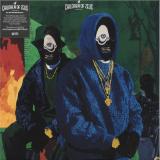
Children of Zeus return with their third studio album ‘As The World Burns…’
Five years on from their highly-acclaimed sophomore album ‘Balance’, Manchester’s kings of hip hop soul, Tyler Daley and Konny Kon, bring us a brand new 16-track opus.
Sonically the duo continue their story where they left off; crafting an amalgamation of street soul, alternative r&b and boom bap hip hop, with a sprinkle of flavours taken from their original multi-genre pirate radio influences, and a dash of forward-thinking new sounds, ensuring all tracks are destined to become future classics.
The features are sparing but powerful, enlisting the talents of revered UK rapper Knucks (‘Before We Drown’), Colorado-native Young Old Soul (‘Dopamine’), MCR family K S R (‘Do You Want To Get High’, & Australian/Mauritian up & comer Anieszka (‘Water & Vibes’).
As with previous projects, this album is largely produced by the duo themselves, though there are guest productions from previous collaborators too, including Grammy Award-winner Beat Butcha, Grammy-nominated Teo, and broken beat pioneer K15, along with an assortment of new players making moves in the underground neo-soul & beats circuit.
Conceptually, this project continues on with the story to date. An eternal search for sunsets and soulfood, as a respite to the anxieties of the modern world; personally, professionally and globally. Assertive swagger is matched with brutal but sincere candidity. As ever, it encapsulates the rough with the smooth, with reflections on where they’ve been, where they’re at and where they’re headed. There’s no preaching to be found here; just an acceptance of things as they are, an embrace of the environment and people they were nurtured by, and a celebration of some of the finer things in life; slow jams, weed & rum, water & vibes. Raps for listeners, blunt heads, fly ladies and prisoners. All packaged together as another perfect sonic love letter to sound system culture. 50 minutes of big people music.
Since the release of their anthemic debut single ‘Still Standing’ a decade ago, to the subsequent EP ‘The Story So Far’, and their critically-lauded debut album ‘Travel Light’, the duo have received numerous accolades, including nominations for AIM Awards & Worldwide Awards both, along with tons of ‘Album of the Year’ nods care of Clash Magazine, Bandcamp, Complex, Wordplay and many more. This along with huge swathes of support from DJs, radio stations, press outlets, tastemakers, luminaries & fellow artists across the globe.
Children of Zeus have performed sessions for COLORS, Soulection (Apple Music), DJ AG, Boiler Room, BBC 6 Music and at the infamous Maida Vale studios for BBC 1Xtra as well as touring across Europe, Australia and South Africa. This is in addition to collaborating & touring with Mercury Award Winner’s Ezra Collective, including a Wembley Arena show. Other collaborations over the years have included Shy FX, Juls, Goldie, Black Milk, Kofi Stone and the late great Lenzman.
From the Broke ’n’ English / Hoodman-era, to the present day, Children of Zeus have been omnipresent in the fabric of British black music. Proud ambassadors of Manchester music, and of UK soul, it really is “Zeus to the world”.
Children of Zeus have been adorned with plenty of flowers over their career. The unbridled quality and poignance of the music and the message on display throughout this project will see the algorithmic needle move some more. It’s undoubtedly set to be a Zeus Summer. As the world burns…
Available on all digital platforms and physical formats, Friday September 4th 2026.
t 07: Do You Want To Get High? (feat. K S R ) - Children of Zeus03:26
t 07: Do You Want To Get High? (feat. [ K S R ]) - Children of Zeus03:26
[t] 07: Do You Want To Get High? (feat. [ K S R ]) - Children of Zeus03:26
[g] B3 | Do You Want To Get High? (feat [ K S R ]) - Children of Zeus03:26
Trusted Rhythm Records seeks to live up to its name right from the off with a debut vinyl compilation that explores deep house from multiple angles. Yuu Udagawa first comes at things from a soulful perspective, with diffuse pads and jazzy melodies heating up a nice soft groove. DFRA's 'Give Me' (Masaki Morii remix) is a playful, musical sunset sound for when you're dancing by the Med somewhere and the flipside begins with a tropical deep house heater that is organic and baked in sunlight. Trinidadian Deep keeps things dialled in and spiritual with his mix of Jean-Jez and a Coflo remix closes with more bold rhythms but no lesser depth. Sophisticated stylings all round.
2026 Repress
With this seventh instalment of retweaked heat, Perro Bueno Edits once again prove that less is more when you know exactly what you're doing. Both refixes strike a sweet spot between respectful crate-digger sensibility and dancefloor punch while updating Afro-funk classics without sanding off their soul. 'TFOM' puffs out its chest with big, bold, playful horns leading the charge as Latin vocals bring some sunshine and funky bass keeps things moving. 'SMPP' slows the tempo, which means more room to luxuriate between the dumpy kicks and appreciate the sharp horns and organic percussion before some raw vocals bring a Brownian funk edge.
Order now and we will order the item for you at our supplier.
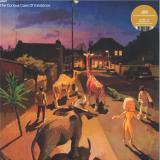
When the first JIM album Love Makes Magic was released in 2023, it was the end product of an experiment that had begun during the strange days of the pandemic. Cooped up in his studio, James Baron started fiddling about with an as-yet unnamed new album idea. It became Vicious Charm’s first LP release. Labelled variously as Balearic, folktronica, blue-eyed soul and Laurel Canyon, Love Makes Magic was perhaps all and none of those things: a record rooted less in Californian mythology than in Baron’s own musical world, somewhere between Sherwood, Nottingham, classic songwriting, electronic soul and the no-nonsense good times that have long run through his work under his other monikers (principally the anagrammatic Ron Basejam and, of course, Crazy P) One thing was indisputable, it connected with people... and still does.
The album was a minor hit, appearing in many a Best of 2023 chart and voted Album of the Year in Bill Brewster’s Furtive 50. A tour and a few memorable festival appearances – his 2024 We Out Here Festival being one of those wonderfully timed ‘moments’ - perfectly captured the horizontal vibes on the album, while injecting some live energy into its delivery. While there was a follow-up remix album for Love Makes Magic, JIM was already preparing a sophomore LP: “I wrote the majority of The Curious Case Of Existence in a couple of months at the beginning of 2024, then it was just a case of making the record over the next couple of years in between everything else.”
Order now and we will order the item for you at our supplier.
Following a hugely successful debut, the LA collective Boogie Down Edits return with a second volume that turns its attention to one of hip-hop's most untouchable catalogues - A Tribe Called Quest. The approach remains as tasteful as ever: the defining vocal fragments and musical DNA of the originals stay fully intact, while the grooves and rhythms get subtly reworked for DJ-friendly, peak-time impact. 'Award Tour' opens proceedings with that unmistakable vocal hook gliding over a chunky, rolling house beat built for packed floors, while '4Momz' takes things deeper and more atmospheric, warm bass pressure and dreamy textures giving it a genuine late-night feel. Golden-era hip-hop attitude meets contemporary house production. Mad respect.
Order now and we will order the item for you at our supplier.
12” comes with a hand-signed insert by PARAMIDA & a download card with high-quality digital files!
Boiler Roomification. Proteinmaxxing. Sonic branding. Vibe curation. Digital minimalism.Dopamine detox. Cortisol management. Engagement farming. Main character energy. Manifestation journaling. Growth hacking. Vertical integration. Thought partnership.
Instagram Live. BPM creep. Synergy. People, it’s time to chill out. Life is short and we want to dance. Presenting: BEST OF RELAX VOL. 1 (CLUB HITS): A collective chillpill, the antidote awaits on this new Love On The Rocks Sampler, selected for your pleasure by label boss PARAMIDA and accomplice Simone de Kunovich. They’re joined by Luuk van Dijk and Giammarco Orsini for four tech, deep & garage house workouts, club-ready, dripping with swagger, turned up to eleven and firing on all cylinders. It’s Love On The Rocks on cruise control, chewing up and spitting out references from hiphouse to Balearic with all the boisterous, unpredictable energy you expect. Remember when dance music used to be fun? We’re back baby.
Order now and we will order the item for you at our supplier.
- 01: Movement 1 (feat. Man Power)
- 02: Movement 2 (feat. Man Power)
- 03: Movement 3 (feat. Man Power)
- 04: Movement 4 (feat. Man Power)
- 05: Movement 5 (feat. Man Power)
- 06: Movement 6 (feat. Man Power)
- 07: Movement 7 (feat. Man Power)
- 08: Movement 8 (feat. Man Power)
Geoff Kirkwood (Man Power)
I’dgained some notoriety as a music producer and DJ but I hit a horrible case of writers block around 2018.
The problem I was finding was that I was trying to shoe horn every smart arsed clever dick musical reference I had into the music I was making, but the function of dance music is to make people dance, not to show people who broad your musical references are, so I was making pretty shitty music that landed in the middle and didn’t achieve either aim.
To tackle this I ended up committing to just trying to make the most expressive and wanky experimental stuff I could. I was immersed in club culture at the time so the whole enterprise started as a joke, hence the name “Bed Wetter”. However when I fully submitted to just naked exploration the really unexpected thing that happened was that I found myself unavoidably having to deal with a lot of my own bullshit. That bullshit turned into the “Billy Mill is Dead” album, which was essentially the sound of me excavating my own life and looking at how I felt about where I was from, where I was headed, my family, my history, my region and all of the things i have conflicting feelings about.
It was partially catharsis and also a bit of deprogramming around being able to call myself an artist after being raised to believe that wasn’t an option for me.
I self released Billy Mill is Dead in the months before the pandemic and it found it’s fair share of love in the places I hoped would connect with it, and just the right amount of being ignored by people who I’m pleased didn’t feel it. This all lead to me being emboldened enough to apply for an artist in residence position at a big regional opera house months later in the middle of lockdown.
My feeling was that if my DJ career was potentially over for the remainder of my lifetime then there was no harm in exploring this alternative method of expression to see where it could take me.
I submitted a ridiculously ambitious plan for what I would like to do as a project, and to my absolute shock I was selected for the position.
I was 40 years old and from a scarcity background so I had a potentially unique response to that kind of validation for the first time and what followed next was a process of me just coming back with bigger and more ridiculous ideas just to find out at whatstage they’d tell me to stop.
The thing is, nobody did. I got as far as suggesting writing a full symphony to be performed by an orchestra before my own nerve gave out and I decided that was probably as far as I should push things.
The problem with people giving you permission to do things is that you then need to go out and figure out how to do those things.
The biggest issue for me, beyond raising the money to pay for everything, was how does a person actually write a symphony?
I was introduced to Fiona Brice, a multi instrumentalist and orchestral arranger. She’s also a recording artist who releases on Bella Union. On top of that she’s a violinist who used to be part of the band Placebo and who used to appear regularly playing for other bands on things like Top of the Pops.
Not only was Fiona uniquely placed to not look down on the strange provenance of someone from an Acid House background wanting to write a symphony, but more to the point we really hit it off from day one.
Fiona coached me in the essentials of writing for an Orchestra, and then I went off and wrote the 8 movements.
I’d love to say I laboured for years over this bit, but it took about 2 weeks in total. I’d also love to say what I wrote was a complete symphony, but the version of this which is solely me feels like looking at something without your glasses on. The shape,feel and borders were all there, but the definition was absent. Fiona taught me the broad language of a symphony, but without her it would have lacked all intonation, nuance and detail. Where I had shaped ideas with a hammer, she brought out my meaning with precision using a scalpel.
I think the prodigiously quick turnaround for the music is as much proof of how conceptually and musically aligned Fiona and I are. I know we’re both incredibly proud of what we’ve created.
It took nearly 2 more years to stage the debut performance in what was potentially the most traumatic period of my life which saw me embroiled in an international crisis with my own family and the death of my father, all with the backdrop of COVID.
The work itself is inspired by the working class experience, but it’s also a comment on how we get to decide what we are and how we’re defined, and we get to choose what we do to prove these things.
The original recording was contractually impossible to ever share again, so we re-recorded it in a working men’s club with jobbing (albeit world class) players. In many ways it’s a record that feels like it shouldn’t exist, which is why we’re all so happy that it does.
expected to be published on 18.09.2026
- 1: The Ground Here 03:20
- 2: Fennel Knows 04:54
- 3: Frog Song 0:09
- 4: Time Go Time Gone 0:18
- 5: Life Inside The Hourglass 02:42
- 6: Burnin' 03:2
- 7: Quiet and Warm Willed 01:51
- 8: Adelaide 03:07
- 9: Night Fright 03:56
- 10: This Bed Was Made For Me 55
- 11: Peach in the Briar 03:44
- 12: Window in the Winter 03:38
- 13: Bud Worth Biting 01:49
Shaped in the shadows and sounds of the legendary Topanga Canyon, California. The debut album from Biita Houdei is buoyed by a magic that feels wildly and beautifully untamed; wild-hearted sentiments that are shaped by the world around it, fascinated by the enchantment of it all, and delivered via a collective (harmony layered) voice that understands the complex nature of what it means to be alive in the here and now.
Produced by Haley Heynderickx, 'This Bed Was Made For Me' is a striking collection of stirring, signature folk songs animated by subtle instrumentation and orchestral flourishes. It feels lived in: vocals weave together in a beautiful harmonic dance, seasons shift, sunshine appears and bold psychedelic colours warm the horizon.
In the early stages of making her debut album, Biita Houdei knew two things: that she wanted the recordings to feel distinctly and palpably warm, and that she would sew a unique patch for every song on the album. The first of those things is subjective, though brightness pours in from all corners of This Bed Was Made For Me. The second became a laborious task she undertook throughout the process, the completion of which is testament to the slow process of it all, to the physical commitment and patience required to make a full work of art.
The patches she crafted during the making of This Bed Was Made For Me became a full quilt, one that now adorns the album’s front cover. Beneath it sits a striking collection of Houdei’s stirring, signature folk songs, brought into fruition with the help of fellow songwriter Haley Heynderickx, in her first lead production role, and the album’s producer/engineer Sahil Ansari. It’s also the first release Biita (pronounced “bee-tah”) is releasing under her newly-taken name, one that was gifted to her by her auntie and means "unique" in the Farsi language. “I proudly take this name,” Biita says of the change. “It makes me feel that much closer to my Persian heritage.”
Recorded across ten back-to-back and full days, the album touches on themes of love and heritage, of taking chances, the preciousness of time and the impact we all have on the world around us. A number of the songs were written in Topanga, California, while Biita settled into a new home as wild fires raged, and as she adjusted to a life which no longer held distinct seasonal changes, far from the Ozark Mountain home she felt so attached to. Such themes reveal themselves in a variety of ways across the album’s fourteen songs, that key sense of warmth retained in the bones of the album whether they are stepping into darkness or seeking out light.
The album feels lived in and alive; dust swirls, seasons shift, sunshine appears and is held. Biita calls it ‘psychedelic’ and there is indeed a sense of that in the world building, in the way the bold colours are always shifting. Formed of fourteen songs, and filling nearly forty-five minutes, This Bed Was Made For Me not only builds a whole world for listeners to inhabit but also implores you to stay a while. This was deliberate, indeed it’s Biita’s wish that listeners give the album dedicated time; to learn its shape, to explore it fully, away from the instant grab of playlists and skewed algorithms.
“Many of my favourite albums didn’t reveal themselves instantly to me,” Biita, now based in the Catskill Mountains of New York, explains. “Some did, of course, but I had to work to understand the full scope of the piece as a whole. I encourage people to dive deeper into everything that they choose to consume. It is not my intention to sound pretentious, but instead, I am trying harder to explain the gratitude I have for being able to craft every part of this album— using my hands, my brain, my voice, my visions. To me, it is an all encompassing work of art,” she continues. “Making the quilt was laborious. Taking the cover photo was laborious. No shortcuts, but rather a manual and tangible approach. I am thankful for the time it took.”
expected to be published on 18.09.2026
The record is largely sung in Scots language, one of Scotland’s three official languages along with Gaelic and English. “Scots gives me a way of expressing myself which is connected directly with the landscapes I love. It brings the songs alive and it is a fascinating language. The name of the record is in Scots - Forefowk means the people who came before, or ancestors. When we say ‘mind me,’ we can mean a few things- remind, remember, watch over or care for me. The record explores how tradition needs to be constantly reconnected with, built upon, looked after, and shared.”
Quinie sings with a style inspired by Scottish Traveller singers. “I began singing unaccompanied Scots Song in 2015 after hearing Scots Traveller singer Sheila Stewart on the radio. Initially I felt like I shouldn't sing these songs because I'm not a Traveller, and I saw people around me doing that in a way that made me uncomfortable. But on the other hand this music made sense to me and I felt driven to learn. Over the years I have met Traveller friends who taught me that settled people sharing these songs could contribute to raising awareness. Scottish Travellers are marginalised and discriminated against in modern Scotland, despite being custodians of so many of our important traditions. So I started to perform them and tell this story. From there I built on my repertoire and started writing my own songs”.
To develop this record, Quinie travelled across Argyll with her horse. They went on a pilgrimage of sorts through the ancient landscapes of the West of Scotland to explore the interconnected relationships between people, ancestors, animals, and place. The album’s vinyl release is accompanied by a book and film, documenting this unusual research process.
Forefowk, Mind Me was recorded in August 2024 at The Big Shed in Highland Perthshire with support from Creative Scotland. Quinie is accompanied by an ensemble of musicians: Ailbhe Nic Oireachtaigh (viola), Oliver Pitt (duduk, bouzouki, percussion), Harry Górski-Brown (small pipes, violin), and Stevie Jones (double bass, recording, and mixing). Each of these artists brings their own distinctive voice, bridging contemporary experimental practice with worlds of traditional and early music.
expected to be published on 18.09.2026
- 01: Colorado
- 02: There
- 03: The Fool
- 04: Henry and Celia
- 05: Hours
- 06: Spanish Girl
- 07: Parade
- 08: Driveway
- 09: These Idyllic Things
Dublin-born, thirty years an immigrant. That's the spine of henryohenry's debut, Apocrypha, not as a concept but as a condition. He's spent three decades in the United States working in the trades, absorbing the country's mythologies and building what he calls "an idiosyncratic American language" out of them, something closer to Whitman's vision than what he found. He is, by his own account, "formally and informally not a musician" — all but two of the songs were written on a $6 charity-shop guitar with a repaired headstock and strings that distorted unpredictably. It doesn't appear on the record. Produced by filmmaker Rick Alverson, the album is anchored by guitarist Eamon O'Leary and his son Ned Steves, recording together for the first time, without rehearsal. Erik Hall mixed and contributed overdubs; Emilie Rex of Lean Year lends harmonies to three songs; poet Callie Garnett appears on another. Album standout "There" captures something harder to name: how powerful feelings drive you to the page, and how the thing you make can outlast the feelings that made it. "It feels like a triumph over something," he says, "even if you're a bit embarrassed by some of the sentiment."
Apocrypha arrives as a debut but carries the patience of a life lived in full. For fans of John Cale, Nick Drake, Leonard Cohen.
expected to be published on 18.09.2026
- A1: Release
- A2: Six Years Of Keeping On
- A3: Chicken
- B1: Underhand
- B2: Julia Roberts
- B3: Weight
A recent signee to Chess Club Records, Jo Geller aka jo from school, finds herself among the independent label’s pedigree of homegrown artists who have gone on to attain major success. Alumni such as Billie Marten, an artist long admired by Jo, as well as Wolf Alice, are just a couple of names who found their initial support through Chess Club.
At 22-years-old, jo from school’s graceful, carefully crafted but devastatingly delivered songs hit with an air of maturity that lands far beyond her years. An embrace for spontaneity and imperfection gives her material its character; primarily as an artist focussed on doing things her own way.
Writing on the piano since the tender age of nine, Jo self-taught herself guitar as a teenager during lockdown, joining the illustrious Brit School: “I was the only musician in my world until I went to Brit School, then I was the worst musician there,” she says. “It gave me a kick. I went from thinking that it was cooler to not care about anything, to realising the more you cared, the cooler and more individual it made you.”
Largely produced by Rich Cooper (CMAT, Billie Marten), so far both singles from the EP have been supported by BBC Radio 1, Radio 2 & 6Music. Huw Stephen's has invited Jo to feature in his Huw You Are segment airing on 6Music on 29th July, and Jess Iszatt has already had Jo as her Introducing featured artist on BBC Radio London. Rolling Stone UK featured jo as their Play Next artist last month, along with CLASH who just confirmed a Next Wave feature to run on EP release. Outlets like Line of Best Fit, DORK, DIY and Wonderland have all came to the table to champion jo too. We've also seen impressive audience growth in just 2 months – with jo adding more than 3k new followers across platforms since her debut single 'Chicken' was released on 6th May.
On the live front, jo was invited by Dirty Hit's Skullcrusher to support on her UK + European headline tour in June, with past supports also including TTSSFU, Daffo, Esme Emerson. Jo has been booked for Night Currents festival in Portsmouth and invited to support 1000 Rabbits, both in October, and will be Playing Estrella Soundhood Festival in London in September too.
expected to be published on 18.09.2026
- 1: Demonetization
- 2: God Don't Like It
- 3: Make it Ugly
- 4: Hood Ornament
- 5: Parts Unknown
- 6: Turning Green
Richmond's IRON REAGAN returns with their original lineup for the thrashing new EP, DEMONETIZATION. 6 blistering tracks clocking in at just 10 minutes, DEMONETIZATION shows the band (Tony Foresta, Ryan Parrish, Dr. Guitar, Phil Hall, and Adam Guilliams) crushing through the Punk, Hardcore, Fastcore, Thrash Metal, and more that have made IRON REAGAN a mainstay since their original 2012 demo. IRON REAGAN's most Punk lineup returns to deliver breakneck music at breakneck speeds. "Very excited to release new music with the original Iron Reagan lineup," says Foresta. "This is the first time we've released something with Paul since 2014 (Exhumed Split). This is some of our strongest/heaviest material we've done to date. Looking forward to getting back on the road with these guys and seeing everybody." Reactivated and ready to roll, IRON REAGAN promises that DEMONETIZATION is just a taste of things to come! Short: Richmond's IRON REAGAN returns with their original lineup for the thrashing new EP, DEMONETIZATION. FFO: D.R.I., Power Trip, Iron Age, The Accused, Nuclear Assault, Anthrax
expected to be published on 18.09.2026
- 1: The Last Season of America
- 2: Bad Things
- 3: Above Ground Boogie
- 4: Bootstraps
- 5: El Camino
- 6: Surf's Flat
- 7: Free Man
- 8: Somebody
- 9: Matilda From Ottawa
- 10: Feel The Sun
Seasick Steve returns with the last season of America. In 2024, Steve and his wife Elisabeth took a road trip across America where he witnessed the poverty and divisiveness in the context of the upcoming election. They were in a New Orleans club where a house band leader welcomed two Belgian musicians on stage by saying "welcome to the last season of America." This became the theme for the rest of their road trip and led to him writing the title track to the new album. A deeply personal, heartfelt reflection on the state of his home nation, The Last Season of America is a protest record in the truest sense.
expected to be published on 18.09.2026
Wraz. is a man on a mission.
Not only has the Montreal native cemented his place as one of the most talented producers in the dubstep scene, but his incredible work ethic, energy, and passion—matched by his undeniable talent—mean his ascension is quite simply inevitable.
DDD has been proud to play our part in his career journey, and things are taking another step forward with the phenomenal album Rites.
A tour de force of audio sorcery, savagery, and sacrilege, Rites subjects the listener to Wraz.’ trademark mix of filthy 140 dubstep, thumping trap flavours, and industrial grittiness.
This is expertly melded with stunning, captivating, suspense-filled interludes that provide counterpoints to the bass punishment in ways that are both tension-inducing, yet beautiful.
Featuring collaborations with label bossmen Truth and DDD favourite Hypho, Wraz.’ sonic understanding of his craft feels unparalleled throughout. Each track brings its own unique flavour, while sitting together as a body of work with remarkable cohesion.
Keep a lookout for this as the first DDD vinyl drop of 2026—alongside its full digital release—Rites marks a seismic moment for both Wraz. and the 140 scene.
Wraz. is putting the world to Rites, while we’re living in his universe.
expected to be published on 18.09.2026
- A1: Well-Heeled Men
- A2: The Most Loved One
- A3: All The Leaves Are Gone
- A4: Nana
- A5: Deathknell
- A6: Silly Song
- B1: Jailbird (Hero Of The Sorrow)
- B2: Worried And Sorry
- B3: Who Will Feel Bitter At The Days End?
- B4: John Ave. Seen From The Gray Train
- B5: Don't Wait Mary Jane
- B6: (You Are Worth) A Million Dollars
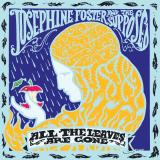
Could it be that the world is finally ready for the tempestuous folk-rock opera that is "All the Leaves are Gone?" In 2004, only the truly informed and forward-thinking heads "got" this mini masterpiece. Critics scratched their heads and usually resorted to comparisons of past artists, like ol Grace Slick and her Great Jefferson Society, Fairport Convention (but which era? SURELY Judy Dyble's early reign?), and at best, Shirley Collins. A few fans attempted to connect the record to even more obscure "freak folk/rock" like Mellow Candle, Fear Itself, or Trees. "All the Leaves are Gone" was made by unique personalities not concerned with influences or copying any bygone era. Surely, some things are in our DNA or even early childhood, as Josephine Foster's roots in opera manifest themselves as much as any other influence in this organic song cycle. Sure, guitarist Brian Goodman may have heard Richard Thompson before, but his alchemical and molten guitar spray is purely his own, in tunings and intervals still not meant for normal humans to understand, mostly because his 2004 guts were poured into every sublime note (I think even Brian himself never even understood how good he was). That fiery emotion is also in every nuance of Foster's songs--like life, there's disquieting, jagged moments of unease, and there's calm both before and after the storm. There are moments of utter gentleness along the journey---because yes, every concept album should be a voyage, and this is one everyone should take. - Steve Krakow.
expected to be published on 18.09.2026
- 01: Property
- 02: Dey Come
- 03: Tewogilige
- 04: Memsoh
- 05: Bemba
- 06: Ndelange-Taba
- 07: Nkaase
- 08: Leeda-Mampanga
- 09: No Tradition, No Africa
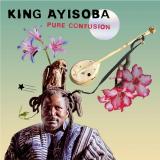
Pioneering Ghanaian musician King Ayisobareturns September 4, 2026 with his forthcoming seventh album Pure Confusion, recorded and produced by On-U-Sound’s Adrian Sherwood.
Ayisoba is one of Ghana’s most distinctive musical voices. The world’s foremost player of the kologo - a homemade two-string lute fashioned from a calabash and covered in goatskin - he delivers fiercely political and socially observant songs using three different voices, including the voice of his grandfather that possessed him as a child. Sherwood meanwhile is the pioneering British producer and founder of On-U Sound whose hugely influential career has connected dub, post-punk, industrial, hip hop and experimental music through collaborations with artists including Lee “Scratch” Perry, Mark Stewart, Horace Andy, Sinéad O’Connor, Nine Inch Nails and Depeche Mode.
Ayisoba and Sherwood first collaborated during a BBC Radio 3 Late Junction session at Maida Vale in 2017, organised by Ayisoba’s long-time collaborator Arnold de Boer/Zea of The Ex. The pair immediately connected, and during the pandemic, when Adrian’s long-time African Head Charge collaborator Bonjo Iyabinghi Noah was in Ghana looking for musicians to collaborate with Sherwood suggested Ayisoba, who eventually featured on two tracks on African Head Charge’s 2023 album A Trip To Bolgatanga (Bolgantanga is the region Ayisoba is from). Ayisoba then returned to the UK in late 2024 and travelled to Sherwood’s Ramsgate studio where the pair laid down the songs that would become Pure Confusion: “All the songs were already in my head,” says Ayisoba. “This album is all recorded live, over one afternoon. Adrian only plays live, and I like that. And he works hard - he doesn’t sleep. I woke up in the night and he was still working.”
“In my role producing it, I just let it roll to make a good vibe,” says Sherwood. “We recorded it completely live, did some programming and processing on some tracks, using dub techniques live on the mixing desk and adding some slick touches. We wanted the colours on the album to swing off what Ayisoba was doing, so we invited some friends to participate. Doug Wimbish (Sugar Hill Gang) arrived from America and lent his services playing bass on a couple of tracks; the wonderful Ivan Hussey (Celloman) played bass, keyboards and cello - cello is not really featured on African recordings so we thought it would be really cool to try it. I'd been working with Alex White (Fat White Family/Primal Scream) on my album (The Collapse of Everything) and so he added sax to a few tracks and I brought Alan Glenn down especially - Alan was in Little Axe but also Nine Below Zero and played in the Yardbirds – to add some mouth organ; Mark Bandola added a bit of flavour with his Juno, Ayisoba’s long-time Ghanian collaborator Ayuune Sule added some percussion and vocals and Matt Smith did some programming.”
“King Ayisoba is quite amazing, so unique,” Sherwood continues. “He’s got his own handmade instrument and three different voices - when you’re listening you think it’s three different people. He’s a breath of fresh air, full of love for the music which he wants to share with everybody. Some tracks we kept very straight and others we experimented with - adding dubby psychedelic little touches to trip you out a bit. The added production we did at On-U has given it a shine while still keeping it vibrant, live and spontaneous. I’m really proud of this record”.
On Pure Confusion, Ayisoba documents the anxieties, contradictions and changing social realities of contemporary Ghana. “Land is a problem for everyone,” says Ayisoba of the opening track “Property”. “If you don’t build on your land they will take it away. Plenty corruption in Ghana, plenty confusion. They sell the land to two, three, four people and then everybody fights.”
Elsewhere Ayisoba explores illness, spirituality and social stigma on “Bemba”, warning against hiding sickness out of shame or fear of “bad juju”: “People hide their sickness and the sickness kills them.” “Tewigiloge” reflects on cultural difference and open-mindedness encountered through world travel: “We will tour the whole world and we will see many things we may not like or understand… your eyes will see, but don’t talk - you have to be open-minded.”
Spirituality runs deeply throughout the album. Ayisoba’s grandfather was a respected spiritual healer whose presence the musician says still guides him today. “The grandparents’ spirits are the ones you can contact,” he explains of the spiritual chant “Nkaase”. “This song talks about the forefathers.” The closing track “Leeda-Mampanga (It’s Not My Strength)” acts as a statement of humility and gratitude: “You have to be humble, even if you have talent. God gives you the power.”
For more than two decades, King Ayisoba has been one of Africa’s most distinctive musical innovators, transforming northern Ghanaian kologo traditions into a bold contemporary sound rooted in hypnotic rhythms, social commentary and spiritual intensity. Since the breakthrough success of 2006’s Modern Ghanaians, Ayisoba has built an international following through acclaimed albums, relentless touring and collaborations with artists including Lee “Scratch” Perry, Orlando Julius and African Head Charge. Performances at Roskilde, WOMAD, Le Guess Who? and the Barbican have further cemented his reputation as a singular live performer and cultural force.
expected to be published on 18.09.2026
The follow up to her UK number 1 album This Is How Tomorrow Moves, the stark and striking fourth album by beabadoobee is named for the electricity towers that dot every major artery in the world—the strong, spindly structures that reminded Beatrice Laus of her connection to friends and family at home while she was staring down extreme disconnection and isolation on tour over the past few years.
The title can also be read as an allusion to Laus’ spiky, forceful new sound—the waves of distortion that crash and shatter across this record’s 14 songs mirroring the intense crackle you hear when walking under power lines. The pylon is also a fitting symbol for an album that reckons with the repetitive anxieties of your mid-twenties: What if I’m always going to be this way? What if life is just pylon after pylon on the road?
The album’s first single is available to stream and buy from today: “Sun Has Set” introduces Pylon as, in essence, a set of songs that began as diary entries, words that Laus thought she’d never be able to say out loud. “A lot of the songs on this record are things I wish I could have said to someone,” she says. “This song has this petty tunnel vision—it’s like, I hate you. You’re gonna stay here and listen to how much I hate you. Because I never got to say that.” The single comes accompanied by a striking first person video directed by Bea’s partner and longtime visual collaborator Jake Erland.
Ever a devotee of pure rock music—both as something to be cherished and something to be played with—Laus casts these feelings in songs that touch on classic grunge, midwest emo and ‘90s radio rock, zeroing in on a sound that is both harsher and more direct than any of her previous records. She says the music she’s loved has “always been an influence” on her music, and so for B4 she went straight to the source. A fair few of Beabadoobee’s composite influences contributed to Pylon, a fact that speaks to the goodwill and respect Laus has amassed over the course of her relatively brief career.
Hayley Williams sings on “Nothing to Prove,” a deeply anthemic indie-rock song about getting your power back from fairweather friends who just want a bit of your success. The moody “Powerlines” features a verse from Turnstile singer Brendan Yates, a master of matching vocal force with emotional nuance. Elsewhere, you’ll find contributions from Pinegrove’s Evan Stephens Hall, Deftones’ Chino Moreno, and Title Fight’s Shane Moran, as well as, on “Write Me A Letter”, production work from Laus’ longtime friends and collaborators Matty Healy and George Daniel of The 1975.
Beabadoobee will debut songs from the record on the Powerlines Tour, her first ever arena shows and biggest tour to date, taking in shows across North America, the UK and Europe this autumn-winter. The Powerlines Tour kicks off 1 October and includes stops at Madison Square Garden, The Kia Forum, The O2 and more (full routing below). Support comes from Wisp in the US, Canada and UK and Violet Grohl in France, The Netherlands, Belgium and Germany.
Born in the Philippines and raised in London, Beatrice Laus emerged as a British alternative music icon across three acclaimed albums and five EPs. She has garnered multiple BRIT Award and BBC Sound Of nominations, and won NME’s Radar award, whilst amassing over 10 billion streams worldwide and more than 12 million followers across her social channels.
This Is How Tomorrow Moves became her first record to reach number 1 on the UK Official Album Chart in 2024, following her Top 10 albums Fake It Flowers (which reached number 8) in 2020 and 2022’s Beatopia (#4). Earlier this year, beabadoobee released the one-off single ‘‘All I Did Was Dream Of You,” teaming up with Grammy-nominated best New Artist The Marías, the result of a longtime mutual creative admiration between María Zardoya and Bea.
Order now and we will order the item for you at our supplier.
Anders Hajem makes his space•lab debut with four cuts primed for dark rooms, deep forests and open skies.
Opening the EP, E44Z is a driving techno cruncher, pairing serrated riffs with soaring synth lines and relentless momentum. X66Y follows with a growling, psy-infused workout, weaving sci-fi textures through its propulsive groove. On the flip, A44Z tunnels deeper, its hypnotic groove rising and falling through the journey. Closing the release, the title track Absorbe strips things back with spacious, eerie sound design, understated percussion and a deep, rolling bassline that lingers long after the final beat.
Order now and we will order the item for you at our supplier.
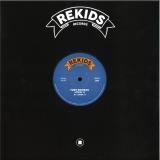
Fort Romeau debuts on Rekids with the ‘Lovin’ U’ EP.
The British producer's three-track release lands this September. London-based DJ and producer Fort Romeau arrives on Rekids with the ‘Lovin’ U’ EP, releasing 11th September 2026. Opening the release, the title track beams sunshine through 8-bit melodies and a repeating, hypnotic vocal shot through with tasteful echoes, all underpinned by a tight drum groove. ‘No Limit’ dives into more of that endless depth, its vocal sample floating over the groove as delectable piano keys bring the party. Closing things out, the Trip Mix of ‘Breathe’ eases the pace, snappy rhythms laying the foundation while dubby chords spring through a track built for daydreaming.
Fort Romeau, aka Michael Greene, has spent more than a decade shaping a sound that blends deep house, hypnotic techno and ambient influences. His productions have appeared on labels including Ghostly International, Running Back, Live at Robert Johnson, Cocoon and Permanent Vacation, alongside more than 100 remixes for a wide range of artists. As a DJ, he's contributed mixes to BBC Radio 1's Essential Mix, the Resident Advisor Podcast and Circoloco Radio, while his latest EP for Rawax became one of Juno's bestselling records of 2026.
UK underground heavyweight Ploy unleashes his second release on Dekmantel with a brand new four track EP. The release sees the dynamic producer continue to push the envelope with his own flavour of driving, sexy, Ploy house. Putting every ounce of his production prowess on show while proving yet again that Ploy is a force to be reckoned with both in the studio alike. Making tracks for DJs has always been the source of inspiration for Ploy and this is no different with each offering carrying its weight and then some. Straight up, no frills house music that oozes quality by doing the simple things well.
Kicking off the record is title track 'Glizzy', an arpeggiated tech house tool built for the hours that you lose yourself on the dancefloor. From the off Ploy puts his ear for percussive dynamism on show with the understated subtleties of this opener. Thematic sampling, nuanced arrangement and odd ball melodies combine to set Glizzy apart with a gentle nod to hot dog lovers worldwide.
The EP follows suit with A2 'Global Underground'. A contemporary progressive house roller, which rips through the atmosphere with melodic blasts, unrelenting groove, and a powerful bassline.
Offering an equally effective double B-side, B1 is 'Yesterday Now Tomorrow', which sees Ploy lean on his production mastery with entangled percussion and expertly dosed sampling. The result is a swinging heavy house burner that is truly greater than the sum of its parts.
Lastly on the EP is ‘SlowanDip’. A heavily swung, percussive chugger to warm up a dancefloor, paired with a bassline to test the system, this B2 closes out a stellar second showing on Dekmantel for Ploy.
The record arrives at the crest of festival season and is primed to soundtrack dancefloors around the world under the glistening Summer sun. Ploy has quickly carved out a reputation for his unmistakable, drum driven take on house music, and Glizzy only sharpens that identity further. Focused, effective and built with DJs firmly in mind, the EP captures an artist operating with total confidence, delivering four tracks that prove Ploy isn’t just part of the conversation, he’s pushing it forward.
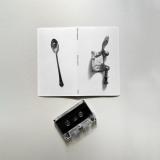
The newest sound suite by Night Foundation, the solo project of visual artist and Noir Age label owner Richard Vergez. Inspired by reality and light. Mental objects that traverse our minds in the form of sound. Things familiar, but new to your ears. Interest in the things left behind. Some were just accidents that fell on the tape. Manipulations of time.
A memory archive containing exposed wires, slightly broken machines, and those slow, morose moments in film or the happy accidents in dreams. Live, improvised sequences for liminal synths, one-string guitar, mutated trumpet, metal objects, drum box. That type of thing. Under the spell of Brussels, Leeds, and Berlin.
Night Foundation is a current collaborator with Little Annie and has releases on labels such as Psychic Liberation, Jungle Gym, and Amulet of Tears.
For fans of:
Bourbonese Qualk, Klaus Schulze, x.y.r., Tomaga
Limited edition cassette with Rispgraph cover and newsprint insert.
Set for release Sept. 11, 2026
expected to be published on 11.09.2026
- Emerald Pool - Pauline Anna Strom
- Superfici Riflettenti - Francesca Heart
- Living Mirror - Infant
- Hýdōr - Visible Cloaks
- Cosimo, Above a Waterfall - Les Halles
- Jäwrä - Shakali
- Overlooking the Lake, in the Mouth of the Grotto - Memotone
- Oh, to Be a Fountain - Eva Sajanová
- A River Song - Ursula K. Le Guin, Todd Barton
- Lunitidal Daydream - Marta Forsberg
- Pisara - Lau Nau
- Early Mist Dribbles Over The Grass - Feronia Wennborg, Lucy Duncombe
- Maré Vazia - Gonçalo F Cardoso
- Mannerjään sulaminen - Olli Aarni
- Chvíľku pred západom - Katov Syn(th)
- repository of dew - Perila
- At The Source - Miki Yui
- return - Bint Mbareh
- The Sky At The Bottom of the Well - Natalia Beylis
- μBqua - Natálie Pleváková
- silica pond - Giulia Rae
- The Cloud That Never Rains - Henrique Vaz
- Memory is a vapor - Home Baker, Plume Girl
- Coralline - Alexandra Spence
- Sub ondo - Eve Aboulkheir
- Utawai - Yoichi Kamimura
- Embrace - Liew Niyomkarn
- To a Trickle - usof
- The Pond - Slowfoam, Pablo Diserens
- Glitter Ice - sofi
- In-Out-Toad - ioa beduneau
- Water-lily Phase - Action Pyramid
- thereby losing the weightless delight of being swept along with it - Adam Badí Donoval
- Už prichádza - Adela Mede
- Tůně - Ursula Sereghy, Dorota Barová
- Legume Hydrosonics - Jonáš Gruska
- Angel Tears - Lamina
- Every Bottle Is A Flute - Hmot
- Surface Tension - Matthias Puech
- H2000: O - Forces
- Flurry at the Whirl-pull - Atte Elias Kantonen
- Seasick - Nikolaienko
- simulacrum - Lieven Martens
- supercritical fluids - Diane Barbé
- Statistique Synthétique aux Épaules de Cascade - Florian Hecker
- Under the white curtain - slyn
- Tap Water - Tomáš Knoflíček
- last waves of 2025 - Jules Reidy
- I Sink in the Sand - Koruth
- Mare Lapideum - Cheryl E. Leonard
- Dark Blue Nixie Spell - Andrew Oda
There is a pivotal scene in “August in the Water” (dir. Sōgo Ishii, 1995) where the surface of a pool turns into a stone wall. The water that gave the protagonist's life its meaning becomes a threat. As you fall through this stone wall, you appear in a set of underwater coral-reef corridors, and one of the most beautiful musical themes begins to play: Aquatic Ambience, composed by David Wise for Donkey Kong Country (1994). It's a theme that represents the weightless vibe of your new deep-sea life, where you go about your mundane errands, collecting bananas while driving on a swordfish, or, as HerzMayhem put it: "Poor monkey... always swimming, never going anywhere..."
Synthetic Water Music is the second of three compilations, following Synthetic Bird Music and timed to mappa's 10th anniversary. As with the birds, it gathers friends of the label, artists who have released with mappa or played our shows. Most of the music is new, made to measure for this compilation, much of it from Central and Eastern European hands. Birds and water mix well, so please feel invited to play them together, creating your own environments.
Where the birds were in one flock, water is dispersed across four chapters. You live your life as a droppity drop: vapour in the heavens, condensing in clouds, falling into a swamp, trickling into the deepest sea.
Tlālōcān (Cassette 1, Side A)
A place of eternal spring, of aquatic energy that nourishes everything and allows all things to bloom. Bubbly and splishy-sploshy, it is full of dripping sounds and moist caverns (“Emerald Pool” by Pauline Anna Strom), a landscape filled with living fountains (“Oh, to be a Fountain” by Eva Sajanová) and winding streams that flow through the area, forming part of its organic architecture. It is also a paradise reserved for those whose deaths were water-related, where the aquatic and terrestrial beings live in symbiosis and perspectives shift rapidly, from observing a single droplet (Shakali, Lau Nau) to dew (Feronia Wennborg & Lucy Duncombe) and on to flowing currents (Visible Cloaks) that gradually transform into river music (Ursula K. Le Guin & Todd Barton).
Nephelora (Cassette 1, Side B)
A celestial anti-gravity sound world made of evaporation, steam and the formation of clouds, as if looking at “The Sky At The Bottom of the Well” (by Natalia Beylis) or at “The Cloud That Never Rains” (by Henrique Vaz).
If a cloud never rains,
it is not a cloud at all, but a veil that parches the earth with its gaze.
It generates only its own shadow —
a looming mass of suspended longing,
a sky that hoards but never yields,
a reservoir that swallows every river and returns nothing but echoes.
The water in this world is often invisible but sometimes all the more present, as Bint Mbareh describes it: “Recently been obsessed with invisible waters because I come from a place where you have to imagine the water is there even though you cannot see a river, a sea, usually no rain, so water is in the air, the voice and the imaginal realm, drought is imagined to be negotiable.”
Žaboglach Zha-bo-glahch (Cassette 2, Side A)
A fusion of Scottish lochs and Slovak ponds: a misty, foul-smelling, swampy realm, the kind of place that swallowed Artax from The NeverEnding Story. Stagnant waters full of decay become a blooming habitat for sirens (“thereby losing the weightless delight of being swept along with it” by Adam Badí Donoval) and beings straddling the line between fauna and flora, inventing their own communication systems (“Water-lily phase” by Action Pyramid).
R'lyeh (Cassette 2, Side B)
A brooding sunken city at the bottom of the ocean. It’s a journey to get there. Let this chapter guide you, from the shore down to the depths, to the gates of an unexplored world that is inherently dark, unfathomable, and beyond the limits of human perception: starting with seasickness ("Seasick" by Nikolaienko), passing through a classic Poe-esque maelstrom ("Flurry at the Whirl-pull" by Atte Elias Kantonen), a gateway into the darkness and emptiness of the ocean floor, and finally traversing the city itself (“last waves of 2025” by Jules Reidy).
But what is pulling you to a place like this that only a few explore and even fewer leave? Maybe “the darkness that water can contain, the expanse of things we don't know and that can trigger fear instincts even as we try to rationalise them and think we are in control of the rest of nature” (“supercritical fluids” by Diane Barbé).
Dive in and surface wherever you like. Always swimming, never going anywhere. Just don’t forget to take water breaks.
P.S. Birds, then water, can you guess what comes next? Synthetic Soil Music, an elegy for insects and worms? Synthetic Glaciers, or maybe Pollinators? Which sounds would you miss the most if they disappeared? Or what if the third one never comes at all, and somebody, or something, makes Synthetic mappa Music instead. Don't you worry, with the right training data, it can all be replicated, better than the real thing.
expected to be published on 11.09.2026
"Lados B" is a deep dive into the high-level spontaneous music made by Villarreal, Parker, and Butterss across those two days in 2020. Villarreal is heard leading the group through various rhythmic modes and structures for improvisation - flow as informed by the Latin funk of Fania Records as it is by the otherworldly humanity trance of Brain Records - while Parker and Butterss draw on their extensive experience playing free together (as heard on their ETA IVtet LPs) to build harmonic buoys for their spontaneous melodicism. The result is a beautifully vivid illustration of context, creativity, and collective composition from a particularly rich moment in history.
Order now and we will order the item for you at our supplier.
2026 Repress
Shep' is a new project from respected UK veteran Jay Shepheard. He debuted it with the inaugural release on his People Pleasers label last year and backs it up with more heady fusions of dub, minimal and house. 'Smiling Beaver' has tight drum patterns and dusty hi-hats but nice woozy vocal smears and jangling synths that keep things organic. 'Honey By The Pound' is a perfectly aged tech house cut that throws it back to the 90s and hits like Fresh & Low, while 'Fur Burger' gets a little more direct but keeps a playful charm with tin-pot percussion, cheeky whirring motifs, bleeps and balmy vocals. The closer, 'Good Schit,' is another colourfully infused late-night tech house sound that balances motion and emotion perfectly.
Order now and we will order the item for you at our supplier.
Lily Allen’s era-defining iconic debut album Alright, Still celebrates its 20th anniversary with this limited-edition picture disc. Housed in a gatefold sleeve with silver foil featuring new anniversary artwork, the tracklist includes the hits 'Smile', 'LDN', 'Alfie' and 'Littlest Things', plus the bonus track 'Nan You're a Window Shopper'.
expected to be published on 04.09.2026
Eden Samara grew up in the mountains of western Canada, writing folk songs and performing in the theatre. Following a trip to Europe where she had her first formative clubbing experiences, she relocated to London in 2019 where she’s become a consistent presence and voice in the city’s underground, collaborating with artists like Parris, Ciel and Loraine James and earning praise from The Guardian, Pitchfork, Rolling Stone, Crack and DJ Mag.
2022 saw Eden release her debut album Rough Night on Local Action, blending freaky club-pop, introspective R&B and more while collaborating with leading scene figures TSVI, Call Super and Shanti Celeste. Described by Dazed as ‘an embarrassment of riches’ and by Mixmag as one of the best albums of the year, in Eden’s words it was simply ‘a tragicomedy in seven scenes and an interlude’. She’s downplaying things: to us it was a rich tapestry that explored everything from fleeting moments in smoking areas to the Madonna-whore complex. Both, for better or worse, still make the world go round.
On her second album Odyssey, Eden brings more elements into her ensemble (jungle, choral singing, live harp) while honing her song-writing – it’s an expansion and a tightening at the same time. Inspired by epic literary works like Homer’s Odyssey, The Alchemist and The Picture of Dorian Gray, the album reimagines the archetypal quest through a personal lens: a healing journey amid the collapse of close relationships to addiction, mental illness, and the weight of codependency disguised as love. In Eden’s words: 'This work is a narrative and sonic expedition - part myth, part memoir - that traces my path through the emotional aftermath of watching loved ones struggle with drug addiction and mental health crises, and the impact it
had on my own mental wellbeing. The album addresses substance abuse, toxic relationships, and the internalised belief that love must come through sacrifice, even at the cost of one’s selfhood.'
For this special release, Barcelona’s Lapsus and London’s Local Action join forces for the first time in their respective journeys, reflecting the affinity between both platforms and their shared vision of contemporary electronic music.
expected to be published on 04.09.2026
Long Slow Distance is an album about finding peace, and making peace where it can’t be found. It’s inspired by change, grief, acceptance, forgiveness, love, and running.
Dawson began running around the same time he started making records. At this point it’s unclear where one practice ends and the other begins. The album’s title has become the ethos he’s embraced for all things in life.
Long Slow Dance unravels the woven collage of his previous work. Here each song consists of three long guitar takes, panned across the stereo-field with minimal overdubs. “I remember my grandmother always kept a rain barrel on the farm. Just a simple vessel that served as a means for gathering water for the garden and the flowers. I wanted to instill that sentiment on this record. Other than some panning and recreational EQing, the computer was just a vessel to gather sounds.”
There is a distant grace to the album. A soft expanse, a quiet contrast. Guitars dissolve and then recalibrate. Sparse melodic motifs bloom and fracture. Warm chords clash and make amends. Alpenglow textures shimmer against tones that feel weathered by salt air. The songs are lightly propulsive, yet drift at a glacial pace. Fields and artifacts ground the material, like keeping your eyes on the horizon. Long Slow Distance feels intuitive, sentimental, and like Dawson is one step closer to whatever distance he is chasing.
Downloadable Assets
expected to be published on 04.09.2026
- 1: So May We Start (Live On The Moon)
- 2: Do Things My Own Way (Live On The Moon)
- 3: Reinforcements (Live On The Moon)
- 4: Academy Award Performance (Live On The Moon)
- 5: Goofing Off (Live On The Moon)
- 6: Beat the Clock (Live On The Moon)
- 7: Please Don't Fuck Up My World (Live On The Moon)
- 8: Running Up A Tab At The Hotel For The Fab (Live On The Moon)
- 9: Suburban Homeboy ("Ron Speaks" Version) (Live On The Moon)
- 10: All You Ever Think About Is Sex (Live On The Moon)
- 11: Drowned In A Sea Of Tears (Live On The Moon)
- 12: JanSport Backpack (Live On The Moon)
- 13: Music That You Can Dance To (Live On The Moon)
- 14: When Do I Get To Sing "My Way" (Live On The Moon)
- 15: The Number One Song In Heaven (Live On The Moon)
- 16: This Town Ain't Big Enough For Both Of Us (Live On The Moon)
- 17: Whippings and Apologies (Live On The Moon)
- 18: Lord Have Mercy (Live On The Moon)
- 19: The Girl Is Crying In Her Latte (Live On The Moon)
- 20: All That (Live On The Moon)
Following last year's world tour, Sparks were invited to perform a one-off show on the Moon - the first band in history to do so! Includes an introduction and outro from Cate Blanchett, who accompanied the band on their lunar trip.
Sparks Live On The Moon comprises a full live set of twenty songs spanning the band's 54 year career, including 'This Town Ain't Big Enough For Both Of Us', 'The Number One Song In Heaven', 'When Do I Get To Sing "My Way"', 'The Girl Is Crying In Her Latte' and songs from their most recent album MAD!
expected to be published on 04.09.2026
- 1: Wall of Skulls
- 2: Sanguine Reality
- 3: Hymns of a Calcified Warpath
- 4: Soul Sutra
- 5: Death Knel
While the sterile “professionalism” of some heavy bands can be like a clinical drone strike, Texas-based Judiciary feels personal. Like close combat with a knife. And it’s all in their chemistry. Judiciary is an amalgamation of four guys raised in the intersection of metal and hardcore—all devoted to pushing their craft further. Across two esteemed LPs, the band has proven their worth as a crucial entity in the crowded heavy music scene by evolving their sound further and further with each release. And now with the band’s latest Stalagmite Angels, due on September 4th via the venerable Closed Casket Activities, Judiciary can further showcase their status as a crucial, one-of-a-kind part of the evolution of hardcore in 2026. Life changes can bring about chaos and seismic shifts, but if Stalagmite Angels is any indication, then it’s all for the better. In the wake of the release of Judiciary’s second LP Flesh + Blood, the band called upon Juan Vazquez to pick up guitar duties, thereby changing the internal framework of the band for good, and unknowingly for the better. It’s this pivot in personnel that resulted in the band’s latest EP. “The goal with this EP was a hard reset, but we also wanted to chill the f— out a bit, have fun, and do something that felt true to the four of us,” recalls drummer Austin Looney. “We wanted time to reconfigure things and let the music come naturally–temper this new mindset that we've adopted post-Flesh + Blood.” Judiciary’s greatest strength lies in their musical singularity. Though Stalagmite Angels represents the collision of influences from across well-worn territories like metallic hardcore, death metal, black metal, d-beat and more, it’s the Lubbock-born band’s approach that makes it distinctly their own. Stalagmite Angels is a wholly new document that resembles a horde of bands ranging from Hatebreed to Carcass to Slayer to Iron Age, yet never aping any single band nor even revealing any single influence. It’s all familiar but none of it is specific. “90s hardcore and hardcore in general is always gonna be our natural inclination, but it manifests with different elements not only from song to song but within each song,” says vocalist Jake Collinson emphatically, who learned guitar specifically to help with writing new material. “Whether that’s Dying Breed or Cannibal Corpse or Crowbar or Machine Head or any number of other influences that any one of us may have, it all manifests in our work, and through our individual and collective lenses. With this EP, we transformed those ideas into the Judiciary approach.” Stalagmite Angels is an EP about anger at the world, belief in yourself, and how harnessing both in the pursuit of growth is necessary to achieve. But furthermore, it’s a concept record that envisions a subterranean world in both a literal and metaphorical sense—where hidden beauty lurks in the shadows (and in the eye of the beholder) and where triumph manifests in the ability to rise from the depths and into the world above.
expected to be published on 04.09.2026
- 1: Circling The Church
- 2: The American Dream (As Seen On T.V)
- 3: Butterflies Discotèque
- 4: The Wall Has Fallen
- 5: In The Black Forrest
- 6: Shopping On A Saturday Afternoon In Manchester
- 7: Secret Bunkers Under Civic Centres
- 8: Polaris (U.K Nuclear Programme)
- 9: Clear Skies On The Lows
This is a concept record that reflects on events that have had a calculable effect on a generation:
‘’By 83 and 84, it felt that nuclear war was going to happen. Not could happen but was going to.’’
Stephen Brotherstone
"What would you do in the event of a Nuclear war?"
I remember having discussions about what we would do when we heard the four minute warning siren. We would raid the sweet shop. I was 8 or 9 years old. The absurdity of this vivid memory encapsulates the concept of the record. It would take at least four minutes to get to the shop!
The record starts with an early memory of circling a church on a Raleigh Budgie (the smaller lesser known iconic Chopper bicycle) in 1981 and ends with staring up at a clear sky on Oldham Lows in 1990.
The record identifies and plays with the effects of an underlying fear of oblivion on a generation of children, but also society as a whole: The pieces take in media and government propaganda. Machinery (nuclear submarines) and buildings (nuclear bunkers) but also everyday activities of the civilian population, activities such as shopping, clubbing and staring at the sky. Thematically, the record is made up of personal memories mixed with historical events.
Instruments are mainly from 1980s. DX7 and 808 feature predominantly. The pieces feature numerous melodic motifs that develop and intertwine underlying ideas of espionage and layers of secret messaging. It also mirrors the ways in which governments and civilians interact. Decisions being made in the name of defence whilst people go about their daily lives. I am exploring the everyday experiences of the masses whilst major political decisions are taking place. For example, shopping on a Saturday afternoon versus heated Cold War tensions in 1983.
Although taking place conceptually in the years 1979-1991, this record mirrors current events. History repeating. It also mirrors the helplessness or maybe some oblivious everyday normality state that we adopt as a community whilst major political decisions are being made.
The idea that life goes on oblivious to larger scale politics, or on the other hand, the idea that we are all very aware but in a state of unreal normality. Adam Curtis goes into great detail about such things in his film 'Hyper Normalisation'.
expected to be published on 04.09.2026
- 1: An Die Musik
- 2: Der König In Thule
- 3: Verschwiehene Liebe
- 4: Die Schwestern
- 5: Wehmut
- 6: Auf Einer Burg
- 7: Nähe Des Geliebten
‘A Wolf In Sheep’s Clothing’ (2006) is an unusual album, first because it does things with classical music that aren’t usually done. The songs Josephine Foster sings here are classical pieces, written (the texts are German poems) by some of the greatest German composers of the 19th century, Franz Schubert, Robert Schumann, Johannes Brahms, and Hugo Wolf. “Foster has found perhaps the most appropriate vehicle yet for her singular and affecting talents – 19th century German art-songs, wholly reconstructed here via Foster’s skeletal arrangements of voice and guitar” Pitchfork. Remastered and repackaged with new artwork.
expected to be published on 04.09.2026
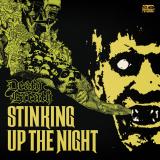
- 01: Death Breath
- 02: Chopping Spree
- 03: Heading For Decapitation
- 04: Dragged Through The Mud
- 05: Coffins Of The Unembalmed Dead
- 06: Morbid Mind
- 07: Reduced To Ashes
- 08: Christ All Fucking Mighty
- 09: Flabby Little Things From Beyond
- 10: Cthulu Fhtagn
Limitierte hellgrüne Vinyl-Version! Death-Metal-Sensation mit dem ehemaligen NIHILIST-/ENTOMBED-Mitglied Nicke Andersson am Schlagzeug und an der Gitarre. Die Mitglieder von Death Breath spielen bzw. spielten in Metal-Bands wie Runemagick, Deathwitch, Nihilist, Entombed, Ruthless Mausoleum und Grinderbitch.
expected to be published on 04.09.2026
- 1: Down in Flames
- 2: Rise Up
- 3: Chemistry '88
- 4: The Power
- 5: Overcome With Love
- 6: Famous Last Words
- 7: Vocal Collage
- 8: Hand Me Down
- 9: Maths
- 10: Be More Pacific
- 11: Minimal/Maximal
DESCRIPTION
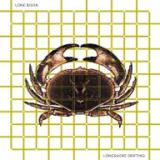
Lone Bison / Nick Bonell lives by the sea in Ramsgate. Mainly a guitar player and pedal freak, Nick bought a used Korg MS20 and fell in love with synths. As one half of Stuntmen, Nick released the sample-heavy single 'You're the Beat Find' on the groovy Tummy Touch label, which led to him scoring three Ford adverts in the U.S and a few pieces of well-used production music - which paid for more synths and pedals!
An album, 'Transistor Memory' and single 'Drugs' came out via Dom Martin's brilliant Polytechnic Youth records in 2021. "Wave Construction" was released by Castles in Space in Autumn 2023. An album for the CiS Subscription Library entitled "Mechanical and Electrical" was released in late 2024.
Nick Explains: "After recording "Transistor Memory", "Wave Construction" and "Mechanical and Electrical" pretty much back-to-back, I wanted to change my sound palette a little. I started programming my Hydrasynth Explorer in obsessive detail and was also drawn to using my voice, in a sampling kind of way at first. Sampling my voice then shifted into recording more straightforward vocals and writing proper songs again. "Rise Up" started as a field recording in my local park and then some wonky piano loops with a cheap mic – somehow a song arrived. I’ve always really liked really concise records, so I got interested in packing lots of synth textures into a three-minute pop song. As the record progressed, I did less leaning on vocoders and harmonisers and developed the courage to just do more up-front vocal mixes. Things like Maths and Minimal / Maximal are more groove-based and came from recording 20 minute drum tracks then jamming bass guitar over it then editing it all down and adding loads of synths. Oh, and there’s a bit of James Williamson era Stooges at the end of Minimal / Maximal – I was a bit nervous about playing garage rock guitar on a Castles in Space record but Colin told me I would be ‘fucking mental’ if I didn’t end the record with it."
Lone Bison's music is influenced by Krautrock, electronica, post-punk, soundtracks, a splosh of modern classical/minimalism and post-rock. He's a hot genius.
The album is preceded with "The Power" which will be available on streaming platforms as well as on our Bandcamp for those who want to listen or pre-order the album. There's a fantastic remix from MAPS included as well.
expected to be published on 04.09.2026
“Ruins are the style of our future cities, future cities are themselves ruins.” - Izosaki Arata
A note from Lawrence English: Nostalgia is not an ideology, though in this moment, we could be mistaken for thinking it might be just that. Over the past years, the idea of nostalgia has been filtered through various political and technological lenses and has become a tool used for forgetting, rather than remembering. Instead of embracing histories’ complexities and inconsistencies, this version of nostalgia seeks only singular recollection. This contemporary phenomenon of nostalgia has become a methodology at best, and a weapon at worst, used to erode the past and project forward a collapsed and unimaginably sanitised version of things, places, and ways of being from former times. It’s this projection that sees it playing a mounting role in a social pathology associated with reducing the imagined possibilities of future.
The Rest Is My Ghost is a record that interrogates the manifestations of this reductive futuring and celebrates those that have tried (and failed), and those who continue to push back against decayed and revisionist positions. It’s a record that considers the weaponisation of nostalgia for the purposes of cloaking possible futures.
In recent times, I’ve proposed a term for this weaponised use of nostalgia, something I have called Acid Nostalgia. I offer it as a shorthand to describe the de-contouring of the future through a corrosive fixation on a flatten rendering of the preceding times. It is, in part, a certain type of lazy cultural scripting where tropes of the past are presented in the absolute, as empty pictorials; photocopies without any original from which to draw actual meaning, or useful detail.
Acid Nostalgia describes an increasingly common political projection of nostalgia that exists without any subjective connection to the memory surrounding and contained within it. Like acid poured onto a surface, this use of nostalgia seeks to erodes and smooth out the complexity and texture of lived connection and longing, which has until recently guided contemplations of nostalgia. Acid Nostalgia instead erases the texture of histories and de-contours the past, and in doing so dematerialises the horizon of possibility, which by its very nature marks the beginning point for any (and all) imaginable futures. Acid Nostalgia is a dreamless screen, where uncertainty, restlessness and aspiration are subjected to corrosion, breaking down and neutralising the wellspring of futures which are birthed from within the ambiguously charged, complex and at times chaotic atmospheres of the present.
The Rest Is My Ghost is not however some universal reading of these things and happenings. Rather it draws its breath from a very personal pathway carved through my own fraught experiences of nostalgia and framed through a disparate collage of chance encounters, situations, places and provocations. It takes oblique notes from civic and architectural references such as Japan’s Metabolist movement, Hong Kong’s ‘one line sky’ and Los Angeles’s vanished Sodium Vapour lights. It interpolates texts – factual and fictional – by authors such as Franco Berardi, Kate Crawford, JG Ballard, Katsuhiro Otomo, Mark Fisher and Alexei Yurchak who have each so wonderfully sought to rupture the familiarity of now, and push us towards other ways of imaging ourselves, our surroundings and our very ways of being in this world.
I also owe a debt of thanks to Adam Curtis in helping launch what has become this edition. It was his provocation, in a conversation we shared about an overwhelming and profound sense of uncertainty around being able to predict the immediate future and how to respond to that, which sparked the earliest inklings of this edition.
The Rest Is My Ghost is ultimately a record about the promise of constructions and connections to come, material, social and political. It's a record that accepts the fragility of failure as a source of ultimate potential, and a position from which the deepest freedom of imagination might be sought and summoned forth to conjure even the most unimaginable, (but) possible futures.
Order now and we will order the item for you at our supplier.
Amelie Lens' debut album 'AURA' is the first full-length studio album to come from the Belgian artist despite being one of the most respected and sought-after acts in electronic music today.
Of the album, Amelie says:
"'AURA' is my story. Aura is about the connection between the crowd and me. Music has always been my escape, my way of turning my emotions and energy into something new. When I was younger, I would disappear into nightclubs and create myown world in my head. Being in the nightclubs gave me this feeling of belonging somewhere, I felt connection and freedom I had never experienced before. That feeling changed my life completely. So this album really reflects that whole journey. From playing tiny local clubs and driving myself through the night for gigs, to standing on huge festival stages, becoming a mother, building EXHALE and learning how to balance it all in life.
I wanted 'AURA' to feel emotional but still powerful, uplifting but raw. From big festival tracks to the trippy tracks I'd play at 4am at RSO. Although making this album is one of the biggest things I have ever done in my life, I wanted to keep it light and somehow playful. Because that is also how I am as a person. This is the most honest version of myself I've ever shared. I hope it brings some light, happiness and connection to others as it does to me. Because Aura is and always will be about my connection to you."
The album will consist of 11 brand new tracks, all produced by Lens - with one stellar collab, who will be announced in due course.
Order now and we will order the item for you at our supplier.
Manonmars’ 3rd album sees him at his most amorphous and psychedelic, at points sharper and laser focused, and at others more blurred and impressionistic than his previous records. Many of the core players remain the same, all of the production is once again handled by O$VMV$M (the duo of Neek and Amos Childs of Jabu) while Paulina Korobkiewicz (also of Young Echo) makes a return handling both the album’s cover artwork and contributing a series of diaristic field recordings and voice notes.
‘The project references movies, cartoons, fictional characters and video games, among other things. The album title is open to interpretation but all of these elements are forms of visual entertainment which have their own unique ability to transcend things like language barriers and cultural divides. The visual element is key because those details bridge the gap on a communicative level.’ - Manonmars
The album blends abstract, blurred braggadocio with more immediate personal details such as on ‘Volcanic Shield’ a posse cut of sorts featuring Bristol improv luminary Dali de Saint Paul and Franco Franco (½ of cyborg rap duo Kinlaw & Franco Franco) - where Mars recalls;
‘Memories of brighter days, happy meal hit the spot
Mum was spinning vinyl playing Super Ape or Pressure Drop
I would spend the weekend with the Turkish mandem on the block
single parent household, mum was studying or on the job
money came and went always was an on and off
made it back from school time to see what’s on the box’
The beat fades away to leave one of Korobkiewicz’s recordings of Mars’ mum talking about her life in London in the 80s, spending her money on reggae records as an ambient chord fades in like an echo of a jungle intro – stretching out as a link between generations of UK music.
The production by and large is brighter and more kinetic than earlier Manonmars records – with O$VMV$M drawing on everything from modern underground rap and drill through to jazz and acid ambient passages.
London is also a central character here, bustling and constantly shifting, either when bleeding in through field recordings, or as an ever-present backdrop in the lyrics;
‘I’m a fusion of Tippa Irie and Topper Harley
Hit the target like the black Atari
I dropped a tab now shit’s A Scanner Darkly
Got the munchies, Imma yam a sarnie
Pour the Wray and Ting like man at Carni
Exit Peckham Rye and turn left, walk past Hannah Barry
Get your (w)raps up like its January’
‘I've always considered London my home, despite spending some time in the South West of England too. My mum had been living in London for 25 years (...) That was a pretty big deal in some ways because it removed us from multicultural society during the period which overlapped with my teenage years. (...) I never got used to how quiet it was in the countryside (...) Bristol was the closest city to where we lived and it was through travelling there and making connections that I became involved in making music and playing gigs.’ - Manonmars
Mars’ practice as a painter (under his given name Jack Martyn Richardson) and photographer also loom heavy over the album, he cites Paul Verhoeven, Abdul Mati Klariwein and H.R Giger as influences – as well as Miles Davis, Drakeo the Ruler and DJ Rashad.
As with much of Richardson’s work the raps at times feel blurred to a point of almost inscrutability, creating a distance between the audience and himself. A process that ties into his visual work and the way he experiences the world as mainly abstract colour without his glasses. He explores this further in an ongoing visual collaboration with Korobkiewicz, ‘Fun and Games’ which serves as a visual archive of one of London's largest and oldest travelling fairgrounds.
‘I was diagnosed with very severe short-sightedness at the age of seven. I remember my early formative years as visually blurred. Some of my photography reflects this experience of partial vision and uncertainty, referencing memory and perception rather than fixed representation.’
Manonmars’ first public outing as a rapper was at a Young Echo radio event, broadcast shambolically from a practice room just off Jamaica street, Bristol in 2011, as much as things have moved on both stylistically and in terms of focus - strong links back to the city remain a key foundation throughout the collaborations and guest appearances.
‘I have no problem with being an outsider looking in. One of the things I enjoy about London is the anonymity (...) it's easy to be a stranger here when so much is happening. I feel like thats more valuable than people may realise.’
expected to be published on 31.08.2026
Order now and we will order the item for you at our supplier.