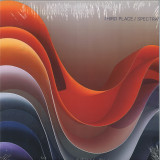
Third Place is a collective of old friends who bathed in the London electronic music scene for two decades together. Now spread across Montreal, Frome and the Lake District, they collaborate on multiple projects and started the Cabane Musique imprint as a vehicle for their music.
The A-side hosts title track Spectral. A shimmering Balearic sunrise anthem that sounds as if it’s always been here. A natural set closer that will immerse the early morning dance floor in a euphoric rush of hopeful wonder.
Flight kicks off the B-side, sending the listener towards the stars with flickering percussive flourishes, beautifully deep bouncing bass line and rich pads. Music for psilocybin-infused forest parties with the Milky Way piercing through the canopy.
Last we have BenDen’s Hierbas Mix of Spectral which stays very much on the Balearic tip. They slow things down for a lush and tripped out affair.
Cerca:third place
Zweifelsfrei prägt Fritz Kalkbrenner den Sound einer ganzen Generation und bringt Dancefloors weltweit zum Beben. Nun kehrt er mit seinem neuesten Album Third Place zurück, welches zweifellos eines der ambitioniertesten und künstlerisch anspruchsvollsten Werke seiner Karriere ist. Mit Third Place nimmt Fritz Kalkbrenner seine Zuhörer mit auf eine tief immersive Reise, die die Schnittpunkte von Musik, Gemeinschaft und Selbstfindung feiert. Das Album schafft eine perfekte Balance zwischen euphorischen Höhepunkten und introspektiven Momenten. Inspiriert vom soziologischen Konzept des „Third Place“ – Orte, an denen Kreativität und Gemeinschaft aufleben – verkörpert das Album die Freiheit und emotionale Befreiung, die man in Clubs und Räumen der Gemeinschaft findet. Im Mittelpunkt des Albums stehen mehrere bereits vorab veröffentlichte Singles. ”Into the Night” hat bereits mit seinen erhebenden Chicago-House-Akkorden und dynamischen Grooves die Dancefloors weltweit erobert. Der Track fängt die Euphorie der Clubkultur perfekt ein und kombiniert Fritz Kalkbrenners gefühlvolle Stimme mit einem unwiderstehlichen Groove. Ebenso beeindruckend ist ”The Telepath”, das nostalgische Warehouse-Vibes mit treibenden Breakbeats verbindet und die energiegeladenen Live-Sets von Fritz Kalkbrenner widerspiegelt
Sangre Voss returns with the idiosyncratic ‘Brogkl EP’ this March, marking five years of Third Place.
In the five years since his debut ‘Dance Class’ 12” on Will Hofbauer’s Third Place in 2019, London-via-Devon producer Sangre Voss has continued to melt minds and confuse dancefloors with his singular, head-turning productions. Having featured on Rhythm Section and Fabric Records, he’s also appeared on The Wire’s Below The Radar compilation series and on labels Control Freak, International Extraterrestrial Music, and more.
Here though, the label’s main gun returns with four curious and brilliant productions. ‘Smyyre Myyrgu’ leads with folky strings and stabs as chunky percussion and mystical pads unfurl throughout. ‘Ersatz Terrasse’ is a floaty slow-fast affair, sliding through bright keys, skippy drums, and otherworldly effects.
On the flip, ‘density of aha’ sees trippy, sluggish vocals and punchy drums combine, forming a bedrock for twisted, randomised synths. The title track ‘Brogkl’ turns up the heat with wonky leads, heavy low end, and wild guitar-like twangs to close out the record, ending another essential offering from the thrilling and always unique musical mind of Sangre Voss.
Yetsuby lands on London label Third Place with her 'Water Flash' EP this July.
Seoul-based artist Yetsuby is best known as one half of electronic super-duo Salamanda, who have won hearts and minds with their light and floaty new-age electronica via releases on Good Morning Tapes, Human Pitch, and Métron Records. As a solo act, she has released her own music on the Taipei-based 禁 JIN as well as through the Seoul store The Internatiiional amongst self-released delights on her Bandcamp.
Turning to Will Hofbauer's playful Third Place imprint for her latest 12', Yetsuby delivers four bubbly tracks. On the A-side, the title cut 'Water Flash' leads with airy synths and textured percussion, while 'Electro Union' ups the energy with choppy vocal samples, punchy drums, and twinkling arps. On the flip, subtle synths wriggle alongside low-key percussion on 'Commercial Noisy Day', making for a heads-down affair, before the gorgeous finalé '물먹는하마' rounds out the B-side with delicate keys and detailed yet muted drums.
DJML & Jerod S. Rivera debut Later Version project with ‘Swim Domain’ EP on Third Place
Later Version is made up of Oakland-based artists Dan Letson and Jerod S. Rivera, whose debut EP lands on London-based Third Place this April.
Across the 12”, the duo’s natural flair for hi-res IDM-tinged electronica is on full display, with four colourful and playful originals accompanied by a stellar (digital only) remix from Jacktone co-owner, Dark Entries and Tartelet Records affiliate, and Beats Unlimited member Doc Sleep.
Third Place captain Will Hofbauer steps up to the plate with 3 freshly laid eggs of barn-storming oddball dance music for night clubs.
Early support for the A side coming from Hessle heroes Joe & Ben UFO.
Giddy-up!
- 01: Maanitus &Amp; Tšiižik
- 02: Markka
- 03: Melkutus
- 04: Letška
- 05: Kuuen Parin Hoirola
- 06: Brišatka
- 07: Tšiižik
- 08: Kirkonkellot
- 09: Kirkonkellot Korkea
- 10: Hoirola, 3 Parin
- 11: Lippa
- 12: Kyngäkiža
- 13: Ristakondra
- 14: Vanha Polkka
- 15: Viistoista
- 16: Vanha Valssi
- 17: Kiberä
- 18: Maanitus Kuokan Kanteleella
- 19: Tuuti Lasta Nukkumahe
Vinyl[22,65 €]
Death Is Not The End present a further volume of Arja Kastinen's eerie amalgamations of 110 year old wax cylinders with her own meticulously transcribed takes, this time focussing in on Armas Otto Väisänen's field recordings of kantele player Iivana Mišukka (b. 1861 d.1919).
"Ivana Mišukka (1861–1919) was one of the Karelian kantele players recorded by the folk music researcher Armas Otto Väisänen on wax cylinders in 1916 and 1917. In the early 20th century, the remote areas of Border Karelia were undergoing the final phase of a transformation in musical culture, with the ancient runo song tradition giving way to newer forms of music. This transition is reflected in Mišukka's repertoire and choice of instrument. The ancient small kantele, hollowed out of a single piece of wood, was already rare at the turn of the century. Mišukka's kantele was a new type of instrument with 26 strings, constructed of several parts, but he played it using the traditional plucking technique. Like other Border Karelian kantele players, his repertoire consisted of music rooted in runosong culture, as well as newer dances and songs from the east and west. Most of the recorded material falls into the latter category.
Ivan Bogdanov Mišukka was born out of wedlock in Suursara village, Suistamo, on 1 May 1861. He began playing the kantele at the age of five or six, quickly mastering the instrument. In adulthood, he was considered one of the area's best master players. Mišukka was landless for most of his life and lived in different parts of the Suistamo parish. His first wife, Tekla Markintytär, died in 1897 at the age of 40, and his second wife, Jevdokia Filipintytär Jeminen, died in 1907 at the age of 50. Seven children were born from the first marriage, two of whom died young. The third wife, Maria Ignatintytär Gurnan (Kuurnanen), was a well-known master of lamentations. Together with Maria, Iivana Mišukka worked as a tenant farmer in the village of Suursara. Mišukka suffered from rheumatism, which prevented him from participating in physical work like Maria. This was apparently partly the reason why Iivana Mišukka went to earn extra money by playing the kantele on gig trips. He often had other traditional artists from Suistamo as his travelling companions, such as the runosingers Konstantin Kuokka and Iivana Onoila. Iivana Mišukka died in Leppäsyrjä village, Suistamo, on 18 May 1919 at the age of 58, and his kantele was donated to Teppana Jänis.
Mišukka only used 14 of the 26 strings on his kantele, playing the same tunes either a fourth higher or lower. He tuned his kantele to the major scale using fifths, except for a low seventh scale degree on the upper strings, but not below the fundamental. Since he did not use the seventh note of the scale on the upper strings at all, he could use the major scale both lower and a fourth higher with this tuning. According to Mišukka, the sound of higher, or 'finer', strings is 'more beautiful', while that of lower ones is 'greater'. Among runosingers, the size of the thirds varied, ranging from major to minor to neutral. A similar phenomenon can be observed in kantele tunings, where the third, sixth and seventh scale degrees vary in a comparable way.
During a meeting, Väisänen suggested that Mišukka play the smaller kantele belonging to Konstantin Kuokka. The idea was to bring it closer to the horn to improve the recording quality. However, the kantele was completely out of tune, and now Mišukka tuned it to the Lydian scale (track 18).
Using the old plucking technique, Mišukka placed his right middle finger on the fundamental tone, his right index finger on the second scale degree, his left middle finger on the third scale degree and his left index finger on the fourth scale degree, and his right thumb on the fifth. The thumb also played the notes above the fifth note of the scale. As Mišukka remarked to Väisänen: 'Peigaloll' tuloo enemb ruadoa' (the thumb has to do more work). However, he did not use the seventh note of the scale on the upper strings at all. Below the fundamental note, he played the seventh and sixth notes of the scale with his right middle finger of and the fifth note of the scale with his right ring finger. This fifth scale degree below the fundamental is almost always used as a drone. Sometimes, when the melody required it, Mišukka, like other players, also varied the fingering. He would also occasionally strike the same string with the side of his fingernail after plucking it.
The wax cylinder recordings of Karelian kantele players are kept in the archives of the Finnish Literature Society in Helsinki, Finland. Copies were made of them onto reel-to-reel tapes in both the 1960s and 1980s. The 1960s copies are mono and the 1980s copies are stereo. However, not all kantele recordings from these decades have survived.
The sound of the kantele is difficult to hear in wax cylinder recordings due to its low volume, and it occasionally becomes completely obscured by noise. During the copying process, the cylinder sometimes rotates unevenly, resulting in breaks or jumps in the music. Additionally, the rotation speed of the cylinder in the copies does not correspond to the performance speed of the original music, which alters the pitch. However, since Väisänen's precise notes are available in the archive, it is possible to deduce the melodies, their speed, and the tuning level of the kantele in the recordings. Of the copies of the original recordings from the 1960s and 1980s, I have selected the one that best met the requirements of this publication and adjusted the speed of the recording to align with Väisänen's notes. To enhance the listening experience, I have replayed the songs, which now partly overlap the old recordings on this release."
— Arja Kastinen
- 01: Maanitus &Amp; Tšiižik
- 02: Markka
- 03: Melkutus
- 04: Letška
- 05: Kuuen Parin Hoirola
- 06: Brišatka
- 07: Tšiižik
- 08: Kirkonkellot
- 09: Kirkonkellot Korkea
- 10: Hoirola, 3 Parin
- 11: Lippa
- 12: Kyngäkiža
- 13: Ristakondra
- 14: Vanha Polkka
- 15: Viistoista
- 16: Vanha Valssi
- 17: Kiberä
- 18: Maanitus Kuokan Kanteleella
- 19: Tuuti Lasta Nukkumahe
Tape[16,39 €]
Death Is Not The End present a further volume of Arja Kastinen's eerie amalgamations of 110 year old wax cylinders with her own meticulously transcribed takes, this time focussing in on Armas Otto Väisänen's field recordings of kantele player Iivana Mišukka (b. 1861 d.1919).
"Ivana Mišukka (1861–1919) was one of the Karelian kantele players recorded by the folk music researcher Armas Otto Väisänen on wax cylinders in 1916 and 1917. In the early 20th century, the remote areas of Border Karelia were undergoing the final phase of a transformation in musical culture, with the ancient runo song tradition giving way to newer forms of music. This transition is reflected in Mišukka's repertoire and choice of instrument. The ancient small kantele, hollowed out of a single piece of wood, was already rare at the turn of the century. Mišukka's kantele was a new type of instrument with 26 strings, constructed of several parts, but he played it using the traditional plucking technique. Like other Border Karelian kantele players, his repertoire consisted of music rooted in runosong culture, as well as newer dances and songs from the east and west. Most of the recorded material falls into the latter category.
Ivan Bogdanov Mišukka was born out of wedlock in Suursara village, Suistamo, on 1 May 1861. He began playing the kantele at the age of five or six, quickly mastering the instrument. In adulthood, he was considered one of the area's best master players. Mišukka was landless for most of his life and lived in different parts of the Suistamo parish. His first wife, Tekla Markintytär, died in 1897 at the age of 40, and his second wife, Jevdokia Filipintytär Jeminen, died in 1907 at the age of 50. Seven children were born from the first marriage, two of whom died young. The third wife, Maria Ignatintytär Gurnan (Kuurnanen), was a well-known master of lamentations. Together with Maria, Iivana Mišukka worked as a tenant farmer in the village of Suursara. Mišukka suffered from rheumatism, which prevented him from participating in physical work like Maria. This was apparently partly the reason why Iivana Mišukka went to earn extra money by playing the kantele on gig trips. He often had other traditional artists from Suistamo as his travelling companions, such as the runosingers Konstantin Kuokka and Iivana Onoila. Iivana Mišukka died in Leppäsyrjä village, Suistamo, on 18 May 1919 at the age of 58, and his kantele was donated to Teppana Jänis.
Mišukka only used 14 of the 26 strings on his kantele, playing the same tunes either a fourth higher or lower. He tuned his kantele to the major scale using fifths, except for a low seventh scale degree on the upper strings, but not below the fundamental. Since he did not use the seventh note of the scale on the upper strings at all, he could use the major scale both lower and a fourth higher with this tuning. According to Mišukka, the sound of higher, or 'finer', strings is 'more beautiful', while that of lower ones is 'greater'. Among runosingers, the size of the thirds varied, ranging from major to minor to neutral. A similar phenomenon can be observed in kantele tunings, where the third, sixth and seventh scale degrees vary in a comparable way.
During a meeting, Väisänen suggested that Mišukka play the smaller kantele belonging to Konstantin Kuokka. The idea was to bring it closer to the horn to improve the recording quality. However, the kantele was completely out of tune, and now Mišukka tuned it to the Lydian scale (track 18).
Using the old plucking technique, Mišukka placed his right middle finger on the fundamental tone, his right index finger on the second scale degree, his left middle finger on the third scale degree and his left index finger on the fourth scale degree, and his right thumb on the fifth. The thumb also played the notes above the fifth note of the scale. As Mišukka remarked to Väisänen: 'Peigaloll' tuloo enemb ruadoa' (the thumb has to do more work). However, he did not use the seventh note of the scale on the upper strings at all. Below the fundamental note, he played the seventh and sixth notes of the scale with his right middle finger of and the fifth note of the scale with his right ring finger. This fifth scale degree below the fundamental is almost always used as a drone. Sometimes, when the melody required it, Mišukka, like other players, also varied the fingering. He would also occasionally strike the same string with the side of his fingernail after plucking it.
The wax cylinder recordings of Karelian kantele players are kept in the archives of the Finnish Literature Society in Helsinki, Finland. Copies were made of them onto reel-to-reel tapes in both the 1960s and 1980s. The 1960s copies are mono and the 1980s copies are stereo. However, not all kantele recordings from these decades have survived.
The sound of the kantele is difficult to hear in wax cylinder recordings due to its low volume, and it occasionally becomes completely obscured by noise. During the copying process, the cylinder sometimes rotates unevenly, resulting in breaks or jumps in the music. Additionally, the rotation speed of the cylinder in the copies does not correspond to the performance speed of the original music, which alters the pitch. However, since Väisänen's precise notes are available in the archive, it is possible to deduce the melodies, their speed, and the tuning level of the kantele in the recordings. Of the copies of the original recordings from the 1960s and 1980s, I have selected the one that best met the requirements of this publication and adjusted the speed of the recording to align with Väisänen's notes. To enhance the listening experience, I have replayed the songs, which now partly overlap the old recordings on this release."
— Arja Kastinen
- A1: Moth In The Headlights
- A2: Float Away
- A3: Göbekli Tepe
- A4: Absolute Cinema
- A5: Oh Brother
- A6: Medusa
- B1: Carpe Diem
- B2: Mannequin
- B3: This Fascination
- B4: Disappoint Me
- B5: All I Have To Do Is Dream
With their third album, Inanimate Objects of the 21st Century, Newcastle’s The Pale White prove once again that there’s no slowing them down. Following the success of their introspective sophomore album The Big Sad, brothers Adam (vocals/guitar) and Jack Hope (drums) return louder, sharper, and more defiant than ever. This third full-length is their most expansive yet: a record that blends the anthemic punch of classic rock with the urgency and edge of modern alternative.The title, Inanimate Objects of the 21st Century, is a nudge to the uncomfortable irony of our time – as technology accelerates, humanity feels increasingly frozen in place. Lead singer Adam Hope says: “Technology is moving, but we are not. Human civilization entered the 21st century wide-eyed and naive with mobile phones that would barely fit in our pockets. Fast forward a few decades and we’re so far from where we were that it almost looks like a bad 80’s sci-fi movie. Back then, that film would be watched in packed-out cinemas after an eagerly anticipated release, but now they stand emptier than they once were, attended mainly as a nostalgic experience in the age of Netflix and doomscrolling.
The birth of AI, algorithms, cryptocurrency, drones, holographic concerts, autonomous cars… we’re living in a strange transitional period which is both fascinating and terrifying in equal measure. We humans have now in fact become the inanimate objects - mannequins.After our softer, melancholic second album ‘The Big Sad’, we felt it was only right to move as fast as our world is moving and release our next within the year. ‘Inanimate Objects of the 21st Century’ is the evil twin, the Yin to The Big Sad’s Yang.”
- A1: Abay
- A2: Tew Ante Sew
- B1: Mengedegna
- B2: Kahn
- C1: Sew Argen
- C2: Nafekeñ
- D1: Abet Wubet
- D2: Guramayle
- D3: Gud Fella
- D4: Guramayle (Slight Return)
180g Heavy double vinyl LP with liner notes by Tyran Grillo. Limited Japanese Obi for the first pressing. Original artwork by Russell Mills and photography by Jean-Baptiste Mondino.
The third Time Capsule is a body of dub reinterpretations by celebrated producer Bill Laswell of Ethiopian singer Gigi. Curated by Tokyo record collector, music researcher and seasoned reissue supervisor Ken Hidaka, it is the first time Illuminated Audio is pressed to vinyl after its CD release in 2003.
Ejigayehu Shibabaw was born in 1974 in Chagni, northwestern Ethiopia and by pursuing a career as a singer, went against her father’s strict, traditional gender roles. As Gigi, she embraced the same musical freedom she had strived for in her personal life, incorporating the Ethiopian church, funk, hip-hop, West and South African music into her work. She first settled in Nairobi, then Addis Ababa, where she quickly established herself as one of the city’s leading singers. A move to San Francisco in 1998 led to a long and fruitful creative partnership with bassist and producer Bill Laswell.
Around the same time, Chris Blackwell had stepped away from Island Records to start the art house film company and label Palm Pictures. He took an interest in Gigi and together with Laswell, pulled together an all-star cast of musicians for her self-titled US debut album, including Herbie Hancock, Pharoah Sanders and Wayne Shorter. It won international critical acclaim, not just for its musicianship but for making Gigi a “defining voice for the Ethiopian expatriate community”, as journalist Tyran Grillo praises in his Time Capsule liner notes. From the nation-defining 1896 victory over Italian invaders to the quiet revolutionaries who wear simple shemma garments, Grillo believes the themes in Gigi make it “a shower of sunlight on her homeland for those ignorant of its struggles.”
After its success, Blackwell encouraged them to go back into the studio to rethink the album and Illuminated Audio was born. “Anyone can make a voice sound worldly”, Grillo remarks, “but rare are those who can make one sound inner-worldly.” Gigi was clear with Laswell to give her vocals a minor role “because it’s already been done.” Instead her Amharic verse is fleeting, exhaling through the textures like ghostly fragments; soaring yet muted. Yet the album is still titled under her name, an assertion by Laswell of her central role in the album’s creation. Not only was it a fully endorsed project by Gigi, but she would be present throughout its development, giving feedback on half-finished ideas as Laswell played them back in the studio. “It works perfectly”, she reflected after the album’s release. “We wanted to capture the whole spirit of each track, and Bill’s remixes create a different music language that really puts you in a pleasant place”.
This new vocabulary takes its lead from a technical approach that Laswell had been perfecting during a furtive creative period at the turn of the millennium. Much like his ambient interpretations of Miles Davis (Panthalassa, 1998), Bob Marley (Dreams of Freedom, 1997), and Carlos Santana (Divine Light, 2001), Laswell approached Illuminated Audio by returning to the original multitrack masters. Gigi wasn’t just reworked, but recomposed into an expansive lattice of instruments, submerged in a watery ambience of dub and trance undercurrents.
Sonically, this new language that Gigi refers to, is manifested by the original album’s more understated parts being pushed to the fore. Explaining his contrasting methods, Laswell saw Gigi as being “put together in a way that fits”. Contrastingly, in Illuminated Audio, “a lot of things that I featured in the remix weren’t as audible in the original.” Instrumentation laying near-dormant, deep in the mix, are brought to the fore: the acid rock guitar and Wayne Shorter’s saxophone on ‘Tew Ante Sew’, Graham Haynes’ flugelhorn on ‘Nafekeñ’, Laswell’s bass on ‘Kahn’, the melodica in Mengedegna or the floating synths and talking drums in ‘Gud Fella’.
Brought to his attention by mentor DJ Nori, Hidaka describes Illuminated Audio as a “masterful sonic exploration into ethereal ambience and dub” and made sure this reissue also contained a full remaster to give its “deep musicality” much better dynamics and density in the overall sound. Hidaka admits that Laswell's music “is sometimes so out-there, it is often misunderstood” and, indeed, to dub album non-believers this might seem like a prolific producer imposing himself on another artist’s work; eternally developing rearrangements that never quite get to its destination. But that’s missing its true power and triumph. This is more than the reissue of a remix, but “a wholly unique musical entity”, as Hidaka describes. Illuminated Audio refers to the illuminated manuscripts that comprise the major part of Ethiopian art and its new compositions stand in proud solitude as a rare body of reworks that both informs and enhances their originals.
- A1: Holiday
- A2: Kwajilori
- B1: I Am Your Mind (Part 2)
- B2: I Like The Way You Do It To Me
- C1: Third Time
- C2: Touch Of Class
- D1: Release Yourself
- D2: Come To Me
- E1: Wide Open
- E2: Funk In The Hole
- F1: Liquid Love
- F2: Tarzan
- F3: Sunshine (Demo)
BBE Music announces the first repress of the classic Roy Ayers albums ‘Virgin Ubiquity’ 1 and 2 since 2006, on luxurious 180g vinyl with brand new sleeve notes written by Sean P. The music on 'Virgin Ubiquity' was selected and mixed down from previously unreleased multi-tracks recorded between 1976 & 1981, which Roy had in storage. It's all unmistakably Ayers, but is diverse and fresh enough to be more than a mere adjunct to one of his most productive and popular periods - testament to his and his musicians' creative abilities, as much of most revered Ayers output stems from this time. These discoveries take their place beside some illustrious company in a timeline bookended by 'Everybody Loves The Sunshine' and 'Africa, Center Of The World', several solo and Ubiquity albums, collaborations with Wayne Henderson & Fela Kuti, as well as guesting on LPs by Buster Williams and Herbie Mann. Out of print on vinyl and CD for over a decade now, BBE is delighted to re- present these groundbreaking Roy Ayers titles, neatly coinciding with the 45th anniversary of his classic album ‘Mystic Voyage’ and a UK tour to commemorate it during April 2020.
- 1: Talk To The Lord
- 2: Paint The Rain
- 3: The Gallows
- 4: Shine Your Light On Me
- 5: Your Love Is My Shelter
- 6: I Will Praise You
- 7: I'm Going Home
- 8: He Will Lift You Up Higher
- 9: Sweet Mary
- 10: Home At Last
- 11: You Make My World Go Round
- 12: Last Farewell
Release week Focus Track: Paint the Rain RELEASE TIMELINE 12/10 - TMR signs Natalie Bergman Announcement with video on Youtube: I Will Praise You (Live) 01/27 - Announce w/ PreSave/PreOrder IG1: Talk to the Lord + (music video) 02/24 - IG2: Shine Your Light On Me + (music video) 03/24 - IG3: I Will Praise You (album version) 04/21 - IG4: I’m Going Home Potential Video Asset - Live set of all the IG tracks released 05/05 - IG5 and Official Music Video: Paint the Rain 05/07 - STREET DATE w/ Focus Track: Paint the Rain Mercy is Natalie Bergman's debut, a self-produced solo album recorded in the strangest of times, during a personal period of profound sadness and reinvention. It's startling, and often beautiful — a rush to the edge of the cliff, with an unflinching look below Recorded at her brother's home studio in Los Angeles, CA, Bergman has already had a lengthy, successful career as one half of the brother-sister duo Wild Belle, but this is the first time she wrote and played all the material. This record absolutely pulses with redemptive power; it is replenishing and original, and deeply cathartic. And before we go any further, you should know that this is kind of a gospel record. It should also be said -- Natalie made this record because she absolutely had to. The music of Mercy began to germinate a few months after she lost her father in a wrong-way, head-on collision. He and her step-mother were killed by a drunk driver. Shortly after, Natalie visited a monastery in the southwestern desert, and there she began to embark on this album. "The first song I wrote on Mercy was 'Home At Last,'" she says. "It is the best song I have ever written. I sing a lot about home on this record. Believing in that place has been my greatest consolation. I had an urgency and desperation to know that my father was there. His sudden death was a whirling chaos that assaulted my mind. This album provided me with my only hope for coming back to life myself. Gospel music brings hope. It is the good news; it’s exemplary. It can bring you truth. It can keep you alive. These songs have kind of written themselves, and they rely on me to sing them.” Natalie Bergman made one of the first great albums of 2021.
- A1: Part 2
- A2: Part 1
- B1: Part 4
- B2: Part 3
Formed in 1992, Boris boldly explores their own vision of heavy music, where words like "explosive" and "thunderous" barely do justice. Using overpowering soundscapes embellished with copious amounts of lighting and billow smoke, Boris has shared with audiences across the planet an experience for all five senses in their concerts, earning legions of zealous fans along the way. This is the first-ever and particularly-anticipated official vinyl release of Boris's essential 2000 album, Flood. The album was originally released in Japan, only on CD. Delivered in four equally important movements, Flood is simultaneously delicate, dense, undulating, devastating, emancipating, hypnotic and triumphant. Each season of the album has its own sense of place, best revealed listen-by-listen. With the album, Boris broaden their vision of musical possibility, with a notable and imaginative influence from visionary American minimalist Steve Reich, weaving in prog, drone and slowcore into a multifaceted symphony. There simply has never been another piece of music like Flood.
- A1: Left Unsaid
- A2: Underwater
- A3: Destination Lost
- B1: Midnight Sun
- B2: Stranded
- B3: Algorithm
- C1: The Robot Test
- C2: New Silence
- C3: Disappear Again
- D1: Traceless Tracks
- D2: Muted Mind
- D3: So It Is Etc
Able to provoke thought like no other, Jan Blomqvist drops his third artist album, MUTE, to touch on the need for reflection on
the bad place the world is headed to. Spearheaded by tracks such as "Underwater", "Destination Lost", "Muted Mind" and "Midnight Sun",each creation channeling the signature Blomqvist style
- A1: The Gaslight - Hard Times Are Coming, Hard Times Are Here (Previously Unissued)
- B1: Just Because Of You (Previously Unissued Mix)
- B2: It’s Just Like Magic
The earliest foundations of the Detroit Harmony group ‘The Gaslight’ came when future lead singer Oliver “Butch” Cheatham via an introduction by his sister Jackie joined a group known as ‘The Young Sirs’ who recorded, “There’s Something The Matter (With Your Heart/African Love” for Magic City during 1969. The group included Oliver’s future brother -in-law Allen Cocker (Jackie’s future husband).
Oliver and Allen went on to form a new vocal quartet with Curtis “Kippy” Anderson and Michael Eatmon. Under the group name of ‘The Gaslight’ they signed to Uptight Productions Incorporated, a local production company founded by local businessmen Marvin Figgins and Arnold Wright. The Gaslight were the only vocal harmony group signed to Uptight Productions and as such, it was they who made the most recordings across two label imprints Grand Junction and Black Rock. The Gaslight’s first single “I Can’t Tell A Lie/Here’s Missing You” was released on Grand Junction (GJ1001) in 1970, For the groups second single Figgin’s placed them under the guidance of legendary producer/songwriter, the late George McGregor under whom they recording “Drifting Away/If You See Her” Grand Junction (GJ1002) released in 1971 For their next release Figgin’s switched the group to his Black Rock label to record “Out Of My Hand/I’m Only A Man” Black Rock (2002) under the pseudonym of Butch & The Newport’s With “Butch” being Oliver’s nickname. A later, second release of “I’m Only A Man” but with a different flip side “I’m Gonna Get You” came out on Grand Junction (GJ1100) in 1973 with the performing artist credits reverting back to ‘The Gaslight’.
Upon leaving Uptight Production’s the group found a new home when George McCregor took them to a new fledgling label T.E.A.I (an abbreviation for “Tellin’ Everybody About It”) owned by ‘The Dramatics’ Road Manager Charles Underwood. ‘The Gaslight’s’ first and only release for T.E.A.I, was the mellifluous 1975 double sider “Just Because Of You/It’s Just Like Magic”. Underwood had precured a working relationship with Polydor Records who picked the release up for national distribution three months later. As good as the record was due to poor promotion it failed to make any notable noise and eventually sank with the group soon after breaking up.
During Soul Junction’s later dealings with the late Oliver Cheatham, respected UK Collector Andy Rix mentioned he owned a three track acetate containing the two mentioned T.E.A.I/Polydor tracks plus a third unissued dance track “Hard Times” which through a licensing deal with Charles Underwood Soul Junction now present to you on a three track 45, released under its full title “Hard Times Are Coming, Hard Times Are Here” backed with a previously unissued mix of “Just Because Of You” alongside the issued 45 version of “It’s Just Like Magic”.
- A1: Dark Sky Reservation
- A2: A Walled Garden
- A3: Blah! Blah! Blah!
- A4: Pray Silence
- A5: Where Have You Been All My Life?
- A6: French Cursive
- B1: Guernica Jigsaw
- B2: Eclipse
- B3: The Goldilocks Zone
- B4: Sirius Alpha, Sirius Beta
- B5: Under Artificial Lighting
- B6: Collared Dove
The new album by L.Y.R., their third commercial release, begins with the idea that the furthest points of light - stars - can only be seen in the dark. It’s a kind of contradiction that finds musical expression in these new tracks, the band always navigating towards sightings of hopefulness and constancy in an increasingly bewildering and storm-battered world.
The term dark sky reservation has its origins in environmentalism, and several tracks on the album deal with the messed-up weather of our contemporary planet, both meteorological and psychological, from descriptions of an earth deluged by thunderstorms to the soggy back-gardens of suburbia, a climate crisis brought on by rampant urbanism. In that context, dark sky reservations are those regions of the landscape where light pollution is discouraged and even outlawed, to allow scientists and casual stargazers to peer into the cosmos and see the glory of the constellations, patterns of light that have entranced and mystified us for hundreds of thousands of years.
It’s from those designated zones that human beings get a sense of their place in the universe, and experience the wonder of the here and now against a context of eternity and infinity. An alternative to the hectic craziness of everyday life, so often virtual and synthetic, the dark sky reservation is a place of refuge and dreaming, and like L.Y.R.’s music, such spaces are earmarked for contemplation and thoughtfulness.
L.Y.R. is author and current British poet laureate Simon Armitage, singer-songwriter Richard Walters and multi-instrumentalist & producer Patrick Pearson.
- 1: Reichpop
- 2: Lady Blue
- 3: A Woman's Wisdom
- 4: Japanese Alice
- 5: Life Of Pause
- 6: Alien
- 7: To Know You
- 8: Adore
- 9: Tv Queen
- 10: Whenever I
- 11: Love Underneath My Thumb
White vinyl. Signed Print Edition. When Jack Tatum began work on Life of Pause, his third full-length to date, he had lofty ambitions: Don't just write another album; create another world. One with enough detail and texture and dimension that a listener could step inside, explore, and inhabit it as they see fit. "I desperately wanted for this to be the kind of record that would displace me," he says. "I'm terrified by the idea of being any one thing, or being of any one genre. And whether or not I accomplish that, I know that my only hope of getting there is to constantly reinvent. That reinvention doesn't need to be drastic, but every new record has to have its own identity, and it has to have a separate set of goals from what came before." What came before: a rightfully acclaimed, much beloved display of singular pop craftsmanship. Tatum's dreamy, unexpected 2010 debut, Gemini, was written while he was still a student at Virginia Tech University. Its equally disarming follow-up, 2012's Nocturne, marked the first time he'd been able to bring his bedroom recordings into a studio, to be performed and fully realized with the help of other musicians. There has been a set of wonderfully expansive EPs in between_each hinting at new directions and punctuating previous ideas_but with Life of Pause, Tatum delivers what he describes as his most "honest" and "mature" work yet, an exquisitely arranged and beautifully recorded collection of songs that marry the immediate with the indefinable. "I allowed myself to go down every route I could imagine even if it ended up not working for me," he says. "I owe it to myself to take as many risks as possible. Songs are songs and you have to allow yourself to be open to everything." After a prolonged period of writing and experimentation, recording took place over several weeks in both Los Angeles and Stockholm, with producer Thom Monahan (Devendra Banhart, Beachwood Sparks) helping Tatum in his search for a more natural and organically textured sound. In Sweden, in a studio once owned by ABBA, they enlisted Peter, Bjorn and John drummer John Ericsson and fellow Swedish Radio Symphony Orchestra veteran Pelle Jacobsson, to contribute drums and marimba. In California, at Monahan's home, Tatum collaborated with Medicine guitarist Brad Laner and a crew of saxophonists. From the hypnotic polyrhythms of "Reichpop" to the sugary howl of "Japanese Alice" to the hallucinogenic R&B of "A Woman's Wisdom," the result is a complete, fully immersive listening environment. "I just kept things really simple, writing as ideas came to me," he says. "There's definitely a different kind of `self' in the picture this time around. There's no real love lost, it's much more a record of coming to terms and defining what it is that you have_your place, your relationships. I view every record as an opportunity to write better songs. At the end of the day it still sounds like me, just new."
DJ support – Jamie Jones, Seth Troxler Damian Lazarus, Marco Corola, Joseph Capriati, The Martinez Brothers and Rey Colino
S.A.M. returns to Up The Stuss this summer with the third release in the UTSOFF series, delivering a potent double-header that’s been rattling dancefl oors for months. Titled ‘Hit You With My Phone’, the release arrives on 4th July and features two dynamic cuts that further cement the Danish talent’s place in the label’s core family.
A mainstay in Chris Stussy’s recent sets and one of the most talked-about IDs in recent months, title track ‘Hit You With My Phone’ is pure dancefloor dynamite — a helter-skelter ride through organised chaos, laced with warped vocals, frenetic percussion and a relentless groove that grabs you and doesn’t let go. It’s bold, it’s unpredictable, and it’s quickly become one of the most commanding tracks in the Dutch label boss’s arsenal.
On the flip, ‘Got Me Down’ offers a skippy contrast — a low-slung groover that channels tension and release with tightly wound drums and rolling bass, keeping things locked for deeper moments on the floor.
Marking S.A.M.’s third outing on Up The Stuss following their collaborative ‘Get Together’ project with Stussy and the solo ‘Check It Out’ EP, ‘Hit You With My Phone’ sees them explore new ground while staying true to the raw, club-focused ethos of the label. As the UTSOFF series continues to shine a light on uncompromising, forward-facing club music, this latest instalment delivers two cuts built for impact and ready to cause damage.
Since first forming in 2016, London's High Vis have steadily polished their palette of progressive hardcore with shades of post-punk, Brit pop, neo-psychedelia, and even Madchester groove, mapping a middle ground between hooks and fury, melodies and mosh pits. Singer Graham Sayle describes their third album 'Guided Tour' as an axis of competing forces: "It's trying to be a hopeful record, while also being incensed." Rounded out by drummer Edward 'Ski' Harper, guitarists Martin MacNamara and Rob Hammaren, and bassist Jack Muncaster, the band's deep roots in the UK and Irish DIY hardcore scenes have kept them grounded but growing, inspired equally by restlessness and righteous anger. As Sayle puts it, "Everyone's scratching, everyone's working all the time, and their idea of relaxing is just getting fucked and avoiding reality. This album is an escape from that."From its opening seconds of a cab door slamming, a car revving away, and a baggy rhythm swinging to life, 'Guided Tour' sounds like a band reaching for new heights, bristling with energy. Recorded across a few weeks at Holy Mountain Studios in London with producer Jonah Falco and engineer Stanley Gravett, the results feel dynamic and dialed-in, like anthems burned into sense memory through sweat and repetition. Harper cuts to the chase: "We had a clear idea going in, every moment got used. Maybe when we're 60 we can sit around and get a drum sound right, but for now it's about getting things done."The album's 11 songs span the spectrum of contemporary guitar music, sharpened by experience, camaraderie, and societal frustrations. From swaggering street punk ("Drop Me Out," "Mob DLA") to jangling indie sneer ("Worth The Wait," "Deserve It") to heavy alt ("Feeling Bless," "Fill The Gap") to shoegazey spoken word ("Untethered"), the group's chemistry transmutes any style to their unique intensity. Sayle champions this evolving fusion: "For years coming from hardcore, we had pretty clear boundaries - other scenes were separate worlds. Now things are getting more blended, drawing from different places."Nowhere is this sentiment flexed more boldly than on "Mind's A Lie," a dance- punk anthem inspired by Harper's love of house, garage, and pirate radio. Stabs of sampled female vocals (by celebrated South London singer and DJ Ell Murphy) build into a razor wire rhythm of low-slung bass, tense drums, and sparkling guitar before Sayle's staunch voice starts barking harsh truths ("Face to face with all I've known / I can't call these thoughts my own"). After a sudden breakdown, the track regroups and takes off, cruising into the horizon in a haze of chiming guitars and Murphy's ascendant voice, from the streets to somewhere beyond.
- On N'est Pas Chez Les Colonels
- Intercommunal Blues
- Mazir
- Kan-Ha-Diskan - We Shall Over Come
- African Rythm-N-Logy
2[23,95 €]
Concert at Prades-le-Lez marks the origins of the Intercommunal Free Dance Music Orchestra. In 1974, François Tusques and his companions (Michel Marre, Jo Maka, Adolf Winkler and Guem), in the spirit of Don Cherry or Chris McGregor, playfully dismantle all borders and all styles of creative music.
On this first volume, the Intercommunal takes its audience from New Orleans to Brittany and on to North Africa. The journey was bold, without a doubt—and its memory remains unforgettable.
“The music that we make is primarily meant to be listened to live,” warned a leaflet from the Intercommunal Free Dance Music Orchestra. This is precisely why the (restored!) reissue of the two volumes of Concert at Prades-le-Lez, recorded on January 25 and 26, 1974 by François Tusques and his comrades, is such an important event.
In 1971, after recording a series of albums that would leave a lasting mark on French jazz (Free Jazz, of course, with Michel Portal, François Jeanneau, Bernard Vitet, Beb Guérin and Charles Saudrais, but also Le Nouveau Jazz with Barney Wilen, or the solo Piano Dazibao), François Tusques founded the Intercommunal—a grouping whose very name called for the fraternization of the various communities making up the country: Our music will help, we hope, to resolve the contradictions that exist between workers be longing to different communities, by breaking down various forms of national chauvinism, and more particularly the chauvinism of certain French people toward the cultures of Third World countries… Long live the friendship between the peoples of the whole world!
Among the great records made by the Intercommunal Free Dance Music Orchestra, the two volumes of Concert at Prades-le-Lez come first, before L’Inter Communal, Vol. 4, Le Musichien, and Après la marée noire (four titles already reissued by Souffle Continu). François Tusques and his companions (Michel Marre and Jo Maka on saxophones, Adolf Winkler on trombone, and Guem on percussion) performed on January 25 and 26, 1974 at the Moulin de Prades-le-Lez, a few kilometers from Montpellier. It was thus in the southern region of Occitanie that the first echoes of this musical vision of a borderless brotherhood were recorded.
“We’re not among the Colonels,” the Intercommunal reassures us right away, performing a stride piano tune carried by African winds that the audience cannot resist for long. The energy is already striking and it never lets up throughout these two recordings, from start to finish: jazz, blues, traditional music, minimalism, even funk… The musicians of the Intercommunal have heard a lot of great music and now delight in reinventing it by mixing it all together.
“We want the song form to take its place as a weapon in the struggle against capitalist exploitation and all those who oppress us morally and materially,” declared an Intercommunal leaflet, quoting Jean-Baptiste Clément, author of the lyrics to “Le Temps des cerises.” The struggle was therefore serious—but it did not prevent François Tusques and his group from waging it in a festive spirit: each piece on Concert at Prades-le- Lez sends out a call for love and fraternity. Fifty years later, the message remains as relevant as ever—and once again, it is François Tusques who makes it heard.
Concert at Prades-le-Lez marks the origins of the Intercommunal Free Dance Music Orchestra. In 1974, François Tusques and his companions (Michel Marre, Jo Maka, Adolf Winkler and Guem), in the spirit of Don Cherry or Chris McGregor, playfully dismantle all borders and all styles of creative music.
On this second volume, the Intercommunal builds unprecedented soundscapes around a song of revolt, a dance tune, or a burst of dissonance. The journey is unforgettable, no question about it. On repeat listening, it even becomes… lunar!
“The music that we make is primarily meant to be listened to live,” warned a leaflet from the Intercommunal Free Dance Music Orchestra. This is precisely why the (restored!) reissue of the two volumes of Concert at Prades-le-Lez, recorded on January 25 and 26, 1974 by François Tusques and his comrades, is such an important event.
In 1971, after recording a series of albums that would leave a lasting mark on French jazz (Free Jazz, of course, with Michel Portal, François Jeanneau, Bernard Vitet, Beb Guérin and Charles Saudrais, but also Le Nouveau Jazz with Barney Wilen, or the solo Piano Dazibao), François Tusques founded the Intercommunal—a grouping whose very name called for the fraternization of the various communities making up the country: Our music will help, we hope, to resolve the contradictions that exist between workers be longing to different communities, by breaking down various forms of national chauvinism, and more particularly the chauvinism of certain French people toward the cultures of Third World countries… Long live the friendship between the peoples of the whole world!
Among the great records made by the Intercommunal Free Dance Music Orchestra, the two volumes of Concert at Prades-le-Lez come first, before L’Inter Communal, Vol. 4, Le Musichien, and Après la marée noire (four titles already reissued by Souffle Continu). François Tusques and his companions (Michel Marre and Jo Maka on saxophones, Adolf Winkler on trombone, and Guem on percussion) performed on January 25 and 26, 1974 at the Moulin de Prades-le-Lez, a few kilometers from Montpellier. It was thus in the southern region of Occitanie that the first echoes of this musical vision of a borderless brotherhood were recorded.
“We’re not among the Colonels,” the Intercommunal reassures us right away, performing a stride piano tune carried by African winds that the audience cannot resist for long. The energy is already striking and it never lets up throughout these two recordings, from start to finish: jazz, blues, traditional music, minimalism, even funk… The musicians of the Intercommunal have heard a lot of great music and now delight in reinventing it by mixing it all together.
“We want the song form to take its place as a weapon in the struggle against capitalist exploitation and all those who oppress us morally and materially,” declared an Intercommunal leaflet, quoting Jean-Baptiste Clément, author of the lyrics to “Le Temps des cerises.” The struggle was therefore serious—but it did not prevent François Tusques and his group from waging it in a festive spirit: each piece on Concert at Prades-le- Lez sends out a call for love and fraternity. Fifty years later, the message remains as relevant as ever—and once again, it is François Tusques who makes it heard.
12"[10,71 €]
2026 Repress
Juan Atkins and Moritz von Oswald - the two indispensable protagonists of the Electric Garden - plug back into the wilderness.
Transport' - the new full length effort of the Borderland collaborative project - brings together a new set of studio-refined sequences aimed at colonizing some of the dark energy that pulsates through those areas that are thoroughly electrified, even if not 'on the grid'.
The Detroit-Berlin axis triangulates to a third point which, like the atomic particle that lives in two places at once, flickers between a form of techno-charged ambience and a futuristic club-jazz which cannot be broken down into constitutive parts. Borderland remains caught in a state of enraptured stillness, invisibly moving between every imagined future for electronic sound making.
The result: a font from which springs serene and exhilarating musical ideas that vibrate with refined energy for sixty seconds in every minute.
Foundations Records brings you their hotly anticipated third release from Sonar's Ghost on Rinse Out EP - a bold four-tracker of breakbeat jungle, atmospheric jungle and jungle-tekno.
Sonar's Ghost
Starting out DJing in the peak hardcore era of 1992, Dominic Stanton rose as a post-hip-hop and ragga kid, cutting his teeth at free parties across the Shires. Drawn into the new directions of hardcore and jungle, he earned early gigs at the legendary Sanctuary, Milton Keynes, performing as Dom-unique.
Learning the art of beat-chopping on the Amiga 500, Dom landed his first release on Reinforced Records in 1995 and continued releasing into the 2000s as Static Imprints and Sonar Circle. Inspired by Dego and the evolving trajectory of 4hero, Dom began moving into more unexplored territory, producing eclectic, soulful beats under the name Domu.
After a brief hiatus, Sonar's Ghost was born - an outlet to explore the years Sonar Circle missed, from 1991 to 1995. Creating alternate journeys through that era, Sonar's Ghost reimagines the original sound palette using original sources, new blends of beats, and a lifetime of musical influence. For Dom, Sonar's Ghost is his happy place.
The Foundations release blends the eras and directions Dom loves most - from '93 bouncy darkside through to '03 drum funk - with authentic drums and samples integral to the vibe.
Here's the support on radio:
- Makossa (Radio FM4 Vienna)
- Distant Planet (Infrared FM)
- Sun People (Sub FM)
- Alex Ruder (KEXP Seattle)
- Haus of Beats (Txapa Irratia)
- Tom Ravenscroft (Rinse FM)
- Jon1st (Subtle Radio)
- Martha (NTS / BBC R1)
- Harper (Czworka Polskie Radio)
- Gremlinz (89.5FM Toronto)
- N-Type (Rinse FM)
- Michelle (NTS)
- Mathieu Schreyer (KCRW, LA)
- Darkerthanwax (The Lot Radio)
- Bevin Campbell (PBSFM Aus)
- Errol Anderson (NTS)
- Ian (94.9 CHRW)
- OPR8 (Sub FM)
- Tramma (Noods)
- Carlos Contreras (Tilos Radio Budapest)
- Jay Scarlett (BR Puls Munich)
- DJ Tuco (91.90FM Prague)
- Ed2000 (Cashmere / The Face)
- Vinyl Junkie (Eruption Radio)
- Klaus Fiehe (1WDR)
- Benji B (BBC 1Xtra)
- Sea Ceremony (With Karen Vogt)
- Coral And Bones (With Laryssa Kim)
- Heartsea (With Vargkvint)
- Naiade (With Mt Fog)
- Moon And Mirrors (With Elska)
- Daughter Of The Abyss (With Singer Mali)
- Serpentine (With Nightbird)
- Their Voices Rise Above The Waves (With Yellow Belly)
- For All The Sea-Girls (With Nadine Khouri)
- Ondine (With Astrid Williamson)
- Coda (With Camilla Battaglia)
Oceanine, Jolanda Moletta’s third album and her first for Beacon Sound, is a powerful and ethereal statement of artistic community. Expanding on her previous work, each track represents a collaboration with a different female vocalist, with the foundational elements being generated entirely by her own voice. By turns haunting, enchanting, and inspiring, you won’t want to come up for air once you’ve been pulled under. Representing a
musical practice that is distinctly feminist, this is an album with a longer view in mind, to an age when the altars were to goddesses and women were centered as powerful beings representing the earth’s cycles of regeneration and renewal. Oceanine then, in all its beauty, can be viewed as an album of survival. It is deeply transportive, accessing something that lies within all of us. As the late, great Lithuanian folklorist and archaeologist Marija Gimbutas noted, “We must refocus our collective memory. The necessity for this has never been greater as we discover that the path of 'progress' is extinguishing the very conditions for life on earth.”
Jolanda Moletta is a multimedia artist and one-woman electronic choir. She creates wordless compositions through extended vocal techniques, integrating wearable-controlled live processing, alongside symbolic visuals. Moletta considers her performances to be a collective ritual and creates her Sonic & Visual Spells following the cycles of nature and the moon. Jolanda's 2022 critically acclaimed album Nine Spells was released on the Ambientologist label, followed by Night Caves on Whitelabrecs in 2025. Moletta’s artistic practice is a radical and spiritual journey through sound art, ritual, and the symbolic archaeology of the feminine.
Oceanine is inspired by sirens, water nymphs, and the timeless call of the sea. At its core lies Jolanda’s deep, lifelong connection to the Mediterranean Sea and to the ancient and modern myths and folklore that have emerged from its waters. Growing up by the Mar Ligure, Jolanda was surrounded by stories carried by salt, wind, and waves: legends of sirens, echoes of ancient voices, and the sea as both origin and oracle. This intimate relationship with the Mediterranean is not merely a backdrop, but a living source that shapes Oceanine’s emotional, symbolic, and sonic world.
Each track features a different female vocalist, creating a rich tapestry of voices, styles, and perspectives. This artistic choice not only broadens the album’s sonic palette, but also deepens its narrative core: celebrating the power, beauty, and mystique of feminine energy through myth, history, and sound.
The entire album is built exclusively from the human voice, processed and layered, yet always remaining voice, and nothing else. For each piece, Jolanda invited every vocalist involved to contribute a raw stem: a short, unedited melodic fragment of just a few seconds, inspired by the album’s themes. These intimate vocal seeds became the foundation of each track: the guest artists’ voices appear as brief, melodic stems, while the entire surrounding “orchestral” fabric is created solely from Jolanda’s own layered and processed voice. In this way, Jolanda’s voice becomes the Ocean itself, embracing, absorbing, and carrying the sirens’ calls within a vast, immersive soundscape. Every song is a unique expression of the feminine experience, revealing its depth, complexity, and emotional range, echoing the call of the sea and the many faces of the siren archetype.
The figure of the siren has transformed across centuries. In myths of Ancient Greece and Rome, sirens were hybrid beings, part woman, part bird, whose irresistible songs lured sailors to their doom. During the Middle Ages, the image shifted toward the half-woman, half-fish figure, often associated with temptation and danger. Historically, the voice of women has often been feared. Sirens were considered harbingers of misfortune not simply because they seduced or destroyed, but because they were powerful liminal beings.
In Ancient Greek, sirens functioned as psychopomps: figures who existed between worlds and guided souls, especially between life and death. Their songs were believed to carry forbidden knowledge, including prophetic insight and the ability to reveal truths about fate and the future. The danger of the sirens lay in what they revealed: knowledge that humans were not meant, or ready, to hear.
Oceanine confronts this legacy head-on. The voices heard throughout the album are not merely beautiful: they are dark and luminous, wild and enchanting, magical, soothing, dreamy, and at times fractured or distorted. They whisper, lament, beckon, and enchant. Like sirens, they skim the surface of the water and sink into its depths, hovering on the edge between tenderness and danger, vulnerability and power. They rise toward the sky, dissolve into mist, and return as echoes charged with raw, elemental emotion: voices that seduce, warn, mourn, and remember. They refuse to be reduced to decoration.
Alongside the album’s release in May, Oceanine will also unfold as a visual and performative work through a short art film. The film includes a live session recorded inside a sea cave facing the Mar Ligure, the very coastline where Jolanda spent her childhood, dreaming of sirens and listening to the sea as if it were speaking directly to her. This site-specific performance reconnects the music to its place of origin, allowing the voice to resonate within stone, water, and air, and transforming the cave into both a sanctuary and a threshold between myth and reality.
What if the sirens’ songs were considered dangerous because they carried another truth, an ancient truth long forgotten?
Oceanine embraces the idea that we are still deeply woven into myth. Though we may see ourselves as rational and modern beings, our world is saturated with ancient symbols and archetypes, often distorted, simplified, or stripped of their original meaning. And if those symbols are allowed to shift, if the mirror once held by the siren becomes an invitation to look beyond appearances and into what has been obscured, then we may finally uncover a deeper truth and reclaim the voice that was always ours.
Oceanine is not just an album. It is a reclamation, a spell, and a call from the depths.
- A1: Can I Live Feat. Precious Okoyomon 02:36
- A2: M32 Riddim 04:06
- A3: One Exists Or Agrees To Exist 05:00
- A4: Don't Panic Feat. Ms. Carrie Stacks 02:58
- B1: Duppy Know Who Fi Frighten 06:31
- B2: Helicopter Hovers Over My Crown Heights Apartment 05:19
- C1: Exorcise The Language Of Domination Feat. Juliana Huxtable 06:12
- C2: B2B Feat. Suutoo 05:32
- D1: Effects Of Resistance Feat. Khanyisile Mbongwa 06:12
- D2: Black Trans Masculine Experience (Instrumental) 08:55
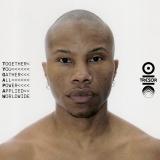
May 2026 marks the arrival of TYGAPAW (aka Dion McKenzie)’s first full-length album on Tresor Records, entitled Together You Gather All Power Applied Worldwide. An acronym of its creator’s name, TYGAPAW’s third studio album is a deeply personal collection of music building worlds where Black queer and trans siblings can thrive, while unifying dancefloors worldwide. A proposition that collective wisdom liberates us from the matrix of domination we live within. The album unfolds as the latest chapter in TYGAPAW’s ongoing techno opera opus, continuing to center the voices of Black women, which surface as layered incantations rather than lyrics - powerful, haunting, sensual, activating.
With the process of creating the album starting in 2023, as TYGAPAW (Dion McKenzie) was in the first year of their transition, the music reflects the intensity of that period, where they were experiencing deplatforming as a response to the shift in their physical appearance: Tracks like ‘M32 Riddim’ and ‘Helicopter hovers over my Crown Heights Apartment’ feature high-paced rhythms intersecting with intense siren-like synths to form demanding compositions echoing a heightened sense of alert. Yet throughout the album, relief comes in the form of TYGAPAW’s vocal features, co-conspirators, and chosen family, whose voices are treated with reverb and echo, a sonic fingerprint that leads back to the pioneers in the legendary studios of TYGAPAW’s native land, Jamaica, an important reminder that the past will always inform the future. It is an album for dancers first and foremost, where joy, defiance, and integration with the natural body coexist, and every drop feels less like a climax than a transformation. Expect a bass that permeates your soul and melodic synthesized sequenced phrases echoing the dancehall eras of TYGAPAW’s youth, reshaped into hypnotic melodies that glow over industrial kicks designed to command attention, reasserting Jamaica's pioneering yet often overlooked contribution to electronic music.
In the opening track, ‘Can I Live’, Precious Okoyomon’s words feel like the beginning of a ritual; setting the intentions for the rest of the proceedings. As McKenzie puts it, their “work is about regeneration, resetting, getting integrated into nature, and about rebirth. That’s the tone I wanted to set at the outset of the album.” Ms Carrie Stacks continues this thread of support in ‘Don’t Panic’ with heavily processed vocals on top of a beat that takes inspiration from another important ingredient in the antidote to the oppression of isolation: Ballroom culture. “ I feel like I found my queerness in Ballroom, that’s why this track is very important to me.”
Echoes of NYC Black queer nightlife scene also permeate in the energetic drums of ‘Exorcise the Language of Domination’, in which Julianna Huxtable’s spoken performance complements the various movements and tones of the music. “My producer brain thought this was the one that Juliana’s vocals would be best suited for. I hinted: ‘what do you think of this one?’ She just went into her notes and picked some passages to go with the first section of the track. From there, it was a year-long process of development. It required time and space for this thing to evolve, but I think it’s one of the most powerful tracks on the album.” London’s SUUTOO contributes the album’s only musical collaboration on ‘B2B’, a track that emerged from sessions in McKenzie’s New York studio where the real objective was to connect and have fun; a time out from the demands of life outside.
The album closes out with a double hit of emotion in the form of ‘Effects of Resistance and Black Trans Masculine Experience’. The former features South African scholar Khanyisile Mbongwa drawing connections that exist between Africa and the Black diaspora, whilst looking to the future and calling for a shared sense of community.
The latter piece, an instrumental version of the piece which featured on the IMMIGRANT E.P. of 2025 is a gentle and deeply affecting end to the record, a place of peace and acceptance. This end-of-cycle tone is mirrored in the sleeve photography, which also ties back to IMMIGRANT by finally revealing what was hidden: a portrait of the artist fully self-actualized; a step towards true inner liberation. TYGAPAW is sonically defiant across this album; bass frequencies feel tactile — less heard than inhabited — infectious lead synth melodies remain with you long after the track ends. An overall sound that leaves asserting an urgent need for connection. From Detroit to New York to Berlin to Jamaica, despite geographic distance, this album reminds us that we remain in solidarity, recognising that meaningful world-building requires collective input and action, both personal and communal, if we are to move toward liberation.
- 1: Die In Cleveland
- 2: High Resolution
- 3: Don?T Wear Me Out
- 4: Fear Of The Living
- 5: Sanctuary
- 6: Dead Alive
- 7: Public Meltdown
- 8: Depression Song
- 9: One And Only Girl
- 10: Pill
- 11: The World Doesn?T Need Your Jive
San Diego’s Mrs. Magician has always bent surf music and punk into something delightfully off-kilter — sun-soaked, hook-heavy power pop with a lyrical fixation on life’s darker undercurrents. Their 2012 debut, Strange Heaven, was a nihilistic pop statement that grew into a cult classic. The 2016 follow-up, Bermuda, sharpened the edges with punchy, nervy songwriting. Both records were produced by John Reis (Rocket From The Crypt, Hot Snakes, Drive Like Jehu), cementing the band’s place in Southern California’s underground lineage. Now, in 2026, Mrs. Magician reemerges with their long-awaited third LP, Spiritual Hangover. Recorded at Dave Grohl’s Studio 606 and Singing Serpent Studios with producer Christian Cummings, Spiritual Hangover finds songwriter Jacob Turnbloom trading youthful nihilism for something more reflective. Where earlier records wrestled with existential dread through anthemic defiance, this new collection embraces uncertainty — an admission of ignorance in the face of the human condition, paired with a genuine longing for connection and understanding. The humor remains. The hooks are sharper than ever. But the perspective has shifted.
These songs feel less like a declaration of dominance and more like a celebration of fragility — an acknowledgment that life is fleeting, confusing, and still worth enjoying. The album features Andrew Montoya (drums) and Mark Rivera (bass) of The Sess, Ian Fowles (guitar) of The Aquabats, and John Reis (guitar). Spiritual Hangover channels the bright urgency of late-’70s power pop through a distinctly Californian lens — warm, melodic, and irresistibly alive. “Super fun, well crafted, with great melodies. It gives me that late ’70s power pop energy I loved so much as a kid. Every track has something joyous to grab onto. In a world full of bleak news, Spiritual Hangover is a warming blast of California sunshine.” — Walter Schreifels (Gorilla Biscuits/Quicksand)
With Stronger, her third EP, Mira Ló continues her rapid ascent within the French electronic scene. A cathartic project born from a period of personal upheaval, this EP is both a cry of resilience and a celebration of club culture as a space for healing. The Paris-based queer producer and DJ turns pain into creative force, and the dancefloor into refuge, release, and rebirth. Across four emotionally charged tracks, Stronger traces the contours of a club where one rises through the energy of the beat, the warmth of a caring community, and the affirmation of self through sound and movement. “This EP is my response to a very dark period in my life. I chose to turn pain into strength, to stand back up through music, and to reconnect with joy, intensity, and the collective. Each track follows a movement, of a body rising, a heart beating stronger, a soul regaining its light. Stronger is also a tribute to those who carried me when I could no longer stand on my own. It's proof that even in chaos, we can rebuild together.” Mira Ló The first chapter of this inner journey, “Riser” is a house track filled with enveloping melodies, ethereal pads, and organic chords that create a suspended sonic space. Its steady pulse and warm basslines evoke a rising from within. “I wanted this track to feel like a build-up, like breathing again. It's about that moment when you feel you're ready to rise once more, even after a fall, like a gentle but powerful wave,” says Mira Ló. With its R&B textures, pop-infused touches, and radiant production, “Brighter” glows with warmth. It captures the return of inner clarity, the rediscovery of joy and ease. Made to bring people together, it’s Instagram | Youtube | TikTok | SoundCloudboth immediate and heartfelt. “It’s a song about shining again, after the dark. I wanted something full of light and simplicity, a track that speaks to the heart and makes you want to dance without thinking.” A personal and introspective nod to the French Touch, “Higher” is driven by filtered basslines and hypnotic grooves. It channels a sense of euphoria that builds gradually, almost meditatively, like a joyful vertigo. “This track is about finding euphoria again, that moment when music lifts you beyond yourself. I grew up with the French Touch, and this is my way of coming back to it with my own voice.” Closing the journey, “Louder” is the most assertive track on the EP. Inspired by the UK bassline and garage scene, it bursts with percussive, punchy energy. This is where everything comes into full light, bold, unapologetic, and free. “I wrote Louder as a statement: I’m here, I exist, and I won’t stay silent anymore. It’s about partying as self-affirmation, as a joyful, powerful scream of identity. Meant to be played loud. Very loud.” Mira Ló, born Ana Lopez, is a queer producer and DJ based in Paris. Drawing from the full spectrum of club music, her sets and productions blend melancholic emotion with a unique, high-energy, euphoric touch - inspired by artists like Disclosure, salute, and Sammy Virji. From her early days playing in Parisian bars and intimate clubs, she quickly rose to the lineups of top French venues and festivals such as Peacock Society, Marvellous Island, and Lollapalooza - extending her reach across Europe and even to Chicago. She’s carved out a strong place for herself within the new wave of the French electronic scene, leaving a lasting impression with every appearance. In 2023, she released her debut EP Memories and was featured in Apple Music’s “Women In Electronic” series. That same year, she became a resident at Sacré in Paris, before unveiling her second EP Tribute To Chicago in 2024. She returns in 2025 with her third release, Stronger - once again proving she’s one of the most promising artists shaping the future of electronic music.
Childish Gambino is (and isn't) Donald Glover, a recording artist, writer, actor, director, producer and comic who was gifted his alias by an online Wu Tang-Clan name-generator. Originally hailing from Stone Mountain, Georgia - his Mum was a daycare provider and his Dad a postal worker, where TV was banned in the house - Glover first entered the spotlight as a member of sketch-troupe Derrick Comedy, via a stint working on The Daily Show and the invitation to join the '30 Rock' writing staff by Tina Fey before he'd even graduated from NYU. A succession of mini-albums and mixtapes surrounded all of this, parallel to acting roles ranging from The Muppets to NBC's cult hit comedy 'Community'. It was 2011's debut album 'Camp' - his first since signing to Glassnote Records - which marked a breakthrough for Childish Gambino, whose music explores everything from identity, race, and technology to hip-hop culture, class, and family. Follow-up 'because the internet' went top 10 on the Billboard chart, was nominated for 2 Grammy Awards and further assimilated Gambino's multiple disciplines (it was accompanied, for instance, by two films and a standalone 72-page screenplay). Around this time - and between roles in HBO's 'Girls' and movies like 'The Martian' - Glover also announced that he was working on his own TV show: a comedy-drama which he would star in, write and direct, 'Atlanta' premiered on FX this autumn to significant critical acclaim (it's already been described as "Twin Peaks with rappers"). The show was launched alongside the third Childish Gambino, 'Awaken, My Love!', this summer at 'Pharos', a series of secretive, audio-visual live performances which took place in a custom-designed dome in the middle of the desert in Joshua Tree. A second series of 'Atlanta' has already been commissioned, whilst Glover has recently been cast in the forthcoming Spider Man movie and has also been confirmed to play the iconic role of Lando Calrissian in the next Star Wars film (a Han Solo spin-off). His most vital artistic statement to date, Childish Gambino is expected to unveil further music from 'Awaken, My Love!' in the coming weeks.
Fides Records pushes further into its 10-year anniversary journey with X3, the third chapter of the series. Staying true to the label’s decade-long commitment to forward-minded underground techno, this new instalment sharpens the focus with five cuts that move between peak-time impact, melancholic tension, and dubwise pressure—each one a different angle on the Fides aesthetic.
Side A opens with Dustin Zahn’s “Madness”, a no-nonsense peak-time weapon built on stomping momentum, immersive pressure, and relentless drive—proof of why the US veteran remains a constant reference point. Marco Bruno follows with “Aura”, where melancholic leads and detuned synths shape an introspective yet heavy-hitting groove, capturing the Italian producer’s emotional weight and versatility. Closing the side, JANEIN (co-founder of Seelen Records) delivers “Polaris”, a spatial, bleepy roller that leans into darkness while keeping the propulsion locked forward.
Flipping to Side B, Yant’s “Fractured” shifts the palette: playful yet precise, kinetic in motion, with textures that keep mutating as the rhythm snaps into place. DHÆÜR “Sealand” captures the mood of a young Italian artist carving a new lane in minimal, elegant, unapologetic techno—energized and raw, yet defined by clean design, confident restraint, and a sharp personal signature. The record concludes with Hadone’s “No Longer Observed”, a dub-tinged stomper rich in detail and low-end depth; club-weight with an emotional undercurrent, balancing elegance and power in a way that feels unmistakably Fides.
- A | Side A
- B | Side B
Another DINTE tape curated by cult WFMU show and blogger Bodega Pop; Gary Sullivan's long-running project rooted in a passion for digging for music in bodegas and cell-phone stores across NYC's boroughs. This edition focuses in on late 1990s and early 00s hip-hop & rnb from across Southeastern Asia.
"While on a work trip to Chicago in the mid-2000s, I was craving a bowl of pho. A bit of sleuthing led me to hop on the red line "L" up to Argyle Street, ground zero of Chicago's Little Saigon. In the 1960s, Chicago restaurateur Jimmy Wong invested in property on Argyle Street with a vision to build the city's new Chinatown, a kind of mall with pagodas, trees, and reflecting pools. In 1971, the Hip Sing Association, a labor/criminal organization, established itself in the area, and along with Wong, they bought up 80% of the buildings on a three-block stretch of the street. Wong reportedly broke both hips in an accident, leaving his dream to wither; in 1979, Charlie Soo of the Asian American Small Business Association brought it back to life.
Soo expanded the area into a vibrant mix of Chinese, Vietnamese, and other Southeast Asian businesses, pushing for renovations, including an Argyle station facelift and the Taste of Argyle festival. At the time I exited the station and crossed the street to get a better look at a shop with a poster for A Vertical Ray of the Sun in the window, the area was home to some 37,000 Vietnamese residents.
Opening the door, I was gobsmacked by a cavernous Southeast Asian media store, bigger than any I'd been to in Dallas, Montreal, New York, or Seattle. I spent some time at the bins, pulling out collections by some of my then-favorite singers — Giao Linh, Khánh Ly, Phương Dung — before approaching the register to ask the young woman behind the counter if the they carried any Vietnamese rap. It was a longshot, I knew, but if such a thing existed on physical media and anyone carried it, it would be this place.
'Have you heard Vietnamese rap?' she replied, her tone of voice and facial expression betraying a comically exaggerated level of distaste. I admitted my ignorance but assured her that I had long cultivated a high threshold for cheesy pop music of all kinds and genuinely tended to like hip hop from around the world.
She rolled her eyes and pointed to an area I had missed. I walked toward a far corner of the store and knelt over a small box on the floor sparsely populated with CDs, VCDs, and cassettes. I pulled out half a dozen Vietnamese hip hop compilations and a strange-looking CD with a cavalcade of odd typefaces in a queasy multitude of colors: THAILAND RAP HIT, it boasted, with 泰國 "燒香" 勁歌金曲 below it. The information on the back provided an address in Kuala Lumpur and the titles in Thai and English translation. The first track included three simplified Chinese characters after the English-language version of the title, "The Chinese Association": 自己人.
WTF was going on here? Walking back to the register, I waved the CD, asking "What's up with this one?" She gave me a look. I placed it on the counter so she could bask in the cover's full glory. She shrugged. "I'm guessing it's Thai rap?" She looked disappointed in me when I said I'd take it.
It turned out to be a Malaysian pressing of half-Chinese Thai hip hop artist Joey Boy's third album, Fun Fun Fun from 1996, and it completely changed my sense what the genre could sound like. The rapper's self-assured, effortless, silly-but-cool rapid-fire delivery weaved in and out of the most bizarre, antic beats I'd ever heard. The six Vietnamese hip hop CDs were a mixed bag, mostly "serious" sounding mimicry of US rapping over predictable production, but the highs were very high. When I got home and listened to it all, I made a point to find as much hip hop from this part of the world as I could.
The tracks collected here provide a limited but potent reflection of the two-decade ascendency
and ultimate world-takeover of hip hop, as it displaced rock and its endless variants for millions of listeners. This not a fair and balanced overview of regional production: I've only included tracks from Cambodia, Indonesia, Myanmar, Philippines, Thailand, and Vietnam. Nor is this a biggest or most important artists collection; instead, I've tried to recapture the pure visceral thrill of that first time I heard Joey Boy, choosing bangers that sound like nothing else, from nowhere else."
—Gary Sullivan
W.R.F. was formed in 2015 by Nina and late studio partner Andrew Weatherall to help wrangle the vast output recorded together beyond his solo releases.
Spotlighting nine tracks from the Apparently Solo series of EPs recorded between 2016- 2019 and released on Bandcamp in 2023, this lustrous time capsule marks the culmination of Walsh and Weatherall’s creative relationship born after they clicked at London’s earliest acid house clubs, becoming partners then managers of their Sabres Of Paradise/Sabrettes labels before taking different paths by the late '90s.
An accomplished musician, Nina had learned the art of studio technology by the time they reunited and started working together in 2012. Created at her Facility 4 Studio situated in the dangerous, gang-ridden no man’s land between Streatham and Mitcham, Anamchara captures the super-prolific creative stretch starting in 2015 that produced Weatherall’s Convenanza and Qualia solo sets, W.R.F.’s The Phoenix Suburb (And Other Stories) plus a whole lot more. According to Nina, Andrew envisioned the spectacular ‘Borderland’ as natural successor to ‘Smokebelch’, his most revered track. When it came to his remix, Nina enlisted renowned viola virtuoso Sarah Sarhandi and composed new harmonies with Pachelbel’s Canon in D Minor in mind.
The set also catches the breakthrough period when, through Nina’s careful coaxing, Andrew started using the computer system she’d set up to better express his musical visions by arranging the elements, grooves and melodies she sent him. Still considered the UK’s greatest DJ-producer, Andrew’s arrangements were inspired by his club-igniting sets. “This allowed me to mix the colours for his palette whilst he was painting the picture,” says Nina. Anamchara straddles the gamut of musical styles explored by W.R.F. at this time, from slower paced psychedelic “drug chug” outings ‘We Two’. ‘Heat To Meat Ratio’, ‘Hidden Watchers Part 1’ to banging acid house and techno sometimes inspired by the violence outside the studio door, including ‘SCHLAP’, ‘Crack-Ed’ and churning acid juggernaut ‘Yacidik’ (“After much dangling of the acid carrot, Andrew took a bite and, after one familiar raised eyebrow, never looked back,” says Nina).
Many tracks fly elements from the enormous sonic library Nina inherited from late partner Erick Legrand that she called The Akashic Library of Sound. Marking Andrew’s 2016 admission into the vault, ‘Rattly Old Puffin’ boasts Erick’s psychedelic guitar and tumbling drum loop Weatherall would run with, including on ‘Borderland’. “Erick was like our third member,” says Nina.
Bringing down the curtain, ‘Alma’’s exquisitely poignant melody that unfolds over thirteen time-stopping minutes was composed by Nina while navigating Erick’s birth and departure date anniversaries to accompany Andrew’s reading from Gordon Burn’s 1991 same-named novel at 2018’s Durham Literary Festival. Burn’s novel imagines early 60s popstrel Alma Cogan, who succumbed to cancer in 1966 surviving to reflect on fame. “Now it just makes me think of Erick. And every time I hear those well-placed cymbal crashes I can only think of the Captain himself.”
A beautiful grand finale for this astonishing selection of pure gold from the vaults.
Kris Needs / 2026
DJ Support - Alan Fitzpatrick, Ben Sims, Colin Dale, Dave Clarke, DJ Bone, Doc Scott, Dustin Zahn, Ellen Allien, Fear-E, Fixon, Gary Beck, James Ruskin, Laurent Garnier, Luke Slater, Misstress Barbara, Radio Slave, Rebecca Delle Piane, Remy Unger, Rodhad, Scuba, The Advent & Truncate
Hardgroove returns with three powerful new remixes from rising Greek talent ANNE, who twists label boss Sim’s Snapshot ‘99 into a trio of peak-time weapons. Marking her third release on the legendary label, ANNE builds on acclaimed work for Out Of Place, Soma, and Hardgroove sister label Symbolism, seeing her in heavy demand with a packed 2025 touring schedule across the EU and beyond.
A collection of earlier and newer works by LFU
combined in one EP.
On November 14, 2025 !K7 Records released DJ-Kicks by Eris Drew. She chose 'Oh Echt' by LFU as the opening track of her mix.
The style of 'Oh Echt' is not easy to categorize. Electronic breakbeats with Detroit hi-hat patterns and a typically pushy four-to-the-floor kick. The funky, staccato bassline and mysterious strings take you back to the eighties and the added funky organs and stabs complete the story. The "Oh Echt" Main Mix is the instrumental mix of the 'Vogel Mix' in which the 'Oh Echtapella' is incorporated.
The first design of 'Boom Boom Tracking' was in 2011 for a DJ/DRUM performance that LFU did. He picked it up again in 2014, but did not finish it until 2024. This big beat floor filler contains chemical beats accompanied by electrostabs and a deep, dark bassline. If you listen intently to this song on a regular audio device, you might notice a thump on every 1 of the 4 beats, but when it's played on a good, big sound system, you can't miss this tension in your stomach. 'Boom Boom Tracking' it is!
Downtempo percussive track 'Tjeetje' is the first track LFU has made in North Coast Studio in 2001. 'Slow Forward' was the third song he completed there in 2003, the same place where he met Ben Baan of Fruitcake, who played the piano part.
Initially, 'Queen Cubana' did not make it as a remix of Eddy Zoey's 'No Soy Cubano' in 2017. In this new version, LFU removed his vocals, except for "Step". LFU took inspiration from Katy Perry's 'Bon Appetit' and turned it into a rhythmic slow jam with carefully programmed beats, resulting in a spectacular funky joint.
Four years on from their landmark Grassroots, visionary half-time heavyweights The Untouchables return with their third album, Lost Knowledge. The duo of Kate McGill and Ajit 'Nitrox' Steyns have carved out a space in modern D&B all their own, building on a legacy that reaches back to the late 00s to keep pushing into unexplored terrain with an assured and deadly line in rhythmic intrigue and atmospheric immersion.
Lost Knowledge launches into action instantly with the high-pressure drum science and dubby splashes of 'Drunken Bells', capturing the loopy techno propulsion and rolling intensity that drives so much of the output on Samurai Music. Where The Untouchables excel is in finding variety and nuance in their relatively forbidding, pared down sound. The heads-down groove of 'Mafia Town' owes as much to dembow and dancehall as D&B, while 'Lost Knowledge' spirals out into psychoactive flurries of synth strafes and organic percussion slathered in tight-locked delay trails. There's no light relief from strident hooks or riffs, just a pure, unshakeable commitment to the power of the beat and deeply designed layers of sound shaping out the space around.
'Busy Bones' makes space for carefully deployed hints of pad tone while the snares snap out of the mix with a sharp set of teeth. 'Four Eared Demon' baits the gabber crowd with its rapid-fire 4/4 hats atop seasick creaks across the midrange, keeping subtlety and patience in the lower frequencies to maintain the signature elegance readily associated with The Untouchables. 'Phase Correlation' teases an artfully unhinged ripple of synth that stands out amongst the murky murmurs filling out the middle distance, but it's still exercised with brutal precision.
Nothing happens by accident or feels out of place - McGill and Steyns are in total control, and they demonstrate incredible range and inventive approaches within their focused style. The accent of the grooves shifts, and individual sounds carry all kinds of artefacts, yet everything gets folded into the exacting Untouchables sound with a liberal dubwise sensibility. Brimming with inspiration and immaculately produced, on Lost Knowledge their one-of-a-kind sound is stronger than ever.
- A1: Ulrika Spacek - 'Interesting Corners
- A2: Empty Country - 'D3Sp4Ir
- A3: The Reds, Pinks & Purples - 'New Market Space (Down The Stairs Ver )
- A4: Cindy - 'The Thousand First
- A5: April Magazine - 'U Bop
- B1: Index For Working Musik - 'Going To Heaven On The End Of A String
- B2: Midding - 'Do As You Would
- B3: Luft - 'My Third Eye
- B4: Hospital - '25 Jade Place
- B5: William Doyle - 'The Sun Ain't Doing It For Me Lately
- B6: Daily Toll - 'Begin Again
LTD BLUE VINYL[26,68 €]
After so long it becomes harder to say new things about older things you now just do. Some things you've become. Some things you simply (never simply) are. The thing becomes a slippery notion. The self slides along with it. After this long, the story is whatever are the songs. A Self-portrait at two decades. Here are 11 new ones, from the current constellation, and a future still to come. The cement is still wet on that one. From the forest near where I now live you can hear a chorus of different birds in voice at once, competing but each defined, in defence of a territory or to attract a mate. There's an app that tells you so. I wonder, too, what that app doesn't reveal, if their nature need not share those same purposes. This is simply (never simply) how it exists. If we can't speak to the mysteries of these strategies, they at least persist, regardless of who picks up the frequency. Singing to itself, and there will always be these kinds of songs. 1. Ulrika Spacek - 'Interesting Corners' 2. Empty Country - 'D3SP4IR' 3. The Reds, Pinks & Purples - 'New Market Space (Down the Stairs Ver.) 4. Cindy - 'The Thousand First' 5. April Magazine - 'U Bop' 6. Index For Working Musik - 'Going to Heaven On the End of A String' 7. Midding - 'Do As You Would' 8. Luft - 'My Third Eye' 9. Hospital - '25 Jade Place' 10. William Doyle - 'The Sun Ain't Doing It For Me Lately' 11. Daily Toll - 'Begin Again'
Bringing together the elder statesman of the Zulu guitar Madala Kunene and internationally acclaimed Sibusile Xaba, kwaNTU pulls two generations of South African guitar mastery into a single point of focus. Under-represented on recordings outside of South Africa, Madala Kunene (b. 1951), the ‘King of the Zulu Guitar’, is revered as the greatest living master of the Zulu guitar tradition. Sibusile Xaba, whose collaboration with Mushroom Hour Half Hour reaches back to his first recording in 2017 (Open Letter To Adoniah/Unlearning), has garnered international acclaim for his unique voice and virtuoso guitar stylings, which bring together multiple South African guitar lineages in an original, spiritualised fusion. Collaborating with Mushroom Hour and New Soil for kwaNTU, the two players come together to weave a filigree sonic fabric which reaches down to the heartwood of Zulu guitar music but moves resolutely outward, building on the past to create a deeply rooted statement about present conditions and future travels. kwaNTU – which can be roughly translated ‘the place of the life-spirit’ – is also conclave of teacher and student, as Xaba has been taught by Kunene for the last decade. Meditative, rich and sonically sui generis, kwaNTU finds these two musicians linking up within the inimitable space of sound and spirit that they share through Kunene’s teaching.
The great masters of South African music have not all had equal exposure. For many years the generation of musicians who were exiled during apartheid took centre stage, as the regime made it very difficult for those at home to be heard. More recently, a new cohort of important voices, especially in jazz, has broken through to international consciousness. But for the generation of musicians in between – those who shone like beacons in the most difficult final years of apartheid and immediately afterward – international recognition has been slow in coming.
Madala Kunene, ‘the King of the Zulu Guitar’, is among this number. A revered figure for current generations of South African musicians, Kunene began his recording career in 1990, at the bitter end of apartheid, with a now classic self-titled LP for David Marks’ storied Third Ear imprint. Born in 1951 in Cato Manor, near Durban, he had determined to be a musician from early childhood, and by the time he first entered a recording studio he had already had a long career as a popular performer. His virtuoso absorption and transformation of the venerable Zulu maskanda guitar tradition and his richly spiritualised approach to music immediately marked him out as someone special, and in the years that followed, Kunene cemented his position as one of South Africa’s musical elders. He is without doubt the grand master of the Zulu guitar tradition, but his sound and sensibility ranges far beyond it into varied sonic terrain, and he has collaborated with a wide range of musicians both at home and abroad. Now in his mid-seventies, he remains a shining light for those that are making music in contemporary South Africa.
‘He is really an amazing person,’ says the guitarist Sibusile Xaba, who has been mentored by Kunene for over a decade, and now invites a collaboration with him on kwaNTU. ‘As a mentor, he's really powerful in showing us the way. For us to have this opportunity to make music together and have a project together is really a blessing to me.’
Xaba himself grew up in Newcastle, KwaZulu-Natal, where his mother had been in a band and his father sang in a church choir, and from early childhood Xaba played homemade tin guitars. He only later realised that music was his calling. ‘I just loved music. I was fortunate. My parents loved music. And when it was time for me to leave home and go to study outside Newcastle, I knew that music was what I wanted to do. There was no second option. It was just music.’ Moving to Pretoria to study music formally, Xaba committed himself to his craft, developing a unique style that draws on both US jazz masters such as Wes Montgomery and Jim Hall, and the rich and varied heritage of the South African guitar, from inspirational jazz players such as Allen Kwela and Enoch Mthalane, to the music of the Malombo groups and Dr. Philip Tabane (Xaba has previously collaborated with Dr. Tabane’s late son, Thabang), and the Zulu guitar tradition embodied by Kunene.
‘I was really in love with the jazz guitar, I really admired it, and I was digging a lot in that direction,’ says Xaba, recalling his first encounter with Kunene’s music, over a decade ago. ‘And then one day on my timeline, Kunene popped up, and I was like – “What's this sound?” I was so connected to it. It really touched me deep. I started checking out his records, and then I found out he's from the same region as I am, which is Zululand.’ After Kunene played a show at the Afrikan Freedom Station in Johannesburg, Xaba make contact with him, and visited him at home in Durban. They struck up a friendship, and Xaba became the elder’s student, as Kunene began to pass on his knowledge and his inimitable way of playing.
kwaNTU is a tribute to this relationship and the deep learning that has defined it. The album was recorded in Zululand in the town of Utrecht, at a cultural centre called Kwantu Village, which gives its name to the album. ‘It's such a broad word,’ Xaba says, ‘but the elders teach us that Ntu is basically an energy, almost chi, an energy, a force that all living beings have within them. It's a living energy, so kwaNTU is like, almost the place of this energy.’ The two men sequestered themselves for five days of jamming, improvising and planning, and then the session was recorded in one take over a single night, with Gontse Makhene joining on percussion and backing vocals and Fakazile on vocals. Other voices and overdubs were later added in the studio in Johannesburg.
The result is a rich and meditative recording that finds two generations in a deeply engaged dialogue. Teaching and passing on his knowledge, the elder Kunene has brought Xaba into a space of sound and knowledge that they now share; Xaba’s own practice of deep communion with nature and his dedication to his musical craft make him the perfect interlocutor for Kunene. The result is an album that foregrounds the two musicians engaged at the highest levels of responsive listening, sympathetic unity, and collaborative concentration. Bringing an elder statesman of South African music to an international listening audience for the first time in decades by pairing him with one of South Africa’s most important new voices, kwaNTU is a meeting of generations and a powerful demonstration of musical lineage and continuity.
‘Before music, there is sound,’ Xaba observes, speaking of Kunene’s unique approach to music. ‘And sound is like a common compartment…it's not restricted to particular people or particular geographic places, you know what I mean? It's sound. Everybody can hear it. So when he constructs that sound into music, I think everybody resonates with the energy behind his construction of sound into song. Here at home, we really love him for preserving our history through the guitar, through his stories as well the music, the songs that he writes. We really, really admire him.’
- A1: Home & Garden Ft. Collette - Sexuality...he's 2 Young (Jt's Porno Beat Down Remix)
- A2: Brett Johnson - Jiffy Pop
- B1: Tiefschwarz - Acid Soul
- B2: Roy Davis Jr. - About Love (Solid Groove Remix)
- C1: Jt Donaldson Ft. Liv.e - Stay Inside
- C2: Dam Swindle - Hey Mister
- D1: Luke Solomon & Amp Fiddler - Come On Over
- D2: Honey Dijon Ft. Dave Giles Ii, Cor.ece & Mike Dunn - Work
The third and final volume of Classic’s 30th Anniversary vinyl series brings the party full circle - blending deep catalogue cuts, future-forward house, and tracks from the label’s tight-knit family of collaborators.
Like the volumes before it, this 2x12” release arrives in a raw reverse board outer sleeve, a nod to the aesthetic of Classic’s earliest releases. Inside, bold yellow and red GMUND card stock inner sleeves with embossed detailing reflect the label’s long-standing commitment to design, artistry, and collectability.
Record One kicks off with a certified Classic family affair. Home & Garden’s ‘Sexuality...He's 2 Young’ features the unmistakable voice of DJ Colette, a staple of Classic’s early era. Included here is JT Donaldson’s Porno Beat Down Remix—a stripped, low-slung rework with an irresistibly funky bass line and pure dance floor chemistry.
Brett Johnson’s ‘Jiffy Pop’, from his legendary Bounce! EP, follows up with a jittery, swaggering groove that epitomises Brett’s playful, funk-laced production style. Infectious, weird, and entirely unforgettable.
On the flip, Tiefschwarz’s ‘Acid Soul’ delivers a moody, muscular roller. Originally released during their prolific run on Classic in the early 2000s, it fuses baritone sax stabs, a Berlin-borne bass line, and a sultry vocal into a deeply spiritual house cut.
Roy Davis Jr. closes Side B with the propulsive ‘About Love’ (Solid Groove Remix)—a tough and driving interpretation by Dave Taylor that’s long been a DJ favourite in the Classic vaults.
Record Two showcases Classic’s more recent sonic evolutions. JT Donaldson’s return to the label in 2019 came with ‘Stay Inside’, a rich and breezy groove featuring the soulful voice of Liv.e. It’s an elegant and understated slice of modern house with timeless appeal.
Then comes Dam Swindle’s funk-charged ‘Hey Mister’. A punchy, bass-driven jam built around a 70s reggae-disco vocal sample. Raw and infectious, it’s been lighting up dance floors worldwide since its release.
Luke Solomon’s catalogue on Classic is vast, but ‘Come on Over’, his collaboration with Amp Fiddler, earns its place here. Seeing vinyl release for the first time, this cut overflows with musicality. Amp’s passionate vocal, free-time breakdowns, and deep funk grooves deliver pure emotional punch.
And to close, a modern masterpiece: Honey Dijon’s ‘Work’ (Extended Mix), taken from her ‘Black Girl Magic’ LP. Featuring Dave Giles II, Cor.Ece, and Mike Dunn, this powerhouse track brings together fierce vocal performances, live instrumentation, and top-tier production. It embodies everything Classic stands for: collaboration and innovation on the dance floor.


![WILD NOTHING - LIFE OF PAUSE (LENTICULAR SLEEVE) [SIGNED PRINT ED]](https://www.deejay.de/images/l/9/4/1227394.jpg)